Heavy Rain Over the Three Rivers: An Incomplete Yunnan Northwest Loop
Heavy Rain Over the Three Rivers: An Incomplete Yunnan Northwest Loop
The rainy season in northwest Yunnan is a gamble with the weather. When the plane broke through the clouds and landed in rain-soaked Dali, I suddenly realized this trip was destined to be accompanied by water. But as it turned out, the rain didn't ruin the journey at all—instead, it cast a unique filter over the land. Snow-capped peaks shrouded in mist, villages veiled in rain curtains, the damp air thick with the scent of grass and wood—these became the deepest impressions of this "incomplete loop."
Dali: Wind, Flowers, Snow, and Moonlight in the Rain
Lucky to Have Landed
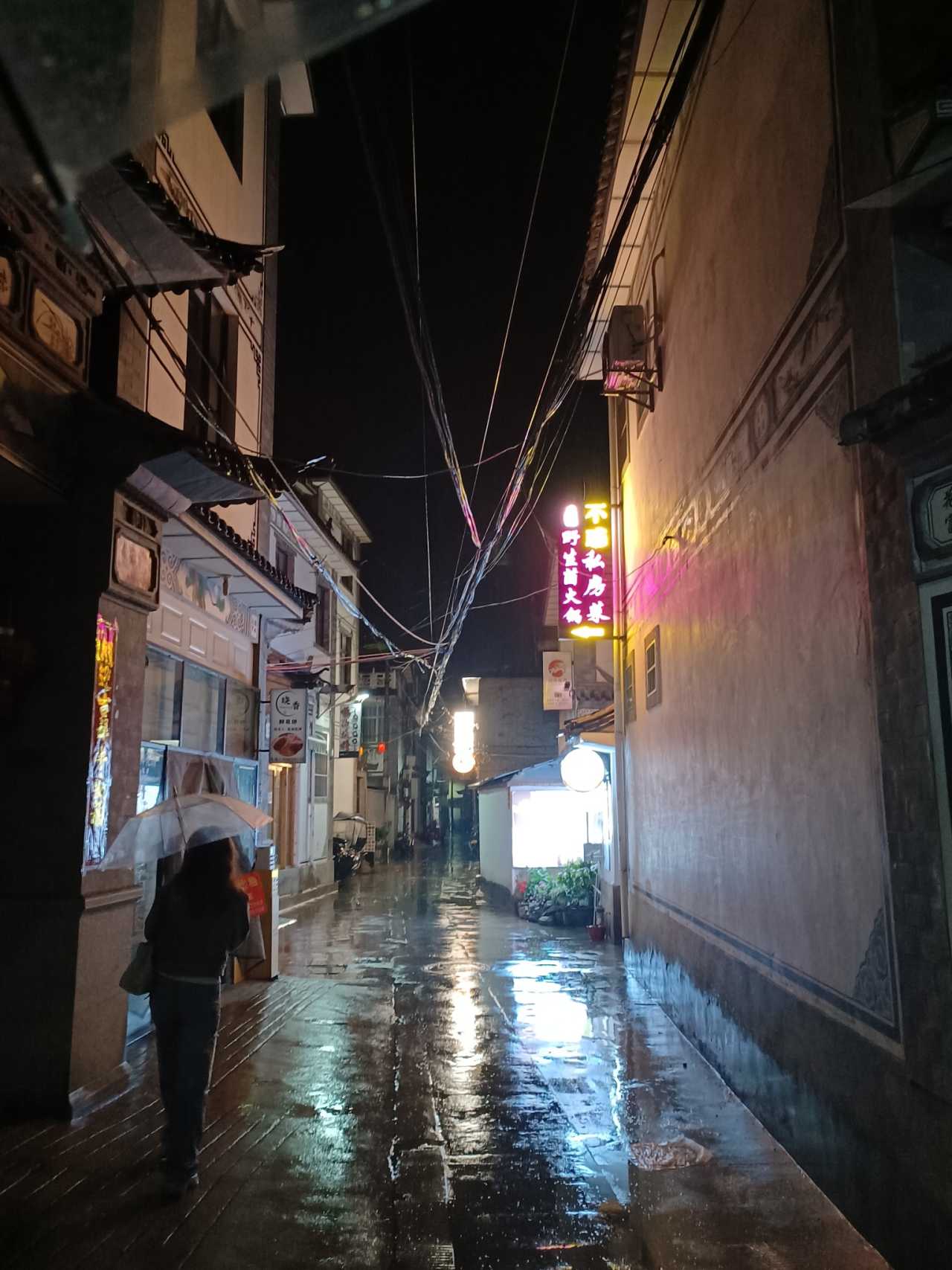
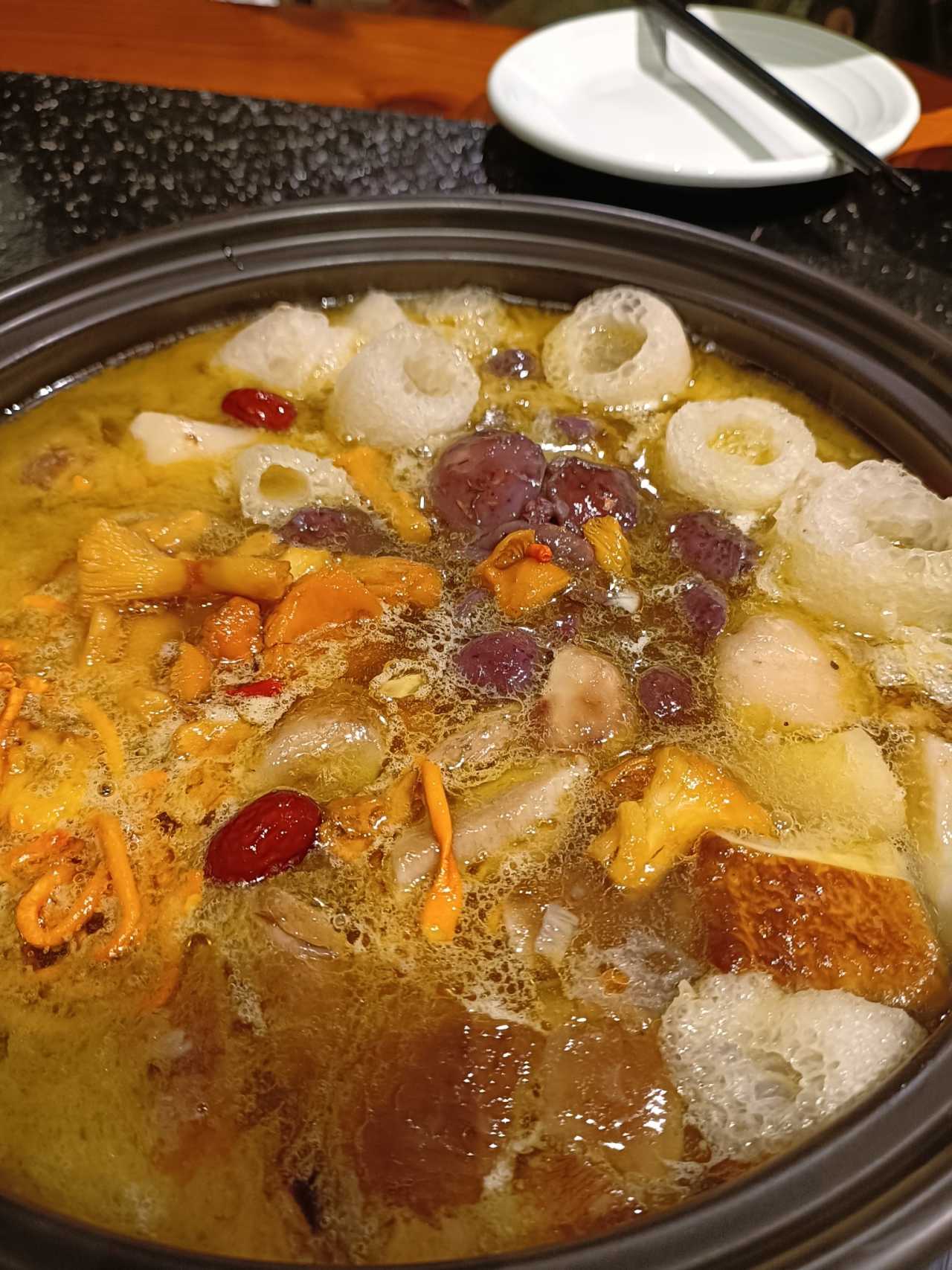
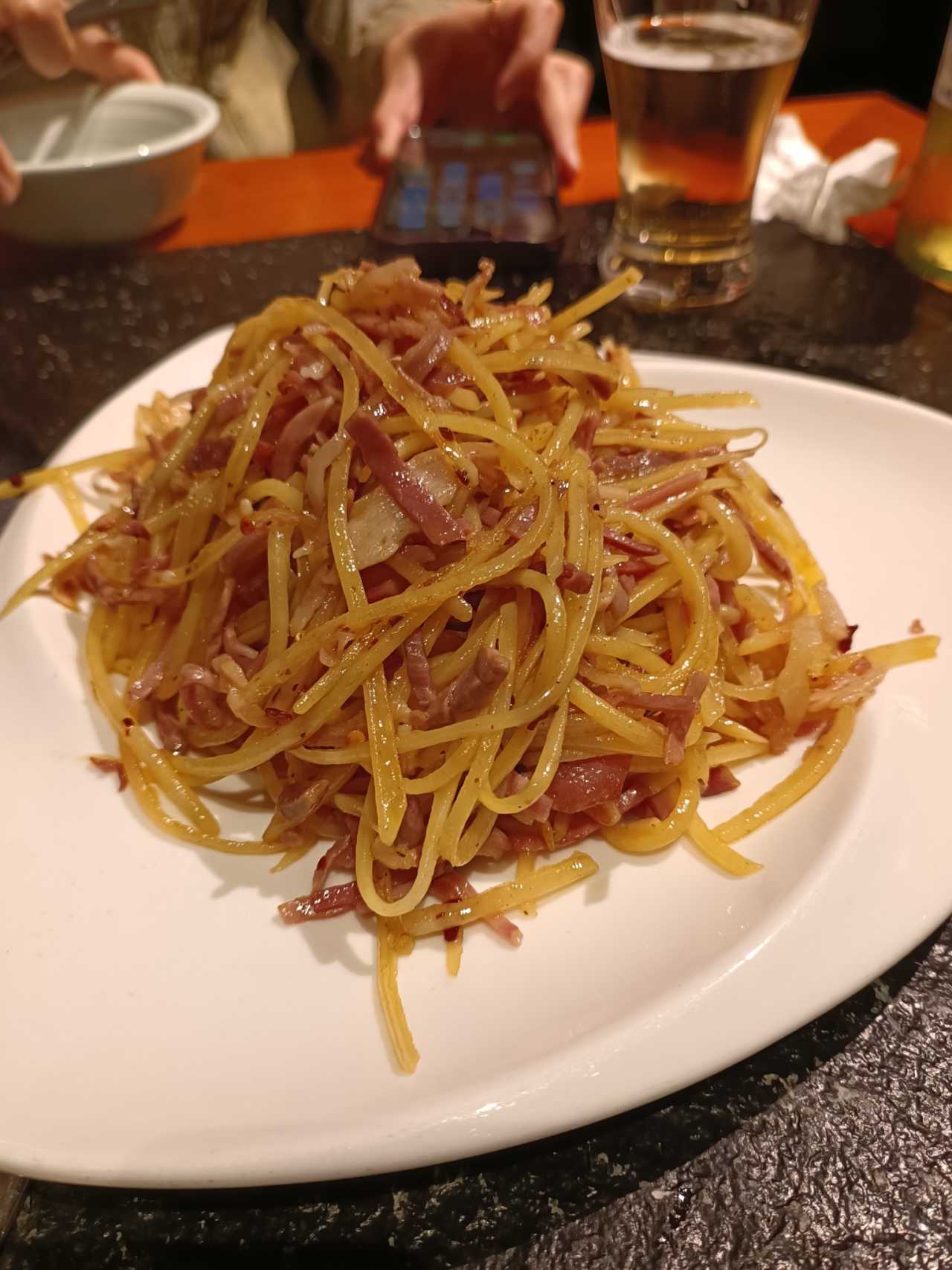
In late May, we flew directly from Hangzhou to Dali. As we touched down, airport staff were busy notifying several flights that they had been diverted to Chengdu due to weather. Landing on time felt like a stroke of luck. Our homestay driver picked us up, and along the way he chatted about how booming the wedding photography business had become in Dali over the past two years. He laughed, "Drivers are all tied up with studios and hotels—busy all year round." Our homestay in Fengnan Village sat by Erhai Lake. We checked in late at night and couldn't see a thing. We stumbled through the dark to find a small restaurant in the village. Power lines crisscrossed haphazardly overhead, and the sign flickered faintly in the rain, giving me a sudden flashback to the rainy alleyways of Jiangnan in my childhood. Mushroom hotpot was what I'd been craving, but what really got me was the 诺邓火腿炒洋芋丝 (Nuodeng ham stir-fried with shredded potatoes)—salty and savory, straight to the head, so delicious I wanted to order another plate.
Three Pagodas and Ancient Temples in the Rain
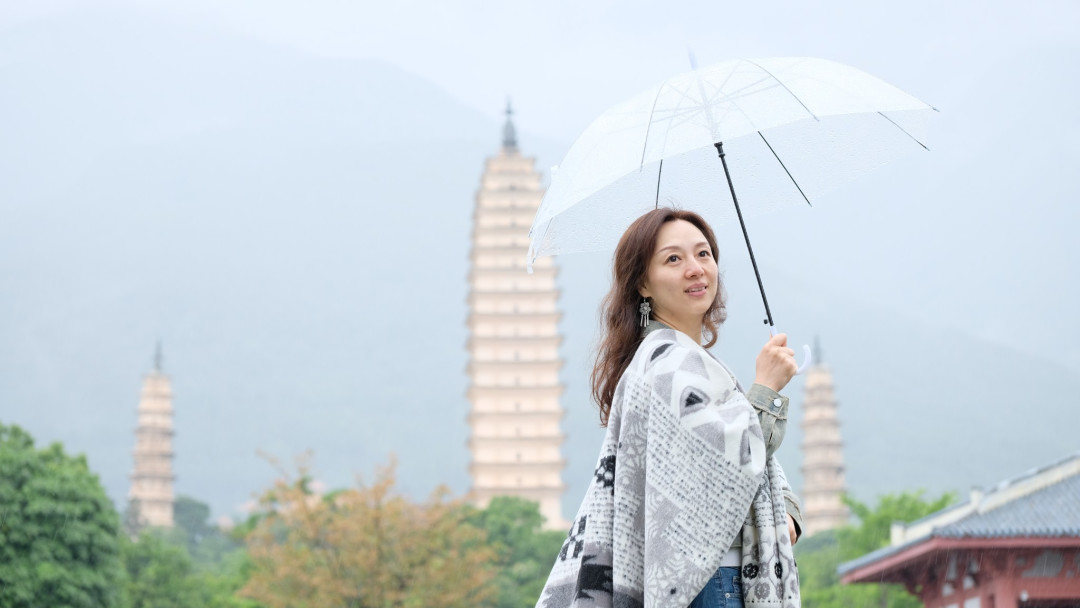
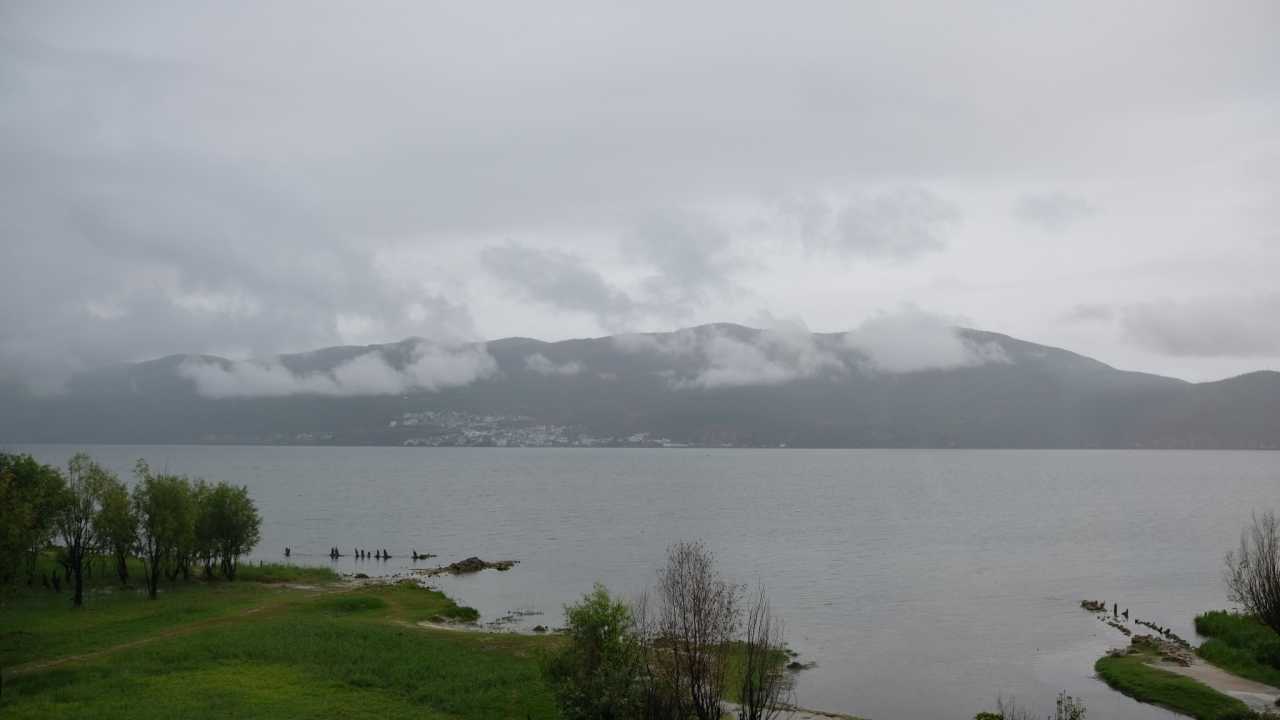
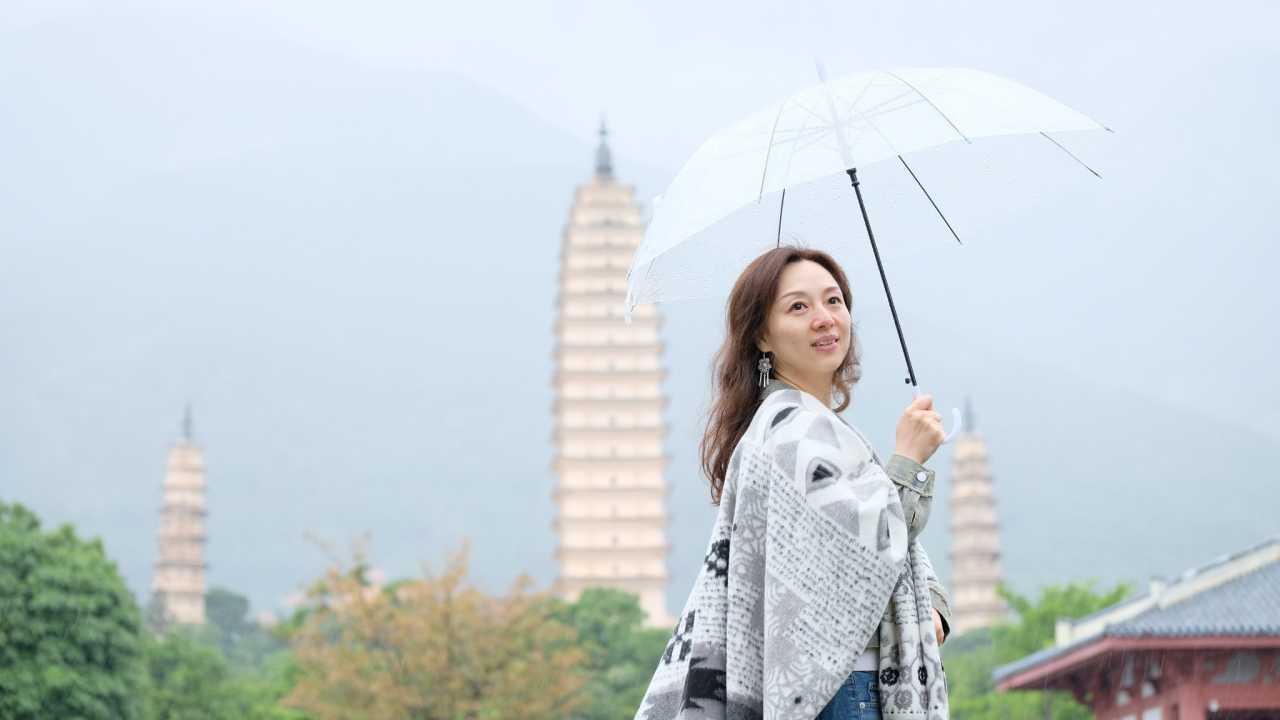
The next morning, the rain continued. Outside the floor-to-ceiling window, Erhai Lake had lost its vivid colors, looking like it had been run through a black-and-white filter. We took a little yellow minibus to the Three Pagodas. The rain grew heavier. We didn't enter the temple grounds, just stopped at the Golden Rooster Square for photos. The transparent little umbrella we'd borrowed from the homestay turned out to be a perfect prop. Framed with the Three Pagodas, it created a strangely beautiful, cool aesthetic. I'd originally planned to take the cable car up Cangshan Mountain to capture a panoramic view of Erhai, but the rain changed my mind. Instead, I picked up the rental car early and headed straight for Gantong Temple and Jizhao Nunnery.
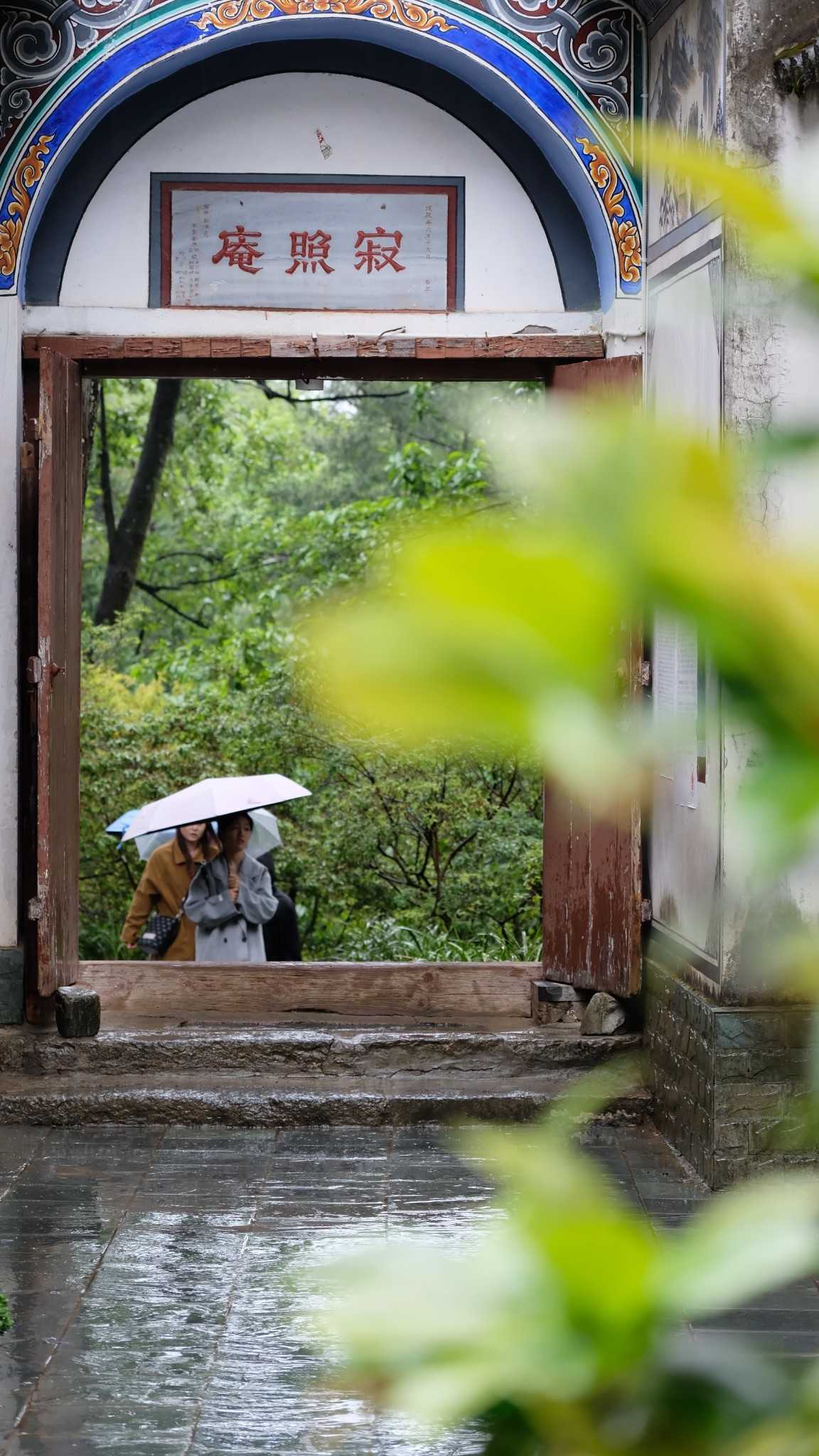
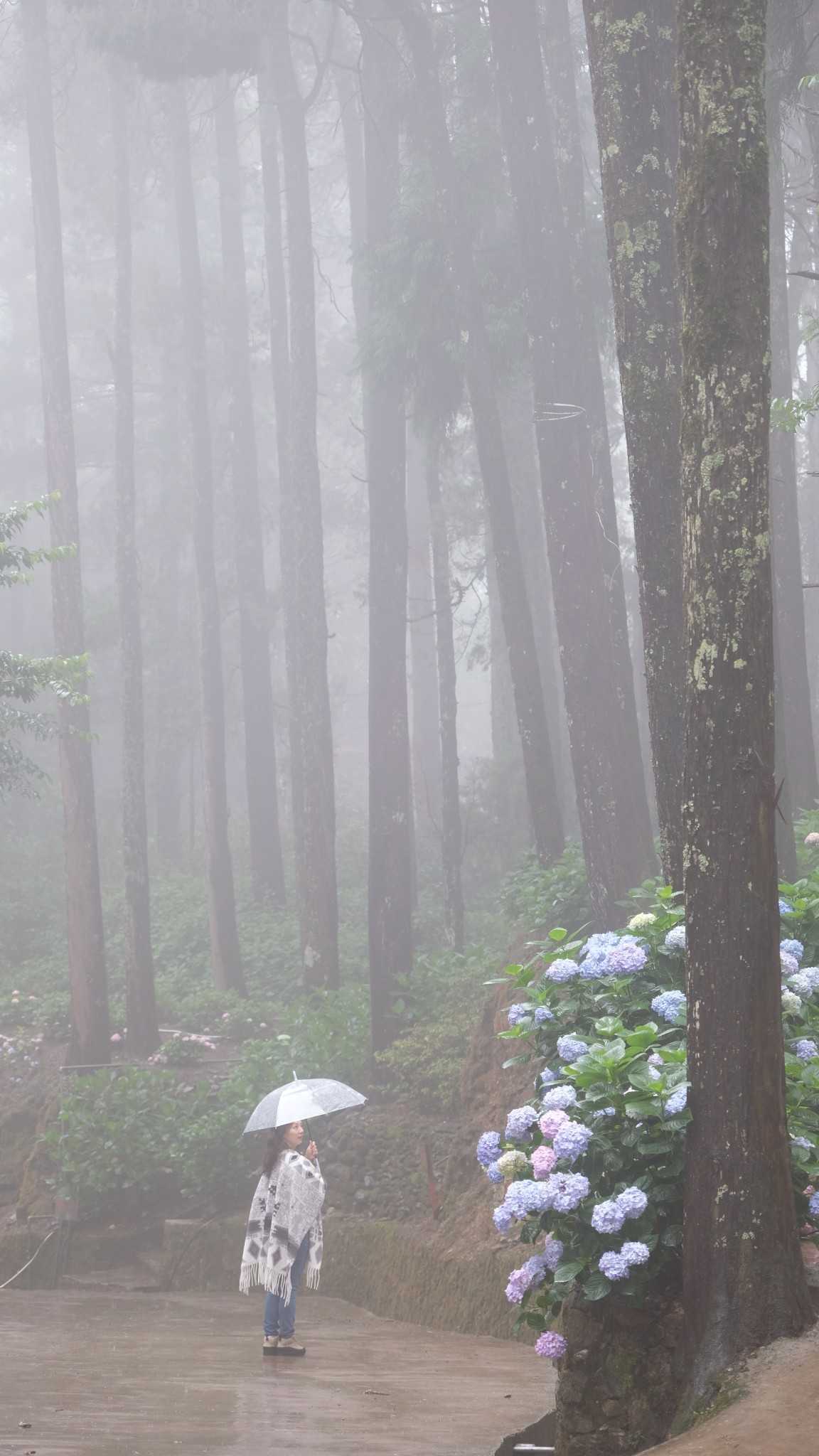
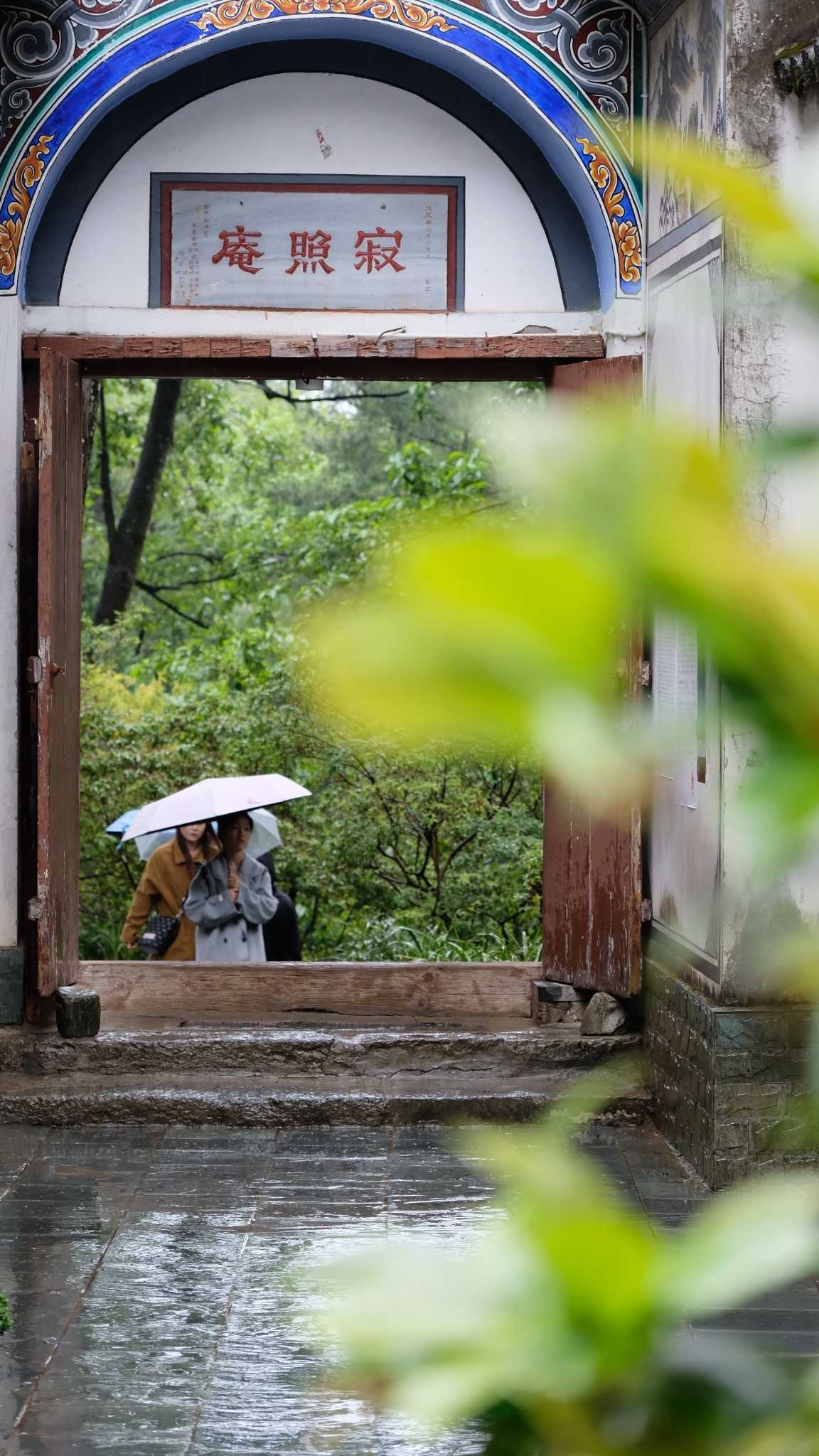
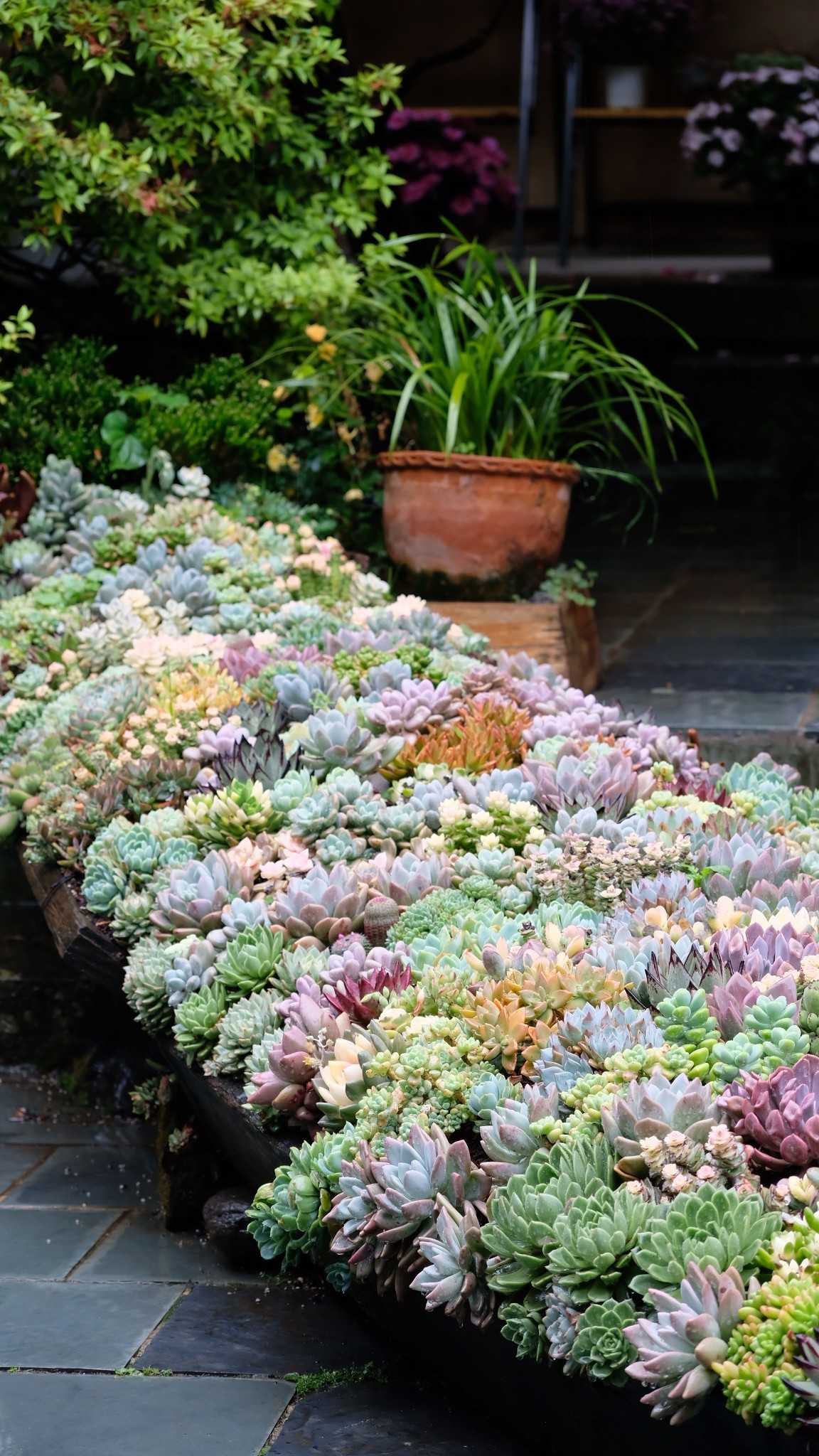
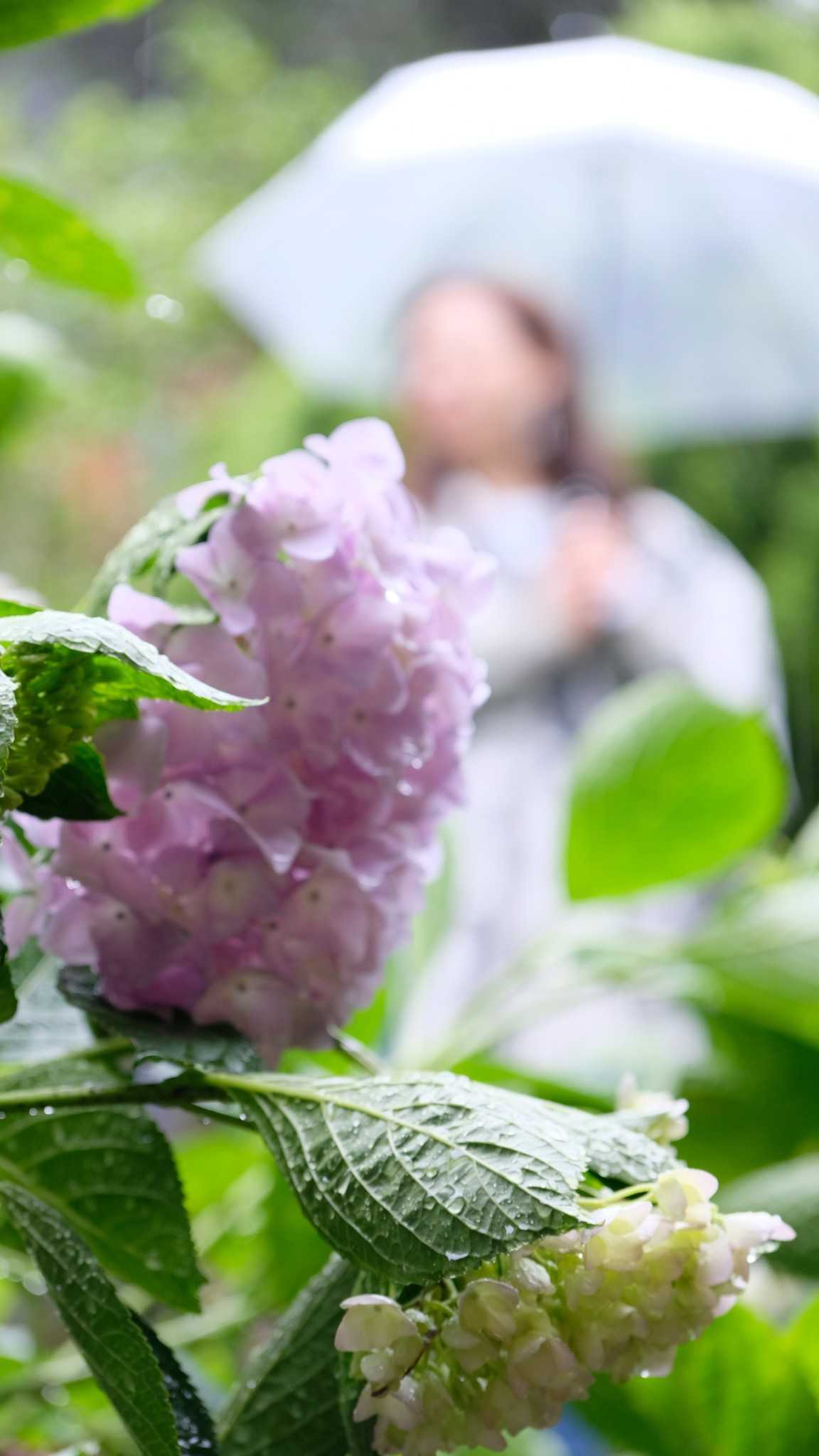
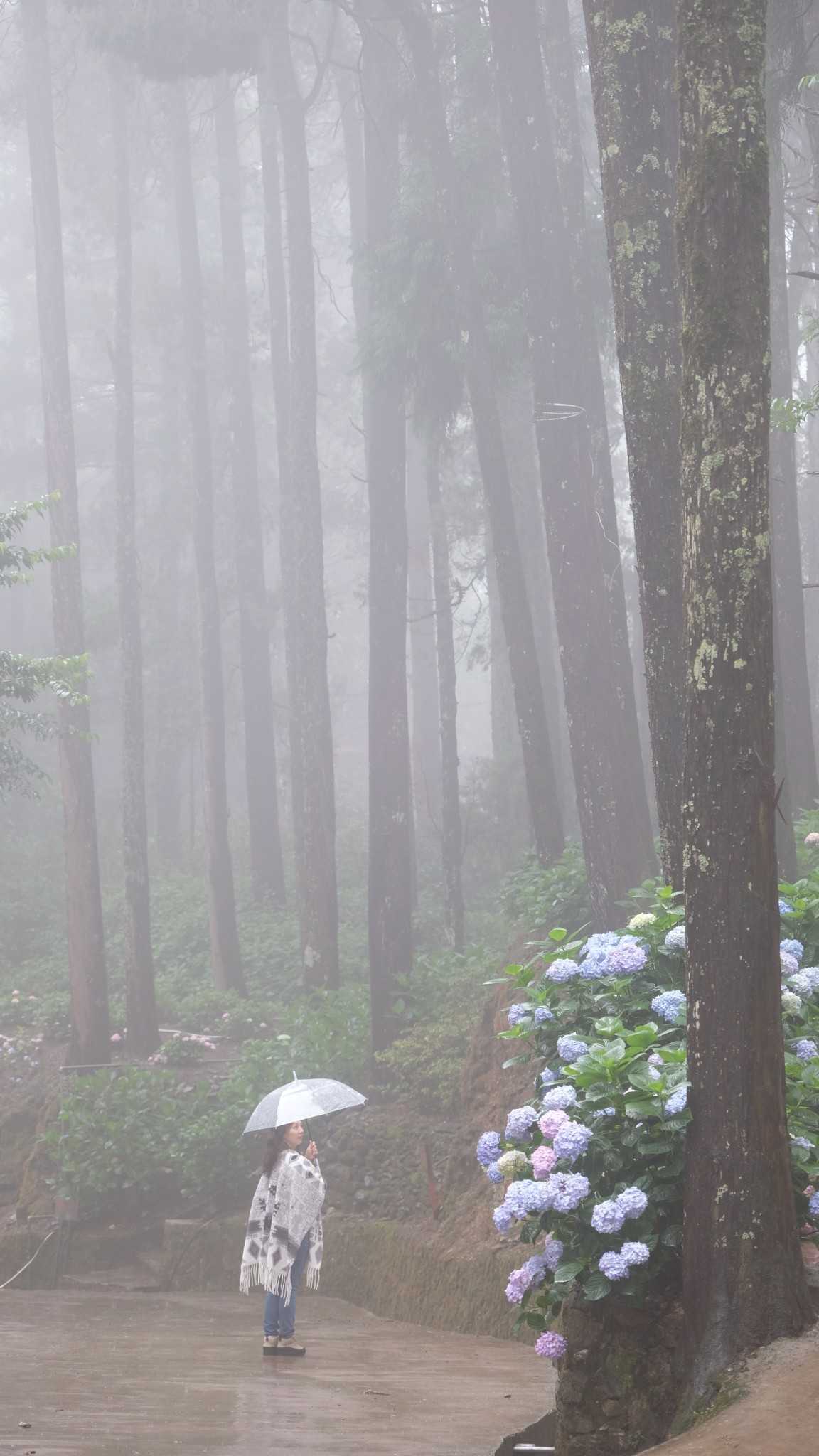
These were spots I'd marked before the trip, but the actual experience far exceeded expectations. On the misty, rain-soaked ancient path, there were hardly any other visitors—a luxury of solitude. Stepping into the ancient temple, my wife said, "This feels like the Lanruo Temple from A Chinese Ghost Story." The rainy season lent a mystical air to the place, especially the two enormous hydrangea bushes that suddenly appeared behind the temple gate—impossible not to stop and stare. Jizhao Nunnery was more of an internet-famous spot. Small in size, but crowded. We managed to grab a vegetarian meal before 1 p.m.—it tasted good, and it was a fun taste of the "influencer" lifestyle. The succulents in the temple grounds were stunning. After a rest at the little coffee shop, we continued down the mountain.
Cangshan Mountain and the Ancient City's Surprises
The rain lightened, and we took the Gantong cable car up Cangshan. The "Zhenlong Chessboard" was nothing special, but the emerald-green pool at Qingbi Stream was a delight to the senses. We walked a stretch of the Jade Belt Cloud Path, but the trees were too dense to get a clear view of Erhai, so we turned back. In the evening, taking advantage of a break in the rain, we slipped into the ancient city. We sampled fruit wines named after Dali's "Wind, Flower, Snow, Moon," inhaled the rich aroma of Yunnan small-bean coffee, and browsed the artists' works at the Bed Sheet Factory art district. At a street food stall, we ate dinner while watching a song-and-dance performance—such a pleasant way to spend the evening. As we stepped out of the stall, the sky actually cleared, revealing a patch of blue. The city lights came on, and the ancient town came alive.
On the third morning, the heavens finally stopped crying. We rented an electric scooter along the ecological corridor in Fengnan Village, riding with the lake breeze in our faces, and took the best photos of Erhai from the entire trip. But we were travelers, and we had to leave this place of wind behind and head for the southwestern border.
Nujiang: Roaring River and Quiet Villages
Tiger Leap and Laomudeng

From Lushui onward, the expressway ended, and we were left with national roads. Passing through a border checkpoint, the officer reminded us, "Watch the road conditions. Drive safely." We took a detour to a trendy little restaurant for "fire-roasted chicken"—the taste was just okay, but the bamboo-leaf greens were refreshingly sweet. I later learned they're a common home-style dish in the Nujiang area. We didn't stop at Denggeng Hot Springs because of the rain—too bad, as we missed out on the zipline experience. Further on, we reached Tiger Leap. For the first time, I was this close to the Nujiang River. Huge boulders stood in the middle of the torrent, and the water roared past them—it had the same visceral intensity as Tiger Leaping Gorge.
Our destination for the day was Laomudeng. The homestay owner's wife had set up a tea stall at the entrance. When she learned we were staying, she immediately started bustling around. Her father-in-law brought out an old photo album. The black-and-white pictures captured the bustling days of Zhiziluo—once the seat of the Nujiang Prefecture government, now quiet after the relocation. The owner's wife was Lisu, and her husband was Nu. This made me realize we had entered the heart of the Three Rivers region. There were no trendy, influencer-style homestays here—just local people running their own businesses, maintaining the simplicity of a close-knit community. The owner's wife personally walked us to a mutton restaurant, leading us through a patch of farmland. From the rooftop terrace, we faced the mist-shrouded Gaoligong Mountains. The goat meat hotpot was decent, and as we ate while night fell, a sense of calm settled over me. In a place like this, only by letting your body and mind relax can you truly deserve such peace.
Zhiziluo: The City of Memory
I woke up at the first rooster crow. It had been a long time since I'd heard a rooster crow three times. When I went downstairs for breakfast, I learned we were the only guests in the entire place. Zhiziluo is a city of memory, frozen in the aesthetics of the 1970s and 1980s. The Octagonal Tower is the landmark, but the Nu Ethnic Museum wasn't open. Using the film simulation mode on my Fuji camera, I captured a retro, nostalgic feel. On the steps of the alley, holding an umbrella and walking into the misty rain, it felt like stepping into a noir thriller. The weather had given this place an incredible atmosphere—if it had been a sunny day, much of the charm would have been lost.
Bingzhongluo and Wuli Village
We passed through Shiyueliang (Stone Moon) Village. The owner of a small restaurant, a man with glasses, was quick and efficient, and his side dishes hit the spot. He said, "You definitely won't see the Stone Moon today." And he was right—regret is also part of travel. Before reaching Bingzhongluo, we encountered a landslide. The navigation app guided us around via a one-way small bridge over the Nujiang. When we saw the sign for the First Bend of the Nujiang, I knew we were getting close. Bingzhongluo town lay under a blanket of rain and mist. The buildings climbed the hillside in tiers, facing the distant mountains, exuding an air of detached independence—worthy of its nickname, "Where Gods and Men Coexist."
Wuli Village was the real highlight of the day. We parked by the Zhaohong Bridge and started a light hike. The earliest suspension bridge had fallen into disrepair, and only the middle bridge was passable. After crossing, we walked a well-preserved section of the Ancient Tea Horse Road. In some places, the path was literally carved out of the cliff face. Walking through it, I could almost hear the jingling of horse bells echoing through history. The village had signposts, showing it was being carefully developed—preserving its original character while connecting with the modern world. The best spot to photograph Wuli Village was from across the river. Several viewing platforms along the national road offered beautiful shots of the scattered homes on the hillside. As we left, we happened upon a horse caravan. The kind villagers warned us to stand by the roadside and not startle the animals. I simply admired the beauty of this place, hoping it would never be disturbed.
Tonight we stayed in Qiu Natong, at a new village committee building by the national road. The homestay had a local architectural style, with plenty of stone slabs used in the design—clearly thoughtfully done. Once again, we were the only two guests. After dinner, the sound of the Nujiang River seemed especially loud.
Snowy Peaks and Gorges: From Peacock Mountain to Meili
The Surprise of the Degong Highway
The next day was overcast, but the rain had stopped. We went to old Qiu Natong to photograph the church, then returned to Bingzhongluo. In the Dongfeng rice paddies in front of the Songtsam Hotel, we took photos that made the people look small against the vast landscape—very atmospheric. I imagined how stunning it must be here in autumn. We didn't dare linger long and hurried on toward Deqin. After several days of continuous rain, every time we set out, the innkeepers would remind us, "Watch out for falling rocks and landslides."
The Degong Highway was an absolute scenic drive. There was no rain along the way, and occasional sunlight even broke through. As the altitude rose, snow-capped peaks began to appear, and Tibetan yaks and sheep appeared on both sides of the road. After passing through the Kongqueshan (Peacock Mountain) Tunnel, we took a right turn up a slope and drove to the end, where the road was blocked. Tibetan guides were warming themselves by a fire. For 160 yuan per person round trip, they drove us to the summit in their vehicle—it took about half an hour. The road was rough, so riding with them was actually more convenient. Snow still lingered on the summit, and there was a chill in the air. As we hiked up, the sky cleared. Snow-covered pines, distant mountains, and drifting clouds formed a beautiful scene. The unmelted snow looked like the spots on a cow, adding a touch of playfulness to the peaks. Unfortunately, there weren't many alpine rhododendrons in bloom—we missed the spectacular sight of a mountainside covered in flowers. The melting snow made the trail slippery, but luckily we were wearing professional hiking boots. The altitude was a bit taxing, so we had to take it easy.
Deqin: A Fleeting Stroke of Luck
It started raining again as we descended, but I was already content. As we neared Deqin, the clouds parted, and a whole range of snow-capped mountains rushed into view. When we arrived at the Wunongding Hotel, we didn't even bother checking in first—we rushed to take photos. The brief sunlight cleared most of the mist, but a stubborn layer of cloud still clung to the summit of Kawagebo Peak, like a hat, showing the main peak's aloofness. In comparison, I preferred the graceful beauty of Shennü (Goddess) Peak—sharper, more upright. My 70-300mm telephoto lens finally got a real workout. When sunlight pierced through the clouds, creating a Tyndall effect, all descriptions felt futile.
A staff member said, "This afternoon has been the best weather in days. The rest of the time, it's been all fog. You're very lucky." I still held out a faint hope for the "Golden Sun on the Snowy Peaks" sunrise the next morning, but the weather forecast said not to count on it. Sure enough, the next morning was thick with fog. Wunongding ("Fog on the Peak") lived up to its name, and our view room was a complete waste. Fortunately, our itinerary was relaxed. I dozed off while my wife did some hotel photoshoots. The hotel itself was beautifully designed—a blend of modern wabi-sabi and Tibetan style, offering plenty of great photo opportunities. We didn't go to Yubeng this time—not enough time, and we didn't have the right gear. That will have to wait for next time.
Along the Jinsha River: The Final Scenery
The Great Bend and the Vineyard
At noon, we set off for Shangri-La. Rain and fog kept harassing National Road 214, and in the end, we never got a clear view of Baima Snow Mountain. From the Nujiang to the Lancang, and now we were about to meet the Jinsha River again. As we approached Benzilan Town, the rain stopped. The viewing platform at the Jinsha River Great Bend was well-equipped, with coffee and snacks available. From the platform, we could not only see the massive "Ω"-shaped river bend but also get a distant view of Benzilan Town. The vegetation on both banks of the Jinsha was noticeably less lush than along the Nujiang. The Hengduan Mountains blocked the rainfall, and this area was clearly struggling a bit.
We turned off the national road onto a small side path to visit the Walnut Tree Grape Estate. A young man enthusiastically introduced us to the estate's history and its wines. The vineyard was small, the cellar modest, with some grapevines scattered around. Before leaving, we bought a bottle of red wine as a memento of their quiet dedication. Further down the road, we passed the Helong Bridge. A red flag on the hillside was especially striking. We stopped to pay our respects to the pioneers. Looking at these towering mountains of northwest Yunnan, without the massive state investment, there would never be such good roads here.
Shangri-La: Farewell in the Rain
I'd been to Shangri-La before, so this time I only visited Dukezong Ancient Town and Songzanlin Monastery. Dukezong is similar to many ancient towns—it has its own distinctive architectural style but also a heavy commercial atmosphere. The Great Buddha Temple houses the world's largest prayer wheel. Following tradition, we turned it three times clockwise. With so few people, it was hard to get it moving. As we returned to our homestay, the rain intensified, but there were still people dancing the Guozhuang dance in the square, though far fewer than on a clear day. Because of the rain, I abandoned my plan to photograph the morning mist over Songzanlin Monastery. After sleeping in, we took our time heading to the large prayer flag site. There was almost no one there, so we could pose freely. Later, I realized there wasn't just one large prayer flag site—there were others nearby.
Our homestay owner said we could drive right up to the monastery gate, but we obediently parked at the visitor center. The 90-yuan ticket included a bus ride. The bus drop-off point and the lakeside were excellent photo spots. The monastery is huge; to capture it in its entirety, you need to stand far back. Once you start climbing the steps, you can only photograph parts of the buildings. That's a good spot for portraits—shoot close-ups of people against the flow of the crowd, blurring the background, for a great effect. There's a stretch of yellow wall on the steps that's incredibly photogenic. My takeaway: when you can't capture the vivid contrast of a blue sky and golden roofs, look for brightly colored backgrounds, like walls of various colors. After paying our respects at the three main halls, we strolled along the lakeside. A viewing platform offered a reflection of the entire monastery in the water—a nice photo spot.
Epilogue: Safe Travels to All
The seven-day trip was over, accompanied by rain from start to finish. There were regrets, but also surprises. A day after returning home, I saw news of mudslides and road closures in the Nujiang area. At that moment, I felt grateful not to have been stranded on the road. Safe travels to all who journey.
This magical Three Rivers region still has so many places worth exploring. Highways 219 and 214, and the Degong Highway, are truly roads worth driving. As the signpost says: "Borderland Scenery, the Nation's Great Highway." Looking forward to the next meeting.
Practical Tips: - Best Season: October–November offers stunning autumn scenery, but the rainy season (May–September) has its own unique atmosphere - Road Conditions: Watch for landslides and falling rocks during the rainy season; the Degong Highway is scenic but requires cautious driving - Accommodation: Local homestays in Laomudeng and Bingzhongluo offer a more authentic experience than those in Dali - Photography Tips: Bring a transparent umbrella as a prop for rainy days; use a telephoto lens for snow mountains; look for colorful walls in temples - Packing List: Professional hiking boots (essential for snowmelt season), insulated clothing (high altitude temperature swings), waterproof bags
You should also read:
Escaping Nanning, Falling Under Lijiang's Spell: Our Four-Person, Ten-Day Yunnan Dream
Escaping Nanning, Falling Under Lijiang's Spell: Our Four-Person, Ten-Day Yunnan Dream Before We Set Off: No Pain, No Obsession Have you ever had that impulse—suddenly tired of the office fluorescent lights, the crush of the subway, the endless parade of identical takeout boxes, and just…
Continue reading...
Solo in Yunnan: A Wanderer’s Guide to the Land of Eternal Spring
Solo in Yunnan: A Wanderer’s Guide to the Land of Eternal Spring There’s something magical about traveling alone. No compromises, no schedules to keep, no one to please but yourself. I’ve been on the road for nearly three months now, and not once have I…
Continue reading...
God’s Abandoned Palette: A Self-Drive Journey Through Yunnan’s Dongchuan Red Land
God’s Abandoned Palette: A Self-Drive Journey Through Yunnan’s Dongchuan Red Land Travel has never been about reaching some distant geographic coordinate. It’s about encountering, along the way, the version of yourself buried beneath the rubble of daily routine. During this May Day holiday, I finally…
Continue reading...