Hey Pattaya, Take Off Your Colored Glasses | A Hidden Gem Trip with My Bestie
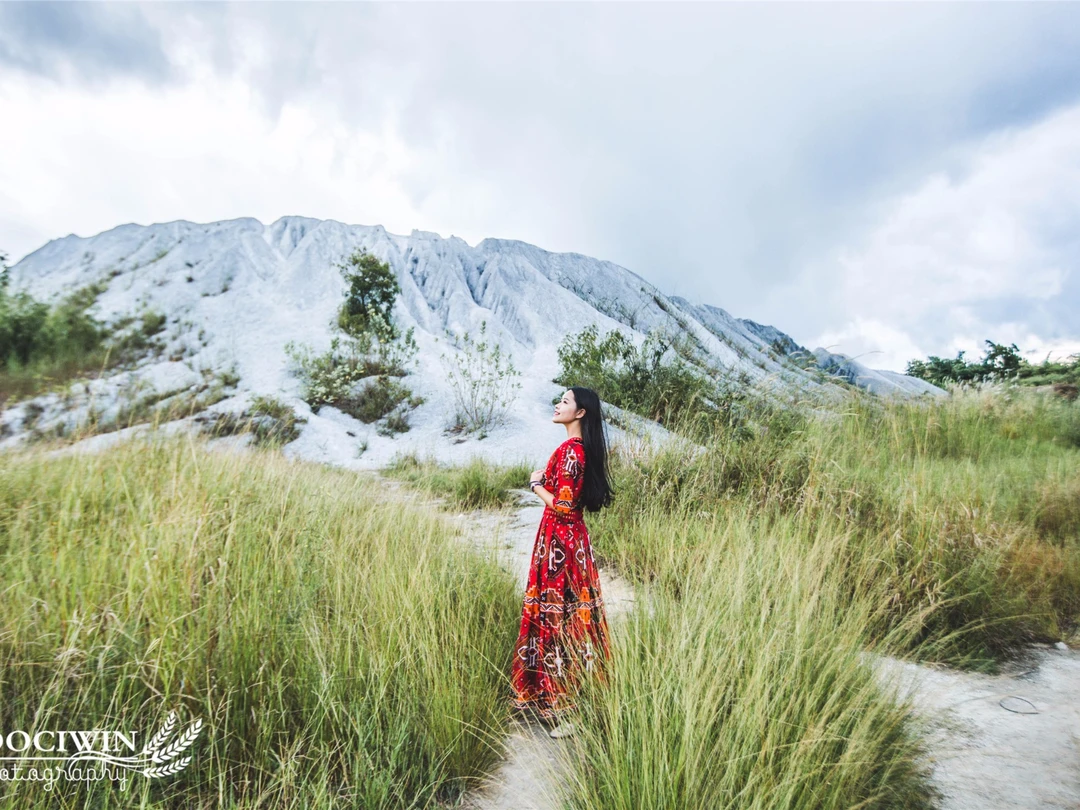
Hey Pattaya, Take Off Your Colored Glasses | A Hidden Gem Trip with My Bestie
Destination: Pattaya, Thailand
Travel Dates: October 22–26, 2018 (5 days)
Travel Companions: Best friend
Approximate Cost per Person: 3,000–4,000 RMB (including flights, accommodation, food, and activities)
The Pattaya You Think You Know
When someone mentions Pattaya, what jumps into your mind?
For most people, the answer is immediate and predictable: ladyboys.
Pattaya has been painted as a city of neon sins—a place where the night never sleeps, where pleasure and chaos dance under flickering lights. It's the kind of destination that makes polite travelers shift uncomfortably in their seats. Sex, shows, sleaze—that's the shorthand.
I'll be honest: I'd visited Thailand three times before, and I never once set foot in Pattaya. Why would I? Everything I'd heard painted it as a tourist trap overrun by package tours and Chinese grandmothers with sunhats and selfie sticks. It felt like a place you endured, not enjoyed.
But then I started wondering: What if we've been wrong?
What if Pattaya has a softer side—a quieter, more artistic, more surprising personality waiting to be discovered? What if, beneath the glitter and the grit, there's a city that deserves a second chance?
So I decided to dig deeper. I went looking for the Pattaya that doesn't make it onto postcards or into tour brochures. And what I found completely changed my mind.
Let me take you there.
The Abandoned Quarry That Looks Like Another Planet

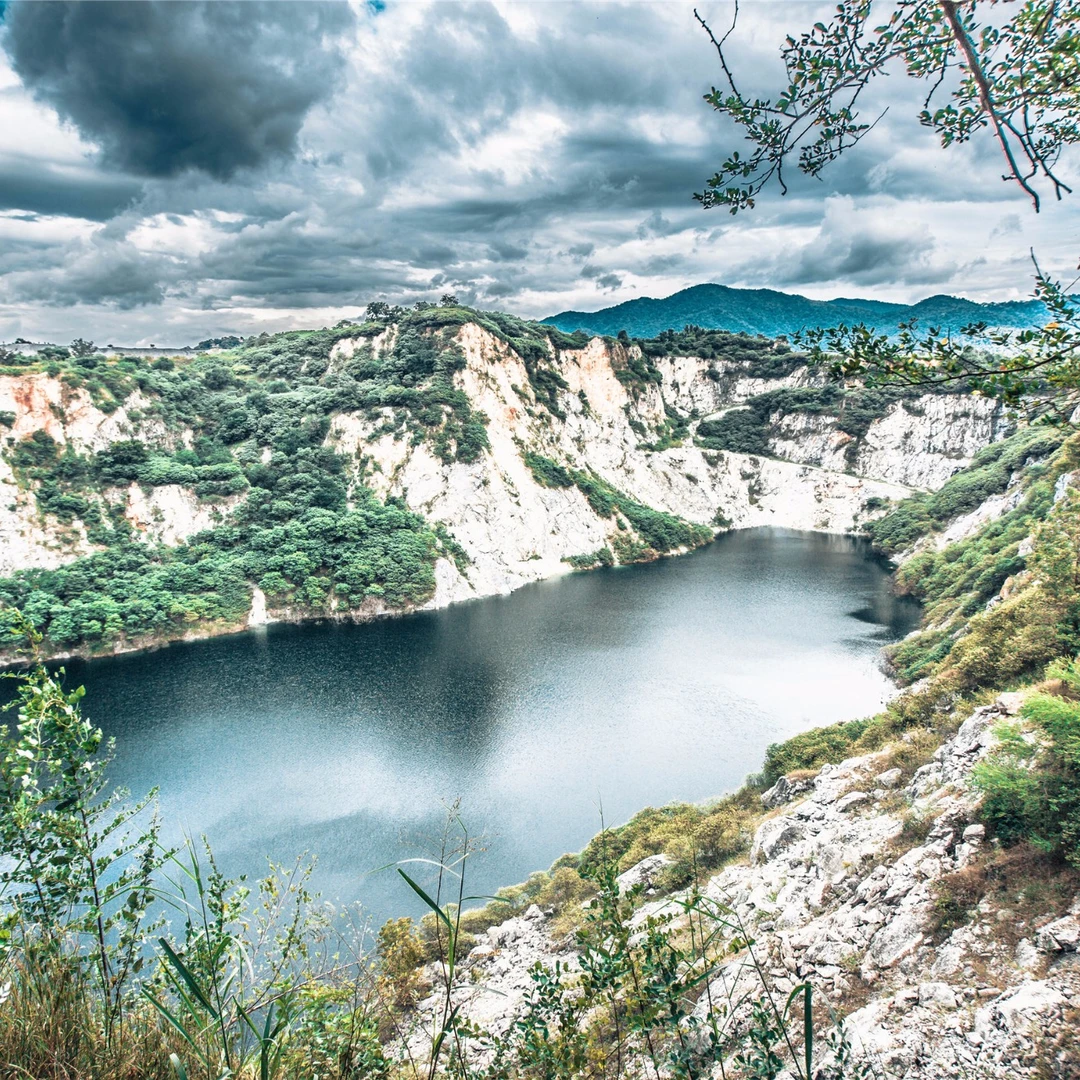
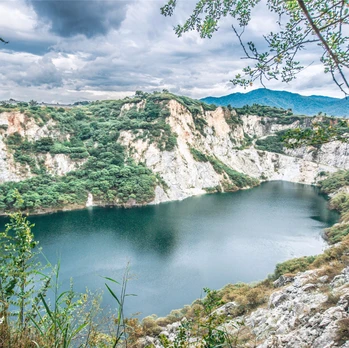
Grand Canyon Chonburi
Finding truly off-the-beaten-path spots in Pattaya took some serious research. Most travel guides point you toward cabaret shows and beer bars. But buried in a forgotten corner of the internet, I stumbled upon a single forum post titled "Pattaya's Unknown Travel Gems." One photo was all it took.
I immediately added it to our itinerary.
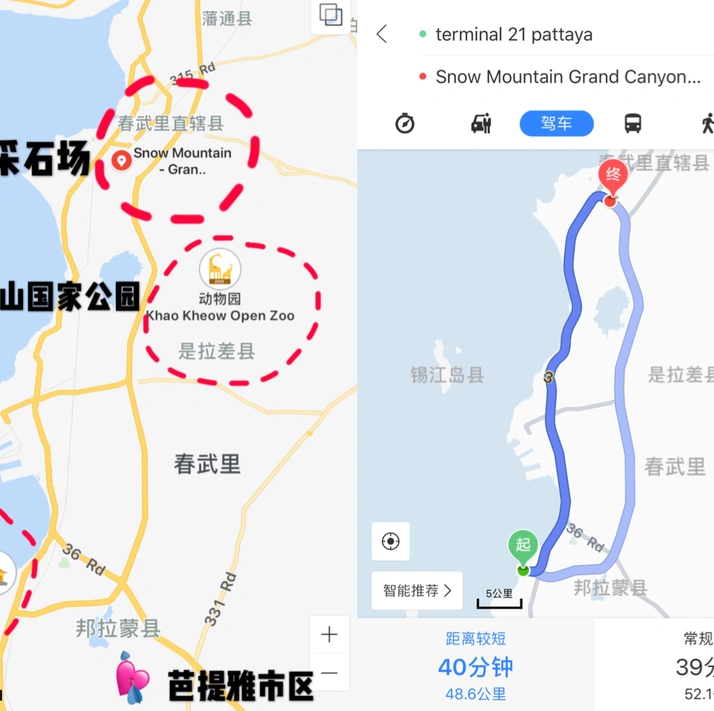
The place doesn't even have an official name. Locals call it Grand Canyon Chonburi, but it's not a canyon at all—it's an abandoned limestone quarry. There's no public transport, so we hired a private driver for the day (around 400 RMB, which felt steep but worth every baht).
Our hotel staff, all Pattaya natives, lit up when we mentioned it. "No Chinese tourists go there," they said, grinning. "You'll love it."
The drive took about 1.5 hours from central Pattaya. When we arrived, there was no entrance fee—just a 20-baht parking charge. Our driver, a friendly local guy, pulled out his phone and started snapping photos too. He'd never been either.
The first thing you see is a small forest path lined with wild grass. A wooden swing hangs from a tree, clearly set up for Instagram shots. A Thai couple was shooting their wedding photos nearby.
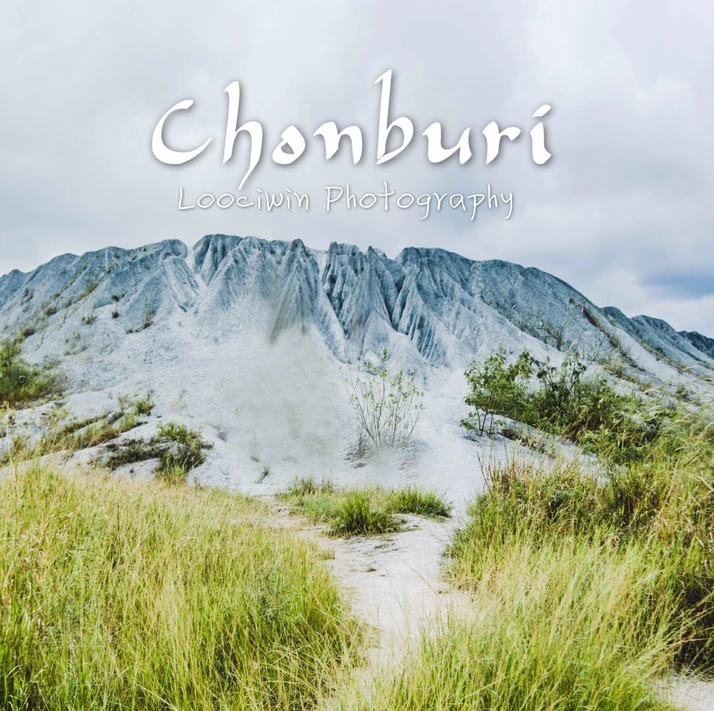
Then you step through the trees—and the world drops away.
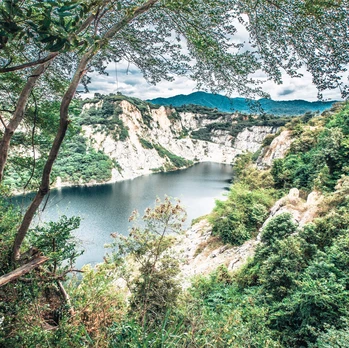
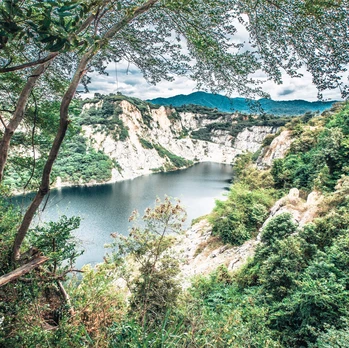
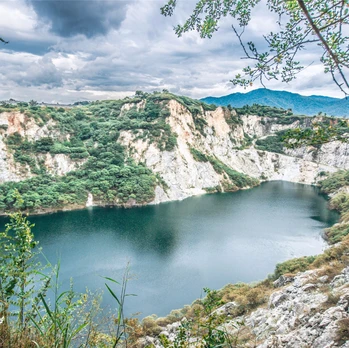
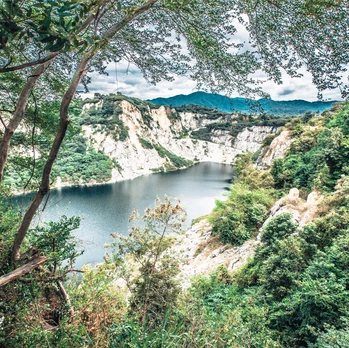
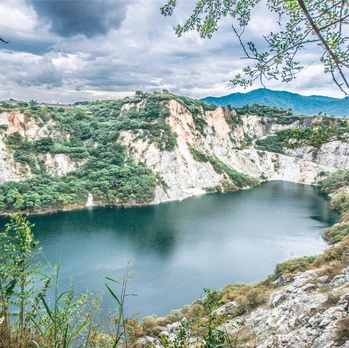
The quarry opens up before you like a wound in the earth. What was once a mining pit is now a still, green lake. The water is so calm it feels hypnotic. You stare into it, and something in your chest goes quiet.
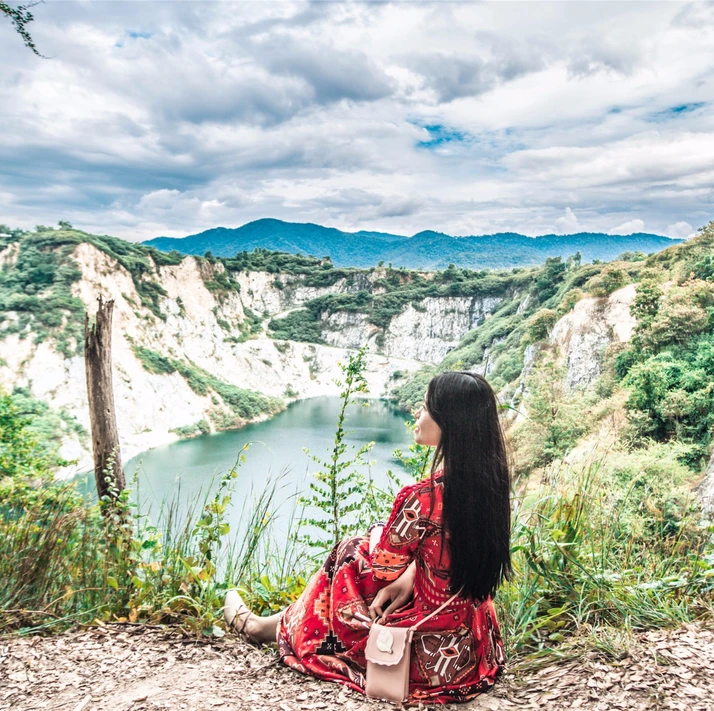
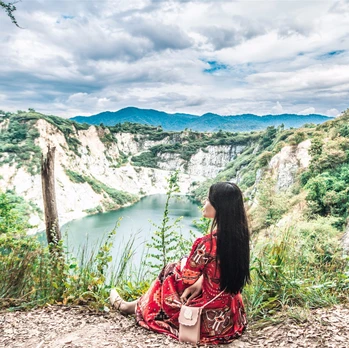
I sat down on the grass, pushed aside the weeds, and just looked.
There's a famous Nietzsche quote: "When you gaze long into an abyss, the abyss also gazes into you." That's the energy here. Not scary—just profound.
Further along, the real photo spot appears. The quarry walls rise like ancient ruins, and the water turns a deep, mysterious emerald. A safety railing runs along the edge, but if you want that shot—the one where you look like you're standing alone on a cliff—you'll have to climb over it.
I did. (I don't recommend it if you're unsteady on your feet.) The stone platforms are steep and uneven. I shuffled out to the flattest one, sat down, and held my breath. My friend snapped the photo in three seconds flat. The result? Pure cinematic drama. Like a scene from The Revenant—if the revenant was wearing a sundress.
Pro tip: Next to the quarry is an abandoned railway track. It's still in use, so keep an ear out for trains. But for the two minutes you have between trains, it's a photographer's dream.
The Fake Snow Mountain That Fooled Everyone
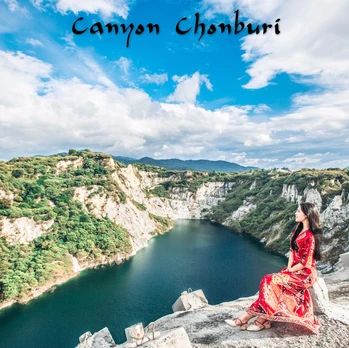
Chonburi Snow Rock
"There's a snow mountain in Thailand?"
That's what I said when I first saw the photo. A white, jagged peak rising against a grey sky—it looked like something from the Himalayas. Turns out, it's not snow at all. It's limestone, piled up by quarry workers over decades, then eroded by rain into sharp, frozen-looking ridges.
Locals call it Snow Mountain. And most Thais don't even know it exists.
The spot is just a short walk from the Grand Canyon quarry, hidden behind a tangle of weeds and dirt paths. If you don't know what you're looking for, you'll walk right past it.
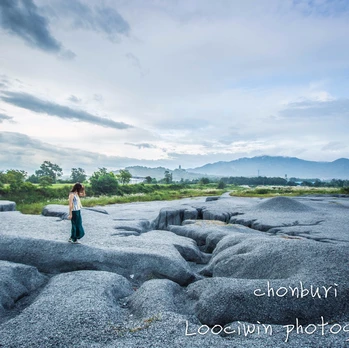
We followed a narrow trail through the brush. The sky darkened as we walked, and the air turned heavy. By the time we reached the rock, clouds had swallowed the sun. The whole scene felt apocalyptic—in the best way.
The "mountain" is small, really. You can climb to the top in a few minutes. But the textures are incredible. The ridges look like frozen waves, and the white stone glows against the grey sky.
We had the place almost to ourselves. A few other visitors drifted away as rain started to fall. We stayed.
The rain came down in sheets. Our hair was soaked, our clothes clinging to our skin. But we kept shooting. The dark sky added drama. My friend's photos looked like album covers for a post-rock band.
At one point, I asked her to strike a ballet pose on the summit. She tried. The result was less Swan Lake and more Wounded Pigeon. But we laughed so hard we nearly slipped off the rock.
Afterward, we bought ice-cold coconuts from a stall near the quarry entrance and watched the sun set over the green lake. Perfect.
The Zoo That Changed How I See Animals
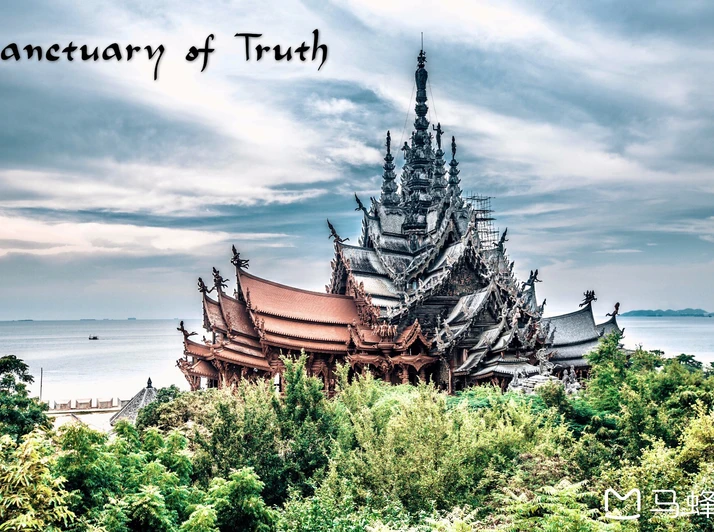
Khao Kheow Open Zoo
I'll be honest: when our driver suggested a zoo, I rolled my eyes. A zoo? In Pattaya? I can see animals at home.
But our hotel staff had insisted: "You must go. It's the best zoo in Thailand."
So we went. And I ate my words.
Khao Kheow Open Zoo is the largest semi-open zoo in Asia. The driving route is 7 kilometers long. You don't walk through cages—you drive through habitats. We rented a golf cart with a driver for two hours.
The first thing you notice: the animals are free. Not free to escape, but free to move. Deer wander up to your cart. Monkeys swing overhead. Birds land on the path in front of you.
We bought bags of vegetables at the entrance—corn, bananas, beans—for 20 baht each. Then the real fun began.
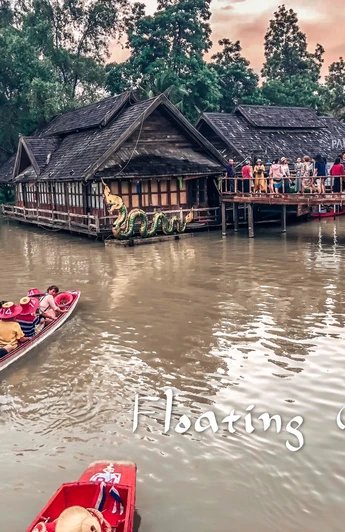
The deer were gentle but greedy. They'd nibble beans from your palm with soft, warm mouths. My friend was terrified at first ("Will it bite me??"), but within five minutes, she was feeding them like a pro.
The sheep were less polite. They fought over carrots, shoving each other with their horns. One particularly aggressive sheep climbed halfway over the fence to get to me. I held the carrot tight—he couldn't bite through it, so he just licked it helplessly. Victory.
The flamingos were the highlight. I'd never fed a flamingo before. You hold a spoonful of fish food, and they waddle over, dip their curved beaks, and gobble it up. Their pink feathers are unreal. They look like they've been airbrushed.
The monkeys were mischievous. They'd hop onto our cart and grab food from our bags. One sat in the middle of the road, eating stolen corn, completely unbothered by traffic.
The elephants were majestic. They curled their trunks around corn cobs and popped them into their mouths like popcorn. But here's a funny detail: they hate bananas. We offered one a banana, and she dropped it on the ground. Another tourist tried the same thing—same result. The ground was littered with rejected bananas. Who knew?
The hippo stayed underwater the whole time. We threw corn into the pond. Nothing. Just a giant yellow blob sleeping at the bottom.
The giraffes were the grand finale. You can buy branches of leaves and hold them up. The giraffes lower their long necks, wrap their purple tongues around the branch, and pull it straight out of your hand. Their eyelashes are impossibly long. Their eyes are soft and curious. Standing next to one, you feel small in the best way.
We spent three hours at the zoo. We could have spent six.
The Surreal Art Gallery You've Never Heard Of
Ramayana Art Gallery
After two days of outdoor adventures, we needed something different. Our hotel recommended a place called Ramayana Art Gallery—a private collection of contemporary Thai art housed in a converted warehouse on the outskirts of Pattaya.
The gallery is small—maybe eight rooms—but every inch is curated with care. The owner, a retired art dealer, greeted us at the door and offered us jasmine tea.
The art is a mix of traditional Thai motifs and surrealist dreamscapes. One painting showed a woman with a birdcage for a head, her hair turning into vines. Another depicted a city floating upside down in the sky. The colors were so vivid they seemed to vibrate.
My favorite piece was a sculpture of a Buddha made entirely from recycled computer parts. Circuit boards formed his robe. Wires twisted into his hair. Old keyboards made up his hands. It was both sacred and profane—a meditation on technology and spirituality.
The owner told us the gallery gets maybe 10 visitors a week. Most are local art students. "Tourists don't come," he said, shrugging. "They go to the walking street."
We bought a small print from the gift shop. It now hangs in my living room. Every time I look at it, I remember the quiet room, the jasmine tea, and the feeling of discovering something truly hidden.
The Beach That Tourists Miss
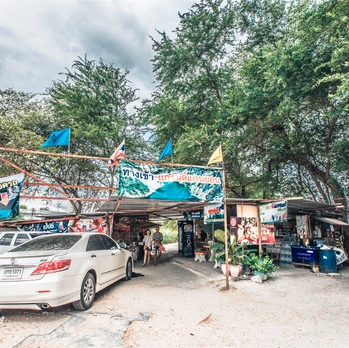
Bang Saray Beach
Everyone in Pattaya talks about Jomtien Beach and Pattaya Beach. Both are crowded, lined with jet skis and vendors selling fried insects. We wanted something quieter.
A local tuk-tuk driver told us about Bang Saray Beach, about 20 minutes south of Pattaya. "No Chinese tourists," he said. "Only Thais."
He was right.
Bang Saray is a fishing village with a long, sandy beach. The water is clear and calm. There are no jet skis, no parasailing, no bars blasting EDM. Just a few wooden restaurants serving fresh seafood, and the occasional dog napping in the shade.
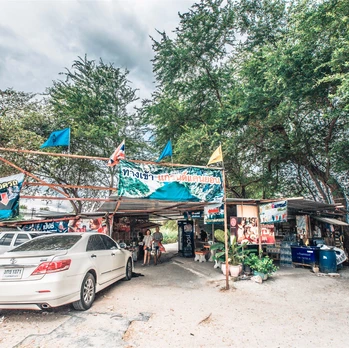
We arrived at 4 PM, just as the sun started to soften. We rented two lounge chairs for 100 baht each and ordered coconut shakes. The waves lapped gently. A fisherman in a wooden boat cast his net nearby.
For two hours, we did nothing. We read. We napped. We waded into the water, which was bath-warm. We watched the sky turn from blue to orange to pink.
At sunset, we walked to a restaurant called Mae Pranee's Seafood. It's basically a hut on stilts over the water. We ordered grilled prawns, green papaya salad (som tam), and steamed crab. The total was 600 baht—about 120 RMB. The prawns were the size of my forearm.
We ate with our hands, cracking crab shells and dipping everything in spicy seafood sauce (nam jim). The sea breeze smelled of salt and charcoal smoke. A stray cat begged under our table.
This, I thought, is the Pattaya I want to remember.
Practical Tips for Your Own Hidden Gem Trip
Getting Around
 Pattaya's public transport is limited to songthaews (shared pickup trucks) and taxis. For the hidden spots, you'll need a private driver. We hired ours through our hotel for about 2,500 baht per day (500 RMB). Negotiate the price upfront.
Best Time to Visit
 November to February is the cool season. October is still rainy but quieter. Avoid April (Songkran/Thai New Year) unless you want to get drenched.
What to Pack
 - Insect repellent (essential for the quarry and zoo) - Comfortable walking shoes (you'll climb rocks and trails) - A light rain jacket (sudden downpours are common) - Swimwear (for Bang Saray) - A camera with good zoom (for the zoo animals)
Where to Stay
 We stayed at a boutique hotel called Siam View in central Pattaya. It was clean, affordable, and the staff were incredibly helpful. Ask for a room on the upper floors for a view of the city skyline.
Language
 English is widely spoken in tourist areas, but learning a few Thai phrases helps: - Sawadee ka (hello) - Khop khun ka (thank you) - Aroi mak (very delicious)
Safety
Pattaya is generally safe, but watch your belongings in crowded areas. The quarry and snow rock are unguarded—be careful near edges.
Final Thoughts: The Pattaya I Found
So, is Pattaya worth visiting?
Yes—but not for the reasons you think.
Skip the walking street. Skip the cabaret shows. Skip the beer bars. Instead, go to an abandoned quarry and stare into green water. Feed a giraffe. Eat crab with your hands on a fishing village beach. Find a snow mountain made of limestone in the middle of a tropical country.
Pattaya, I owe you an apology. I judged you by your loudest parts. But underneath the neon and the noise, you're a city of surprising quiet, strange beauty, and genuine warmth.
Take off your colored glasses, Pattaya. I've taken off mine.
Have you been to Pattaya? Did you discover any hidden gems? Share your stories in the comments below!
You should also read:
Dreaming of Lijiang, Dreaming of Shangri-La: A Journey That Lets Your Soul Breathe Deeply
Dreaming of Lijiang, Dreaming of Shangri-La: A Journey That Lets Your Soul Breathe Deeply Life is like a long trek. We're always rushing through the concrete jungle, searching for a glimmer of light in the monotony of our days. Then one autumn, I heard the…
Continue reading...
A 9-Day Yunnan Journey: From Lijiang to Dali to Tengchong – A Trip Toward Self-Reconciliation
A 9-Day Yunnan Journey: From Lijiang to Dali to Tengchong – A Trip Toward Self-Reconciliation Some say travel is simply going from a place you're tired of to a place other people are tired of. It stings to hear, but it's painfully true. Yet there's…
Continue reading...
Into the Hidden Valley: A Solo Journey Through the Mysterious Dulong River
Into the Hidden Valley: A Solo Journey Through the Mysterious Dulong River Deep in the northwestern corner of Yunnan Province, tucked away from the modern world, lies a place that feels like a secret whispered among mountains. The Dulong River Valley is not just a…
Continue reading...