Hidden Yunnan: Finding the Most Authentic Side of the Province Between Hani Rice Terraces and Ancient Towns
Hidden Yunnan: Finding the Most Authentic Side of the Province Between Hani Rice Terraces and Ancient Towns
While social media feeds were flooded with crowds squeezing through famous scenic spots, we found ourselves in a valley in southeastern Yunnan, listening to the symphony of birdsong and flowing streams. This trip had no rushed check-ins, no suffocating crowds—only morning mist over terraced fields, blue bricks of ancient towns, and the warm everyday moments tucked away in the folds of time.
Why Southeastern Yunnan?
As one of China's most popular tourist provinces, Yunnan's appeal needs no introduction. But when we set foot on this land for the fifth time, we had only one thought: find a quiet place and just stay for a few days.
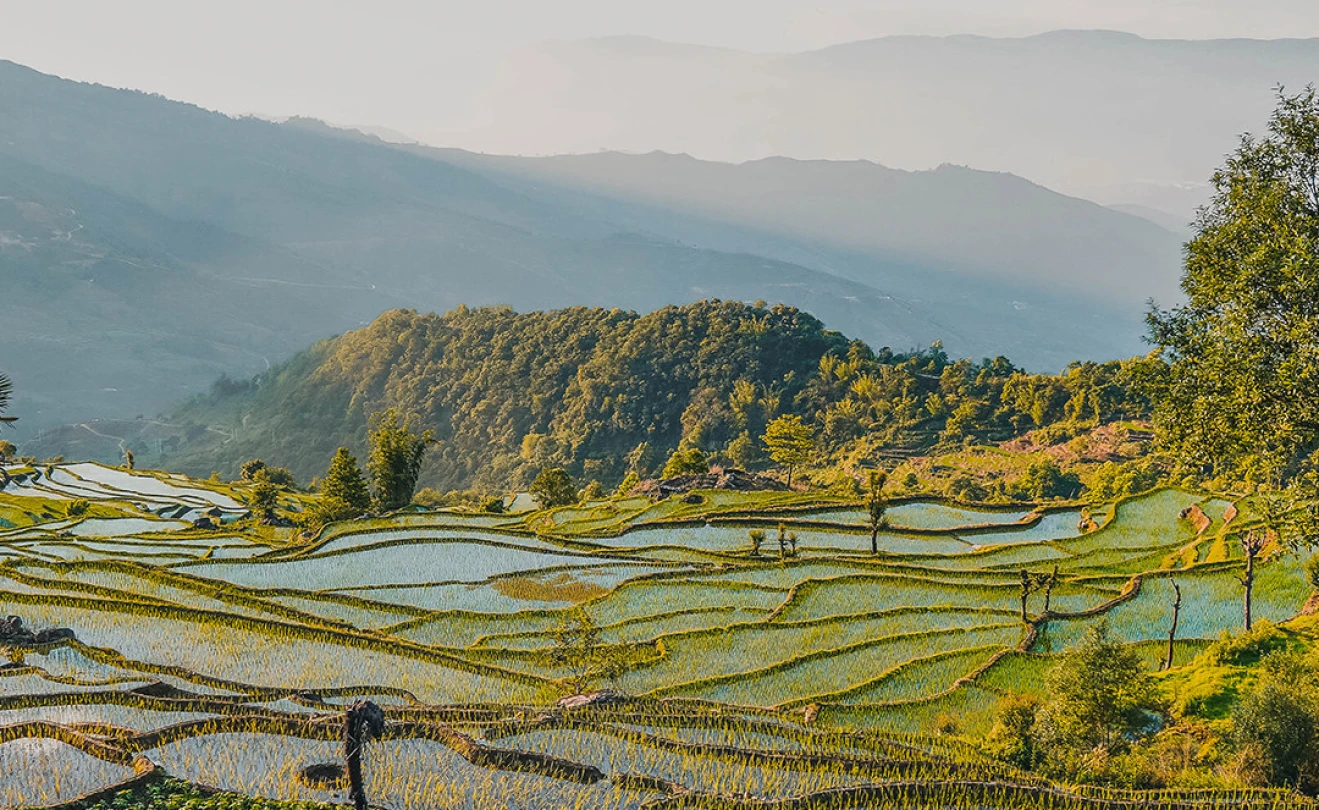
So we turned our attention to southeastern Yunnan. There's no romantic snow and moonlight of Dali, no artistic bohemian vibe of Lijiang. Instead, it holds 1,300-year-old Hani rice terraces, the 1,200-year-old Jianshui Ancient Town, and countless古朴 villages forgotten by time. Over six days and five nights, we drove south along the Red River Valley, moving between terraced fields and ancient towns, discovering the most authentic face of Yunnan.
Day One: Cloud-Hidden Paradise in the Red River Valley
A Five-Hour Journey Through Time
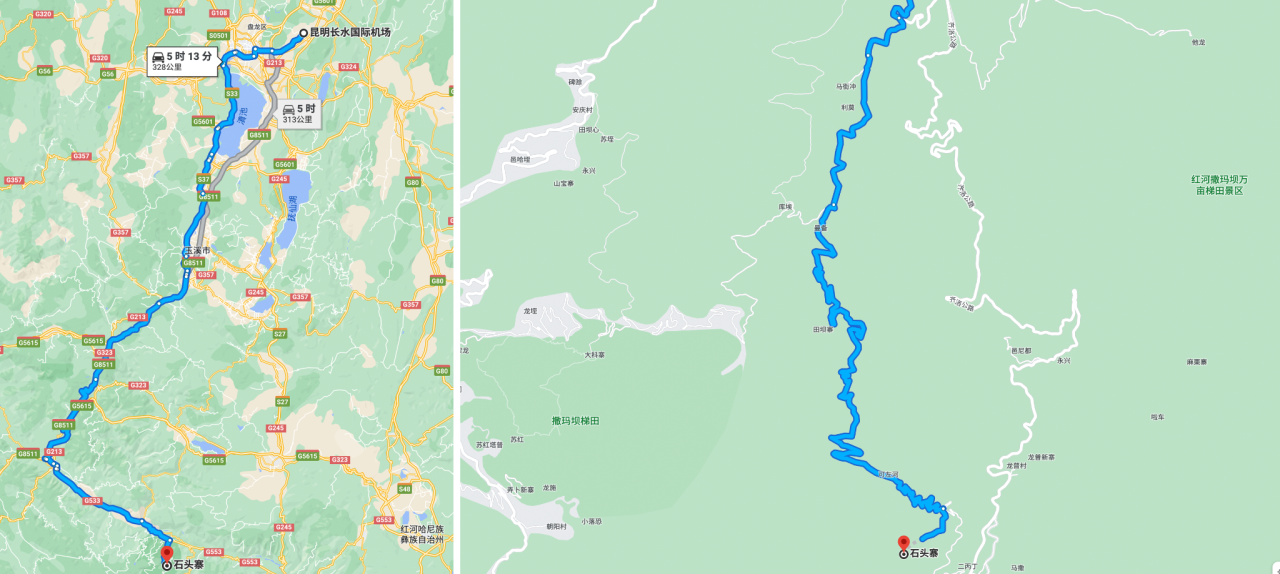
We landed at Kunming Changshui Airport at noon, picked up our car, and headed straight for Honghe. The 328-kilometer drive was mostly smooth—268 kilometers on expressway, but the last 60 kilometers wound through treacherous mountain roads. The map showed roads twisting like sheep intestines, and those curves consumed more than half our driving time.
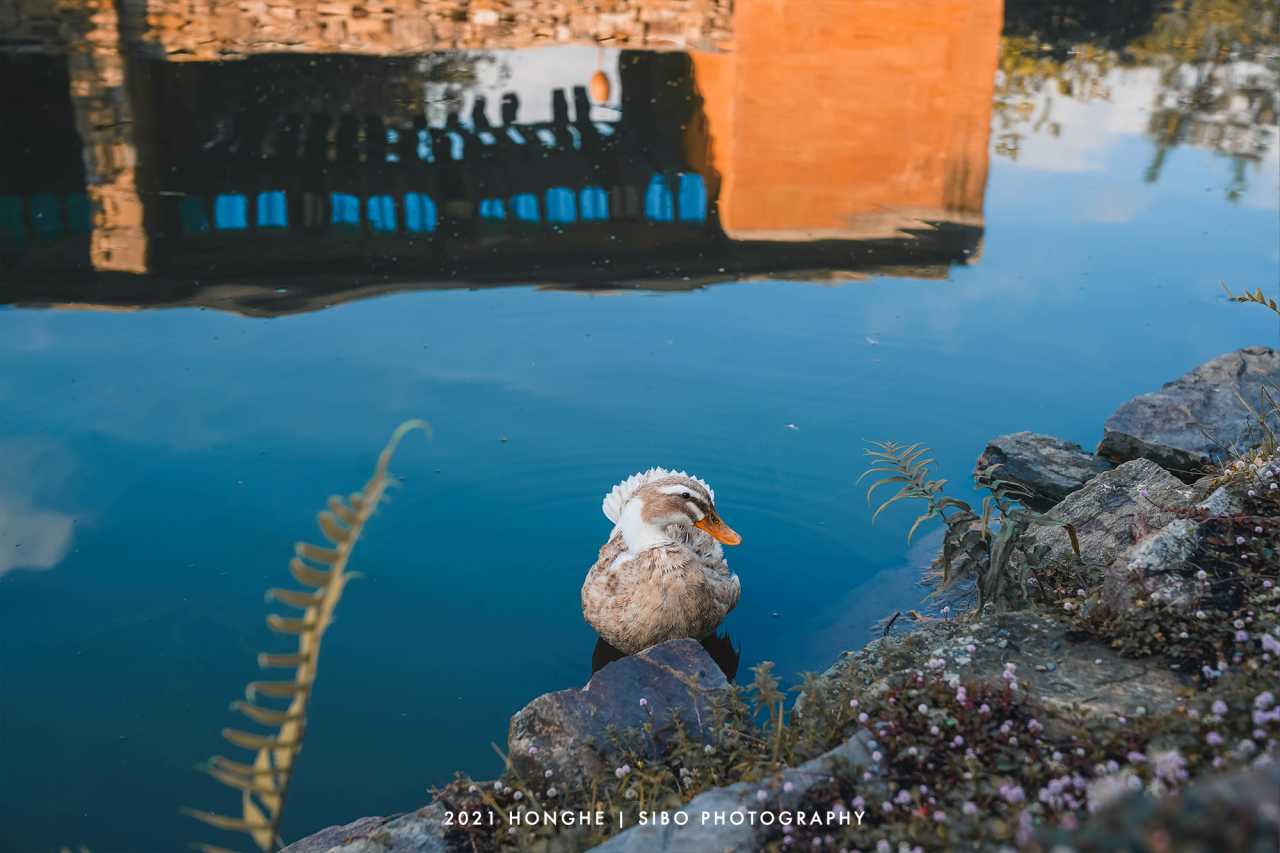
By 5 PM, when we finally turned onto a long stone path paved with locally sourced rocks, the noise of the city vanished instantly. This was a tent resort hidden beside the UNESCO World Heritage Hani Rice Terraces—a secluded haven where the concept of "May Day Golden Week" simply didn't exist.
Living in a Tent on the Terraces
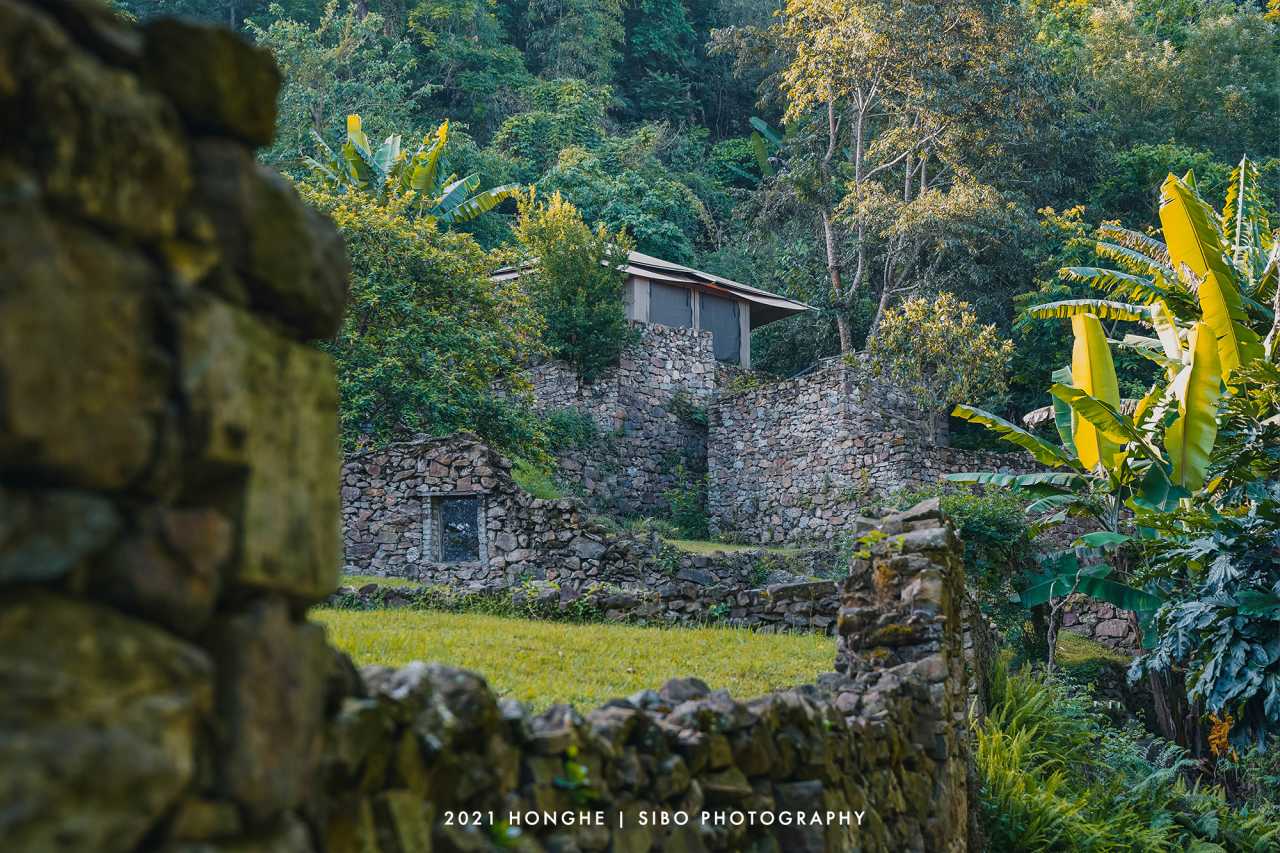
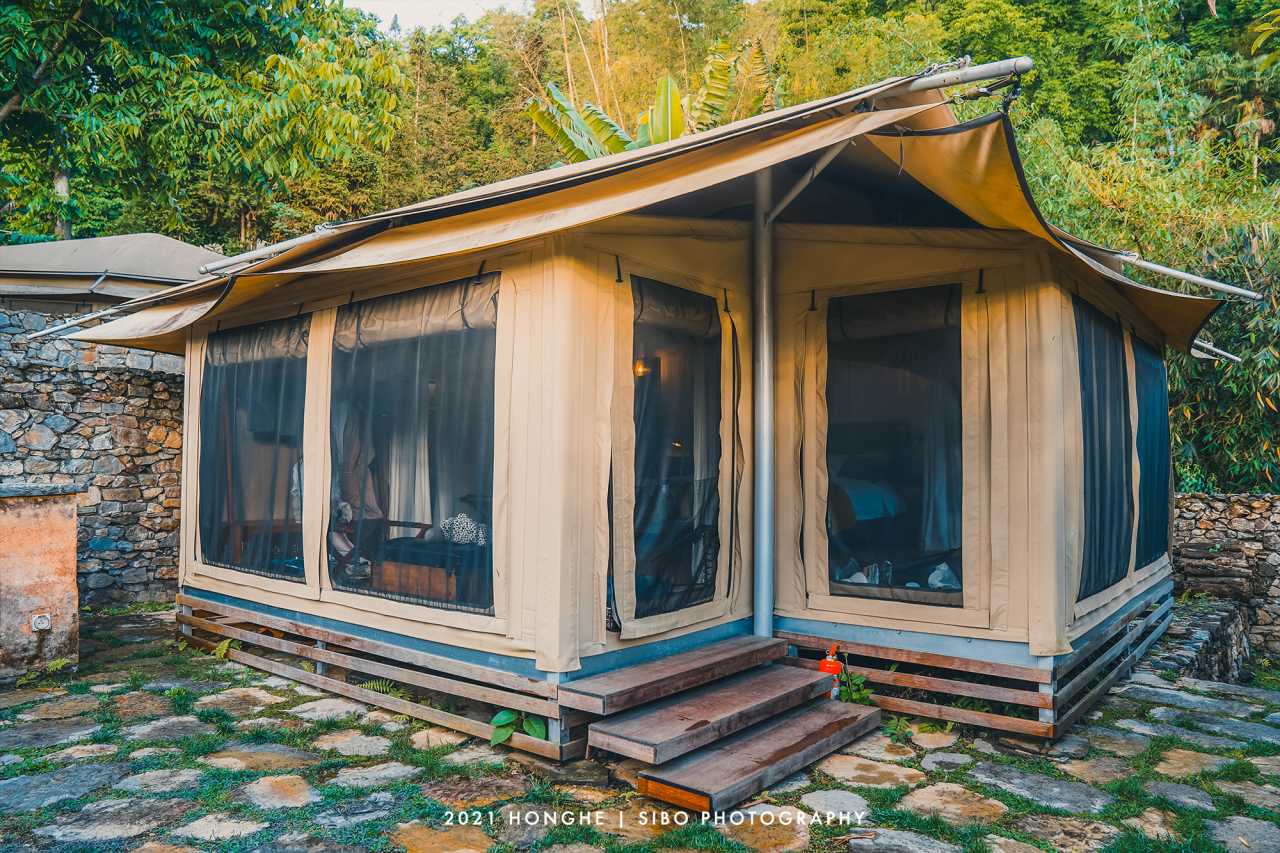
The resort was peaceful, filled only with wind, birdsong, and the occasional distant dog bark. Each tent was separated by small paths and stone walls, with its own courtyard ensuring plenty of privacy. Our group of four booked two double tents, each about 45 square meters, complete with a bubble bath in the courtyard.
Honestly, I had worried about tent hygiene and conditions before checking in. But the moment I pushed open the tent door, all concerns vanished. Wooden floors, comfortable king-size beds, elegant bedside tables and a minibar, a bathroom with separate wet and dry zones, and full toiletries—it offered comfort comparable to a star-rated hotel while preserving the unique rustic charm of camping.
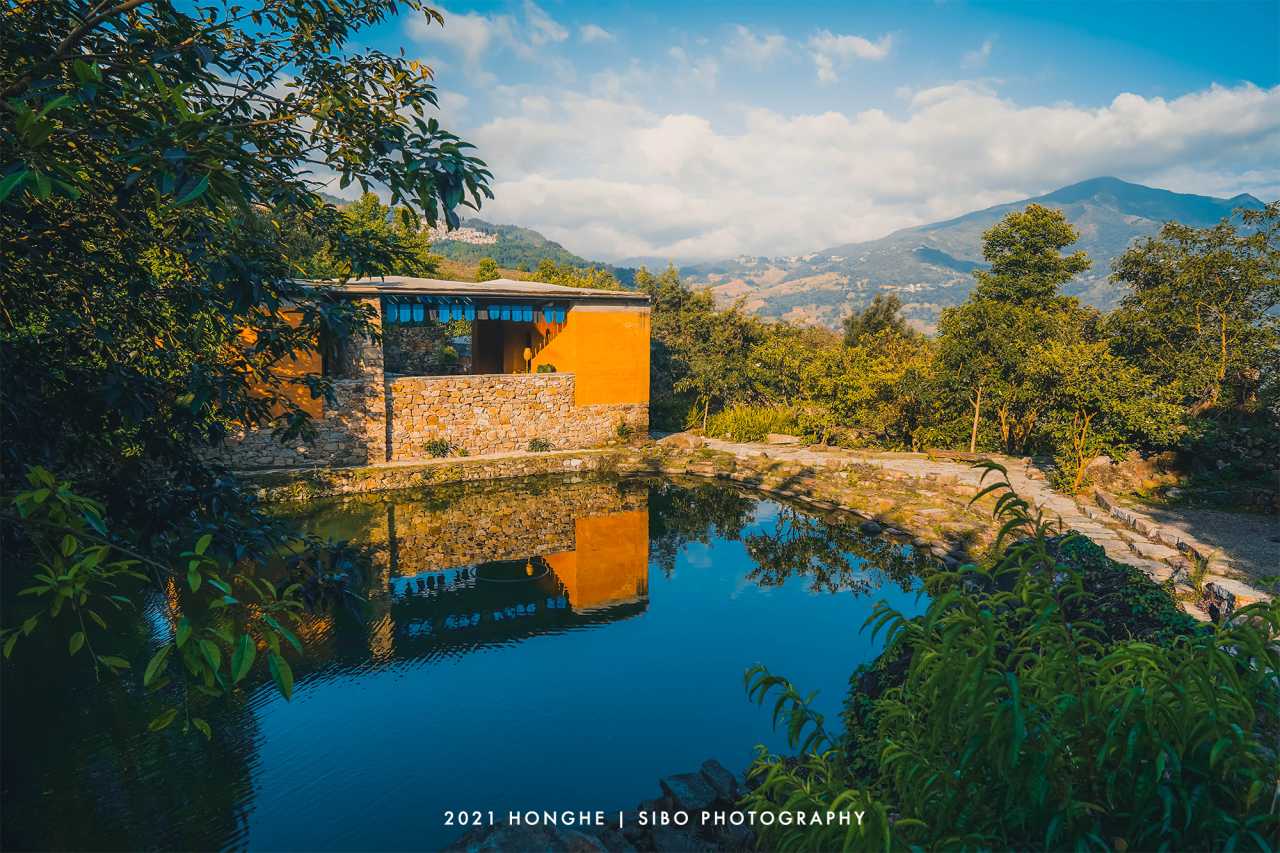
The common areas were even more surprising: a reading room, a water bar, a campfire area, and an infinity pool built right on the terrace ridges. Standing by the pool and looking outward, layer upon layer of terraced fields stretched endlessly, with thin mist drifting slowly through the distant mountains—a flowing landscape painting come to life.
A Restaurant Without a Menu, Yet the Most Authentic Flavors
The resort's restaurant was a rammed-earth building with large windows that practically erased the boundary between dining table and outdoors. There was no menu. The cook prepared Hani specialty dishes daily based on whatever local ingredients she could buy that day. Dried beef, wild mountain vegetables, terrace fish, Hani dipping chicken—each home-style stir-fry carried the purest taste of the mountains.
The rice was Hani red rice from the terraces, harvested only once a year. The grains had red outer skins and starchy white interiors, with a satisfying chew. After dinner, we strolled along the resort's paths. The terraces and villages were like a silent poem, or a tangible painting. That evening, we gathered in our courtyard's massage pool, soaking our feet, chatting, and stargazing—so comfortable we lost all track of time.
Day Two: Finding Life's Rhythm in the Terraces
Woken by Birdsong
Stepping out of the tent in the morning, we were greeted by blue skies, white clouds, and lush green mountains. The city's rumbling noise had been replaced by cheerful bird calls. This raw, direct connection with nature instantly lifted our spirits.
Breakfast was semi-buffet style. A charcoal stove simmered with congee and soy milk. Bamboo steamers held assorted grains. There were seasonal fruits, freshly cooked rice noodles, and fried eggs. Western essentials like toast and coffee were also available—the resort struck a perfect balance between "wilderness" and "refinement."
Hiking Through the Terraces, Into Hani Life
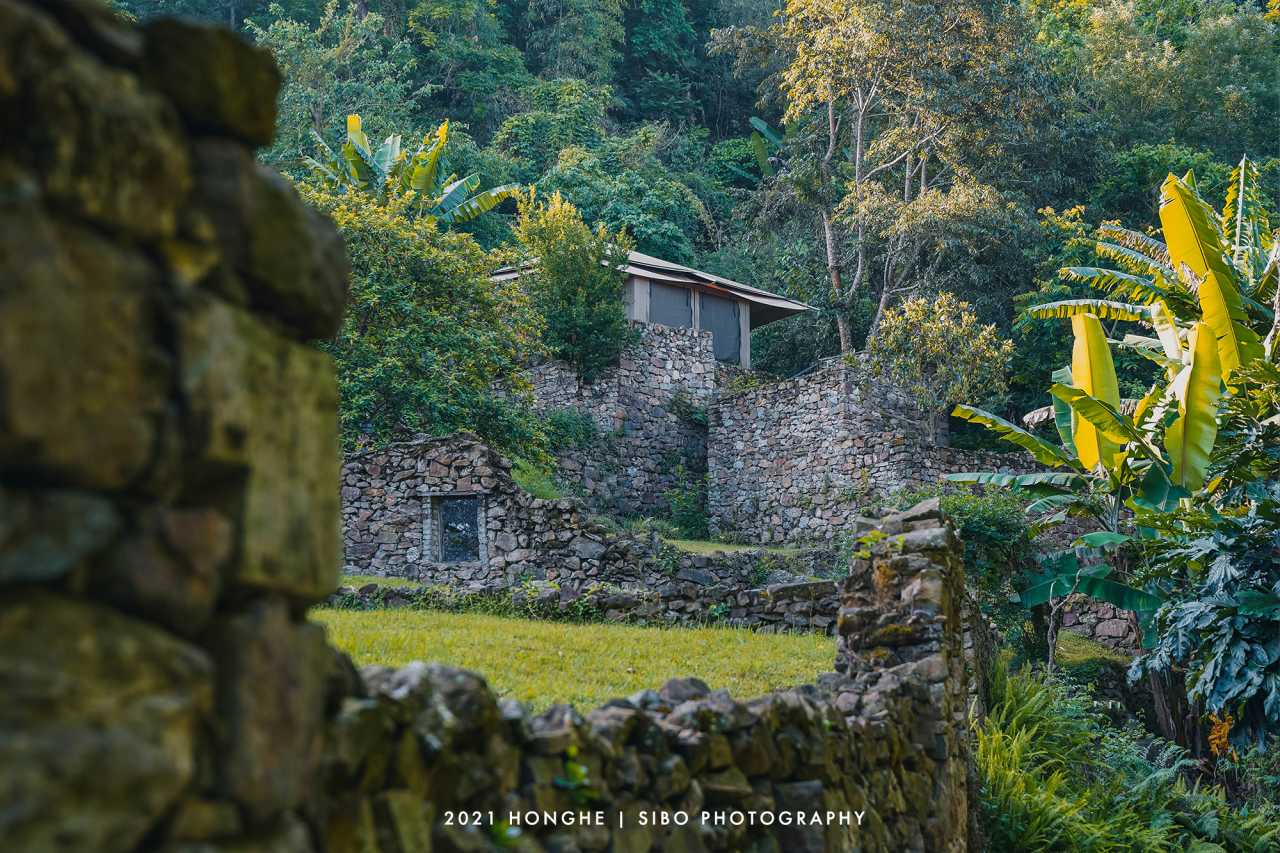
At 10 AM, the resort guide led us on a two-hour hike through the terraced fields and ancient villages. The service was thoughtful: our group of four, plus a family of three (seven people total), had two guides—a local Hani girl who explained customs and culture, and a university intern who brought up the rear for safety.
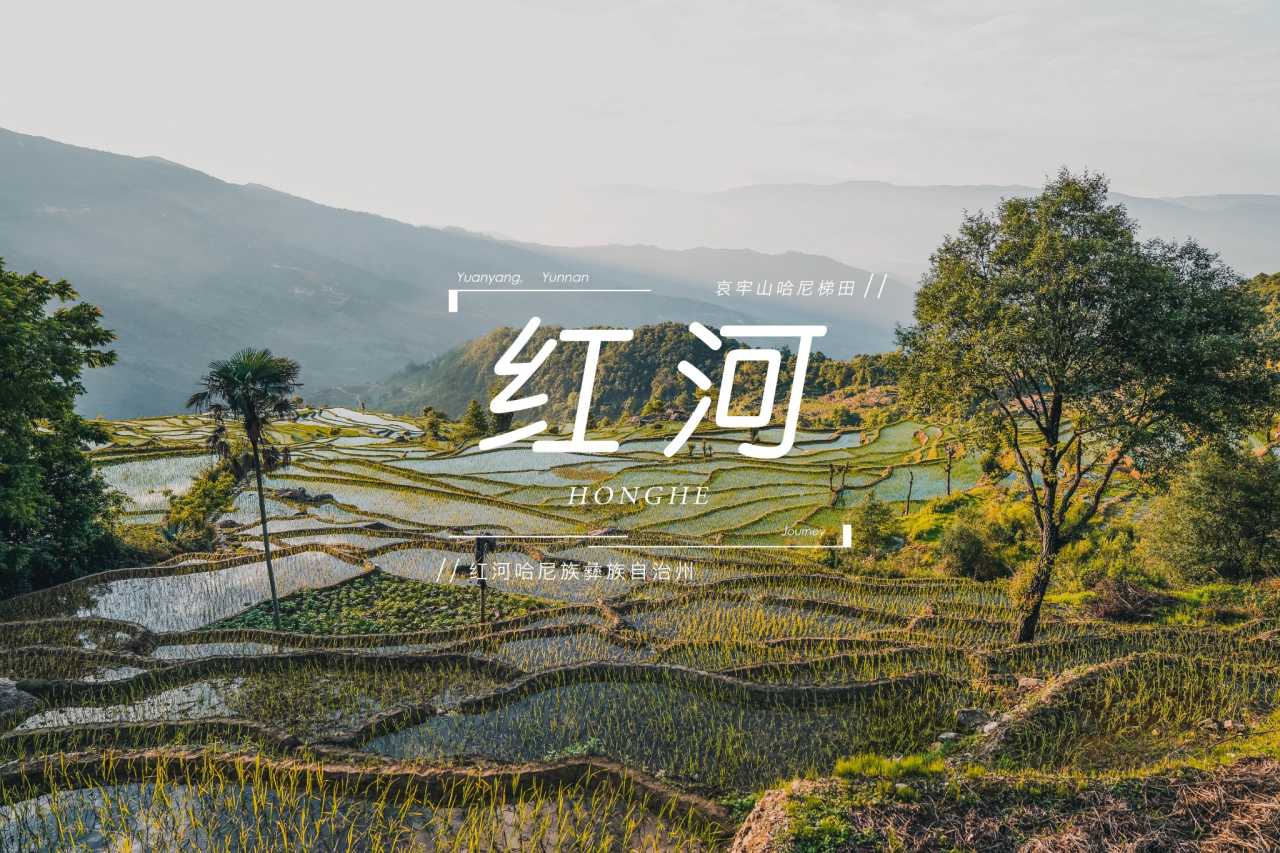
In early May, the terraces had just been flooded. The rice seedlings hadn't sprouted yet, but the fields were already bursting with vitality. We climbed higher along the terraces, and after about 40 minutes, we reached Meidong Village, hidden deep in the mountains. Most villagers had already moved to town; only a few elderly families remained to guard their ancestral homes.
Standing at the village entrance and looking down, the terraces formed flowing yet orderly lines—a perfect marriage of human ingenuity and nature's craftsmanship. Our Hani guide didn't recite scripted tour lines. Instead, she shared stories with genuine simplicity. When she spotted wild fruit on a tree, she happily picked it for us to taste. When a guest wanted to buy some local free-range chicken, she immediately called a friend to help.
Afternoon: Becoming "Fish Catchers"
After a lunch break, we tried our hand at hand-pounded rice cakes during afternoon tea. The staff brought steamed glutinous rice and tools. It looked simple, but once we tried, we discovered the hidden difficulty—we couldn't find the right angle or force, and our pounding lacked the staff's power. We rolled the still-warm cakes on lotus leaves, formed them into small balls, and dipped them in white sugar or peanut powder. They were far chewier than machine-made versions.
At 5 PM came the main event: terrace fishing. We put on straw hats, waterproof pants, rubber boots, and bamboo baskets—proper professional gear. But once we stepped into the muddy terraces, we realized we couldn't see the fish at all in the murky water. We had to rely on occasional bubbles on the surface or just feel around with our hands. The soft mud swallowed our feet, and we often had to bend over and support ourselves with bamboo cages just to keep our balance.
A middle-aged uncle fishing with us was incredibly skilled, catching three big fish in a row. That instantly ignited our competitive spirit. Our group of four started chasing and blocking, splashing around in the pond for several rounds before finally enjoying a bountiful harvest. That night, those fish became crispy-on-the-outside, tender-on-the-inside braised terrace fish—made all the more delicious by our own labor.
Bonfire Night: The Last Evening in the Wilderness
After dinner, the resort organized a bonfire party and barbecue. Jianshui tofu, rice cakes, meat skewers, vegetables... we grilled and ate among the terraces, accompanied by the gentle chirping of birds and insects. As night fell, we lit the bonfire and had a drink at the outdoor bar. Long-term city living makes you cherish these opportunities for close contact with nature even more.
If time allows, I highly recommend experiencing this three-day, two-night mountain village life.
Day Three: Jianshui Ancient Town—Old Times in Blue Brick Alleys
A Low-Key Millennia-Old City
Compared to tourist magnets like Dali and Lijiang, Jianshui feels低调 and unpretentious. But during the Ming and Qing dynasties, there was a saying: "Gold Lin'an, Silver Dali"—"Lin'an" being Jianshui's ancient name.
Chaoyang Tower is Jianshui's landmark, built 28 years before Beijing's Tiananmen Gate. Its upturned eaves and flying corners, set against ancient red walls beneath a blue sky, exude an imposing dignity. Beneath the eaves hangs calligraphy by the Tang dynasty's "Grass Sage" Zhang Xu, reading "Flying Clouds and Flowing Mists"—bold, free, and elegant.
The ancient town isn't large; you can walk from the center to the edge in 30 minutes. Over 50 ancient buildings remain preserved within, earning it the nickname "Museum of Ancient Architecture." If you get tired, there's an official sightseeing cart—5 yuan per person, about 10 minutes from the east gate to the west gate.
Staying in a Century-Old Mansion, Feeling the Republic Era
We chose to stay at Bamboo Leaf Pavilion, a guesthouse converted from one of Jianshui's "Top Ten Courtyards." This century-old mansion, built in the early Republic of China, was once the private residence of the Lin'an town mayor, later used as housing for staff of the Chongzheng Academy. A wooden quadrangle courtyard with corner-turning corridors, brick carvings, ornamental window doors, and wooden stairs—walking through it felt like returning to the Republic era.
Every window framed a painting. With each step, the view changed. The guesthouse was impeccably maintained—blue brick floors spotless, potted plants and bonsai in the courtyard carefully trimmed. Though the rooms were small, the texture of the old architecture itself was worth experiencing.
Jianshui Food Diary
Stop 1: Huangji Vietnamese Rice Rolls
Many restaurants in Jianshui sell Vietnamese-style rice rolls, likely because Honghe Prefecture borders Vietnam. Rice milk is steamed into semi-transparent sheets, then rolled around various fillings. The texture is like cheung fun wrapped around bun fillings. We tried four flavors: mushroom and pork, celery and pork, pickled vegetable, and scallion and pork. The skins were slightly oily and quite filling. Rating: ⭐⭐⭐
Stop 2: Amao BBQ
A 30-year-old institution that became an internet sensation after Nicholas Tse visited. The signature Jianshui grilled tofu is a must. We chose rectangular "baojiang" (stuffed) tofu—crispy outside, tender inside. The local chili dipping sauce was genuinely spicy, but the tofu was salty enough on its own. Fun detail: the owner counts his tofu by eating one piece and dropping a corn kernel into a bowl, settling the bill by kernel count. Grilled grass shoots (caoya) were slightly charred on the outside, juicy and tender inside—perfect for cutting through the richness. Rating: ⭐⭐⭐
Stop 3: Papaya Old Shop
A reputedly century-old shop, famous for papaya water—a mix of papaya seed jelly and rose syrup water. The sweetness was one-dimensional. Not worth a special trip if you're not passing by. Rating: ⭐⭐
Stop 4: Siahong Specialty Hand-Grabbed Rice
Dai-style hand-grabbed rice. A large round bamboo tray was piled with glutinous rice, surrounded by lemongrass tilapia, crispy chicken, Dai-style grilled pork belly, fresh bamboo shoots, and more. We put on gloves, grabbed a handful of rice, and wrapped it with various sides. Flavorful but on the salty side. Rating: ⭐⭐⭐
Stop 5: Zhangji Steamed Bun Shop
Reputedly the best baozi in Jianshui, incredibly popular. Their "posu" (flaky) buns looked unremarkable, with six flavors available. By the time we arrived, only pickled cabbage with pork and scallion with pork were left. The bun skin was chewy, but the filling was too oily for our taste. Rating: ⭐⭐
Day Four: Traveling Along the Century-Old Meter-Gauge Railway
Starting the Day with Grass Shoot Rice Noodles
On our second day in Jianshui, we followed the classic little train route by car. Breakfast was the must-try Jianshui specialty: grass shoot rice noodles (caoya mixian). Crisp, tender grass shoots paired with shredded chicken, topped with scallions, chives, and mint for aroma—light, smooth, and satisfying. One person can easily finish a large bowl. Rating: ⭐⭐⭐⭐
If you prefer bolder flavors, try the pork tripe clay pot rice noodles in red chili broth—crispy tripe, chewy noodles, spicy with every bite.
Following the Tracks, Searching for Time's Imprint
Starting from Lin'an Station, we followed the railway tracks forward. Jianshui's little train is part of the Yunnan-Vietnam meter-gauge railway, with tracks just one meter apart. Today, only France, Vietnam, Myanmar, Malaysia, and China still have operational meter-gauge railways.
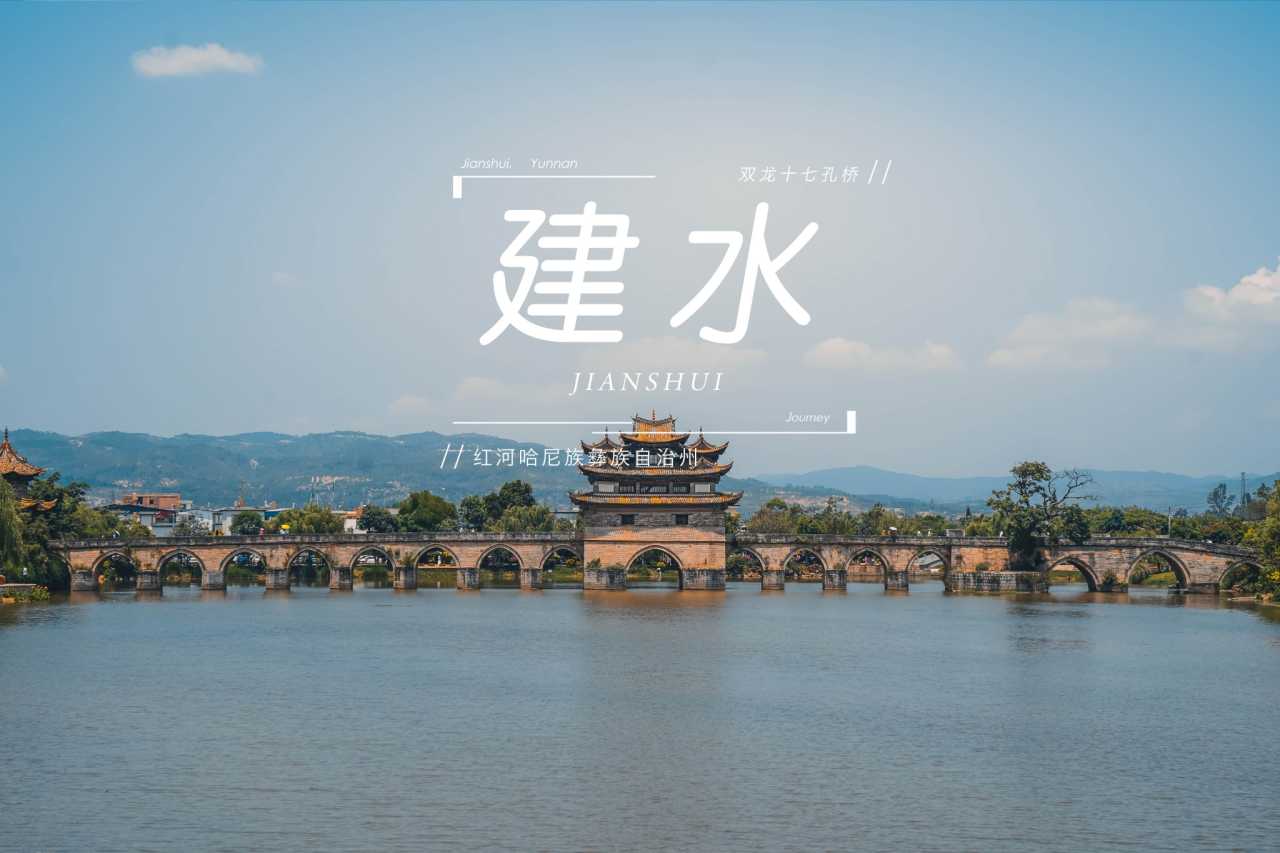
First stop: Shuanglong Bridge, commonly known as the Seventeen-Arch Bridge, built during the Qing dynasty. The bridge spans 148 meters, with a three-story pavilion in the center and smaller pavilions at both ends. From a distance, it looks like a grand ship.
Second stop: Xianghuiqiao Station, completed in 1936. Its goose-yellow exterior is now weathered, but the French-style design blended with Chinese elements gives it a unique character. The station now houses a restaurant and garden café, where retro charm meets vibrant flowers and greenery.
Ant Workshop: A Candy-Colored Geometric Maze
Final stop: Jianshui's internet-famous Ant Workshop (Yigongfang). Artist Luo Xu transformed an abandoned kiln area into a candy-colored art park. Five-hole hollow bricks in various colors were stacked into geometric shapes, playing with light and shadow in imaginative ways. Blue sky, red-and-white brick walls—every corner offered a photo opportunity.
During May Day, capturing shots without other tourists required patience, but it was worth the wait. The park isn't large—you can explore and photograph it in just over an hour.
Xiaobo BBQ: More Hype Than Substance
For dinner, we planned to try Jianshui's top-rated BBQ, Xiaobo BBQ. You need to queue up and order early, or you might wait 3-4 hours. The small shop is tucked away in an alley, with hygiene standards that are "king" among hole-in-the-wall eateries. We ordered fish, small meat skewers, flipped beef, dried beef, grass shoots, and more. After waiting nearly two hours, we finally ate.
But overall, it was more hype than substance—everything was greasy and heavily seasoned, without distinct flavors for different ingredients. If you have to queue three hours, it's really not worth it. Rating: ⭐⭐
Day Five: Maitreya Dongfengyun—Oriental Fantasy
A Detour to Southwest China's Largest Mosque
Before leaving Jianshui, we enjoyed a refined breakfast at the guesthouse: grass shoot and chicken rice noodles, soup dumplings, soy milk and fried dough sticks, all set in a courtyard surrounded by greenery and a koi pond.
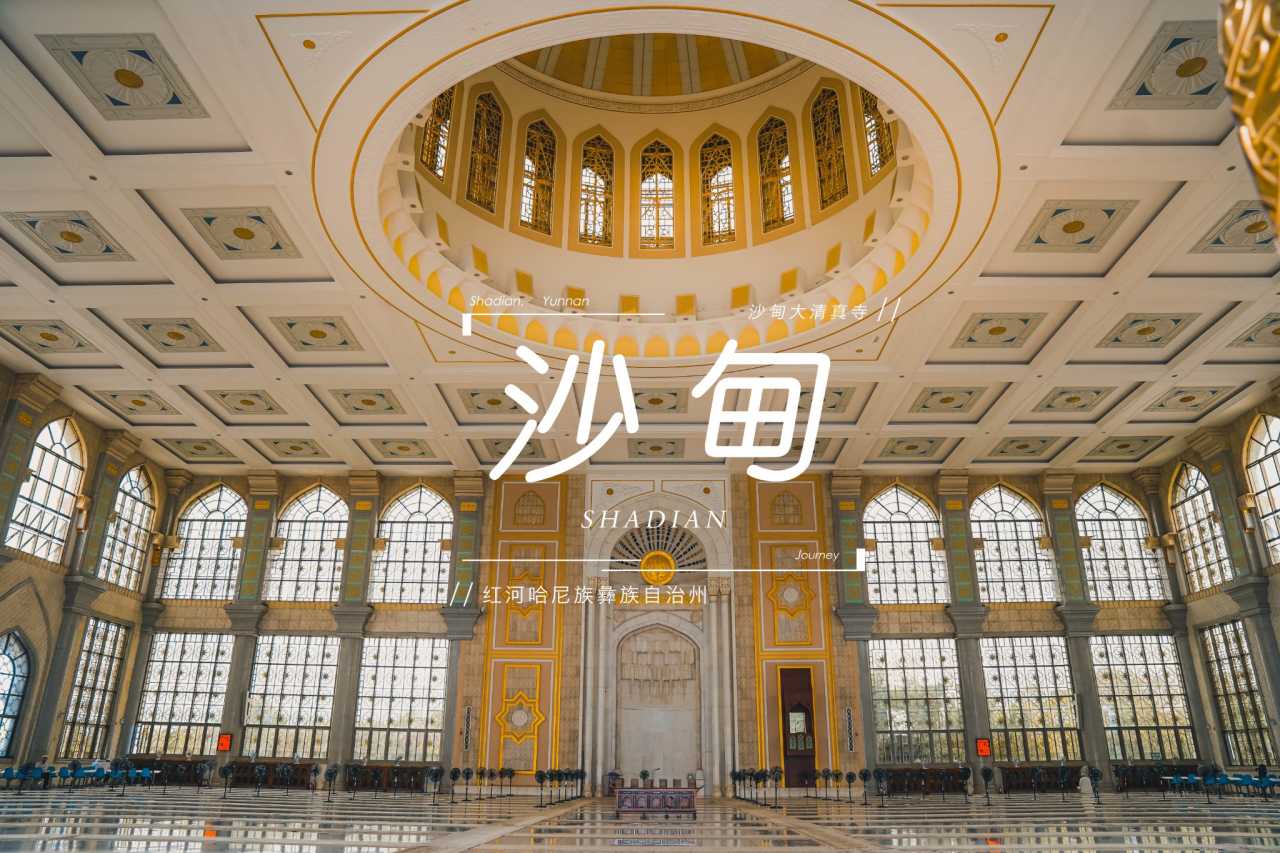
On the way to Maitreya, we made a detour to Shadian Grand Mosque. First built during the Kangxi reign of the Qing dynasty, it was expanded in 2005 to become the largest mosque in southwest China. The main hall was magnificent—a vast, column-free space with a high dome in cream and gold. Soft light streamed through windows onto spotless marble floors, creating a sacred, solemn atmosphere.
Dongfengyun: A Feast of Red Brick Architecture
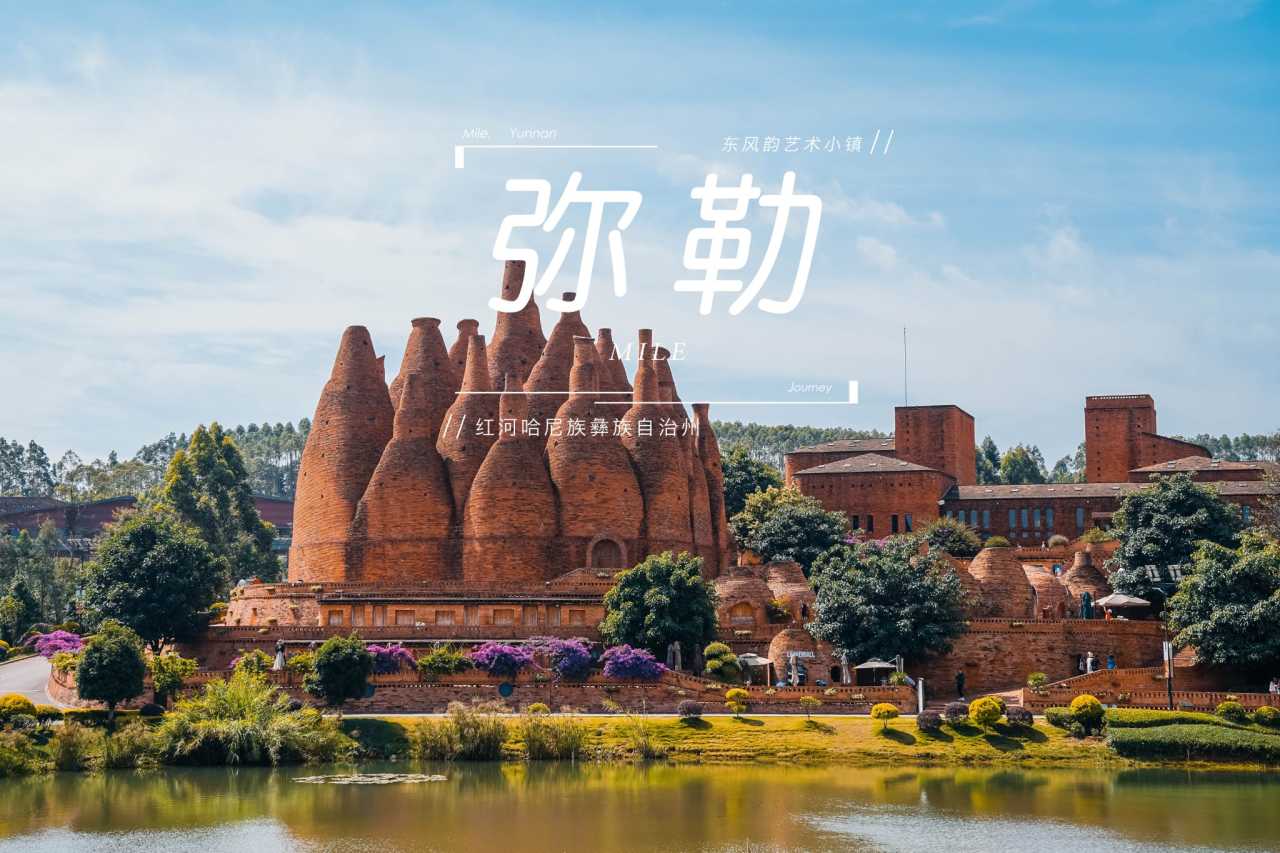
About two hours later, we arrived in Maitreya, a city sharing its name with the Buddha. The Dongfengyun Art Park, with its iconic kaleidoscope-like red brick buildings, has become an internet-famous photo spot.
This time, we planned to stay one night in the park, experiencing the newly soft-launched Meijingge Hotel. As soon as we reached the entrance, we were stunned by the "Arrival Pavilion"—shaped like an inverted porcelain bowl. Beneath the vast dome, with heaven round and earth square, the artistic ritual sense washed over us.
Final Thoughts: What Southeastern Yunnan Taught Me
This trip had no jaw-dropping attractions, no awe-inspiring landscapes. But it helped me rediscover the true meaning of travel—slowing down and feeling.
In the Hani terrace tents, we learned to listen to the wind. In the muddy waters of terrace fishing, we rediscovered childhood joy. In the blue-brick alleys of Jianshui, we tasted the flavor of time.
The beauty of southeastern Yunnan isn't on any check-in list. It's in the unguarded moments—the morning mist over terraced fields, the cooking smoke rising from ancient towns at dusk, the starry sky above a campfire at night. It taught us that the best travel isn't about how many places you've been, but how many moments you remember.
If you also want to escape the crowds and find Yunnan's most authentic face, come to southeastern Yunnan. Here, you'll discover that the most beautiful scenery is often hidden in the quietest places.
You should also read:
September: Finding Unexpected Warmth in Yunnan (Kunming, Dali, Shuanglang, Lijiang, Lugu Lake)
September: Finding Unexpected Warmth in Yunnan (Kunming, Dali, Shuanglang, Lijiang, Lugu Lake) Foreword: One Person's Journey, A Crowd's Story Before I set off, like every first-time solo traveler, I printed out a thick stack of travel guides and rehearsed countless possible scenarios in my head—getting…
Continue reading...
Into the Hidden Valley: A Solo Journey Through the Mysterious Dulong River
Into the Hidden Valley: A Solo Journey Through the Mysterious Dulong River Deep in the northwestern corner of Yunnan Province, tucked away from the modern world, lies a place that feels like a secret whispered among mountains. The Dulong River Valley is not just a…
Continue reading...
Tengchong·Heshun: Finding Life as It Should Be in a Border Town Where Time Stands Still
Tengchong·Heshun: Finding Life as It Should Be in a Border Town Where Time Stands Still The long journey of over twenty days was over. On my first day back at the office, I was still in a daze. My fingers couldn't find the keys on…
Continue reading...