High-Altitude Quartet: A Winter Journey from Lijiang to Shangri-La
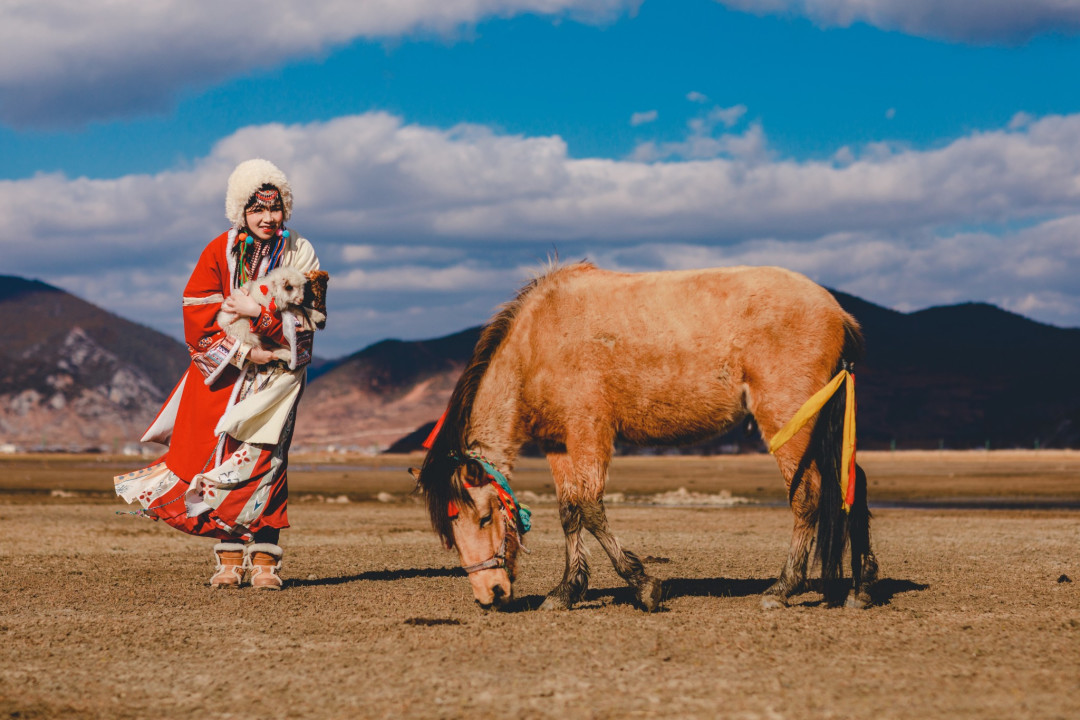
High-Altitude Quartet: A Winter Journey from Lijiang to Shangri-La
Prelude: An Unexpected Journey
Some trips are accidents carefully orchestrated by fate.
I had originally planned a winter trip to Lhasa—to experience the ancient chants at the Potala Palace, to encounter the legendary blue ice of Yamdrok Lake. My bags were packed, altitude sickness medication ready, and I'd even stuffed an oxygen canister into my backpack. Then the flight was canceled, and everything fell apart. But my vacation days wouldn't be postponed. I stared at the map, lost in thought, until my eyes finally settled on Shangri-La.
It was still a Tibetan highland, still possessing that snow-covered sacred aura. This must be fate's Plan B. This was actually my second time missing out on Lhasa—the first due to the pandemic, the second due to a canceled flight. It felt like that city of sunlight was testing my resolve. I made a silent vow: this year, I will set foot on that land.
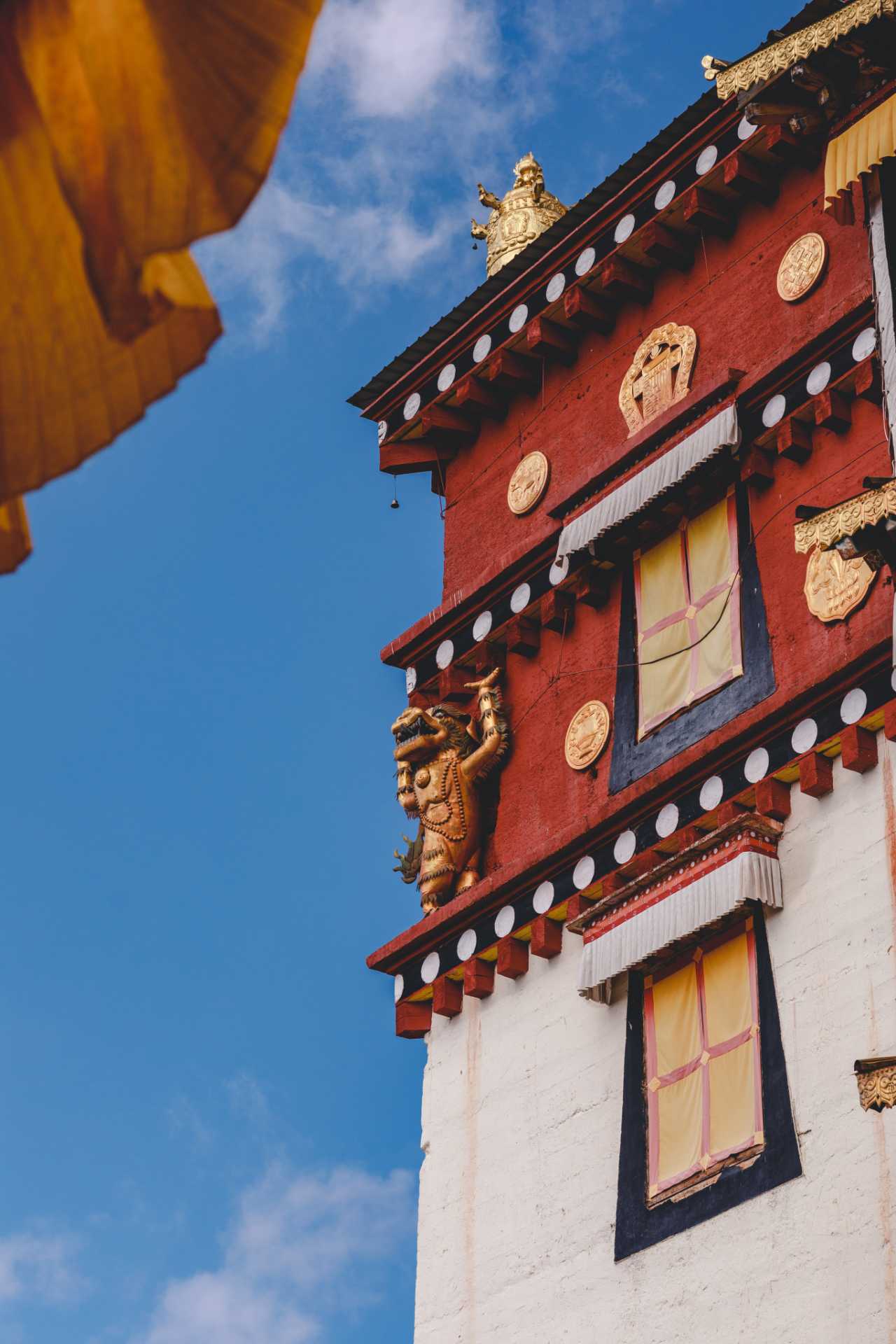
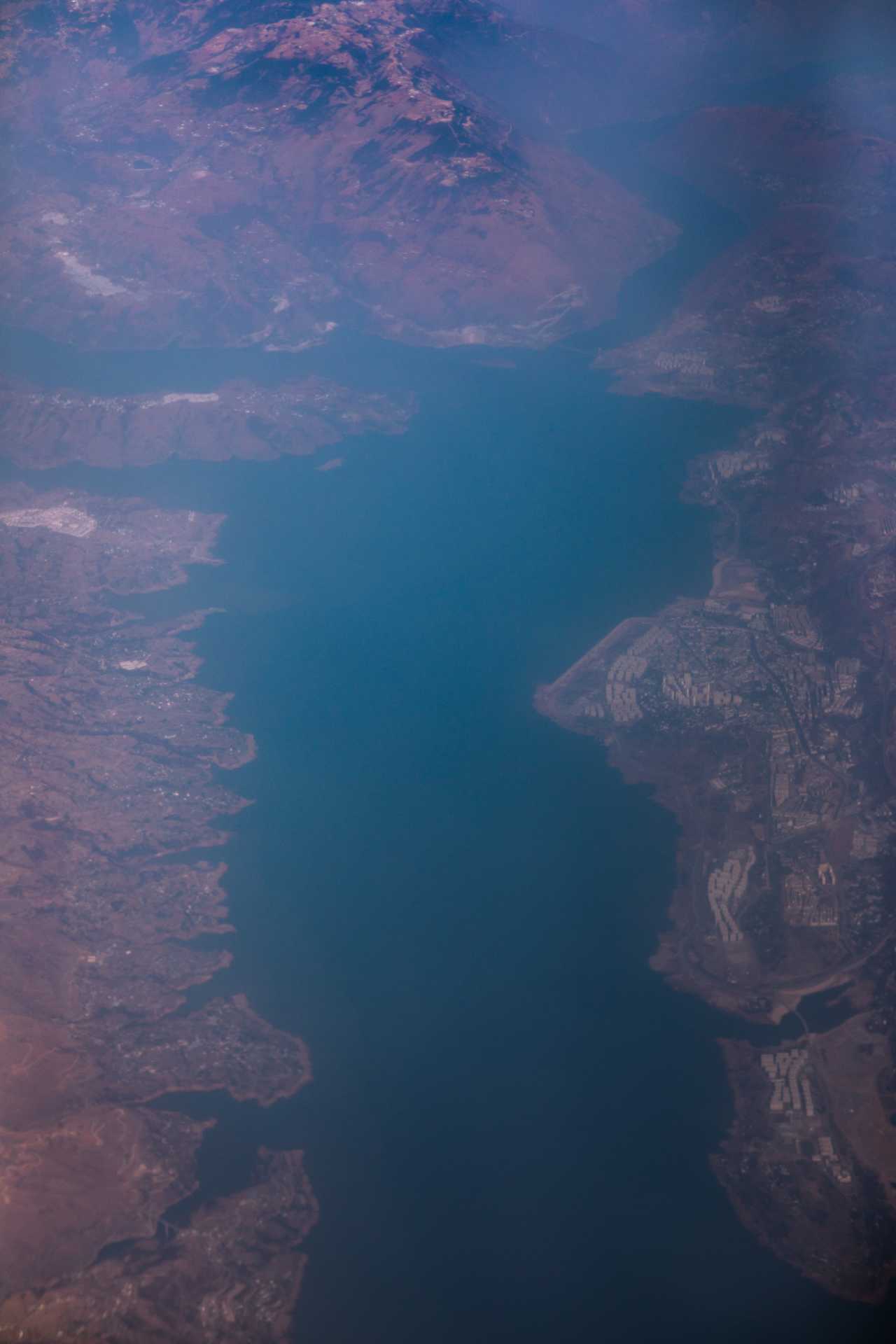
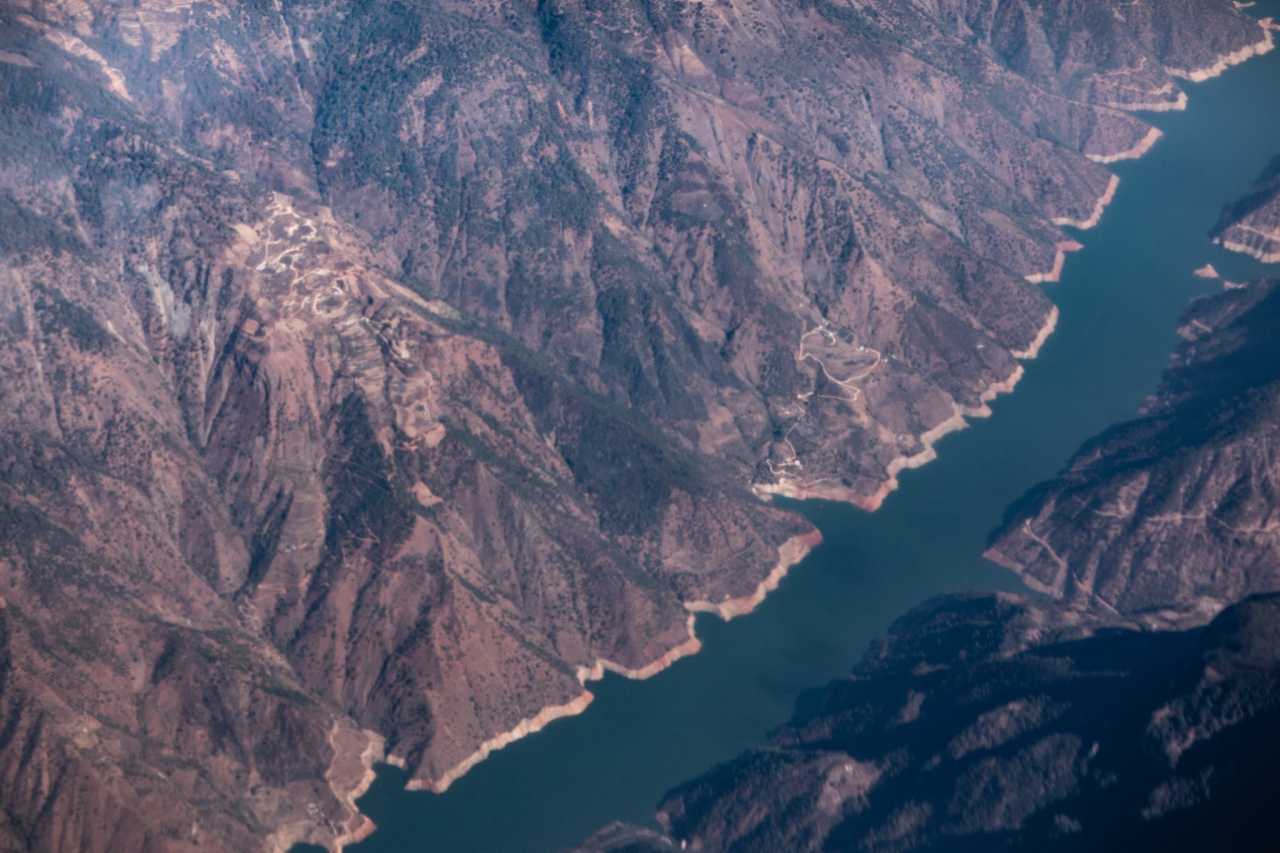
My first flight of 2023 was to Lijiang. At seven in the morning, Shanghai Hongqiao Airport was already buzzing, a steady stream of travelers dragging suitcases through the terminal. I'd assumed this was the off-season for Lijiang, but the Boeing 737 was nearly full with its 150 seats. During the four-hour flight, as the plane climbed above the clouds, the sight of the Jinsha River (Golden Sand River) outside the window captivated everyone.
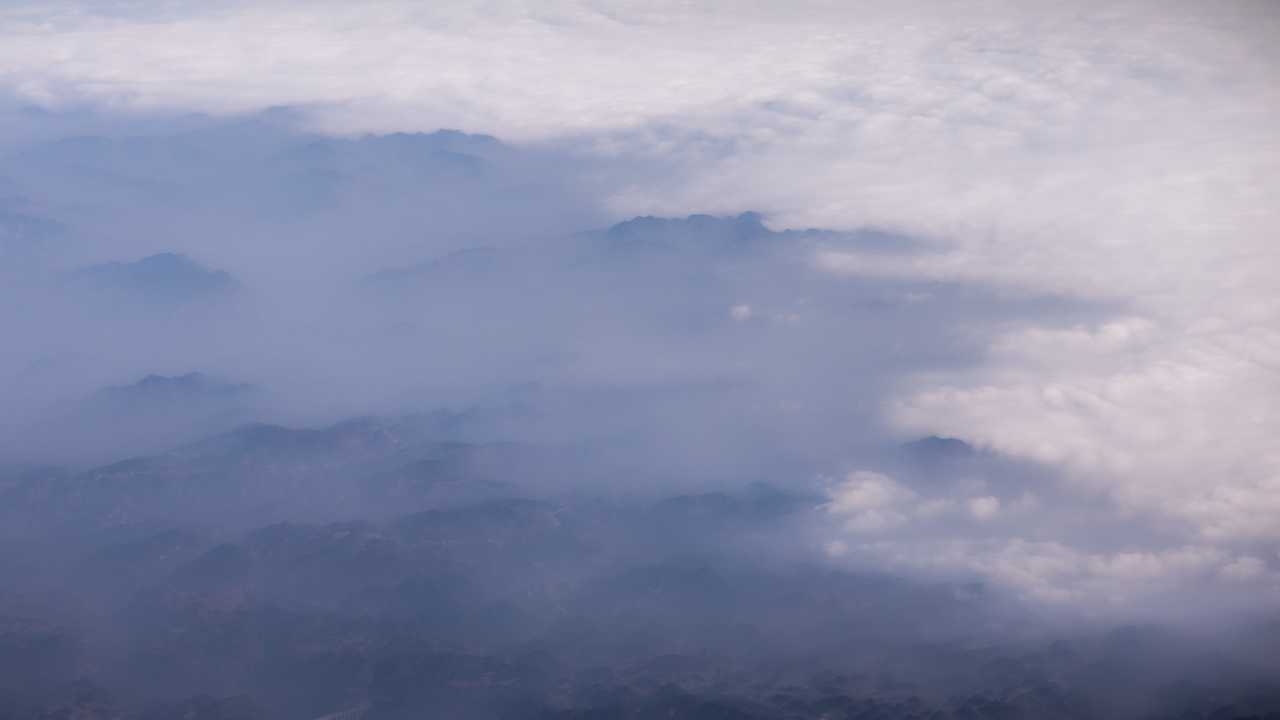
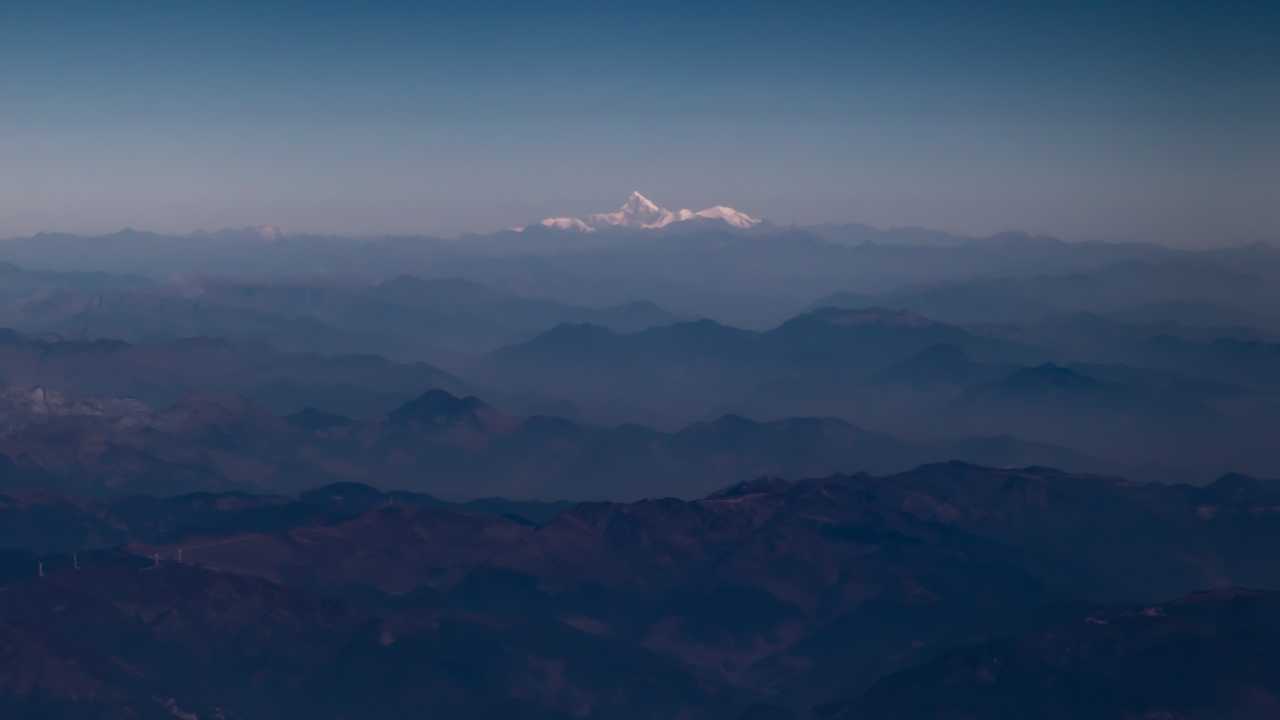
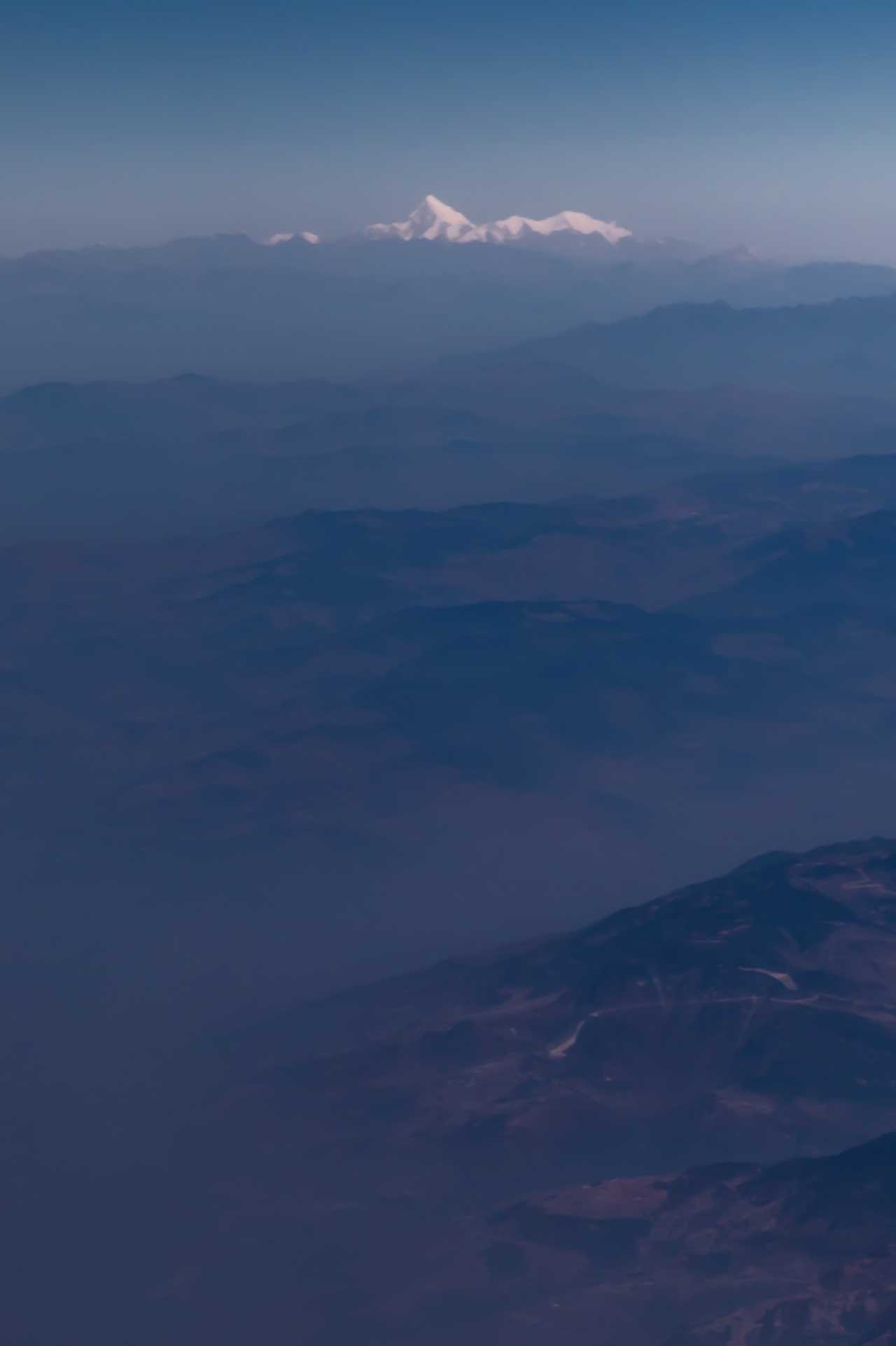
If you take this route, be sure to grab a window seat on the right side of the plane—away from the wing. You'll be rewarded with the most breathtaking views. The Jinsha River, a brilliant turquoise, wound like a silk ribbon through the rugged, canyon-cut mountains. At the base of the peaks, circular patterns of rock and earth spread out like shavings from a divine pencil, layer upon layer stretching into the distance. In the background, peaks faded into the mist, like a traditional ink-wash painting, while an unnamed snow-capped mountain on the horizon appeared and disappeared in a halo of sacred light.
At that moment, I suddenly felt that this "accident" might have been the best possible plan.
Chapter One: The Wrinkles of Time in an Ancient Town
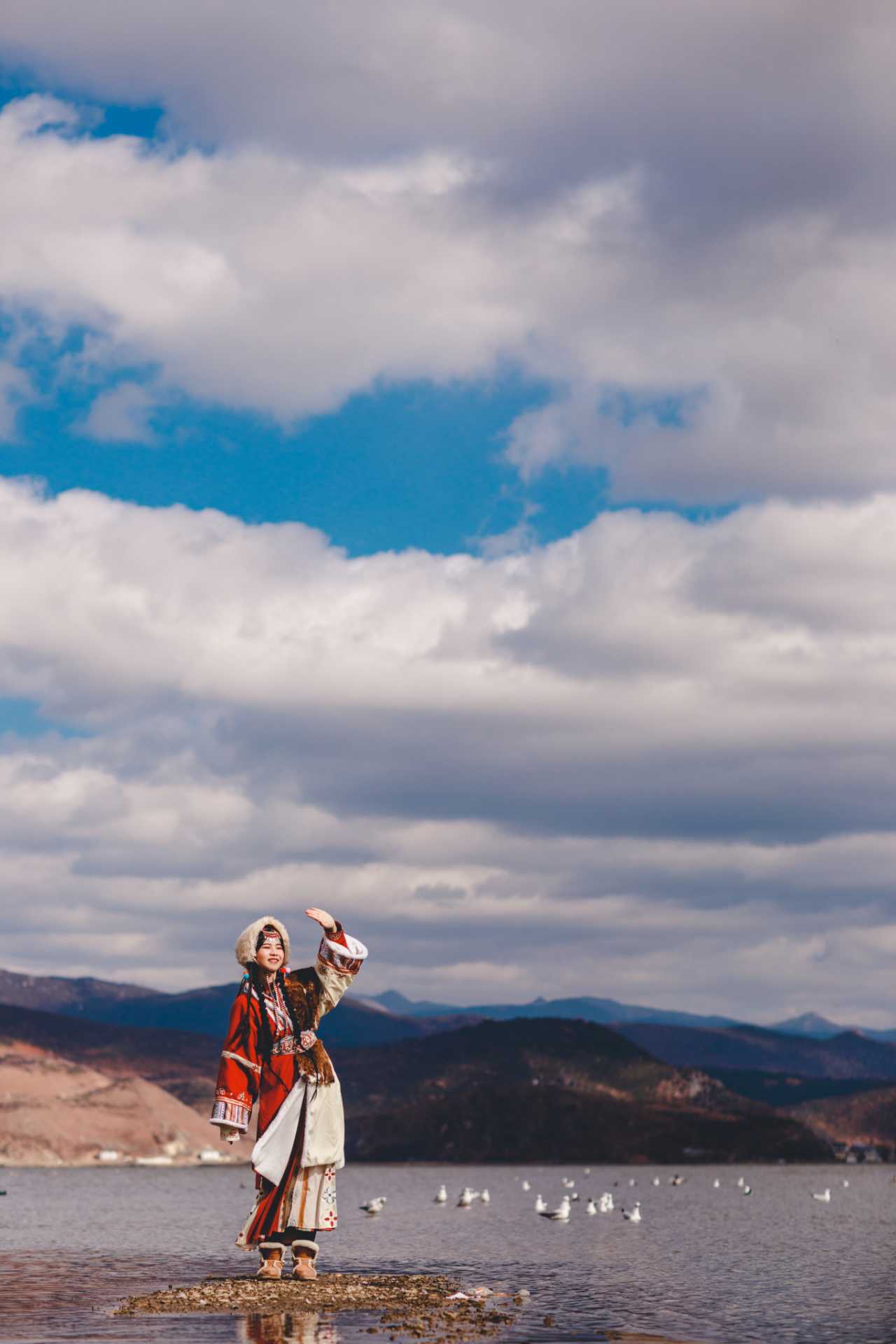
Staying in a Dongba Mansion: Sixty Years of Wood and Stories
After landing in Lijiang, we picked up our rental car at the airport—an experience that wasn't pleasant, but I'll save the details for the rental guide at the end. After some hassle, we finally arrived at Shuhe Ancient Town around two in the afternoon.
Private cars are generally not allowed inside Shuhe, but the inn I'd booked, the Nanshan Cottage (南山草堂), had its own free parking lot, allowing us to drive directly into the town. This saved us the trouble of dragging our luggage over the uneven cobblestone streets. The inn itself was a well-preserved traditional Dongba residence with two courtyards, filled with flowers and tea tables. They said the house was over sixty years old, but it had been beautifully maintained. It didn't show its age in a state of decay, but rather possessed a warm, mellow quality.
I had booked the "Green Snow & Strange Peak Suite" (绿雪奇峰套房) in the innermost courtyard, with a sun-drenched corridor just outside the door. The room was surprisingly spacious, dominated by a massive 2.2-meter bed, with a separate tea table area and a chaise lounge. A staff member had contacted me the day before to explain parking, and in the evening, they brought us two flasks of hot rose tea and brown sugar water. It was these small details that instantly melted away the fatigue of the journey.
The only downside: the soundproofing in the old wooden house was virtually non-existent. We happened to be staying near a group of guests having a late-night party that went on until the early hours. I'd recommend bringing earplugs, or just hoping your neighbors are early-to-bed, early-to-rise types.
Practical Info: - Location: Next to the old parking lot command post in Shuhe Ancient Town - Price: Approx. 266 RMB/night (breakfast not included) - Access: Enter via the East Gate, go straight for about 300 meters; free parking available
Wandering Shuhe: When an Ancient Town Becomes a Photo Studio
Lijiang has three main ancient towns: Dayan (the Old Town of Lijiang), Shuhe, and Baisha. They decrease in commercialism and bustle in that order. I chose Shuhe hoping to experience traditional Naxi culture, but reality gave me a "surprise"—nowadays, almost every storefront in Shuhe is a restaurant, a clothing shop, or a photography studio. The town's original character has been largely washed away by the tide of commerce.
The streets were filled with young women posing for photos in Tibetan, Miao, and Naxi costumes. Occasionally, you'd even see a mix of Elvish or Uyghur styles thrown in for good measure. The whole town felt like a giant film set. The most prominent items in the specialty shops were tea cakes stacked into pagodas, ranging from large to small for every customer.
Still, Shuhe hides some corners worth exploring:
Sifang Street (Square Street): Every ancient town in Lijiang has its own Sifang Street. Shuhe's version is no more than thirty meters long and wide, with five roads radiating outwards and water channels flowing around it. It's one of the oldest marketplaces on the Lijiang plain. I suggest walking north through Sifang Street. The further you go, the less commercial it becomes, and you can find traditional buildings like the Sansheng Temple (Three Saints Temple).
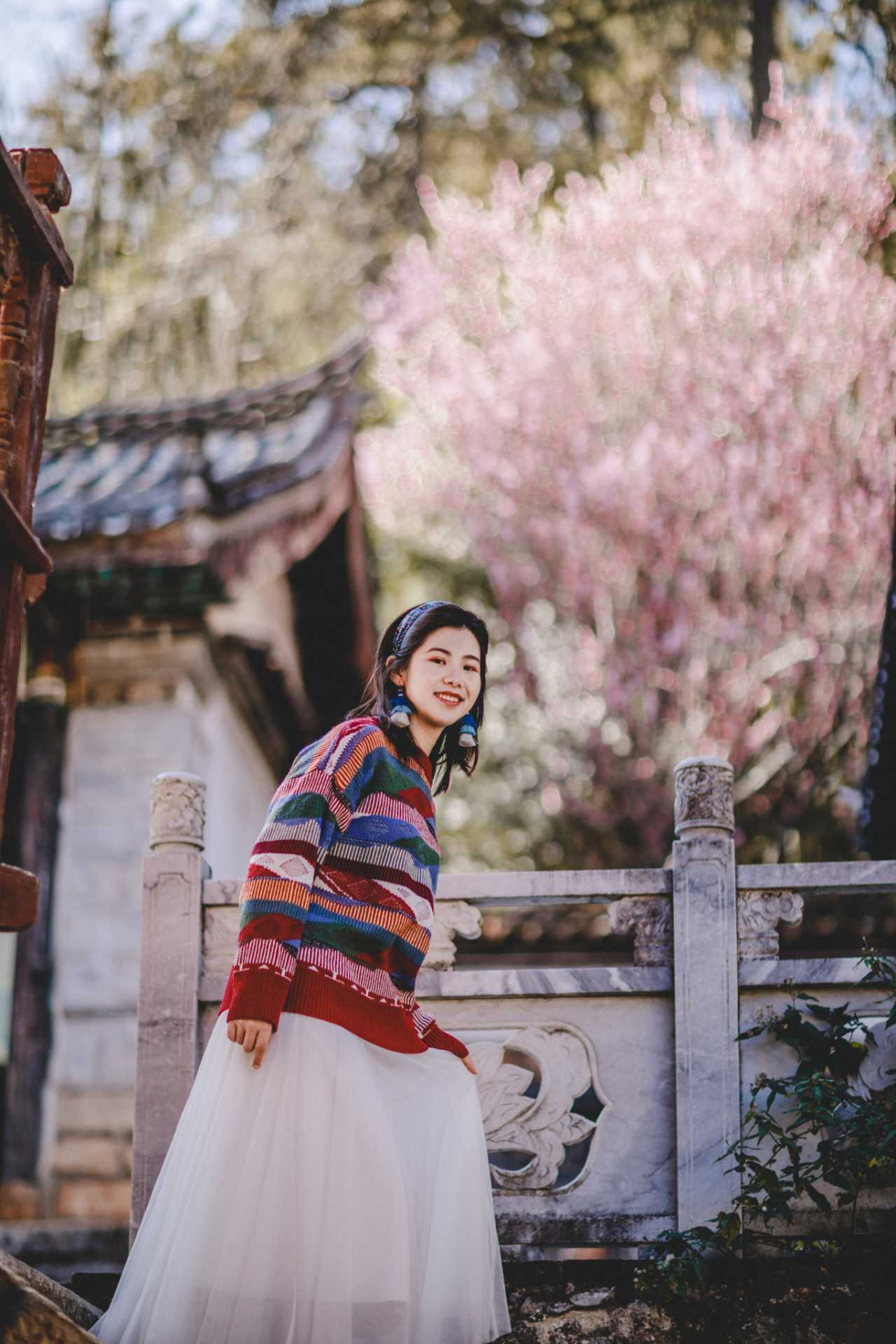
Sansheng Temple: Located on the northwest side of the town, next to Jiuding Dragon Pool, it was built during the Qing Dynasty. Interestingly, it doesn't enshrine the traditional "Three Saints" (Laozi, Confucius, and the Buddha), but instead Guanyin (the Goddess of Mercy), the Dragon King, and Sun Bin (a famous military strategist from the Warring States period). Legend says Sun Bin invented leather boots and is revered as the patron saint of cobblers, and Shuhe was a town of cobblers. The temple is a quadrangle courtyard. The eastern building faces the water, and the upper floor has a three-sided veranda offering a panoramic view. Although it was only early February, the peach blossoms were already blooming impatiently, like a fluffy pink cloud of cotton candy.
Chama King's Former Residence Museum: Not far from Jiuding Dragon Pool, this is the former home of the once-famous Wang family, leaders of the horse caravan trade. It's over two hundred years old. Here you can learn stories from the era of the horse caravans that once traveled the ancient Tea Horse Road. Photography is not allowed inside.
Mu Zha (Wood Shavings): A specialty store for wood carving art. The founder collects old wood from all over the country, redesigns and restores it, giving it new life. The shop features a plaque commemorating a successful imperial examination candidate, and just hanging there, it exudes a powerful cultural aura. Each piece is a work of art, but the prices are also intimidating—best to admire from a distance.
Feng Pu Hao: A tea specialty shop. Its entrance is a two-story-high duobao shelf (a multi-compartment cabinet for displaying antiques), filled with all kinds of tea sets, creating a visually stunning impact.
Throughout the town, you can see tall holly trees with red berries. Their floral language is "life," fitting for the warmth of Yunnan, the "Land of the South." There are also large trees with golden branches that shimmer brilliantly in the sunlight. I also encountered an Alaskan Malamute napping. It was incredibly well-behaved and fluffy, and petting it was pure bliss.
Practical Info: - Entrance Fee: 30 RMB/person; free if you're staying in the town - Transport: About a 1-hour drive from the airport - Recommended Sights: Sifang Street, Sansheng Temple, Jiuding Dragon Pool, Mu Zha - Time Needed: Approx. 2 hours
Preserved Pork Rib Hotpot: An Unexpected Culinary Delight
A trip to Lijiang isn't complete without trying preserved pork rib hotpot (lapaigu huoguo). We chose a restaurant near our inn called "Xiangxiang" (香香) and ordered a combo set of hotpot and grilled meat for 108 RMB per person. It included the preserved pork rib hotpot, grilled pork belly, stuffed tofu, potatoes (yangyu), rice noodles, and rose tea.
The cooking vessel was unique—a combined hotpot and grill. The table had a large iron plate in the middle, with a charcoal fire hidden in a hollow at the center. The hotpot sat on the charcoal, while the food was grilled directly on the iron plate. The preserved pork ribs were salty and savory, cooked with cabbage and carrots in a delicious broth. If you wanted more kick, you could mix your own dipping sauce—though this restaurant's sauce was fairly standard, missing the usual Yunnan specialties like zhe'ergen (root vegetable).
We dumped the tofu and potatoes into the hotpot, and the owner quickly stopped us: "Those are for grilling!" We rescued a few and tossed them onto the grill pan. The boiled stuffed tofu became soft, but the grilled version had a golden, chewy exterior with a molten, cheese-like center that truly "exploded" in your mouth. The potatoes were best grilled, cooked until golden alongside the pork belly, absorbing all the meaty flavor and oil—absolutely delicious.
The rice noodles just needed a quick blanch in the hotpot to become springy and smooth. I had a sudden inspiration and scooped the cooked noodles onto the grill pan to stir-fry with the pork belly and potatoes. The bland noodles instantly came alive—every strand coated in the aroma of the grilled meat.
The restaurant also had a selection of homemade fruit and flower wines—peach, rose, blueberry, and others—available for tasting. Since we were driving, we didn't try any, but a girl at the next table said the pu'er tea flavor was the best.
Practical Info: - Location: Next to the old parking lot on Dongyang Road, Shuhe Ancient Town - Price per Person: Approx. 54 RMB - Recommended Dishes: Preserved pork rib hotpot, stuffed tofu (baojiang doufu), Naxi grilled meat
Sunset and Sunrise at Dongba Valley: A Golden Pilgrimage
We finished dinner just in time for sunset. There's a wild lake at the entrance to Dongba Valley Scenic Area that offers the best panoramic view of Jade Dragon Snow Mountain. The valley is to the northeast of the mountain, so in theory, it's better for sunrise. But worried about crowds the next day, we went to scope it out first.
When we arrived, several cars were already parked. There was a lake on each side of the road. From above, they looked a bit like the mountain's lungs. Between the lakes and the road was a stretch of wasteland where a few horses grazed, each wearing a device around their neck, probably a tracker.
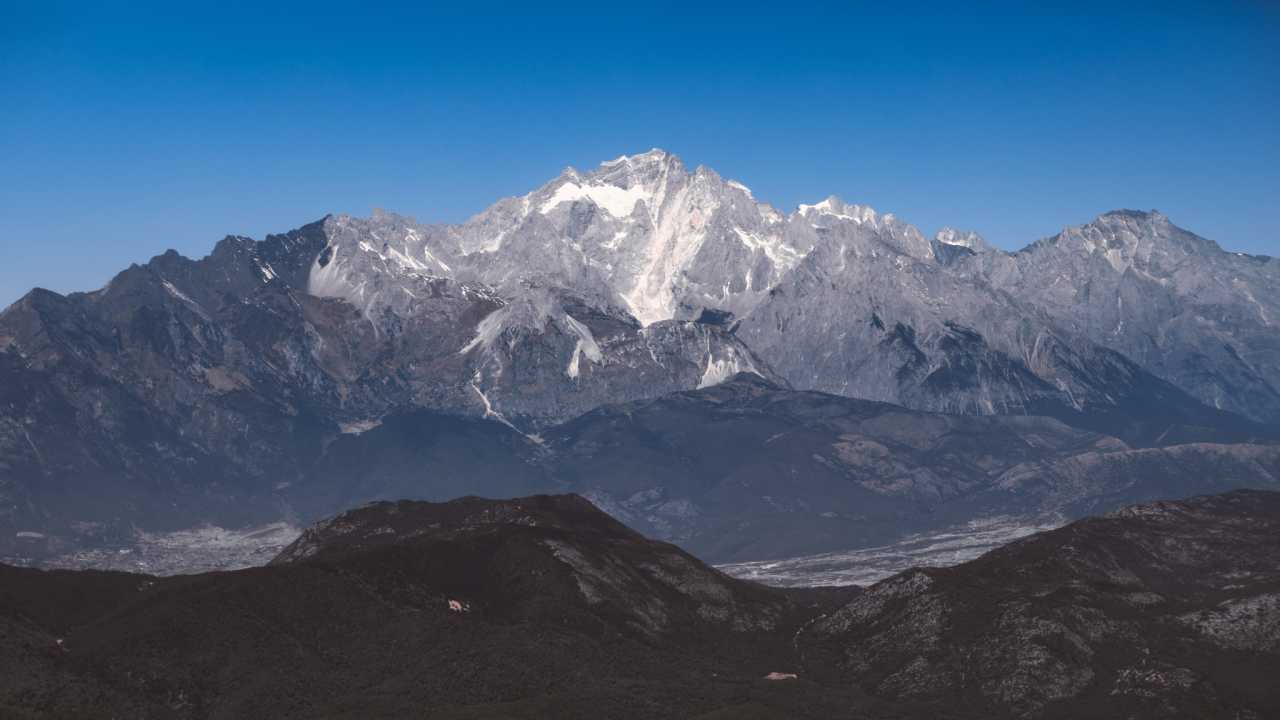
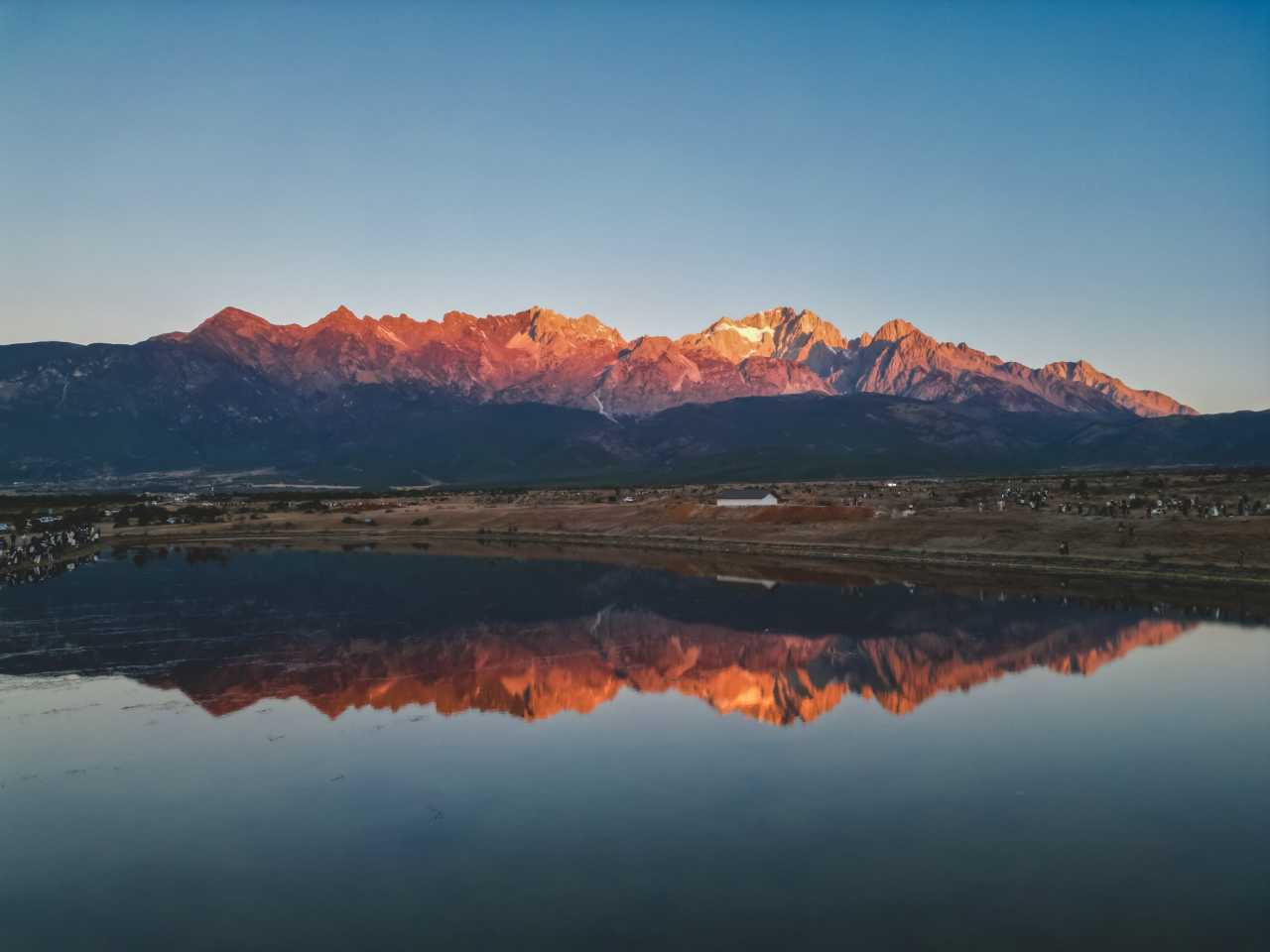
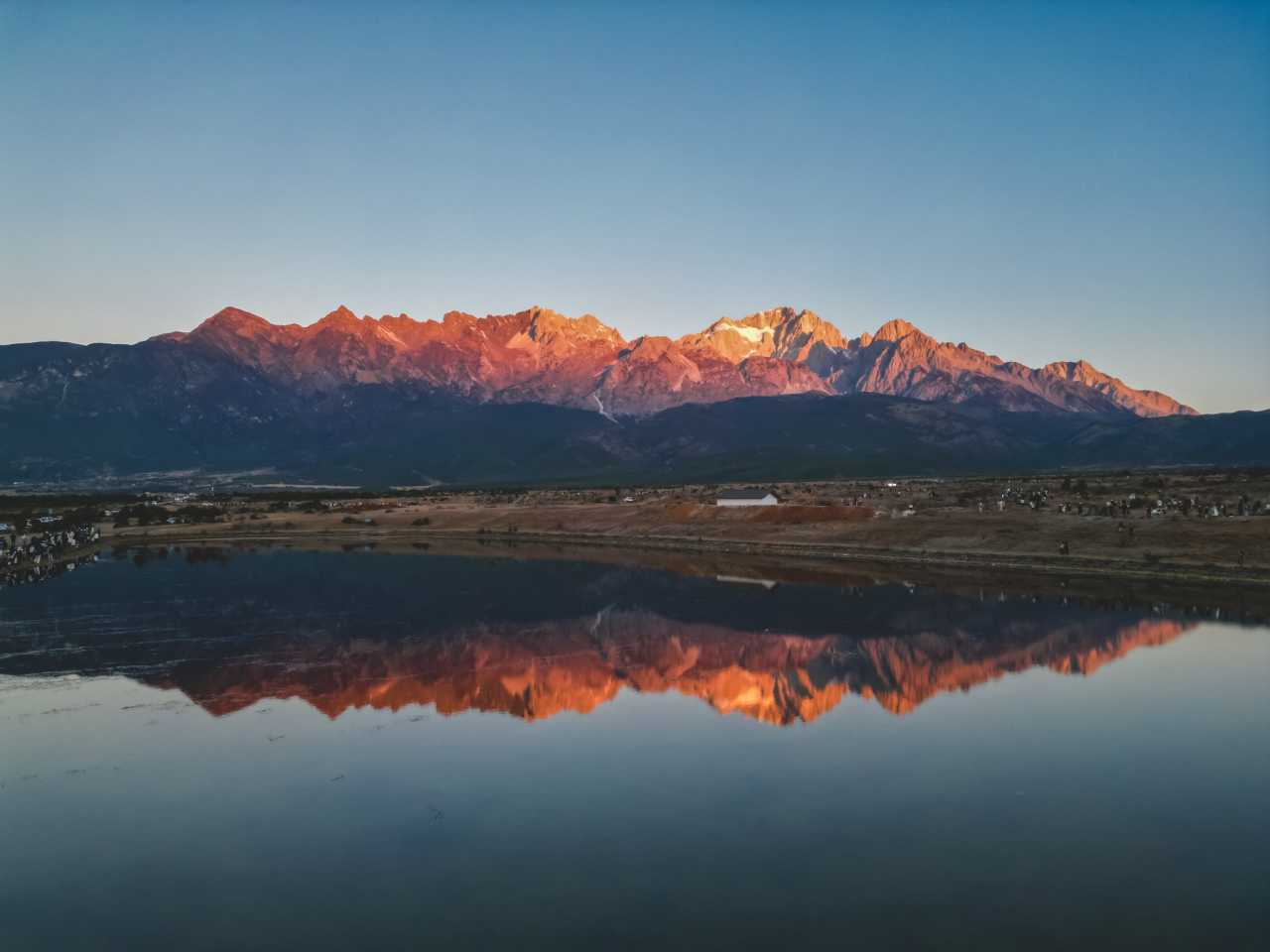
The most beautiful moment was just as the sun was about to touch the mountain peak. Golden rays burst forth from the point of contact, radiating brilliantly. The peaks seemed to be flattened by the light, surrendering to the majesty of the sun god. The setting sun shone on the very top of Jade Dragon Snow Mountain from behind, offering a faint glimpse of the "Golden Sun over the Snowy Peak" effect. This was the perfect time to stand by the lake for a photo with the mountain.
As the sun gradually sank behind the mountains, the evening glow deepened, shifting from a soft pink to a deep orange-red, painting the lake's surface as well. After the sun was fully gone, the moon hung high over the opposite peak, casting a silver light across the deep blue sky as the mountains faded into darkness.
The next day, we were up at 6 AM. Sunrise was around 8 AM, but to secure a good spot, we arrived at the lake by 7—only to find it was already packed. People's enthusiasm for seeing the "Golden Sun" was truly beyond imagination.
I stood in the spot I'd picked out. The early morning cold in Lijiang was biting, with a wind chill feeling like -20°C. But for the chance to see the golden light, I was willing to stand for an hour. However, I gradually realized that arriving early didn't help—latecomers kept pushing forward, almost stepping into the lake. The small lake was overcrowded, like a precious waterhole surrounded by thirsty animals on an African savanna.
We waited from 7 AM until almost 8 AM. The sky was already bright, and a red glow emanated from the distant peaks, but the "Golden Sun" still hadn't appeared. I thought we'd be going home empty-handed—until, suddenly, a golden light crowned the summit.
Jade Dragon Snow Mountain began to be gilded from its highest peak. The golden line slowly descended, dividing the mountain into two distinct halves: the upper part a brilliant gold-red, the lower a dark blue. Together with the light blue sky, it formed a magnificent, epic scroll.
All those who had pushed their way to the front stood up to take photos as the sun rose, making it nearly impossible to get a clear reflection of the mountain in the lake from the shore. Luckily, we had a drone. From the air, we managed an "overtake" and captured a truly unique angle. As the sky brightened, the deep blue turned to light blue, and the mountain's color shifted from gold-red to a pale gold. It was a scene I will never forget.
After the sunrise, the crowd dispersed, and we finally had the mountain to ourselves. We quickly snapped a few photos—these were our own, personal "Golden Sun over the Snowy Peak."
Practical Info: - Location: Navigate to Dongba Valley Scenic Area, then turn into the small road opposite the main gate - Photo Spot: The easternmost end of the right-hand lake offers a complete view of the mountain; a wide-angle lens is recommended. A drone is perfect for avoiding the crowds. - Clothing: The temperature difference between day and night is extreme. The morning wind chill felt like -20°C. A down jacket, gloves, scarf, and hat are essential. - Tip: After 9 AM, most people have left, making it the best time for photos with the mountain.
Chapter Two: Three Faces of Jade Dragon Snow Mountain

Spruce Meadow: The Serenity and Grandeur of a Lovers' Suicide Spot
The ticketing system for Jade Dragon Snow Mountain is a labyrinth. I'll explain it in detail at the end. Let's start with Spruce Meadow (Yunshanping).
To get there, you first take a sightseeing bus from the visitor center to the small cable car station, then ride the cable car up. Spruce Meadow, known as "Wulu Youcui Ge" in the Naxi language, means "the place of lovers' suicides in Jade Dragon Mountain." Legend says it was where young men and women from the Naxi mythological "Third Kingdom of Jade Dragon" would come to end their lives for love.
After exiting the cable car, you walk through a dense forest of tall, straight spruce trees that reach for the sky. The distant snow-capped mountain is only a blurry silhouette through the gaps in the trunks. The meadow is at an altitude of 3,240 meters. We didn't experience any altitude sickness, and as long as you don't run around, you should be fine—but everyone is different, so feel free to bring an oxygen canister for peace of mind.
I spotted a mother cow with her calf grazing in the forest, nuzzling against each other. It was such a heartwarming scene.
Emerging from the forest, the view opened up dramatically—a vast alpine meadow stretched before us, backed by the majestic peaks. This meadow is a natural formation, and why no trees grow there remains a mystery. The first section of the meadow is off-limits, but you can sit on the fence for a photo with the snowy mountain in the distance. Continuing along the boardwalk, you reach a second section that you can enter—but it was crowded with couples taking wedding photos, making it hard to get a wide, empty shot. I had to resort to Photoshop magic.
Practical Info: - Cable Car Ticket: 40 RMB/person - Photo Spot: Sitting on the wooden fence by the first meadow, you can get a photo with the snowy peak. - Time Needed: 1.5-2 hours
Blue Moon Valley: The Sapphire of the "Little Jiuzhaigou"
Blue Moon Valley gets its name from its azure blue lake and crescent-shaped valley. Legend says it was the inspiration for the "Blue Moon Valley" in James Hilton's novel Lost Horizon. The riverbed is made of white limestone, giving the entire river a white, shimmering appearance, hence its other name, White Water River.
As the river flows, it is blocked by the mountain terrain, forming four larger bodies of water: Jade Liquid Lake, Mirror Pool Lake, Blue Moon Lake, and Listening to the Waves Lake. This place is known as "Little Jiuzhaigou." From above, the series of cascading lakes looks like a string of sapphire jewels, with Jade Dragon Snow Mountain at the end serving as a brilliant white diamond—unfortunately, my drone battery was dead, or an aerial view would have been absolutely stunning.
You can rent traditional ethnic costumes here, and there are white yaks available for photos. Waterfowl spending the winter frolicked leisurely in the turquoise water. Near the White Water River viewing bridge, a man-made "Baishuitai" (White Water Terrace) style waterfall had been built. Personally, I think the natural, untouched lake water was already beautiful enough without the need for artificial embellishments.
The sparkling, shimmering lake reflected a brilliant light, like a river of stars falling into a giant sapphire.
Practical Info: - Access: From Spruce Meadow, you can take the sightseeing bus directly to Blue Moon Valley. - Best Time for Photos: Morning and midday; the afternoon light is backlit. - Suggested Route: Walk from Spruce Meadow down to the highest point of Blue Moon Valley, then work your way down. - Time Needed: 1.5-2 hours
Glacier Park: A Life Challenge at 4,680 Meters
To get to Glacier Park, you first need to go back to the visitor center area to catch the sightseeing bus, then transfer to the main cable car. The whole process takes about 30 minutes. The cable car starts from the meadow at 3,000 meters, passing through tall, straight pine and fir trees. As the altitude rises, the forest gradually recedes, replaced by scrubby bushes. Above 4,000 meters, only lichen clinging to the rocks can be seen. Finally, there is nothing but gray rock and vast expanses of white snow.
The cable car's top station is a platform at 4,506 meters. From here, you have to climb a wooden boardwalk to the highest point at 4,680 meters.
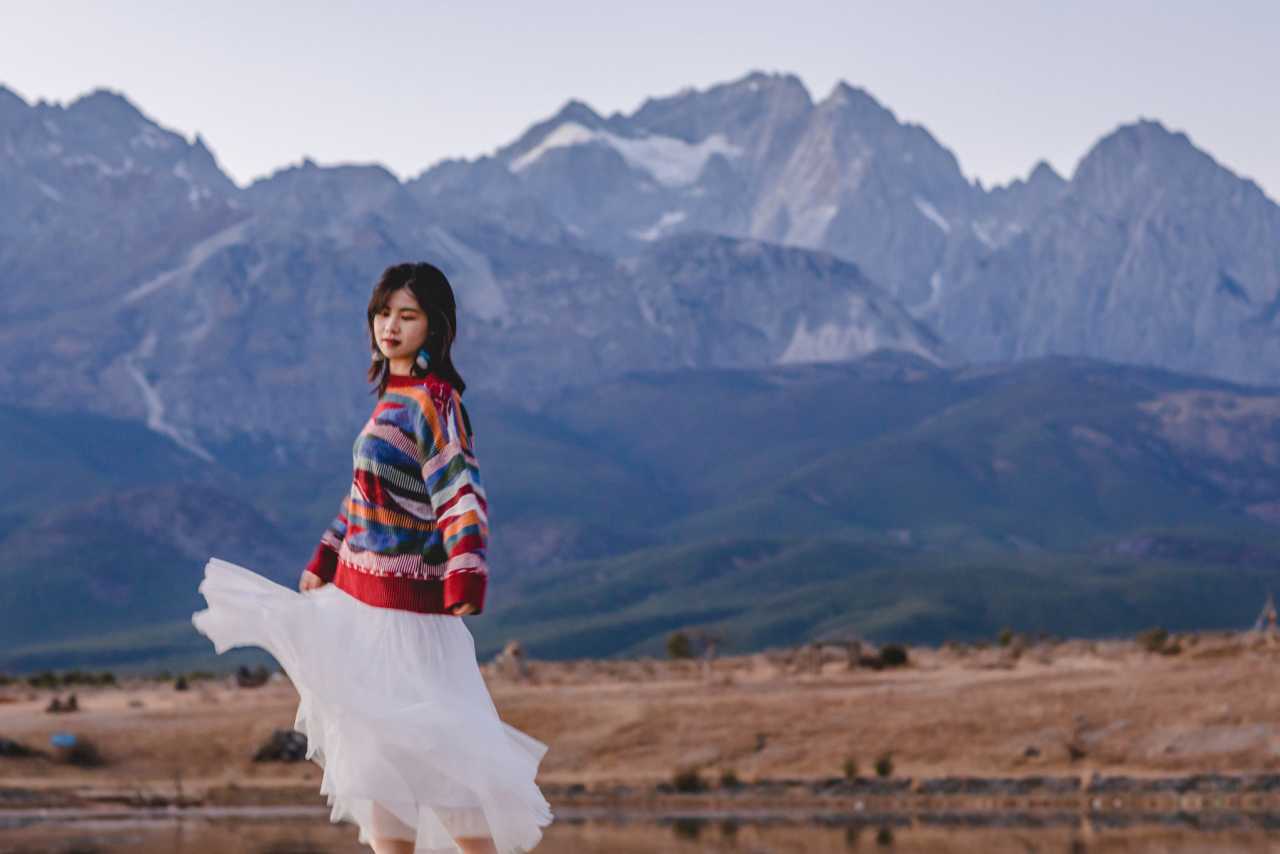
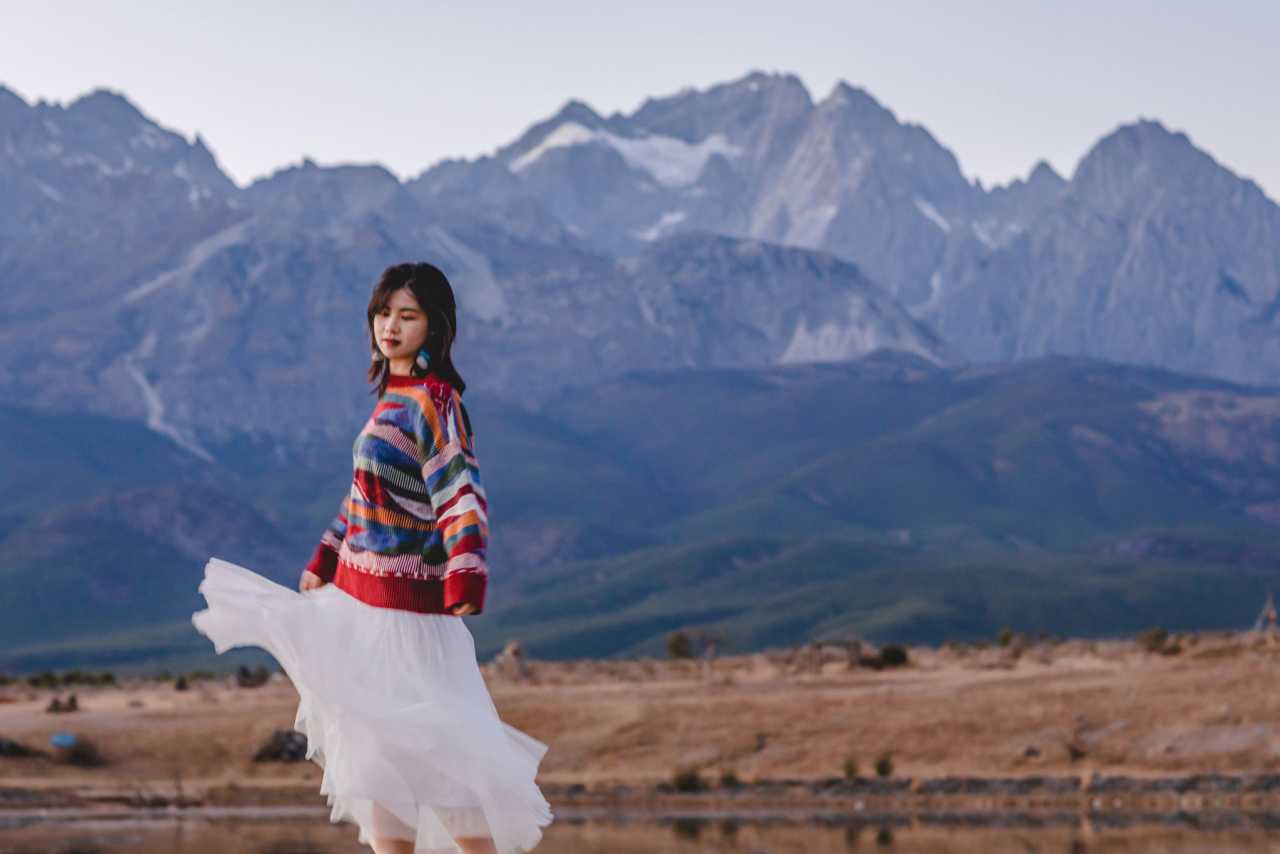
Climbing at high altitude is extremely tiring. It gets harder the higher you go, and the wind on the mountain is fierce. You must know your limits. Jade Dragon Snow Mountain is the southernmost glacier in Eurasia, featuring both modern and ancient glacial relics. If you visit in winter, you can see the "Green Snow & Strange Peaks"—ice towers that are a famous sight. Unfortunately, by February, the weather was already warming up, the ice and snow were melting, and only a thin layer of white snow remained on the mountain.
On the 4,506-meter platform, I already felt some chest tightness and shortness of breath. I could only move very slowly, taking breaks every few steps. Climbing a single flight of stairs would make my heart pound like a drum, forcing me to sit and slowly recover. All around me, I could hear the "hiss" of oxygen canisters. Someone was eating a Snickers bar for energy. I hadn't prepared anything and had to rely on sheer physical strength and willpower. Luckily, apart from the chest tightness and occasional rapid heartbeat, I didn't have any severe reactions.
There's a platform at 4,576 meters along the way. If you're not feeling well, you can choose to descend from there—don't push yourself. Before reaching the 4,680-meter platform, there's a very steep set of stairs. It's the last darkness before the dawn. Everyone was cheering each other on. When I finally reached the summit, the view opened up. Although we were still far from the highest peak of Jade Dragon Snow Mountain at 5,596 meters, it felt like the summit was right in front of us. The pure white snow reflected the bright sunlight, and even though I was struggling to breathe, I couldn't suppress the surge of exhilaration.
The 4,680-meter platform is not very large. In the center stands the 4,680-meter monument, with a long line of people waiting for a photo. At that moment, I deeply regretted not bringing a wide-angle lens—my telephoto lens couldn't capture the entire mountain, so I had to settle for a few hasty close-ups. The descent was much easier than the climb. I could walk straight down without getting winded. While waiting in line for the cable car down, many people were still using their oxygen canisters. Although it was only a 174-meter difference in altitude, it was one of the most difficult climbs I've ever done.
Practical Info: - Photo Tip: In the afternoon, photos with the mountain are backlit. If possible, bring a small reflector. Drones are not allowed. - Gear: It's recommended to bring an oxygen canister and a Snickers bar. Walk slowly and try not to stay at high altitude for more than an hour. - Clothing: The mountain is windy and cold. A down jacket, hat, and gloves are necessary. - Time Needed: 2-2.5 hours
The Complete Guide to Buying Tickets for Jade Dragon Snow Mountain
First-time visitors can easily get confused by the different cable cars and ticket types. Here's a detailed guide:
Transport: It's about a 30-minute drive from Dongba Valley to the Jade Dragon Snow Mountain parking lot. Parking is free.
Recommended Route: Spruce Meadow → Blue Moon Valley → Glacier Park. Most tour groups start with the main cable car. I suggest going to Spruce Meadow first to avoid the crowds, then visit Blue Moon Valley, and finally head to Glacier Park. We spent a full 10 hours there, from 7 AM to 5 PM, with barely any time to sit down for a meal. I recommend preparing food and drink in advance and getting a good night's rest the day before.
Ticket Categories: - Main Entrance Ticket: 100 RMB/person. Must be purchased upon entering the mountain area. - Main Cable Car: 120 RMB/person. Goes to Glacier Park; allows you to reach the summit. - Middle Cable Car: 45 RMB/person. Goes to Yak Meadow. - Small Cable Car: 40 RMB/person. Goes to Spruce Meadow. - Sightseeing Bus: 20 RMB/person. Required for internal transport within the scenic area. - Blue Moon Valley: No additional cable car ticket needed; accessible by sightseeing bus.
Total Price: 100 + 40 + 120 + 20 = 280 RMB/person
How to Snag Tickets: The main cable car tickets are limited to 10,000 per day and can only be purchased on the "Lijiang Tourism Group" WeChat public account. Early February was still the tail end of Lijiang's peak season, and main cable car tickets were still very hard to get, with most being monopolized by travel agencies. Tickets for the current day go on sale at 7 AM. There might be a few cancellations available before 8 AM, and tickets might also be released around 7 PM the night before. I suggest entering your information on the purchase page in advance and clicking exactly at 7 AM. Each person can buy up to 5 tickets, so I recommend having everyone in your group try to buy them simultaneously. It's okay if you buy too many—tickets can be refunded before 5 PM. Middle and small cable car tickets can be purchased both on the official WeChat account and at the ticket office on site. They can be booked three days in advance and, in my experience, are not in high demand.
Chapter Three: Baisha Ancient Town and Dongba Cuisine
Baisha Ancient Town: The Cradle of the Mu Clan
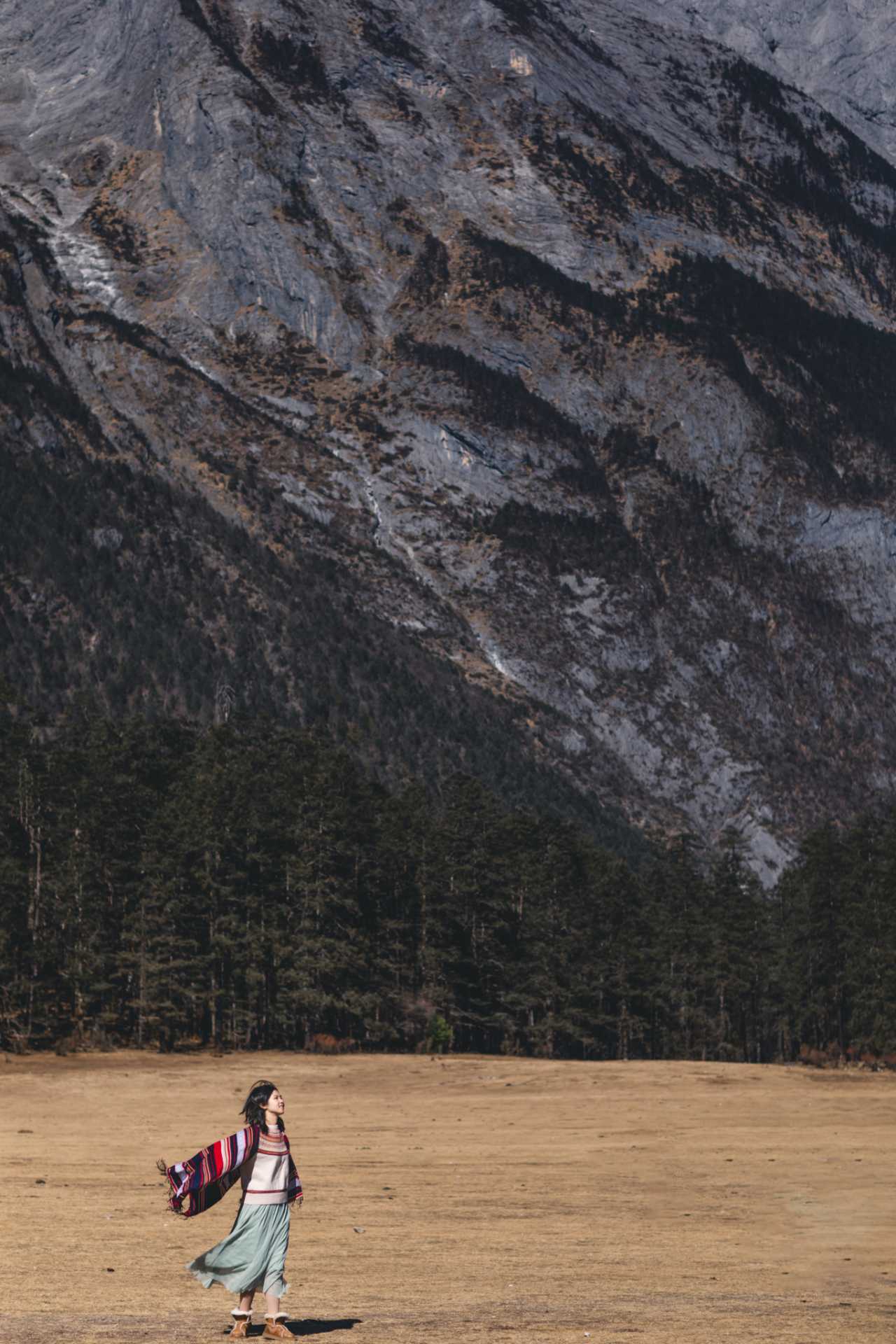
On the way to and from Jade Dragon Snow Mountain from Shuhe, you pass through Baisha Ancient Town. We drove around its perimeter and felt it was indeed more rustic and authentic than Shuhe, offering a glimpse of what ordinary Naxi homes look like.
Baisha was the birthplace of the Mu clan's power. Before the Ming Dynasty, generations of the Mu family lived in Yanjiao Village, just west of Baisha. It was here that they gained the experience in urban planning that later led to the creation of Shuhe and Dayan (Lijiang Old Town). Baisha's Sifang Street is also the prototype for the Sifang Streets in the other two towns.
Dongba Specialty Cuisine: An Adventure for the Taste Buds
We returned to Shuhe Ancient Town for dinner. Having had preserved pork rib hotpot the night before, we decided to try something different. Dining in Shuhe isn't cheap. We ordered Dongba Grilled Snow Mountain Fish, "Watery Affection" (shuixing yanghua), and Passion Fruit Stewed Chicken, totaling 188 RMB. That's quite expensive for Yunnan, comparable to prices in Shanghai. The food was tasty, though. If you want to save money, you can order their set menu for just 108 RMB.
The Snow Mountain Fish, whose scientific name is Tinca tinca (tench), has tender flesh and a high fat content, especially its thick skin. The outer layer was grilled to a crispy finish, while the inner layer was rich in collagen. The grilled fish was spicy and flavorful. What was nice was that the seasoned vegetables on top of the fish were also delicious—a mix of celery, scallions, and a Lao Gan Ma-style chili sauce that was fantastic with rice.
"Watery Affection" (shuixing yanghua), scientifically known as Ottelia acuminata, is an aquatic plant unique to Yunnan. It mostly grows in water one to five meters deep. The flower stalks curl and rise through the water, while the roots are firmly anchored in the lakebed. Only the white flowers are visible on the surface, swaying with the waves. This is why people jokingly call it "watery affection" (a Chinese idiom for a fickle, promiscuous woman). We ate the stalks and calyxes. The texture was very crunchy, yet also had the smoothness of an aquatic plant. The juice was slightly sticky, a bit like water shield (chuncai).
The Passion Fruit Stewed Chicken was just okay. The broth's main flavor was the bright acidity of tomatoes, with the passion fruit taste being very faint. The chicken hadn't absorbed much flavor. It felt like the passion fruit and the tomato chicken soup were two separate entities. Not recommended.
Practical Info: - Restaurant Name: Duo Yi Cai Yuan (朵颐菜园) – a specialty Yunnan restaurant - Price per Person: Approx. 94 RMB - Recommended Dishes: Dongba Grilled Snow Mountain Fish, "Watery Affection"
I hadn't felt much on the mountain, but I started getting a headache while eating. I wasn't sure if it was a delayed reaction to the altitude or from the cold wind. To be safe, I bought a can of oxygen from a street-side shop (25 RMB/can). It had a metallic taste when I inhaled it. When the innkeeper heard I might be suffering from altitude sickness, she made me a strong cup of brown sugar water, saying another guest had felt better after drinking one and that oxygen can be addictive and isn't as effective. But I found that nothing worked as well as a hot shower—I felt refreshed immediately after. If you feel unwell, the most important thing is to rest properly. If symptoms are severe, seek medical attention as soon as possible.
Epilogue: The Gift of the Highlands
From Lijiang to Shangri-La, this was a high-altitude quartet. The first movement was the everyday life of the ancient towns. The second was the grandeur of the snowy mountains. The third was the challenge of the hike. The fourth was the comfort of the food. Each note struck a chord in my heart, leaving an indelible mark.
This trip taught me that disrupted plans aren't necessarily a bad thing. My flight to Lhasa was canceled, but it led me to discover Lijiang and Shangri-La. Perhaps this was fate's true intention. Like that sudden appearance of the "Golden Sun over the Snowy Peak"—after waiting for nearly an hour, it arrived without warning, sweeping away all disappointment and fatigue with its golden light.
What the highlands taught me wasn't about conquest, but about reverence. At the 4,680-meter Glacier Park, every step required a breath, and every heartbeat was clearly audible. But in that moment, you don't feel pain—you feel alive. Truly, deeply alive.
If you're also planning a high-altitude trip, my advice is this: prepare thoroughly, but also leave room for the unexpected. Because the best scenery is often found outside the plan.
Final Tips: - Rental Car: Choose a reputable platform, inspect the car carefully, and take a video for documentation. - Altitude Sickness: Know your limits. Prepare oxygen canisters and candy. A hot shower is more effective than oxygen. - Clothing: The temperature difference between day and night is extreme. A down jacket, gloves, scarf, and hat are essential. - Tickets: Plan ahead. Main cable car tickets need to be snagged quickly; middle and small cable car tickets are easier to get. - Time: I recommend allocating at least 3-4 days for an in-depth experience.
May your own high-altitude journey also play out as your personal, unique quartet.
You should also read:

Cloud Travelogue · Dali of Wind, Flowers, Snow, and Moon: A Three-Day, Two-Night Journey of a Free Spirit
Cloud Travelogue · Dali of Wind, Flowers, Snow, and Moon: A Three-Day, Two-Night Journey of a Free Spirit I am a cultured female foodie with a touch of rogue charm. I slung on my backpack, took my lover's hand, and set off on a spontaneous…
Continue reading...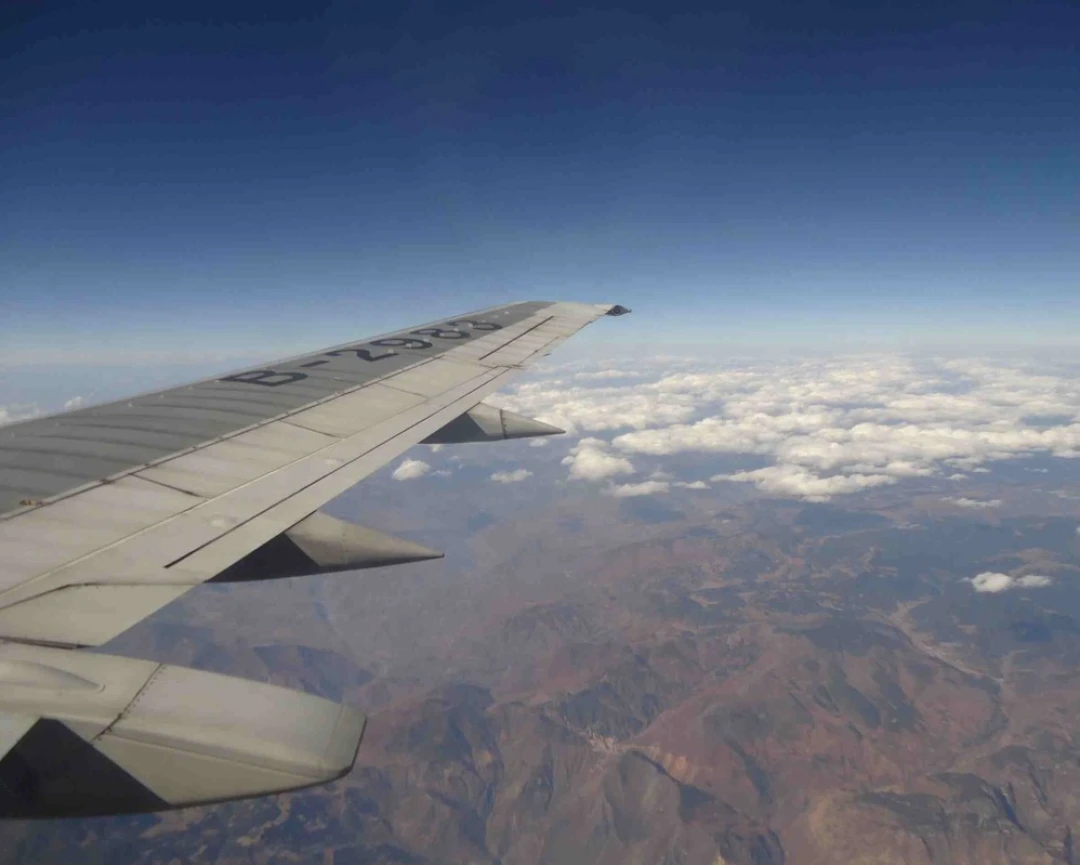
The Meaning of Travel – A Tengchong Story: A Journey of the Heart and Personal Growth
The Meaning of Travel – A Tengchong Story: A Journey of the Heart and Personal Growth Setting Out, Only to Return a Better Self Some say travel is nothing more than leaving a place you're tired of, only to go to a place where others…
Continue reading...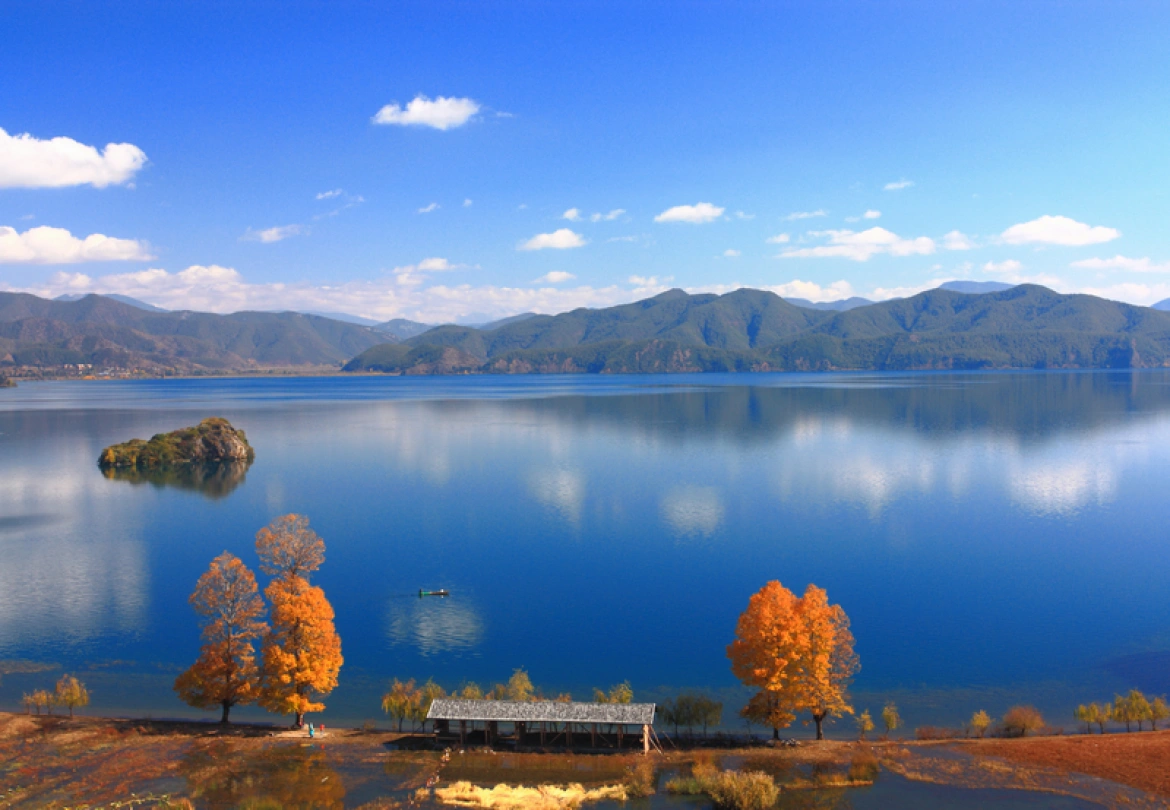
A Spiritual Journey to Lugu Lake in Lijiang: Experiencing the Legend of the Kingdom of Women! (Reproduction and Hotlinking Prohibited)
A Spiritual Journey to Lugu Lake in Lijiang: Experiencing the Legend of the Kingdom of Women! (Reproduction and Hotlinking Prohibited) Off-road自驾, food, hotel and民宿 reviews, Featured Traveler, Tank 300 owner, 200,000 km of self-driving experience. WeChat: y01294987 Ninglang Yi Autonomous County 2010.11.08 · 7 days…
Continue reading...