Hiking Yubeng: Finding Your Own "Shangri-La" at the Foot of Meili Snow Mountain
Hiking Yubeng: Finding Your Own "Shangri-La" at the Foot of Meili Snow Mountain
The Beginning: A Legend, A Journey
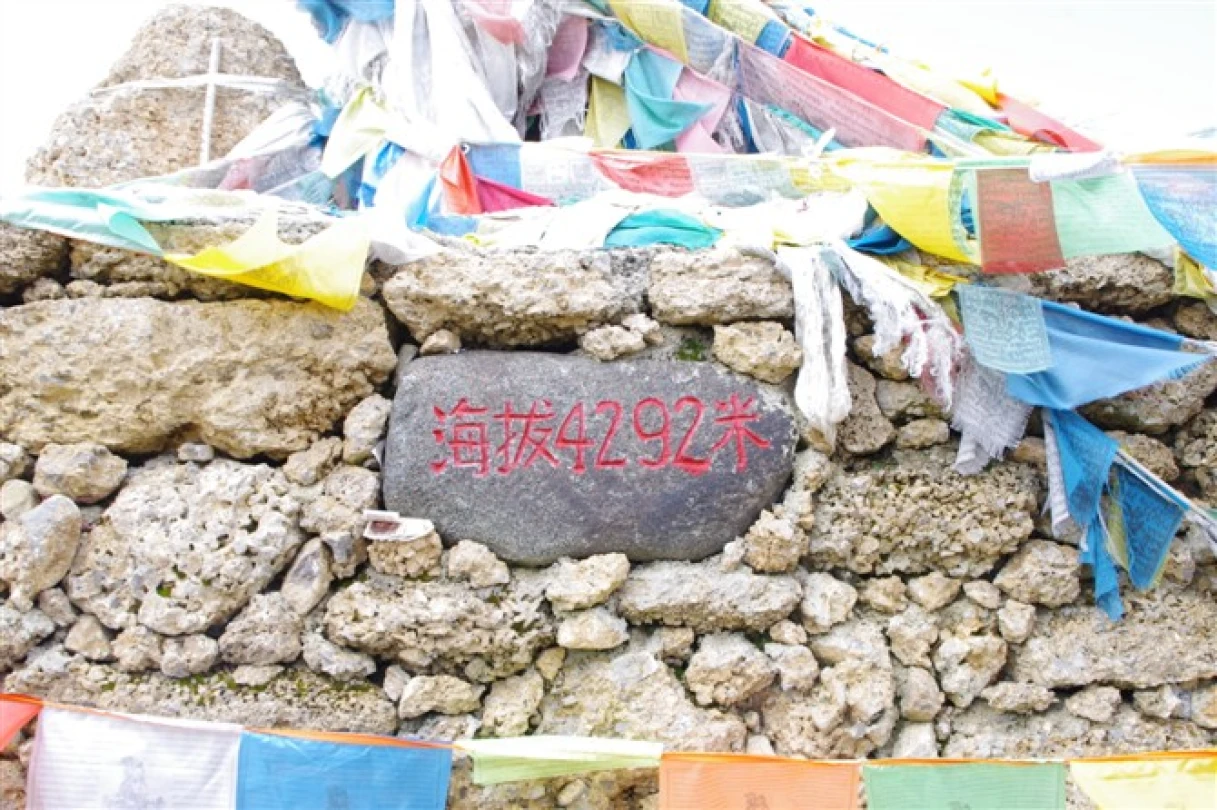
In the northwestern corner of Yunnan, hidden away from the world, lies a village forgotten by time—Yubeng. Legend has it that this secluded settlement lies tucked beneath Meili Snow Mountain, completely cut off from civilization, until one day a mysterious old man came to borrow grain. The villagers pricked a hole in his rice sack, and by following the trail of scattered millet, they discovered this hidden paradise beneath a massive boulder. Yubeng Village consists of an upper village at 3,150 meters elevation and a lower village at 3,050 meters, home to about thirty-some Tibetan families who have lived here for generations. There are no roads—only a single horse-and-foot trail connecting it to the outside world. It's like something straight out of Tao Yuanming's "Peach Blossom Spring," and experts have called it "a microcosm of Shangri-La."
This legend took root in my heart like a seed. Once my vacation was confirmed, I didn't hesitate to set my sights on Lijiang, and from there, naturally, my gaze turned toward Yubeng. I planned an eight-day itinerary, deliberately leaving the last day for rest so I wouldn't have to jump straight back into work after returning. And Yubeng—that was the soul of this entire trip.
Preparation: From Hostel to "Off-Roader" Club
Before leaving, I compared countless hostels online and finally settled on Old Xie's Inn in Lijiang. Old Xie himself is a seasoned backpacker—he once took his wife trekking to Yubeng when she was three months pregnant. He's not even from Lijiang, but fell in love with the place and stayed. Stories like that made me long for the experience. As it turned out, this hostel was excellent: a private room with a double bed cost around 100 yuan, there was a spacious common living area with free internet and books, plus a self-service kitchen, washing machine, and refrigerator. It was paradise for backpackers.
The Yubeng trek requires three days, covering the base camp, Ice Lake, and Sacred Waterfall. There's a saying among trekkers: "If you can't go to heaven, go to Yubeng." I decided to join the "Off-Roader Outdoor Club," which had been organizing trips for eight years and only needed four people to form a group. But good things never come easy—a week before departure, the group still wasn't full. I was almost in despair, thinking I'd have to find companions in Lijiang, which would never work time-wise. But in the final two days, the club miraculously recruited seven members: A-Ming from Guangzhou, Hua Zi from Shaoguan, Xiao Xi (a Beijing native who'd emigrated to Canada), Xiao Qian (a Shanxi native living in Beijing), two guys from Hangzhou, Shan Shan (a senior from Guangxi's Liuzhou city), plus me and Old Gu, and our guide Shark. Ten of us in total. For the next six days, we would walk together into Yubeng, embarking on my very first backpacking adventure.
What lay ahead of us?
Departure: Lijiang to Feilai Temple, Bumps and Surprises
First Night in Lijiang

On August 28th, after arriving in Lijiang, I dumped my luggage and headed straight for the old town. Old Xie's Inn was perfectly located on Little Sifang Street—quiet at night, and just a turn away from the selling-grounds area, surrounded by snack stalls. That evening, I sampled rice blood sausage, stuffed tofu, chicken bean jelly, Dongba grilled fish, and a pork rib clay pot soup. The flavors were stunning. Later, when we entered Diqing Tibetan Autonomous Prefecture, we could barely get decent rice at any meal, and I found myself crazily missing Lijiang's food. So much so that on our final day back, the whole group ate two big meals before going our separate ways.
Departure! Meeting Guide Shark
At 7 AM on August 29th, we gathered at the club's door. When checking out, the girl at Old Xie's was still asleep, so we left a note, tossed the keys in the common room, grabbed a business card, and planned to call her later. At the club, I met our guide Shark for the first time: quick-dry shirt, outdoor jacket, bandana, hat, sunglasses—the whole seasoned look. It gave me a real sense of security. And as it turned out, he was indeed a great guide.
Many of the group members had already acclimatized to the altitude in Lijiang, but I'd only arrived on the 28th and already had a pounding headache—a sign of what was to come. But at that moment, I was too caught up in the excitement of departure to notice.
The Bumpy Mountain Road
Our vehicle was an 11-seat Jinbei van. With the guide, the nine of us, and Driver Zhang, we were at full capacity. Driver Zhang was a master behind the wheel, usually running the Lugu Lake route, and this was his first time taking us to Yubeng. His poor Jinbei took a beating—the chassis kept scraping on small landslides, and when we drove along the Napahai Lake ring road, which was flooded from heavy rainfall, it practically became a boat for a while. Every time the chassis scraped, we'd all wince and yell in sympathy, but Driver Zhang would just mutter calmly, "I'm never coming to Yubeng again."
Starting from Dayan (the old town), we followed the Jinsha River through more than 200 kilometers of bumpy roads into Deqin County in Diqing Tibetan Autonomous Prefecture. The Deqin section of National Highway 214 was under construction, so we had to detour onto a provincial road through Derong in Sichuan. Lunch was at a Tibetan-run eatery—no menus, you had to go into the kitchen and point at what you wanted. Old Gu and I ordered tomato and egg stir-fry and twice-cooked pork for 30 yuan total. After lunch, we looped back into Yunnan, taking the Yericun Village section in Benzilan Town. Yericun was hidden in primeval forest, breathtakingly beautiful. I kept snapping photos from the moving van, ignoring the jolts.
Around 4 PM, we reached the Baima Snow Mountain pass at over 4,000 meters elevation. The entire route was winding mountain roads with no guardrails. I trusted Driver Zhang's skill, but when I saw the massive landslides, I still took a deep breath. We passed a Korean cyclist at the pass, his clothes tattered from the ordeal. If it took us seven or eight hours by car, I couldn't imagine how long it took him by bike.
Overnight at Feilai Temple
At 7 PM, we arrived at the Feilai Temple View Hotel. This self-proclaimed four-star hotel had one thing going for it: its location. All rooms faced Meili Snow Mountain, so you could enjoy the view from your window. But aside from that, nothing about it was four-star. Still, we were grateful for hot showers, since we wouldn't see one for the next two days.
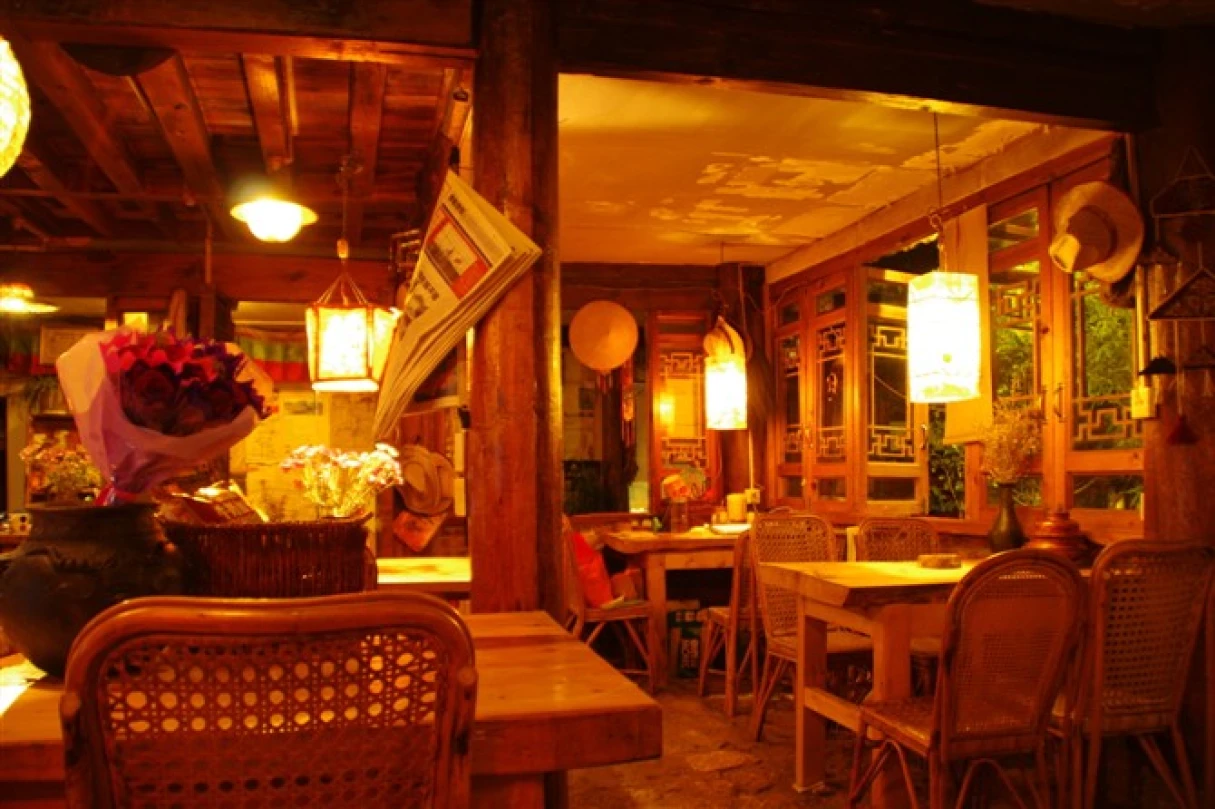
That evening, we gathered to order dinner. At 3,700 meters elevation in Feilai Temple, the rice was terrible, the dishes were expensive, and the portions were pitifully small. The greens were undercooked and stir-fried with chili peppers—I could barely choke them down. The 60-yuan yak meat dish had only a tiny portion, but the potato pancakes were excellent. We each had one and ordered a second round. Before the second batch arrived, though, I suddenly felt nauseous and dizzy—altitude sickness, probably. To save my strength for tomorrow's trek, I hurried back to bed.
I had zero energy. Didn't shower, didn't change clothes, just collapsed into bed and fell asleep. When I woke up, it was 6 AM. Old Gu was already getting dressed, planning to photograph the "Golden Sun illuminating the Snow Mountain." I was eager to see it too, so I scrambled up. My headache was gone, but I still felt weak.
I pulled back the curtain. Thick clouds blanketed Kawagebo Peak and the surrounding mountains. We waited, disappointed. If things went well, 6:30 would be the optimal viewing time, but as minutes passed, Meili Snow Mountain kept its veil tightly drawn. Breakfast was at 7, and I was about to leave when Old Gu shouted, "It's showing!" I ran over—Kawagebo's peak had emerged just a little, but without sunlight, it was just a snow-covered mountain, not a golden one. Old Gu was crushed, but I'd been prepared for this—many people stay two weeks without capturing the spectacle, and we were only here one night, in the rainy season. Just seeing Kawagebo's peak at all was already a stroke of luck.
The Trek: From Xidang Hot Spring to Yubeng Village
Pre-Departure Preparations
After a few glances at Kawagebo, I rushed to breakfast. At 7:20, I reached the dining hall. The waitress said the hot water wasn't ready yet, and if I wanted milk, I'd have to wait—another signature of high-altitude life. Old Gu and the other guys were noisily slurping down rice noodles. My stomach was still queasy, so I avoided anything greasy, grabbed a few pieces of bread, and forced myself to eat two eggs. The自助 breakfast (buffet breakfast) cost 20 yuan per person—relatively generous compared to dinner.
I went back to the room, showered, and packed my backpack, trying to lighten the load as much as possible. I left my heavier items at the front desk. At 9:30, everyone gathered in the lobby. Xiao Qian had checked one large makeup bag, but her backpack was still the biggest and heaviest. To my admiration, she carried it the entire way into Yubeng. Hero's backpack looked the smallest, but one lift told you it wasn't any lighter than Xiao Qian's—we only discovered at Ice Lake that it was stuffed with all kinds of sausages and cakes. To make sure I could handle the trek, I transferred all my heavy items into Old Gu's pack, carrying a half-empty bag to look like a proper backpacker. Inside were nearly ten packs of "Paoba" crispy snacks, plus chocolate and beef jerky.
Xidang Hot Spring: The Starting Point
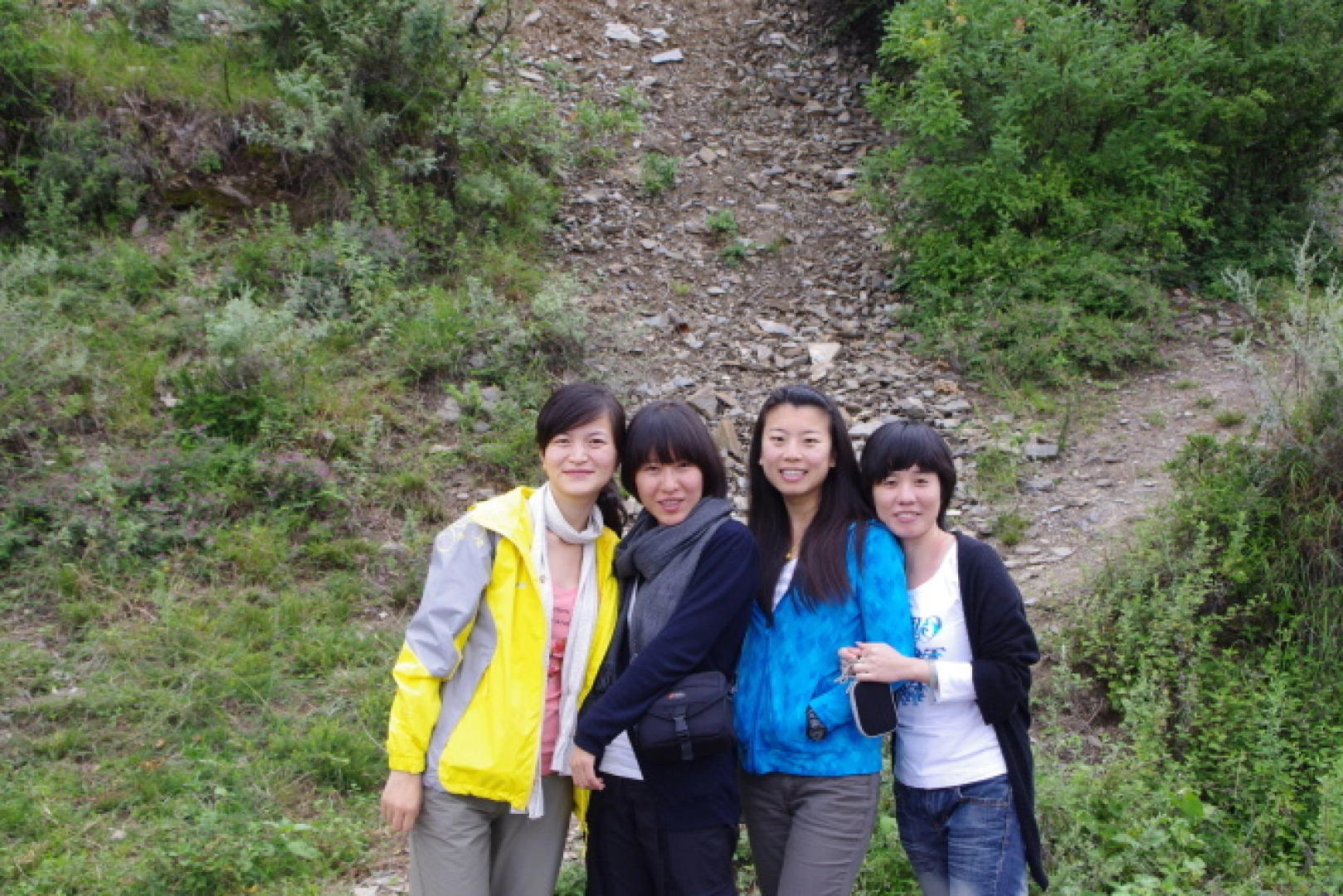
We had to ride a bit more before the actual trek began. The starting point was Xidang Hot Spring. The winding mountain road had small landslides, making driving difficult. At one spot, an excavator was repairing the road, and we had to wait several minutes before passing. After half an hour, we reached the Lancang River bridge. Crossing it, the left fork led to Yubeng, the right to Mingyong Glacier. Mingyong Glacier is a long S-shaped glacier beneath Kawagebo Peak—a five-hour round trip on foot. We weren't going there this time; we were heading straight for Yubeng.
An hour later, we arrived at Xidang Village. The roads within the village were even worse, but the scenery was beautiful: fields of corn, mountain streams flowing by, cattle and sheep blocking the path. Xidang Hot Spring was a tiny bathhouse at the end of the village, also called "Hot Water Pool." It was the必经之路 (the only way) to Yubeng. Legend says this is a sacred spring granted by Kawagebo, capable of washing away fatigue and healing ailments. Accommodation cost 20 yuan, a bath 5 yuan. We didn't "indulge"—I'd seen photos online, and it looked barely cleaner than a pig's drinking trough.
The Grueling Uphill
We reached Xidang Hot Spring around 10:30 AM. That day, we would cross a mountain: 12 kilometers uphill to Nanzong Pass, then 6 kilometers downhill to Upper Yubeng Village. Xidang Hot Spring sits at 2,700 meters, Nanzong Pass at 3,800 meters, and Upper Yubeng at 3,050 meters.
At the bottom, where mules were available for hire, Shark asked if anyone wanted to ride. We all confidently declared we'd hike. But that was just the beginning. The difficulty hit harder than expected: the uphill trail was tough, and at over 2,000 meters elevation, every step left you gasping for air. The path was nothing but a track worn by people and mules—rugged, muddy, and dotted with mule droppings. All four of us women used trekking poles. Hero and Little Fatty from Hangzhou, who cycled regularly, were in great shape and moved fast. Old Gu and I gradually fell behind, because I simply couldn't keep going.
Half an hour of walking felt like an entire day. My headache returned, and then came the vomiting—everything I'd painfully forced down at breakfast came right back up. I stood on the steep slope, unable to move, retching continuously. Hua Zi, Shark, and others rushed over to help, giving me oxygen, but it did nothing. I gathered my courage and took a few more steps, then started vomiting again. Shark checked my fingernails and lips and diagnosed mild altitude sickness. Ironic: before coming to Yunnan, I'd started taking Rhodiola rosea capsules a week early, while everyone else hadn't touched them. And I was the only one affected.
I tried to keep going, but the headache and vomiting had left me weak. I felt like I'd never make it to Nanzong Pass. Old Gu stayed by my side, taking care of me. Hua Zi made me a cup of oral glucose, but it didn't last five minutes in my stomach. For my own sake, Old Gu decided we should give up. I was furious with myself—I'd planned this for so long, waited so long, and now I was supposed to turn back before even reaching the village? I couldn't accept it. Even if I had to ride a mule today, I'd get into that village. Tomorrow, when they went to Sacred Waterfall and Ice Lake, I could just sleep and recover in the village.
After arguing my case, and to avoid holding everyone back, I decided after half an hour to take a mule up to Nanzong Pass.
Scenery from the Saddle
Shark called the villagers below to send a mule up. The women ahead—Xiao Qian, Xiao Xi, A-Ming—were all struggling along, cheering me on. I felt terrible inside: they could do it, so why couldn't I? If I couldn't make it on the first day, what about tomorrow's Ice Lake and the day after's Sacred Waterfall? Was I going to leave with all these regrets? They could have reached Yubeng much earlier if not for me holding them back. Guilt, combined with my fear of riding a mule, was suffocating me.
The muleteer was a local from Xidang Village, incredibly fast on his feet. We'd walked for half an hour, and he caught up shortly after receiving the call. I reluctantly climbed onto the mule, while my teammates continued measuring the earth with their feet. We'd meet again at Nanzong Pass.
It was my first time riding a mule, and on a steep uphill trail at that. I was terrified at first. The path hugged the mountainside, with the mule track on the very edge. I kept worrying the muddy trail would make the mule slip. In truth, this mule had been walking this route once or twice daily since it was four years old—it moved steadily and confidently. Along the way, every few hundred meters, a bamboo basket hung from a tree branch, each one marked with the name of the Tibetan villager responsible for trash collection, plus a number. The first basket was numbered in the sixties, and the numbers decreased as we climbed. When you saw the basket marked "1," you knew Nanzong Pass was near. Once I was on the mule, I chatted with the muleteer and took in the mountain scenery, and my headache began to ease. By the time we neared the pass, I felt my strength returning. When we reached the basket numbered "6," I asked to dismount and walked the rest of the way with the muleteer.
This 12-kilometer uphill section takes about four hours on foot. The mule, needing to be led, wasn't much faster—it arrived about fifteen minutes ahead of the fastest hiker. Along the four-hour route, there were two simple wooden shelters doubling as convenience stores, selling drinks, hot butter tea, and instant noodles. To replenish energy, most people bought noodles and butter tea at the second stop. Everything here was brought up by mule, so prices were higher than down below: 10 yuan for a cup of noodles, 2 yuan for a cup of butter tea.
Conclusion: The Meaning of the Trek
For me, the Yubeng journey was a test of both body and spirit. From the humiliation of altitude sickness to the resignation of riding a mule, from my teammates' encouragement to the muleteer's company—every step deepened my understanding of the hardships and beauty behind the idea of "Shangri-La." Yubeng has no roads, but it reaches people's hearts. It has no luxury, but it offers the purest nature and humanity.
If you're thinking of going to Yubeng, my advice is: acclimatize to the altitude beforehand—don't overestimate yourself like I did. Bring enough energy supplies, but don't pack too heavy. Most importantly, keep an open heart—because here, you might just meet your truest self.
"If you can't go to heaven, go to Yubeng." I believe it now.
You should also read:
Dreaming of Lijiang, Dreaming of Shangri-La: A Journey That Lets Your Soul Breathe Deeply
Dreaming of Lijiang, Dreaming of Shangri-La: A Journey That Lets Your Soul Breathe Deeply Life is like a long trek. We're always rushing through the concrete jungle, searching for a glimmer of light in the monotony of our days. Then one autumn, I heard the…
Continue reading...
Tengchong·Heshun: Finding Life as It Should Be in a Border Town Where Time Stands Still
Tengchong·Heshun: Finding Life as It Should Be in a Border Town Where Time Stands Still The long journey of over twenty days was over. On my first day back at the office, I was still in a daze. My fingers couldn't find the keys on…
Continue reading...
Two Girls' Graduation Trip: Dali and Shuanglang – A Poetic Farewell to Mountains and Sea
Two Girls' Graduation Trip: Dali and Shuanglang – A Poetic Farewell to Mountains and Sea Preface: Catching the Tail of Youth, Heading South During our senior year of college, my roommate and I – two girls studying in Beijing – decided to bid farewell to…
Continue reading...