Honghe Rice Terraces: A Thousand Mountains Under the Setting Sun, Ten Thousand Tiers of Fields Reflecting Sky and Cloud
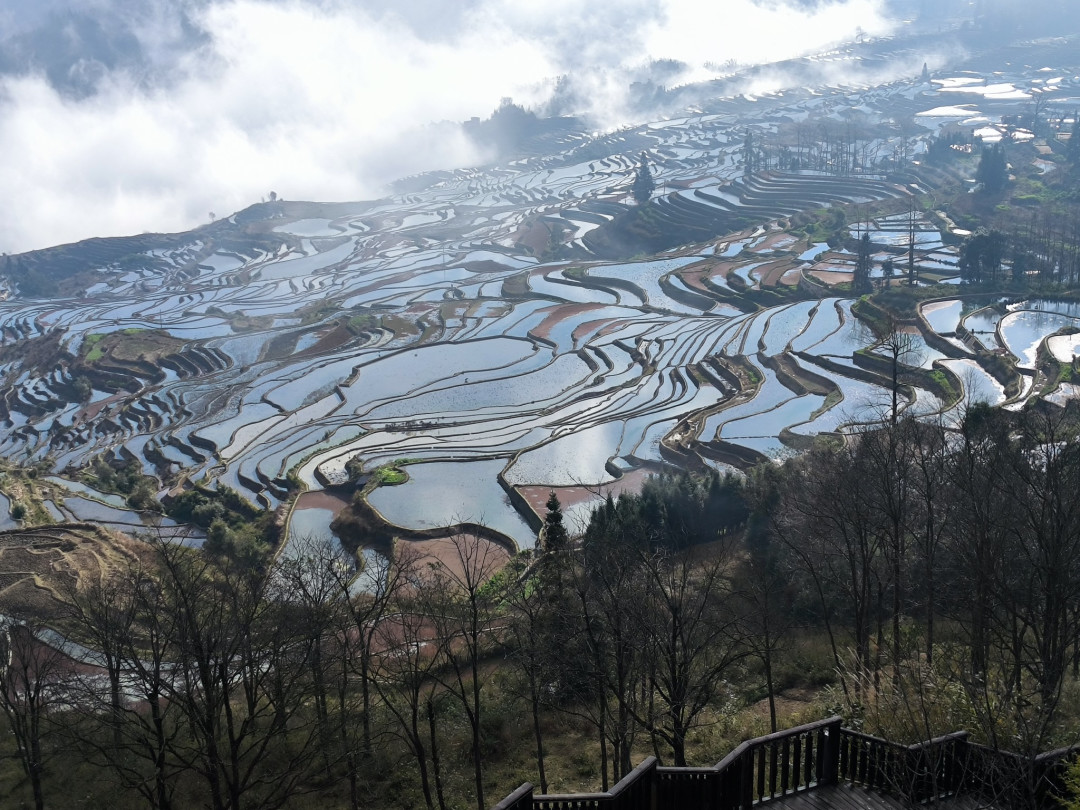
Honghe Rice Terraces: A Thousand Mountains Under the Setting Sun, Ten Thousand Tiers of Fields Reflecting Sky and Cloud
Prologue: An Encounter with a Sea of Clouds and a World of Mirrors
Deep in the folds of southwestern China lies a miracle carved by time and sweat. When the first rays of dawn cross the spine of the Ailao Mountains, tens of thousands of flooded paddies shatter like broken mirrors, capturing every wisp of cloud and every brushstroke of twilight in their embrace. This is Yuanyang—a name that haunts the dreams of countless travelers, a UNESCO World Heritage site polished over 1,300 years.
For our Yunnan journey, the Yuanyang Rice Terraces were the brightest jewel. To reach them, we even went so far as to rent a car at Kunming Airport and set off into the unknown. And as it turned out, this land has never let down a single pilgrim who made the journey.
Why Yuanyang? The Secrets Behind a World Heritage Site
"The world's rice terraces look to China; China's rice terraces look to Yuanyang." This saying is no empty boast. China has many terraced fields, but only the Honghe Hani Rice Terraces have been inscribed on the UNESCO World Heritage List. What legend lies behind this honor?
A Thousand-Year Migration, an Epic of a People
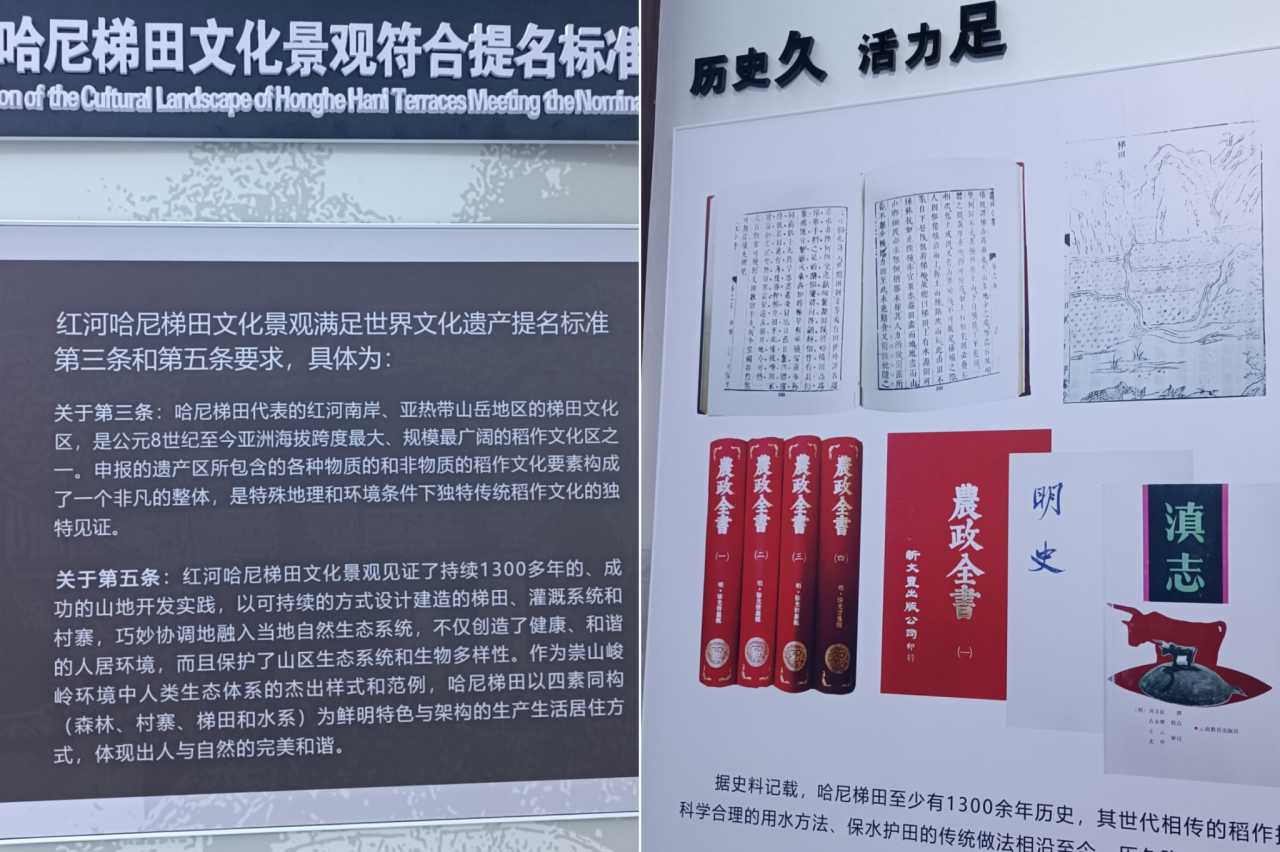
The story began more than 1,300 years ago. At that time, the ancestors of the Hani people could not withstand the powerful nomadic tribes and were forced to leave their lush homeland on the shores of Qinghai Lake. They journeyed south, finally halting at the southern foot of the Ailao Mountains. Facing this barren land of towering peaks and deep ravines, they did not retreat. With unimaginable willpower, they broke up rocks, terraced the mountainsides, and transformed over 170,000 mu (roughly 28,000 acres) of wilderness into layer upon layer of fertile fields. This was not simple farming—it was an immortal poem carved into the earth by a people's generations of wisdom and sweat.
Nature and Human Ingenuity: The Ecological Wisdom of Four Elements in Harmony
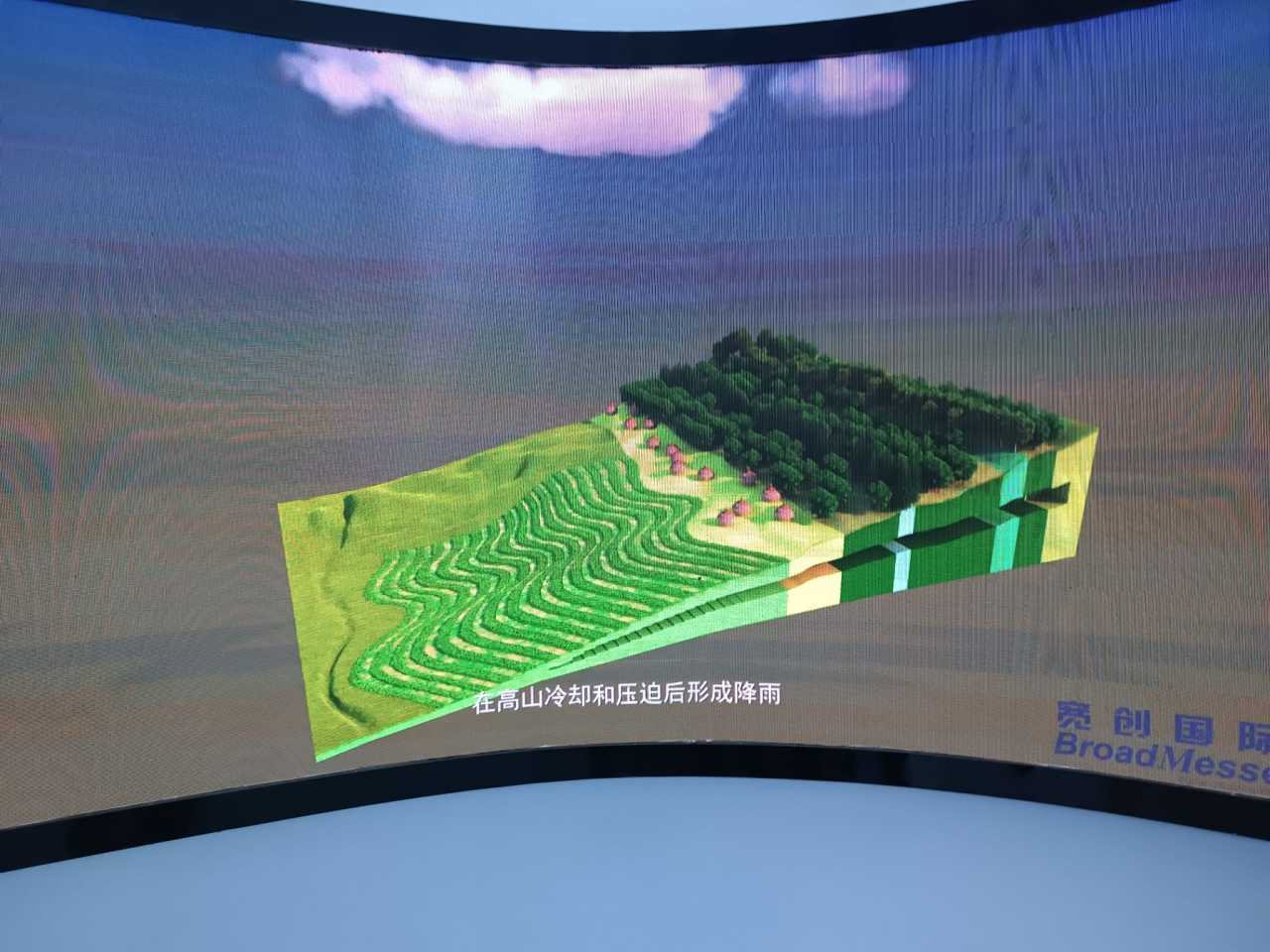
What makes the Yuanyang Terraces unique is not only their grandeur but also the philosophy of survival they embody. Here, "as high as the mountains are, so high is the water"—rainfall is exceptionally abundant. The Hani ancestors ingeniously constructed a four-in-one agricultural ecosystem: "forest—village—terrace—water system." The forests nurture the water sources, the water nourishes the terraces, the terraces sustain the villages, and the villages give back to the forests. Under extreme natural conditions, they not only survived tenaciously but also achieved a harmonious coexistence between humans and nature—isn't this exactly the "sustainable development" we seek today?
Before You Go: Practical Tips and Route Planning
Location and Transportation

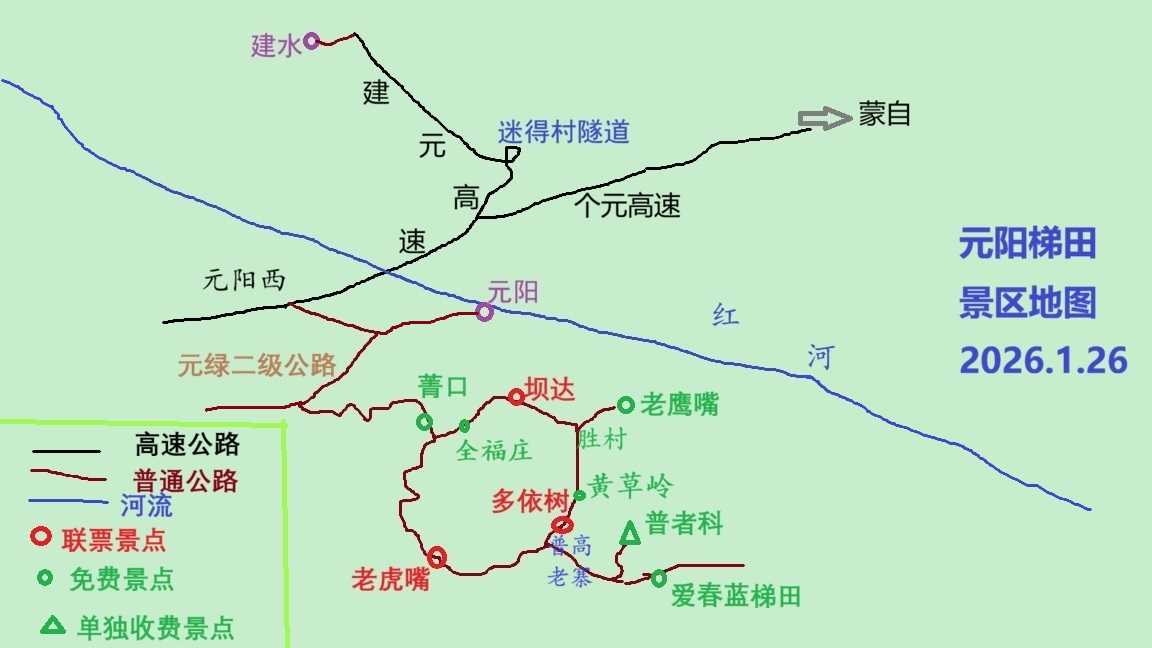
The Yuanyang Rice Terraces are located deep in the mountains south of Yuanyang County in the Honghe Hani and Yi Autonomous Prefecture. It is an open scenic area where private cars can come and go freely. If traveling from Jianshui or Mengzi, take the "Yuanyang West" toll station exit, transfer to the Yuanlv secondary highway, and then head deep into the mountains.
Important Reminder: There is almost no public transportation within the scenic area. Self-driving or hiring a car is the only option. The main roads are in decent condition but have many curves—especially the section from Duoyishu to Laohuzui, which features extremely long downhill stretches and sharp turns. Drive with caution. The branch road from Shengcun to Laoyingzui winds through villages, is narrow and rough, and requires extra care.
Tickets and Accommodation
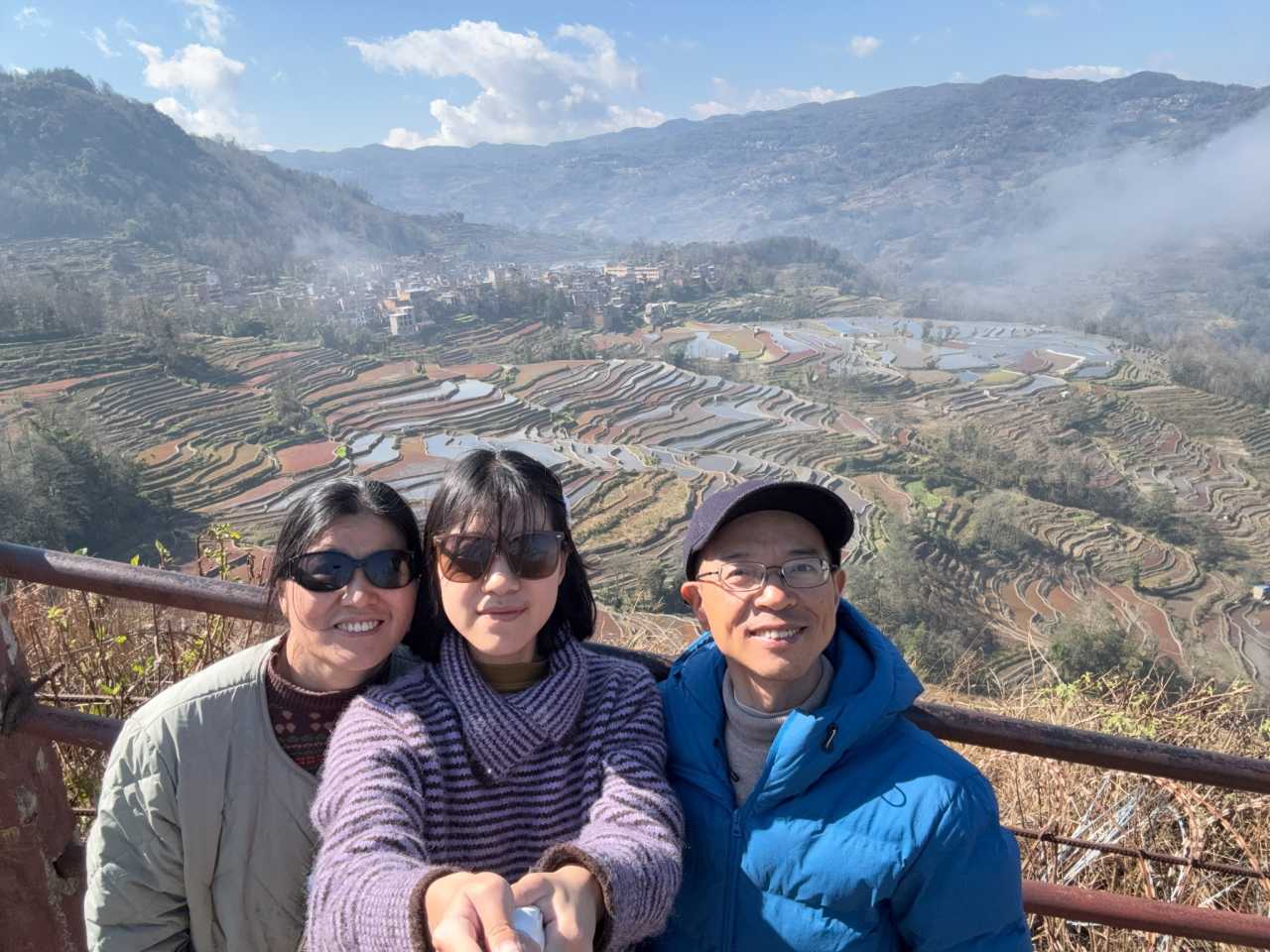
A combined ticket costs 70 RMB and includes three viewing platforms: Bada, Duoyishu, and Laohuzui. It is valid for two days with unlimited entries. In addition, Qingkou is home to the visitor center and the Terrace Culture Museum, as well as many free viewing spots.
For accommodation, there are plenty of farmstay guesthouses within the scenic area. Qingkou offers the best conditions, while Duoyishu is convenient for watching sunrise. We chose Pugaolaozhai near Duoyishu and stayed at a guesthouse called "Return to the Garden," where the top-floor room cost only 163 RMB—an excellent value.
Weather: A Game of Luck
The Yuanyang Terraces receive abundant rainfall year-round. Winter is the dry season with more sunny days. However, the microclimate of the highland terraces is extremely complex—"ten miles apart, different skies" is the norm. Be sure to check the weather forecast carefully before setting out, but even so, the gathering and dispersal of clouds and fog depend entirely on luck. As we later learned, in Yuanyang, patience and persistence are often more reliable than the forecast.
Day One: A Symphony of Cloud Seas, Mirror Fields, and Sunset
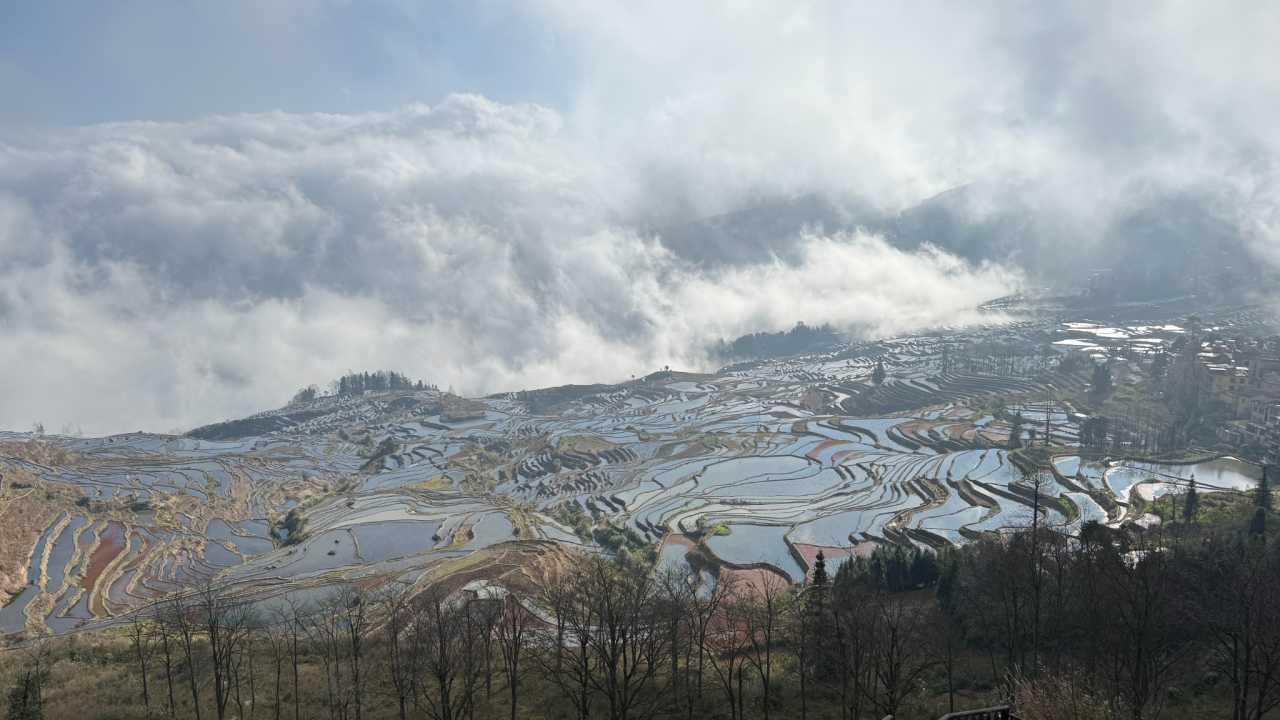
Early Morning Departure, a Chance Encounter with the Cloud Sea
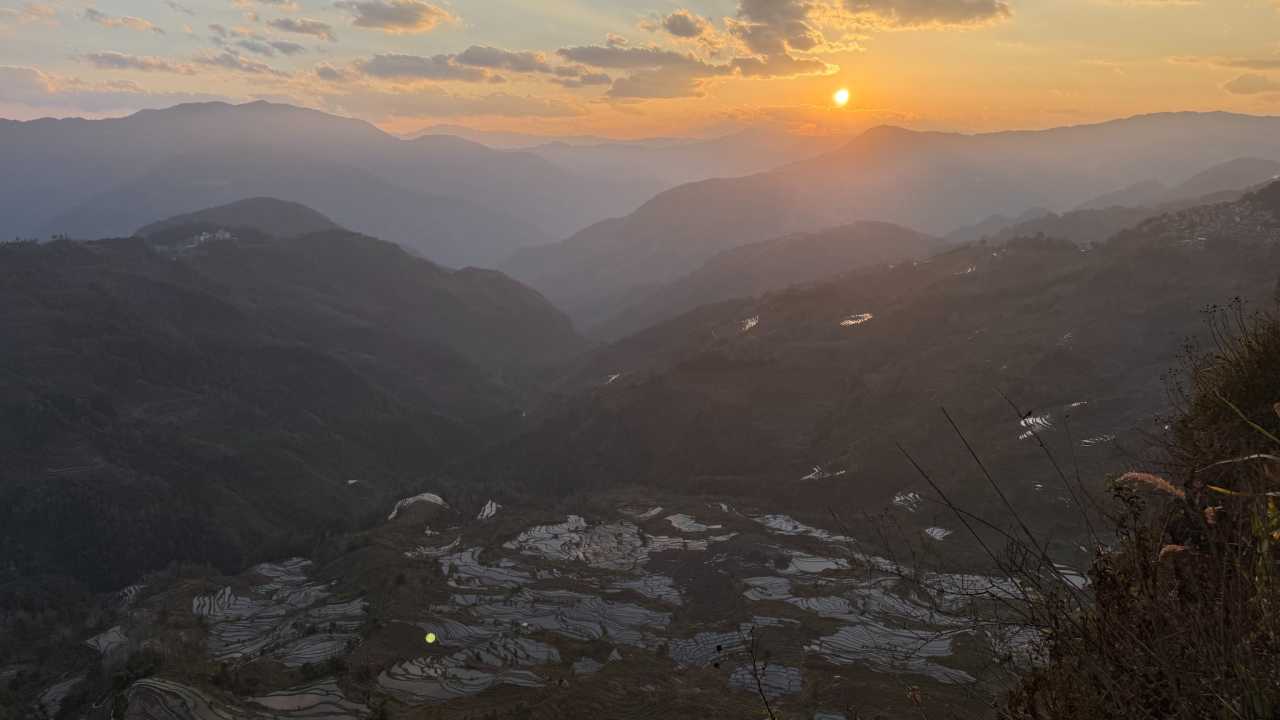
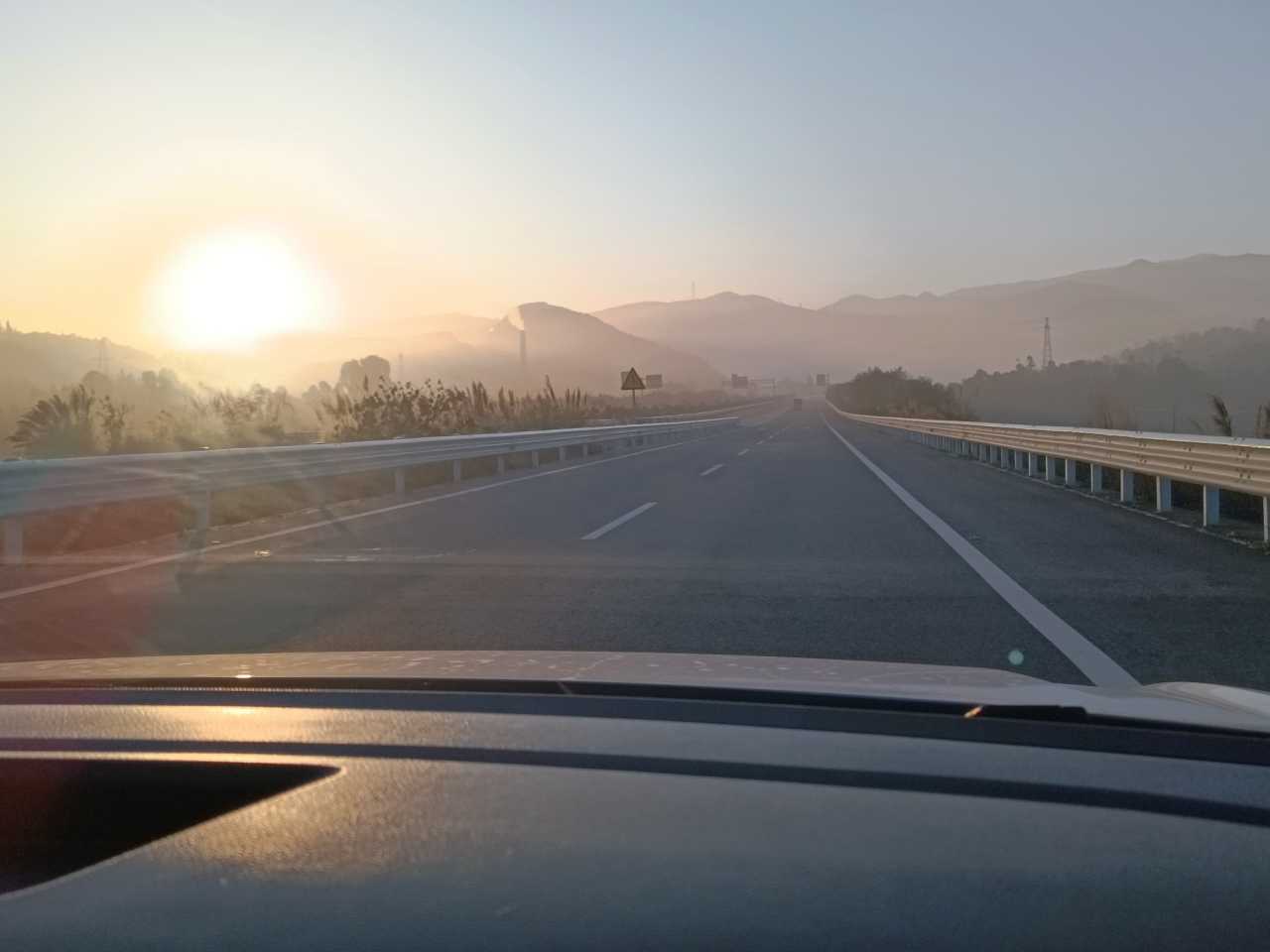
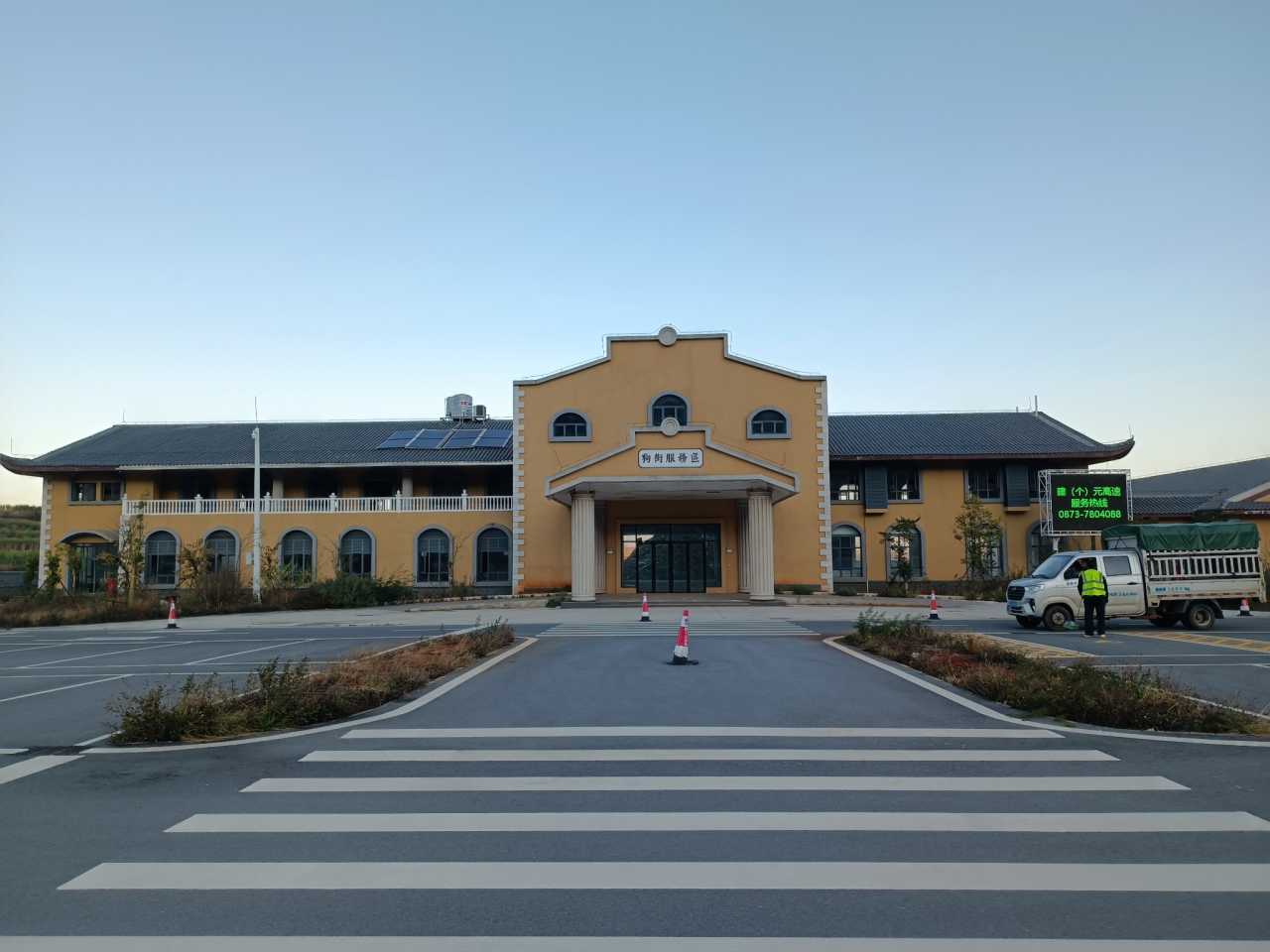
At 7:55 AM on January 26, we left the ancient city of Jianshui and drove onto the Jianyuan Expressway. At first, the sun was shining brightly, but after passing the Goujie Service Area, the sky gradually darkened, and my heart sank. To make things more thrilling, when we entered the "Mide Village Tunnel"—a 4-kilometer-long spiral tunnel—I kept turning left, circling 360 degrees and still going around, dizzying me.
However, as the altitude rose, we emerged from the clouds and saw blue sky above! A spectacular sea of clouds appeared by the roadside—distant green mountains and nearby dense forests seemed to be soaking in a milk bath. A cloud sea is a rare encounter. Even before seeing the terraces, we received this gift from nature—an unexpected delight.
Qingkou and Quanfuzhuang: First Glimpse of the Terraces
After passing through the Xiaoshuijing Tunnel, we entered the Yuanyang Rice Terrace scenic area. Qingkou was originally a village but has now been transformed into a Hani Terrace town, housing the visitor center and the Terrace Culture Museum. The guesthouses in the town are built in the style of traditional Hani dwellings—mushroom houses, with roofs shaped like mushrooms, giving them a distinctive character.
Finally, we saw the terraces we had longed for. Layer upon layer of flooded paddies stretched from the mountainside down into the valley, which was still immersed in a sea of clouds. Although the winter terraces appeared a bit bleak, the fields were filled with water, reflecting the blue sky and white clouds—breathtakingly beautiful. The red areas were algae in the paddies, which, combined with the blue, emitted a multicolored glow. Trees were often planted on the ridges to prevent soil erosion and collapse—these details reflect the survival wisdom of the Hani people.
Bada: Regret and Anticipation in the Cloud Sea
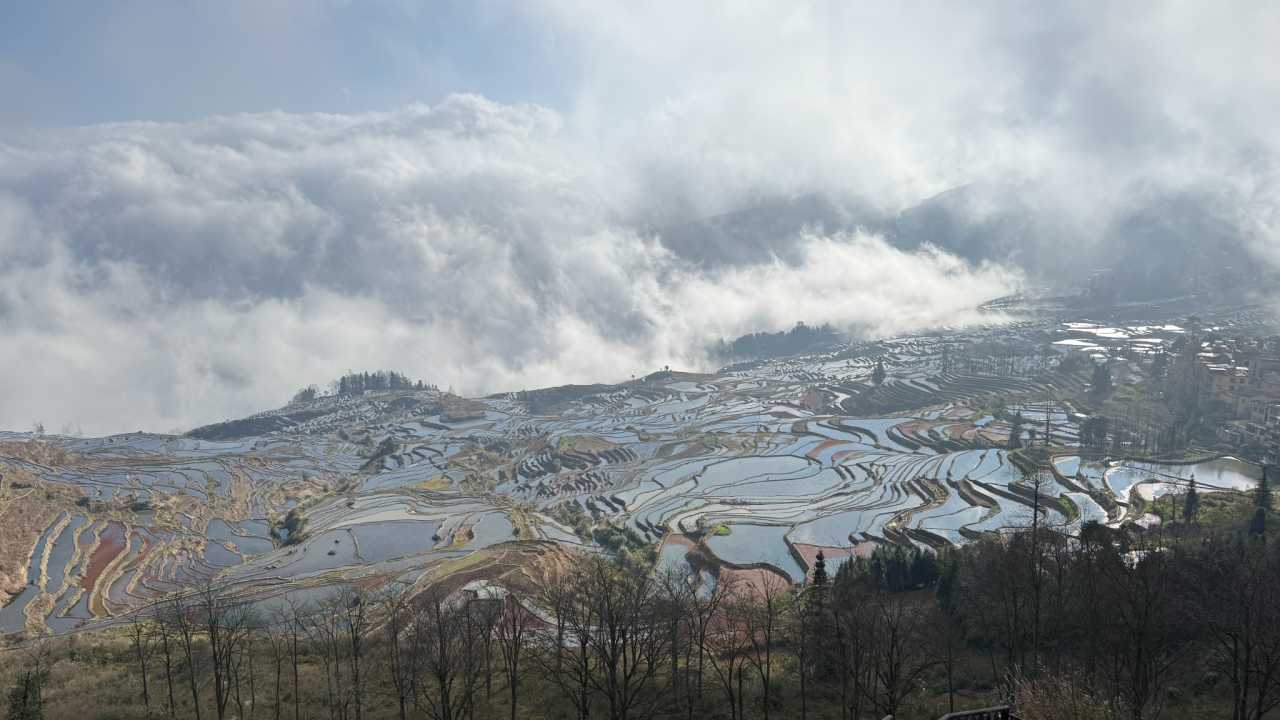
At the Malizhai Tea Factory viewing platform, we saw terraces of a different style. Rows of "tiers" were densely packed, as if drawn by a professional cartographer's contour map—balanced and orderly, deeply etched into the texture of the earth.
Then we arrived at the first paid scenic spot—Bada. However, the cloud sea in the valley was so thick that it obscured the grandeur of the terraces. If you imagine this basin as a pot, we could only see the terraces along the rim. For the first time, I found the cloud sea a bit annoying. But there was no rush—we would come back tomorrow on our way out.
Duoyishu and Aichun Blue: Exploration in Thick Fog
We hurried to Duoyishu, only to see another "lonely" sight—the cloud sea still lingered in the valley. But we still had time; we didn't believe it wouldn't clear tomorrow.
On a branch road, the village of Aichun is famous for its "blue terraces." The "blue terraces" get their name because the blue sky is reflected in the paddies, giving them a faint blue tint. When we visited, it wasn't very blue; they say the best time is between 9:00 and 10:00 AM. But even so, we got up close and personal with the terraces—some ridges were walkable, others we had to avoid, as falling into the water would be embarrassing. Ducks frolicked in the paddies, shattering the reflections of sky and clouds, creating a vivid pastoral scene.
Laohuzui Sunset: A Golden Farewell
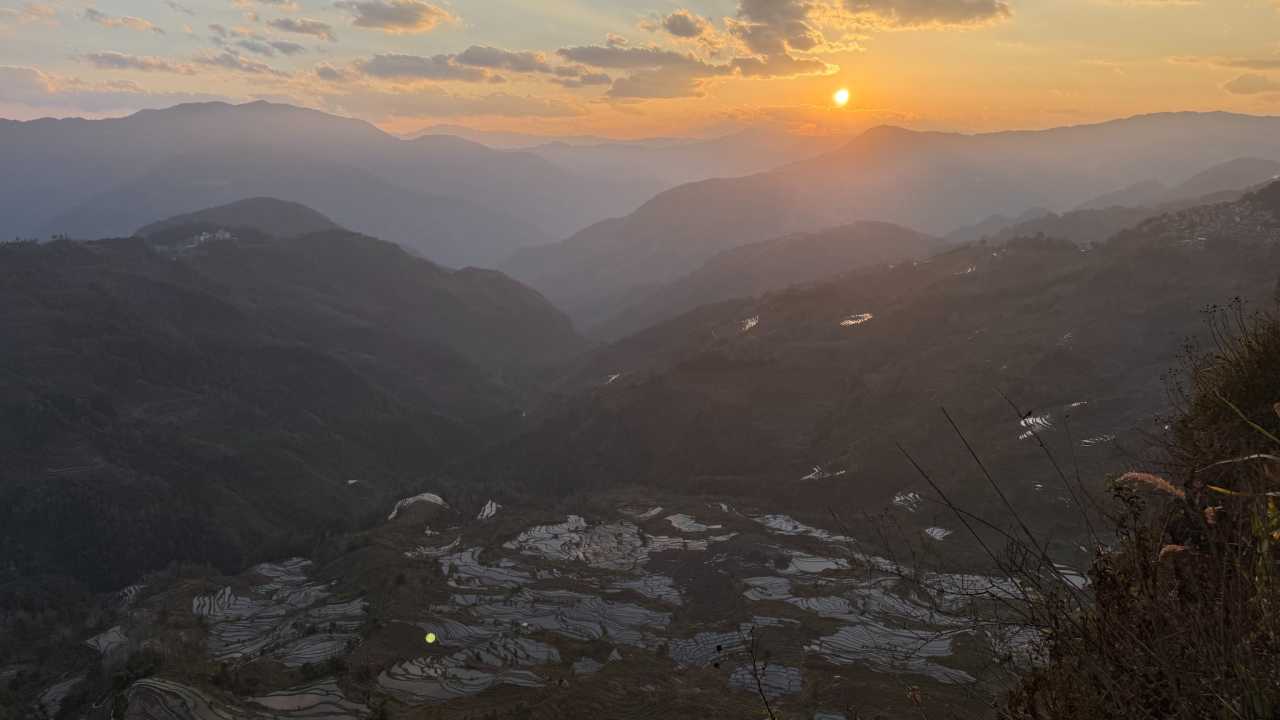
They say Laohuzui is the best place to watch the sunset. The road was all downhill with many sharp turns, but there were few cars and people, so traffic was smooth. Occasionally, villagers herded livestock along the road—be sure to give them a wide berth.
When we reached Laohuzui, the sun was still high in the sky. From the upper viewing platform, the terraces were somewhat backlit, appearing as a bright, white expanse. I later learned there was a lower viewing platform, reached by descending 500 steps, but unfortunately, my brain short-circuited at the time and I missed the entrance.
Still, the sunset was satisfying. As the red sun sank westward, patches of orange-yellow appeared in the paddies. The terraces resembled a giant concave-convex mirror, still and flowing with golden light. The layered mountains made the perfect backdrop for the setting sun. Although the distant peaks were high, the sunset was still magnificent and awe-inspiring.
Day Two: Sunrise, Morning Mist, and the Reward of Persistence
Duoyishu Sunrise: The Poetry of Black-and-White Terraces
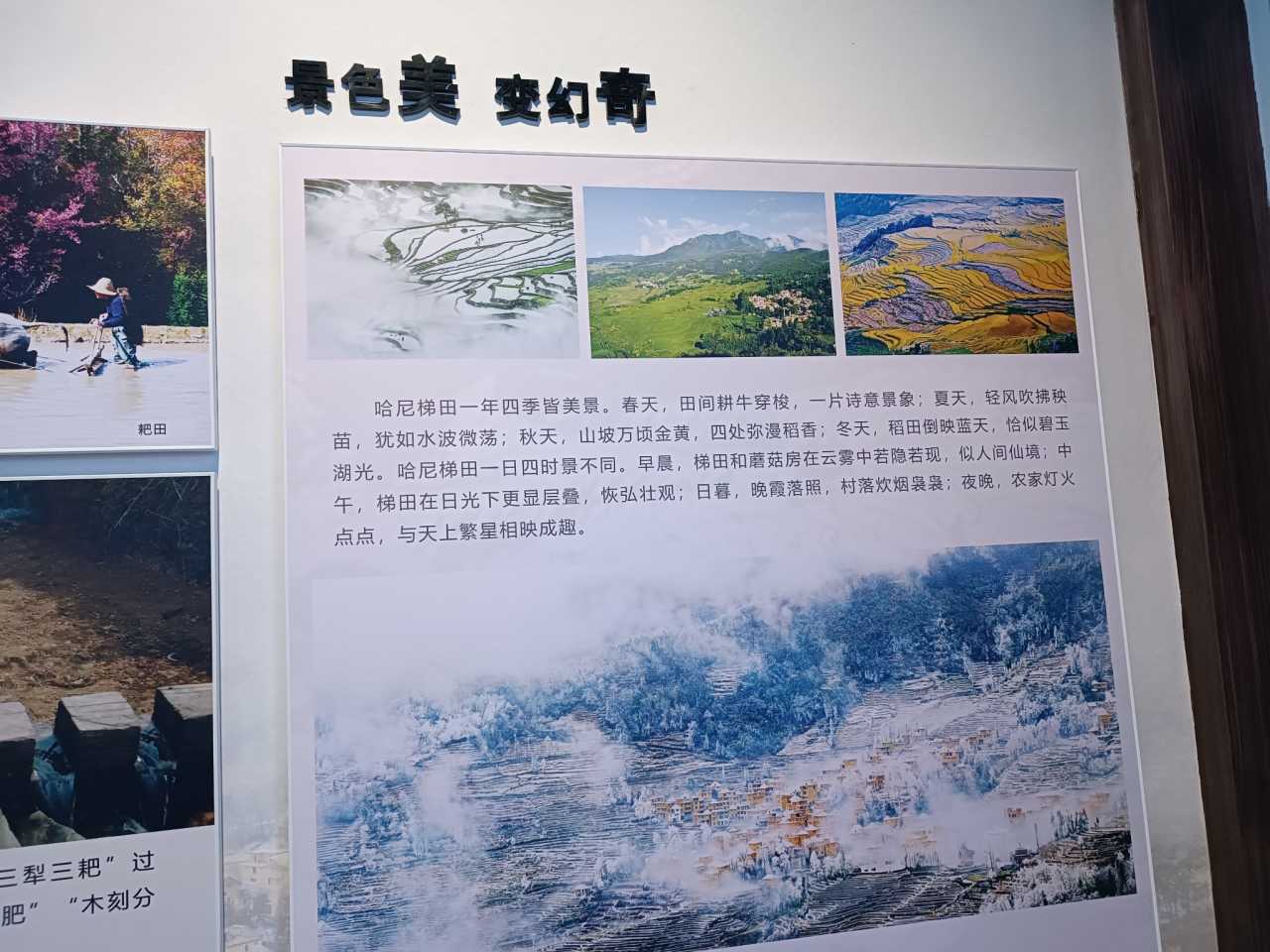
At 6:40 AM on the second day, I walked alone to the Duoyishu viewing platform, using my phone's flashlight. The platform was already crowded with people waiting for the sunrise; finding a spot was difficult. The terraces before me were black and white—thick fog drifted from the mountains toward the paddies, covering them like soft cotton.
Using my phone's compass, I determined that the morning sun would be blocked by the mountains this season. Rather than watching the sunrise, it was more about watching the morning mist and the black-and-white terraces under the twilight. The Hani people seemed to hold a divine brush, carving poetic curves into the earth as they terraced the land—layered, majestic, and grand.
The sun finally crested the ridge, and the black-and-white terraces gradually turned colorful. Although we didn't see a true sunrise, the morning scenery at Duoyishu was still satisfying. Compared with online photos, if shot in March, when the sun has moved noticeably northward, the view would be even more spectacular.
Laoyingzui: A Red-and-Blue Miracle Born of Perseverance
Leaving Duoyishu, we headed to an absolute hidden gem—Laoyingzui. The road wound through villages, narrow and rough, seemingly endless. When we arrived, Laoyingzui was shrouded in thick fog, and nothing was visible. A man with a video camera had already been waiting for two hours. I asked him if it was worth it, and he said, "It's up to fate."
I didn't give up. At 11:50 AM, the fog finally showed signs of breaking! Blue sky appeared, and I quickly called my family in the car to come. The few who had just left also returned—luckily they hadn't gone far, or they would have regretted it.
The terraces of Laoyingzui gradually shed their veil. The special feature here is the abundance of red terraces—the red comes from large patches of red algae in the paddies, which serve as fertilizer and food for ducks and fish. The parts of the red terraces not covered by algae revealed a deep blue, complementing the red beautifully, with an inexhaustible charm and elegance. Its beauty even surpassed that of Duoyishu.
We learned a valuable lesson in Yuanyang: if you encounter bad weather, don't give up easily. Hold on a little longer, and things may take a turn for the better. Of course, if the weather clears, you can say persistence paid off; if it doesn't, you might be called stubborn.
Epilogue: What the Terraces Taught Us
As we left Yuanyang, I looked back at the land blessed by clouds, fog, and sunlight. For 1,300 years, the Hani people have carved a miracle with their hands on this treacherous mountainside. They not only created a magnificent landscape but also left behind a wisdom of living in harmony with nature.
In Yuanyang, the terraces are more than rice paddies. They are mirrors, reflecting the sky and clouds; they are history books, recording the migration and struggle of a people; they are classrooms, teaching us patience, persistence, and reverence for nature.
If you also plan to visit Yuanyang, remember this: bring patience, bring an expectation of beauty, and above all, bring respect for this land and its people. Because here, every tier of terrace is the crystallization of sweat and wisdom, and every shimmer of water is a poem of the dance between humans and nature.
Practical Tips Summary: - Best season: Winter irrigation period (November to March) - Essential gear: Camera, tripod, warm clothing, patience - Core attractions: Duoyishu (sunrise), Laohuzui (sunset), Bada (panorama), Laoyingzui (red-and-blue terraces) - Transportation advice: Self-drive or hire a car; watch for curves and road conditions - Weather strategy: Don't give up easily in heavy fog; persistence may bring unexpected rewards
The Yuanyang Rice Terraces are not just a scenic spot—they are an eternal dialogue about time, labor, and beauty.
You should also read:
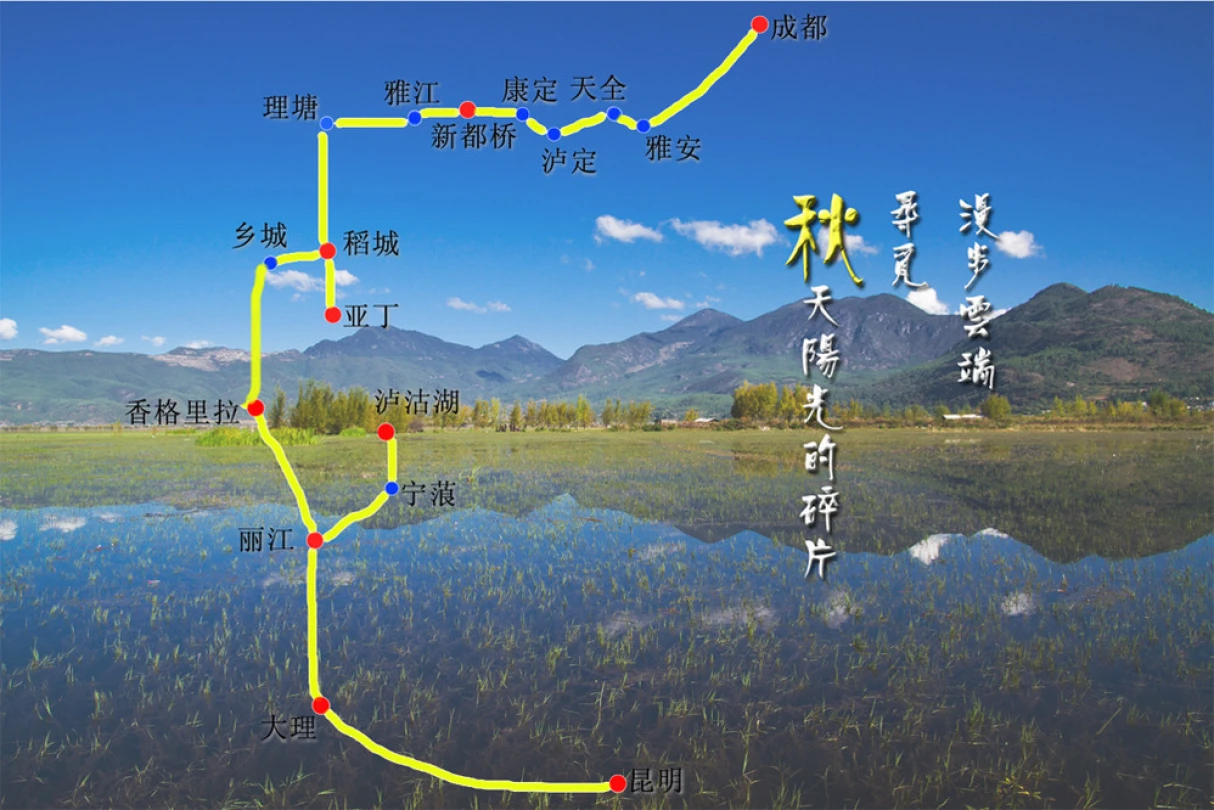
Strolling Among the Clouds: Gathering Autumn's Light on the Western Sichuan Plateau
Strolling Among the Clouds: Gathering Autumn's Light on the Western Sichuan Plateau Prologue: A Sun Chaser's Journey Autumn sunlight is like a gentle painter, using golden brushstrokes to smear the last traces of warmth across the earth. It slips through the gaps between your fingers,…
Continue reading...
Escaping Nanning, Falling Under Lijiang's Spell: Our Four-Person, Ten-Day Yunnan Dream
Escaping Nanning, Falling Under Lijiang's Spell: Our Four-Person, Ten-Day Yunnan Dream Before We Set Off: No Pain, No Obsession Have you ever had that impulse—suddenly tired of the office fluorescent lights, the crush of the subway, the endless parade of identical takeout boxes, and just…
Continue reading...
Two Girls' Graduation Trip: Dali and Shuanglang – A Poetic Farewell to Mountains and Sea
Two Girls' Graduation Trip: Dali and Shuanglang – A Poetic Farewell to Mountains and Sea Preface: Catching the Tail of Youth, Heading South During our senior year of college, my roommate and I – two girls studying in Beijing – decided to bid farewell to…
Continue reading...