In Pu'er: Encountering the Untamed Aesthetic of Ethnic Cultures
In Pu'er: Encountering the Untamed Aesthetic of Ethnic Cultures
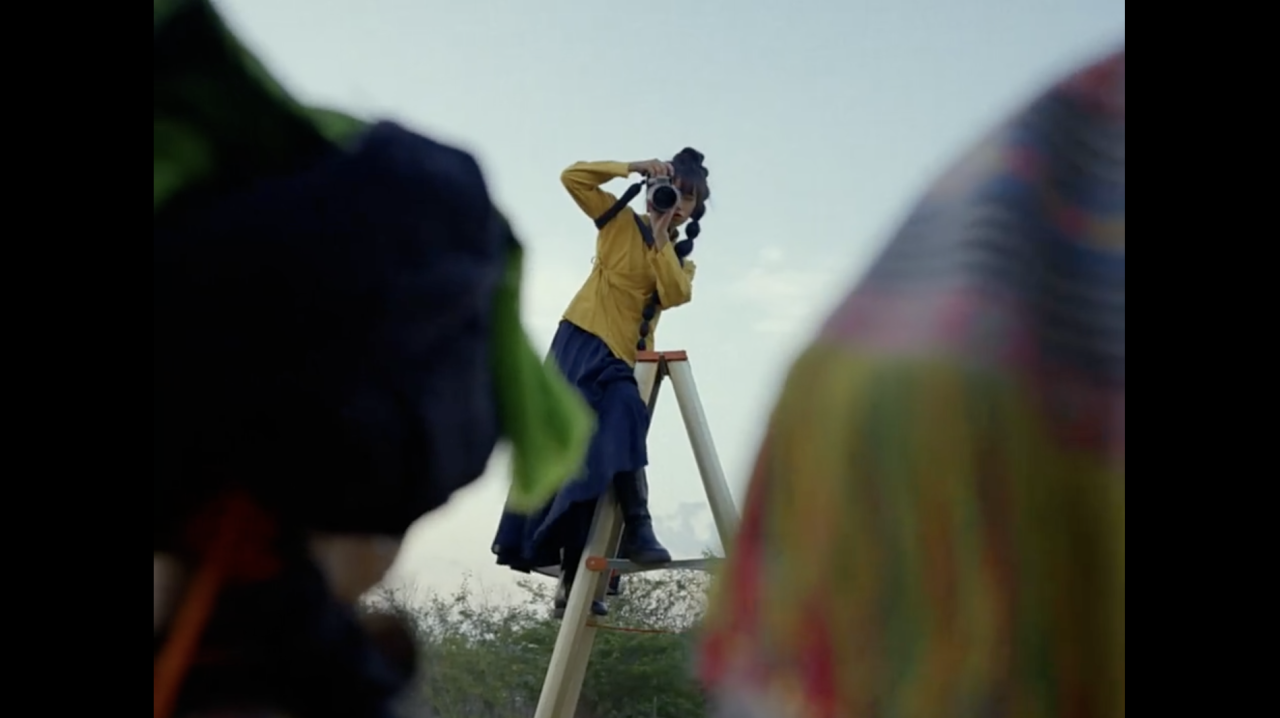
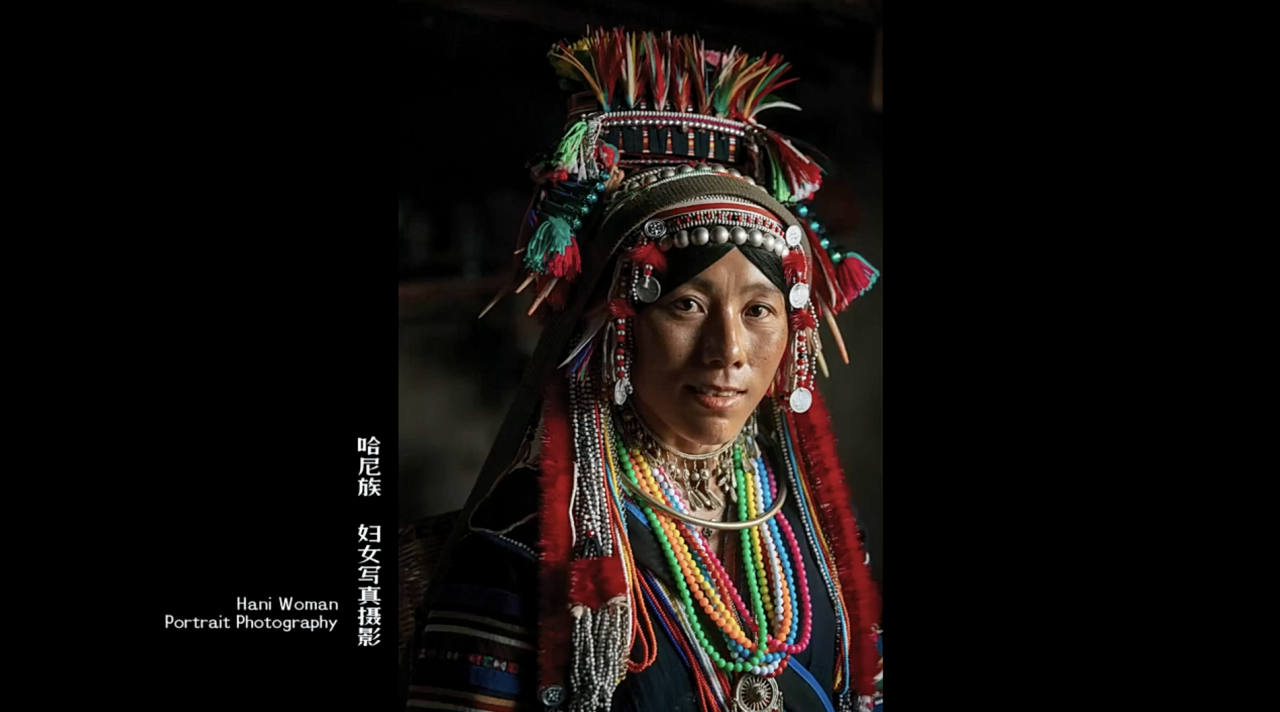
Last summer, the flames of the Torch Festival in the Daliang Mountains were still flickering in my memory when a video suddenly popped up on my phone screen: mist rolling like gauze over the Wuliang Mountains, and a young Yi ethnic woman named Ada Wupa holding a camera, her lens focused on her mother dressed in traditional ethnic attire, her smile warm and unwavering.
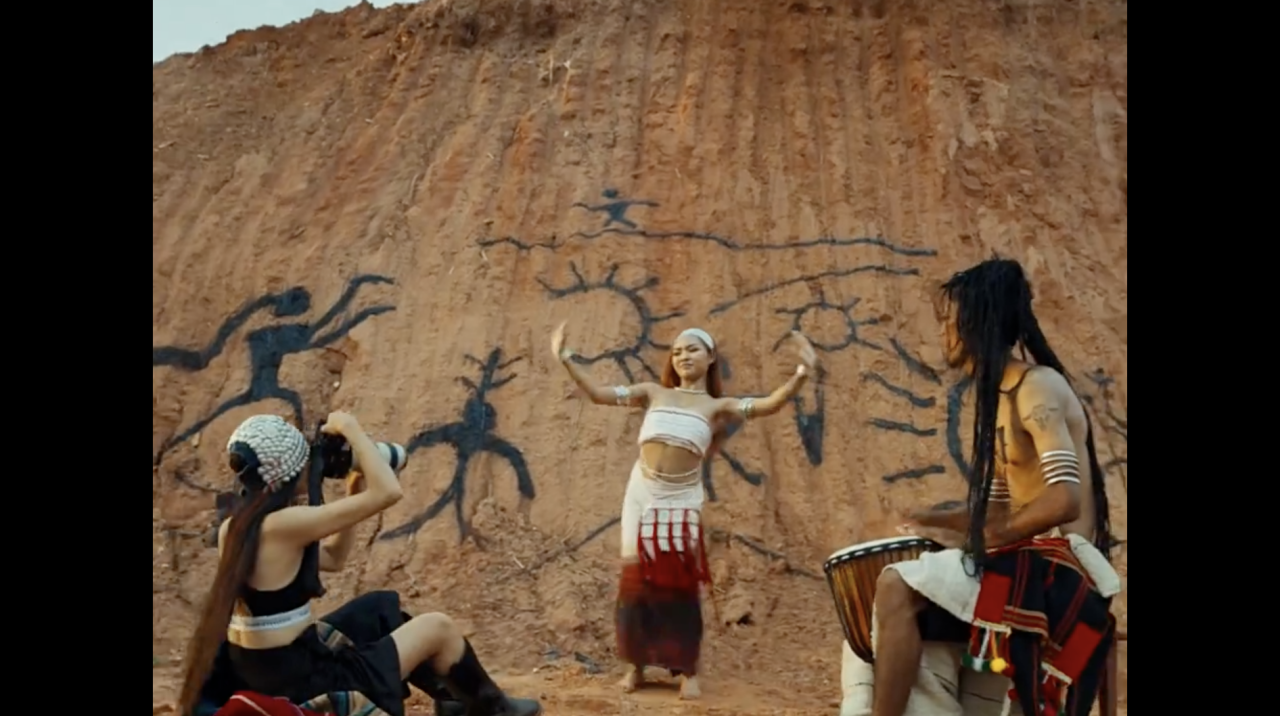
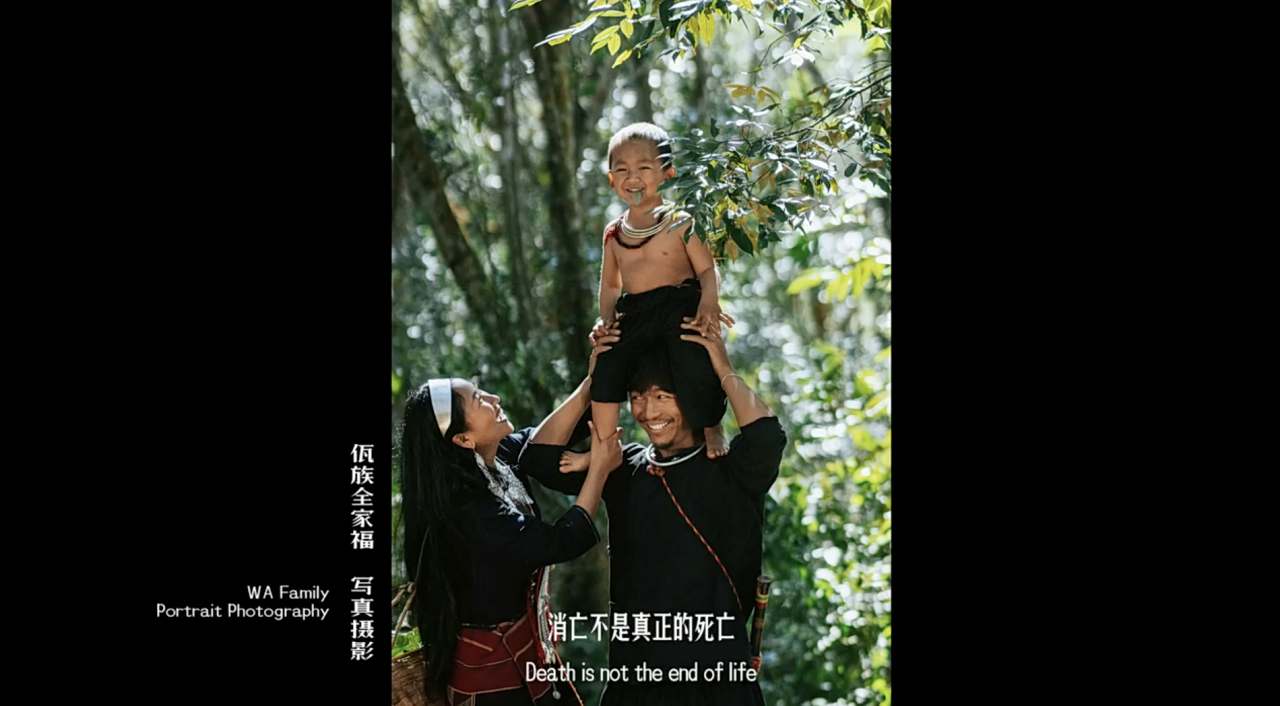
That was a clip from the documentary Ada Wupa. Director A Yan used her camera to capture the story of this portrait photographer from Pu'er, who is using her lens to rescue fading ethnic memories—the indigo tattoos on the face of a grandmother from the Dulong ethnic group, the last remaining "butterfly facial markings"; the silver ornaments on the pleated skirts of Hani women, still jingling along the ancient Tea Horse Road; and the silhouette of a Wa hunter gripping a crossbow as he disappears into the primeval forest, gradually overlapping with the ochre-red totems on thousand-year-old cliff paintings.
In the documentary, she says: "The mountains are where I grew up, so familiar that I know every inch of them. When I let go of my curiosity for the exotic and return in a free, primal way, there is always a voice—a voice that pierces through from ancient times to the present and echoes into the future."
"How to wrap the headdress, how to wear the skirt, how to speak the dialect—many young people no longer know these things. I walked out of the mountains, and now I'm walking back into them. Isn't there a saying that goes, 'Extinction isn't true death; forgetting is'?"
After watching that short clip, I didn't hesitate for a moment before booking a flight to Pu'er. The raw, wild beauty of ethnic cultures never fails to captivate me instantly. Just before the Spring Festival, I received a reply from Ada Wupa, finalized my itinerary, and even booked a session for a set of ethnic-style portraits photographed by her.
The Beauty of the Wa People: The Edges of the Wilderness and Unadorned Power
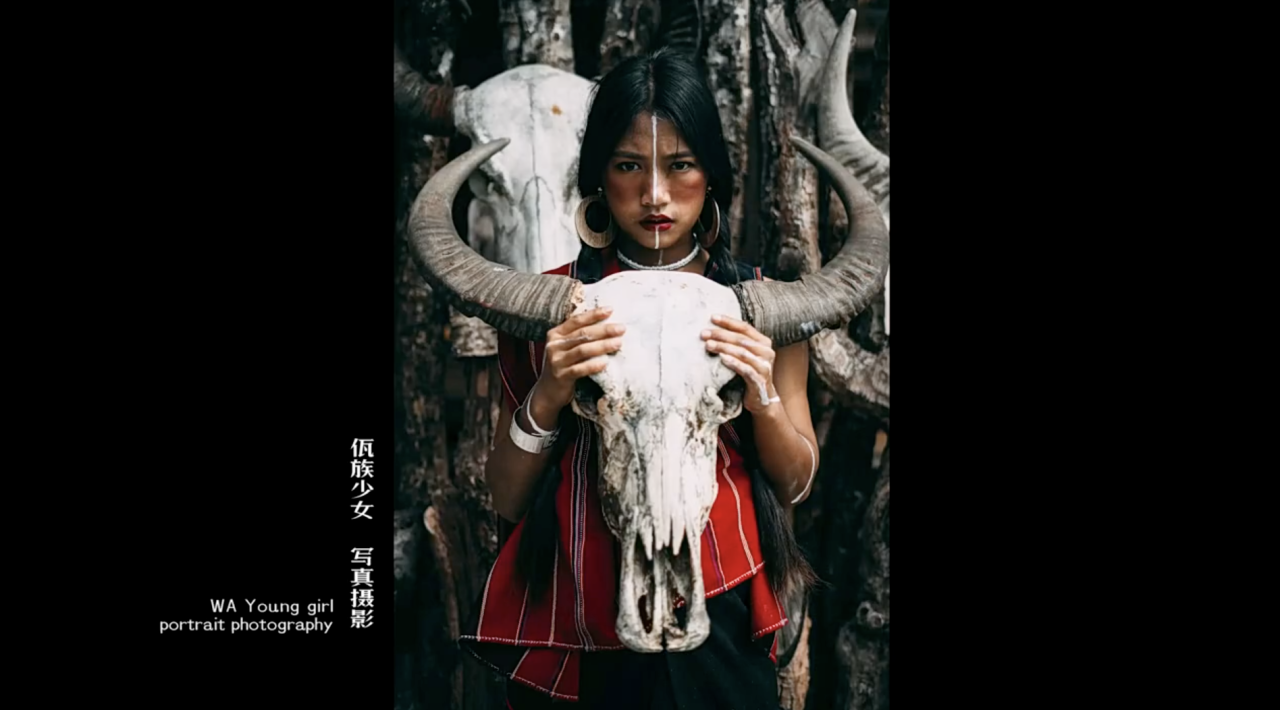
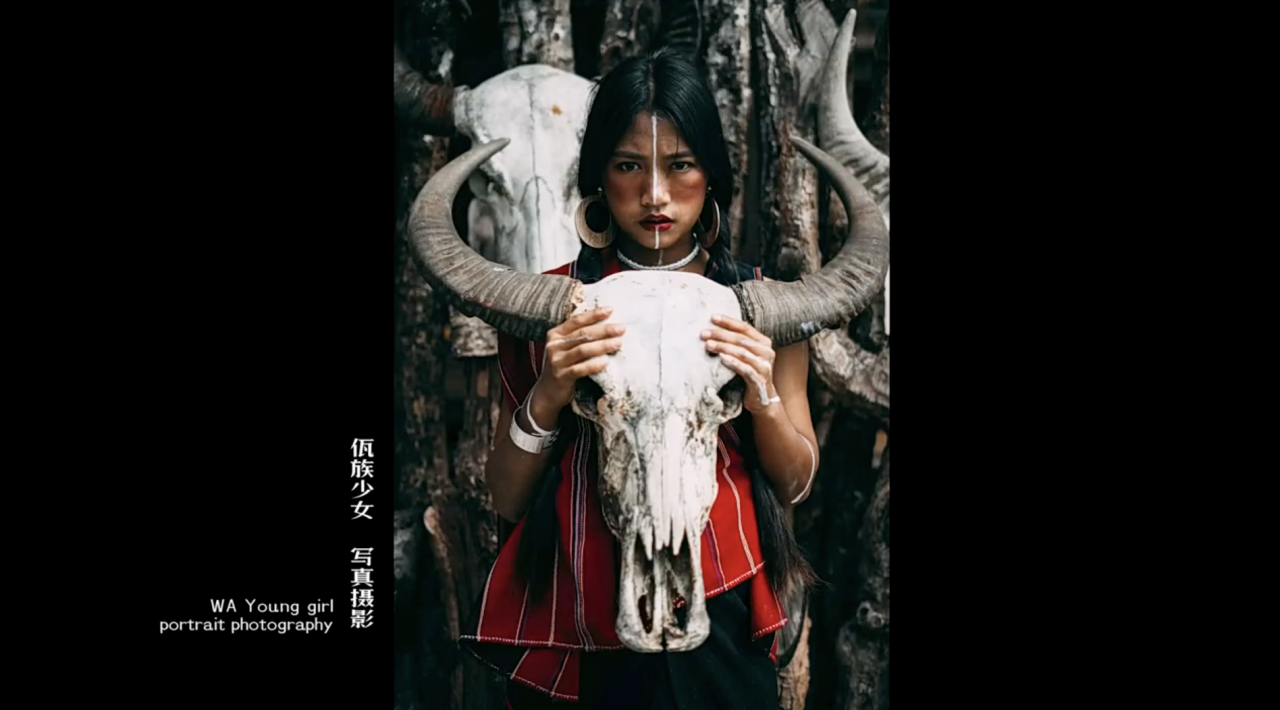
In Ada Wupa's studio, nine out of ten clients choose the Wa ethnic theme. The skin tone of the Wa people is perhaps the deepest among all ethnic groups, and their faces are painted with mysterious totems. That unpolished, primal aura feels out of place in mainstream aesthetic standards, but those who understand it fall in love at first sight.
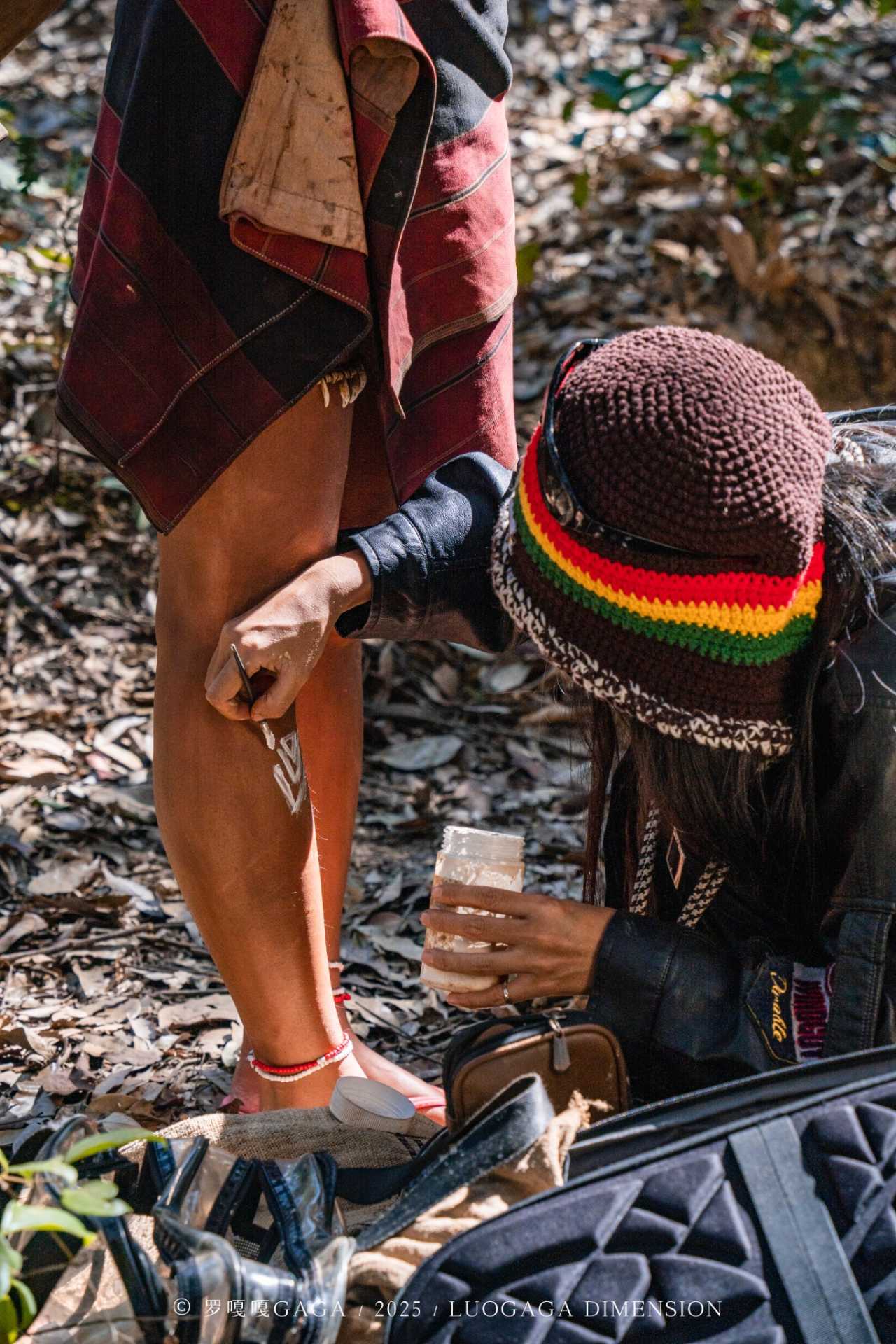
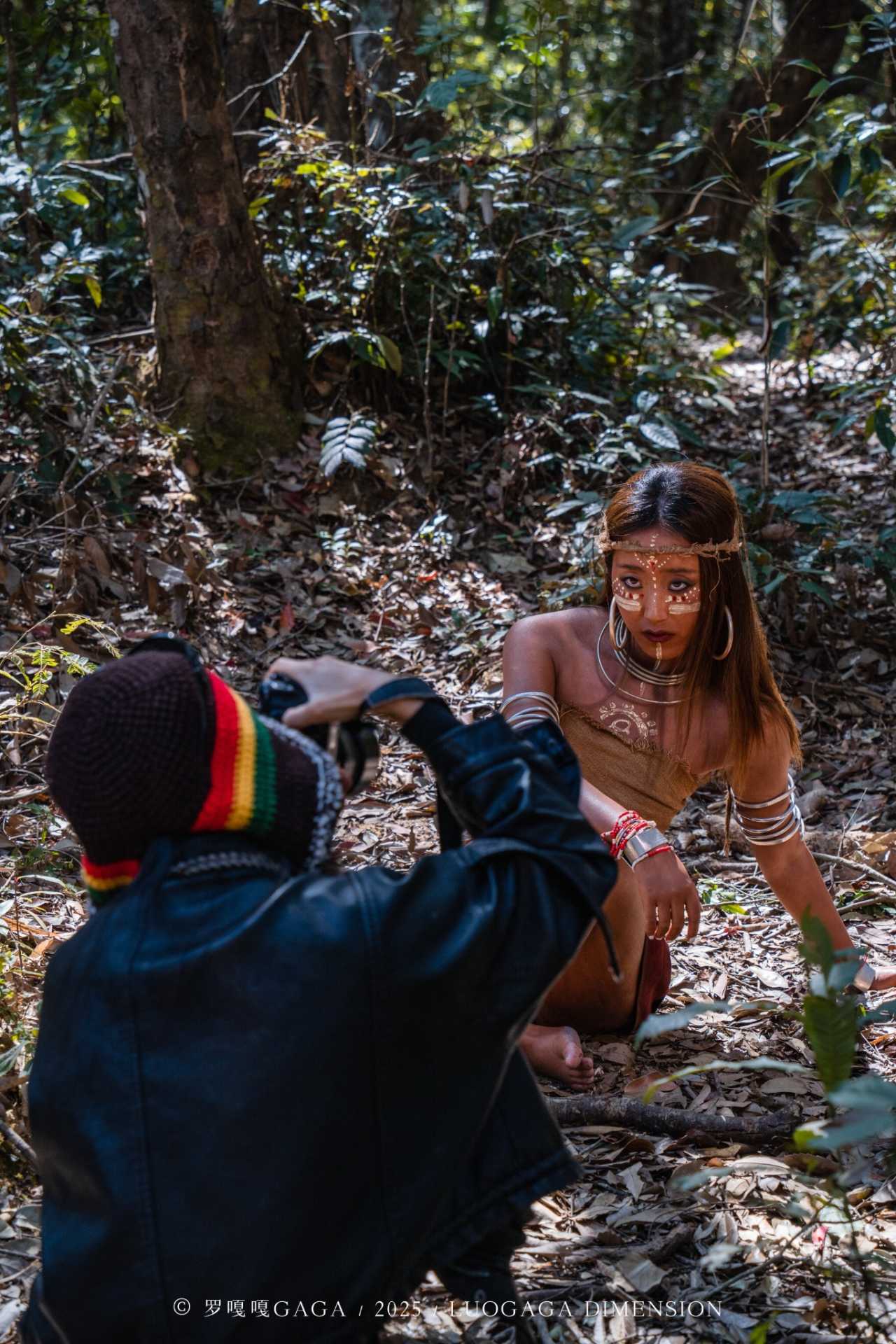
When the dark brown pigment was applied all over my body, I suddenly understood the tension those rugged lines created in front of the camera. The props used for the shoot were steeped in the marks of time: the crossbow might have belonged to an elderly hunter, the ox skull still bore the ash from sacrificial altars, and the spear tip even had notches from slashing through vines. Ada Wupa used plant-based dyes to draw patterns on my skin, and at that moment, I truly felt like I had become a Wa person walking through the primeval forest.
Meeting Ada Wupa was just the prelude to my journey in Pu'er. As I left the city center and ventured deeper into the region, the real story was only just beginning…
Pu'er's "Mexico" and a Hardcore Adventure
Have you ever heard that in Pu'er you can "visit Mexico and back in a day"? Of course, I'm not talking about the country across the ocean. In local slang, "Mexico" refers to the three places of Mojiang, Ximeng, and Gelaoshao, all located within Pu'er. Word has it that at eight in the morning at the Pu'er bus station, the hardcore journey begins—while you're still debating whether hybrid or electric cars are better, the locals are already hopping into a decade-old minivan, using the mud on the windshield as their navigation. That's hardcore. That's Yunnan!
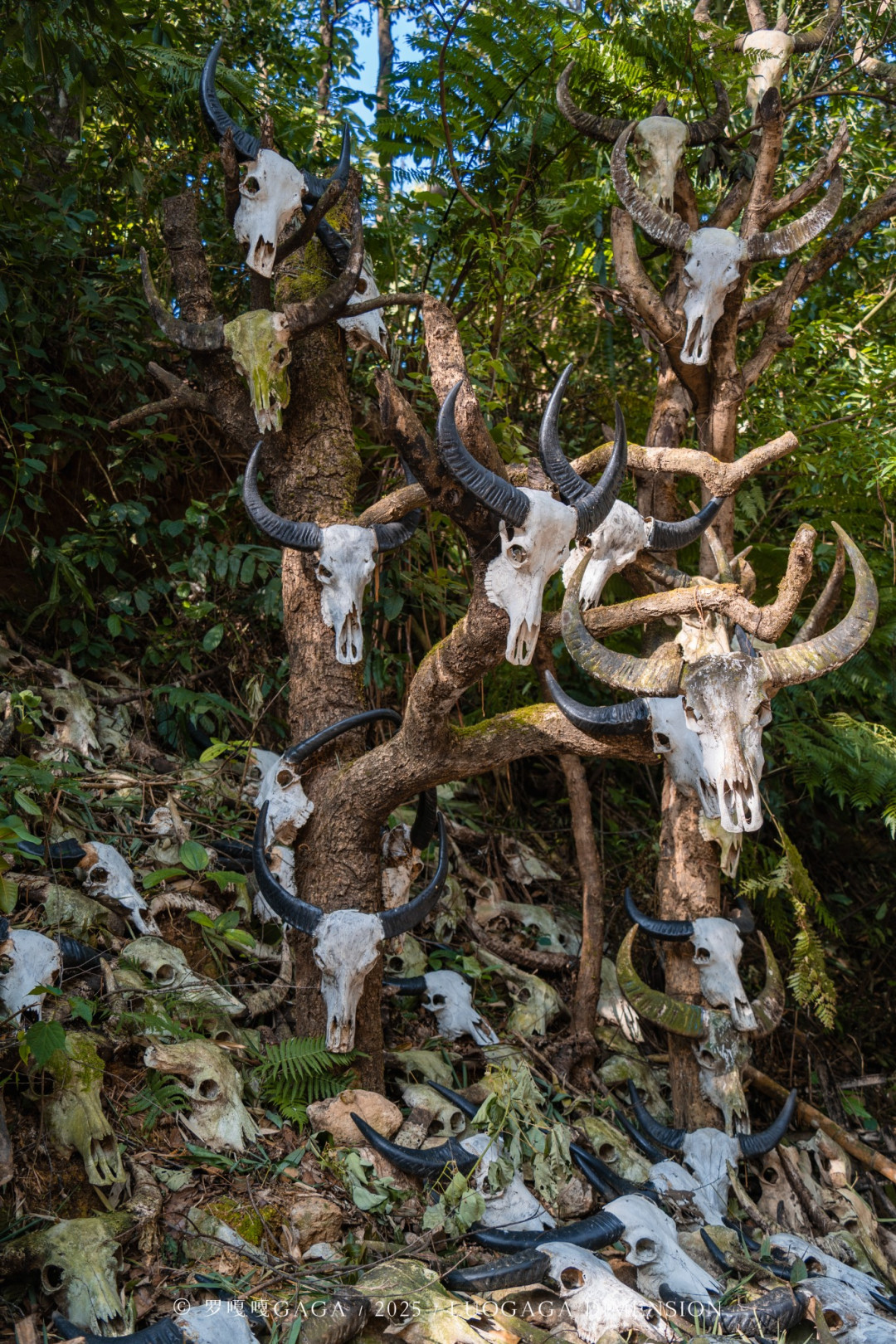
Mojiang Hani Autonomous County: the Tropic of Cancer runs right through the city, which boasts the highest number of twins in the world—truly a phenomenon. Ximeng Wa Autonomous County is home to the Wa sacred site "Longmoye," where three thousand ox skulls hang in a primeval forest, and the ochre-red totems on the cliff paintings remain vivid. As for Gelaoshao, this mysterious coordinate isn't marked on any navigation map—it's a hidden level reserved for hardcore players.
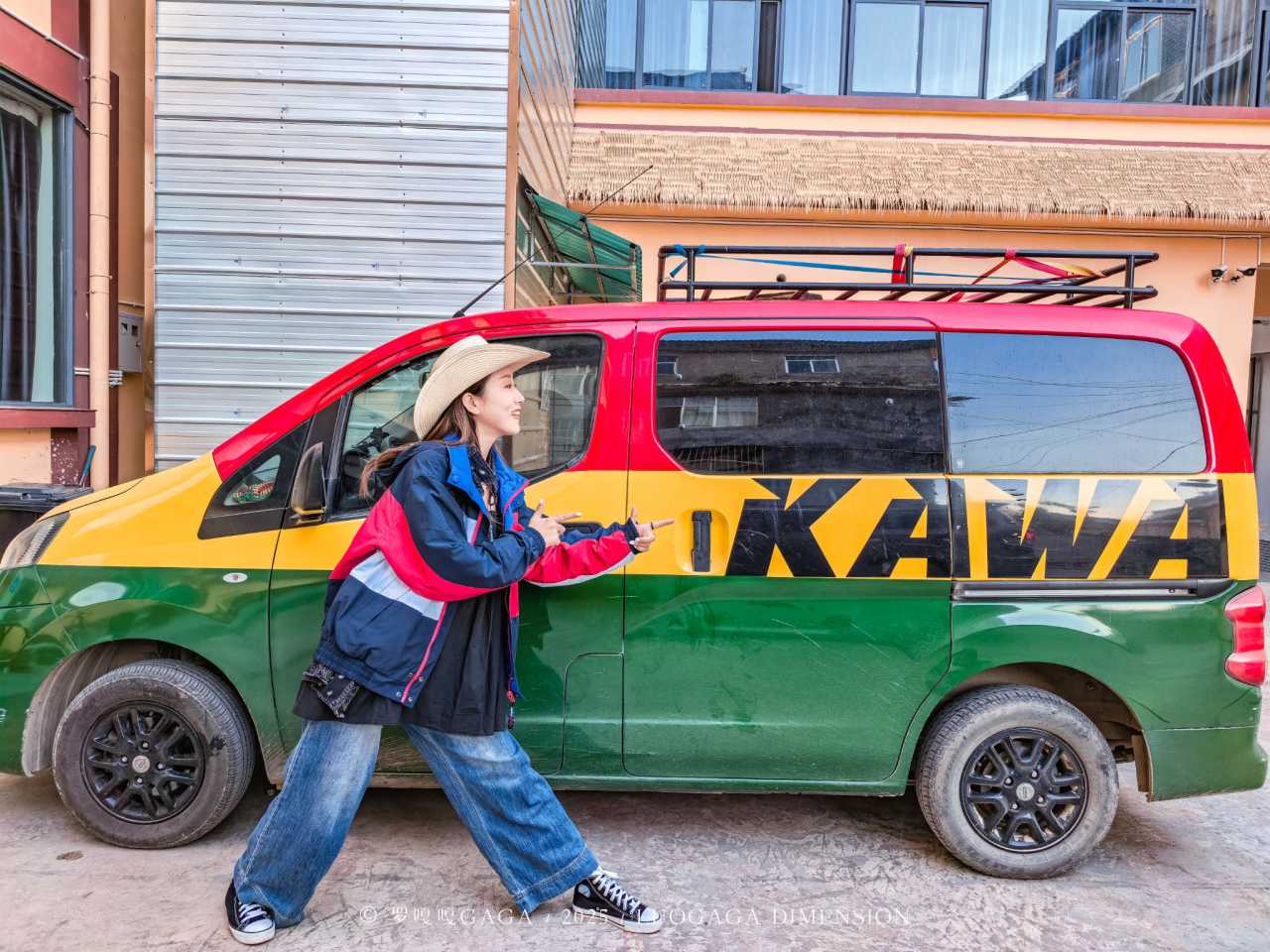
Pu'er has even more surprises: Menglian offers a wilder take on Dai ethnic culture than Xishuangbanna, the small town of Jinggu surprisingly preserves 26 Buddhist relics, and the Blang ethnic villages on Jingmai Mountain coexist with ancient tea forests. And the most punk thing of all? This region is also a cradle of reggae music—the band KAWA, born in Ximeng, blends ancient Wa melodies with electric guitars, turning the mist over the tea mountains into a brew of freedom.
Mojiang: The City of Twins on the Tropic of Cancer
On the first day of my journey, I encountered a rare snowfall. The weather was so unusual that even Kunming, known for its eternal spring, was dusted with snow, and the usually warm Pu'er turned so cold that I had to dig out my winter clothes.
When I arrived in Mojiang on New Year's Eve, the entire city was so quiet I could hear my own footsteps. Almost all the shops were closed. After wandering through several streets, I finally found a small eatery with its lights on, its sign reading "Pa Hu" (扒烀).
Pa Hu is a local specialty, available in beef or donkey meat versions. The owner, a local Hani woman, explained while stirring a large pot: "Pa Hu means the meat has to be stewed until it's tender and flavorful. The beef has to come from free-range cattle raised in the mountains, simmered over a low fire for four or five hours." Due to our dietary preferences, we didn't try the donkey meat and ordered the beef Pa Hu instead. The beef bubbling in the pot practically fell apart at the touch. The dipping sauce was made with a blend of chili, mint leaves, and various spices—its sour and spicy flavors perfectly highlighted the richness of the meat.
After the meal, we happened to catch people setting off fireworks in the street. These days, it's only in small towns like this that you can still experience such "fireworks" (both literal and figurative).
Rain fell all night long. In the morning, Mojiang was wrapped in a thick blanket of fog. The Tropic of Cancer runs right through the city, and standing on that geographical boundary between the tropics—famous from textbooks—I was shivering from the cold. The Tropic of Cancer Marker Park is built on a hill, and every year at noon on the summer solstice, a spectacular astronomical phenomenon occurs here: objects cast no shadow. I didn't buy a ticket to go inside; I just flew my drone up for a look.
In this small city on the Tropic of Cancer, the twin birth rate is four times the global average. There are many theories about why, but the most scientific explanation is probably hidden in the genes of the Hani people, passed down through generations. Twin motifs are everywhere in the city—"Twin Hotel," "Twin Avenue," various sculptures, and a Twin Culture Park, which houses the legendary "Twin Well," said to possess magical properties.
The Twin Culture Park's facilities were a bit dated, but my curiosity got the better of me, and I bought a ticket. Faded photographs in the cultural corridor recorded the city's past. Every May, the Twin Festival turns this place into the world's largest "human replication" event, with over three thousand pairs of twins and multiples gathering—a scene I can only imagine was awe-inspiring. The Twin Well sits in the middle of a square in the park, one on the left and one on the right, said to represent a male and a female well, their water crystal clear. A local nearby mentioned that some people actually come to drink the water. I… didn't try it. Haha.
Bixi Ancient Town: A Time Station on the Tea Horse Road
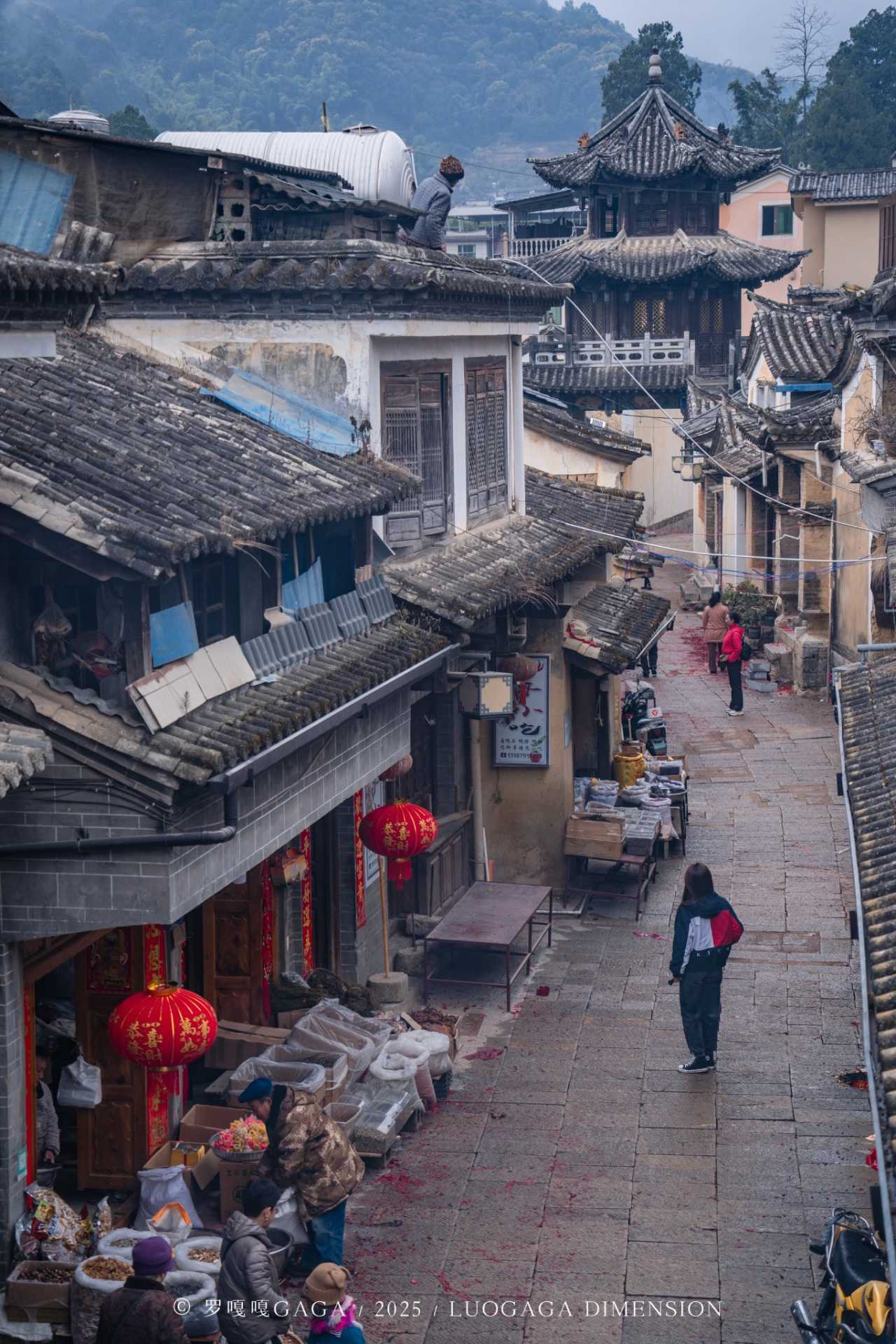
Near Mojiang lies Bixi Ancient Town. Hidden in the Ailao Mountains, this ancient town was once an important stop on the Tea Horse Road. With its bluestone-paved streets, timber-and-earth courtyard houses, and well-preserved city gates and wall ruins, time seems to have frozen here, back to an era six hundred years ago when merchants and traders thronged the streets.
The ancient town still retains its cross-shaped main street paved with bluestone, where the hoof prints of horses are still clearly visible. It was once a hub of the southern Yunnan Tea Horse Road, with over a thousand horses passing through daily, carrying Pu'er tea and Mojiang salt. At its peak, the town was filled with horse-watering wells and hitching posts, and the largest inn could accommodate a hundred mules and horses. Even today, strolling through the streets, you can still imagine the sound of caravan bells echoing through the valley.
The octagonal tower at the crossroads is a living ring of time. This three-story timber-and-earth pagoda, topped with a copper gourd, was a landmark that caravans would spot from afar, signaling that it was time to unload their heavy tea cakes and rest. The more than twenty courtyard houses surrounding it still bear traces of the Ming and Qing dynasty craftsmen's hands on their carved window lattices.
Bixi Ancient Town is also the hometown of purple rice. The bamboo-tube rice sold at the town's entrance is all made with purple rice. The bamboo skin on the outside was charred yellow from roasting, giving off a faint bamboo fragrance. When I peeled it open, the aroma of purple rice filled the air. The grains were plump and glossy, carrying the sweetness of bamboo—soft and sticky, yet with a pleasant chewiness. The inner layer of bamboo was crisp, making a subtle crunching sound when I bit into it.
After exploring Bixi Ancient Town, I left Mojiang and continued my journey toward the Wa ethnic lands along the border.
Gengma: Unlocking Another Hidden Gem
Most travelers heading to Wengding choose to stay in the nearby Cangyuan County. During the Spring Festival, with more tourists around, hotel prices had skyrocketed. Fortunately, I had a better option than Cangyuan—Gengma. For just over a hundred yuan, I could stay in the best hotel in town.
Gengma Dai and Wa Autonomous County: at the entrance to the county town, a giant elephant-foot drum sculpture and a faded ox skull totem stand in the center of a roundabout, signaling that we had finally arrived in Wa territory. But as I turned into the old town, the eaves of the food street gleamed with gold, and the air was filled with the aroma of pounded chicken feet. This small town weaves the imprints of both ethnic groups into every street and alley.
Gengma's food street isn't long, and the stalls aren't numerous, but they're all gems. Aside from barbecue, I saw many dishes I had never encountered before. The crowd was mostly locals, which told me these were authentic local specialties, untouched by commercialization.
I had rarely seen any travel guides about Gengma. Before coming, I imagined it would be a dusty, drab border town. But reality was like opening a blind box and getting a hidden gem—as I stepped into the county town, I was greeted by clean, tidy streets lined with trees, and architecture that was simple yet elegant, infused with ethnic characteristics. Every corner exuded a unique kind of beauty. The sports stadium I stumbled upon was right next to a wetland park, covered in greenery, with artificial waterfalls cascading down the steps on either side. People strolled and chatted leisurely, completely at ease. In the evening, a gentle breeze brought a hint of coolness, instantly melting away my fatigue. This place would be perfect for retirement.
Wengding: Is the Rebuilt "Fake Antique" Worth Visiting?
The next morning, I bid farewell to Gengma and drove to Wengding Village—a Wa ancient village once called "China's Last Primitive Tribe."
The fire in 2021 destroyed all 105 thatched houses in the village, but it didn't burn away the Wa spirit. During the reconstruction, villagers and people from nearby areas searched everywhere for old timber, rebuilding the stilted thatched houses according to their ancestors' layout, even restoring the ox skulls hanging from the big trees to their original positions based on memory of the sacrificial sites. The reconstruction only replicated the form; the mountain wind and vines will continue to write new stories.
Now, the villagers have moved to a new settlement three kilometers away, and the old village has become a tourist attraction. But it hasn't become overly commercialized—because the people here aren't NPCs; they're the more than 100 Wa families who actually live in the village. The entrance fee plus shuttle bus cost only about 50 yuan, and in my eyes, it was well worth it.
The Wa-style face painting at the village entrance is an experience not to be missed. Although 20 yuan per person was a bit steep, this kind of experience only makes sense in this specific setting. My whole family got it done! The face painting here doesn't use traditional plant-based dyes but watercolors—it's more of a formality, with only a few fixed patterns available. If you have personalized ideas, you can suggest them, but only minor tweaks are possible. I combined two patterns, and the young woman who painted my face was very attentive and patient.
Elderly villagers personally cooked a Wa-style chicken and rice porridge, which visitors could taste for free. Their质朴 (unpretentious) smiles hid a warm hospitality. To enjoy this bowl of deliciousness, I had to carefully climb up to the second floor of a wooden house—a truly immersive experience. The villagers performed carefully choreographed shows, telling ancient stories through every movement and every note, as if they had traveled through time. They warmly invited everyone to dance along, filling the entire village with lively energy.
Besides the houses, there were countless ancient trees, silently guarding the land and recounting the vicissitudes of time. Every household had flowers planted outside, adding a touch of vibrancy to the reborn village. Every afternoon, a scheduled "sunshower" would fall, increasing humidity to prevent fires, and the brilliant rainbow that followed was Wengding's gift to its faraway guests.
Wengding has kept its people. The true heritage isn't the wood; it's the living, breathing people. The atmosphere in the village was wonderful, and even during the holidays, there weren't many tourists. Walking among the mushroom-like houses, I felt as if time had reversed, stepping into the daily lives of the Wa ancestors. We stayed from around 10 a.m. until 3 p.m. before setting off for our next destination: Ximeng.
Ximeng: The Enigmatic Wa City with No Traffic Lights
The drive from Wengding to Ximeng was all winding mountain roads, making transportation extremely inconvenient. As a result, few tourists venture here.
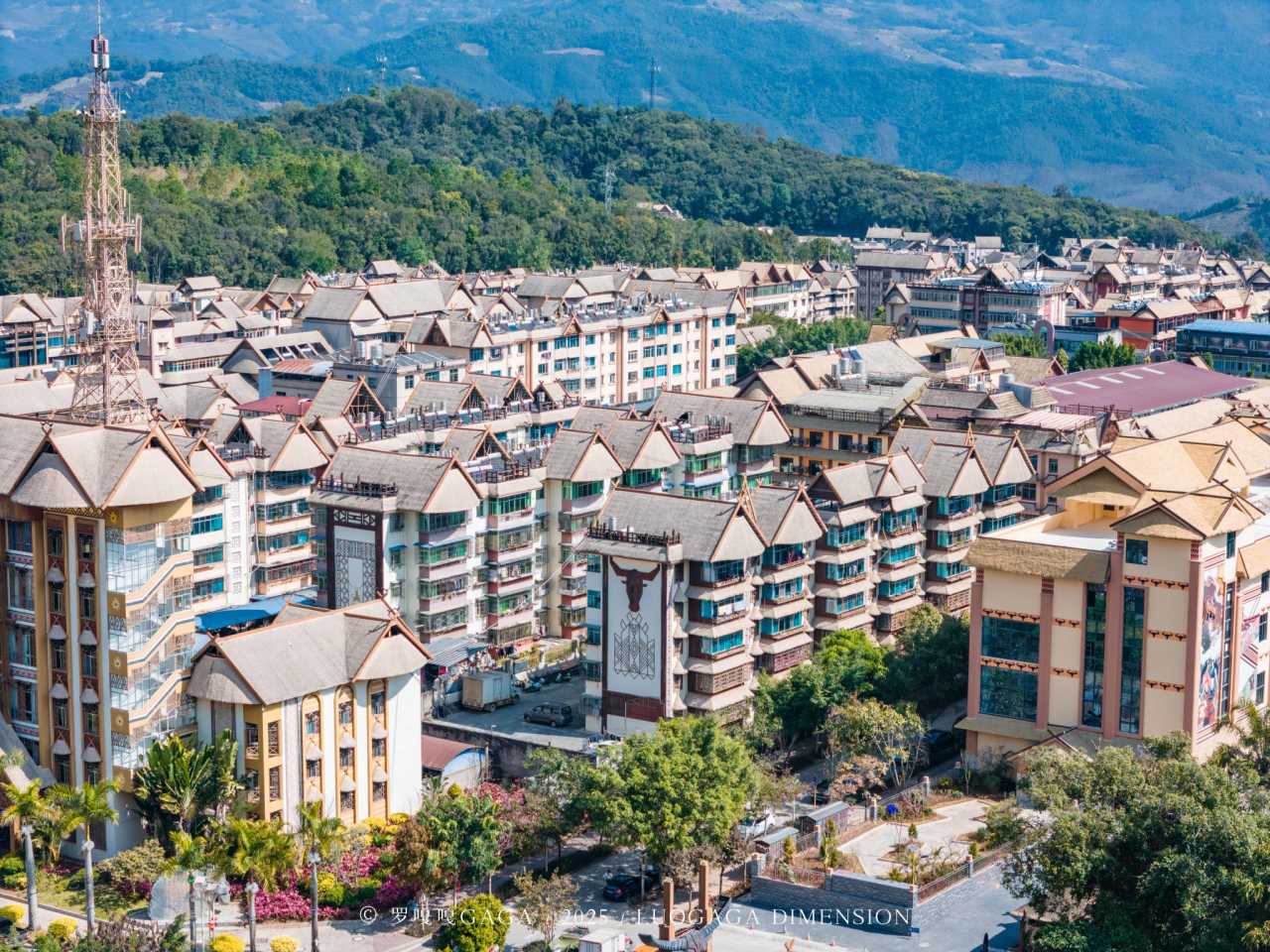
Ximeng Wa Autonomous County, a small town on the border between southwestern Yunnan and Myanmar, is tiny—about a kilometer long and less than 500 meters wide. Because of its size, Ximeng doesn't need traffic lights; vehicles and pedestrians move in an orderly fashion, giving the place a serene, comfortable feel. The ochre-red buildings, remodeled in the style of traditional Wa stilted houses with four-sloped roofs, rise and fall in a picturesque layout, with ethnic elements everywhere. Even the manhole covers in the county town are engraved with totems from Wa cliff paintings.
I mentioned the band KAWA earlier—they're from Ximeng. That night, I saw a car in the hotel parking lot, and later remembered that I had encountered some long-haired, uniquely dressed people in the lobby. They might have actually been Lao Han, the lead singer of KAWA. But it was dark, and I didn't think much of it at the time. Now I'm kicking myself!
Ximeng is small, and the attractions are close together. Most visitors opt for a day trip, and with a well-planned route, you can see everything in half a day. The main sights in Ximeng are three: Mengsuo Longtan, the Longmoye Sacred Site, and the Muyiji Sacred Valley. Longmoye is located within Mengsuo Longtan, and both are Wa holy places.
Mengsuo Longtan and the Longmoye Sacred Site
Early in the morning, I entered Mengsuo Longtan, a tropical rainforest freshwater lake on the south side of Ximeng County Town. A boardwalk, about three or four kilometers long, circles the lake, with dense forest on one side and the lake on the other—perfect for a leisurely walk. We even encountered people out for a morning jog here.
Walking along the forest path, the silence was broken only by the sounds of insects and birds. The surrounding vegetation was lush, with towering ancient trees, and the air was filled with the fresh scent of flowers and damp earth. We passed an abandoned Burmese-style temple. Strangely enough, when the sunlight hit the lake directly, a thin layer of mist rose and drifted with the breeze. Vines like this were common along the way, and every time I saw one, I felt the urge to swing on it—this is what they call "unleashing your inner child"…
This loop was nearly four kilometers long, and even my 90-year-old grandmother managed to walk the whole thing—no small feat. Even she felt refreshed by the natural surroundings.
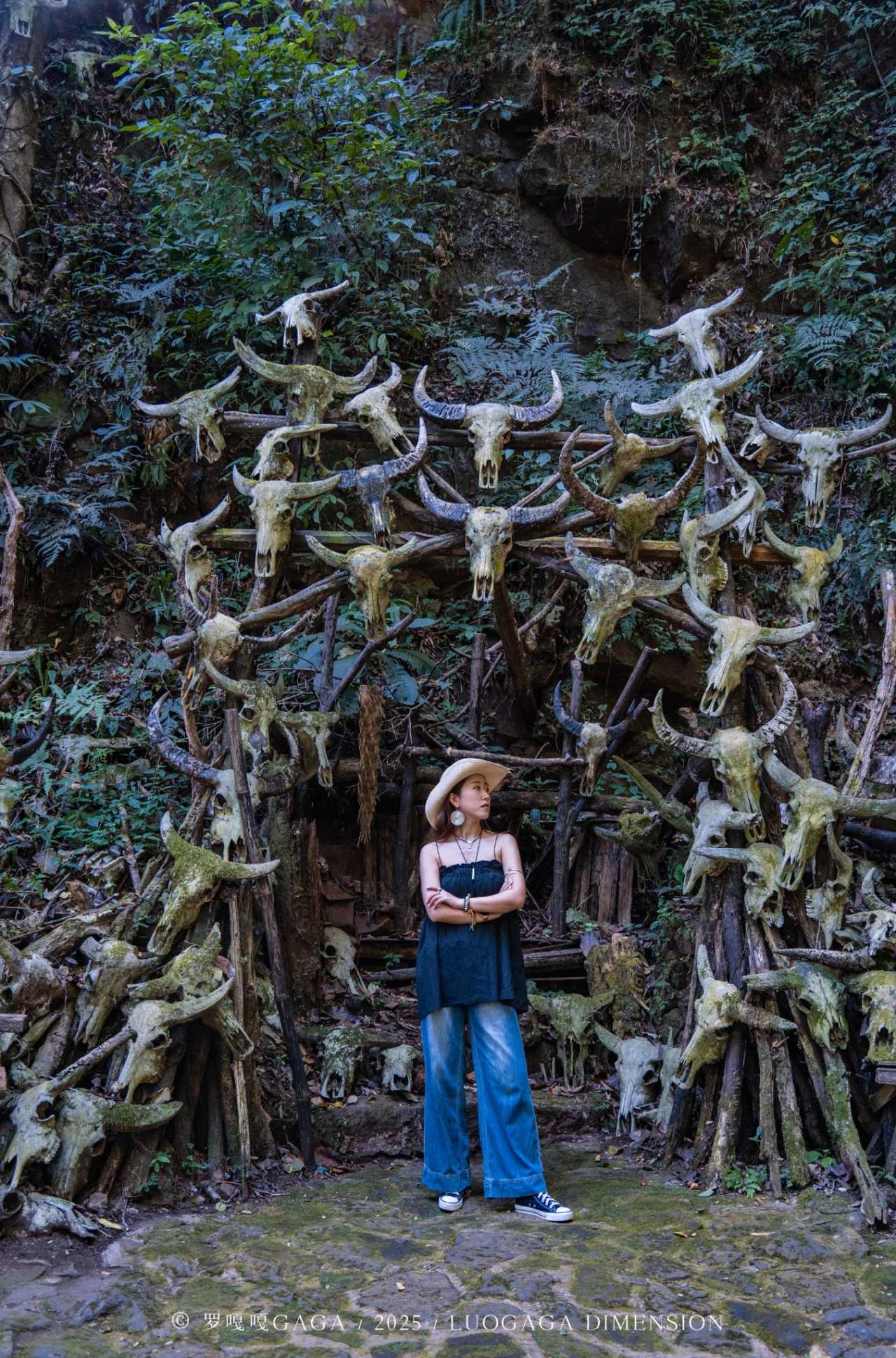
The Longmoye Sacred Site is located on the hillside beside Mengsuo Longtan. Three thousand ox skulls hang in the mountain forest, more awe-inspiring than I had imagined. The weathered bones seemed to have "grown" together with the rocks, with moss blooming in the hollow eye sockets. The wind whistled as it passed through the valley, the crunch of fallen leaves underfoot, and the tinkling of bells hanging from the ox skulls—all these sounds only made the place feel even quieter, as if I had stepped into a mysterious, ancient realm.
These ox skulls were real bones, not the replicas I had seen in Wengding. They were used by the Wa people for sacrifices, symbolizing strength and harvest. The Wa believe that ox skulls can bring divine blessings, making life better. As I descended from the Longmoye Sacred Site, I encountered a Wa man strumming a sanxian (a three-stringed instrument).
Muyiji Sacred Valley and the Millennium Cliff Paintings
The Muyiji Sacred Valley, located outside the town, is where you can see the cliff paintings. It requires a bit of a hike, but if you're fast, you can make the round trip in half an hour. The last time I saw rock paintings was in Ritu County, Ngari, Tibet. Like those of the Tibetan ancestors, the Wa ancestors' artwork was quite "realistic," with a wild, untamed energy.
The cliff paintings are rich in content, depicting scenes of gathering, hunting, animal husbandry, farming, and religious rituals, as well as tribal conflicts and victorious battle scenes, along with images of warriors holding long spears. They include figures of people, animals, trees, caves, houses, the sun, and the moon. The dyes were made from a mixture of animal blood and powdered hematite, and after thousands of years of wind and rain, they still retain vivid colors.
Leaving Ximeng, the rest of my trip had less to do with the Wa people. The Wa have always given me a sense of mystery, freedom, and wildness, drawing me to visit their lands. This time, my wish was finally fulfilled, and it was a journey well worth taking.
In my rearview mirror, the totem poles gradually disappeared into the mist. Looking back at the photos on my camera—those eagle-sharp eyes, the Wa script symbols blackened by firelight, the ox skulls stained green by leaves… this people, who once communicated with spirits through wooden drums, are now turning their thousand-year-old civilization into mixed-style necklaces, totems painted on tourists' faces, and songs echoing through the valleys. What we call "tradition" is simply life sprouting resilient shoots from its cracks, and we outsiders are just passing by one morning of civilization's transformation.
Menglian: Wild Dai Flavors and the City of Avocados
Crossing from Ximeng to Menglian, the mysterious atmosphere of the dense forest instantly gave way to sun-drenched tropical vibes.
Menglian Dai, Lahu, and Wa Autonomous County is filled with tropical fruits and Dai-style barbecue stalls lining the streets, with a strong Dai cultural presence. Southeast Asian-style eaves, iconic golden pagodas, and exquisite peacock motifs can be seen everywhere. While not as extravagant as Xishuangbanna or Dehong, Menglian has its own unique selling points—it's famous as the homeland of avocados and specialty coffee.
Menglian had been promoted as a "mini-Xishuangbanna" and a hidden gem on the border, so there were quite a few tourists, a stark contrast to Ximeng. In a small town with such a vibrant atmosphere, the must-do activity is visiting the market!
Morning Market: A Feast for the Senses in a Tropical Kingdom
The bustle of eight in the morning was more invigorating than any alarm clock. We headed to the Menglian market early for the morning market. One section of the market was dedicated to snacks, mainly rice noodles, which was exactly what I was craving. As I entered the agricultural products area, I was instantly transported to a tropical kingdom—all kinds of tropical fruits and unusual vegetables. These weren't green peppers; they were a type of pumpkin called "Jiangbing melon." The sugarcane was displayed like this, with the leaves still attached.
As the homeland of avocados, it was naturally a place to indulge in avocado freedom! Although we visited during the Spring Festival, outside the peak season, the prices were still much cheaper than in inland cities. During the peak season, it would be true freedom. This bag of small ones cost me 20 yuan—not bad. The market wasn't just about agricultural products and snacks; it also had various sundries and clothing, and the shoppers were all locals. The parking lot was also large, located on the top floor of the building, making shopping very convenient.
Nanyun Ancient Town: Dai Charm and Historical Echoes
The most distinctive landmark in Menglian is the grand bridge spanning the Nanlei River—the Nanyun Bridge, the only way to reach Nanyun Ancient Town. With its strong Dai-style architecture, it's exquisitely crafted, with Dai-style eaves carved with elephant and peacock motifs. The bridge has two levels, both open to pedestrians, looking like an elevated walkway. However, there are sidewalks and traffic lights on both sides of the bridge, so the elevated walkway's function seems limited—it might just be for show. It looks even more dazzling when the lights come on at night.
Across the Nanyun Bridge lies Nanyun Ancient Town. This well-preserved Dai ancient town, with architecture blending Dai and Han styles, has a history of over 700 years. Before entering Nanyun Ancient Town, I stopped for an avocado coffee. A generous layer of avocado pulp at the bottom, a big sip, and the rich avocado flavor mixed with the coffee aroma was intoxicating.
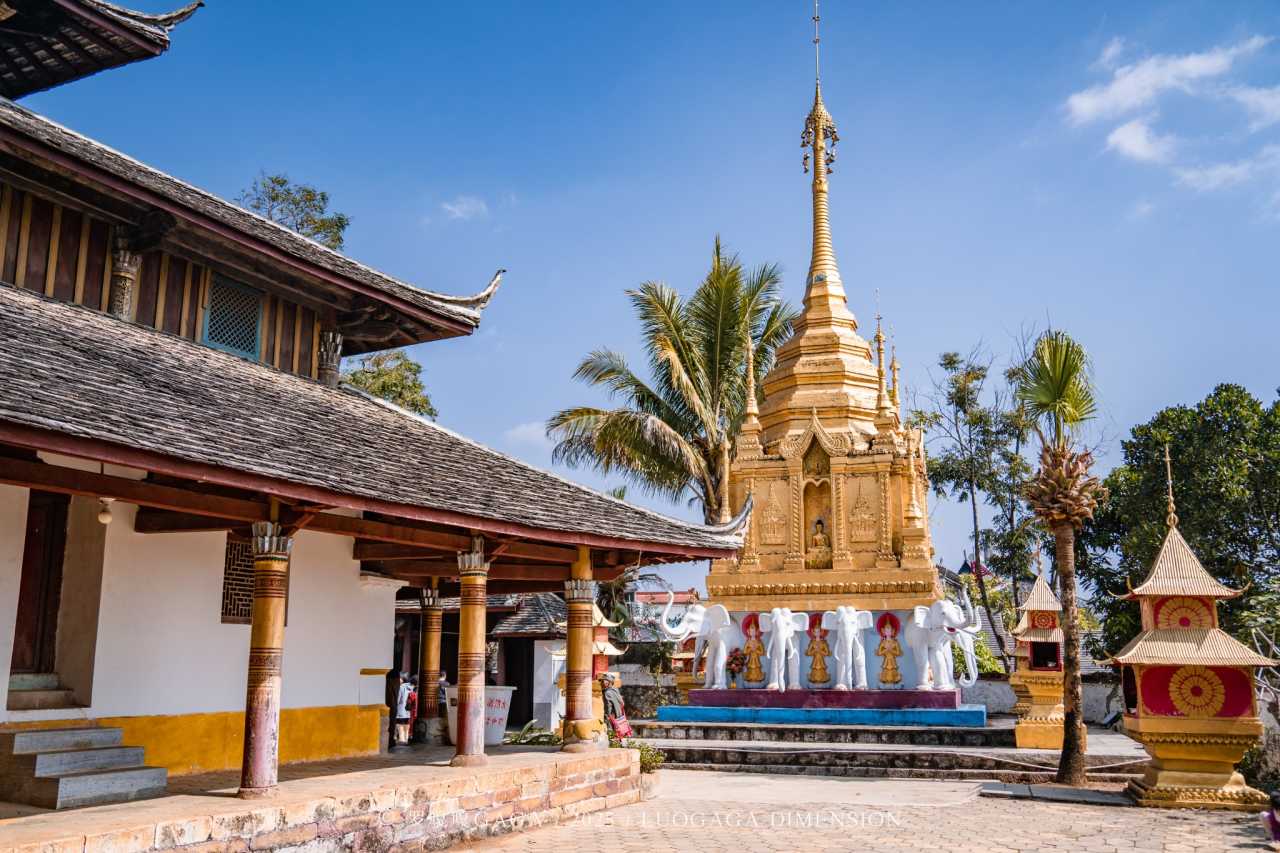
Entering the Xuanfu Department Office (the local chieftain's office), golden pillars supported a three-tiered hip-and-gable roof, capturing the grandeur of the chieftain's meetings in days past. The ancient town has three temples: the Upper City Temple, the Middle City Temple, and the Main Temple. The architecture here is different from what I've seen in Xishuangbanna, Dehong, or Southeast Asia, incorporating Han Chinese elements. Standing there, I felt as if I had traveled through time, with the faint sounds of chanting and the jingling of ancient caravan bells echoing in my ears. We also encountered a peacock that seemed to love "performing."
At noon, we enjoyed an authentic Dai meal in the ancient town. Unlike the gentler version in Xishuangbanna, the Dai flavors here were wilder. Of the dishes on this table, only the lemongrass-grilled fish and sticky rice were a success. The rest—some unknown wild vegetables with secret spices, and even the chicken soup seasoned with secret spices—were indescribable. You'd have to try them yourself to see if you can handle the taste. The restaurant we went to in the evening was a bit milder. The "vegetable-wrapped fish" was a specialty and actually quite good. The avocado salad was fantastic! We also tried some Nyonya desserts, which were decent. The "Paoluda" (a coconut milk drink) here wasn't as good as the one in Xishuangbanna.
During the Spring Festival, we also happened upon a grand ethnic parade. The procession swept through the streets to the rhythm of elephant-foot drums, with people dressed in ethnic finery carrying New Year pigs, fruits, tea, and other local products, parading from the specialty coffee street, through Xuanfu Avenue, and across Nanyun Bridge, singing and dancing—a truly lively scene.
The best time to visit the Menglian Golden Pagoda is two hours before sunset, when the light is just right, and the pagoda is bathed in a warm, golden-orange glow. The scenery here is pure Southeast Asian charm.
Jinggu: The Hidden Buddhist Relic Sanctuary in the Mountains
After finishing my time in Menglian, I left the border area and headed back towards Pu'er. Pu'er has many hidden gem towns, but with limited time, I chose only Jinggu as my final destination—a place few people visit, yet one that boasts 26 Buddhist relics.
Jinggu Dai and Yi Autonomous County is a sacred pilgrimage site for Theravada Buddhism. All of Pu'er's nationally protected "Dai Theravada Buddhist Temple Complexes" are located here, along with 26 Buddhist relics left by Sakyamuni Buddha, earning it the title "Land of Infinite Treasures, Traces of the Buddha." There's no expressway to this county either, and the road from Pu'er is particularly winding and mountainous. I had previously posted a video about Jinggu on a platform, and in the comments section, several friends who had visited were discussing the problem of motion sickness.
We drove from Pu'er to Jinggu for a day trip, but since the one-way trip took over two hours, we only had half a day to explore. Among the many Buddhist relics, I only chose two within the city to visit, witnessing the wonder of pagodas and bodhi trees growing together and tasting local delicacies—it was still a worthwhile trip.
The Pagoda Embracing the Tree and the Tree Embracing the Pagoda: The Entanglement of Nature and Faith
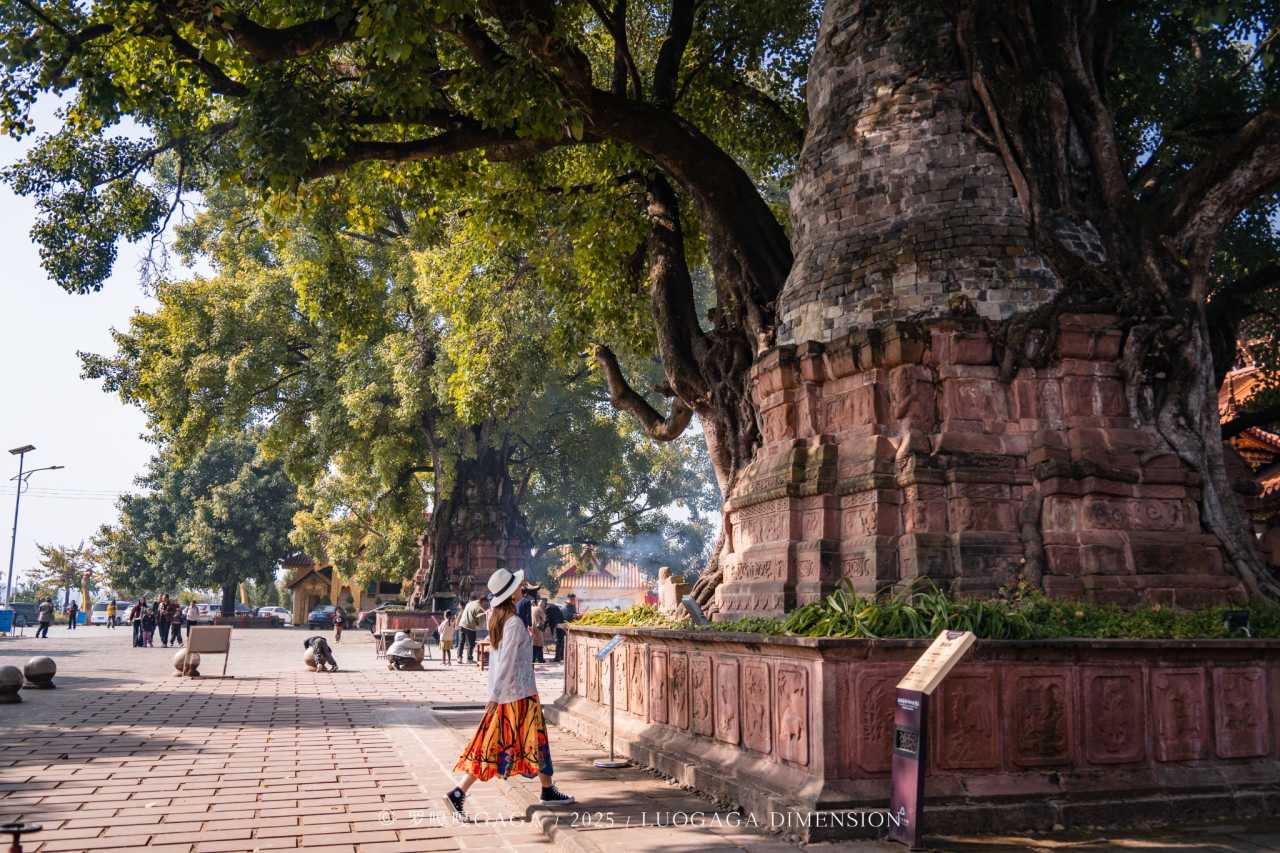
"The pagoda and the bodhi tree coexist" refers to the "Pagoda Embracing the Tree, Tree Embracing the Pagoda" at the Mengwo General Temple in Jinggu. A century-old bodhi tree's roots had cracked the Ming dynasty bricks; the ancient pagoda on the left had been swallowed by the tree canopy, while on the right, the pagoda seemed to seal the ancient tree—a real-life depiction of "karmic entanglement"! These two Ming dynasty pagodas, after a banyan seed fell into a crevice and grew over centuries, created this wonder of tree and pagoda entwined, hailed as "a unique wonder in China's pagoda forests."
The Mengwo General Temple itself was once an official Buddhist temple and remains an important pilgrimage site for the Dai people and Southeast Asian believers. It is said that during important festivals like the Buddhist New Year, tens of thousands of devotees come to worship here, creating a grand spectacle. The temple complex retains its late Ming and early Qing dynasty style, without excessive development. It's quite small in size, with one main hall housing all the highlights.
Mangfei Dai Village and Mangduo Buddhist Relic Park
Our second stop in Jinggu was Mangfei Dai Village. Although it's a Dai village, the Southeast Asian atmosphere here isn't strong. The highlight here is the authentic Dai cuisine, which was different from what I had in Menglian—this was more palatable, with flavors closer to mainstream tastes! The specialty is "Sapimi" (rice noodles with a bitter broth), but I had tried that before. This time, I focused on the roast chicken and "Yikouxiang" (a savory bite-sized dish). The chicken, freshly roasted after a half-hour wait, filled the entire courtyard with its aroma. And I have to say, the Yikouxiang was incredibly fragrant. Eaten alone, it was a bit oily, but wrapped in a lettuce leaf, it was pure bliss!
Our third stop was the nearby Mangduo Buddhist Relic Park, which appeared abandoned and unremarkable, with no other tourists. The ancient trees and buildings complemented each other, creating a sense of the passage of time. We measured the circumference of some large trees with our arm spans—most were around twelve meters. The abandoned Buddhist hall had a strong Southeast Asian feel. Throughout this trip, I had seen other Buddhist halls that incorporated Han Chinese architectural styles, but this one was purely Southeast Asian.
In the temple grounds, we encountered two peacocks. I tried to get closer for a photo, but they walked down the steps and hid. Following them, we discovered a lower level of the temple complex, a hidden world. On the pillars flanking the staircase were rare sculptures—crabs, frogs, and fish. Further down, there were two shrines, facing a dense forest. With no one else around, it felt a bit eerie, so we turned back. When we climbed back up to the open area, we saw that the peacocks had also come up and were strutting around on the grass.
Our one-day trip to Jinggu ended quickly. With more time, I could have visited other sites like Leiguang Buddhist Relic, Qiannuo Buddhist Temple, and Mangdao Buddhist Temple. Even though I had been there, Jinggu still left me with a sense of mystery. Perhaps it's the name "Buddhist Relics" that casts a veil of mystery over this small town, or perhaps its inconvenient transportation and lack of tourists add to its isolated charm. If fate allows, I will definitely return for a deeper exploration.
Final Thoughts: The Gift of Pu'er
This journey began in Mojiang, passing through Gengma, Wengding, Ximeng, Menglian, and finally ending in Jinggu. I drove the entire route, and indeed, self-driving is the only convenient way to go. None of the counties I passed through have expressways, and public transportation is even more inconvenient. But it is precisely this "inconvenience" that has preserved these places in their most pristine and authentic state.
In Pu'er, I encountered the untamed aesthetic of ethnic cultures—not a staged performance of folklore, but living people, living lives. Ada Wupa uses her camera to document fading memories; the Wa people of Wengding carry on their traditions in a rebuilt village; the Longmoye Sacred Site in Ximeng still echoes with ancient sacrificial sounds; the markets of Menglian are fragrant with tropical fruits; and the pagodas and bodhi trees of Jinggu have been intertwined for centuries…
These places have no internet-famous filters, no over-commercialized packaging. They only possess the simplicity and sincerity of the deep mountains. If you, too, are tired of cookie-cutter travel destinations, come and take a stroll through Pu'er. Here, you will discover that true beauty often hides in those untamed corners.
Practical Tips:
Route Reference: D1: Chongqing → Mojiang D2: Mojiang (Tropic of Cancer Marker Park, Twin Culture Park, Bixi Ancient Town) D3: Mojiang → Gengma D4: Gengma → Wengding → Ximeng D5: Ximeng (Mengsuo Longtan, Longmoye Sacred Site, Muyiji Sacred Valley) → Menglian D6: Menglian (Morning Market, Nanyun Ancient Town) D7: Menglian → Jinggu (Mengwo General Temple, Mangfei Dai Village, Mangduo Buddhist Relic Park) → Pu'er D8: Pu'er → Return
You should also read:
In Dali: Encountering a Tale of Wind, Flowers, Snow, and Moonlight
In Dali: Encountering a Tale of Wind, Flowers, Snow, and Moonlight Escaping Xi'an's "Oven" for an Unknown Rendezvous In August, Xi'an's asphalt roads were hot enough to fry an egg. Pan Nainai (Granny Pan) touched her youthful heart, glanced at the smug "Big Wet" (her…
Continue reading...
Early Summer in Lijiang: Encountering Another Kind of Life Height at the Summit of the Snow Mountain
Early Summer in Lijiang: Encountering Another Kind of Life Height at the Summit of the Snow Mountain Prologue: A Leap from Sea Level to 4,680 Meters I come from Guangdong, a place practically devoid of altitude. If I said Lijiang was the highest place I'd…
Continue reading...
A Solo Journey to Dali: Encountering Sunrises and Sunsets by Erhai Lake, and Encountering Myself
A Solo Journey to Dali: Encountering Sunrises and Sunsets by Erhai Lake, and Encountering Myself Destination: Dali (Shuanglang, Xizhou, Erhai Lake) Travel Dates: January 27, 2015 – 5 days, 4 nights Cost per Person: Approximately 4,000 RMB Traveler: Solo "From tomorrow on, I will be…
Continue reading...