Jianshui: A Borderland Ancient City Forgotten by Time, Hiding the Most Authentic Flavors of Yunnan
Jianshui: A Borderland Ancient City Forgotten by Time, Hiding the Most Authentic Flavors of Yunnan
People don't always have to strive upward. Sometimes, wandering sideways can lead you to unexpected sights.
When most people think of Yunnan, what comes to mind is often the romantic Dali, the artistic Lijiang, the sacred Shangri-La, the tropical rainforests of Xishuangbanna, or the spring-like Kunming. But tucked away in a corner of southeastern Yunnan lies a低调 yet deeply historic ancient city. It lacks the hustle of Dali and the Instagram-famous vibe of Lijiang, yet it bears the prestigious title "Zou-Lu of Southern Yunnan" — a reference to the cultural heartlands of Confucius and Mencius. This is Jianshui.
If you're a traveler with a passion for culture and history, Jianshui will not disappoint. This small city may seem unremarkable, but it once bore a grand and ancient name — "Lin'an." Dig into its history, and you'll find that as early as the Tianbao era of the Tang Dynasty (742–756 AD), the Nanzhao Kingdom built an earthen fort here, calling it "Huili." By the Yuan Dynasty, after the Mongols conquered the Dali Kingdom, the highest-ranking Yunnan official, Sayyid Ajjal Shams al-Din, introduced the imperial examination system from central China, promoted Confucianism, and built numerous Confucian temples. A large wave of Han Chinese migrated here, earning the region the titles "Land of Literature and Documents" and "Zou-Lu of Southern Yunnan." Their longing for the old capital of Hangzhou also gave this land the name "Lin'an."
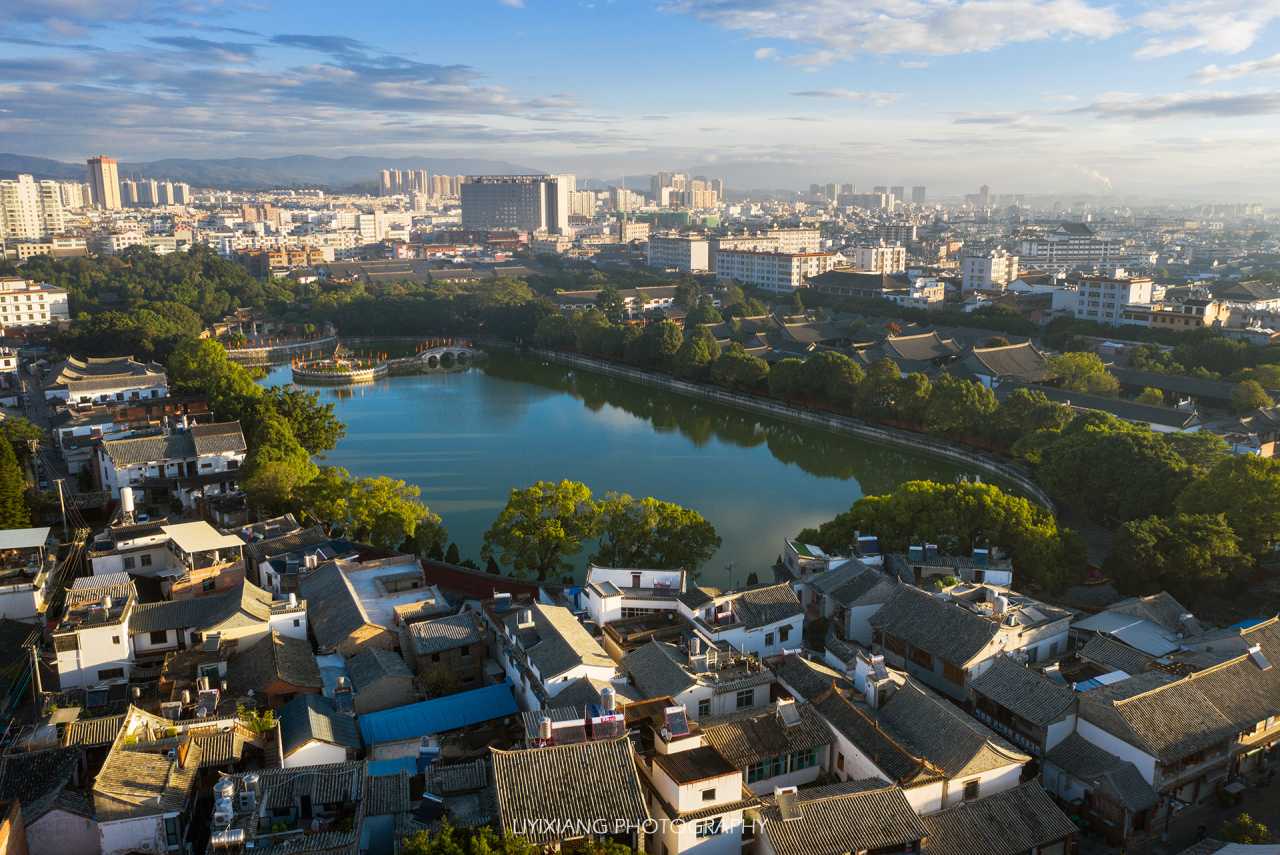
Over the past 1,200 years, Jianshui was once a major stronghold in the southwest. But today, those dazzling glories have faded. Fortunately, this city, steeped in a sense of time, has survived the relentless wave of demolition and reconstruction like a stubborn stone. Scattered throughout the city are ancient temples, old wells, and traditional residences, exuding an unexpected cultural aura that makes this small yet charming ancient city all the more unforgettable.
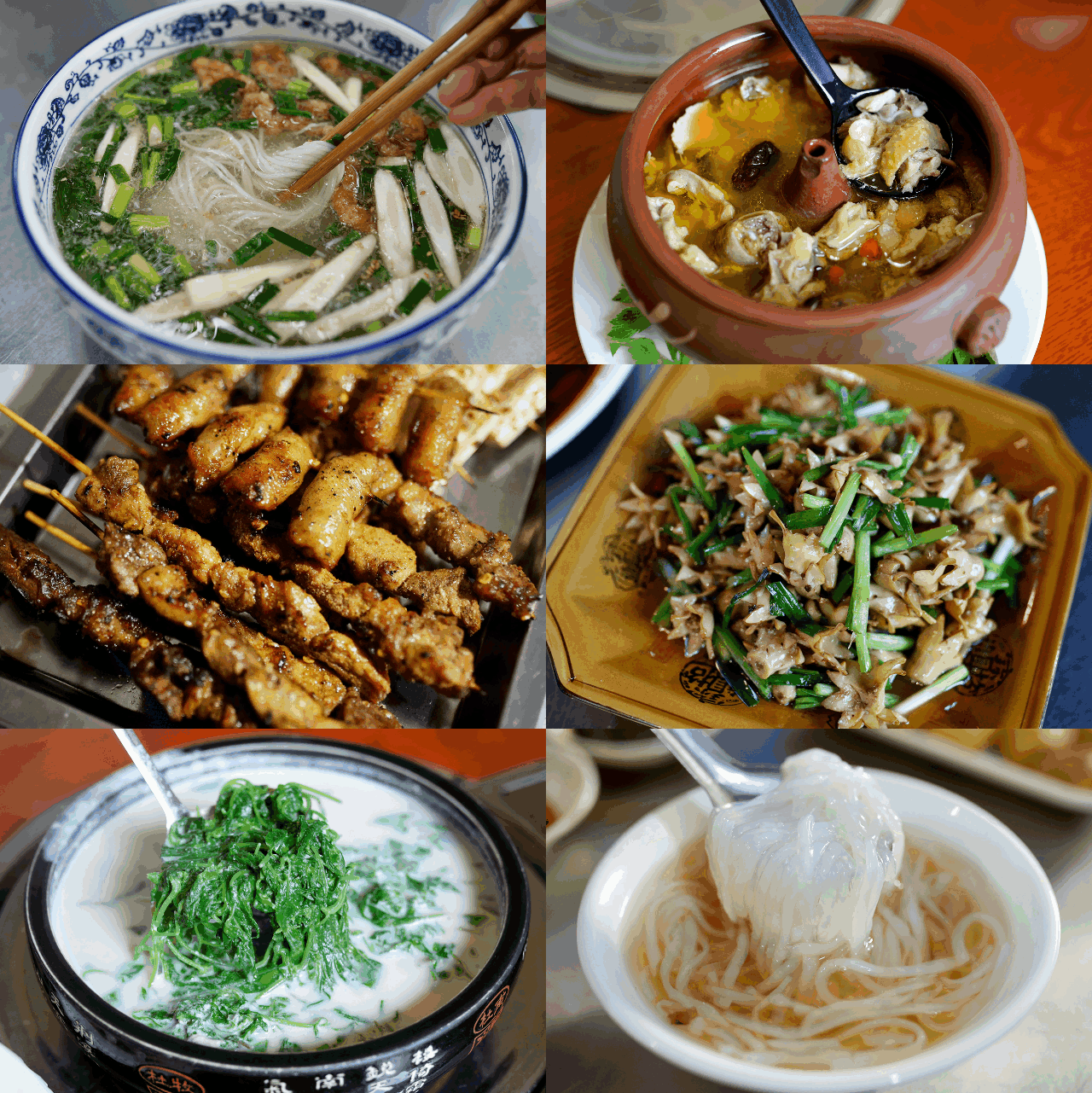
Even more captivating is that here, alongside an age-old and traditional street life, you'll find the most authentic Yunnan flavors. The fusion of Central Plains Confucian culture with the traditions of borderland ethnic minorities has not only left behind numerous historical sites but also given birth to many distinctive local dishes. The aroma of grilled tofu wafts through the streets and alleys. People sit around roadside stalls, dip the tofu in sauces, and experience a feast for the taste buds with every bite. Beyond that, rice noodles (米线), steam-pot chicken (汽锅鸡), grass sprouts (草芽), barbecue (烧烤), rice rolls (卷粉), and papaya water (木瓜水) — each is an unmissable delicacy.
Jianshui Ancient City: A Living Museum
Stepping into Jianshui Ancient City, you'll feel it's more like a living museum. Compared to the commercialization of Dali and Lijiang, Jianshui fits the ideal image of an ancient city. Walking through its old streets and alleys, you can still feel a strong sense of everyday life and烟火气 (the lively atmosphere of daily life). Although a tourism company now operates some attractions within the ancient city, it remains a place full of vitality — at least it hasn't yet become one of those trendy Instagram hotspots.
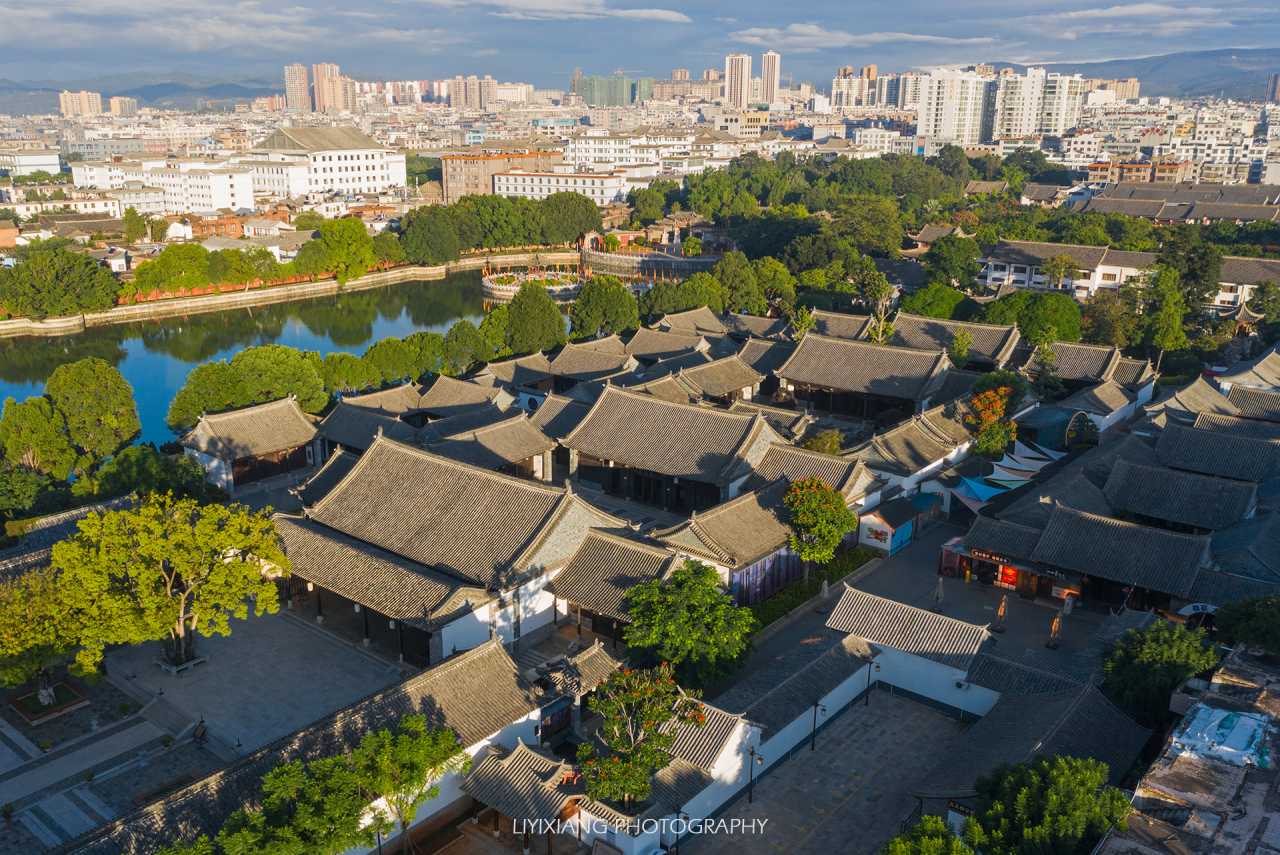
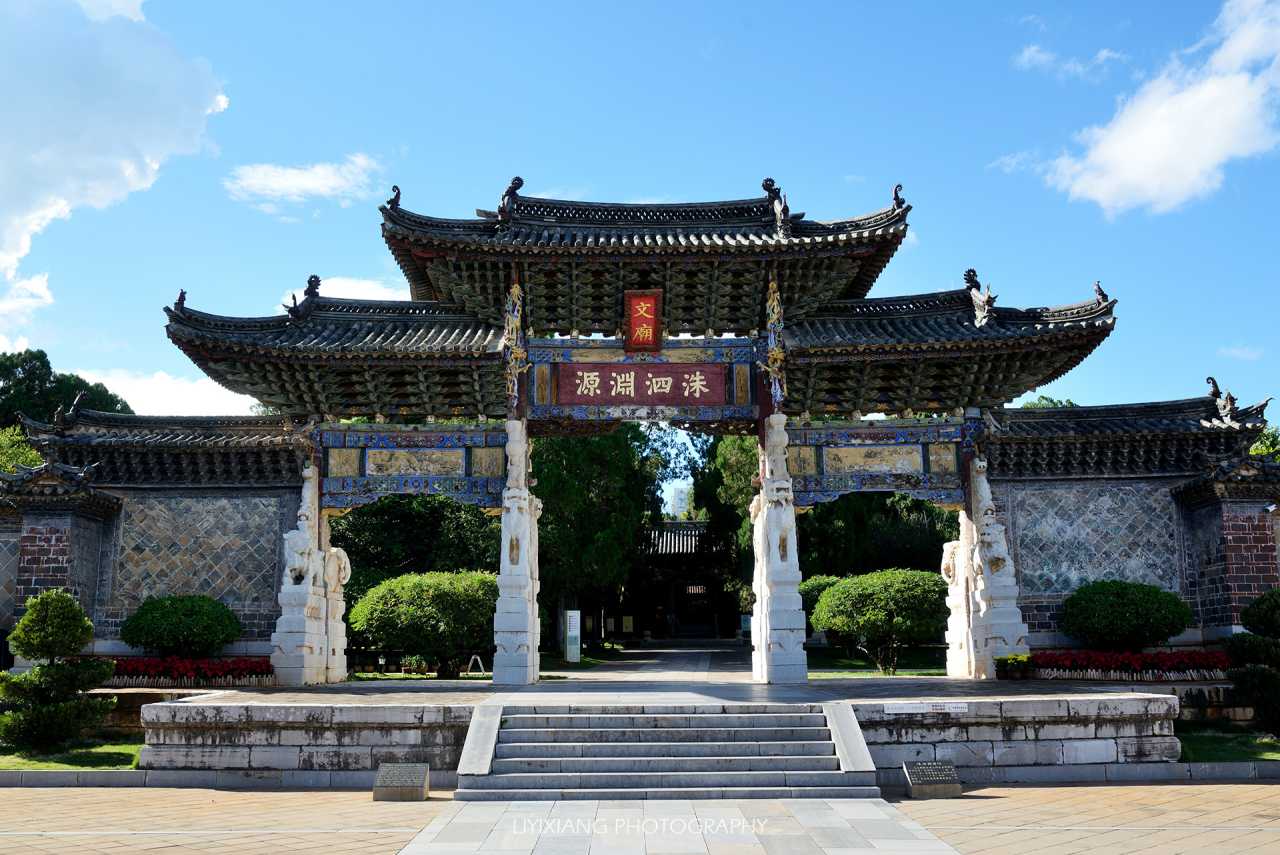
The ancient city preserves over 50 historic buildings, earning it the titles "Museum of Ancient Architecture" and "Museum of Traditional Residences." Every brick, tile, beam, and pillar grows heavier with the weight of history. Along Lin'an Road, you'll find numerous historic sites like the Confucian Temple, the Zhu Family Garden, the Imperial Examination Hall, and the Chaoyang Tower, all reflecting Jianshui's deep reverence for Confucianism. It's astonishing to think that such a culturally rich place exists in this remote southwestern borderland.
Beyond the ancient city, there are equally stunning sights. Don't miss the Twin Dragon Bridge (双龙桥) on the outskirts. The play of light and shadow on the bridge at sunset is a favorite scene for photographers. Also, visit Tuanshan Village (团山村), 12 kilometers west of the county seat. Its ancient buildings mostly retain their original appearance from a century ago, with little over-restoration. After seeing the Zhu Family Garden in the city, coming here will give you a profound sense of what it means when "prosperity fades away."
Twin Dragon Bridge: A Masterpiece of Ingenious Ancient Bridge Design
Before introducing Jianshui Ancient City, let's first talk about its most iconic landmark — the Twin Dragon Bridge (双龙桥).
China has many ancient bridges, but the Twin Dragon Bridge stands out for its ingenuity. Although it didn't make the list of China's Four Great Famous Bridges, it holds a prominent reputation across Yunnan and the entire southwestern region.
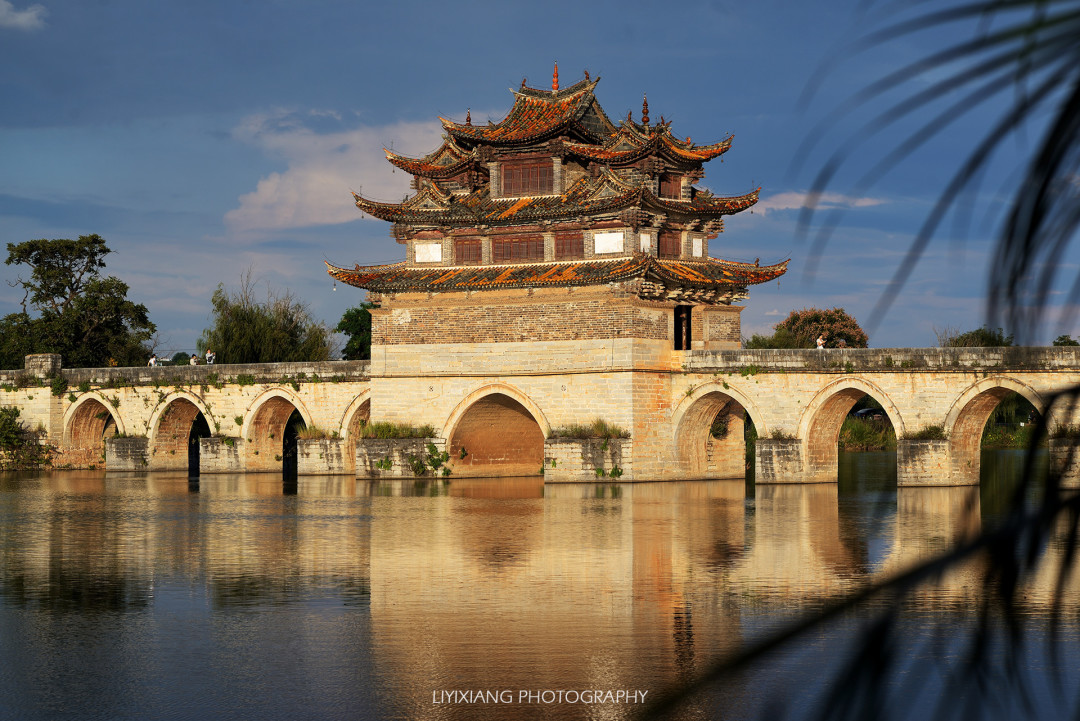
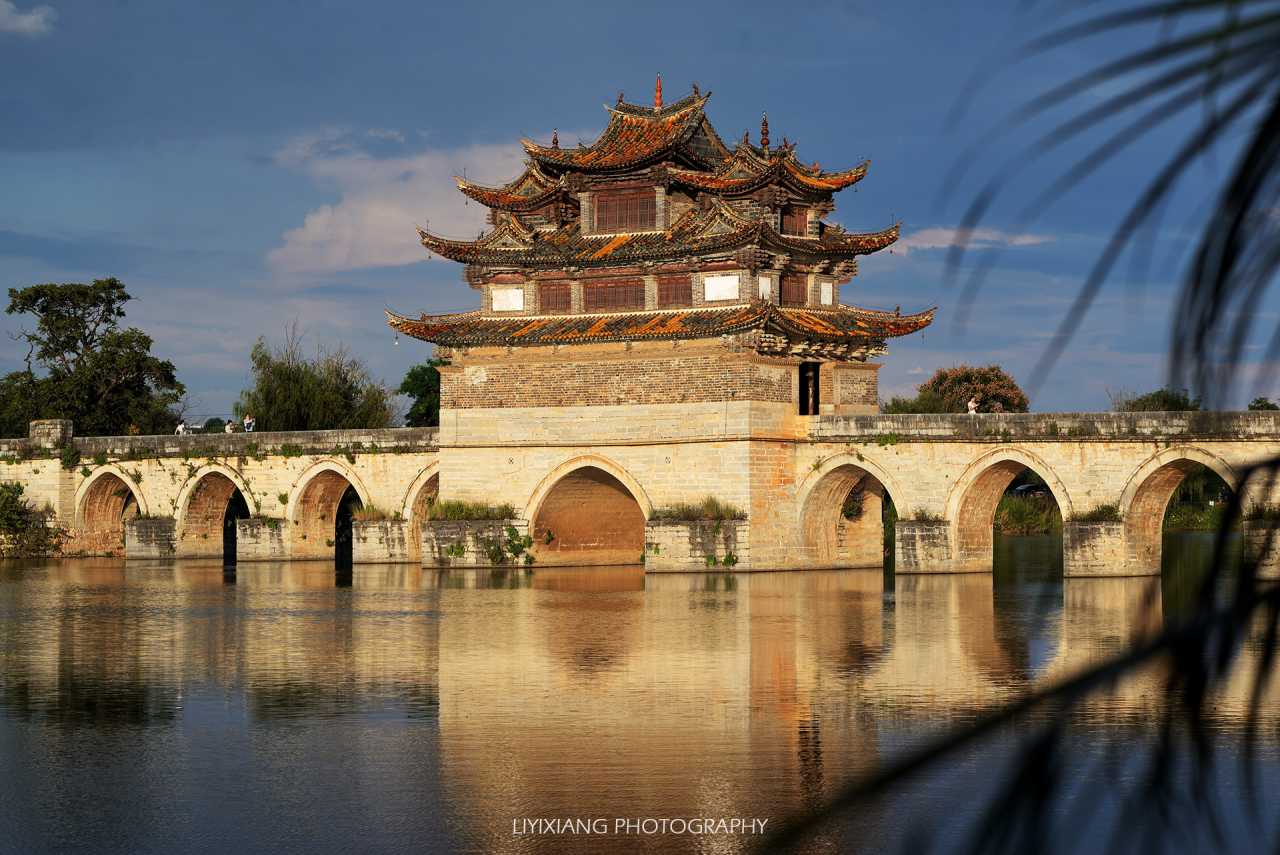
Originally built during the Qianlong reign of the Qing Dynasty (1736–1795), the bridge spans the confluence of the Lu River (泸江) and the Tachong River (塌冲河), three kilometers west of Jianshui. The two rivers meander like twin dragons, hence the name "Twin Dragon Bridge," symbolizing "one bridge locking two dragons." With 17 arches, locals also call it the "Seventeen-Arch Bridge."
In the 1960s, the renowned bridge expert Mao Yisheng visited Jianshui to examine the Twin Dragon Bridge. He spoke highly of it, even comparing it to the Seventeen-Arch Bridge at Beijing's Summer Palace. Mao not only included it among China's ten most famous ancient bridges but also dedicated a special section to it in his book A Technical History of Chinese Ancient Bridges. In 2006, the bridge was designated a sixth-batch Major Historical and Cultural Site Protected at the National Level by the State Council.

If you look closely, you'll notice that the three arches on the north side differ in size from the fourteen on the south side. According to historical records, the bridge wasn't built all at once. Initially, during the Qianlong era, only a three-arch stone bridge was built to cross the Lu River. Later, flooding from both rivers widened the riverbed, leaving one end of the three-arch bridge suspended in the water, turning it into a broken bridge. Local officials and residents had no choice but to build a new fourteen-arch bridge in 1839 (the 19th year of the Daoguang reign), connecting it end to end with the original three arches to span both banks.
During the Xianfeng reign (1851–1861), the bridge was damaged in war, and its pavilions were reduced to ashes, though the main structure survived. In 1893 (the 19th year of the Guangxu reign), local gentry raised over 3,000 taels of silver from merchants and miners in Gejiu to repair the bridge, completing the work in 1898.
Today, the Twin Dragon Bridge stretches 148 meters long and stands 9 meters high, built from neatly cut giant stone blocks. Stone railings line both sides, and the blue stone slabs on the bridge deck have been polished smooth by centuries of use. The central pavilion, three stories high, is commonly called the "Wind and Rain Pavilion" (风雨楼). Its ground floor allows passage for people and horses, while its upturned eaves and flying corners give it a rustic yet elegant charm.
A dam built downstream has calmed the once-turbulent Lu River, turning it into a mirror-like surface. The golden glow of sunset bathes the Twin Dragon Bridge, creating a moment that photographers love to capture. The bridge is now a free attraction. Although the sightseeing train from Lin'an to Tuanshan Village passes by here, I recommend making a special trip to enjoy the sunset scenery at your leisure.
After a passing rain shower, a rainbow appeared in the sky, like a colorful ribbon draped across the horizon. The bridge's reflection shimmered on the emerald water, with its seventeen arches lined up in a row, each connected to the next. From a distance, the bridge resembles a grand ship; up close, it looks like a rainbow lying on the waves. Such a巧妙 and imposing structure leaves you in awe of the wisdom and aesthetics of the ancients.
Address: Baijia Ying, Baituan Road, Xizhuang Town, Jianshui County
Admission: Free
Chaoyang Tower: The "First Tower of Yunnan," Older Than Tiananmen
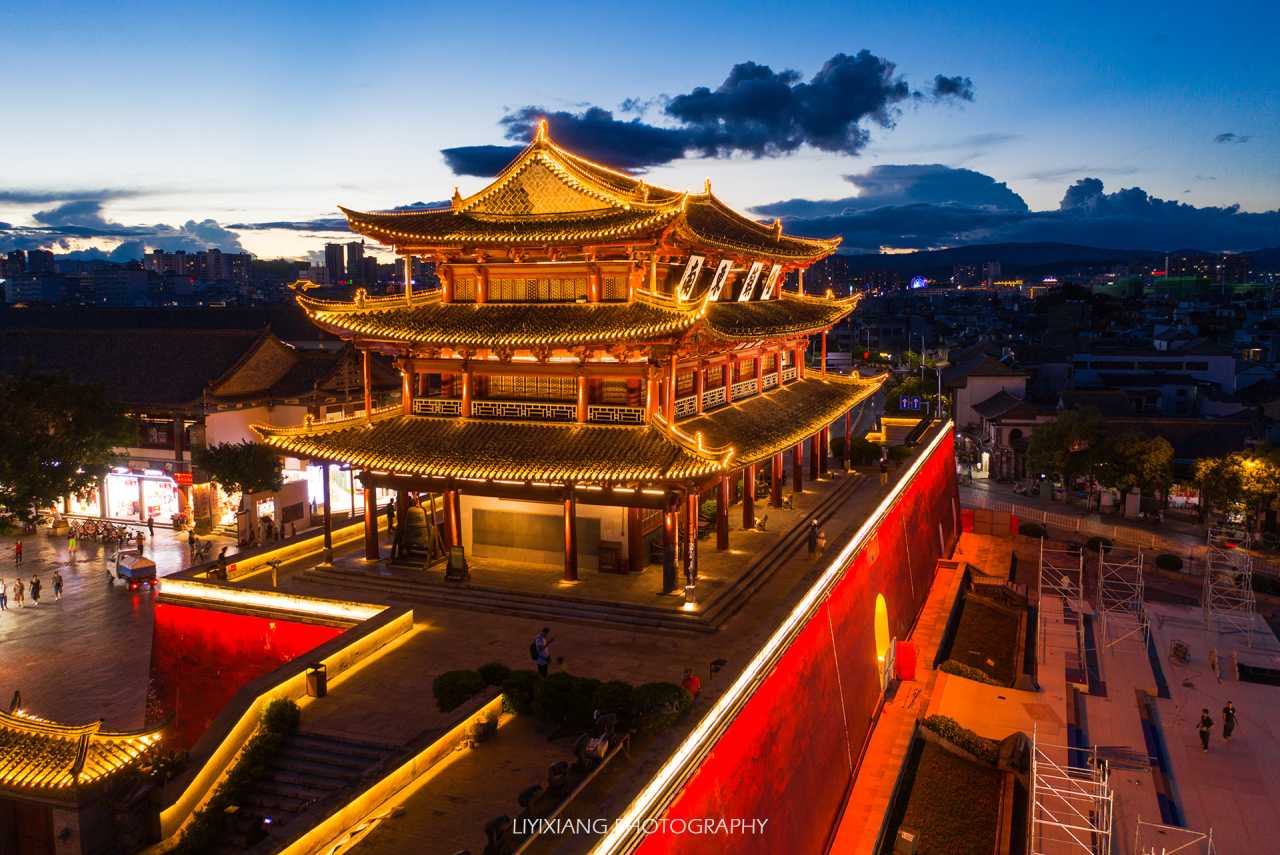
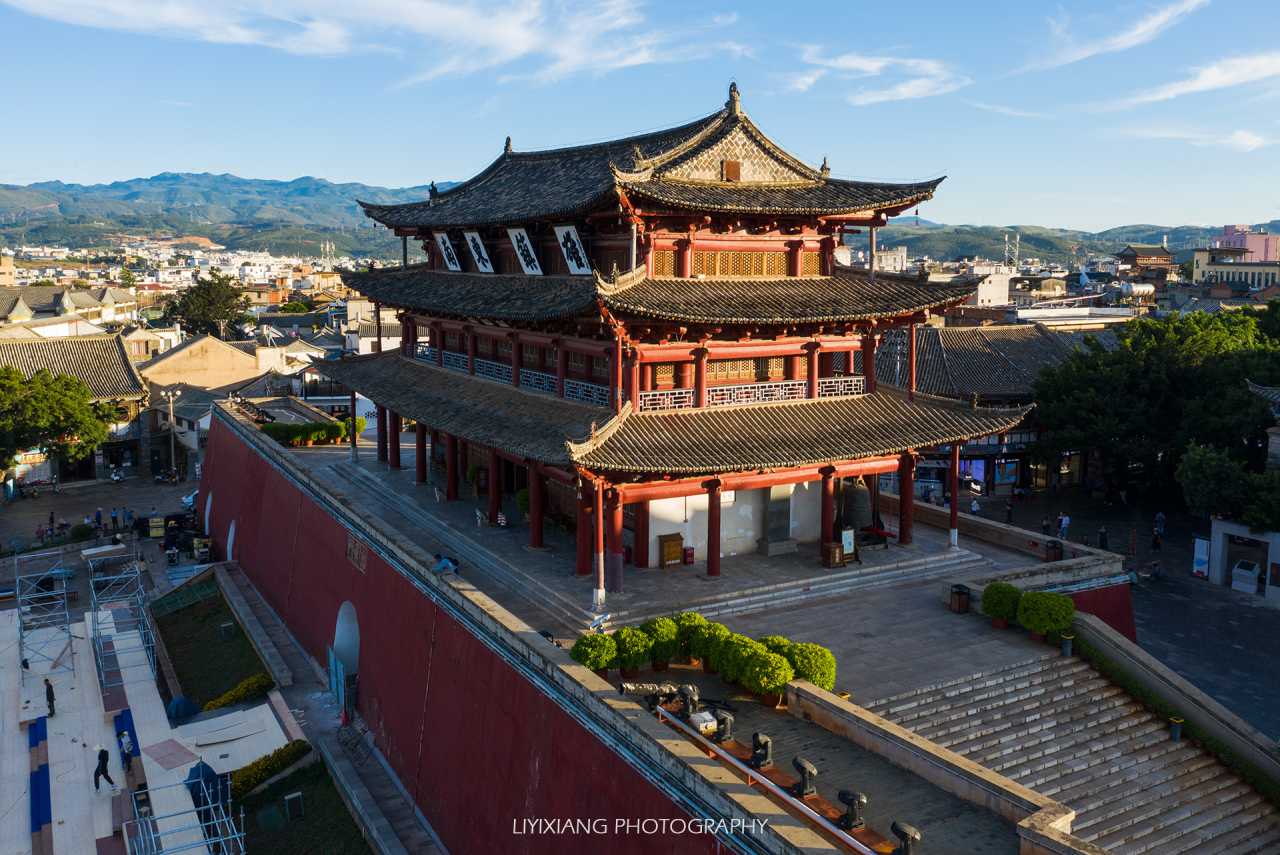
The Chaoyang Tower (朝阳楼), the eastern gate tower of Jianshui Ancient City, stands proudly on the city's east side and now marks the center of Jianshui county. Originally named "Yinghui Gate" (迎晖门), locals simply call it the "East Gate Tower." According to the Jianshui Prefecture Gazetteer from the Yongzheng reign: "The east gate tower stands a hundred feet high... Viewed from afar, it resembles the Yellow Crane Tower or the Yueyang Tower, truly a grand sight in the south."
This tower has a history of over 600 years, first built in 1389 (the 22nd year of the Hongwu reign of the Ming Dynasty). Its architectural style is strikingly similar to Beijing's Tiananmen, but it was built 28 years earlier. To this day, Chaoyang Tower is both a landmark of Jianshui and a witness to the city's 600-plus years of change. Climbing to the top, you'll understand why the phrase "Southeast of many vassal states, past and present, one towering structure" is the perfect description of Chaoyang Tower.
After the Ming army pacified Yunnan during the Hongwu era, the earthen fort was rebuilt into a brick city. At the time, Lin'an City had four gates: East (Yinghui Gate), South (Fu'an Gate), West (Qingyuan Gate), and North (Yongzhen Gate). In the late Ming and early Qing, Li Dingguo captured Lin'an, and the west, south, and north gate towers were destroyed in the war — only Yinghui Gate survived. Later, Chaoyang Tower endured four major earthquakes: in 1799 (Baoxiu), 1833 (Songming), 1887 (Shiping), and 1970 (Tonghai).
The 1887 earthquake in Shiping was particularly severe. According to the Jianshui County Gazetteer: "Each tremor sounded like thunder underground; people swayed as if on a capsizing boat. The east gate tower was seen tilting and righting itself several times." Countless buildings in Jianshui collapsed, but Chaoyang Tower stood firm and remains intact to this day, earning it the title "First Tower of Yunnan." In 2006, it was designated a sixth-batch Major Historical and Cultural Site Protected at the National Level.
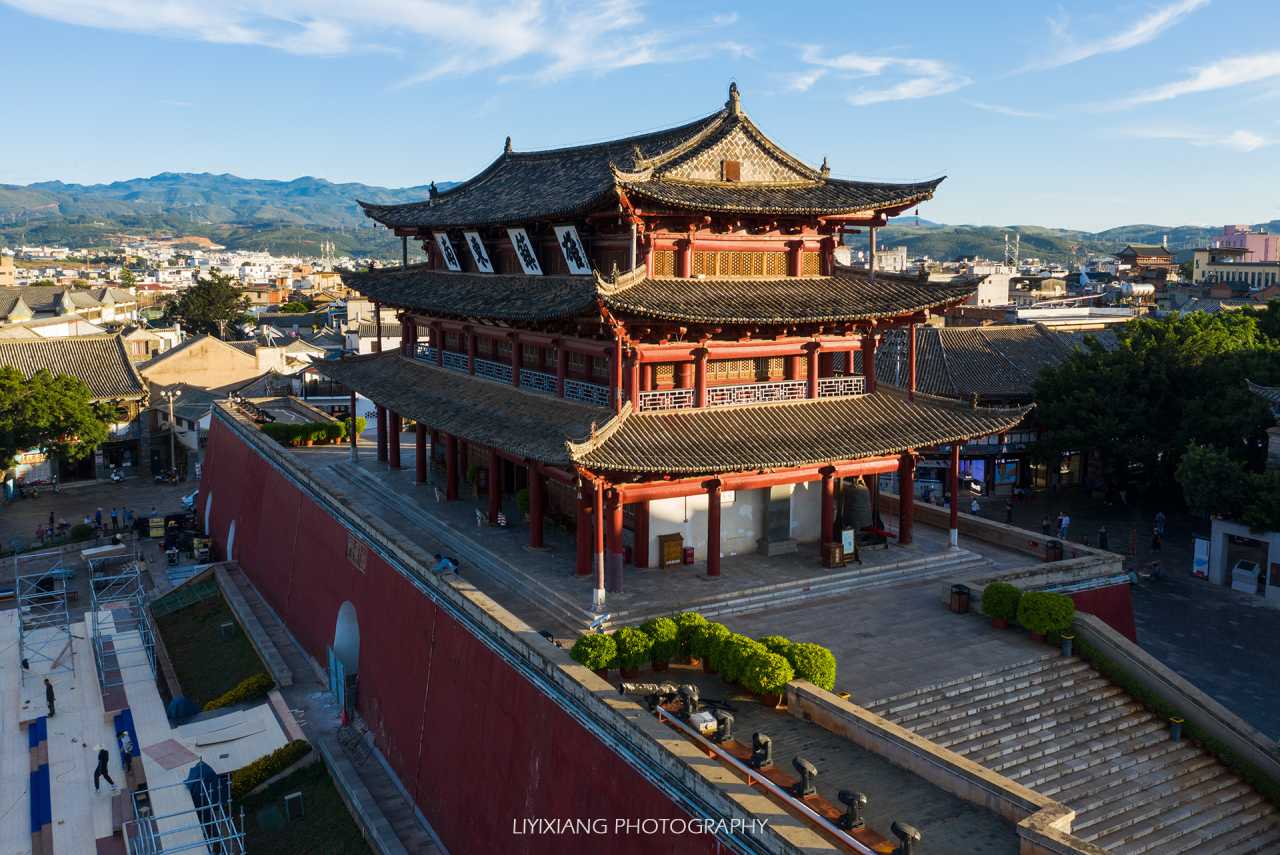
The front of Chaoyang Tower bears a large plaque inscribed with the characters "雄镇东南" (Mighty Guardian of the Southeast), written by the Qing Dynasty calligrapher Tu Zhuo from Shiping. Each character is about two meters tall, with bold and vigorous strokes. This is one of the "Four Great Calligraphic Works of Yunnan" from the Qing Dynasty and the only one still extant. The reverse side features a plaque reading "飞霞流云" (Flying Rosy Clouds and Flowing Clouds), a work by Wang Chuishu, a Jianshui native and magistrate of Weining during the Guangxu reign, based on the calligraphy of the Tang Dynasty "Sage of Cursive Script," Zhang Xu.
The red wall beneath the tower has a central passage, above which are three golden characters: "迎晖门" (Yinghui Gate). The tower faces east, greeting the first rays of dawn each day, making the name "Yinghui" (Welcoming the Dawn) most fitting. The three-story pavilion on the city wall features a double-eave hip-and-gable roof, with bracket sets and upturned eaves that give it a majestic air. Bronze bells hang from the eaves, producing a crisp, pleasant sound whenever the wind blows.
Entering Chaoyang Tower requires a ticket. Besides climbing up to overlook the bustling Lin'an Road, the second and third floors house a photo exhibition on Jianshui's history, featuring many old photographs taken over a century ago. These photos were taken by a Frenchman named Auguste François, who served as the French Consul-General in Yunnan from 1899 to 1904. This diplomat had a rather elegant Chinese name — Fang Suya (方苏雅). While surveying the route for the Yunnan-Vietnam Railway, he traveled repeatedly between Yunnan and Vietnam, leaving behind a wealth of photographic records. Thanks to these precious images, the customs and landscapes of southern Yunnan from that era have been brought back to life.
Seeing Chaoyang Tower today is perhaps a stroke of luck. Over more than 600 years of wind and rain, it has undergone seven major and minor renovations. It's said that in the 1960s, the tower was nearly demolished because it obstructed traffic. Fortunately, someone proposed allowing vehicles to pass around both sides of the gate while pedestrians walked through the central passage, saving this historic structure. During the subsequent decade of turmoil (the Cultural Revolution), the tower's plaques were nearly destroyed. But far-sighted individuals quietly moved them to a safe place, allowing us to see the eight large plaques bearing "雄镇东南" and "飞霞流云" on the tower today.
Address: Chaoyang North Road, Lin'an Town, Jianshui County
Admission: Full ticket 15 RMB
Jade Emperor Pavilion: Four Centuries of Historical Depth
Heading south from Chaoyang Tower, you'll find a small alley called Guilin Street (桂林街). Walk about 200 meters in, and you'll arrive at another historic site — the Jade Emperor Pavilion (玉皇阁), first built during the Wanli reign of the Ming Dynasty (1573–1620).
Located in the southeast corner of Jianshui Ancient City, the pavilion is named for the statue of the Jade Emperor (玉皇大帝) enshrined within. It was built on the initiative of Bao Jianjie, a Jianshui native who served as Minister of Works during the Wanli reign, giving it a history of over 400 years. In the late Ming and early Qing, when Li Dingguo captured Lin'an, the pavilion was destroyed by fire. It was rebuilt in 1655 (the 9th year of the Yongli reign of the Southern Ming). Most of the existing structures were rebuilt during the Yongzheng reign of the Qing Dynasty (1723–1735). Along the central axis, you'll find the mountain gate, a memorial archway, the front hall, the middle hall, and the rear hall — between the middle and rear halls stands the Chongwen Pagoda (崇文塔). In 2019, the Jade Emperor Pavilion and its attached Chongwen Pagoda were designated as eighth-batch Major Historical and Cultural Sites Protected at the National Level. It is now a free attraction.
The front hall of the Jade Emperor Pavilion, also known as the Lingxiao Hall (凌宵殿), was rebuilt in 1730 (the 8th year of the Yongzheng reign). With its double-eave hip-and-gable roof, it is the largest building in the complex and the only example in Jianshui of a "column-shifting method" (移柱法) used in a raised-beam wooden structure. The middle hall features twenty peripheral columns forming a回廊 (covered corridor), with eaves that curve like birds in flight, creating a sense of grandeur and liveliness.
Between the middle and rear halls stands the Chongwen Pagoda, whose history predates even the Jade Emperor Pavilion! Originally built during the Yuan Dynasty, it was called the "White Pagoda" (白塔) and also known as the "White Horse Temple Pagoda" (白马寺塔), serving as the guardian pagoda of the White Horse Temple. In Jianshui's history, there was a saying about "Seven Temples and Eight Shrines," and the White Horse Temple was one of them. When the temple collapsed, the pagoda was incorporated into the adjacent Jade Emperor Pavilion and renamed Chongwen Pagoda.
According to records, the pagoda was damaged by a heavy rainstorm in 1799 (the 4th year of the Jiaqing reign). The structure we see today was rebuilt in 1831 (the 11th year of the Daoguang reign). It stands 20 meters tall, a 17-story solid brick pagoda with dense eaves. The base has five levels, and the brick body tapers as it rises. Each level has four small niches, each housing a Buddha statue. The top is capped with four stone slabs and a glazed ceramic finial, giving the pagoda a profound sense of historical weight.
Address: Guilin Street, Lin'an Town, Jianshui County
Admission: Free
Twelve-Eye Well: "When Drinking Water, Remember Its Source" in the Ancient City
Returning to the main street of the ancient city, Lin'an Road, walk west along this bustling pedestrian street until you reach the Twelve-Eye Well (十二眼井) at the intersection with Yongning Street. Each of the twelve well openings is small. According to records, the well is six meters deep, with a water depth of two meters. It was first dug in 1710 (the 49th year of the Kangxi reign) and rebuilt during the Guangxu reign. The wells are arranged in a regular fan-shaped pattern, earning them the nickname "Fan Well" (扇井). The deep rope marks on the blue stone well curbs, worn to a depth of several inches, reveal the well's long history.
In fact, Jianshui Ancient City boasts the largest number of ancient wells in China, with over 120 in total. Besides the Twelve-Eye Well, there are numerous single-eye, double-eye, triple-eye, and quadruple-eye wells. Many of these wells have been in use since the Ming, Qing, or even Yuan dynasties, and their water remains clear and potable for locals. The most famous of them all is the Big Board Well (大板井) outside the West Gate.
Address: No. 41 Lin'an Road, Lin'an Town, Jianshui County
Admission: Free
Zhu Family Garden: The "Grand View Garden" of the Southwest Borderland
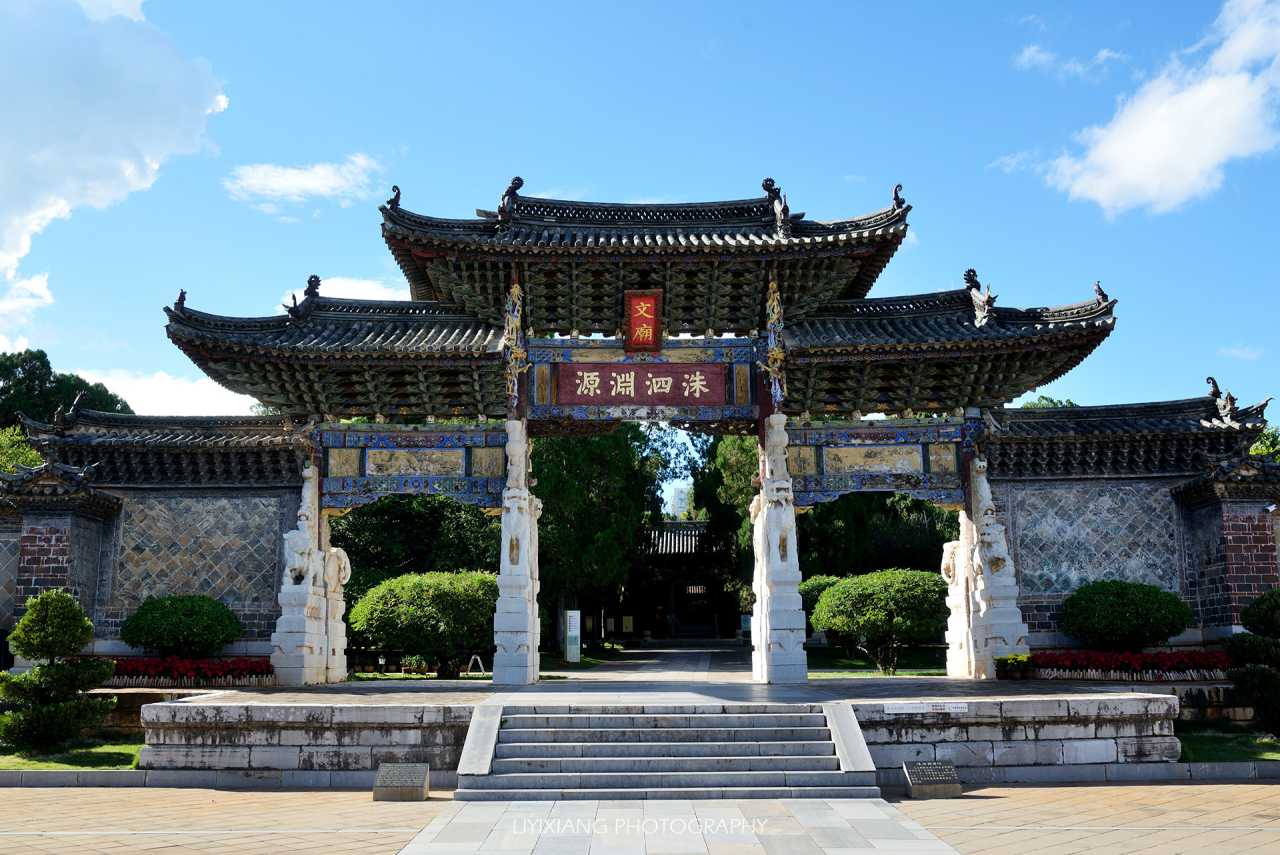
Passing through the Hanlin Memorial Archway (翰林牌坊) and turning onto Hanlin Road, the renowned Zhu Family Garden (朱家花园) soon comes into view. The Zhu Family Garden is one of the most important attractions in Jianshui Ancient City. This residence, built by a wealthy gentry family of the Zhu brothers in the late Qing Dynasty, covers over 20,000 square meters. Meticulously crafted by two generations, it embodies the charm of a private garden in southern Yunnan. Later, because the garden's owner, Zhu Chaoying, was awarded the rank of lieutenant general for his role in the 1911 Revolution, it was also called the "Lieutenant General's Mansion" (中将第).
The 35 RMB admission to the Zhu Family Garden isn't cheap, but I strongly recommend paying to go inside for a glimpse of the luxurious life of southern Yunnan's wealthy gentry. Otherwise, it's hard to imagine that such an extravagant and exquisite private mansion could exist in this remote southwestern borderland.
The Zhu family, who built the garden, originally migrated from Hunan to Lin'an Prefecture during the Wanli reign of the Ming Dynasty, initially living outside the city in Xizhuangba. After generations of wealth accumulation, by the early Guangxu reign of the Qing Dynasty, the Zhu family had become the leading gentry in southern Yunnan. They purchased land in Lin'an City and began constructing the Zhu Family Garden, a project that took thirty years to complete. In 2013, the garden was approved by the State Council for inclusion in the seventh batch of Major Historical and Cultural Sites Protected at the National Level.
Standing at the main gate, you'll be captivated by the intricate carvings on the垂花门楼 (a gate tower with hanging flowers). The first layer of eaves features carvings of dragons, fish, and the dragon gate, symbolizing "a fish leaping over the dragon gate" (representing success in imperial exams). The second layer shows a sun in the center with waves below, meaning "thriving day by day," while four magpies on the sides represent "four joys at the door." The third layer includes carvings of Buddha's hand citron, incense burners, longevity peaches, and vases, symbolizing "blessings, wealth, longevity, and peace."
But once you step inside the Zhu Family Garden, you'll realize these wood carvings are just an appetizer. The opulence within is truly dazzling, and the title "Grand View Garden of the Southwest Borderland" is well-deserved.
Behind the main gate's screen wall is a moon-gate archway leading to the inner residence. Above the archway are the characters "循规蹈矩" (Follow the Rules), while the reverse side reads "谨言慎行" (Be Cautious in Speech and Conduct). These inscriptions seem to suggest the Zhu family adhered to strict propriety, but in reality, they are more aspirational than accurate, given the family's rise to wealth. Learning that the Zhu family ultimately met with repeated confiscations of their property due to their激进 (radical) actions makes their story all the more poignant.
Behind the moon-gate archway are the flower hall (花厅) and the east and west embroidery towers (绣楼). First-time visitors to the Zhu Family Garden can easily get lost in its layout. In fact, the garden has over 200 rooms and more than 40 courtyards of various sizes. The architectural layout is unusual — unlike the symmetrical layouts common in central China, it features a four-vertical, three-horizontal arrangement of rooms and courtyards that step inward.
Continuing further, you'll reach the Zhu Family Ancestral Hall (朱氏宗祠), where the family once held ancestral rites, weddings, and funerals, as well as entertained guests and enjoyed tea and opera. The hall is a three-courtyard complex, comprising the Huatang (华堂, Splendid Hall), the Xiangtang (享堂, Enjoyment Hall), and the Jitang (祭堂, Sacrificial Hall) from front to back. In front of the Huatang is a pond called "Little Goose Lake" (小鹅湖), named after Zhu Xi's Goose Lake Academy. Across the pond sits an exquisite water stage, its opening shaped like a figure eight and extending over the water, supported by four stone pillars seemingly suspended above. Also worth noting are the stone balustrades in front of the pond, carved with intricate reliefs depicting auspicious flowers, birds, legendary stories, and poetic inscriptions.
The first courtyard of the ancestral hall is the Huatang, a building with a卷棚顶 (round-beam roof). Its doors and windows are adorned with carvings of numerous figures and birds, with carved beams, painted rafters, and upturned eaves, all exuding a sense of splendor and the family's wealth. The eaves of the Huatang are built wide to accommodate tables for watching opera performances in front of the hall. After the garden was completed, the family grew, so the rear Jitang was converted into bedrooms, and the ancestral tablets were moved to the Huatang, which then also served as a place for ancestor worship. The back wall of the Huatang is decorated with Zhu Xi's Family Instructions of Master Zhu (朱子家训) from the Song Dynasty. Flanking it are wooden lattice windows, and in the center is a bat motif, as the Chinese word for bat (蝠, fú) sounds like the word for "blessing" (福, fú).
The second courtyard is the Xiangtang, used for family discussions and as a place for feasting and resting after ancestral rites. The Xiangtang connects to the rear Jitang via a棚廊 (shed corridor), forming an "工"-shaped (I-shaped) passage hall. Look closely, and you'll notice that both the Xiangtang and the corridor feature benches commonly known as "美人靠" (beauty rest seats).
The third courtyard is the Jitang, also called Huaiyuan Hall (怀远厅). Its doors are carved with the Twenty-Four Filial Exemplars (二十四孝图). Originally a place for ancestral worship, it later became a bedroom and now serves as an exhibition hall detailing the rise and fall of the Zhu family over a century. The family initially made its fortune mining tin in Gejiu, then used the profits to open businesses, becoming wealthy merchants in southern Yunnan. When the Zhu Family Garden was completed, the family was headed by Zhu Chaoying, the tenth-generation descendant. He passed the provincial imperial examination as a副榜 (supplementary list) and was given a候补 (probationary) official post in Guangdong. Later, implicated in the Zhou Yunxiang uprising, the Qing government confiscated his property. In 1911, when the Xinhai Revolution broke out, Zhu Chaoying led the Lin'an Uprising, recovering various prefectures and counties in southern Yunnan, and was awarded the rank of lieutenant general. However, despite his peak of power, Zhu Chaoying ultimately could not escape decline. He first sided with Yuan Shikai, only to be defeated by Cai E's National Protection Army. Then, in 1927, he engaged in a bloody conflict during a local factional struggle, becoming a casualty of warlord infighting. After Zhu Chaoying's death, the Zhu family fell into decline, and their prosperity faded away.
Address: Hanlin Road, Lin'an Town, Jianshui County
Admission: Full ticket 35 RMB
The Taste of Jianshui: Borderland Flavors on the Tip of Your Tongue
When visiting Jianshui, the food is an absolute must. This small city not only offers an age-old and traditional street life but also hides the most authentic Yunnan flavors.
Big Board Well and Jianshui Tofu
The most famous Big Board Well (大板井) in Jianshui sees a constant stream of people fetching water every day. "The taste of its water is the finest in all of Yunnan." The water from the Big Board Well is sweet and rich in minerals, making it the most important ingredient for making Jianshui tofu. Tofu made with this well water comes in small square pieces, with a brownish-yellow skin from natural fermentation. Grilled until slightly puffed, it's crispy on the outside and tender on the inside. Dip it in a sauce, and it's absolutely delicious.
Rice Noodles (米线): The Breakfast Philosophy of Jianshui Locals
Starting the day with a bowl of rice noodles is the breakfast of choice for most Jianshui locals. Locals often say "甩米线" (shuǎi mǐxiàn) instead of "吃米线" (chī mǐxiàn) — literally "flinging" the noodles. It's not actually flung; it's just a vivid local expression that paints a picture of the act.
Grass Sprouts (草芽): A Unique Aquatic Vegetable of Jianshui
Crisp and white like scallion stems, grass sprouts are a unique aquatic vegetable found only in Jianshui. This ingredient is exceptionally tender and works with almost any cooking method. Simply cut it into sections and stir-fry with a few sweet peppers for a delicious dish.
Steam-Pot Chicken (汽锅鸡): Pure Flavor Without a Drop of Water
Originating in Jianshui, steam-pot chicken requires the local specialty — a purple clay steam pot (紫陶汽锅). The chicken is placed in the pot and cooked entirely by steam, without adding a single drop of water. The steam slowly condenses into a rich broth, preserving the chicken's original flavor. Every sip is pure umami.
Barbecue (烧烤): The Most "Jianghu" Food
If you ask which Jianshui food has the most "jianghu" (martial arts world) spirit, it's undoubtedly barbecue. Various ingredients are grilled over an open fire until slightly charred, releasing enticing aromas and a wealth of flavor compounds. With a hint of smokiness, the smell alone is enough to whet your appetite.
Dried Yellow Beef (黄牛干巴) and Qujiang Roast Duck (曲江烤鸭)
Dried yellow beef is essentially Yunnan's version of beef jerky. Pop a piece in your mouth, and you get both the freshness of tender beef and the dry, savory flavor of cured meat — every bite is irresistibly salty and delicious. Qujiang Roast Duck is famous throughout southeastern Yunnan. The roasted duck turns a deep red color, and it's served with a dipping sauce made from chili powder and rendered duck fat, giving it a spicy, numbing, and fragrant taste with a rustic, countryside flair.
Strange-Flavored Fish (怪味鱼) and Papaya Water (木瓜水)
Then there's strange-flavored fish — a thick, sweet-and-spicy sauce poured over pan-fried tilapia. The outside is crispy, while the inside remains tender, with sweet, sour, spicy, and salty flavors intertwining for a distinct and layered taste experience. Papaya water is made from papaya seeds. When served, it's mixed with sweet fermented rice (甜白酒), brown sugar syrup, and rose jam. Scoop up a spoonful, and the papaya, infused with the subtle sweetness of brown sugar, delivers a cool, refreshing sensation that goes straight down your throat.
Jianshui Small Train (建水小火车): A Slow Ride on a Narrow-Gauge Railway
The Jianshui Small Train runs on the "Ge-Bi-Lin-Ping Railway" (个碧临屏铁路), the only寸轨 (narrow-gauge railway) in all of China. The 13-kilometer journey takes a leisurely 40 minutes, perfectly illustrating the Yunnan saying, "Trains are not as fast as cars." The train's terminus is Tuanshan Village (团山村), which boasts a large collection of well-preserved traditional southern Yunnan residences. Most of these were built by the Zhang family, who made their fortune mining tin in Gejiu during the late Qing Dynasty.
Final Thoughts
Jianshui is a borderland ancient city forgotten by time. It lacks the hustle of Dali and the Instagram-famous vibe of Lijiang, but it possesses a unique charm of its own. Every brick, tile, beam, and pillar here grows heavier with the weight of history. The aroma of grilled tofu wafts through its streets and alleys. Its ancient wells still offer clear, sweet water. And its people still live life at a slow, unhurried pace.
If you're tired of the city's noise and chaos, if you're looking for an ancient city with a genuine sense of everyday life, then Jianshui will not disappoint you. Here, you can slow down, feel the passage of time, and savor the most authentic flavors of Yunnan.
Practical Tips: - Best Time to Visit: Year-round, with spring and autumn being the most comfortable - Recommended Length of Stay: 2–3 days - Getting There: Take a high-speed train from Kunming to Jianshui Station, about a 2-hour ride - Accommodation: Guesthouses within the ancient city are the best choice for immersing yourself in the atmosphere - Must-Try Foods: Grilled tofu, steam-pot chicken, grass sprouts, barbecue, papaya water
Jianshui, this borderland ancient city forgotten by time, is waiting for you to discover its beauty.
You should also read:
Yunnan Travel Mastery: From Beginner to Pro-Level Player – A Complete Guide
Yunnan Travel Mastery: From Beginner to Pro-Level Player – A Complete Guide "Either travel or read, but your body and soul must be on the road." This quote has been repeated countless times, but very few people truly manage to be "on the road" and…
Continue reading...
Escaping Nanning, Falling Under Lijiang's Spell: Our Four-Person, Ten-Day Yunnan Dream
Escaping Nanning, Falling Under Lijiang's Spell: Our Four-Person, Ten-Day Yunnan Dream Before We Set Off: No Pain, No Obsession Have you ever had that impulse—suddenly tired of the office fluorescent lights, the crush of the subway, the endless parade of identical takeout boxes, and just…
Continue reading...
Solo in Yunnan: A Wanderer’s Guide to the Land of Eternal Spring
Solo in Yunnan: A Wanderer’s Guide to the Land of Eternal Spring There’s something magical about traveling alone. No compromises, no schedules to keep, no one to please but yourself. I’ve been on the road for nearly three months now, and not once have I…
Continue reading...