Lijiang · Lugu Lake · Shangri-La: Reuniting in the Most Beautiful Season is the Greatest Kindness to Travel
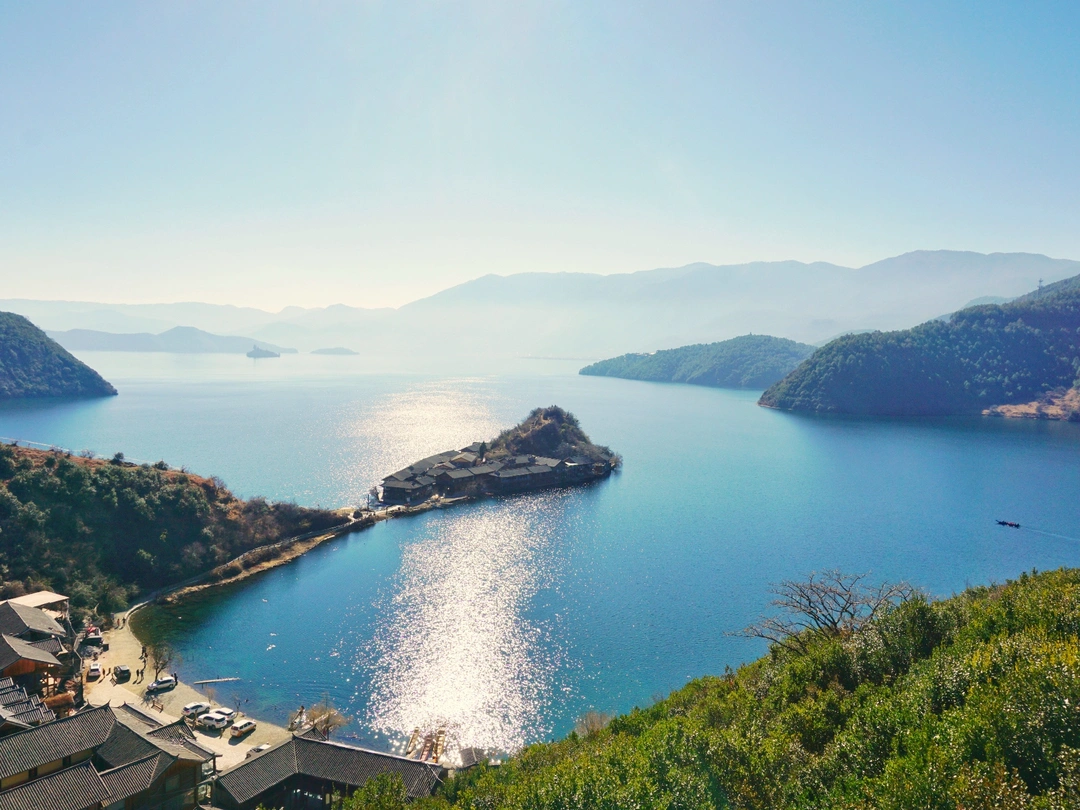
Lijiang · Lugu Lake · Shangri-La: Reuniting in the Most Beautiful Season is the Greatest Kindness to Travel
Destination: Lijiang, Lugu Lake, Shangri-La
Travel Dates: January 14, 2019 – 8 days total
Cost per Person: Approximately 4,000 RMB (including flights, accommodation, meals, transport, and entrance fees)
Travel Companions: With a friend
Preface: A Spontaneous "Sun-Drying" Trip
Shanghai had been drenched in rain for two straight weeks, leaving me feeling like a forgotten loaf of bread in a corner—moldy, fuzzy, and exuding a damp sigh. One afternoon, staring out at the gray sky, I made a sudden decision: go to Lijiang to soak up some sun.
Actually, Yunnan isn't unfamiliar to me. Years ago, I'd rushed through the classic route from Kunming to Lijiang, but that trip left me with more regrets than memories: I never made it up Jade Dragon Snow Mountain, never woke up to the morning mist over Lugu Lake, and never made a wish under the prayer flags of Shangri-La. This time, I wanted to fill in every single gap.
Deep down, I'm a "Western China junkie"—the Gobi Desert in Xinjiang, the lakes in Qinghai, the mountains in Sichuan. Those vast natural landscapes, plus the leisurely grazing cattle and sheep by the roadside, always make me feel like the world is soft and life is worth living. So I booked the tickets, packed my bag, and hit the road.
Day 1: Shanghai → Lijiang | Night Talks in the Ancient City, a Bowl of Rice Noodles Kicks Off the Journey
The plane landed an hour early. We'd expected to be eating instant noodles at the hostel, but instead, we had a whole evening to ourselves. We dropped our bags and headed straight to the ancient city to hunt for food.

First Stop: Brother Tu's Chicken Rice Noodles (二哥土鸡米线)
📍 71 Qiyi Street, Chongren Lane
Rating: ⭐⭐⭐⭐⭐
A bowl of chicken rice noodles with a broth so flavorful I wanted to lick the bowl clean. The big chicken leg was stewed until tender and falling off the bone, and the noodles were silky smooth. I finished every last drop—soup, toppings, and all. This was Lijiang's first taste of warmth for me.
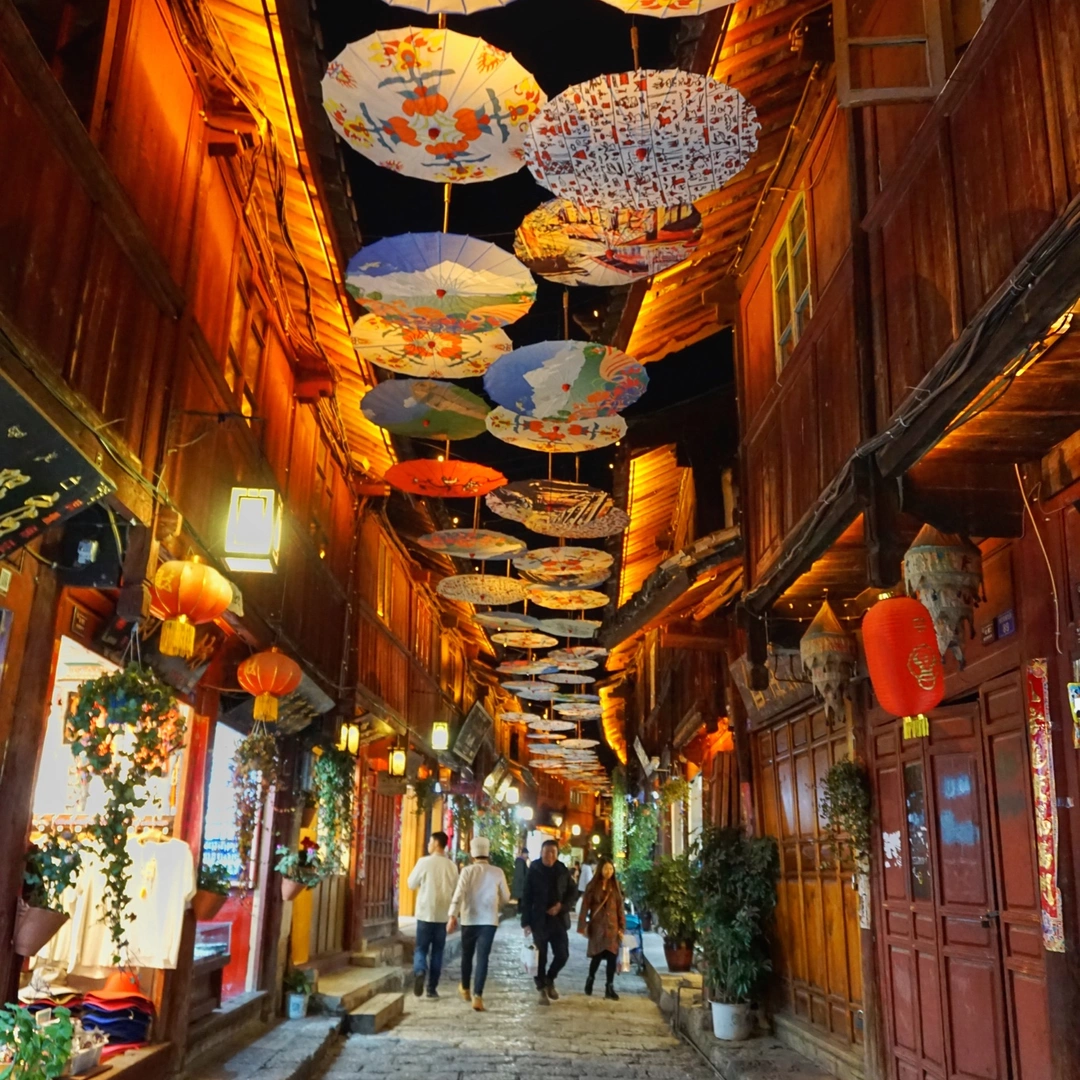
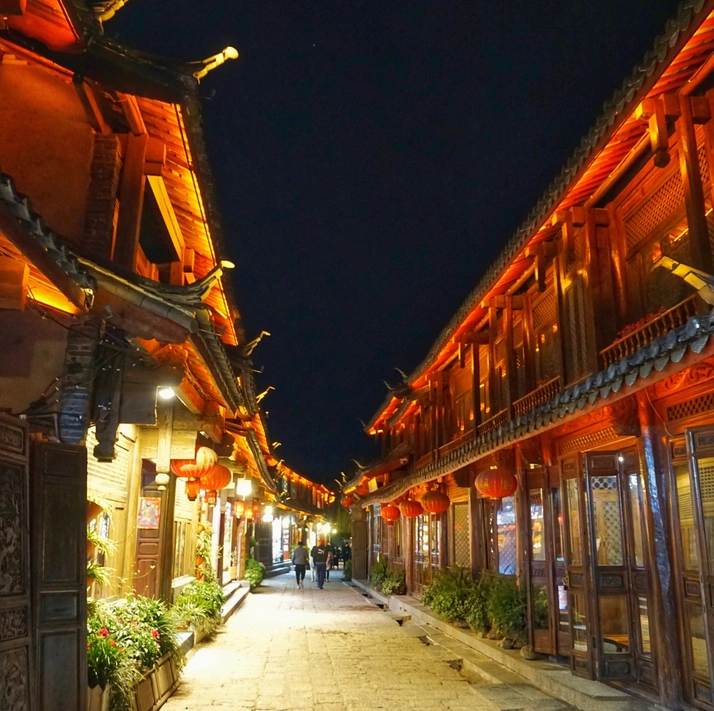
After eating, we wandered aimlessly through the ancient city. Lijiang at night is still lively, with the bar street's noise rising and falling. But I preferred the quiet alleyways. Years ago, on my first trip here, I walked down a nearly deserted path and heard a folk singer softly strumming from an upstairs window. That moment felt like being gently touched by time.
Day 2: Jade Dragon Snow Mountain | For 4,680 Meters, I Nearly Lost Half My Life
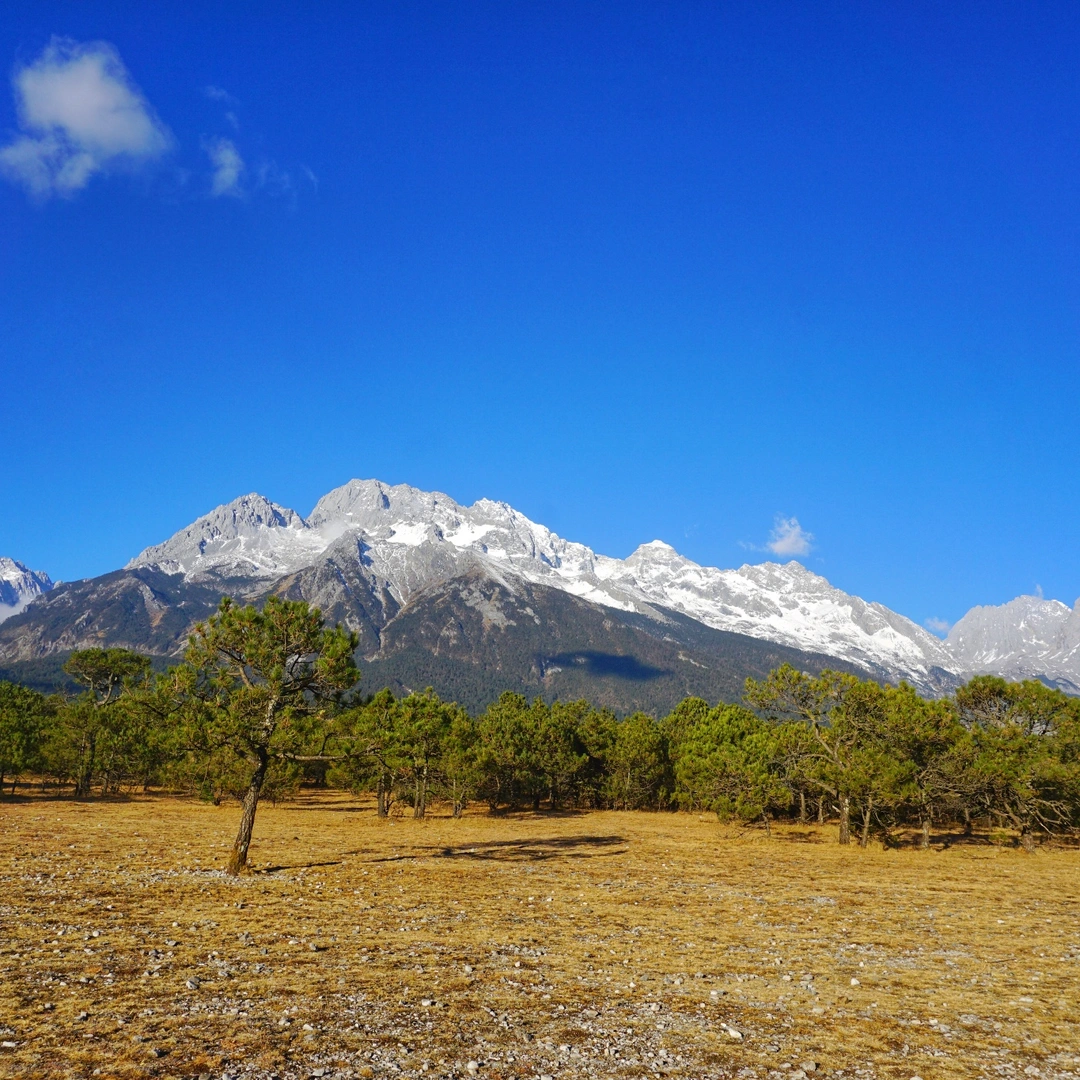
Jade Dragon Snow Mountain was the part of this trip I looked forward to most—and also my biggest regret from last time. So when the car drove toward the mountain and it gradually came into clear view, my heartbeat quickened.
First Stop: Ganhaizi Meadow
This is a high-altitude grassland at the foot of the mountain. With the snow mountain in the distance, the view opened up like a painting. We took enough photos here before heading to the cable car station.
The Summit Climb: From 4,506 Meters to 4,680 Meters
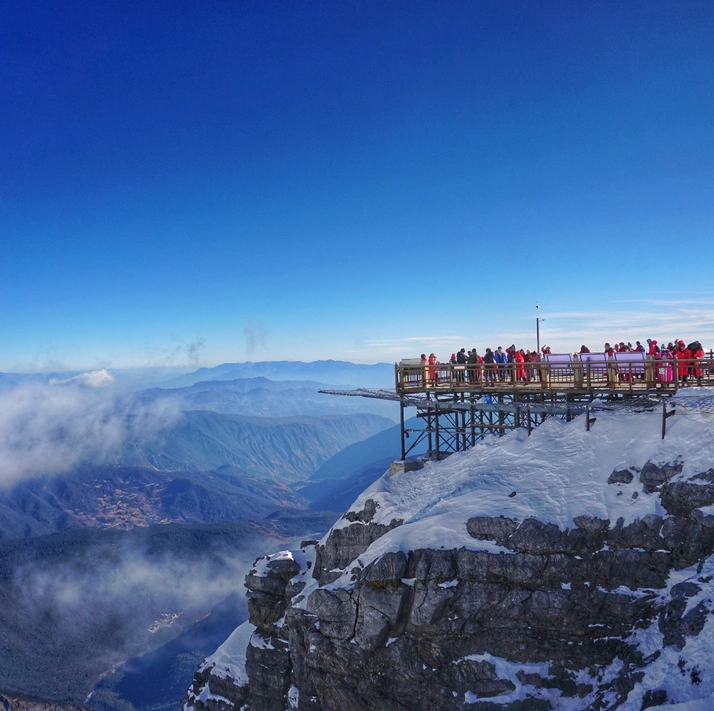
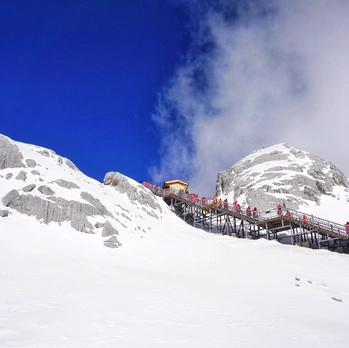
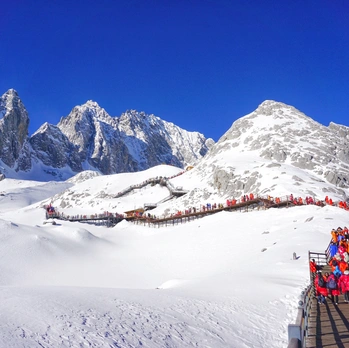
The cable car goes from an elevation of 3,356 meters straight up to the Glacier Park at 4,506 meters. As a southerner, seeing the endless white snow made me want to jump in and roll around. But the real challenge was just beginning—hiking along the boardwalk from the Glacier Park to 4,680 meters. It's only about 100 meters of elevation gain, but it felt harder than running a marathon.
I started off confident, thinking using oxygen was for the weak. But after just a few steps, I was eating my words. Every few stairs, I had to sit down and catch my breath—dizzy, weak in the knees, heart racing. Finally, when I was just one last flight of stairs from the summit, everything went black and I collapsed on the ground. Panicking, I grabbed my oxygen canister and took a deep breath—survival first.
In the end, fueled by oxygen and sheer stubborn willpower, I "grinded" my way to 4,680 meters. I was a mess, but standing at the top, overlooking the surrounding peaks, it all felt worth it.
Friendly Reminders:
- Know your limits. Don't be a hero. Altitude sickness is no joke.
- Sunscreen is a must! I was so busy enjoying the sun at the summit that I got a sunburn on my scalp—yes, your scalp can burn too! The next week was a nightmare of redness, pain, and eventually peeling. Absolutely brutal.
Blue Moon Valley: Jiuzhaigou at the Foot of the Snow Mountain
After coming down, we went to Blue Moon Valley. The four lakes each showed a different shade of blue, crystal clear like God's overturned palette. Sitting by the lake, soaking up the sun, watching the water shimmer—I thought, if I'd realized earlier that my scalp was sunburned, I wouldn't have been sitting there so comfortably. But I didn't know, so the happiness was real.
Day 3: Lijiang → Lugu Lake | 80 Kilometers Around the Lake, Feeding Seagulls, Petting Ducks, and Being Chased by a Little Boy Selling Apples
We set off at 7 a.m. The drive took over four hours, passing through the Lining 18 Bends and the Jinsha River. I slept through most of it. When I woke up, Lugu Lake was right in front of us.
First Stop Around the Lake: The Grass Sea & Pig-Trough Boats
We decided to charter a car to circle the lake. I'd originally wanted to hike or bike, but the loop is nearly 80 kilometers, spanning both Yunnan and Sichuan provinces. I quickly abandoned that "suicidal" idea.
Starting from Sanjia Village, we drove counterclockwise. Our first stop was the Grass Sea, where we boarded a pig-trough boat—a traditional wooden boat shaped like a pig's trough. We glided through the withered yellow grass toward the open water. In winter, the Grass Sea loses its summer vitality, but the yellow reeds against the blue lake created a kind of melancholic beauty. Various birds and ducks rested on the water. I almost reached out to "pet a duck"—they were just too cute.
Feeding the Seagulls: Excitement and Fear
As the boat reached the open water, the lake became even clearer, revealing underwater plants. Sunlight poured down, making the whole boat seem to float on the surface. Flocks of seagulls gathered. I'd brought bread and dried fish, trying to hand-feed them for the first time—hoping one would fly over, but afraid of getting pecked. Luckily, they just gently took the food, but my facial expressions were completely out of control.
Princess Island & "Dear Inn"
On Princess Island, there's a small museum dedicated to the last princess of the Mosuo kingdom. We didn't go inside, just took photos on the island. Nearby was the filming location for the Chinese reality show Dear Inn. It's not open to the public, but just seeing it from a distance was satisfying.
The Marriage Bridge: Chased by a Little Boy Selling Apples
The Marriage Bridge is an iconic spot at Lugu Lake. Local children and women sell local products on the bridge. A little boy chased after me, insisting I buy apples. I politely declined, but he wouldn't give up, finally grabbing my clothes. I laughed and said, "I've never had a boy chase after me this persistently."
Lover's Beach & Daluoshui Village
Along the loop, we also passed Lover's Beach (there's one in both Yunnan and Sichuan) and the Lige Observation Deck, before finally arriving at Daluoshui Village. This is the most bustling area of Lugu Lake, with convenient dining options and close to the bus station. For dinner, we ate at a place called Spring Stone Pot Fish House (泉水石锅鱼府). The fish was very fresh, but there were too many tiny bones, making it a bit tricky to eat.
Day 4: Lugu Lake → Lijiang | Hiking 9 Kilometers, Exhausted but Feeling Super Proud of Myself
Today's schedule was relaxed—we didn't head back to Lijiang until 3:30 p.m., so we had the whole morning to wander. We fed seagulls and soaked up sun at our hostel, then decided to take a stroll through Lige Village.
Lige Village isn't big; you can walk through it in an hour or two. From the observation deck, the entire Lige Peninsula is shaped like a heart—I only noticed that later when looking at photos.
After finishing Lige Village, we still had time, so we made a "suicidal" decision: hike back to Daluoshui Village, about 9 kilometers. The hostel owner had warned us against it, saying the altitude was high, the road was rough, and there was too much traffic. But we had that stubborn "suicidal" streak.
Along the way, big trucks roared past us, which was indeed a bit scary. But the scenery along the route and the fascinating little birds made the journey worthwhile. By the time we reached Daluoshui Village, I was almost collapsing from exhaustion, but deep down, I felt an overwhelming sense of "I'm so awesome."
Day 5: Lijiang → Shangri-La | The Gale at Tiger Leaping Gorge Almost Blew Me into the River
Another early morning on the road. First stop: Tiger Leaping Gorge.
Tiger Leaping Gorge is divided into upper, middle, and lower sections. We didn't hike; we took a car directly to the upper section. The Tiger Leaping Rock in the middle of the river splits the torrent in two. The water rushes violently, roaring loudly. Legend says a tiger once leaped from Jade Dragon Snow Mountain to Haba Snow Mountain by stepping on that rock in the middle of the river, giving the gorge its name.
Friendly Reminder: The wind here is incredibly strong. Several times I felt like I was about to be blown into the river. Stand your ground!
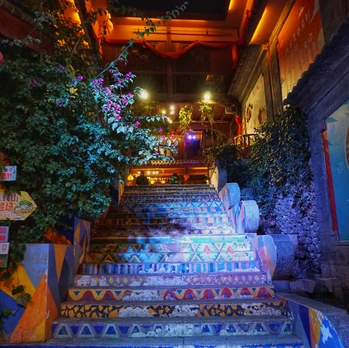
From Tiger Leaping Gorge, we passed through Haba Village, catching distant views of Haba Snow Mountain. As we entered Shangri-La, the architecture shifted to Tibetan style, and the atmosphere on the streets felt completely different.
Dukezong Ancient City & Songzanlin Monastery
Our hostel was in Dukezong Ancient City. Maybe because it was the off-season, the ancient city was nearly empty, with many shops closed. After checking in, we headed to Songzanlin Monastery—the largest Tibetan Buddhist monastery in Yunnan, often called the "Little Potala Palace."
Black birds circled above the monastery, giving it a sacred feel. When entering the monastery, remember to respect local customs: walk clockwise, don't make noise, and don't wear hats. You can take photos outside, but once inside, listen carefully to the guide's explanations.
After leaving the monastery, we walked around the lake, capturing panoramic views of the monastery. There were many small ducks on the lake, and we even saw free-range little black pigs—even the pigs in Shangri-La live such free lives.
Back in Dukezong Ancient City that evening, we had dinner near Moonlight Square, then climbed up Turtle Mountain Park to spin the giant prayer wheel. I pushed for ages but couldn't get it to move—it's truly enormous. It had snowed during the day, and it was so cold at night that I was shivering uncontrollably.
Day 6: Shangri-La → Lijiang | The Little Squirrels at Potatso National Park Threw Sunflower Seed Shells in My Face
Potatso National Park had recently reopened, and I was especially eager to visit. But unfortunately, only Shudu Lake was open; Bitahai Lake and Militang were still closed. In winter, Potatso looked particularly desolate. It was so cold that the lake had frozen over, and I was shivering all over.
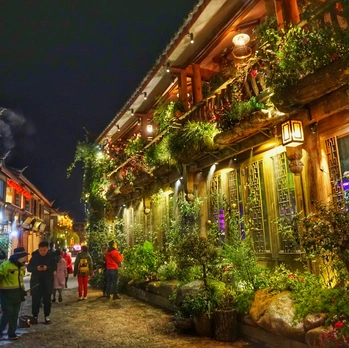
But the cutest thing here was the fearless little squirrels. I put a few sunflower seeds in my palm, and they came running over. After grabbing the seeds, they'd "whoosh" up a tree, crack open the shells, and then throw the empty shells down from the branches—right into my face. These ungrateful little creatures!
Although January isn't the most ideal time to travel here, and the scenery can't compare to peak season, the lack of crowds brought a certain peace and quiet.
Day 7: Lijiang | Shuhe Ancient Town & Mu Mansion, Finding Myself in Slow Living
The last two days were all about relaxation. We slept in, had a late breakfast-lunch, and headed to Shuhe Ancient Town.
Shuhe is more rustic than Dayan Ancient City. You can see patches of farmland and clear, flowing streams. Green Dragon Bridge is built from piled stone blocks, its weathered surface recording the marks of time. Nine-Ding Dragon Pool's water is so clear you can see the bottom, with fish and water plants full of life. I sat on a terrace, soaking up the sun, watching the plants sway underwater, wandering aimlessly—this kind of slow living is simply beautiful.
After returning from Shuhe, we visited Mu Mansion. Originally the palace of the Mu clan chieftains, it's now the Lijiang Museum. The architecture is grand and magnificent, modeled after the Forbidden City. Our guide, a lively young woman, gave such an engaging explanation that we learned a ton of stories. Mu Mansion sits against Lion Mountain, with a skybridge connecting to the Jade Garden at the back. But the back gate closed at 4:30 p.m., and we missed it—so we'd have to come back the next day.
Day 8: Lijiang → Shanghai | Saying Goodbye to Lijiang at the Top of Lion Mountain
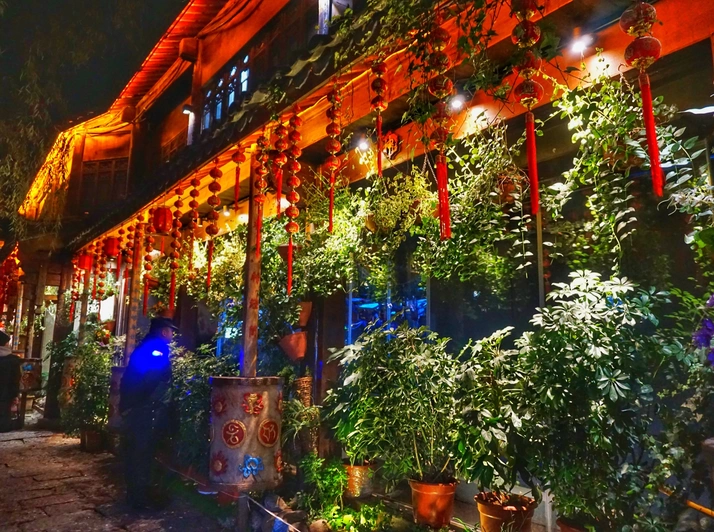
The final stop of our journey was Lion Mountain, to make up for yesterday's missed opportunity. At the summit sits the Ten-Thousand-Ancient-Tower. Climbing it offers a panoramic view of Lijiang: to the north, the magnificent Jade Dragon Snow Mountain; to the east, the ancient city with its little bridges and flowing water; to the west, the modern new city; and to the south, the pastoral scenery of Naxi villages. Standing at the top, I suddenly felt that although this trip was short, every regret had been made right.
Food Recommendations: Eating in Yunnan, My Culinary Travel Diary
Lijiang Ancient City:
Tiantianxian (天天鲜)
📍 47 Wangjiazhuang Lane, Wuyi Street
Rating: ⭐⭐⭐⭐⭐
Recommended by a local Lijiang guy who said he'd been eating here since childhood. The Old Lady's Mashed Potatoes (老奶洋芋) and Naxi Stir-Fried Beef (纳西小炒牛肉) are incredibly satisfying with rice. So good I wanted to lick the plate.Ama Smoked Pork Ribs (阿妈腊排骨)
📍 163 Xianghe Road
Rating: ⭐⭐⭐⭐⭐
A smoked pork rib pot with dipping sauce—absolutely perfect. I also tried the local specialty Water-Born Flower (水性杨花), which is crunchy with a unique texture.Dianchu Restaurant · Little Pot Naxi Cuisine (滇厨餐厅·小锅巴纳西美食)
📍 21 Middle Section, Yinyu Lane
Rating: ⭐⭐⭐⭐⭐
This place had zero disappointing dishes. Highly recommend the Signature Naxi Grilled Meat (招牌纳西烤肉) and Wild Mushroom & Ham Copper Pot Rice (野山菌火腿铜锅饭). The crispy rice crust is incredibly fragrant—I ate two bowls.Xiaolongkan Hot Pot (小龙坎老火锅)
📍 28 Shuangshi Section, Xinhua Street
Rating: ⭐⭐⭐⭐⭐
After returning from Lugu Lake, we were craving hot pot and happened to pass by Xiaolongkan. Hot pot is universal. Nothing a hot pot can't fix.
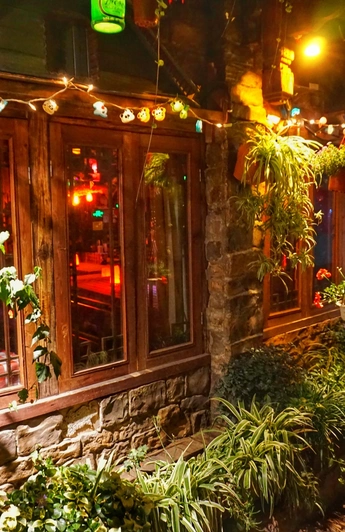
Jinqiaoyuan Chrysanthemum Crossing-the-Bridge Rice Noodles (金桥缘菊花过桥米线)
📍 Second Floor, East Side, Red Sun Square, Minzhu Road
Rating: ⭐⭐⭐⭐⭐
You can't visit Yunnan without trying crossing-the-bridge rice noodles. I ordered the "Bangyan" set meal. The ingredients were abundant, the broth was delicious, and it was fun slowly adding each ingredient into the soup.The Taste of Baojiang Tofu (舌尖上的包浆豆腐)
📍 Intersection of Xinyi Street and Jishan Lane
Rating: ⭐⭐⭐⭐⭐
The tofu is crispy on the outside and tender inside, with just the right level of spicy flavor. But it's very oily, so it gets a bit greasy after a few pieces.Ding Ding & Dang Dang (丁丁&当当)
📍 Intersection of Jubao Street and Qinglong Road, Shuhe Ancient Town
Rating: ⭐⭐⭐⭐⭐
Located near Green Dragon Bridge in Shuhe, this place has a first-floor terrace perfect for basking in the sun and daydreaming. I ordered the Fruit Yogurt Sundae and Chocolate Bread. The yogurt is slightly sweet, and you can choose your own toppings—very generous.
Lugu Lake:
Spring Stone Pot Fish House (泉水石锅鱼府)
📍 Hubin Road, Daluoshui Village
Rating: ⭐⭐⭐⭐
The fish was very fresh, but too many tiny bones made it a bit annoying to eat. The Mosuo rice cake (摩梭粑粑) was slightly sweet and quite tasty.
Shangri-La:
Tibetan Yak Meat Hot Pot (藏家牦牛肉火锅)
📍 2 Chigulang, Cangfang Community, Ancient City
Rating: ⭐⭐⭐⭐
We ordered the group-buy yak hot pot set, which came with plenty of side dishes. But at this altitude, the food takes forever to boil, and the dipping sauce had a bit of an odd flavor.
Practical Guide: Getting Around Yunnan
Pre-Departure Preparation
Temperature & Clothing:
Lijiang has a big temperature difference between day and night. Bring a heavy jacket or down coat. You can take it off when the sun is out at noon, but it's still cold in the shade. Shangri-La is even colder—dress warmly.
Sun Protection & Moisturizing:
Important things said three times: Sunscreen! Sunscreen! Sunscreen! Moisturize! Moisturize! Moisturize!
Lijiang's UV rays are brutal. I came back a shade darker, and my scalp got sunburned. Apply sunscreen frequently, and wear a hat, scarf, and gloves. Moisturizing is also crucial—even with daily sheet masks, my skin still felt dry.
Cash:
Alipay and WeChat Pay are widely accepted. You don't need much cash, but it's good to have some for emergencies.
Luggage:
The ancient city's streets are all cobblestones, making it difficult to drag suitcases. At the entrance, there are guys on small tricycles who can help transport your luggage. The price depends on distance—we paid about 30 RMB to have our two 24-inch suitcases delivered to the South Gate. For our trips to Lugu Lake and Shangri-La, we left our suitcases at the hostel and traveled light.
Altitude Sickness:
Lijiang is at a high altitude, and Shangri-La is over 3,000 meters. We barely felt any effects, but when climbing the snow mountain, know your limits. If altitude sickness gets severe, stop immediately.
Transportation Guide
Getting to Lijiang:
Direct flight from Shanghai to Lijiang. We booked a week in advance for about 1,500 RMB. You could also fly to Kunming and take the high-speed train to Lijiang, but that takes longer.
Lijiang to the Ancient City:
Taxi costs about 80 RMB. The airport bus goes to Blue Sky Hotel for about 20 RMB, then it's a 1-kilometer walk to the ancient city. Our hostel offered free airport pickup—if you're staying for a while, ask if they provide this service.
Lijiang to Lugu Lake:
The drive takes over 4 hours. We booked through Ctrip—a 7-seater van costing 90 RMB per person. On the way back, we took a bus from the main bus station.
Sightseeing Guide
Jade Dragon Snow Mountain + Blue Moon Valley:
Joining a day tour is the most convenient option. We booked a small group on Fliggy—8 people, including pickup/drop-off, down jacket, oxygen canisters, and lunch. Enter the scenic area at 9 a.m., return by 3 p.m. Winter has the thickest snow and the most beautiful views.
Lugu Lake:
Chartering a car to circle the lake takes about 5 hours and covers all the main attractions. The pig-trough boat ride, Grass Sea, Marriage Bridge, Lover's Beach, and Lige Peninsula are all worth visiting. If you have time, you can hike a section, but be careful.
Shangri-La:
Tiger Leaping Gorge, Songzanlin Monastery, and Potatso National Park are must-sees. Although Potatso is desolate in winter, it's uncrowded and peaceful, and you can see the adorable little squirrels.
Epilogue: Hope to Reunite with You in the Most Beautiful Season
On this trip, I saw snow mountains, lakes, ancient cities, and monasteries. I tasted rice noodles, smoked pork ribs, and yak hot pot. But what moved me most were the unexpected moments: hearing folk music in the ancient city's alleyways, being surrounded by seagulls on a boat at Lugu Lake, and having a little squirrel throw sunflower seed shells in my face in Shangri-La.
Some people say January isn't the best season to visit Yunnan. But I think every season has its unique beauty. In winter, Lijiang is uncrowded and peaceful. Lugu Lake's withered grass has a kind of desolate beauty. Shangri-La's snow makes the whole city feel quiet and sacred.
So don't wait for the perfect season. As long as you set out, it's the perfect time. I hope to reunite with you in the most beautiful season—in Lijiang, at Lugu Lake, in Shangri-La, or anywhere your heart desires.
You should also read:
Escaping Nanning, Falling Under Lijiang's Spell: Our Four-Person, Ten-Day Yunnan Dream
Escaping Nanning, Falling Under Lijiang's Spell: Our Four-Person, Ten-Day Yunnan Dream Before We Set Off: No Pain, No Obsession Have you ever had that impulse—suddenly tired of the office fluorescent lights, the crush of the subway, the endless parade of identical takeout boxes, and just…
Continue reading...
Cloud Travelogue · Dali of Wind, Flowers, Snow, and Moon: A Three-Day, Two-Night Journey of a Free Spirit
Cloud Travelogue · Dali of Wind, Flowers, Snow, and Moon: A Three-Day, Two-Night Journey of a Free Spirit I am a cultured female foodie with a touch of rogue charm. I slung on my backpack, took my lover's hand, and set off on a spontaneous…
Continue reading...
The Meaning of Travel – A Tengchong Story: A Journey of the Heart and Personal Growth
The Meaning of Travel – A Tengchong Story: A Journey of the Heart and Personal Growth Setting Out, Only to Return a Better Self Some say travel is nothing more than leaving a place you're tired of, only to go to a place where others…
Continue reading...