Lugu Lake in the Rain & Spring City Blooms: A Spontaneous Yunnan Journey
Lugu Lake in the Rain & Spring City Blooms: A Spontaneous Yunnan Journey
Some trips are destined to be spur-of-the-moment. When a friend tossed "How about Lijiang?" into the group chat, our flights and itinerary were settled within five minutes. I've been visiting Yunnan for over a decade, traveled to Dali three times, yet somehow always missed Lijiang. This time, I finally wouldn't.
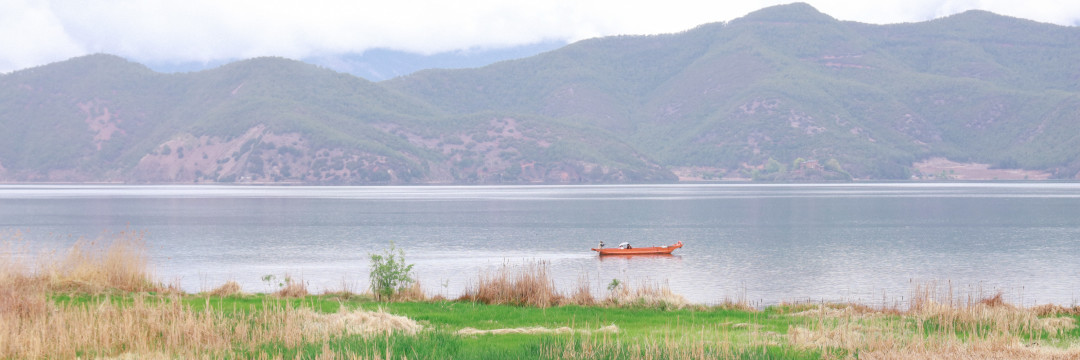
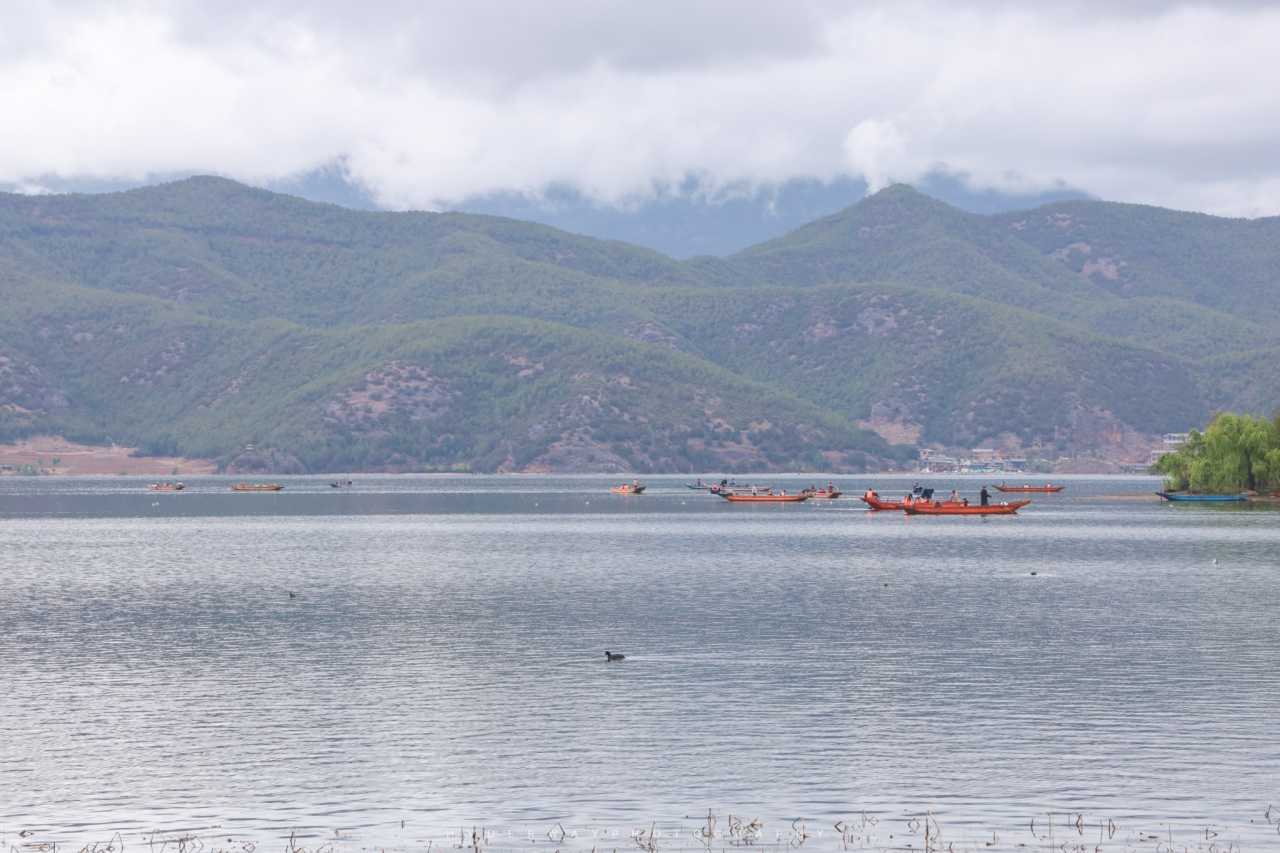
During the May Day holiday, much of China was shrouded in rain, but that unexpectedly gifted us a "no-man's-land" experience at Lugu Lake. The crowds were nowhere to be seen—unusual for a long holiday. The rain and mist stripped the lake of its deep blue clarity, but added a soft, ink-wash elegance. Anyway, it won't be the last time I visit, right?
Day 1: Crossing the Yunnan-Guizhou Plateau for a Floral Encounter
A "Takeout Adventure" on the High-Speed Train
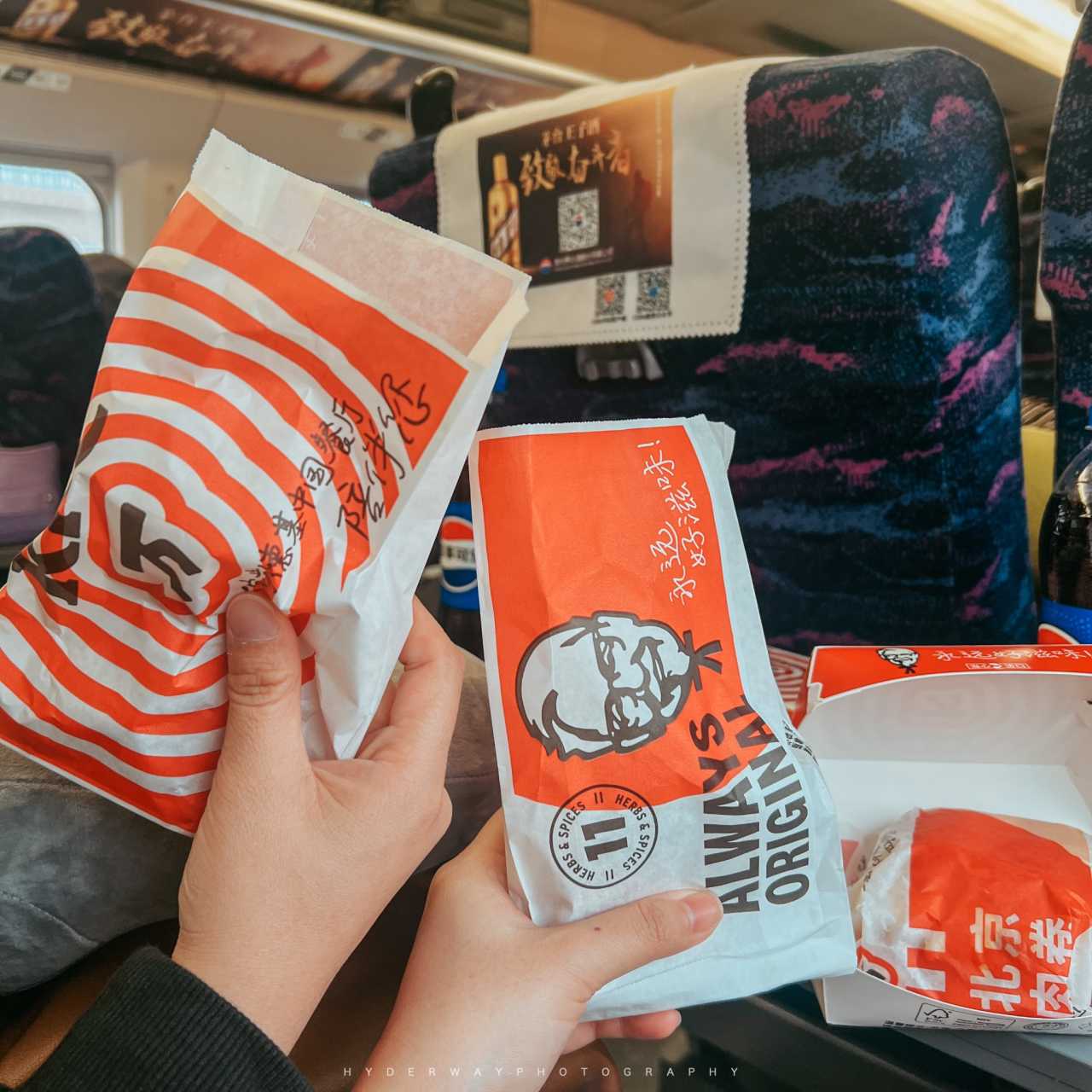
Strictly speaking, Lijiang isn't the most accessible destination. Departing from Nanning, you need to transfer through Kunming or Dali, making the journey nearly ten hours—essentially consuming the first day of the holiday. The silver lining? You can order takeout on the high-speed train. As we passed through Kunming South Station, a KFC meal for two arrived right on time. There's no snack trolley on this route; everything is ordered via QR code and delivered to your seat. It's a quirky feature of Yunnan's high-speed rail.
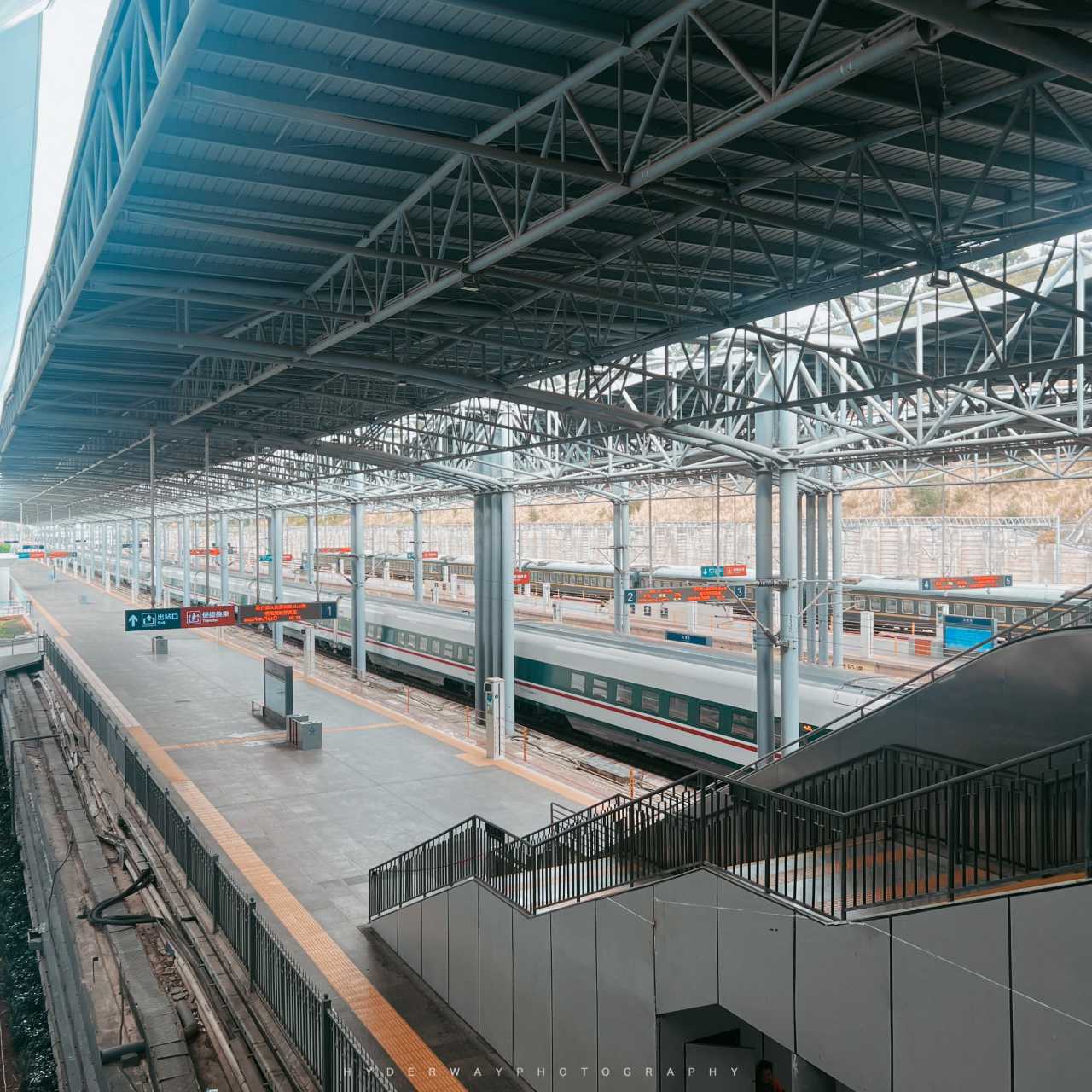
The train looks like an old-school green car but is actually a bullet train—the contrast is amusing.
First Impressions of the Old Town: A Night Surrounded by Flowers
We arrived in Lijiang in the evening and checked into a guesthouse just a five-minute walk from the ancient town. It offered both peace and convenience. After dropping off our bags, we headed straight to a restaurant recommended by a friend: 云春葵·云南边境家常菜 (Cloud Spring Sunflower: Yunnan Border Home Cooking). This place couldn't even be located on Mafengwo, but the food was stunning—the portions were so generous they seemed meant for four people.
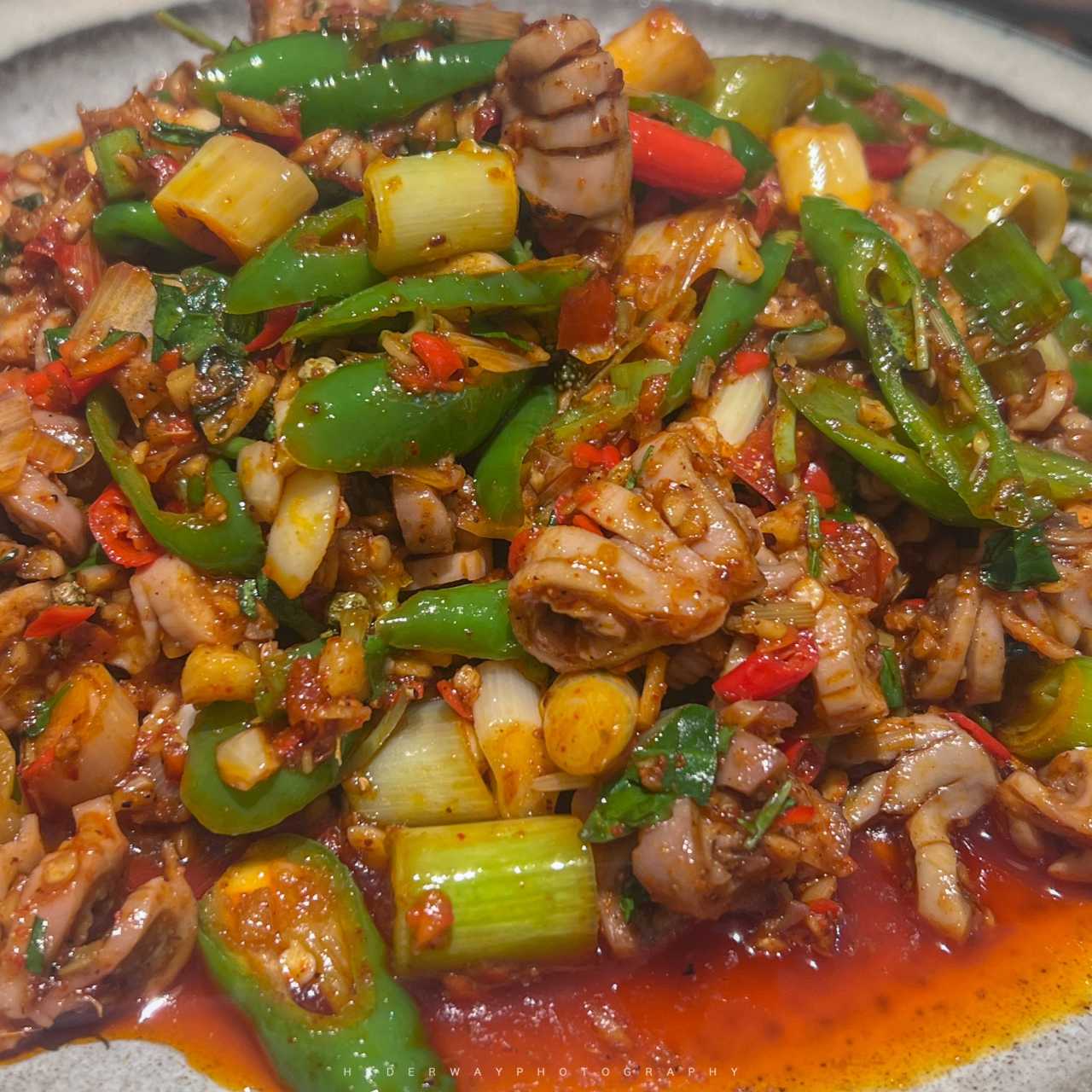
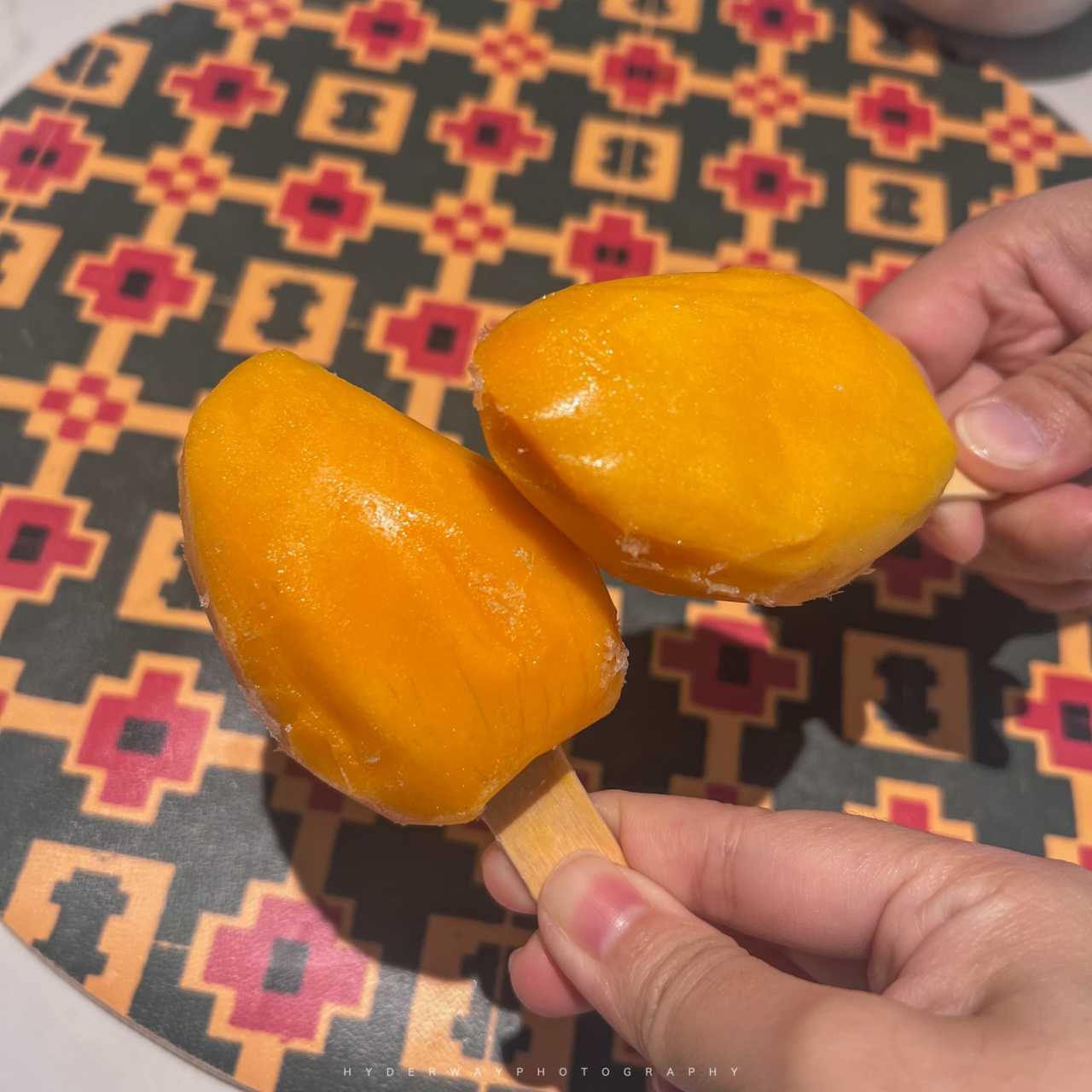
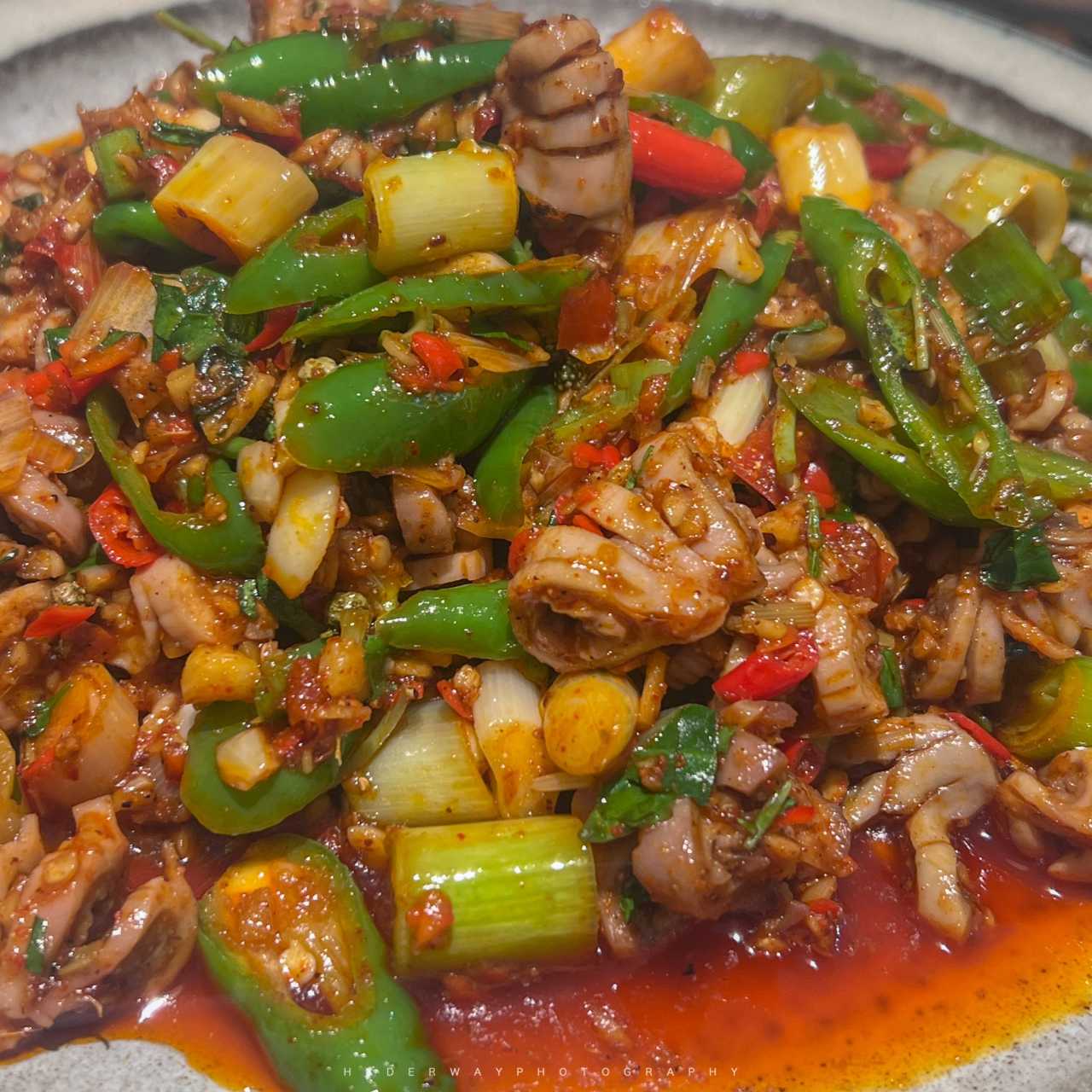
There was a popsicle made purely from frozen mango with no additives; classic oil-braised pork aorta (黄喉), incredibly savory and perfect with rice; wild tomatoes stir-fried with local greens—an unfamiliar taste at first, but one that quickly grew on me; and a soup of Pu'er sweet bamboo shoots, figs, and chicken broth—so sweet and fresh I wanted to lick the bowl clean.
After eating our fill, we strolled through the old town to digest. In May, Lijiang is overflowing with flowers, as if the entire ancient city is wrapped in blossoms.
Day 2: Lugu Lake in the Rain, with Rainbows and Sunset
The Old Town in the Morning Belongs to Early Birds
We set off for Lugu Lake at nine the next morning, but we were out searching for breakfast before eight. The old town was empty at that hour, with most shops still closed, yet wandering through it felt wonderfully peaceful. Yunnan truly is a "paradise zone"—succulents and flowers are everywhere, and even the roses growing untended by the roadside are lush and thriving.
The guesthouse owner recommended chicken shred rice noodles (鸡丝米线), which were generous with toppings and delicious. I was afraid of getting carsick, so I didn't finish them, but I could have easily slurped up every drop of the broth. We passed by Pigpen Coffee (猪圈咖啡), and the owner said they'd changed their opening time to 9:30. I thought we'd miss it, but we ended up having their coffee on our last day.
Ninglang Village: A Quiet Lakeside Haven
After arriving at Lugu Lake, we realized that hotel location really matters. The Ninglang Village (宁蒗村) we stayed in isn't the most popular choice, but it offers an excellent view of the lake. The hotel's basement level opens directly onto a walking trail—flower dock to the left, and a path leading to Puluo Village (普洛村) to the right.
Since we arrived early and our room wasn't ready yet, the staff upgraded us to the second floor for free—and it turned out that the second floor offered an even better view of the lake. The view from our window was like a painting; if the weather had cooperated, we could have stargazed at night.
The flowers and plants along the trail made us feel like we were in a European village. Ninglang isn't as commercially bustling as Daluoshui Village (大落水村), but it's peaceful and has plenty of places to eat and drink. There are many guesthouses along the way, as well as entire buildings sitting empty and available for rent. It rained the whole time we were there, but we went in and out several times, walking the area at least three full loops. Walking here is so comfortable—if only it hadn't rained, it would have been perfect.
Walking in the Rain: The Colors of Lugu Lake
The service at Ninglang's hotels is impressive—breakfast, afternoon tea, and a glass of warm milk before bed are all included. The staff girl's freshly cooked rice noodles were delicious, and there was an unlimited supply of eggs, sweet potatoes, soy milk, and congee.
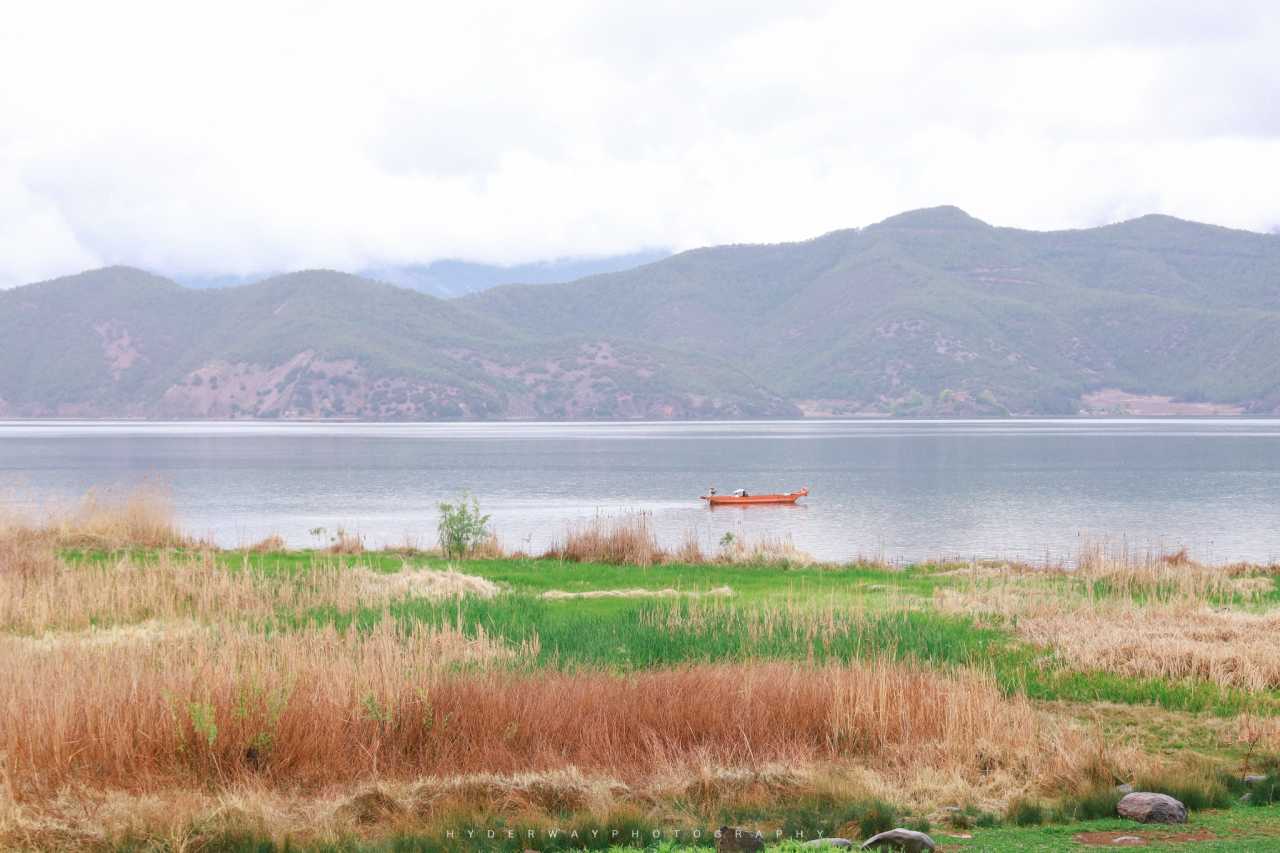
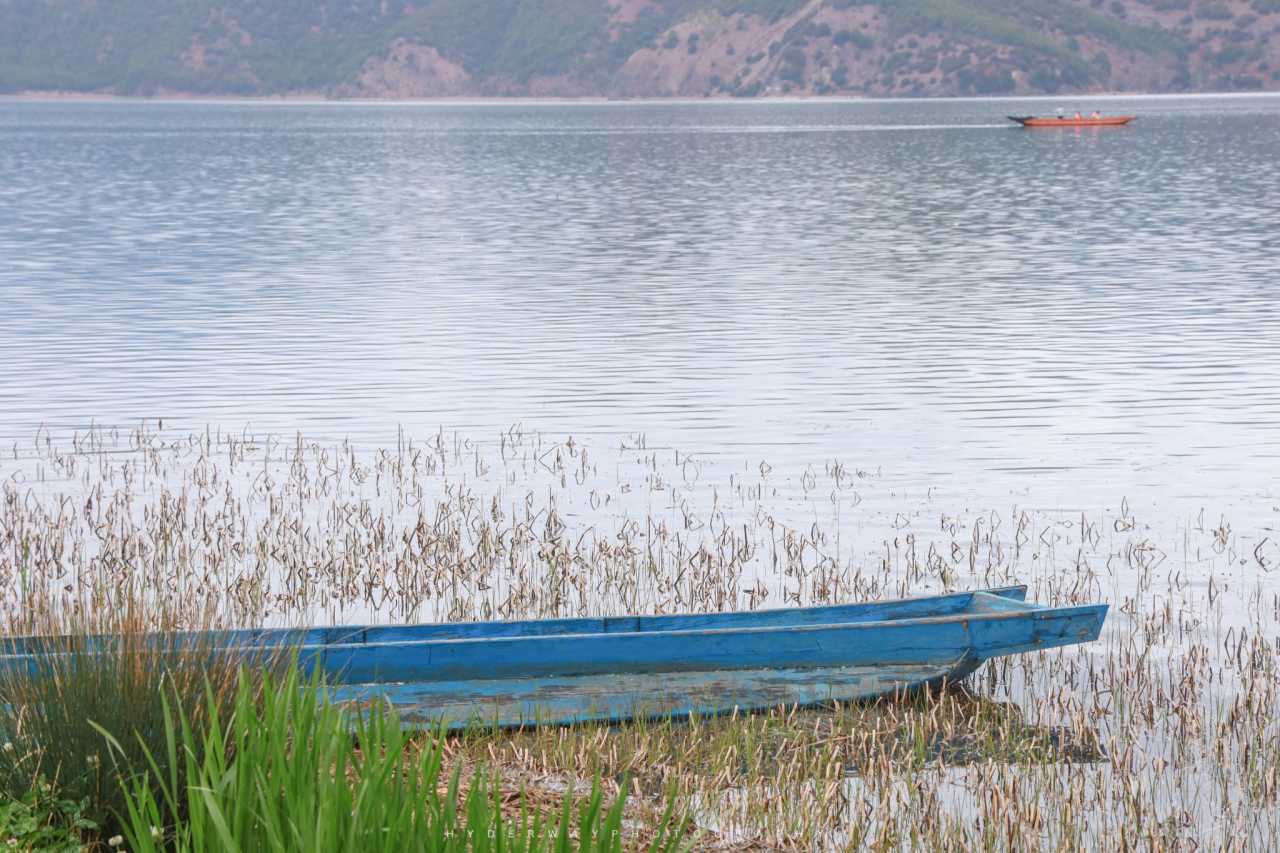
Lugu Lake in the rain felt like it was veiled in mist. But even under the overcast sky, the colors of spring and summer couldn't be hidden. The scenery along the trail seemed carefully curated, and before we knew it, we had walked all the way to Puluo Village. I can only imagine how stunning it must be on a clear day, but even the rain couldn't dull the vibrancy.
Rainbow and Sunset: A Generous Gift

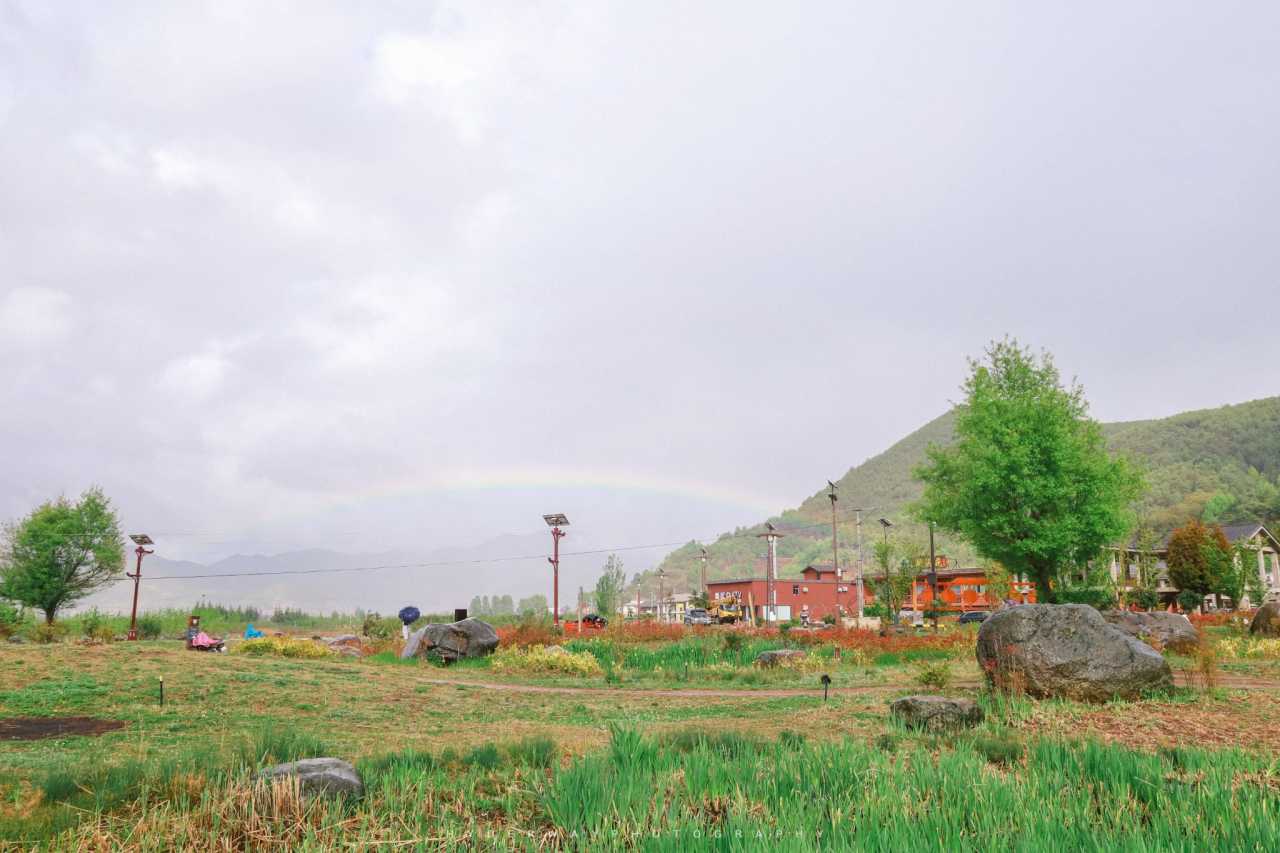
As the rain gradually cleared, the distant mountains came into sharper focus. The rainbow that appeared after the rain left us in awe—I had never seen one so close. We stood and watched for a long time. My camera battery was nearly dead, but I was lucky enough to capture one last shot.
On our way back to the hotel to change batteries, the sky had completely cleared. The distant mountains were crystal clear, the clouds had scattered, and the lake revealed its true blue. The sight was so breathtaking that it shook me to the core—it made our patient waiting worthwhile. In that moment of clear skies, who could understand? Once again, I felt the true meaning of travel: the joy of the present and the unknown.
Dinner: First Encounter with "See-Hand Green" Mushrooms
For dinner, we found a place called "Cloud Yard" (云朵小院). The hot pot was made with pure chicken and wild mushrooms for seasoning—nothing else added. We ordered a set meal for two, and to our surprise, they brought out "see-hand green" mushrooms (见手青). True to what I'd read online, the restaurant wouldn't give us chopsticks until the mushrooms were fully cooked—but there were spoons right there! Haha.
The mushrooms boiled for a full 20 minutes, not a second less. They were incredibly fresh, and the broth was so good we could have drunk several bowls. The "see-hand green" mushrooms had a crunchy texture, and there was also "milk ginger mushroom" (奶姜菌)—soft and sticky in texture. There were even a few varieties that could be eaten raw. The simple corn pancake, warm and fragrant, served as our staple.
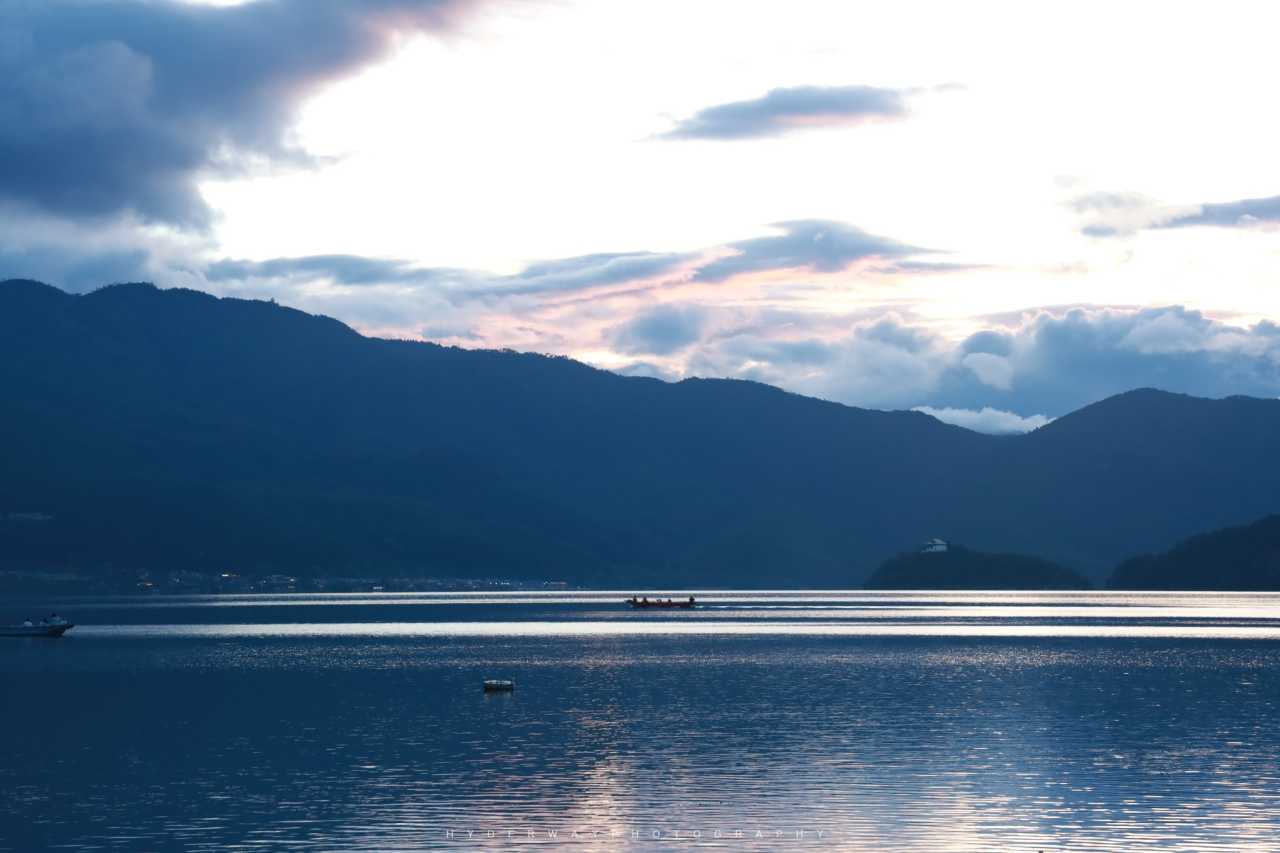
After dinner, we rushed to catch the sunset, but the clouds were still too thick. Even so, the faint light turned the lake into an oil painting. May at Lugu Lake is very cold, but nothing could stop us from taking in the scene. We sat by the lake and watched until it was completely dark.
Day 3: Hiking in the Rain Along the Lakeside Trail
Daluoshui Village in Heavy Rain
The rain was even heavier on the third day. Not wanting to waste time in the hotel, we decided to hitch a ride to Daluoshui Village (大落水村). It was pouring, and the village was nearly empty—there seemed to be more seagulls than people. Whenever someone fed them, a flock would swarm ashore.
With nowhere else to go, we found a café to sit in: 茶咖漫生活咖啡厅 (Tea & Coffee Slow Life Café), the most comfortable-looking place in Daluoshui. We ordered over a hundred yuan worth of drinks and snacks, just so we wouldn't feel bad about staying. The coffee was excellent! That pot of tea was called "Blue Lady" (蓝色妖姬), meant for one person, and they charged extra for extra cups—but the owner waived the fee.
Lakeside Hike: From Daluoshui to Sanjia Village
What does "travel spirit" mean? It's people like us, hiking even in pouring rain and near-freezing temperatures! Starting from Daluoshui Village, there's a walking boardwalk that stretches all the way to Sanjia Village (三家村), about 3 kilometers in total. It's a stunning, easy, and friendly hiking route—the rain doesn't spoil the experience, especially with no crowds!
Even the roses growing untended by the roadside were incredibly lush. Halfway through, looking back at Daluoshui Village in the distance, I realized how effortless this hike was. Near Sanjia Village, the scenery was beautiful—clearly designed and maintained by someone. My friend and I decided that next time, we'd stay in Sanjia Village.
The only downside: there's no pedestrian path between Sanjia Village and Lüjia Village (吕家村). The only road is busy with cars, making walking unsafe. Once the new road is completed, the current vehicle road should be converted into a lakeside hiking trail. I'm hoping that next time, we'll be able to walk this section.
I couldn't help comparing Lugu Lake to Dali's Erhai Lake. When I visited Erhai thirteen years ago, it was still a relatively pristine scenic area, perfectly integrated with the villages. Perhaps the development in recent years disrupted the daily lives of locals, which is why Erhai was fenced off. In comparison, Lugu Lake's ecology is better. I don't know what the future holds, but for now, I prefer the experience at Lugu Lake.
At the end of the hike, we waited for the hotel to send a driver to pick us up. While waiting, we encountered Lugu Lake in the blue hour—a moment so beautiful it took our breath away.
Day 4: Half a Day in the Spring City, Chasing Jacarandas
Back to the Old Town for Pigpen Coffee
On the day we returned from Lugu Lake to Kunming, leaving early meant we could stop by Pigpen Coffee for a drink. We stored our luggage at the guesthouse where we'd stayed the first night, giving us half a day to wander freely. Pigpen Coffee wasn't expensive—a rare find in this commercial, influencer-heavy area—and the coffee was excellent. Plus, you get a free pudding with a check-in photo.
The courtyard design was very thoughtful. And there she was—the pig boss, also named Xiaoliu (小六). Everywhere you looked, there were "tile cats" (瓦当猫), a Yunnan intangible cultural heritage item. They look like a cross between a cat and a tiger, meant to ward off evil and bring good fortune.
Half-Day in Kunming: A City of Artistic Pain
Before heading back to Nanning, we deliberately left half a day for Kunming—the best decision we made. I'm embarrassed to admit that Kunming had always been just a transit point for me, never a destination worth more than a day. Last time, I visited Dounan Flower Market, the Yunnan Weiqi Academy, and Dianchi Lake. This time, I wanted to see the famous Wenlin Street (文林街).
We set off at 8:30 sharp—proof that only travel can get you out of bed that early. Going to work? Waking up is pure torture.
Yunnan Normal University: Memories of Southwest Associated University
You can enter the university campus by scanning a QR code at the gate. As soon as we stepped inside, we both sighed: Can we go back to our college days? The old campus of Yunnan Normal University isn't very large, and it was quiet in the morning. The lawns, the big trees, the teaching buildings—everything felt so familiar.
I had long wanted to explore the story of Southwest Associated University (西南联大). Along the way, I kept recalling fragments from Zong Pu's Wild Gourd (《野葫芦引》), one of my favorite novels. It tells the story of Professor Meng Yue and his family fleeing south during the war, joining other educators to establish a university in the southwest and continue teaching.
Wenlin Street: Bookstores and Coffee
I would come back to Kunming just for that "Sunbathing" (晒太阳) specialty coffee! Every book in the bookstore had a handwritten recommendation attached, making it feel especially personal—they're genuinely serious about selling books! Don't let the title I, Man-Hater (《我,厌男》) fool you into labeling it as feminist propaganda. "Man-hating" isn't an emotion; it's a description of a phenomenon, a cautionary thought. I'm currently reading Letters from an Afghan Woman—you wouldn't believe that in the 21st century, there are still countries that treat women this way.
The only two jacaranda trees near Cuihu Lake (翠湖) were blooming proudly. I wondered if Lin Huiyin, who once lived by Cuihu Lake, often strolled here.
That low building on the street, seven steps up, eight steps down, Half-hidden, half-standing at the street corner, Roof tiles covering it, a crack in the window, Dyed red by the setting sun, like an ancient dream written down. — Lin Huiyin, Kunming Scene: The Little Building
In early May, the jacarandas weren't yet in full bloom, but many had already opened. We unexpectedly discovered Tiepi Lane (铁皮巷)—I hadn't known that it was Lin Huiyin's first stop when she arrived in Kunming. Kunming's cultural depth is truly profound. Wandering through its streets and alleys, you can feel the unique "artistic" atmosphere that belongs to this city. Honestly, I envy the people who live here.
Final Thoughts: Travel as a Life-Enhancing Experience
With that, our May Day mini-vacation came to an end. Travel is a life-enhancing experience. Everything I see and hear subtly influences me in countless ways. I will always keep moving.
Practical Tips Summary
- Transportation: To reach Lijiang, transfer through Kunming or Dali—total journey about 9–10 hours. The best way from Lijiang to Lugu Lake is by shared van; your guesthouse owner can arrange a driver.
- Accommodation: Ninglang Village (宁蒗村) is quiet with great lake views, ideal for hikers and stargazers. Daluoshui Village (大落水村) is commercially bustling but noisier.
- Lugu Lake Hiking Route: Daluoshui Village → Sanjia Village (三家村), about 3 km total. Stunning lake views, easy and friendly.
- Food Recommendations: Cloud Spring Sunflower (云春葵) in Lijiang, Cloud Yard (云朵小院) by Lugu Lake, Pigpen Coffee (猪圈咖啡) in Lijiang, Tea & Coffee Slow Life Café (茶咖漫生活) in Daluoshui Village.
- Season: The May Day period is rainy season—fewer crowds, but bring rain gear. Jacarandas aren't at peak bloom in early May.
- Cultural Experiences: Kunming's Wenlin Street (文林街), Yunnan Normal University (site of Southwest Associated University), and Tiepi Lane (铁皮巷, Lin Huiyin's former residence) are worth exploring.
Lugu Lake in the rainy season may lack the deep blue clarity of a sunny day, but it gains a soft, ink-wash elegance. Shrouded in mist and drizzle, she remains beautiful in her own diverse, gentle way. Anyway, I won't be coming just once, right?
You should also read:

Cloud Travelogue · Dali of Wind, Flowers, Snow, and Moon: A Three-Day, Two-Night Journey of a Free Spirit
Cloud Travelogue · Dali of Wind, Flowers, Snow, and Moon: A Three-Day, Two-Night Journey of a Free Spirit I am a cultured female foodie with a touch of rogue charm. I slung on my backpack, took my lover's hand, and set off on a spontaneous…
Continue reading...
The Meaning of Travel – A Tengchong Story: A Journey of the Heart and Personal Growth
The Meaning of Travel – A Tengchong Story: A Journey of the Heart and Personal Growth Setting Out, Only to Return a Better Self Some say travel is nothing more than leaving a place you're tired of, only to go to a place where others…
Continue reading...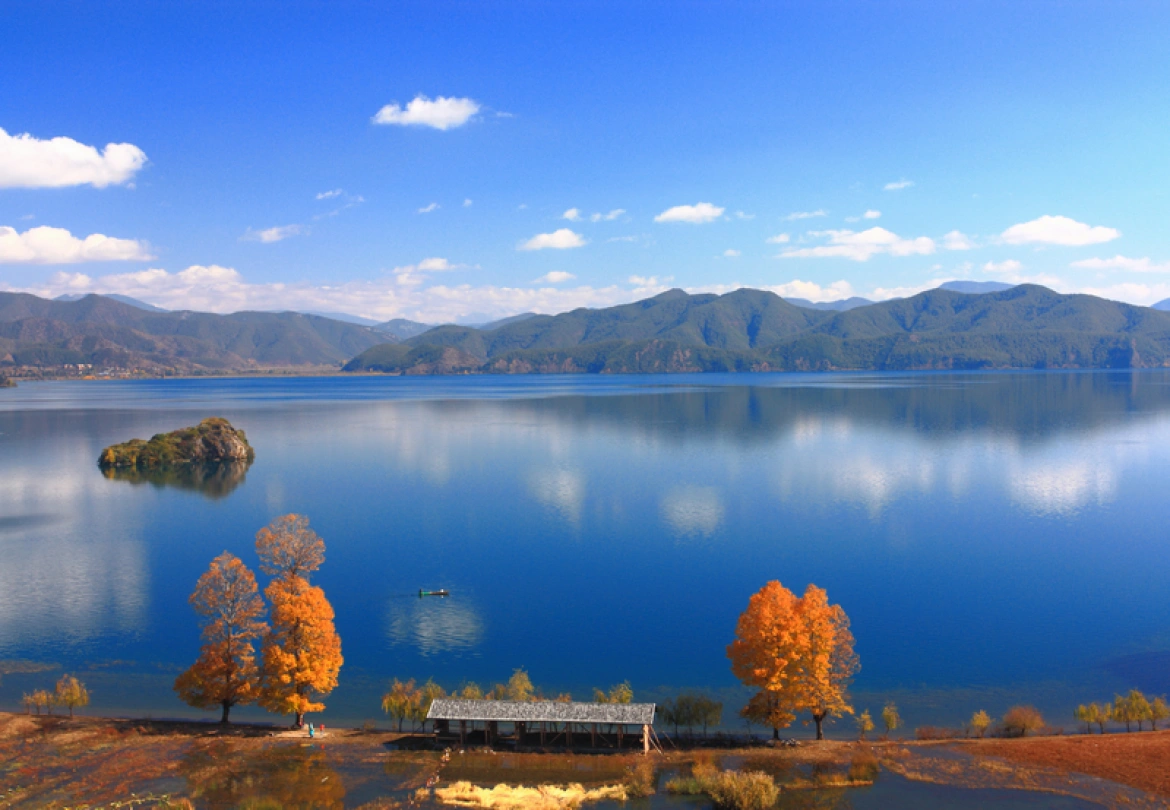
A Spiritual Journey to Lugu Lake in Lijiang: Experiencing the Legend of the Kingdom of Women! (Reproduction and Hotlinking Prohibited)
A Spiritual Journey to Lugu Lake in Lijiang: Experiencing the Legend of the Kingdom of Women! (Reproduction and Hotlinking Prohibited) Off-road自驾, food, hotel and民宿 reviews, Featured Traveler, Tank 300 owner, 200,000 km of self-driving experience. WeChat: y01294987 Ninglang Yi Autonomous County 2010.11.08 · 7 days…
Continue reading...