March in Luoping: Encountering Yunnan's First Glimpse of Spring Amid Golden Flower Seas
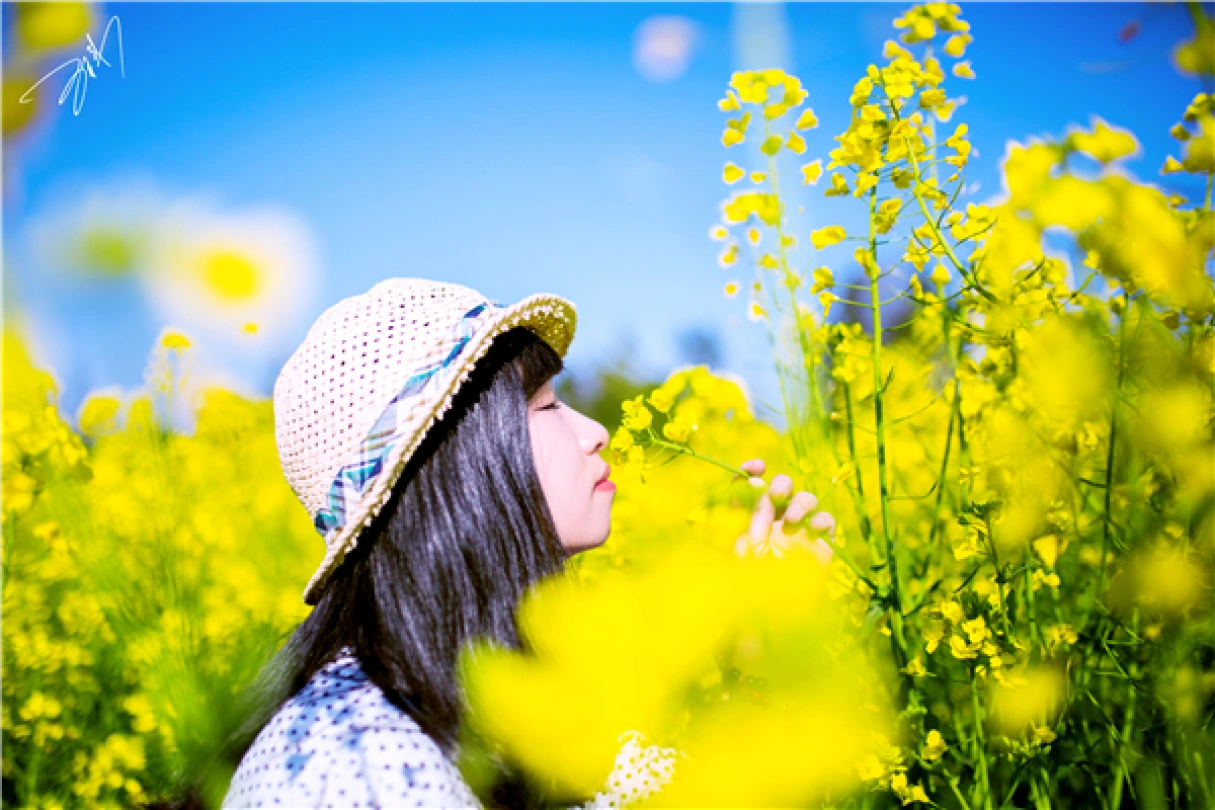
March in Luoping: Encountering Yunnan's First Glimpse of Spring Amid Golden Flower Seas
If you happen to be heading to Yunnan, then please save March for me. Not for the ancient lantern-lit streets of Lijiang, nor for the romantic breeze and moonlight of Dali—but for Luoping. That golden terraced landscape, kissed by sunlight, is waiting in an almost extravagant way for every soul yearning to escape the noise.
Why Luoping? A "Conspiracy" of Spring
While the highlands of Western Sichuan still slumber under a blanket of snow, Yunnan has quietly lifted the curtain on spring. The rapeseed flowers of Luoping are the first heralds of this seasonal shift. Some might say, "Sichuan has rapeseed flowers too—just wait another month. Why travel so far?" But the meaning of travel has never been merely about seeing flowers. It's a conversation with yourself, a ritual of emptying your mind beneath blue skies and white clouds, and the awe of standing on high ground overlooking a sea of blossoms, embraced by nature.
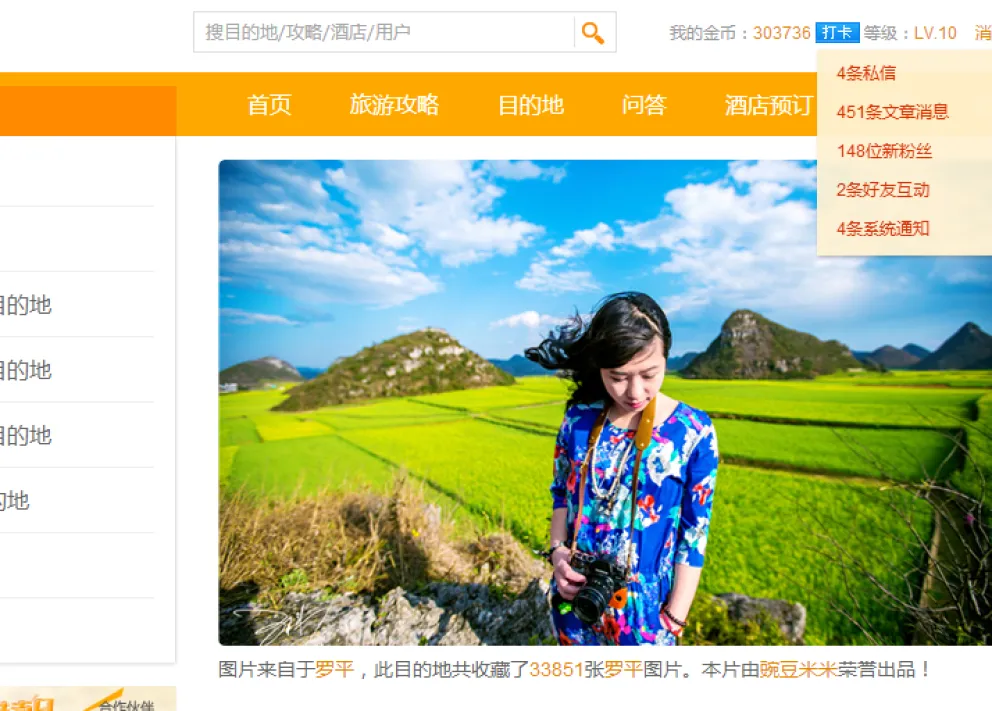
Luoping's beauty lies in its geographical advantage. Here, not only are there layered terraced fields of flowers, but countless small hills form natural viewing platforms. Standing atop one, you can take in the entire golden expanse at a glance, while the azure sky above serves as a backdrop no filter can replicate. This is Yunnan's unique gift.
Pre-Trip Preparation: Travel Light, Chase the Light
Gear Checklist: Less Is More
I brought a Canon 5D Mark III body, paired with a 16-35mm f/2.8 and a Sigma 35mm f/1.4 lens, all packed in a single shoulder camera bag. No change of clothes. Four days isn't long, and traveling light means I can whip out my camera anytime to capture fleeting moments. Without a telephoto lens, my perspective leans toward wide landscapes—and that's exactly what Luoping does best.
Itinerary Overview: A Golden Four-Day, Three-Night Route
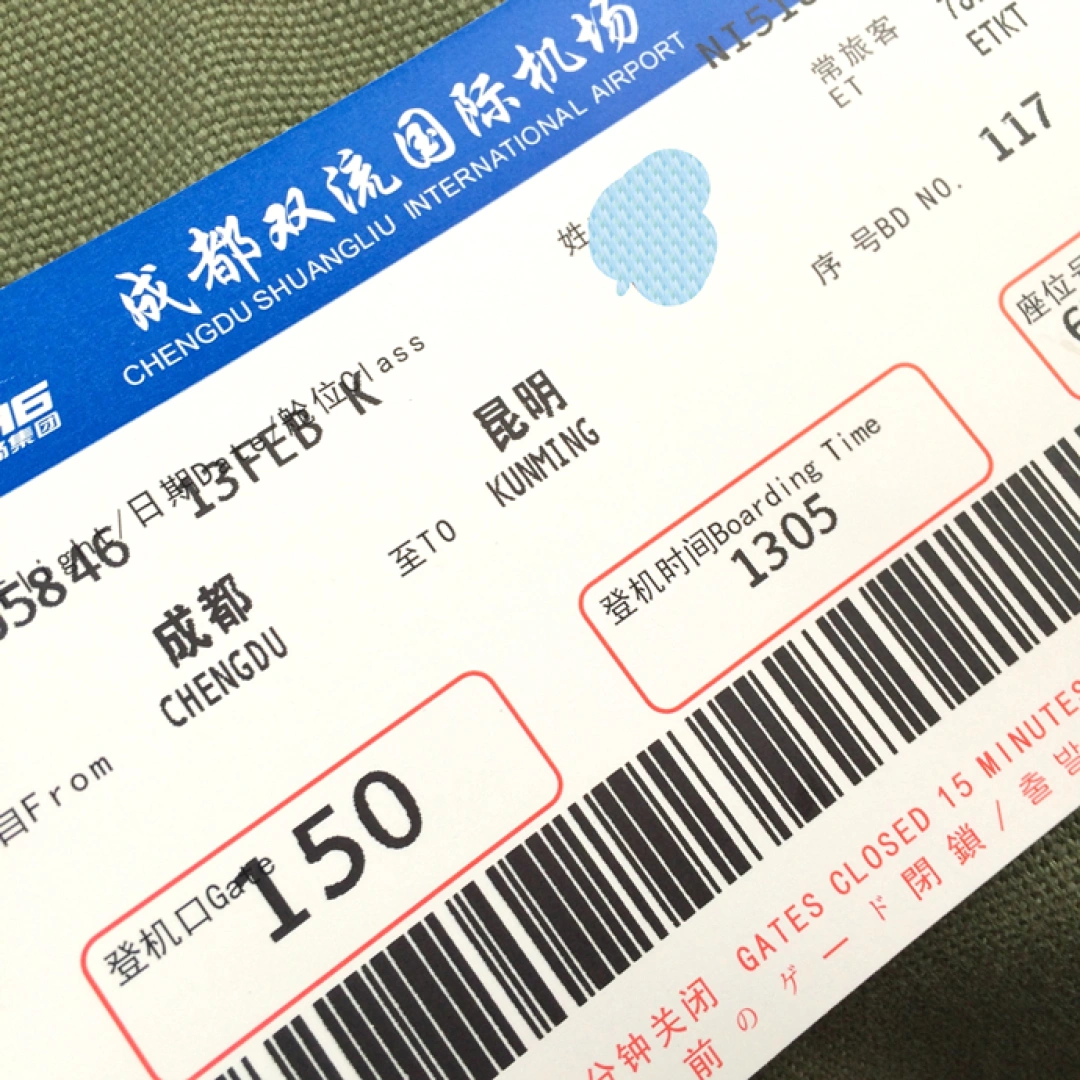
- Day 1: Chengdu → Kunming (direct flight) → Luoping (train), stay in Luoping
- Day 2: Luoping county → Jiulong Waterfall Cluster → Golden Rooster Peak (Jinfeng Peak), stay in Luoping
- Day 3: Luoping county → Snail Field (Luosi Tian) → Dashuijing Township, stay in Luoping
- Day 4: Luoping → Kunming → Dianchi Lake → Chengdu (overnight train, arriving next day)
Day 1: From Chengdu to Luoping—A Visual Feast Across the Clouds

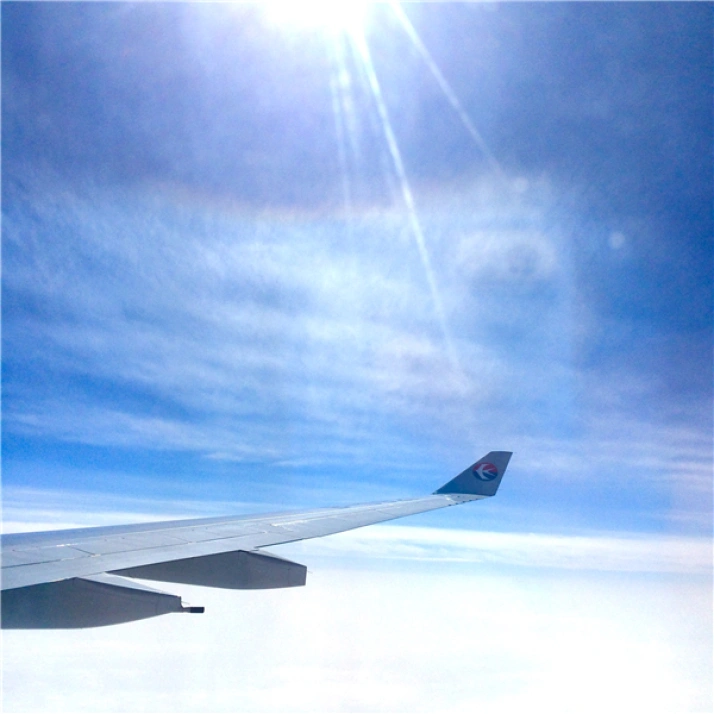
At 1:35 PM, the China Eastern Airlines flight took off on time. With Spring Festival approaching, airfares were climbing. The original ticket price of 700 RMB was reduced by 80 RMB via a first-time discount on the Flight Manager app, so I only paid 600 RMB. Sitting by the window, I instinctively reached for my phone—but this time, I regretted it.
As the plane passed over Dongchuan, I witnessed the famous red land with my own eyes. No clouds obstructed the view; the earth below looked like a giant oil painting, woven with reds, greens, and yellows—breathtakingly beautiful. Unfortunately, my phone battery was dead, so I could only record the moment with my eyes.
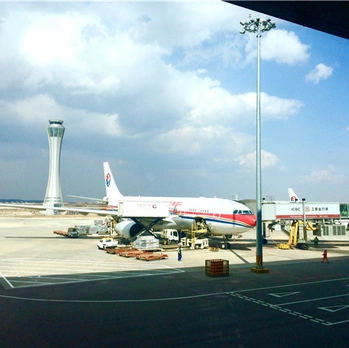
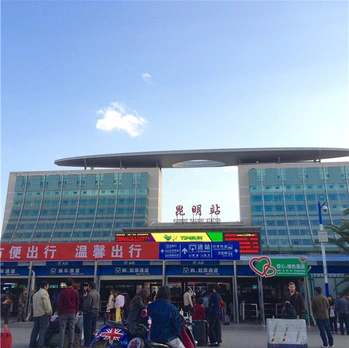
Arriving at Kunming Changshui Airport under a clear, boundless sky, I took a bus directly to Kunming Railway Station—an hour's drive. The atmosphere of Spring Festival travel rush was already palpable, but with proper timing, everything went smoothly. Three hours later, the train pulled into Luoping. Taxis don't use meters here; the ride from the station to town cost just 10 RMB and took only a few minutes.
Day 2: Jiulong Waterfall and Golden Rooster Peak—A Symphony of Light and Water
Accommodation Recommendation: The Curious Stone Theme Inn
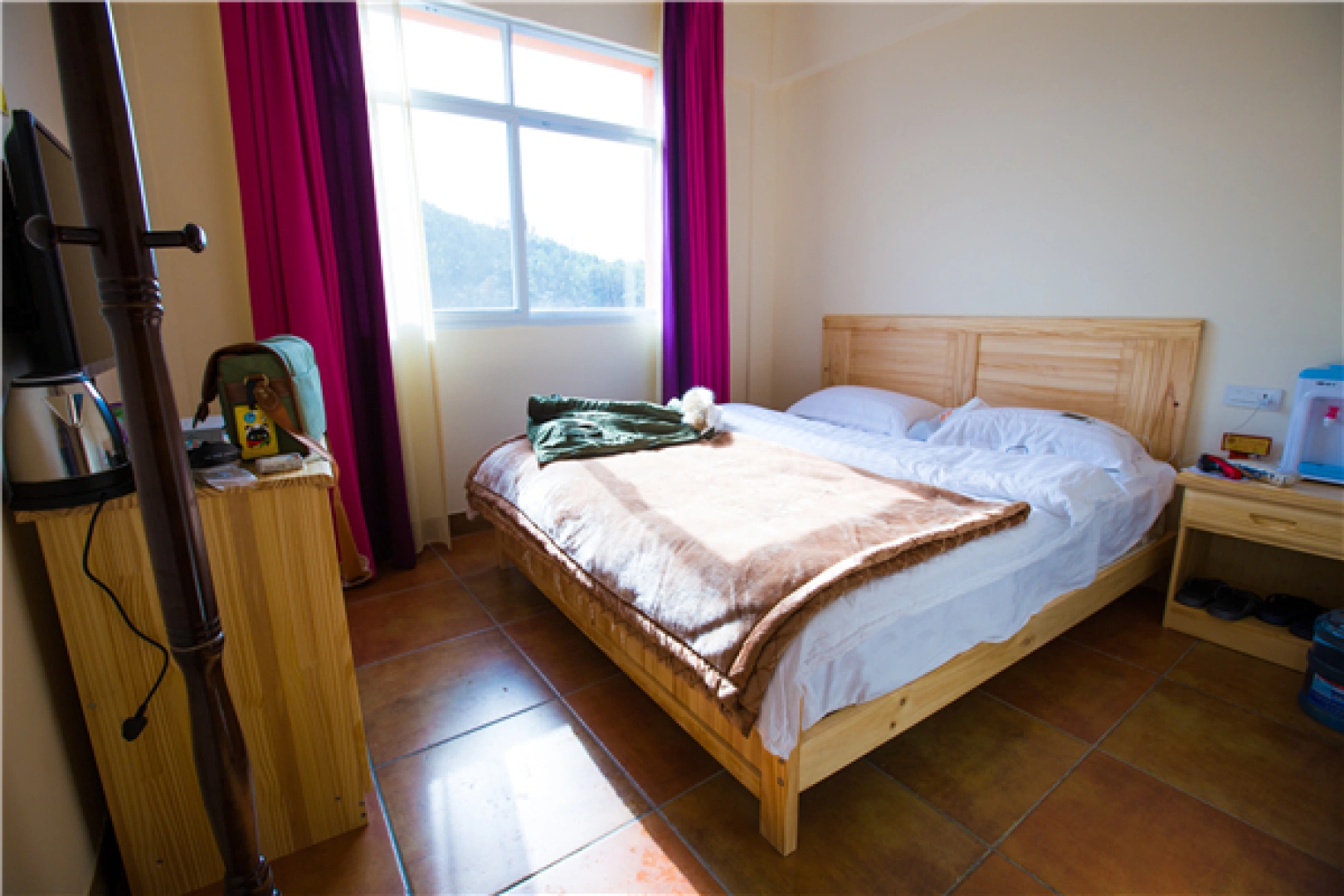
I switched to a place called the "Curious Stone Theme Inn," newly renovated, with a standard room costing just 88 RMB. The room was small but clean and quiet. The owner said that by March, during peak season, such a room would go for around 300 RMB. So, traveling off-peak not only saves money but also offers a more peaceful experience.
Jiulong Waterfall Cluster: A Leisurely Descent from Top to Bottom
After lunch, I hired a taxi for half a day at 260 RMB. The Jiulong Waterfall has two entrances: one at the top, leading downhill, and one at the bottom, requiring an uphill climb. I strongly recommend the top entrance—it's all downhill, saving your energy. The driver dropped us at the upper gate and then drove around to wait for us at the bottom, perfectly solving the return climb.
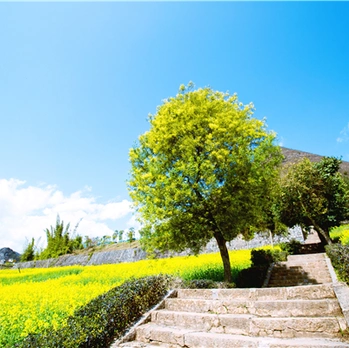
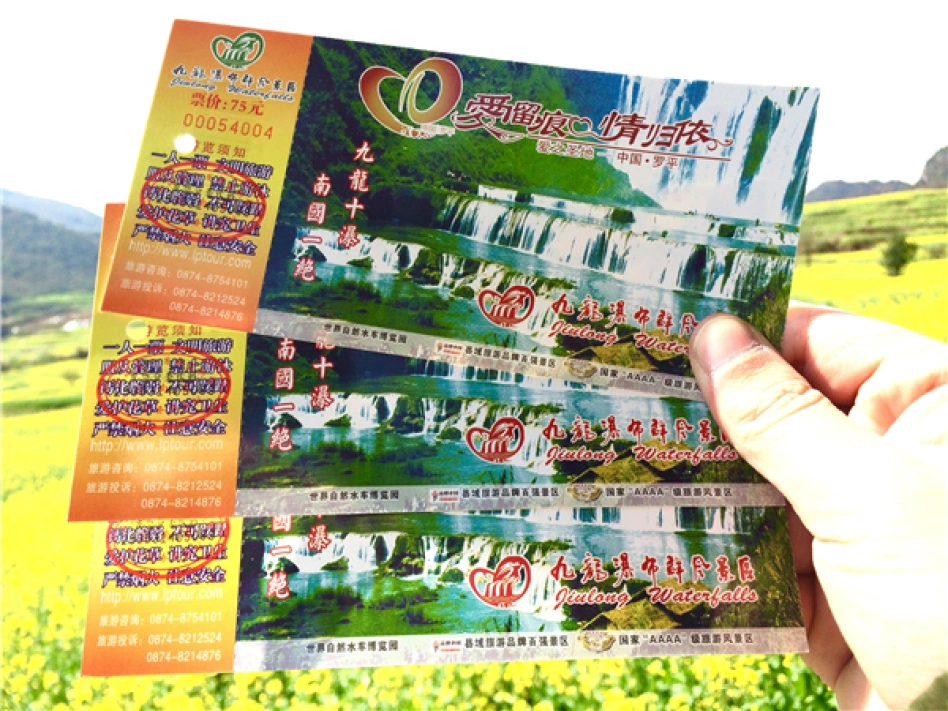
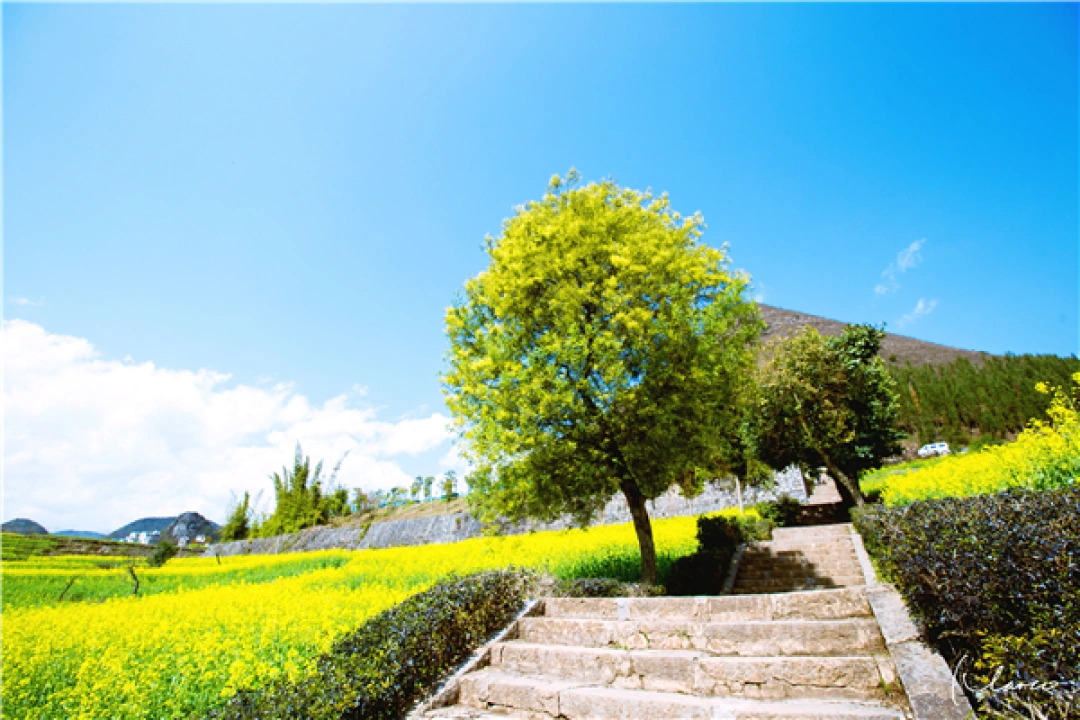
The entrance fee was 75 RMB (rising to 95 RMB after March 10th), but on a good day, it's worth every penny. Inside the park, a small tree stood by the entrance, swaying in the wind. The rapeseed flowers were just beginning to bloom in late February; by March, the hillsides should be a sea of yellow.
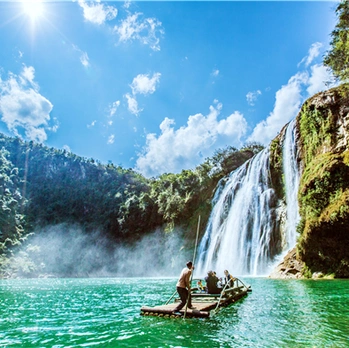
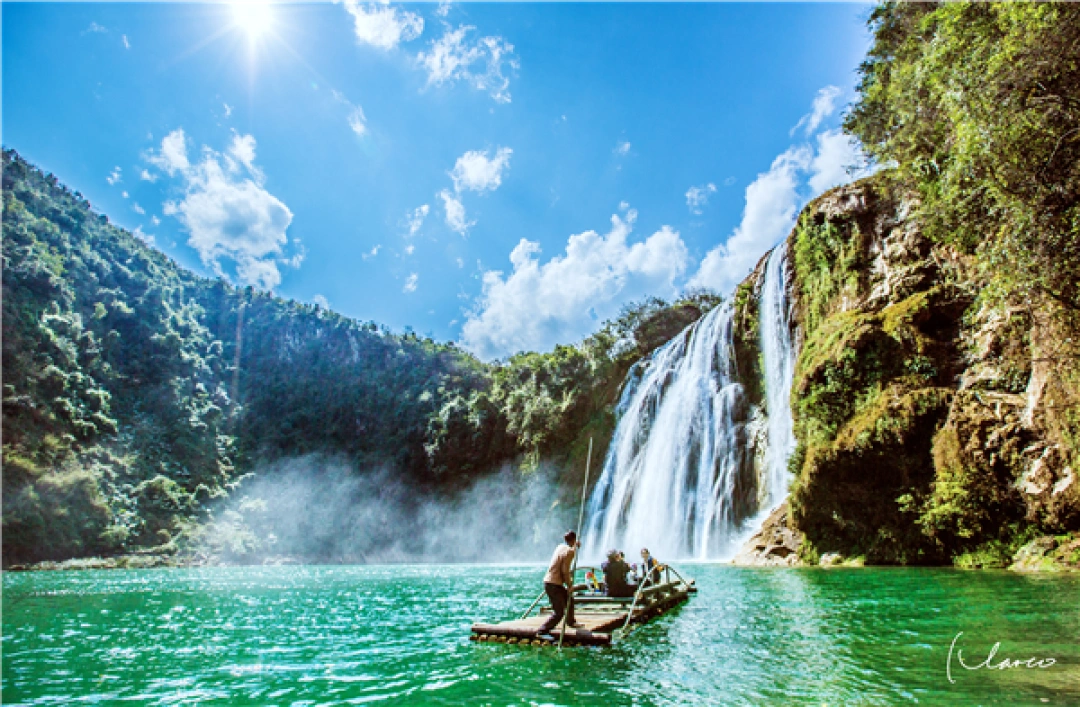
The sunlight was incredibly generous! With the ultra-wide-angle lens, the exaggerated leg proportions in photos were hilarious. As we reached the base of the waterfall, tourists passed by on a boat, and I snapped a few shots. For a moment, I felt like I was in Yunnan's version of Jiuzhaigou—find the right angle, and beauty is everywhere.
The sun started playing tricks—alternating between cloudy and clear, then even raining while the sun shone. But within five minutes, the clouds dispersed, as if nothing had happened. A few people were posing in traditional ethnic costumes, and there weren't many tourists—just how I like it.
Exploring the Jiulong Waterfall took about two hours. We exited the park at 4 PM and headed to Golden Rooster Peak. The beauty of independent travel is the unhurried pace.
Golden Rooster Peak: A Free Natural Viewing Platform
Half an hour later, we arrived at Golden Rooster Village (Jinfeng Village). On the left side of the road stretched vast fields of rapeseed flowers, dotted with countless small hills in the distance—this was Golden Rooster Peak, a natural scenic area with no entrance fee. Locals set up stalls by the road selling snacks and honey, though the authenticity of the honey was anyone's guess.
Before climbing the first small hill, we encountered many bees along the path. As long as you don't disturb them, they won't bother you. Standing at the summit, the view opened up in all directions, and the wind was fierce—hair flying wildly, the perfect definition of "windblown chaos."
"You're photographing the scenery, and you are the scenery," I thought. My friend's mom was a natural at striking poses, and we took turns snapping photos of each other. As the sun set, I captured a silhouette shot, ending the day at a leisurely pace.
In the evening, we took the taxi driver with us to try a local specialty—pickled cabbage pork knuckle hotpot (suan cai zhu jiao huo guo). Two pounds of pork knuckle for four people came to less than 150 RMB. Luoping's cost of living is truly wallet-friendly.
Day 3: Snail Field and the Ten Thousand Mountains—Unexpected Delights
Snail Field (Luosi Tian): A Verdant Terraced Wonder
Snail Field is located in Luoping's Niujie Village, about a 20-minute drive away. From the bus station, you can take a minivan for just a few RMB per person, with return trips available until around 6 or 7 PM. But if you're not shooting portraits, half an hour is enough—you just look down from the roadside, which serves as a viewing platform.
Snail Field sits between two mountains at a higher altitude, where temperatures are lower. We arrived early, so the view was dominated by green. Without a telephoto lens, I descended halfway down the hillside to shoot, gaining a broader view without branches blocking the frame. For safety, don't venture too far—I only went about a third of the way down, which was plenty.
The Ten Thousand Mountains (Shiwan Dashan): An Accidental "Yellow Sweep"
Around 2 PM, the minivan driver persuaded us to visit the "Ten Thousand Mountains," claiming it was even more beautiful than Snail Field. We pooled with another couple to hire the van, paying 100 RMB for three people—a reasonable deal. After returning to town for a meal, we set off.
The scenery unfolded along both sides of the road. When we reached Dashuijing Township, we turned onto an uphill path to the left of the village entrance—an unplanned decision that brought unexpected rewards.
"We're here for a yellow sweep!" (sao huang, a playful term for photographing yellow flowers). And indeed, it was a golden ocean. Narrow paths ran through the fields; as long as you didn't trample the crops, you could slowly walk to the highest point. In my lens, everything became a scene. My friend's mom was still a master of posing, while I stuck to my subtle, minimalist style.
Day 4: Seagulls at Dianchi Lake—A Perfect Ending
I booked the train tickets in advance. Early in the morning, I took the train from Luoping back to Kunming, arriving around noon. During the Spring Festival rush, it was a stroke of luck to snag a ticket back to Chengdu—flights were simply too expensive.
Since my overnight train didn't leave until evening, I had half a day to visit Dianchi Lake. Kunming Railway Station has direct buses to the scenic area. The weather wasn't great, but the seagulls at Dianchi Lake were fearless, circling in flocks overhead. I wandered around casually, took a few photos, and that wrapped up the trip.
Final Thoughts: Luoping's Sunshine Awaits You

In March, Luoping basks in perfect sunshine, and the rapeseed flowers are at their yellowest. This trip gave me more than just photos—it gifted me a moment of dialogue with nature. If you too want to empty your mind this spring, consider adding Luoping to your plans. Keep these key points in mind:
- Travel off-peak: Before the Spring Festival or before mid-March, accommodation is cheap and crowds are thin.
- Pack light: A camera bag with two lenses is enough to capture all the beauty.
- Hiring a taxi is cost-effective: Half a day for 260 RMB, and the driver can take you to lesser-known spots.
- Eat local in Luoping: The pickled cabbage pork knuckle hotpot (suan cai zhu jiao huo guo) costs less than 40 RMB per person—absolutely worth trying.
Finally, let me leave you with this: Travel, for me, is simple—sunshine, happiness, relaxation, beautiful photos, and the indescribable joy behind those images.
March in Luoping. The sunshine is perfect. It's waiting for you to come and soak it in.
You should also read:
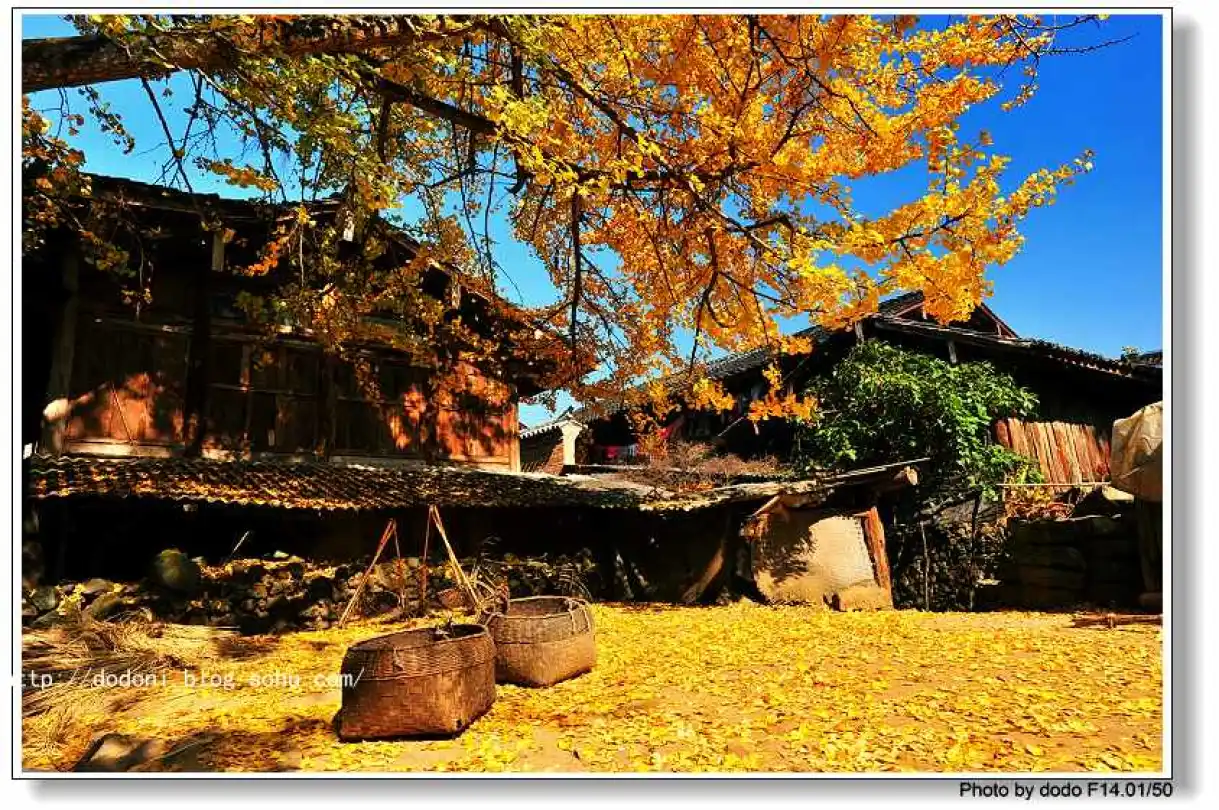
Golden Autumn: A Poetic Tapestry of Light and Shadow in Tengchong's Ginkgo Village
Golden Autumn: A Poetic Tapestry of Light and Shadow in Tengchong's Ginkgo Village A Belated Autumn Rendezvous Everyone harbors a dream about autumn somewhere in their heart. For me, that dream once belonged to Jiuzhaigou—that palette of colors hailed by the world as a "fairy-tale…
Continue reading...
Solo in Yunnan: A Wanderer’s Guide to the Land of Eternal Spring
Solo in Yunnan: A Wanderer’s Guide to the Land of Eternal Spring There’s something magical about traveling alone. No compromises, no schedules to keep, no one to please but yourself. I’ve been on the road for nearly three months now, and not once have I…
Continue reading...
Cloud Travelogue · Dali of Wind, Flowers, Snow, and Moon: A Three-Day, Two-Night Journey of a Free Spirit
Cloud Travelogue · Dali of Wind, Flowers, Snow, and Moon: A Three-Day, Two-Night Journey of a Free Spirit I am a cultured female foodie with a touch of rogue charm. I slung on my backpack, took my lover's hand, and set off on a spontaneous…
Continue reading...