Meditations on Two Wheels: A 65-Year-Old Cyclist's Journey Through the G219 Guangxi-Yunnan Section
Meditations on Two Wheels: A 65-Year-Old Cyclist's Journey Through the G219 Guangxi-Yunnan Section
Introduction: When Cycling Becomes a Calling
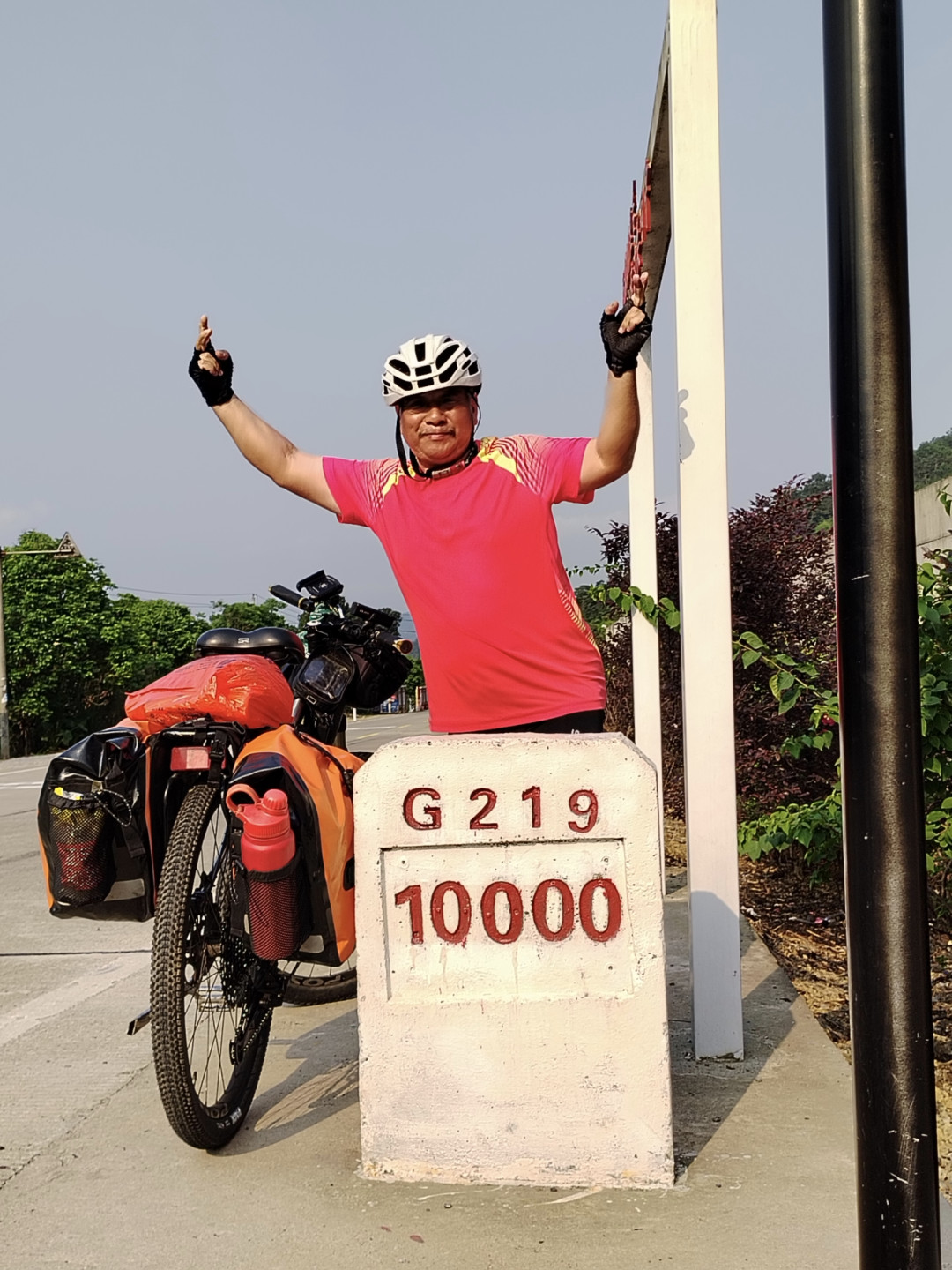
In April 2026, while most people were still lamenting the drizzling rain of Qingming Festival, I had already packed my bags, pushed out my steel-frame mountain bike that had accompanied me across countless mountains and rivers, and embarked on the new G219 Guangxi-Yunnan section. From Dongxing to Tengchong, over 3,000 kilometers along the border, a 30-day cycling plan—this was not merely a trip, but a dialogue with time, with the body, and with the will.
I am 65 years old. Over the past eight years, I have cycled into Tibet five times, conquered the treacherous Bingchacha route, and crossed the desolate Xinjiang-Tibet Highway. But this time, I had to admit: aging was quietly eroding my physical capabilities. My cycling speed had dropped from the former 15 km/h to 11-12 km/h. When climbing steep, long slopes, my knees began to stiffen. My endurance and speed were no longer what they once were. Yet it was precisely this "inability to keep up" that gave me a whole new perspective on cycling.
Why Choose the G219 Guangxi-Yunnan Section?
An Underestimated Road of Challenge
G219, China's longest national highway, winds from Altay in Xinjiang all the way to Dongxing in Guangxi. The Guangxi-Yunnan section, in particular, is both the most temperate and the most treacherous part of this great dragon. It cuts through the heart of the Ten Thousand Great Mountains, meanders along the China-Vietnam border, and weaves together karst landscapes with tropical rainforests. The roads are steep, the slopes numerous, and villages few and far between.
In 2020, I set out from Dali, passed through Liuku and Bingzhongluo, and completed the epic Bingchacha-Xinjiang-Tibet route. I was 59 then, full of vigor and ambition. Now, I wanted to finish the Dongxing–Jinghong–Ruili–Tengchong–Liuku stretch of G219, to bring this long cycling journey to a fitting close.
Climate: Choose the Right Time, and Half the Battle Is Won
Based on years of cycling experience, the best times to ride the G219 Guangxi-Yunnan section are February–March and November–December. April and October are too hot and can easily lead to heatstroke. I chose to set out in April this time, partly due to the time constraints of Qingming tomb-sweeping. It turned out to be a significant mistake—the high temperatures and humidity of Guangxi's border region in April made cycling exceptionally difficult.
Pre-Trip Preparations: Every Detail Is a Safety Guarantee
Gear Checklist: Less Is More

Before departing, I replaced both the front and rear tires and inner tubes on my beloved bike. The original tires had already logged over 10,000 kilometers and were badly worn. I ordered two 26x1.95 Maxxis puncture-resistant tires (126 yuan each) and three pointed-nipple inner tubes (34 yuan each) online. Replacing them in advance significantly reduced the chance of a flat tire on the road.
Other gear included: - Summer rain poncho (25 yuan) - 4 bottles of chain oil (56 yuan) - Rock Brothers short cycling shorts (115 yuan) and long cycling shorts (109 yuan) - Tent, sleeping bag, stove (backup, but adds weight)
Transportation: Life Without China Railway Express
The China Railway Express service at Chenzhou Station has been closed since last May and has not yet resumed. This made transporting my bike for long-distance cycling trips inconvenient. I ultimately chose to either ship the bike via SF Express to Dongxing for pickup, or carry it in a专用套袋 (dedicated carrying bag) onto a green-train to Zhanjiang. Each option had its pros and cons: express delivery was easier but cost money; the bag was cheaper but added to the burden of cycling.
Cycling Chronicle: 30 Days from Dongxing to Tengchong
Guangxi Section: The Trial of the Ten Thousand Great Mountains
The section from Dongxing to Napo has had a concrete road surface for two years now, with two tunnels. I only passed through the first one, the Ma'an Ao uphill tunnel (3,770 meters long, with lighting). The Ma'an Ao slope is about 8 kilometers long, with a gentle gradient, good road conditions, and excellent surroundings and air.
But the Ten Thousand Great Mountains along the Guangxi-Vietnam border road are not to be underestimated. Cycling through the mountains, there are many slopes, and accommodation is limited to townships, making the ride quite challenging. Those with less stamina may be forced to ride at night, which carries safety risks.
Yunnan Section: The Challenge of Unfinished Roads
The Yunnan section from Napo to Xishuangbanna still has several unfinished stretches. Add to that the undulating mountains of Yunnan, where 10-20 kilometer winding mountain roads are common, and every day requires crossing mountain passes. For a 65-year-old like me, this was not just a test of physical strength, but a trial of willpower.
New Reflections on Cycling: When Aging Meets Dreams
The Persistence of 30-50 Kilometers a Day
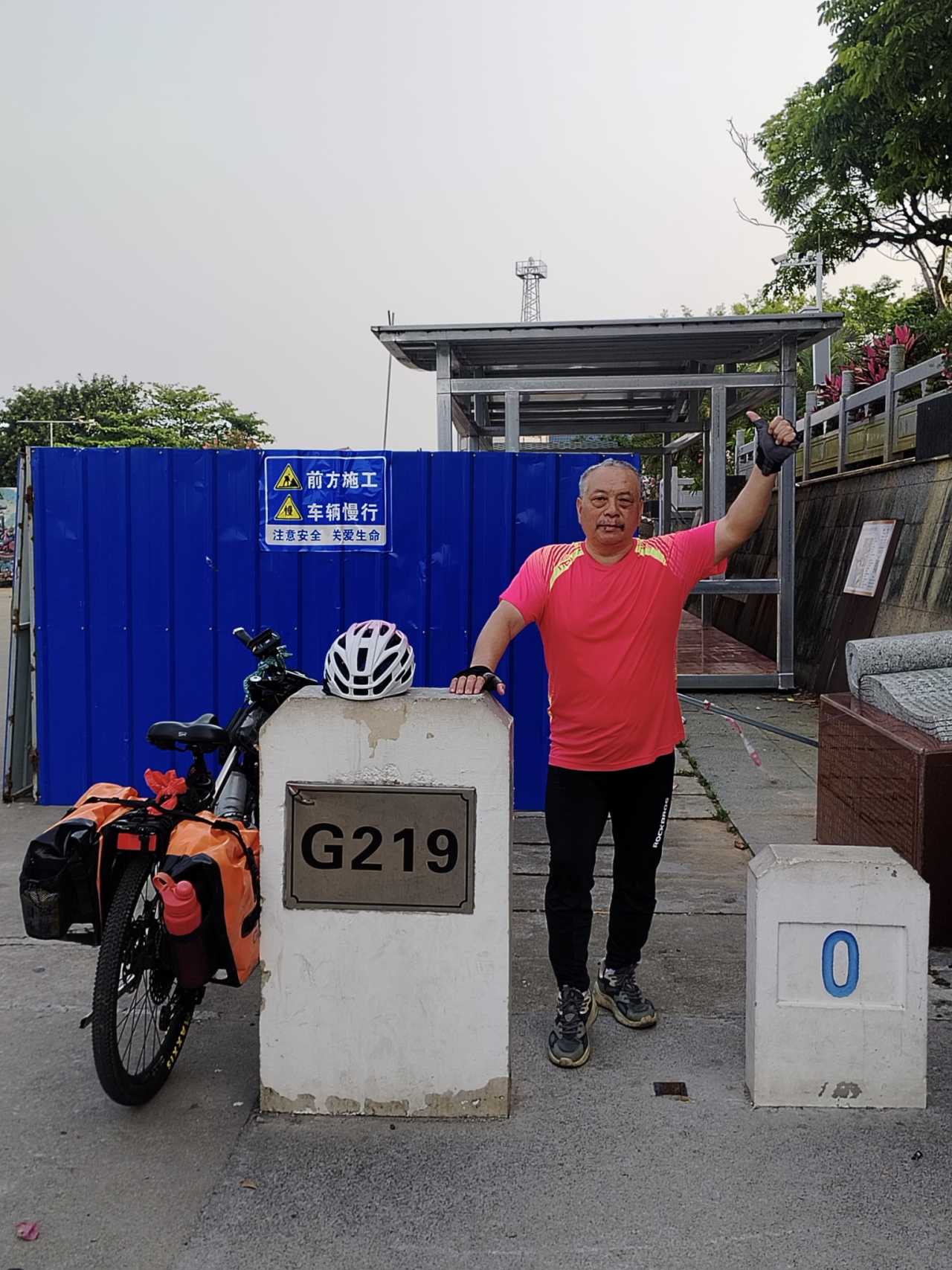
Even as the body ages, I must still push myself to ride 30-50 kilometers every day without stopping. Once I stop, my blood pressure, blood sugar, and cholesterol may spike, and the body will age faster. So no matter how difficult, I must keep cycling every day.
Cycling Plus Hitching: The Wise Choice for Seniors
For older cyclists, combining cycling with hitching a ride should become the main mode of travel. Ride the sections you can and want to ride; for sections you anticipate will be difficult, plan ahead to hitch a ride and avoid risks. This is not a compromise, but wisdom.
Training: Essential Physical Preparation
In the past, I would always train for a month before heading into Tibet. This time, I underestimated the difficulty of G219 and did not train beforehand. I paid the price. If I were to ride this route again, I would need to train for at least half a month or ten days in advance to adapt to the high intensity.
Lessons from Cycling Through Five Southeast Asian Countries
Language: The Biggest Barrier
In foreign lands, without the ability to communicate in the local language, the depth of the experience is greatly diminished. No matter how advanced translation apps become, they still get things wrong. Mastering some basic, practical English is the most reliable approach.
Safety: The Foundation of the Team
Whether it's the insurance bought before the trip or every word of concern during the journey, the team is a single unit. You cannot think only of yourself; you must consider others' feelings and not let teammates worry about your safety.
The Bike: Better to Bring Less Than to Compromise
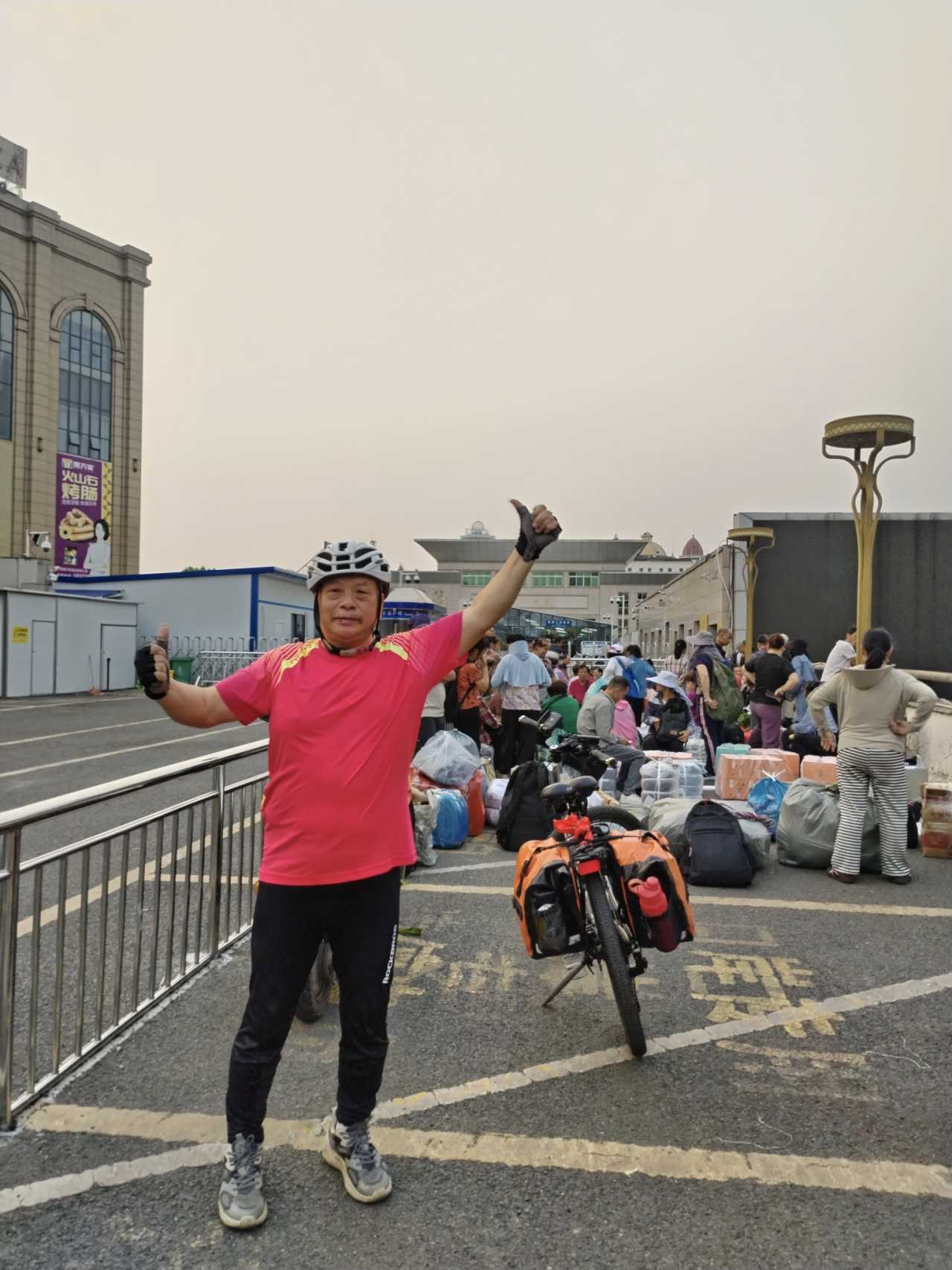
Replace worn parts when needed, and bring spares. Because in a foreign country, you won't know where to find a repair shop, and even if you do, you might not get it fixed properly. Riding a bike with problems poses safety risks.
Advice for Older Cyclists
Choose Carefully, Ride Within Your Limits
The G219 Guangxi-Yunnan section is highly attractive, but it demands a lot from the body. Those with average fitness, especially older riders, need to think carefully. If your body cannot handle high-intensity cycling, then you have to let it go.
Travel Low-Key, Enjoy the Process
Choose routes that are less challenging. Take fewer photos and videos, and post less on social media. Keep your cycling diary brief, recording the essentials for future reference. Travel simply and frugally. Be low-key in life and in travel—don't show off.
Exercise Moderately, Avoid Injury
Now that the body has entered old age, you must control the amount of cycling. In particular, don't force yourself on steep slopes—it will hurt your knees. Listen to your body during the ride, and stop to rest often. Overall, manage the amount of exercise with the goal of feeling happy and at ease.
Conclusion: Cycling Is a Form of Spiritual Practice
This 2026 G219 ride, though full of challenges, gave me a deeper understanding of cycling. Cycling is not just a sport; it is a way of life, a form of spiritual practice. It tests your physical strength, your perseverance, and your character, but it also grants you unique experiences and insights.
People need to get out there. When you can no longer move, your quality of life declines. Even though cycling is getting harder, anything that challenges you is good for your body. I hope to maintain that attitude of persistence and willpower.
Future long-distance rides will be even tougher—my physical strength is waning, my speed is slower, the difficulty is increasing. But I will keep going. Because giving up long-distance cycling means giving up the future.
Cycling Tips: - Best Time: February–March or November–December - Essential Gear: Sunscreen, sun hat, light jacket - Accommodation Advice: Plan ahead, try to stay in townships - Safety Reminder: Don't ride at night, carry basic repair tools - Fitness Advice: Train for half a month before departure, ride within your limits
Cycling on the road, the scenery in your heart. May every cyclist find their own rhythm and enjoy every moment on the journey.
You should also read:
A 9-Day Yunnan Journey: From Lijiang to Dali to Tengchong – A Trip Toward Self-Reconciliation
A 9-Day Yunnan Journey: From Lijiang to Dali to Tengchong – A Trip Toward Self-Reconciliation Some say travel is simply going from a place you're tired of to a place other people are tired of. It stings to hear, but it's painfully true. Yet there's…
Continue reading...
Yunnan! Paradise on Earth – The Yubeng Chapter: A Soul-Cleansing Journey into Seclusion
Yunnan! Paradise on Earth – The Yubeng Chapter: A Soul-Cleansing Journey into Seclusion Prologue: Why Yubeng? If you ask me which place in Yunnan is most worth hiking to, I would answer without hesitation: Yubeng. This is not an answer I give lightly. As a…
Continue reading...
Into the Hidden Valley: A Solo Journey Through the Mysterious Dulong River
Into the Hidden Valley: A Solo Journey Through the Mysterious Dulong River Deep in the northwestern corner of Yunnan Province, tucked away from the modern world, lies a place that feels like a secret whispered among mountains. The Dulong River Valley is not just a…
Continue reading...