Meeting Yunnan Again: A Spontaneous Road Trip, Written for Those Who Love Freedom as Much as I Do
Meeting Yunnan Again: A Spontaneous Road Trip, Written for Those Who Love Freedom as Much as I Do
Foreword: Why I'm Writing This
Two years ago, I set foot on Yunnan soil for the first time, following the classic "Kunming–Dali–Lijiang" route. That trip felt like a carefully rehearsed performance—everything went according to plan, beautiful yet lacking in surprises. This year, I decided to switch things up: no rushing, no check-ins, letting the itinerary follow my mood.
As it turned out, when you learn to leave blank spaces in your travels, those unexpected encounters become the most precious memories. If you're also tired of "commando-style" travel, tired of queuing for photos at Instagram-famous spots, then this travelogue might offer you some fresh inspiration.
Pre-Trip Preparation: Details You Might Overlook
Why I Gave Up the Early Morning Flight
Flights from Changsha to Lijiang are as frequent as buses, running from early morning till late night. I originally planned to catch the 8 a.m. flight, land around 10 a.m., and wander through the old town by afternoon. But in the end, I chose the noon flight instead.
The reason is simple: an early morning flight means waking up at 5 a.m., rushing before your body is even fully awake. More importantly, Changsha sits at an elevation of only about 50 meters, while Lijiang is around 2,400 meters. Two years ago, I traveled north from Kunming, gradually ascending, giving my body time to adjust. This time, I was flying directly into high altitude. If I hadn't rested enough, altitude sickness could have hit me hard.
This decision turned out to be absolutely right. After landing, I felt almost no discomfort. I picked up the car smoothly and drove to the hotel, my mood as bright as the Yunnan sunshine.
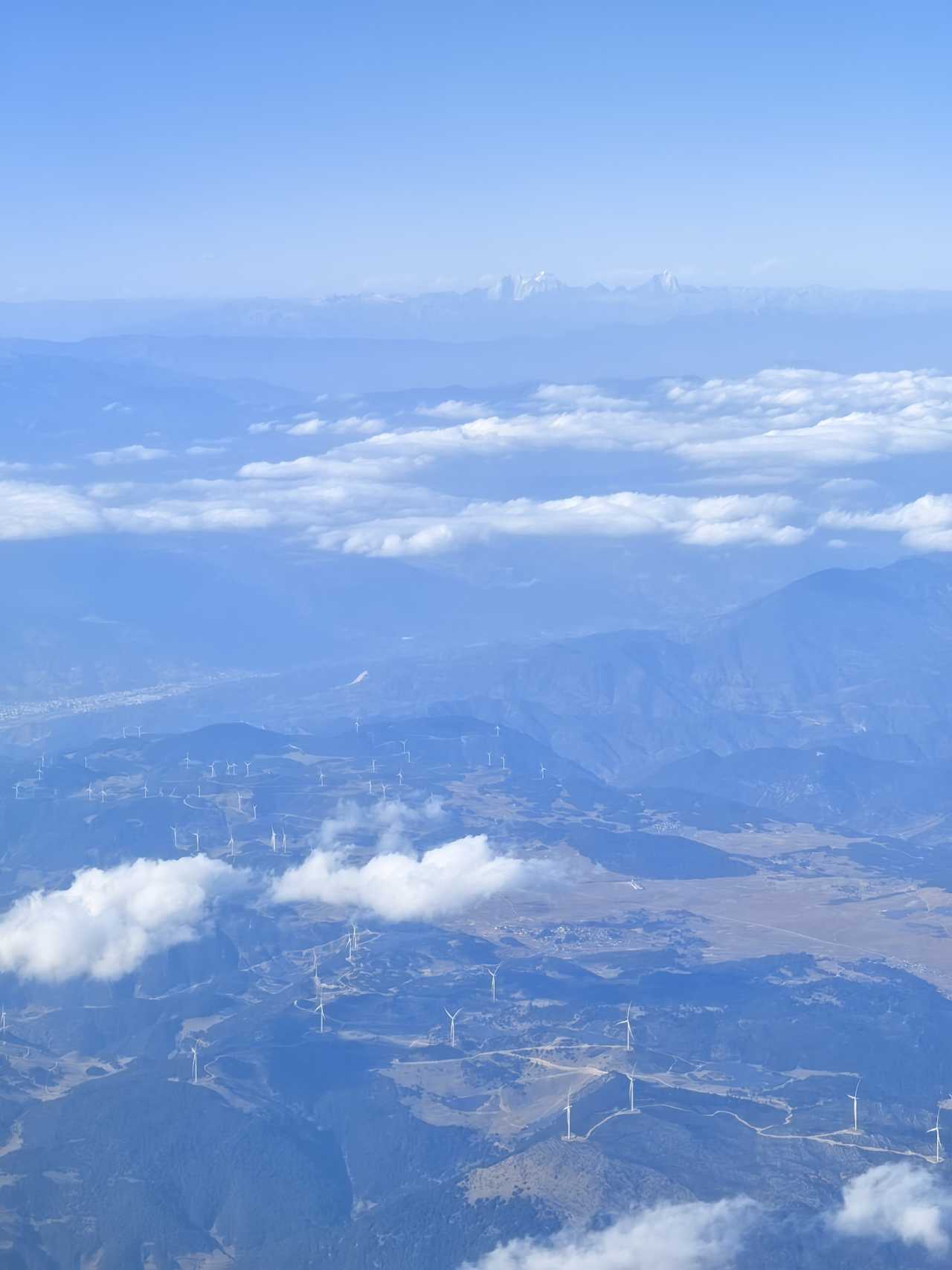
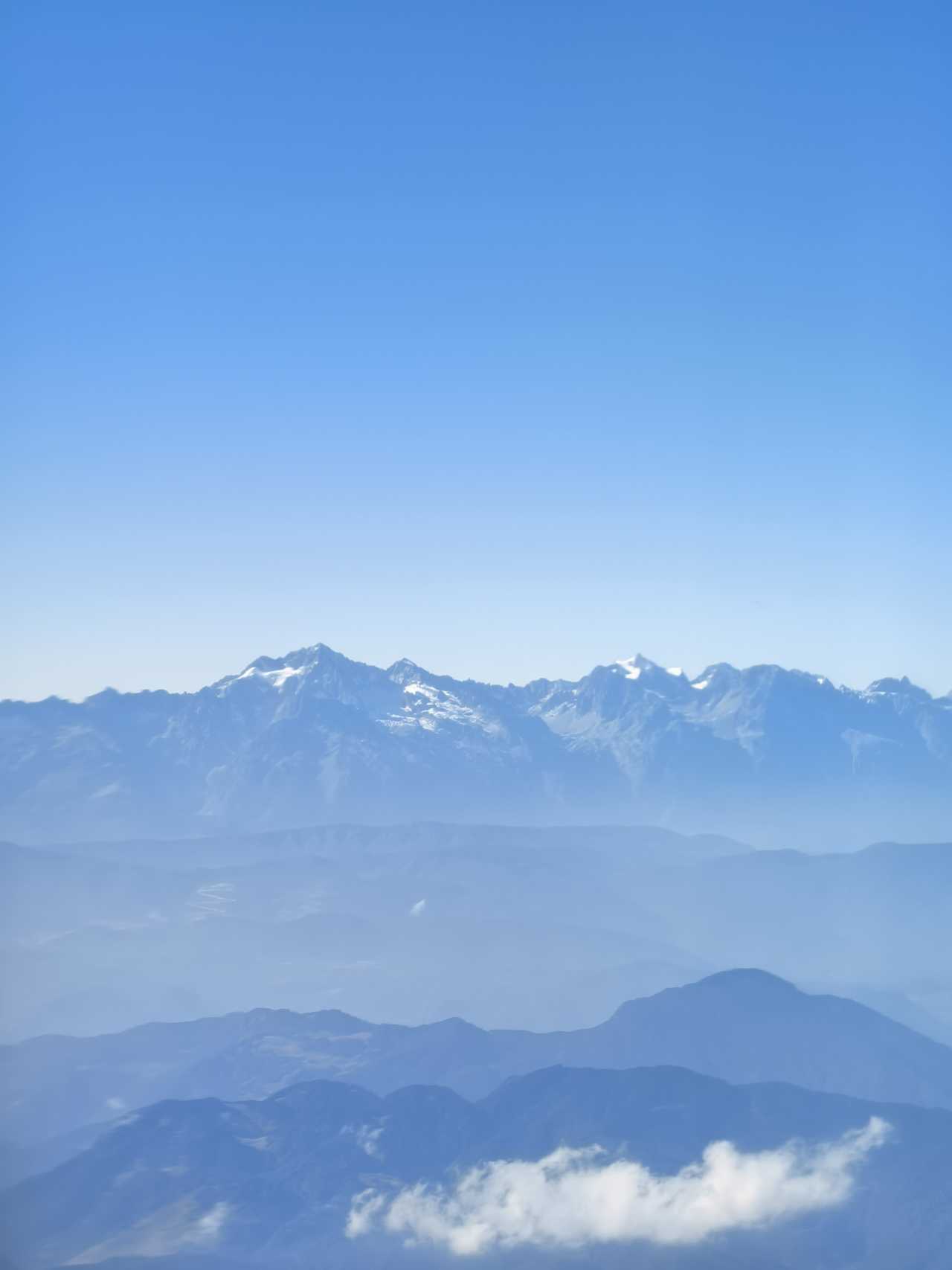
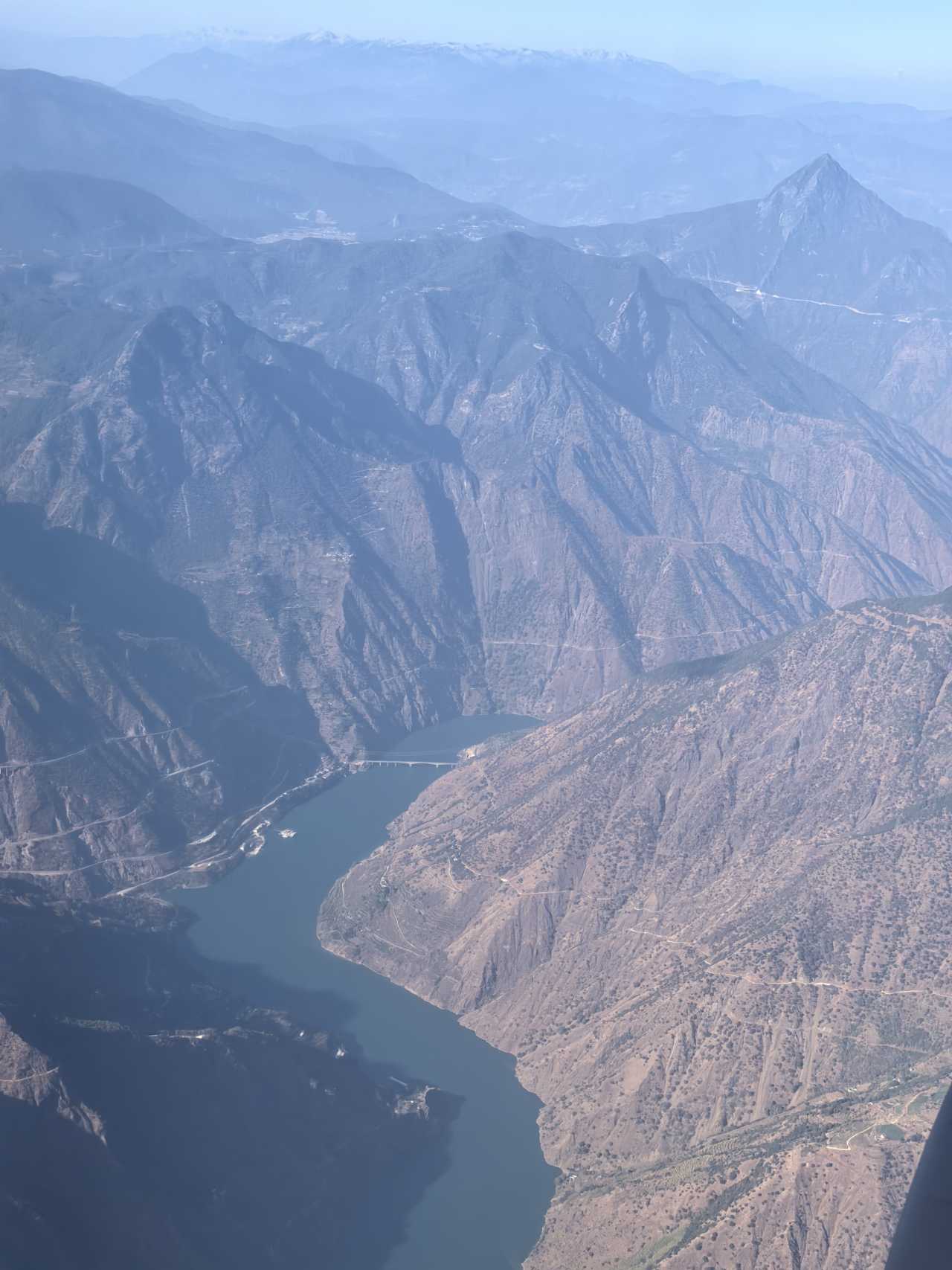
Practical tip: If you're also flying into Lijiang, choose a window seat on the right side. Don't fall asleep as the plane descends—you'll see the peaks of Jade Dragon Snow Mountain seemingly right next to the wing. That sense of being so close is something no photo can convey.
Renting a Car: The Price of Freedom Isn't That High
Ever since I had a smooth car rental experience, I've chosen this option whenever the destination is suitable. A car, a favorite song, an unfamiliar road—that sense of freedom is the essence of travel.
My advice: Choose a major platform and buy full insurance. I've long used a certain rental company (like "Shenzhou Zuche" or "Yihai"), and returning the car is always surprisingly simple—just park it in the designated spot and walk away. No one checks for scratches, and the whole process is hassle-free.
Taking a comfortable SUV as an example, including fuel, the daily cost is about 230–250 RMB (roughly $32–$35). If you're traveling in a group of four, that's less than 70 RMB per person; for two people, choosing an economy car can keep it under 150 RMB per day. On our route, a regular sedan was more than enough, unless you plan to tackle really rough roads.
Lijiang: Finding Your Own Rhythm Amid the Commercialization
Where to Stay: A Compromise of Wisdom

Many people book accommodation inside Lijiang's Old Town, but I chose a "middle ground"—near Shuhe Ancient Town. It's about 20–30 minutes by car from both the old town and Jade Dragon Snow Mountain, and sometimes just over 10 minutes when traffic is light.
The reasoning is practical: parking inside the old town is difficult, and dragging luggage over cobblestone paths is a nightmare. Plus, heading to the snow mountain the next day is much closer from here. My hotel faced Jade Dragon Snow Mountain directly, with a large common area. Even if I didn't go out, sitting in the courtyard with a cup of tea and gazing at the mountain was a pleasure in itself.
Lijiang Old Town: Worth a Stroll, But Don't Expect Too Much
If you're expecting a quiet, serene ancient town, Lijiang Old Town might disappoint you. I experienced its level of commercialization two years ago—a flower cake shop every three steps, a photoshoot studio every five.
But this time, I was accompanying my partner to check it off the list. So I arrived in the early evening—the most atmospheric time for the old town. Unsurprisingly, rush hour traffic was a nightmare. I quickly found a parking spot before hitting the worst congestion and walked in.
A sincere suggestion: Don't feel you have to "see everything." Wandering aimlessly, stopping and starting, often leads to discovering interesting corners. For example, we bought four or five types of local fruit at a shop, spending about 120 RMB (around $17), only to find that none tasted as good as an ordinary orange. That taught me: There's a reason some fruits don't leave Yunnan.
Before leaving, I bought two canisters of oxygen at a pharmacy. They were pricier than at convenience stores, but medical-grade quality is more reliable—on the plateau, you can't skimp on this.
Jade Dragon Snow Mountain: 4,680 Meters, My Brave Adventure
The Big Cable Car: The Art of Ticket Snatching and Queuing
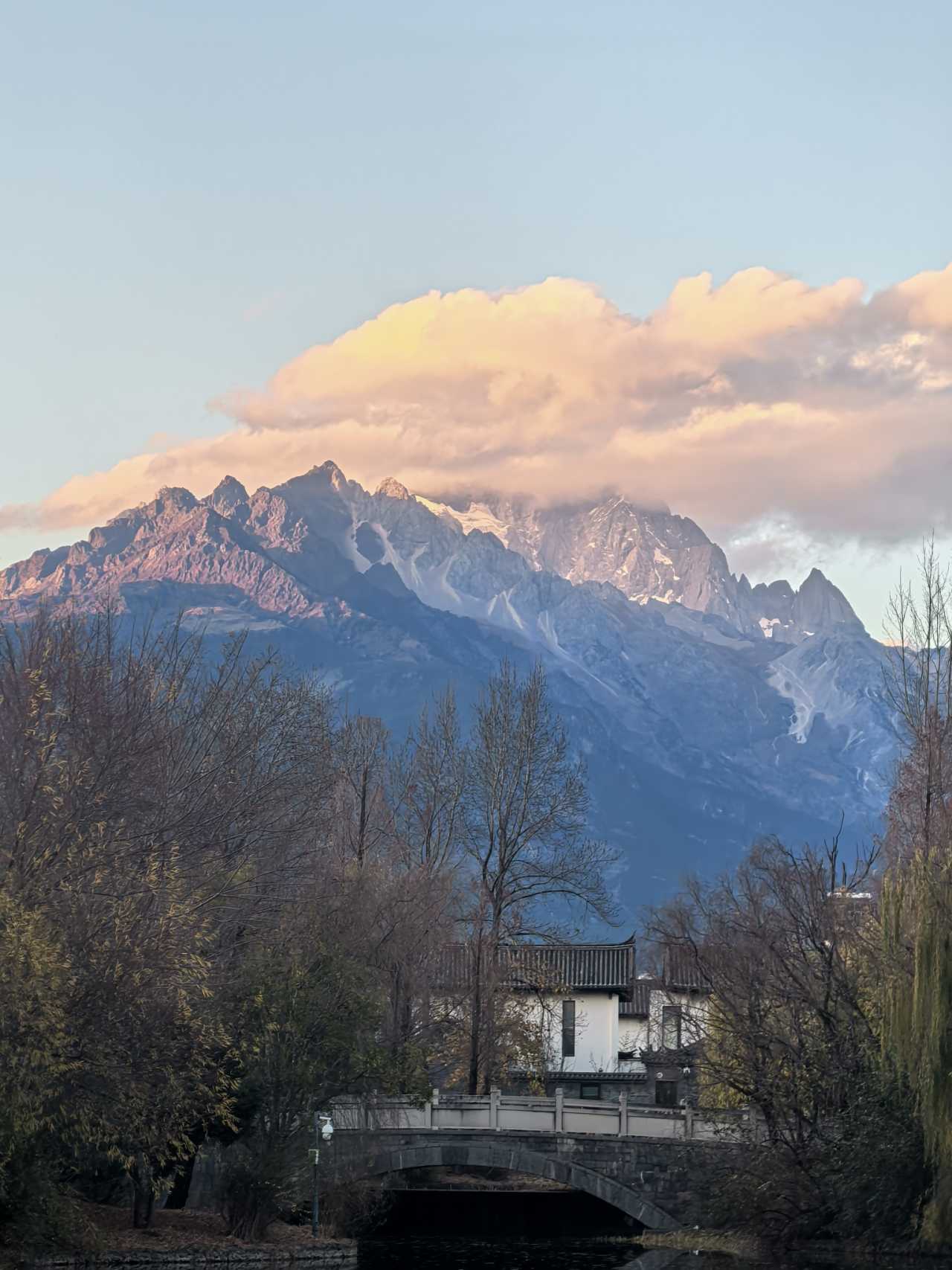
I didn't make it to 4,680 meters on my first visit to Lijiang, so this time I was determined to do it. I started checking ticket availability a week in advance. Fortunately, it was the off-season, so I managed to snag a ticket for the big cable car. Remember to bring your ID card—you'll need it to enter the scenic area and board the cable car.
If you're driving, the parking lot closest to the visitor center isn't open to private cars. You'll have to use the farthest temporary lot and walk about 1 kilometer. If you're taking the big cable car, note this: when walking from the temporary lot to the visitor center, you'll pass the cable car waiting area first. Don't make the mistake of going all the way into the visitor center and circling around. The waiting area is in a building right next to the visitor center, with a Meiyijia convenience store at the entrance. Go through the side passage.
My ticket was for 11:30 a.m., but I didn't arrive until noon, and I could still queue. Even in the off-season, the line for the 4,680-meter point was endless—I can't imagine how long you'd wait during peak season.
Reaching the Summit: One Step at a Time
The cable car only goes to 4,560 meters. The remaining 120 meters or so require climbing on foot. It sounds short, but the winding stairs feel endless at high altitude.
As someone who exercises regularly, I still had to stop every few steps to catch my breath and take oxygen. The weather was clear, but the altitude made it cold—cotton jacket, pants, hat, gloves—every piece of gear was essential. Halfway up, I pulled out chocolate and warm water for energy. My legs felt like lead.
Honestly, at that moment, I missed the leisurely vibe of Spruce Meadow (云杉坪) from two years ago—the scenery there was equally stunning, but without the struggle. But then I thought, Isn't challenging yourself a form of courage? When I finally stood in front of the 4,680-meter marker, all the discomfort was replaced by a sense of achievement.
Respect to everyone who made it to the summit—and respect to the version of myself who didn't give up.
Blue Moon Valley: Even a Quick Look Is Worth It
After coming down from the peak, I was exhausted. But not wanting to waste the 100 RMB entrance fee, I took the sightseeing bus to Blue Moon Valley. Note: Get off at the "Shuiyue Pavilion" stop—that's where you'll arrive right at the site.
Blue Moon Valley is very weather-dependent. Only on clear days does the lake water take on that dreamy blue hue. Maybe I'd seen similar scenery elsewhere, or maybe I was just too tired, but I only stayed for ten minutes before heading back. The walk from Blue Moon Valley to the parking lot takes about 20 minutes, but the route down is different from the way up—you have to go around to another direction. The sun is strong in the late afternoon, so if you're driving, make sure to wear sunscreen.
Tiger Leaping Gorge: A "Reckless" Distant View
The road from Lijiang to Tiger Leaping Gorge is in good condition—highway plus national road, with two free viewing platforms along the way. In summer, the gorge is breathtakingly spectacular, but in winter, the water level is low, diminishing its grandeur.
What's more disappointing is that we couldn't enter the scenic area. Here's what happened: The parking lot at Tiger Leaping Gorge has traffic control. Private cars have to queue at a diversion point several kilometers away. Some online tips suggested telling the staff "I'm going to Shangri-La" to bypass the queue and drive directly to the ticket booth. I tried that, but the ticket booth refused to sell me a ticket—they required a slip from the diversion point.

At that moment, we had two choices: either go back and join the queue, or turn around and go home. But we made a third choice—keep driving forward, enjoy the scenery, and turn back when we'd seen enough.
It was a reckless gamble, but thankfully, my partner was willing to go along with the madness. The canyon views along the road were indeed magnificent—sheer cliffs towering high, with an overwhelming sense of power. Near the last checkpoint, there was a noodle shop with a viewing platform. For 20 RMB, you could get a distant view of Tiger Leaping Gorge. And that's how we "checked it off."
On the way back, we comforted each other: "Winter's Tiger Leaping Gorge isn't nearly as impressive as summer's. Better to head to Erhai Lake early and enjoy the breeze." When life doesn't hand you candy, you find your own sweetness.
Dali: Wind, Flowers, Snow, and Moonlight—More Than One Way to Experience It
First Glimpse of Erhai Lake: A Pleasant Surprise on the Drive South
From Tiger Leaping Gorge to Dali, we had to pass through Lijiang again. Heading south, the elevation gradually dropped. The highway was mostly downhill but safe, with nice scenery along the way.
After about 1.5 hours, we arrived at the nearest service area to Dali. There was a viewing platform overlooking Erhai Lake. After seeing mountain scenery for so long, suddenly catching a glimpse of a "sea"—all the fatigue melted away. At that moment, I felt immense gratitude toward nature.
Shuanglang Ancient Town: The KFC Viewing Spot, Worth Your Time
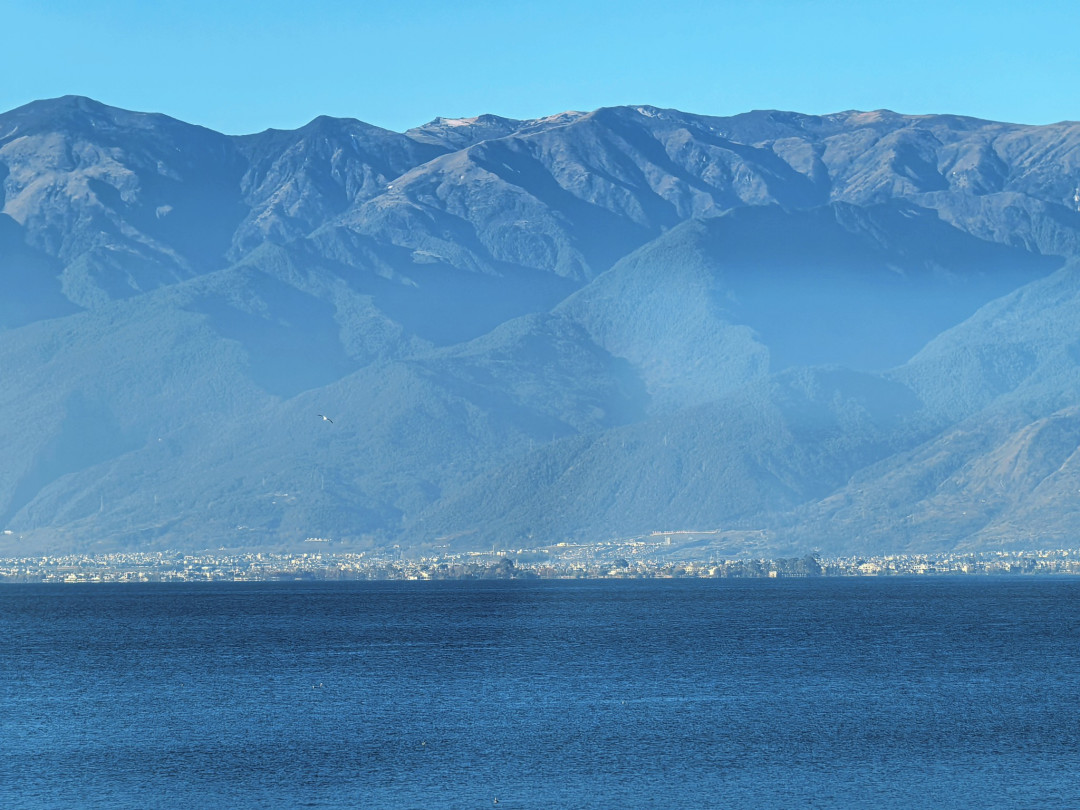
Our first stop was Shuanglang Ancient Town. On the road from the service area to the south gate, there's a high point that offers a panoramic view of Shuanglang—a small island lying on Erhai Lake, with the Cangshan Mountains looming in the distance. You can stop briefly for photos, but not for long.
The advantage of the off-season: we easily found a parking spot near the south gate. We'd originally planned to visit Yang Liping's Sun Palace, but reservations were only available for the morning session, and other times required a minimum spend, so we gave up.
Shuanglang Ancient Town still didn't impress me—it was full of restaurants, souvenir shops, and fruit stalls. The only thing worth recommending was KFC, simply because we were tired of eating Yunnan cuisine. And importantly, the second-floor viewing spot is no worse than those trendy cafés that require spending hundreds of RMB.
Accommodation on the East Coast: A Hard-Earned Lesson
I booked a lake-view hotel near Shuanglang. It had high ratings and stylish decor. But the actual experience scored only 80 out of 100—the remaining 20 points were deducted because it was right next to a main road.
Important tip: Before booking a hotel, ask how far it is from the road. On the east coast of Erhai, trucks pass even at night. Even with good soundproofing, light sleepers will be disturbed. Also, check whether there are enough restaurants nearby, so you don't have to drive far for food.
If I could do it over, I'd choose to stay in Wencun Village instead of Shuanglang—Shuanglang doesn't have enough to keep you occupied for an afternoon plus an evening. And if you want to visit other attractions, you'd have to return to Shuanglang at night, which is unnecessary backtracking.
Xiaoputuo Island: Joyful Time with the Seabirds
The next day, I slept in and didn't set out until nearly noon. On the east coast, we only chose Wencun Village and Xiaoputuo Island—the artificial "Ideal State" attraction wasn't even on our list.
Wencun Village is a settlement by Erhai Lake, famous for its Rainbow Road. Overlooking the lake from the road has a unique charm. But I'd caught a cold the night before, and I heard the hilltop viewing spot charged a fee—that killed my enthusiasm. We had lunch halfway up the hill and left.
What really surprised me was Xiaoputuo Island—a small temple on Erhai Lake, less than 100 meters from the shore. The most fun thing here is feeding the seabirds: buy a pack of small dried fish, shout "Ooh-ooh," and they'll fly over to take it.
At first, I was too shy. My shouts weren't loud enough, and I held up the fish for ages with no birds coming. After a nearby "teacher" demonstrated, I let my voice out, and sure enough, a seabird came. But my first attempt failed—I was so nervous I forgot to let go, and the bird couldn't outmuscle my grip. The old lady selling the dried fish reminded me: Hold the fish loosely, leaving space for the bird to take it.
These seabirds have excellent vision, hearing, and smell. They can spot a fish from far away and fly straight to it. They quickly assess the size and quality of the fish, and if satisfied, they brake sharply, snatch it, and fly off to enjoy their meal somewhere else. They even turn up their beaks at low-quality fish—so if you want good photos, buy the nice-looking, large dried fish.
East Coast vs. West Coast: The Same Lake, Different Moods
The drive from the east coast to Dali Old Town was much longer than I expected. If I could do it again, I'd stay in the Xiaguan area—close to Erhai Lake, with decent lake views, and most importantly, without wasting so much time on the road.
Dali Old Town felt "underwhelming" to me. The north gate's market had some authentic local atmosphere, and the squirrels in the Confucian Temple weren't afraid of people, scampering around. But overall, I probably won't choose "ancient town" attractions again anytime soon.
From the old town to the west coast ecological corridor is about 4 kilometers. We took a tricycle, weaving through the old town's alleys, getting battered by the wind—another not-so-bright decision.
The west coast is more convenient for walking or cycling along the lake. But in my heart, the east coast has a better atmosphere—from the east side, the Cangshan Mountains look like Erhai Lake's sturdy arms, with the lake as a cherished gem. If personified, Cangshan would be a tall, imposing man, and Erhai would be a gentle, serene woman. Through eons of change, they remain inseparable.
The Last Night: Fireworks on New Year's Eve
Considering our 11 a.m. flight the next day, we chose a hotel close to the airport—just 20 minutes away. But the hotel was, well, a mixed bag. There was a construction site next door, and the soundproofing was nonexistent.
That day was the last day of 2025. We originally wanted to go to Haidilao hotpot to celebrate, but the road into the city was gridlocked. On New Year's Eve, traffic jams are the norm.
The only consolation was that at midnight, from my room, I saw fireworks rising one after another over Erhai Lake—those dazzling bursts of light felt like the last bit of beauty this imperfect trip had to offer.
In Conclusion: The Meaning of Travel
This Yunnan trip marked the end of our 2025 journey.
This year, we visited the border towns of western Hunan, traced mountain streams in eastern Hunan, climbed to the summit of Mount Heng (祝融峰), ventured into the neon-lit island nation across the sea (Japan), savored the laid-back vibe of Chengdu, gazed up at the Leshan Giant Buddha, and fulfilled a dream at the mysterious Sanxingdui ruins…
Every step of the way was worthwhile.
It's love that has brought us this far. There have been joys, arguments, and exhaustion—but we're still in love, still looking forward to the next stop.
Finally, three sincere pieces of advice:
Don't overpack your itinerary—leaving blank spaces is the gentlest footnote to travel. Instead of rushing through three attractions in a day, spend time just sitting and daydreaming in one place.
Embrace imperfection—not getting into Tiger Leaping Gorge, a noisy hotel, bad fruit… these "accidents" later became the most interesting stories. Travel is like life: plans change, but change often hides surprises.
Follow your own rhythm—you don't have to check off spots for the sake of it. You don't have to push yourself just because "you're already here." True travel is about making yourself comfortable, not making your social media feed look good.
May your next journey also bring you face to face with that brave, free, life-loving version of yourself.
You should also read:
Yunnan Travel Mastery: From Beginner to Pro-Level Player – A Complete Guide
Yunnan Travel Mastery: From Beginner to Pro-Level Player – A Complete Guide "Either travel or read, but your body and soul must be on the road." This quote has been repeated countless times, but very few people truly manage to be "on the road" and…
Continue reading...
Escaping Nanning, Falling Under Lijiang's Spell: Our Four-Person, Ten-Day Yunnan Dream
Escaping Nanning, Falling Under Lijiang's Spell: Our Four-Person, Ten-Day Yunnan Dream Before We Set Off: No Pain, No Obsession Have you ever had that impulse—suddenly tired of the office fluorescent lights, the crush of the subway, the endless parade of identical takeout boxes, and just…
Continue reading...
Solo in Yunnan: A Wanderer’s Guide to the Land of Eternal Spring
Solo in Yunnan: A Wanderer’s Guide to the Land of Eternal Spring There’s something magical about traveling alone. No compromises, no schedules to keep, no one to please but yourself. I’ve been on the road for nearly three months now, and not once have I…
Continue reading...