Mid-Summer 2025: A Journey from the Songs of the Nujiang River to the Ancient Cities of Dali (Part 1: Nuodeng Ancient Village)
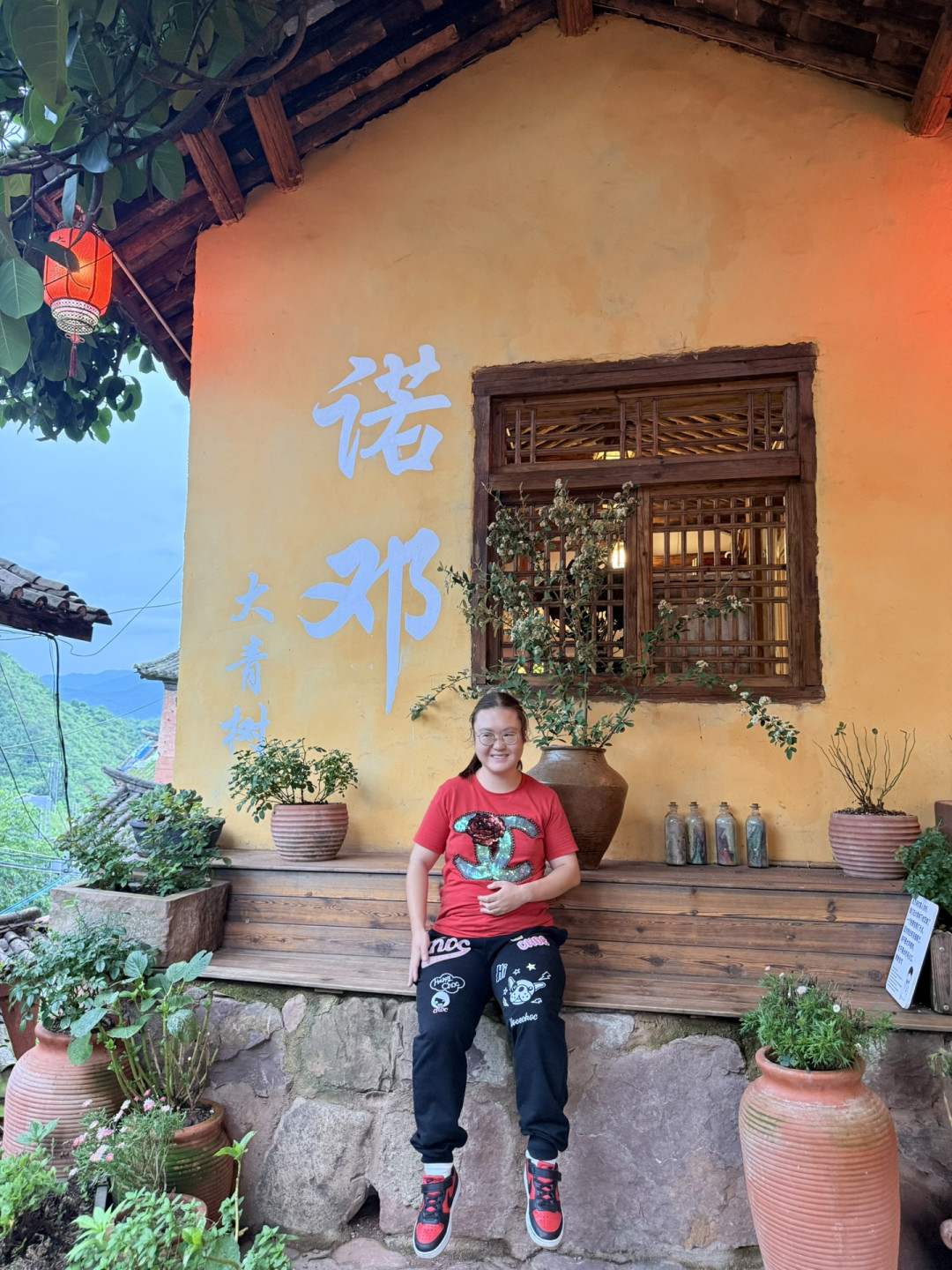
Mid-Summer 2025: A Journey from the Songs of the Nujiang River to the Ancient Cities of Dali (Part 1: Nuodeng Ancient Village)
Origin: A Trip Ignited by "Famous Faces"
Last autumn, I followed Yu Minhong and Shi Zhan's "Walking with You" team, along with Meng Man's "Manxing National Highway 219" group, into the land of southern Xinjiang. The feeling of being awestruck by the vastness of the landscape is still unforgettable. This summer, I decided to continue tracing their footsteps, heading to the borderlands of Yunnan to travel along National Highway G219 and listen to the songs of the Nujiang River.
Teacher Meng Man once chatted with Zhu Xun in a short video about travel, saying: "When you go out and walk around, you broaden your horizons. With broad horizons comes an open mind, and you see the world from a different perspective." Those words ring true. Travel has never been just about seeing scenery—it's about seeing the world in a new way.
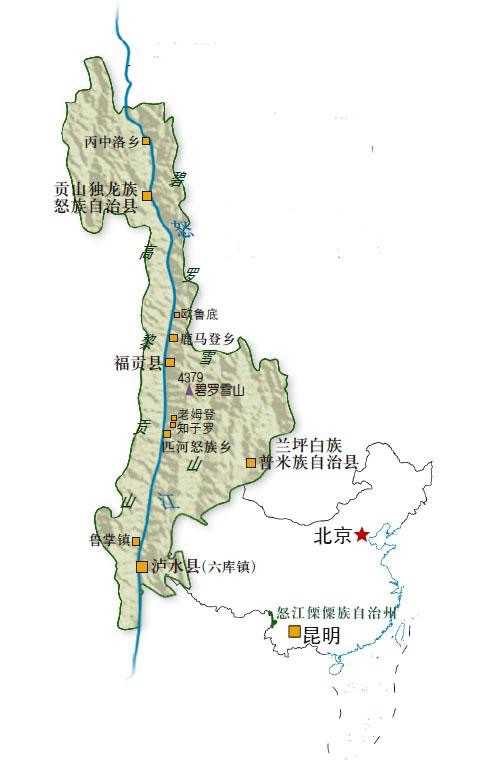
We planned to spend seven days following a short stretch of the Nujiang River, while also including my husband's long-cherished wish to visit Nuodeng Ancient Village, and finally stopping in Kunming to explore the famous Dounan Flower Market. Including round-trip flights, the entire trip would take 12 days. The itinerary covered Kunming City, Dali Bai Autonomous Prefecture (Nuodeng Town in Yunlong County), and Nujiang Lisu Autonomous Prefecture (Lushui City, Fugong County, Gongshan County).
G219: From "Xinjiang-Tibet Highway" to "National Highway of the Nation"
Speaking of G219, its predecessor was the original National Highway 219, the famous "Xinjiang-Tibet Highway," which stretched only 2,140 kilometers from Yecheng in Xinjiang in the north to Lhazê in Tibet in the south. In 2018, the Ministry of Transport extended its northern end to Kanas in Xinjiang and rerouted its southern end to Dongxing in Guangxi, bringing its total length to 10,065 kilometers—making it China's longest national highway, now known as the "National Highway of the Nation."
The Yunnan section spans 2,624 kilometers, passing through seven border prefectures and cities: Nujiang, Baoshan, Lincang, Xishuangbanna, Pu'er, Honghe, and Wenshan. The section we planned to travel was the stretch from Lushui City through Fugong County to Gongshan County, ending at Bingzhongluo Town—the border with Tibet.
Pre-Departure Jitters: Torrential Rain, Mudslides, and Earthquakes

After booking flights, hotels, and a rental car, we began closely monitoring the weather. On May 30, a sudden heavy rainstorm hit Dulongjiang Township, and the skies didn't clear until the afternoon of June 3. The heaviest rainfall reached 112 mm on June 1, with another 62.4 mm on June 2. The intense downpour triggered mudslides, damaging roads in Dulongjiang Township. After the roads were reopened on the afternoon of June 3, stranded tourists were finally able to leave, and the Dulongjiang Scenic Area was immediately closed.
On June 5, a 5.0-magnitude earthquake struck Eryuan County in Dali Prefecture. My husband quietly said to our daughter, "Our summer escape might turn into an adventure." On June 28, I called the guesthouse in Dulongjiang. The owner said it had been raining nonstop, and another section of road had been washed out the day before, asking us to cancel our reservation. We quickly devised a backup plan, moving the entire itinerary forward and replacing the two days in Dulongjiang with a visit to Shaxi Ancient Town. It wasn't until June 30, when an announcement stated that some sections of the Dulongjiang road had reopened, that we finally breathed a sigh of relief.
Day 1: Flying Over the Hengduan Mountains, Landing in Dali
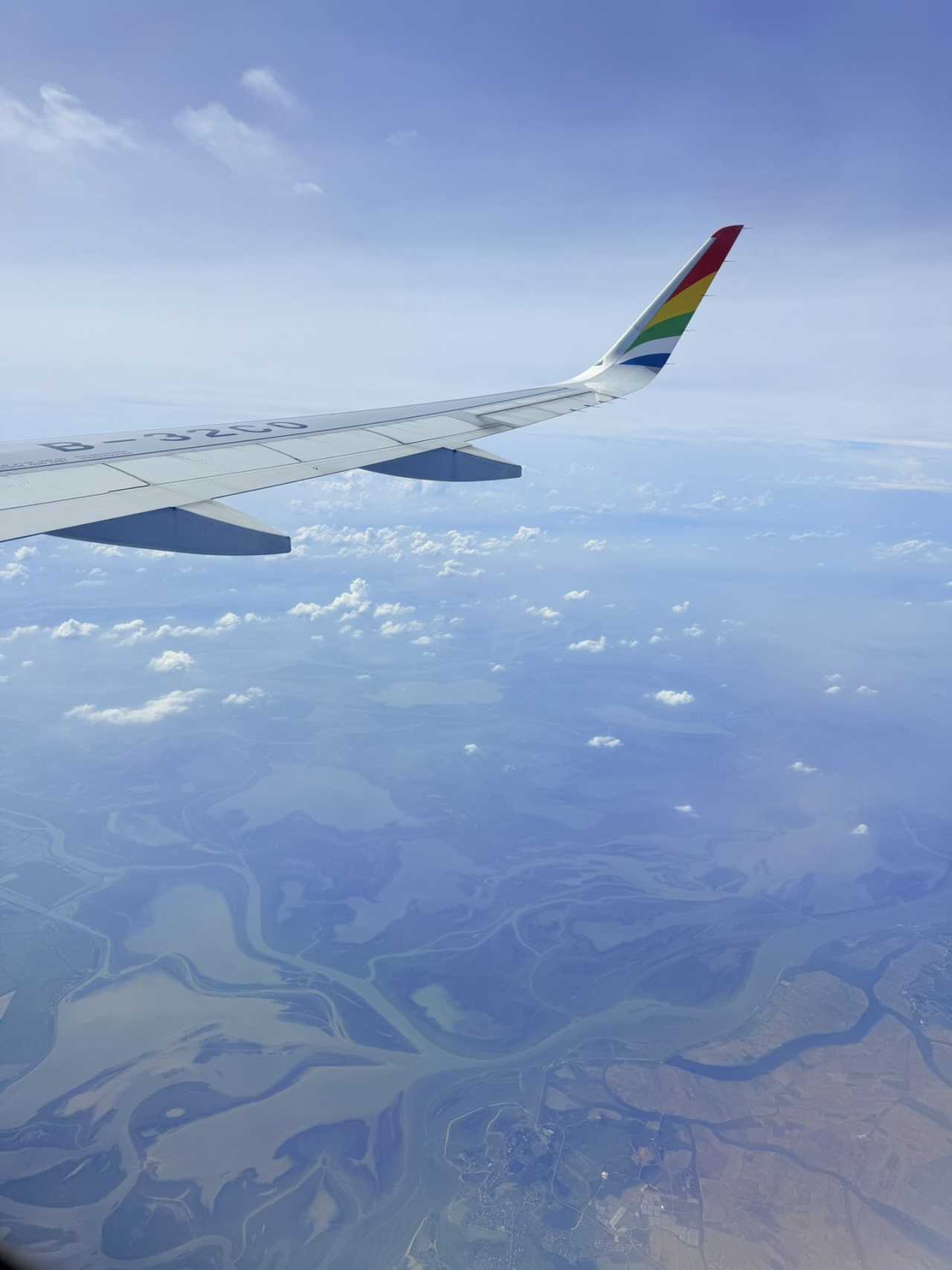
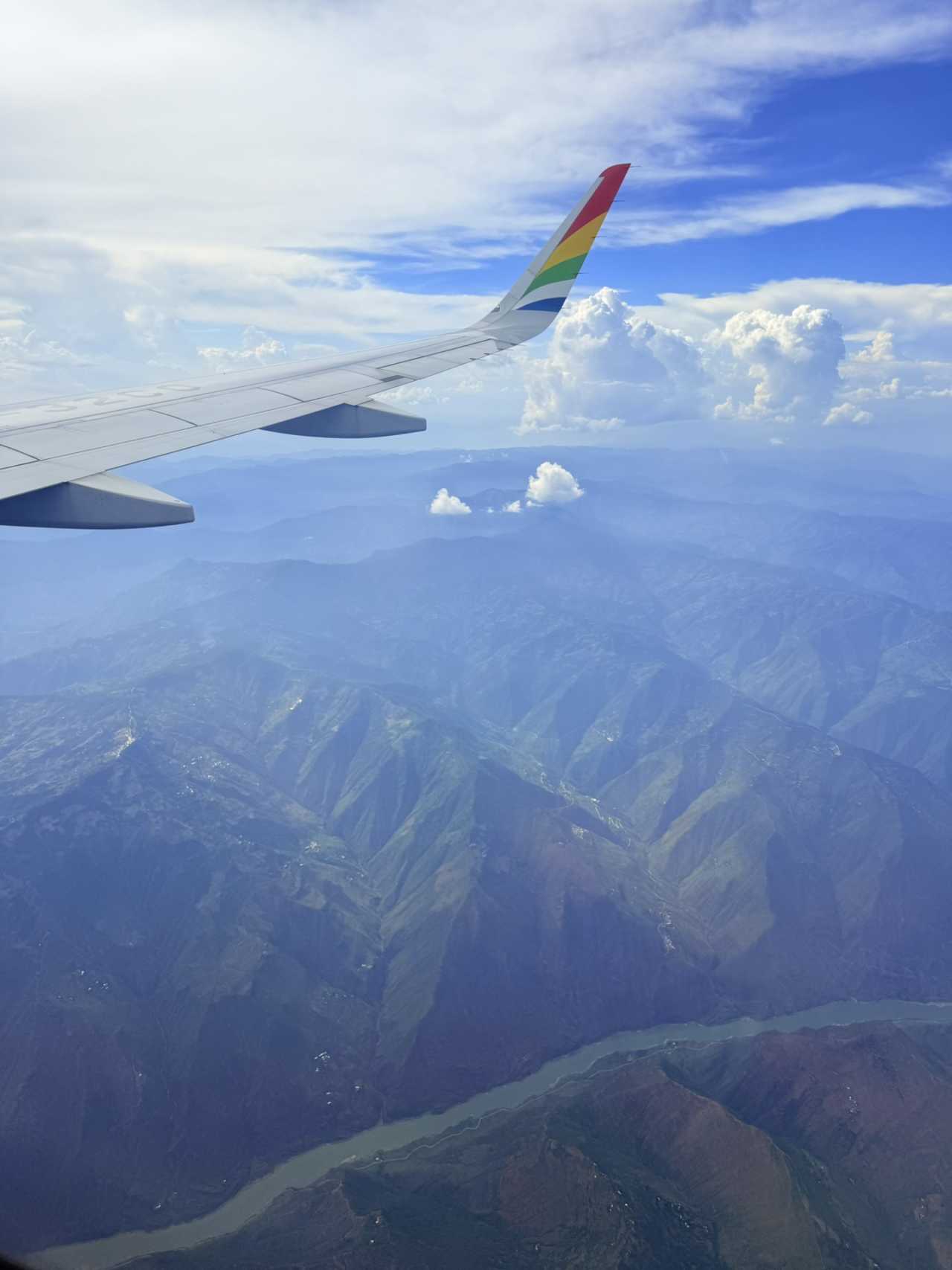
At 2:00 PM on July 15, we departed from Xiaoshan Airport on a shared Air China flight (actually operated by Tibet Airlines), heading to Dali. Three hours, 1,900 kilometers. Looking down from the plane, the ground transitioned from the patchwork colors of the plains to the deeply cut gorges and surging rivers of the Hengduan Mountain Range—at that moment, I knew the journey had truly begun.
The plane departed half an hour late but arrived half an hour early. The "Yihai Rent-a-Car" counter at the airport was conveniently located just 100 meters to the right after exiting the arrivals hall—remarkably convenient. We added the 50-yuan-per-day "Premium Protection" insurance, which included full car damage waiver, so we didn't even inspect the vehicle. By 5:30 PM, we had completed the handover and were officially on the road.
Driving through the streets of Dali, the experience felt the same as in 2021—a bit disappointing. At every intersection, large and small, electric scooters ran red lights everywhere. It felt like Dali's city center was becoming increasingly chaotic.
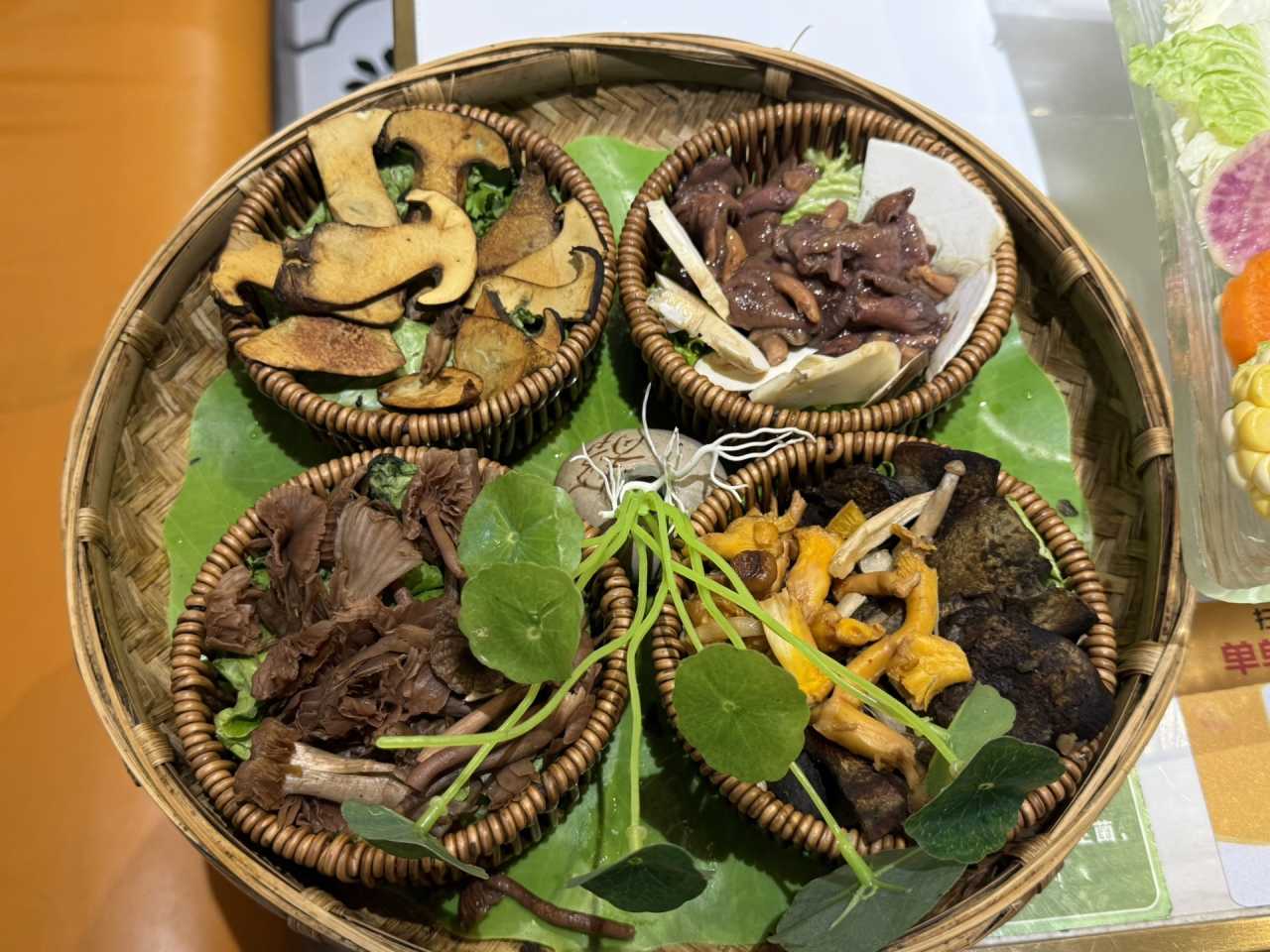
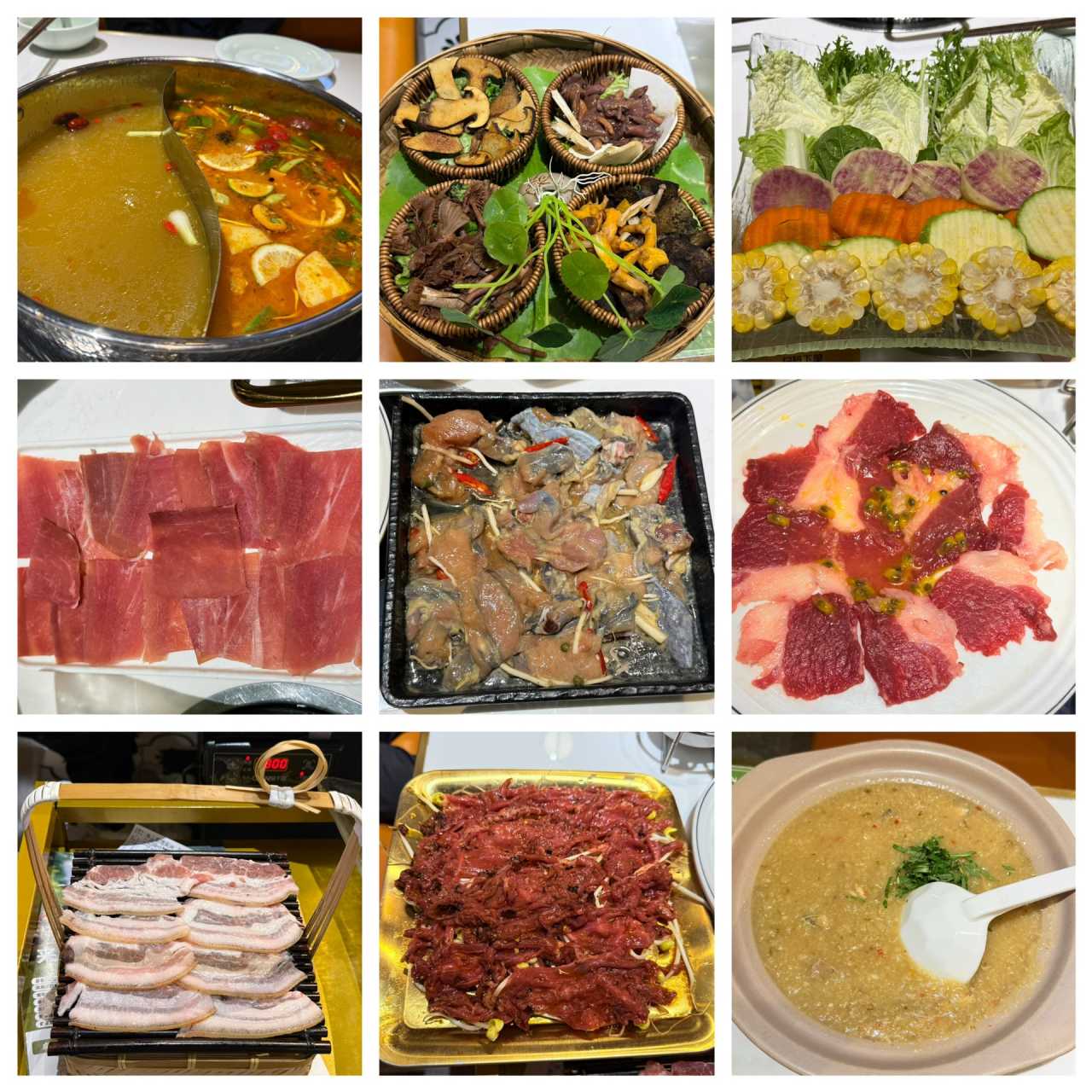
For dinner, my husband found a restaurant called "I Want Mushrooms Wild Mushroom Hotpot." We ordered a wild mushroom set, which included six varieties. Because one of them was "见手青" (a type of poisonous mushroom that turns blue when touched), the mushrooms had to be boiled for a full 25 minutes before we were allowed to eat. The set also included four types of meat—chicken, pork belly, beef, and others—but they didn't look very appetizing and didn't taste good either, leaving quite a bit uneaten. Indeed, hotpot wasn't ideal for someone trying to lose weight. My husband then ordered some "Nuodeng ham," which was very salty, and a pot of chicken and corn soup, which also didn't taste great and was mostly left behind. Our first meal in Yunnan dashed any culinary expectations I had for this trip.
Day 2: Nuodeng Ancient Village—The Time Code of a Millennium-Old Bai Village
First Encounter with Nuodeng: From "A Bite of China" to the Reality of Mountain Roads
The fastest route from Dali to Nuodeng Ancient Village is 140 kilometers via expressway, taking the Hangrui Expressway and then the Panyun Expressway, a total of two hours. We drove with stops, departing at 8:30 AM and arriving at the Nuodeng Ancient Village parking lot at 10:50 AM.
Our booked guesthouse, "Nuodeng View Inn," was located halfway up the mountainside. We'd heard that luggage had to be transported by mules or horses, so I packed only our overnight essentials and toiletries, traveling light. The inn owner said she needed to go down the mountain to buy groceries and was worried we might not find the place, asking us to wait for her at the parking lot. But we couldn't wait and decided to head up on our own.
I first heard of "Nuodeng" in October 2021 during a self-driving trip through Kunming, Dali, and Lijiang. I'd seen "Nuodeng Ham" shops in both Lijiang Ancient Town and Dali Ancient Town. At the time, I was shocked by the price, and my wallet being too thin, I didn't buy any. Later, at Japanese buffet restaurants, I became obsessed with Spanish Iberico ham slices. Nuodeng ham, aged for three years and suitable for raw consumption, sells for 100 yuan per 100 grams—even more expensive than the Spanish Iberico ham (three-year white label) we usually eat. We've ordered from the "Nuodeng Ham Flagship Store" on Taobao a few times.
Nuodeng's Rise to Fame: From "A Bite of China" to "So Glad to Meet You"

Nuodeng Ancient Village's tourism industry has exploded in the last decade. It all started in May 2012 with the first episode of the first season of "A Bite of China," titled "Nature's Gift," which featured Nuodeng's salt and ham. Then, in 2016, the Shanghai Yunnan Products Center organized a blind tasting competition between "Nuodeng Ham" and Spanish "Iberico Ham," with Nuodeng ham winning by four votes. Although this comparison wasn't authoritative, the coverage by Dragon TV brought Nuodeng ham even more attention.
The most recent boost came in August 2020, with the Douyin and Qiyu Culture production "So Glad to Meet You," where Zhou Xun, Aya, and guest Liu Wen experienced local life in Nuodeng Ancient Village, further cementing its fame. According to online data, the government has spent a total of 200 million yuan on maintenance, restoration, and infrastructure improvements.
The Millennium-Old Bai Village: Stories in the Name
The origin of the name "Nuodeng" has several theories. Two are most widely circulated: first, that two herders named Nuo and Deng were the first to discover the salt brine, settling here and giving the place their names; second, that "Nuodeng" comes from the Bai language, meaning "the hillside where tigers live."

In ancient texts, "Nuodeng" first appeared in Fan Chuo's "Book of Barbarians" (Man Shu), written in 863 AD during the Tang Dynasty, which records "Jianchuan has the Xi Nuodeng Well." This serves as evidence that Nuodeng is one of the oldest existing "millennium-old Bai villages" in China, and the only village in northwestern Yunnan to retain its original name for over a thousand years.
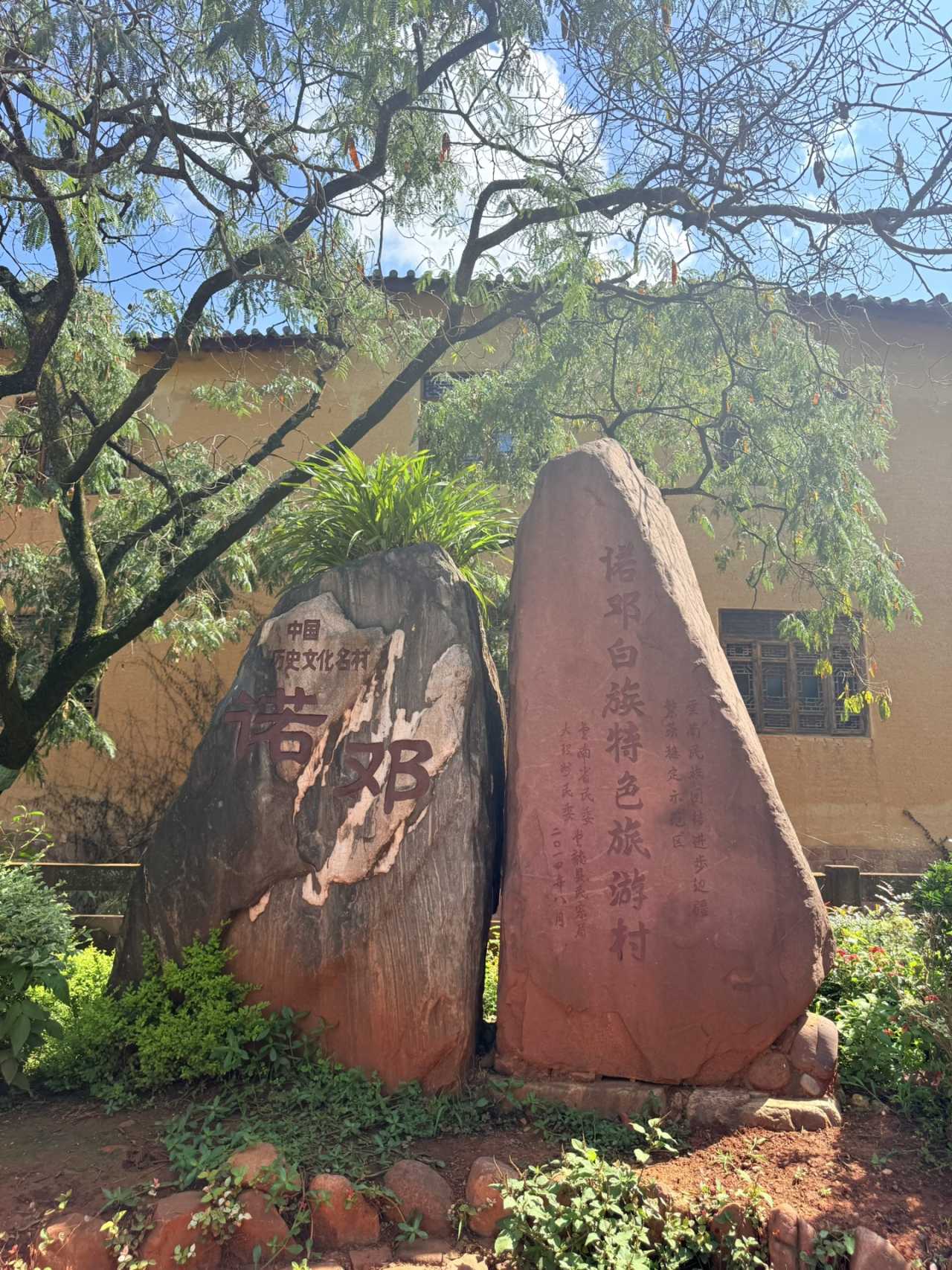
In 2006, it earned the label "Chinese Historical and Cultural Village"; in 2007, it was selected as one of China's first 15 "Chinese Landscape Villages"; and in 2013, it was designated a National Key Cultural Relics Protection Unit by the State Administration of Cultural Heritage.
Nuodeng Ancient Village belongs to Yunlong County in Dali Bai Autonomous Prefecture, nestled in a valley northwest of the county seat. Surrounded by mountains on all sides, at an elevation of 1,900 to 2,100 meters, over 300 households are built along the mountainside, layered up the steep slopes. The village preserves more than 120 buildings from the Ming, Qing, and Republic of China periods, along with over 20 ancient temples, all built in the typical Bai architectural style. There are also over 5,000 meters of stone-paved streets and alleys, and more than 200 ancient trees over a century old. In terms of cultural heritage, the people of Nuodeng take greatest pride in their ham culture, followed by well-salt culture and caravan culture. It has been called "a living textbook of ancient Chinese salt well culture."
Salt Spring Farmhouse: A Taste of Nuodeng Ham on the Tongue
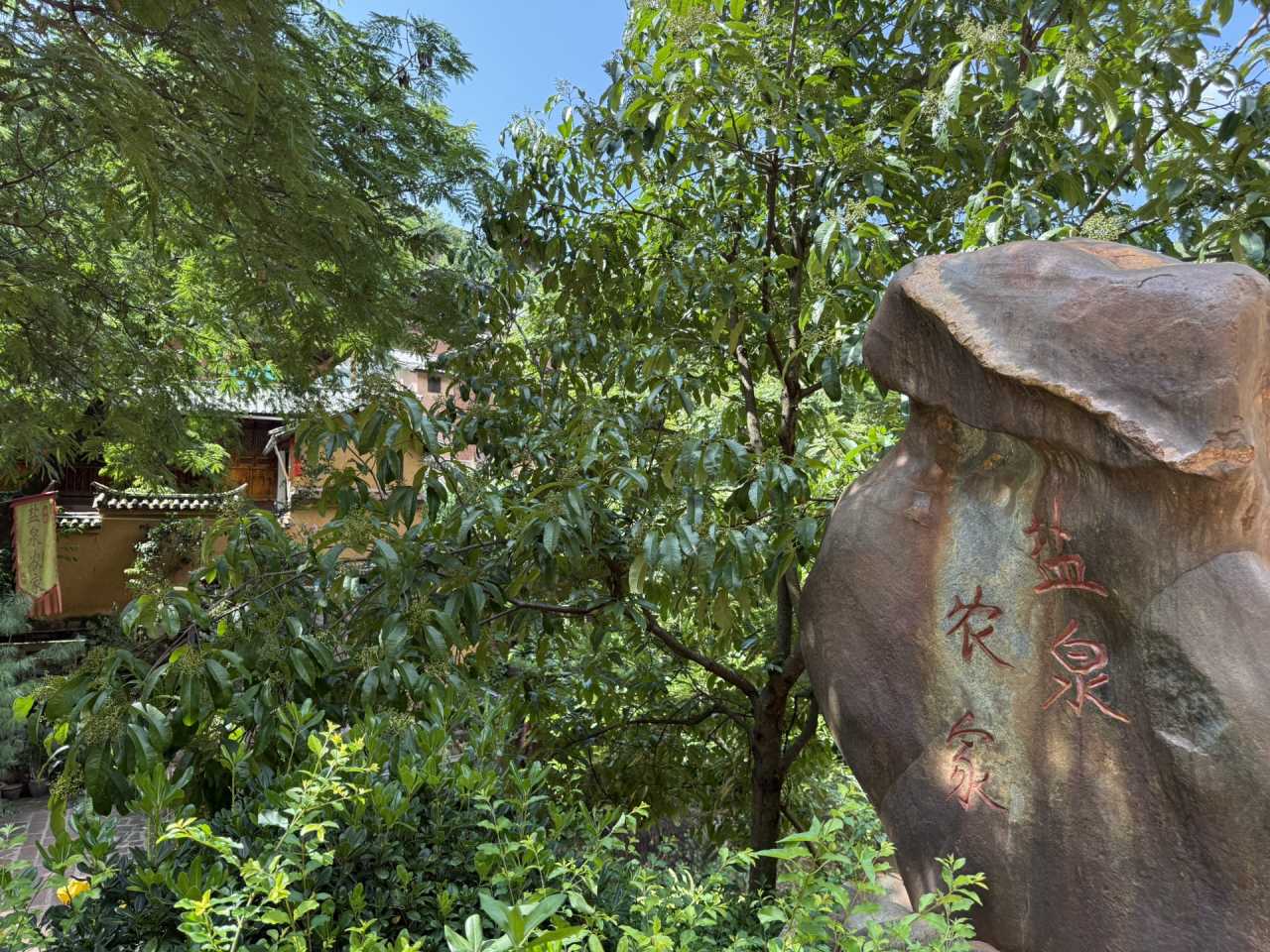
Carrying our light luggage, we walked just a few minutes before spotting a large stone at the entrance inscribed with "Salt Spring Farmhouse." Before us lay a small stream, its water so scarce it could only be described as a "trickle." I was puzzled—after all the rain in May and June, why was it so dry? This was the Nuo River, also called Nuo Water. Nuodeng Village sits against the Manchong Mountains, with surrounding ridges encircling the village. Clear springs from deep within the mountains converge to form this small river. The Nuo River winds its way for 3.6 kilometers before emptying into the Bijiang River. On the opposite bank, there was a relatively flat area, and in the distance, a large cluster of buildings was hidden among lush forests. The locals call the other side "Hedong" (East of the River).
A small bridge crossed the river, and the farmhouse on the other side was "Salt Spring Farmhouse"—the filming location for the first episode of "A Bite of China" Season 1 in May 2012. When the production team wanted to film ham-making in Nuodeng Ancient Village, the village recommended father and son Huang Guisheng and Huang Shujiang. First, Huang Guisheng was the 20th-generation inheritor of Nuodeng ham curing techniques. Second, the father and son had opened the "Salt Spring Farmhouse" at the village entrance in 2006. The crew found the location relatively open, providing ample space for camera equipment without having to haul everything up the mountain. After the show aired, both the father and son and Nuodeng ham became widely famous.
"Nuodeng Ham" relies on high-quality Nuodeng well salt, combined with traditional techniques and the natural local environment, resulting in cured ham with delicate meat and thin, fragrant fat. It has been called a living fossil of western Yunnan's intangible cultural heritage cuisine. Nuodeng has been mining salt wells since the Han Dynasty, producing well salt that naturally contains minerals like potassium and magnesium, with a sodium ion purity of over 96%—truly premium salt. When curing ham, the well salt slowly permeates the pork, inhibiting bacterial growth while giving the ham a unique salty-sweet, lingering flavor without any astringency—a core advantage that ordinary table salt cannot replicate. It can be said that Nuodeng well salt is the "soul" of Nuodeng ham, a presence spanning a thousand years.
During the curing process, fresh black pig hind legs are selected in November and December of winter. They must come from Yunnan black pigs raised free-range for at least a year, ensuring firm meat and even fat distribution. The legs are repeatedly rubbed with well salt, then buried in ceramic vats to cure for 30 to 40 days—the salt-rubbing technique of the curer is crucial at this stage. After the salt has penetrated, the hams are hung in the attic. The village sits at 2,000 meters elevation, with an annual average temperature of 15°C and humidity of 70%. The valley's attic spaces have excellent ventilation. As the hams hang and ferment, airborne microorganisms work synergistically with the salt, gradually transforming the meat into a rose-red color. After natural fermentation through spring, summer, and autumn, the ham's surface develops a natural "green mold"—beneficial bacteria that signal the flavor has matured. A Nuodeng ham takes at least two years, sometimes three, to be ready. When washed and sliced open, the ham reveals an oily, glossy exterior and a moist, translucent interior—a sight that immediately stimulates the appetite.
In simple terms, Nuodeng ham simply wouldn't be the same if made anywhere else. This is tied to the salt used, the annual average temperature, air circulation, humidity, microbial cultivation, and other factors. It's like the lesson from the textbook "Yanzi's Mission to Chu": "Oranges grown south of the Huai River are sweet oranges; north of the Huai River, they become bitter trifoliate oranges." In 2017, "Nuodeng Ham Curing Techniques" were listed as a Yunnan provincial intangible cultural heritage item.
We crossed the bridge and strolled into "Salt Spring Farmhouse." The Huang family's farmhouse has since expanded, adding a guesthouse, a garden restaurant, and even opening a ham factory in Yunlong County town. We toured their ham room, where dozens of air-dried hams hung from the ceiling. The four hams used in the filming of "A Bite of China" were still hanging on the wall, serving as proof of authenticity.
Huang Shujiang's son and daughter were helping their mother with accounts in front of the house, taking advantage of summer break to sell hams. I chatted with them, hoping to buy some ham. I said I wanted ham for raw consumption, but the pieces available had too much fat—quite wasteful. The older sister was very honest, saying these hams were better for cooking, where the fat wouldn't go to waste. For raw eating, only the darker, harder parts were good. Then their mother and grandmother came out. The mother said these were three-year hams, all suitable for raw consumption. So we bought two pieces of three-year, raw-edible "Nuodeng Ham." We asked about the father and son. The mother said Huang Shujiang had gone to the ham factory, while the elderly Huang Guisheng had retired to enjoy his later years and was resting in the inner courtyard. She invited us to go in and take photos with him.
Later that afternoon, my husband and I stopped to rest and chat at another household that also made and sold ham. We learned that Yunlong County has four or five ham factories. The largest is the "Nuodeng Ham Food Factory," founded in 2002 by Yang Wusong, the 20th-generation folk traditional ham curing artisan and a Yunnan provincial-level intangible cultural heritage inheritor of Nuodeng ham curing techniques, with an annual output of over 30,000 hams. The second-largest is the "Nuodeng Majinqiao Trading Co., Ltd.," founded in 2013 by Xu Kunbin, a retired soldier. With support from Pinduoduo, they established a "farmer-assistance workshop," producing about 20,000 hams annually. The Huang family by the Nuo River later opened the "Salt Spring Farmhouse Ham Co., Ltd.," but their ham output is relatively low, mainly supplying their own restaurant and storefront.
The man at this household also gave us some education: Nuodeng ham is never sold after just one year—a one-year ham has no fragrance at all. Three-year ham can be eaten raw; if not sold out, it's still edible in its fourth year, but after four years, the ham becomes inedible, like dry wood, with no texture or flavor. He then took us to his ham room to show us two "deadwood hams," leftovers from the pandemic years that hadn't sold, which he kept as souvenirs. I asked him to examine the two pieces we'd just bought. He squeezed them and said, "These aren't three years—they're probably two-year hams." I was alarmed, saying the seller had claimed they were three years old and I'd bought them for raw eating. He smiled and said, "Look how soft they are. You'd better cook them thoroughly—they'll be very fragrant." That was an eye-opener.
Nuodeng Salt Well: Two Thousand Years of "White Gold"
Leaving "Salt Spring Farmhouse," on the other side of the bridge lay Nuodeng's millennium-old "salt well." In 109 BC, Emperor Wu of Han conquered Yunnan and established Yizhou Prefecture, which included the county of Bisu in the Bijiang River basin centered on Nuodeng. "Bisu" means "the place with salt." The Nuodeng salt well has been mined since the Han Dynasty, a span of over two thousand years.
During the Tianbao era of the Tang Dynasty, after the Nanzhao regime conquered the relevant territories, it established Ningbei Military Command, which was renamed Jianchuan Military Command in 791 AD, governing areas including Xi Nuodeng. As recorded in the "Book of Barbarians," "Jianchuan has the Xi Nuodeng Well," indicating that Nuodeng's salt production had already reached significant scale. In 1383, the Ming court established four Salt Tax Offices in Yunnan, among which the "Five Wells Salt Tax Office" governed Nuodeng and four other salt wells, with its seat in Nuodeng itself—one of the seven major Salt Tax Offices nationwide at the time. By the mid-to-late Ming Dynasty, the Five Wells Office was remitting over 38,000 taels of silver annually to the central government in salt taxes.
In ancient times, Nuodeng salt, renowned for its superior quality, was sold as far as Baoshan, Tengchong, and even Burma. With large-scale salt production came transportation routes, giving rise to the "Salt Horse Ancient Road." Nuodeng's Salt Horse Ancient Road has a long history, originating in the Han Dynasty, flourishing in the Tang, and reaching its peak in the Ming and Qing. From Nuodeng Village, the road led east to Dali and Kunming, south to Baoshan and Tengchong, west to Liuku and Pianma, and north to connect with the "Tea Horse Road" to Lanping, Lijiang, and Tibet. Nuodeng became the axis of the salt horse roads leading to various parts of western Yunnan, and thanks to this network, it grew into a commercial center for the region.
The "Nuodeng Salt Well" before us was housed in a new building with yellow earth walls built by the government. Inside the salt well building were a brine well and a freshwater well, with interconnected reservoirs and underground passages at the bottom. The brine well was 21 meters deep, while the freshwater well was used to divert groundwater and rainwater from around the rock face. In ancient times, brine was drawn from the well by manual labor, then distributed to individual households to boil into salt. In 1992, the last salt factory in Nuodeng ceased production, and in 1995, the village's salt well officially stopped operations. However, many villagers still take advantage of their spare time to draw brine and make cylinder salt (lump salt), which they sell as tourist souvenirs.
Multi-Terrace Courtyards and the "Big Green Tree": The Living Atmosphere of Nuodeng
Following the main road uphill, we soon found ourselves out of breath. Halfway up, a woman approached us, asking if we were staying at "Nuodeng View Inn." It turned out the inn owner, worried we might get lost, had asked her relative to wait for us along the path. Hot and tired, we gladly accepted her invitation to rest at her home.
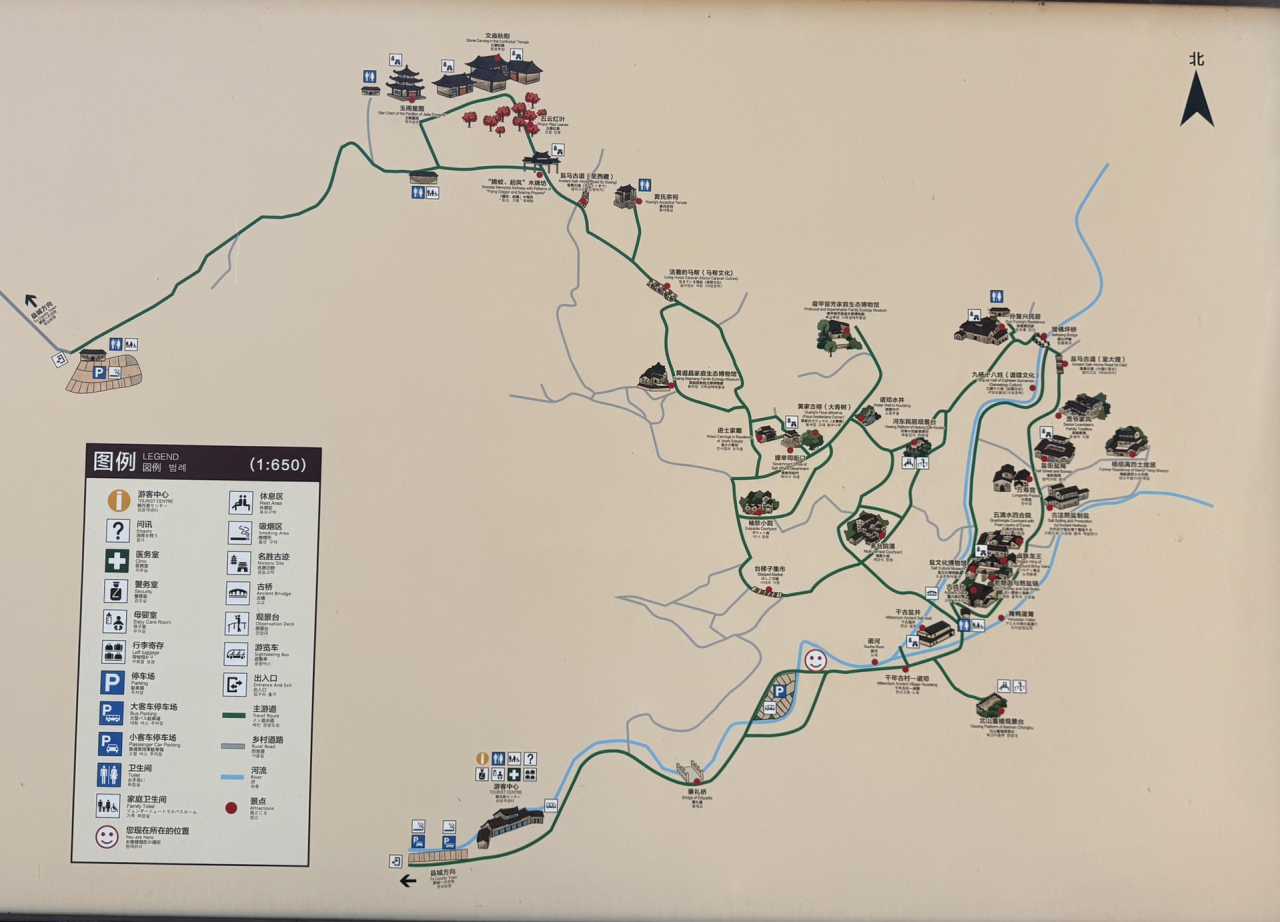
To our surprise, her house was part of a national cultural heritage site, marked on the Nuodeng scenic area map as "Multi-Terrace Courtyard" (Yang Rujie Residential Courtyard). Multi-terrace courtyards are a unique form of "terrace-style quadrangle courtyard" characteristic of Nuodeng's northern mountain residences. Because the houses are built on steep slopes, the courtyard has three or even four levels, rising step by step until reaching the main hall. The main hall, side rooms, and front rooms are staggered at different heights due to the terraces, creating eaves that overlap in layers from front to back, left to right, forming "four-drip/five-drip/six-drip quadrangle courtyard" roofs. Her second floor also had guest rooms, but due to the building's layout, only rooms with double beds were available. This woman was very warm-hearted, helping carry our backpacks and offering us fans and tissues. When we complimented her on her well-maintained plants and succulents, she was absolutely delighted.
Soon, the inn owner arrived and took us to check in. The inn was perfectly located, halfway up the mountain on the main street, just thirty meters from the "Big Green Tree Restaurant," making meals very convenient. The inn had a large common area with a great view of the village scenery. The owner was also very friendly, gifting us a pair of Nuodeng cylinder salt lumps as we left.
Across from the inn was the "Nuodeng Huang Family Ham Workshop," with a plaque on the wall reading: "Yunnan Nuodeng Huang Family 20th Generation Ham Curing Intangible Cultural Heritage Inheritor · A Bite of China · Nuodeng Huang Family Ham Workshop." As I understood it, this family's ancestors likely shared the same lineage as Huang Guisheng and Huang Shujiang, and held the intangible cultural heritage certification, hence their proud claim of "Huang Family 20th Generation" and "Intangible Cultural Heritage Inheritor." I was a bit puzzled as to why everyone's label was "20th-generation inheritor"—after hundreds of years of transmission, how could the generation count be so coincidental?
According to the inn owner, this family had been making ham for generations, and the current workshop was run by three Huang brothers. The eldest suffered from severe rheumatism and had difficulty walking; the third brother also had a job down the mountain; the second brother was the main ham-maker, having previously worked as a master craftsman at the retired soldier's ham factory—the second-largest in Nuodeng—before returning home a few years ago to start his own business. She said all three brothers were honest men and their hams were reliable. We later bought a 2-jin (1 kg) piece of three-year ham from them as well. Ham prices in the village were essentially uniform: 100 yuan per jin for two-year ham, 120 yuan per jin for three-year ham. Considering the ham I'd bought on Taobao worked out to about 500 yuan per jin, this was an incredible bargain.
The Big Green Tree: Six Hundred Years of Vigilance
After settling in at the inn, we first went to the adjacent "Big Green Tree · Huang Gui Former Residence Restaurant" for lunch. This restaurant was the filming location for the 2020 reality show "So Glad to Meet You," and the entrance featured photos of the owner with Zhou Xun, Aya, and Liu Wen, as well as with Hua Shao, Richie Jen (Ren Xianqi), and others.
The "Big Green Tree" at the entrance is one of Nuodeng Ancient Village's landmarks, visible from the foot of the mountain outside the village. Earlier, when we were looking for the inn, the woman selling salt at the bottom of the hill had pointed toward the Big Green Tree to give us our bearings. The tree stands at the village center—a mountain banyan said to be 600 years old. In Bai culture, the mountain banyan is considered a "feng shui tree" and "sacred tree," symbolizing a thriving, prosperous village, and carrying the people's wishes for peace and happiness.
The Big Green Tree stands by the roadside, its roots powerful and gnarled, intertwining in all directions. Its trunk is ancient and thick, requiring several people to encircle with their arms. The brown, rough bark is etched with the patterns of time. Its canopy is vast, spreading outward in all directions like a giant green umbrella sheltering the local people. Sunlight filters through the dense foliage, casting round spots of light onto the blue stone path below. Someone had written a poem called "Under the Tree" and hung it from a branch, suspended on a cord.
Oh, ancient Big Green Tree, you have witnessed Nuodeng's transformation from a prosperous salt-industry town to today's historical and cultural village, a deep-mountain cultural tourism destination. You have also witnessed the countless sons and daughters of Nuodeng who have come and gone over the centuries.
Reflections After Nuodeng
In our day and a half in Nuodeng Ancient Village, we walked past the millennium-old salt well, tasted the legendary Nuodeng ham, gasped for breath on the steep stone-paved paths, and rested and daydreamed under the Big Green Tree. Here, there is no noise of Lijiang Ancient Town, no commercialization of Dali Ancient Town. There is only the salt flavor and ham fragrance accumulated over a thousand years, along with the life wisdom passed down through generations of the Bai people.
As we left Nuodeng, I turned back for one last look at the ancient village hidden in the valley. The Big Green Tree still stands tall, the Nuo River still flows, and those hams hanging in the attics are slowly maturing in time. Perhaps this is Nuodeng's charm—it is unhurried, taking a thousand years to slowly develop its own unique flavor.
On the next leg of our journey, we will continue along the Nujiang River. There are zip lines, Tiger Leaping Gorge, Zhiziluo Village, and many more stories waiting to be discovered. But Nuodeng, this millennium-old Bai village, has already left a deep imprint on my heart.
You should also read:
Into the Hidden Valley: A Solo Journey Through the Mysterious Dulong River
Into the Hidden Valley: A Solo Journey Through the Mysterious Dulong River Deep in the northwestern corner of Yunnan Province, tucked away from the modern world, lies a place that feels like a secret whispered among mountains. The Dulong River Valley is not just a…
Continue reading...
God’s Abandoned Palette: A Self-Drive Journey Through Yunnan’s Dongchuan Red Land
God’s Abandoned Palette: A Self-Drive Journey Through Yunnan’s Dongchuan Red Land Travel has never been about reaching some distant geographic coordinate. It’s about encountering, along the way, the version of yourself buried beneath the rubble of daily routine. During this May Day holiday, I finally…
Continue reading...
Two Girls' Graduation Trip: Dali and Shuanglang – A Poetic Farewell to Mountains and Sea
Two Girls' Graduation Trip: Dali and Shuanglang – A Poetic Farewell to Mountains and Sea Preface: Catching the Tail of Youth, Heading South During our senior year of college, my roommate and I – two girls studying in Beijing – decided to bid farewell to…
Continue reading...