My Body's Home, But My Heart's Still in Mangshi: An Immersive Journey into Yunnan's Slow Life
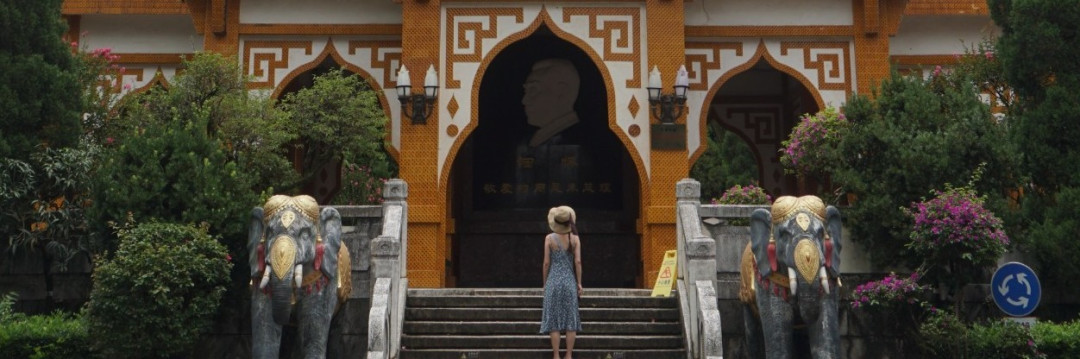
My Body's Home, But My Heart's Still in Mangshi: An Immersive Journey into Yunnan's Slow Life
Some trips are check-in style "been there, done that" affairs. Others are immersive retreats for body and soul. Mangshi, a small Dai town tucked away on the China-Myanmar border, belongs firmly in the latter category. The moment my plane touched down in Chongqing, my body was back — but my heart remained in that place shaded by jackfruit trees, swaying palm fronds, and bathed in the glow of golden and silver pagodas.
Departure: A Story That Began in the Office
This was my first long trip since the pandemic, a full two years since my last journey. Standing in front of the camera, I had to relearn that sun-kissed relaxation. Our destination was Yunnan, but it wasn't Dali's romantic scenery that drew me — it was the aroma of Baoshan's coffee, and the abundance of Mangshi in July: jackfruits by the roadside, mangoes hanging from trees. Just imagining it made my heart race.
For two cities, we chose a surprisingly simple mode of transport: shared electric scooters. According to the travel guides, the scooters were great at everything except sun protection. But after experiencing them firsthand, I discovered that besides the sun, there were also Mangshi's "come-fast-go-fast" rain showers that would soak you through before you knew it. It was these little imperfections that etched the city deeper into my memory.
Our story extended from the office to this trip. Four women, starting from Chongqing, with one joining us in Kunming. The day before departure, news of train cancellations threw a wrench in our plans. Fortunately, we managed to rebook — though our seats kept changing, and none of us sat together. Jun asked, "Should I bring a mini mahjong set?" I thought we probably wouldn't have much chance to play. How wrong I was. Every day of the trip, the first thing we did upon returning to our hotel was play mahjong. Even on the standing-room-only carriage from Baoshan back to Kunming, we set up a tiny table in the connecting area. A nearby girl wanted to join — but space was limited, leaving other standing passengers to watch our game with itchy fingers. The charm of national treasures truly knows no boundaries.
Baoshan: A Coffee-Scented Transit Hub
First Impressions of Baoshan
After arriving in Kunming, we transferred directly to Baoshan. During the nearly four-hour ride, we weren't seated together again. After shamelessly switching seats with someone, Jun had just brewed a cup of instant noodles when she knocked the whole thing over onto both of us. In my old job, I used to warn passengers about burns every day — now as a passenger myself, I realized how tricky those noodle cups really are. A girl nearby handed us wet wipes to clean up the mess.
Outside Baoshan station, we hailed a taxi. The driver was a woman who looked like the Taiwanese actress Yao Yao, even her voice was similar. She enthusiastically recommended local Baoshan food and tips for Mangshi, and told us that hiring her car to Mangshi cost about the same as the bus, without the extra highway toll. We immediately saved her number — and later relied on her for our return trip from Mangshi to Baoshan.
First Meal in Baoshan: Banqiao Laojiu Restaurant
The Big Mouth Tea (大口茶) we had on the side was the best drink of the entire trip. The sticky rice aroma paired with fragrant lemon created a perfect balance. Every Big Mouth Tea we tried afterward either had stale lemons or insufficient rice tea fragrance.
Banqiao Laojiu Restaurant's specialty was fire-roasted pork (火烧肉), a dish found in many Baoshan eateries. To be honest, it tasted pretty similar to boiled sliced pork. The shredded potatoes weren't as good as those from southeastern Chongqing — they should be crispy, evenly divided like pizza, slightly burnt at the edges, tender inside. But here, they were soft and not crispy at all.
The biggest surprise was finding pea shoots in summer. In winter, when I worked on trains, this was the one thing I craved most — its fragrance was unbeatable. The pickled vegetables in the corner were complimentary, and they turned out to be the best thing on the table — the chili peppers were crunchy, the spice level just right, and the restaurant even sold them separately.
Many Yunnan restaurants use low tables and stools, forcing you to hunch over while eating. I couldn't quite get used to it.
Xiyin Coffee: A Place Made with Heart
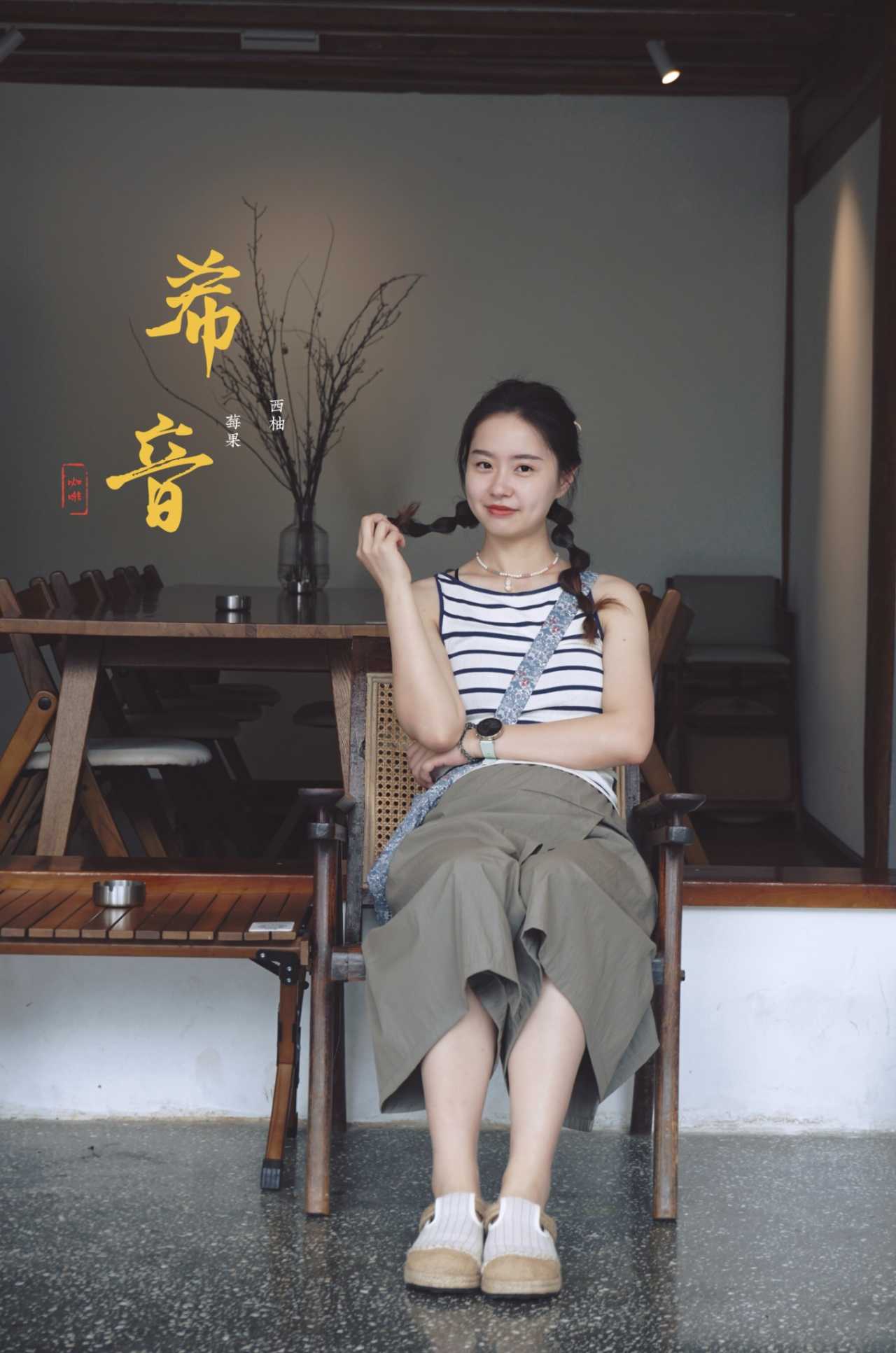
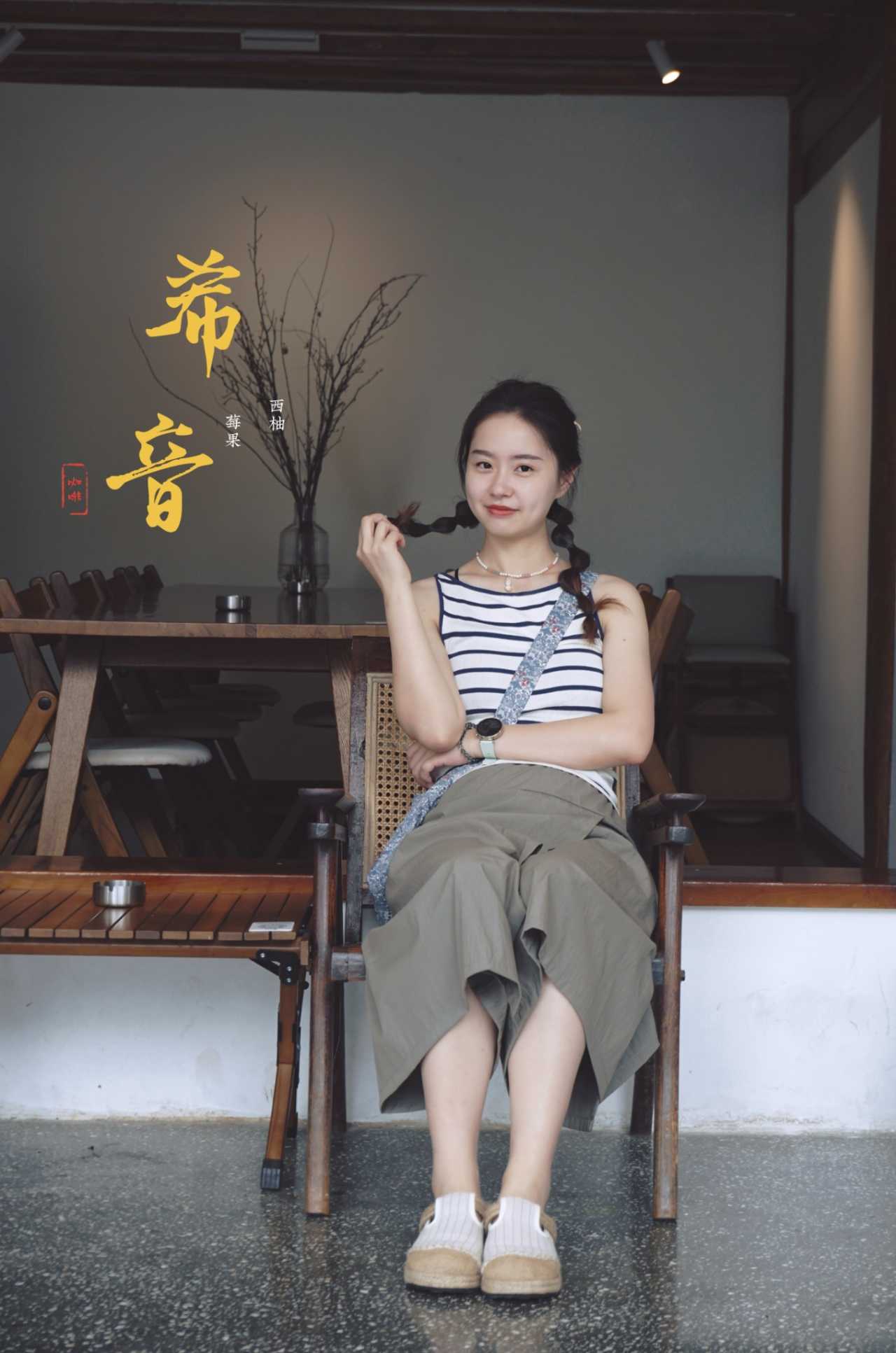
At ten in the morning, Xiyin Coffee had no customers yet. The owner said we could order anything except the signature creations — but we'd come specifically for those. As the first customers of the day, we enjoyed the rare luxury of a quiet, empty café — online reviews said it often gets so busy you have to queue for a seat.
Xiyin Coffee sits by a traffic light on Heping Road, in a converted two-story old building. The space is spacious, with generous distances between seats — perfect for gathering with friends. Orders are placed by scanning a QR code, with clear categories: specialty drinks, traditional coffee, creative coffee, coffee beans, etc. Each product comes with a unique description, poetic names, and ingredient lists. The owner told us there are seasonal limited editions and year-round staples, each name the result of constant innovation by the staff. This, I think, is what it means to make coffee — and run a business — with heart.
We each picked our favorite coffee card to use as bookmarks later — a nice form of reuse.
"You Berry Okay?" (你莓事吧?) — Main ingredients: strawberry, blueberry, rose jam, Typica coffee. The first sip hits you with berry sweetness and tartness, then coffee's bitterness, all blended with ice — sweet, sour, and bitter in one cup. The staff recommended it, and it's the shop's bestseller. The name's meaning? They hope everything goes smoothly after drinking it — no worries at all.
"Hee Hee Hee Passionfruit" (嘻嘻嘻西番莲) — Main ingredients: passionfruit, espresso. This one was interesting. The description read: "Baoshan locals laugh and call it xifanlian; outsiders only know it as passionfruit." And yes, we outsiders only knew it as passionfruit — never knew it had another name. This drink might not be immediately appealing, but after a few sips, a sweetness lingers — the more you drink, the more you appreciate it.
A few hundred meters' walk from Xiyin Coffee is Bilton Coffee. Baoshan has many coffee plantations, and Bilton has its own coffee estate in Lujiangba. If you have time, you can visit the estate for picking and primary processing, and even stay overnight. Bilton is a long-established Baoshan coffee brand. The ground floor serves as a coffee exhibition hall, where staff enthusiastically explain coffee knowledge, while the second floor is an experience space. Since we'd just had coffee, we only shopped on the first floor, selecting a few items to be shipped back to Chongqing.
Mangshi: Immersive Slow Living

Where to Begin
Mangshi, called "Meng Huan" in the Dai language, is the capital of Dehong Dai and Jingpo Autonomous Prefecture in Yunnan. Currently, you can reach Mangshi by plane or bus. Within the city, attractions like the Golden and Silver Pagodas, and the Mengbanaxi Rare Plants Garden are all close to each other, offering rich tourism resources.
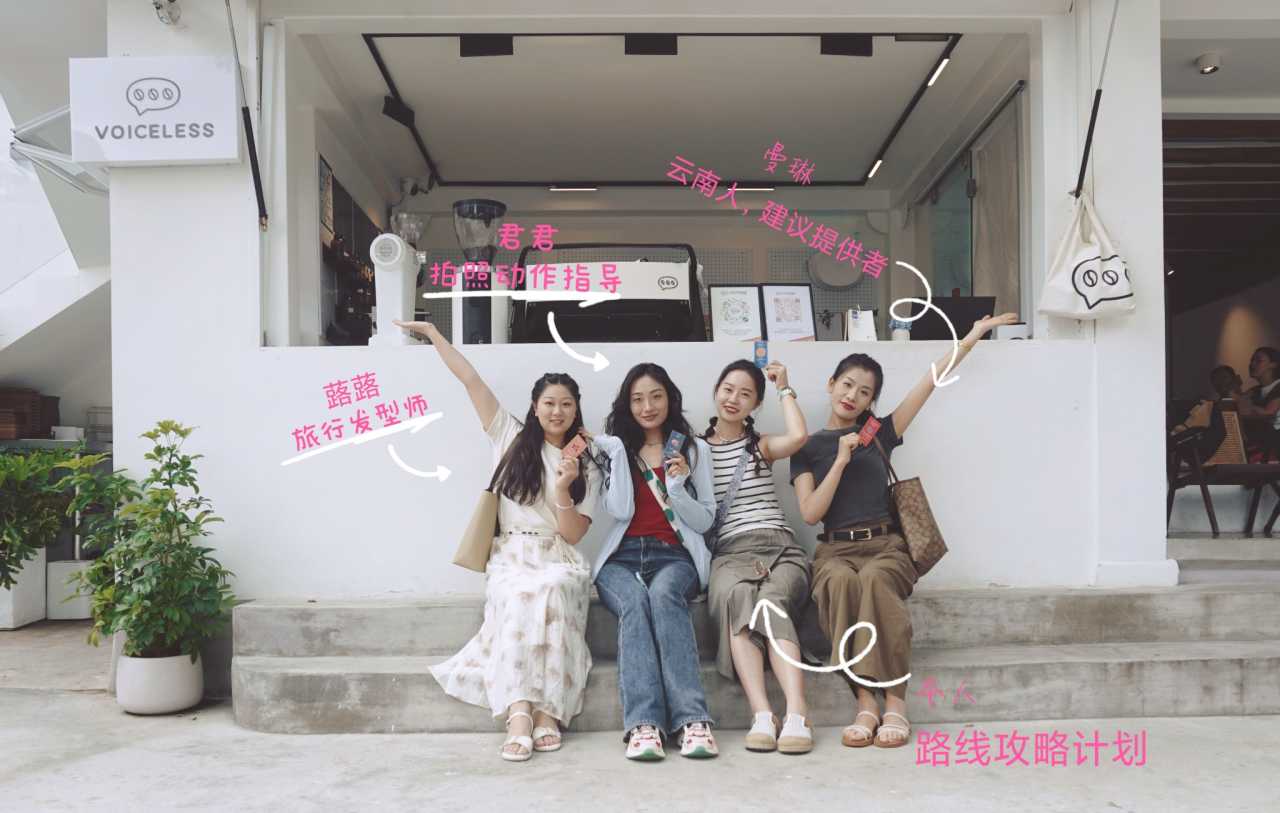
Travel in Mangshi is about deep experience, not just snapping a few photos and aggressively promoting this or that spot.
July in Mangshi means abundant fruit, though prices are slightly higher than in Baoshan. For mangoes, I recommend the Shenglong variety — golden yellow, round shape, plump and juicy flesh, incredibly sweet, and reasonably priced. A taxi driver recommended them, and after that, we bought Shenglong mangoes every time we saw them. On July 13, 2024, Mangshi Square started distributing free fruit — unfortunately, our trip ended on July 11, so we only had photos of roadside jackfruits, never got to taste them. A real pity.
The palm trees lining the streets give everything a Southeast Asian vibe. You don't have to go to a specific street — many roads look the same. The road we used most often, we stopped in the middle of a crosswalk for a few seconds to snap a photo — that was enough. Even luckier, we got to ride along that road multiple times.
Dehong Prefecture Museum: The First Step to Understanding a City
I recommend starting at the Dehong Prefecture Museum. Only by first understanding the history and ethnic costume characteristics can you begin to grasp the streets and alleys of Mangshi.
The Dehong Prefecture Museum officially opened on February 7, 2021, with free admission. The cultural and creative merchandise section isn't mature yet — after touring the museum, I wanted to visit the gift shop, but it was still under renovation. A pity.
The museum's logo is a Longjiang-style asymmetrical bronze battle-axe. The main exhibition, titled "A Bright Pearl on the Southwest Silk Road — Dehong," presents a panoramic view of Dehong's ecological civilization and socio-historical evolution. The first floor houses the entrance hall, natural history hall, and historical hall; the second floor features the ethnic hall ("Colorful Peoples, Each Beautiful in Their Own Way, Beauty in Diversity"); and the third floor hosts temporary exhibitions. From June to October, the exhibition was "The Voice of China — Nie Er." Growing up, I only knew Nie Er as the composer of the national anthem — only now did I learn he was Yunnan-born, his music influenced many, and he also wrote "The Newsboy Song." On July 17, 1935, at just 23 years old, Nie Er tragically drowned while swimming in Fujisawa, Japan. A note written by a young visitor expressed deep remembrance through this themed exhibition, ensuring Nie Er's spirit is passed down through generations.
Bingwu Village: Custom Ethnic Clothing
Manlin and I hadn't prepared ethnic costumes in advance, so we stopped at Bingwu Village briefly. Many shops offer custom clothing, ranging from a few hundred yuan to high-end pieces. People come to Mangshi to buy wedding photoshoot outfits and stage costumes. There are actually many such shops in Mangshi — I recommend browsing around, as prices can vary dramatically even one street over.
Dai Ancient Town: The Beauty of the Night Market
At five in the afternoon, we rode our scooter to Dai Ancient Town. The weather was beautiful, but there were very few people around, and hardly any shops were open. We wondered: Didn't people say the night market had lots of stalls? Our first dessert was the local Paoluda (泡鲁达) — a Burmese and Thai dessert that later spread to Mangshi, Ruili, and other parts of Dehong, Yunnan. Sweet with a hint of coconut, its main ingredients are milk, sago, shredded coconut, condensed milk, and dried bread. It sounds simple, but you can't replicate that authentic flavor at home. One cup is enough — it gets a bit cloying toward the end.
We asked a staff member and learned that the night market starts at eight in the evening, tied to sunset time — quite different from Chongqing's night market hours. Well, we decided to take it easy and wander around — as the old saying goes: "Since we're here anyway!"
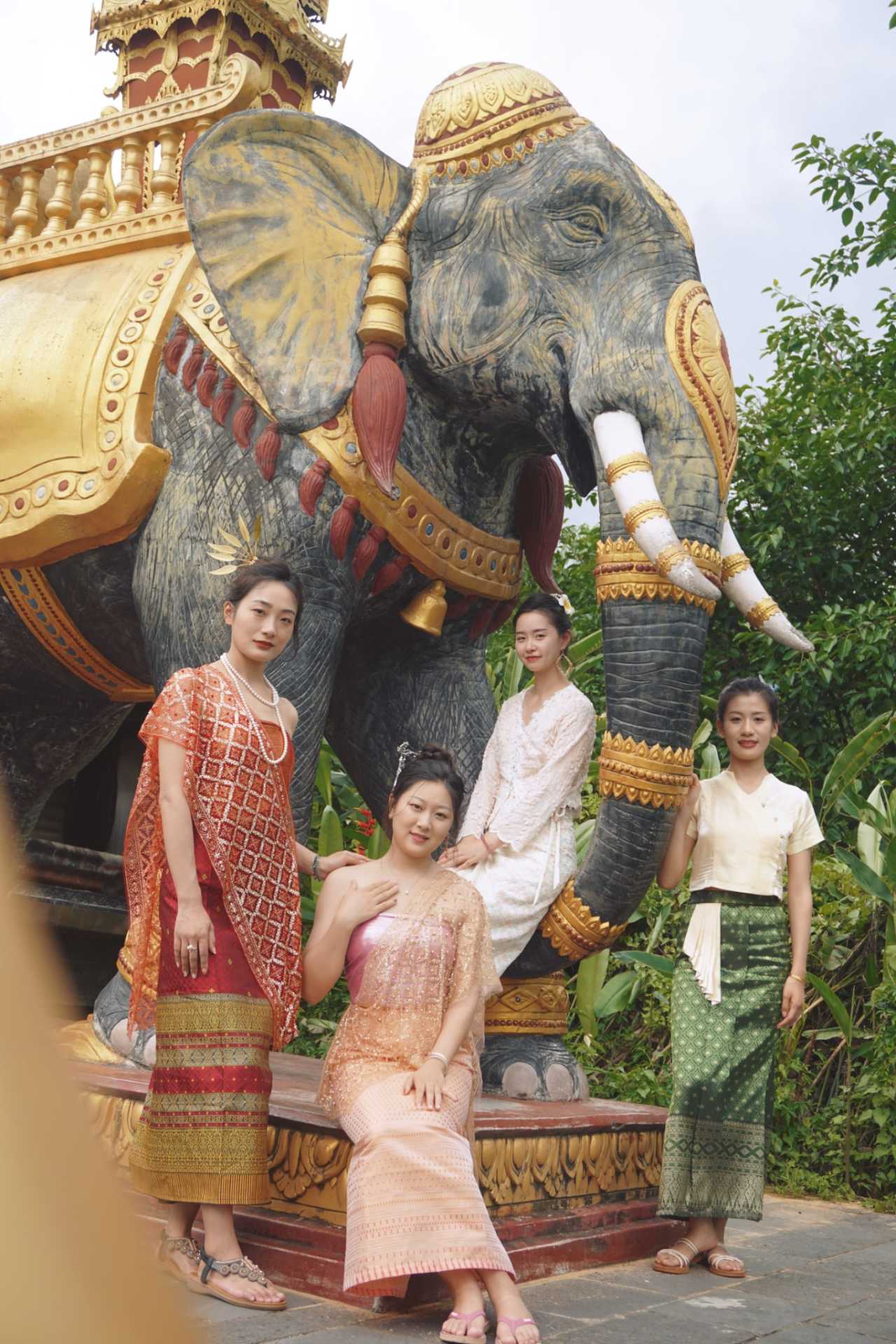
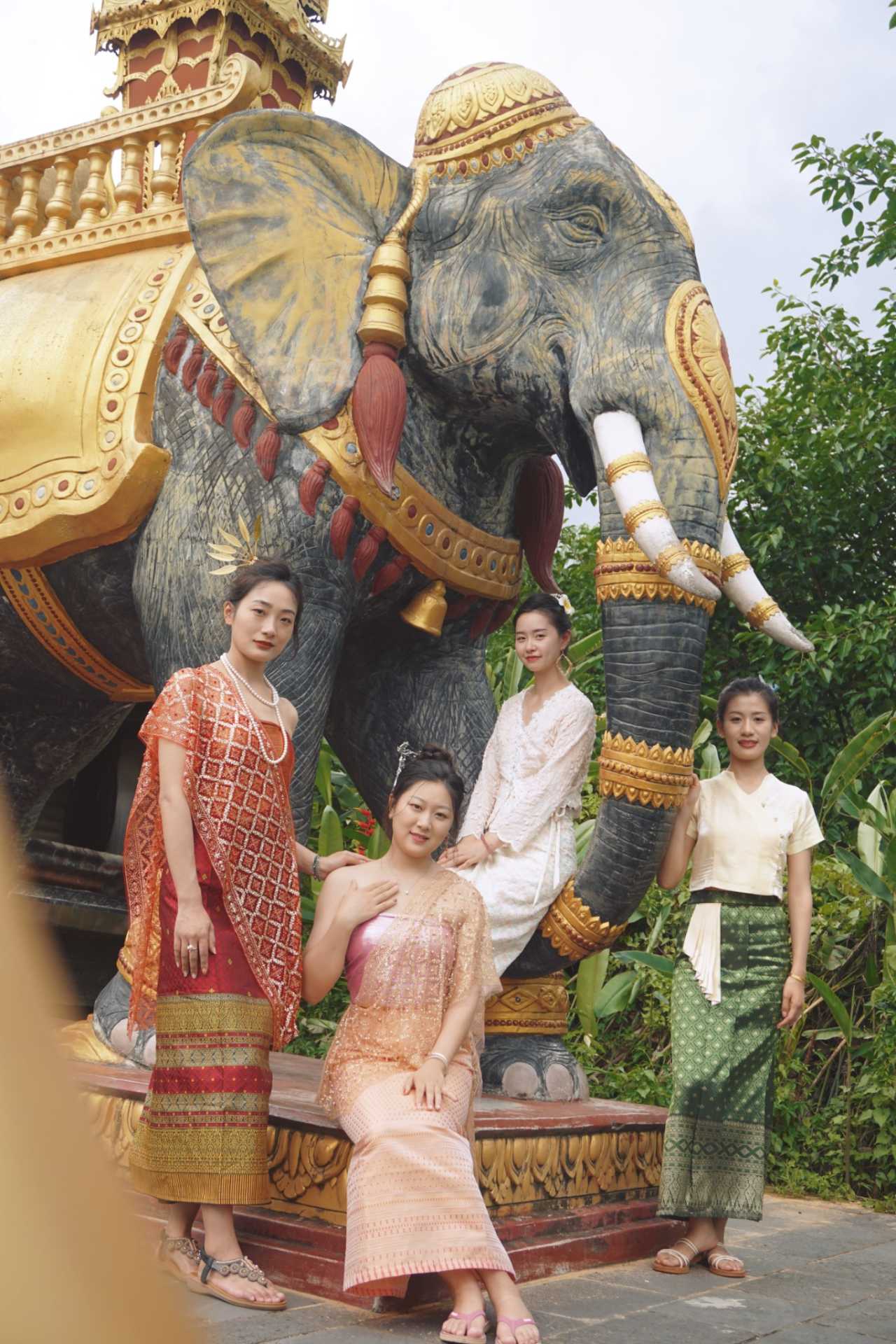
The fallen frangipani flowers became a treasure — we had to tuck them in our hair. At an accessory shop, we bought four pairs of earrings. The owner was very kind — Lu Lu doesn't have pierced ears, so she converted them to clip-ons for free. We just fell in love with them at first sight, without thinking about what occasion or outfit they'd match — as it turned out, the Golden and Silver Pagodas the next day provided the perfect setting.
On the way back, caught in a sudden downpour without an umbrella, we took shelter at a supermarket entrance. The happier we'd been moments before, the more pathetic we looked now. Those riding with one hand holding an umbrella and the other steering continued through the rain — my advice: don't. It's too dangerous!
Meng Huan Golden and Silver Pagodas: Half a Day as a "Dai" Girl
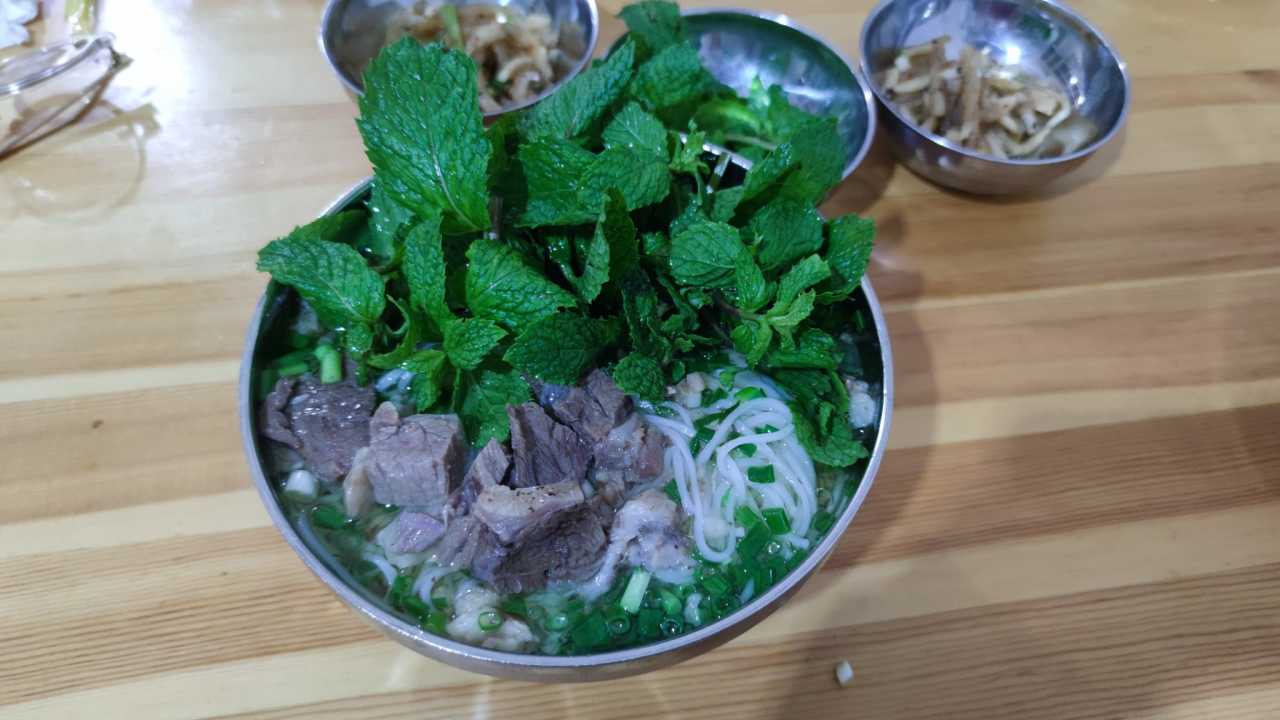
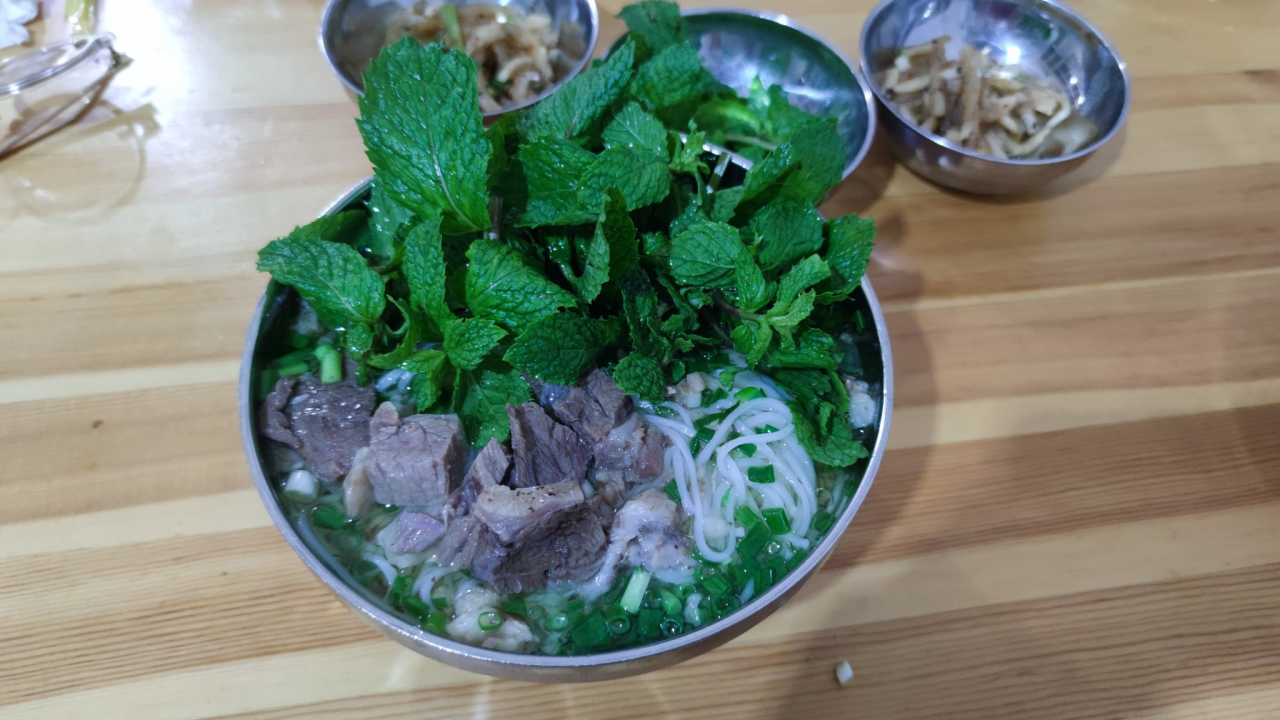
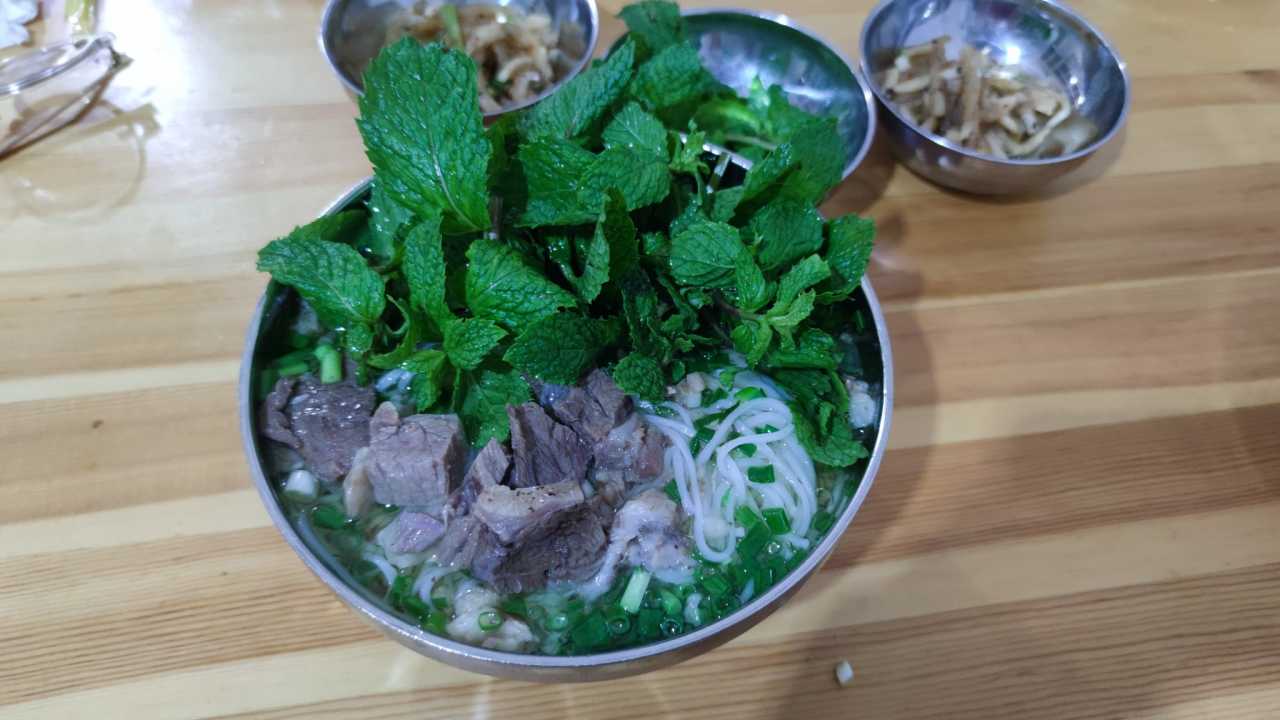
Rice noodle soup (饵丝) kicked off our "highlight" day. At Lanlu Breakfast Spot (烂路早点), we accidentally got to eat the mint leaves I'd been craving. Here, I learned what "jia mao" (加冒) means — more meat. The beef rice noodle soup I ordered already had meat, but if you want extra, you tell the owner "jia mao." For the rest of our time in Mangshi, I ordered rice noodle soup without extra meat!
Meng Huan Silver Pagoda — Adult ticket: 40 yuan/person. There's a sightseeing buggy inside. The pagoda itself isn't large, but there's a steep staircase to climb. If you're with elderly, children, or have mobility issues, take the buggy. Visiting during the day is fine except for the sun.
Also known as the Thousand-Buddha Silver Pagoda, it sits on the hill opposite the Golden Pagoda — just a few minutes' walk away. The entire structure is pure white, creating a striking contrast with the golden pagoda across the way.
Entering through white marble lotus carvings, you'll see the "hand gestures" of Dai traditional culture. The hand-sign area displays 24 gestures on both sides, each with different meanings. For example, palms together in prayer — in Dai sign language, it means "welcome."
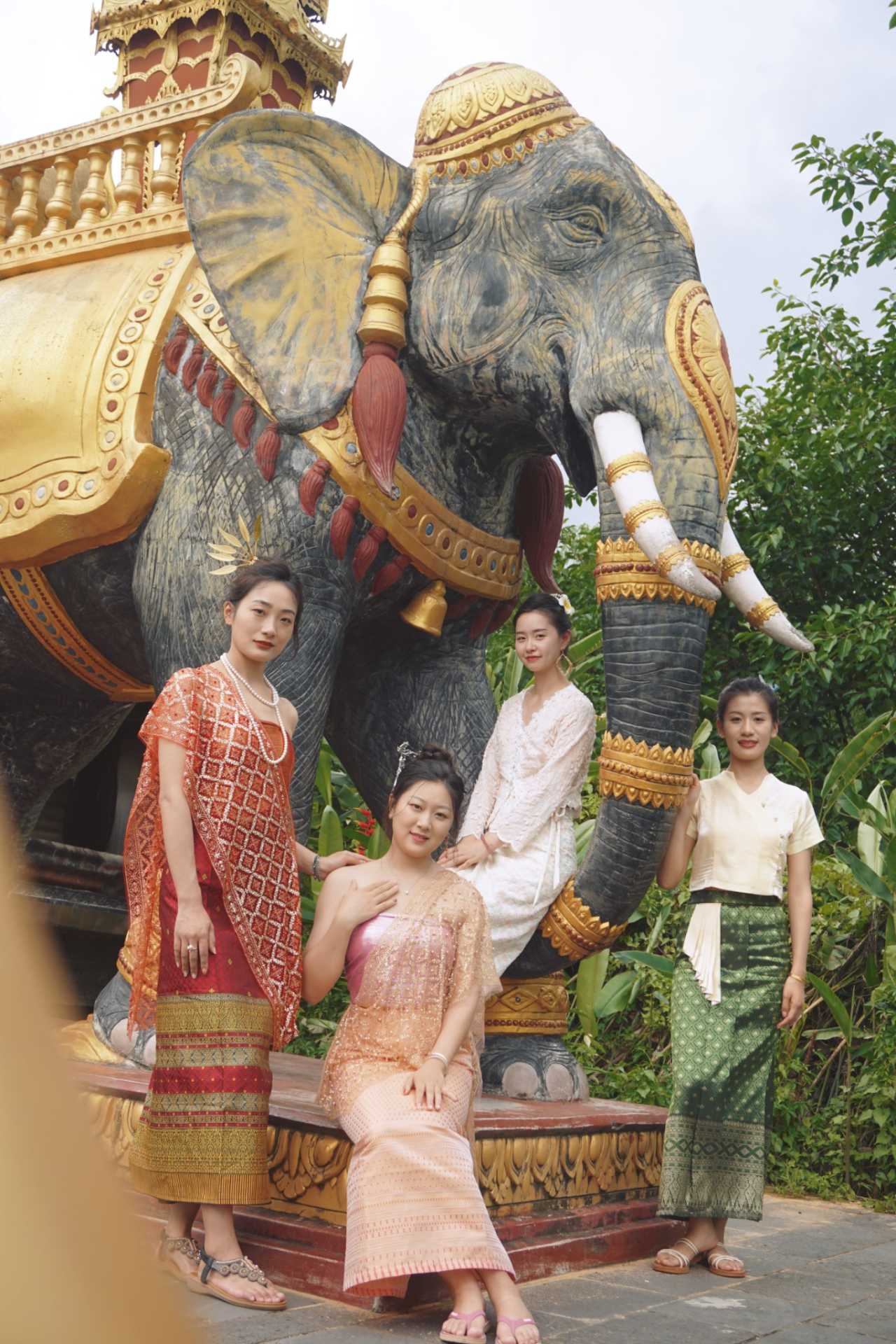
Wearing Dai clothing for photos instantly immerses you in the scene. My red dress felt a bit out of place when entering the park — once we strapped on our bags and unfolded our sun shields, our casual outfits instantly looked like we were assistants. Jun was skilled at hair styling, effortlessly putting up a bun. I ended up choosing a light pink Nyonya-style outfit.
The pagoda reflection area uses water as a mirror. The pagoda has four levels and 20 small towers, each spire crafted from traditional Dai silver. Be careful of slipping when taking photos here.
Climbing the steps from the Silver Pagoda, you reach the main tower — elegant and dignified. The tower stands 66 meters tall, 46 meters in diameter, composed of 80 small towers, all made from Dai silver or silver-plated materials — hence the name Silver Pagoda. From the observation platform, you get a panoramic view of Mangshi.
Beside the main tower is the "Sky Mirror" photo area, with two shooting platforms. Lucky for us, we visited in the morning when it wasn't crowded — no queuing or time limits (when busy, it's reportedly limited to 5 minutes per person). The sun was blazing, and with the ground mirrors reflecting, any exposed skin touching the surface burned within seconds.
Leaving the Silver Pagoda, a short walk brought us to Lei Yarang Bookstore (雷牙让书店) for a rest. Mangoes hung within reach, though not yet ripe. The sunset viewpoint also offers city views.
From 10 AM to 3 PM, we explored thoroughly. By the time we reached the Golden Pagoda, we were too exhausted to go inside — we just took photos outside. Even standing at the foot of the steps, we could feel the grandeur of the Golden Pagoda.
Xinwan Factory: The Young People's Night Market
After returning from the Golden and Silver Pagodas, our skin had darkened a shade. Back at our accommodation, we immediately removed makeup, showered, and applied face masks. Learning from the previous night's market experience, we decided to head out at 7:30 PM!
Longan trees lined the roadside — so close, yet we couldn't reach the fruit. I was afraid of making the Mangshi headlines the next day!
Xinwan Factory is a night market favored by younger crowds. Around 8-9 PM, the energy peaks. If you enjoy lively atmospheres, come here for food. There's also a fruit and vegetable market, though prices are slightly higher. For fruit shopping, I recommend Hongli Comprehensive Market (宏利综合市场).
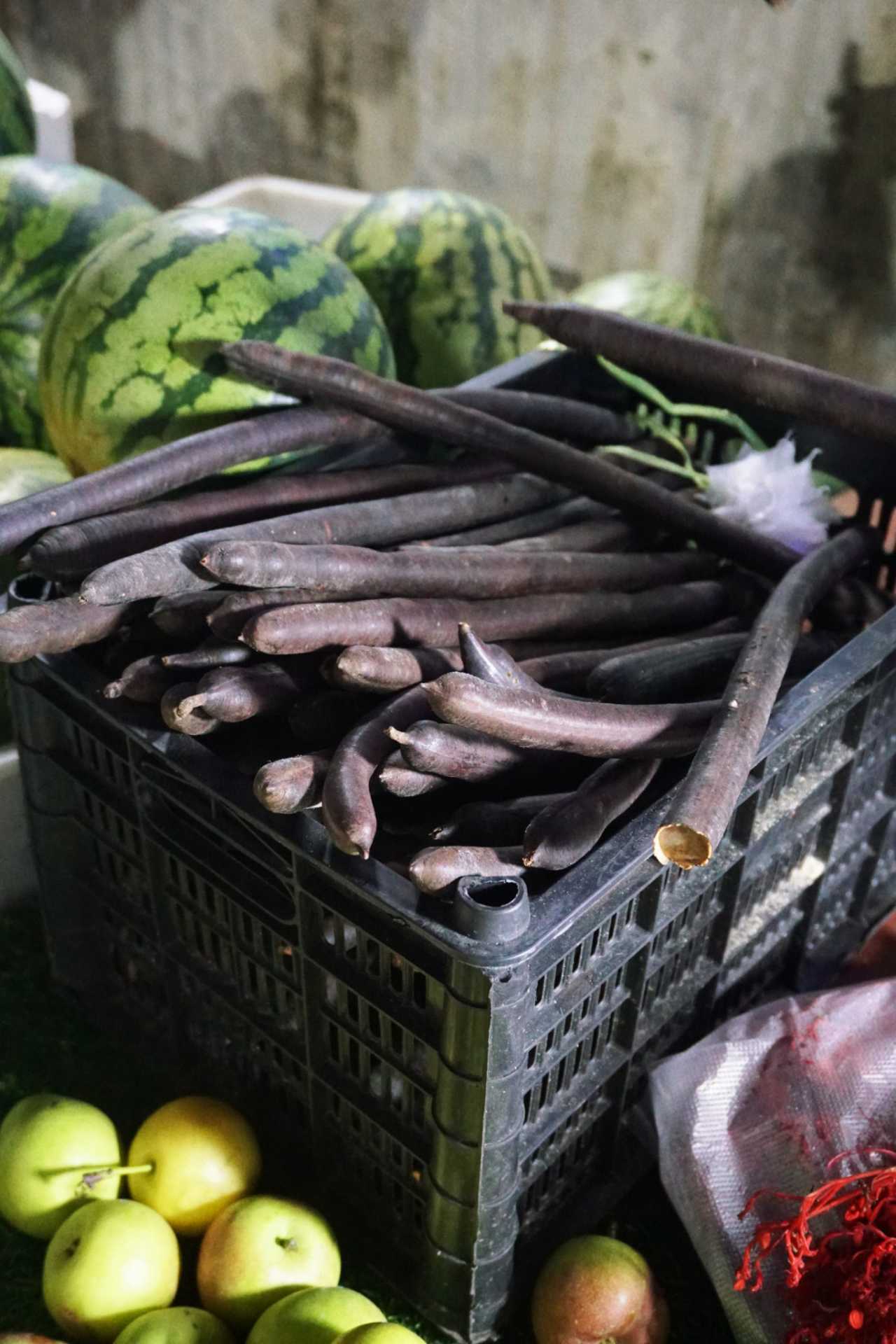
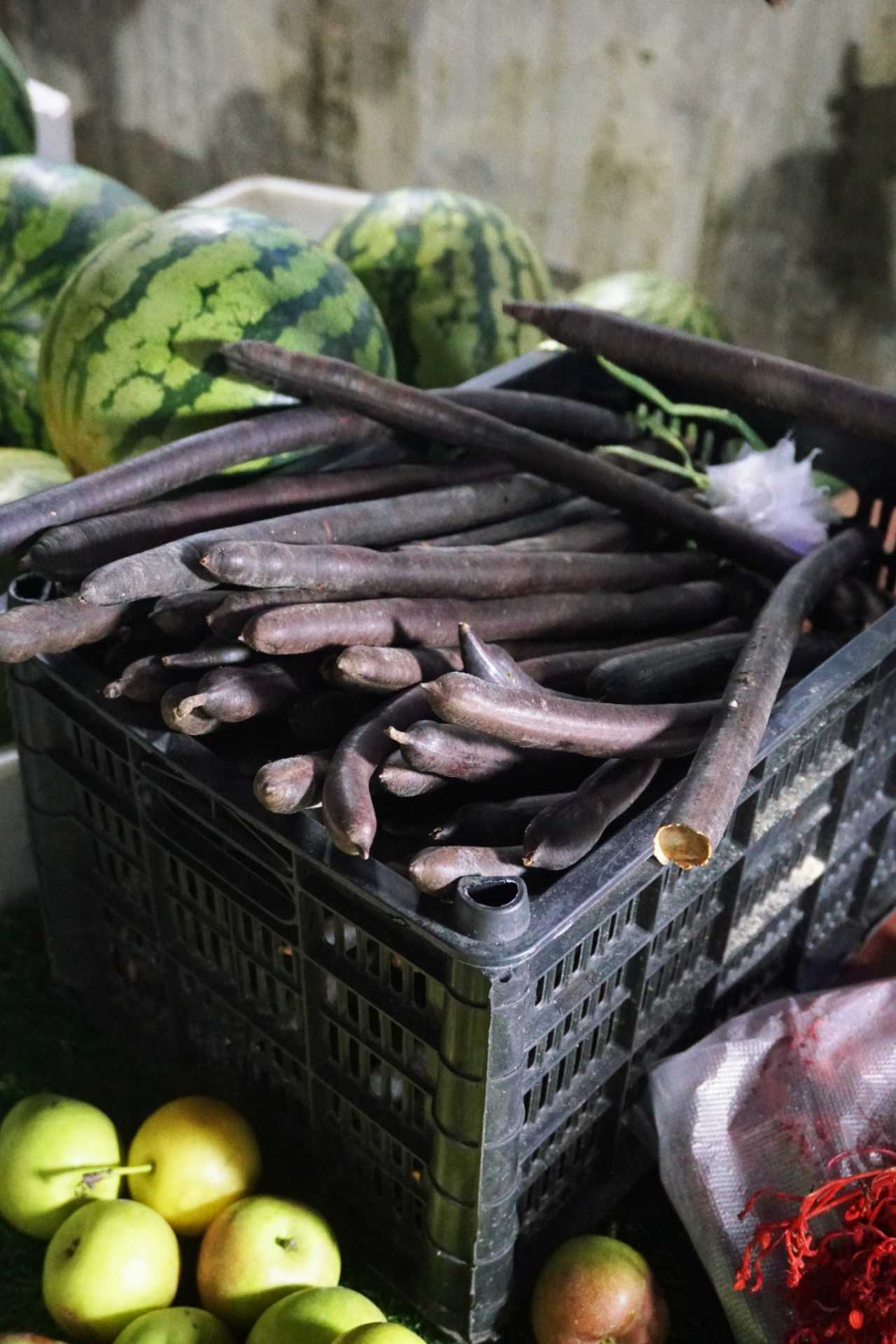
We saw constipation fruit (便秘果) for the first time. The vendor suggested we try it. It was bitter at first, like drinking Chinese medicine. Constipation fruit is a natural herb that helps relieve constipation and promote intestinal health — but don't eat too much at once. Five yuan each, we bought four.
Sanya fruit (三亚果) — couldn't get into it. Too sour, with big seeds.
Hungry from wandering, we grabbed some snacks. My favorite was Vietnamese rice rolls (越南卷粉) — soft and chewy, delicious. The thin bean powder rice noodles (稀豆粉米线) we carried around for too long, ending up clumpy and affecting the texture.
Several days into the trip, we finally had our favorite meal. Drawn by the crowd, we walked into a food stall and ordered live crab, lemon dip (柠檬撒), and fish wrapped in lettuce (菜包鱼) — trying everything at once. The vegetable leaves weren't lettuce — slightly bitter, we wrapped some fish, a bit of rice noodles and radish, then dipped in the special sauce — sour and spicy, delicious! The live crab was stir-fried with chili — so spicy toward the end it burned, but different from Chongqing's heat.
The four of us shared one constipation fruit — the effect was immediate the next morning.
Mangbang Mingquan: The Joy of Hot Springs
Navigating to Mangbang Hot Spring Resort, we turned right after entering the main gate and followed the signs.
A few tips: - It's far from the city center — take a taxi directly. Getting back is harder; you can take the bus or save the driver's number. The return trip usually costs around 50 yuan. - Mangbang Hot Spring is in Fapa Village, which has multiple hot springs ranging from 20 yuan to over 100 yuan. Cheaper options have outdated facilities — go straight for Mangbang Mingquan. Public area ticket: 68 yuan/adult. - Mangbang Mingquan has several small pools, each with different functions — choose according to preference. The water temperature is quite high; you can't stay in long. The water is clean, and the pools offer good privacy. - I recommend visiting in the morning. Afternoon temperatures reduce the comfort level. The day we soaked was the only cloudy day in Mangshi — slightly cool, which was very lucky. The hot spring happiness factor shot way up. - Each person gets one towel; slippers and toiletries are provided. The changing rooms are large and clean, with hooks for towels at every pool. - For swimming, bring a swim cap and goggles. For just soaking, you don't need them.
We set aside half a day for the hot springs — partly to relieve travel fatigue, partly to enjoy the experience slowly. Overall, it was excellent. If I have time in the future, I'd stay at the resort hotel and soak every day.
The pool water was hot, so we'd get out frequently to rest, then swim in the outdoor pool. When hungry, there were complimentary green bean cakes nearby — delicious. I ate three in one go — though hunger might have played a part.
Exiting the hot spring hotel and walking left a short distance brought us to a bus stop. We'd planned to call our driver, but just as we arrived, the bus came — so lucky! And this bus route went near Banselai Hand-Grabbed Rice (斑色波手抓饭).
We reached the restaurant at 5 PM. The staff were still preparing — they probably didn't expect diners so early. We were just very hungry from the hot springs. We ordered hand-grabbed rice (手抓饭). Overall, it was average. The green vegetables on the side were hard to get used to — very bitter. Everything else tasted fine.
Tree-Enveloped Pagoda: A Century-Old Wonder
According to Dai historical records, in the 53rd year of Emperor Qianlong's reign (1778 AD), the 17th-generation chieftain of Mangshi, Fang Yuzhu, built this pagoda to commemorate a military victory — over 200 years ago. The pagoda is made of brick and stone, about ten meters tall, octagonal in shape, with Buddha statues inside niches.
Over time, cracks appeared in the brick structure, filling with dust. A banyan seed, carried by wind or birds, lodged in a crevice. Spring rains came, the seed germinated, and gradually, the banyan tree enveloped the pagoda, creating the "tree-enveloped pagoda" wonder. Today, the tree atop the pagoda reaches over 30 meters, with a canopy covering nearly 1,000 square meters.
The pagoda wraps the tree; the tree wraps the pagoda — fused into a solid entity. The pagoda is the tree; the tree is the pagoda.
The banyan's dense foliage blocks the scorching sun. Thanks to the tree, we could stand quietly in the cool shade and gaze. This attraction sits quietly by the roadside — a small pagoda hidden within a tree. Walk around the Buddhist pagoda three times. Some might consider this a niche attraction so obscure you'd miss it if not paying attention. But I found it fascinating. I loved this place.
The Final Surprise
There was a lake below our accommodation. On the way back, we spotted a rainbow by the lake. The weather was beautiful, and as we admired the frangipani trees and watched the fishermen, I wished time would slow down even more.
Only one roadside jackfruit tree bore fruit, nearly ripe. We felt a bit sneaky looking at it.
Back at our place, we rested for a few hours, thinking the night was over. But who would have guessed — at 10 PM, everyone suddenly felt like going out for snacks. We hopped on our electric scooter and set off again. At a fruit shop, we bought two boxes of Shenglong mangoes and two green mangoes. Tonight's harvest: six mangoes. But where was the night market we'd heard about?
Why were four girls walking around with bamboo skewers in their mouths? The answer: we were eating Zhengxin Chicken Steak (正新鸡排) in Mangshi. We couldn't find any local food we wanted, but Zhengxin was still open. I asked the staff if there was seating. She said we could sit in the plaza downstairs. So at 11 PM, four of us sat in the square eating chicken steak!
Mengbanaxi Rare Plants Garden: Marveling at Rarity
If there was another highlight in Mangshi, it was the Rare Plants Garden.
Manlin had to cut her trip short to go home and harvest mangoes. From then on, our group of four became three.
Lin's Meatballs (林氏圆子) — rice noodle soup again. They offer beef balls and pork balls — choose according to preference. I was disappointed there was no mint. Paired with an iced coffee — too sweet for my taste.
The Rare Plants Garden, called "Mengbanaxi" in Dai, is located in southeast Mangshi, Dehong Prefecture, Yunnan. It's a national AAAA scenic area, featuring a rustic, natural, and rare character — a rare ecological garden nationwide, truly a gene bank of subtropical plants!
Visiting Tips: - Mangshi's attractions are concentrated. The garden is at No. 29 Yonghan Street, right by the roadside — very visible and easy to access. - Visit in the morning when it's less crowded, allowing 3+ hours for an immersive experience. Afternoons tend to have more tour groups, making the garden busier. - In summer, the garden's fruit trees are heavy with mangoes, jackfruits, figs, and more. Don't pick them — follow park regulations. - Adult ticket: 40 yuan/person. Open: 8:00 AM - 6:00 PM year-round.
The garden not only rescues, protects, and cultivates numerous ancient trees and rare plants — it's a model of ecological conservation. Please respect the flora and fauna when visiting!
Standing under the trees, I couldn't help but marvel at the vibrant vitality. Having watched the series "A Touch of Green" (一把青), with its characters Zhu Qing, the Master's Wife, and the Deputy — each viewing brings its own weight. Living in the present — that's the best.
Final Thoughts: My Heart Remains in Mangshi
Nine days — neither too long nor too short. But Mangshi gave me that urge: "I want to stay and live here."
There's no big-city noise, no tourist-crowded attractions. Instead, there are roadside jackfruits, mangoes on trees, sudden showers that might soak you at any moment, and the freedom of zipping under palm trees on an electric scooter.
In this small town, we ate countless bowls of rice noodle soup, soaked in hot springs, played mahjong, took beautiful photos in front of the Golden and Silver Pagodas, and quietly gazed at the century-old wonder beneath the tree-enveloped pagoda. No itinerary anxiety, no check-in fatigue — just immersive slow living.
If Mangshi gave me anything, it's the ability to "slow down." In an era obsessed with efficiency, Mangshi taught me: some scenery is worth stopping for, worth taking your time to see.
My body's home, but my heart's still in Mangshi. Next time, I want to stay even longer.
You should also read:
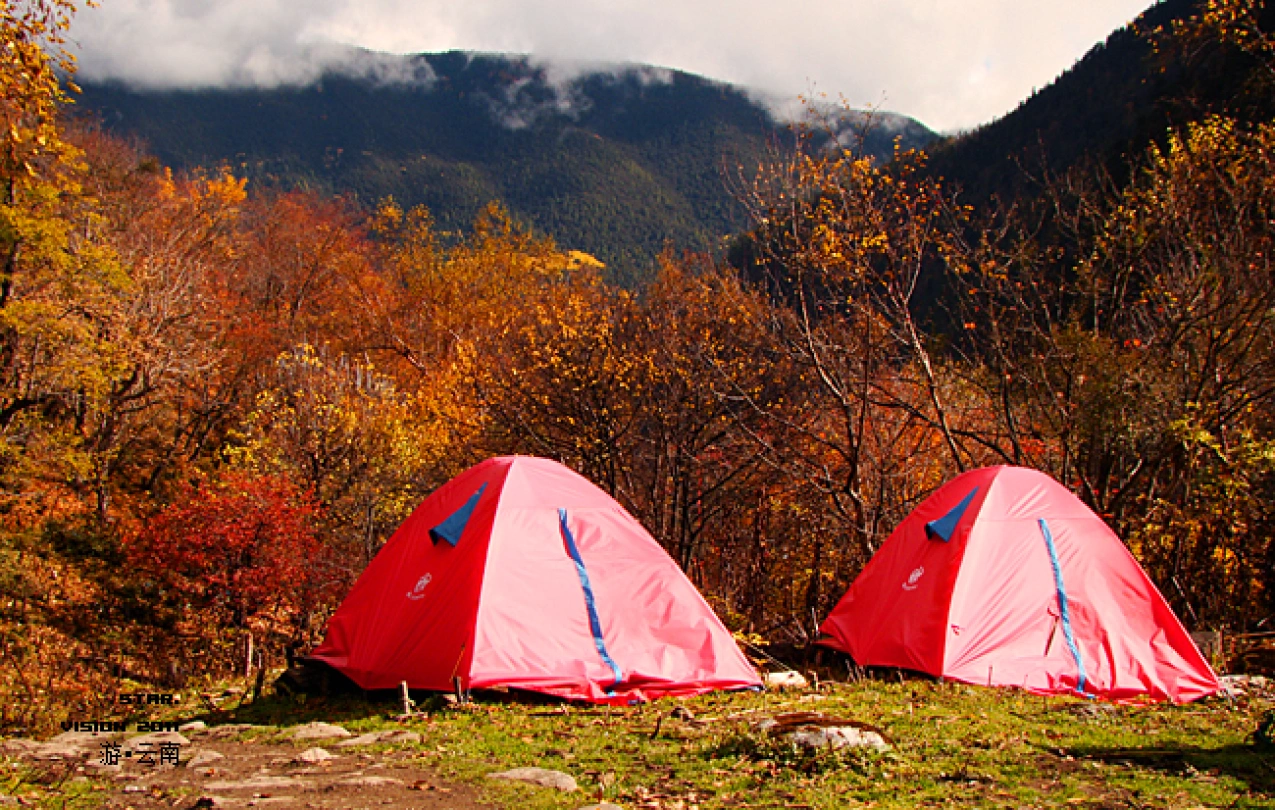
Yunnan! Paradise on Earth – The Yubeng Chapter: A Soul-Cleansing Journey into Seclusion
Yunnan! Paradise on Earth – The Yubeng Chapter: A Soul-Cleansing Journey into Seclusion Prologue: Why Yubeng? If you ask me which place in Yunnan is most worth hiking to, I would answer without hesitation: Yubeng. This is not an answer I give lightly. As a…
Continue reading...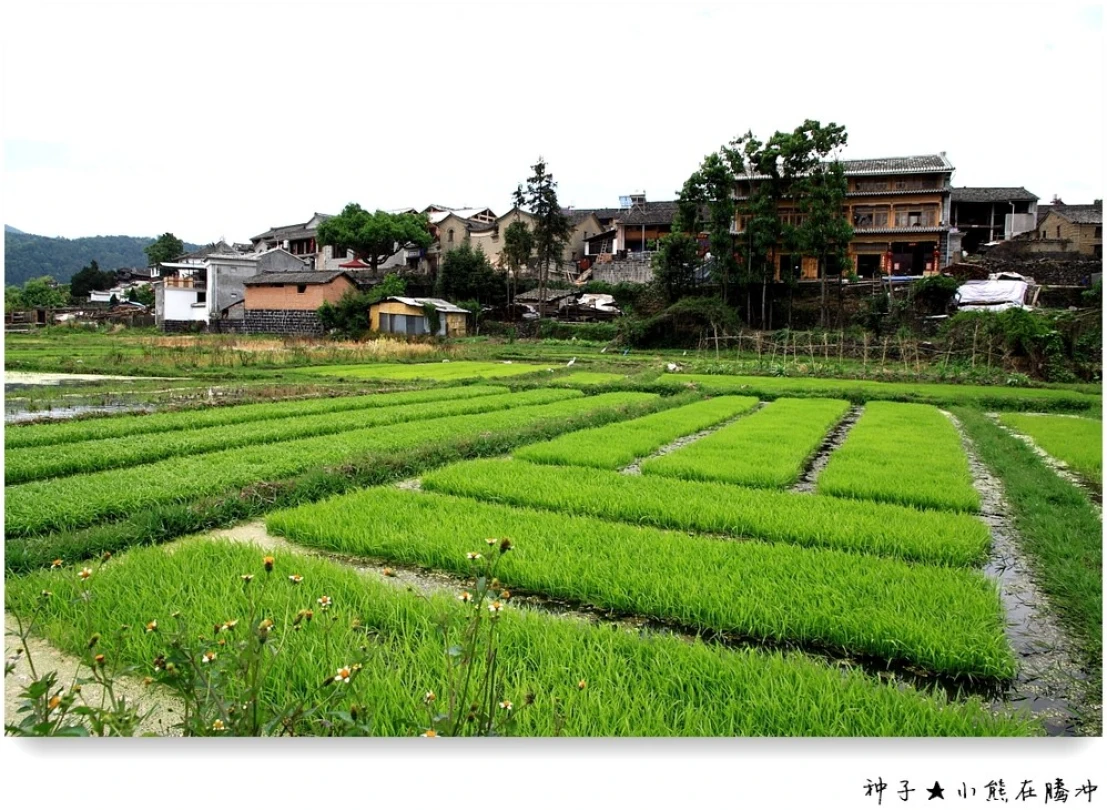
Tengchong·Heshun: Finding Life as It Should Be in a Border Town Where Time Stands Still
Tengchong·Heshun: Finding Life as It Should Be in a Border Town Where Time Stands Still The long journey of over twenty days was over. On my first day back at the office, I was still in a daze. My fingers couldn't find the keys on…
Continue reading...
God’s Abandoned Palette: A Self-Drive Journey Through Yunnan’s Dongchuan Red Land
God’s Abandoned Palette: A Self-Drive Journey Through Yunnan’s Dongchuan Red Land Travel has never been about reaching some distant geographic coordinate. It’s about encountering, along the way, the version of yourself buried beneath the rubble of daily routine. During this May Day holiday, I finally…
Continue reading...