My Mafengwo Travel Journal, Episode 3: Exploring Yunnan – Living a Life Called Yunnan
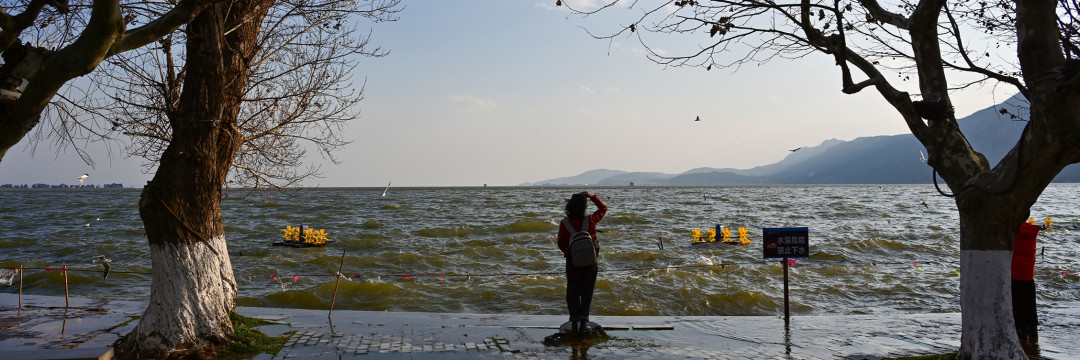
My Mafengwo Travel Journal, Episode 3: Exploring Yunnan – Living a Life Called Yunnan
Wandering with clumsy feet, recording with observant eyes, and feeling with an open heart.
Destination: Yunnan
Travel Dates: February 11, 2025 · 8 days
Average Cost: Approximately 3,000 RMB per person
Travel Companions: Couple
Prologue: In Spring, You Must Go to Yunnan at Least Once
Spring is Yunnan's gentlest season. It's not just for the swarms of seagulls dancing in the sky, but also for the intoxicatingly blue heavens, the oversized succulent plants, and the diverse charm of Eastern aesthetics. Yunnan is a place that makes you instinctively slow down the moment you set foot on it.
Chapter One: A Winter Rendezvous with the Seagulls
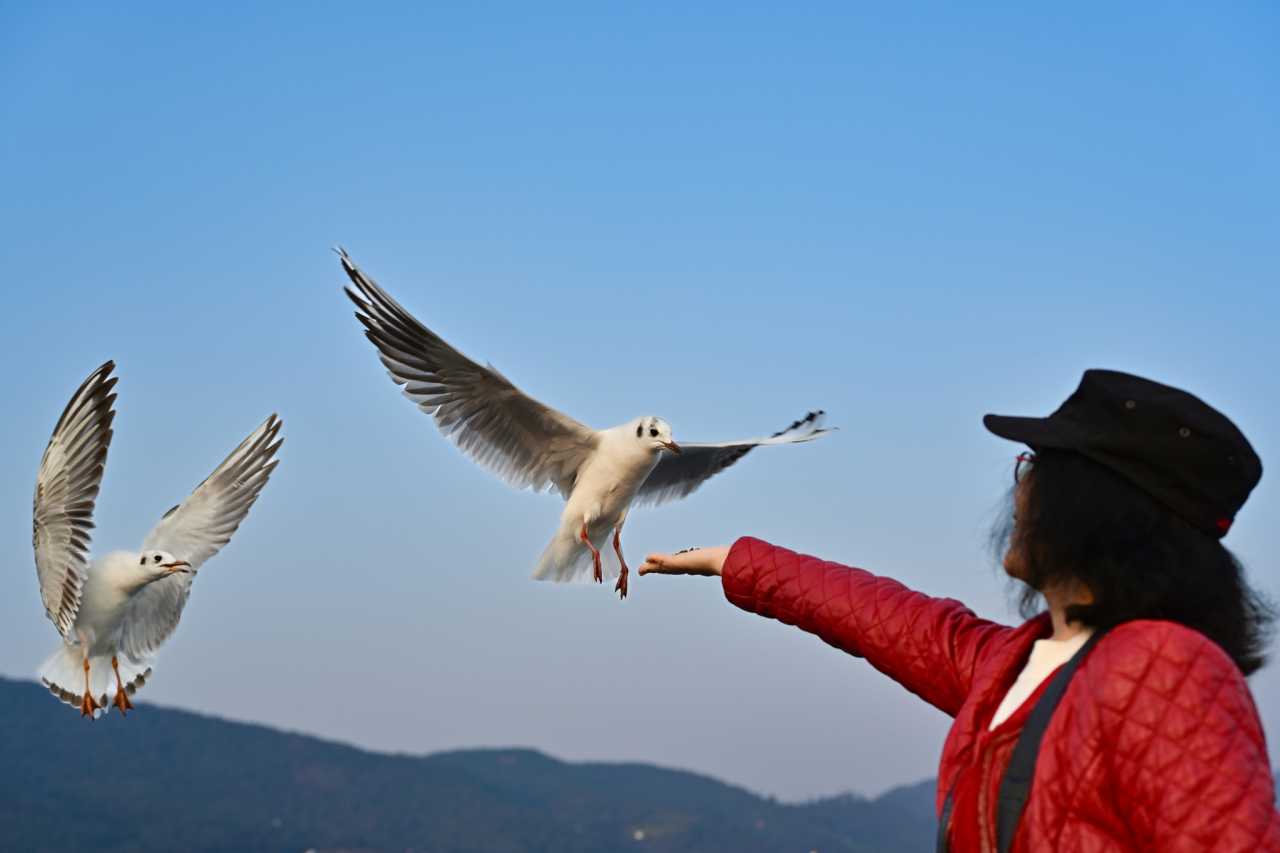
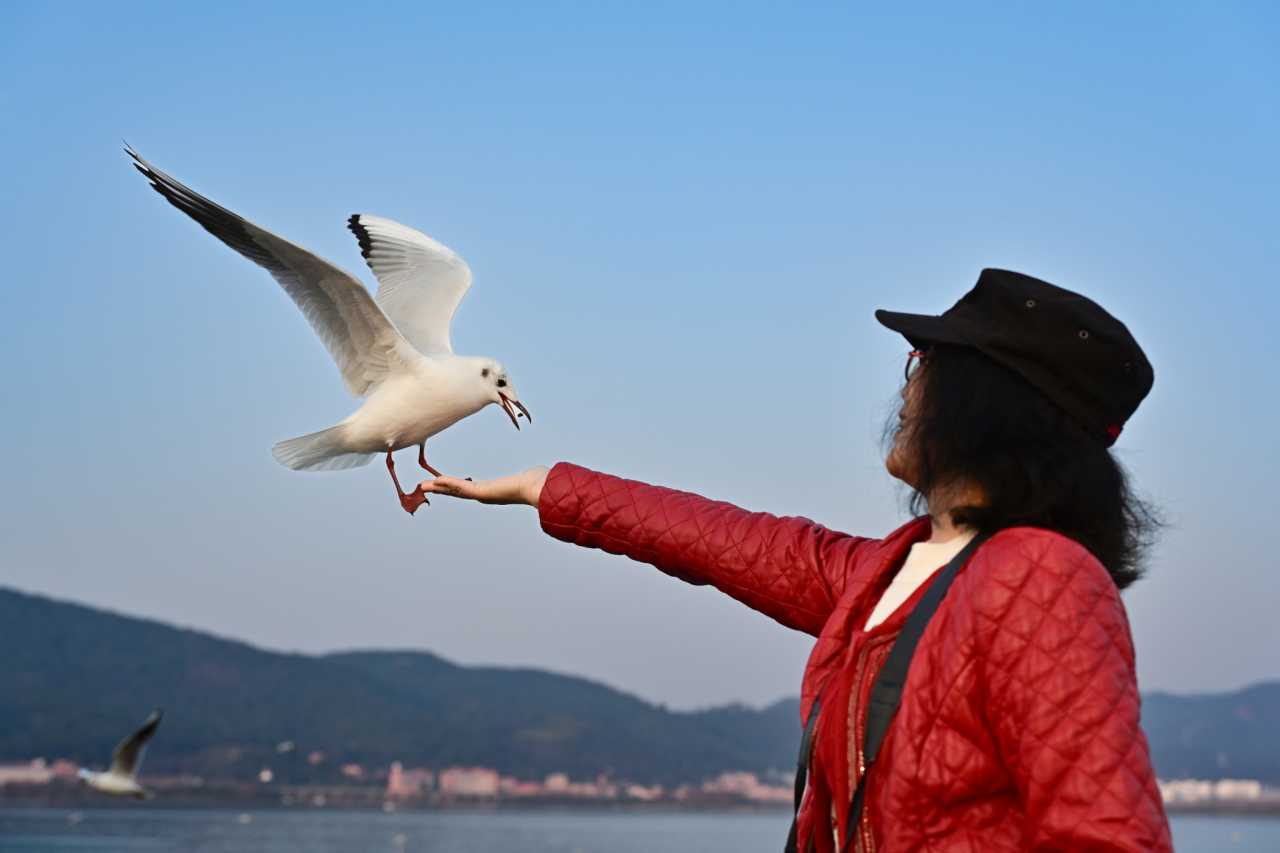
Photographing Seagulls – A Soul-Healing Ritual
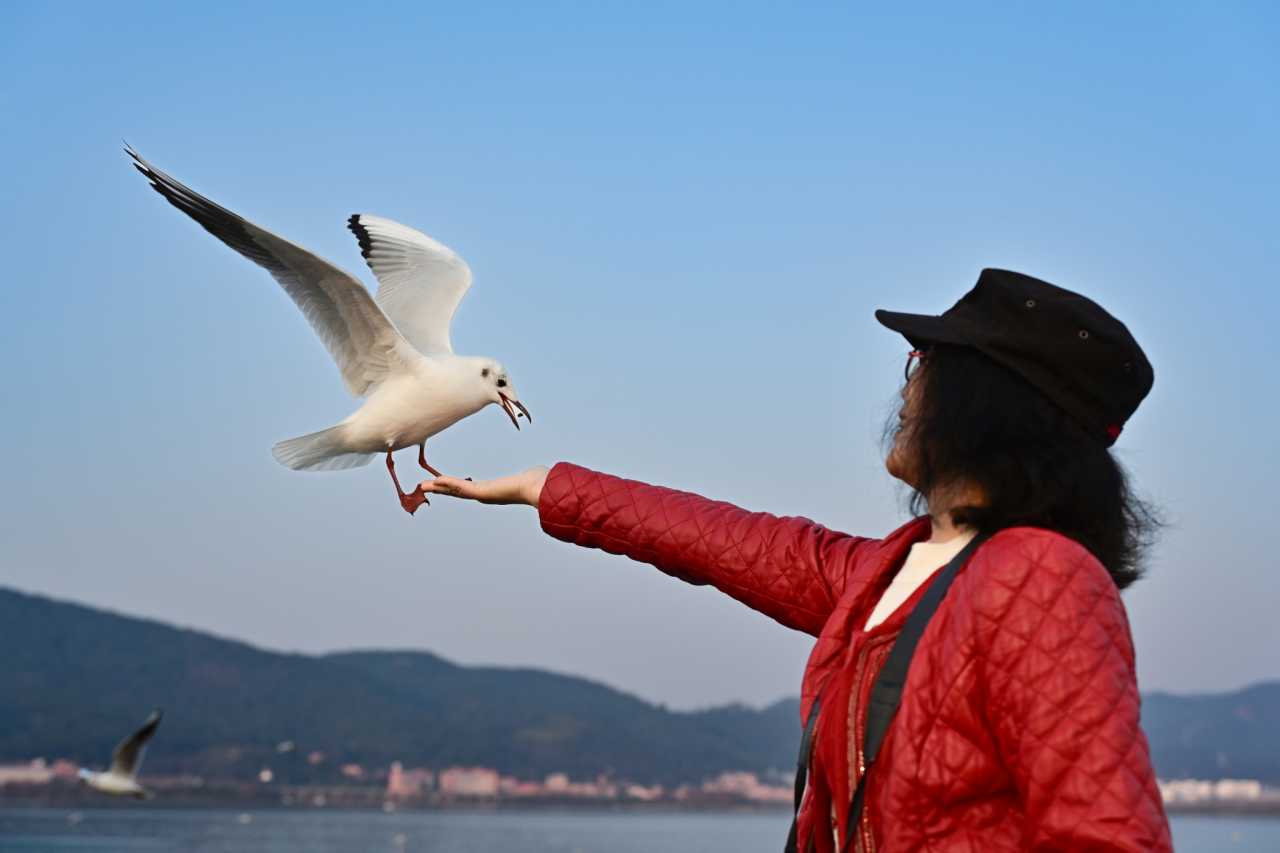
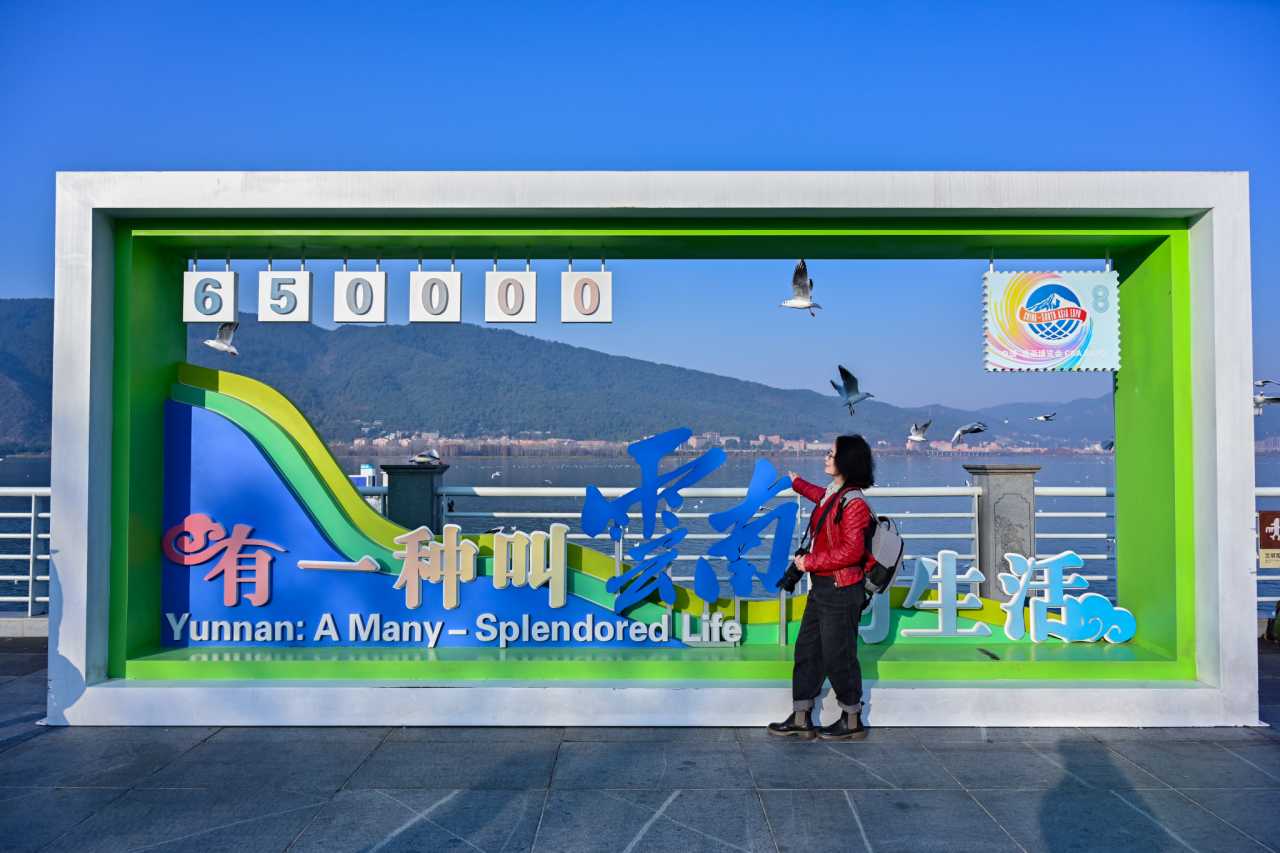
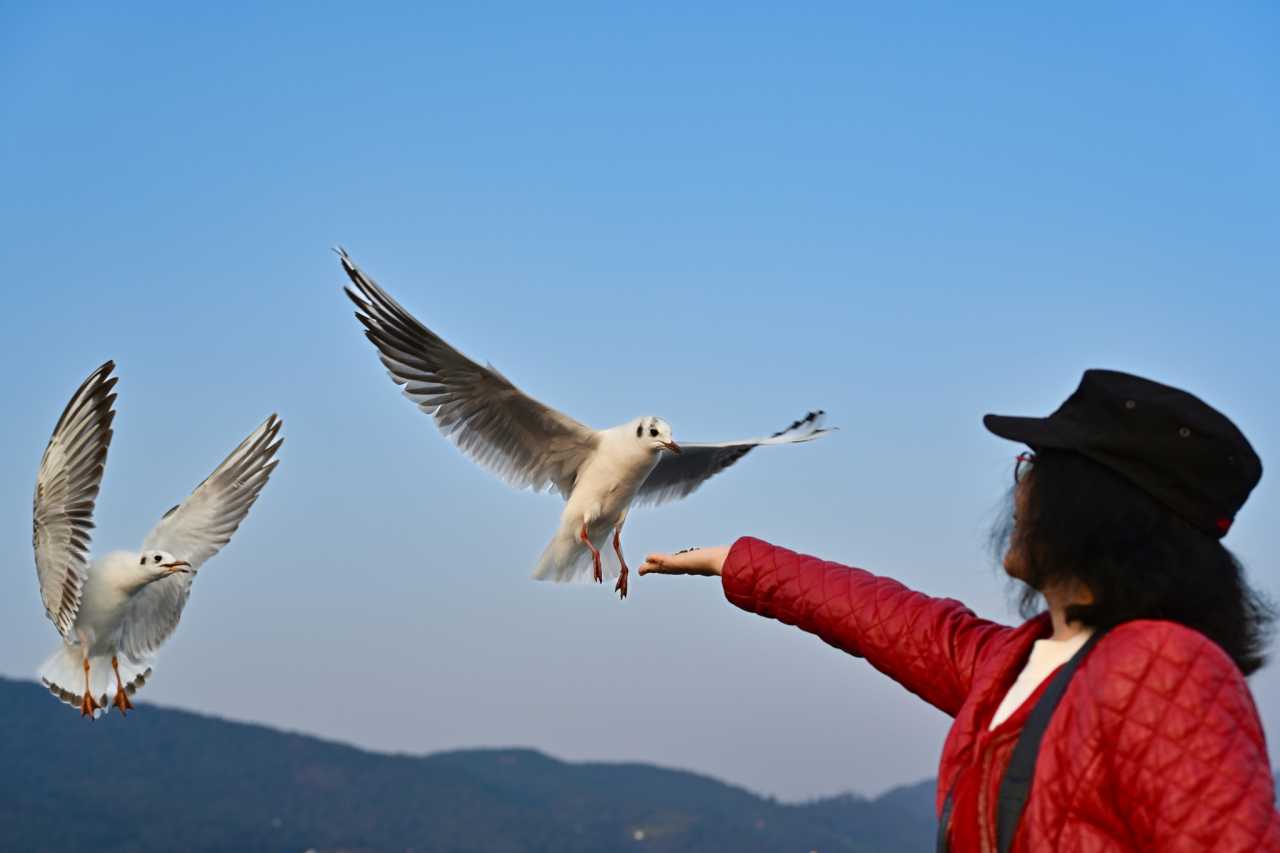
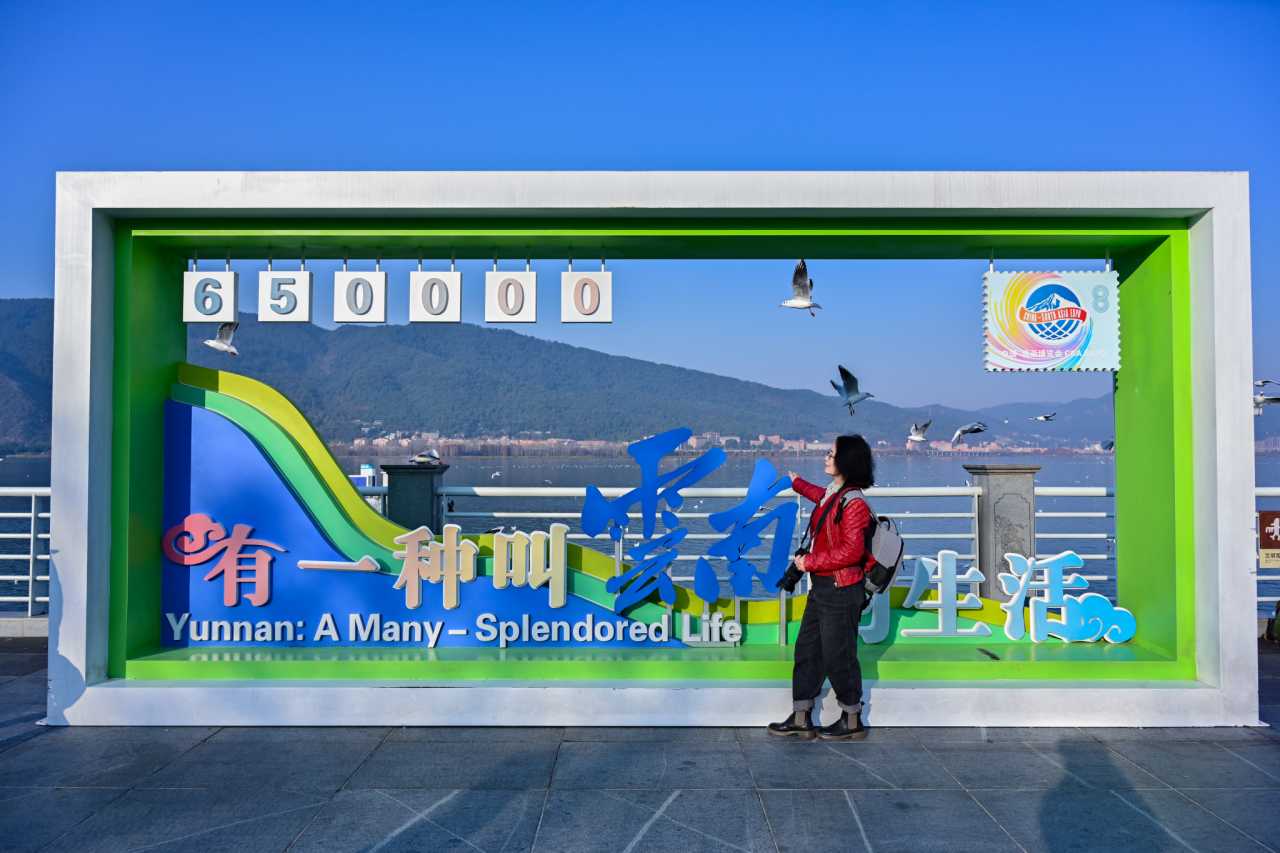
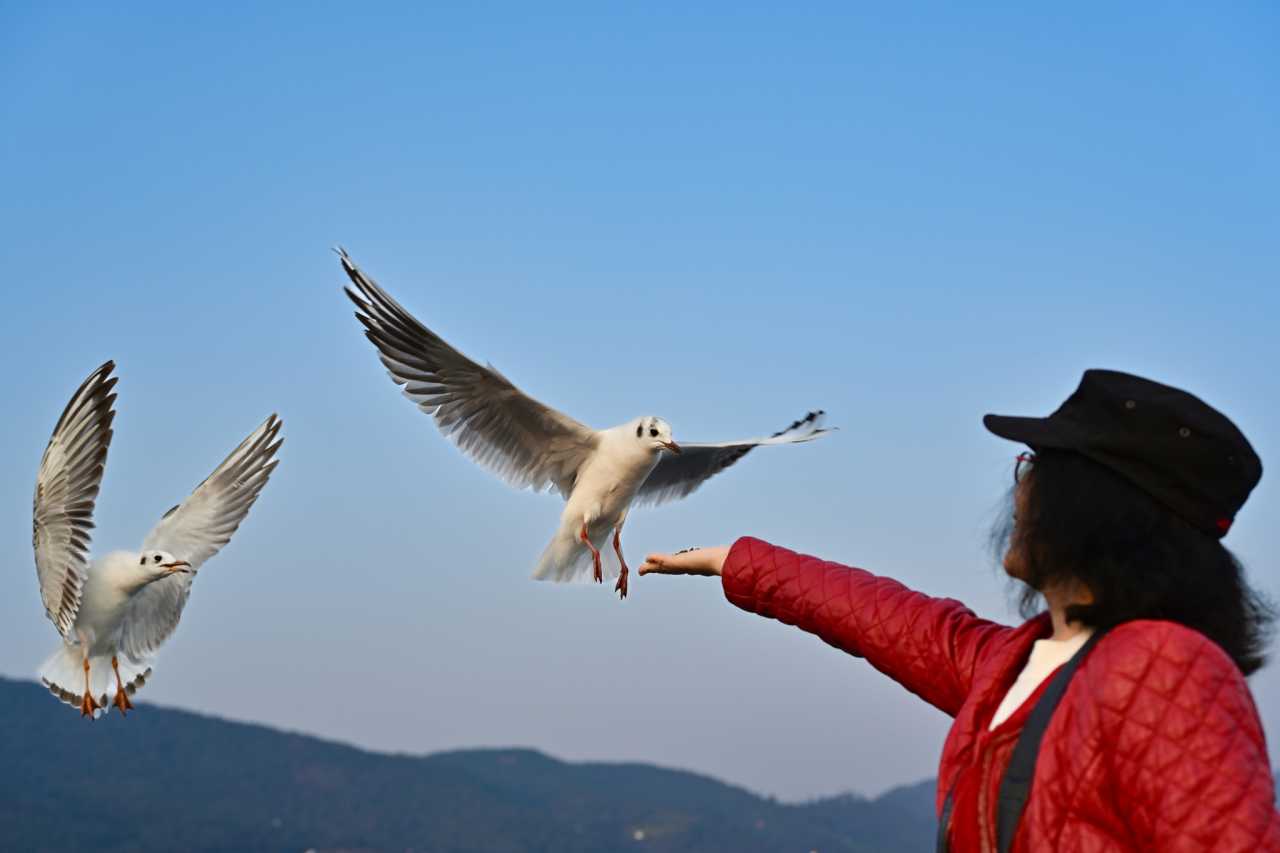
Winter is the perfect time to photograph seagulls in Kunming. Every year, tens of thousands of black-headed gulls fly here from distant Siberia, crossing thousands of kilometers just to rest on the shores of the warm Dianchi Lake.
At Dianchi's Haigeng Dam, Haihong Wetland, Haigeng Park, and Green Lake... from the moment the moon still hangs in the sky until the sun sets, you can spot the gulls. Even far from the lake, you can hear their overlapping calls echoing in the air.
The locals say: "If you want to see the seagulls, go early. After ten o'clock, they've eaten their fill and gone back to sleep." Sure enough, by 10 a.m., most of the gulls had vanished. But after 4 p.m., they reappear.
I noticed one seagull wearing a blue ring on its leg and assumed it was for monitoring. A local explained: "That's put there by people in Siberia who feed them, just like pigeon breeders put rings with numbers and phone numbers on their birds."
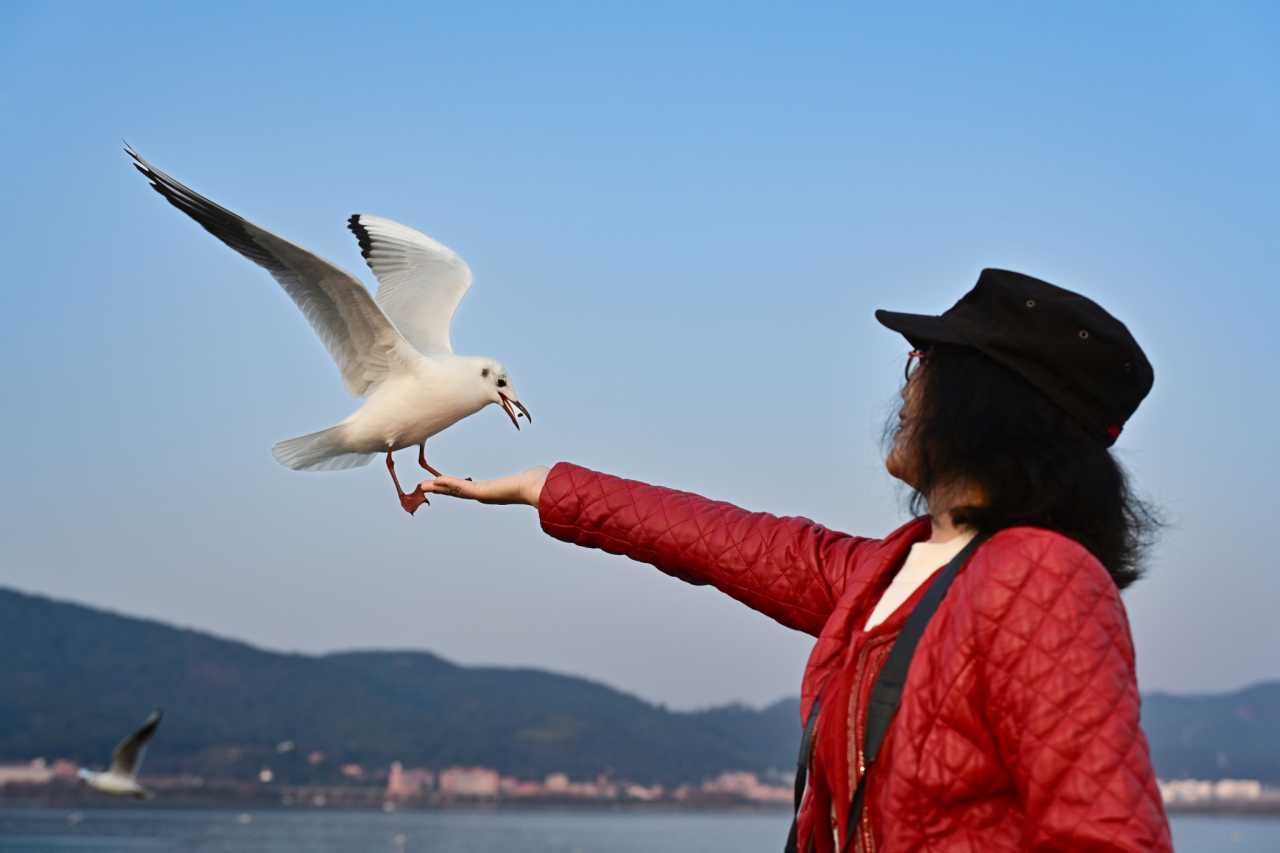
Watching the seagulls is healing. Photographing them is the same. I raised my camera, pressed the shutter, and captured moments of them flying, foraging, and playing. Do you like them?
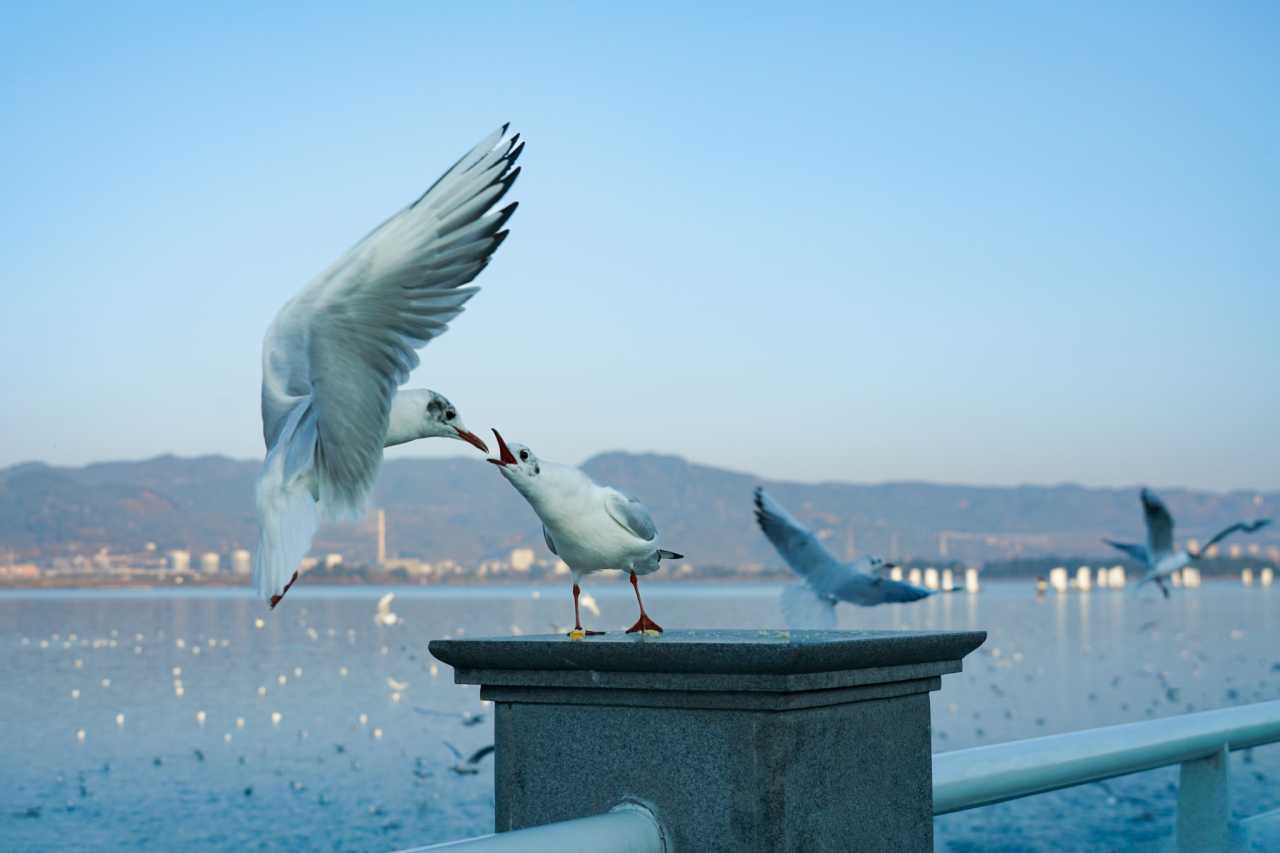
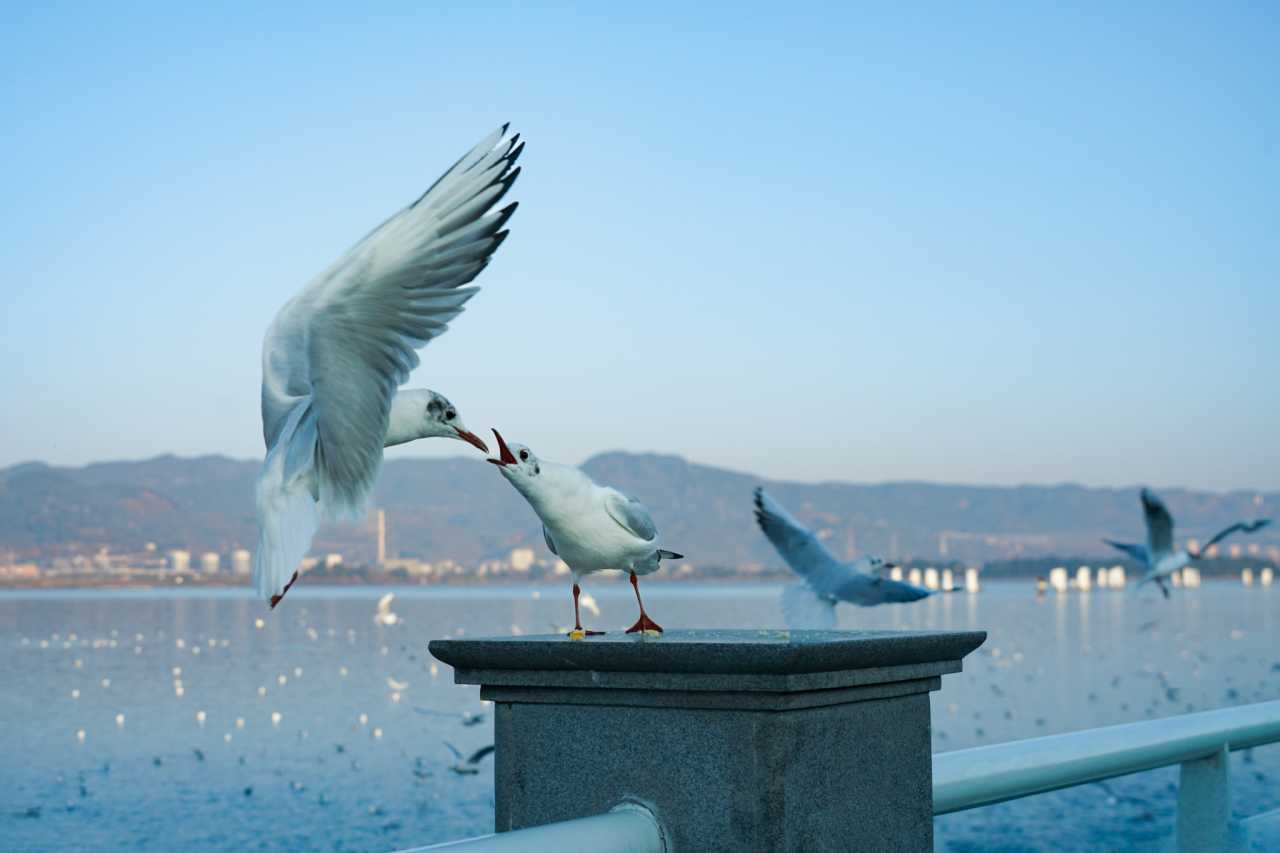
My partner Doudou and I sat together on the Haigeng Dam. I held a piece of cake meant for the seagulls, and Doudou stared at it, wanting to eat it. I didn't move. But the seagulls did. One gull tried to snatch the cake, but another perched on a stone pillar "warned" it away: "Get lost!" So the first gull had to fly elsewhere.
Sitting in a row, basking in the sun. The morning at Haigeng Dam was both peaceful and lively.
Chapter Two: Kunming's Old Streets – Time, Flowers, and Sunshine
Kunming is a city of blooming flowers and brilliant sunshine. The old streets of Kunming are no exception, surrounded by blossoms and bathed in warm, spring-like sunlight.
In the early morning, walking along the historic Guanghua Street, Yongdao Street, Qianwang Street, Nanping Pedestrian Street, and the Golden Horse & Jade Rooster Archways, you can almost see Kunming of centuries past—crowds of people hurrying by or strolling leisurely.
Recently, new photo spots have appeared on the old streets: the Paper-Building and the Tube-Shaped Building. If you happen to be in Kunming, it's worth a visit.
Kunming Tube-Shaped Building: I photoshopped an airplane about to fly into the tube building. Does it look real? Doudou also joined in the fun—lots of people love it!
Nie Er's Former Residence: Where the National Anthem Was Born
Nie Er's former residence is located at No. 73 and 74 Yongdao Street, Wuhua District, Kunming. Built in 1884 (the 10th year of the Guangxu reign), it was originally a two-story shop. In 1905, Nie Er's parents moved from Yuxi to Kunming to make a living, renting this space and opening a small pharmacy named "Chengchun Tang."
On February 14, 1912, Nie Er was born here. He went on to compose dozens of progressive songs, including "The Newsboy Song," "The Fisherman's Song," "The Dock Workers' Song," "The Song of a Woman Under the Iron Heel," "The Road-Building Song," "The Pioneer," and "The Graduation Song." In March 1935, Nie Er was commissioned to compose the theme song for the film Children of Troubled Times. Based on lyrics by Tian Han, he wrote the famous "March of the Volunteers." After the founding of the People's Republic of China, this song was designated as the national anthem.
Tragically, in 1935, while traveling to the Soviet Union for further study, Nie Er drowned in Fujisawa, Japan, at just 24 years old.
Eastern Bookstore: A Witness to Cultural Backbone
The Eastern Bookstore on Kunming's old streets has witnessed a great deal of history. In 2018, it was rebuilt and reopened at its original location on Wenming Street, attracting readers from home and abroad with its rustic atmosphere and rich cultural heritage.
In 1926, Wang Shishun (a student of Hu Shi), influenced by progressive ideas, founded the Eastern Bookstore on Wenming Street. Scholars like Wen Yiduo, Wang Zengqi, and Li Gongpu were frequent visitors, making it a cultural landmark in Kunming—a testament to the city's steadfast cultural backbone.
The rebuilt bookstore retains its original wooden structure and vintage style, with a focus on humanities and social sciences. Among its treasures is the Wanyou Wenku (Universal Library) printed between 1929 and 1937, considered the store's crown jewel. The bookstore also adheres to a unique "eight don'ts" policy: it refuses to sell self-help books, success guides, immortality manuals, forbidden historical gossip, Machiavellian strategy, get-rich-quick schemes, health and wellness fads, or fortune-telling and divination texts. This reflects the bookstore's commitment to humanistic values and thoughtful book selection.
Today, the Eastern Bookstore is more than a place to buy books—it's a spiritual haven filled with cultural atmosphere. It has quiet reading and tea-drinking areas where visitors can find their own corner and immerse themselves in the world of books.
Golden Horse & Jade Rooster Archways: A Once-in-Sixty-Years Spectacle
Located at the intersection of Sanshi Street and Jinbi Road in central Kunming, the Golden Horse & Jade Rooster Archways stand 12 meters high and 18 meters wide, adorned with exquisite carvings and paintings. The eastern arch faces Jinshan Mountain and is called the Golden Horse Arch, while the western arch faces Biji Mountain and is called the Jade Rooster Arch. They are symbols of Kunming.
First built during the Xuande reign of the Ming Dynasty (1426–1435), the archways have a history of nearly 400 years. When the setting sun casts its rays from the west onto the Jade Rooster Arch, its shadow falls eastward onto the street. At the same time, the rising moon in the east shines silver light on the Golden Horse Arch, casting its shadow westward. The two shadows gradually move closer until they meet—a phenomenon known as "Golden and Jade Intersecting in Splendor," which occurs only once every 60 years.
Legend has it that this spectacle last appeared during the Daoguang reign of the Qing Dynasty. In 1997, the archways were restored and rebuilt, opening to the public in April 1999.
Chapter Three: Kunming's Western Hills Scenic Area – In the Embrace of the Sleeping Beauty
Kunming's Western Hills Scenic Area, located on the shores of Dianchi Lake in the western suburbs of Kunming, is also known as Biji Mountain or the Sleeping Beauty. It is a national 4A-level tourist attraction. During our visit, we focused on Huating Temple, Taihua Temple, and the Dragon Gate.
The peaks of the Western Hills, viewed from afar, resemble a "Sleeping Beauty" lying beside Dianchi Lake. The mountain contours are distinct, with her long, hair-like strands (the grassy marsh) dipping into the lake, creating a magnificent picture of "sky and water blending into one."
The scenic area does not charge an entrance fee, but you must take the cable car to fully experience the mountain forests and lake views, and to feel the grandeur of "taking in the entire 500-li Dianchi Lake at a glance."
Huating Temple: Deep in the Meditation Hall, Amidst Blossoms
Huating Temple is a famous Buddhist monastery in Yunnan Province. It was originally the villa of Gao Zhisheng, a marquis of the Dali Kingdom. In 1320 (the 7th year of the Yanyou reign of the Yuan Dynasty), the eminent monk Xuanfeng built a thatched hut here for meditation. By 1323, he raised funds to construct the Yuanjue Temple, which was gradually expanded and became a center for Buddhist propagation in Kunming.
In 1920, Master Xuyun was invited by Tang Jiyao to oversee the temple's renovation. After six years of expansion, it reached its current scale. The temple is surrounded by verdant pines and bamboos, with ancient trees reaching toward the sky. From the front of the temple, you can gaze out over Dianchi Lake. Inside, precious camellias and magnolias are planted, creating an atmosphere of "deep meditation halls hidden among flowers."
Taihua Temple: A 700-Year-Old Ancient Monastery
Taihua Temple, also known as Foyan Temple, is located halfway up Taihua Mountain, the highest peak in the Western Hills, at an altitude of about 2,155 meters. It is the oldest surviving temple in the Western Hills, originally built in 1306 during the Dade reign of the Yuan Dynasty, with a history of over 700 years.
The temple is renowned for its lush gardens, including camellia gardens, magnolia gardens, and osmanthus gardens. It is especially famous for its purple magnolias and camellias in spring. The temple also houses a ginkgo tree said to have been planted by Emperor Jianwen himself, which is over 500 years old and still thriving.
Dragon Gate: A Visit to the Western Hills Is Incomplete Without the Dragon Gate
The Dragon Gate Grottoes are located in Xishan District, Kunming, stretching from Sanqing Pavilion in the north to Datian Pavilion in the south, with a total length of about 66.5 meters, all carved along the cliffs. Standing at the Dragon Gate, you can overlook Dianchi Lake with an incredibly expansive view.

Excavation of the Dragon Gate Grottoes began in 1781 (the 46th year of the Qianlong reign of the Qing Dynasty) and took 72 years to complete, finishing in 1853 (the 3rd year of the Xianfeng reign). All the carvings are hollowed out from natural rock, blending Taoist culture, myths and legends, and folk craftsmanship, earning it the reputation of a "marvel of grotto art."
The Dragon Gate is always crowded. Taking a photo without any people in it is simply impossible.
Chapter Four: Kunming's Grand View Pavilion – The World's Longest Couplet

The Grand View Pavilion is located within the Grand View Park in Xishan District, Kunming, adjacent to Dianchi Lake. It was first built in 1690 (the 29th year of the Kangxi reign of the Qing Dynasty). It is famous for housing the 180-character "World's Longest Couplet" composed by the Qing dynasty scholar Sun Ranweng.
The first line depicts the scenery of Dianchi Lake, while the second line recalls the history of Yunnan. It is hailed as "the finest long couplet in the world." The park offers boating, flower viewing, and in winter, close encounters with the black-headed gulls. The park hosts lantern festivals during the Lantern Festival and moon-viewing events during the Mid-Autumn Festival, attracting numerous visitors.
Chapter Five: Yiliang Jiuxiang – A Museum of Karst Caves
Yiliang Jiuxiang Scenic Area is located in Jiuxiang Yi and Hui Ethnic Township, Yiliang County, Kunming. It is a national 4A-level tourist attraction, centered around a cluster of karst caves and known as a "Museum of Karst Caves." Together with the Stone Forest, it forms a three-dimensional landscape of "seeing the Stone Forest above ground and exploring Jiuxiang underground."
The cave cluster formed in the Sinian period, about 600 million years ago, within dolomite rock formations. It is vast in scale, with hundreds of caves encompassing gorges, waterfalls, underground rivers, and other karst landforms. The entrance fee is 120 RMB (including a glass slide and the Jiuxiang Mythological Spot).
Highlights include seeing succulents and waterfalls in the same frame—a beautiful mix of red and green!
The Horseshoe Bend at Yihe Village
The Horseshoe Bend is located in Gengjiaying Yi and Miao Ethnic Township, Yiliang County. Named for its U-shaped, horseshoe-like river channel, it now features a "Sky Mirror," observation decks, and camping areas. The observation deck costs 10 RMB per person, while other areas are free to enter.
Chapter Six: The Stone Forest – The World's Most Extraordinary Wonder
The Stone Forest Scenic Area is located within Shilin Yi Autonomous County, Kunming, about 78 kilometers from downtown Kunming. It is a UNESCO World Natural Heritage site, a Global Geopark, and a national 5A-level tourist attraction.
The Stone Forest is a classic limestone karst landscape, formed over 270 million years ago during the Paleozoic Era. Through crustal movements, water erosion, and other processes, dense clusters of sword-like, pillar-like, and tower-like stone peaks were created. As the guide said, the countless stones here are a vivid example of "water may dry up, but the stones never rot."
In the core area of the Greater Stone Forest, you'll find iconic sights like the "Stone Forest Scenic Spot" and "Sword Peak Pond," with jagged rocks forming a maze-like landscape. The Lesser Stone Forest, on the other hand, features lush green grass, wide-open views, and the famous "Ashima" stone peak. The guide explained that "Ahei Ge" means hardworking and brave, while "Abai Ge" is a term of insult.
The only place in the Stone Forest that still has water is the "Hair-Trigger" spot. There's also the "Heart and Lung Stone," which has been polished to a glossy sheen by countless tourists' hands.
Chapter Seven: Maitreya – A Water Town Under the Buddha's Light
Red River Water Town: A Fusion of Jiangnan Charm and Ethnic Culture
Maitreya's Red River Water Town is located in Maitreya City, Honghe Hani and Yi Autonomous Prefecture. It is a cultural tourism complex that blends the charm of Jiangnan water towns with the ethnic cultures of Southwest China. The scenic area is built around the style of Ming and Qing dynasty residences, with white walls, black tiles, stone arch bridges, and black-canopied boats throughout.
The Qianwang Pavilion was built in memory of Wang Chi, a wealthy merchant from the late Qing dynasty. In front of it, the giant characters "Maitreya" are written, drawing countless visitors eager for a photo.
Jinping Mountain Scenic Area: The Maitreya Buddha
Maitreya City is the only county-level city in China named after the Buddhist figure "Maitreya." The Jinping Mountain Maitreya Buddha stands 19.99 meters tall, symbolizing "a thousand years of transition and eternal good fortune." Built in 1999, it is a modern bronze-gilded statue.
We climbed the 1,999 steps to the foot of the Buddha (symbolizing "rising step by step"). It wasn't as tiring as we expected.
Lake Spring Eco-Park: Half a City in One Park
Lake Spring Eco-Park is a national 4A-level scenic area, covering approximately 3,000 mu (about 200 hectares), with a lake surface area of 1,700 mu (about 113 hectares). It integrates a lake, sandy beaches, hot springs, and lush greenery.
We visited in the evening. The lake was crystal clear, with reflections like a painting. A black swan even walked from the lake directly onto the street, with many people taking photos and videos. Doudou stood calmly beside the swan—after all, she's a well-traveled dog.
Chapter Eight: Oriental Charm – The "Provence" of Central Yunnan
We went to Maitreya specifically for the red buildings of the Oriental Charm scenic area. The area is known for its red brick architecture, lavender fields, and Dutch windmills. The entrance fee is 80 RMB per person (staying at a hotel within the scenic area waives the ticket and shuttle fees).
At noon, the sun was blazing. Although it was still spring, the temperature felt like summer. At the Kaleidoscope Art Museum, crowds of visitors were everywhere. This geometric building complex, made of red bricks, creates unique light and shadow effects from different angles—perfect for photos.
There is also said to be a lavender estate with vast fields that turn into a purple ocean during bloom season. The estate features a railway track engraved with the words "I love you" in multiple languages, creating a highly romantic atmosphere. Unfortunately, when we visited, the lavender was still budding.
Chapter Nine: A Taste of Yunnan
During this trip to Yunnan, we ate rice noodles more than anything else. For someone like me who loves rice noodles, I actually got tired of them! We also had shepherd's purse, water spinach (water morning glory), peanut sprouts, and other local vegetables, as well as grilled fish and other Yunnan specialties. Unfortunately, we missed out on the braised chicken in Maitreya.
Recommended Dishes: - Guandu-style flatbread (Guandu baba) - Stir-fried bean jelly - Cold-mixed rice rolls (liangban juanfen) - Guandu small-pot rice noodles (Guandu xiaoguo mixian) - Wild vegetable scrambled eggs - Grilled fish - Stir-fried chicken - Water spinach (water morning glory) - Stir-fried shepherd's purse - Authentic Yunnan crossing-the-bridge rice noodles (guoqiao mixian)
Conclusion: An Unfinished Yunnan Journey
During the trip, an urgent matter forced us to return home early. So our plans to see the rapeseed flowers in Luoping, eat tofu in Jianshui, and photograph the rice terraces in Yuanyang had to be abandoned—saved for another opportunity.
Yunnan is a place where you don't want to leave once you've arrived, and where you'll want to return even after you've left. Although this trip ended abruptly, the calls of the seagulls, the sunshine on the old streets, the clouds and mist of the Western Hills, the strange rocks of the Stone Forest, and the Buddha's light in Maitreya are all deeply etched in my memory.
Next time, I will make sure to fulfill all those unfinished plans, one by one.
This travelogue is copyrighted by © Xiaoman. Any form of reproduction requires permission from the author.
© 2026 mafengwo.cn
You should also read:

Solo in Yunnan: A Wanderer’s Guide to the Land of Eternal Spring
Solo in Yunnan: A Wanderer’s Guide to the Land of Eternal Spring There’s something magical about traveling alone. No compromises, no schedules to keep, no one to please but yourself. I’ve been on the road for nearly three months now, and not once have I…
Continue reading...
God’s Abandoned Palette: A Self-Drive Journey Through Yunnan’s Dongchuan Red Land
God’s Abandoned Palette: A Self-Drive Journey Through Yunnan’s Dongchuan Red Land Travel has never been about reaching some distant geographic coordinate. It’s about encountering, along the way, the version of yourself buried beneath the rubble of daily routine. During this May Day holiday, I finally…
Continue reading...
Cloud Travelogue · Dali of Wind, Flowers, Snow, and Moon: A Three-Day, Two-Night Journey of a Free Spirit
Cloud Travelogue · Dali of Wind, Flowers, Snow, and Moon: A Three-Day, Two-Night Journey of a Free Spirit I am a cultured female foodie with a touch of rogue charm. I slung on my backpack, took my lover's hand, and set off on a spontaneous…
Continue reading...