Mystical Yunnan in the Rainy Season | A 7-Day Slow-Paced Journey Through Mangshi, Ruili, and Tengchong with My Bestie
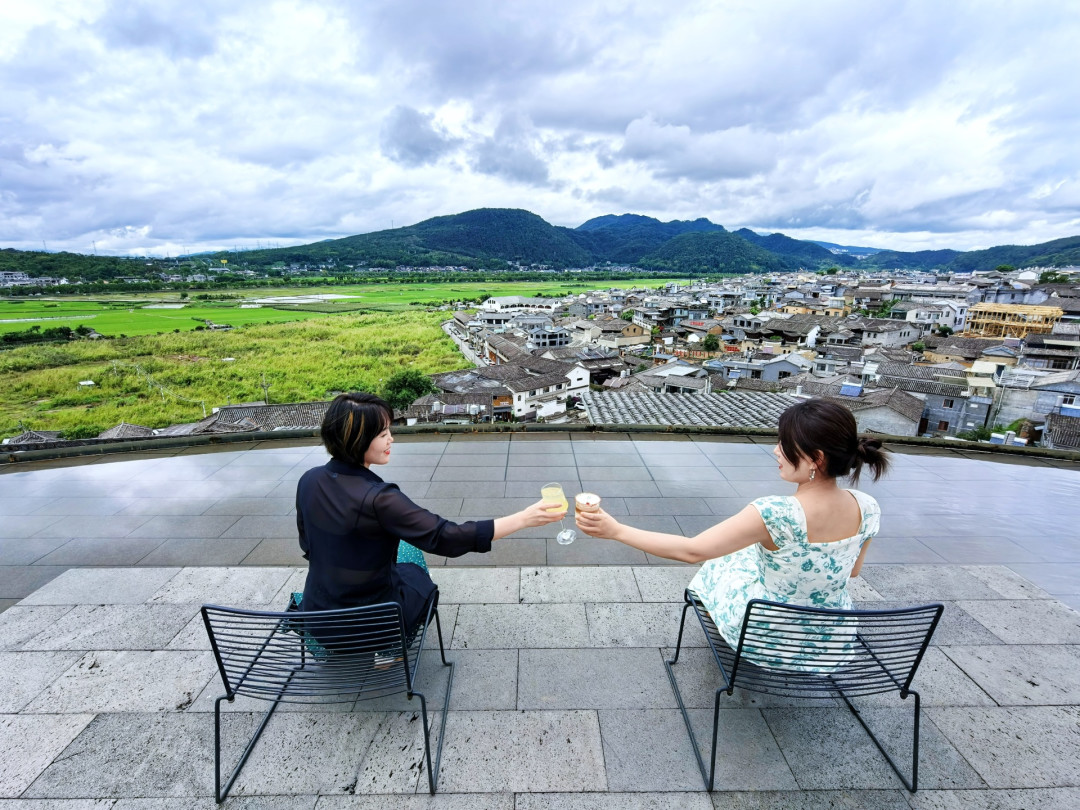
Mystical Yunnan in the Rainy Season | A 7-Day Slow-Paced Journey Through Mangshi, Ruili, and Tengchong with My Bestie
When the Rainy Season Meets a Girls' Trip: A Long-Planned Escape
"If there's only one road, why worry about how difficult it is?" — This sentence perfectly captures the spirit of this spontaneous trip that Juan and I took together.
Our travel plans had been brewing countless times, but every time we were about to set off, one of us would bail out. This time, we finally achieved perfect synchronization — only to run straight into Yunnan's rainy season. After agonizing over it for a while, Juan slapped her thigh and declared: "Let's go to Tengchong! Soaking in hot springs on a rainy day sounds even more romantic, doesn't it?"
No direct flights to Tengchong? Then we'd fly to Mangshi first. Once in Mangshi, how could we miss Ruili? And so, this classic "Mangshi—Ruili—Tengchong" route was "accidentally" arranged.
What we thought would be just a few days in some obscure small cities turned into the "white moonlight" of our hearts — the kind of trip you can't stop thinking about. After returning, we spent every day reminiscing about Mangshi's food, Tengchong's hot springs, and Ruili's Buddhist radiance, enthusiastically recommending these hidden gems to everyone we met. Writing these words now, I'm still filled with happiness — because through these words, I can relive those warm days.
Ten Unforgettable Moments
Before I officially begin, let me share the ten most memorable moments of this trip:
- Gazing at the Myanmar telecom fraud compounds across the Ruili River — reality more surreal than any movie
- Tasting the most astonishing Dai cuisine of my life in Ruili — an exotic feast for the senses
- Immersive experience of a Burmese-style hair wash and head massage — more healing than any spa
- Enduring the "prison-chic" Huangguajing premium hot springs — eyes in hell, body in heaven
- Taking photos in an empty viral bookstore — the joy of having an entire bookstore to ourselves
- Shooting Yi ethnic portraits in the ever-changing weather of Heshun Ancient Town — every frame a masterpiece
- Enjoying Yunnan-style Omakase in a 260-year-old mansion — a feast for both palate and time
- Eating incredible Yunnan barbecue at a truly "fly-infested" hole-in-the-wall — the dirtier, the tastier
- Sitting under a big tree in drizzling rain, sipping coffee, and letting my mind go blank
- Riding an electric scooter leisurely through Mangshi's streets — the wind itself felt free
Day 1: First Impressions of Mangshi | A Journey Starting with Live Crabs
Landing in Mangshi, Southeast Asian Vibes Wash Over You

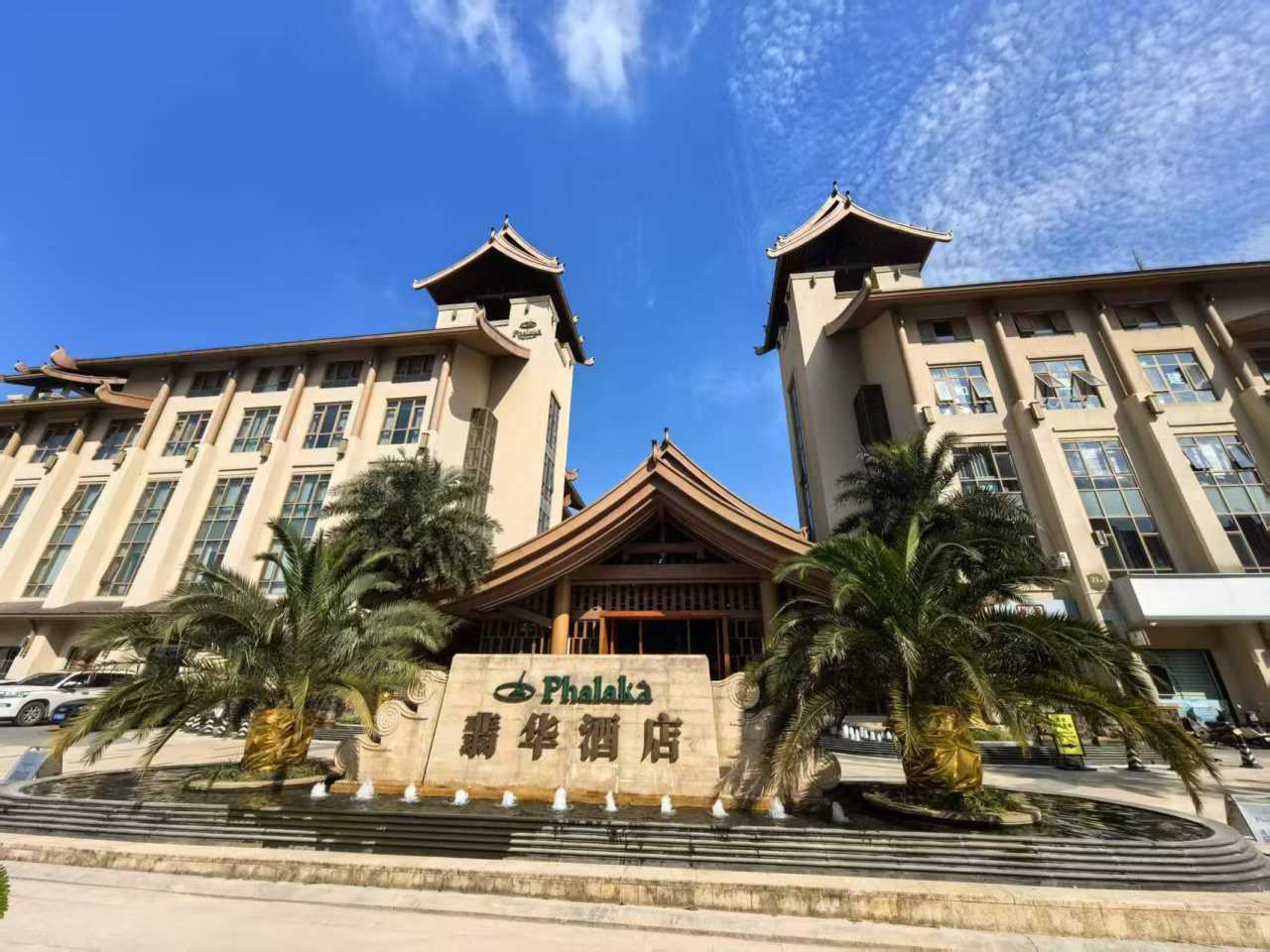
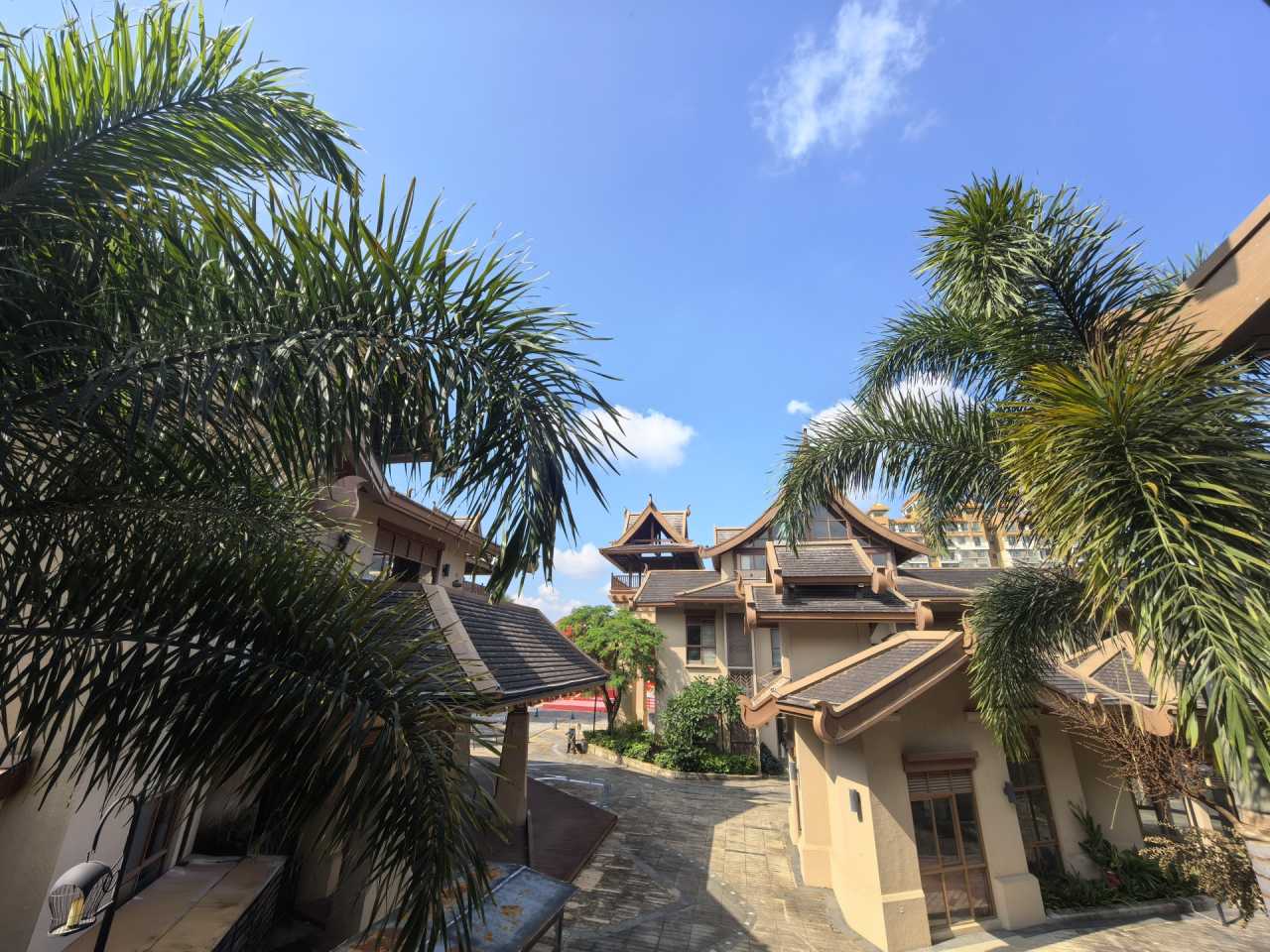
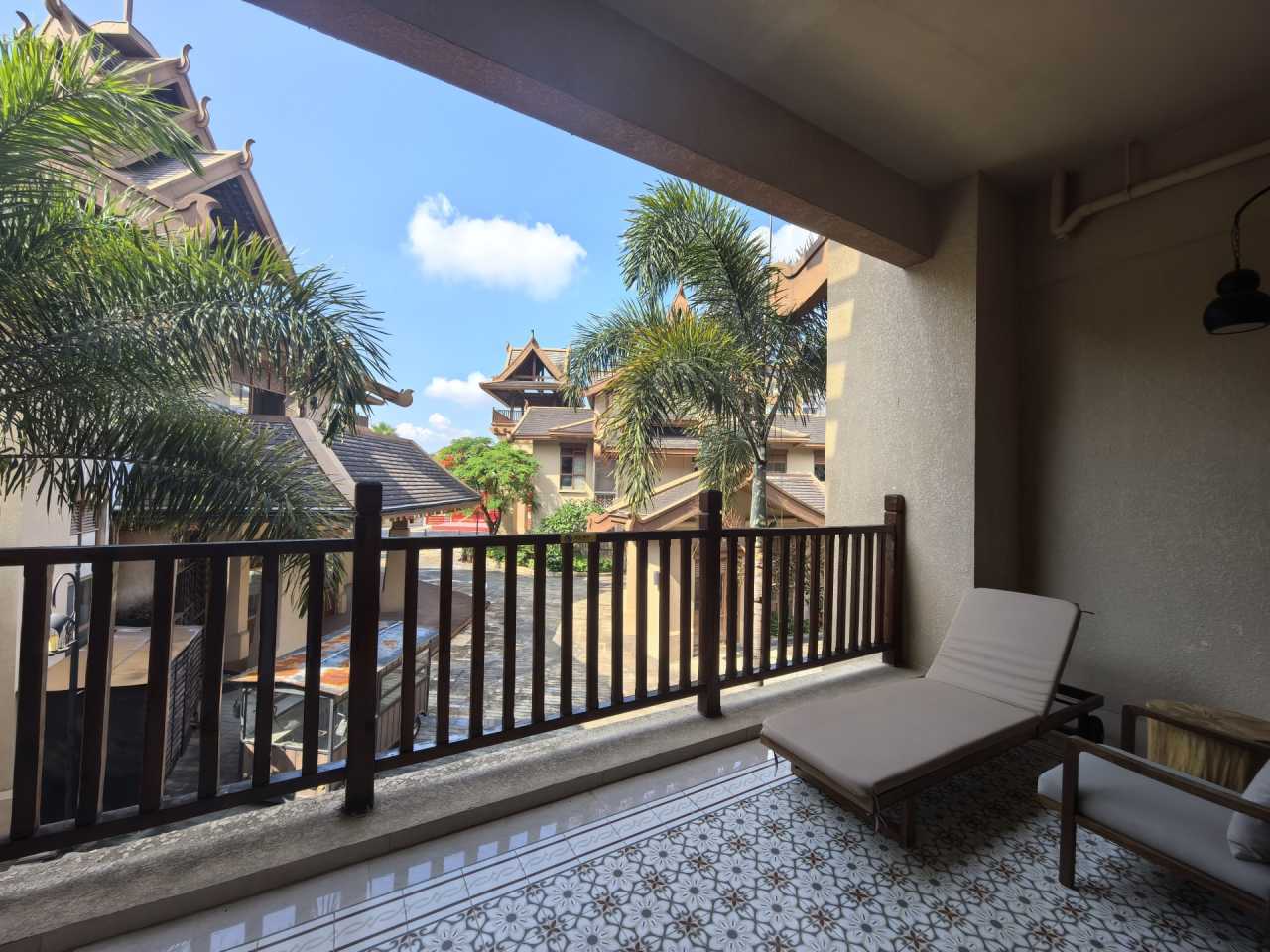
Juan and I booked flights to Mangshi on the same day but at different times. She arrived in the morning and sent me photos and videos of the hotel — dripping with Southeast Asian charm. I was itching to get there.
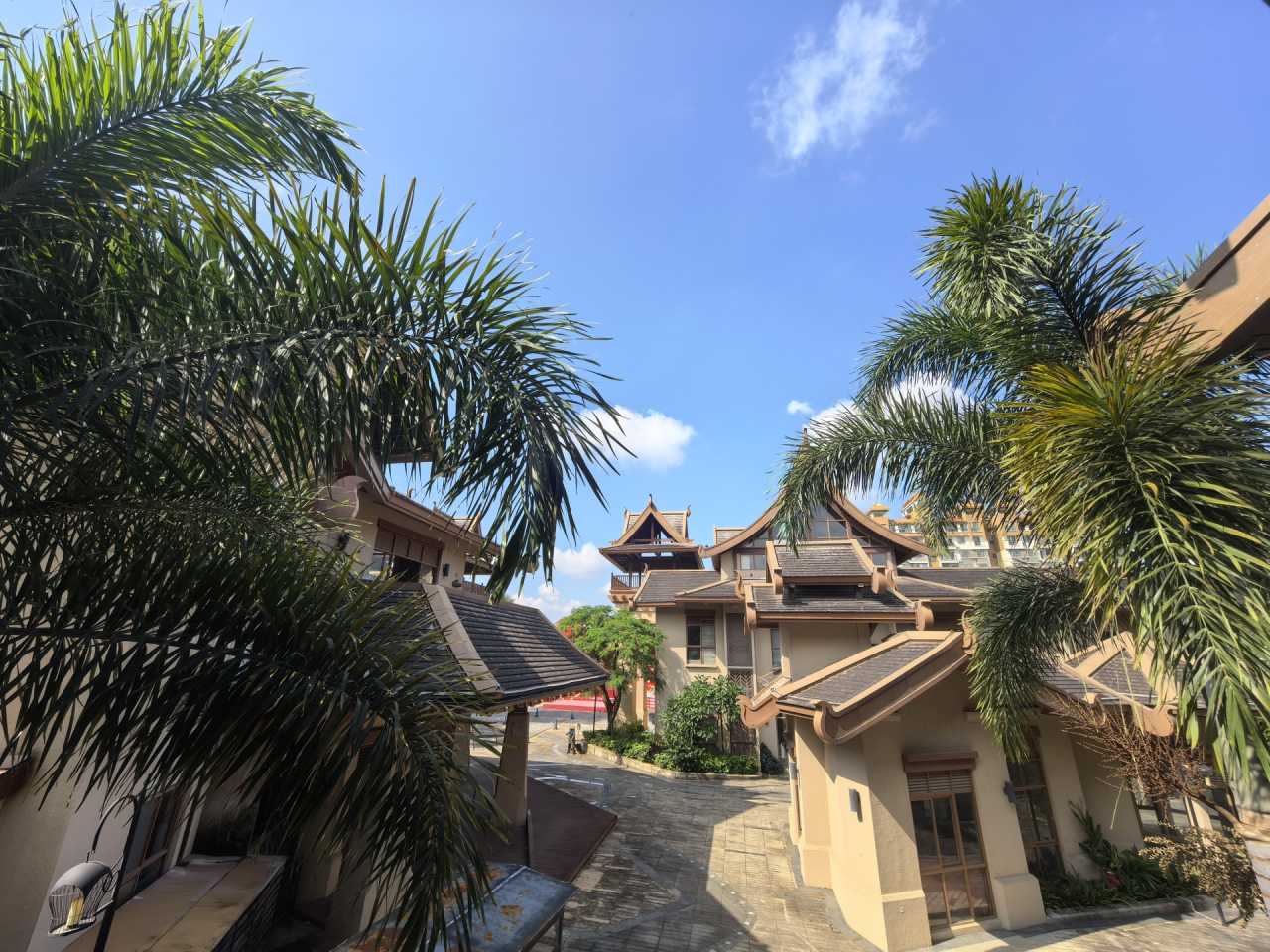
My flight landed at 5 PM. Mangshi Airport serves both civilian and military purposes, and the cabin broadcast repeatedly reminded passengers to keep their window shades closed. Fortunately, Mangshi is small — the airport is only a ten-minute drive from the city center, and the taxi fare was just over a dozen yuan (about $2). The hotel was even more beautiful than the photos, with a strong resort vibe that hit you the moment you walked in.
We hadn't seen each other in years, but there was zero awkwardness. We chat online all the time anyway, so after a quick catch-up, we grabbed a taxi straight to dinner. Mangshi's street trees are jackfruit, mango, and pomelo trees. Apparently, when the fruit ripens, the government harvests it and distributes it for free to citizens in the square — but if you pick it yourself, that'll cost you a cool 500 yuan (about $70) per fruit.
Mangshi Natural Live Crabs: Fiercely Fresh from Myanmar
Live crab is a Mangshi specialty, so we picked "Mangshi Natural Live Crabs." Our driver told us that most restaurants here are run out of people's homes — very rustic and authentic. The place had a very local vibe, with low stools that made you feel like you were visiting someone's home.
They use Myanmar crabs — dark blue-black creatures that look fierce and lively. You pick them fresh, they're weighed right in front of you, and you can choose your own. We ordered spicy crab and chili pepper bullfrog. The crab meat was tender and delicate, the bullfrog was commendable, and the sauce mixed with noodles was absolutely divine. We ate until we were completely satisfied.
We ordered delivery from the heavily hyped Zhang Bian Fruit Drinks. The ingredients were generous and the fruit flavor was intense, but it was so thick it didn't really feel like juice — not great as a drink to accompany a meal.
Bargain Hunting on Bingwu Street and First Burmese Hair Wash Experience
After dinner, we walked to Bingwu Street to pick up some gear. The evening was muggy and stuffy, and several shops didn't have their AC on — impossible to browse seriously. Then we passed "Mi Dai" clothing store and felt a wave of long-missed coolness. We rushed in. The store was a treasure trove inside, with dazzling displays of accessories and clothes. We picked out beautiful ethnic-style earrings, necklaces, bracelets, and skirts, and left with our arms full.
Burmese-style hair washing is a Mangshi specialty. The most popular places are Rongrong's and Bang Bang Hair Wash. Bang Bang was too busy — the Burmese guy at the door said there'd be a 40-minute wait — so we decisively went to Rongrong's.
Right in the prominent spot at the hair wash place was a "Registration Certificate for Employing Cross-Border Workers." The people washing hair were all young Burmese men and women, looking about 20 years old. You have to change clothes when you enter because the massage will wet your back. It was our first time, and we really wanted to chat with the Burmese girls giving the massage, but their Chinese was limited to massage-related vocabulary, so we gave up.
The Burmese-style hair wash was incredibly relaxing — Juan and I both dozed off. After the massage, we took a taxi back to the hotel. The night at the hotel was exceptionally quiet.
Day 2: Ruili Day Trip | From the Tree-Enshrined Buddha to Wanding Port — Ten Attractions in One Day
Tree-Enshrined Buddha: A Golden Buddha in a 500-Year-Old Bodhi Tree
Breakfast at Feihua Hotel wasn't extensive, but it was refined. We grabbed a few things we liked and sat outside to eat slowly. Today's itinerary was a full-day trip to Ruili. Our private driver, Mr. Yang, was a great guy — he said there was no time limit, we could play as long as we wanted, and he even prepared several drinks for us.
The first stop on our Ruili trip was the Tree-Enshrined Buddha. A majestic golden Buddha sits in meditation inside a bodhi tree that has stood for over 500 years, still lush and green — the sight left us in awe.
Moli Tropical Rainforest: An Unexpected Encounter with the Rain
This trip only had two paid attractions, and Moli Tropical Rainforest was one of them. Juan is from the south, so this kind of scenery was nothing special to her, but I love natural landscapes far more than human-made structures. I found everything novel as we walked along.
There's a small spot here called "Tree Embracing Rock" — a giant banyan tree wraps its roots tightly around a huge boulder. The vitality of banyan trees is truly remarkable. The tropical rainforest has its own ecosystem. In the two hours we spent there, it rained several times, once quite heavily, and we found a place to take shelter. At the end of the trail was Moli Waterfall — not the most spectacular sight, but seeing it still brought me joy.
Jiele Golden Pagoda and Jiedonglai Banyan King: A Dialogue Between Buddha Light and Ancient Trees
Jiele Golden Pagoda has a storied history. In the Dai language, it's called "Guangmu He Mao," meaning the premier pagoda of Ruili City, and it remains one of Southeast Asia's famous Buddhist pagodas. Jiele Village is located in the core area of the Ruili Basin, bordering Myanmar on three sides, and many devout Burmese come to worship here every day. The main pagoda stands nearly 40 meters tall, surrounded by 16 smaller pagodas in a star-encircling-moon layout. The pagoda body is coated in gold powder, magnificent and imposing. Unfortunately, the weather was overcast, and we couldn't capture the pagoda's golden splendor.
On the way, we passed through Ruili's old town. Most shop signs along the street were in Burmese, full of exotic charm. In recent years, large numbers of Burmese have come with hope and dreams to this small southwestern border town of China, connected to Myanmar by adjacent fields.
Jiedonglai Banyan King is deep inside a Dai village — a 500-year-old giant banyan tree. Originally a single tree, its hanging aerial roots took root in the soil and continued growing, and after centuries, it became a "single tree forming a forest." Inside what looks like an ordinary temple next to it, there's the largest rattan-woven Buddha statue in China.
Frontier Village Hansha and Dehong Flavors: Home-Style Cooking Amid Crow Calls
What left the deepest impression at Frontier Village Hansha was the incessant cawing of crows. Crows were once considered divine birds on par with dragons, phoenixes, and qilin mythical creatures, only falling from "ancient first divine bird" to "bird of ill omen" during the Tang and Song dynasties. I don't believe in such things, but in that drizzling, gloomy weather, listening to those piercing cries — even though it was summer — made me want to shiver.
We'd set out around 8 AM and had rushed through five attractions non-stop. By now, we were starving. Mr. Yang recommended a small restaurant not far from One Village Two Countries. We're usually wary of restaurants near tourist attractions, but trusting Mr. Yang, we decided to give it a try.
"Dehong Flavors Restaurant" sounded grand enough, but it was actually a family-style eatery with just a few low tables inside. I love the ordering style here — all kinds of fresh ingredients are displayed in a refrigerator, and you just look at the dishes and order. Convenient and straightforward. Many of the dishes we'd never even seen, let alone eaten. With the owner's recommendation, we ordered stir-fried mango with beef, stir-fried banana blossom, and a simple green vegetable and tofu soup.
Mr. Yang, knowing the place well, brought us a pitcher of homemade fruit drink and asked the owner for some lychees. Dehong's local lychees have sweet flesh and small pits — we ate them with great enjoyment. When the dishes arrived, Mr. Yang had specifically asked the owner to use less oil and salt. Everything was delicious — that kind of home-style cooking that's hard to replicate even at home.
One Village Two Countries and Jiegao Port: Surreal Reality on the Border
One Village Two Countries is Ruili's most famous attraction and the second paid attraction of this trip. In the 1960s, when China and Myanmar surveyed their border, they erected Boundary Marker No. 71, splitting an ancient Dai village in two — the Chinese side (Ruili) is Yinjing Village, and the Myanmar side is Mangxiu Village.
Ruili Port is the largest border crossing between China and Myanmar. Nearby, there are also markers like "Tianya Haijiao" (End of the Earth) and the terminus of National Highway 320 for photo ops. Out of curiosity, we browsed the Guomen Jewelry City. The jade and jadeite pieces ranged from two-digit to six-digit prices. As complete novices, we didn't dare buy anything and just window-shopped for a while.
Dai King's Palace and Grand Buddhist Temple: Solitude and Splendor Overlooking Two Countries
The Dai King's Palace has a strong Southeast Asian flavor — red walls, golden tiles, winding corridors, and arched roofs. It was once the site of the third king's palace of the Si family dynasty of the Luchuan Kingdom. Now, there's only a faint sense of solitude and decay. Built on Guanghehan Mountain, the palace commands a high vantage point with wide views, separated from Myanmar only by the Ruili River. Standing at the palace, you can overlook both Ruili and the Myanmar city of Muse.
Mr. Yang pointed to a blue hotel building across the Ruili River and told us it used to be a notorious telecom fraud compound from northern Myanmar, later busted by police. On the river's opposite bank, there was a dilapidated plane that had reportedly been converted into a trendy restaurant.
The Grand Buddhist Temple, adjacent to the Dai King's Palace, is one of the largest Buddhist temples on the China-Myanmar border. Its red-painted, gold-adorned architectural style blends traditional Dai Buddhist culture.
Wanding Port and Cross-Hand Rice Noodles: A Perfect End to the Day
Wanding Port was the last stop on our Ruili trip. "Wanding" is a transliteration from the Dai language, meaning "where the sun is directly overhead." With a total population of just over 20,000, Wanding is one of China's smallest cities. By this point, we were completely exhausted from a full day of sightseeing, so we just got out of the car, snapped a couple of quick photos, and called it done.
We'd visited about ten attractions big and small throughout the day and didn't get back to Mangshi until 9 PM. Ravenous, we wanted to try Achang-style cross-hand rice noodles (guo shou mi xian). Mr. Yang recommended "Laowatang Husa Cross-Hand Rice Noodles."
The restaurant was much bigger than I'd imagined — a standalone courtyard house decorated with strong ethnic minority flair. We ordered one serving of beef rice noodles and one of chicken. When the two sets of meals arrived, they took up half the table. A TV in the restaurant played the eating method on loop: take a clump of rice noodles in your palm as the "wrapper," wrap various mixed ingredients inside, and pop it into your mouth. These rice noodles are made from Dehong's special purple-red rice — fragrant, chewy, and neither clumping nor sticking to your hands. We got completely absorbed in the joy of making our own rice noodle bundles.
Seeing how much we loved lychees, Mr. Yang gave us a bag of them when we parted ways. Eating cross-hand rice noodles, sipping on the "Mangshi Not Busy" fruit tea we'd ordered for delivery, and snacking on lychees every now and then — I don't know if Mangshi is busy or not, but our mouths certainly were.
Day 3: Tengchong | From Rehai to Huangguajing — "Suffering Through" for the Experience
From Mangshi to Tengchong: Mountains and Clouds Along the Way
We had breakfast at the hotel again. After finishing, we lamented that the rice noodles here were too bland — only then did we notice the long table against the wall with over a dozen condiments for adding to the noodles. Too bad we were already full. Regret, too late.
There are several types of vehicles from Mangshi to Tengchong. You can buy tickets and choose seats through the "Dehong Bus Group" WeChat official account — the seats on the right have better views. The 21-seat minibus is the most popular, with seats even more spacious than business class — you can fully stretch your legs. Wearing earphones, listening to a podcast, watching the mountains and clouds outside the window, we arrived in Tengchong before we knew it.
Guanfang Hotel: Poolside Suites at a Classic Hot Spring Resort
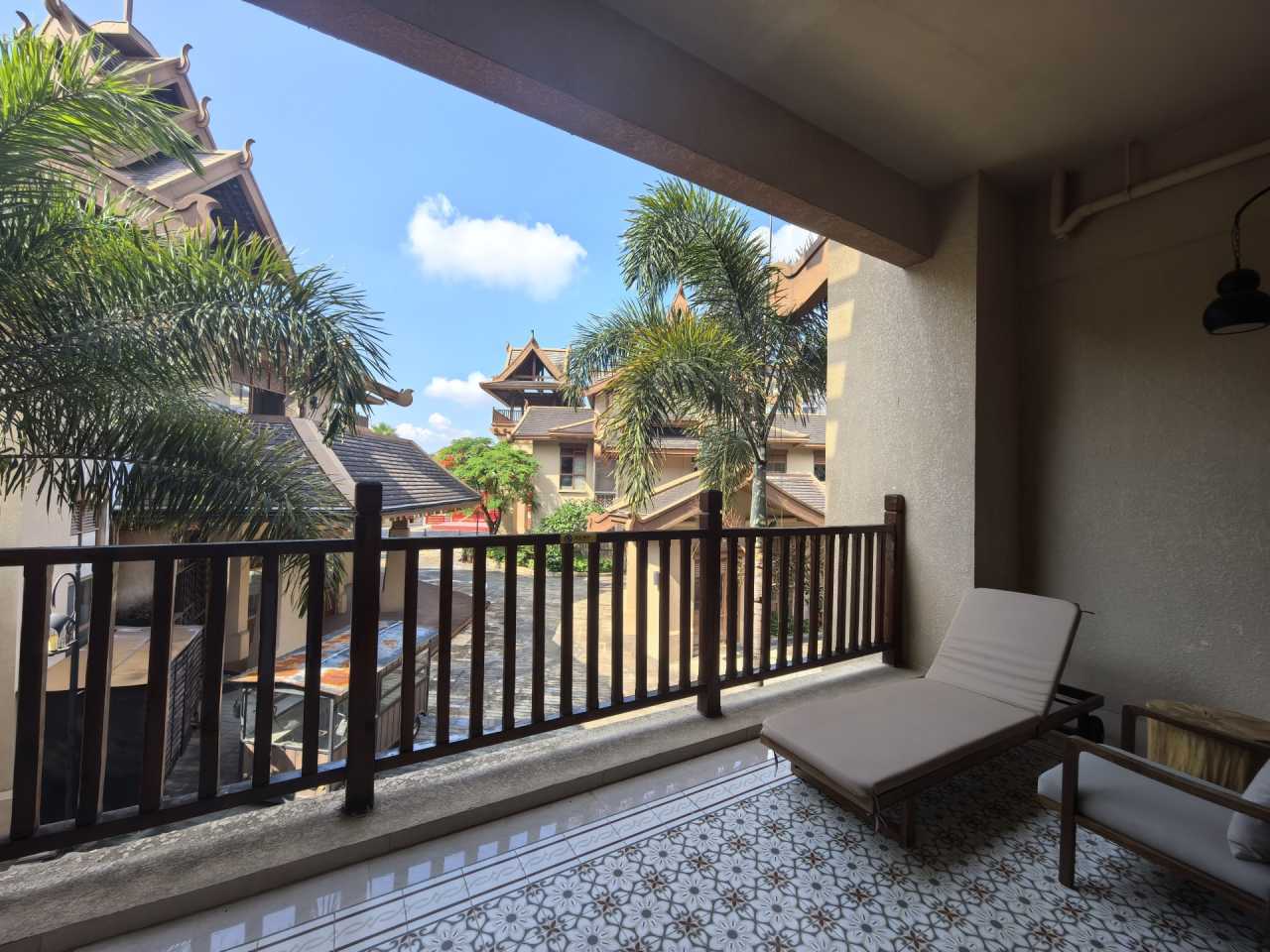
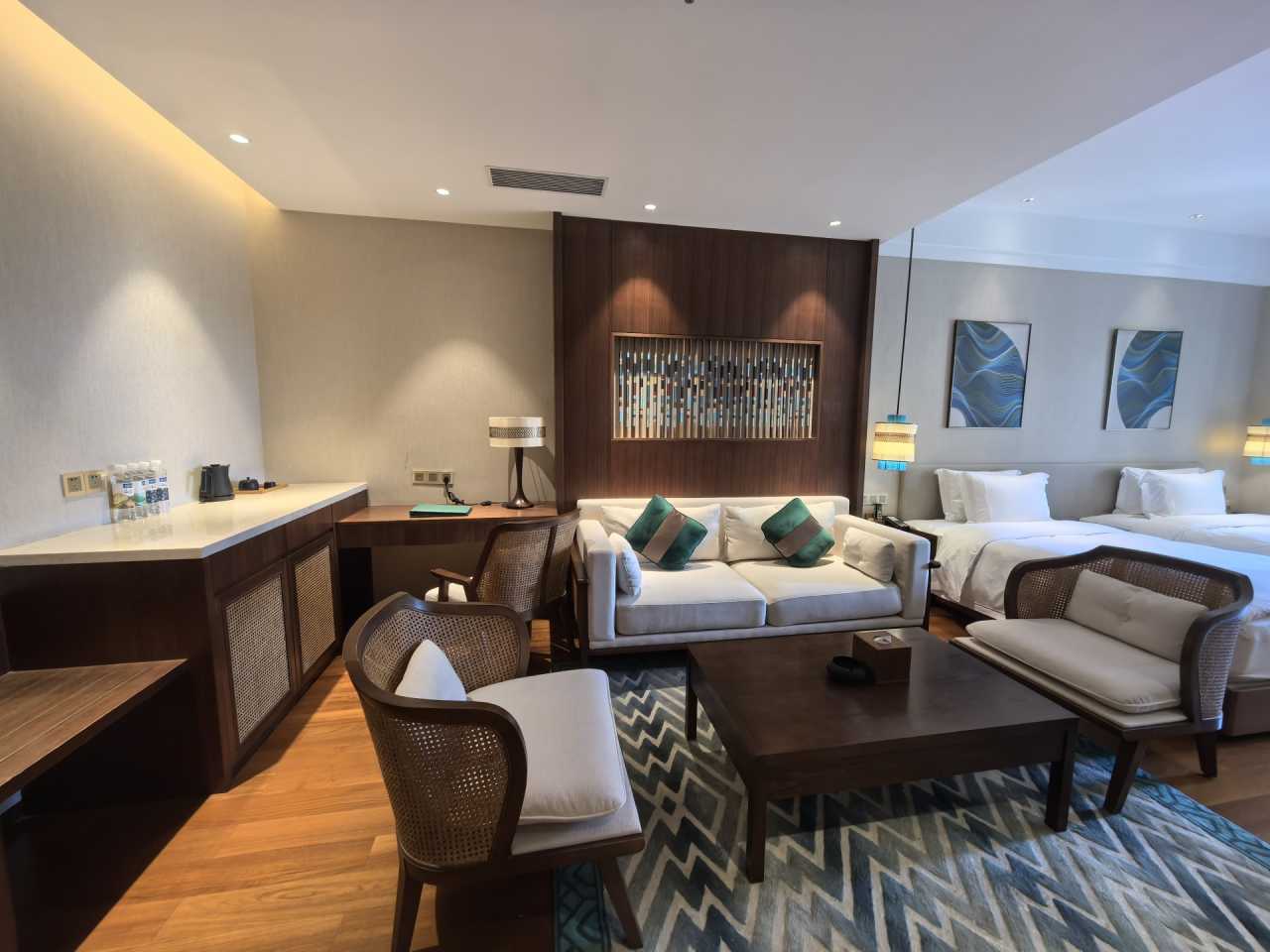
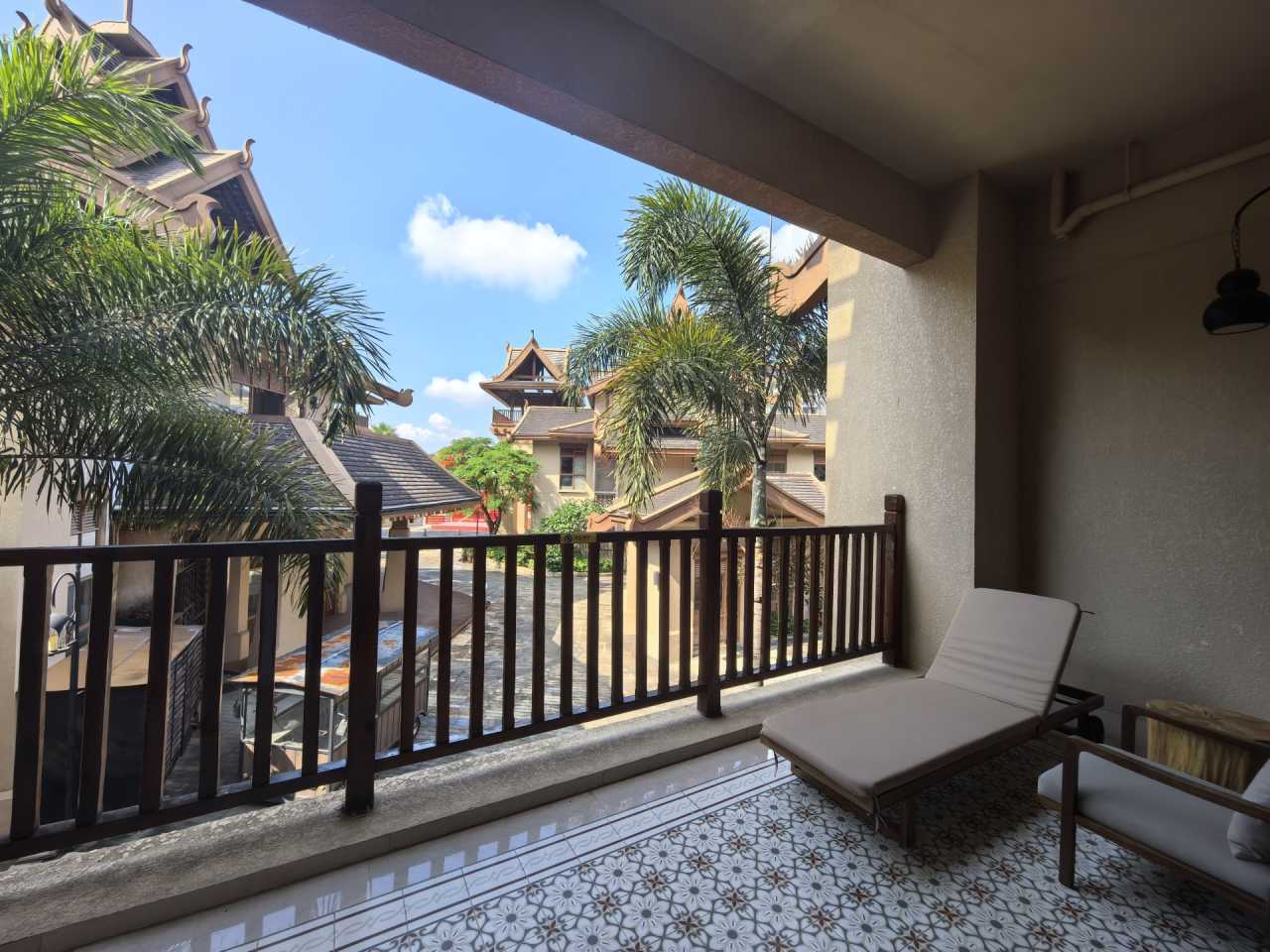
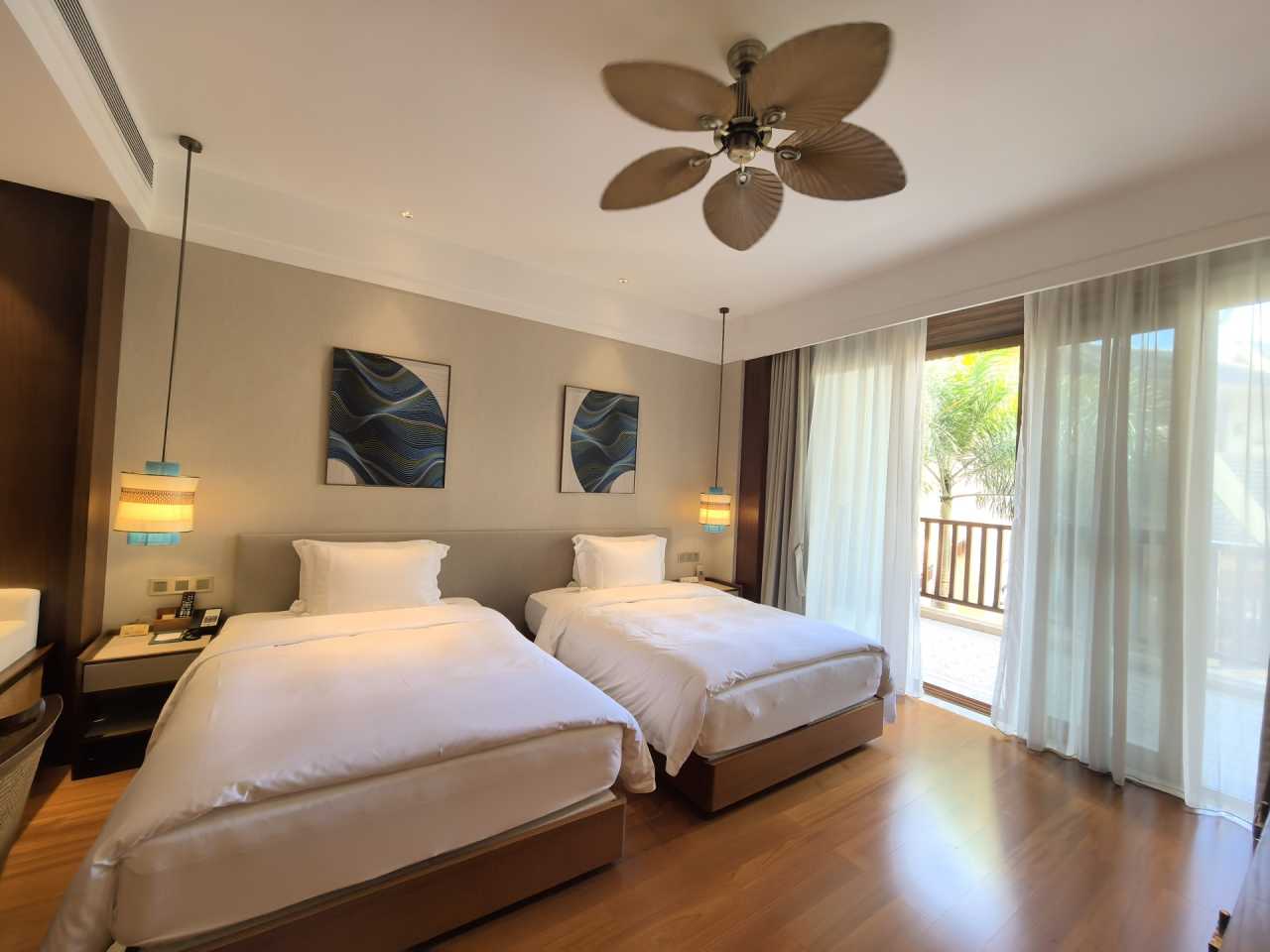
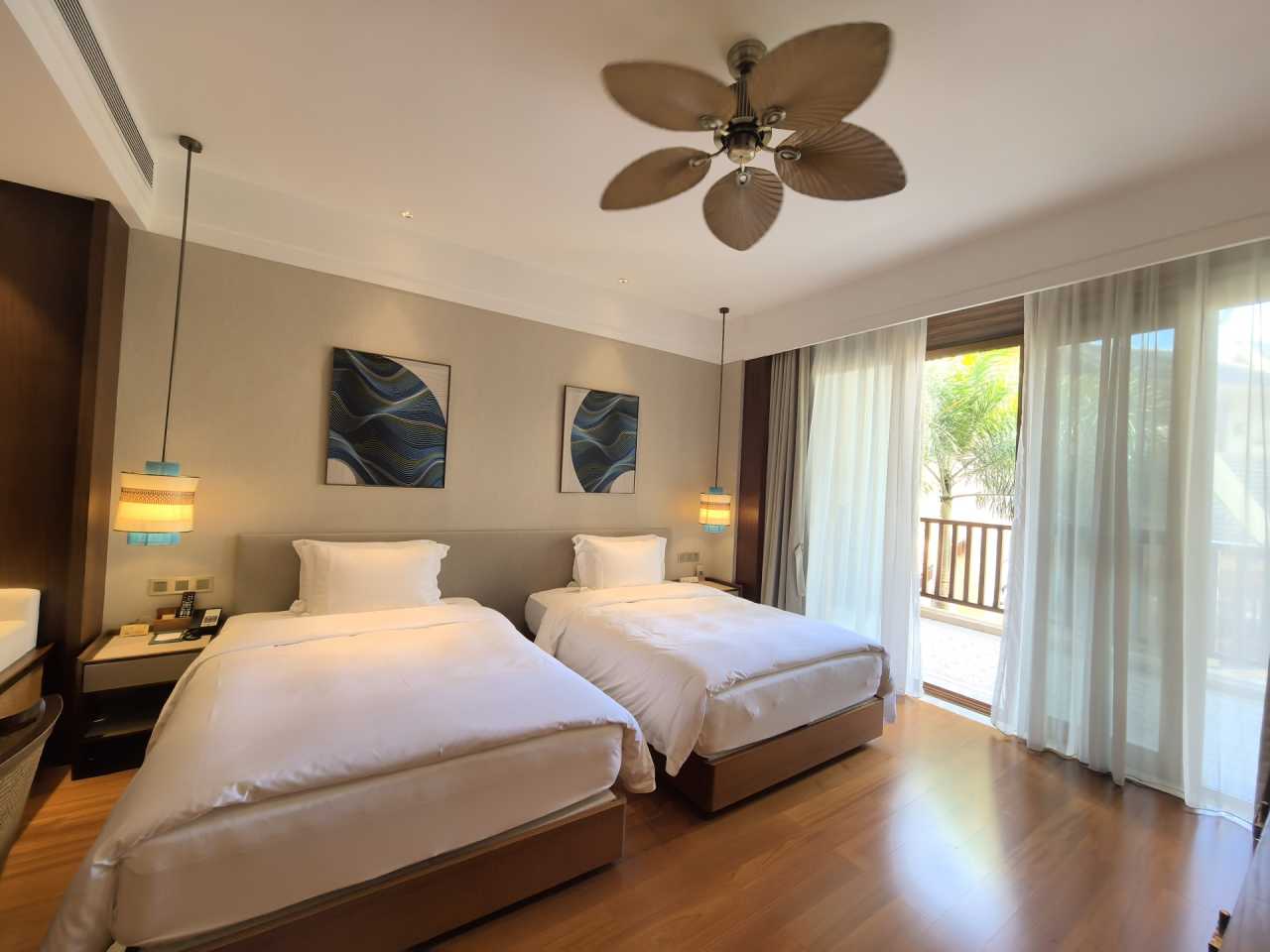
I spent a long time choosing a hotel in Tengchong and finally settled on Guanfang Hotel. As Tengchong's classic hot spring resort, the interior decoration is a bit dated, but the environment and service are still good. We chose a poolside standard suite, which occupied an entire floor by itself. The bedroom and living room were both spacious, with two bathrooms and two balconies. The balcony overlooked the swimming pool — an absolutely stunning view.
Rehai Scenic Area: Steam Rising at a 5A Attraction
Rehai is Tengchong's most famous scenic area and its only 5A-rated attraction. At the entrance, elderly women sell hot spring eggs, strung together with straw ropes — 5 eggs for 4 yuan (about $0.55). You can take them to the Big Boiling Pot to cook for free. We bought a string, carried it into the park, and filmed a self-directed short video called "Egg Protection Mission." In the end, we happily ate them — at least we made good use of the props.
Tengchong's temperature is much lower than Mangshi's, and we were initially worried about freezing. But once we entered the park, all concerns vanished. Pearl Spring, Glasses Spring, Drumming Spring — all the hot springs, big and small, had temperatures mostly above 90°C (194°F). The air was thick with sulfur-scented steam. Walking through the misty, smoky atmosphere felt like being in a sauna.
The most impressive was the Big Boiling Pot at the top of the hill. Even though I'd seen many photos online, seeing it in person was still breathtaking — a pool of azure boiling water churning relentlessly day and night, emitting endless steam, stubbornly conveying the heat stored deep within the earth.
Huangguajing Grandma's Hot Springs: "Prison-Chic" Meets Bodily Bliss
Huangguajing Hot Springs is close to the Rehai scenic area as the crow flies, but you have to take mountain roads. With the rain, we didn't dare risk it and took a taxi the long way around.
There are two hot spring places at Huangguajing — one is a military sanatorium, and the other is Grandma's. After checking both out in person, we felt Grandma's was slightly better overall. "Slightly better" doesn't mean much, though — netizens describe Grandma's as "prison-chic," and since we love novelty, we were eager to try it after reading those reviews. When we arrived, we found the environment was even worse than what we'd seen online: cobwebs on the ceiling, walls corroded by sulfur, a dim and smelly changing room. The only thing keeping us going was the "we're already here" mentality. Juan sent photos to a friend, who commented sharply: "Suffering through it for no reason."
But once we got into the hot spring, we knew it was worth it. Huangguajing is a premium-grade hot spring with excellent water quality. The moment you step in, your skin feels smoother. The proper routine is "three soaks, three steams" — soak for a while, then go to the adjacent steam room, spread a straw mat on the soft pine needles, put on a face mask, and lie down. Open your eyes, and it looks like being in prison. Close your eyes and feel the steam envelop you, catching the faint scent of pine needles — it was actually quite enjoyable. Truly an "eyes in hell, body in heaven" experience.
Madong Halal Copper Pot Beef: The Perfect Marriage of Mint and Beef
After the hot springs, we were both exhausted and starving. We took a taxi to try Tengchong's most famous dish — copper pot beef. After ordering, the waiter brought various condiments, and we prepared our dipping sauces to our liking. Then the aromatic copper pot beef arrived. We picked up blanched mint leaves and beef together and put them in our mouths — the freshness of mint and the savory flavor of beef exploded on our palates. Absolutely heavenly.
Dajiujia: A Dish Even Emperor Yongli Loved
Tengchong's Dajiujia (literally "Great Rescue") gets its name from a legend: During the Ming Dynasty, Emperor Yongli was being hotly pursued by Qing troops. His party had been walking mountain roads all day, exhausted and starving. A farming family stir-fried the best ingredients they had — a combination of rice cakes (er kuai), ham, eggs, and greens. After eating it, Emperor Yongli praised it extravagantly: "These stir-fried rice cakes saved my imperial self."
We had been running around all day, tired and hungry. Apart from not being chased by anyone, our situation wasn't much different from Emperor Yongli's back then. Eating this colorful and flavorful Dajiujia, we felt the emperor wasn't exaggerating — truly, healing food can save the day.
Day 4: Heshun Ancient Town | Yunnan Omakase in a 260-Year-Old Mansion
Shushu Bookstore: The Joy of Having a Viral Bookstore All to Ourselves
Breakfast at Guanfang Hotel was quite boring. It looked like there was a variety, but there wasn't much that actually appealed. I walked around and ended up just getting rice noodles and稀豆粉 (pea jelly) — filling enough, but nothing special.
We had scheduled a portrait photo shoot at Heshun Ancient Town for 9 AM, but it was pouring rain when we woke up, so we had to postpone. We debated whether to go out or just swim at the hotel, but ultimately decided to be brave and head out — first to Shushu Bookstore for photos.
Shushu Bookstore is also in Heshun Ancient Town. We arrived early, and since it was rainy, this viral bookstore had almost no other guests. We took photos to our hearts' content, marveling at how beautiful the place was as we snapped away.
Yi Ethnic Portrait Photography: Ancient Town Charm in Ever-Changing Weather
After the photos, the sky cleared up, perfectly timing our transition to the portrait shoot. We were drawn to the simple yet beautiful Yi ethnic costumes and were determined to get Yi-style portraits taken.
After getting our makeup done, the photographer小哥 (young guy) rode a three-wheeled bike to take us through the ancient town, choosing several spots for shooting. Tengchong's weather was unpredictable — sometimes sunny, sometimes rainy during the shoot — but each weather had its own charm.
Chunye Coffee Shop: The Best Place to While Away Time
We had originally booked lunch at Huajie Private Kitchen, but after the photo shoot, we weren't hungry yet. We decided to go to a coffee shop instead and take more photos while our makeup was still fresh. Chunye Coffee Shop was decorated with both atmosphere and comfort. After taking all kinds of posed photos, we lay back, played on our phones, and sipped coffee — pure bliss. We spent nearly 2 hours at the coffee shop before reluctantly leaving.
Huajie Private Kitchen: Yunnan Omakase in a 280-Year-Old Mansion
Huajie Private Kitchen is housed in a mansion with 280 years of history. All seating is in private rooms, and the environment is lovely. They charge per person with different meal tiers. We chose the cheapest option at 198 yuan ($27) per person, only to be told that the afternoon minimum was 268 yuan ($37). Looking at the beautiful surroundings, we hesitated for only 3 seconds before deciding to go for it.
The restaurant has homemade fruit wines. You can taste each one first and pick your favorite. Sipping fruit wine, watching the rain fall casually into the courtyard's central well, chatting idly — there's nothing more relaxing.
The serving style is similar to Omakase — tell the server your preferences and dietary restrictions, and the chef prepares the dishes accordingly. All dishes can be refilled unlimitedly. The good news was that with the higher price point, the food quality also improved — there were additions like black truffle and见手青 (a type of wild mushroom).
The plating was exquisite, and almost every dish was delicious. Our favorites were the见手青 (wild mushroom) and beef cubes. We ate four servings of the mushroom and drank plenty of fruit wine, inwardly calculating — we'd gotten our money's worth, right?
The restaurant's aunties sat under the eaves, processing fresh见手青 (wild mushrooms), with one particularly large specimen displayed nearby. We found it fascinating and couldn't stop taking photos.
Strolling Through the Ancient Town and Hotel Hot Springs: The Gentleness of Carbonated Springs
Full and satisfied, we wandered through the ancient town, buying drip coffee bags and fridge magnets. Seeing the rain getting heavier and the sky darkening, we took a taxi back to the hotel.
The hotel staff explained to us: Tengchong's natural hot springs mainly come in two types — sulfur springs and carbonated springs. The Huangguajing Grandma's we visited yesterday was a sulfur spring, while the one at Guanfang Hotel is carbonated. We went back to our room, changed into swimsuits, wrapped ourselves in bathrobes, and went downstairs to soak. The evening hot spring pool was lively, with travelers from all over gathered together, chatting and laughing loudly in various dialects — a joyful and harmonious atmosphere.
Day 5: Back to Mangshi | From Tree-Enshrined Pagoda to "Fly-Infested" Local Eateries
Returning to Mangshi: A Different Hotel, A Different Experience
Today's hotel breakfast was still uninspiring. We ate a little and couldn't wait to drag our suitcases back to Mangshi. The return trip was in a small business van. The Mercedes-Benz logo on the front was impressive, but it wasn't as spacious as the minibus we came in — overall, the ride was just average.
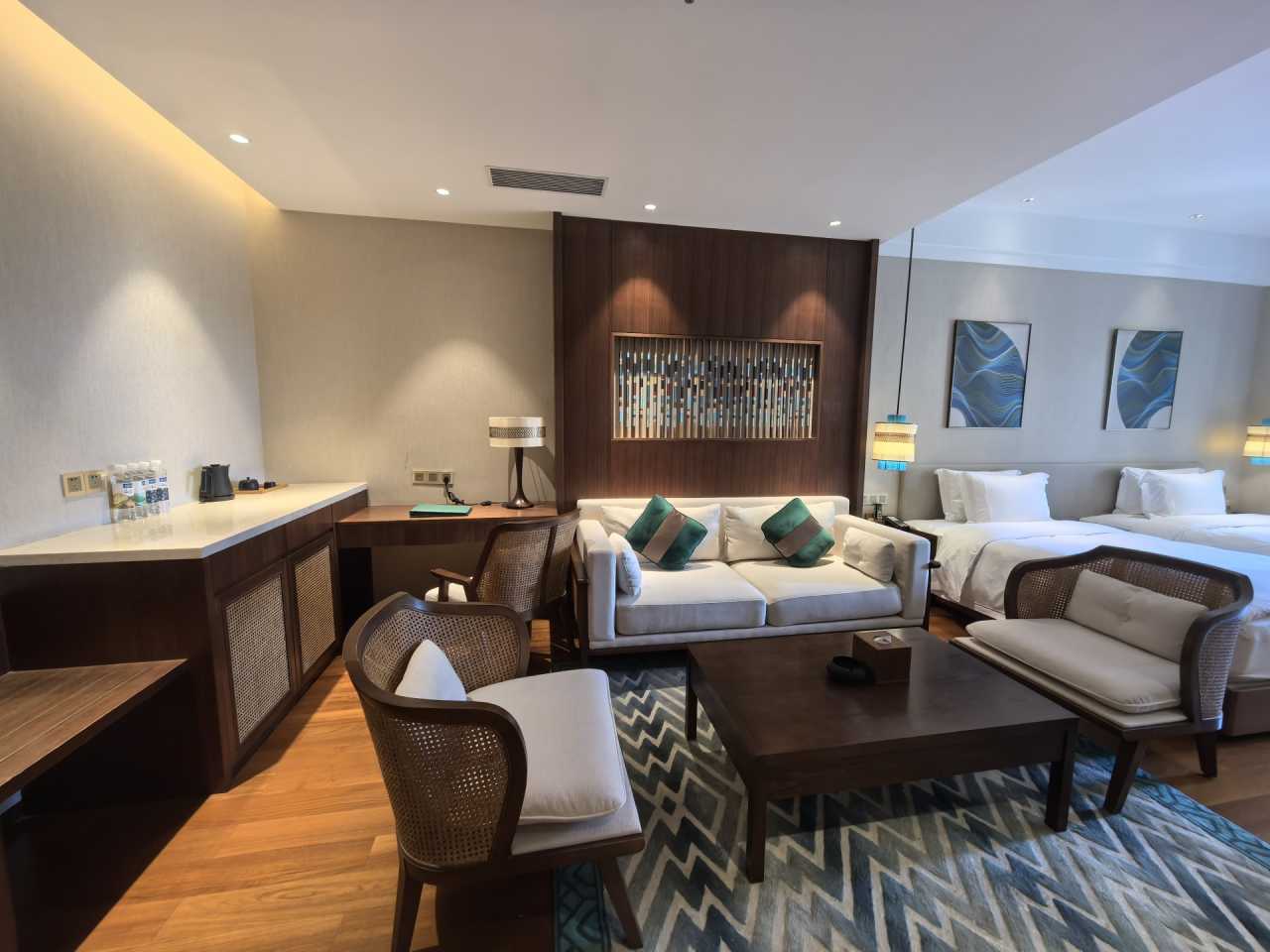
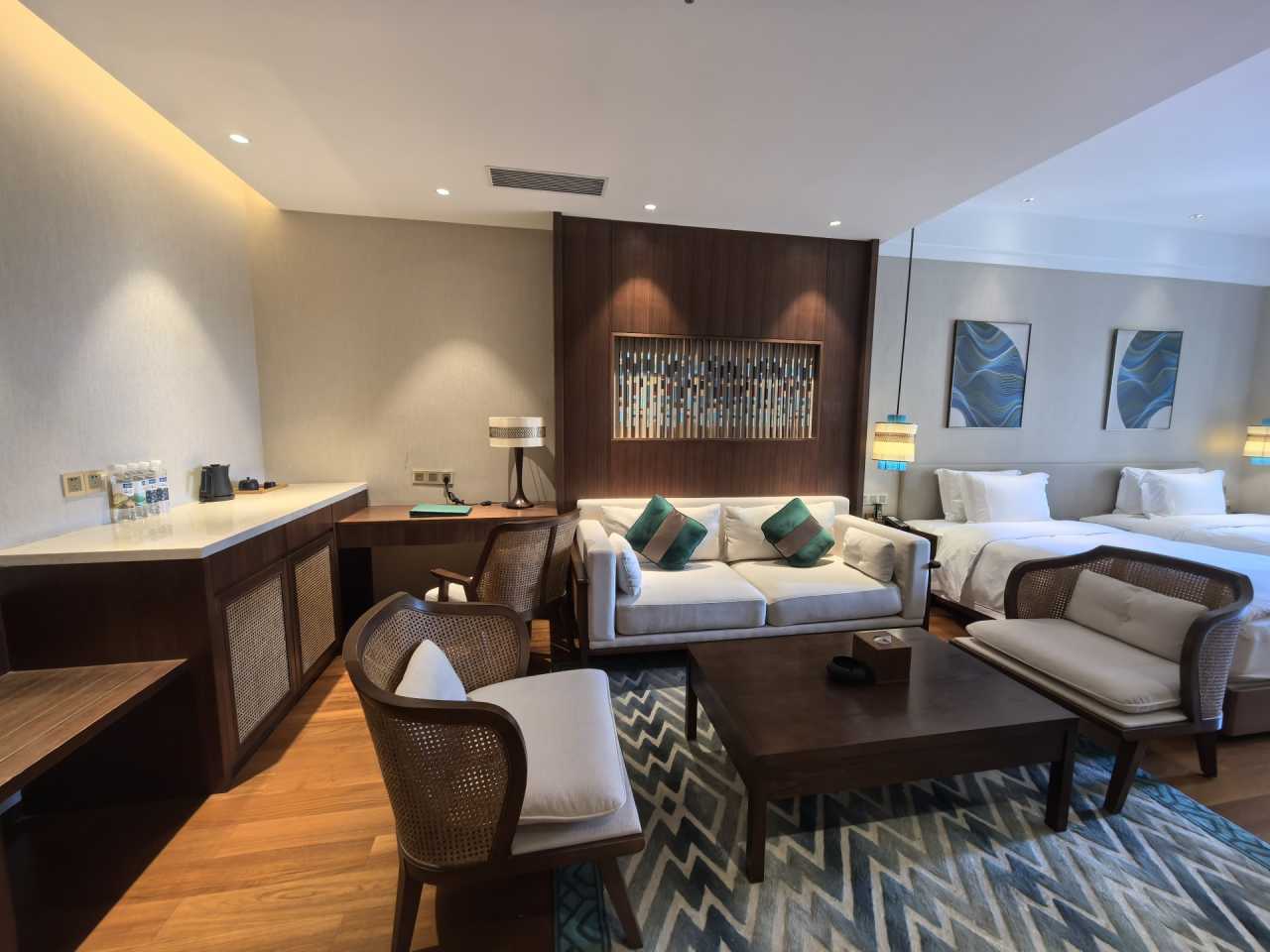
Back in Mangshi, we switched to a different hotel. Compared to the previous two, Yueling Hotel was just average — basically a budget chain hotel. But the location and service were good. Just as we were agonizing over what to wear outside, the hotel's complimentary Dai ethnic costumes solved the problem. We picked out beautiful Dai tube skirts, hopped on our rented electric scooters, and headed out to find food.
Tree-Enshrined Pagoda: The Symbiotic Wonder of Banyan and Pagoda
Mangshi is small, so riding electric scooters is very convenient. On the way to the restaurant, we passed the Tree-Enshrined Pagoda. Built during the Kangxi era of the Qing Dynasty (1661-1722), this solid brick pagoda, also known as Tiecheng Buddhist Pagoda, consists of a main pagoda and four smaller ones. The pagoda body is now completely wrapped in banyan tree roots, with the tree and pagoda fused into one — forming the unique "tree-enshrined pagoda" landscape.
Meiwei Dai Flavors: The White Moonlight of Firecloud Restaurant's Owner
According to online buzz, this restaurant is a must-visit for the owner of Firecloud Restaurant (a famous Yunnan chain in Beijing) every time she comes to Mangshi — which made us very curious about the food. Meiwei is a typical family restaurant run by a family of three. You also order by looking at the food display case. We ordered mint spare ribs, mango beef, and stir-fried mixed vegetables with pickled bamboo shoots.
All the dishes were delicious. The most special was the pickled bamboo shoot stir-fry recommended by the owner — the flavor of the pickled bamboo shoots perfectly integrated with various vegetables, leaving a lingering fragrance in the mouth. This dish was also a favorite of the flies. Several flies fluttered their nearly transparent wings, diving at the food like moths to a flame. We had to wave our arms like windmills to shoo away these uninvited guests. By the end of the meal, our biceps had gotten quite a workout.
Bodhi Temple and Bodhi Street: Mangshi's Viral Photo Spots
Bodhi Temple is called "Zhuang Xiang" in the Dai language, meaning "gem temple." Its architecture blends Han and Dai styles. It's said that during festivals like the Water Splashing Festival, various folk cultural activities are held here. We're not very knowledgeable about temples, so we were more interested in the lush jackfruit tree next to it.
Bodhi Street is Mangshi's trendiest street. Over 80% of tourists' Mangshi check-in photos on social media are taken here. Taking advantage of the light traffic, we went back and forth taking photos for a while before we got satisfactory shots.
Mangshi Hotel and Menghuan Golden Pagoda: A Dialogue Between History and Landmarks
Mangshi Hotel, with nearly 70 years of history, is Dehong Prefecture's classic five-star hotel. In its courtyard is a Burmese orchid tree planted by Premier Zhou Enlai in the 1950s as a symbol of China-Myanmar friendship.
Menghuan Golden Pagoda is Mangshi's landmark, perched atop Leiyarang Mountain. We weren't very interested in the pagoda itself and just took a few photos outside. When we were taking taxis in Tengchong, one driver mentioned that his favorite thing in Mangshi was the juice from the stalls at the foot of the Golden Pagoda. There are several juice shops there. We picked one that looked good and bought a cup, but didn't find anything particularly special about it.
Leiyarang Bookstore and Fansi Hotel: Culture and Southeast Asian Charm
Leiyarang Bookstore is elegant and beautiful, with a view overlooking Mangshi. We bought some quirky fridge magnets with creative designs here and also saw several kittens cuddled together.
Fansi Hotel is ranked as Mangshi's number one hotel overall. We had originally planned to stay there but couldn't get a room. Riding past on our electric scooter, we decided to go in and take some photos. Fansi Hotel consists entirely of standalone villas, even more beautiful than the Feihua Hotel we'd stayed at before, with the same strong Southeast Asian vibe.
Xinwanchang and Hongli Market: Night Market and Fruit Temptations
Xinwanchang is an art district converted from an old factory area, with a lively night market in the evening. We mainly came to take photos in front of the viral wall with "Mangshi" written on it. Xi'an also has walls with "Xi'an" or "Chang'an" written on them that attract long queues of tourists. I never really understood it before, but once you're traveling, doing these things feels totally normal — when you're out exploring, everything seems interesting.
Hongli Market had a dazzling array of fruits — just looking at them was a pleasure. The owner probably could tell we were tourists, because the prices weren't very friendly. We only bought a bunch of grapes and two pieces of litsea root.
Menghuancheng Xiaoguo BBQ: A Truly "Fly-Infested" Hole-in-the-Wall
After wandering around for most of the day, we were pretty tired. We went back to the hotel for a good nap and headed out for barbecue in the evening.
The restaurant's exterior was unremarkable, and the inside was even more rundown — a few low, small round tables, each with dozens of flies on them. Truly a "fly-infested" hole-in-the-wall. But for the sake of good food, we didn't care about the environment. We ordered our dishes and found a relatively clean corner to sit down.
Day 6: Slow Life in Mangshi | From Museums to Coffee Shops
Dehong Prefecture Museum: Understanding a City's History
Today's pace slowed down. We went to the Dehong Prefecture Museum and learned about the history and culture of this region. The museum isn't large, but it has rich exhibits — from ancient fossils to modern ethnic culture — giving us a deeper understanding of Dehong.
Big Tree Coffee and Yunfan Coffee: Mangshi's Coffee Culture
Mangshi has a strong coffee culture. We went to Big Tree Coffee, sat under a big tree in the drizzling rain, sipped coffee, and let our minds go blank — pure enjoyment. Later, we went to Yunfan Coffee, which has a great environment, perfect for taking photos and zoning out.
Mangshi Square: Experiencing Local Life
Mangshi Square is a leisure spot for locals. Here we saw dancing aunties, playing children, and strolling couples — this is the most authentic side of Mangshi.
You should also read:

Solo in Yunnan: A Wanderer’s Guide to the Land of Eternal Spring
Solo in Yunnan: A Wanderer’s Guide to the Land of Eternal Spring There’s something magical about traveling alone. No compromises, no schedules to keep, no one to please but yourself. I’ve been on the road for nearly three months now, and not once have I…
Continue reading...
Tengchong·Heshun: Finding Life as It Should Be in a Border Town Where Time Stands Still
Tengchong·Heshun: Finding Life as It Should Be in a Border Town Where Time Stands Still The long journey of over twenty days was over. On my first day back at the office, I was still in a daze. My fingers couldn't find the keys on…
Continue reading...
God’s Abandoned Palette: A Self-Drive Journey Through Yunnan’s Dongchuan Red Land
God’s Abandoned Palette: A Self-Drive Journey Through Yunnan’s Dongchuan Red Land Travel has never been about reaching some distant geographic coordinate. It’s about encountering, along the way, the version of yourself buried beneath the rubble of daily routine. During this May Day holiday, I finally…
Continue reading...