New Ways to Experience Summer in Huangshan: Cool Off Without Climbing the Mountain
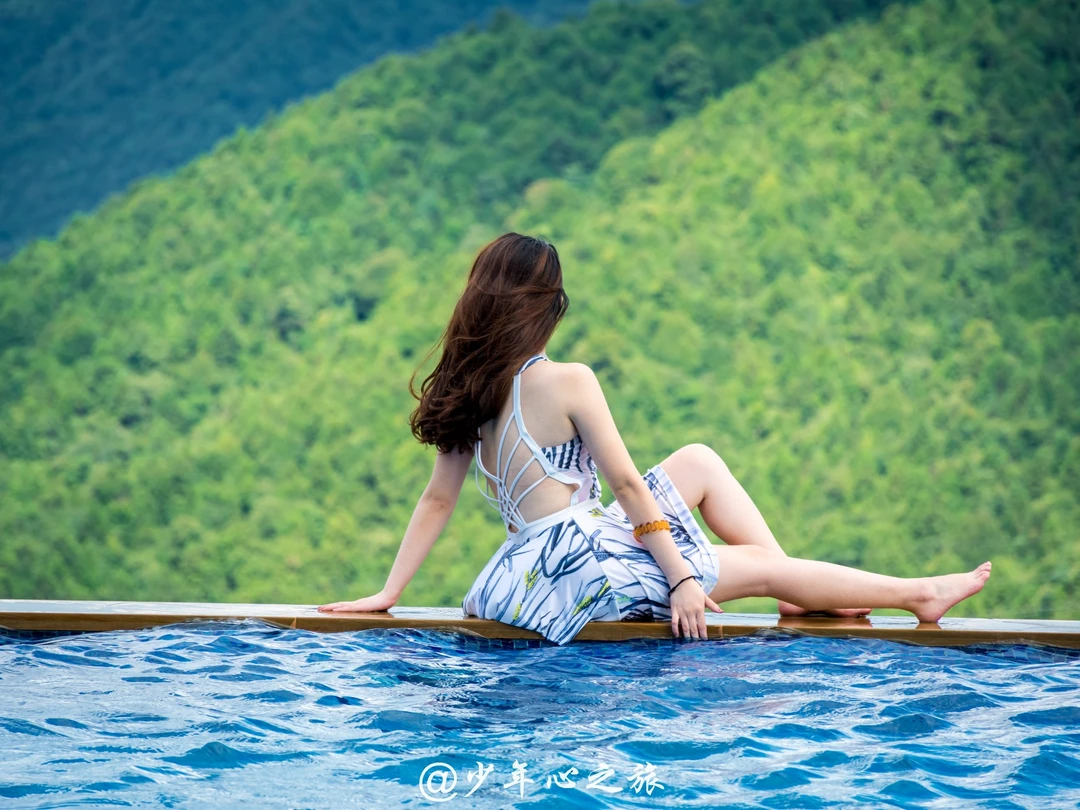
New Ways to Experience Summer in Huangshan: Cool Off Without Climbing the Mountain
When most people think of Huangshan (Yellow Mountain), their minds immediately go to the iconic odd-shaped pines, peculiar rock formations, seas of clouds, and sunrises—the kind of scenery that inspired the famous Chinese saying, "Having visited the Five Sacred Mountains, no other mountain is worth seeing; having visited Huangshan, the Five Sacred Mountains are no longer worth seeing." But when the scorching summer heat descends, the idea of climbing Huangshan can feel overwhelming—sweating profusely, gasping for breath, with little energy left to appreciate the beauty around you.
However, if you think that summer in Huangshan only offers the "climbing" experience, you couldn't be more wrong.
Nestled along the mysterious 30th parallel north, cradled within the gentle embrace of the Huangshan mountain range, lies a series of astonishing "water-based summer retreat" hidden gems. Some lie deep underground, carved over millennia; others flow through ancient villages; and some float high above the clouds. Together, they form the coolest and most unique summer landscape Huangshan has to offer.
Today, let me take you into a different side of Huangshan—no climbing, no sweating, yet still filled with wonder and a desire to linger.
Exploring the Underground Palace: Huashan Mystery Grottoes, the Ninth Wonder of the 30th Parallel North
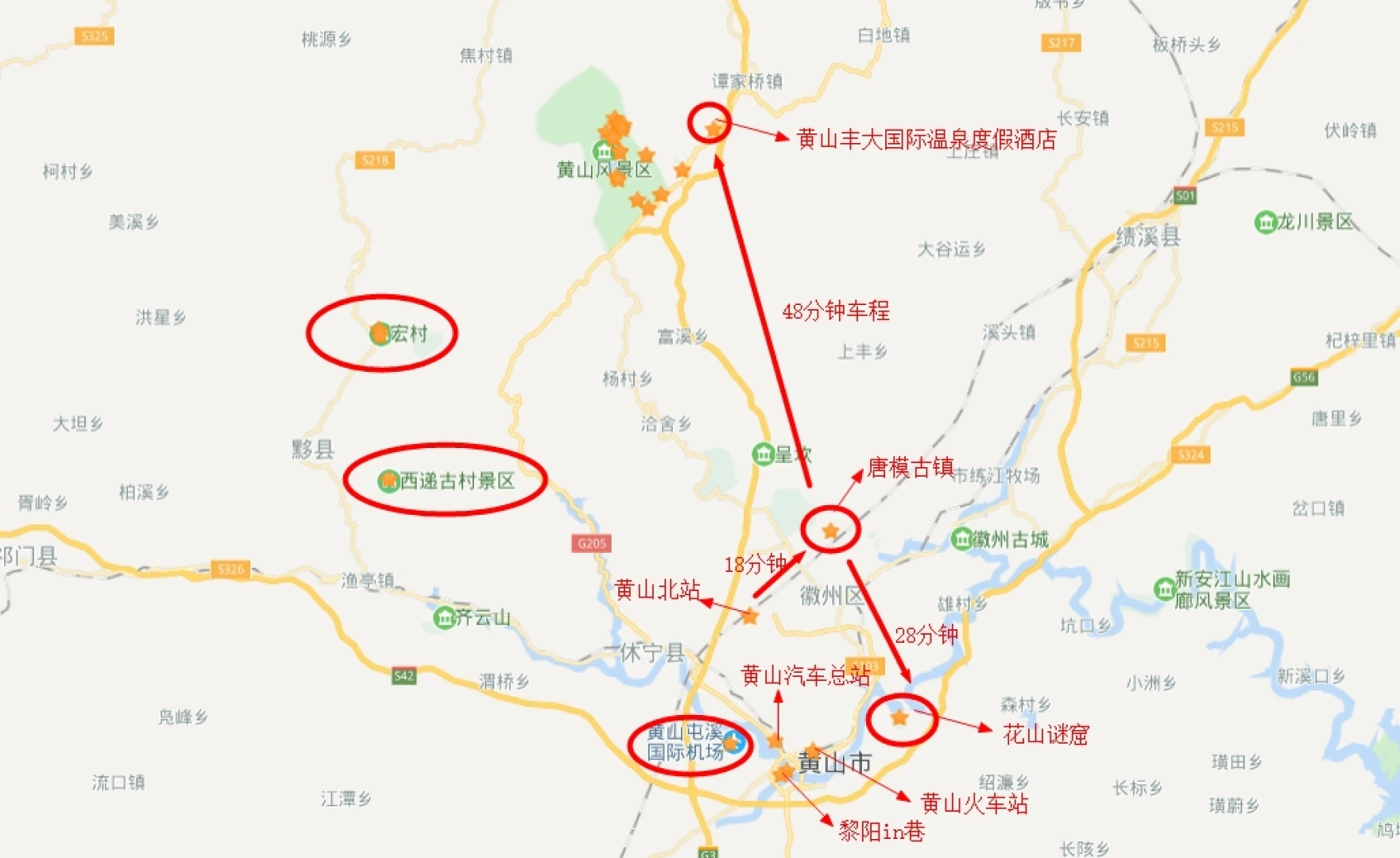
Just an hour's drive from Huangshan North Station, we arrived at our first stop—the Huashan Mystery Grottoes (Huashan Miku). To be honest, I was a bit nervous before setting out. Days of heavy rain had me worried the trip might be ruined. But the moment we stood at the entrance, all my concerns vanished—blue skies, white clouds, and endless sunshine, as if the heavens had specially cleared the weather just for us.
Even more surprising, the entrance to the Huashan Mystery Grottoes isn't a typical set of climbing stairs. Instead, it's a suspension bridge spanning the Xin'an River. Walking across the bridge, beneath your feet lies the shimmering river, while ahead stretches a 200,000-square-meter "Jiangnan Little Prairie"—lush green grass, wide open views, evoking a pastoral scene reminiscent of "wind blowing grass low to reveal cattle and sheep." In the distance, the Xin'an River, known as the mother river of Anhui Province, meanders gracefully, painting the magnificent picture of "The First Bend of Jiangnan."
At the end of the suspension bridge lies a path leading deep into the mountains. That sense of unknown exploration makes your heart race and blood boil—what kind of sight awaits us ahead?
A Millennia-Old Mystery: The Breathtaking Underground Palace
Huashan Mystery Grottoes—a name that sounds mysterious—is actually a vast underground palace complex consisting of 36 grottoes. Covering a total area of 7 square kilometers, that's equivalent to 980 standard football fields! And so far, only three have been developed.

The moment you step inside the grotto, a wave of coolness washes over you—the temperature here remains around 15°C (59°F) year-round, making it a natural "air-conditioned room." But even more awe-inspiring is the grotto itself.
You might think this is just a naturally formed karst cave. But in reality, it is entirely a man-made miracle, carved by ancient hands over 1,700 years ago. Without modern technology or mechanical tools, the ancients precisely understood the mountain's structural veins. Every stone pillar left behind perfectly supports the entire "underground palace." If any were placed differently, the entire grotto might have collapsed long ago.
Even more astonishing, the seemingly random chisel marks on the stone walls actually have sound-absorbing properties—speak loudly inside the grotto, and you'll barely hear an echo. What was the purpose of this design? Was it for ritual needs, or does it hide some deeper secret?
Endless Mysteries, Unsolved to This Day
Huashan Mystery Grottoes earned the name "mystery" because they leave behind countless unanswered questions:
- Why is there no historical record of such a massive project?
- When exactly were these grottoes carved, and how long did it take?
- Where did the tens of thousands of tons of stone go, and how were they transported?
- What was the true purpose of the grottoes? Military garrison? Grain storage? A quarry?
The government has repeatedly invited Chinese and foreign experts and scholars to investigate, but to this day, no one has provided a convincing answer. In May 2001, former President Jiang Zemin visited and exclaimed repeatedly, "This is truly amazing! If we promote this abroad, it will be extraordinary!" He then inscribed the words "Huashan Mystery Grottoes" with great enthusiasm.
This very mystery only adds to the grottoes' allure. Walking through them, you can almost hear the chiseling sounds from a thousand years ago, feel the wisdom and sweat of the ancients. And that unsolvable enigma, like a thin veil, lends this underground palace an even more dreamlike quality.
The Water Grotto and Swan Lake
In addition to the land-based grottoes, Huashan Mystery Grottoes also features a water grotto—Grotto No. 24. To reach it, you need to take two boat rides. The scenery along the way is breathtaking—clear lake water, lush vegetation, all soothing to the soul. The water grotto itself is equally mysterious—the water inside can never be drained, and its depth is said to be astonishing. However, this grotto is selectively open depending on weather conditions. When we visited, the water level was high, requiring us to duck low to pass through.
On the way to the water grotto, you'll also pass by Swan Lake. Flocks of black swans, white swans, mandarin ducks, mallards, coots, and other waterfowl frolic in the water. You can feed them, experiencing the harmony between humans and nature.
Practical Tips: - Online ticket for Huashan Mystery Grottoes: 80 RMB (includes 2 land grottoes), bookable before 2:00 PM on the day of visit - Online ticket + boat ticket: 115 RMB (includes land and water grottoes) - Opening hours: Peak season 8:00 AM–5:30 PM, Off-peak season 8:00 AM–5:00 PM
Traveling Through a Thousand Years: Tangmo Ancient Town, China's First Waterway Garden Village
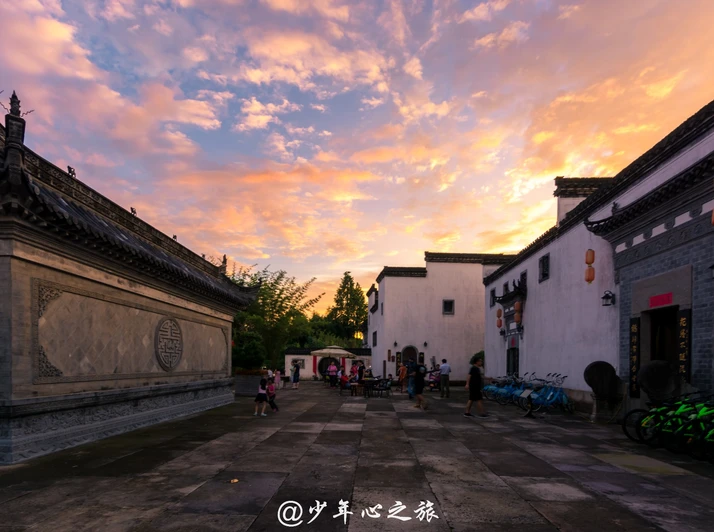
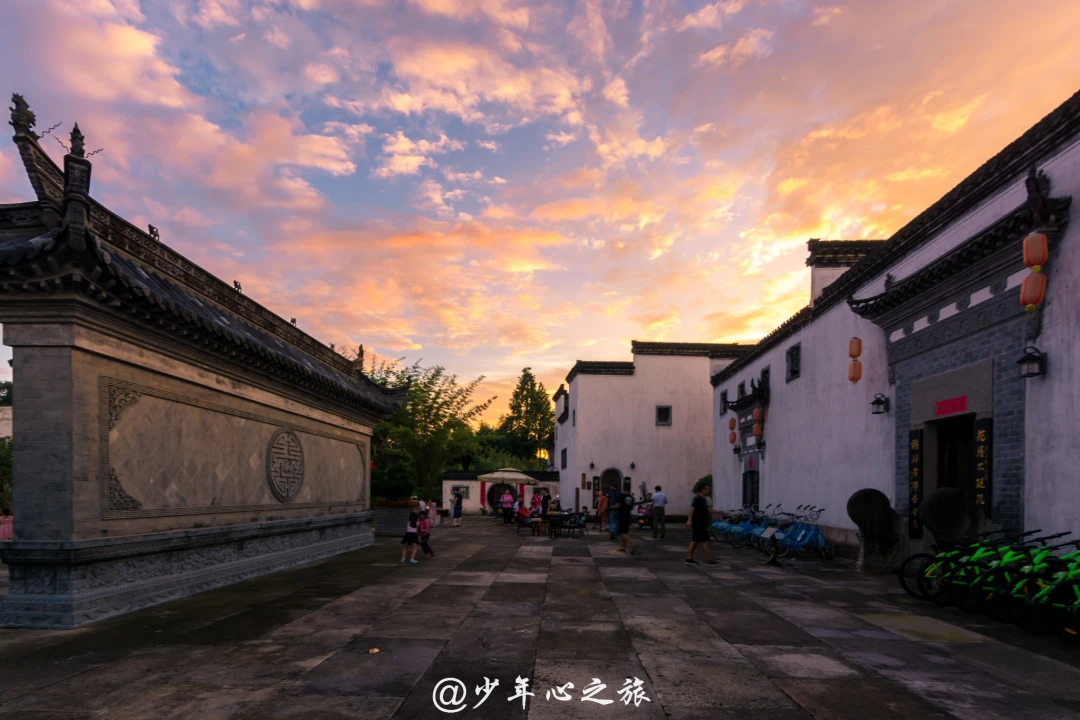
Emerging from the millennia-old mysteries of Huashan Mystery Grottoes, we drove to Tangmo Ancient Town. Just as we arrived, the sky staged a stunning sunset show—golden fiery clouds spread across the horizon, and the last rays of the setting sun bathed the white walls and black tiles of the ancient buildings in a golden glow, as if plating this thousand-year-old town with gold.
Tangmo—the name itself is steeped in history: "Model Village of the Tang Dynasty." It was first built during the Tang Dynasty by descendants of Wang Hua, the Duke of Yue, following the model of the prosperous Tang era. Known as "China's First Waterway Garden Village," it is also one of Anhui Province's Top Ten Beautiful Villages. Notably, it was a filming location for the popular variety show "Extreme Challenge," where celebrities like Zhang Yixing, Sun Honglei, and Huang Bo recorded episodes.
Ancient Charm, Timeless Tranquility
Stepping into Tangmo feels like traveling back to the Ming and Qing dynasties. A clear stream flows through the village, with residents living along its banks. Memorial archways, ancestral halls, covered walkways, and ancient bridges are arranged in perfect harmony, complemented by the white walls, black tiles, and horse-head walls of Huizhou-style architecture—simple yet elegant.
The renowned aesthetician Guo Yin once praised Tangmo, saying, "It finds profundity in freshness, peace, and moderation." Indeed, every brick and tile here exudes the cultural essence of ancient Huizhou. Strolling along the bluestone paths, with the sound of flowing water and the lingering charm of antiquity, you can't help but slow down and savor this rare tranquility.
"Little West Lake" and the Millennium Ginkgo Tree
Tangmo's most famous attraction is the Tan'gan Garden, often called "Little West Lake." Built in the early Qing Dynasty by a wealthy merchant for his mother, the garden is filled with elements reminiscent of Hangzhou's West Lake—pavilions, terraces, bridges, and flowing water, all breathtakingly beautiful.
The town also boasts a thousand-year-old ginkgo tree. Its trunk is hollowed out, yet it stubbornly continues to grow. Even more miraculous, a "baby" seems to hang upside down from the tree, as if about to be born from its mother's belly—a sight that leaves visitors marveling.
Staying at a French Family Hotel, Experiencing Huizhou Life
Tonight, we checked into the Huangshan Tangmo French Family Hotel. This hotel has a rather legendary origin—it was transformed from the "Seven Courtyards" mansion of the late Qing Dynasty wealthy merchant Cheng Baiwan, along with 14 other Huizhou-style residences, under a Sino-French cooperation project. Ten of the buildings were carefully dismantled, numbered, and reassembled from ancient villages dozens of kilometers away.
Walking into the hotel feels like stepping into the mansion of a wealthy family from ancient times. The antique rooms exude the cultural depth of Huizhou. "A lifelong obsession, without dreams, cannot reach Huizhou"—tonight, I should be able to have a beautiful Huizhou dream.
A Taste of Huizhou: The Eight Great Bowls
When you come to Huizhou, you can't miss the authentic Huizhou cuisine. At the Tangmo French Family Hotel, we had the pleasure of tasting the "Eight Great Bowls of Huizhou" (Huizhou Ba Da Wan). The dishes are not fixed, but the number is important—eight bowls, eight plates, arranged on an eight-immortal table, seating eight people, symbolizing reunion and completeness.
Huizhou cuisine, one of China's eight major culinary traditions, excels in braising, stewing, and steaming. It emphasizes heavy oil, rich color, and intense heat, using local ingredients for freshness. Dishes like hairy tofu, braised stinky mandarin fish, ham-braised softshell turtle, and braised civet cat—each one leaves a lasting impression.
Practical Tips: - Online ticket for Tangmo Ancient Town: 70 RMB; staying at the Tangmo French Family Hotel grants free entry - Huangshan Tangmo French Family Hotel: Starting from around 350 RMB per night
Infinity Pool at 99 Meters: 360-Degree Panoramic View of Huangshan
If the first two stops were about "getting close to water," the final stop is true "summer escape"—the Huangshan Fengda International Hotel, home to the world's only 99-meter-high circular infinity pool.
Water Park, Summer Fun at Its Best
Upon arriving at the hotel, we headed straight to the water park. Fengda's water attractions are divided into several areas: the children's water play zone, the high-mountain tsunami wave pool, the 100-meter super slide, and the main Haohan Tianxia Water World building.
The high-mountain tsunami wave pool covers 20,000 square meters, with waves reaching up to 4 meters. Paired with an LED screen and surround sound, it feels like being in a real tsunami. The 100-meter super slide delivers the thrill of speed and water—plummeting from a height, creating "towering waves," drawing cheers from onlookers.
The World's Only 360-Degree High-Altitude Circular Infinity Pool
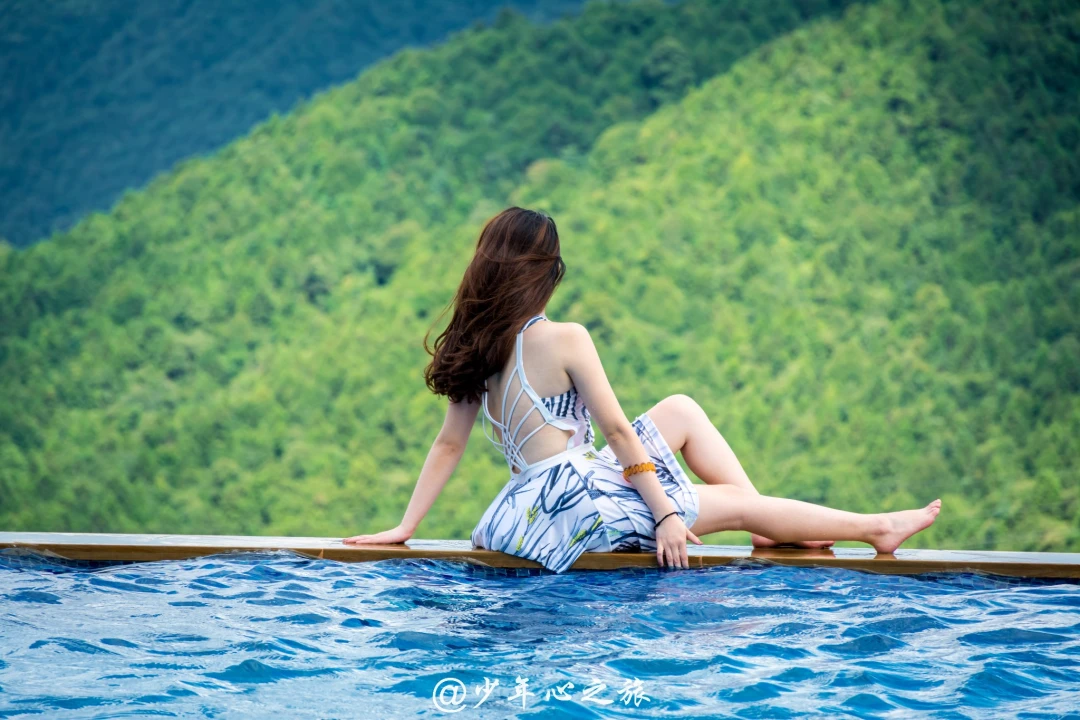
After enjoying all the attractions, we finally reached the legendary high-altitude infinity pool. Located on the tenth floor of the Haohan Tianxia main building, it stands 99 meters high, holds 3,000 cubic meters of water, and can accommodate 300 swimmers at once.
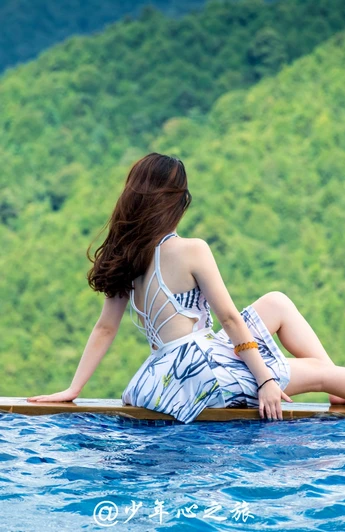
When the elevator doors opened, I couldn't believe my eyes—above was the blue sky and white clouds; in the distance, the majestic Huangshan; swimming in the azure water, it felt like I could reach out and touch the clouds. This 360-degree panoramic view of Huangshan's beauty is available nowhere else in the world!
Why is it "the world's only"? The manager proudly explained: "First, a 360-degree circular high-altitude infinity pool is indeed unique. Second, most high-altitude infinity pools at home and abroad are rectangular, with smaller areas and capacities. Third, while Singapore's infinity pool overlooks a city jungle, here you see the world's most famous mountain—Huangshan."
Safety and Romance Combined
Many worry about the safety of infinity pools. In fact, there is a 2-meter-wide trough outside the pool's edge, so overflow water drains safely. However, for safety reasons, sitting or standing on the edge is not allowed.
Imagine being with your loved one in this high-altitude infinity pool, gazing at the majestic Huangshan, the magical blue sky and white clouds, and the distant twinkling lights of Huizhou architecture—what a romantic scene!
Five-Star Luxury at Affordable Prices
Beyond the water attractions, the Huangshan Fengda International Hotel itself is a pleasant surprise. Five-star facilities starting at just 500 RMB, including a water park package? I was skeptical at first, but after two days of fun, I can only describe it as a "steal."
The hotel manager shared a story: In the early days, the founder of Fengda led five farmers with a loan of 50,000 RMB, building a business from a bowl of noodles into a conglomerate. After achieving success, they never forgot their roots, insisting on "creating five-star hotels that ordinary people can afford." And they delivered—the hotel even offers dishes for as little as 6 RMB, a rarity in five-star establishments.
Practical Tips: - Huangshan Fengda Haohan Tianxia Water World ticket: 128 RMB (if not staying at the hotel); half price for Huangshan residents - High-altitude infinity pool: additional 20 RMB - Hotel starting from 538 RMB per night, including water park access
Conclusion: Summer in Huangshan, More Than One Way to Experience It
Three days of travel—from the millennia-old mysteries of Huashan Mystery Grottoes, to the ancient charm of Tangmo Town, to the cloud-top swimming at Fengda Hotel—I've seen a completely different side of Huangshan. No climbing, no sweating, yet still filled with surprises and emotion.
Summer in Huangshan, the right way to experience it is not to fight the heat, but to embrace the water and walk with coolness. Whether it's the 15-degree grottoes underground, the babbling streams in ancient villages, or the circular pool 99 meters high, they all tell us: summer can be cool; Huangshan can be easy.
So, if you're also tired of the summer heat, why not take a trip to Huangshan—not to climb, but to get close to the water. Trust me, you'll fall in love with this different side of Huangshan.
About the author: A heart of youth on a journey. Former state-owned bank employee, now a wanderer of the world. A post-90s freelance writer and travel blogger on major OTA platforms.
You should also read:

The Call of the Snow Mountains: Discovering Another Self in Yunnan
The Call of the Snow Mountains: Discovering Another Self in Yunnan Prologue: Quitting My Job Wasn't an Escape—It Was a Search "You've lost your mind! You quit your job just to travel?" I've heard that line more times than I can count. Every time, I'd…
Continue reading...
Entering Shangri-La, Meeting the Snow Mountain God—Meili
Entering Shangri-La, Meeting the Snow Mountain God—Meili Before setting foot on this land, I had pored over countless photos taken by seasoned travelers—those majestic snow-capped peaks, the azure skies, the prayer flags fluttering in the wind. They had already painted vivid images in my mind.
Continue reading...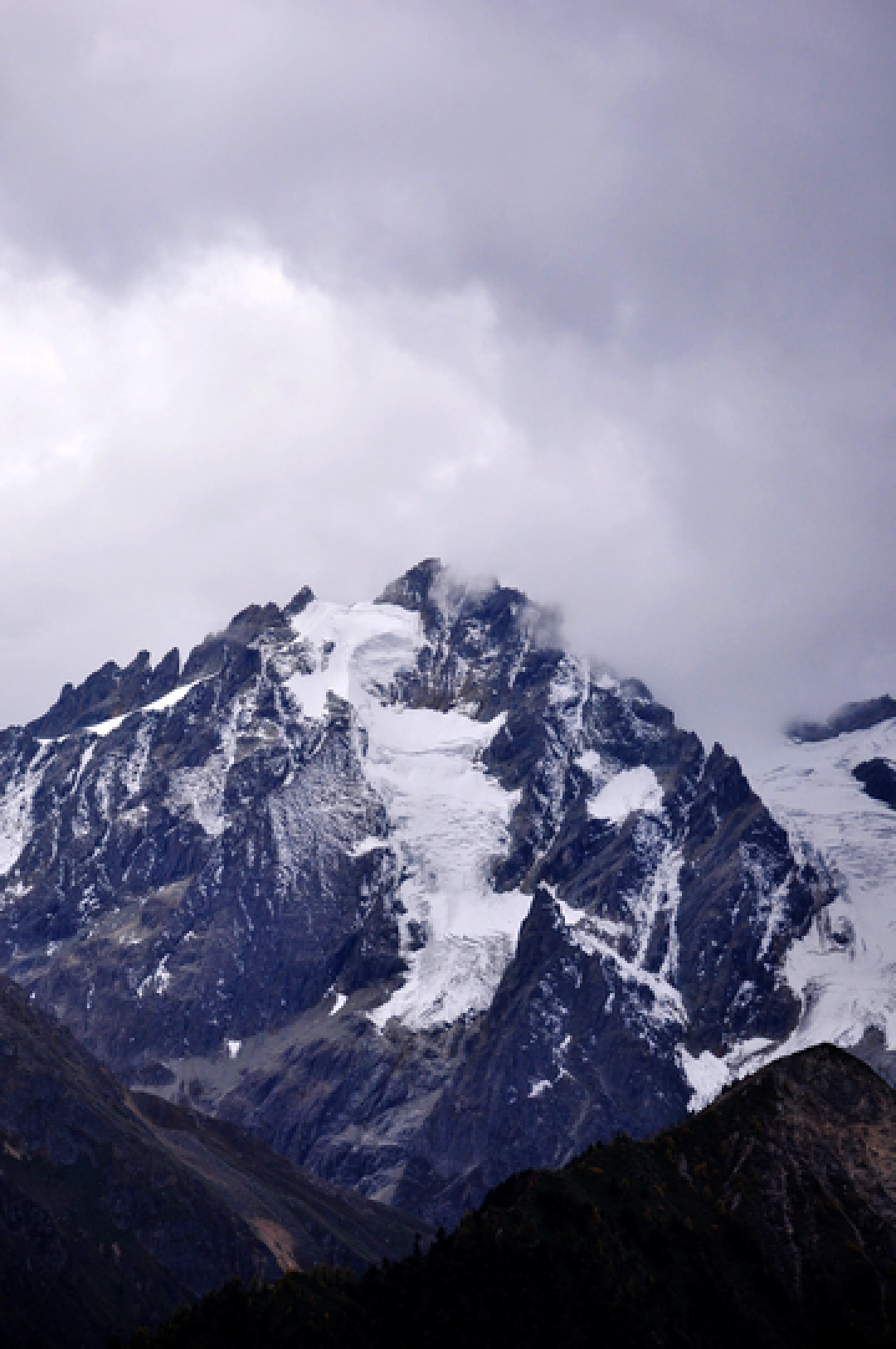
Meili Snow Mountain: A Soulful Journey of Dialogue with the Sacred Mountain
Meili Snow Mountain: A Soulful Journey of Dialogue with the Sacred Mountain Prologue: When Travel Becomes Faith Some journeys are forgotten as soon as they end. Others carve themselves into your bones. The trip to Meili Snow Mountain belongs to the latter. Waking up in…
Continue reading...