New Year's Eve Journey – Xishuangbanna: Welcoming the New Year in the Tropical Rainforest and Dai Culture
New Year's Eve Journey – Xishuangbanna: Welcoming the New Year in the Tropical Rainforest and Dai Culture
Preface: A Long-Planned Escape
Xishuangbanna. That name had been spinning around in my head for far too long. Every time I scrolled through my social feed and saw photos of people in Dai ethnic costumes posing at the Starry Night Market, or videos of others swinging through the tropical rainforest, I felt that familiar itch. But then I'd think about the overwhelming crowds — the endless sea of people — and I'd always hesitate.
Finally, at the end of this year, I made up my mind: crowds be damned, I'm going.
From December 27, 2023, to January 1, 2024, a six-day, five-night New Year's Eve trip to Xishuangbanna kicked off. Looking back now, this journey had its surprises, its pitfalls, moments that made me want to complain, and those unforgettable highlights that linger in your mind. If you're also planning a trip to Xishuangbanna, or thinking about a New Year's getaway, I hope this honest travelogue gives you some useful pointers.
Pre-Trip Preparation & Cost Overview
Flights & Accommodation
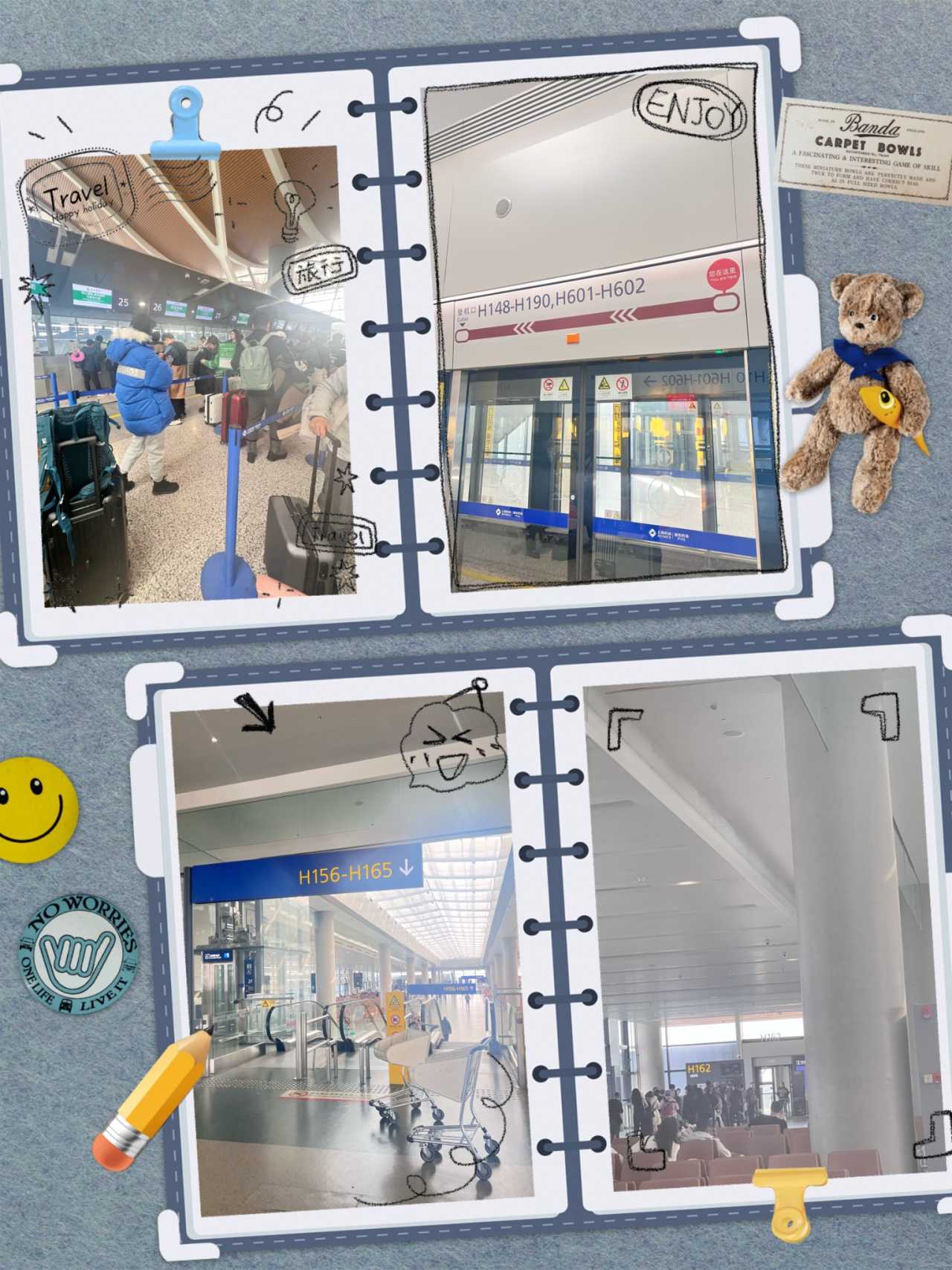
For the outbound flight, we chose Spring Airlines, departing from Pudong at 2 PM and arriving in Xishuangbanna at 6:35 PM. The ticket cost 590 RMB per person, including 20 kg of checked luggage. A word of warning here: Spring Airlines' overhead bins are designed differently — even a 20-inch carry-on suitcase won't fit in the cabin and must be checked. So, arrive at Pudong Airport at least two hours early! Don't ask how I know — I was that person who only gave myself one hour, sprinted through the terminal, and found my gate at the very end of the satellite concourse. That said, I thought the flight would take five hours, but it only took a little over four. Gotta give Spring Airlines credit for that.
The return flight was at 12:30 PM on January 1st — just the right timing.
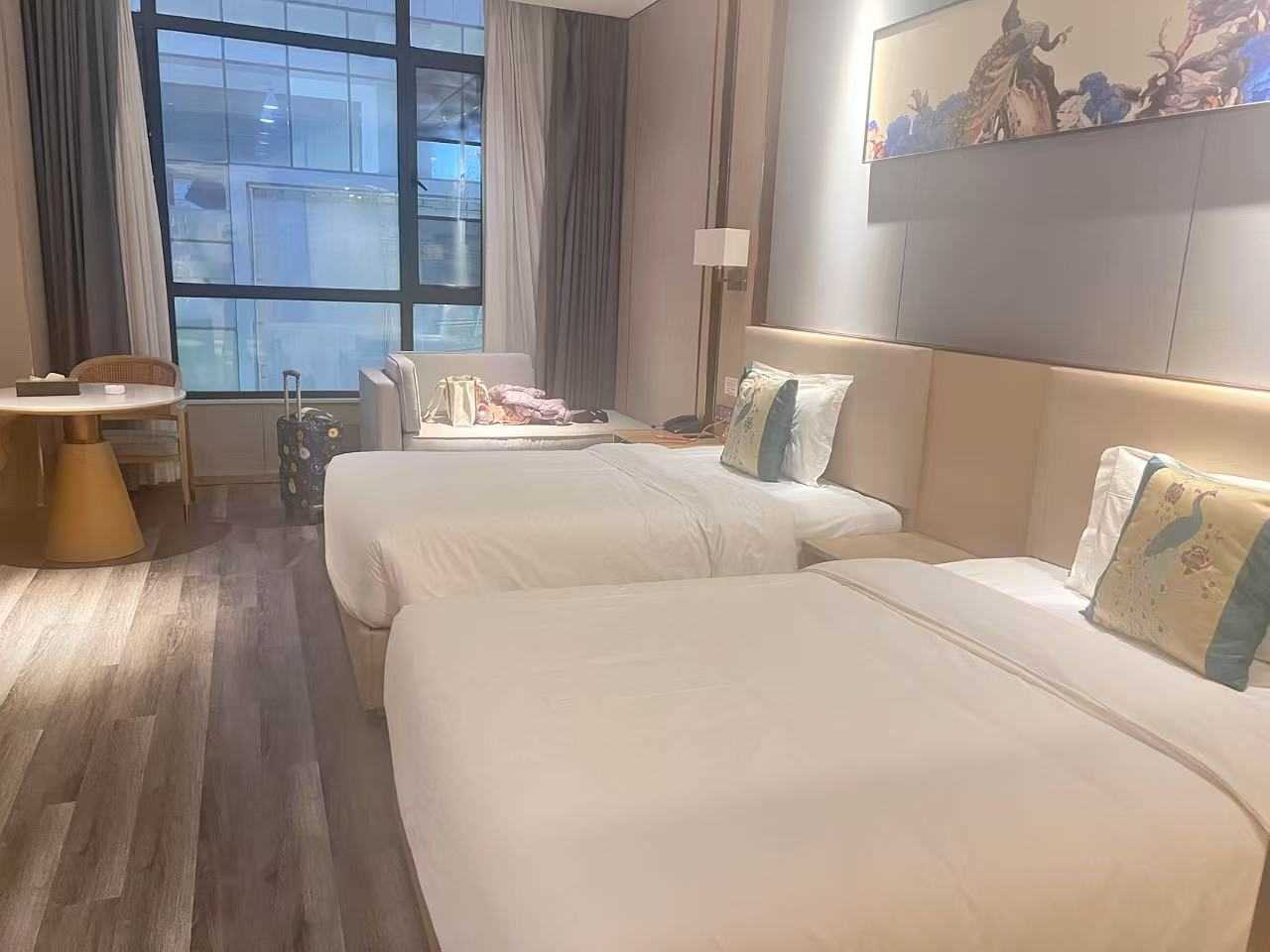
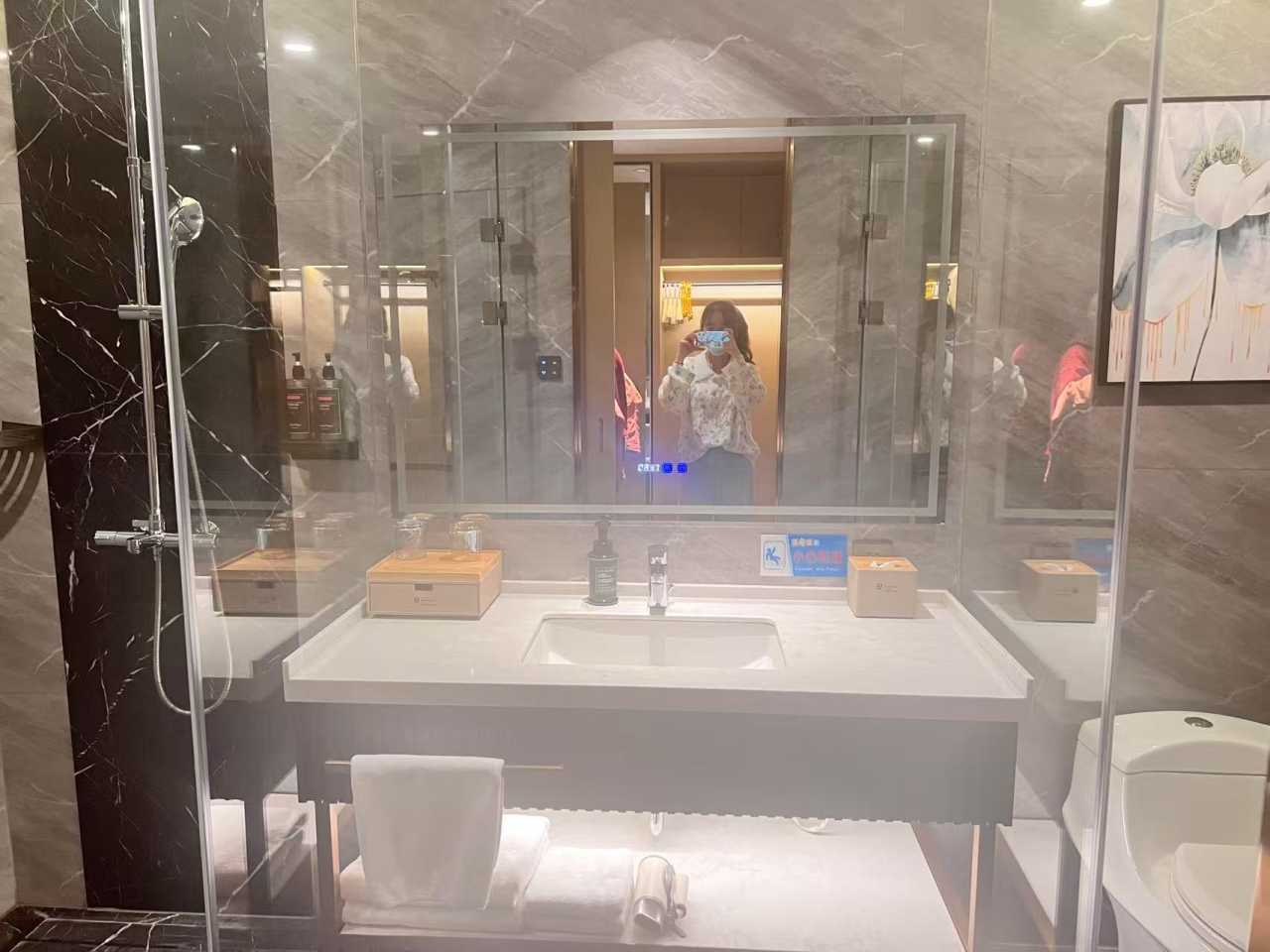
We booked a hotel near Splashing Water Square at the Ramada, two rooms for six days and five nights, total cost 2,724 RMB. The rooms looked decent enough, but the square dance music outside was a bit loud. Thankfully, it quieted down by midnight.
Local Expenses
Our spending in Xishuangbanna came to about 2,500 RMB per person, including day trips and rainforest hiking activities. Overall, the value for money was pretty reasonable.
Day 1: Arriving in Xishuangbanna, First Impressions of the Riverside Night Market
Riverside Night Market: A More Local Alternative to Starry Night Market
We arrived in Xishuangbanna in the evening, dropped our bags, and headed straight for the Riverside Night Market. Honestly, there wasn't much to see around Splashing Water Square, but the Riverside Night Market was a solid choice — and the key thing is, prices here are way cheaper than at the Starry Night Market.
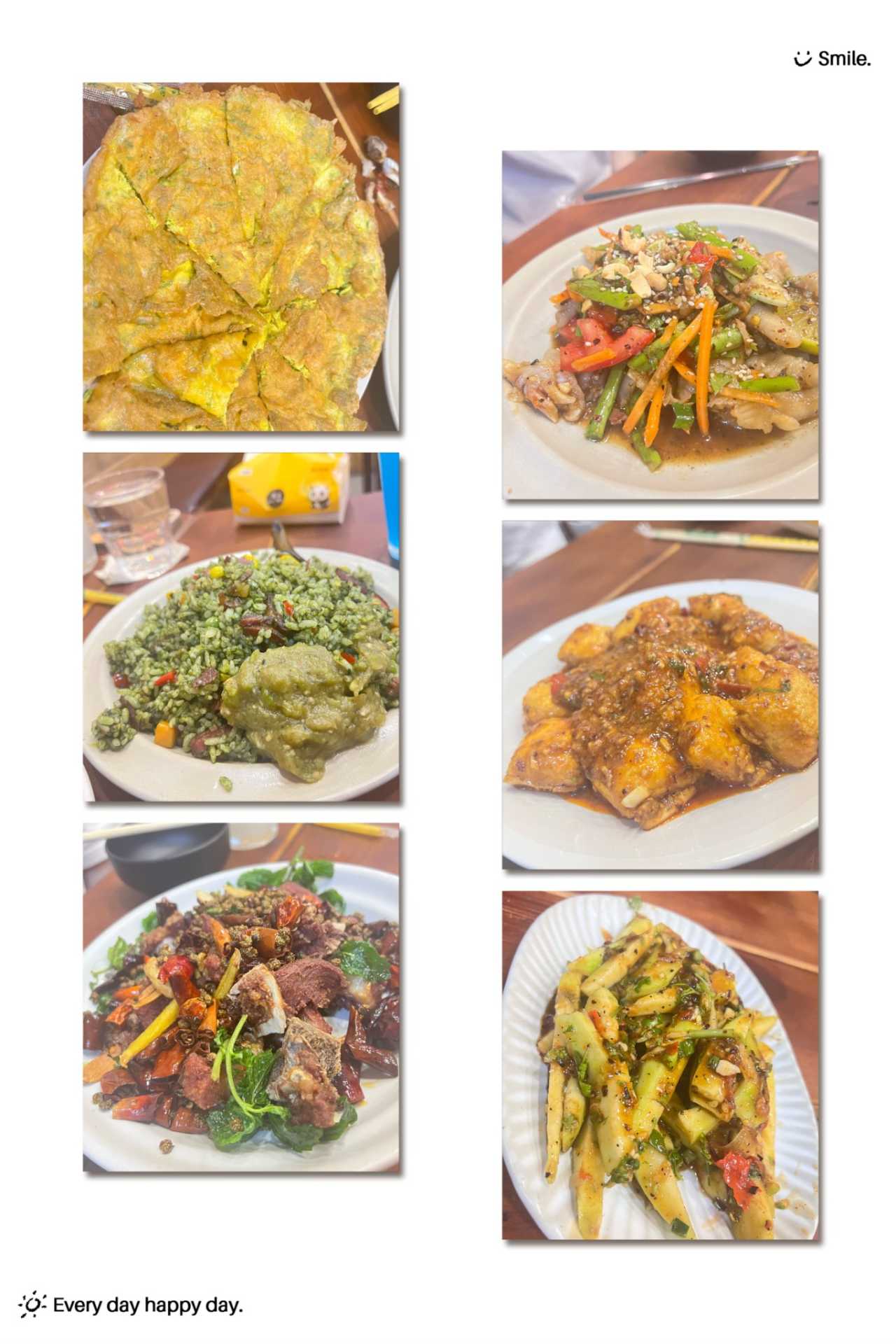
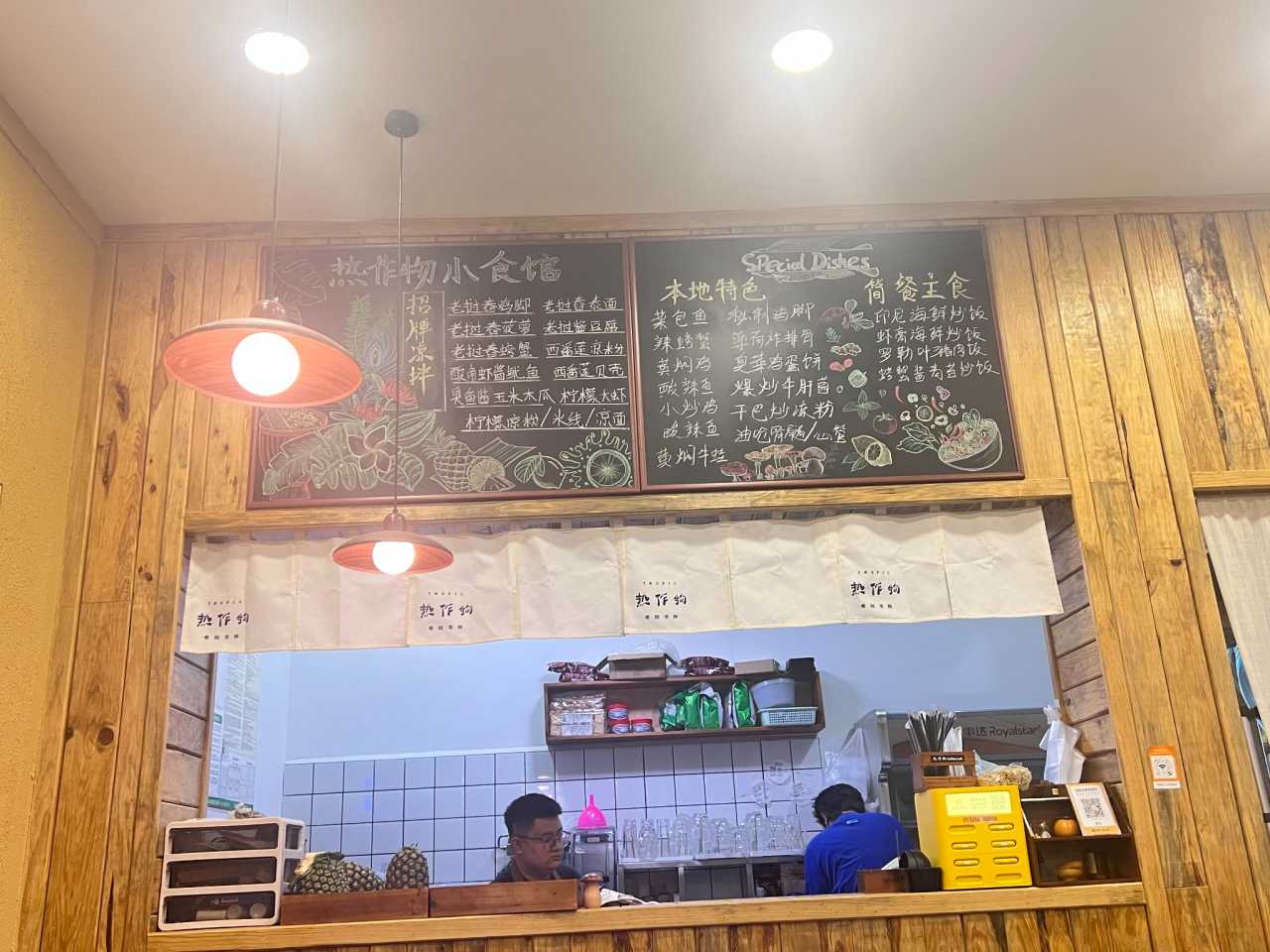
For dinner, we found a place near the hotel called "Tropical Crops Eatery," which claimed to serve Lao cuisine. Aside from the stuffed tofu being pretty good, the other dishes had weird flavors that just didn't agree with me. We also ordered a flower cake as big as a face — at least we can say we tried it.
Online, there are plenty of glowing reviews about the Riverside Night Market — "food paradise," "rich ethnic atmosphere," and so on. In reality, it's a decent spot for an evening stroll, with affordable prices and down-to-earth offerings. If you don't want to get ripped off at the Starry Night Market, this is a good alternative.
Day 2: Mandui Village, Boruo Temple, Manting Garden & Starry Night Market
Mandui Village: The Right Way to Slow Down
You can't visit Xishuangbanna without exploring its villages and rainforests. Mandui Village, the closest one to the city, was our first stop.
There's a morning market from 8 AM to 12 PM — small in scale, but fun to browse and buy snacks. Heading up the village, you'll find an ancient temple with faded murals that carry the weight of time. You have to remove your shoes to enter, no photos allowed, and dress code matters — no bare shoulders, backs, or revealing clothing.
At the village entrance, there's a large lotus pond, but unfortunately, we weren't there in season, so no lotus flowers in sight. Further in, there's the Mandui Millennium Ancient Well, with distinctive architecture. The village has some commercial elements, but it mostly retains the original residents' way of life. Walking through, you'll see traditional Dai wooden stilt houses everywhere, with flowers and plants growing by the doorsteps, and many locals selling specialties right from their homes.
Fruit here is much cheaper than at the night markets. Starfruit was 5 RMB for a pile — and when we tried it, it was actually sweet. Great value. Other fruits are probably brought in from elsewhere, but they're worth trying — some fruits never become mainstream flavors for a reason (you know what I mean).
Mandui Village is perfect for slowing down. There are plenty of tropical plants and fruit trees we couldn't identify — we spotted starfruit trees, rubber trees, and various others. However, construction is underway, and commercialization is expanding. Some people are already staying in village homestays. If you have time, come here to soak in the slow pace. But as tourists, we had to say goodbye to Mandui Village.
Boruo Temple: The Gap Between Photos and Reality
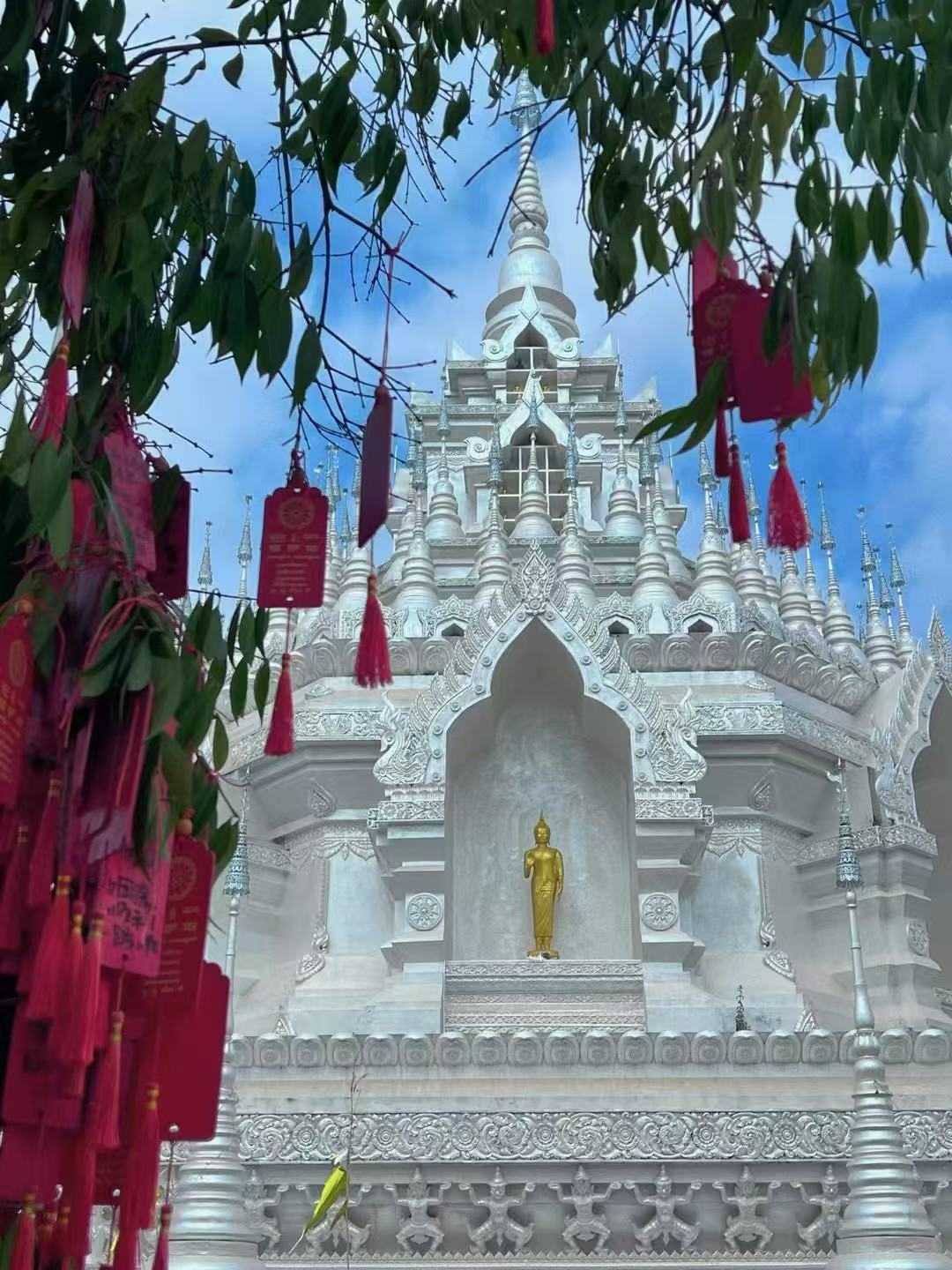
Boruo Temple is close to Mandui Village. After seeing photos on Xiaohongshu, I expected something as spectacular as Thailand's White Temple. Turns out, it was just everyone's good photography skills. The temple itself isn't特别 special, but it's currently free, so it's worth a quick stop if you're passing by.
Peacock Feast: A Carb Bomb Experience
For lunch, we tried the Peacock Feast. Honestly, it wasn't very good. All carbs! But since we were there, we gave it a shot. We ordered a set meal for two at Dai Que Yun Zhuang near Manting Park. Portions were generous, but the flavors were pretty dry — it's more about the experience and photo op.
Manting Park & General Buddha Temple: A Photo Shoot Battlefield

In the afternoon, we visited the General Buddha Temple first. This is a Theravada Buddhist temple with over a thousand years of history, famous for its wicker Buddha statue. Coming to Xishuangbanna, you've got to visit this place to hear the chanting, let go of the hustle, and feel a moment of rare peace. But dress code applies — no bare shoulders, back, or midriff; skirts or pants must cover the knees; no loud talking; no photos; remove shoes when entering halls; and don't point at Buddha statues with your finger.
We finished in about 20 minutes. Then we got a 99 RMB makeup and costume package, paid another 40 RMB to enter the Dai King's Imperial Garden. Suggested route for Manting Park: Premier Zhou Enlai Memorial Square → Manting Theater → Dai King's Palace → Imperial Garden → Imperial Orchid Garden → City Heart Pagoda → Octagonal Bridge → Parrot Paradise → Imperial Elephant Museum → White Pagoda → Earth Goddess. The entrance to the General Buddha Temple is right next to the White Pagoda.
But honestly, we were mainly there for photos, so we didn't explore much. The problem was that all the good photo spots were occupied by professional shooters who never moved. We just had to make do with whatever we could get — for 99 RMB, you can't expect too much.
Chun Wu Li: Waiting and Disappointment at a Trendy Restaurant
By evening, we rushed to Chun Wu Li. We queued online at 4 PM and finally got seated around 7:30 PM. This trendy spot's food wasn't that impressive, and definitely not worth the long wait. Maybe the ambiance is nice for photos. Too bad our table wasn't by the railing, so we couldn't capture the view.
Starry Night Market: The Ultimate Crowd Experience
Chun Wu Li is near the Starry Night Market, so we went there after eating. But you need to scan a Douyin QR code to enter — heads up.
The Starry Night Market is open all day, but the night market section runs from 6 PM to 12:30 AM. How crowded was it? It's the ultimate version of "people mountain people sea." Taking photos requires patient waiting, but the best spots are taken by paid photography setups, making it nearly impossible to shoot on your own. Even at 10 PM, it was still packed, with vendors dragging customers into position for photos.
Things are also expensive. Those trendy clothing shops aren't cheap, and the aesthetic is very ethnic — probably only suitable for wearing here.
Tips: - Always bargain! Vendors start with inflated prices. - Avoid the street-side Thai massage touts — overpriced and short. - Stalls start closing around 10 PM; the busiest time is 8 to 9:30 PM, which is also the best for photos. - The 199 RMB photography packages on the street are all assembly-line productions — better to do your own makeup and use your phone.
Day 3: Tropical Botanical Garden & Manyuan Village
Tropical Botanical Garden: A Superficial Tour Without a Guide
We left the hotel at 8:30 AM and arrived at the botanical garden after 10 AM. On the way, the driver tried to take us to a village where she might get a commission, but we insisted on going straight to the garden, which made her a bit unhappy. There was also a minor incident — police were checking vehicles at the highway exit, and the driver told us to play along and say we were all friends. No idea what that was about, but we got through fine.
At the garden, we tried to book a guide at the counter but couldn't get one. Important thing to repeat three times: You need to arrive at the botanical garden before 9 AM to have a chance at booking a guide! Without a guide, the garden tour is just a superficial walk — you don't know what you're looking at.
We bought the general admission + sightseeing car ticket, only visiting the West Zone. The East Zone is Green Stone Forest, which is supposedly less worth seeing than the West Zone. If you only have one day, I'd recommend just doing the West Zone.
Ticket: 80 RMB/adult + electric car 50 RMB/zone Opening Hours: 08:00 - 18:00
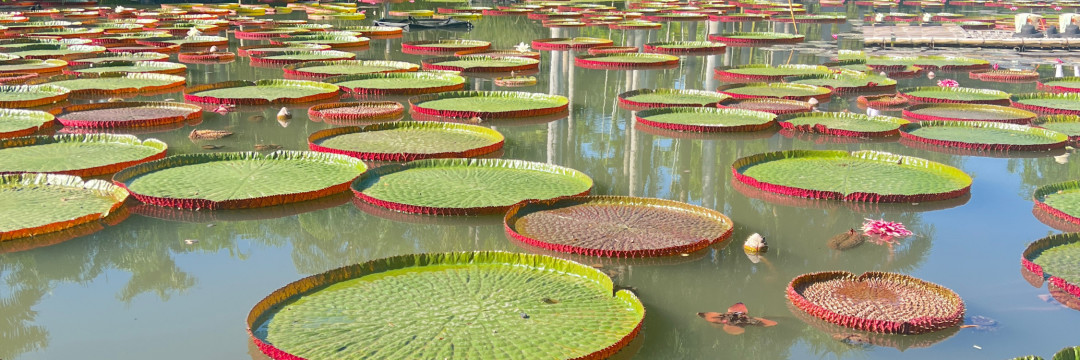
The most famous attraction in the West Zone is the Aquatic Plant Area, especially the Victoria Lily Pond (close-up photos cost extra). Victoria lilies have massive leaves that can support up to 60-70 kg. The secret lies in the tough, sturdy veins and bristles on the underside of the leaves, forming a solid "skeleton," with air inside the leaves providing tremendous buoyancy. Two notable features: the seeds are incredibly numerous, and the flower color changes over time.
Other areas worth seeing: Shade Plant Garden (vines, waterside plants), Palm Garden (tall and elegant, great for photos), Exotic Flowers and Plants Garden (mimosa, dancing grass, bottle palm, balsa wood, color-changing flowers, clock vine, etc.), Vine Garden (over 400 species of vines), Hundred Flowers Garden (large but not as spectacular as imagined — has water features, boardwalks, and a hot air balloon), Banyan Tree Garden (the "single tree forming a forest" phenomenon and the strangling behavior in the plant world).
Even with the sightseeing car, it was pretty tiring. And the weather there is unpredictable — scorching hot when the sun's out, and a bit chilly when it's cloudy.
Manyuan Village: The Mushroom House from "Back to Field"
We rushed through the botanical garden and had a quick lunch of bread we'd brought. Then we headed to the most anticipated stop of the day — Manyuan Village!
This place has minimal commercialization, preserving the original character of a Dai village. Walking along the village paths in the sun, all my worries seemed to melt away — I just wanted to soak in the beauty.
The Mushroom House, a filming location for the show "Back to Field," costs 20 RMB/person to enter. Inside, there are leftover props and photos from the show. At the top of the hill, there's a Buddhist temple — hike up for a panoramic view of Manyuan that's absolutely stunning. Coming down from the temple, there's an ancient well, and legend says washing your hands with its water brings good luck.
The village also offers paper flower making (10-20 RMB/person) and Dai pottery (30-40 RMB/person), but we didn't try them — we were mainly there for the Mushroom House.
Food Recommendation: Restaurant No. 63 (near the parking lot, around the corner from the Mushroom House). Their Dai-style roast chicken, pineapple fried rice, cold chicken feet, and grilled tofu were all delicious — no duds. This place felt like the best meal of the entire Xishuangbanna trip. We ordered a pitcher of watermelon juice and watched the owner take half a watermelon and juice it right there — pure and fresh. The other dishes were excellent too — the grilled fish was tender and juicy, not dry and tough, and the stir-fried chest tubes were crispy and flavorful.
Wan Tai · Lao Coffee: The Disillusionment Moment
Afterward, we took a chartered car back to Gaozhuang and checked out Wan Tai · Lao Coffee. Everything we ordered was terrible. Just like that — disillusioned.
Late-Night Snack: A Hidden Gem in a Residential Area
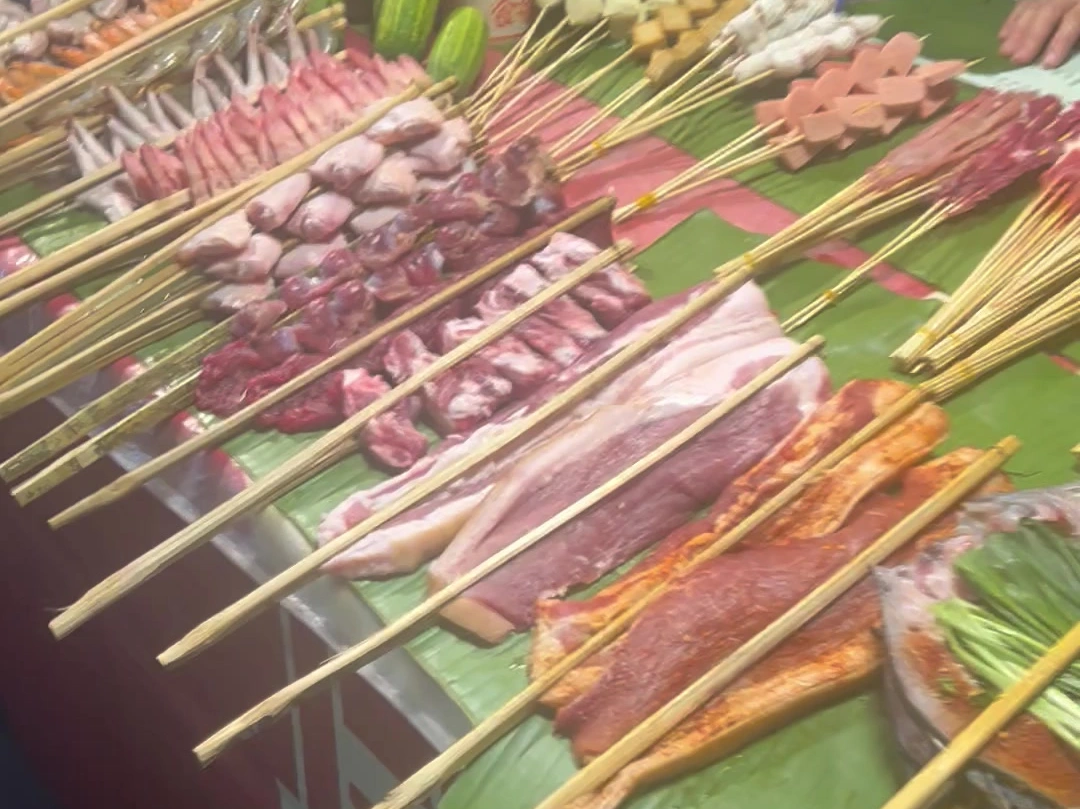
The day wasn't over yet. We went to a barbecue place in a residential area, and the food was surprisingly amazing. Hard to give exact directions because it didn't even have a sign. There's a supermarket nearby that sells lunch boxes during the day, on the side closest to Splashing Water Square. The place is called "Chun Xiang Wei Wu" — if you can find it, it's fate.
Day 4: Rainforest Hike — The Most Raw Tropical Experience
Departure: From Minibus to Mountain Roads
We booked the rainforest hike through Ctrip. Originally it was supposed to be a bus, with pickup at Gaozhuang. But maybe there weren't many people that day, so the bus was upgraded to a 7-seat minivan. Our group of 6 (the four of us plus a young couple) didn't get stuck with a family with noisy kids — lucky us.
The car picked us up at the hotel around 8:30 AM, and we arrived at the foothills town around 10 AM, after about an hour and a half. The rest of the drive was on winding mountain roads — straight out of "Initial D." The driver showed off his impressive driving skills, telling us to shut up so he could focus. We sped through that rough mountain road and arrived at the rainforest trailhead.
Hike Route & Activities
We chose the 4-kilometer route, mostly walking through streams and mud. But the scenery was stunning — tropical rainforest views with Xishuangbanna's sunshine — absolutely incredible.
Activities included: tree climbing, high-altitude swing, bamboo rafting, rainforest face painting, summit lookout, and rainforest feast.
The high-altitude swing was thrilling — there's a moment of weightlessness when you first go out, but once you get used to it, swinging in the air and taking in the view is really relaxing.
The bamboo raft was way more tiring than I expected, but a lot of fun.
Archery — I didn't hit a single target. This one's all about brute force.
Along the way, there were plenty of plants, and our guide explained them, but I've mostly forgotten. I only remember that the Jinuo people have to get up at 2 AM to collect rubber sap, and there were rows of rubber trees everywhere.
Finally, the guide showed off a trick — eating sour ants. Those ants were seriously sour; my lips went numb afterward. You can give it a try — one ant shouldn't poison you.
Rainforest Feast: Primal Delights
The rainforest feast was served in a thatched shelter after all the activities were done. We were starving by then! Fragrant rice wrapped in banana leaves, paired with grilled fish, grilled pork belly, and grilled mushrooms — it was pure primal deliciousness. The green jujubes were pretty good; the rest was average.
Practical Tips
- Clothing: Cargo-style long pants, rain boots, non-slip gloves (to protect your nails).
- Must-haves: Mosquito repellent spray, sunscreen spray, disposable raincoat (rain can come anytime in the rainforest).
- Rain boots: We crossed streams and water throughout, but the water never went over the boots. All things considered, rain boots are a solid choice.
- Breakfast: Eat a good breakfast before setting out, because the rainforest feast only comes after all the activities.
Return Trip: A Race Car Driver and a Detour Due to Landslide
On the way back, there was a landslide blocking the road, so we had to take a detour. The driver might have been a race car driver — he sped the whole way. By the way, many people working in tourism here are from Henan or Northeast China, and their attitudes are, well, you know — another ride of "shut up, no talking."
We got back to the hotel around 2 PM, took care of some things, lay around for a bit, then headed to a massage place to relax.
Trendy Massage Place: Painful Bending
This massage place required a reservation a day in advance. Nice decor, with welcome snacks (looked pretty, tasted average). We chose the traditional full-body massage, but it ended up being quite painful — not worth it.
Jun Gong Zhu Hotpot: Off-Season Disappointment
For dinner, we went to Jun Gong Zhu Hotpot nearby. It wasn't the right season, so there were no poisonous mushrooms in the pot — probably not even fresh mushrooms. The taste was just okay, nothing special.
Day 5: Pu'er Day Trip — Tea Horse Road & Coffee Estate
Nake Li: A Quiet Stop on the Tea Horse Road
We took a bullet train to Pu'er at 9:30 AM — one stop, half an hour. Then we headed to the Tea Horse Ancient Town — turns out it was quite far from the city center, over an hour by taxi, with winding mountain roads. We spent less than 2 hours there before heading to the coffee estate.
If you only have one day in Pu'er, I'd suggest skipping Nake Li Tea Horse Ancient Town — it's just too far. Just wander around Simao Ancient Street in the city center and enjoy a slow half-day.
Nake Li was an important post station on the Tea Horse Road — an incredibly quiet ancient town. After seeing so many commercialized old towns, Nake Li's peacefulness and authenticity were refreshing. The uneven stone paths, the leisurely elderly playing cards and setting up stalls everywhere — it all felt steeped in history.
Route: North Village Gate → Changting Wai Courtyard → Ancient Road Stream → Wind and Rain Bridge → Gao Laozhuang → Rongfa Horse Inn → Tea Horse Road Ruins (follow the path beside the road from Rongfa Horse Inn) → Horse Jumping Stone → Heart-to-Heart Bridge → Heart-to-Heart Tree → Large Waterwheel → Ma'an Mountain (cross the road to reach) → Return
Food Recommendation: You've got to try the local horse caravan cuisine. I recommend Nake Li Xinyuan at the entrance. The chicken tofu was just okay in my opinion, about 55+ RMB per person. Various rice noodles and grilled snacks are also good. We bought a group deal on Dianping, and the dishes were randomly paired — huge portions, couldn't finish it all.
They also have dried meat, a Tea Horse Road specialty — pretty good. But I'd skip the sausages — they kept dripping oil everywhere.
Ju Point Coffee Estate: A Coffee Lover's Paradise
After over an hour's drive, we arrived at Ju Point Coffee Estate. It's really out in the middle of nowhere!
Most estates in Simao District are clustered around Dakaibe. Each estate has a different focus — knowledge sharing, coffee-making experience, tasting, photo ops, etc. You can choose based on your interests.
Ju Point Coffee Estate is one of the most successful coffee brands in China. The owner is American (listening to him speak Mandarin, I thought he was Taiwanese or Fujianese), and it's said that over half of China's baristas have trained here.
Free guided tours are available at 11 AM and 3 PM, each lasting 1 to 2 hours (with Q&A). The guides are very professional. Fresh bean picking experience is 39 RMB/person, and cupping is also 39 RMB (only 3 types of beans — suitable for coffee beginners). The estate sells micro-lot beans that you can't find in city stores. The grounds are well-maintained and great for photos.
Apparently, there's a German coffee roasting machine from WWII. One of my friends got picked to try roasting coffee — it was really interesting. But only 2 lucky winners per session — good luck!
Coffee Knowledge Mini-Lesson
We learned some coffee facts at the estate:
Liberica (left): Originally grew in low-altitude forests on the west coast of Liberia, Africa. Poor flavor, plus the trees are tall and hard to harvest, so it's currently grown on a small scale, accounting for about 2%-5% of global production. The beans are long and slender with a pointed end, similar to a melon seed shape. Flavor profile is dominated by nutty, dark chocolate heaviness and smoky aroma, but the strong smokiness is hard to accept.
Robusta (center): Originates from the Congo Basin in West Africa, accounting for 20%-30% of global coffee production. Rounder in shape, with higher caffeine, amino acid, and chlorogenic acid content.
Summary: Xishuangbanna — A Place Worth Visiting
And so, our six-day, five-night New Year's Eve trip to Xishuangbanna came to an end. Looking back, there were so many moments worth remembering:
Most impressive experience: The rainforest hike. Trekking through streams and mud in the pristine tropical rainforest, swinging through the air, eating a rainforest feast — it's something you can't easily experience anywhere else.
Most worthwhile village: Manyuan Village. Minimal commercialization, preserving the original Dai village character. The Mushroom House is a must-visit for fans of "Back to Field."
Most practical advice: - If you want a guide at the Tropical Botanical Garden, arrive before 9 AM. - Things at the Starry Night Market are expensive — remember to bargain. - The Riverside Night Market is more local and cheaper than the Starry Night Market. - Wear rain boots for the rainforest hike, and bring mosquito repellent and sunscreen. - If you're doing a day trip to Pu'er, skip Nake Li — it's too far.
Biggest regret: Many places we didn't explore thoroughly due to time constraints — like the performances at Manting Park, or the paper flower and Dai pottery experiences in Manyuan Village.
Biggest takeaway: Experiencing Xishuangbanna's unique natural scenery and ethnic culture, and welcoming the New Year in a tropical rainforest.
If you're planning your own trip to Xishuangbanna, I hope this travelogue gives you some ideas. Remember, travel is an adventure — there are surprises and disappointments, but it's these real experiences that make the journey meaningful.
Happy New Year's Eve! May every trip you take be filled with wonderful memories.
You should also read:
Into the Hidden Valley: A Solo Journey Through the Mysterious Dulong River
Into the Hidden Valley: A Solo Journey Through the Mysterious Dulong River Deep in the northwestern corner of Yunnan Province, tucked away from the modern world, lies a place that feels like a secret whispered among mountains. The Dulong River Valley is not just a…
Continue reading...
God’s Abandoned Palette: A Self-Drive Journey Through Yunnan’s Dongchuan Red Land
God’s Abandoned Palette: A Self-Drive Journey Through Yunnan’s Dongchuan Red Land Travel has never been about reaching some distant geographic coordinate. It’s about encountering, along the way, the version of yourself buried beneath the rubble of daily routine. During this May Day holiday, I finally…
Continue reading...
Cloud Travelogue · Dali of Wind, Flowers, Snow, and Moon: A Three-Day, Two-Night Journey of a Free Spirit
Cloud Travelogue · Dali of Wind, Flowers, Snow, and Moon: A Three-Day, Two-Night Journey of a Free Spirit I am a cultured female foodie with a touch of rogue charm. I slung on my backpack, took my lover's hand, and set off on a spontaneous…
Continue reading...