Nine Days in Yunnan: A Journey from Tropical Rainforest to Snowy Ancient Town, Searching for the Ideal Place
Nine Days in Yunnan: A Journey from Tropical Rainforest to Snowy Ancient Town, Searching for the Ideal Place
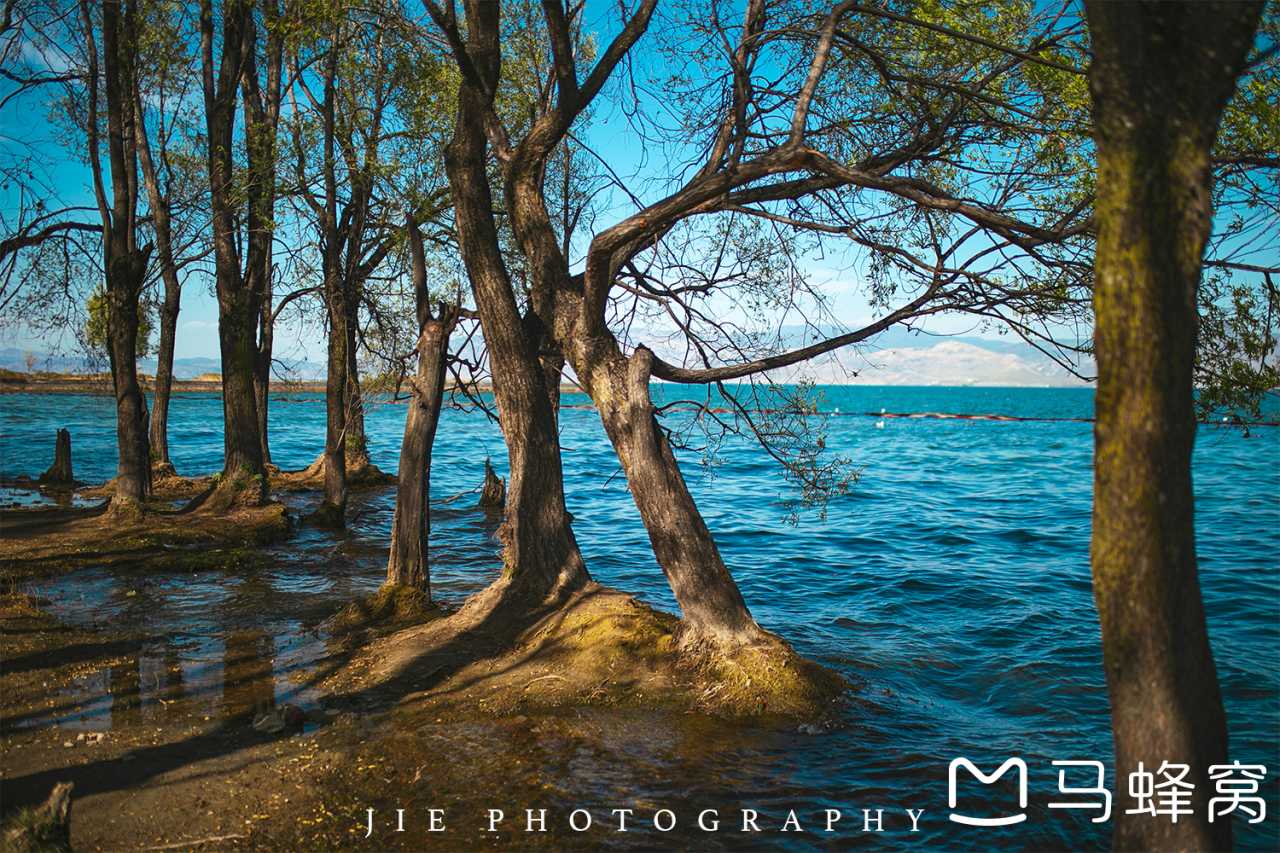
If you asked Chinese people about their ideal city, Beijing, Shanghai, or Guangzhou might come to mind. But Dali—that's the one that lingers, the bittersweet "what if" that never quite fades. The shimmering waters of Erhai Lake, a bare-faced girl cycling after the sunset, the wind brushing past her, inadvertently rippling the long-stilled surface of onlookers' hearts. Nearby, in a small courtyard, oleander branches peek over the wall. On a tatami mat under a tree, an old man sits cross-legged, his expression serene, as if nothing in the world concerns him.
I ventured cautiously: "Boss, how much?"
The old man replied, "The meal is 150 yuan. That bottle of beer—on the house."
I smiled. "Then thank you, boss."
At night, the temperature dropped, a cool breeze of around 15°C brushing my face. I went back inside to grab a jacket, planning to head up to the loft and look at the stars. It had been ages since I'd seen such a clear night sky, even though I still couldn't identify any constellations. As I pushed open the door, I saw my mother leaning back on the sofa, scrolling through her phone album while replying to a WeChat post: "Thank you all for the likes"—that signature, formulaic response of her generation. She looked up and asked, "What was that beer we had at lunch called?"
"Wind, Flower, Snow, Moon."
"Snow what?"
"Just... go to sleep..."
That conversation happened in March. After spending the Spring Festival cooped up at home, I felt languid to the point of muscle atrophy. One day after work, I asked my mother, "Want to go out for a bit? Work's not too busy lately." Without hesitation, she asked, "Where to?" I said, "Yunnan." Two days later, we were already on a plane to Xishuangbanna.
Before this trip, I'd been to Shangri-La twice and made a brief stop in Dali. Both trips to Shangri-La came with altitude sickness as the price for seeing snow-capped peaks—I stopped thinking about which bag to bring or what outfit to wear, and instead instinctively stuffed a few extra plastic bags in my pocket. But the magic of Yunnan is this: it only takes one visit to make you want to return countless times. The thin air here doesn't bring suffocation—it brings a sense of release, a feeling that it's okay to waste time without guilt. In the lower-altitude cities, the comfortable climate, the easygoing vibe, the surprisingly affordable prices, and the foolproof local food made me even consider settling down. I thought to myself: Why must I be so fixated on the view from the mountaintop? Isn't life just as good beneath the snowy peaks? This time, I decided to go to Xishuangbanna, Lijiang, and Dali.
Pre-Trip Planning: A Slow Travel Without the Rush
Objectively speaking, Yunnan's tourism industry is well-established. Whether it's routes or transportation, commercialization is already quite advanced. There are plenty of options for renting a car or hiring a driver for a day trip, competition is fierce, and prices aren't wildly different. For long-distance travel, domestic high-speed rail offers stable prices and ample tickets during the off-season, while Yunnan's provincial railway is the safest and most convenient choice.

For this trip, I didn't do much planning. Sticking to the principle of "play as you go, go with the flow," I knew I couldn't subject my parents to a military-style, checklist-driven trip. The focus was on a relaxed, regular routine. The itinerary roughly looked like this:
- Day 1: Fly from Beijing to Xishuangbanna, explore the Lancang River area, visit Gaozhuang Night Market (by e-bike), stay in Gaozhuang
- Day 2: Xishuangbanna, Chinese Academy of Sciences Tropical Botanical Garden (public transport)
- Day 3: Xishuangbanna, Jinuo Mountain rainforest hike (customized day tour)
- Day 4: Xishuangbanna, Manting Park and the General Buddhist Temple (taxi)
- Day 5: Fly from Xishuangbanna to Lijiang, taxi to Shuhe Ancient Town, explore the Ancient Tea Horse Road, stay in Shuhe
- Day 6: Lijiang, Jade Dragon Snow Mountain scenic area (public transport), Dali Ancient Town
- Day 7: Lijiang, Shaxi Ancient Town, train to Dali, stay in the Santorini scenic area
- Day 8: Dali, full-day private car tour around Erhai Lake (Shuanglang, Xizhou)
- Day 9: Fly from Dali to Beijing
As for costs, it averaged about 8,000 yuan per person. Since it was the off-season and my mother, over 60, had a senior citizen card, we even got discounts on entrance fees.
Xishuangbanna: The Gentle Power of the Southern Frontier
China has over six hundred cities, but not many names roll off the tongue and stick in your memory. The one that captured my heart might be this small town at the southern edge of the country—Xishuangbanna. It has an even more affectionate nickname: "Banna." Many times, the name would pop into my head, and I couldn't quite say why it stayed with me. It's like when people try to describe that special someone—they can't pinpoint exactly what it is that resonates with their DNA. For Banna, "nature" and "comfort" are everything.
Xishuangbanna is no small presence on travel lists, both in China and worldwide. Many people choose Banna initially because of that catchy phrase, "It's not that Thailand is out of reach, but Xishuangbanna offers better value for money." But they come back realizing they were wrong—Banna's appeal goes beyond affordability. What truly draws you in is its ethnic diversity, cultural inclusivity, and a kind of gentle power.
The name "Xishuangbanna" can be traced back to the Three Kingdoms and Jin Dynasties period. Back then, the area was called "Mengle," home to twelve Dai tribes. In the Dai language, "Xishuang" means twelve. When these twelve tribes formed an alliance, each built its own city, called a "Jing," giving rise to the "Twelve Jing," which later evolved into the "Twelve Banna." So "Banna" is a unit of administrative measurement. A smaller unit than "Jing" is called "Meng," akin to today's "county." Even today, after administrative mergers, Xishuangbanna Prefecture only has three regions—Jinghong City, Menghai County, and Mengla County—but the map is still dotted with place names containing "Jing" and "Meng." The prefecture's capital and the travelers' favorite Gaozhuang Night Market are in the familiar "Jinghong City."
By the Lancang River: Gaozhuang's Sleepless Nights
The snowmelt that flows endlessly from the Tanggula Pass eventually converges into the Lancang River. This international river, originating from the Qinghai-Tibet Plateau, spans over 4,800 kilometers along its main course alone, not counting its tributaries. After cutting through Tibet and Yunnan, it flows through Myanmar, Laos, Thailand, and Cambodia before finally emptying into the sea in Vietnam. These countries, in a sense, all regard this river as their mother river. And after the Lancang leaves China, it gets a new name—the Mekong River.
Xishuangbanna is the Lancang's last stop before leaving mainland China. Locals are more accustomed to calling it the "Mekong River"—perhaps because, being a tourist city, "Mekong" sounds more exotic and gives people the illusion of being in Southeast Asia. Whatever you call it, this river has undoubtedly nurtured life, providing the means for survival and development for the people who live along its banks. Agriculture, forestry, animal husbandry, fishing, and tourism—all tied to this river—have made Southeast Asia a community of shared interests.
Getting to know Xishuangbanna starts with Gaozhuang. The full name is "Gaozhuang Xishuang Jing, Jinghong City." By now, the mystery behind Banna's place names has been unlocked—like a locksmith with a master key. "Gao" in Dai means "nine." One river, two gates, nine pagodas, and twelve villages—that's the most concise summary of Gaozhuang.
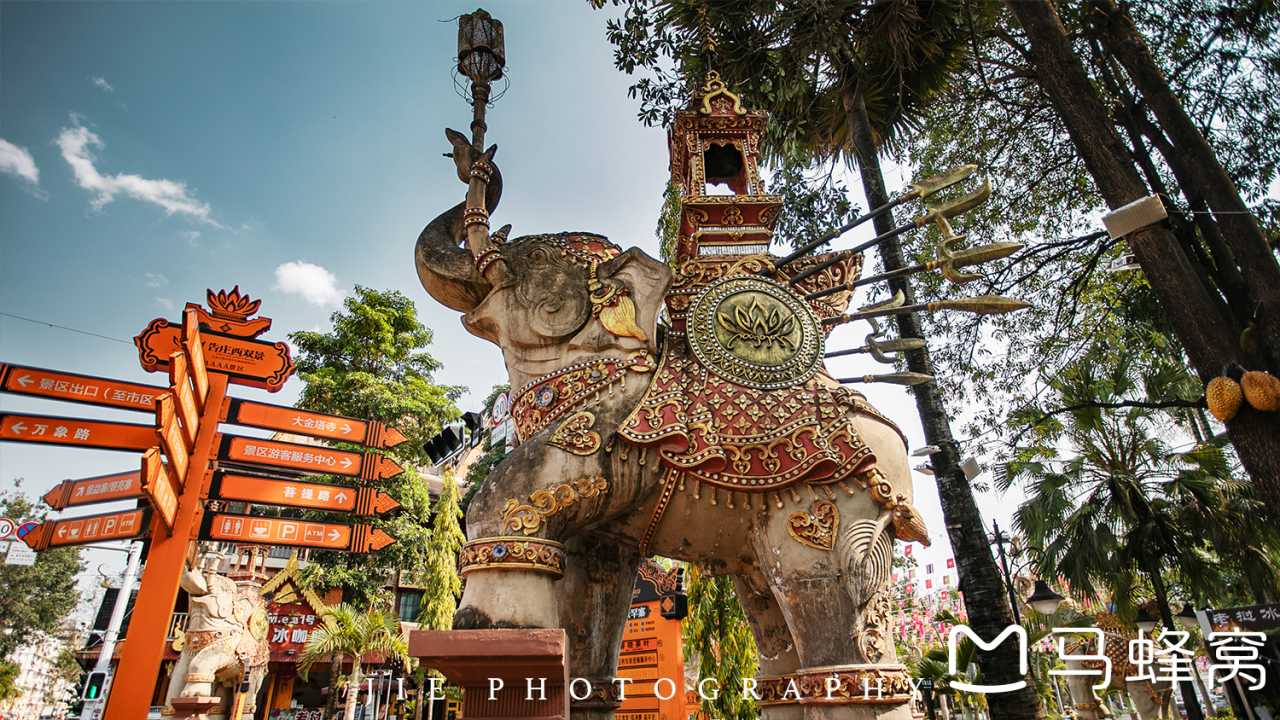
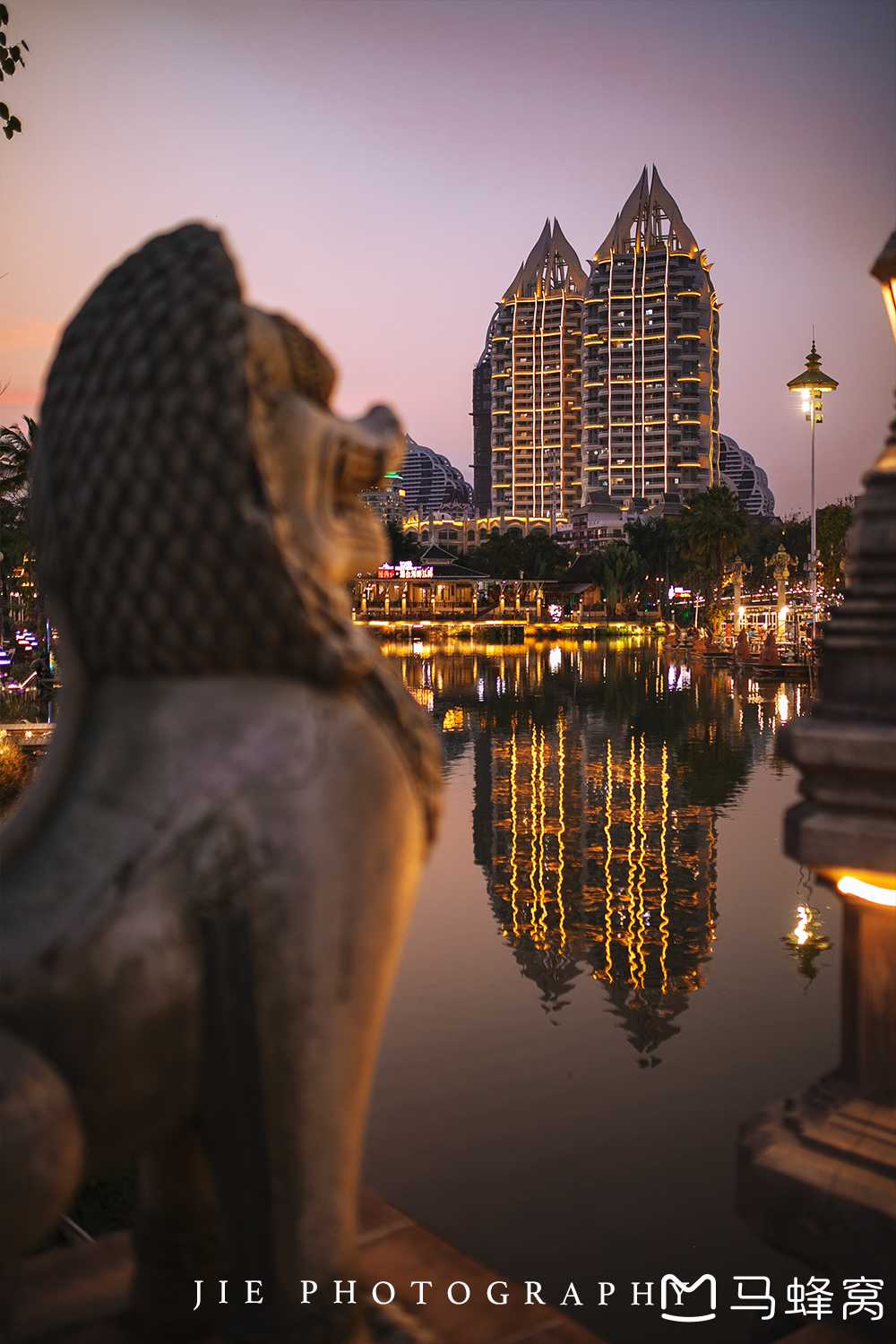
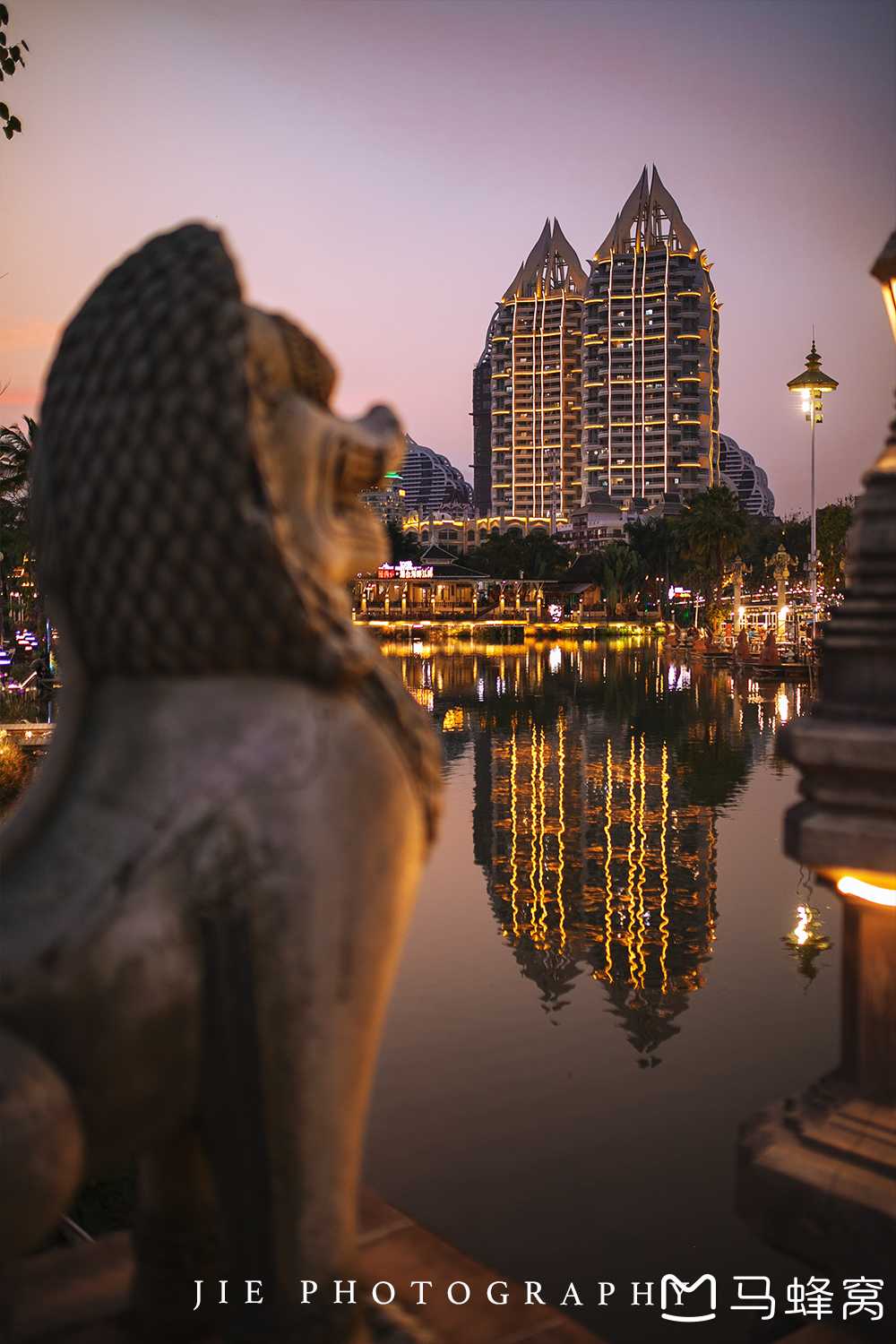
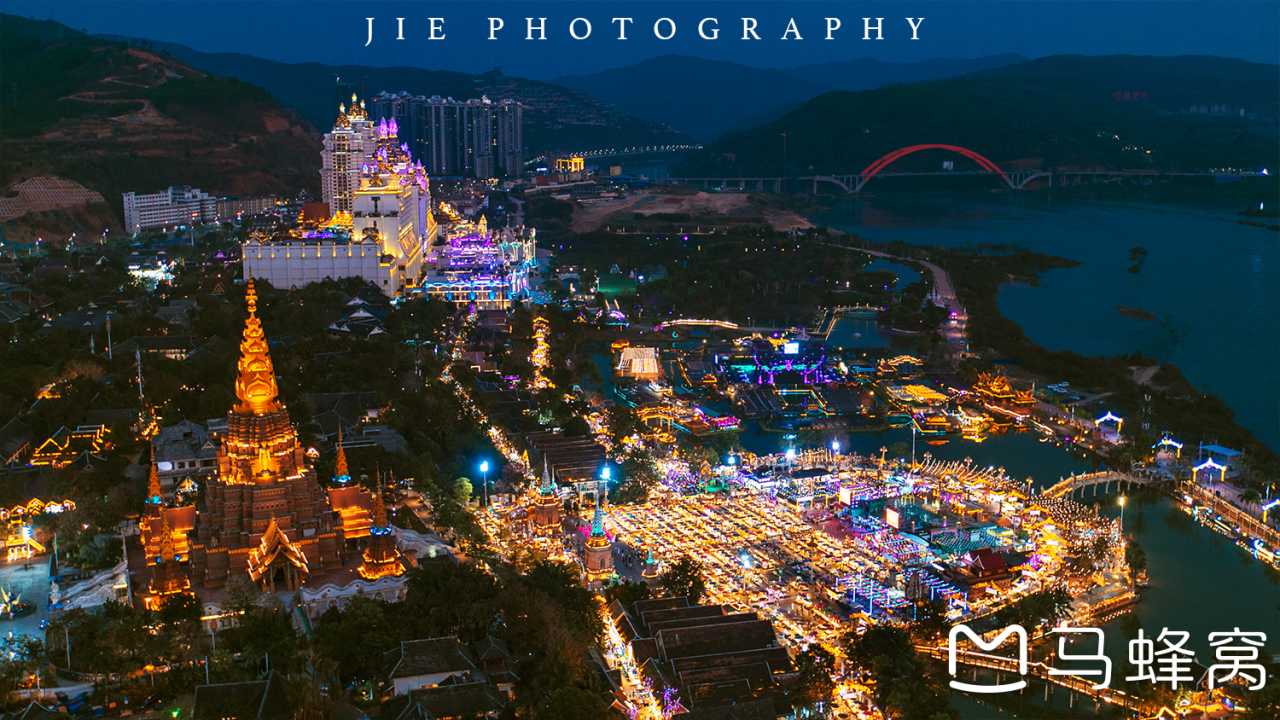
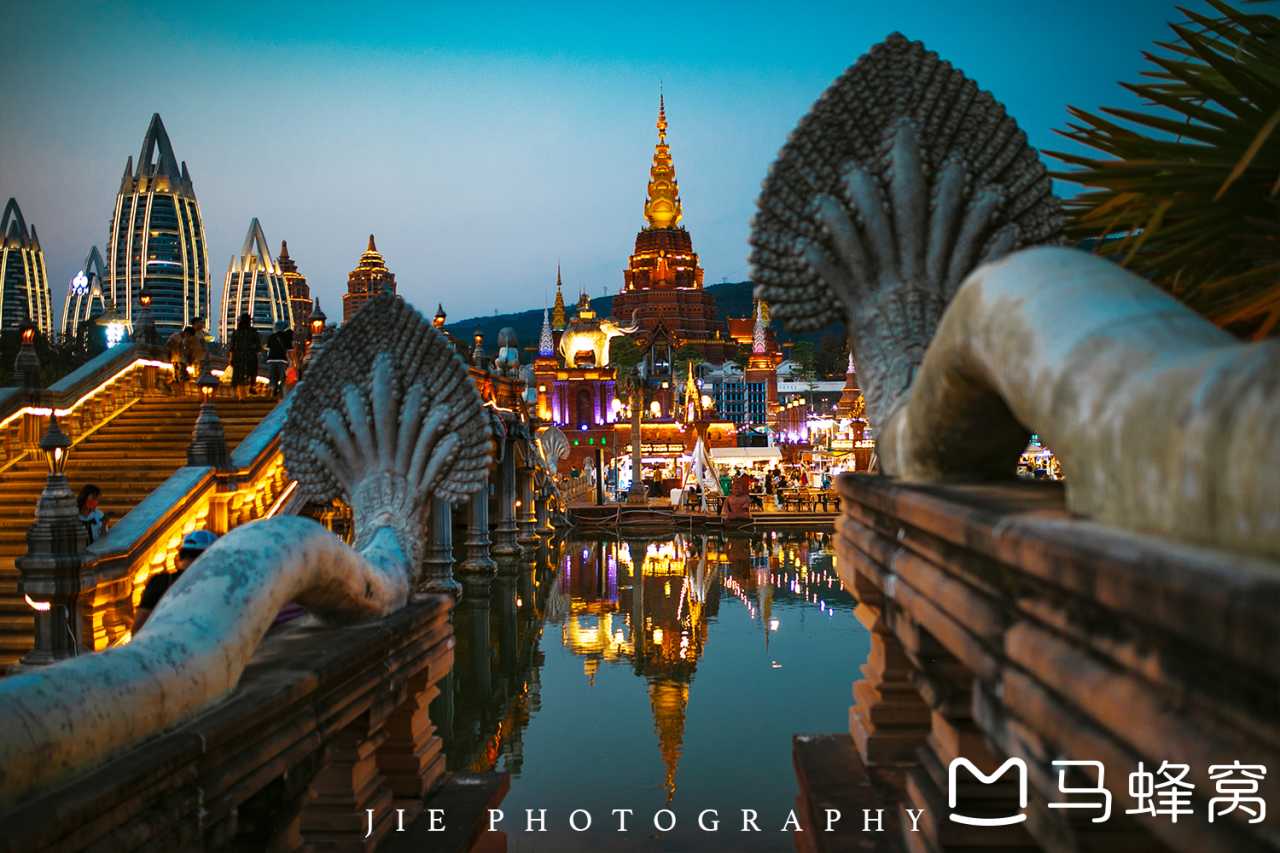
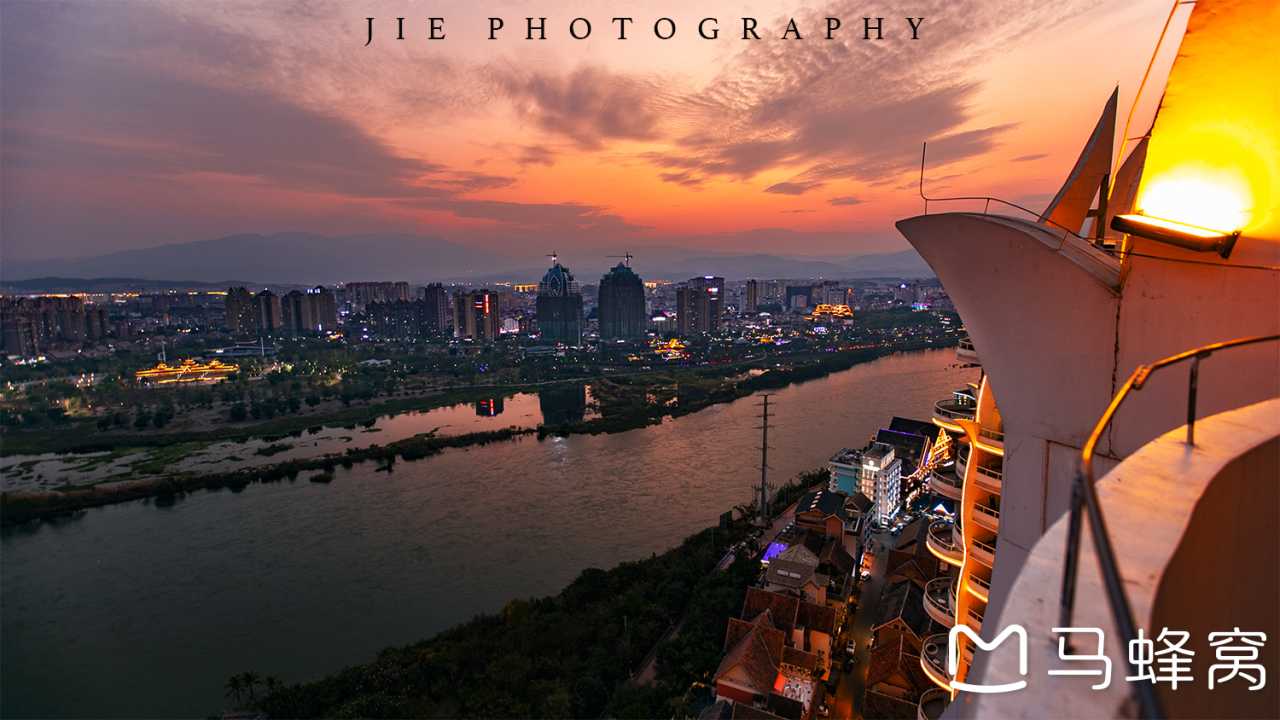
The night north of the Mekong is destined to be sleepless. Without a drone, you need to find another way, putting some thought into getting the best photo spot. Clever photographers have already scouted the location—the Twin Towers in Jingzai Village offer a perfect vantage point overlooking the Starry Night Market. Enter through the east tower, take the freight elevator to the 28th floor, and use the fire escape to reach the top. From up high, the opposite bank looks like a city that never sleeps, lit up like stars. At five in the evening, it welcomes the busiest time of its day, and this joy never closes. It seems that visitors here don't mind losing sleep or complaining about the noise from the street-facing guesthouses—on the contrary, this is the long-missed essence of human life and vitality.
Rooftop Climbing Guide: - The Twin Towers in Jingzai Village are easy to find. Enter through the freight elevator of the hot spring hotel at the base. Since this isn't a residential building and can be a bit chaotic, it's best for women to go in groups. - There are railings on the top floor, but not many people know about this spot. Safety first, always. - The Twin Towers are a bit far from Gaozhuang Night Market, and the rooftop is high, so you'll need a telephoto lens (at least 70-200mm) to capture the larger pagodas and the colorful tents of the night market stalls. - If anyone claims you need to pay for the spot, just ignore them.
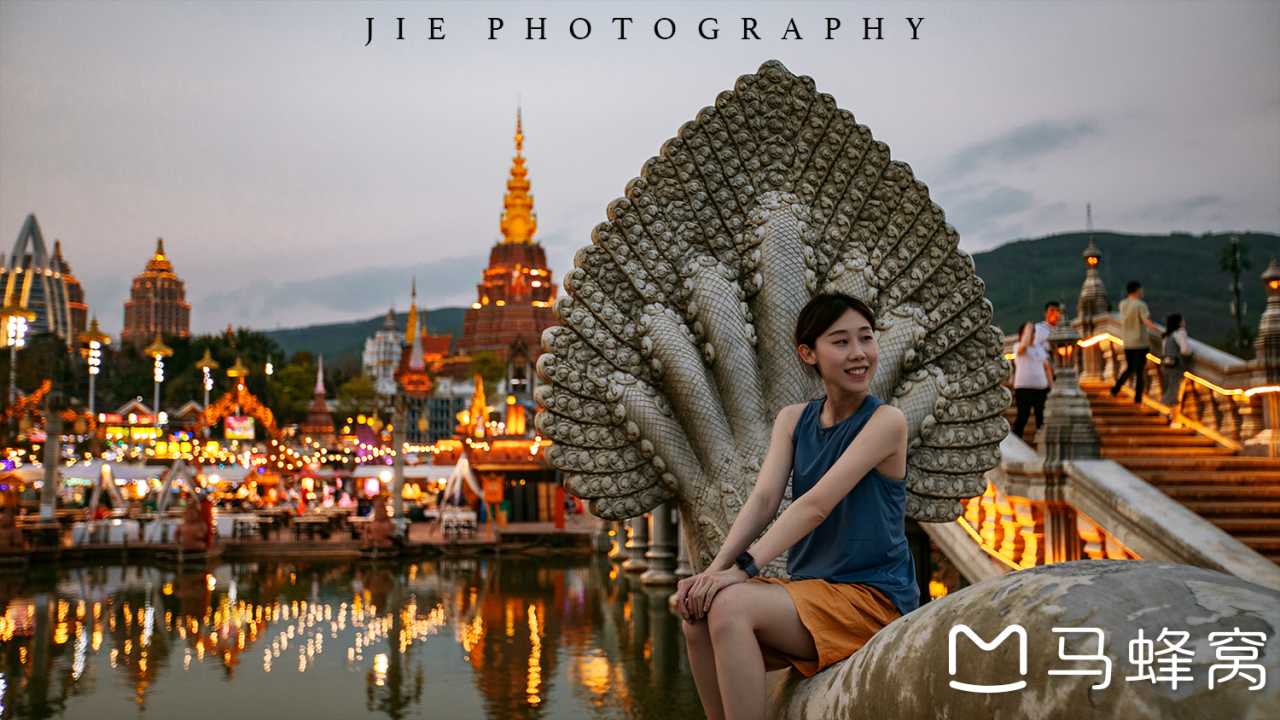
The Starry Night Market is one of the largest in Southeast Asia. The sources of joy here are diverse and cater to all budgets. It could be the satisfaction of finally getting a seat for the "Peacock Feast," or the cool relief after downing a bag of Vietnamese or Laotian iced coffee. You can also find the thrill of bargaining 100 yuan for four pairs of elephant-print pants, or the experience of a full makeup and costume photo shoot for a few hundred yuan.
Don't miss the view from across the river. Only from the opposite side, looking at the whole Gaozhuang Xishuang Jing, do you feel that the moment is truly worth it.
Recommended Cool-Down Spot: Xishuangbanna is really hot. During the hottest part of the afternoon, head to "Wantai" for something cold. Mango sticky rice, iced coffee, and various desserts are affordable and reliable, but you might have to wait for a table.
The Chinese Academy of Sciences Tropical Botanical Garden: The Unsolved Mysteries of a Forest Maze
The Xishuangbanna Botanical Garden is located in the border county of Mengla, close to Laos. Its full name is the Chinese Academy of Sciences Xishuangbanna Tropical Botanical Garden. As the name suggests, this isn't just a local botanical garden; it's an important national research institution, a vivid outdoor classroom for countless scholars dedicated to biological research and plant enthusiasts.
A trip to Xishuangbanna is incomplete without visiting the Banna Botanical Garden. Whether you browse the garden's official website or listen to the on-site guides, one name is unavoidable—Mr. Cai Xitao. He was a renowned Chinese botanist and the garden's first director. From his initial survey to his decision to stay, from its founding in 1959 to building it into one of the world's largest botanical gardens in terms of area and plant diversity, he devoted his entire life to Xishuangbanna.
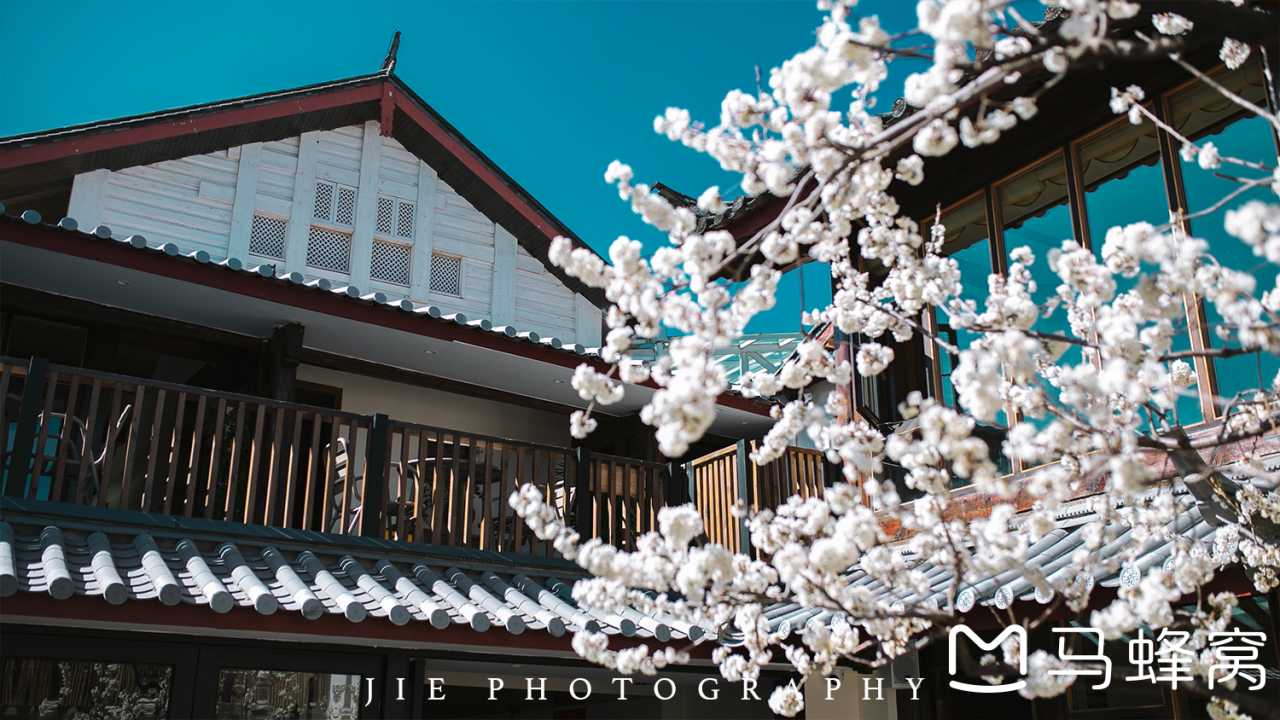
Just how big is this garden? Saying the total area is 1,125 hectares might not give you a clear picture. But if I tell you it's roughly the size of 1,600 standard football fields, and that hot air balloons can land inside, you'll instinctively hold onto the sightseeing tram—because walking until your legs give out is a real possibility.
The west gate is the starting point for tours. The sightseeing cars are open-air electric buggies. In March, sitting in one is incredibly comfortable. The humid air of the tropical jungle, accompanied by birdsong and floral scents, immerses you in a sea of green, with life brimming everywhere.
This is a scenic spot, a park, but also a national-level research center. Just as someone spends a lifetime guarding the Mogao Caves in Dunhuang, so it is with Xishuangbanna—the development of ecological diversity, the evolution of plant diversity, the unsolved mysteries of the biological world—these things draw generations of scholars who dedicate their youth with tireless passion.
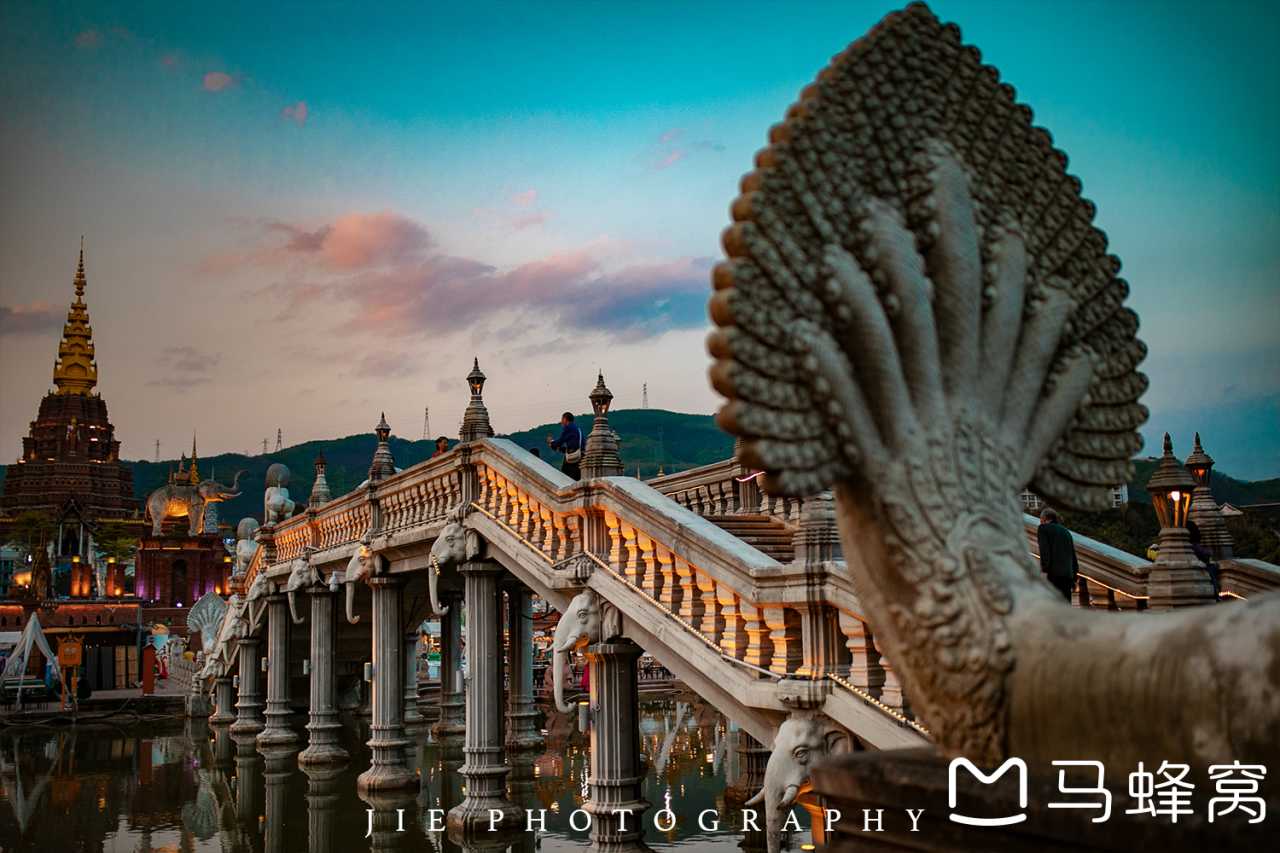
The botanical garden is divided into eastern and western sections. The western section, though smaller, is the core tourist area and the garden's highlight. The eastern section only opens two areas—the Green Stone Forest and the Tropical Valley Rainforest—while the rest remains closed. If you walk through all the accessible areas, it takes at least four hours. Even by sightseeing car, it takes about three hours, following a set route. The western section is a more maturely planned botanical area, with plants grouped into different themed gardens. The west gate is the main visitor entrance, while the east gate is a working entrance—if you're staying at the garden's Wanglian Hotel, you can park at the east gate.
Visit Tips: The giant water lilies and fireflies are seasonal, not visible year-round. Plan accordingly. The giant water lilies are best seen from June to October, with early July being the peak period when their leaves are largest and can support a person's weight. Firefly season runs from April to August, with June and July again being the best time. The botanical garden opens at night during this period. After 10 p.m., fireflies are more active, and you can see dense clusters of them with the naked eye. Of course, this is also the hottest time of year in Xishuangbanna, so be sure to stay cool.
Practical Info: Getting to the Banna Botanical Garden
Most online guides will tell you that the only options for visiting the Banna Botanical Garden are a local day tour or hiring a private car. But I want to say that if you're not visiting during the peak firefly season (April-June), which requires a very late return to Jinghong or an overnight stay in Mengla County, public transport is perfectly adequate and won't waste your time.
- Bus: Buy tickets through the "Banna Bus Station" WeChat account or at the station. The starting point is Jinghong (locals call it "Fantai Factory," which is the Banna Bus Station). Buy a ticket to the terminal stop "Mengla." At the terminal, there's a small ticket booth. Buy your return ticket there. Then wait at the botanical garden's parking lot; station staff will gather scattered passengers and put them on a bus, which leaves when full. Operating hours: 8:00 AM to 6:00 PM. Go early; leave around 2 PM when it's hottest, and you'll be back in the city in about 1 hour 10 minutes. Fare: 23 yuan/person one way, 25 yuan/person return.
- Intercity Express: For a faster option (non-stop), you can buy a ticket at the bus station for a Jinghong-to-Mengla business van, usually a 7-seater. You can select your seat online. About 45 yuan/person. Theoretically, it offers hotel pickup; the driver will call you before departure. The same goes for the return trip. Note: Intercity express may not be available during the off-season and may be more expensive during peak season.
- Scenic Area Shuttle: During peak tourist season, the scenic area operates a direct shuttle. Book through the "Banna Anxin Travel" mini-program. Pickup points are at Gaozhuang and the Splashing Water Square. Operating hours: Departure 8:30-10:30 AM, Return 3:30-5:20 PM, every 30 minutes. Round trip about 90 yuan.
- Private Car: 260-300 yuan/day. Not cost-effective for fewer than 4 people.
- Self-Drive: Follow GPS for about 1 hour (take the highway; toll is 40 yuan).
The General Buddhist Temple: Where Theravada Buddhism Took Root
Around the 5th century BCE, Buddhism was born in ancient India. Over a long period, as it spread to other regions, it gradually evolved into three main branches: Tibetan Buddhism, Han Buddhism, and Theravada Buddhism. The temples in Xishuangbanna, whether in their architecture or rituals, bear a strong resemblance to those in Thailand and Myanmar, because they all developed from the localization of Theravada Buddhism.
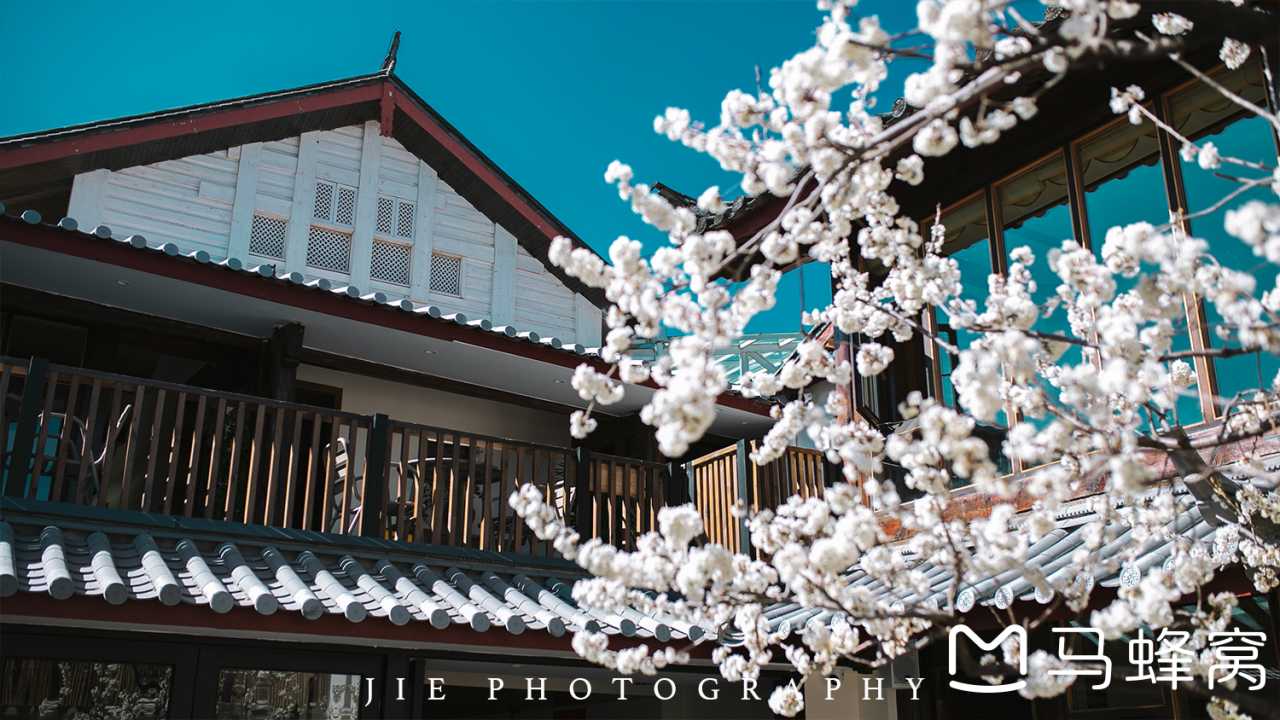
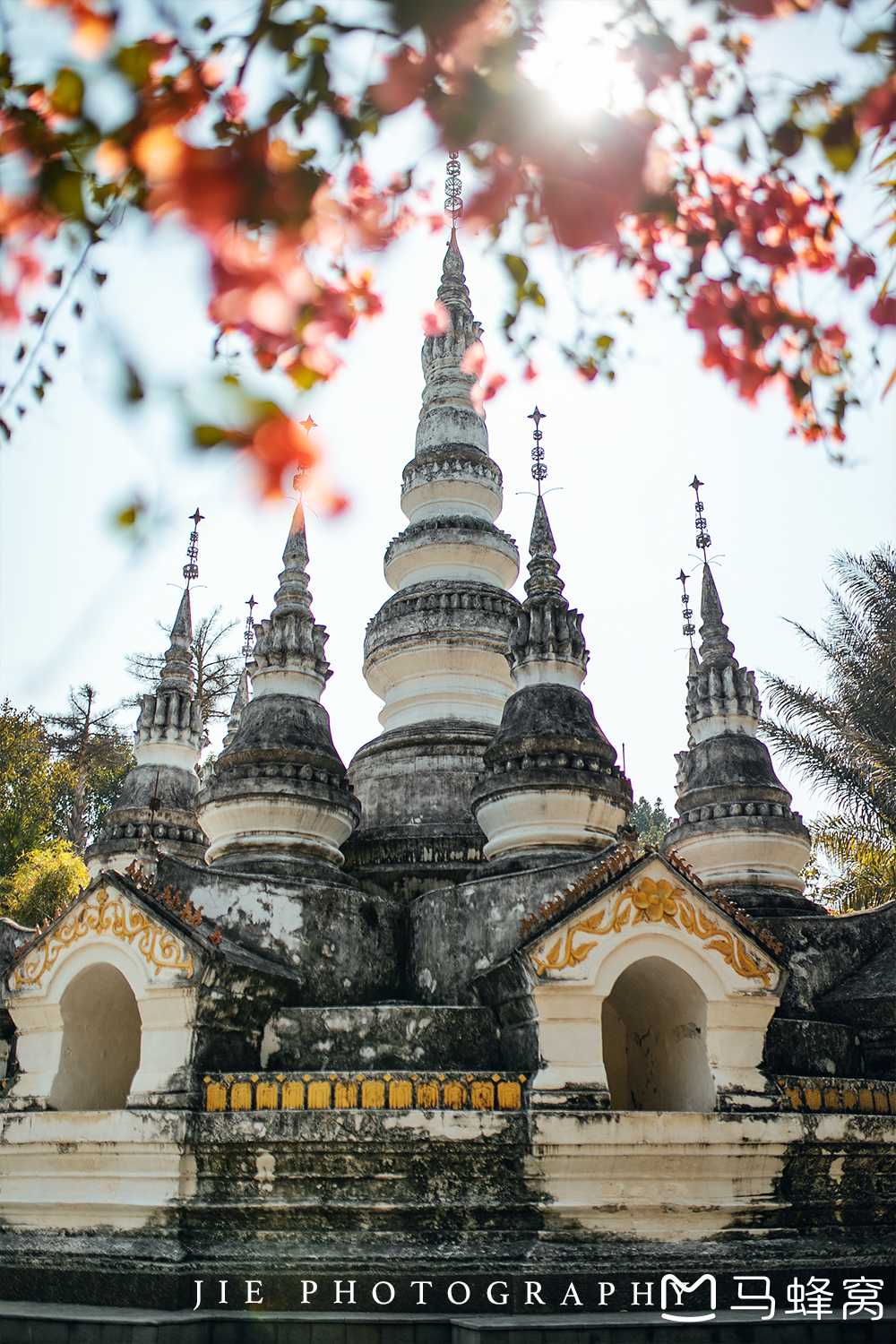
Walking through the streets of Xishuangbanna, large pagodas and small temples seem commonplace. But when it comes to the temple that best represents Banna's Buddhist culture, the General Buddhist Temple is hard to overlook. Located in Jinghong City and connected to Manting Park, this temple is an architectural masterpiece of localized Theravada Buddhism. It has a long history (dating back to the 7th century CE) and is steeped in profound legends. Therefore, in terms of scale and status, the General Buddhist Temple in Xishuangbanna is undoubtedly the highest-ranking temple in the region.
A square layout, facing east, resplendent in gold, and a roof with a steep pitch—these are the typical features of a Theravada Buddhist temple. But if you look closely at the eaves, door frames, and carvings, you'll find distinct local ethnic characteristics. Legend has it that when the Buddha Shakyamuni came to the Banna region, he rode an elephant. On a mountain not far from present-day Jinghong, he saw the sunrise and the revival of all things, and exclaimed, "Jinghong." In Sanskrit, "Jinghong" means "City of Dawn." Thus, Xishuangbanna's Jinghong got its name, and the elephant holds a sacred place in the hearts of the Dai people. Of course, besides the elephant, the peacock is also a symbol of Banna, and the region is even considered the peacock's homeland.
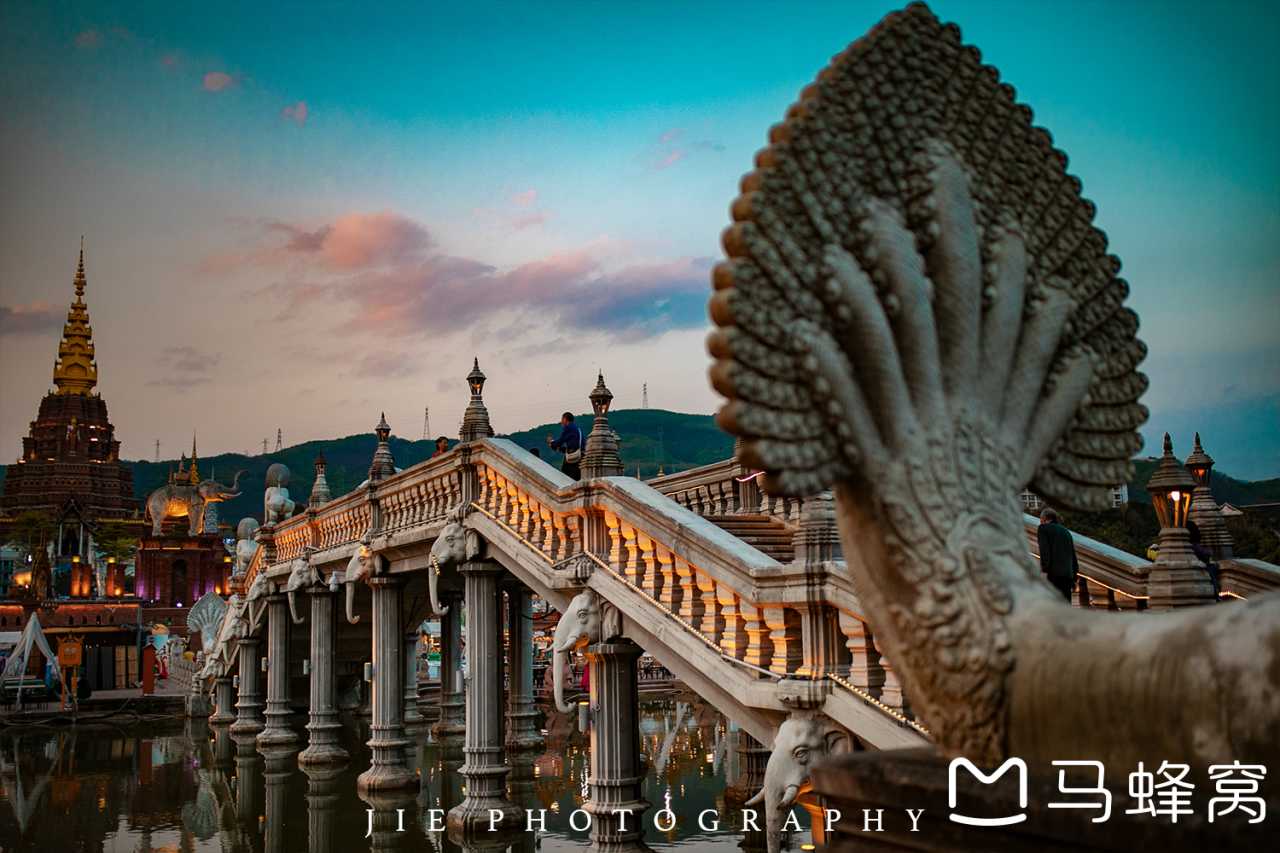
During my few days in Xishuangbanna, I didn't visit the Peacock Garden or Wild Elephant Valley. Even in March, the sun after 10 AM is scorching enough to make you turn back. With my mother on this trip, all our plans revolved around her interests and the early morning or late evening. At noon, we'd go back to the hotel to rest and enjoy the air conditioning, or find a café to cool off.
If you come to Banna in mid-April, you'll catch the Water Splashing Festival. Unlike the gear-heavy participants in Thailand's Songkran, Banna's Water Splashing Festival is relatively traditional, focusing on everyone joining in and having a good splash. Among Yunnan's many ethnic groups, the Dai are a people who both believe in Buddhism and love life. Every year during the Water Splashing Festival, they become a people born of water and wild for water. In the square, they interact with tourists by splashing water, conveying simple, sincere blessings through this element.
Of course, everyone is welcome to participate in the Water Splashing Festival. Just remember to wear quick-dry clothing with swim trunks underneath. If you show up in a full cotton outfit, chances are your pants won't be ripped off by the crowd but will simply give way under the weight of the water. That sweet burden is something only those who've been splashed can truly understand.
Jinuo Mountain: Rainforest Exploration and Chance Encounters
On this land, besides the Dai, many other ethnic minorities live, such as the Jinuo, Bulang, Hani, and Miao. These groups are small in number and concentrated in the Yunnan region. One of my plans for this trip to Banna was a rainforest hike on Jinuo Mountain.
About 50 kilometers from Jinghong City lies Jinuo Mountain, home to an ethnic minority that lives by the rhythm of sunrise and sunset—the Jinuo people. The Jinuo are unique to Banna, and many have never left Jinuo Mountain in their entire lives. This group, which was a matriarchal society in primitive times, still retains some of those ancient customs while adapting to the survival rules of modern society. Simply put, living off the land might be the Jinuo's entire understanding of production and life.
Yunnan is the birthplace of Chinese tea, and indeed, of world tea. The fertile soil and climate gave the Jinuo, who live off the land, a source of livelihood—growing tea. From the Silk Road onwards, through dynastic changes and trade with the Western Regions, the demand for tea never waned. Because of this, many areas and ethnic groups along the lower reaches of the Lancang River have depended on tea cultivation for generations.
Besides agriculture like tea and coffee, tourism is also a major economic pillar for Banna. Chinese tourism has evolved from mass tourism to personalized experiences. Therefore, the young people of Jinuo Mountain have found a new profession—hiking guides. The Jinuo are naturally suited to be guides, as they possess an innate sense of direction.
Our guide this time was a handsome young man from the Jinuo tribe. He wore the traditional Jinuo attire, had no sun protection under the blazing sun, and carried only a small, all-purpose knife, wearing green rubber boots. Along the way, he explained various plants to me—which ones were edible, which ones were tasty, and which ones would kill you—all based on his intimate knowledge of the place.
My mother and I stuck close to the guide, afraid that he'd disappear around a bend or that some creature would leap out of the rainforest and finish us off. But the guide's professionalism lay in his deep knowledge of the route and his keen understanding of tourists' needs. Just when we were about to overheat and spontaneously combust, he wielded his knife, deftly sliced open a banana tree core, and offered us the sweet, cool dew inside.
The hike posed many challenges for my mother, who is older and not particularly athletic. The whole thing lasted four hours, with the guide having to pull and push her along. Eventually, when crossing a small rainforest stream, she went from wading to taking an accidental bath, which cooled her down completely. But that's part of the charm of rainforest hiking. For example, when we were famished, we saw smoke rising in the distance—another guide had gone ahead into the forest with ingredients, foraging for local materials, and had cooked lunch. Bamboo tubes served as bowls, banana leaves as plates, the rice was cooked with rainforest dew, and there was grilled fish and chicken—a feast, both abundant and delightful.
The guide suddenly asked me, "You know, you look really familiar, like an actress."
"Ren Suxi?"
"That's it, that's her!"
"You're not the first to say that. A lot of people think so. And looking at you, I think you could make it in the entertainment industry."
"Actually, I do act during the off-season."
"Really?! What in?"
"Extra work, mostly period dramas as a background actor. But I once had a minor role with a line—I played a Japanese person."
I was momentarily speechless, then said, "Let's take a photo together. Just in case one of us becomes famous."
"Yeah, yeah. When we're rich, don't forget each other."
Oh, and by the way, that day the guide also offered me some ants, saying they were high in protein. One bite of a live, big black ant—it was sour.
Practical Info: Rainforest Hiking
Rainforest hiking is incredibly fun, but you must bring the right clothing and gear:
- Wear breathable, quick-drying, UV-protective outdoor clothing, a sun hat, and sunscreen. Don't use a parasol, as the rainforest requires wading and some climbing, and the jungle branches are dense. Shoes must be comfortable with non-slip soles. Water shoes are ideal; if not, wear sneakers. Avoid sandals or leather shoes.
- Use a lightweight, somewhat waterproof backpack or crossbody bag that leaves your hands free.
- Cameras, especially bulky DSLRs, are not recommended. Modern phone cameras are sufficient. Bring a strap. Carry water, tissues, band-aids, hand sanitizer, and definitely a trash bag to take your waste with you.
- The rainforest's biodiversity means there will be insects. Buy a green, detoxifying balm from Thailand and apply it beforehand.
- Theoretically, the very old or very young are not suitable for this hike. If you have a chronic illness, be sure to carry your medication and inform the guide fully for a professional assessment.
Shuhe: A Time Station on the Ancient Tea Horse Road
After four days in Banna, we flew to Lijiang. Leaving Lijiang train station, we took a taxi for about half an hour and arrived at Shuhe Ancient Town. Having booked a unique guesthouse near the town's entrance, our first stop in Lijiang was settled in Shuhe.
Lijiang, geographically located in northern Yunnan, connects the Yunnan-Guizhou Plateau with the Qinghai-Tibet Plateau. To the south is Dali, and to the north is Diqing Tibetan Autonomous Prefecture, where Shangri-La is located—the place I'd visited twice and suffered altitude sickness both times. I vaguely remember getting so sick in Deqin County that I was nauseous and dizzy. The driver said, "Hold on a bit longer. Once we cross this mountain, you'll be able to see Jade Dragon Snow Mountain." I rolled down the window for some air and replied, "So what? Is the 5,000+ meter altitude of Jade Dragon Snow Mountain supposed to cure altitude sickness with a dose of its own poison?" The driver said, "No, not really. At best, it'll be rock bottom."
Back then, I had no concept of Lijiang's geography, let alone how close it was to Diqing. For a long time, I wondered why Lijiang had such a high-altitude snow mountain like Jade Dragon. Before this trip, I seriously brushed up on Yunnan's geography and mentally prepared myself for Lijiang's altitude.
Of course, Lijiang's altitude gradually decreases from northwest to southeast. Shuhe is at about 2,400 meters, which wasn't a problem for me or my mother. After settling in, we headed straight to Shuhe Ancient Town for lunch, while also soaking in the atmosphere of this important stop on the Ancient Tea Horse Road.
In southwest China, the Ancient Tea Horse Road had an even more profound impact than the Silk Road. Even today, with material abundance and spiritual richness, mentioning "ancient road culture" can get older generations talking for days, like old friends catching up. Whether it was the Hexi Corridor on the Silk Road or the later Tea Horse Road, from the vast Central Plains all the way to the Mediterranean, the continuous exchange of economy and culture between ancient China and the West relied on the simple combination of people, horses, and carts, and the exchange of goods. This combination was one of comings and goings, spanning a thousand years.
Historical research traces the Tea Horse Road back to the Tang Dynasty. People would set out from southern Yunnan, pass through Lijiang, and then head to Lhasa in Tibet, trading tea for horses to meet the material needs of different regions. The places where they stopped to rest along the way became the ancient towns scattered along this route. Shuhe was one such important post station on the Tea Horse Road and a key component of the Lijiang Old Town World Heritage site.
Shuhe Ancient Town still preserves well-maintained ancient roads and markets. It belongs to the Yulong Naxi Autonomous County, and the original inhabitants are primarily the Naxi people. China has over four hundred ancient towns—some are restored to look old, with a strong commercial atmosphere, while others are living specimens that survived the wheels of history. Shuhe and Baisha Ancient Towns belong to the latter.
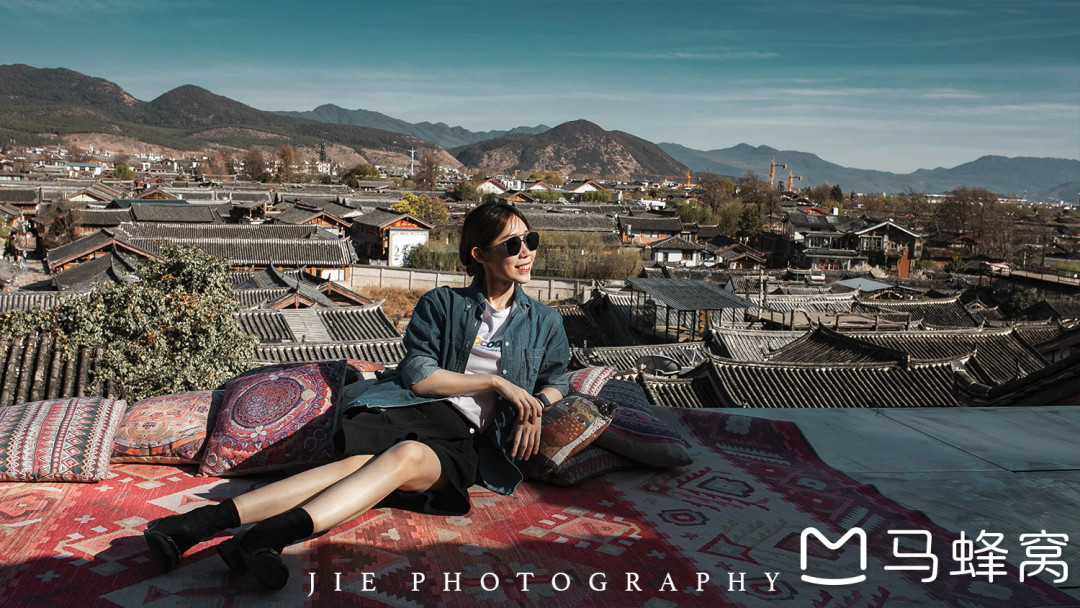
The layout of Lijiang Ancient Town is its very essence—facing east, with Jade Dragon Snow Mountain to the north and Wenbi Mountain to the south. If "small bridges, flowing water, and households" describes the gentleness of Jiangnan's ancient towns, then "ancient roads, spring water, and households" might capture the first impression of Yunnan's ancient towns. Willows over bridges, snow-capped peaks reflected in the water, ancient houses where you can climb up to the rafters and see the stars and the sunrise gilding the mountains. Sitting on the tatami mat under the oleander tree at the guesthouse, watching flowers bloom and fall, enjoying the leisure of not stepping outside the door.
Epilogue: The True Meaning of the Ideal City
Over nine days, from the tropical rainforest to the snowy ancient town, from the banks of the Lancang River to the Ancient Tea Horse Road, I took my mother through Xishuangbanna, Lijiang, and Dali. This trip wasn't about a military-style rush, nor about hurried check-ins. It was about the comfort of going with the flow.
Back in Beijing, I often think of that night—at the guesthouse in Shuhe Ancient Town, my mother leaning on the sofa, flipping through her photo album. I pushed open the door and asked if she wanted to go up to the loft to look at the stars. She said, "No, you go ahead. I'll just look at the photos." In that moment, I suddenly understood that the ideal city isn't necessarily a specific place. It's a state of being—it's the satisfaction my mother felt when replying, "Thank you all for the likes" on WeChat; it's the sincerity of the guide offering me ants; it's the nonchalance of the old man saying, "That bottle of beer, on the house."
The magic of Yunnan isn't just about how beautiful it is. It's about how it teaches you to slow down, to make peace with yourself. In the thin air, we found a long-missed sense of release. Beneath the snowy peaks, by the shores of Erhai Lake, in the tropical rainforest, along the Ancient Tea Horse Road—every scene reminded us: the ideal city isn't in a distant place. It's in your heart.
Practical Advice: 1. When traveling with parents, keep the pace slow. Don't try to cram too much into one day.
You should also read:

Solo in Yunnan: A Wanderer’s Guide to the Land of Eternal Spring
Solo in Yunnan: A Wanderer’s Guide to the Land of Eternal Spring There’s something magical about traveling alone. No compromises, no schedules to keep, no one to please but yourself. I’ve been on the road for nearly three months now, and not once have I…
Continue reading...
Into the Hidden Valley: A Solo Journey Through the Mysterious Dulong River
Into the Hidden Valley: A Solo Journey Through the Mysterious Dulong River Deep in the northwestern corner of Yunnan Province, tucked away from the modern world, lies a place that feels like a secret whispered among mountains. The Dulong River Valley is not just a…
Continue reading...
God’s Abandoned Palette: A Self-Drive Journey Through Yunnan’s Dongchuan Red Land
God’s Abandoned Palette: A Self-Drive Journey Through Yunnan’s Dongchuan Red Land Travel has never been about reaching some distant geographic coordinate. It’s about encountering, along the way, the version of yourself buried beneath the rubble of daily routine. During this May Day holiday, I finally…
Continue reading...