Nine Days of Family Road Tripping: From Dali’s Wind, Flowers, Snow, and Moon to Lugu Lake’s Morning Light – A Warm Winter Journey
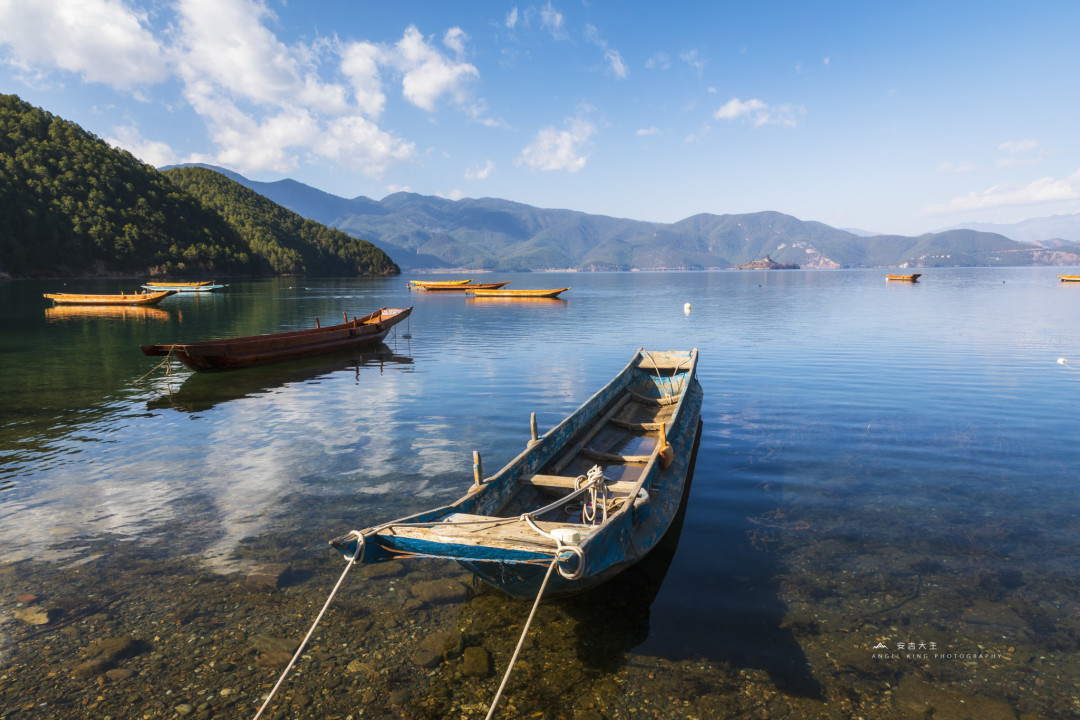
Nine Days of Family Road Tripping: From Dali’s Wind, Flowers, Snow, and Moon to Lugu Lake’s Morning Light – A Warm Winter Journey
Foreword: When a “Tourist Trap” Became a “Total Surprise”
As a native of Tianjin, I love travel and photography, but I’m by no means a professional blogger—just an ordinary dad. In the past, whenever someone mentioned the “Kunming–Dali–Lijiang” route, I instinctively frowned: crowded, overly commercialized, riddled with pitfalls—it felt like the black hole of tourism. But after the 2023 Spring Festival, I took my child and parents on a nine-day self-drive trip through Kunming, Dali, Lijiang, and Lugu Lake. The result? I was completely proven wrong.
This travelogue isn’t a guide; it’s more of a collection of “pitfall-avoidance notes” and “heart-stopping moments.” If you’re also planning a family road trip, want to dodge the crowds, capture great photos, and avoid bad food and accommodation, this article might save you a lot of trouble.
Special thanks to my travel buddy, XIANG Xiang Ge. His Lijiang travelogue inspired me, and he patiently answered countless questions along the way. Without him, this trip might still be gathering dust on my to-do list.
Pre-Trip Prep: Car Rental, Route, and Mindset
We chose to fly directly from Tianjin to Kunming, then take a high-speed train to Dali, where we picked up a rental car. We used the platform “一嗨” (eHi). My advice: definitely rent an SUV or off-road vehicle if you’re heading to Lugu Lake. I cheaped out and rented a sedan, and on the mountain roads from Lijiang to Lugu Lake, the scraping of the undercarriage made my heart bleed.
The route was clear: Dali (wind, flowers, snow, moon) → Lijiang (old town + snow mountain) → Lugu Lake (Mosuo culture + lake views). Nine days total, with moderate per-person costs. With a child and elderly parents, we couldn’t rush the pace.
Day 1: Landing in Kunming – The “Chaos” and Joy of Feeding Seagulls at Haigeng
We arrived in Kunming in the afternoon, with a few hours before our train. We decided to take the kid to feed seagulls at the Haigeng Dam. Result? Traffic jams that made us question life itself. The driver suggested switching to the Haigeng Base instead. It was still crowded, but at least the child got to see those chubby red-billed gulls up close.
Practical tip: Feed the seagulls in the morning—fewer people, better light. We went in the afternoon, and after tossing the bread, we waited nearly 20 minutes for a taxi. In winter, feeding seagulls in Kunming is a must-do, but go early.
That evening, we had an authentic Yunnan meal nearby: mushrooms, steam pot chicken, and ham. The whole family was satisfied. We turned in early, ready for the early morning train.
Day 2: Weishan Ancient Town – The Nanzhao Kingdom from Chinese Paladin, Slow Life in Reality
The high-speed train from Kunming to Dali takes two hours. We picked up the car immediately upon arrival. Our first stop wasn’t Dali Old Town, but a hidden gem—Weishan Ancient Town. This is the birthplace of the Nanzhao Kingdom and the fictional hometown of Zhao Ling’er from Chinese Paladin. It’s about a 90-minute drive from Dali, through mountain roads and village paths, but the roads are decent.
Entering Weishan: Time Slows Down Here
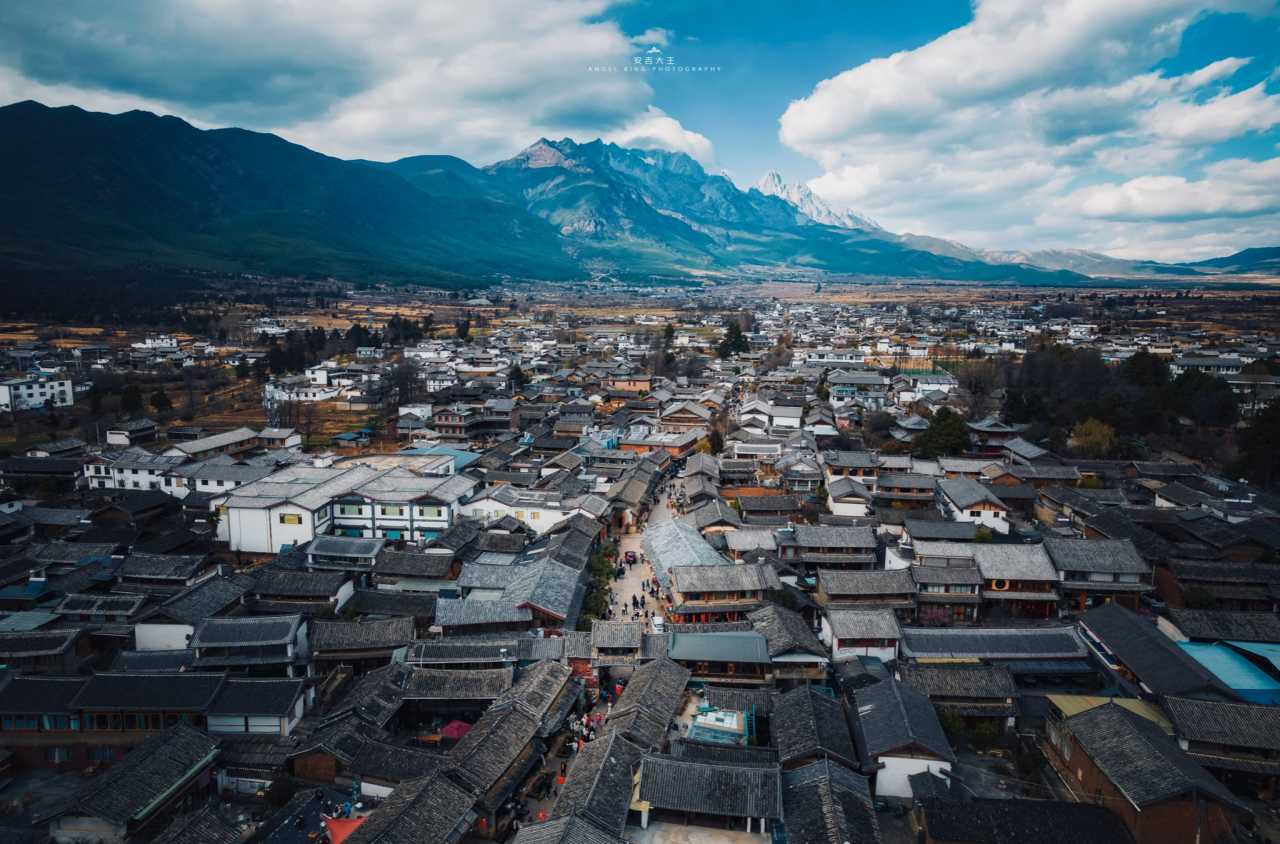
Weishan Ancient Town was first built in the Western Han Dynasty and took its current form during the Ming Hongwu era. Its grid layout is remarkably well-preserved. The North Gate’s Gongchen Tower is an iconic structure; from the top, you can see all 24 streets and 18 lanes. The Xinggong Tower sits at the town’s center, with four arched doorways radiating into four main streets. Hanging plaques read “瑞蔼华峰” (Auspicious Mist on Huafeng Peak) and “巍霞拥鹤” (Towering Clouds Embracing Cranes).
There’s none of Dali’s noise here—just mud walls, tile-roofed houses, and stone-paved roads. Bai ethnic homes with the “three rooms and one screen wall” or “four courtyards and five skywells” layout are everywhere. What surprised me most: succulents that only grow in pots up north here thrive into small trees!
Nanzhao Museum: A Journey Through a Millennium
The Nanzhao Museum is on Baoguo Street, divided into three sections: “Tracing Nanzhao,” “The Great Nanzhao Kingdom,” and “Nanzhao Treasures.” The Sun Palace, a Ming Dynasty building, is remarkably intact. The museum uses a “Red River Source” river motif to open the door to history, with the floor engraved with the Nanzhao chronology from King Xinuluo to King Shunhuazhen. Taking a child here is far more vivid than any textbook.
Wenhua Academy: Half Poetry, Half Everyday Life
Wenhua Academy is located within Wenhua Middle School, built in the first year of the Guangxu era. The Kuixing Pavilion is a double-eaved, hip-and-gable roof structure. On the second floor, there are still desks, and occasionally lectures on classical Chinese studies are held here. You can try movable-type printing and block printing, and there’s a tea room and a qin (zither) room. If you want to fly a drone, the square at the entrance is an excellent takeoff and landing spot.
Pitfall alert: Parking around Weishan Ancient Town is prone to getting ticketed. Find a parking lot or a private courtyard (10 yuan per session) to save hassle. Allow at least half a day to explore; self-driving is the most convenient option.
Overnight in Dali Old Town: A “Peach Blossom Spring” Amid the Sea of People
We drove to Dali Old Town in the evening. During winter break, traffic in Dali rivaled Tianjin’s morning rush hour. Luckily, the guesthouse owner rode an e-bike to meet me, helped with parking, and carried our luggage—service was top-notch.
The guesthouse was called “Dali Huajing Caotang Inn” (Dali Flower Realm Cottage). The owner and his family are all artists. The door gods on the gate were hand-painted by the owner. The courtyard was uniquely designed, and the rooftop terrace offered an excellent view. After settling the family in, I flew my drone to capture the old town at night.
Dali Old Town is built on the site of the Ming Dynasty’s Yangjumie City, backed by Cangshan Mountain and facing Erhai Lake. When talking about Dali, you can’t avoid the Duan family. Of the 22 kings of the Dali Kingdom, nine became monks—a twist more dramatic than any Jin Yong novel.
For dinner, we chose a Chongqing hotpot place near the guesthouse. Since we had a child, we skipped the spicy broth. The taste was average. At night, the old town offers little beyond bars and barbecue, so we turned in early.
Day 3: The Three Pagodas of Chongsheng Temple – A Symphony of Buddhist Kingdom and Dynasty
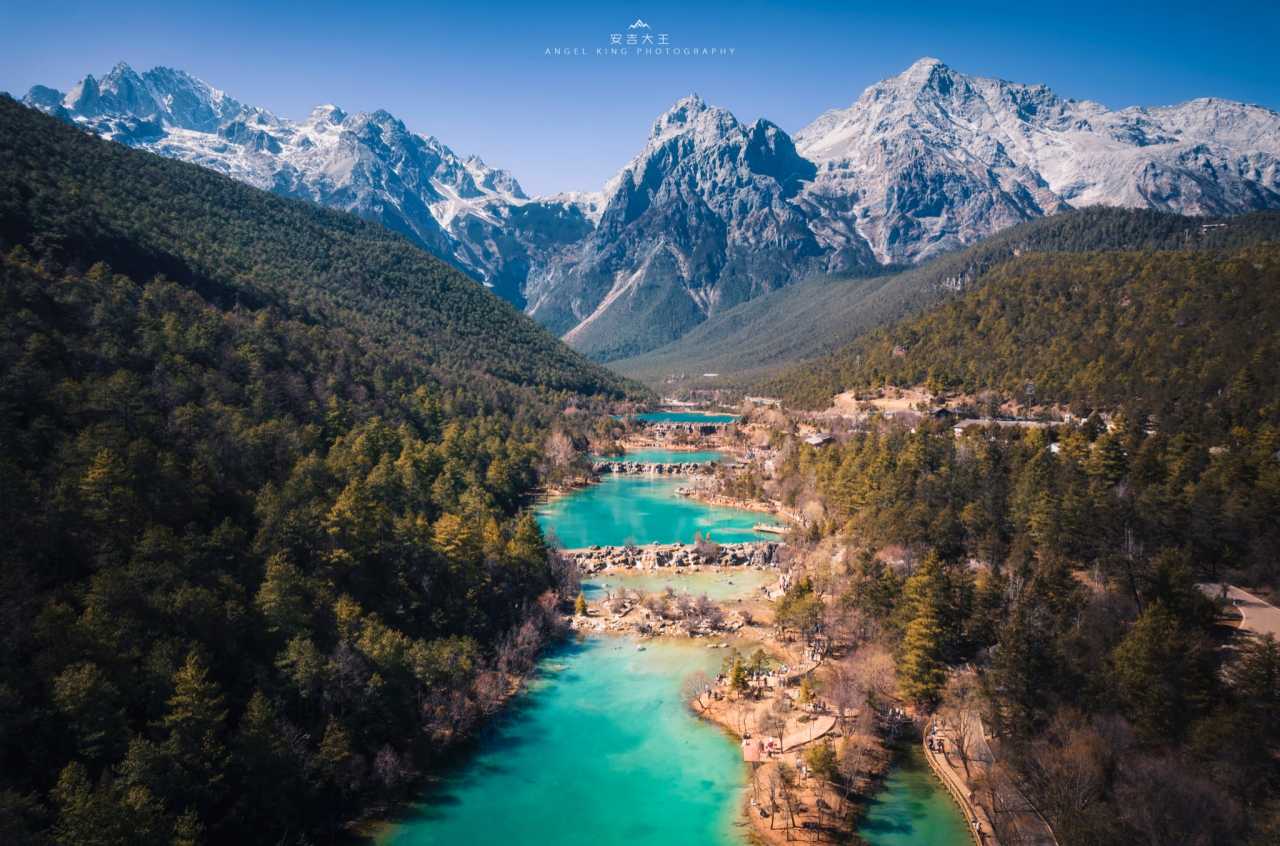
In early February, mornings in Dali are cold enough for a down jacket. I went up to the terrace to fly my drone and capture the sunrise over Erhai Lake. Cangshan Mountain was bathed in golden light, and the old town lay still and picturesque.
Chongsheng Temple: The Tianlong Temple from Demi-Gods and Semi-Devils
The Three Pagodas of Chongsheng Temple are Dali’s landmark. Entrance is 90 yuan, with half-price for seniors and children. I recommend taking the shuttle bus up the mountain, visiting Chongsheng Temple first, then walking downhill to see the pagodas—it saves energy.
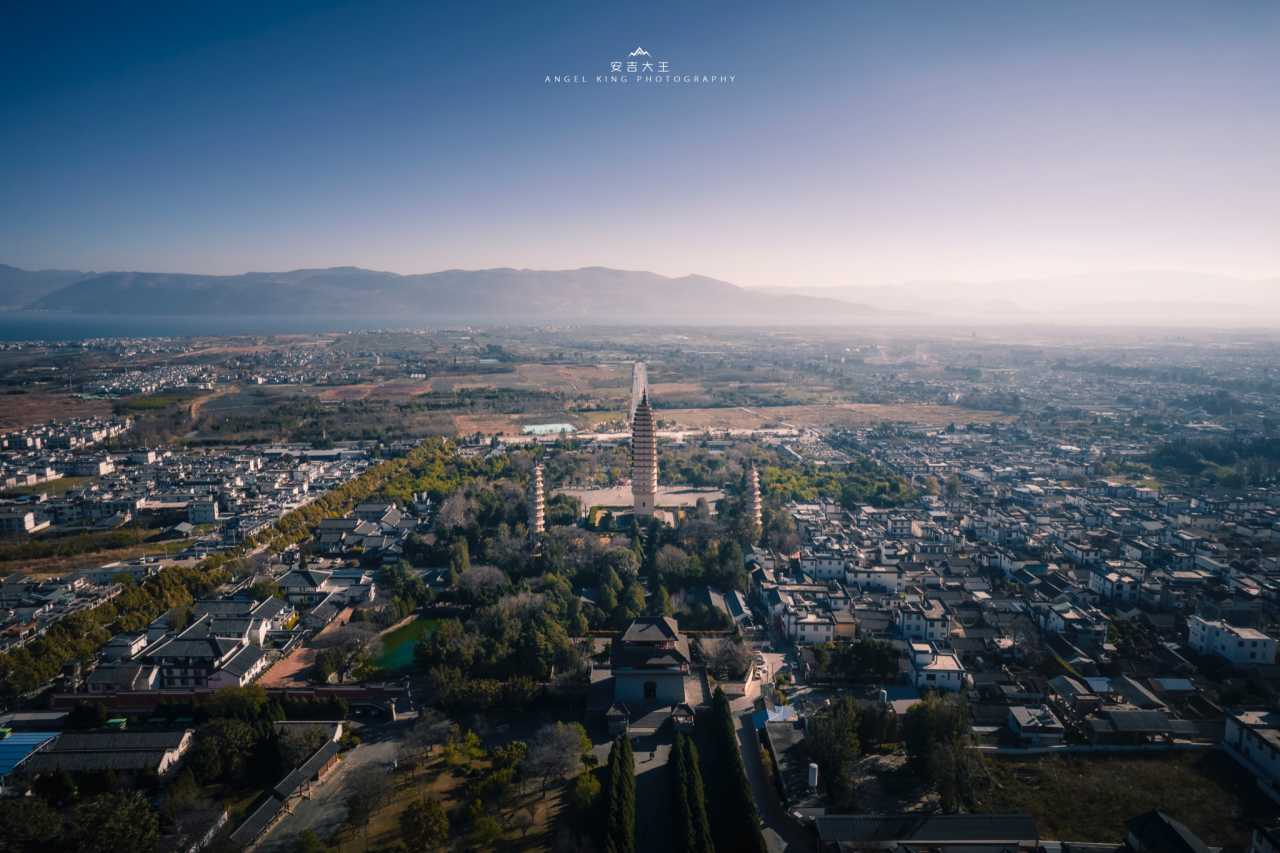
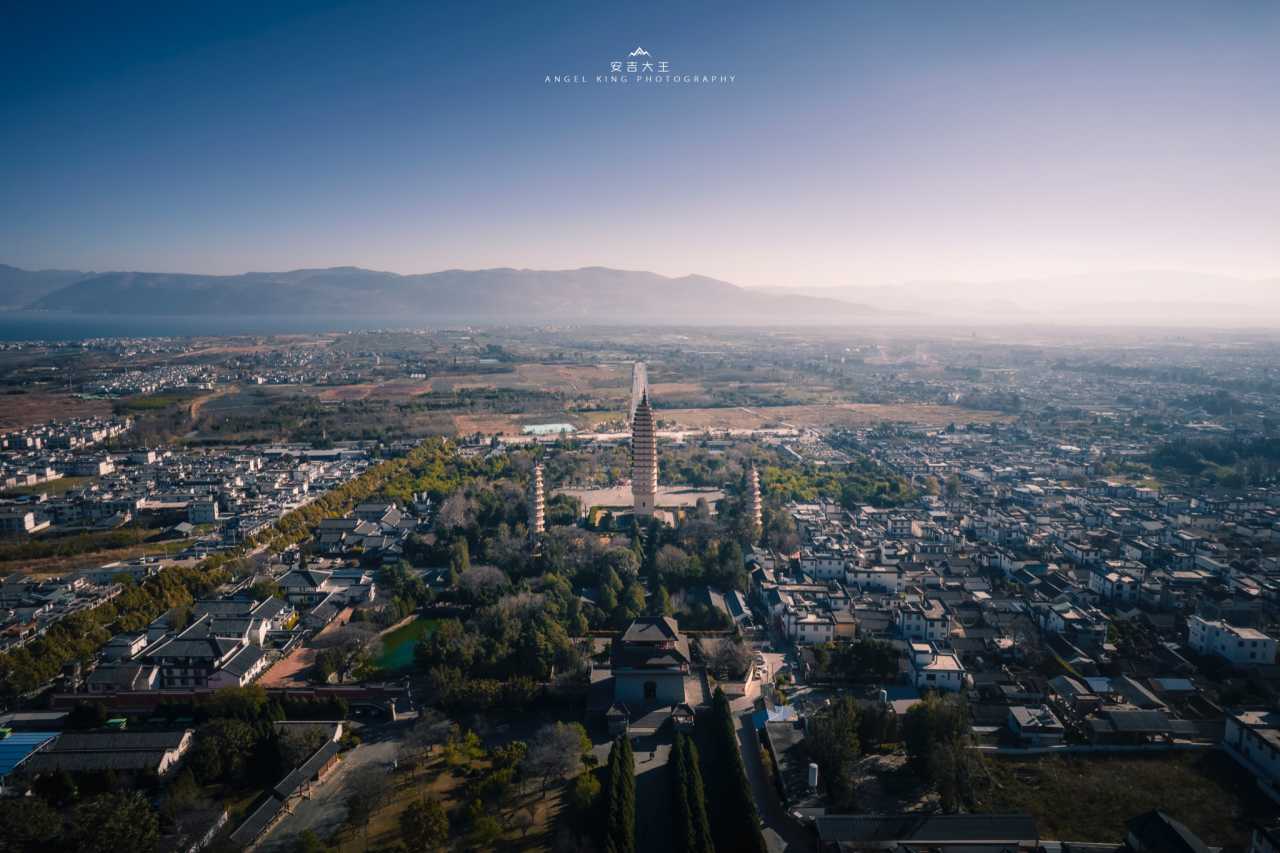
Chongsheng Temple was first built during the Tang Kaiyuan era and reached its peak during the Dali Kingdom period. Inside the main hall stand nine statues of eminent monks, corresponding to the nine Dali kings who became monks from Demi-Gods and Semi-Devils. The temple follows a Han Chinese layout, with a mountain gate, bell and drum towers, and a Heavenly Kings Hall. I launched my drone from the mountain gate square and captured both the pagodas and the temple.
Three Pagodas Reflection Park: An Overlooked Photo Spot
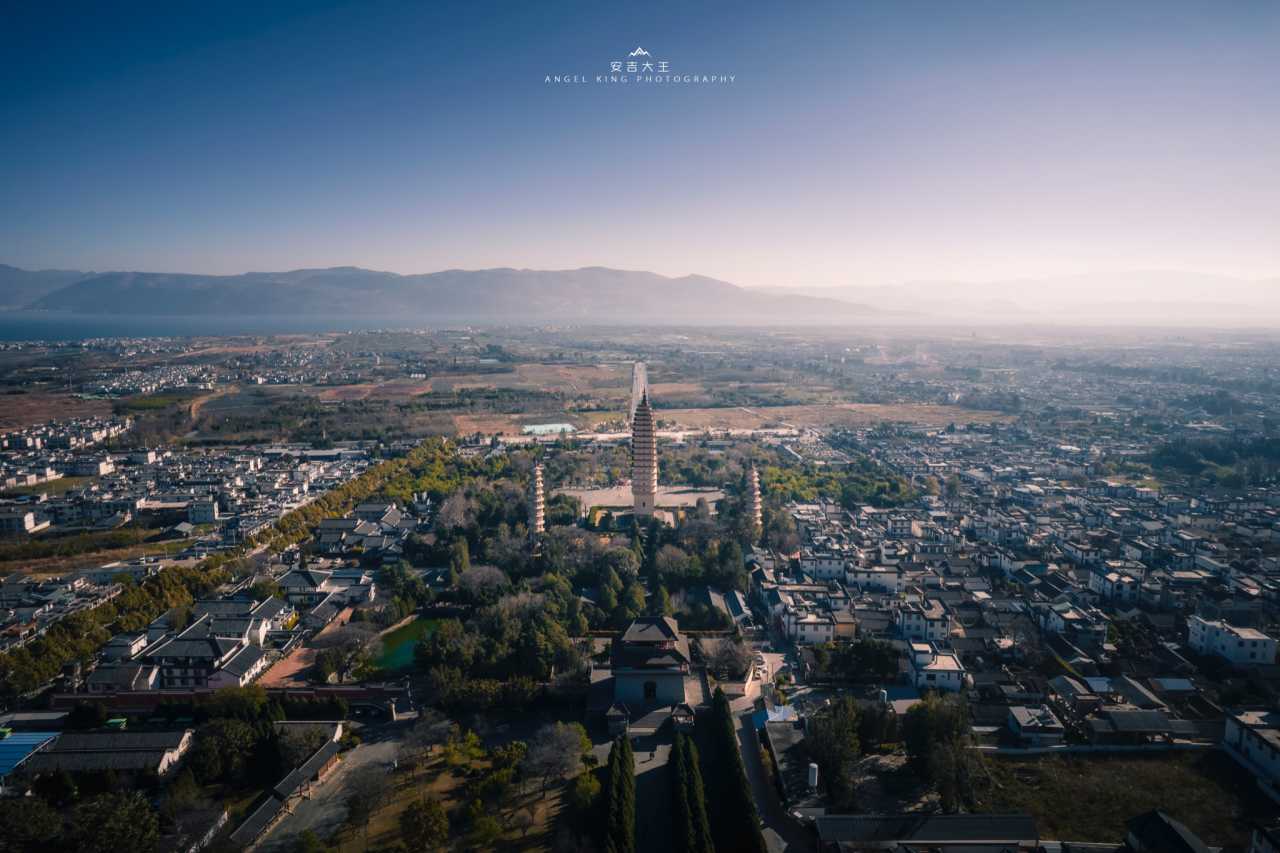
The main pagoda, “Qianxun Pagoda,” stands 69 meters tall with 16 tiers of dense eaves—a classic Tang Dynasty style. The two smaller pagodas are Song Dynasty style, arranged in an isosceles triangle. They’ve survived over 30 strong earthquakes, a true miracle.
Want a panoramic shot of the three pagodas? Head to Three Pagodas Reflection Park, just a 5-minute walk away. The pond is oval-shaped, its surface calm, the reflections crystal clear. When I arrived, I had the entire park to myself. Note: You need to show your Chongsheng Temple ticket to enter.
Xizhou Ancient Town: The Great Land of Blessings, Bai Ethnic Charm
In the afternoon, we headed straight to Xizhou Ancient Town. This was once a military stronghold for the Nanzhao Kingdom; today, it’s a living museum of Bai culture. The houses are uniformly “three rooms with one screen wall, four courtyards with five skywells”—more authentic than Dali Old Town.
Yan Family Mansion: The Glory of the Bai Merchant Clan

The Yan Family Mansion belonged to Yan Zizhen, a wealthy merchant of the Republic era whose trading firm once employed over 3,000 people. The mansion is intricately carved, with winding corridors, flying eaves, and gable walls—every detail reflects Bai artistry. Inside, a large collection of Bai daily utensils is preserved.
Practical tip: Xizhou is free to enter all day. From Dali Old Town, you can take a bus to the northern bus station. It gets very crowded during peak season, so visit in the morning or late afternoon.
Xizhou Xilin Yuan: Living in a Heritage Site
We stayed at Xizhou Xilin Yuan (Xizhou Linden Centre). This hotel was founded by the American couple Brian and Jeanee Linden, who converted the Bai-style Yang Family Mansion into a boutique hotel. The rooms have no TV, use wooden bolts for locks, but the bedding and bathrooms are modern and comfortable. Their pine mushroom stewed chicken remains a family favorite. The hotel also offers bicycles, badminton, painting activities, and dinner is served only to guests—an exceptional experience.
Day 4: Xizhou’s Dawn Glow and Erhai’s Covered Bridge
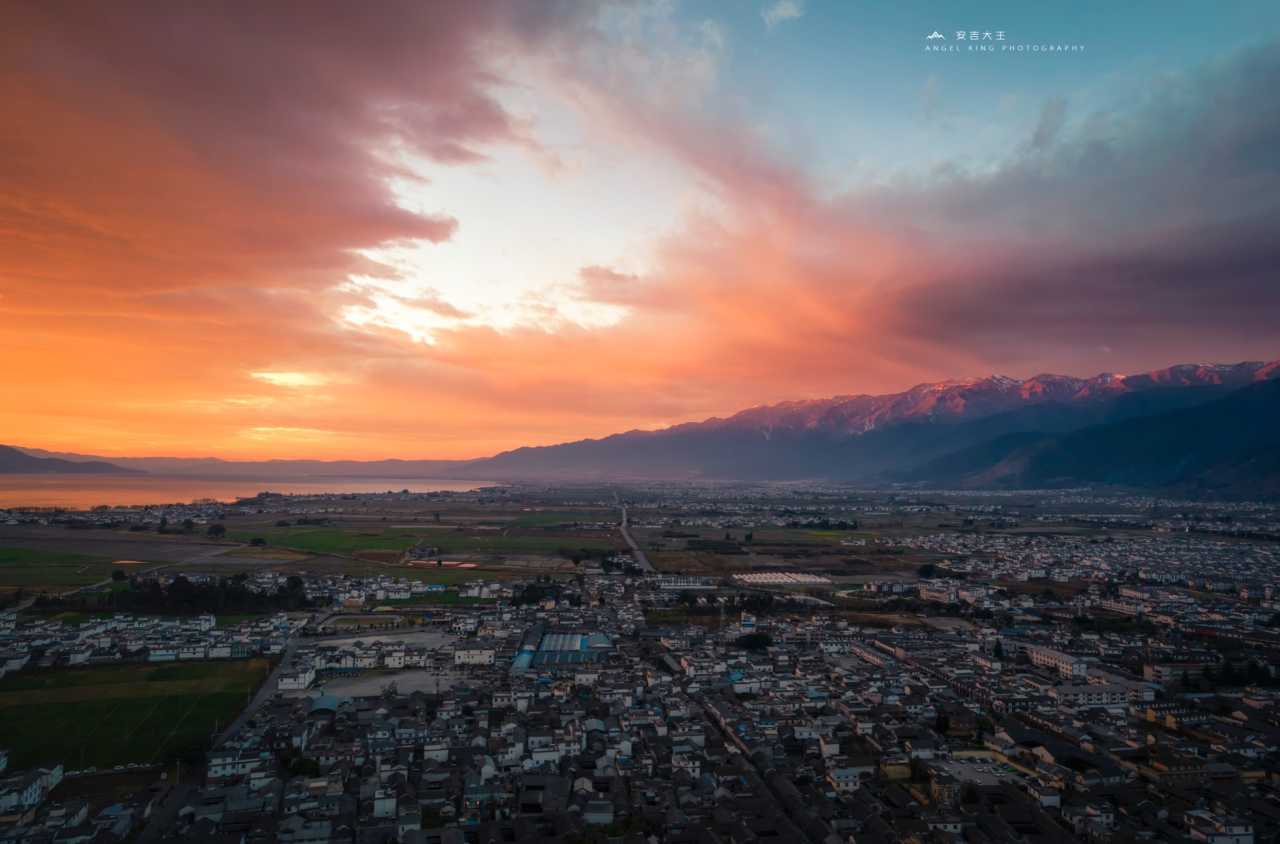
The weather forecast predicted morning glow, so I got up early to fly my drone in the hotel garden. Sure enough, the glow spread across the sky from the Erhai side, reflecting on the peaks of Cangshan Mountain, creating a “sunshine on golden mountain” effect. It was my first time seeing it, and I nearly dropped the remote in excitement.
The Corner Tower and Rice Fields: Xizhou’s Morning
Before the crowds arrived, I first visited Xizhou’s landmark—the Corner Tower. Its unique architecture was breathtaking. Then I walked to the rice field area. Though it was spring and the rapeseed flowers hadn’t been planted yet, the sky after dawn and the distant mountains still looked like an oil painting.
Lao She, the famous writer, once praised Xizhou as a “paradise on earth”—and he wasn’t wrong.
Erhai Covered Bridge: A Lesser-Known Secret
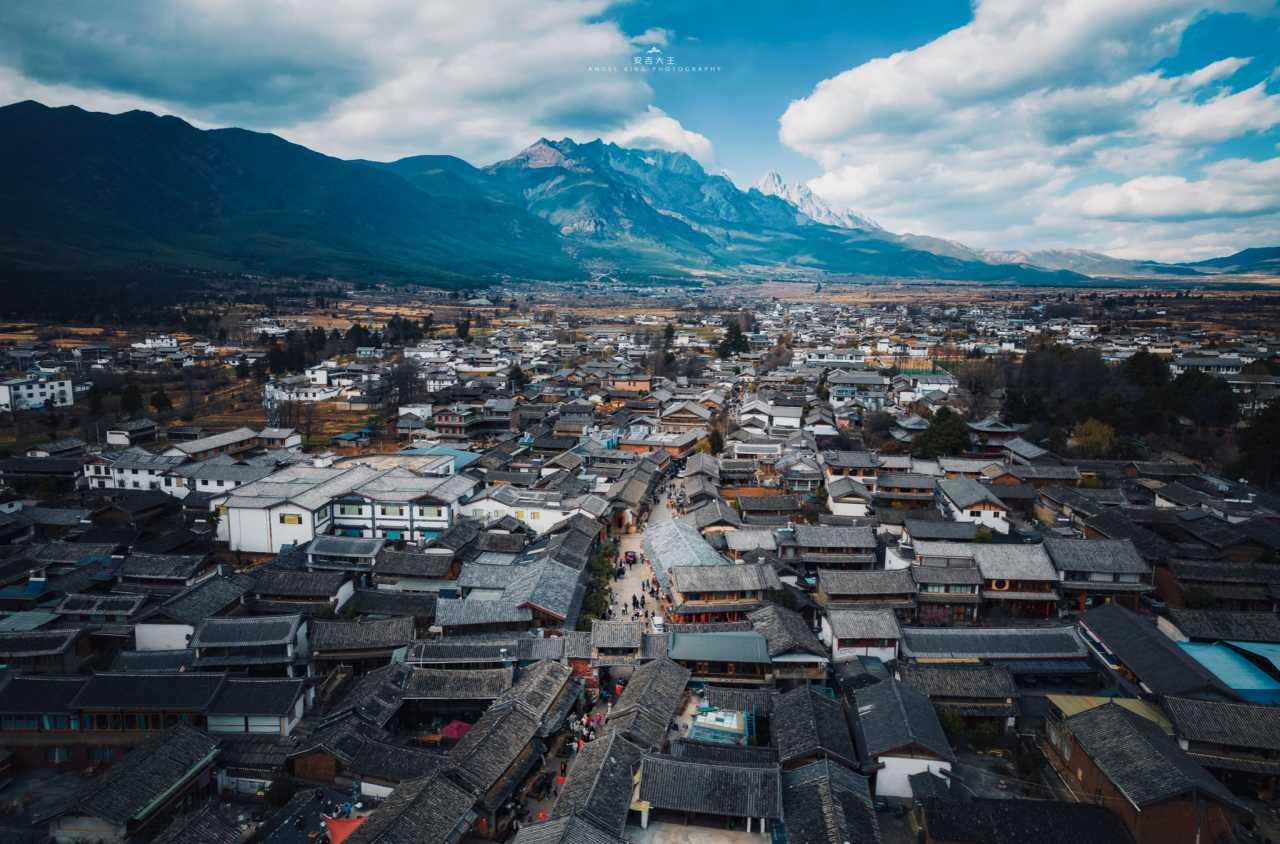
Since we didn’t have time to circle the entire lake, we chose the Covered Bridge closest to Xizhou. Navigate to “Luosideng Village” or “Covered Bridge Cultural Square,” then walk a few steps toward the lake. The water was a deep blue, the sky clear, with only a few wedding photo shoots in progress. For a deeper experience, rent an e-bike and take the lakeside trail.
To Be Continued: The Wonders of Lijiang and Lugu Lake
The rest of our itinerary took us to Lijiang’s Baisha Ancient Town, Blue Moon Valley, Lugu Lake’s Goddess Bay, and Shaxi Ancient Town… Every stop had a story. But space is limited, so I’ll pause here.
Final Thoughts: A Few Takeaways from Family Road Tripping
- Early bird gets the shot: During peak season, to avoid crowds, leave before 7 a.m. You’ll capture empty old towns.
- Rent an SUV: On the road to Lugu Lake, a sedan’s undercarriage will weep.
- Choose the right guesthouse: A good inn isn’t just a place to sleep—it’s part of the travel experience.
- Don’t overplan: Schedule 2–3 spots per day. Leave time to daydream, take photos, and play with the kids.
- Keep a flexible mindset: Crowds are normal in peak season, but from another angle, the hustle and bustle is part of the scenery.
This trip taught me that the so-called “tourist black hole” is just about finding the right way to experience it. Family road trips, listening to flowers, watching snow, heading to windy places—Dali, Lijiang, Lugu Lake are worth visiting again and again.
Route Summary: Tianjin → Kunming (feed seagulls) → Dali (Weishan Ancient Town, Three Pagodas of Chongsheng Temple, Xizhou Ancient Town) → Lijiang (Baisha Ancient Town, Blue Moon Valley) → Lugu Lake (Goddess Bay, boat ride, steam pot fish) → Return.
May your next journey be as full of surprises and warmth as ours.
You should also read:

Into the Hidden Valley: A Solo Journey Through the Mysterious Dulong River
Into the Hidden Valley: A Solo Journey Through the Mysterious Dulong River Deep in the northwestern corner of Yunnan Province, tucked away from the modern world, lies a place that feels like a secret whispered among mountains. The Dulong River Valley is not just a…
Continue reading...
God’s Abandoned Palette: A Self-Drive Journey Through Yunnan’s Dongchuan Red Land
God’s Abandoned Palette: A Self-Drive Journey Through Yunnan’s Dongchuan Red Land Travel has never been about reaching some distant geographic coordinate. It’s about encountering, along the way, the version of yourself buried beneath the rubble of daily routine. During this May Day holiday, I finally…
Continue reading...
Cloud Travelogue · Dali of Wind, Flowers, Snow, and Moon: A Three-Day, Two-Night Journey of a Free Spirit
Cloud Travelogue · Dali of Wind, Flowers, Snow, and Moon: A Three-Day, Two-Night Journey of a Free Spirit I am a cultured female foodie with a touch of rogue charm. I slung on my backpack, took my lover's hand, and set off on a spontaneous…
Continue reading...