Nine Days of Rain, Three Parts Scenery, Seven Parts Food: A Yunnan Adventure with My Best Friend
Nine Days of Rain, Three Parts Scenery, Seven Parts Food: A Yunnan Adventure with My Best Friend
Five years ago, my best friend and I planned a trip together. We spent a full two weeks, day and night, researching routes, mapping out attractions, scouring travel websites for accommodation, and even wiring deposits through bank transfers. When calling local drivers, we carefully explained our itinerary and haggled over prices, terrified of being stood up once we arrived.
Five years later, we traveled together again. We booked cheap flights a month in advance and settled on our destination. Two weeks before, we reserved hotels through a mobile app, paying with a credit card or using the "Flash Stay" feature. A week ahead, we booked day trips and two-day tours on travel platforms. We even confirmed our route with the local car service the day before departure. The whole process was so effortless it felt surreal—five years ago, who would have imagined the internet could make travel this simple?
And so, a spontaneous journey to northern Yunnan began.
On Costs: Good Times Without Breaking the Bank
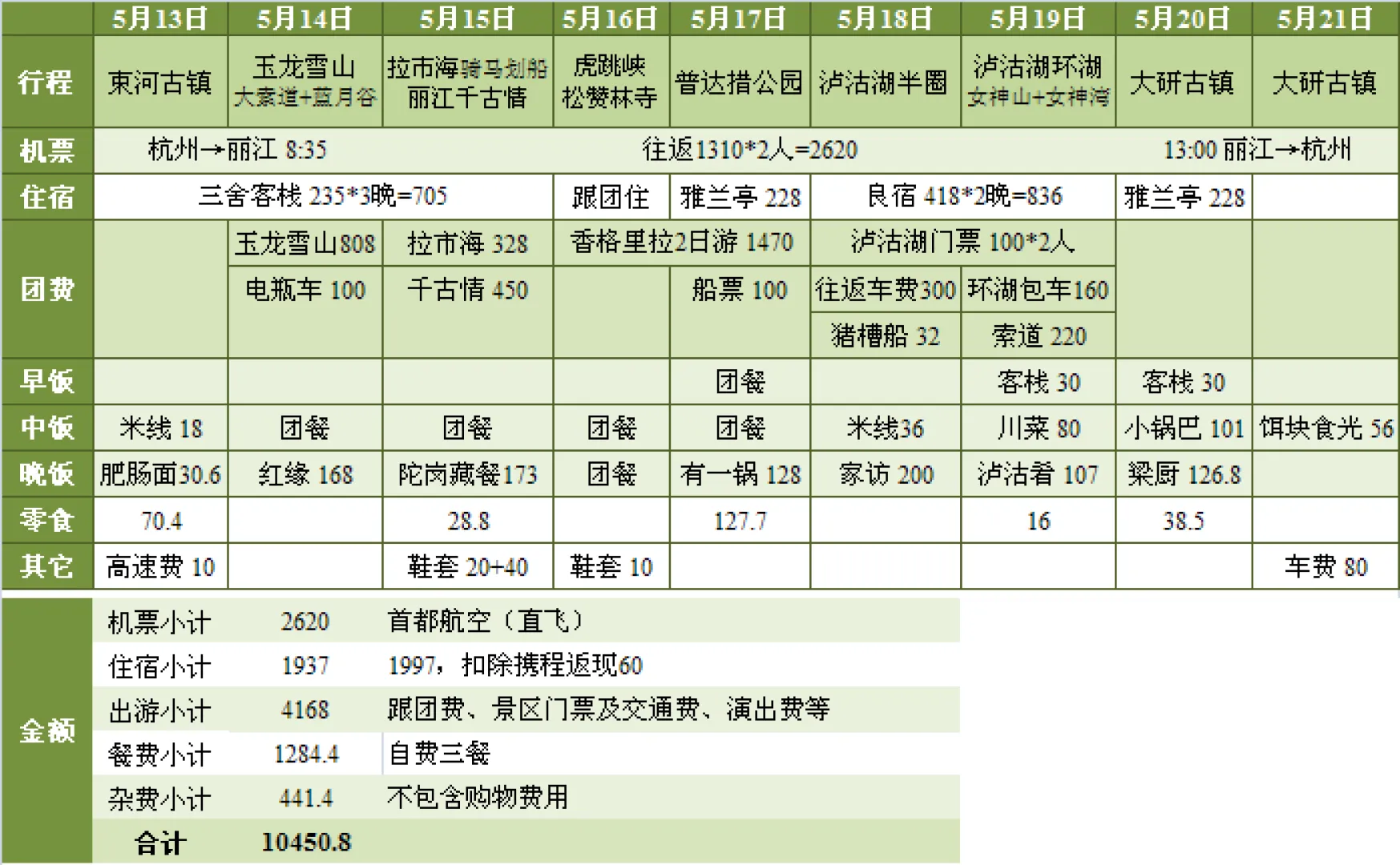
When two girls travel together, the easiest "problem" to fall into is losing control of spending. Beyond the trip itself, we spent nearly two to three thousand yuan on souvenirs for relatives, colleagues, and friends. Before we even got home, three or four packages had already arrived—boxes of wine, tea, flower cakes, and small decorative trinkets. By the time the trip was over, our wallets had shrunk considerably.

But whether the money was well spent depends on where it went. For us, food was the highlight of this journey.
On Weather: So Much Rain It Made You Question Life
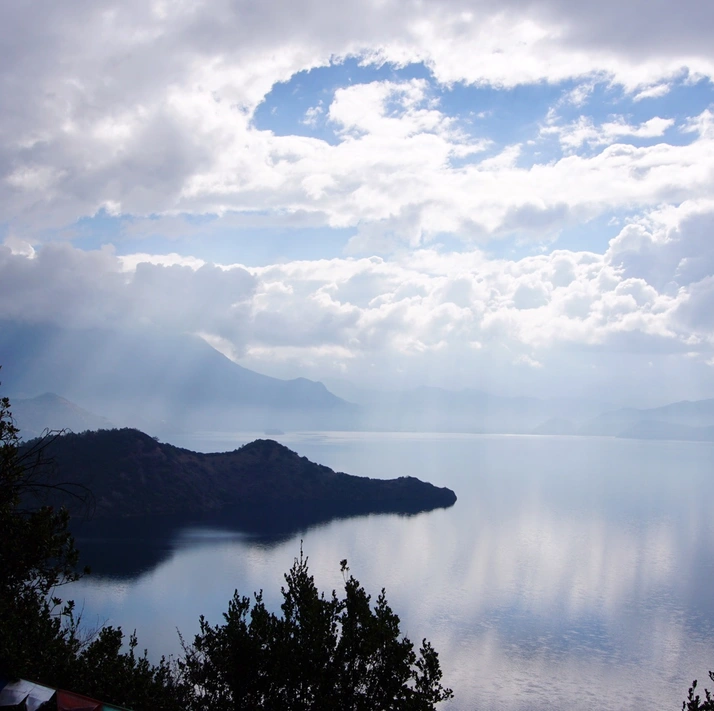
Everyone says Yunnan's weather forecasts are unreliable. Everyone says it's "sunny in the east, rainy in the west," and that the rain will pass quickly. But during the week we were there, the forecast was terrifyingly accurate—everything we saw a week before came true, day by day.

The first day brought sun showers. Though it rained, the sky was still bright. At Jade Dragon Snow Mountain, snow fell at the summit while drizzling rain lingered at the base. Then it turned into full-day downpours. Even the local drivers sighed, "This year's rain is really something!"
Because of the rain, many activities ended prematurely. Or the temperature dropped so sharply that we had to bundle up in bulky down jackets, making movement awkward. So we had plenty of time to think: What to eat for breakfast? What for lunch? What for dinner? And should we grab some dessert afterward?
A trip that should have been about scenery somehow veered off course—we ended up working our way through the entire "must-eat" list of the Lijiang area.
Lijiang · Dayan Ancient Town: A Tongue-Tingling Must-Eat List
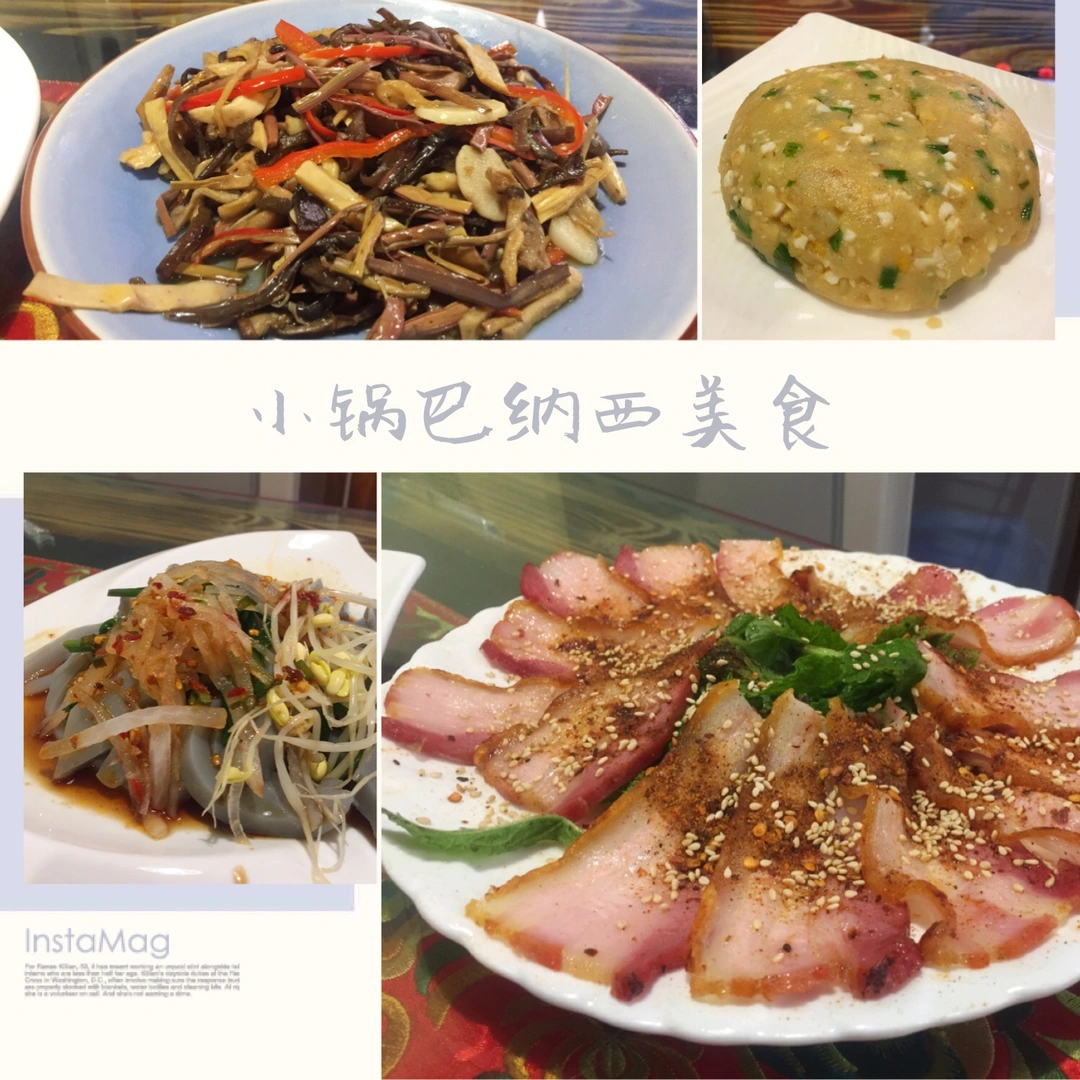
Small Pot Naxi Cuisine
Rating: ★★★★★
This restaurant is one of the top recommendations on Lijiang's must-eat list. We ordered several signature dishes, spending a total of 101 yuan—affordable and delicious.

Signature Naxi Roast Pork: Perfectly balanced between lean and fatty, roasted just right—tender without being dry. The meat sits on a bed of mint leaves, which infuses it with a fresh aroma while absorbing the grease. Not greasy at all.
Mixed Wild Mountain Vegetables: Bamboo shoots and various mushrooms and wild greens I couldn't name, stir-fried together in a delightful medley. Crisp and refreshing.
Salted Egg Yolk Baked Mashed Potatoes: Both tasty and filling. If you have a small appetite, this can easily serve as a main dish.
Chicken Bean Cold Noodles (jī dòu liáng fěn): Grayish-black jelly noodles with a texture like gelatin. Personally, I found them a bit bland compared to the other dishes—they didn't absorb the flavors well.
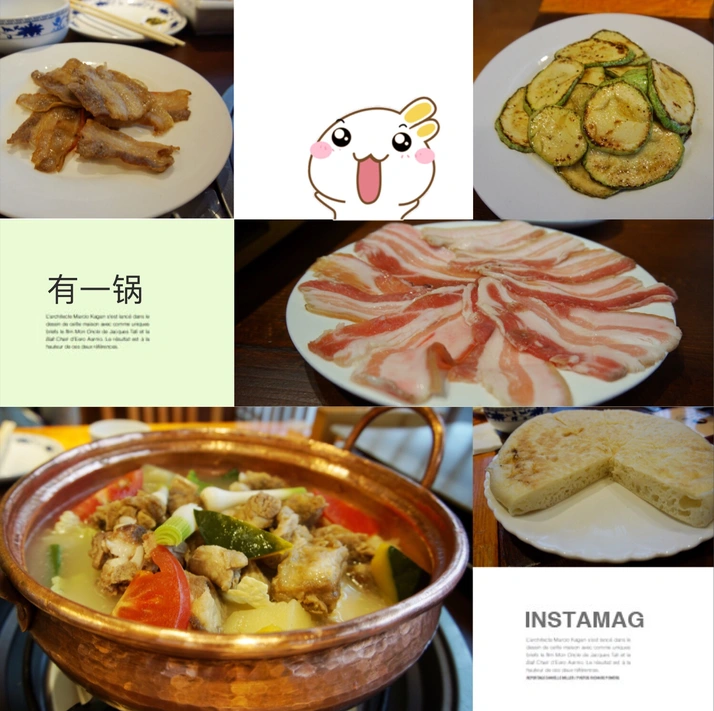
One Pot Black Goat and Cured Pork Rib Hotpot (Old Town Branch)
Rating: ★★★★★
Cured pork rib and chicken hotpot is a local specialty, and you'll find these restaurants all over Lijiang's streets. We had seen this place during our research, and later, while on a group tour, fellow travelers recommended it. Naturally, we had to try it.
We ordered a 128-yuan set meal, choosing cured pork ribs for the broth and adding pork belly and zucchini as sides, along with seasonal vegetables and a staple. When the copper pot arrived, the portions were generous. The ribs were all center-cut, fresh, and free of that aged smell. The zucchini seemed to be what we call summer squash back home—you could roast it yourself or ask the staff to help. We tried roasting the pork belly ourselves, but the oil splattered everywhere, so we let the staff handle it. Lijiang baba (a large flatbread) was quite plain on its own, but you could also toast it slightly. We tried both ways and preferred eating it as is.
Erkuai Time (ěr kuài shí guāng)
Rating: ★★★★★
Another entry on Lijiang's must-eat list. As soon as we walked in, we were drawn to the minimalist yet elegant decor. The open kitchen allowed us to watch the entire process of making erkuai (rice cakes), and the full set of Siemens appliances elevated the atmosphere.
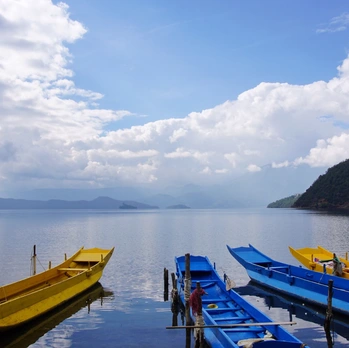
Erkuai: Made from rice flour, pressed, baked, and shaped, then wrapped with house-made sauce. Biting into it felt like eating a sticky rice cake, but thinner, with a slightly crispy exterior from the baking. We ordered one sweet and one savory version—one made from black rice, the other from white rice. Both were delicious. Despite their small size, the erkuai were dense from repeated pressing. We planned to have them as a light breakfast-lunch, but one was enough to fill us up.
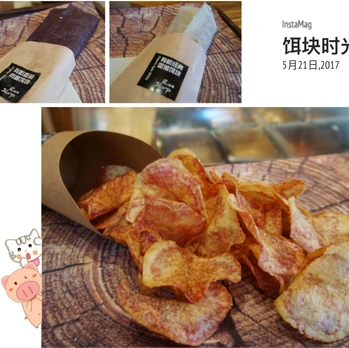
We also ordered Truffle Red-Heart Potato Chips, whose patterns resembled radish cores—quite unique. They were said to be made with Italian white truffle oil and had a slightly spicy kick. Best eaten fresh; after we packed them to go, they softened and lost much of their appeal.
The staff gave us a small bottle of chicken bean seeds, which we could grow as a bonsai. The seedlings resemble bean sprouts and can be used in hotpot or to make chicken bean cold noodles. As the staff patiently explained, we listened to her soothing voice, watched them methodically prepare the erkuai, and took another bite of the soft, chewy cake. Time seemed to slow down.
Liang's Kitchen (liáng chú)
Rating: ★★★
Another must-eat restaurant in Lijiang, but this one is a Cantonese eatery. We had originally wanted authentic Yunnan cuisine but eventually surrendered to the "must-eat" label. The first floor was small, but the second was spacious. The wooden structure blended Yunnan charm with the simplicity of a Hong Kong-style diner.
Liang's First Bun: An enormous, oddly shaped custard bun. The outer skin was as fluffy as bread, more like a Western pastry, filled with generous custard. Unlike the steamed custard buns we're used to, this seemed baked. Delicious—three of these stuffed us both.
Liang's Roasted Ribs: Long, substantial ribs. Despite being roasted, they were coated in a thick, plum-flavored sauce with a sweet note. Personally, I prefer savory.
Water Lily (shuǐ xìng yáng huā): A unique Yunnan dish. You can see this aquatic plant floating on Lugu Lake. The texture is like tender pumpkin vines—smooth and refreshing.
Steamed Chicken Feet with Purple Bean Sauce: We ordered this because of a group deal. Average at best.
Lijiang · Shuhe Ancient Town: From Tibetan Food to Desserts
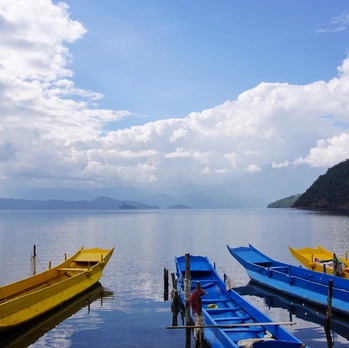
Tuogang Tibetan Cuisine (tuó gǎng zàng cān)
Rating: ★★★★☆
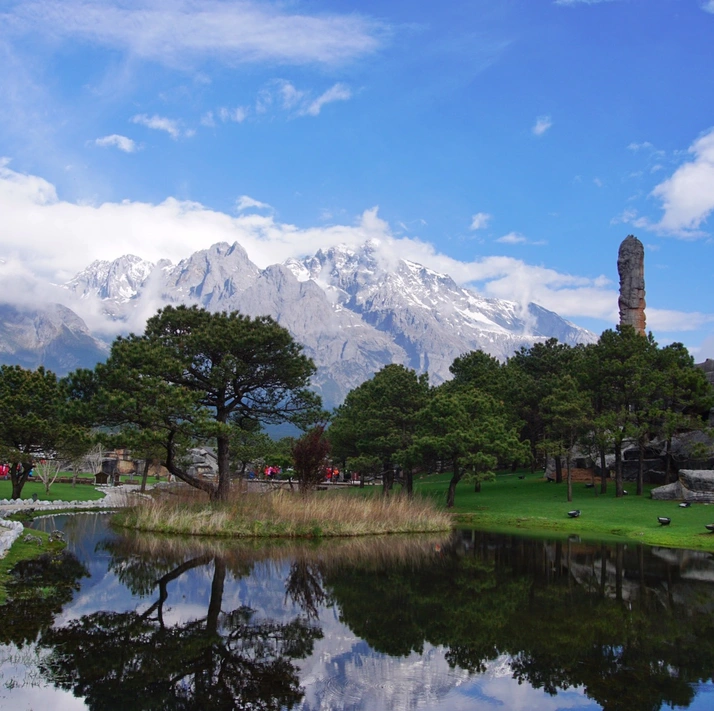
Ranked on Lijiang's must-eat list and arguably the best in Shuhe Ancient Town. It's located on the eastern edge of the old town, so tucked away that walking there felt like we were leaving the town entirely. The unassuming little shop was surprisingly popular—apparently, if you arrive late, the yak meat is gone.
Tuogang's biggest drawback? The portions are enormous. As two small-statured girls, we could only order a yak hotpot and a piece of butter cake as our staple. The highly praised yak meat pie was too large and dense—the owner advised us against ordering it, so we missed out. The hotpot here is an absolute bargain. The thickness and size of the meat were something you'd never find elsewhere. We ate until we felt defeated—no matter how much we scooped, there was still a pile of meat. And we were afraid that leaving too much would make the Tibetan hosts think we didn't enjoy their cooking. So that dinner stretched from daylight to darkness.
The yak meat remained tender no matter how long it cooked. Biting into it was satisfying and flavorful. Special mention goes to the dipping sauce: chili paste mixed with minced mint leaves. The combination was surprisingly harmonious—not too spicy, with a refreshing aroma. The owner kindly told us that if we couldn't handle the heat, we could dilute it with more broth. The butter cake was on the dry side, chewy when fresh, but softened by the next day when we ate it as leftovers. It reminded me a bit of Lijiang baba. The owner was very straightforward, recommending dishes based on customers' needs, and would chat with us when things weren't busy, asking for feedback.
Chen's Secret Recipe Pork Intestine Noodles (chén jì mì zhì féi cháng miàn)
Rating: ★★★☆
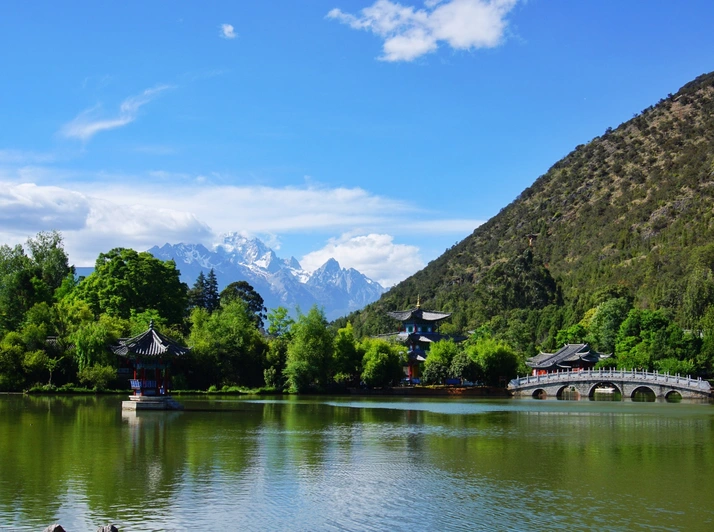
A must-eat snack on Lijiang's list, specializing in pork intestines. We ordered one bowl of noodles and one bowl of rice noodles with intestines. Generous portions, and the intestines were clean, with no unpleasant smell.
I have to mention the laziest Samoyed dog we've ever seen. Once it lay down, no amount of coaxing could get it to move. It stared straight ahead, completely unresponsive. Seeing us trying so hard to entertain it, the owner got up and shooed it to make it walk. The dog simply moved from inside to outside, then lay down again, yawning calmly, probably thinking, "WTF, humans..."
An'an Desserts (Shuhe Branch) (ā ān tián pǐn)
Rating: ★★★
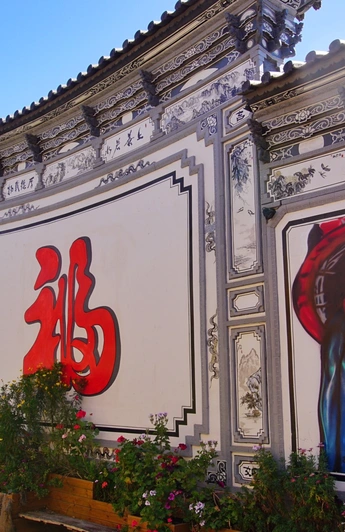
An'an's yogurt is delicious, not too sour. I recommend the red bean yogurt—the beans aren't cloying, each one distinct and soft. If you pack it to go, the yogurt tends to break apart, so it's better eaten fresh. With half a bowl of red beans on top, it's 10 yuan per bowl—a bargain for a tourist area. Perfect for post-meal digestion.
Cloud Flavor Copper Pot Rice Noodles (yún zī wèi tóng guō mǐ xiàn)
Rating: ★★★☆

Our innkeeper strongly recommended this place and personally walked us there. The rice noodles range from over ten to twenty yuan, depending on the toppings. We ordered the copper pot Yunnan ham rice noodles. Served in a large copper pot, it was piping hot—careful not to touch the pot. This was our first bowl of rice noodles in Yunnan and the only one that was perfectly balanced in saltiness. The Yunnan ham was a bit like the cured meat from our region (the "package delivery zone" of Jiangsu, Zhejiang, and Shanghai), slightly salty but just right with the noodles. If I'd known how terrible the rice noodles would be later, I would have drunk every last drop of broth.
Tongue Tip of Yunnan Stuffed Tofu (shé jiān shàng de bāo jiāng dòu fu)
Rating: ★★
Lijiang is full of stuffed tofu shops—search on Dianping and you'll find countless. This one is said to be the original location, featured on "A Bite of China." The shop is tiny, like a makeshift stall between two buildings. Small as it is, it's famous. 10 yuan per serving, made fresh to order. The tofu is somewhere between firm tofu and silken tofu in texture, with a slightly charred exterior and plenty of moisture inside. It tastes a bit like the fried potato strips I used to buy from street vendors as a kid—the tofu itself has no flavor; it's all about the seasoning. If you can't handle spice, be sure to tell the owner. Maybe because my expectations were too high, I wasn't blown away—after all, it's just tofu.
Red Fate Restaurant (hóng yuán cān tīng)
Rating: ★★
We ordered a 168-yuan "one fish, three ways" set. The fish was local "salmon," but it looked different from the salmon we usually eat—paler in color, more like trout. The head and bones went into soup, the flesh was sliced for sashimi or hotpot, and the skin was fried and served with pepper salt. The set also came with wood ear mushrooms, greens, tomatoes, and tofu. Two people couldn't finish it—the sashimi portion was huge. The fish was shown to us before preparation—ours slipped out of the net bag, flopped around on the floor, and even crawled under a sofa. Fresh, indeed.
Eating the fish raw was similar to salmon, but the texture felt firmer. When cooked in the hotpot, it became too soft for my liking. The fried skin was crispy but greasy after a few bites, especially near the belly. We ended up using the fish soup to cook the vegetables, as the surface was covered in a shiny layer of oil—I didn't bother drinking much of it.
Around Lugu Lake: Taste Experiences Amidst Lake and Mountains
Lugu Yao (lú gū yáo)
Rating: ★★
Lugu Lake, perhaps due to its remote location and limited supplies, didn't offer many unique restaurants on Dianping when we stayed in Daluoshui. This place had decent reviews, so we chose it. Lugu Yao was decorated with colorful paper slips and interesting messages. At first, we thought it was unique, but after dinner, we realized this style was everywhere in the area.
Fresh Lugu Lake Fish: I'm not sure what kind of fish it was, but it was cut into chunks and cooked. I personally prefer fish fillets and found the flesh average, but the broth was very flavorful.

Mosuo Dry-Fried Shredded Potatoes: Similar to "lamp shadow" shredded potatoes—crispy on the outside but still slightly chewy in the middle. The chili powder on top wasn't too spicy and paired wonderfully with the potatoes. Recommended!
Mosuo Fried Rice: A Yangzhou-style fried rice with pickled vegetables. Each grain of rice was distinct, and the flavor was decent.
We also ordered cold wood ear mushrooms, which were quite heavy on seasoning. The restaurant's most famous dish was Mosuo Erkuai Chicken, but we'd eaten too much chicken over the past two days, so we decided to give the chicken brethren a break.
On Itinerary: Traveling Thousands of Miles, Seeing Countless Scenes
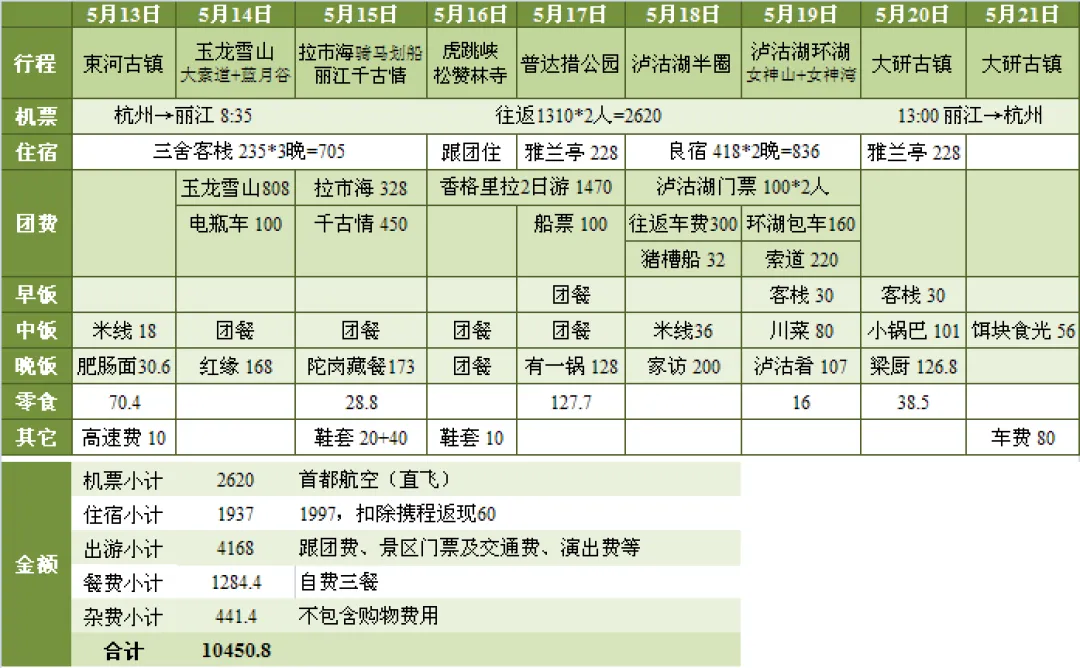
For this trip, we mostly booked local day trips or two-day tours. Only for Lugu Lake, where we wanted an extra day, did we arrange a private car. Here's our general nine-day itinerary:

- Day 1: Hangzhou → Lijiang, explore Shuhe Ancient Town
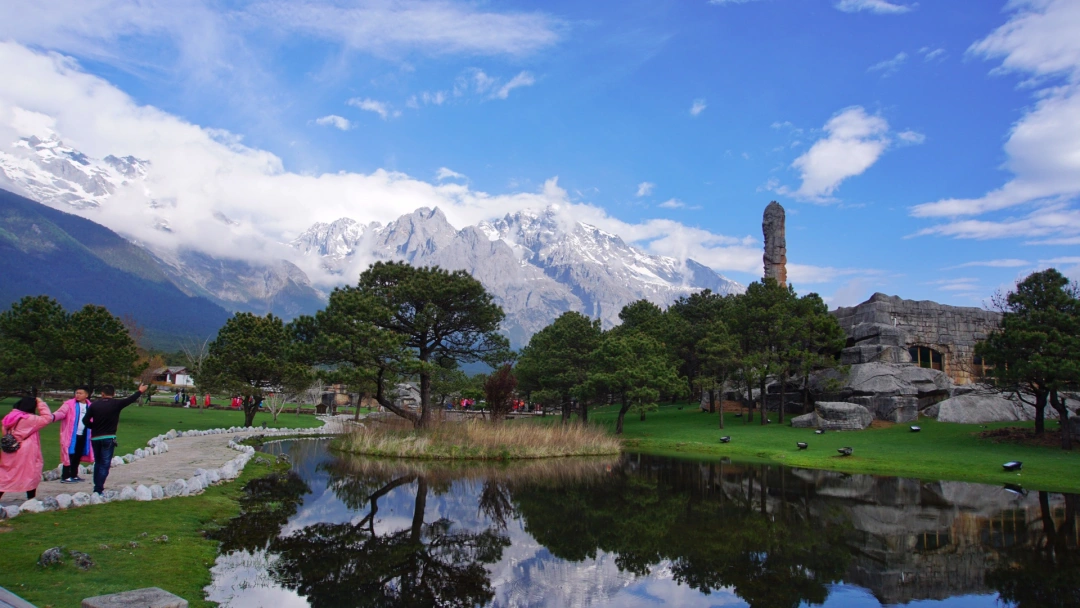
- Day 2: Jade Dragon Snow Mountain (Glacier Park Cable Car + Blue Moon Valley)
- Day 3: Lashi Lake (Tea Horse Road Horseback Riding + Boating) → Lijiang Eternal Love Show
- Day 4: Lijiang → Tiger Leaping Gorge → Yila Grassland → Tortoise Mountain Park → Songzanlin Monastery
- Day 5: Potatso National Park → Lijiang Dayan Ancient Town
- Day 6: Lijiang → Lugu Lake
- Day 7: Lugu Lake Circumnavigation
- Day 8: Lugu Lake → Lijiang, explore Dayan Ancient Town
- Day 9: Lijiang → Hangzhou
Oh, and a note: the drivers for day tours rely on positive reviews to get the next day's bookings. So don't be stingy—give them a generous thumbs-up!
Lugu Lake: Azure Blue Under a Goddess's Blessing
From Dayan Ancient Town, it takes about 3.5 to 4 hours to reach Lugu Lake. Half of a two-day tour is spent on the road. Lugu Lake's fame is well-deserved, and just a quick visit would be a waste. So we opted to share a ride to Lugu Lake, then hire a private car for a circumnavigation, staying two nights.
The shared rides to and from were arranged by our inn, through a Lijiang car fleet. We sent our accommodation details and travel dates to a fleet member the day before, and they contacted us with departure times. Round trip was 150 yuan per person.
The circumnavigation car was organized by the Luoshui Village Scenic Area Service Fleet. Shared (up to 4 people) was 75 yuan per person; private car (up to 4 people) was 300 yuan per day; 5 or more people was 70 yuan each. If you wanted to visit Goddess Bay, there was an additional 50 yuan per car. The inn could help arrange the fleet.
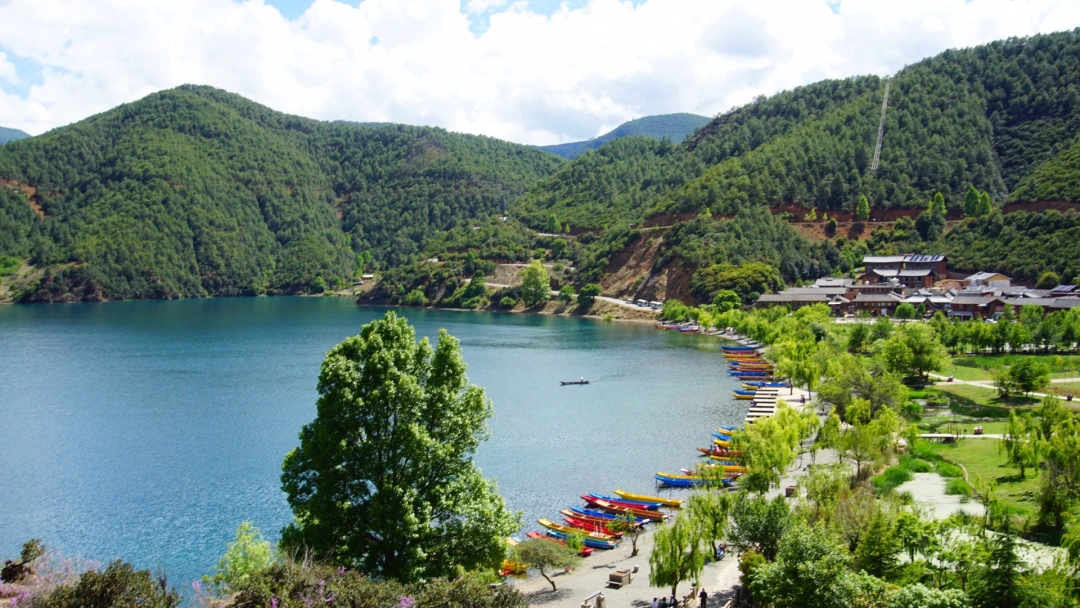
Every mountain road seems to have its "Eighteen Bends," and the route to Lugu Lake was no exception. The Jinsha River along the way was so calm, a clear azure blue—completely different from the churning, muddy waters of the Tiger Leaping Gorge section.
It had been raining since we arrived in Lijiang, getting heavier each day. When we reached Lugu Lake, the sky finally cleared—truly under the goddess's protection!
Lugu Lake Quick Facts
Lugu Lake sits on the border between Yanyuan County in Sichuan Province and Ninglang County in Yunnan, jointly administered by both provinces. The Yunnan side is mainly about the lake scenery, while the Sichuan side features the grass sea. Yunnan's scenery is better. The lake sits at an altitude of 2,690 meters, covering an area of 58.8 square kilometers. Its deepest point is 93 meters, with an average depth of over 40 meters and visibility up to 12 meters—making it one of China's clearest high-altitude deep-water lakes. The lake contains 5 islands, 4 peninsulas, 1 long island, and 14 bays. Surrounded by mountains, the majestic Gemu Goddess Mountain stands tall by the shore, while the winding Houlong Mountain extends into the lake, forming Lugu Lake's horseshoe shape.
The circumnavigation is 68 kilometers. You can choose to bike or hire a car. But based on our experience, Lugu Lake has no dedicated bike lanes. The roads are narrow, with many ups and downs—time-consuming, tiring, and unsafe. Unless you're a hardcore cycling enthusiast, don't attempt it.
Lugu Lake · Day 1
Before entering Lugu Lake, you need to buy a ticket—100 yuan per person. Once inside, there's a viewing platform overlooking the entire lake. Our driver said the platform was too crowded, and his fleet had its own viewing spot, so he didn't take us there. Instead, the fleet brought us to a high ground for photos. The fleet leader gave an overview of Lugu Lake, sightseeing tips, and precautions—from this perspective, the fleet seemed quite responsible.
In the distance, the central peak is Gemu Goddess Mountain. The mountain extending to the right is Houlong Mountain. In Mosuo mythology, Houlong is a male mountain god, and he and Goddess Gemu were lovers. They transformed into mountains and islands—separated by the lake during the day, but "walking marriage" at night to be together.
The fleet organized a Mosuo home visit in the evening, costing 100 yuan per person. This included explanations of Mosuo customs, afternoon tea, dinner, and a bonfire party that night. We'd heard that entering Lugu Lake often came with forced home visit sales pitches, but our driver said it was voluntary. If we joined the home visit, he could take us on a half-circumnavigation in the afternoon, stopping at Lige Peninsula first. Since we had no other plans, everyone agreed to the suggestion.
First, the driver dropped us off at our accommodations for lunch and a break. After a morning in the car, we had little appetite, so we grabbed a bowl of rice noodles near our inn. We stayed at the entrance of Daluoshui Village—just stepping outside, the scenery was beautiful.
The other four people in our car also chose to join the home visit. After a short rest, our driver picked us up, starting from Daluoshui Village and heading counterclockwise.
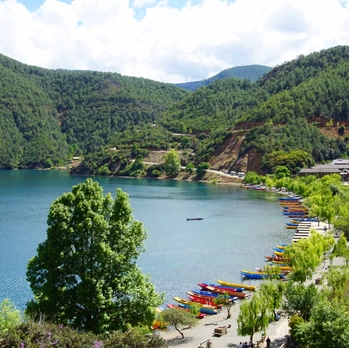
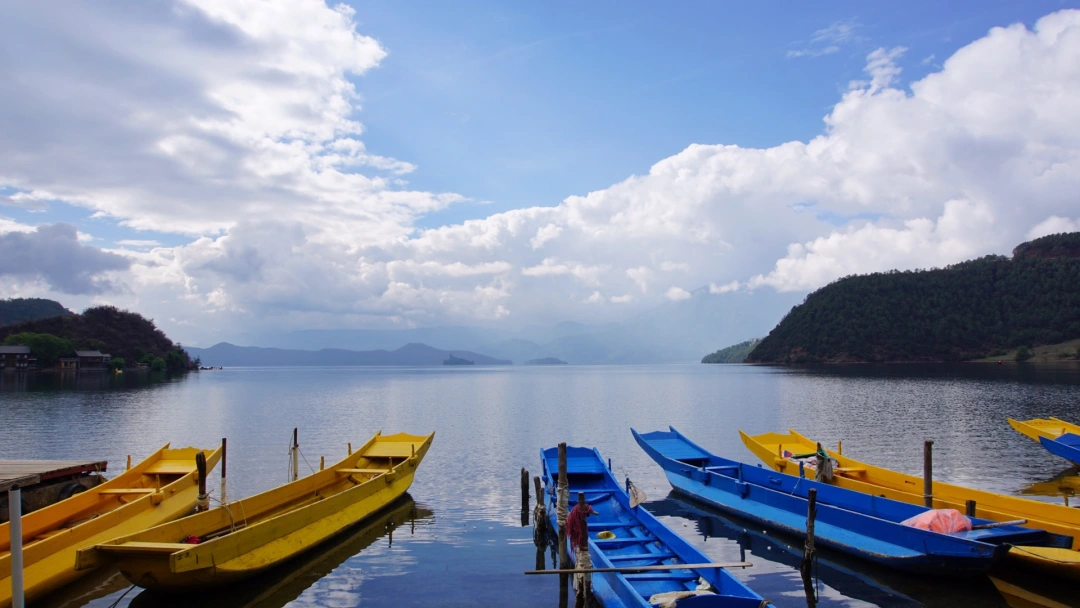
First stop: Daluoshui Pier. The colorful pig-trough boats have become an iconic symbol of Lugu Lake. The water was so clear it perfectly reflected the blue sky and white clouds. During operating hours, boarding a pig-trough boat might incur a fee. Before taking photos on the boats, check if the boatman is nearby and clarify the situation to avoid misunderstandings.
If you want photos with white tables and chairs, you don't need to go to Dali—there's a spot just past Daluoshui Pier, free of charge.
Second stop: Lige Village. Elsewhere on Lugu Lake, the pig-trough boats are rowed by hand. Only here are there electric ones that can travel farther. But our group of five still chose a hand-rowed boat, operated by an elderly woman. We managed to negotiate the price down to 160 yuan. The woman kept staring at the girls in our boat, excitedly telling my best friend to stay and "walk marry" her son. We asked if she ever traveled. She said she'd just been to Erhai Lake, but no matter where she went, she always felt her hometown was the most beautiful—a deep sense of pride. Occasionally, we helped row a few strokes, though whether we were actually helping or hindering is anyone's guess.
When we reached the middle of the lake, the woman asked if we wanted to go to Camel Island opposite. Landing on the island would cost extra. When we couldn't agree on a price, we gave up on the island. So before boarding, be sure to clearly discuss the route and price with the boatman. Once you're on the water, it's hard to argue.
Tips: 1. Before boarding a pig-trough boat, clearly negotiate the route and price with the boatman. 2. Wear sunscreen! The lake water is very clear and reflects light strongly. There's no shade on the lake, and the sun is intense.
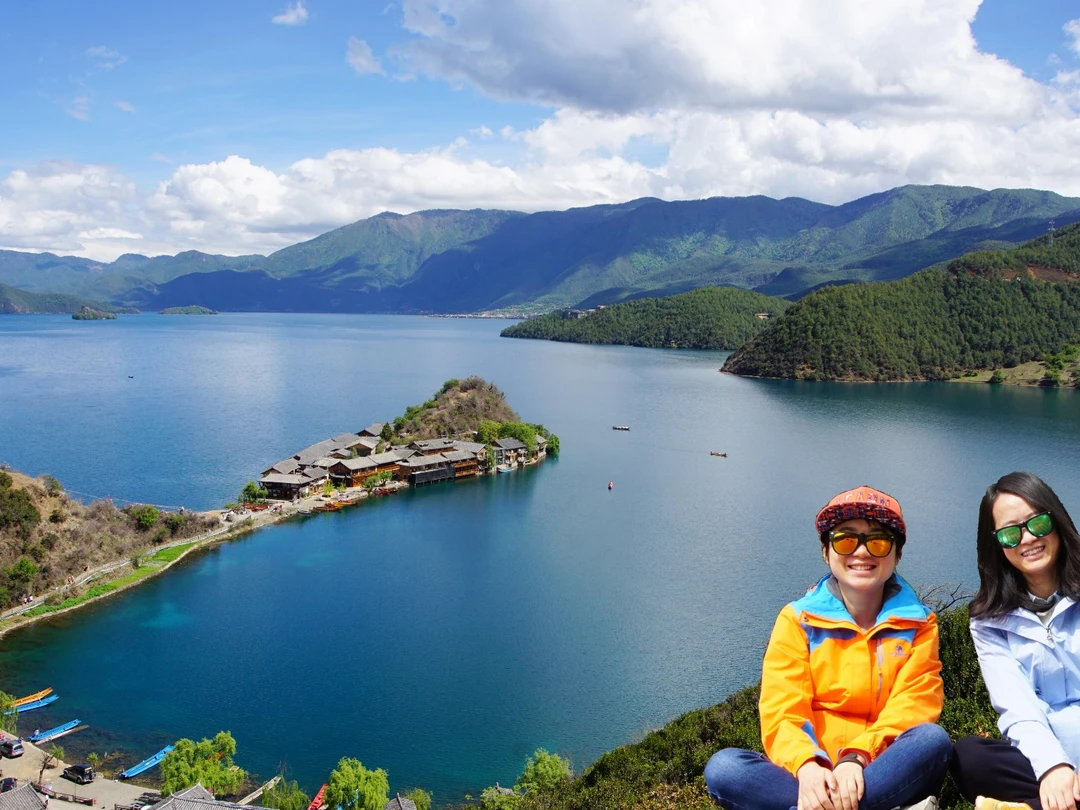
Since we planned to return here for the circumnavigation tomorrow, we didn't go to Lige Peninsula today. Instead, we climbed up to Lige Village's viewing platform. Can you see the two hearts of Lugu Lake? Imagine the sunrise here—it must be breathtaking. The inns on Lige Peninsula, with good weather, make for stunning photos.
There were professional photographers on the platform who would teach you poses. 25 yuan per photo. If you wanted just the digital file without a print, it was still 25 yuan. Want both? Extra charge. These photographers occupied the best spots and had ladders (also 25 yuan to use) for elevated shots, but their photography skills were mediocre. These two photos were the best we could pick from what they took, and I had to adjust the colors afterward—not worth it! You can easily take great photos on your own, but the platform was so crowded that getting a shot without random strangers in the background was tough.
Around 4 p.m., we were exhausted and stood around eating popsicles, waiting for our driver to pick us up at the viewing platform. Big thumbs-up to the driver—parking and turning around on that crowded platform was no easy feat.
Off to the home visit. First, we had some afternoon tea to fill our stomachs: boiled potatoes, corn cakes, and two large plates of fried chicken. Honestly, Yunnan's cuisine was underwhelming—everything was bland, only edible with chili powder.
After eating, a Mosuo girl led us to her grandmother's room for the home visit, explaining Mosuo marriage customs. She was one of the few locals who had studied outside, speaking good Mandarin and handling jokes with ease. Due to customs, photos were prohibited in the grandmother's room, so no pictures here. The home visit's ultimate goal was to sell silverware. The silver was touted as a cure-all, slightly more expensive than in Lijiang. It's a matter of personal preference—buying here could be seen as contributing to the minority community's development.
About "Mosuo Walking Marriage"
The Mosuo people live in northwestern Yunnan, along the border between Sichuan and Yunnan, near the scenic Lugu Lake. They number about 50,000, have their own language but no written script, and are currently classified as a branch of the Naxi ethnic group. When talking about the Mosuo, you can't avoid mentioning the "walking marriage" custom.
Young Mosuo men and women usually meet at dance gatherings. If someone catches your eye, you secretly scratch their palm three times. If they're interested, they scratch back three times. After further courtship and exchanging tokens of affection, walking marriage can begin. Late at night, the Azhu (the man) sneaks to the Axia's (the woman's) flower tower, climbs up to the window (so Azhus need to be strong), and hangs his hat or other items outside to signal that this person is taken. Before dawn, the Azhu must leave, or it's considered rude. During the day, the Azhu works and lives with his own family, only visiting the Axia's home at night.
If the Axia becomes pregnant, the Azhu formally meets her family. Children stay with the mother's family and are raised by the mother's brothers. Mosuo households are matrilineal—the grandmother holds the highest status. But once an Axia decides to become the head of the household, she must stop walking marriage with her Azhu and take on the family's responsibilities.
The Mosuo don't have a concept of marriage, but this isn't about irresponsibility. At any given time, a person can only have one walking marriage partner. Only after ending a relationship can they start another. The Mosuo value freedom and equality between men and women, and they treat walking marriage as a serious and sacred tradition that they've preserved to this day.
After the home visit, we were taken to dinner. But the dishes were hard to stomach. The vegetables were fine, but the meat had so little lean portion it was practically nonexistent. The fish and shrimp were smaller than fingernails, seemingly fried, and impossible to swallow. The fish soup was so bland you'd barely recognize it as fish soup without a piece of fish floating in it.
Key point: The chicken and potatoes from afternoon tea—whether you like them or not, eat as much as you can. That's the most normal food you'll get all day.
After dinner (and we use that term loosely), the evening's main event began: the bonfire party. Get there early for a good spot. Dressed-up Azhus and Axias sang and danced to welcome the guests, followed by song duels and group dancing.
Lugu Lake · Day 2
Our group from yesterday got along well, so we all hired a private car for today's circumnavigation.
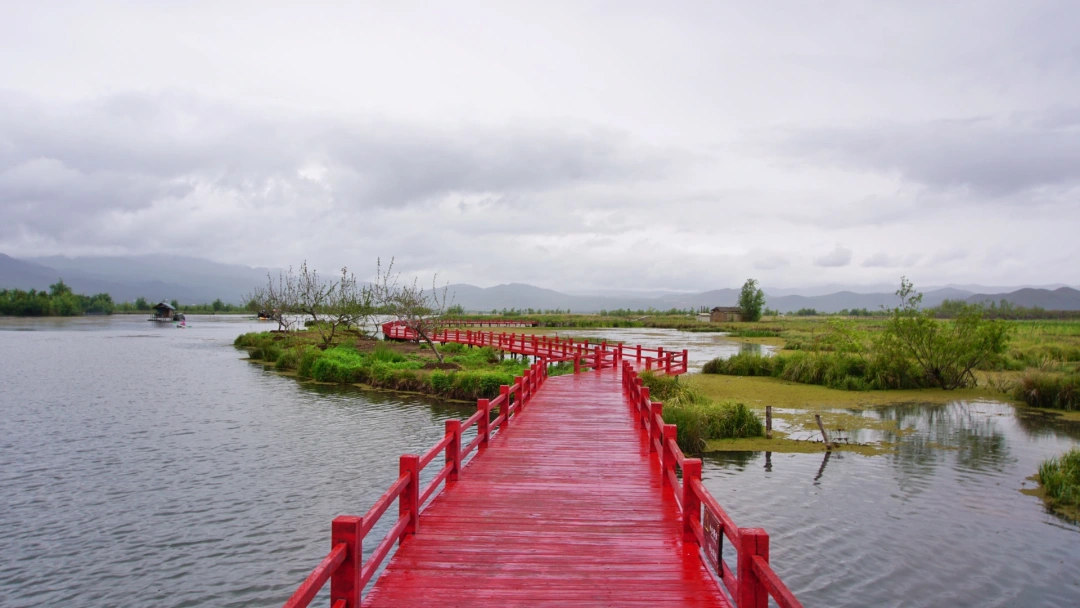
The official circumnavigation route: Xiaoyuba Viewing Platform → Lover's Beach → Yinhu Island Viewing Platform → Lige → Goddess Mountain Cable Car → Yang'er Che Namu Museum → Yunnan-Sichuan Border → Luyuan Cliff Viewing Platform → Sichuan Lover's Beach → Walking Marriage Bridge & Grass Sea → Chuan-Dian Friendship Bridge → Niukai Di Beach (add 50 yuan/car for Goddess Bay).
Drivers often skip many spots unless you specifically ask, just to squeeze in an extra trip. Usually, they depart after 9 a.m. and finish the loop by around 3 p.m. Which stops to make along the way is a group decision. Since we had six people hiring the car, it was essentially a private charter, giving us a lot of freedom over departure time and route. We convinced everyone to take the Goddess Mountain cable car...
Final Thoughts: The Meaning of Travel
Nine days of travel, five days of rain. Three parts scenery, seven parts food. This northern Yunnan trip was less about landscapes and more about a journey for the taste buds.
But looking back, those hurried walks through ancient town alleys in the rain, those dinners that stretched from daylight to darkness over a hotpot, those moments by Lugu Lake healed by the sun—they've all become the most vivid fragments of memory.
The internet has made travel more convenient than ever. But what truly makes a journey unforgettable are the unexpected encounters—a sudden downpour, a tiny Tibetan eatery hidden in an alley, an elderly woman who tells you stories about walking marriage.
So on your next trip, don't stress too much about the weather or the plan. Bring a good appetite, bring an open mind, and leave the rest to surprise.
You should also read:
Escaping Nanning, Falling Under Lijiang's Spell: Our Four-Person, Ten-Day Yunnan Dream
Escaping Nanning, Falling Under Lijiang's Spell: Our Four-Person, Ten-Day Yunnan Dream Before We Set Off: No Pain, No Obsession Have you ever had that impulse—suddenly tired of the office fluorescent lights, the crush of the subway, the endless parade of identical takeout boxes, and just…
Continue reading...
God’s Abandoned Palette: A Self-Drive Journey Through Yunnan’s Dongchuan Red Land
God’s Abandoned Palette: A Self-Drive Journey Through Yunnan’s Dongchuan Red Land Travel has never been about reaching some distant geographic coordinate. It’s about encountering, along the way, the version of yourself buried beneath the rubble of daily routine. During this May Day holiday, I finally…
Continue reading...
Cloud Travelogue · Dali of Wind, Flowers, Snow, and Moon: A Three-Day, Two-Night Journey of a Free Spirit
Cloud Travelogue · Dali of Wind, Flowers, Snow, and Moon: A Three-Day, Two-Night Journey of a Free Spirit I am a cultured female foodie with a touch of rogue charm. I slung on my backpack, took my lover's hand, and set off on a spontaneous…
Continue reading...