No Brothers, No Journey: Five Days in Southern Yunnan – A Photographic Quest into the Heart of the Mysterious
No Brothers, No Journey: Five Days in Southern Yunnan – A Photographic Quest into the Heart of the Mysterious
Foreword: The Meaning of Travel Needs No Words
At this age, talking about the "meaning of travel" feels a bit pretentious.
Someone once asked me why I'm always on the road. I casually replied, "I just like to play." Back then, I thought travel didn't need any high-sounding excuses—just being free was enough. But now, hardly anyone asks that question anymore. Occasionally, a new acquaintance will say, "You're a professional traveler, right? It seems like you're always on the move." I smile. So that's the image I've projected through social media—not bad, actually.
But the truth?
I live in Shanghai. Every day, I commute a hundred kilometers round trip, like a bird trapped in a concrete jungle. For me, travel feels more like a luxury. Day after day, I repeat the same tedious work, and earning money seems to have become the sole purpose of my existence. When I finally saved up enough to buy the camera I'd been dreaming of, I almost forgot why I started chasing it in the first place. I tried hard to look like I deserved these "luxuries," but gradually lost sight of where I came from.
I've read countless stories about "living elsewhere" and heard endless legends of wanderers. They always inspire a sense of longing, but few people understand the loneliness behind them. Is that really what we want? I've never lived that life myself, but I know it's not what I'm chasing.

I love photography. I'm obsessed with all kinds of gear. Every time I get my hands on a new camera, it feels like touching a girl's fingers for the first time—my heart races, and I want the whole world to see. But if one day all of this came easily, would I still feel that thrill?
Because it's hard-won, it's all the more precious. The same goes for gear, for travel, and for life itself.
This trip to southern Yunnan was no exception. Two old friends, one small car, five days of rushing, 1,600 kilometers of self-driving, and over 2,400 shutter clicks. We were in a hurry, but we still carried that same excitement we had when we first set out on a journey. In this little-known corner of southern Yunnan, our travels continue—searching for that original spark, and still, we carry on.
About the Destination: An Impulse Born from a Single Photo
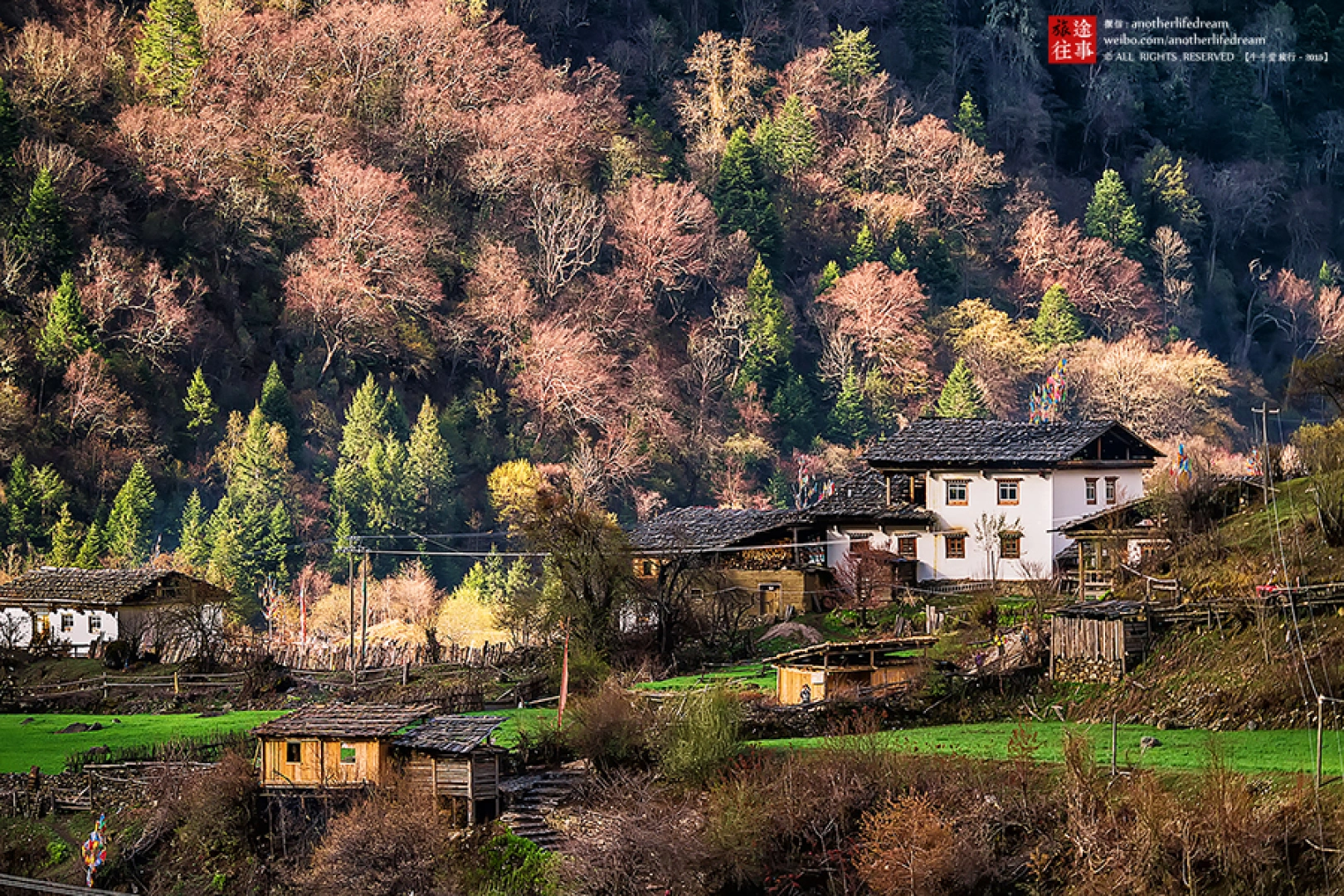
In April 2013, I hiked through Yubeng (雨崩) with Panda. It was the first time I truly experienced the strange sensation of "body in hell, eyes in heaven." That trip turned her from a light-luxury vacationer into an outdoor enthusiast, and it also gave birth to my very first featured travelogue, "Clouds Below, Paradise Above." Without that experience, I might never have learned photography or written travelogues—everything would have been different. But I'm deeply grateful, because I genuinely enjoy where I am now.
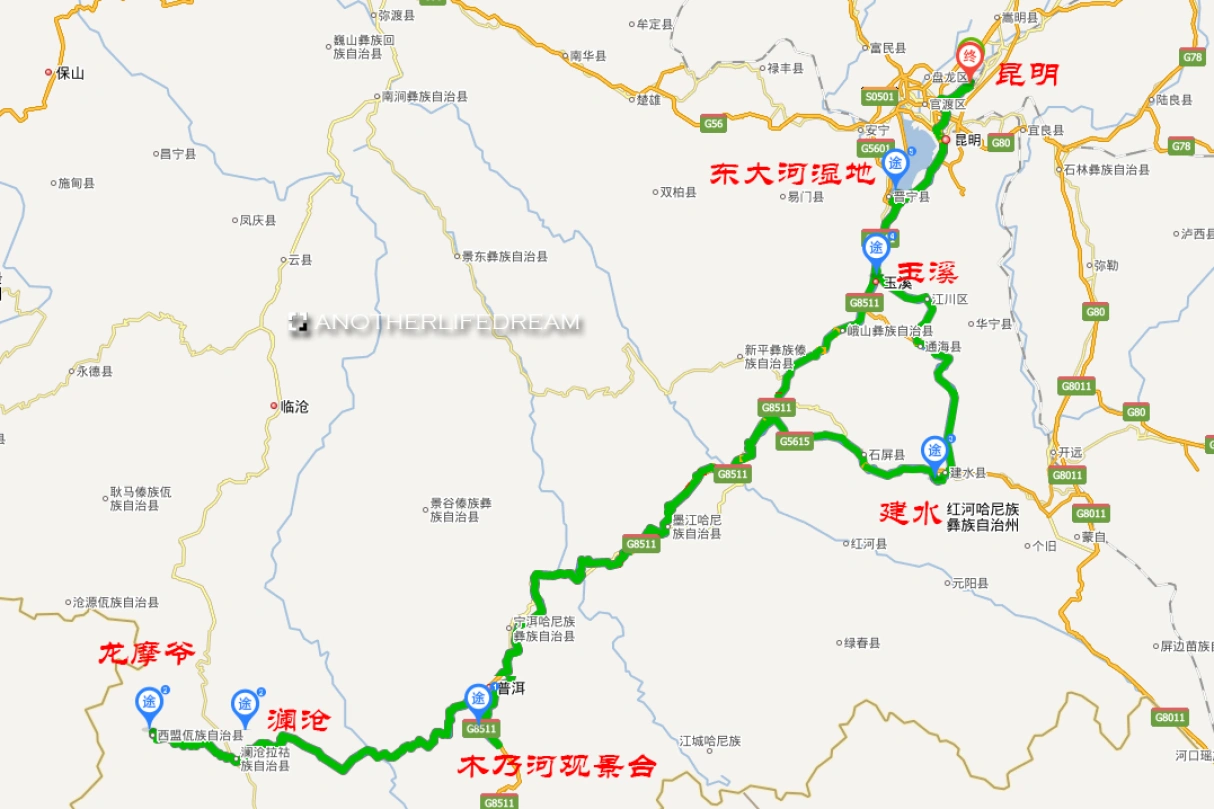
For this five-day short trip, I chose Yunnan again—this time, heading toward even more remote places. Two weeks before departure, I posted a map of Yunnan on my social feed and asked friends to recommend little-known destinations. Baoshan, Jianshui, Nujiang, and Puzhehei were mentioned again, but Cangyuan, Wengding, Ximeng, and Longmoye (龙摩爷)—these names appeared before me for the first time.
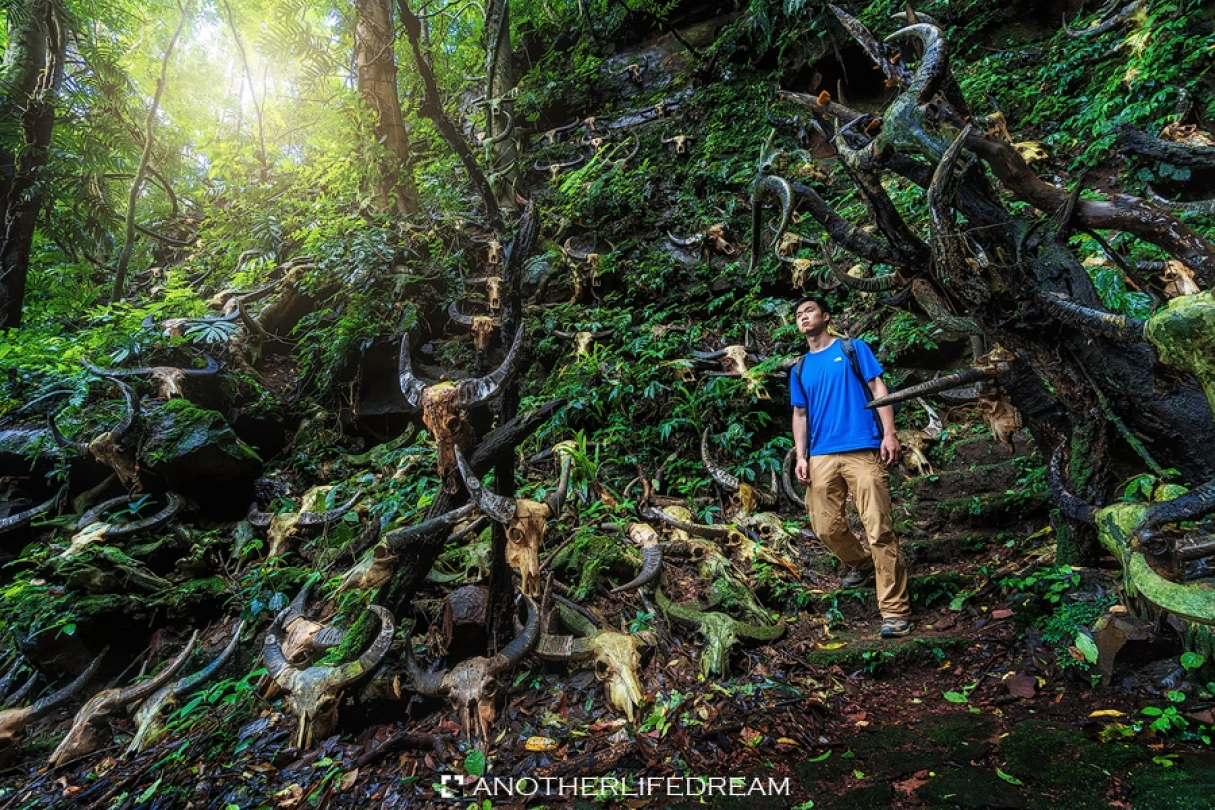
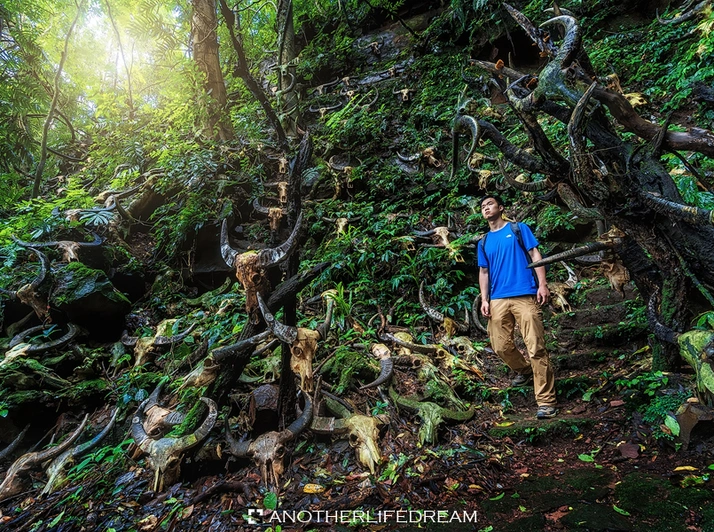
While browsing photos on Mafengwo (a Chinese travel platform), I was captivated by images of buffalo skulls. Those skulls, densely hung on cliffs, exuded a raw, primal power. I immediately set my ultimate goal for this trip on Longmoye deep in southern Yunnan—a little-known sacred site of the Wa people.
With the target set, the itinerary fell into place. Over the years, I've become increasingly casual about trip planning: once the ultimate goal is fixed, everything else serves it. As long as there's time along the way, I just go with the flow.
About the Travel Companion: One Phone Call, and We Were Off
Over a decade ago, I was walking down the hallway bouncing a basketball. I passed an open dorm room door and saw a guy sitting on a stool, spinning a basketball on his fingertip. When he saw the ball in my hand, he jumped up: "Hey, man, let's play!" And just like that, we spent the next four years together.
After graduation, he went back to his hometown to continue his studies. Now, with a PhD under his belt, he teaches at a university. I stayed in Shanghai, working the most ordinary job, chasing my small goals step by step. Though we live far apart, the simple, pure friendship from our college days has never faded.
Before the trip, a friend offered me two free nights at a five-star resort in Lijiang, saying I could use them when I went to Yunnan. I told him I'd already finalized my itinerary and the direction didn't match—appreciated, but no thanks. That's when I thought of Teacher Dong in Changchun. I called him to ask if he was interested.
"I can't go. My wife's semester just started, and I can't get away. Why aren't you going?" "Already set the route. Heading to some remote places in southern Yunnan. Lijiang is too noisy." "Going alone?" "No, I'll rent a car and just drive around." "I'm in!" "...Really?" "Yeah, I'll report to my wife right now!" "What about your thesis?" "I'll deal with it when I get back."
Over a decade ago, I made you skip so many classes. Over a decade later, I made you drop everything and go.
No brothers, no journey.
About Transportation: An Unexpected "Upgrade"
This trip was probably the laziest I've ever been with planning. Aside from booking the flights and the rental car, I prepared almost nothing. I forgot things left and right. The hotel was booked by Teacher Dong the night before. My camera batteries weren't charged. In short, it was a mess. Why? Because the night before departure, I was still frantically typing away, trying to publish my travelogue from the last trip (a self-drive through Huizhou and Hangzhou). Otherwise, I'd never get around to it after this trip.
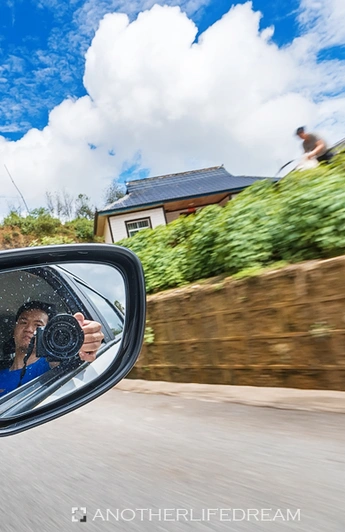
Speaking of the rental car, there was a pleasant surprise. Originally planning to go solo, I chose the economical Peugeot 308s on the Shouqi Car Rental website. After the order was confirmed, customer service called to say that due to the summer peak and annual vehicle inspections, this model wasn't available. Just as I was hesitating about switching companies, the staff immediately offered a perk: since the order was already confirmed, they could upgrade me to a Toyota Corolla for free. But the Corolla was also out of stock, so they upgraded me again—eventually, I ended up driving a Citroën C3XR for the price of a Peugeot 308s.
Cost Breakdown: Rental period from Sunday to Thursday. Weekend rate: 179 RMB/day; weekday rate: 149 RMB/day. Plus 40 RMB/day for insurance and a 20 RMB service fee. With a 100 RMB discount for first-time rental, the total for four days came to 706 RMB. That's 430 RMB less than my original budget.
When I went to pick up the car, I made a fool of myself. I strode confidently out of the airport, then stood there dumbfounded looking at the parking lot—where was the rental office? I'd forgotten to check the address. Helpless, I called customer service. The staff member said not to worry, just wait at the airport, and he'd come pick me up. It was my first time renting a car on my own, and I felt incredibly embarrassed.
The Citroën C3XR, as a small city SUV, has relatively loose handling. Its power performance is balanced, though it struggles a bit when overtaking on mountain roads. Otherwise, it's perfectly capable. The biggest drawback is the lack of a designated spot for a phone GPS mount, but the staff member had thoughtfully left a navigation stand in the glove compartment.
The Travelogue: Heading South, Searching for Hidden Wonders
Kunming: A Brief Stop
A week before departure, I checked the weather forecast every day, hoping for a miracle. But throughout August, every forecast for Yunnan included that one word: "rain." After a week, hope turned into despair. The vacation was set, the flights were booked, the rental car was confirmed—whatever, let it rain. For the first time, I packed a small umbrella in my camera bag. That feeling of sorrow—every photography enthusiast understands it.
And what happened? The moment we drove off the airport expressway, blue skies and white clouds greeted us. Who said it rains every day in Yunnan!
Teacher Dong arrived four hours after me. I checked into the hotel first, grabbed a simple lunch, and did some street photography. He had specifically booked a retro-themed hotel called "Olive Commune" (橄榄公社). The room was decorated with great care, filled with old objects I remembered from childhood. But when I wanted to lie in bed and watch the Olympics that night, I realized—there was no TV! With the Rio Olympics in full swing, this was a disaster. But it was fine; old classmates rarely get together, and we had endless things to talk about.
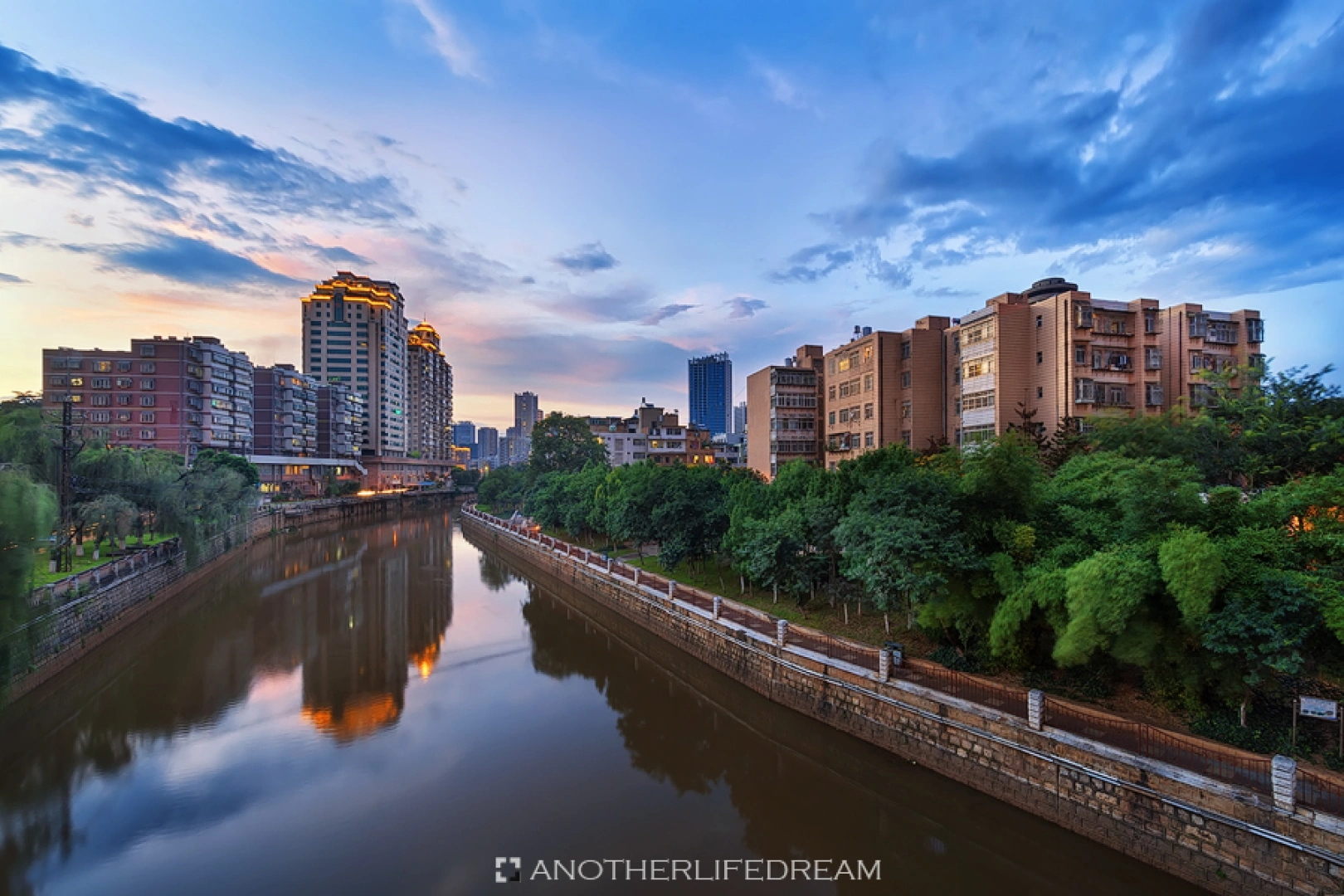
Near the hotel was a small alley. Low-rise buildings with red walls stood out sharply against the towering high-rises. At the end of the alley, under a flyover, a stretch of street vendors occupied the open space—a classic "dark cuisine street" (a Chinese term for street food stalls, often with questionable hygiene but great flavor). One-yuan hotpot, seemingly inspired by the revolving sushi model, let even a solo diner enjoy hotpot easily. The hygiene issues of street stalls are certainly concerning, but the fact that they survive speaks to their taste—something many big restaurants can't match. Giant wok-fried rice, fried potatoes—a 15 RMB portion was more than we could finish.
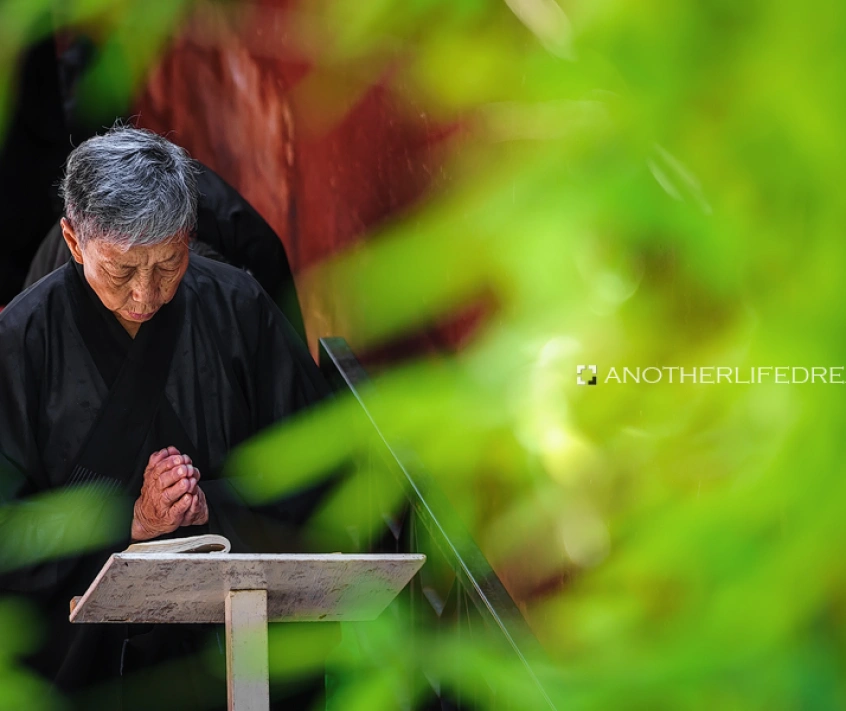
After dinner, we took a walk and stumbled upon Yuantong Temple (圆通寺). As one of Kunming's oldest Buddhist temples, it has a history of over 1,200 years. It's China's earliest Guanyin temple, predating the Guanyin sanctuary on Putuo Mountain by more than 100 years. The temple is built in a valley between Wuhua Mountain and Yuantong Mountain. The deeper you go, the lower the terrain gets—a rare "inverted slope temple." What's most astonishing is that it houses all three major Buddhist systems—Mahayana, Theravada, and Tibetan Buddhism—under one roof, a rarity nationwide. The Theravada Buddhist Copper Buddha Hall is a beautiful Thai-style structure that stands out prominently within the temple grounds.
After visiting Yuantong Temple, Teacher Dong arrived. Seeing an old friend was heartwarming. We chatted as we walked toward nearby Cuihu Park (Green Lake Park). By this season, most of the lotus flowers in the lake had already fallen. Fortunately, Cuihu is large enough that with a bit of searching, we could still find a few blooms. On a Sunday afternoon, the park was filled with visitors. A blonde, blue-eyed foreigner seemed like an old regular, enthusiastically greeting every passerby. Several大叔 (uncles) were using brush-sized calligraphy pens dipped in water to write characters on the ground, drawing a crowd of onlookers.
Unfortunately, we didn't see the flocks of red-billed gulls—they only fly south from the north in winter. However, a song-and-dance performance at the north gate of Cuihu Park made up for it. To the tune of distinctly Yunnanese music, colorfully dressed people formed circles, dancing and singing. More and more people joined in. We were surrounded and couldn't escape, so we just kept shooting and laughing until the song ended, then quickly made our getaway.
Not long after leaving Cuihu, a heavy rain arrived right on schedule. So the weather forecast wasn't entirely nonsense. We ducked into a small shop to escape the rain, ordered two bowls of rice noodles (米线), and a few skewers of grilled meat. Teacher Dong tried yellow rice jelly (米凉粉) for the first time and couldn't stop praising it. After that, whenever a restaurant had it on the menu, we ordered a portion.
Heading South: A Long-Haul Drive
The journey from Kunming to Longmoye (龙摩爷) covered a total of 650 kilometers. Of that, 420 kilometers were highway heading south to Pu'er, then we turned west for about 230 kilometers on provincial roads. The navigation system showed a total driving time of about 11 hours. For safety reasons, controlling speed on unfamiliar roads was crucial.
With the car loaded with drinks and snacks, Teacher Dong and I had an early breakfast, took turns driving, and headed south. At 9:30 a.m., the Rio Olympics 100-meter final was on. We took a short break at a service area, witnessed Bolt's historic victory, and then continued on our way.
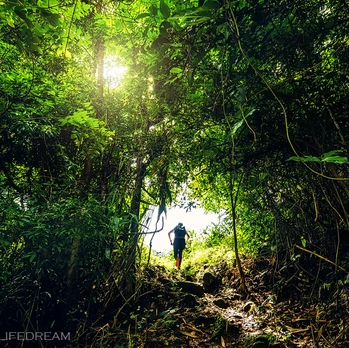
Over 400 kilometers of highway was easy driving, but not great for photography. Except for refueling, we rarely stopped at service areas. When old friends meet, there's always endless conversation—from college life to work, from basketball to photography. Taking turns at the wheel, we didn't feel tired at all. The landscape along the highway gradually turned into uniform tea plantations. We had arrived in Pu'er.
By nearly 2:00 p.m., neither of us could hold out any longer. We exited the highway and found a nearby restaurant. The one shown on the navigation system had already closed, but we stumbled upon something else by chance...
(The story continues, but due to space constraints, we'll pause here.)
Final Thoughts: The Meaning of Travel Is to Keep Moving Forward
Five days, 1,600 kilometers of driving, over 2,400 shutter clicks. We were still in a hurry, still couldn't shake that greed of "wanting to see the most in the least time." But that initial excitement of setting out on a journey—that never changed.
This trip confirmed something for me once again: the meaning of travel isn't about how far you go or how many sights you see. It's about who you go with and what you rediscover along the way. That impulse to drop everything and go. The warmth of reuniting with an old friend. The thrill of facing the unknown. And the eye that finds beauty in the ordinary.
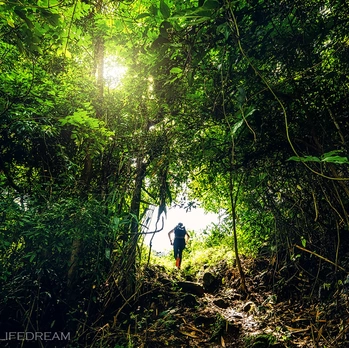
Because it's hard-won, it's all the more precious.
No brothers, no journey. This saying applies not only to travel but also to life itself. May we all find someone willing to drop everything and go with us. And may we always have the courage to say, "Let's go."
Practical Tips Summary:
- Car Rental: Shouqi Car Rental offers good value. First-time users get discounts. Remember to confirm the pickup location before heading there.
- Documents: ID card, driver's license, and credit card—all three are essential.
- Traffic Violations: A 2,000 RMB deposit is required at car return for potential violations. It's automatically released after 35 days if no violations occur.
- Overtime: Free within 30 minutes; charged by the hour within 4 hours; charged as a full day beyond 4 hours.
- Recommendations: Yunnan yellow rice jelly (米凉粉), one-yuan hotpot, fried potatoes—street food surprises often exceed expectations.
You should also read:
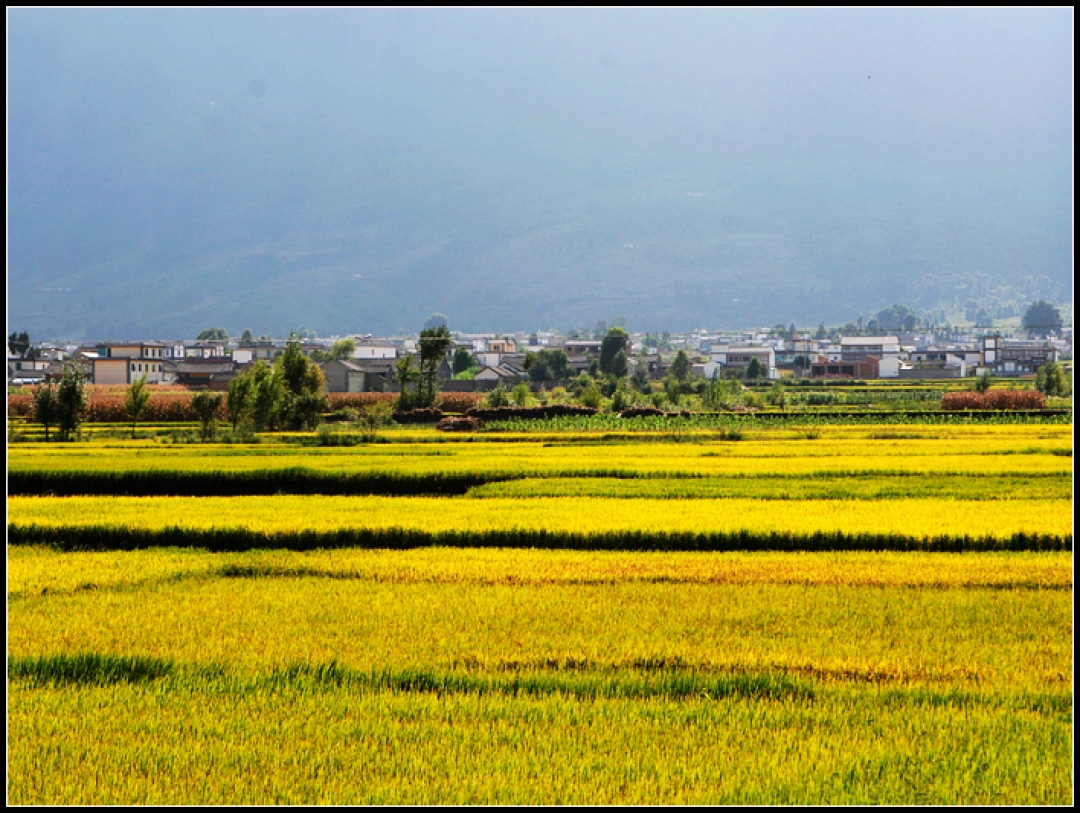
A 9-Day Yunnan Journey: From Lijiang to Dali to Tengchong – A Trip Toward Self-Reconciliation
A 9-Day Yunnan Journey: From Lijiang to Dali to Tengchong – A Trip Toward Self-Reconciliation Some say travel is simply going from a place you're tired of to a place other people are tired of. It stings to hear, but it's painfully true. Yet there's…
Continue reading...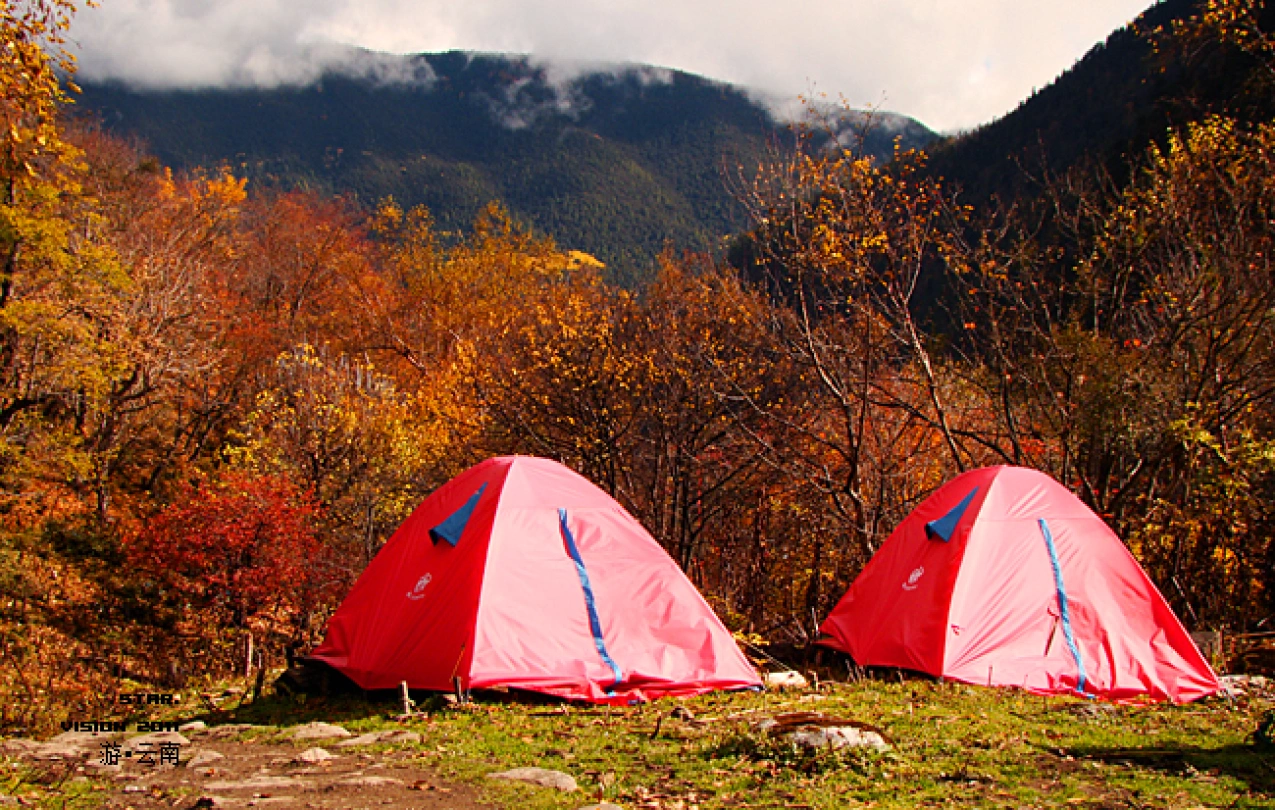
Yunnan! Paradise on Earth – The Yubeng Chapter: A Soul-Cleansing Journey into Seclusion
Yunnan! Paradise on Earth – The Yubeng Chapter: A Soul-Cleansing Journey into Seclusion Prologue: Why Yubeng? If you ask me which place in Yunnan is most worth hiking to, I would answer without hesitation: Yubeng. This is not an answer I give lightly. As a…
Continue reading...
Yunnan Travel Mastery: From Beginner to Pro-Level Player – A Complete Guide
Yunnan Travel Mastery: From Beginner to Pro-Level Player – A Complete Guide "Either travel or read, but your body and soul must be on the road." This quote has been repeated countless times, but very few people truly manage to be "on the road" and…
Continue reading...