Not About Romance, Just a Quick Trip to Dali
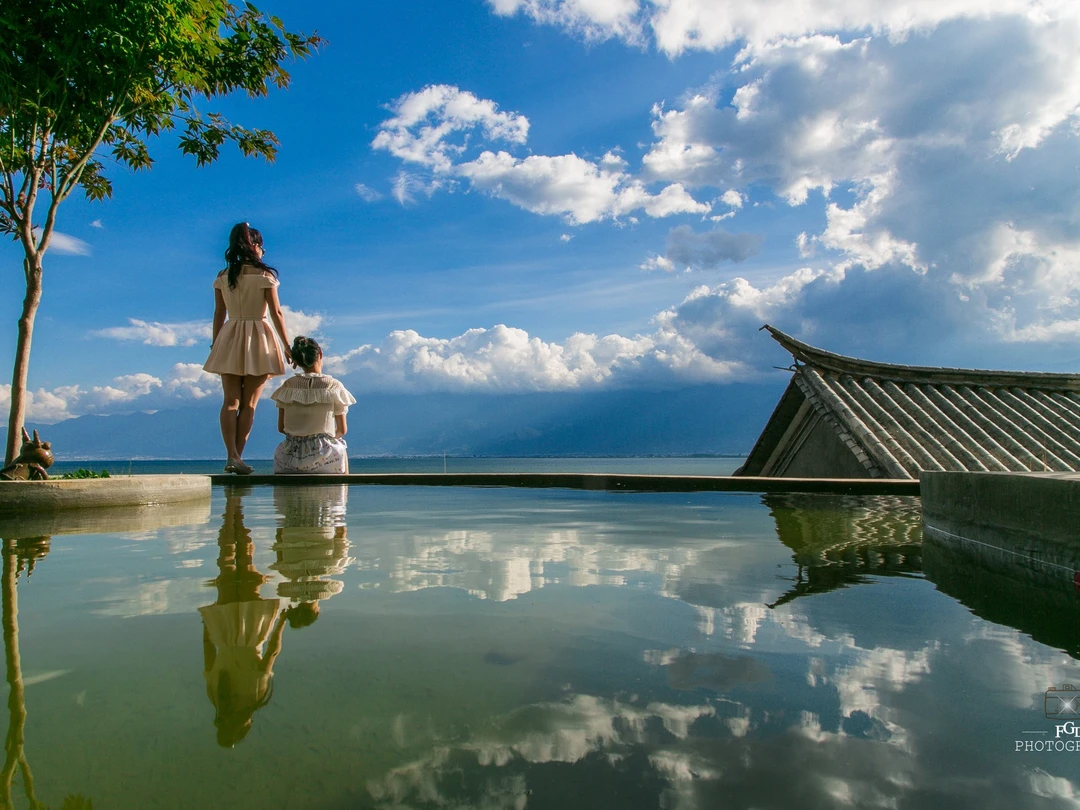
Not About Romance, Just a Quick Trip to Dali
An Unplanned Honeymoon Turned Out to Be the Best Arrangement
On the third day after our wedding, I was sprawled on the couch scrolling through my phone, utterly bored. When you don't even have a smoking habit to fall back on, killing time feels especially awkward.
"How about we go to Dali?" I said casually.
Huahua shot me a look. Her expression clearly said, "Yeah, right."
"We'll leave tomorrow. Go check out Shuanglang."
"Tomorrow? We haven't even planned anything, and besides—"

"The house is way too boring. We still have seven days of marriage leave. Are we just going to sit here staring at each other?"
Sometimes, spur-of-the-moment decisions turn out to be the best ones. If we'd planned a month in advance, she'd probably have started binge-shopping on Taobao two weeks ahead—hats, dresses, shoes, bags... When I thought about it that way, the impulsive departure actually saved us a fortune.
The next few hours were a mad scramble—booking flights, checking inns, packing bags. Suddenly life felt incredibly full and energized. To put it crudely but accurately: it was like going crazy, but in a way that made you feel much better.
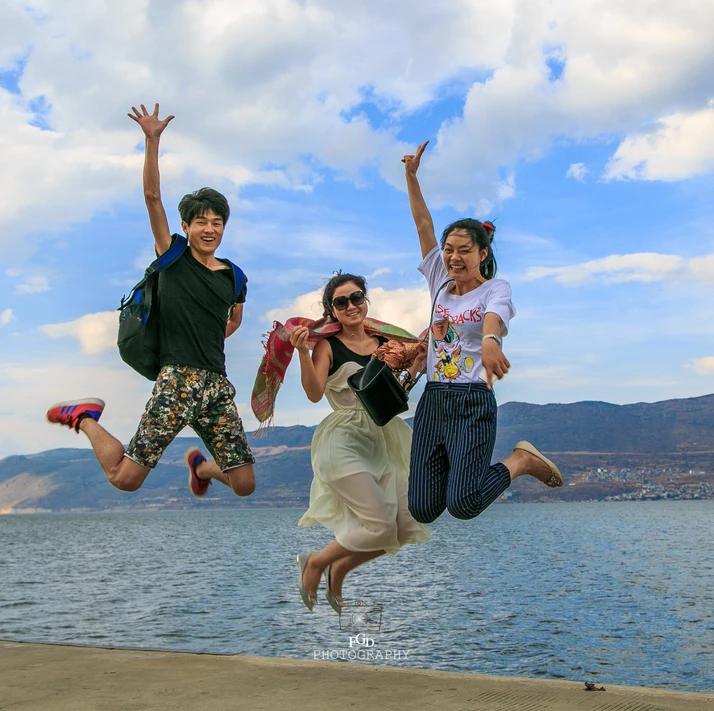
Every time we travel, Huahua and I rely on strangers to take our couple photos. This time, I decided to bring my sister along, who also served as our CFO. So the three of us set off on this honeymoon, clueless but excited.
Trip Overview: Six Days, Five Nights, from the Ancient City to Erhai Lake
- May 21: Nanjing → Kunming → Dali, stayed at [Cat Cat Fruit Inn] 320 RMB/night
- May 22: Dali Ancient City → Shuanglang, stayed at [Spring Blossoms Inn] 320 RMB/night
- May 23: Shuanglang → Wase → Shuanglang, stayed at [Peninsula Cloud] sea-view duplex 980 RMB/night
- May 24: Shuanglang → Caicun, stayed at [1969 Inn] 270-degree sea-view super king room 748 RMB/night
- May 25: Caicun → Dali → Kunming, stayed at [Home Inn] standard room 148 RMB/night
- May 26: Kunming → Nanjing
A lot of people asked: Why not go to Lijiang? Shangri-La? Lugu Lake?
To be honest, this honeymoon was completely unplanned. We'd originally wanted to go to Semporna to get our PADI diving certification, but getting married was just too busy (is that a lame excuse?). The more practical reason: our wallets were feeling shy. Given our spending habits, a trip to Semporna plus certification would have cost at least 30,000 RMB. So when we saw that flights to Dali were reasonably priced, everything just fell into place. But honestly, aside from the hyped-up Shuanglang, Lugu Lake was the place I really had my heart set on.
Day 1: From the Airport to Dali, a "Rip-Off" Odyssey
Before departure, as per tradition, we took a photo at the airport KFC. Otherwise, jumping straight into the travel diary would leave you readers lost. Also, I wanted to test out my newly acquired Canon 5D Mark III.
My impression of Yunnan used to be summed up in a few words: blue skies, white clouds, honest people, Cangshan Mountain and Erhai Lake. But as soon as we landed in Kunming, reality slapped me hard.
At 11:30 AM, we walked out of Kunming Airport to find it raining. According to the攻略 (travel guide) I'd prepared, we were supposed to take the airport express bus to Kunming Station, then transfer to a city bus to the Western Bus Terminal. But it turned out there was already a direct express bus from the airport to the Western Terminal—no need to go through Kunming Station at all. Rip-off factor: +1.
From Kunming to Dali, the express bus takes about 4.5 hours, while the train takes 7.5 hours. One of Yunnan's "Eighteen Strange Things" is that buses run faster than trains. To save time, we decided on the bus. After getting a taxi at Kunming Station, a seemingly honest female driver suggested we take a "Passat" (which was actually an unlicensed taxi). I'd read about these in travel guides—usually 160 RMB per person, leaving once four passengers were seated, taking about 3.5 hours. Compared to the express bus at 145 RMB per person, the price difference was negligible, with better comfort and time savings. So the three of us were smoothly handed off to the so-called "Passat pickup point."
After paying the fare, the "Passat" turned into a Wuling minivan. Yes, we'd been duped—the taxi driver got a kickback for delivering us to the unlicensed operator. Rip-off factor: +2.

Whatever. We were strangers in a strange land. As long as we got to Dali on time, we could endure a little physical discomfort.
Once we got in—whoa. Ten people crammed in tight. The three of us were squeezed into the very back row. Everyone stared at us with strange looks. There was one odd observation: most of the middle-aged men were wearing camouflage outfits and carrying camouflage backpacks. They barely spoke, and their eyes were unusually large. My mind immediately jumped to images of drug trafficking and human smuggling along the Yunnan-Myanmar border. I felt terrible. We took turns sleeping during the ride, terrified we might be kidnapped and sold. Rip-off factor skyrocketed.
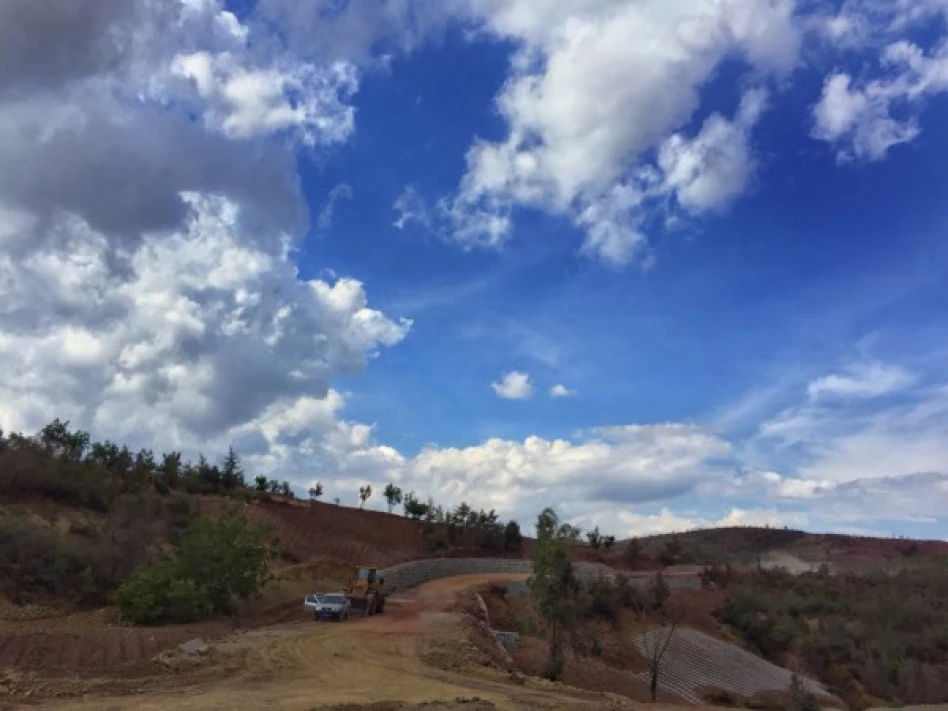
But it wasn't over. After three hours, Gaode Maps showed we still had two more hours to go, with a 10-kilometer traffic jam ahead. The driver said it was due to heavy rain and road construction. Then, at a rest stop, the three of us were transferred to a large bus. To bypass the traffic, the driver chose mountain roads. The bus crawled along narrow, winding mountain passes. The road was uneven, and the cabin creaked and groaned with every bump. For six hours, we swayed back and forth in 30°C heat with the bus's AC blowing... natural air! N-A-T-U-R-A-L air! The sheer misery... Rip-off factor had officially gone off the charts.
At 7 PM, we finally came down from the mountains. A double rainbow appeared in the post-rain sky. In that moment, the sky cleared, and so did our spirits.
We arrived at Dali Bus Station at 7:30 PM, after six hours of rattling around. My mood hit rock bottom. We quickly grabbed a taxi to the Ancient City. All I wanted was the inn's bed—I'd been up all night booking hotels.
The drivers at the station refused to use the meter. It was a flat 50 RMB to the Ancient City. After the trauma of that bus ride, we ended up chartering cars or sharing rides for the rest of the trip. Never took public transport again. Friendly advice: When going to Dali, if you can carry a backpack, don't drag a suitcase. If you can carry nothing at all, even better.
Cat Cat Fruit Inn: Our First Night's Stop
Every hotel on this trip was booked on the road, since we had zero time to plan ahead. Mafengwo's hotel rankings were mostly reliable, so I picked a few from the front page. Our first stop in Dali's Ancient City was [Cat Cat Fruit Inn], about 200 meters in from Erhai Gate. Recommendation rating: ⭐⭐⭐ (out of five).
After a long day of travel, even though the famous "Cang Er Chun" (Cangshan-Erhai Spring) restaurant was a huge disappointment, we couldn't let the food go to waste. As the old saying goes: "Since we're already here..." We forced ourselves to eat it anyway. Recommendation rating: ⭐⭐. Basically a thumbs-down. Get out.
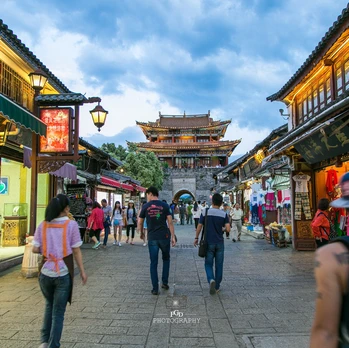
After dinner, we strolled through the Ancient City. It was lively. Neat rows of street stalls lined the roads—selling beaded bracelets, handicrafts, and roasted pig trotters. I heard the trotters were good, but we didn't try them. As for the rest... let's just say most were probably "Made in Yiwu."
Our room was a loft-style setup: a large bed upstairs, and two corner sofas pushed together downstairs. The cylindrical throw pillows on the sofas were surprisingly comfortable—great texture. The inn was small, with only about ten rooms.
The area under Erhai Gate was also bustling, with plenty of barbecue skewers and people singing.
Day 2: Dali Ancient City → Shuanglang, First Glimpse of "Wind, Flowers, Snow, and Moon"
I couldn't remember the last time I'd seen skies this blue. The price of high GDP is the gray haze that slowly replaces the sky above our heads.
"Wind from Xiaguan, flowers from Shangguan, snow on Cangshan, moon over Erhai." I admit it—I was poisoned by this phrase. I wanted to see with my own eyes what "wind, flowers, snow, and moon" really looked like.
The rooftop terrace faced Cangshan Mountain. The cotton-candy clouds seemed close enough to touch. Although the morning temperature was only around 30°C, the sunlight was blinding, and you could feel the temperature rising rapidly on your skin. The streets of the Ancient City were nearly empty, especially of young people. Anyone willing to get up this early was surely headed for "Zai Hui Shou" (Looking Back Again) for their cold chicken rice noodles. It was pretty good. Recommendation rating: ⭐⭐⭐.
I spotted the No. 4 Middle School on Renmin Road. I bet they have martial arts classes there. Anything less than the "Lingbo Weibu" (a legendary lightness skill) wouldn't do justice to Dali's vibe. Going to school there must feel amazing—like you're on the fast track to becoming a CEO, marrying a supermodel, and reaching the peak of life.
The morning market on Renmin Road was bustling—people buying groceries, tending to potted plants, sitting in chairs watching the world go by. Compared to the chaotic energy of night, this was a completely different face of the city, much closer to real life. When it comes to gardening, you really have to admire the locals here.
Foreigner Street (Yangren Jie) probably has the highest exposure rate in photos, so I couldn't skip it either. As the name suggests, there are lots of foreigners here, especially at night. Someone walking their dog this early in the morning was rare. At night, the "Bad Kid Bar" was surrounded by a mostly foreign crowd—one of the better atmospheres I saw.
The shawls were absolute lifesavers. For 15 RMB, you instantly go full ethnic style. At the highest level of shawl mastery, you get someone like this—effortlessly switching between monk's robe and fashion accessory.
The glass-walled study at Cat Cat Fruit Inn was its main selling point, and the thing most guests remembered after checking out. But overall, it wasn't particularly distinctive. If you have time to kill, you could sit here and daydream. Oh, and there was a huge bougainvillea tree in front of the inn.
Let me give a close-up of the luggage tag—Mafengwo's yellow tag had a nice, satisfying texture.
Everyone knows Shuanglang is currently a massive construction site. Everywhere you look, inns are either being built or about to be built. That's why I warned you not to bring a suitcase. Believe me, it was learned through blood and tears.
We checked out and headed to Shuanglang. Compared to the Tianlong Babu City (a theme park) or the Three Pagodas of Chongsheng Temple, Shuanglang's Haiti spot—with its row of high chairs and star-gazing rooms—sounded far more poetic and picturesque.
In the Ancient City, minivans constantly shuttle between Xizhou and Shuanglang. We hopped on one right outside the inn—20 RMB per person. The driver, Master Zhang, was very enthusiastic. He took a detour to the South Gate to pick up a few more passengers to make the trip worthwhile. While we waited, I couldn't just sit idle, so I climbed up onto the city wall.
The red walls and blue tiles of the South Gate still had a hint of the former Nanzhao and Dali Kingdoms' glory. It was close to the Three Pagodas of Chongsheng Temple; maybe the wall connected directly to them, but we didn't have time. I heard the entrance fee was 90 RMB per person. I couldn't bring myself to spend that, and honestly, it didn't really appeal to me. Unless there was a chance to learn the "Six Pulses Divine Sword" (a martial arts skill), I wasn't interested.
The drive from the Ancient City to Shuanglang took about an hour. Our group of seven sped along in the Wuling minivan. I couldn't stop pressing the shutter button—I was like someone desperately starved of blue skies and white clouds.
Old Zhang was very talkative along the way. His broken Mandarin made him seem even more genuine. I told him we never get skies like this back home. He said that in Dali, this wasn't even considered good weather—at that point, I really wanted to punch him. Talk about showing off. We stopped by the roadside in Xizhou and bought some Xizhou baba (a local flatbread). It was tasty—I ate most of the rose-flavored one.
Old Zhang also mentioned that two girls from Shanghai had posted his number online, and he hoped I'd share it with more people visiting Dali. He's the only driver whose number I still have, all because of his warm, cheerful personality and the way he answers the phone with a booming: "Hello, my friend!"
Shuanglang: From Spring Blossoms to Peninsula Cloud
We arrived at Dajianpang Village in Shuanglang and followed the小路 (alley) down until we found [Spring Blossoms Inn]. We'd originally booked a sea-view room, but since there were three of us, we had to switch to a family room. The first-floor sea-view room I checked out felt pretty underwhelming. But! None of that mattered! The important thing was that the front desk had two beautiful ladies—the most useful info I can share with you gentlemen.
After settling in, we headed out to Haiti to experience Erhai Lake. Passing by [Old Fishing Port Inn], I saw the biggest, most lush bougainvillea I'd ever encountered. Flowers were probably the most photographed thing in Dali—fitting the lyrics: "Forgive me for being born wild and free, in love with photographing flowers."
In Shuanglang, a few inns are incredibly popular: Haiti and Peninsula 63 are basically impossible to book without reserving a month in advance. You know why—it's those iconic high chairs. Friendly reminder: Peninsula 63 is under renovation. Their current flagship is the [Peninsula Cloud Inn] from the 63 series. Also, Half Moon Lagoon Blue and Warm Sun were very popular, but we couldn't get rooms there either.
Those three golden retrievers that can swim appear in many travel guides. They take a dip in the water every evening, attracting countless women to take photos.
Let me give you a taste of the charm of Shuanglang's high chairs. Here, you get VIP treatment—dozens of eyes fixed on you, watching every pose, every movement, every photo you take. You need a thick skin to get decent shots. Waiting 20 minutes for just one minute of photo time? That's a total disservice to yourself.
This kind of staged photography really isn't my thing. All I could do was cover my face in embarrassment.
We hadn't eaten all day, surviving on just one Xizhou baba. That was pretty impressive. We stumbled upon [点心园 (Dim Sum Garden)], a sea-view restaurant that was packed. When you're in unfamiliar territory, following the crowd usually doesn't steer you wrong. Recommendation rating: ⭐⭐⭐⭐.
You absolutely have to try the "Wind, Flowers, Snow, and Moon" beer. Compared to Tsingtao, it's a bit lighter in flavor.
The sky was still bright at 8:30 PM.
Day 3: Cycling Around the Lake, from Sunrise to Sunset
I've always believed that no trip is complete without a sunrise or sunset. So this morning, I was determined to experience Erhai's sunrise. There was a courtyard next to Haiti with high chairs too, and it looked pretty good. But Huahua, still half-asleep, wasn't in the mood for showing off.
"Rise with the sun, rest with its setting."
"Let's row our boat, let the oars push the water aside..." Come on, follow my rhythm—I say yes, you say no. How many of you sang that out loud? Please form an orderly line.
As the boat headed toward the middle of the lake, a golden glow appeared in the distance. Talk about a quick mood shift.
After sunrise, we continued exploring Yuji Island and Nanzhao Customs Island. That semi-circular arched door belongs to Yang Liping's hotel. Zhao Wei and Sha Baoliang also have luxury homes here. I heard Yang Liping's hotel costs 5,000 RMB a night—not sure if that's true. I think Yuji Island is worth a visit. Skipping it this time just gives me an excuse to come back.
The queue started early in the morning, already overrun by aunties. Clearly, this isn't just for young women anymore—everyone has the right to pursue beauty.
Friendly reminder: Bring a jacket if you're going to the center of the lake for sunrise.
It was only 7-something after the sunrise. Huahua and my sister went back to catch up on sleep. I couldn't bear to waste time hiding in the inn room, so I went out to wander.
Spring Blossoms Inn was decent overall, but it was located at a corner and didn't have a true sea-view room. The family room on the third floor had a large balcony, but there were few guests, and the family room area was mostly empty. By the second day, I figured out one reason: too many mosquitoes.
We checked out and stored our luggage at Peninsula Cloud (a new high-end hotel from the Peninsula 63 series), then planned to cycle to Wase.
Honestly, I wasn't very familiar with Wase before. I'd just seen a few photos that really captivated me—something resembling the underwater road from Spirited Away, and the flocks of seagulls in Wase.
So we rented two electric scooters in Dajianpang Village and started cycling along the lake. A fully charged scooter could go about 60 kilometers. The round trip to Wase was around 30-plus kilometers. A full loop around Erhai Lake can be roughly described as: Dali → Xizhou → Jiangwei → Shuanglang → Wase → Haidong Town → Dali.
Friendly tip: Apply sunscreen before cycling! You absolutely must! I spent over ten days in Phuket without sunscreen and still got a decent tan. But here, one day peeled my skin off—literally, skin.
The worst part of traveling with family: I wanted to stop and take photos everywhere, but those two just kept charging ahead like happy-go-lucky fools. If you want good photos, you have to keep your eyes open along the way.
Wase town wasn't big. Unfortunately, the road over the water was closed. I heard that last month, a young couple fell in and drowned while taking photos there, so it's temporarily off-limits.
That protruding section next to the red flag is the road that's partially submerged during high tide. Around February, when the lake rises, it becomes half-flooded.
We continued cycling to Xiaoputuo Island (Little Putuo). You can take a boat over. My favorite Yunnan travel blog on Mafengwo was Red Rabbit's Early Summer, South of the Border. I read it three times over. Just as she described, Xiaoputuo had little to see besides rows of barbecue stalls.
Then we headed back, since it looked like rain was coming. Remember, today we'd booked a 980 RMB/night sea-view duplex. Just thinking about it made my wallet ache.
I can fly anywhere.
Peninsula Cloud: Was the 980 RMB Night Worth It?
Peninsula Cloud's duplex—enough said, gentlemen. Just feel it for yourselves.
The balcony overlooked Cangshan Mountain, Erhai Lake, blue skies, and white clouds. Below was Haiti's Courtyard No. 4. The female owner of Peninsula Cloud had a certain elegance, and the entire inn was decorated to feel clean and comfortable. As for the price, well, as they say: it matches the service.
"Neither proud nor humiliated, watching flowers bloom and fall before the court; neither coming nor going, gazing at clouds roll and unfurl across the sky." This clear pool at Peninsula Cloud was clearly designed to evoke that mood—I admit I Googled that quote.
While those two were in the room enjoying the AC and their selfie gadgets, I decided to go out and explore Shuanglang on my own. Sometimes, being alone means you don't have to worry about anyone else. You can photograph whatever you want, wander wherever you please. After all, I still harbor a dream of being a photographer.
Every room's umbrella looked especially beautiful against the blue sky. I looked up, and those two had come out too. Actually, many inns in Shuanglang have their own sea-view rooms and star-gazing rooms. Sea-view rooms are self-explanatory. Star-gazing rooms sound dreamy—no ceiling above you, just a glass pane revealing the starry sky. But reality often falls short of imagination. With star-gazing rooms, you first need to be prepared for a battle with all kinds of insects.
I loved Peninsula Cloud's little garden—or rather, terrace—so much that I took a few more self-indulgent photos.
Usually, once a foodie finds a restaurant they like, they stick with it until they're sick of it. We chose Dim Sum Garden's sea-view restaurant again for dinner. Last night's mint spare ribs and spicy fish had really hit the spot—so good they made my nose bleed. No joke. Ever since I had the spicy fish there and got a nosebleed, I had one every day for the rest of the trip. So in Yunnan, besides sunscreen, make sure you drink plenty of water.
As for why I'm hugging a pickle jar in the photo below—inspiration came from that famous painting (use your imagination). Ours was a parody. The girls sitting on the beach chairs nearby got a good laugh out of it. Forgive me for being born with a low laugh threshold. LOL.
Last time I posted, many fellow travelers showed interest in this Totoro. Actually, Huahua made it herself from wool felt, along with the tiny camera she gave me. If you're interested, feel free to ask her directly. Needlework is beyond me.
We arrived earlier today, so we snagged a good spot. Ten minutes later, every seat was taken.
Dim Sum Garden serves Sichuan cuisine—numbing and spicy are the main themes. The fried mint paired with it does add a unique touch. As for the Sichuan peppercorns, let's just say they're basically free, so they use them generously.
These two must be the grandfathers of cactus plants.
I never paid attention to what those trees were in Haiti's Courtyard No. 4. Turns out the secret to Dim Sum Garden's heavy use of Sichuan peppercorns is right here—they grow on trees. Please tell me I wasn't the last person to figure this out.
Back at Peninsula Cloud to watch the sunset. It was nearly 8 PM. What the heck was that thing on the terrace? Pikachu?
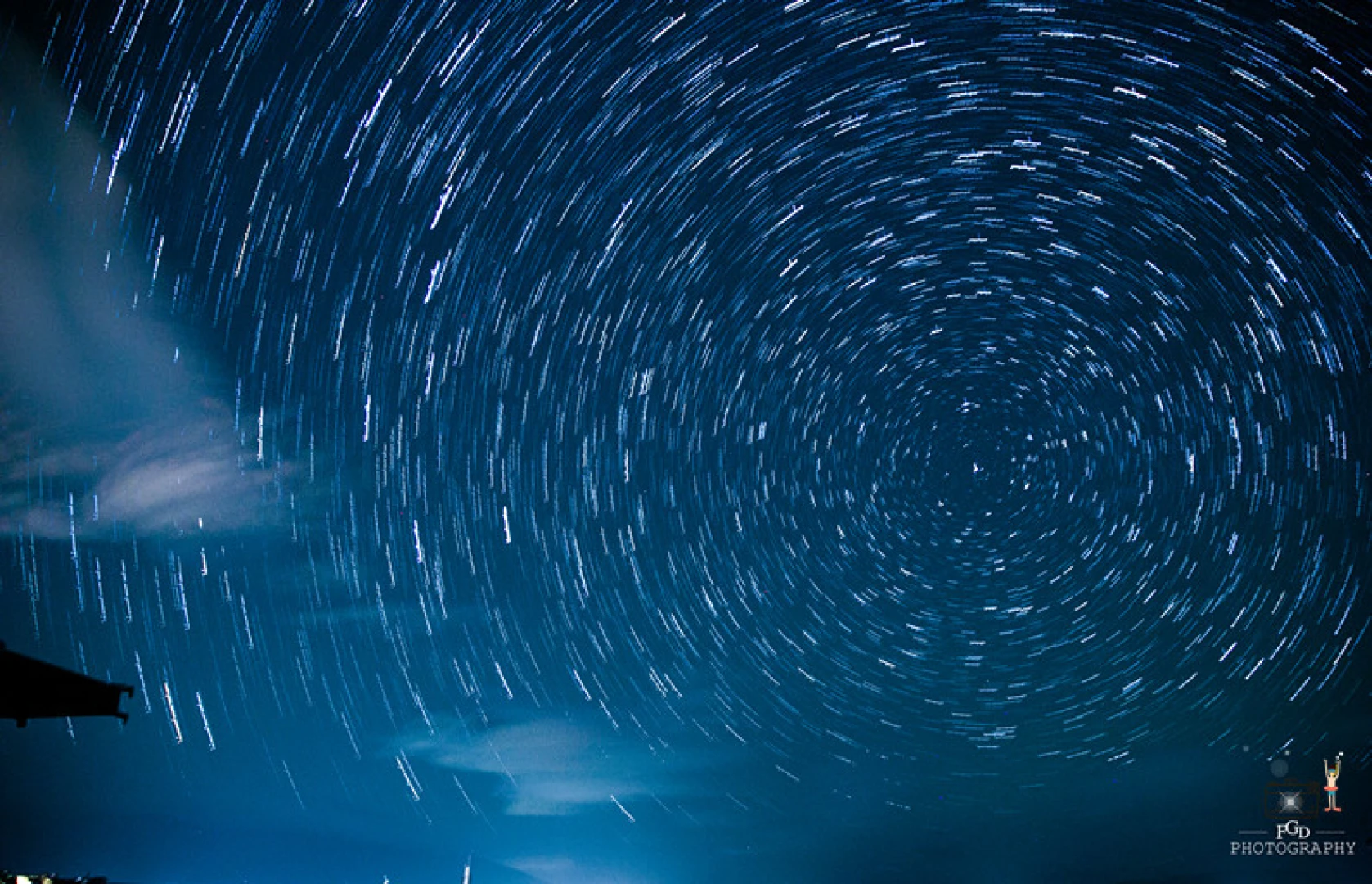
About my starry sky dream—I had a small hope for this trip to Dali: to photograph a star trail. But the balcony faced south, and the sky wasn't as bright as I'd imagined. My first attempt ended in failure.
Day 4: Shuanglang → Caicun → Xizhou Haishé Park
Two days in Shuanglang is plenty. After checking out in the morning, we headed to our next stop: Caicun in Dali.
Caicun has plenty of inns too. [Dali 1969] is the only one that extends from the shore into Erhai Lake itself. That's the only reason I booked it. And it wasn't cheap—they claim to have only two 270-degree sea-view super king rooms, with beds that are 4 meters wide. Yes, wide. Recommendation rating: ⭐⭐⭐. While checking in at the front desk, I saw this sign. Honestly, I wanted to say: "Let that girl go!"
Caicun is much quieter than Shuanglang or the Ancient City. Many cycling enthusiasts use it as a starting point for lake tours. As for cycling around the lake, I'd advise you to protect your body. The entrance to Caicun had a strong smell of... waste. Very down-to-earth.
The second-floor terrace had an incredibly open view. I planned to shoot stars here tonight.
Xizhou Haishé Park—a place that's been overly romanticized. If you're already going to Xizhou Ancient Town, you can stop by, but it's not worth a special trip. At least that's how I felt. Forgive my eyes for failing to appreciate its beauty.
After returning from Haishé Park, we wandered around the Caicun pier area. My biggest impression: damn, the public toilets are expensive—one yuan per visit, regardless of duration, with a special note: no toilet paper provided.
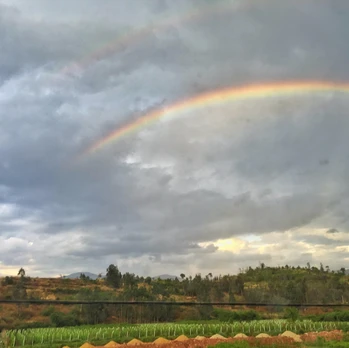
The weather on opposite sides of Erhai Lake was often completely different. The places where Buddha's light frequently shone down were all under construction for new inns. Everywhere else was covered by dark clouds. That's how you identify a feng shui treasure spot.
Our first group photo—thanks to Sister Wen, whom we met at the pier.
Caicun's Bai-style courtyard cuisine, recommendation rating: ⭐⭐⭐⭐⭐. The first item on the menu—spicy chicken—was absolutely delicious. It was the best meal we'd had since Dim Sum Garden.
In the evening, we went from Caicun to the Ancient City, about a 15-minute drive. There were plenty of minivans at the pier shuttling between the Ancient City and Caicun, 20 RMB per trip. You could also rent horse-drawn carriages or bicycles. I decided to go to the Ancient City to climb Wuhua Tower and get a proper look at Dali—I'd been too exhausted on the first day to really take it in.
Since traveling with women means shopping, we split up once we reached the Ancient City. I ran into an adorable chubby kid and chased after him to take a few photos. He looked like a Michelin Man mascot. I couldn't resist wanting to touch his thighs.
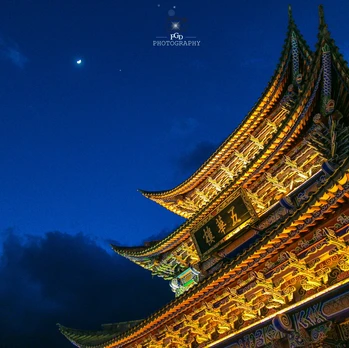
In front of Wuhua Tower, besides Bai women in ethnic costumes inviting you for photos, there were now also Pigsy and Monkey King (from Journey to the West) joining in, scattered across the city's various gates.
Passing through Wuhua Tower and continuing forward, I climbed up to Dali's South Gate, which offered a view of the Ancient City. When I got up there, I realized: damn, I'd already been here on the second day!
Red Rabbit's travel blog mentioned circling Wuhua Tower several times without finding the entrance. I came with that same question in mind.
Final Thoughts: Dali Is Worth the "Just Go" Attitude
This trip to Dali had none of the romantic "wind, flowers, snow, and moon" clichés, nor any meticulously planned perfection. Instead, it had the frustration of being scammed by unlicensed drivers, the misery of bumpy mountain roads, the pain of sunburned peeling skin, and the embarrassment of being so spicy that my nose bled.
But it's precisely these imperfections that made the trip real and unforgettable.
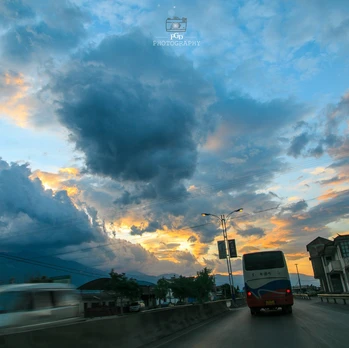
Dali's beauty isn't in the over-filtered photos. It's in the morning market's lively atmosphere, the double rainbow over Erhai Lake at dusk, the 15 RMB shawl from a roadside stall, and the driver Old Zhang, whose broken Mandarin was matched only by his heartwarming enthusiasm.
A few practical tips for those about to set off:
- Transportation: Charter a car if you can; avoid shared rides. Use a backpack, not a suitcase. Dali's roads and traffic are wilder than you expect.
- Sun Protection: Don't think that because you didn't burn in Phuket, you can show off in Dali. The UV here will peel your skin in a day.
- Accommodation: Book popular inns at least a month in advance. Last-minute bookings are exciting, but they might also cost you 980 RMB for a "mosquito room."
- Food: Dim Sum Garden's mint spare ribs and spicy fish are worth trying, but drink plenty of water—otherwise, you'll end up with daily nosebleeds like me.
- Mindset: Dali isn't perfect. Shuanglang is a construction site. The public toilets by Erhai Lake charge a fee. But if you let go of expectations, it will surprise you in ways you never imagined.
Finally, borrowing from Old Zhang the driver: "Hello, my friend!"—I hope everyone who goes to Dali finds their own "Old Zhang," and discovers their own version of "wind, flowers, snow, and moon," even if it's just a fleeting glimpse.
You should also read:

Dreaming of Nanzhao: A Gentle Encounter with Erhai Lake in Dali Shuanglang, July
Dreaming of Nanzhao: A Gentle Encounter with Erhai Lake in Dali Shuanglang, July Every summer, a voice whispers softly from the depths of my heart: it's time to go. No matter how tight the budget, no matter how precious the annual leave, the ritual of…
Continue reading...
Clouds Over the Rainbow: A Five-Day Soul Journey Through Kunming, Dali, and Lijiang
Clouds Over the Rainbow: A Five-Day Soul Journey Through Kunming, Dali, and Lijiang Prologue: The Decision to Fly into the Clouds In February, the chill of the North still lingered. A single discounted airfare sparked this spontaneous trip. Round-trip from Beijing to Kunming—1,700 yuan made…
Continue reading...
September: Finding Unexpected Warmth in Yunnan (Kunming, Dali, Shuanglang, Lijiang, Lugu Lake)
September: Finding Unexpected Warmth in Yunnan (Kunming, Dali, Shuanglang, Lijiang, Lugu Lake) Foreword: One Person's Journey, A Crowd's Story Before I set off, like every first-time solo traveler, I printed out a thick stack of travel guides and rehearsed countless possible scenarios in my head—getting…
Continue reading...