One-Day Hike to Abuji Co: Encountering Snow Mountains and Storms on the Highland Plateau
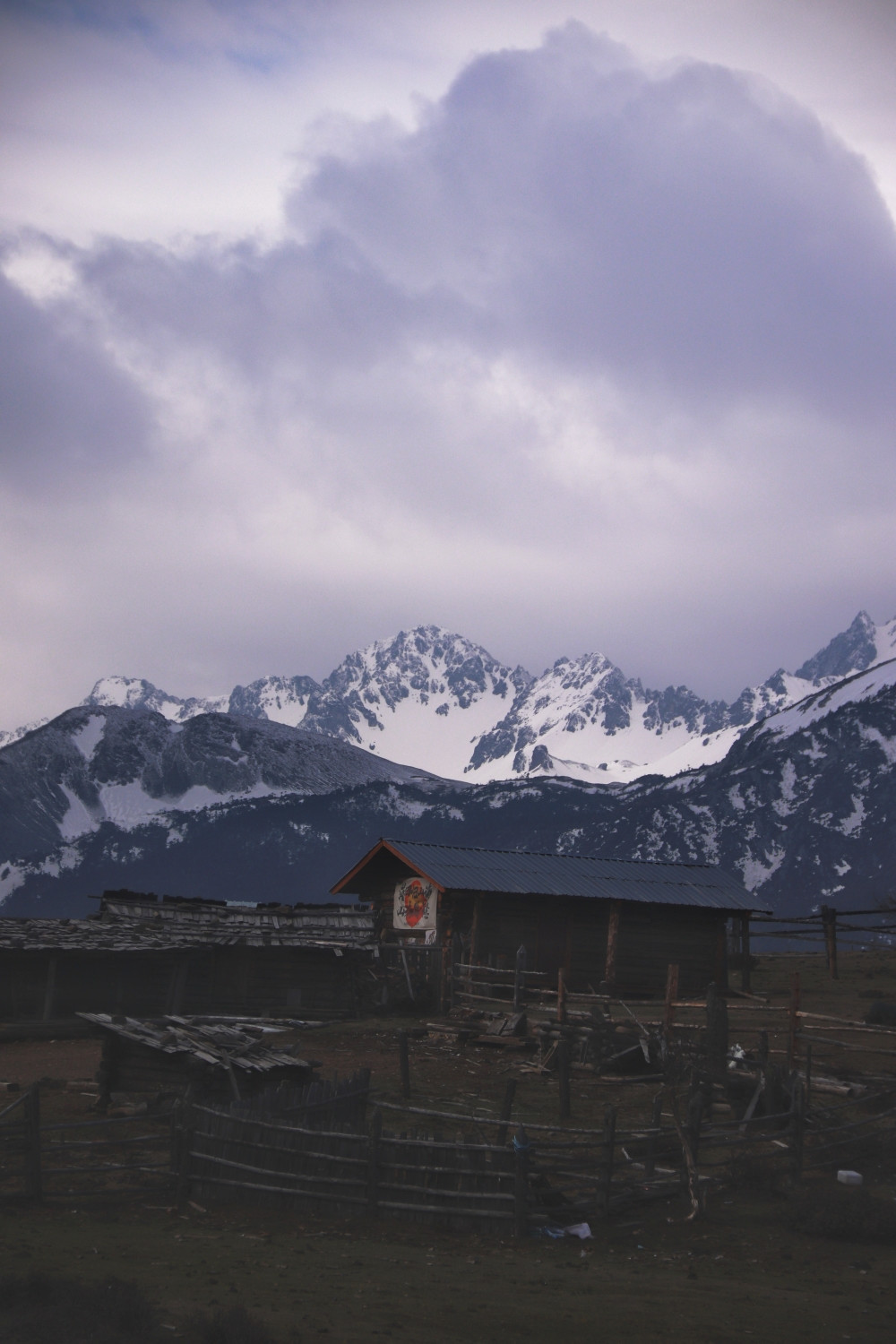
One-Day Hike to Abuji Co: Encountering Snow Mountains and Storms on the Highland Plateau
Prologue: The Meaning of Hiking Goes Beyond Walking
What is hiking? It's the miles accumulating underfoot, the labored breathing under the scorching sun, the marks left by backpack straps on your shoulders. But when you truly step into the wilderness, you'll find that those tedious treks are quietly being rewritten by the poetry of nature—the meadows unfolding in the morning mist are like punctuation marks, the silent snow mountains under sunlight are exclamation points, and the half-bottle of hot water shared by a companion becomes the warmest footnote in the narrative.
And so, those sweat-soaked hours will eventually be dried in memory into bookmarks edged with gold, transforming all the hardship of crossing mountains into the rhythm of verses leading to the sea of stars.
This one-day hike to Abuji Co was precisely such a deep dialogue with the highlands.
I. Itinerary Overview: A Ten-Hour "Off-the-Grid" Journey
- 12:30 Arrived at the Third Pasture
- 13:40 Reached the pass (4,300 meters elevation); the new route turns back here
- 14:30 Crossed the pass and arrived at Abuji Co (the crossing was as thrilling as climbing Haba Snow Mountain)
- 15:30 Reached the foot of the mountain
- 16:00 Arrived at the starting point of the old route, where the guide was waiting
- 17:00 Returned to Shangri-La
Food and Accommodation Notes: This was a day trip with no overnight stay. Lunch was at the Second Pasture, provided by the guide, including Tibetan fragrant pork (zang xiang zhu rou), highland barley cakes (qing ke bing), and butter tea (su you cha). There was no cell phone signal here, but instant noodles were available for purchase (bring cash).
II. First Impressions: From Dawn to the First Pasture
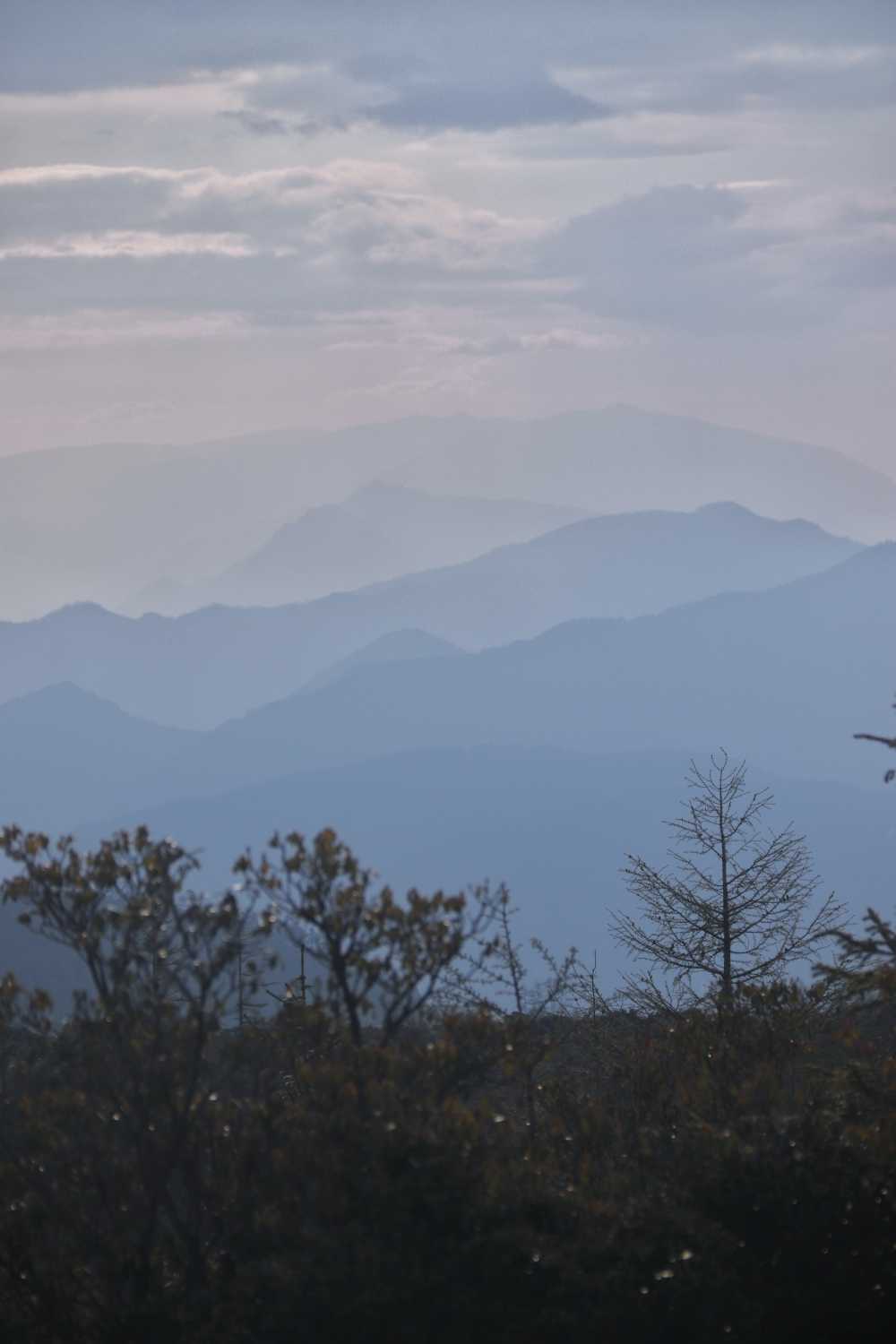
An Ink-Wash Scroll in the Morning Mist
The eastern sky was just beginning to glow, with thin mist like gauze shrouding the distant mountains. Layers of dark blue mountain shadows stacked upon each other—the near ones like bones sketched in thick ink, the distant ones like souls washed in pale colors. It felt as if an unfinished ink-wash scroll hung between heaven and earth.
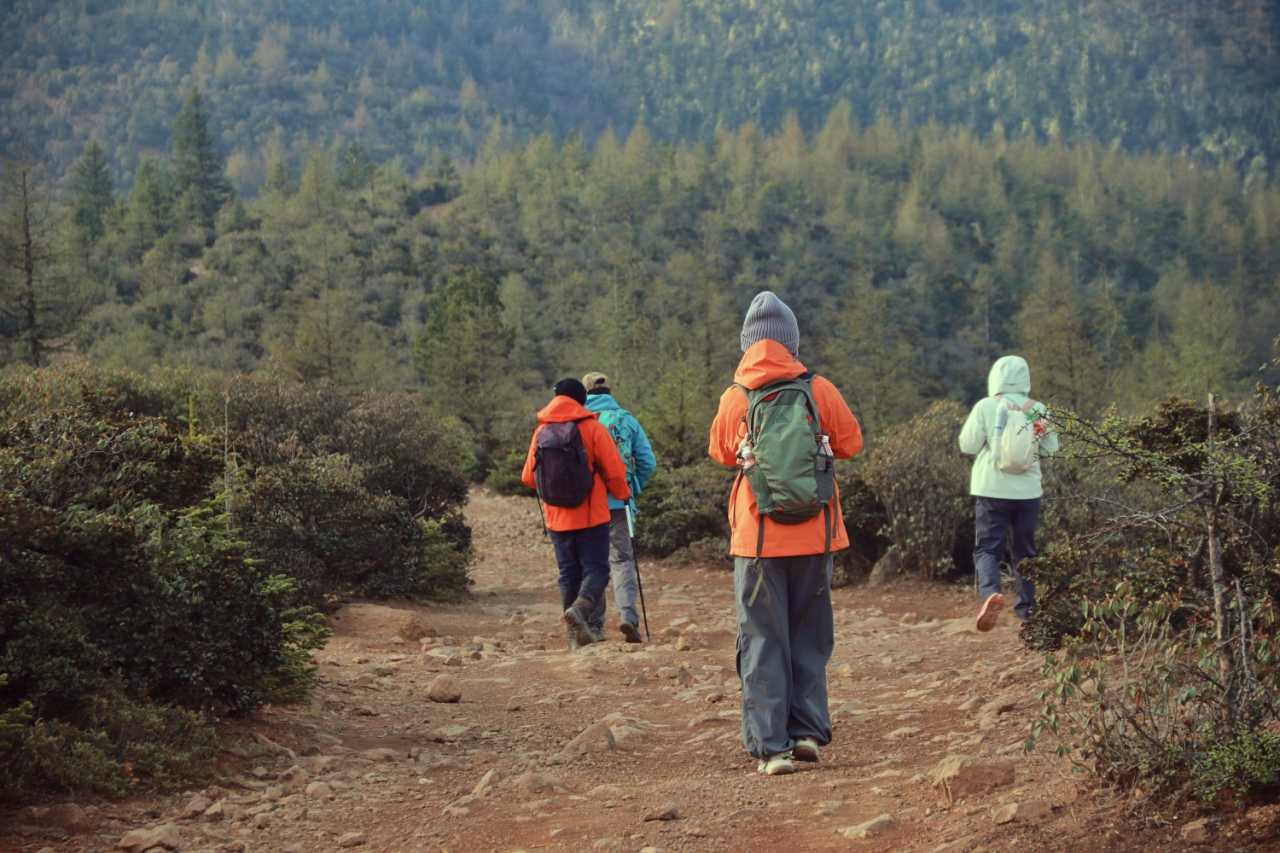
Our group of five—two men, two women, plus the guide—set off while the morning dew was still fresh. The mountain path wound around, and occasionally, crimson rhododendrons peeked out at the bends, like verses casually scattered by the mountain wind. Though they didn't form a grand rhythm, they became lively pauses between the lines—those scattered flower shadows were like commas reserved by the mountain god, turning any regret of missing a sea of blossoms into a perfectly placed blank space.
Through the Spruce Forest: A Triple-Layered Vegetation Symphony

The first twenty minutes of gentle terrain were like a soothing pause between pages, until the path began to climb at the foot of the mountain—clearly the start of a new chapter. Trees and shrubs alternated their signatures across the elevation gradient. The hanging lichen (song luo) beards, some reaching half a meter in length, wrapped around the branches as if to write: only the purest breath deserves the moss medals of this realm.
As we passed through the spruce forest, the vegetation performed a three-dimensional symphony—above us, the interwoven canopy of spruce branches; around our waists, rhododendrons and shrubs; beneath our feet, a ochre carpet woven from faded pine needles, embroidered with patches of fresh moss. Spring at high altitude always arrives a beat slower than in the lowlands. While flowers below had long since faded, here the grass shoots timidly poked through their pine-needle bedding. Scattered yellow corydalis flowers, like amber buttons dropped by the mountain wind, dotted the ground between the dark brown of old pine needles and the pale green of new grass—a spring envelope just unsealed by the earth.
The First Pasture: A Snow Mountain Revealed
When the spruce forest closed its curtains behind us, the world suddenly unfolded into a four-paneled three-dimensional scroll: the topmost layer was flowing drapery of clouds and mist, conducting a veiled coronation ceremony for the snow mountains; the snow peaks were like semi-transparent manuscript paper flipped open by the wind, standing at the border between chaos and order; the dark green spruce forest was like wet ink strokes, naturally spreading down the mountain slopes; and at the bottom, on the alpine meadow of tundra green, last year's frozen spring was shedding its icy armor, dripping from the tips of grass blades into gurgling snowmelt.
We happened to be sitting in the fourth-row audience seats, with pine resin stains from the spruce forest still on our knees. At that moment, I suddenly thought of Tao Yuanming's poem: "Long trapped in a cage, I've returned to nature."
III. Panoramic Views of the Snow Mountains: From the First to the Second Pasture
After leaving the First Pasture, the spruce forest once again wove a winding corridor. The path along the mountainside was like a ribbon casually tossed by the mountain god, while the altimeter needle trembled slightly around 3,800 meters. To our left, the snow mountain group moved in parallel with us—seven peaks like the markings of a silver clock, slowly sliding from the ten o'clock position to the four o'clock position with each step. Occasionally, gaps opened in the forest, and snowlight slanted through the lattice of fir branches, casting geometric patches of light on the moss carpet.
On the gentle slope near the Second Pasture, the hanging lichen curtains suddenly grew denser—these living air quality monitors were now greeting us with fifty-centimeter-long gray-green tassels. Looking back, the path we had come from had disappeared into the dark green folds of the spruce forest, while the pass ahead was converting the altitude we had yet to reach into the howling sounds of the wind.
The Second Pasture: Warmth at 4,000 Meters
The Second Pasture is a high-altitude meadow at 4,000 meters, tightly surrounded by tall pine trees. Herds of yaks grazed leisurely, and a few small wooden cabins were scattered across the slopes. After four hours of trekking, we burst in, breaking the tranquility of the place.
The guide led us to the innermost wooden cabin. Inside the rustic hut, a blazing stove radiated warmth. The cabin owner, Uncle Zhaxi, warmly brought us butter tea—made by boiling tea leaves with milk fat that had congealed into lumps. The rich, creamy aroma quickly replenished our energy. Before we finished the butter tea, a meaty aroma wafted over—it was the lunch Uncle Zhaxi had prepared for us: Tibetan fragrant pork. Grilled from local Tibetan pork, it was fatty but not greasy. Even I, who usually doesn't eat fatty meat, ate four large pieces. The main course was highland barley cakes, freshly steamed and steaming hot—one bite delivered the full fragrance of highland barley and a soft, fluffy texture. Paired with the Tibetan fragrant pork and chili, it was absolutely delicious.
IV. First Taste of Highland Weather: From the Second to the Third Pasture
The Beginning of a Nightmare
During lunch, the guide warned us: "From here on, it's all uphill until we reach the pass at 4,300 meters." Naive and fearless, we weren't scared—we were actually looking forward to it. Little did we know, this was the beginning of a nightmare.
The first twenty minutes were on flat ground, and the capriciousness of highland weather was already showing. Light snow began to fall from the sky, and soon a cold wind picked up. This minor difficulty didn't daunt us; full of enthusiasm, we pressed on.
The Slope of Despair in a Blizzard
The further we went, the worse it got. The snow wasn't just falling—it was being driven into our faces by the wind. Everyone quickly put on the rain jackets we had prepared in advance (the guide had reminded us the night before to bring rain gear). The wind and snow fluctuated in intensity along the way, but by the time we reached the pass at the Third Pasture, we could no longer walk facing the wind. We had to turn our backs and walk against it. Our sunglasses became useless—completely covered in snow and fog.
Fortunately, after crossing this pass, the wind died down a bit. But this was just a prelude. An even greater storm awaited us ahead. (A reminder to everyone: when traveling on the plateau, especially in mountainous areas, weather can change dramatically. Be sure to bring all necessary gear to handle sudden weather changes.)
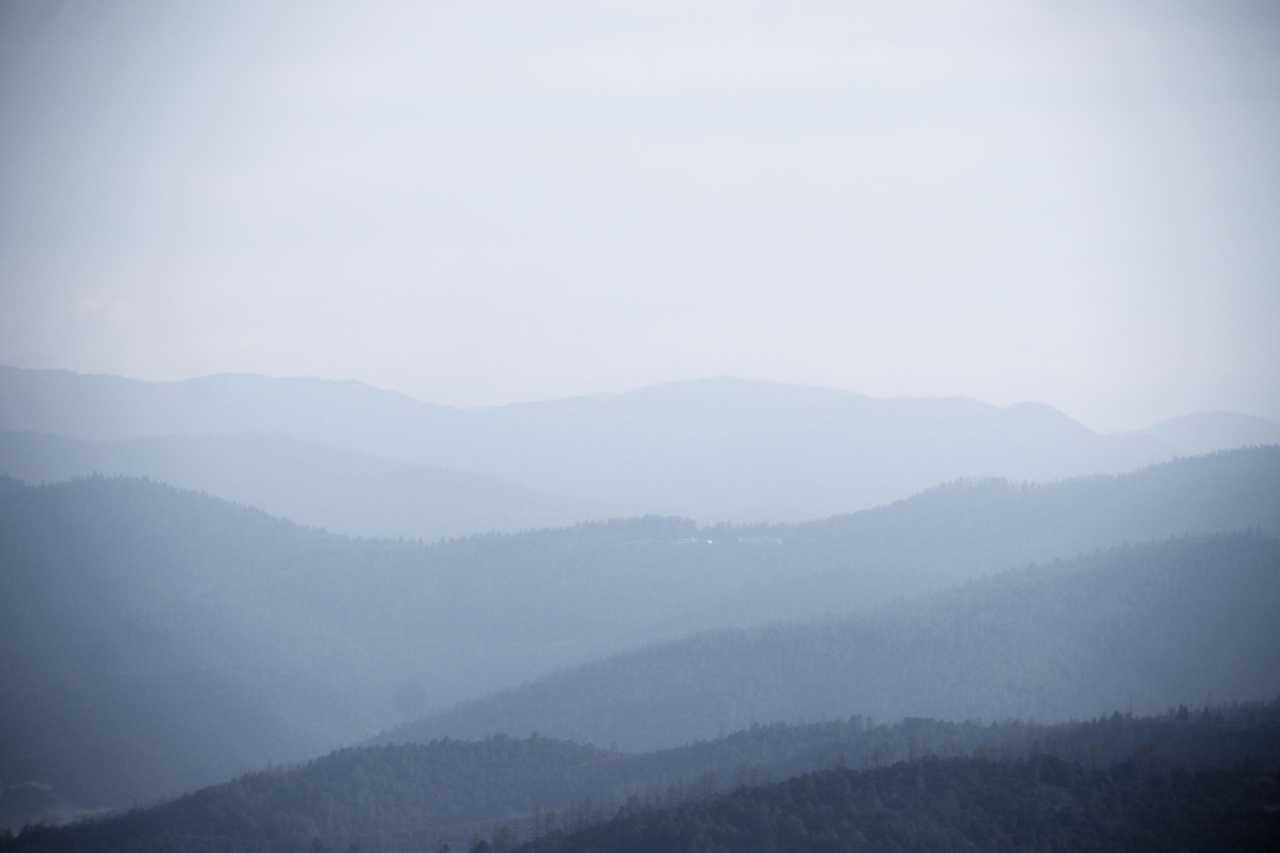
After the Third Pasture pass, there was a downhill section. Perhaps because we were in a valley, the wind and snow subsided significantly. Ahead lay a pine forest, with deep snow on the ground—this was the last comfortable stretch of the journey. After that, it was all wind and snow.
Once we passed through these vegetated sections, we truly arrived at the final "Slope of Despair." At the start of this slope, we saw a dilapidated stone enclosure—probably an old rest stop, now broken and drafty. The guide warned us: "Don't stop to rest here. Keep moving forward. Even if you have to go slowly, don't stop. The longer you stay, the more dangerous it gets."
On that slope of despair, I racked my brain for a word to describe my situation. In the end, I could only think of—Lin Chong at the Mountain God Temple in the snowstorm, feeling the same despair he must have felt.
V. Ten Minutes of Terror: Crossing the Pass (4,363 Meters)
A Race Against Time
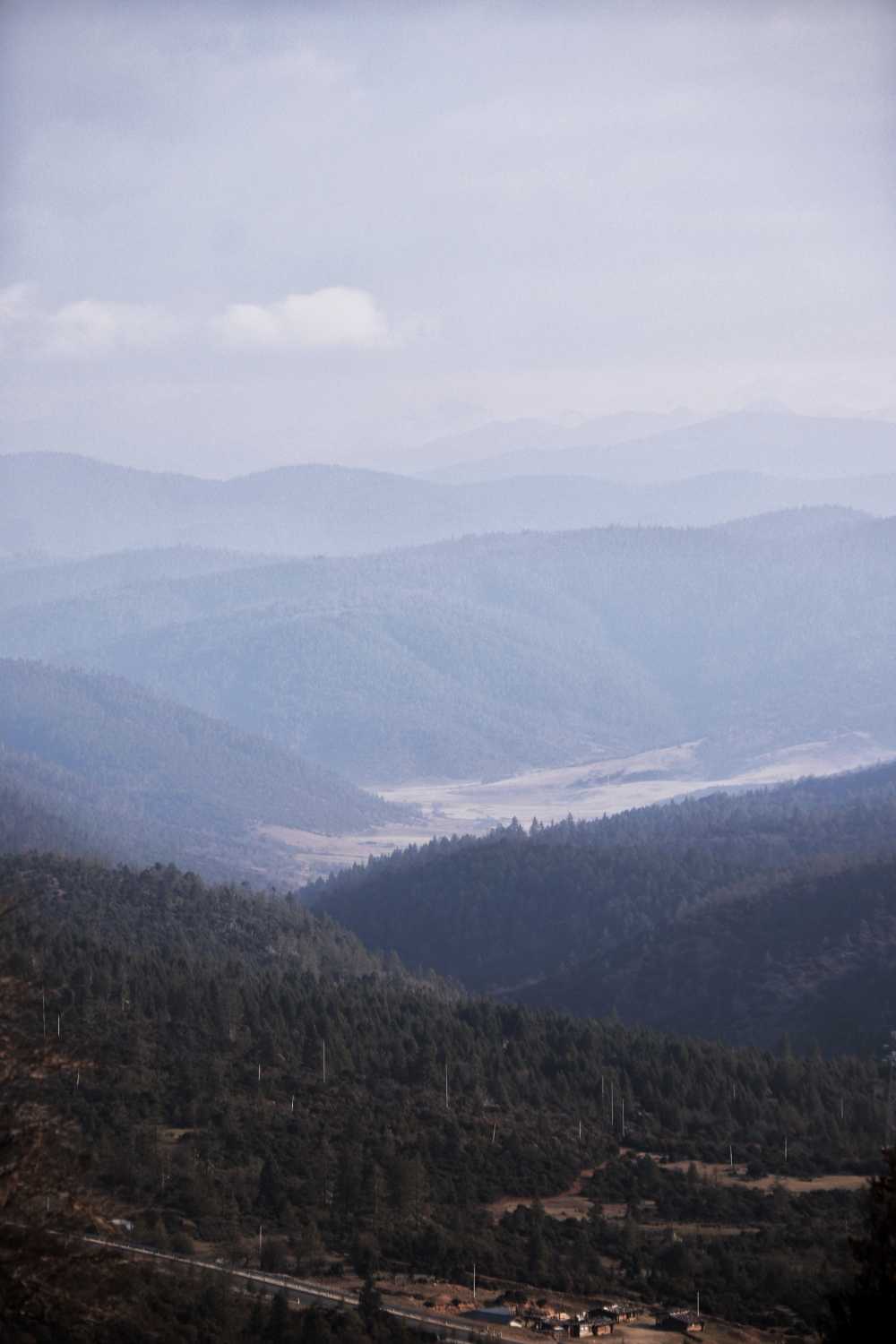
Before reaching the pass, most people had turned back—they were on the 28-kilometer new route. The four of us were on the "new route crossing into the old route," meaning we had to cross the pass and descend on the other side.
The higher we climbed, the fiercer the wind and snow became. At first, it was just wind whipping snow against our bodies, but at the pass, the wind was so violent it felt like it could lift us into the sky. We had to crouch down, lowering our center of gravity, but the wind and snow still pelted our faces. We couldn't wear masks—they would restrict breathing—so we had to endure the pain and keep moving. The sunglasses also proved problematic: although they prevented snow blindness, they didn't block the wind. Cold air rushed in from all sides, blurring our already poor vision.
We wanted to get through the pass quickly, but things didn't go as planned. One of the women in our group started showing signs of altitude sickness. The guide was frantic: altitude sickness in such extreme weather could be life-threatening. He grabbed her, half-dragging and half-carrying her down the mountain, while shouting back at the other three of us to stay close—visibility was already poor in the blizzard, and losing our way would mean a fight for survival.
Footprints Lost and Found
But the more urgent the situation, the more unexpected things happen. My hands had gone nearly numb from the blizzard's assault. I quickly called out to Xiao Hong (the man in the red jacket), asking him to help me get my gloves from my backpack. As he handed them to me, the people ahead had already disappeared from sight. I urged him to go ahead and catch up with the guide, while I put on my gloves and followed his footprints.
By now, visibility was less than 20 meters due to the blizzard. Fortunately, the footprints ahead hadn't been covered by snow yet. Following them, we spotted the guide—they had already started descending.
The Descent: From a Chick to a Human
Once we started descending, the wind and snow eased up, but the slope was so steep that we had to press ourselves sideways against the mountain wall, using trekking poles for support. It was slow but safer. However, we noticed that the guide had already carried Xiao Bai (the woman in the white jacket who had altitude sickness) twenty or thirty meters ahead of us.
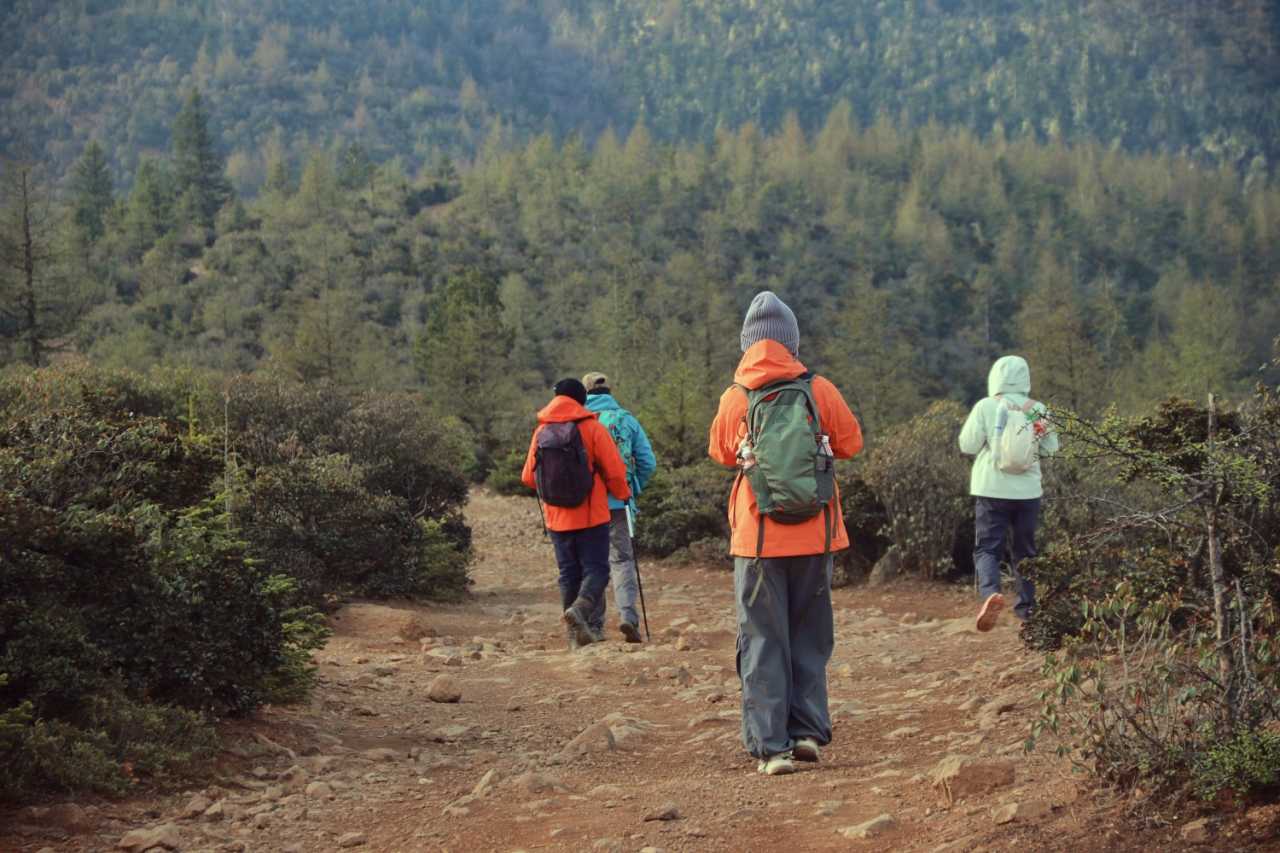
Later, at the foot of the mountain, the guide told us: "I was really afraid Xiao Bai would get severe altitude sickness up there. I had to get her down fast—every meter lower in altitude meant a little more safety." Xiao Bai smiled wryly and said: "At that point, I felt like a chick in the guide's hands. My feet barely touched the ground before he dragged me forward."
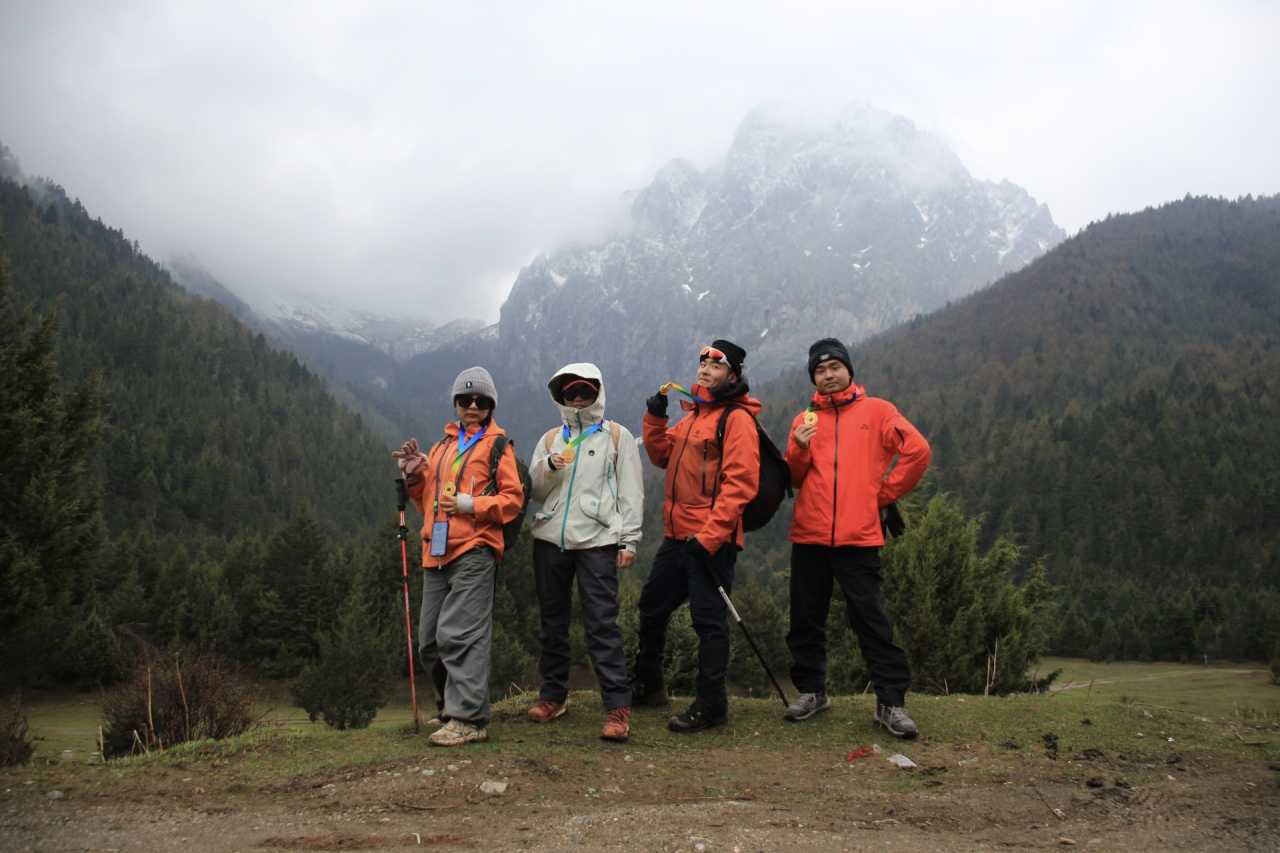
Although the descent was steep, the altitude kept dropping, and Xiao Bai gradually recovered. After about twenty minutes, we reached the edge of Abuji Co. But given the weather that day, there was no way we could see the lake—we could only take a disheveled group photo beside it.
VI. Relaxation After Tension: From Abuji Co to the Foot of the Mountain
From Abuji Co downward, although the path was rough, the wind and snow diminished as the altitude decreased. After walking continuously for about half an hour, we finally dropped below the snow line and returned to the embrace of the pine forest.
During a rest break, we talked about the terrifying experience of crossing the pass. We all agreed: "Today was truly perilous." Even the guide admitted: "At the pass, I was thinking about giving up and turning back. But Xiao Bai was already showing altitude sickness, and the return route was longer and potentially more dangerous, so I gritted my teeth and crossed the pass."
From there, it was all downhill until we reached the foot of the mountain. Looking back up at the pass from below, we could hardly believe that was the path we had taken. At the base was a grassland, with many yaks grazing. Carrying the relief of having escaped danger, we walked back along the return path.
VII. Afterword: Advice for Future Travelers
This journey gave me a profound understanding of the unpredictability of highland mountain weather. I urge everyone planning to hike in high-altitude mountains to prepare their gear properly. Based on this Abuji Co hike, here are some important tips:
- Waterproof jacket and pants: Must have some level of waterproofing.
- Hiking boots: Choose boots that fit well, are waterproof, and warm.
- Base layers: Prepare a fleece jacket and down jacket (thickness depends on the season).
- Gloves: Windproof, warm, and waterproof gloves are essential.
- Trekking poles: Bring one or two.
- Eyewear: Sunglasses are a must, but if there's wind and snow, be sure to bring goggles.
- Emergency food: Carry compact, high-calorie, ready-to-eat food.
- Hot water: Prepare at least 500 ml of hot water.
- Snow gaiters and crampons: Essential for crossing snowy and icy areas.
- Guide: If hiking in unfamiliar or undeveloped areas, know your limits and consider hiring a guide.
- Share your itinerary: Inform your family of your plans and provide emergency contact information.
Conclusion: The Mountain Is There, and So Are the Stories
The one-day hike to Abuji Co was a deep dialogue with the highlands. We witnessed the majesty of the snow mountains, felt the gentleness of the meadows, and endured the baptism of a blizzard. All the hardships of crossing mountains, all the heart-pounding moments, eventually transformed into bookmarks edged with gold in our memories.
The mountain is there, and so are the stories. May everyone who steps into the wilderness do so with reverence and preparation, to meet the world—and to rediscover themselves.
You should also read:

Cloud Travelogue · Dali of Wind, Flowers, Snow, and Moon: A Three-Day, Two-Night Journey of a Free Spirit
Cloud Travelogue · Dali of Wind, Flowers, Snow, and Moon: A Three-Day, Two-Night Journey of a Free Spirit I am a cultured female foodie with a touch of rogue charm. I slung on my backpack, took my lover's hand, and set off on a spontaneous…
Continue reading...
Xishuangbanna: Encountering an Ideal and Magical Paradise in the Green Wonderland at 21° North Latitude
Xishuangbanna: Encountering an Ideal and Magical Paradise in the Green Wonderland at 21° North Latitude If you ask me which place in China most resembles Southeast Asia, I would answer without hesitation: Xishuangbanna. This is not Thailand, yet it possesses an even richer Buddhist ambiance…
Continue reading...
Hiking Around Lugu Lake: Measuring This Mysterious Highland Pearl on Foot
Hiking Around Lugu Lake: Measuring This Mysterious Highland Pearl on Foot Introduction: A Date with the Lake At the border between Yunnan and Sichuan provinces lies a highland lake embraced by mountains, embedded like a sapphire in the folds of the Hengduan mountain range. Here,…
Continue reading...