One Week Is Short, But Just Enough to Meet the Most Beautiful Yunnan | Hidden Gems (Dali—Erhai—Shangri-La—Lugu Lake—Lijiang)
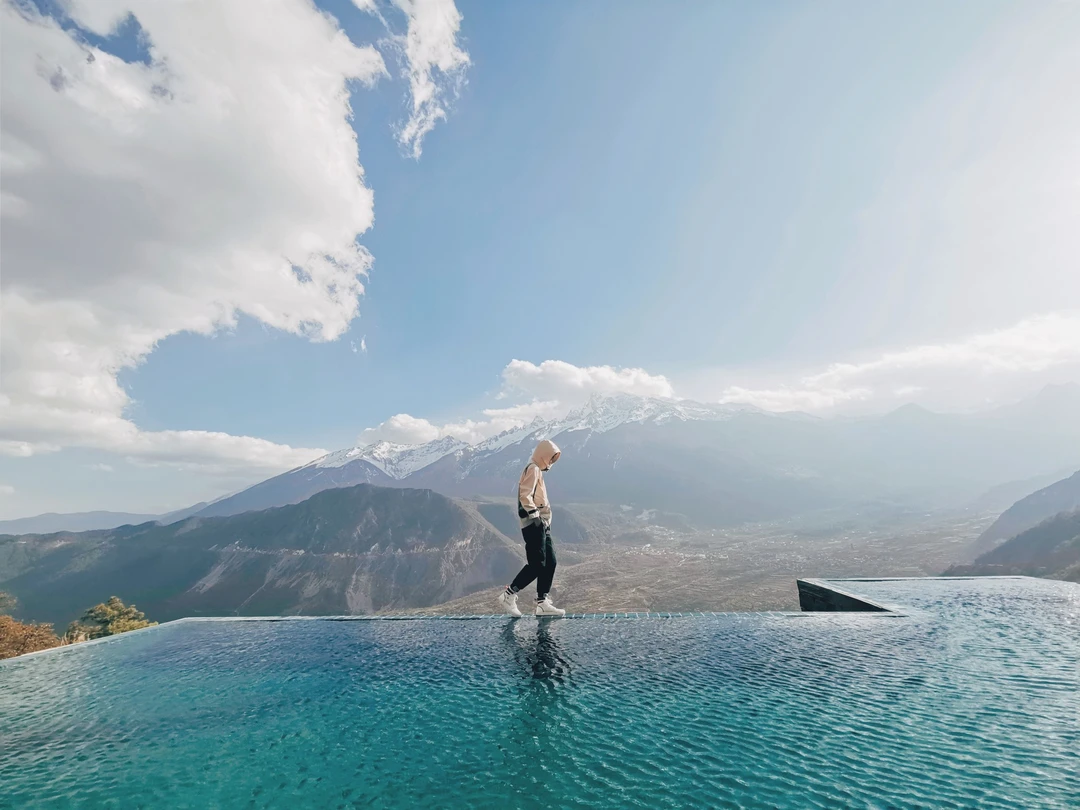
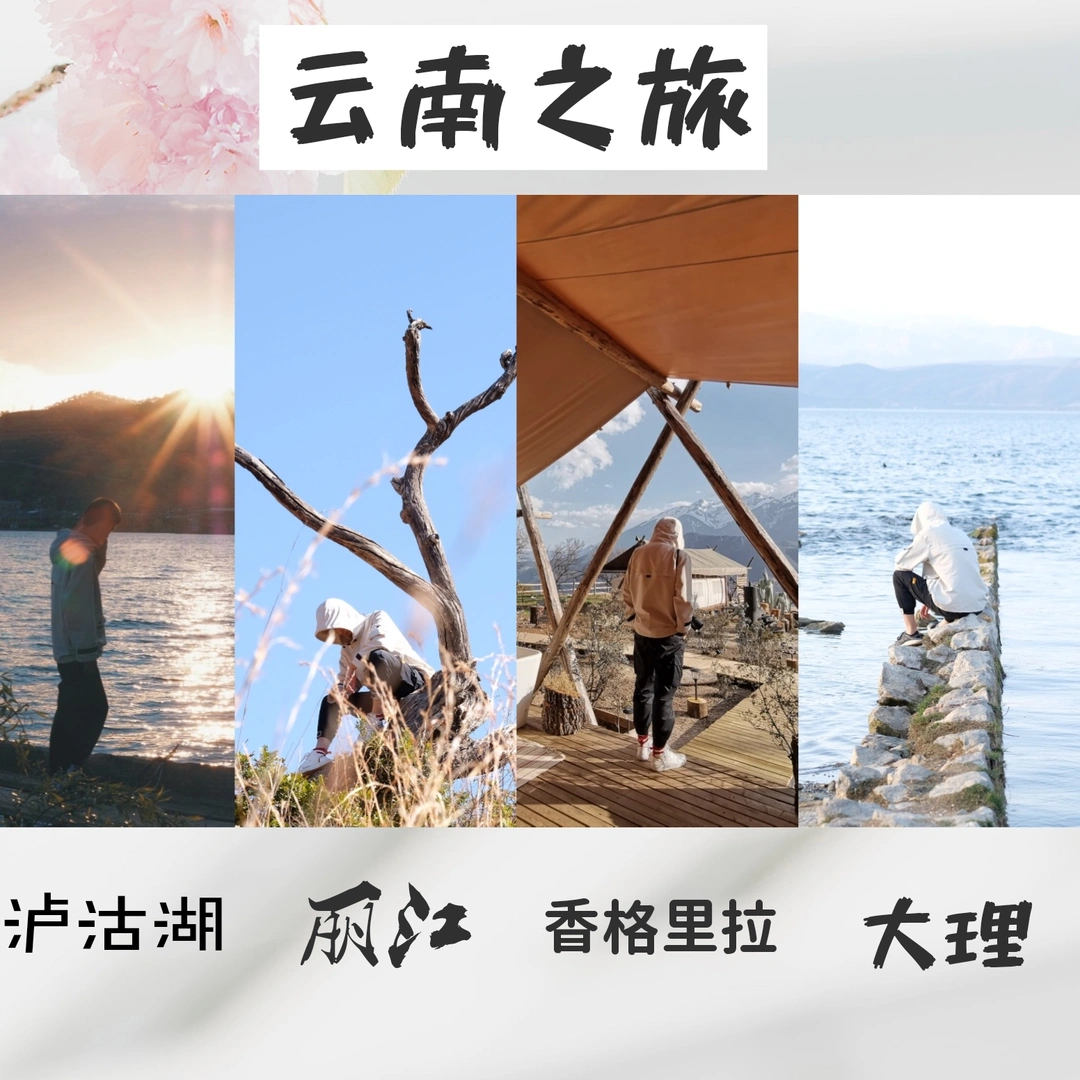
One Week Is Short, But Just Enough to Meet the Most Beautiful Yunnan | Hidden Gems (Dali—Erhai—Shangri-La—Lugu Lake—Lijiang)
The dream is to photograph my own Flowers and Youth
Follow my journey on WeChat Official Account: Lin Chen Live
Foreword
Have you ever had that moment—when there are one or two places in your heart that you feel you absolutely must visit, yet you keep putting off the trip?
For me, there are two such places. One is the vast, boundless northwest, where the wish to stargaze in the desert has been shelved for too long. The other is Yunnan. Spring in Yunnan is like an unfinished poem—Cangshan Mountain, Erhai Lake, blue skies, white clouds, wind, flowers, snow, and moonlight. Just thinking about it makes your heart race.
But honestly, when people mention Yunnan, many only picture the same old tourist snapshots—making a heart shape by Erhai Lake, holding an umbrella in an ancient town. Scroll through your social feed too much, and you might lose interest. It wasn't until I went there myself this March that I discovered: Yunnan can be experienced in a completely different way.
This guide is meant to share all those hidden surprises, one by one.
Photo Teaser

As usual, let me tempt you with some "photo tricks" first—
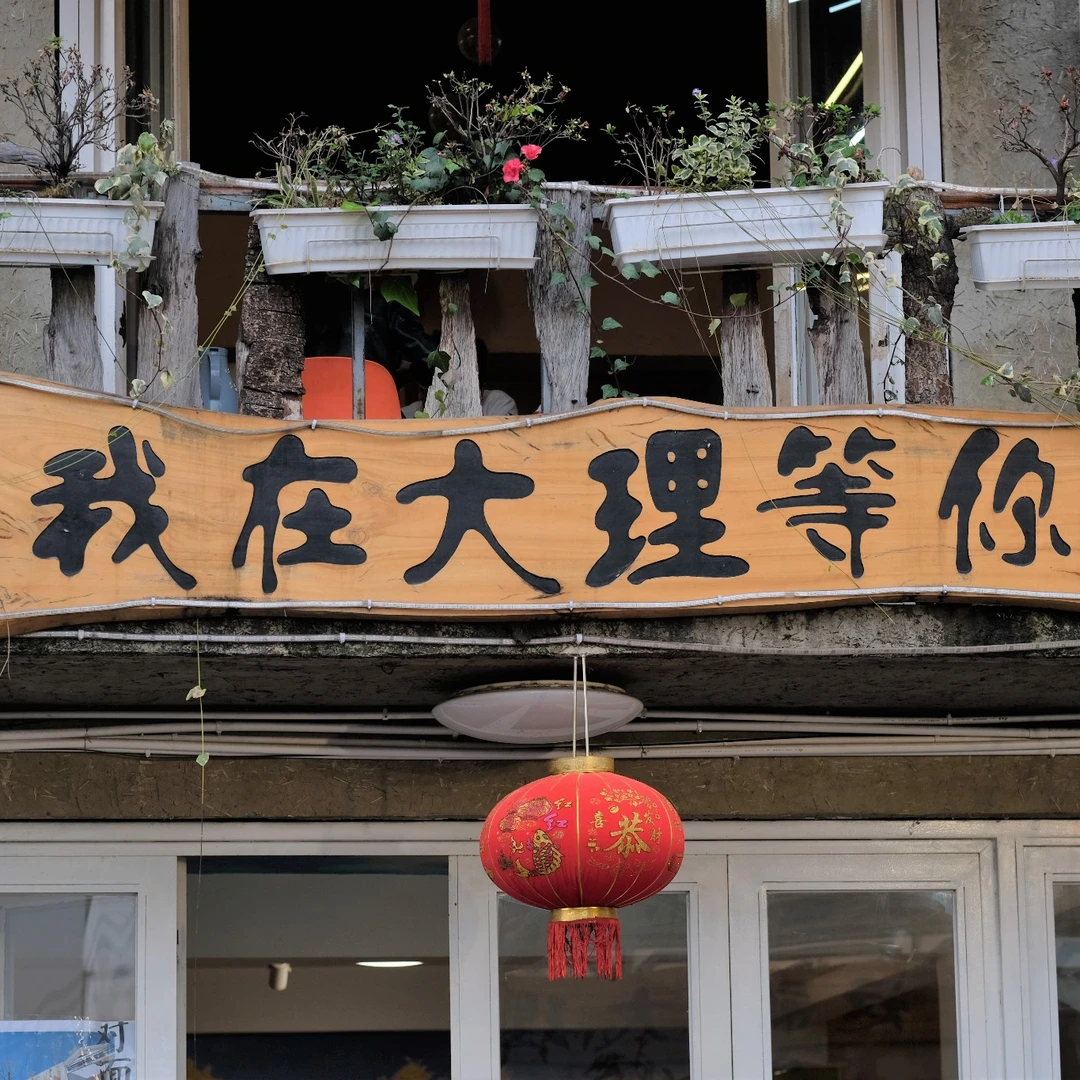
- Waiting for you in Dali
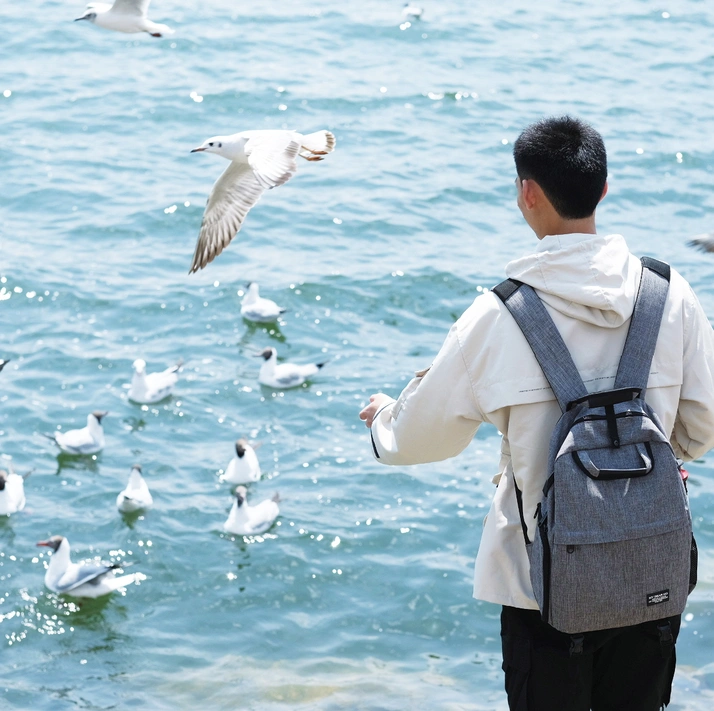
- Me and the seagulls
- Look, smile for the camera
- Facing the snowy mountain
- The scenery is all mine
- Pretending I'm in Turkey
- The mysterious Kingdom of Women
- BBQ
- A lively night
- Peaceful moments
First Glimpse of Dali: The Gateway to Yunnan
Dali was the starting point of my Yunnan journey.
My flight was delayed by an hour or two. By the time I landed, it was already dark, and to make matters worse, it started raining. I felt a bit unsettled—where was the promised wind, flowers, snow, and moonlight? But the moment I stepped into Dali Ancient Town, my mood flipped like a switch, instantly brightening.
Dali's first impression on me was this "whimsical" weather. One moment it was thundering and raining, the next it was blue skies and white clouds, as if nothing had happened.
Staying at "Jixiang Wannian": A Haven for Travel Fatigue
The hotel we stayed at is called "Jixiang Wannian" (auspicious ten thousand years), located on Renmin Road in the heart of Dali Ancient Town. Tucked away in a non-pedestrian alley, it offers tranquility amidst the bustle.
This place follows a Turkish-inspired theme, exquisitely designed and eye-catching. There are several common areas: a Western restaurant for an elegant dinner, a poolside lounge for sipping signature cocktails, a coffee shop for chatting with friends, or a spot to brew a pot of Yunnan black tea while sitting on the open-air terrace overlooking Cangshan Mountain and Erhai Lake. The themed rooms each have their own character—once you check in, you won't want to leave.
📍 Address: No. 444 Renmin Road, Dali Ancient Town
Staying here on the first night lifted my spirits. The decor style is very "Dali"—clean, fresh, and comfortable.
Wandering the Ancient Town: Artistry Is Not a Label, It's a Way of Life
After dropping off my luggage, I went for a stroll in the ancient town.
Dali Ancient Town is worth taking your time to explore slowly. I've visited many old towns and ancient cities, but this one still felt comfortable to me. Maybe it was the bright sunshine, or perhaps the gentle breeze. Although it's a tourist attraction, the artistic vibe here runs deep—within the high enclosing walls, you can shop, daydream, sip wine, or simply find a corner to stop and listen to music.
You are no longer just a passerby.
The handcraft shops, food stalls, bars, and even the inconspicuous little stores scattered in the corners of the ancient town are all part of the scenery. At the foot of Cangshan Mountain, facing Erhai Lake, spring is warm and flowers bloom. As you walk, you'll discover cherry blossoms in full bloom along the streets. Stepping on the uneven stone slabs, your heart feels lighter.
If you're unsatisfied with life, you can fly to Dali in just two hours.
Visiting "Brother Duan": A Wuxia-Style Dinner
Dreaming of the Nanzhao Kingdom, of course you have to visit "Brother Duan." This is a martial arts-themed restaurant based on The Demi-Gods and Semi-Devils, following the chivalrous and romantic path of Duan Yu and Wang Yuyan. It's full of style and incredibly popular. We booked two hours in advance and still waited an hour or two—if you want to check it out, go early.

The restaurant serves both stir-fries and hotpot, with dishes that are very characteristic of Dali. The service and atmosphere are both good, and their house-brewed liquor is worth a try.
A tip: If you have a heavy palate and find the flavors lacking, just tell the server, and they'll adjust it for you.
Recommendations: Glutinous rice ribs, spicy chicken, dry-pot shrimp, bamboo-tube beef, and wrapped wild mushrooms.
Nighttime Folk Music: The Soul of Dali
How can you say you've been to Dali without going to a bar to listen to some folk music? Strolling around the ancient town at night, finding a bar, and sipping "Wind, Flower, Snow, Moon" beer while humming along to folk songs is a must-do. (The "Wind, Flower, Snow, Moon" beer tastes pretty similar to other beers, honestly.)
Tips: The south gate of Dali Ancient Town is the liveliest, but I recommend staying near the east gate—it's quiet and convenient.
Circling Erhai Lake: Savoring Spring in Yunnan
Day two of my Yunnan trip was the happiest day!
The sky over Erhai Lake was impossibly blue, and the sunshine was so bright it made you want to scream. Spring at Erhai Lake can fulfill all your fantasies about Yunnan—the sparkling water, the seagulls dancing in the air. Nothing is more healing than this.
Even though it was already late March, I felt this was exactly what spring should look like.
Along the lakeside road, every stretch made me want to stop. The most beautiful Erhai Lake truly lives up to Yunnan in March. I've seen countless photos of Erhai, but only by standing there in person did I feel the surprise.
Tianjing Pavilion: First Stop, Wide Views
Starting from Dali Ancient Town, Tianjing Pavilion was our first stop on the Erhai loop. Is there anything particularly special about it? Not really. But the coastal road here offers expansive views. If there are no cars on the road, you can take some really appealing photos while walking along it.
Endless lake views, unobstructed.
The White Bus: An Instagram Spot Worth It?
You've definitely seen the iconic white bus. Before coming to Yunnan, I had been longing for this spot.
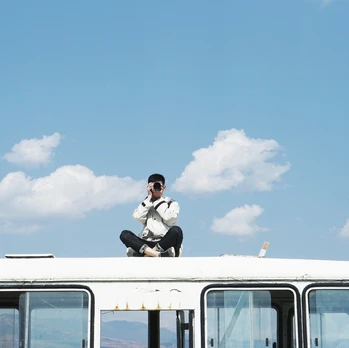
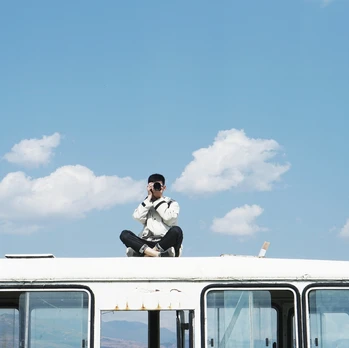
There are a few abandoned buses parked on an open grassy field, giving off a great vibe. Strike a pose casually, and the results are stunningly beautiful. This is a favorite spot for wedding photographers—there are many couples taking photos, so you'll have to wait in line to get on the bus alone. For example, in my photo, why isn't there a full view of the bus? Because it was surrounded by people (covering my face).
Hongshan Temple: Feeding Seagulls, Heart Melting
At Erhai Lake, feeding the seagulls is a must-do experience. Seeing a flock of seagulls, my heart almost melted. I kept taking photos, never getting enough.
Many people go to Xiaoputuo to feed the seagulls, but it's crowded there, and it's not easy to get close to them. Hongshan Temple is a great alternative. Just remember to prepare some biscuits or bread in advance.
Xizhou Ancient Town: A Living Fossil of Bai Culture
Xizhou is located 18 kilometers north of Dali Ancient Town, with Cangshan Mountain to the west and Erhai Lake to the east. During the Sui and Tang dynasties, it was called "Dalicheng" and was one of the "ten towns" of the Nanzhao period, a military stronghold. It preserves the largest and most complete collection of Bai-style residential buildings in the world, with hundreds of courtyards from various periods throughout the town.
Stroll through the town and experience the traditional Bai architecture. In the early morning, the ancient town is serene and peaceful. Buy a Xizhou baba (a type of stuffed flatbread)—the filling is rich, and the crust is crispy and fragrant. However, due to tourism development, the price has risen from 5 yuan to 10 yuan or more. We tried the Xizhou baba featured on A Bite of China—it's fried in oil and then briefly grilled over charcoal, coming out incredibly aromatic.
The exterior walls of traditional Bai buildings are painted in a retro red, perfectly complemented by Dali's bright sunshine. When we visited in spring, there was also a field of rapeseed flowers—it was simply gorgeous.
🕒 Opening hours: All day
📍 Admission: Free
🚌 Transportation: Take a bus from Dali Ancient Town or Xiaguan to Xizhou. Flag down the bus along the Yunnan-Tibet Highway. Fare is 5–8 yuan. It takes about 1 hour from Xiaguan to Xizhou, and you can make a round trip in one day.
Haishe Park: A Hidden Gem, Quiet as Can Be
In the evening, we took a horse-drawn carriage to Haishe Park. Riding the carriage with all its bumps requires some balance, but the upside is that it adds to your step count on WeChat.
The first time I encountered Haishe Park, I fell in love with it. It's a relatively小众 (off-the-beaten-path) place. As you enter, tall trees surround you on all sides, with sunlight filtering through the gaps—a unique charm. It's very, very quiet here.
At the end, you'll find the "bird's nest" below, a must-visit spot. This is a peninsula on Erhai Lake, named for its "tongue-like" shape. Shallow banks, dead trees, and reeds make it perfect for a leisurely walk and photos.
Facing a Snowy Mountain: Afternoon Tea in a Tent
With the greatest anticipation of this trip, I arrived at this secluded place.
When I actually stood at the foot of Haba Snow Mountain, I forgot to breathe for those first few seconds—it was too beautiful!
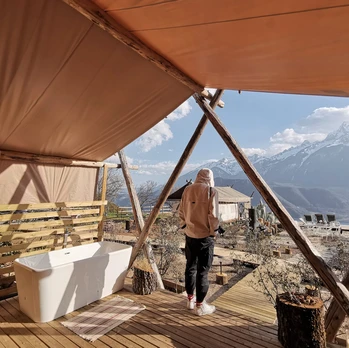
It turns out that Yunnan's poetry and distant lands go far beyond Dali and Erhai. Here, there is also such a place.
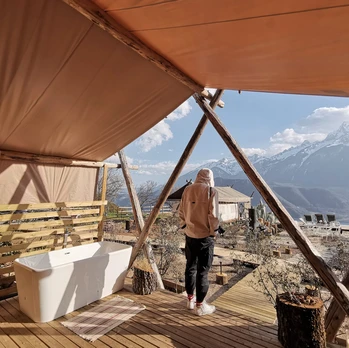
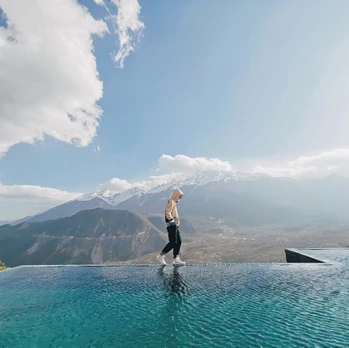
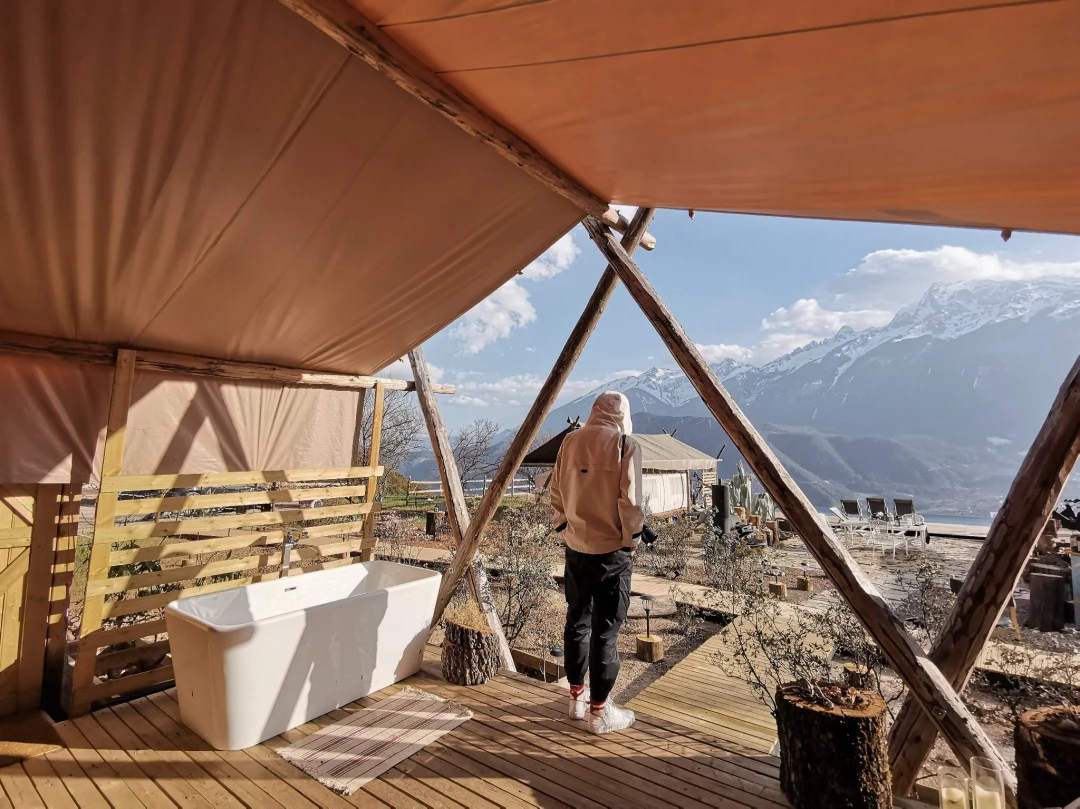
This is the Yunjie Gelanping Tent Camp. The tents face Haba Snow Mountain directly. Enjoying an afternoon tea and dessert feast in front of the snow-capped mountain—how delightful is that? Aren't these photos healing? The most healing thing in the world is food. A group of friends, seeing the spread, couldn't contain their excitement. We swarmed it, taking photos first before digging in.
The most romantic things to do here: - Stargaze from the Yunjie tent as the sky fills with stars - Watch the sunrise and sunset over the snowy mountain - Soak up the sun and enjoy afternoon tea - Bask in the sunlight by the pool
Tips: - Transportation: Contact the owner or book a car online. The route passes through Tiger Leaping Gorge Scenic Area (ticket required). - Accommodation: The tents are clean, with private bathrooms, water heaters, and Wi-Fi. But it's recommended to bring a multi-plug power strip, as outlets are limited. - Weather: Definitely bring a thick jacket. The temperature difference between day and night is huge, and there's a strong wind at night! - Booking: Search for "Yunjie Gelanping Tent Camp." It's best to book at least a month in advance. Tent availability is limited, and prices range around 1,000–2,000 yuan.
The Immortal's Abandoned Fields: Meeting China's Version of Pamukkale
I had no idea that Yunnan had a place like this—it completely refreshed my understanding of the province, showing it's far more than just Dali and Erhai.
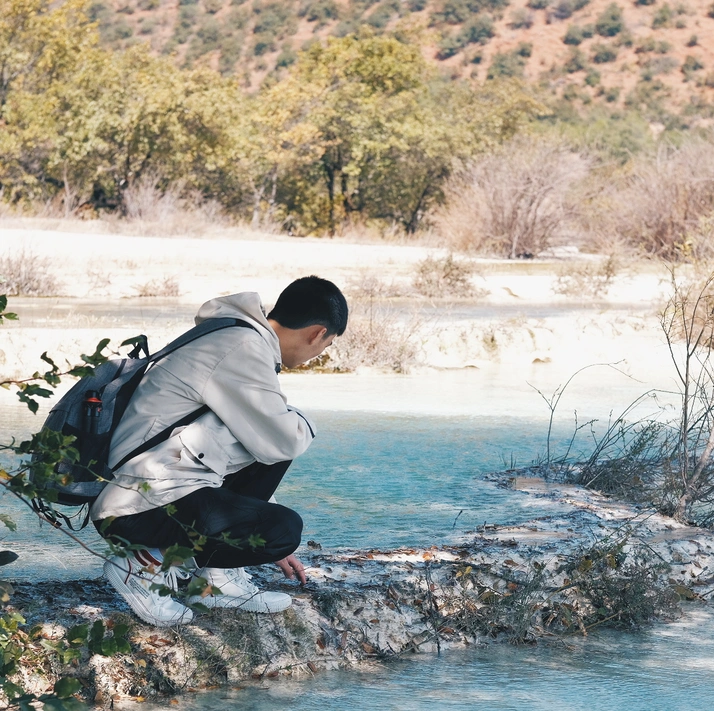
Baishuitai (White Water Terrace) is China's version of "Pamukkale," and it also has a beautiful name: "The Immortal's Abandoned Fields." Seeing it with my own eyes, it felt unreal, like stepping into a fairyland.
Baishuitai is about 100 kilometers from Shangri-La county town. It was formed by spring water containing calcium bicarbonate slowly flowing down, with carbonates gradually precipitating over the years to create semi-circular white natural limestone terraces. Due to its remote location, there aren't many tourists, so you can enjoy this stunning scenery all to yourself.
The babbling stream cascades down, sparkling on the "steps" with a hint of green, creating a dreamlike effect. The water is also very cold—I dipped my hand in and felt freezing after just a few seconds—but it's crystal clear, like a mirror.
Tips: Head from Lijiang towards Tiger Leaping Gorge. Since this old road passes through the scenic area, you have to buy a ticket for Tiger Leaping Gorge (mandatory—keep the ticket safe, as you'll need it again when re-entering). Pay special attention to safety. The road is rugged, with a rockfall-prone cliff on the left and the Jinsha River on the right. It's not recommended to travel this route during the rainy season, and never rush through after dark.
Open-Air BBQ: Shili Snow Mountain Wild Luxury Estate
After visiting Baishuitai, we headed to Lijiang's Shili Snow Mountain 360-Degree Golf Wild Luxury Estate. Doesn't the name sound impressive? You have to share your location when you come here.
Arriving at this wilderness estate as the sun set, it felt a bit like a "courtyard house." How luxurious is "wild luxury"? The entire estate faces Jade Dragon Snow Mountain, with an open area in the yard. From the rooftop, you can get a panoramic view of the mountain.
The estate owner was once the champion of the Guangzhou regional golf tournament, so the place is equipped with unique snow-mountain golf facilities, attracting a crowd of outdoor enthusiasts. Despite being in a wilderness setting, the guesthouse is tastefully decorated.
After the light meals at Baishuitai, we were ready to make up for it here. As the sunset glow filled the estate and a gentle breeze blew, having a BBQ felt absolutely perfect! A big thank you to the "chefs" at the grill—I think this BBQ was better than many I've had before.
The owner is also a photography enthusiast. While we were eating, he came over to take photos of us, pretending to be part of a photography group. I learned to play pool with the experts, and the night ended with a game of Werewolf. As a beginner, I was forced to join, and I ended up being the werewolf every round—I could barely keep up the act (covering my face). Advanced players like Brother Yufei and Teacher Wang were incredibly skilled, talking their way through situations I found hopeless. The group was full of hidden talents.
I went back to sleep around midnight, because tomorrow would be a long journey.
By Lugu Lake: Waiting for the Stars and for You
Gentle breeze, grassland, sunlight pouring down;
You by my side, the sunset stretching far.
The water stirs the evening glow, the afterglow creeps into your hair…
This is the theme song of Dear Inn.
Spring has arrived, and the day to look forward to visiting Lugu Lake has come. The sun is warm but not scorching; occasionally the wind blows, but the slight chill isn't aggressive.
The drive from Lijiang to Lugu Lake takes about 6 hours, winding through countless mountain bends. The bumpy ride left my backside sore. But thinking about the upcoming Lugu Lake, I couldn't help but feel excited. You know, last summer I had planned to volunteer at Lugu Lake, but the trip was canceled due to weather. This time, I finally made it.
Lugu Lake straddles Sichuan and Yunnan provinces. I think it must be fate that between these two enchanting regions, such a beautiful lake could be born.
"According to the Mosuo people's Daba religion, there is a mountain where the Goddess Gemo lives. She was abandoned by her lover, and her tears turned into Lugu Lake." When I read this legend, I was captivated.
In spring, the most beautiful love confession might be: I want to invite you to Lugu Lake.
When I first arrived, it was overcast. Taking photos on an observation platform, everything looked gray. I was so disappointed I wanted to leave. But luckily, the weather cleared up later. Lugu Lake on a good day and a bad day are two completely different things—I felt fortunate.
Tinghua Hall: A Guesthouse with Views from the Window
I recommend this guesthouse, where you can enjoy a panoramic view of Lugu Lake. With a dozen or so rooms, almost all of them offer lake views and sunrise/sunset vistas. The iconic glass ball for photos is, of course, available—perfect for great shots!

Wake up to a ray of morning sunshine, stretch on the balcony, and claim the seamless view of sky and water for yourself. In the evening, lie on the sofa, sip a cup of tea, and wait for the sunset—time feels endless.
Breakfast is also good, with rice noodles, pumpkin porridge, eggs, egg pancakes, and fruit slices. There are several restaurants downstairs from the guesthouse, separated from the lake by just one road, but it's very quiet.
Tips: - The guesthouse is near Dazu Dock, not in Xiaoluoshui. You can find it on Baidu Maps. - The front desk can arrange a Lugu Lake loop tour, preferably booked a day in advance. - The guesthouse is located in Sichuan Province—after all, Lugu Lake spans both Sichuan and Yunnan.
Lige Peninsula: Lake and Mountain Scenery with Seagulls
Lige Peninsula is a beautiful peninsula on Lugu Lake, surrounded by water on three sides and embraced by green hills. From the observation deck, you can overlook the lake's scenery—scattered boats floating on the surface, the water reflecting the blue sky, incredibly charming.
Walking down from the observation platform, you'll see prayer flags fluttering in the wind. Further in, there are rows of neatly arranged pig-boats and seagulls. The colorful boats paired with the seagulls are a perfect match, evoking a warm feeling.
You can stand here and wait for a picture of sunlight, lake, seagulls, and colorful boats—it will surely live up to the March spring at Lugu Lake. Drifting on the lake in a gentle breeze, away from the city's noise, forgetting the passage of time, rocking in the heart of the lake. Look up at the drifting clouds, and your heart feels as comfortable as the spring breeze and blooming flowers.
Taking a boat costs about 30 yuan per person (I can't quite remember). Our group of five bargained it down to 20 yuan each. Since we were short on time, we asked the boatman to just drift around for about ten minutes. One important tip: be sure to buy food for the seagulls (5 yuan a pack)—it's the only way to attract them to follow your boat, making for great photos.
Lovers' Beach: Two Lovers' Beaches, Two Kinds of Romance
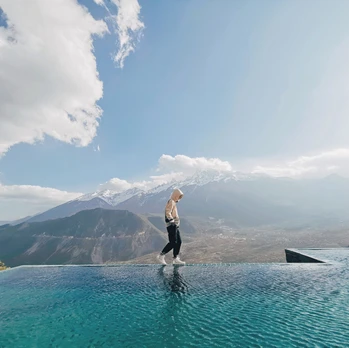
Since Lugu Lake is half in Yunnan and half in Sichuan, there are two Lovers' Beaches—the Yunnan Lovers' Beach and the Sichuan Lovers' Beach.
Take a morning stroll here as the sun just rises, with the lake water gently rippling. If you're lucky, you might even meet a little dog to take photos with—one followed us along the entire path. At dusk, it's even more beautiful, perfect for watching the sunset with your loved one. So, when you go to Lugu Lake, don't go alone—bring your boyfriend or girlfriend!
Caohai (Grass Sea): An Emerald Wetland
Caohai represents another side of Lugu Lake's beauty. Formed by years of silt accumulation, the water is shallow, giving rise to dense reeds. This vast wetland, covering tens of thousands of acres, is like an emerald inlaid on the eastern side of Lugu Lake, with various aquatic plants, animals, and rare birds creating a stunning natural landscape.
In summer and autumn, Caohai is lush and green; in winter and spring, the water recedes, and the grass turns golden. But no matter when you visit, you'll have a unique experience. Mosuo women row boats while singing folk songs, blending into the mountain and lake, carefree and intoxicating.
The "Walking Marriage Bridge" is a must-do at Caohai, also known as the Lovers' Bridge. It's a 300-meter-long wooden bridge extending through the reeds. Legend has it that this is where Mosuo men and women meet for their "walking marriage" tradition, crossing the grass sea to reach the opposite village. As the last "Kingdom of Women" in China, the love here is unique. The Mosuo people living by Lugu Lake practice a matrilineal marriage system (commonly known as "walking marriage"), where men don't marry and women don't wed.
Fish Flavor: The Taste of Lugu Lake
How can you visit Lugu Lake without eating fish? Their spicy paper-wrapped fish is incredibly delicious! Highly recommended! Also, the QQ noodles (chewy rice noodles) are wonderfully elastic—one bowl is never enough!
After drinking "Wind, Flower, Snow, Moon" beer in Dali, you have to try Lugu Lake's own beer. Personally, I don't think Lugu Lake's beer is as good as regular beer, but not trying it feels like something's missing. In the end, eating happily is what matters most.
Starry Sky: Romance at Four in the Morning
After dinner, we went back to rest early because we had arranged to get up at dawn to see the stars. Although the night was cold, the beauty of the starry sky was absolutely worth waking up at 4 a.m. We walked about a kilometer along a small path, found an open area, looked up, and were stunned.
I hadn't seen a sky like this since I was a child. I don't even remember the last time I seriously looked at the stars. Staring at them for a long time, I felt like I was floating through the universe. I wanted to reach out and touch this brilliant sky—it was too beautiful to close my eyes. A gentle breeze blew, and I could faintly hear the sound of lake water lapping against the boats—dreamlike and surreal.
Last year's wish, fulfilled this year…
Life is short—prioritize what you want to do. In your lifetime, invite that special someone to Lugu Lake.
Slow Travel in Lijiang: Saying Goodbye to a Long-Awaited Yunnan
My last night in Yunnan was in Lijiang. We returned from Lugu Lake to stay in Lijiang. As the trip neared its end, I felt a bit reluctant.
The guesthouse was made up of about ten traditional courtyard houses in Lijiang Ancient Town, a standard Naxi-style courtyard. In the courtyard, you could enjoy the view, admire flowers, sip tea, and chat. You could also climb to the large observation deck on the third floor of the main building for a panoramic view of the surroundings. The rooftop was great for sunbathing in the afternoon, and you could watch the sunset glow in the evening.
Walking from the lobby all the way in, you'd push open the door to a bright and spacious room, complemented by unique furniture design, making for a comfortable stay. According to the butler, all the furniture, indoors and outdoors, big and small, was custom-made from rosewood. The new Chinese Zen-style decor, paired with classic and elegant interior design, was exceptionally comfortable. The natural wood tones, clear textures, and casual shapes all outlined a sense of natural charm and mood. Lying on the soft, cozy white bed, all the fatigue of the journey melted away.
Dianxi Prince: A Meal That Tells the Stories of Lijiang
After settling in at Huazhu, it was time to eat! We went to Dianxi Prince (Western Yunnan Prince). Just hearing the name made it feel very Yunnan.
Dianxi Prince uses Lijiang's local chieftain history as its backdrop, telling stories of the rise and fall of the Mu Mansion, the horse caravans traveling thousands of miles, and the Mosuo customs by Lugu Lake. The menu focuses on Naxi cuisine, supplemented by Yunnan specialties, taking you on a journey through Song and Yuan dynasty charm and Dongba culture.
I saw good reviews for this place online, so I came to check it out. The rustic exterior gave way to a completely different world inside—excellent atmosphere, clean and tidy, incorporating local architectural features for a refreshing experience. The staff wore traditional local costumes and were very welcoming. They repeatedly asked if we were satisfied with the food and if we had any suggestions—a very positive impression.
The dishes immediately gave a clean, bright feeling. Just looking at them made you want to sneak a swallow. The food was flavorful but not overly intense; some dishes had chili, but it was mild, suitable for many palates.
A few recommendations: - 腊排骨 (cured pork ribs) : A signature Lijiang dish. Unlike other places, theirs is stir-fried, very fragrant, perfect with drinks or as a snack. - 包烧牛肉 (banana leaf-wrapped beef) : Wrapped in banana leaves, it looks very Yunnan. The beef is tender and soft, and it contains kapok flowers, which I'd never tried before—very interesting. - 野生菌 (wild mushrooms) : A representative Yunnan dish. The waiter said it contains several types of mushrooms, very fragrant and crispy, with some clams inside for freshness. - 青梅酒 (green plum wine) : Lijiang has many fruit wines, but theirs is the best I've tasted. If you're looking for that slightly tipsy feeling, you can't miss it.
📍 Address: No. 149 Zhongyi Lane, Guangyi Street, Gucheng District, Lijiang, Yunnan (50 meters from the White Dragon Square parking lot entrance, 150 meters from Mu Mansion)
🕒 Business hours: 11:00 – 23:30
Night Tour of Lijiang Ancient Town: Lights Up, Bustling and Lively
In the evening, we strolled through Lijiang Ancient Town. At night, the city was brightly lit and bustling with activity. Lijiang Ancient Town, also known as Dayan Ancient Town, is especially charming when the lights come on at night.
If you want to see the night view of the ancient town, you can climb Lion Hill. But we didn't go—we just wandered around a bit, as we were tired from the journey. There's a popular "internet-famous" street that's a must-visit, incredibly beautiful, but a bit crowded. Taking a good solo photo requires a lot of patience.
I happened to pass by a tattoo shop and suddenly felt like getting one. They say you need a sense of ritual, so I got a spray-painted tattoo of the word "change," hoping for some breakthroughs and changes this year. It's a temporary tattoo that fades in about a week.
The night view of Lijiang Ancient Town was quite nice. There were many stalls selling floating lanterns, and the dotted lights on the river looked beautiful. At night, the bars and music venues were very lively, with various styles—some had groups of people partying, dancing, and having fun together, while others had a single person sitting on stage quietly playing folk songs on a guitar.
On our way, we also bought some flower cakes (huabing, a traditional pastry filled with edible roses) to bring back as gifts. Afterward, we returned to the guesthouse to rest. Tomorrow, everyone would be heading home one by one.
Shuhe Ancient Town: The Final Tranquility
On the last day, our flight was in the afternoon, so we visited the nearby Shuhe Ancient Town.
Shuhe is a well-preserved important town on the ancient Tea Horse Road. Compared to Dayan Ancient Town, it's notably quieter and still feels like a pristine haven. The architecture follows the traditional Naxi style, with the "three rooms and one screen wall" layout being a typical Naxi residential structure.
As soon as you enter, you'll see the Wishing Corridor, covered in blessings. If I had a pen, I would have written one too. Shuhe Ancient Town is nestled between mountains and water, rich in ethnic customs. If you have enough time, I strongly recommend staying here for a couple of days.
Shuhe is a more serene place than Lijiang. Wandering by Longquan Spring, strolling along the ancient paths, you'll see Naxi houses scattered in an orderly fashion. The well-preserved ancient roads, markets, and waterways always evoke a strong cultural atmosphere.
The "Jiuding Dragon Pool" within the town is surrounded by weeping willows and cypress trees reaching for the sky. The spring water is clear, and you can count the fish swimming in it. The water overflowing from the pool meanders through the streets and behind the houses, gurgling audibly. The smooth stone slabs on the streets, worn by countless feet and horse hooves, still seem to reflect the prosperity of the past. From the "Jubao Mountain" behind the town, you can overlook the entire ancient town.
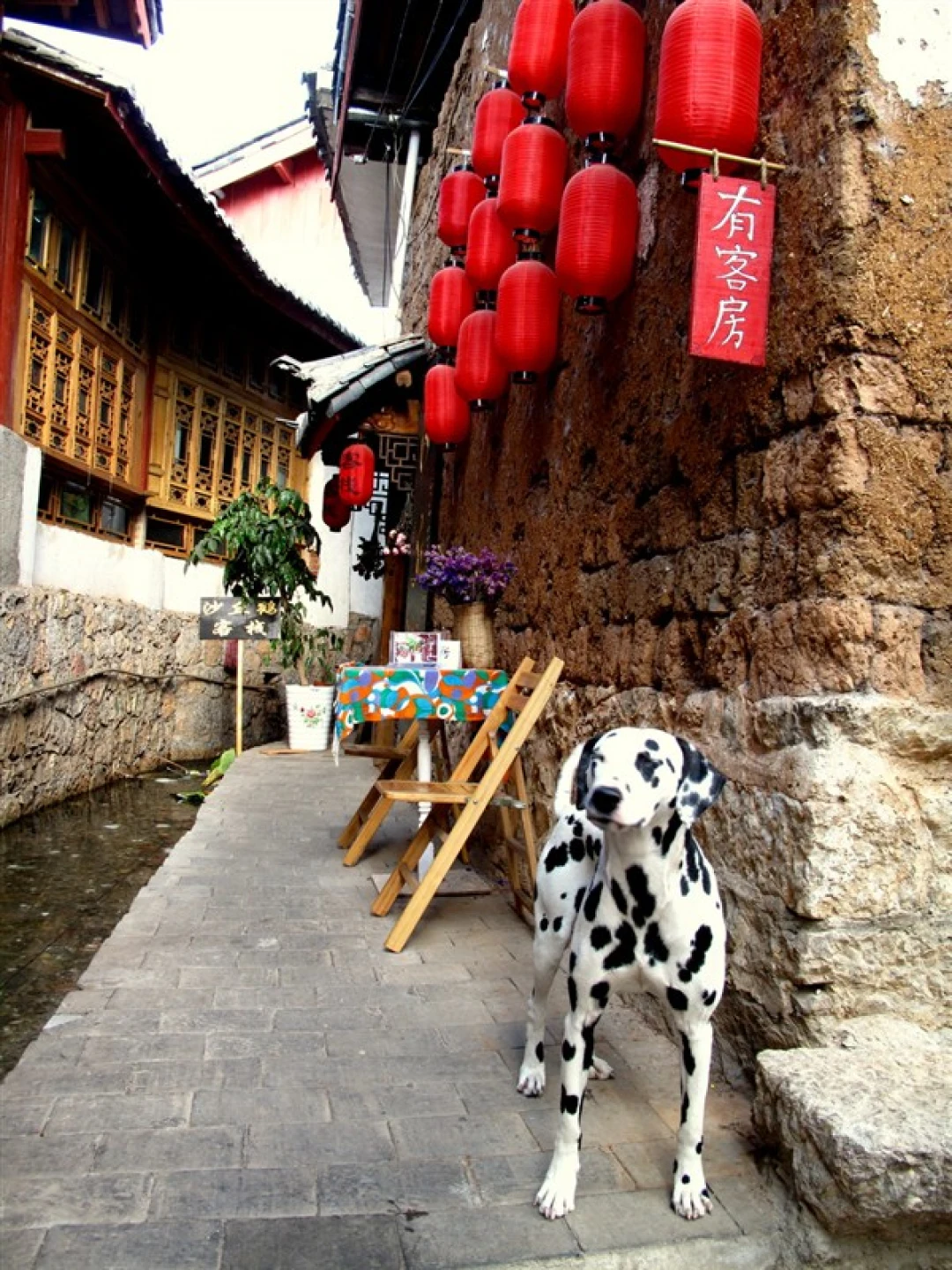
Honestly, I was a bit envious of the dogs here. Basking in the warm sunshine, lying on the ground to sleep—it looked so comfortable. The slow pace of the entire town was incredibly relaxing.
Last Meal: Rice Noodles, A Farewell to Yunnan
Around noon, we returned to Lijiang Ancient Town. Since our luggage was still at the guesthouse, we stored it first before going out to eat. In the afternoon, we would head to Lijiang Airport.
Seeing good reviews online, we specifically came to this place, said to have the best rice noodles in Lijiang Ancient Town. The shop had a fresh, minimalist decor, located at No. 32 Chongren Lane, Qiyi Street. The noodles were the thick Yunnan-style rice noodles. The chicken broth was incredibly fresh, with a strong chicken flavor, containing boneless black chicken meat. The portion was generous. Since the sun was strong that day, I also ordered an iced bayberry soup—refreshing and comfortable!
Finally, we went to a place in the ancient town that sells postcards. We wrote a few words to friends far away, bringing this Yunnan trip to a close.
Epilogue: One Week Is Short, But Just Right
One week—not too long, not too short. But it's enough for you to meet the most beautiful Yunnan.
From Dali's ancient town to the seagulls of Erhai Lake, from the tent at the foot of Haba Snow Mountain to the fairyland of Baishuitai, from the starry sky over Lugu Lake to the vibrant lights of Lijiang—along this journey, I saw another side of Yunnan.
You should also read:
Yunnan Travel Mastery: From Beginner to Pro-Level Player – A Complete Guide
Yunnan Travel Mastery: From Beginner to Pro-Level Player – A Complete Guide "Either travel or read, but your body and soul must be on the road." This quote has been repeated countless times, but very few people truly manage to be "on the road" and…
Continue reading...
Escaping Nanning, Falling Under Lijiang's Spell: Our Four-Person, Ten-Day Yunnan Dream
Escaping Nanning, Falling Under Lijiang's Spell: Our Four-Person, Ten-Day Yunnan Dream Before We Set Off: No Pain, No Obsession Have you ever had that impulse—suddenly tired of the office fluorescent lights, the crush of the subway, the endless parade of identical takeout boxes, and just…
Continue reading...
Solo in Yunnan: A Wanderer’s Guide to the Land of Eternal Spring
Solo in Yunnan: A Wanderer’s Guide to the Land of Eternal Spring There’s something magical about traveling alone. No compromises, no schedules to keep, no one to please but yourself. I’ve been on the road for nearly three months now, and not once have I…
Continue reading...