Passing Through Yunnan - November 2025
Passing Through Yunnan - November 2025
The Cangshan Mountains and Erhai Lake remember me, but only as the shadow of a passerby.
The experiences and feelings are my own—lazy, chubby, and content. The poetry was created by AI, including the lyrics and the song itself.
A quick complaint: AI song creation is still far from mature. Not only does the style often fail to match what you request, but you have to try multiple times—sometimes dozens—before finding something satisfactory. The pronunciation issues in Chinese are especially obvious. Some words are pronounced incorrectly... and some words are treated as Cantonese, or even as Japanese kanji pronunciations... Still, at least I turned my own experiences into a song. I know absolutely nothing about music, and if I had to do it myself, there's no way I could have produced anything at all.
Itinerary
Yunnan had always been on my travel bucket list, but I never expected this trip to actually happen. Originally, I was just going home to visit family. If I had time, I planned to explore Laojun Mountain and photograph the migratory birds lingering at the Yellow River wetlands... But then my fingers got itchy. I started watching travel videos about Yunnan and discovered that five- or six-day itineraries were quite common. Coincidentally, airfare wasn't too expensive either. So I gritted my teeth and squeezed seven days out of this homecoming trip to go see Yunnan...
Considering that flying into and out of Kunming would mean backtracking—which isn't time-efficient—and flying into Kunming but out of Lijiang would be too expensive, I chose to fly into Lijiang and out of Kunming. This way, my short seven days could be used wisely. Since I'm relatively familiar with domestic travel in China, I didn't prepare a detailed itinerary in advance. Instead, I figured things out as I went along. The itinerary below is a summary after the fact.
As it turned out, trying to cover the main attractions of Lijiang, Dali, and Kunming in seven days was a bit too ambitious. Some major sights were inevitably missed. Fortunately, we had a good attitude about it: whatever we saw was a gain, and what we missed could wait for next time. If we couldn't do an in-depth tour, at least we could get a fleeting impression. Did we want to rush around like an army on the march just to see one more attraction? No way.
November 16 – Lijiang
On the morning of the 16th, I took the high-speed train from Zhengzhou East Station to the airport. The station is huge, plus we needed to use the manual ticket counter... What should have been a relaxed schedule turned into a rushed, messy scramble.
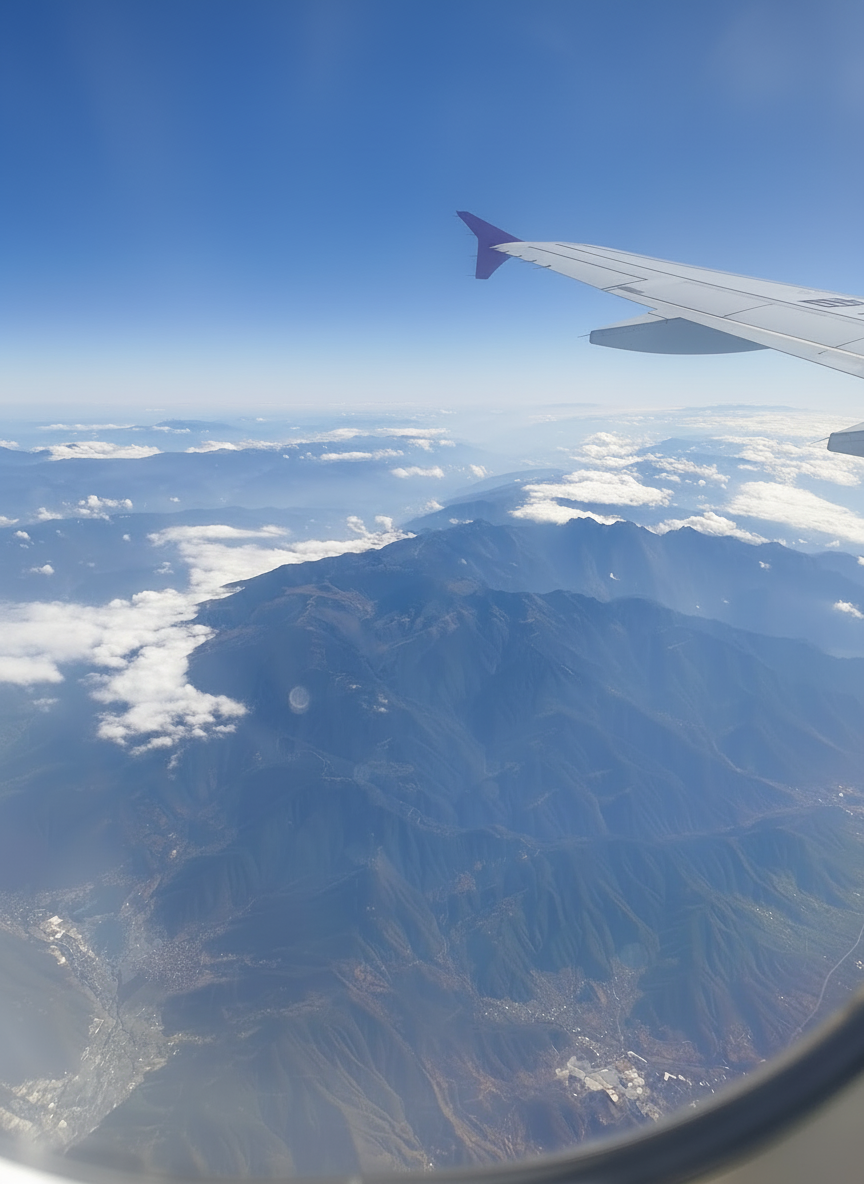
After entering the Yunnan-Guizhou Plateau, I snapped a few photos from the plane. The mountain ranges stretched and twisted among the white clouds... Even I, someone who grew up in the Taihang Mountains, was amazed by their grandeur and steepness.
We waited at the airport for two or three hours for Grandma Wolf to arrive from Guangzhou. Then we took a bus into the old town. Lijiang Airport isn't very big, but the transportation is well-organized. Buses to the old town run every half hour, and the staff even introduces the main attractions and transportation options in the old town during the ride.
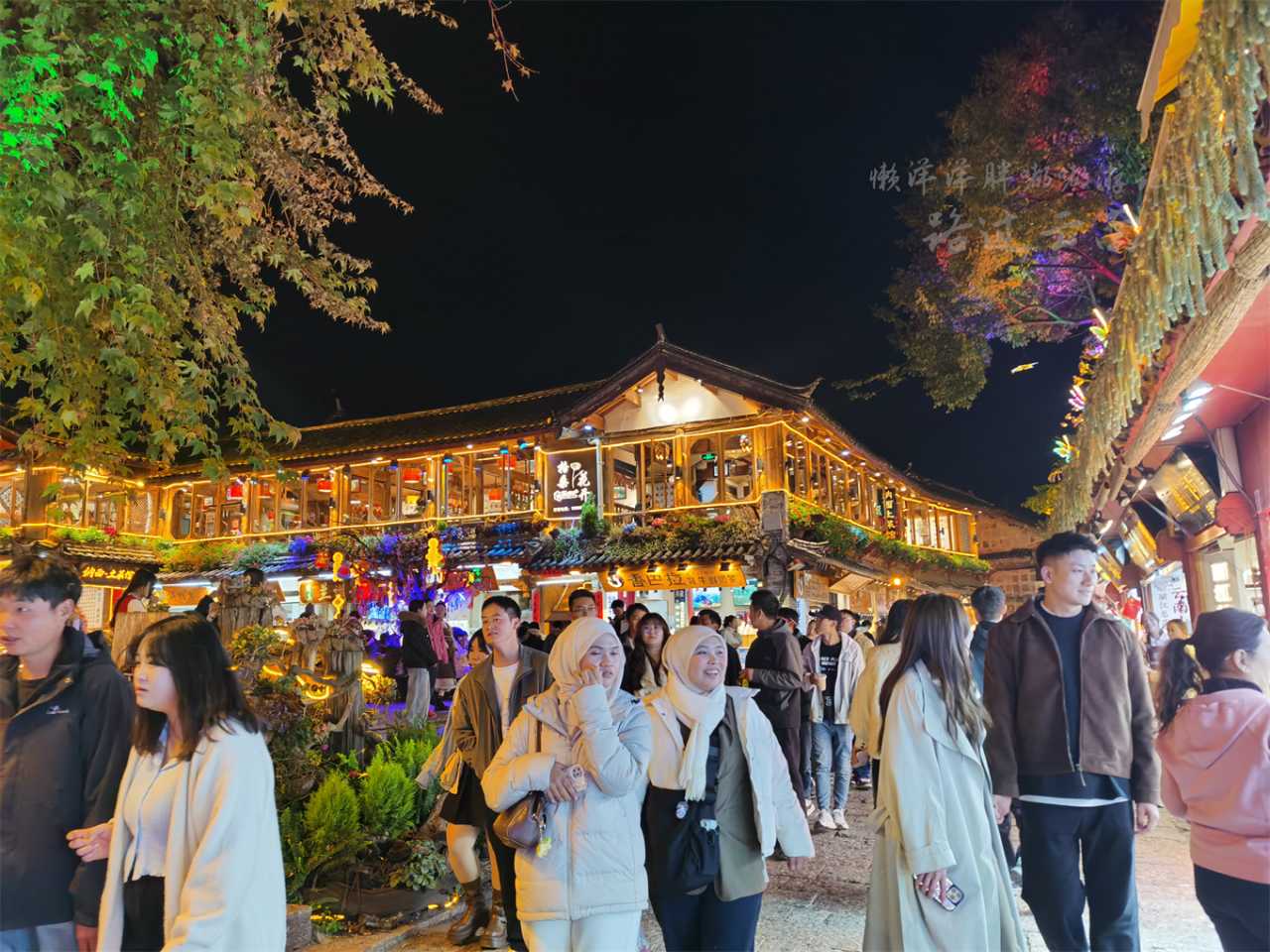
We got off the bus in the old town and dragged our suitcases over the uneven bluestone paths. After checking into our guesthouse and arranging the next day's trip to Shangri-La with the owner, the lights were already coming on.
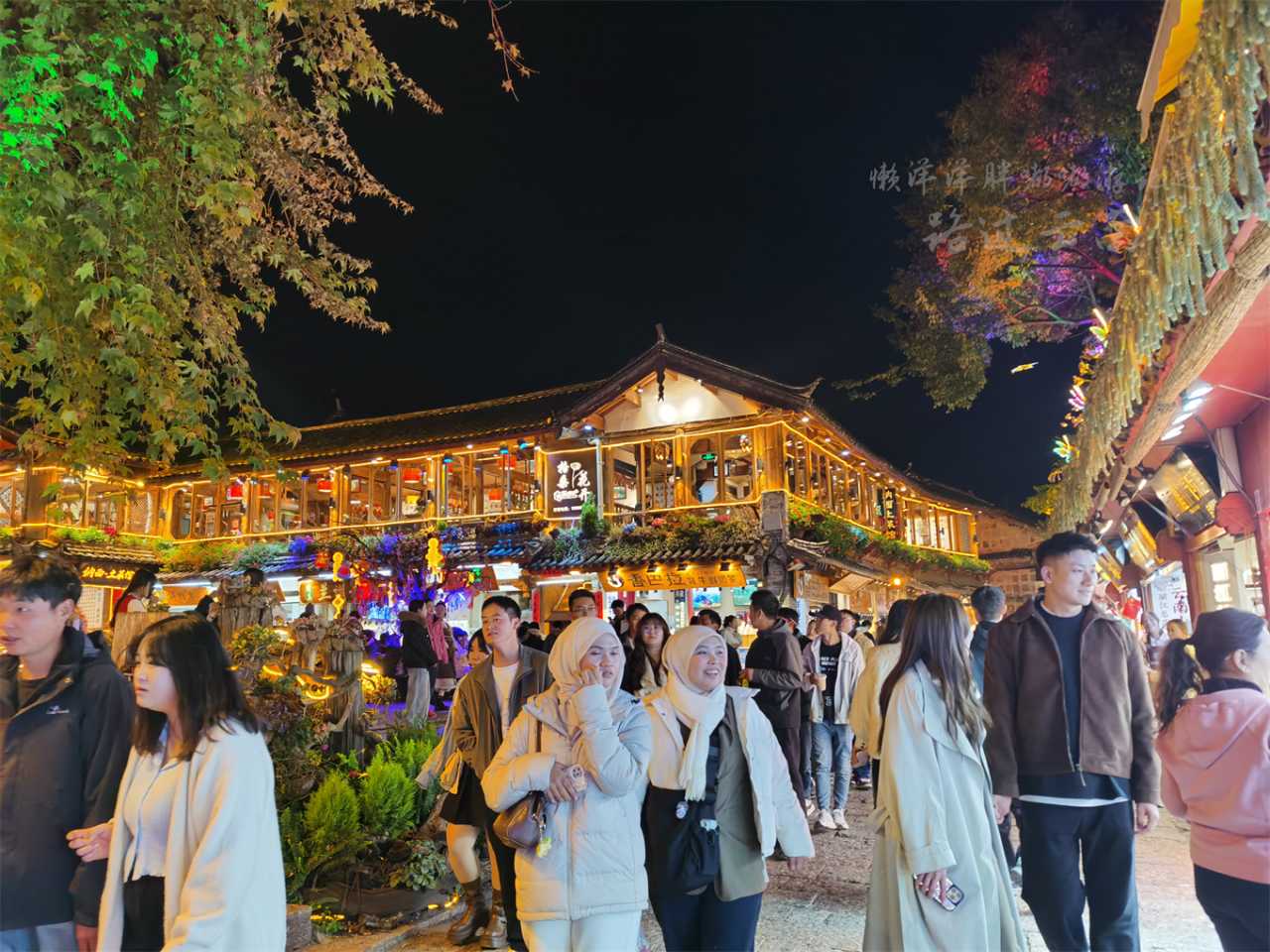
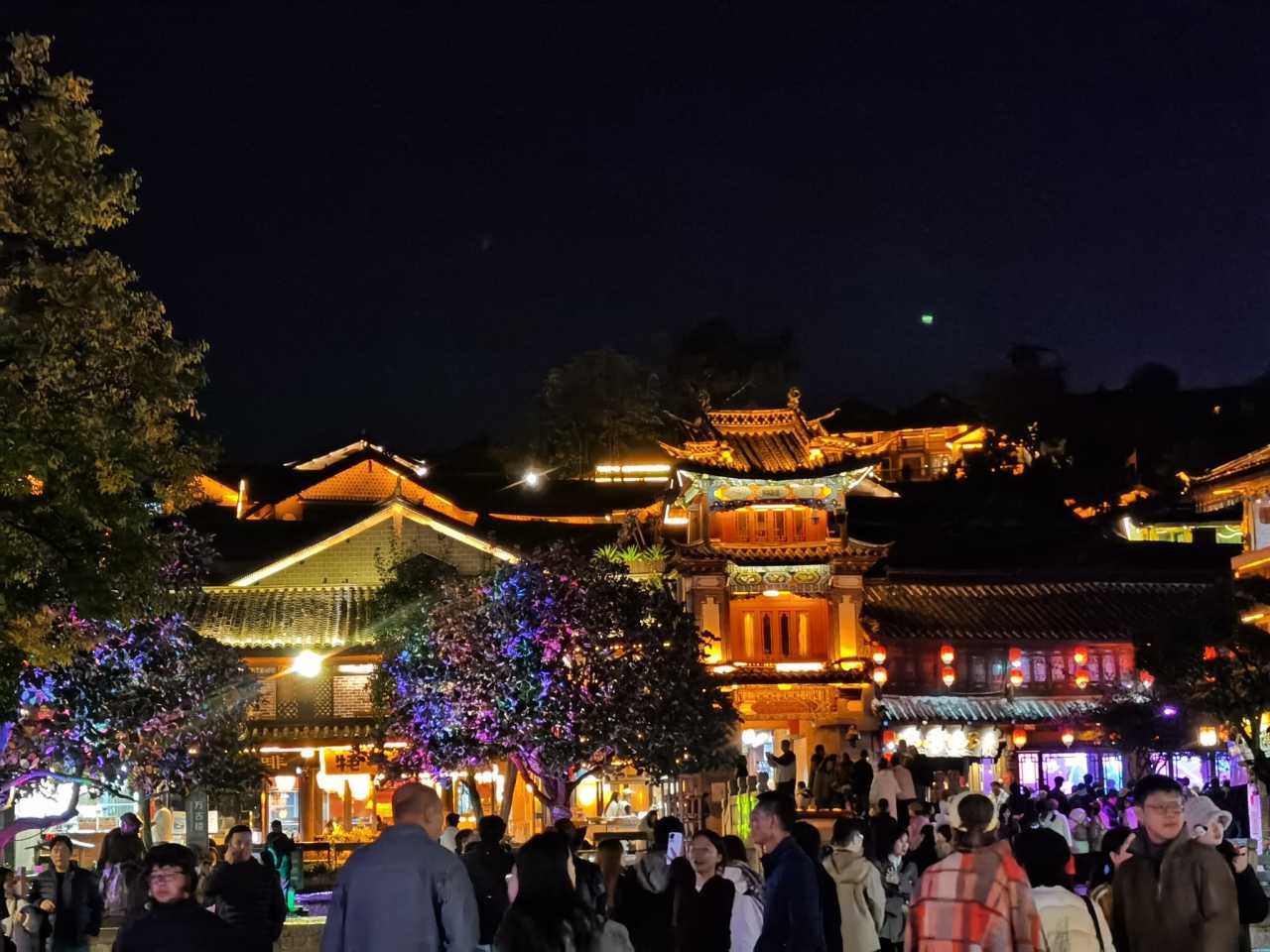
We wandered around casually. The old town at night was packed with tourists, bustling and lively.
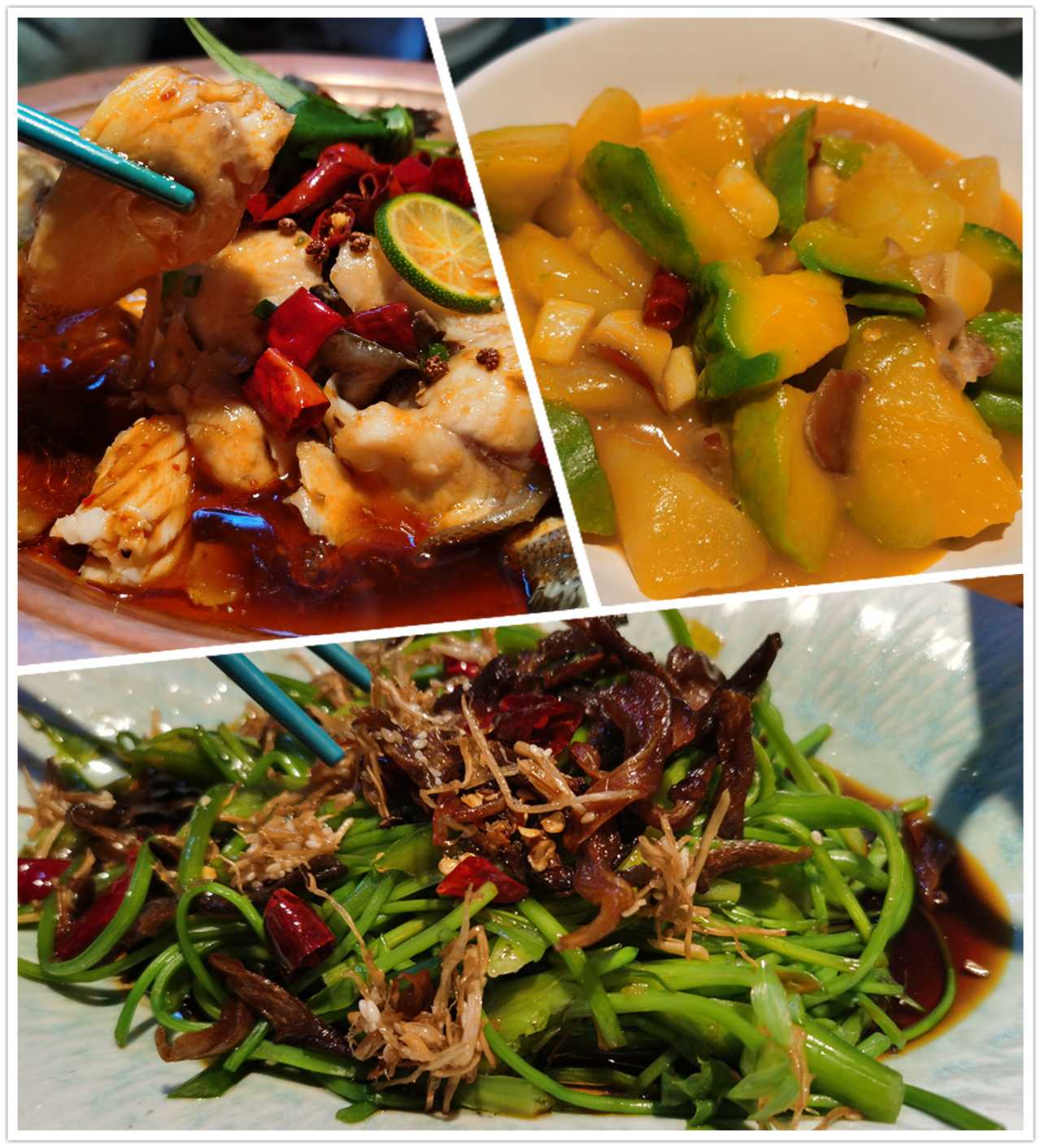
Near our accommodation, we found a Yunnan restaurant that seemed popular and had good online reviews, so we decided to have dinner there.
A pot of snow mountain fish, a plate of "water spinach" (a local aquatic vegetable), and a dish of ham stir-fried with some kind of melon. Both the fish and the vegetables were very fresh, cleanly prepared, and delicious. Only later did I learn that this restaurant, Yunxueli, is actually quite famous in Lijiang.
November 17-18 – Tiger Leaping Gorge & Shangri-La
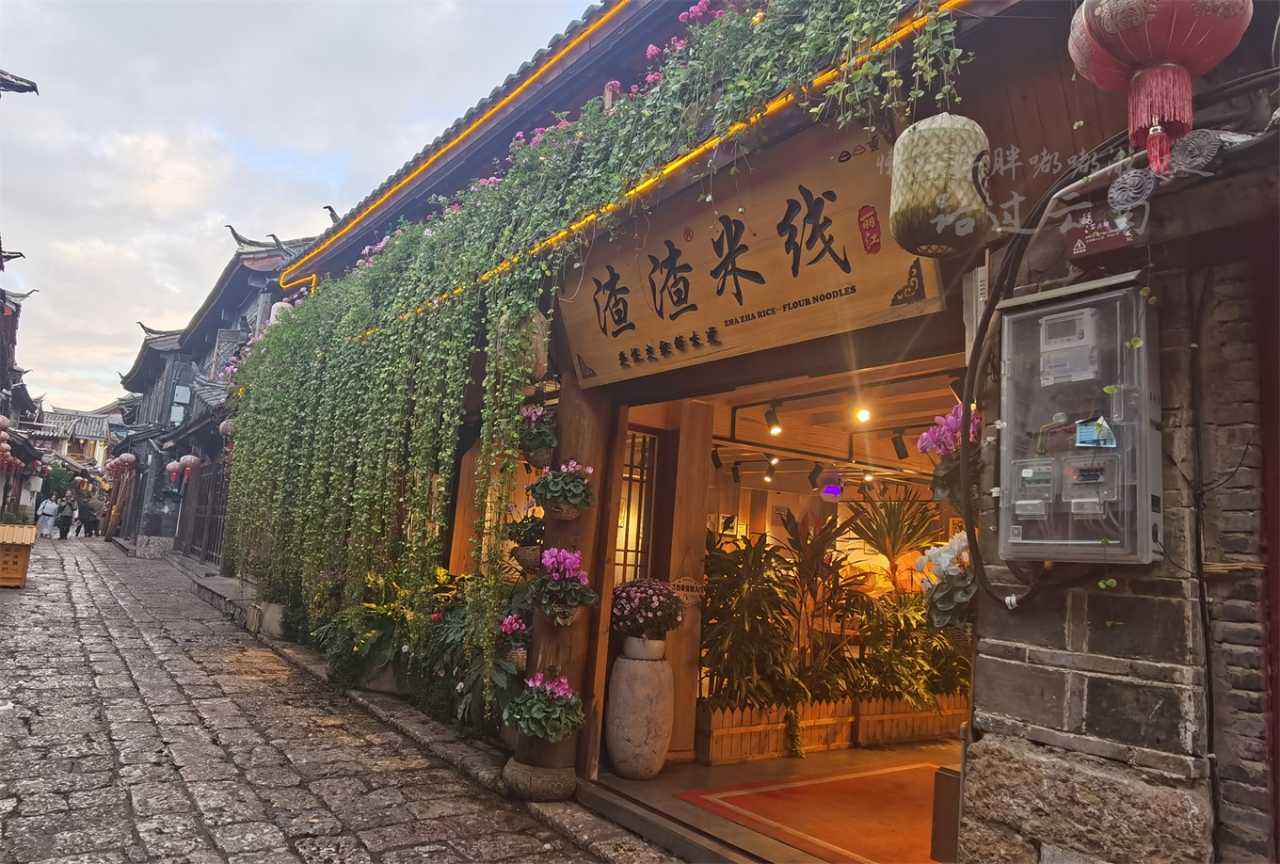
The next morning, we set off for Shangri-La at 7 a.m., so we dragged ourselves out of bed at 6 to meet up at the convenience store by the main road. While heading out, we looked for breakfast and happened to pass by a rice noodle shop with good reviews. We decided to stop there. Each of us ordered a bowl of "zhuangyuan" rice noodles (a premium style). Unfortunately, we were in a hurry and didn't take any photos of the food.
Our chartered vehicle was a 9-seat Maxus four-wheel drive. There weren't many tourists that day, so only six seats were occupied. Our driver was a young Tibetan man named Zhaxi, in his twenties. He told us he used to drive trucks and had only recently taken out a loan to buy this Maxus for the tourism business.
In the morning, the sun had just risen. Wispy, mist-like clouds floated around the mountainsides, while streams wound through the valleys below.
Jade Dragon Snow Mountain was faintly visible in the distance, but I wasn't quick enough with my camera—only managed to capture this peak showing a sliver of its true face.
Shangri-La is at a high altitude, so altitude sickness is a real concern. Plus, we'd be visiting Potatso National Park until evening, when temperatures could drop quite low. So Zhaxi stopped at a rest area called Jinsha River Service Point to pick up pre-arranged oxygen canisters and knee-length red down jackets.
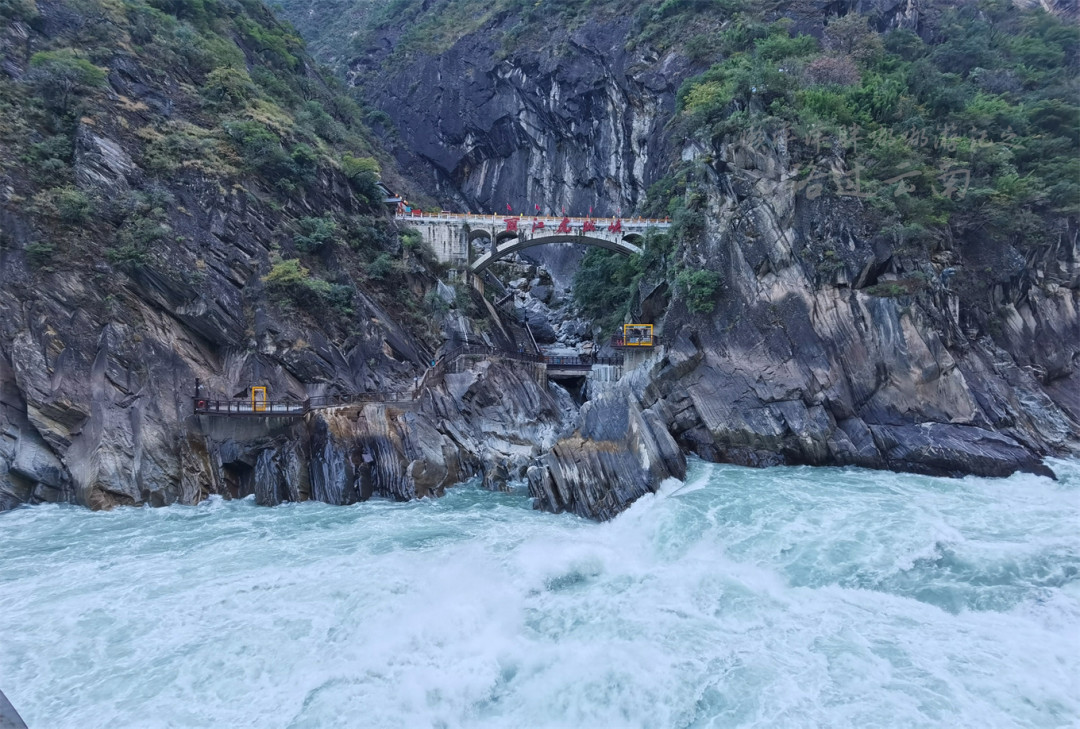
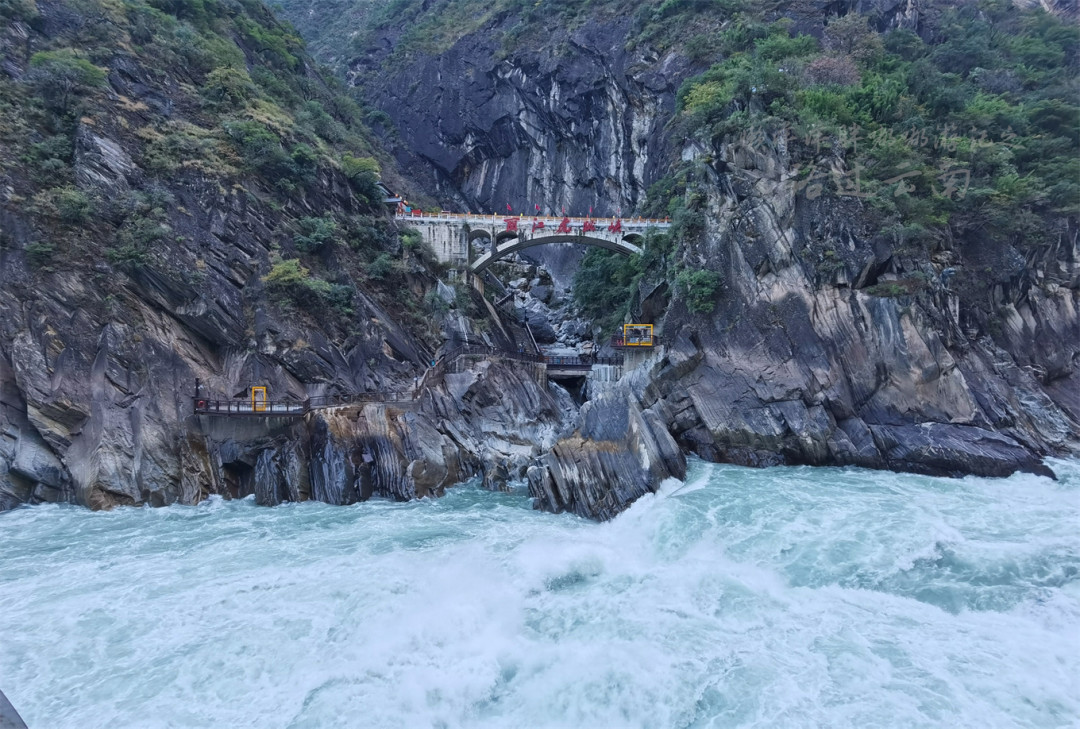
When we arrived at Tiger Leaping Gorge, we took photos at the upper viewing platform and then rode an elevator down to the valley floor. I wanted a more authentic experience of life in Tiger Leaping Gorge and Shangri-La, so I decided to hike down on foot.
Step after step, down the stone stairs.
More stairs.
Jagged rocks, steep canyon walls.
Though the tiger statue at the bottom was a bit half-hearted.
The water rushed past violently.
The golden sands of the Jinsha River slammed against the warm rocks.
"I'll wait for you at Tiger Leaping Gorge—but I can only wait ten minutes..."
On one side, the deep gorge; on the other, warm sunlight rising like smoke.
The distant peaks looked even more treacherous. Could those paths carved into the mountainsides be the ancient Tea Horse Road from a hundred years ago?
Worried that walking would slow down the group, I rushed through the sights and hurried back.
Was that distant snow-capped peak Haba Snow Mountain? At that moment, I felt ashamed of my limited vocabulary. "Hengduan Mountains" was the most accurate description I could muster!
In the distance, steep mountains and deep gorges; closer by, terraced fields and houses dotted the mountainsides in a pleasing patchwork.
On the road, Zhaxi kept emphasizing that tourists—especially those without high-altitude experience—are prone to altitude sickness in Shangri-La, sometimes quite severe. So he gave us three tips: 1) Try not to sleep in the car; 2) Avoid strenuous exercise and conserve your energy; 3) Use oxygen as a preventative measure—start early. If you wait until you feel uncomfortable, the oxygen won't be as effective.
Next stop: Potatso National Park. The sky was so blue. We carried our lightened backpacks, oxygen canisters, and spare down jackets into China's first national park.
We took a bus to Shudu Lake. Winter isn't the most beautiful season in Shangri-La. The pines and cypresses were still green, but the grasslands had withered to white.
Fortunately, the sky was still brilliantly blue, so the lake's reflection of it wasn't too gloomy.
Knowing that Chubby and Grandma Wolf would struggle with the altitude here, we wisely took a boat across the lake.
Walking along the forest boardwalk, we spotted squirrels everywhere. They didn't seem very afraid of people—some tourists even fed them.
Holding food in their little paws, nibbling away—utterly adorable.
I was still in decent shape physically, but Grandma Wolf was suffering from altitude sickness and had to walk while inhaling oxygen. We decided to finish Shudu Lake and then take the bus back.
Bita Lake would have to wait for another trip. When we got back to our van, we found the other three passengers already waiting for us. Apparently, they'd done the same thing—only visited Shudu Lake.
It was already 6 p.m. Zhaxi drove us to our last stop of the day: a Tibetan restaurant for dinner, complete with Tibetan song and dance performances and cultural experiences.
I didn't have time to take photos, so I'll have to make do with screenshots from videos.
The show was quite good. A young Tibetan guy kept making fun of himself, which was hilarious. The songs, in both Tibetan and Chinese, captured the essence pretty well. The Tibetan dances were natural, open, and unpretentious.
The food, however, was a bit disappointing. Zhaxi had warned us earlier that, given the cost, the yak meat couldn't be real yak meat. You could tell from the color. The hot pot ingredients were also sparse. We ate just enough to fill our stomachs. The tsampa (roasted barley flour) that Zhaxi made himself was actually quite fragrant, and it went well with the butter tea.
That night, we stayed at a place called "Sacred Lotus of Tibet." The room was spacious and came with its own oxygen machine. Chubby had a headache from the altitude, so she dutifully used it for two hours. Grandma Wolf stubbornly insisted she didn't need it.
The next morning, we visited a Tibetan temple. I remembered the driver mentioning Songzanlin Monastery, and I thought that's where we were going.
It wasn't until I was organizing photos and getting ready to write this travelogue that I realized—we never actually visited Songzanlin Monastery. The place we went to was something called the "Tibetan Culture Exhibition Center." I haven't had time to verify, but I wonder if it's the same place as the Baoya Tibetan Culture Exhibition Center that was once shut down.
Inside, the so-called "senior brothers" were dressed in full Tibetan monk attire. The Tibetan culture presentation was seamlessly blended with soft-sell marketing. What a mature, well-oiled business chain.
Then we were taken to a place called "Shangri-La Pagoda Within Pagoda"—a newly built structure with almost no tourists.
Next came Napahai Lake. Wrong season. Withered yellow grass, a stagnant pool of water.
Only the yellow cattle on the grassland, neither happy nor sad, just enjoying the sun and the dry grass.
Finally, we visited Dukezong Ancient Town. Also known as the "Moonlight City," it was built over a thousand years ago based on the Buddhist concept of Shambhala, a utopian kingdom. It was also an important town on the Tea Horse Road. However, most of the original thousand-year-old structures were destroyed in a fire in 2014. Most of what you see now—including the giant prayer wheel—was rebuilt afterward.
Standing in Moonlight Square, we looked up at the world's largest prayer wheel on Turtle Mountain Park, perched on a small hilltop on the Yunnan-Guizhou Plateau.
After visiting Dukezong, our Shangri-La trip officially ended, and we drove back to Lijiang.
The small streets of Lijiang felt much warmer. Grandma Wolf was still recovering from altitude sickness, so we didn't wander far and had dinner at the same restaurant as before.
I have to say, Yunnan's food truly doesn't disappoint. Especially that clay pot of 牛肝菌炒饭 (porcini mushroom fried rice)—the seasoning and heat were just perfect. Two spoonfuls of that rice, and the cold wind of Shangri-La was completely driven away.
After dinner, it was still early, so Chubby and I continued strolling through the old town. Mu Palace looked grand in scale. I thought I'd visit during the day if I had time, but the schedule was too tight, and I ended up missing it.
The street murals were wonderful.
A small alley hung with colorful paper umbrellas—felt familiar, yet rare in its quietness.
The "Official Gate" (a historic archway in the old town).
November 19-20 – Lugu Lake
Originally, I planned to skip Lugu Lake and go to Jade Dragon Snow Mountain after returning from Shangri-La. But when I asked a Lijiang travel agency about cable car tickets for the snow mountain, I was told they were sold out for the next few days. They said I could register with the agency and wait in line for any tickets that might become available—either from cancellations or additional releases. A quick private check revealed that this agency had been ordered to rectify its practices a few years ago due to bad operations. So I gave up on that idea and booked a Lugu Lake trip with our guesthouse owner instead.
The trip to Lugu Lake was in a minibus. Our driver was a Yi ethnic man surnamed Yang. There were about a dozen passengers, half of them from a family in central Henan—several brothers, their wives, and their father, traveling across the country together. I envied their lifestyle.
The Jinsha River. Mountains overlapping and framing each other, roads winding like ribbons. The river was as calm as a mirror.
A prominent sign. Grandma Wolf made a guest appearance.
We stopped at a viewing platform called "Mosuo Market."
Looking down at Lugu Lake. The lake is surrounded by a necklace of hills. The evergreen forests on the slopes were lush, with some hints of seasonal red. The lake was as calm as a mirror, reflecting the blue sky and soft white clouds.
For the first time, I felt that winter isn't the worst season for a Yunnan trip.
Gazing at the island in the middle of the lake. The zoom was too strong, so there's some noise in the photo.
A cape extending into the lake.
In the distance, Goddess Gemu Mountain stood majestic, like a giant platform bursting from the earth. Not as wide as Pingdingshan (a flat-topped mountain), but taller and more imposing.
The "Walking Marriage Bridge." At the entrance, some elderly aunties were braiding hair. Some girls were selling fresh flowers and flower crowns on the bridge.
We decided not to get our hair braided—the driver had warned us about it.
The bridge stretches over a marshland. Both sides are covered in tall grass that looks like reeds. The locals call this marshland "Grass Sea"—a very fitting name.
The blue sky and bright white clouds were reflected in the almost still river or lake within the Grass Sea. For a moment, it reminded me of Mirror Lake in New Zealand's fjords.
We arrived at our accommodation in the evening, in a village called Nisai. The room had a great location—open the window and you could see the calm Lugu Lake and a delicate little garden by the shore. We dropped our luggage and took a boat to the island in the middle of the lake.
There were flocks of seagulls on the lake. Forgive my ignorance, but I never knew there could be so many seagulls on an inland lake.
They chased and surrounded our wooden boat, hoping for an unexpected meal. Some flew toward us like dive bombers.
Then glided away.
Sometimes fighting over food.
Sometimes brawling.
Some spread their wings wide; others floated quietly on the water.
One looked like a little yellow duck.
Chasing food on the water's surface.
Look at that smug expression.
"More?"
After the boat ride, we ate at a roadside restaurant. The driver had mentioned that the cable car was closed for maintenance due to an accident, so the planned cable car ride up the mountain was canceled. We stopped by the cable car entrance to ask about the next day's operation and got a positive answer. But when we asked the driver, he said no insurance company would provide coverage, so we couldn't take it.
In the evening, we watched a dance performance at Lugu Lake. The dances were quite distinctive. I certainly didn't dare to secretly tickle anyone's palm (a traditional Mosuo flirting gesture). Two little children were playing and laughing in the courtyard, completely carefree and not at all shy. When they ran past and I held out my hands, they naturally jumped into my arms. (Since they're children, I won't post clear photos.)
The next morning, we got up early to watch the sunrise. The clouds in the east were a bit thick.
We could see the golden glow, but it couldn't break through the heavy clouds.
I checked the time—the sun should have been at the 10 o'clock position by now, but it still couldn't escape the clouds' grip. I turned around and went back to check out and have breakfast.
Sunlight touched the neck of the goddess mountain, but couldn't lift her veil.
The little garden on the first floor of our guesthouse, facing Lugu Lake. The small flowers were blooming brilliantly, whether or not the sun reached the deep mountains.
We waved goodbye and left. Passing a viewing platform on the road, sunlight poured down like a waterfall, but we still couldn't see the sun.
Another street built along the lake.
Dandelions by the roadside.
We returned to Lijiang before dark.
Suddenly, I wanted to see and taste some Yunnan fruit. I remembered the nearby Zhongyi Night Market. Off we went.
One of the "Eighteen Oddities of Yunnan": three insects make one dish. They looked interesting, but I kept my eyes on them and my mouth firmly shut.
I waited in line for over ten minutes to buy some local specialties: 乳扇 (milk fan, a grilled dairy snack) and 饵块 (rice cake). When I turned around, Chubby and Grandma Wolf were already sitting at a stall, happily eating 虎掌松茸鸽子汤 (pigeon soup with tiger paw mushrooms and matsutake) and 牛肝菌炒饭 (porcini mushroom fried rice). Even though it was a small market stall, the taste was just as good as any famous restaurant. Unfortunately, no photos to show for it.
The stall's entrance was lined with all kinds of strange mushrooms and various soups.
November 21 – Dali
On the 21st, we took a slow green train to Dali. The train was actually a converted sleeper car. Fortunately, there weren't many people. The three of us sat in a small compartment, listening to a woman from Xi'an in the next compartment share her travel stories. Occasionally, I even received work calls from colleagues thousands of miles away.
Our accommodation was outside the north gate of the old town. After getting off at the train station, we bought high-speed train tickets to Kunming for the next day, then took a taxi to our guesthouse. The female owner was very enthusiastic and gave us a detailed introduction to possible itineraries. But our time was limited, so we just decided to see whatever we could.
First, we went into the old town for lunch. The owner recommended a place called "Bai Old Stove." The decor wasn't fancy, but the dishes—tree bark scrambled with eggs, mint ribs, and one other dish I've forgotten—were all delicious and unlike anything I'd tasted before. Very memorable.
After lunch, we took a taxi to the Erhai Lake Ecological Corridor. Grandma Wolf spotted an electric scooter and decided that was our ride. So the three of us rented an electric scooter and started our tour around the lake.
What kind of tree is this by Erhai Lake? It looked like an oil painting.
Erhai Lake at sunset.
A house by the lake.
By now, you've probably guessed it. The electric scooter had a speed limit of 10 or 15 km/h. It wobbled along the road, slow and sluggish—even slower than my bike. By the time it got dark, we were still six or seven kilometers from Xizhou Ancient Town. We had no choice but to give up and take a large electric sightseeing bus back the way we came.
But the large bus didn't take us back to where we started. Instead, it stopped at a place called "S-Bend." So we got off the lakeside path and looked for another way back to the old town. After walking for almost an hour, we finally found a three-wheeled tuk-tuk to take us back.
The gate of Dali's old town. It had just rained, so the bluestone road was wet. Some night market stalls were open outside the gate.
At one stall, the dumplings looked good. We ordered three servings, and they tasted good too.
Next to it, a stall selling boiled meat slices seemed to have just opened. The young male owner was cooking, while a girl kept busy running back and forth.
Inside the old town, the buildings had a sense of history. The stone roads were flat but wet.
We walked to an intersection and turned into "Foreigner's Street," then made a U-turn back to our accommodation to rest.
Chongsheng Temple was nearby. Even though we had a high-speed train to Kunming the next morning, I absolutely had to get up early to see the Three Pagodas.
Luckily, we arrived early enough that there were very few tourists. We could take our time to admire and photograph freely.
A very solemn yet restrained pagoda, backed by the Cangshan Mountains and facing Erhai Lake.
Unfortunately, one of the pagodas was under renovation, completely covered by a green safety net.
No problem—I have AI. I tried an AI restoration, and the result looked pretty good.
The central pagoda, called Qianxun Pagoda, was built during the Nanzhao Kingdom period (Tang Dynasty). The two smaller pagodas on either side were built during the Dali Kingdom period (late Five Dynasties to early Song Dynasty). Despite experiencing many earthquakes over the centuries, the three pagodas still stand tall.
The smaller pagoda next to Qianxun Pagoda. Not as majestic as the main one, but more delicate.
Another angle. Qianxun Pagoda overlooking Erhai Lake.
Besides being an expression of devout Buddhist faith, the Three Pagodas were also built with the hope of controlling floods—a common concern in flood-prone Dali.
From Chongsheng Temple, overlooking Dali's old town. White walls and grey tiles, neatly arranged, with green trees peeking through.
This is Yunnan, after all—you can see wonders in the clouds at any time.
A reflection captured in a small pond at Chongsheng Temple. Again, I used AI to remove the construction safety nets.
A famous photographer's work of the Three Pagodas on display at the temple. The raindrops added a unique charm.
Another photo from the same photographer: the Three Pagodas under winter snow.
As we left Chongsheng Temple, a black fox was foraging and playing on the open ground inside the gate. At that moment, it turned its head back... I wonder who it was thinking of.
Ginkgo leaves on the bluestone road.
More ginkgo leaves.
The flowers in the roadside garden were blooming so cheerfully.
Cheerful flowers in the rain.
Cheerful flowers in the rain.
I don't know much about plants. Let me ask: are these camellias?
Kunming – A Brief Stop
At the very least, the scenery at Chongsheng Temple was unforgettable. We left Dali and took a high-speed train to Kunming. Originally, I wanted to at least visit Dianchi Lake, but we ended up at Cuihu (Green Lake) Park by accident.
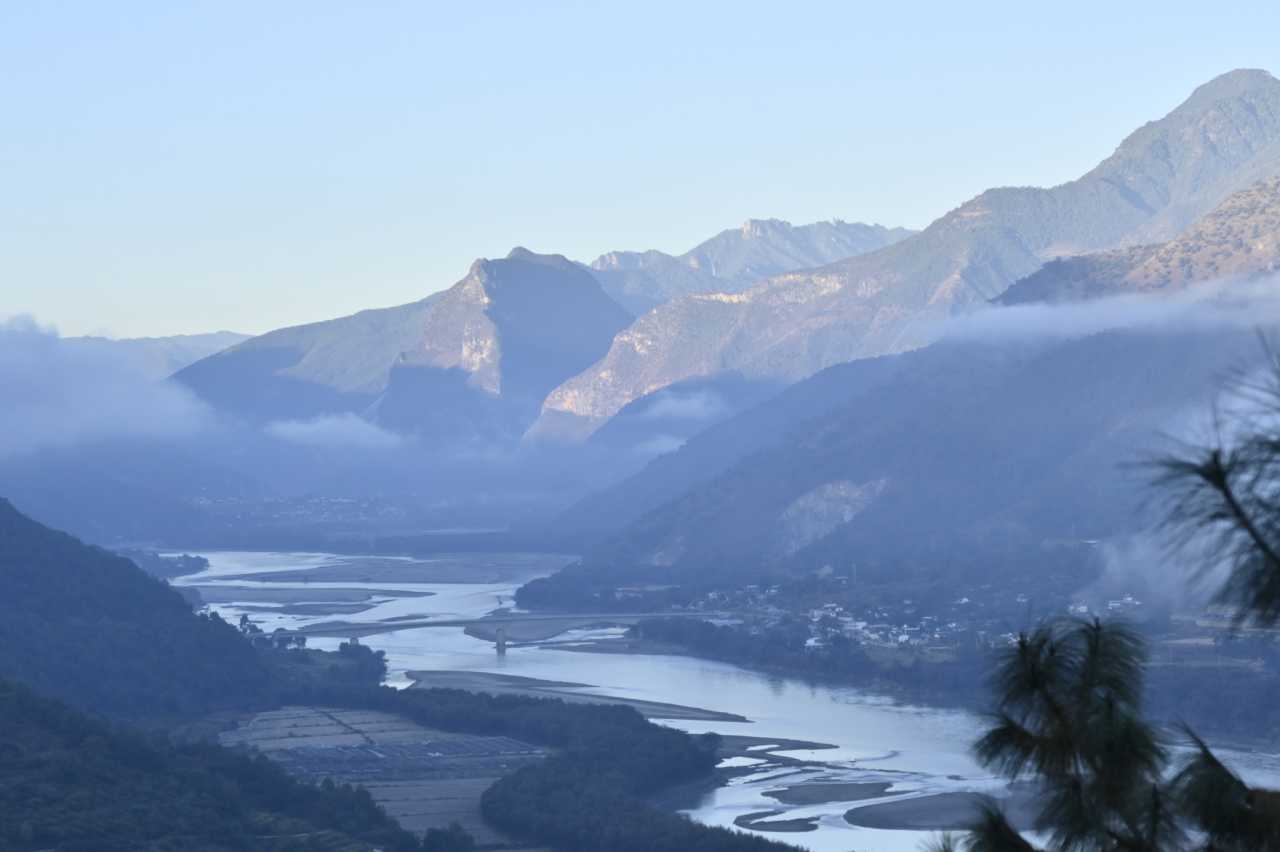
Cuihu Park.
In the evening, we raced against time to visit Dounan Flower Market.
At 10 p.m., the market was still bustling.
Just like this trip, let me end this travelogue abruptly with the flowers from the market.
Reflections
Ah, I won't say any more. Let's just listen to the song.
This travelogue is copyrighted by @Restless Hedgehog. Any reproduction requires the author's permission.
© 2026 mafengwo.cn
You should also read:
Escaping Nanning, Falling Under Lijiang's Spell: Our Four-Person, Ten-Day Yunnan Dream
Escaping Nanning, Falling Under Lijiang's Spell: Our Four-Person, Ten-Day Yunnan Dream Before We Set Off: No Pain, No Obsession Have you ever had that impulse—suddenly tired of the office fluorescent lights, the crush of the subway, the endless parade of identical takeout boxes, and just…
Continue reading...
Solo in Yunnan: A Wanderer’s Guide to the Land of Eternal Spring
Solo in Yunnan: A Wanderer’s Guide to the Land of Eternal Spring There’s something magical about traveling alone. No compromises, no schedules to keep, no one to please but yourself. I’ve been on the road for nearly three months now, and not once have I…
Continue reading...
God’s Abandoned Palette: A Self-Drive Journey Through Yunnan’s Dongchuan Red Land
God’s Abandoned Palette: A Self-Drive Journey Through Yunnan’s Dongchuan Red Land Travel has never been about reaching some distant geographic coordinate. It’s about encountering, along the way, the version of yourself buried beneath the rubble of daily routine. During this May Day holiday, I finally…
Continue reading...