Pilgrimage to Meili, Trekking through Yubeng: The Ultimate Dialogue Between Soul and Body
Pilgrimage to Meili, Trekking through Yubeng: The Ultimate Dialogue Between Soul and Body
Prologue: When Dreams Become Reality
Some places, just by saying their names, are enough to make your heart race. Yubeng, a hidden village nestled deep within the Meili Snow Mountains, is exactly that kind of place. It feels impossibly remote, daunting to even consider, yet it also seems etched into the softest corner of your soul.
"If you can't go to heaven, go to Yubeng." This saying, widely shared among outdoor enthusiasts, captures the sentiment of countless trekking lovers. When we finally set foot on this dreamlike Shangri-La, what surged within us wasn't just excitement—it was a kind of pilgrimage-like devotion.
Pre-Trip Preparations: A Carefully Planned Adventure

Timing and Route Planning
Our trip was scheduled from May 25 to June 3, a full ten days. This period falls in the plateau's spring season, when rhododendrons are in full bloom and the weather is pleasant—the golden season for trekking through Yubeng.
The Art of Snagging Flight Deals: - Shanghai to Shangri-La (China Eastern MU5818): 1,190 yuan, a special fare - Lijiang to Chengdu (Beijing Capital Airlines JD5136): 978 yuan—a price that made us hesitate - Chengdu to Shanghai (China Eastern MU5410): 660 yuan, another bargain
Experience taught us that buying plane tickets is like a psychological game. We started monitoring prices two months in advance, but the discounted fare from Lijiang to Chengdu never materialized. By the time we finally made up our minds to buy, an even lower price popped up—sometimes, buying early just makes you look like a fool. When it comes to ticket purchases, luck really plays a part.
Gear Checklist: Better Safe Than Sorry
Essentials: 1. ID card and cash—without these, forget Yubeng; you won't even get on the plane 2. Waterproof jacket, fleece, quick-dry clothing—May in Yubeng means big temperature swings between day and night, but if you book a standard room, you can shower every day 3. Trekking poles, knee braces, waterproof hiking boots, headlamp—be ready for rain and night walks 4. Sunglasses, sun hat, sunscreen, essential oil—the plateau's UV rays are no joke 5. High-energy snacks—beef jerky, chocolate, compressed biscuits; these are lifesavers on the trail 6. Common medications—band-aids, cold medicine, altitude sickness pills, stomach medicine; better to have them and not need them
Optional Gear: - Walkie-talkies—cell phone signals are weak in parts of Yubeng, and guesthouses run on self-generated power with unstable voltage - Handheld GPS—to track your route and locate yourself anytime
Team Roles
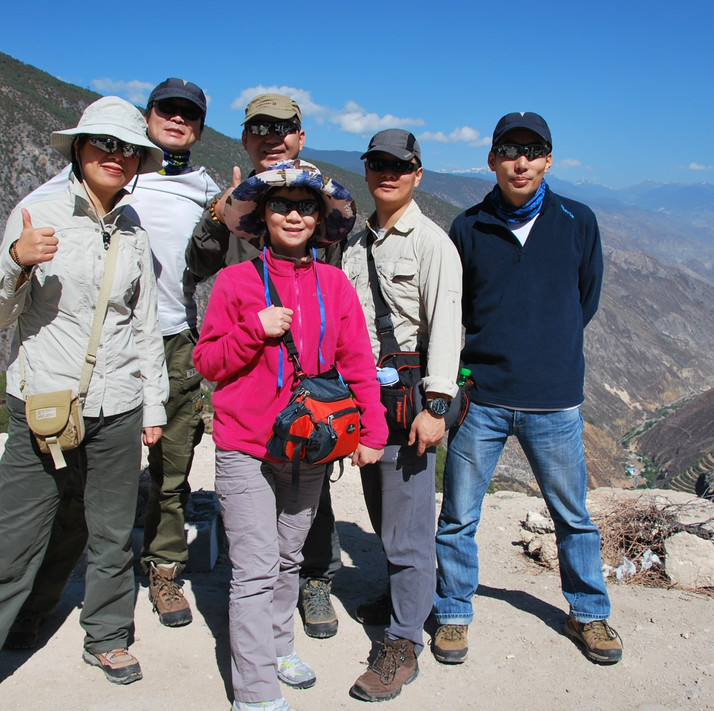
Our group of six had clear responsibilities: Jiangnan handled overall planning, Wenzi assisted with execution, Mandy and Yousong managed finances, Cao Yao served as team medic, and Dong Ge was in charge of meals. This division of labor kept the entire trip running smoothly.
Day 1: Shanghai to Shangri-La, First Encounter with the Plateau
At 9 p.m. on May 25, night had just fallen over Shangri-La. As we walked out of the airport, we immediately recognized our driver, Lily—we had worked with her during last year's Tiger Leaping Gorge trek, and her warmth and professionalism had left a lasting impression.
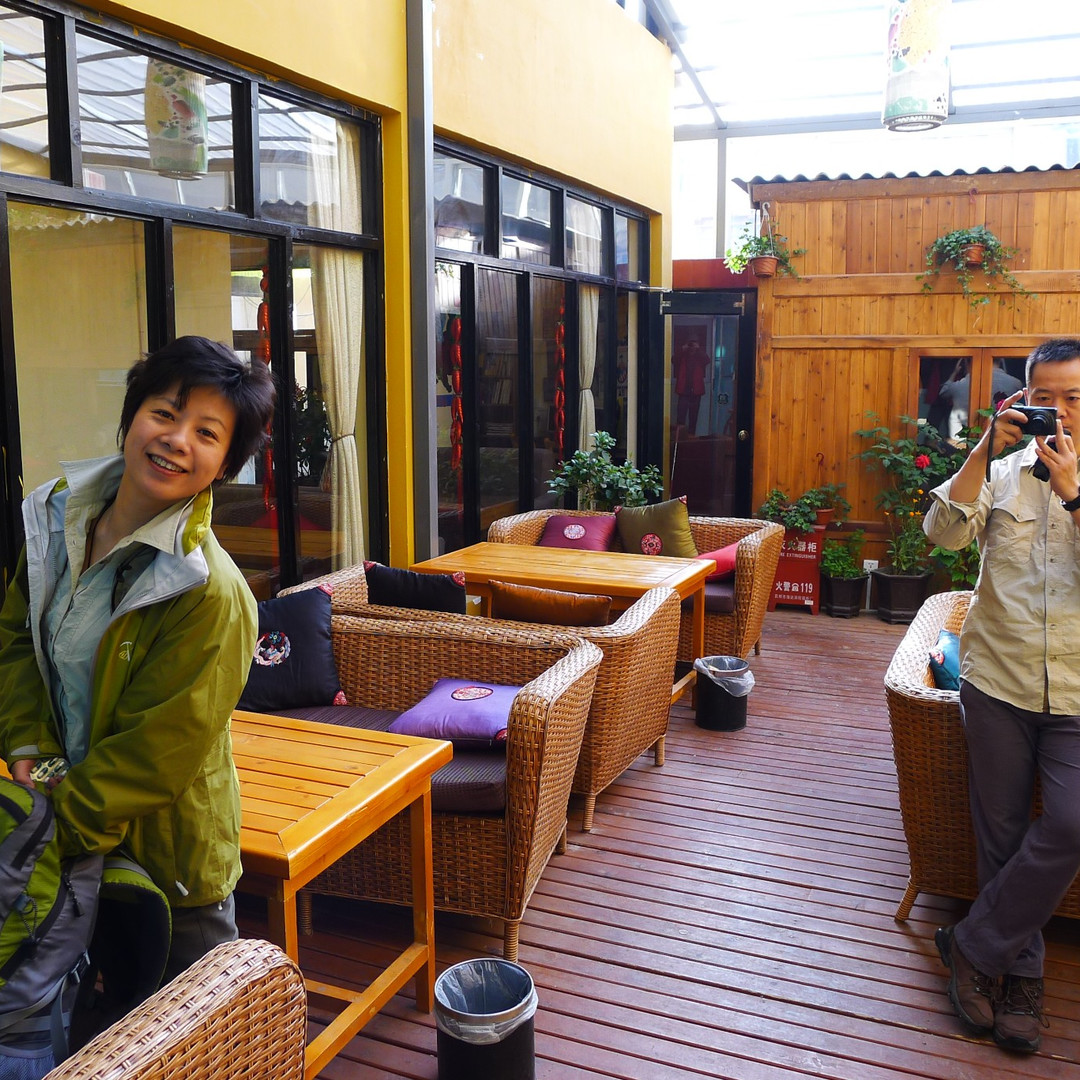
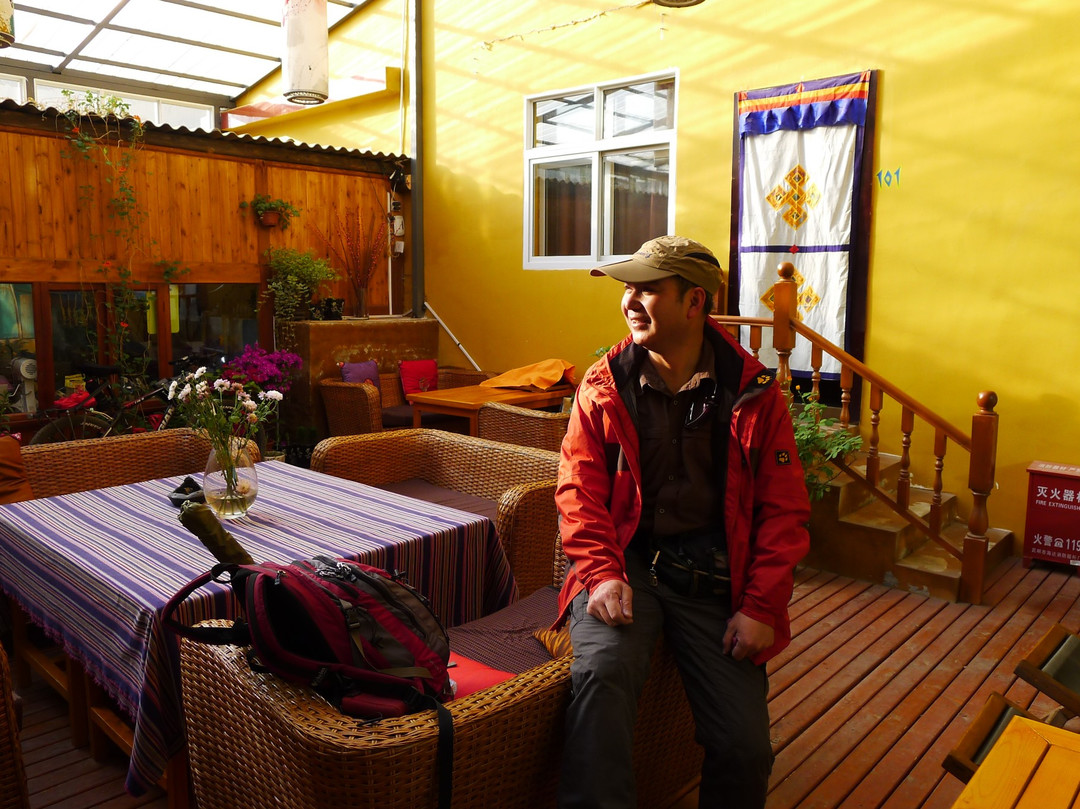
The Dukezong Ancient Town was just a stone's throw away. We checked into the Blue Sky International Youth Hostel, where a standard room cost only 90 yuan—incredible value. After settling in, Lily took us to a local farmhouse restaurant for dinner. The food was affordable and authentic.
Day 2: Shangri-La to Feilai Temple, Crossing Baima Snow Mountain
Scenery and Challenges on the Yunnan-Tibet Highway
We set off at 8:30 a.m., and the 200-kilometer journey took an entire day. National Highway 214 was under construction, living up to its nickname, the "Shake-and-Dust Line"—bumpy and dusty. But Lily's driving was skillful; she navigated the towering mountains with ease.
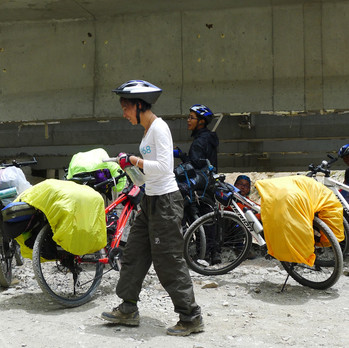
Along the way, we spotted cyclists on the road, which got our adrenaline pumping. The Taiwanese young man from the movie Kora—who rode a bike from Lijiang to Lhasa—seemed to come to life before our eyes. Every time we passed a cyclist, we cheered them on—dreams don't have to take a specific form; courage deserves applause.
Benzilan: A Gem on the Ancient Tea Horse Road
We reached Benzilan at noon. This historic town, a key stop on the Ancient Tea Horse Road, serves as an important supply point along the Yunnan-Tibet Highway. Across the Jinsha River lies Derong County in Sichuan Province, and a bridge adorned with prayer flags connects the two provinces. I couldn't resist playing "sentry" at the bridgehead—the basics from my years of military service hadn't faded.
Moon Bay and Baima Snow Mountain
Moon Bay is the highlight of the First Bend of the Yangtze River. Here, the Jinsha River is blocked by the terrain, forming a spectacular curve. Although there's an entrance fee, the views from the periphery are already breathtaking.
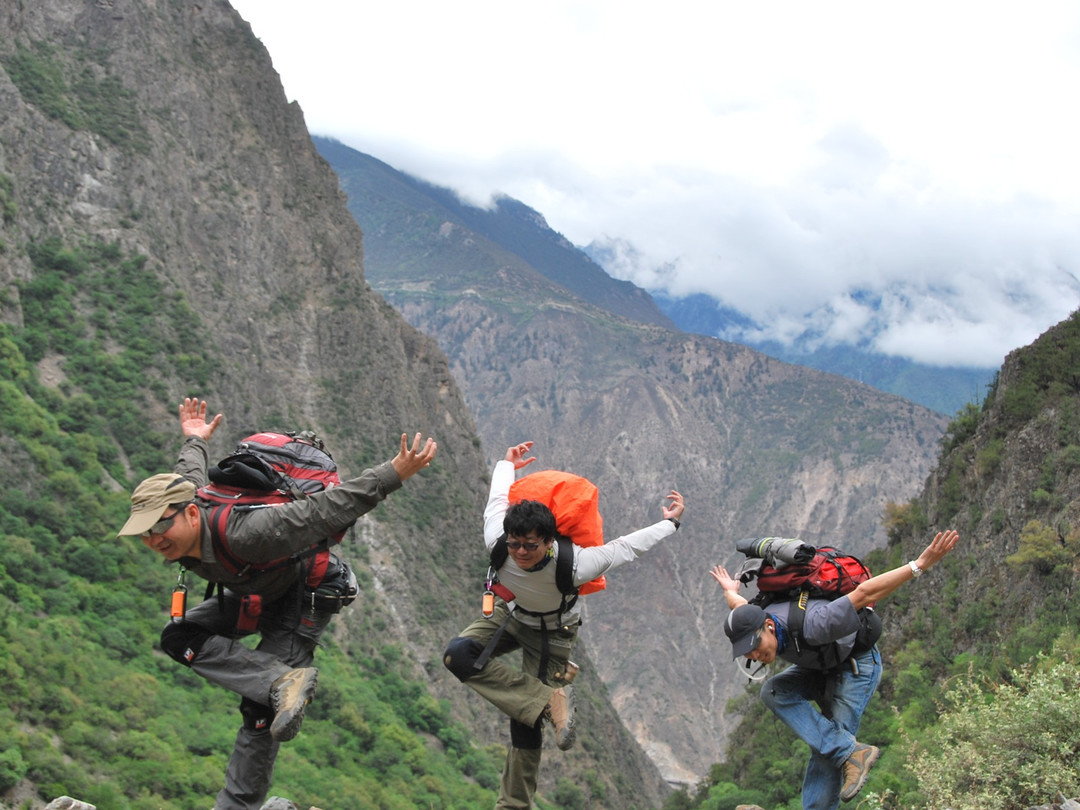
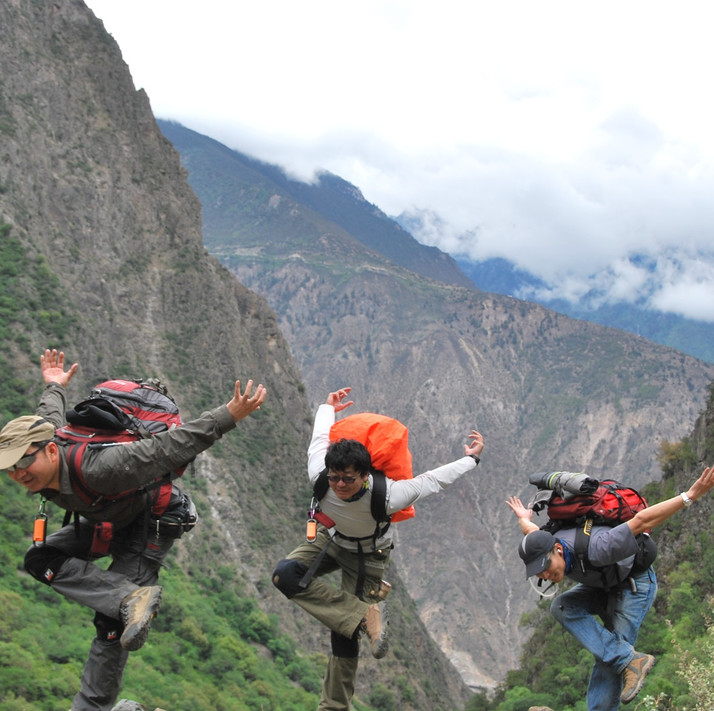
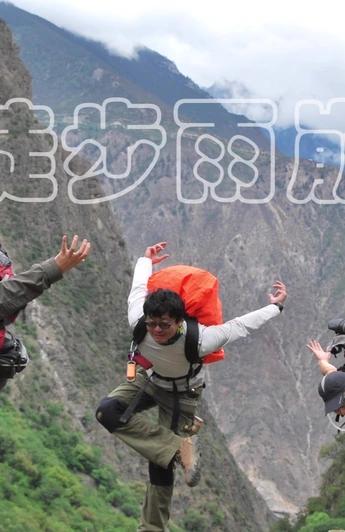
What excited us most was Baima Snow Mountain. When it came into view, everyone snapped wide awake. On the alpine meadow at over 4,200 meters above sea level, we couldn't resist stripping off our jackets to see who could jump the highest—after a few rounds, no one had altitude sickness, just heavy breathing.
The snowfield became our playground. We slid down on makeshift boards, tumbling over after just a short distance, but that childlike joy made the cold feel trivial.
Meili Snow Mountain: First Meeting with the Sacred Peak
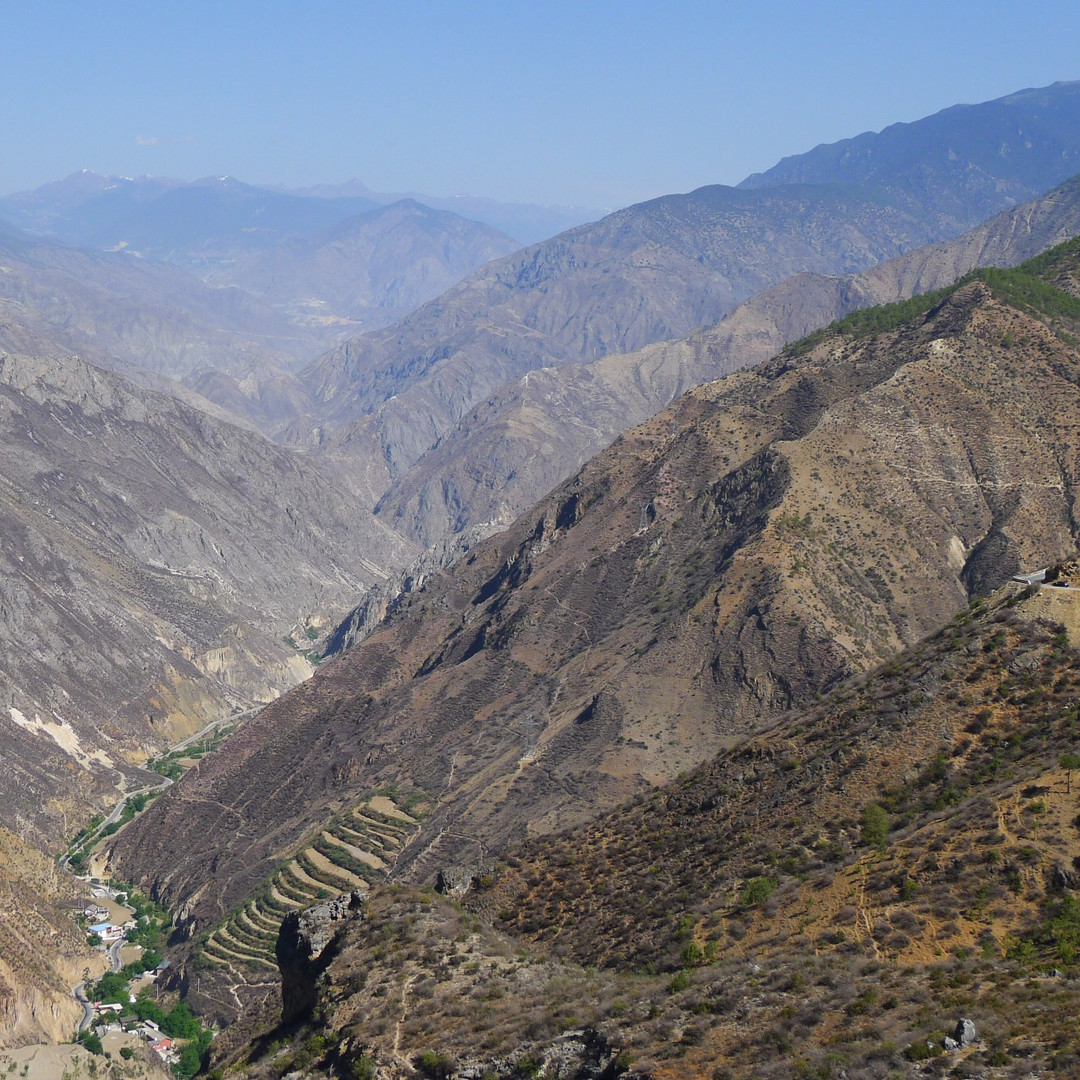
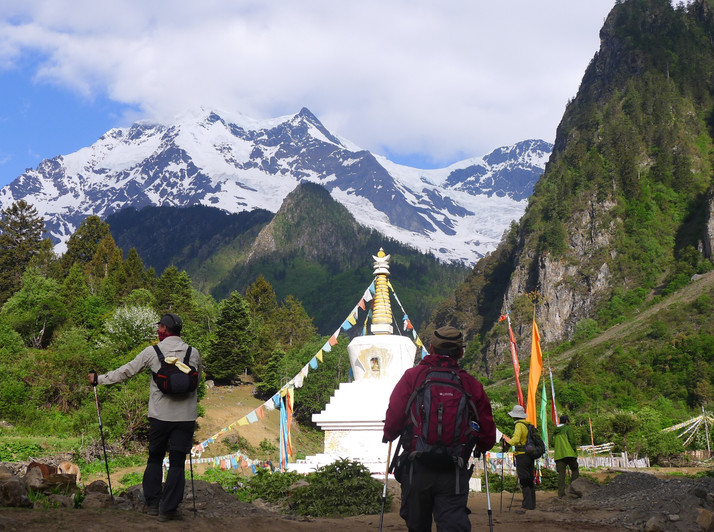
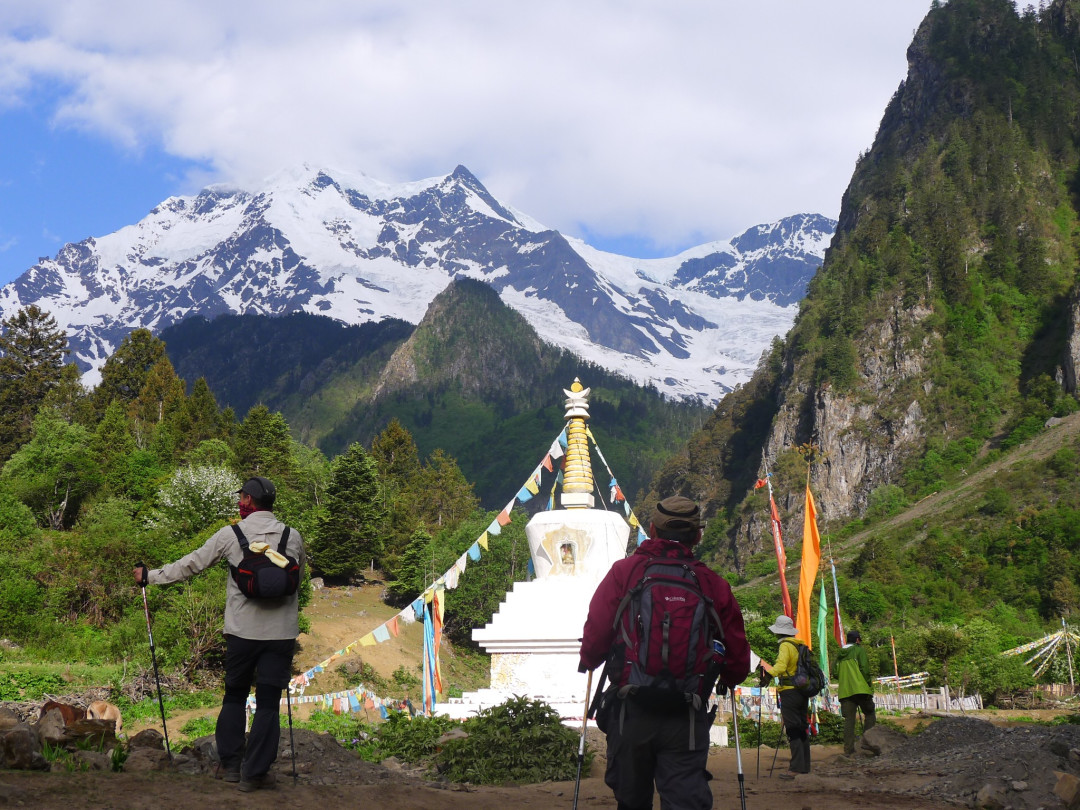
Thirteen white stupas stood in a row, corresponding to the Thirteen Peaks of Meili Snow Mountain. Following the guidance of a local, we turned our palms upward and stopped pointing directly at the sacred mountain—a gesture of respect for faith. Meili Snow Mountain revealed its full form under the afternoon sun; our luck was truly exceptional.
The Guanyin Tian Tang Hotel near Feilai Temple sits at the highest point, offering a view of Kawagebo Peak from your bed. The sacred mountain, shrouded in clouds and mist year-round, is said to reveal itself only to those with a special connection. That night, the stars were dazzling—we had high hopes for the Golden Sun illuminating the mountain the next morning.
Day 3: The Trek Begins, Feilai Temple to Xidang to Yubeng
Golden Sunrise on the Sacred Mountain: A Gift from the Gods
At 5:30 a.m., the sky was still dark. We held our breath, peering through the window, waiting for the miracle. Around 6 a.m., the tip of Goddess Peak (Miancimu Peak) suddenly turned golden. As the light intensified, the gold grew richer, and Kawagebo Peak slowly unveiled itself—in that moment, what surged within us wasn't just excitement, but a profound reverence for nature.
The Golden Sunrise lasted only a few minutes, but its fleeting beauty made it all the more precious.
Trekking Through Yubeng: Body in Hell, Eyes in Heaven
At 9 a.m., we set off from Feilai Temple. Crossing the bridge over the Lancang River, the left path led to Yubeng, the right to Mingyong Glacier. Tour groups headed to Mingyong, but true outdoor enthusiasts only choose Yubeng.
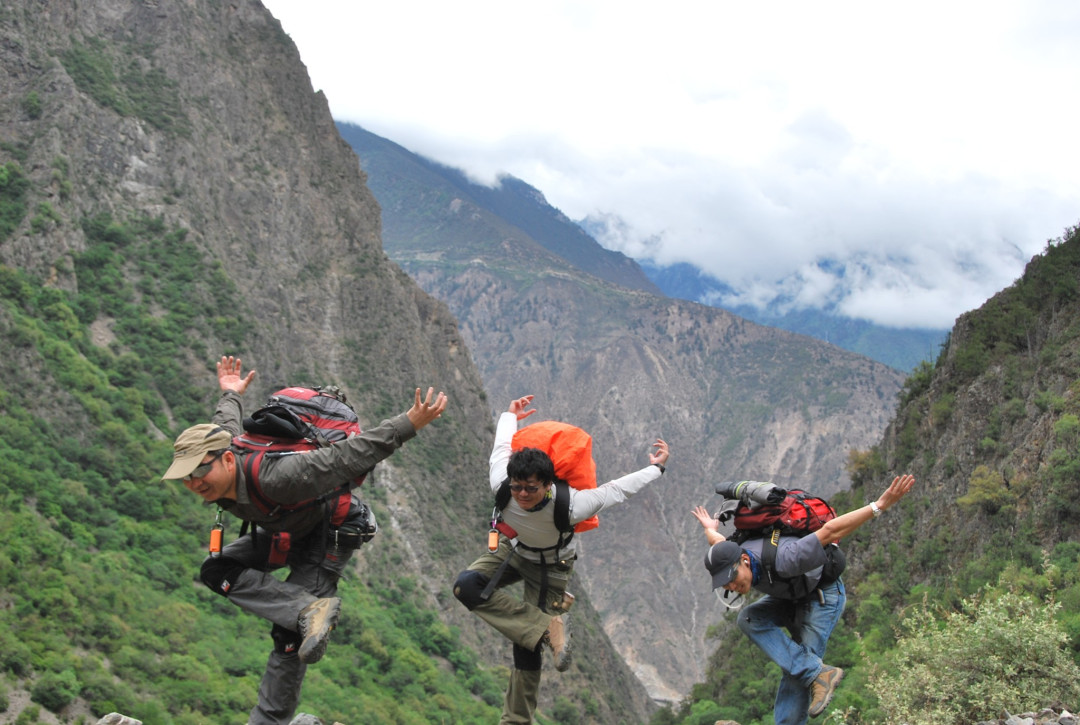
Starting from the Xidang Hot Springs, we faced a 12-kilometer uphill climb, with altitude rising from 2,650 meters to 3,750 meters. The difficulty of plateau trekking exceeded expectations. Mandy struggled during the first stretch, even shedding tears.
The "instant noodle wall" along the trail had become a popular photo spot—a structure built from empty noodle cups, both eco-friendly and creative. We couldn't resist indulging in a bowl ourselves. When you're hungry, anything tastes amazing.
The trees were draped with what looked like spiderwebs—actually a type of lichen called songluo, which serves as a barometer of air quality, growing only in exceptionally clean environments. The rhododendrons in May added splashes of color to the otherwise monotonous trek.
The Legend of Yubeng
After eight hours of hiking, we finally spotted Yubeng Village. Legend has it that the village was hidden behind a massive boulder—when an elderly man came to borrow grain, the villagers poked holes in his bag, and by following the trail of spilled millet, they discovered this hidden paradise.
In reality, Yubeng is as isolated as the legend suggests. The path from Upper Yubeng to Lower Yubeng looked short but nearly broke us. Yet when we stood in front of the Shenpu Guesthouse, gazing at the peaceful village beneath the snow-capped peaks, all our fatigue melted away.
Nights in Yubeng have no television, no internet—only a sky full of stars. We sipped local wine and highland barley liquor, chatting and laughing—life could be this simple.
Day 4: The Divine Waterfall Baptism, Purifying the Soul
At dawn, the Golden Sunrise appeared again over Meili Snow Mountain. But being too close made it hard to see the full picture—the truth of "not knowing the true face of Mount Lu."
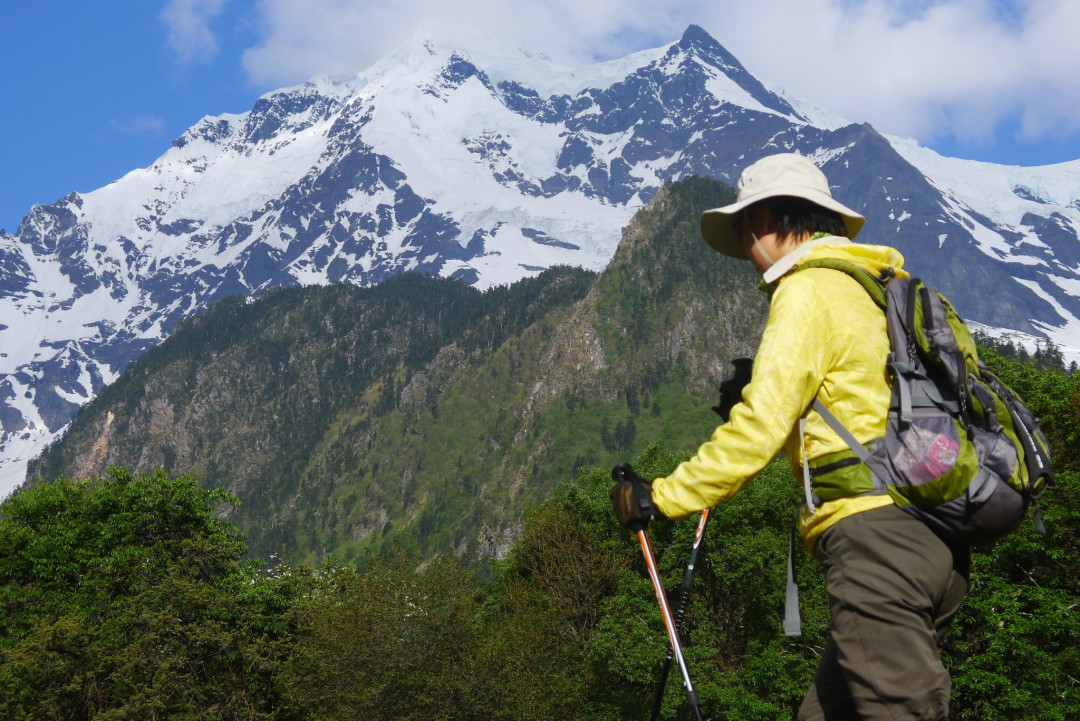
Today's route was Lower Yubeng to the Divine Waterfall and back to Upper Yubeng, a trek of about five hours. The riverbank was covered in mani stone piles, a distinctive feature of Tibetan regions. Following the locals' example, we walked clockwise around them.
The waterfall's flow was much stronger than usual; from a distance, it looked like the Milky Way cascading from the sky. Lily urged us to arrive before noon, and sure enough, we saw a rainbow hanging over the waterfall.
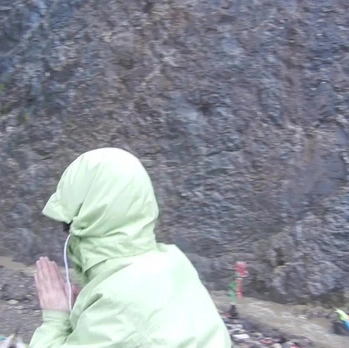
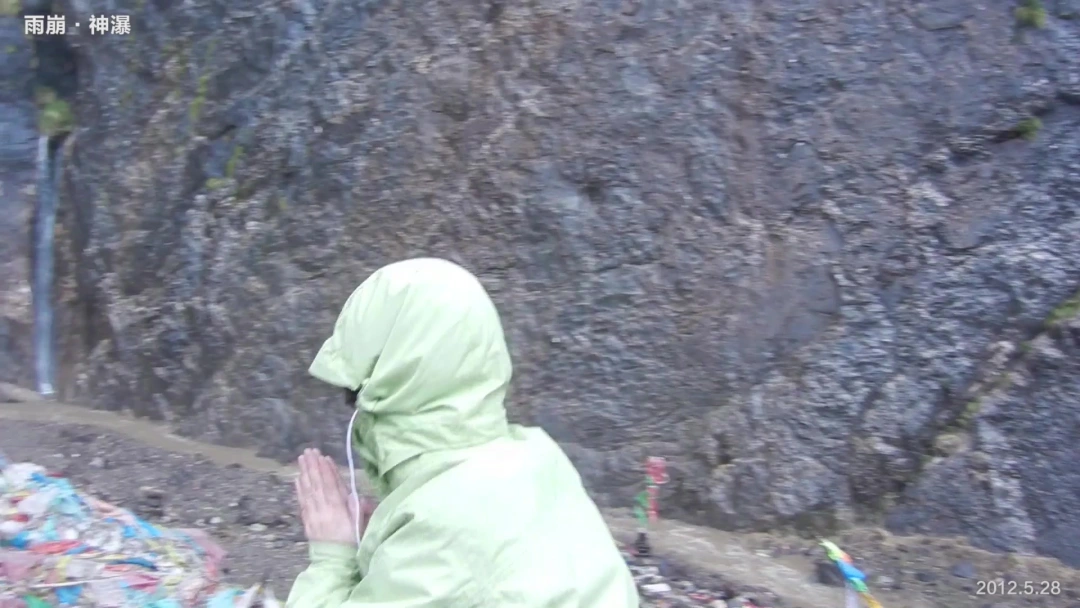
Our group of six lined up and entered the waterfall, palms together, chanting the six-syllable mantra "Om Mani Padme Hum," circling once. The water poured down like a torrent, soaking our pants completely, icy meltwater streaming down into our hiking boots. But as the saying goes: to gain something, you must get wet. The Divine Waterfall blessed us with fortune, while also letting us feel the chill.
Under the snow-capped mountain and warm sun, we dried our feet, built a mani pile, and offered prayers for our families and friends.
Day 5: The Ice Lake Challenge, the Most Beautiful Scenery
Today's route was Upper Yubeng to Xiaonong Base Camp to Ice Lake and back to Upper Yubeng—an eight-hour trek with nearly 1,000 meters of elevation gain. This was the most scenic day, and also the most grueling.
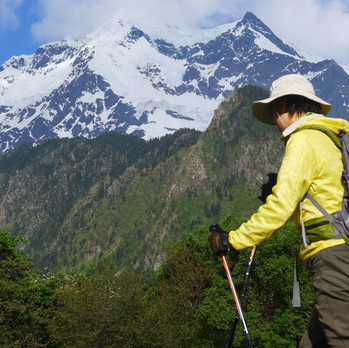
In the primeval forest, ancient trees so thick they required several people to wrap their arms around stood everywhere. The air was so fresh we couldn't help but take deep, greedy breaths. After two hours of hiking, we reached the pass, and the view opened up—through the blooming alpine rhododendrons, Meili Snow Mountain stood right before us, stunningly beautiful.
Xiaonong Base Camp, at 3,600 meters, was the staging area for the 1991 Sino-Japanese joint mountaineering expedition. The 17 climbers who set out from here were caught in an avalanche and remained forever on the mountain. Standing there, looking at the primeval forest flattened by that avalanche, I felt how insignificant humans are in the face of nature.
The toughest stretch was from the base camp to Ice Lake—after leaving the forest, we were exposed to the plateau's direct sun, climbing continuously as the altitude rose steadily. When we finally saw Ice Lake, everyone was overwhelmed with emotion—it was like an emerald embedded in the snow-capped peaks, with chunks of unmelted ice still floating in the water.
Walking on the snowfields around Ice Lake felt like climbing a real snow mountain. But we didn't dare linger too long—falling rocks could come at any moment.
On the way back, we noticed that this primeval forest was being encroached upon by human activity—Yubeng's growing fame had led to more and more guesthouses being built, with an insatiable demand for timber. Development versus conservation—this is the challenge this modern-day Shangri-La must face.
Back in Upper Yubeng Village, we treated ourselves to wine, watermelon, and spicy peanuts—luxuries in Yubeng.
Epilogue: What Yubeng Taught Us
Ten days of travel, filled with laughter, tears, exhaustion, and awe. But most importantly, Yubeng taught us this: some places are worth measuring with your own two feet; some scenery is worth the hardship to pursue.
Practical Tips: 1. To enter Yubeng, take the Xidang route and exit via Ninong, but never take the Ninong trail in rainy weather 2. Yubeng's entrance fee is only 85 yuan—no need to buy a package ticket 3. The Trekker's Inn offers the best value for money—highly recommended 4. When eating in Chengdu, skip Jinli or Kuanzhai Alley; the real food paradise is in the residential neighborhoods off the beaten path
Yubeng isn't heaven, but it's close. When you stand at the foot of the snow-capped mountains, watching the spray of the Divine Waterfall and listening to the prayer flags flapping in the wind, you'll understand—some roads, if you don't walk them, you'll regret; some mountains, if you don't see them, you'll be sorry.
If you can't go to heaven, go to Yubeng. Because once your heart is set on it, not going really is a matter of life and death.
You should also read:
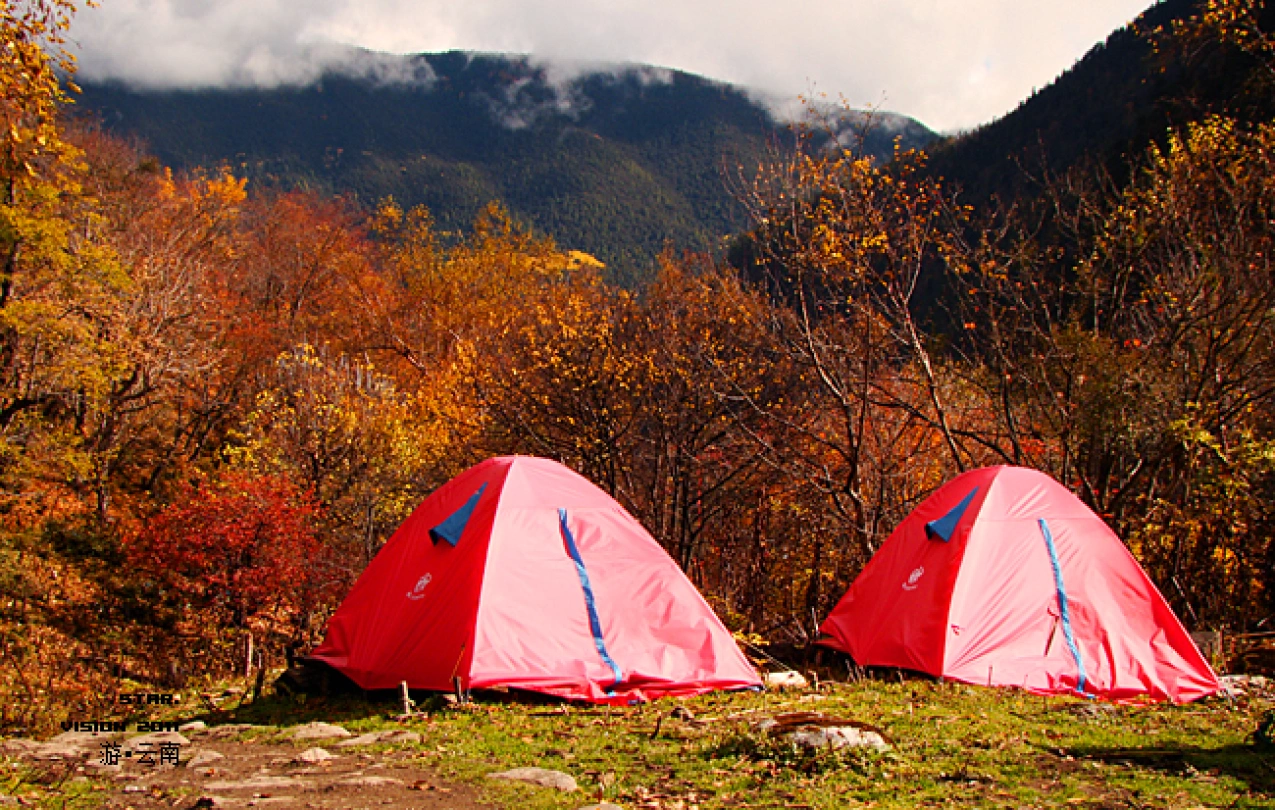
Yunnan! Paradise on Earth – The Yubeng Chapter: A Soul-Cleansing Journey into Seclusion
Yunnan! Paradise on Earth – The Yubeng Chapter: A Soul-Cleansing Journey into Seclusion Prologue: Why Yubeng? If you ask me which place in Yunnan is most worth hiking to, I would answer without hesitation: Yubeng. This is not an answer I give lightly. As a…
Continue reading...
Into the Hidden Valley: A Solo Journey Through the Mysterious Dulong River
Into the Hidden Valley: A Solo Journey Through the Mysterious Dulong River Deep in the northwestern corner of Yunnan Province, tucked away from the modern world, lies a place that feels like a secret whispered among mountains. The Dulong River Valley is not just a…
Continue reading...
God’s Abandoned Palette: A Self-Drive Journey Through Yunnan’s Dongchuan Red Land
God’s Abandoned Palette: A Self-Drive Journey Through Yunnan’s Dongchuan Red Land Travel has never been about reaching some distant geographic coordinate. It’s about encountering, along the way, the version of yourself buried beneath the rubble of daily routine. During this May Day holiday, I finally…
Continue reading...