Primitive Paradise: Tracing the Wa People in Yunnan's Cangyuan – A Perfect Travelogue
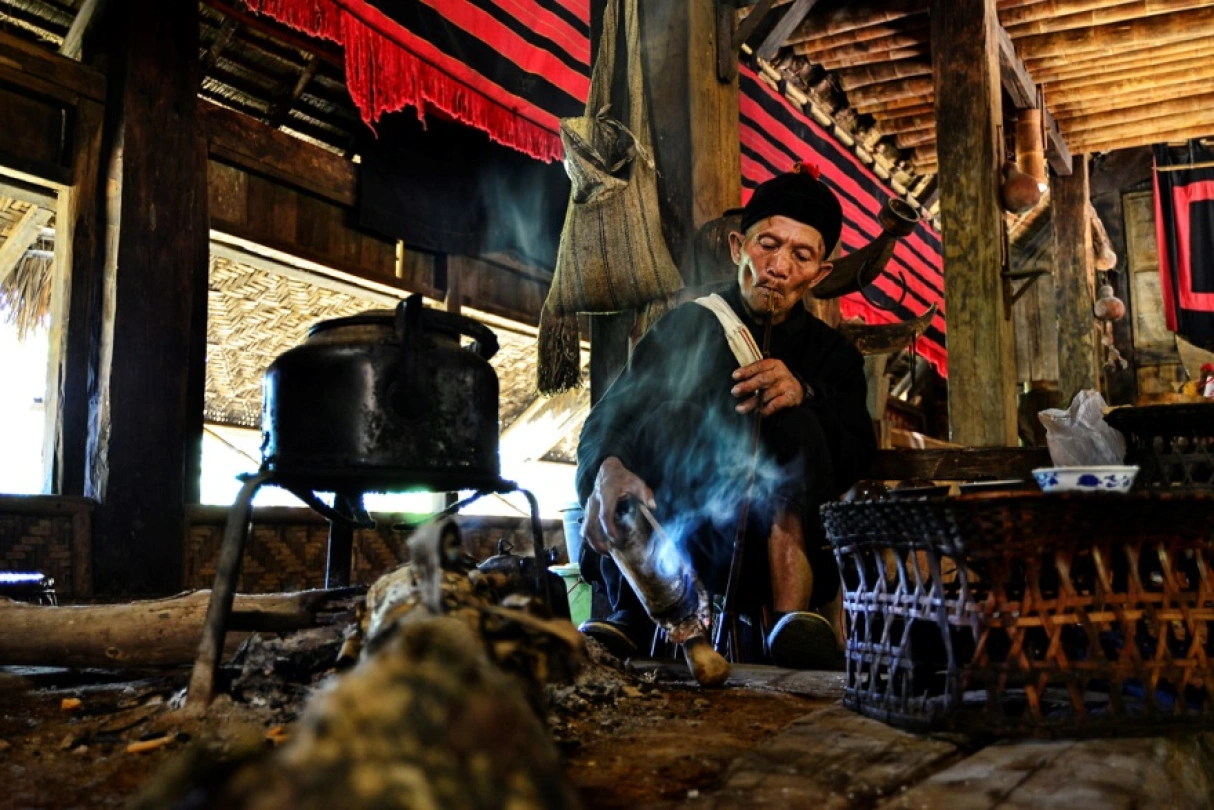
Primitive Paradise: Tracing the Wa People in Yunnan's Cangyuan – A Perfect Travelogue
As the plane pierced through the clouds and I gazed down at the earth below, I was often struck by the magnificent tableau of humanity reshaping nature. The terraced fields stretching across hillsides, the winding rivers, the orderly towns—all spoke of civilization's footprints. Yet, across this vast land, are there still hidden primitive paradises untouched by modern civilization? Where are they? Are they difficult to reach? And if I could step into such places, what kind of soul-stirring experience would await me?
With these questions in mind, I set foot on the soil of Cangyuan, Yunnan, alongside a few like-minded friends. This land, inhabited by the Wa people and located on the China-Myanmar border, completely overturned my understanding of the word "travel" with its raw authenticity and purity. Without experiencing it firsthand, it's hard to imagine that within our own country, there exists a corner seemingly forgotten by time.
The Origin: A Journey Born for Depth
Cangyuan Wa Autonomous County, situated in southwestern Yunnan Province and bordering Myanmar, is a nationally designated poverty-stricken county. But the flip side of poverty is its well-preserved natural ecology and unique culture. Here, green tourism might be the most sustainable development path for the locals. And for travelers like us, Cangyuan is precisely that place where you can shed the hurried sightseeing and truly engage in a dialogue with the land.

We spent months preparing for this trip. From poring over extensive literature to engaging in in-depth conversations with local experts, we aimed to measure every inch of land with our footsteps and capture every fleeting moment with our cameras. This travelogue is the complete record of that journey. It's not just a guide—it's a tribute to an ancient culture.
Arriving in Cangyuan: A Border Town Above the Sea of Clouds
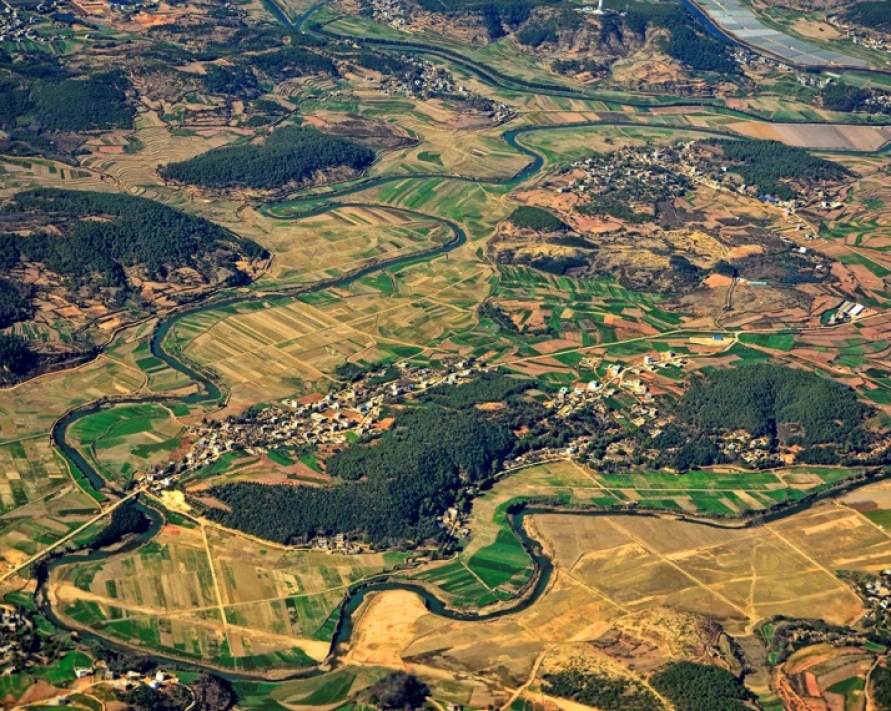
Flying from Kunming to Lincang, then driving another four hours, we finally arrived at Cangyuan county town. The Cangyuan Washan Airport, which opened at the end of 2016, has made this hidden paradise no longer out of reach—it's just a one-hour flight from Kunming.
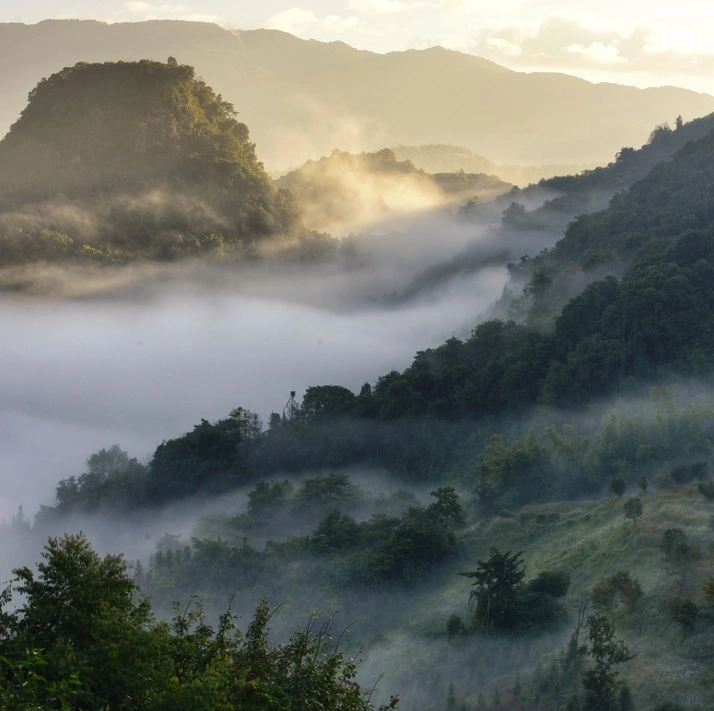
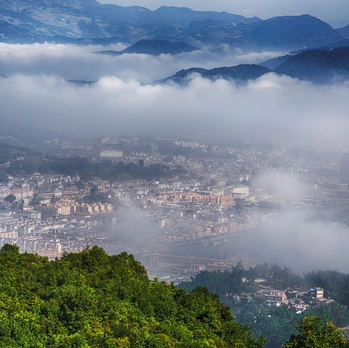
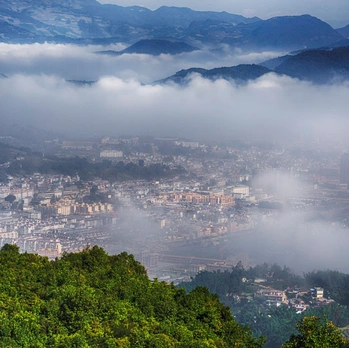
Winter and spring are the best seasons to witness the sea of clouds in Cangyuan. Thanks to its extremely high forest coverage and unique topography, the basins and valleys are often blanketed in thick clouds in the early morning. After a half-hour drive up the mountain, standing on the observation deck, you look down at rolling clouds, with distant peaks and villages appearing and disappearing. When the morning light breaks through the clouds, Cangyuan county town emerges from the mist, like a mirage. In that moment, you understand what "a paradise on earth" truly means.
Exploring the Cliff Painting Valley: Communicating with Ancestors from 3,500 Years Ago
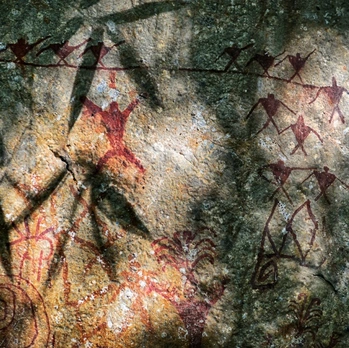
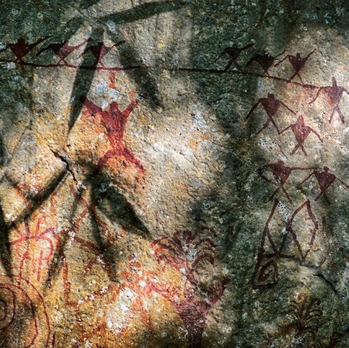
About a 40-minute drive from the county town, the Cliff Painting Valley is Cangyuan's most mysterious attraction. Here, cliff paintings dating back approximately 3,500 years are scattered across the rock faces. Ancient Wa ancestors used ochre-red pigments to depict scenes of hunting, dancing, and rituals. Those simple lines carry their reverence for gods and the cosmos, while also recording the minutiae of daily life.
Standing before the cliff paintings, I could almost hear the distant drumbeats and see the ancestors dancing around a bonfire. Among these patterns lie many secrets that remain unsolved to this day. For instance, why are all human figures depicted in a "frog-like" posture? What do those abstract symbols represent? Perhaps these enigmas are themselves the gifts that history has left us.
Sigangli Karst Cave: An Underground World Born from Creation Myths
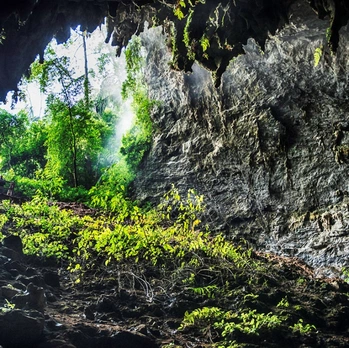
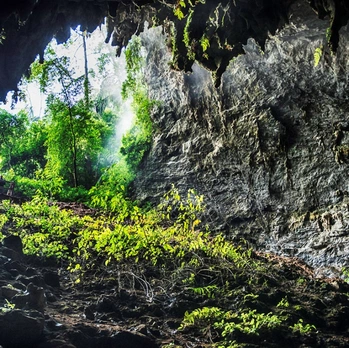
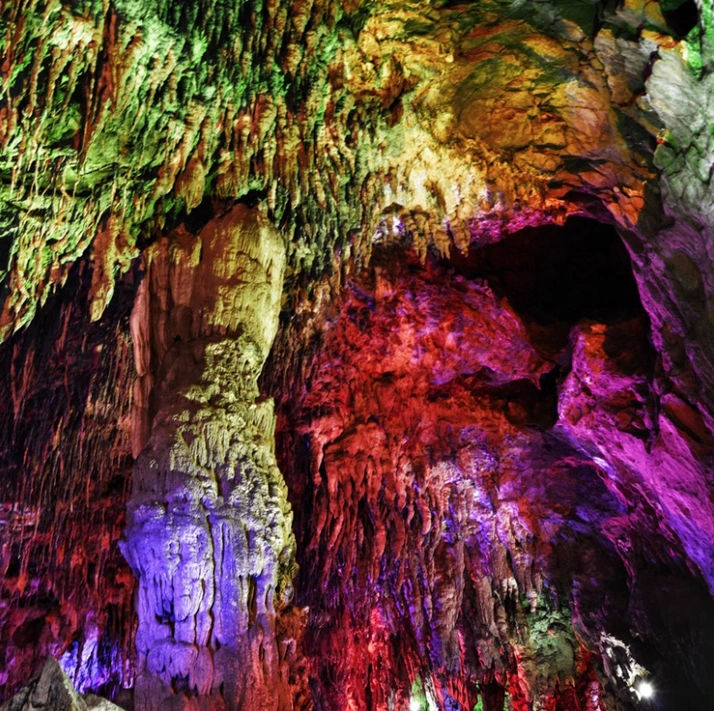
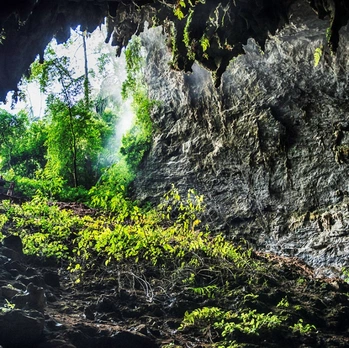
"Sigangli" is the creation myth passed down orally among the Wa people, telling how humans emerged from a cave. Thus, karst caves hold a sacred place in Wa culture. The Sigangli Grand Karst Cave is Y-shaped, with a majestic main chamber. Currently, only a small portion of the cave has been developed for tourism. An underground river flows deeper into the cave, which remains largely unexplored.
Entering the cave, you'll be awestruck by nature's extraordinary craftsmanship. Stalactites, stalagmites, and flowstones glisten under the lights. But even more captivating is the sense of mystery within. Perhaps, in those undeveloped depths, even more wonders await discovery.
Nongwa Valley: A Wild Adventure in the Primeval Forest
Among Cangyuan's mountains, there are many untouched primeval forests. Nongwa Valley is the closest one to the county town. Walking into the valley, you'll see massive palm trees, their crowns draped with countless vines, resembling green waterfalls. Following a small stream, the terrain rises and falls, requiring you to grab onto trees and vines for support. The wild ecology along the way makes you forget the hustle and bustle of the city.
I've heard that the Nan Gun He National Nature Reserve is home to wild elephants and a wealth of rare plants and animals. Unfortunately, time was limited, and we couldn't venture deeper. But this regret has become a reason to return.
Wengding Village: A Living Museum of Wa Culture
Wengding, about 30 kilometers from Cangyuan county town, is a protected area for traditional culture designated by Yunnan Province's intangible cultural heritage program. Here, the most complete form of a Wa village is preserved: the village gate, the village pillar, the meeting house, the dance ground, the sacrificial house, the drum house, the headhunting post, the buffalo head post… Every structure exudes a strong aura of primitive tribal life.
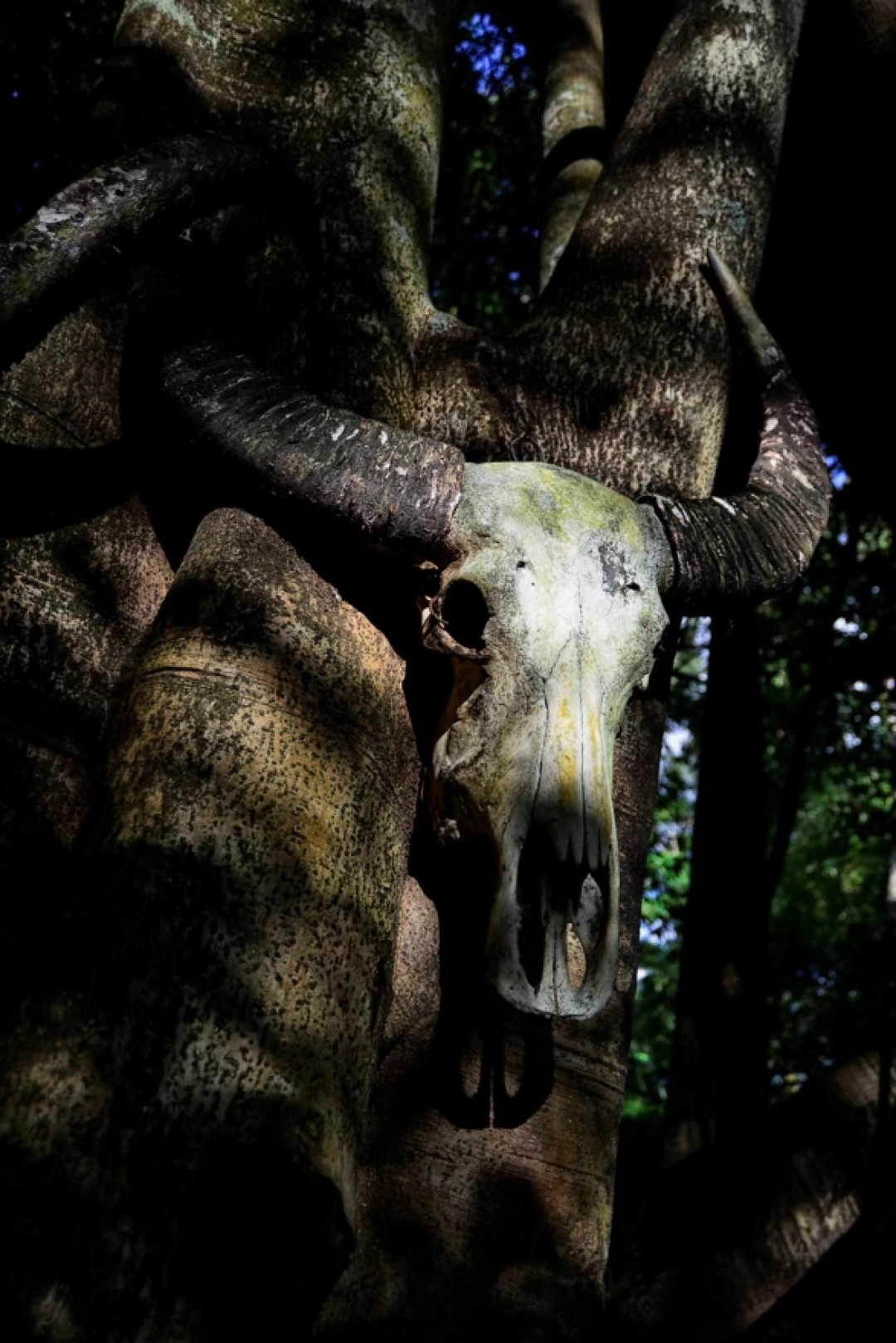
The totem of the Wa people is the buffalo. From the moment you enter the village, you'll see massive buffalo skulls hanging on wooden posts, sacred trees, and building walls. Traditional Wa architecture is stilted: the lower level houses livestock and storage, while the upper level is for living, with skylights on the roof. In the early morning and at dusk, curling smoke envelops the entire village. That scene of primitive living makes you feel as if you've traveled back in time.
We specifically stayed overnight in Wengding. In the dawn light, we watched sunlight spill over the thatched roofs; at sunset, we saw smoke intertwine with the shadows of trees. That feeling of returning to simplicity is something no luxury hotel can provide.
Wa Hospitality and Taboos
The Wa people are exceptionally hospitable. If the host is away or unable to receive guests, they place green leafy branches on their door. Apart from houses with branches, you can freely enter any other home. The Wa often welcome guests with brewed tea and offered wine. Before drinking tea or wine, they first "drip tea" or "drip wine" onto the ground as an offering to gods and spirits, saying, "With tea and wine before me, I dare not drink first; you drink first, then I will drink." This ritual of communicating with deities and ghosts is deeply woven into their daily lives.
In Wengding, you can also witness the traditional "pulling the wooden drum" and "dancing" activities. "Pulling the wooden drum" is an important ceremony in Wa drum culture. The entire village gathers to pull a wooden drum, singing songs as they haul it from the mountain forest to the village square. The grand spectacle reveals the Wa people's profound emotional connection to the drum. "Dancing" involves forming a circle, playing instruments, and dancing. Musicians blow folk instruments while villagers dance and sing, creating an infectious energy that draws many tourists to join in.
Border Villages: Gado, Manghei, and Mengka
Beyond Wengding, we also visited the border villages of Gado (Moon Ancient Village), Manghei (Small Village), and Mengka (Dai Village). These villages are undeveloped, with even more unspoiled folk customs. In Gado, we witnessed the Wa women's habit of smoking pipes. Whether working or relaxing, they'd pull out their pipes for a few puffs. Elderly women, in particular, rarely let their pipes leave their hands.
In Manghei, we encountered a simple small Burmese-style temple. Built with locally sourced materials, the bamboo-woven walls let slivers of light filter through, giving tangible form to the smoke rising from the hearth. That feeling of time slowing down brought a profound stillness to our hearts.
Mengka Dai Village was a world of blue glazed tiles. Golden peacocks adorned the rooftops, and behind the village, in the sacred grove, a giant banyan tree formed a forest on its own. We left beautiful memories beneath that tree.
Guangyun Burmese Temple: A National Treasure of Architecture
Guangyun Burmese Temple, also known as the School Temple, is located in the residential area of Cangyuan county town. Along with the Manfeilong White Pagoda in Jinghong, Xishuangbanna, and the Jingzhen Octagonal Pavilion in Menghai County, it is one of the three major ancient buildings of Theravada Buddhism. In 1988, it was designated a National Key Cultural Relic Protection Unit.
The temple does not charge an entrance fee but accepts donations. The main hall is a perfect blend of pavilion, tower, and multi-story structure. The two carved wooden golden dragons on the pillars by the entrance are lifelike, their heads raised, one eye fixed on the sky, the other watching the temple door. Legend has it that a glass bead once hung above the door beam, symbolizing "two dragons playing with a pearl," but it has since been damaged or lost.
Inside the hall, numerous Buddha statues and an array of offerings fill the space. Colorful silk Buddhist banners, made from paper cuttings—a folk art passed down through generations of the Dai people—adorn the walls. Beneath a brocade umbrella canopy sits a full-body gold-leafed statue of Shakyamuni, with a kind and compassionate expression. Ten colorful murals on the inner walls commemorate an event during the Daoguang reign of the Qing Dynasty, when the imperial court appointed a Dai chieftain from the Awa Mountain region. The murals, traditional in style, depict diverse costumes and reflect the local customs of the time.
Interestingly, a large wooden drum stands in front of the temple gate. This is not a borrowed artifact but a testament to friendship. Legend has it that during the temple's construction, the Dai chieftain asked a Wa headman to help find high-quality timber. The Wa headman mobilized the community, found a thousand-year-old red wool tree, cut it down, and gave it to their Dai brothers. The leftover branches were crafted into a large wooden drum. After the temple was completed, the Wa people presented the drum as a gift to the Dai, and the Dai chieftain placed it in the temple as a memento.
Cultural Seminar: An Unexpected Feast of Knowledge
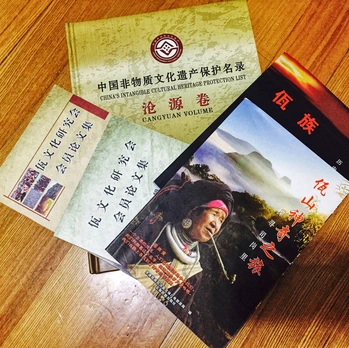
During this trip, we specially arranged a seminar on Cangyuan culture. The county invited experts and scholars from the propaganda, tourism, and cultural departments, as well as some retired leaders, to share their knowledge of Wa culture with us.
At the seminar, the experts spoke about Wa history, beliefs, and customs. For example, the Wa believe that all things have spirits: the upper part of a village must have a sacred grove, and the lower part a ghost grove. In earlier times, headhunting was practiced, so village defense systems were highly developed. The Wa practice monogamy and advocate free love, but marriage between people of the same surname is forbidden. For funerals, an egg is thrown to determine the burial site—wherever the egg breaks, that's where the deceased is laid to rest.
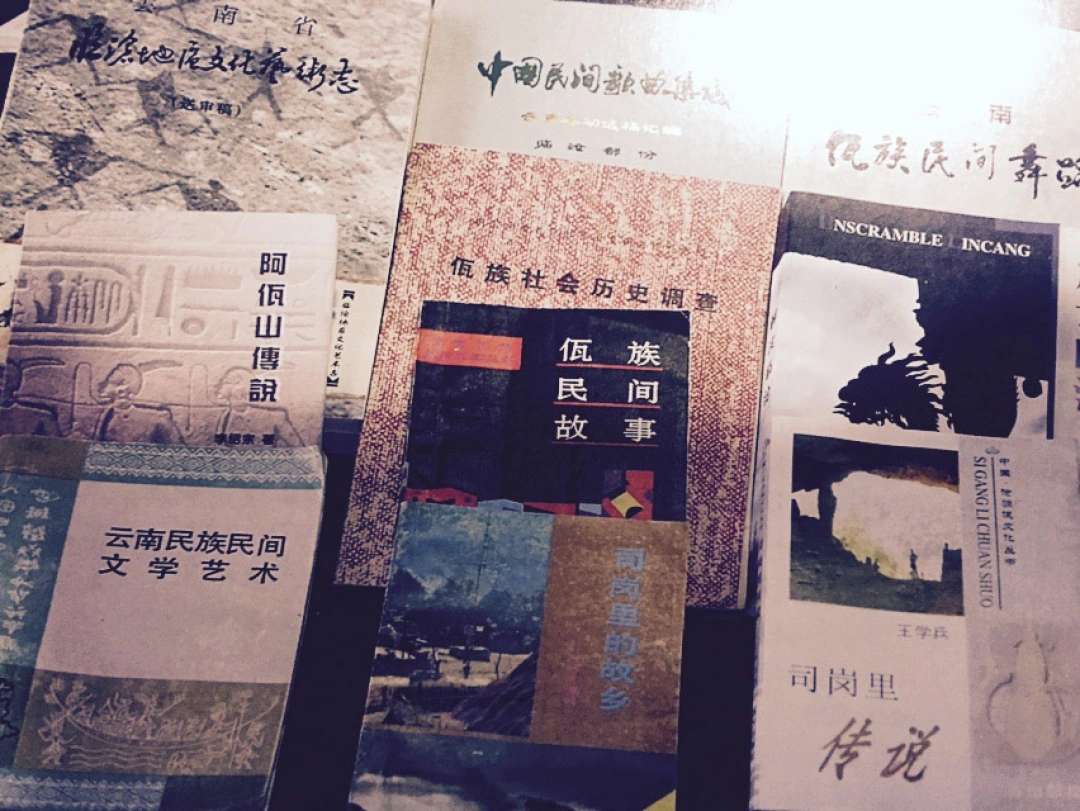
This knowledge deepened our understanding of Wa culture. Teacher Tian from the Cultural Bureau explained the essence of the "Sigangli" culture. He said that many books in the past interpreted minority legends from a Han Chinese perspective, but hearing it from a Wa scholar's viewpoint offers a completely new understanding.
The experts also discussed the direction of Cangyuan's tourism development. They believed that tourists should come with less of a curiosity-seeking mindset. Cangyuan doesn't need to present itself in a primitive or ignorant way; instead, it should develop its ethnic characteristics so that visitors can truly understand Wa culture.
Conclusion: A Journey Back to the Roots
The trip to Cangyuan redefined the word "travel" for me. There are no noisy attractions, no commercialized performances here. What exists is pristine natural scenery, unspoiled ethnic customs, and those cultural imprints on the verge of disappearing.
From the county town above the sea of clouds to the 3,500-year-old cliff paintings; from the cave born of creation myths to the wild charm of the primeval forest; from the curling smoke of Wengding Village to the Burmese temples of border villages… every scene inspires awe.
If you, too, are tired of superficial sightseeing, if you're searching for a pure land untouched by modern civilization, then go to Cangyuan. There, you'll find the true meaning of travel—not ticking off landmarks, but returning to the essence.
Practical Tips: - Transportation: You can fly directly from Kunming to Cangyuan Washan Airport (1 hour), or fly to Lincang and then drive (4 hours). - Best Season: Winter and spring (November to April), when you can enjoy spectacular seas of clouds. - Must-Visit Attractions: Wengding Village, Cliff Painting Valley, Sigangli Karst Cave, Guangyun Burmese Temple, Nongwa Valley. - Notes: Respect Wa taboos, such as not touching people's heads and not entering sacrificial rooms without permission.
Coordinate List: - Yonghe Port: 23°5'36.43"N 99°13'59.99"E - Wengding Village: 23°16'51.66"N 99°9'52.86"E - Cliff Paintings: 23°16'17.40"N 99°18'53.74"E - Sigangli Karst Cave: 23°19'36.90"N 99°20'1.64"E - Guangyun Burmese Temple: 23°9'17.22"N 99°14'58.94"E
May this travelogue open a window for you into a primitive paradise.
You should also read:

Tracing Shangri-La: Through the Hidden Realm of Niru, Toward the Unknown Road to Lugu Lake
Tracing Shangri-La: Through the Hidden Realm of Niru, Toward the Unknown Road to Lugu Lake From Botanist to Explorer: The Birth of a Name In 1922, a plant collector named Joseph Rock set foot on Yunnan's soil, originally seeking rare botanical specimens. But once he…
Continue reading...
Crossing Honghe Prefecture: Tracing the Footprints of Time Through Jianshui, Mengzi, Gejiu, and Yuanyang
Crossing Honghe Prefecture: Tracing the Footprints of Time Through Jianshui, Mengzi, Gejiu, and Yuanyang I love the comfort of a settled life, yet I also cherish the freedom of wandering. I enjoy the liveliness of traveling with companions, but I’m not afraid of the solitude…
Continue reading...
Accompanying You to Cangshan and Erhai: A Yunnan Travelogue of Wind, Flowers, Snow, and Moon
Accompanying You to Cangshan and Erhai: A Yunnan Travelogue of Wind, Flowers, Snow, and Moon Some say travel is a conversation with yourself, but I prefer to believe it's about turning unfamiliar landscapes into shared memories with the people you love. In early July 2016,…
Continue reading...