Racing the Storm Clouds: A Pre-Monsoon Road Trip Through Yunnan — 8 Days, 7 Nights from Dali to Shangri-La to Lijiang
Racing the Storm Clouds: A Pre-Monsoon Road Trip Through Yunnan — 8 Days, 7 Nights from Dali to Shangri-La to Lijiang
Prologue: A Race Against Time
When four friends, all past thirty, finally carved out eight days from their grind of "cattle-and-horse" working life, we decided to hatch a meticulously planned escape. Our destination: Yunnan — a place so tourism-savvy it inspires both love and hate. Love it for the polished infrastructure and picture-perfect scenery; hate it for the endless traps and tricks. But for office workers who just want a proper vacation, maturity means convenience: food, shelter, transport all sorted, scenery that never bores, and a pace that won't leave you more exhausted than when you started.
Why a road trip? Because we refused to be at the mercy of "horse-riding warnings." Yunnan's group tours have a notorious reputation — one wrong move and you're being herded onto a horse. But after some research, we discovered that as long as you avoid extreme weather, Yunnan's roads are remarkably friendly: mostly well-maintained paved surfaces, a piece of cake for a few seasoned drivers. Three to six hours behind the wheel each day, with three drivers rotating — no sweat.
Why Dali, Shangri-La, and Lijiang? Lijiang has the airport you'll fly into; Shangri-La is a paradise for landscape lovers; Dali wins on liveliness and convenience. Traveling during the rainy season, we kept our expectations low for scenery. As it turned out — we bet right.
Day 1: Departure! To the Land of Wind
Route: Lijiang Airport → The Wind Tree → Xizhou Ancient Town → The Corridor Bridge → Dali Ancient Town → Sheraton Dali Hotel
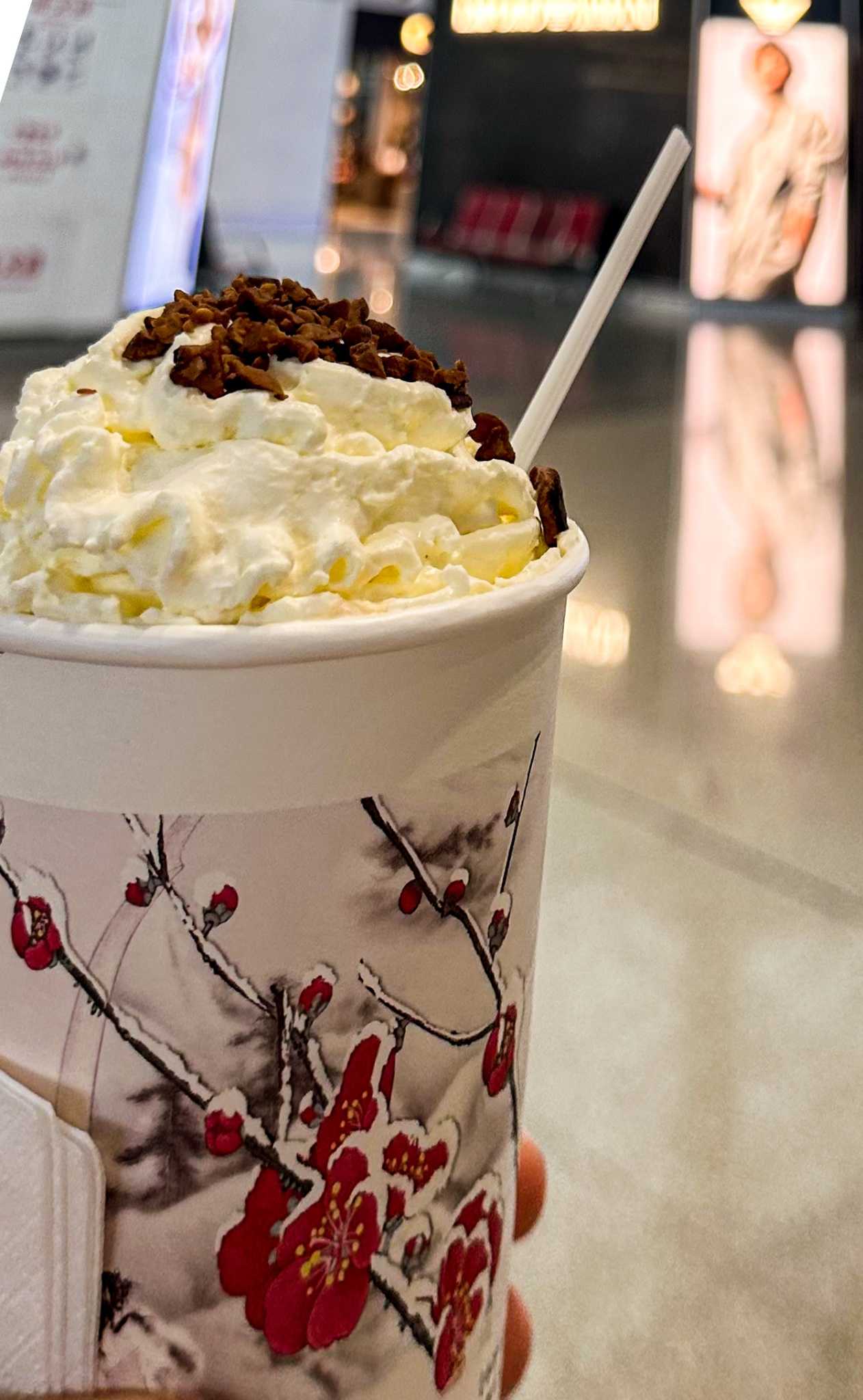
After flight changes and itinerary shuffles, we finally grabbed a cup of Sexy Tea (a popular Chinese milk tea brand) during a layover in Changsha. High-calorie happiness — the true signal that a trip has begun.
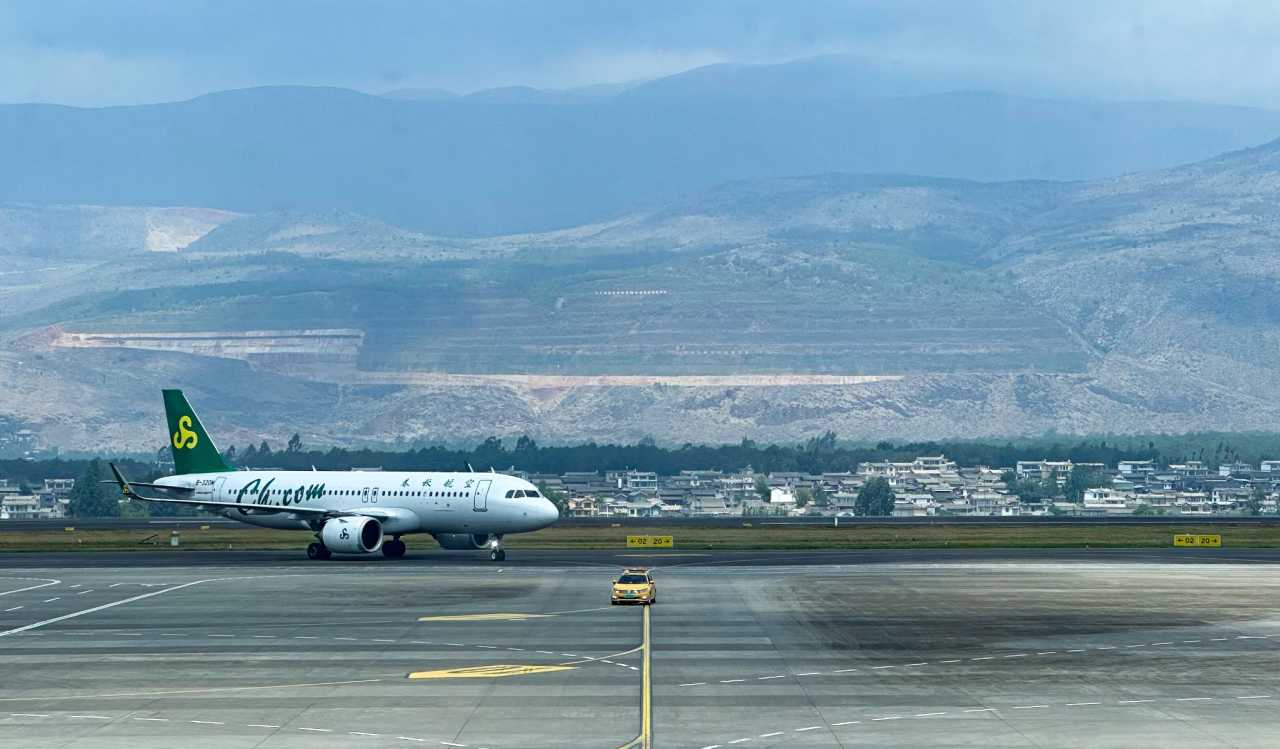
Arriving at Lijiang Airport, the sweeping mountain views instantly lifted our spirits. At the car rental counter, we picked up a Volkswagen Tiguan L — about 1,400 yuan for seven days with full damage coverage, a bargain compared to renting abroad. Our long-legged drivers praised the legroom, but the 1.5-liter turbo engine struggled on mountain roads, and Apple CarPlay was a nightmare to connect.

We skipped Lijiang and headed straight for Dali. We set our GPS to "Hetianli Homestay" — the famous "Wind Tree" and Xizhou Ancient Town were nearby. The drive took about 1 hour 45 minutes, with clouds hanging so low they felt within arm's reach — this is what the plateau should look like.
The "Wind Tree" is where the female lead cried in the hit Chinese drama Meet Yourself. Honestly? It's just an ordinary tree. By afternoon, it was swarmed with people, making it nearly impossible to get a good shot. What's really famous is the wheat field nearby, but it had just been harvested in late May, leaving bare earth. If you're not a fan of the show, this spot is skippable.
Xizhou Ancient Town got only a quick pass from us — felt very average. Tonight we stayed at the Sheraton Dali, located in the central Haixi (west shore) area, close to Dali Ancient Town. With time to spare, we checked out the Corridor Bridge first. It's known for photo ops through its arches, but the scenery was mediocre. Haixi is essentially one long ecological corridor — the bridge, Longkan Pier, the S-bend, and other spots all look similar. We rented electric scooters and stopped wherever we liked — this was the most comfortable way to explore.
Tip: Renting an e-scooter works only if you're not fussy about photos. Otherwise, no matter how stylish you dress, you'll look like a delivery driver.
We passed a grove of trees and a small patch of flowers. Yunnan has so many stunning blooms that every corner looks like a Monet garden. A few oddly shaped trees were practically begging to be compared to New Zealand's "Lone Tree of Wānaka." The downside: too many tourist photographers. But I have to hand it to the girls — their posing skills were top-notch.
The ecological corridor was fantastic overall, but don't expect much from Erhai Lake's color — it's entirely weather-dependent. That day was overcast, turning the water a dull gray. Still, it didn't ruin the experience.
Back at the Sheraton, the views and facilities were solid. At under 700 yuan during the off-season, it was great value — highly recommended. For dinner, we aimed for Daqing Shu Shengpi (a local raw pork dish), but walked into the wrong restaurant — only to discover another spot with the same name 100 meters away that was far more popular. Still, the food was decent: heavy on flavor, generous portions, and affordable. We ordered stir-fried chicken with rice cake, mint-scented pork ribs, and stir-fried wild mushrooms.
After dinner, we headed to Dali Ancient Town — and the sky unexpectedly cleared. Strongly avoid roasted milk fan (a local dairy snack) — my friend and I each bought one, and for the rest of the trip, the mere mention of it made us shudder. Nighttime is the right way to experience the ancient town — it was buzzing with energy. We found a small bar with great craft beer and could hear the live band next door. Wind, flowers, snow, moonlight — the classic Dali romance — plus fortune-tellers with makeshift stalls. It was a scene all its own.
Back at the hotel, the TV screen greeted us by name. A thoughtful touch. Day one ended on a high note.
Day 2: From West to East Shore, Chasing the Light
Route: Caicun Pier → Longkan Pier → Sansheng Island → The Wind Courtyard → Xingsheng Bridge → Shuanglang Ancient Town
Woke up early and scrolled through Xiaohongshu (a Chinese lifestyle app) — only to realize we'd photographed Cang'er Avenue from the wrong direction yesterday. We went back for a reshoot, but the weather was poor, and the result was far from the filtered photos online.
We had "brunch" at Zhouji Qiaofuren in Caicun — the tofu-rice noodle dish was a winner. Then we continued cycling along the Haixi ecological corridor from Caicun to Longkan Pier to Sansheng Island. We spotted early-blooming water lilies (literally "waterborne poplar flowers") — from a distance, they looked like trash floating on the water. Up close, they looked even more like trash. The season hadn't arrived yet.
Longkan Pier was packed with people, but the trees there were indeed the most neatly arranged — perhaps pruned. We squeezed in for a photo and kept riding. We passed a grove and some uniquely shaped trees but couldn't capture the shot we wanted. More attempts to imitate New Zealand, plus some experimental poses.
The highlight of the day was Xindi Coffee on Sansheng Island — the views and the coffee exceeded expectations, making it the best spot in Dali, in my opinion. The café had several great photo angles, but by then we were tired and didn't take many. Only when we returned for the car did we realize it would have been smarter to come here first.
At the request of a drama fan, we swung by the area near "The Wind Courtyard" (the show's house). The gate was locked — entry cost 188 yuan per person, so we skipped it. The road was much the same, and we only stopped to photograph a well-behaved golden retriever.
Xingsheng Bridge — a "pretend you're in Europe" photo spot — had nice views and plenty of influencers livestreaming. The area under the bridge was also impressive, but a couple was having their wedding photos taken there, so we had to squeeze in a landscape shot under the groom's disdainful gaze.
We hit the highway toward the east shore. Originally planned to visit Luwu Mountain and Wenhai Village, but the scenery looked similar, so we headed straight for Shuanglang. For dinner, we had mushroom hotpot at Siji Yunye — delicious, but since the rainy season hadn't started, the freshness was questionable.
After dinner, we arrived in Shuanglang. We had low expectations — I didn't even bring my camera. But then we stumbled upon an absolutely stunning evening. I used to think the west shore was bluer than the east, but after the clouds parted, Erhai Lake revealed a shade of blue I hadn't seen before. Sunset comes late in Yunnan — around 8 PM — and the golden light made everything look surreal. Fields of flowers stretched out, surpassing even New Zealand (I keep comparing because the landscapes are so similar).
For accommodation, we chose Yinxi Shanshan Homestay — good value, photogenic, and the breakfast noodles were excellent. But overall, it fell short of expectations. At a similar price to the Sheraton, it couldn't compare in amenities. If you can, find a homestay closer to the water.
Day 3: The Grandeur of Tiger Leaping Gorge, the Surprise of the East Ring Road
Route: Dali → Upper Tiger Leaping Gorge → East Ring Road (Haba Snow Mountain Viewpoint, Baishuitai, Washbasin Pass) → Dukezong Ancient Town → Shangri-La
We left Dali in the morning under clear skies — the lake was quite blue. The hydrangeas at the homestay were in full bloom, a common sight across Yunnan. Breakfast was good, and the area around the homestay was photogenic.
Today was the longest drive — about six hours total. We passed Jade Dragon Snow Mountain, which by early June had lost most of its snow.
First stop: Tiger Leaping Gorge. It's divided into upper, middle, and lower sections. The upper gorge is the most tourist-friendly — a developed attraction. The middle gorge requires hiking, and the lower gorge is no longer accessible. Given our somewhat out-of-shape crew, we stuck to the upper gorge.
Two small traps: First, there's a ticket checkpoint before the actual scenic area — if you're not going to the upper gorge, make that clear. Second, the ticket seller will push an elevator, claiming you need to climb over 2,000 steps — in reality, the distance is short, and unless you're elderly or with small children, it's unnecessary.
The scenery at Tiger Leaping Gorge is completely different from Erhai Lake — it's a dramatic canyon landscape. At its narrowest point, a tiger could leap across — the park even has tiger heads placed at several spots. The water is seasonal: clear blue-green during the dry season, muddy yellow during the wet season. We caught it at a good time; July and August would be even more spectacular.
From the gorge, we followed the East Ring Road toward Shangri-La. We used Amap (Gaode) — Baidu Maps stubbornly refused to take the East Ring Road. By adding stops like Wangtian Waterfall Viewpoint, Haba Snow Mountain Viewpoint, Baishuitai, and Washbasin Pass, we managed to lock in the route. This road takes about 1.5 hours longer than the West Scenic Route, but the canyon views are worth it.
At the Wangtian Waterfall Viewpoint, we saw no waterfall at all — just strong winds that blew someone's bag away. Further on, we reached Haba Snow Mountain Viewpoint — the first snow-capped mountain we'd seen. We set up a tripod for a group photo; the snowy peak was faintly visible, and we southerners who hadn't seen snow in a long time were thrilled.
Baishuitai is a travertine pool formation. Three of us had been to Huanglong (a similar site in Sichuan), so we skipped it. But while scrolling Xiaohongshu, we saw that "Washbasin Pass" was in full bloom with alpine rhododendrons — we headed there immediately. What a surprise! Distant snow-capped mountains paired with mountainsides covered in flowers at an elevation of 3,800 meters — the blooms were perfect. Flowering varies greatly by altitude: at Pudacuo (3,200 meters) the flowers had already faded; at Baima Snow Mountain Pass (4,200 meters), they were still in bud.
That night, we stayed at Yunbian View Homestay in Shangri-La. At just over 300 yuan, the views and room facilities were excellent — incredible value. For dinner, we had yak meat hotpot. It was okay, but we ordered too much and got sick of the greasiness. Advice: don't over-order; the tripe and tongue are particularly fatty.
After dinner, we climbed Guishan Park to see the giant prayer wheel. The night view was nice, and the square was filled with people dancing around a bonfire — great atmosphere. One of our teammates, possibly from overeating and drinking "fake" alcohol, experienced altitude sickness. The prayer wheel is turned by real people — if you join in, you have to circle it three times.
Back in the room, my head was pounding. I took some oxygen and went to sleep.
Day 4: The Grasslands of Napahai, the Call of Meili Snow Mountain
Route: Shangri-La → Napahai → Alpine Botanical Garden → Jinsha River Great Bend → Feilai Temple → Deqin
After a solid sleep, we woke to blue skies and white clouds — the altitude sickness had eased. But one teammate claimed he'd wait for us in Lijiang — only calmed down after taking medicine and oxygen.
On the way to Napahai, we passed Shika Snow Mountain, but by now we were less excited. Napahai is a curious place — if you navigate directly to "Napahai," you'll be taken to a village-run area where they aggressively push horse riding. The correct approach is to navigate to "Bantu'erfei" (a café) and follow the ring road — this leads to the beautiful grasslands.
Blue skies, white clouds, green grass — a paradise for landscape lovers. But we saw no water, so I thought "hai" (lake) was a misnomer for the grassland. Near Bantu'erfei, the view was breathtaking, with cattle and sheep scattered everywhere. The only downside was cow dung, but it was manageable.
For lunch, we chose Xilin Yuan Nada, a project supported by Shanghai aid. The views from the window were stunning, and the food was refined and delicious. Afterward, we continued along the ring road, navigating to the Alpine Botanical Garden, where we finally saw some water — apparently it's a lake in winter, but now it was the dry season.

Leaving Napahai, we pushed on toward Deqin. We passed Heqiao Bridge and even accidentally crossed into Sichuan territory due to a navigation error. Then came a classic National Geographic spot — the Jinsha River Great Bend (also called Moon Bay). We finally put our wide-angle lens to use. The angle is fixed, but it's worth a stop if you're passing through.
Now for the main event — Meili Snow Mountain! To catch a glimpse, I'd studied various weather models, followed weather bloggers and groups, and the conclusion was still: it's all luck. The forecast was completely unreliable — it had predicted rain for our entire trip, but we'd seen only a few showers. My advice: book a cancelable viewing hotel. If all weather platforms show rain the day before, consider canceling.
We arrived at the Snow Mountain Wake Up Hotel — excellent choice. Our second-floor room didn't have a private balcony, but there was a large public terrace perfect for our two families to play cards facing the mountain (even though we couldn't see it). The hotel was the best in Feilai Temple area, with unbeatable views and decent amenities.
Then came a frenzy of photographing the mountain — hundreds of shots. The hotel is a stone's throw from Feilai Temple, which we also visited. The temple offers better viewing angles with more foreground elements, but it gets crowded during the golden hour sunrise.
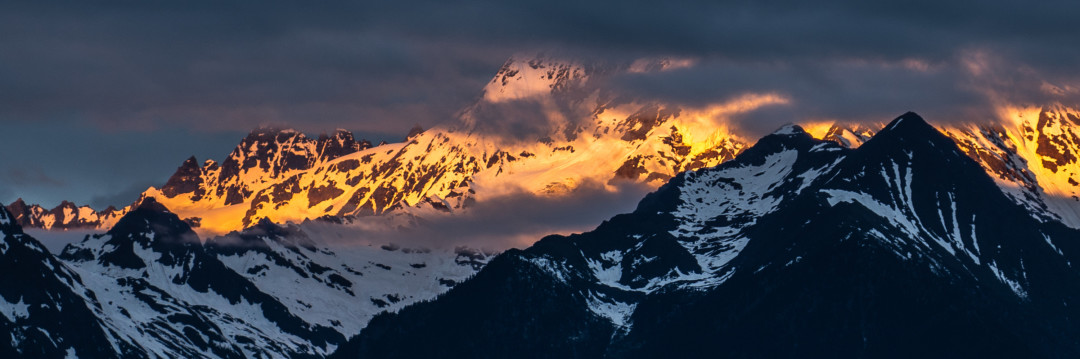
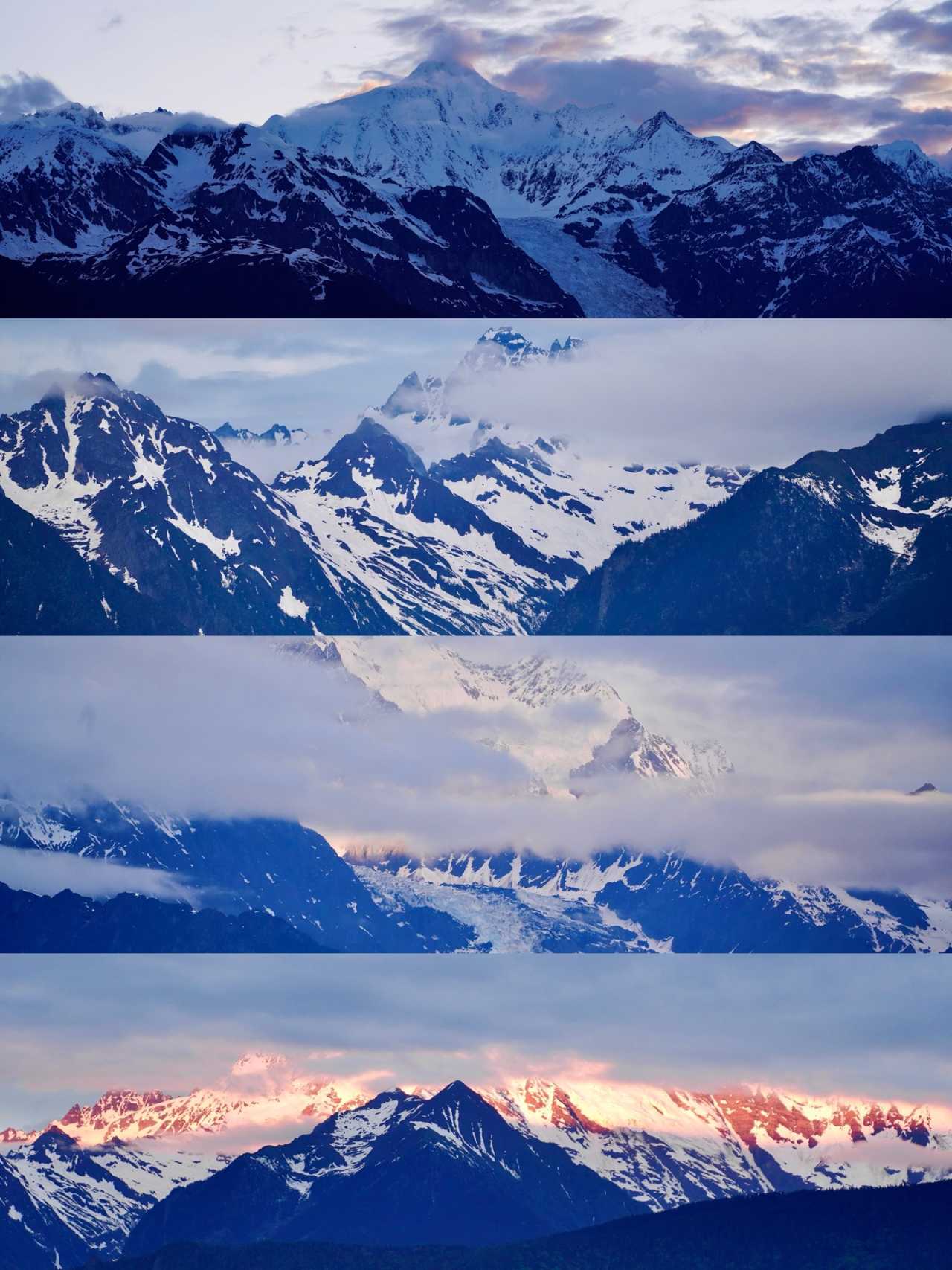
On the way back to the hotel, a rainbow appeared after a sudden downpour. After the rain cleared, the main peak of Kawagebo said hello, and the sky was painted with twilight colors. The only regret: even as night fell, we never saw the complete main peak — a cloud stubbornly clung to its summit.
The night sky was filled with stars (visible only through long exposure), and the Big Dipper was prominent. The hotel area had some light pollution; a darker spot would have been even better.
Day 5: The Miracle of Golden Sunlight, the Majesty of the Old National Road
Route: Feilai Temple → Baima Snow Mountain Pass (Old National Road 214) → Songzanlin Monastery → Shangri-La
The alarm went off at 6:15 AM. I glanced outside and could see the mountain — a good sign. At first, the sky turned golden, and my teammates thought the light wouldn't reach the peak. But as the clouds dispersed, the golden glow became unmistakable. Cheers rose from Feilai Temple below — it was truly beautiful! We hadn't expected much, as there hadn't been a golden sunrise in over ten days.
Of course, two teammates had different opinions: one had set expectations too high and thought "that's it?"; the other never got out of bed — he'd had bad luck playing cards the night before.
The golden light moved quickly from left to right, then disappeared into clouds. By the time I switched to a telephoto lens, the golden peak was gone. The entire golden sunrise lasted about ten minutes; we saw two to three minutes. Conditions are harsh — during the rainy season, it's a rare stroke of luck.
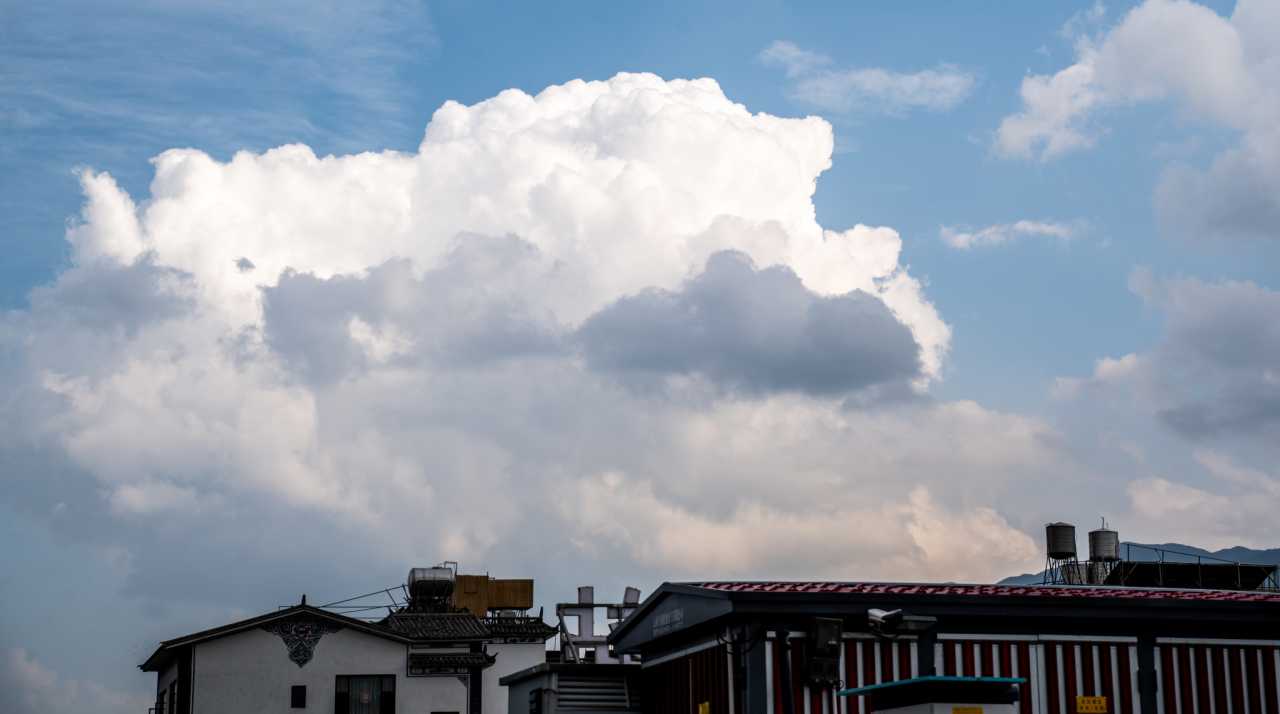
After a short nap, we went down for breakfast — the first proper hotel breakfast of the trip, with a good variety and decent taste. While eating, I noticed an elevator ad and realized we'd missed the fourth-floor viewing platform. By the time we went up, the mountain was already hidden by clouds — a missed photo opportunity.
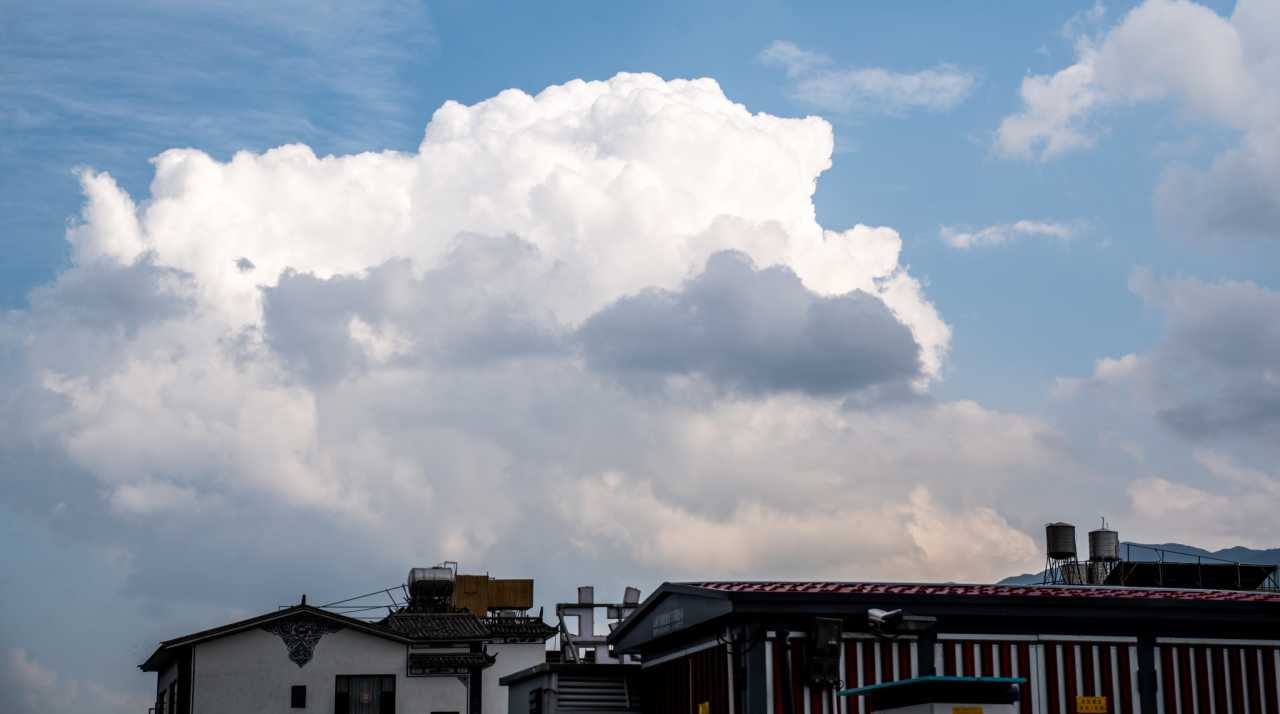
As we left, the mountain became increasingly shrouded. Looking back on the past few days, it really felt like we were racing the storm clouds — the surprise sunset in Dali, the clear-to-overcast shift at Napahai, the rainbow and sunset clouds in Deqin, and the golden sunrise. So far, we were ahead.
Next, we took the old National Road 214 back to Shangri-La, navigating to "Baima Snow Mountain Pass." This stretch of road is stunning — a beauty unaffected by weather, because you're so close to the snow-capped peaks. We stopped at the 4,292-meter marker for a group photo, leaving our group name in laughter.
Along the way, we saw alpine rhododendrons that hadn't yet fully bloomed — so beautiful they looked unreal. I kept checking my camera's post-processing settings to make sure I wasn't imagining it. We passed patches of snow that had started to melt and took photos with them.
Coming down from the old road, we continued toward Shangri-La. Tonight we stayed at Songtsam Linka — the Tibetan-style hotel I'd been looking forward to.
Summary: Victory in the Race Against the Storm Clouds
Eight days, seven nights. We raced the storm clouds and came out ahead. The sunset over Dali, the grasslands of Napahai, the grandeur of Tiger Leaping Gorge, the golden sunrise at Meili Snow Mountain — each time, we captured the most beautiful moments just before the clouds rolled in.
Practical Tips:
- Car Rental: One-Hi Rent-a-Car, Tiguan L for 7 days at just over 1,400 yuan — great value, but the 1.5T engine struggles on mountain roads
- Navigation: Amap (Gaode) is more reliable than Baidu, especially for the East Ring Road and old national roads
- Sun Protection: Yunnan's UV is intense — protect yourself thoroughly
- Altitude Sickness: Shangri-La is above 3,300 meters — bring oxygen and avoid strenuous activity
- Season: Early June is pre-monsoon; weather is changeable but showers are brief. Scenery is a matter of luck

Must-Visit Spots:
- Cycling the Haixi Ecological Corridor (free and easy)
- Xindi Coffee (best in Dali)
- Washbasin Pass (alpine rhododendrons)
- Meili Snow Mountain at golden sunrise (rare and precious)
- Old National Road 214 (closest you'll get to the snow mountains)
Avoid:
- Roasted milk fan (never again)
- Navigating directly to "Napahai" (you'll be taken to a horse-riding scam)
- The elevator at Tiger Leaping Gorge (unnecessary)
- Hillside homestays in Shuanglang (inconvenient to get around)
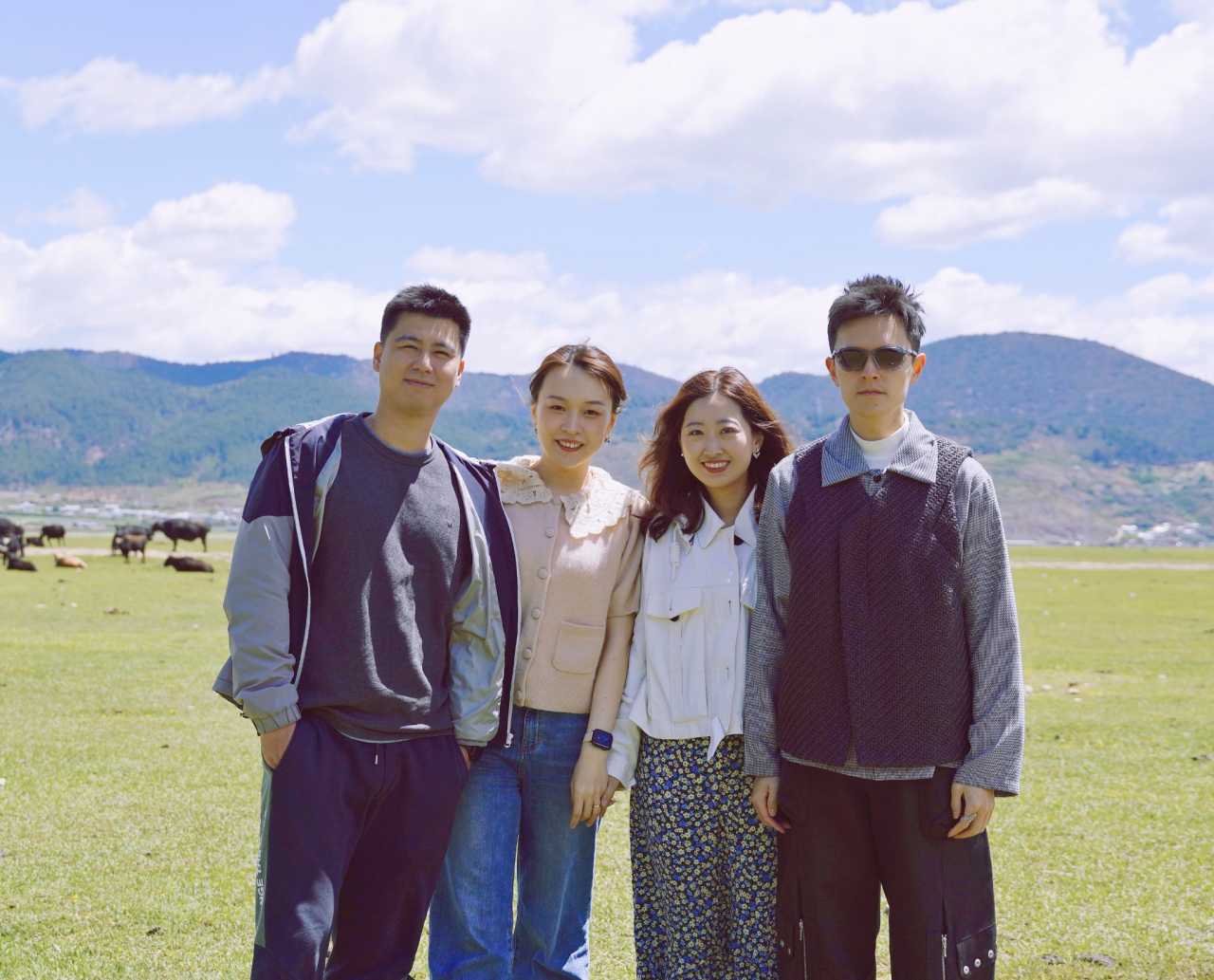
Finally, a shout-out to four friends past thirty, who carved out eight days from the grind of work-life to complete this race against the storm clouds. Yunnan — we'll be back.
You should also read:

Cloud Travelogue · Dali of Wind, Flowers, Snow, and Moon: A Three-Day, Two-Night Journey of a Free Spirit
Cloud Travelogue · Dali of Wind, Flowers, Snow, and Moon: A Three-Day, Two-Night Journey of a Free Spirit I am a cultured female foodie with a touch of rogue charm. I slung on my backpack, took my lover's hand, and set off on a spontaneous…
Continue reading...
A Spiritual Journey to Lugu Lake in Lijiang: Experiencing the Legend of the Kingdom of Women! (Reproduction and Hotlinking Prohibited)
A Spiritual Journey to Lugu Lake in Lijiang: Experiencing the Legend of the Kingdom of Women! (Reproduction and Hotlinking Prohibited) Off-road自驾, food, hotel and民宿 reviews, Featured Traveler, Tank 300 owner, 200,000 km of self-driving experience. WeChat: y01294987 Ninglang Yi Autonomous County 2010.11.08 · 7 days…
Continue reading...
The Slow Life of Lijiang: A Soft Dream on the Yunnan-Guizhou Plateau
The Slow Life of Lijiang: A Soft Dream on the Yunnan-Guizhou Plateau Some places, just by hearing their name, stir a ripple in your heart. Lijiang is one of those names. It's not the kind of destination that demands you tick off a checklist of…
Continue reading...