Rainbow Falls: Finding the Soul of Walking at the Foot of the Sacred Mountain
Rainbow Falls: Finding the Soul of Walking at the Foot of the Sacred Mountain
What is a dream? Some say it's the stars and the sea, others say it's poetry and distant lands. My answer is simpler—the mountains.
When the phrase "Heaven is on the left, Rainbow Falls is on the right" began spreading through travel circles, I was like countless others struck by photographs, consumed by an obsession with this hidden paradise. The emerald green of the Ice Lake, the cascading white of the Divine Waterfall, the layered reds of autumn forests, and the breathtaking golden glow of the sunlit peak—these images flashed across my phone screen repeatedly, eventually transforming into a ticket to northwestern Yunnan tucked inside my backpack.
Part One: The Pilgrim's Path—From Flying Temple to the Foot of the Sacred Mountain
A Humbling Lesson at High Altitude
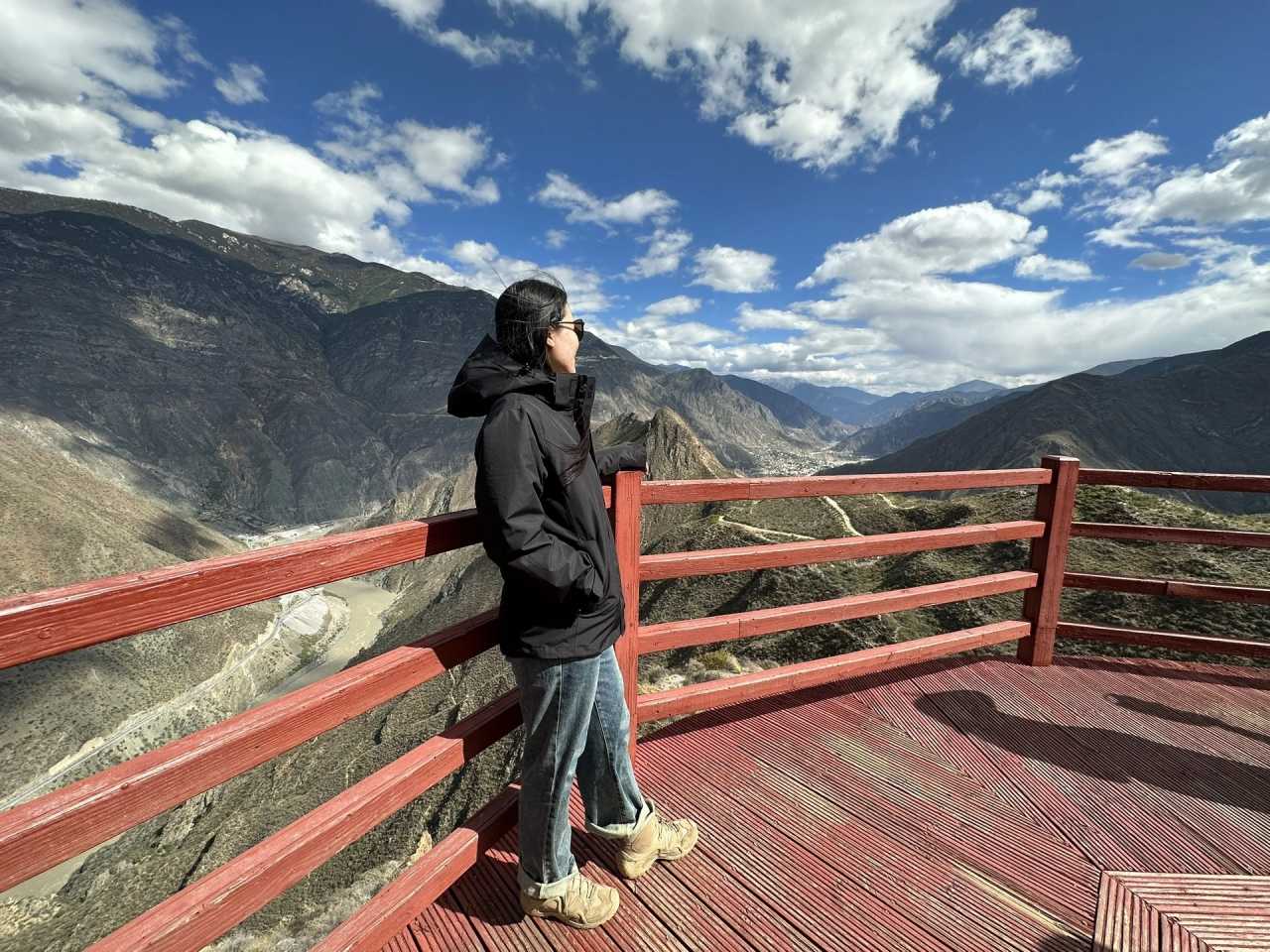
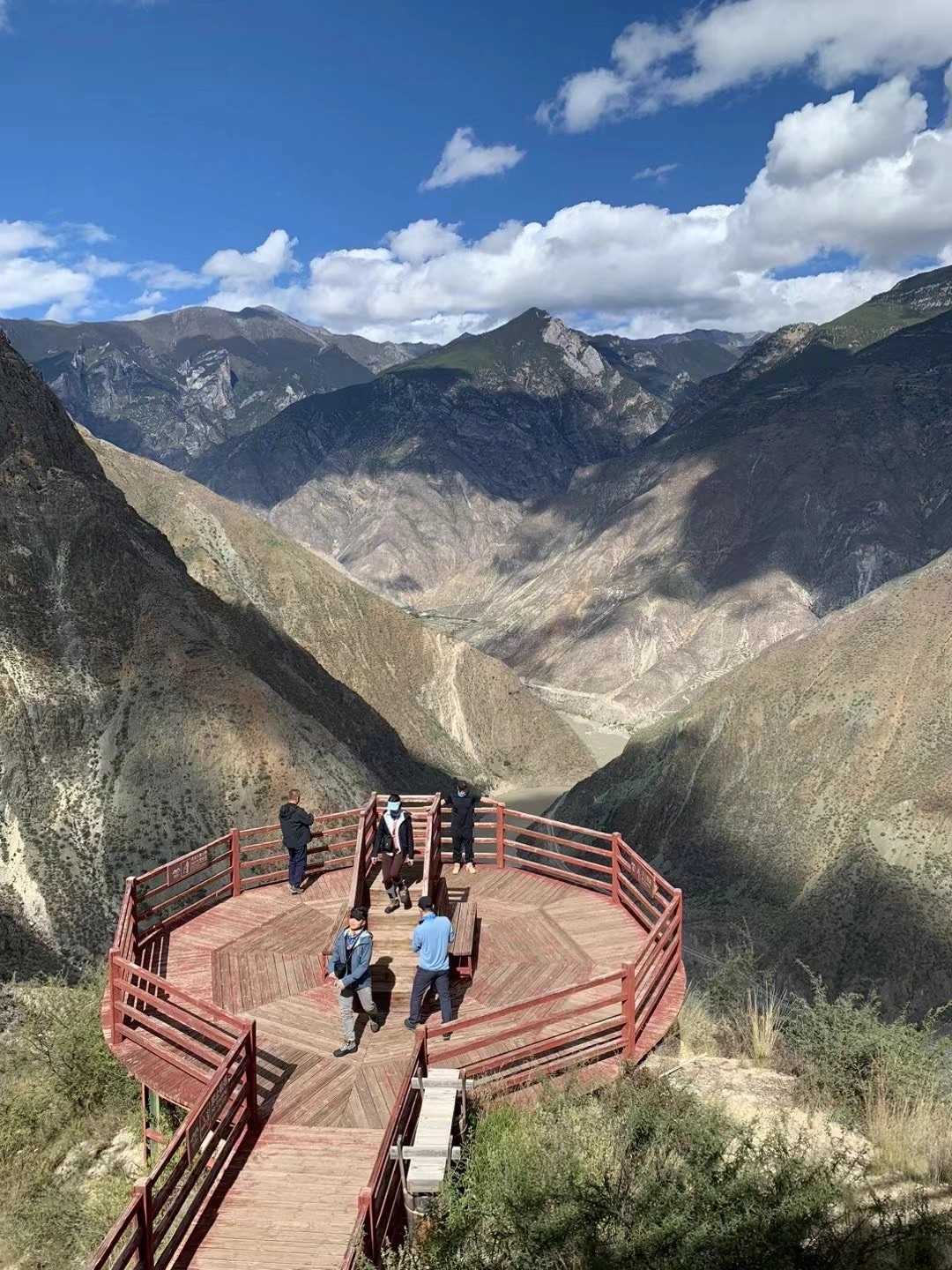
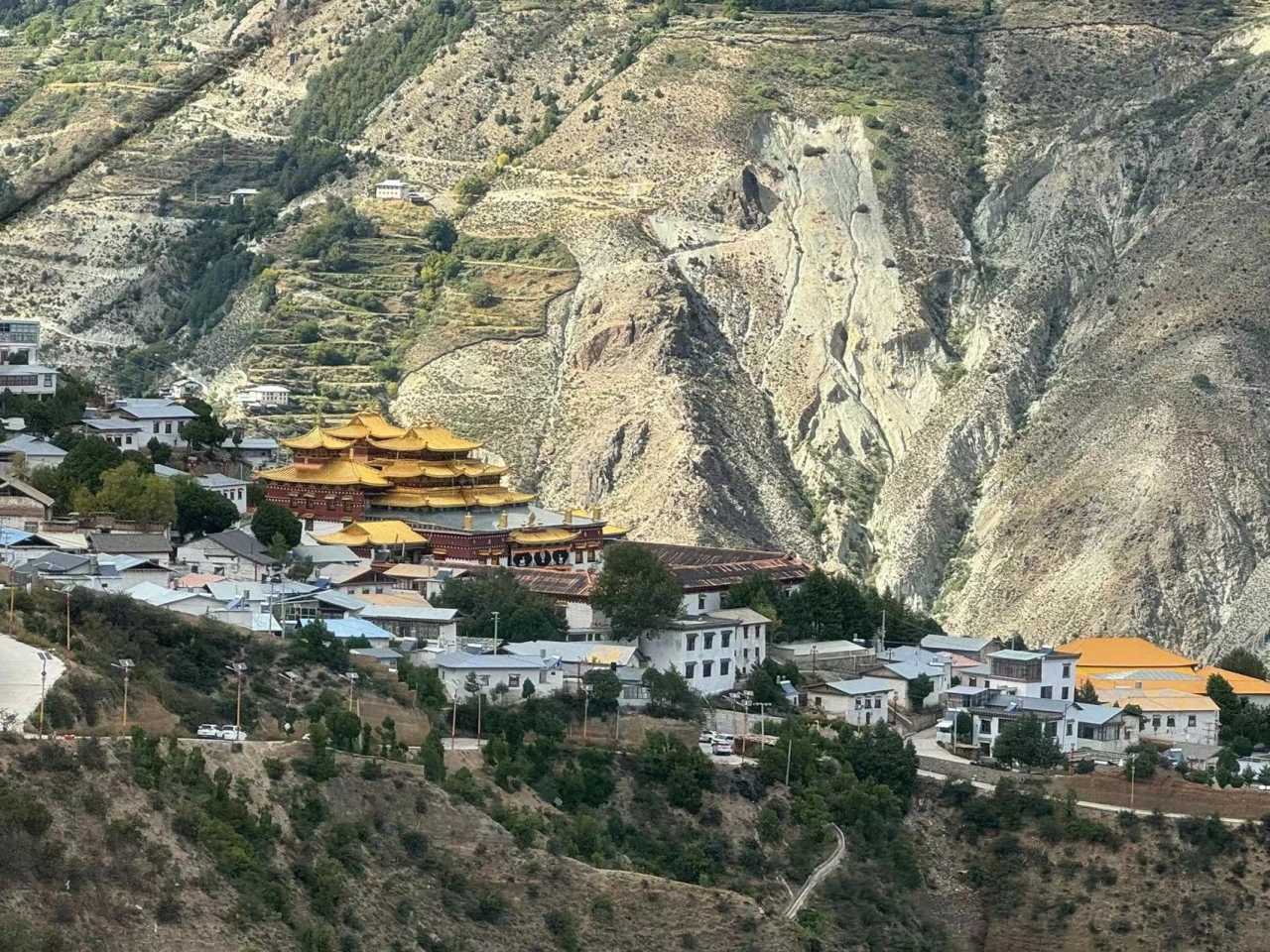
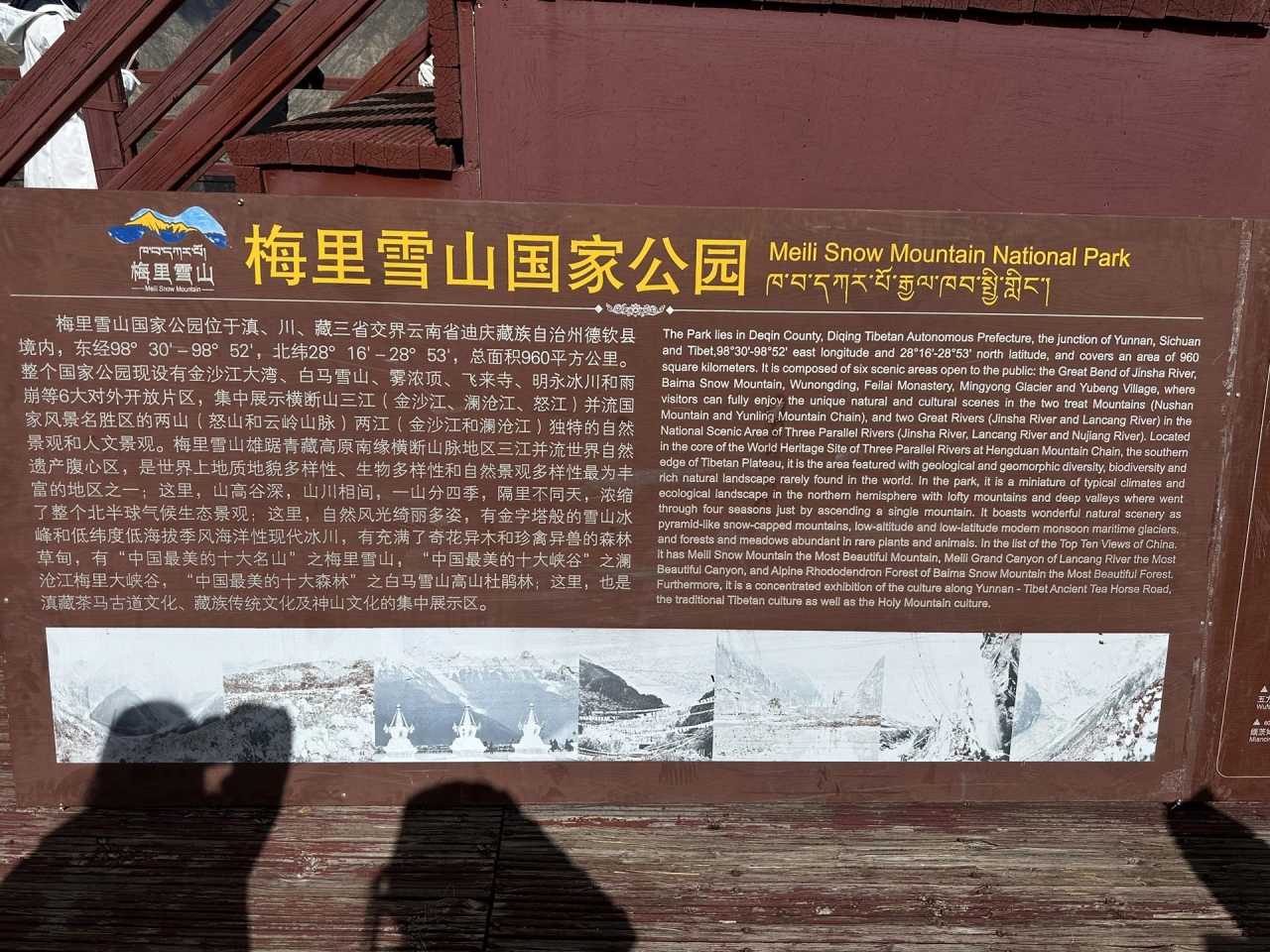
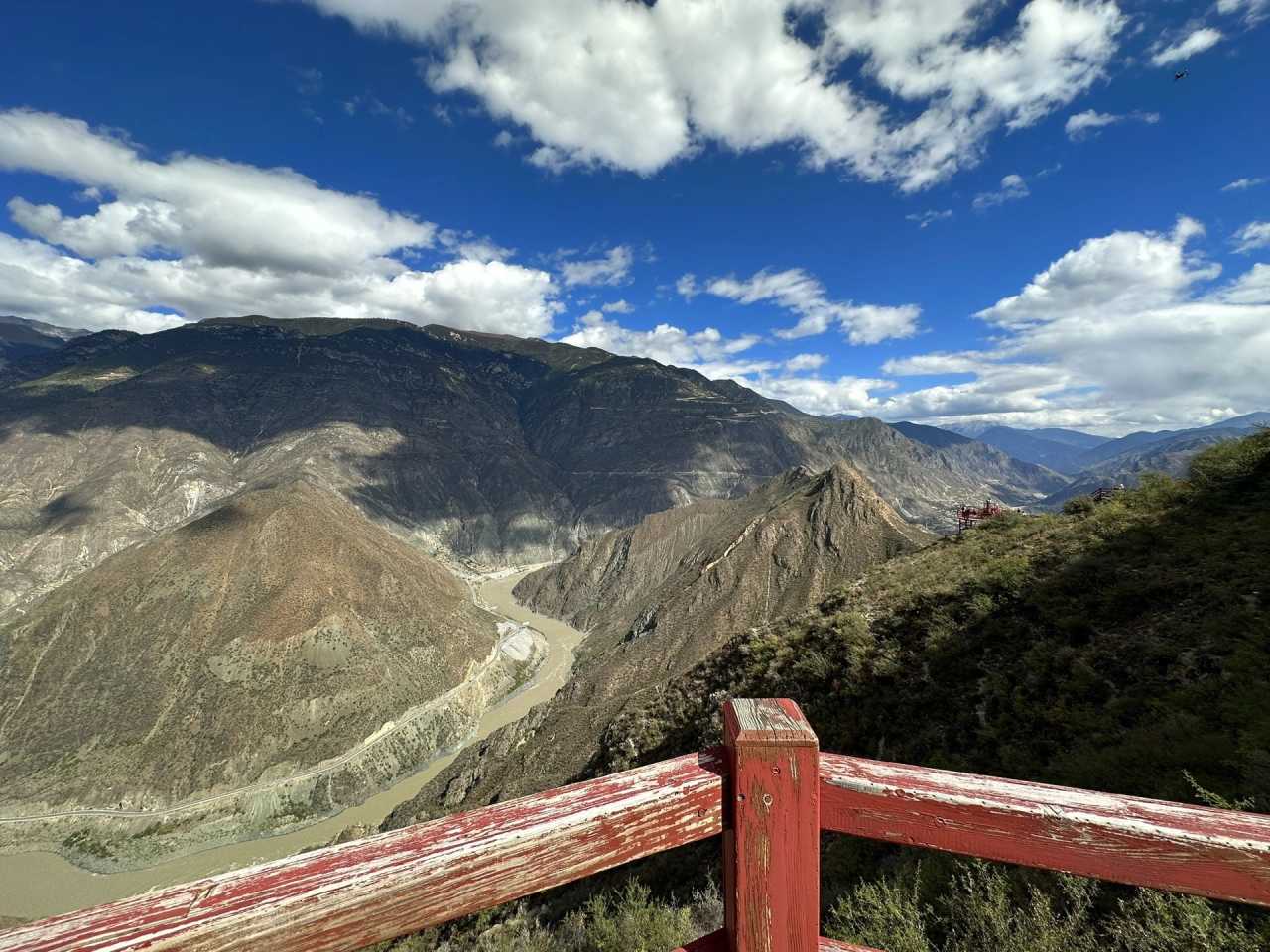
Starting from Lijiang, the first stop was Flying Temple (Feilai Si). Passing through Meili Snow Mountain National Park, I glimpsed the grandeur of the Hengduan Mountains through the window—the Jinsha River bending into a perfect omega shape here, with a gorge elevation difference exceeding two thousand meters. Standing on the observation deck, gazing at the great bend, the fatigue of the journey melted away in an instant.
But the plateau delivered a harsh lesson. Carrying a 40-liter backpack and dragging a 20-inch suitcase, I struggled up a slope near the hotel entrance—just a few dozen meters left me dizzy and breathless. At an altitude of 3,450 meters, I crouched on the ground, gasping for half a minute before recovering. In that moment, doubt crept in: With stamina like this, could I really complete the "very relaxed, very beginner-friendly" Rainbow Falls trek?
My friend's warning before departure echoed in my ears: Altitude sickness varies by person, by time, by location. Truer words were never spoken.
The Story of Flying Temple and the White Stupas
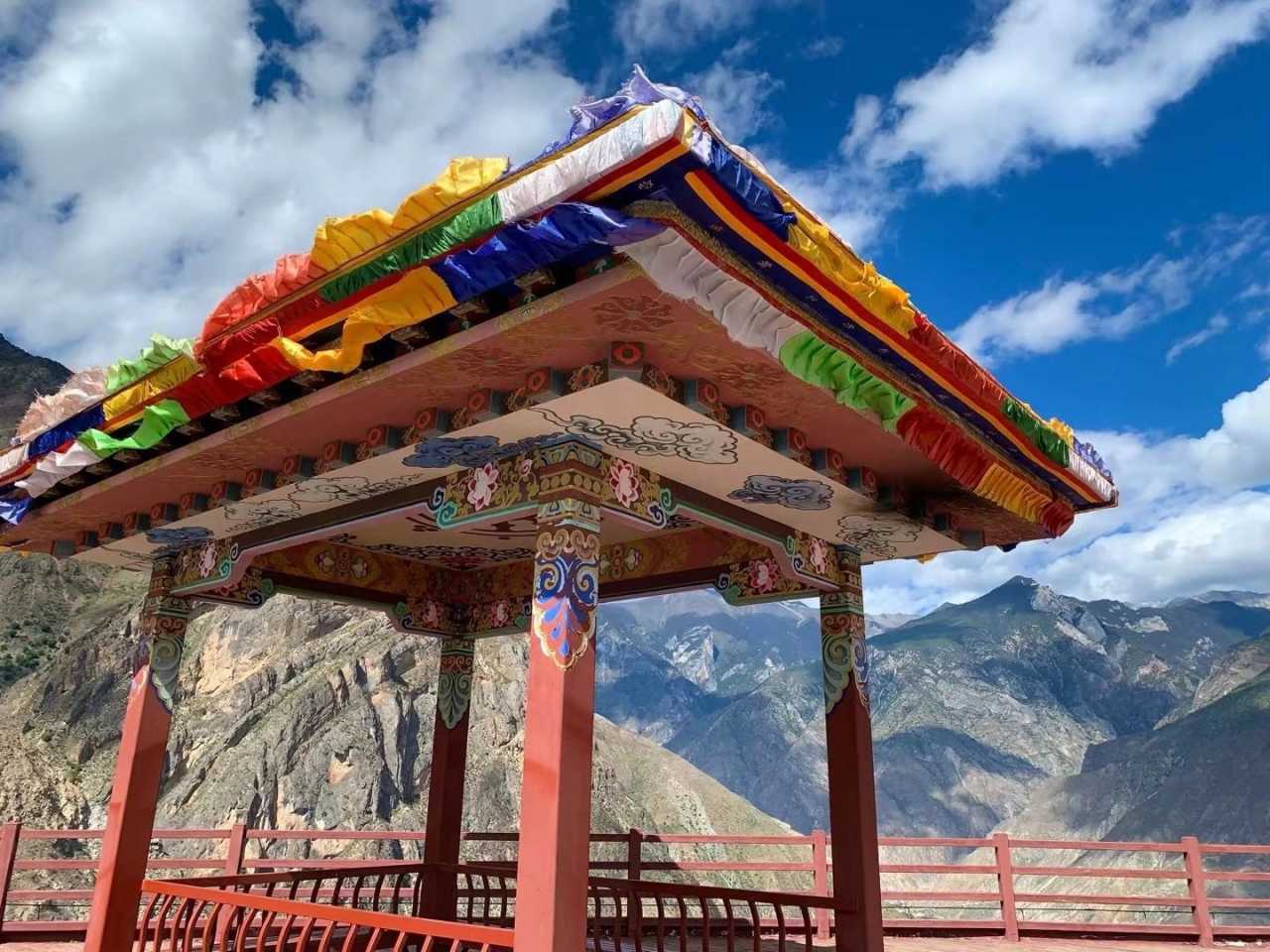
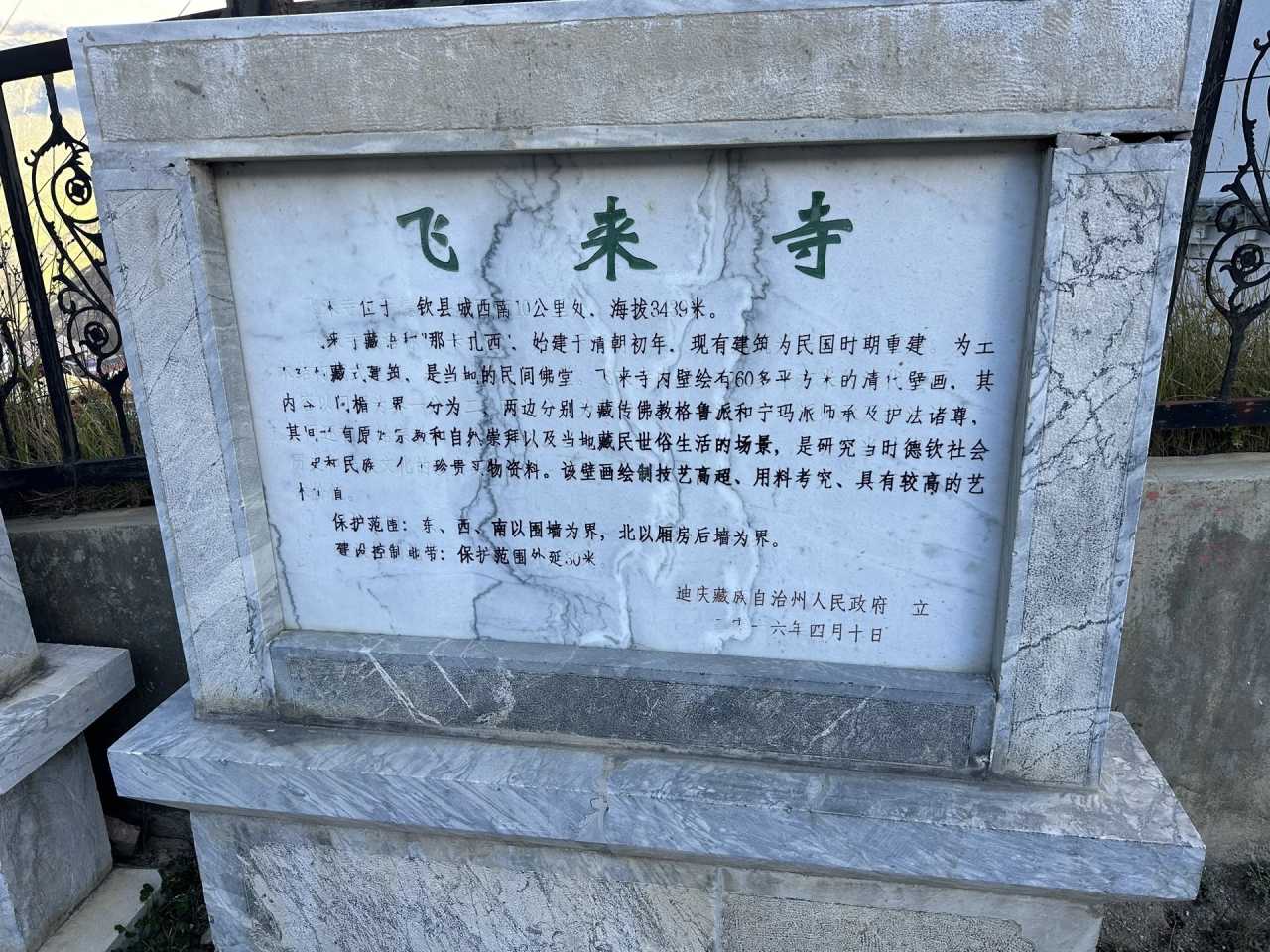
Flying Temple was built during the Wanli era of the Ming Dynasty. Legend has it that the timber for construction "flew here on its own," hence the name. Inside the temple, you'll find prayer wheels, murals, statues of deities, a memorial stupa for the 10th Panchen Lama, and a monument commemorating the 17 climbers who perished in the 1991 Meili Snow Mountain disaster.
The eight white stupas in front of the temple stand in perfect alignment with the snow-capped peaks, surrounded by prayer flags. In Tibetan regions, white stupas generally fall into three categories: welcome stupas, peace stupas, and evil-repelling stupas. Welcome stupas often appear in groups, symbolizing hospitality and blessings for visitors. Peace stupas are built in village centers or mountain passes to protect the local community. Evil-repelling stupas are positioned where feng shui indicates "malevolent energy," to suppress evil spirits. Of course, these categories are mostly folk classifications—the same stupa often serves multiple functions simultaneously.
What matters isn't the classification but the respect: circumambulate stupas clockwise, never step over prayer flags when taking photos—these are rules every visitor should remember.
Tibetan Funeral Customs: An Understanding of Life
Speaking of evil-repelling stupas brings us to Tibetan funeral culture. Stupa burial is the highest honor, sky burial is most common, and there are also cremation, water burial, earth burial, and tree burial. Sky burial originates from Tibetan Buddhism's beliefs in "giving" and "reincarnation"—the deceased's body is offered to vultures, symbolizing the soul's ascent with the sacred birds.
Years ago, driven by youthful curiosity, I wanted to witness a sky burial. A Tibetan elder traveling with us sternly warned me: Sky burial platforms are sacred religious sites, private spaces for local Tibetans. If travelers accidentally encounter a ceremony, they must immediately withdraw, and photography or observation is strictly forbidden. This respect for the departed deserves to be remembered by everyone.
Kawagebo: The Dignity of a Sacred Mountain
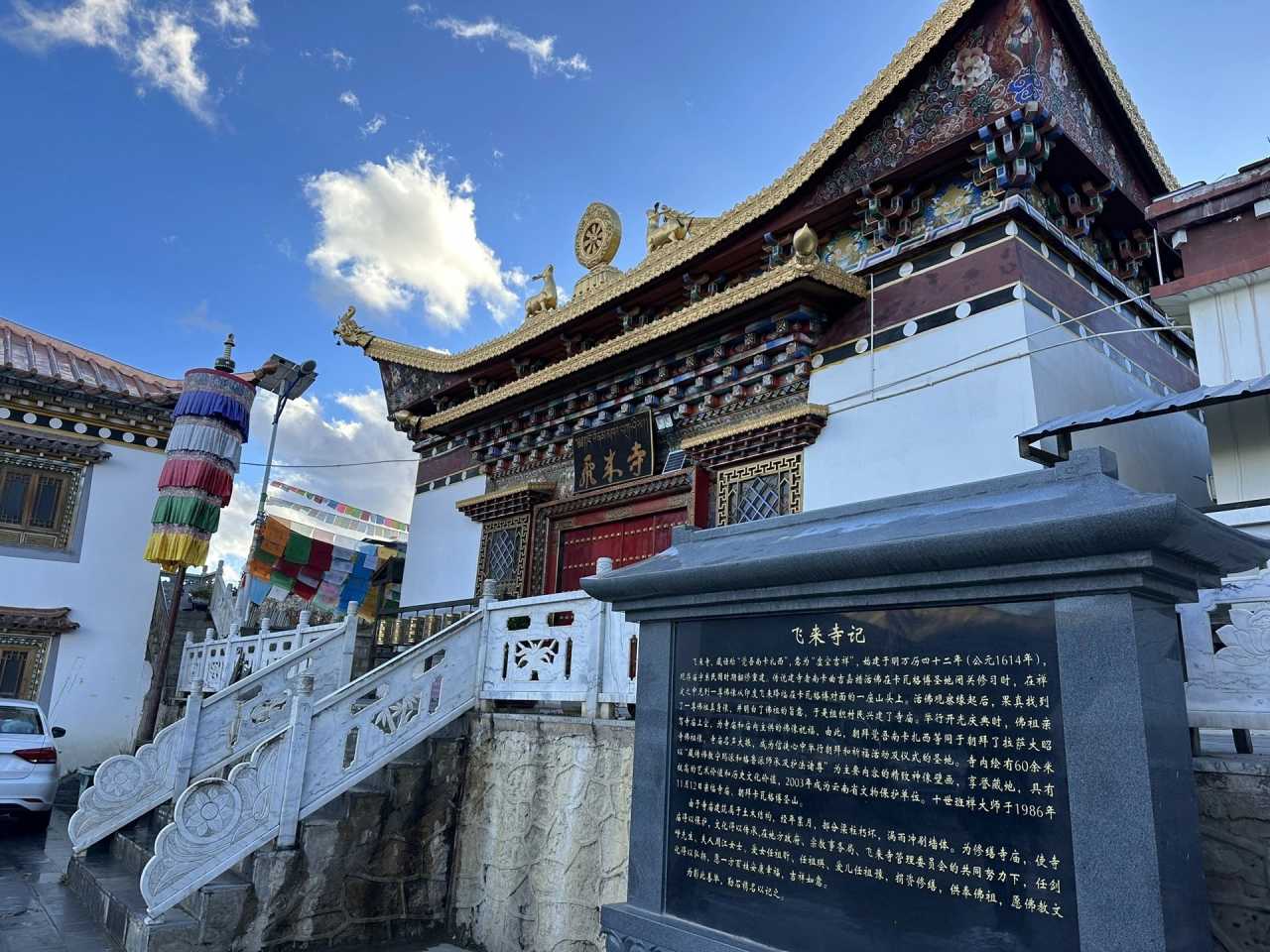
Flying Temple faces directly toward Kawagebo, the main peak of the Meili Snow Mountain range, making it the perfect spot to witness the golden sunrise on the peak. At five in the morning, wrapped in down jackets, we waited on the observation deck. Before sunrise, Kawagebo was shrouded in clouds and mist as we held our breath in anticipation. Finally, the first rays of sunlight illuminated the summit—cheers erupted instantly as a golden halo slowly spread along the ridge. It was a visual feast that could make you forget to breathe.
Kawagebo stands at 6,740 meters, revered as the foremost of the four sacred mountains in Tibetan Buddhism, and remains unclimbed to this day. In 1990, a Sino-Japanese joint expedition attempted to conquer it, but local Tibetans strongly opposed the effort, believing that reaching the summit would defile the deity. The team ultimately reached 6,470 meters, just 270 meters from the top—the highest point ever achieved by humans on this mountain. That night, a sudden blizzard struck, burying Camp 3 under approximately 300,000 tons of snow. All 17 climbers perished.
This remains the greatest disaster in Chinese mountaineering history and the second worst in the world. Following this tragedy, Yunnan permanently banned climbing Kawagebo Peak, making it the only snow-capped mountain in China legally protected from ascent due to cultural preservation. This sacred mountain, in its own way, safeguards the millennia-old faith of the Tibetan people.
Part Two: First Glimpse of Rainbow Falls—A Hidden Realm Measured by Foot
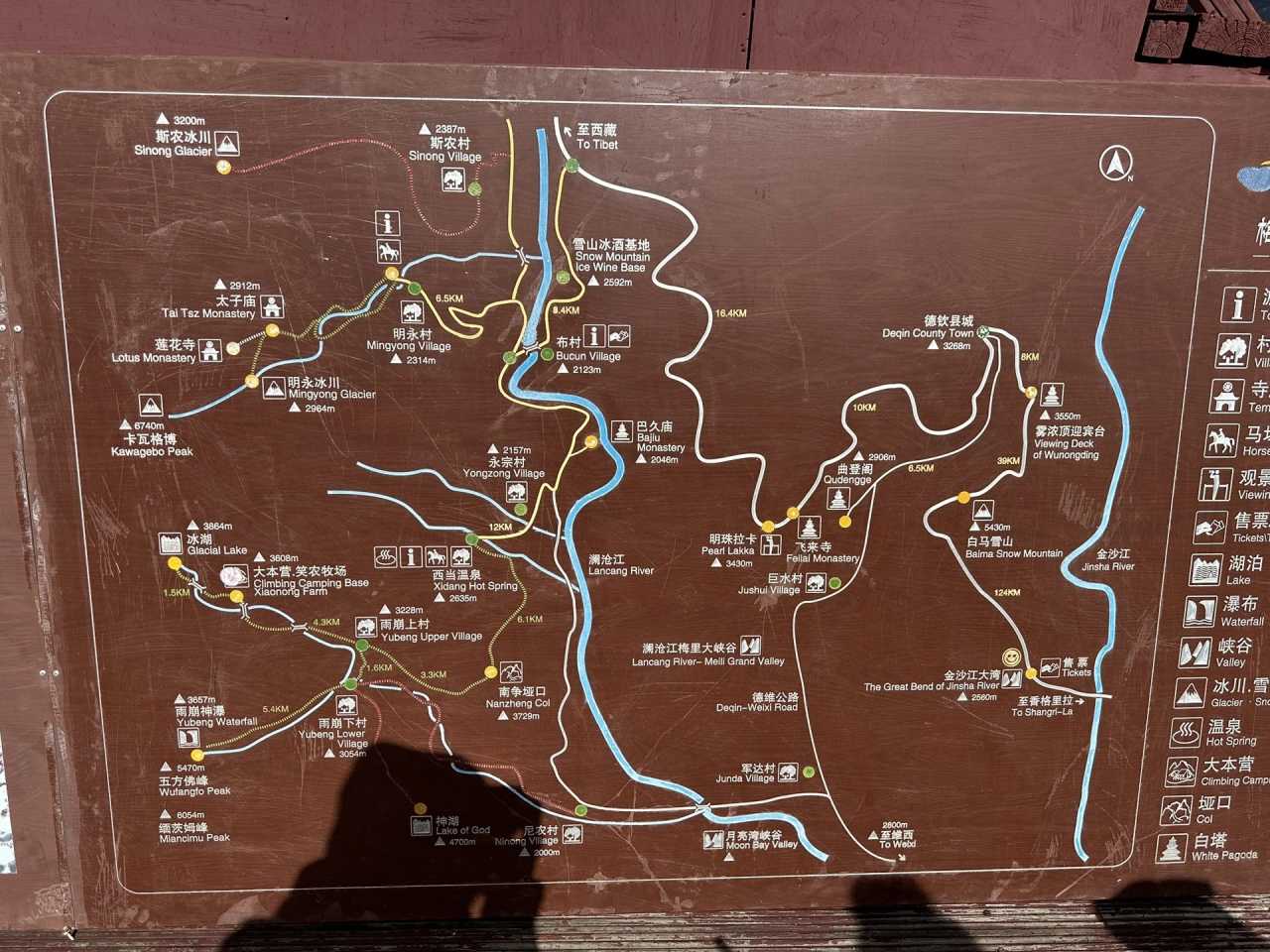
Rainbow Falls still has no road access. Only two routes lead into the village: Xidang and Niyin. Xidang allows hiking, horseback riding, or vehicle transport, while Niyin requires walking the entire way. I chose to hike in—Rainbow Falls' beauty deserves to be touched by foot.
The first half wound along mountain paths before plunging into primeval forest after a few kilometers. Fallen leaves carpeted the ground, rustling beneath my steps. The scent of pine needles and decaying leaves mixed with mountain breezes, while streams gurgled nearby. Autumn sunlight filtered through the canopy, casting dappled patterns on the forest floor.
But I soon lost the ability to appreciate it. Though I didn't suffer severe altitude sickness, my stamina had reached its limit. Every two or three steps required a pause to catch my breath, using trekking poles to support my body and minimize energy expenditure.
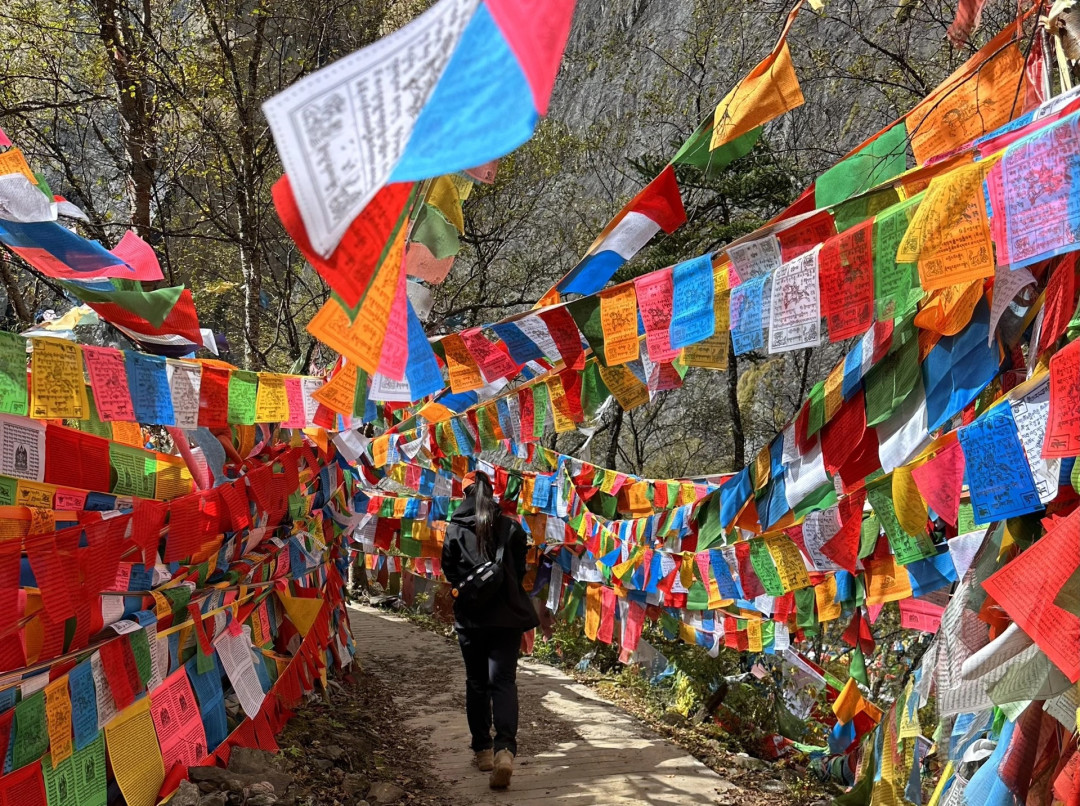
At two in the afternoon, I finally emerged from the forest, passing through a path draped with prayer flags. The Tibetan-style houses of Upper Rainbow Falls gradually came into view. After another twenty minutes, I finally saw this village nestled deep within the Meili Snow Mountains—like a pure land sheltered by sacred peaks, isolating the clamor of the outside world beyond the Lancang River Gorge.
"If not heaven, then Rainbow Falls"—at this moment, those words finally found concrete meaning.
The descent from Lower Rainbow Falls to Upper Rainbow Falls covered two kilometers with a 200-meter drop. Going downhill was relatively easy—as long as you didn't look down at the yak dung, the entire village appeared like a frozen Tibetan painting against the snowy backdrop. But those final dozen steps nearly finished me—I was so exhausted I couldn't muster the strength to stand. In that moment, I truly understood what it meant to have "eyes in heaven, body in hell."
The guesthouse where I stayed offered a window view of Goddess Peak. As evening fell, cooking smoke rose from the village, melted snow from the mountains rushed and gurgled, the calls of white geese mingled with the flapping of prayer flags, all weaving together with the scent of pine needles into the most vivid whispers of this hidden Tibetan realm. In that moment, I almost forgot what year it was.
Part Three: Returning to Rainbow Falls—A Pilgrimage Beginning from Niyin
On my second visit to Rainbow Falls, road construction at Xidang forced us to hike in from Niyin. The journey from Tiger Leaping Gorge to Niyin covered three hundred kilometers, passing through Shangri-La, the Moon Bay of the Jinsha River, Baima Snow Mountain, and finally Flying Temple and the Lancang River Grand Canyon.
The warmth of the guesthouse owner was deeply moving—two tables of light, appetizing stir-fries, and two freshly stewed free-range chickens, the broth fragrant and rich without being greasy. He also brought out his homemade barley wine for us to taste—sweet and sour, mild in alcohol content, around 10 to 12 percent, like a Tibetan version of beer.

What surprised me most was breakfast—alkaline noodles. Chewy and springy, pale yellow and translucent, topped with blanched leafy greens and a savory, rich meat sauce, each bowl became something extraordinary. Coming downstairs, I found my travel companions already crouched on the ground, ladling noodles into bowls. I quickly grabbed my own bowl and chopsticks to join in, reminiscent of the communal dining atmosphere from childhood.
The trek into the mountains was a 14-kilometer canyon hike, mostly uphill. On one side, steep cliffs; on the other, the rushing Lancang River, with forests stretching for dozens of miles. The sounds of wind, water, and birdsong intertwined, occasionally punctuated by the sight of Tibetan herders tending livestock along the riverbank. Deep in the canyon, waterfalls cascaded from the cliffs, their spray catching sunlight to form rainbows.
The trail conditions were good, but the uphill sections were grueling. Halfway through, we began encountering people descending. They were incredibly enthusiastic, cheerfully shouting, "Keep going! Almost there!" Too exhausted to respond, I thought to myself: Don't feed us encouragement—don't we know exactly how far we still have to go?
I made a pact with the woman hiking beside me: When we descended, we would do the same—"strut and boast" just like them.
Finally catching sight of a corner of the snow mountain, after another twenty minutes, a white stupa came into view—Lower Rainbow Falls had arrived. The Mirror Lake rested against the backdrop of Meili, its water as clear as glass, gently embracing the distant General Peak and Goddess Peak. Colorful prayer flags flapped in the wind, and heaven and earth achieved perfect symmetry in that moment. After three years, I finally saw her again.
Part Four: Ice Lake Exploration—Meeting Myself in the Snowstorm
Mornings in Upper Rainbow Falls begin with the golden sunrise on the peaks. Opening the guesthouse window, I caught the last traces of gold on the summit. After a bowl of hot noodles, we set off full of anticipation.
The round trip to Ice Lake covered 12 kilometers. The first two kilometers were relatively gentle, followed by a steady climb. Passing through primeval forest draped with Spanish moss, the ground underfoot was soft with humus. Sunlight filtered through the gaps between pine needles, scattering golden fragments across the forest floor. Fluffy chipmunks poked their heads out from tree hollows, their black eyes darting around, completely unafraid of humans. When we held out our palms, they would tiptoe closer, quickly snatch the food, and scurry back to their branches.
Midway, the trail became treacherously muddy. Spring snowmelt, combined with churned-up dirt paths and hidden ice beneath fallen leaves, demanded careful footing at every step. On the steepest climbing sections, the smooth, worn wooden posts along the cliff edge bore witness—this trail is difficult year-round.
We passed through Meiduo Peak Top, which means "Flower Meadow" in Tibetan. Legend says this is where the mountain deity Kawagebo and his retinue danced the Guozhuang dance. In spring and summer, it's covered with alpine rhododendrons; in autumn and winter, it's blanketed with pine needles and fallen leaves, serene and deep.
Crossing Xiaonong Pass and enduring the "Killer Slope," we finally reached Xiaonong Pasture—the former base camp for mountaineering expeditions. In 1990 and 1996, the Sino-Japanese joint expeditions used this spot as their base camp for climbing Kawagebo. Today, dilapidated wooden huts and rusted equipment stand silently, telling the tragic story of humanity's dialogue with the sacred mountain.
The final two kilometers were the most difficult. The gravel path was slippery, and the altitude approaching 4,000 meters made breathing increasingly labored. I gasped that I couldn't go on, that I needed oxygen. A friend promised to bring me some—then promptly descended quickly via another gravel path. What a heartbreaker!
Three steps, a pause; five steps, a rest. When the emerald-green Ice Lake finally appeared before me, all exhaustion evaporated. The lake was nestled at the foot of General Peak, its surface reflecting the snow mountain's silhouette. Meltwater dripped from the cliff walls, creating ripples across the lake. In the face of such pure nature, one feels incredibly small yet profoundly at peace.
Snowflakes began to fall. We descended along a gentler path on the other side, where stones of various sizes were piled haphazardly, bruising our soles. By the time we returned to Xiaonong Pasture, small snowdrifts had accumulated on our clothes. Distant mountains appeared and disappeared in the mist, while mountain fog carrying bits of snow brushed against our faces—even our breath tasted of the high peaks' crispness. This was Rainbow Falls in a snowstorm, the cool romance belonging to every hiker.
Part Five: Divine Waterfall Pilgrimage—The Power of Faith
A forty-minute hike from Upper Rainbow Falls to Lower Rainbow Falls marked the beginning of the Divine Waterfall pilgrimage route. The Divine Waterfall is considered a sacred site for "washing away sins and receiving blessings." This beginner-friendly trail features mostly flat stone paths, with supply points and pavilions along the way.
The trailhead is marked by the famous "Five Trees, One Root"—three sea buckthorns, one red birch, and one rowan tree fused together at the base. Tibetan believers regard this natural phenomenon as a sacred tree, said to have been planted by Padmasambhava himself, symbolizing harmonious coexistence and the convergence of five blessings.
The stone cairns along the way caught my attention. Tibetans believe stones possess spiritual energy; stacking them is a practice for seeking peace and warding off evil. Five-colored stones correspond to Tibetan elements and prayer flag colors—blue for sky, white for clouds, red for fire, green for vegetation, and yellow for earth. When encountering stone cairns, don't move or step on them; walking around them clockwise is the most basic form of respect. If you wish to add a stone for blessings, pick up a clean small stone and place it on top, symbolizing "adding blessings and longevity."
As we approached the Divine Waterfall, a corridor of prayer flags stretched for miles. Due to the dry season, the waterfall had run dry, but the winter snowline was lower, making glacier contours more visible—an excellent opportunity for close-up views of Goddess Peak's glacier. The rock face was covered with thatch grass, its leaves long and fine like hair strands, a typical alpine plant around Meili Snow Mountain, extremely cold and drought-resistant—a "pioneer plant" of the highland cliffs.
My previous visit to Rainbow Falls was in autumn, when snowmelt cascaded from cliffs dozens of meters high, forming a crystalline curtain of water. Tibetan pilgrims circled the waterfall three times clockwise for blessings, and we followed their example, walking slowly. The water droplets soaked our clothes, but the cool sensation brought a clarity that felt like washing the soul. Sunlight hit the mist, creating a rainbow spanning the waterfall's front—in that moment, it felt like an unexpected encounter with the sacred mountain's blessing.
On that visit, I encountered many Tibetan pilgrims making their mountain circuit—some with white hair and aged faces, others still young and innocent. Dressed in Tibetan robes, holding prayer beads, they touched their foreheads to the rock face and wiped their cheeks with water from the Divine Waterfall, their eyes filled with reverence and devotion. This faith, so deeply ingrained, moved me profoundly—in this fast-paced era, many people may have long forgotten the original intention of respecting nature and revering faith.
Part Six: Canyon Return—Carrying Mountain Memories Home
Time seemed to slow down during my days at Rainbow Falls. On the day of departure, we said goodbye to Mirror Lake and the white geese before dawn, beginning our journey home. Descending easily, we passed hikers gasping for breath on their way up. We didn't "strut and boast"—only when someone asked for directions did we stop to earnestly tell them how far the village was.
On the return trip, a travel companion wanted to see Kawagebo. Our driver found a good spot to pull over, allowing us to gaze at a corner of the sacred mountain from a distance. He shared a complete photo of the golden sunrise on the peak—a perfect conclusion to this journey.
Everything at Rainbow Falls is a gift from the sacred mountain. Tibetan people have lived here for generations, guarding this land and preserving the culture and customs passed down from their ancestors. This Tibetan village, listed in China's Traditional Village Registry, has maintained its purest form of Tibetan life and faith in its isolation from the outside world.
Today, although Rainbow Falls has become known to more people, it still retains its original character. There are no commercial streets, no noisy crowds of tourists—only snow mountains, prayer flags, ancient villages, and pure faith. It stands like a silent sage deep within the sacred mountains, waiting for those destined to arrive.
Four days of trekking—some shouted "Push me to the limit," some prayed devoutly for peace and health, some walked in silence carrying heavy loads. But the most important thing was this: Don't be swept away by external judgment or evaluation. Focus on your own path, follow your own rhythm, and you'll truly feel comfortable and at ease.
Over the years, I haven't lived up to others' expectations. I've only lived as myself.
My feet were covered in mud, but my soul experienced unprecedented purification. Rainbow Falls taught me this: The best scenery is always under your feet, on those roads where you fear no hardship and move forward courageously.
Practical Tips: - Allow 3-4 days for Rainbow Falls trekking; Ice Lake and Divine Waterfall routes each require one full day - Altitude sickness varies by individual; acclimatize for one night at Flying Temple before entering the village - Respect local beliefs: circumambulate stupas clockwise, don't step over prayer flags, don't photograph funeral ceremonies - Luggage can be shipped into the village; light packing makes for a better hiking experience - Supply points are limited; bring dried fruits and fresh fruit to replenish energy - Best season: autumn (October-November) offers the richest colors; winter provides excellent glacier views
You should also read:
Yunnan! Paradise on Earth – The Yubeng Chapter: A Soul-Cleansing Journey into Seclusion
Yunnan! Paradise on Earth – The Yubeng Chapter: A Soul-Cleansing Journey into Seclusion Prologue: Why Yubeng? If you ask me which place in Yunnan is most worth hiking to, I would answer without hesitation: Yubeng. This is not an answer I give lightly. As a…
Continue reading...
Tengchong·Heshun: Finding Life as It Should Be in a Border Town Where Time Stands Still
Tengchong·Heshun: Finding Life as It Should Be in a Border Town Where Time Stands Still The long journey of over twenty days was over. On my first day back at the office, I was still in a daze. My fingers couldn't find the keys on…
Continue reading...
Two Girls' Graduation Trip: Dali and Shuanglang – A Poetic Farewell to Mountains and Sea
Two Girls' Graduation Trip: Dali and Shuanglang – A Poetic Farewell to Mountains and Sea Preface: Catching the Tail of Youth, Heading South During our senior year of college, my roommate and I – two girls studying in Beijing – decided to bid farewell to…
Continue reading...