Roaming Southern Yunnan: Savoring Slow Time Among Tea Fragrance and Clouds
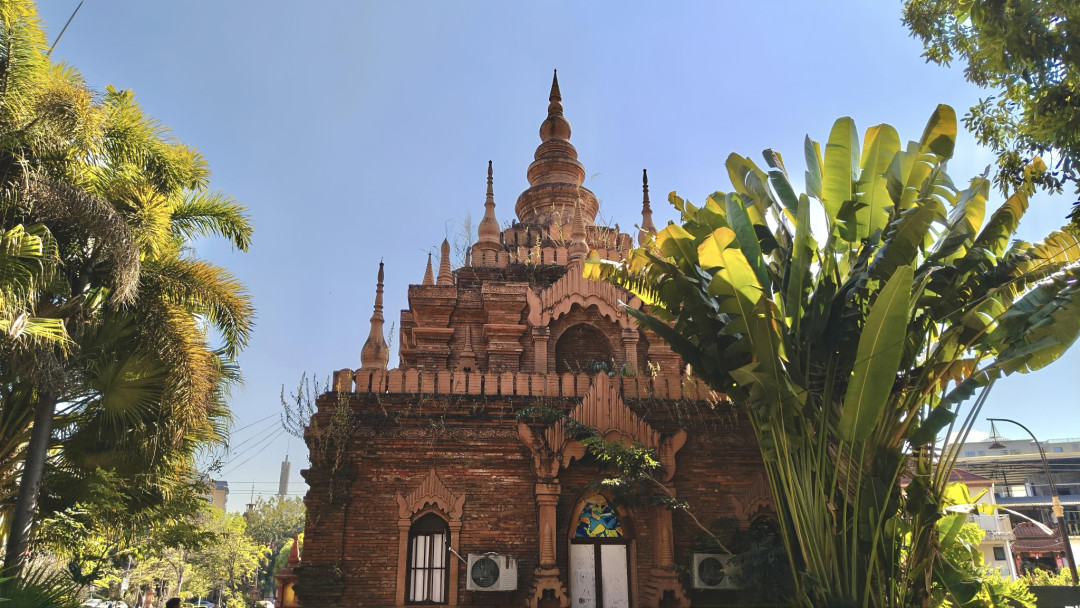
Roaming Southern Yunnan: Savoring Slow Time Among Tea Fragrance and Clouds
Preface: It Took Middle Age to Understand the Meaning of Travel
When I was young, traveling always felt like a race. Check in, take photos, post on social media—as if every minute had to be crammed with sights. It wasn't until I got older that I realized true travel isn't about "where you've been," but "where you've lingered."
This time, I bypassed the familiar routes of northern and eastern Yunnan, turning my gaze southward. I wanted to throw myself into the greenery of Xishuangbanna, to catch the sweet scent of tropical fruits in the evening breeze along the Lancang River, and most of all, to climb Jingmai Mountain—that thousand-year-old tea mountain recognized as a World Heritage site—to watch the sea of clouds drift over ancient tea forests and hear the sound of time flowing through old villages.
So on February 6th, I set out from Kunming, embarking on a week-long slow journey through southern Yunnan.
First Impressions of Xishuangbanna: Heat Waves and Exotic Vibes
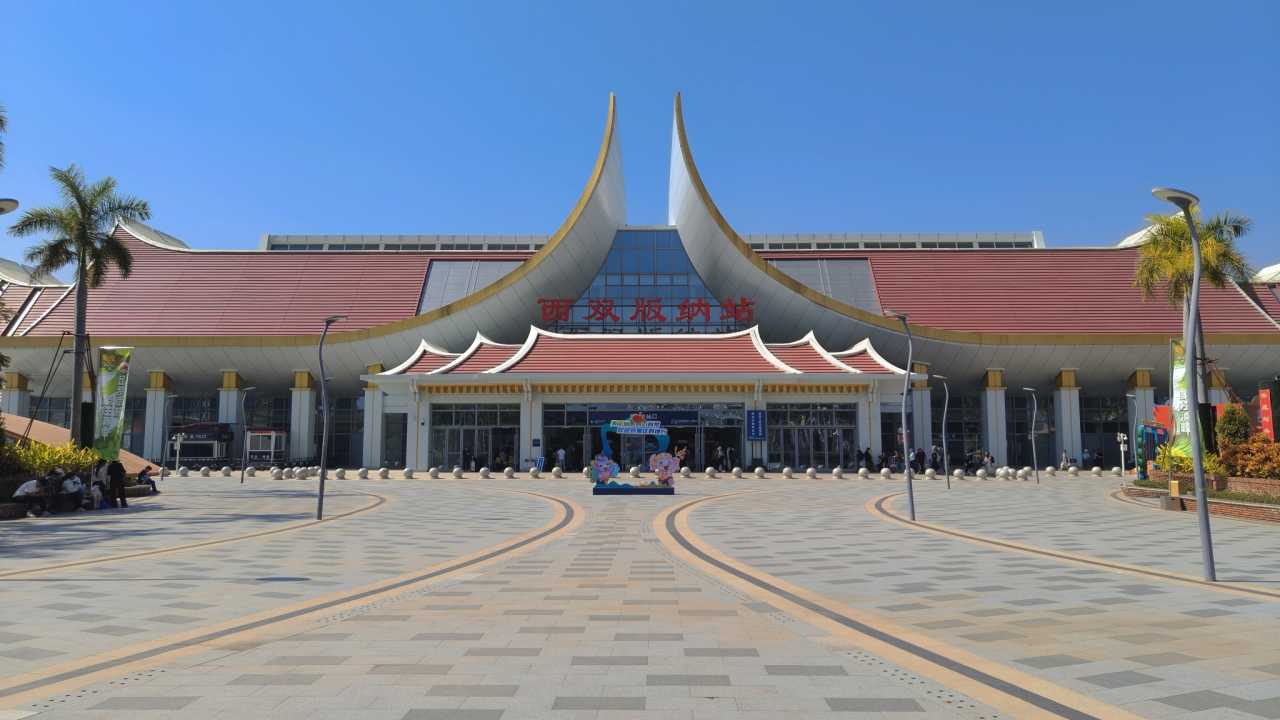
The night I left Guangxi, I took a slow train from Baise to Kunming, then transferred straight to Xishuangbanna. The moment I stepped out of the station, a wave of heat hit me—this temperature was a world apart from the northern winter.
I waited over 40 minutes at the bus stop before the No. 7 bus finally came. I'd heard the traffic in Xishuangbanna was notoriously congested, and it lived up to its reputation. Half an hour later, I arrived at the booked Casa Youth Hostel, dropped my backpack, and couldn't wait to head out and explore.
Dai Water Town: Southeast Asian Charm Hidden in the City
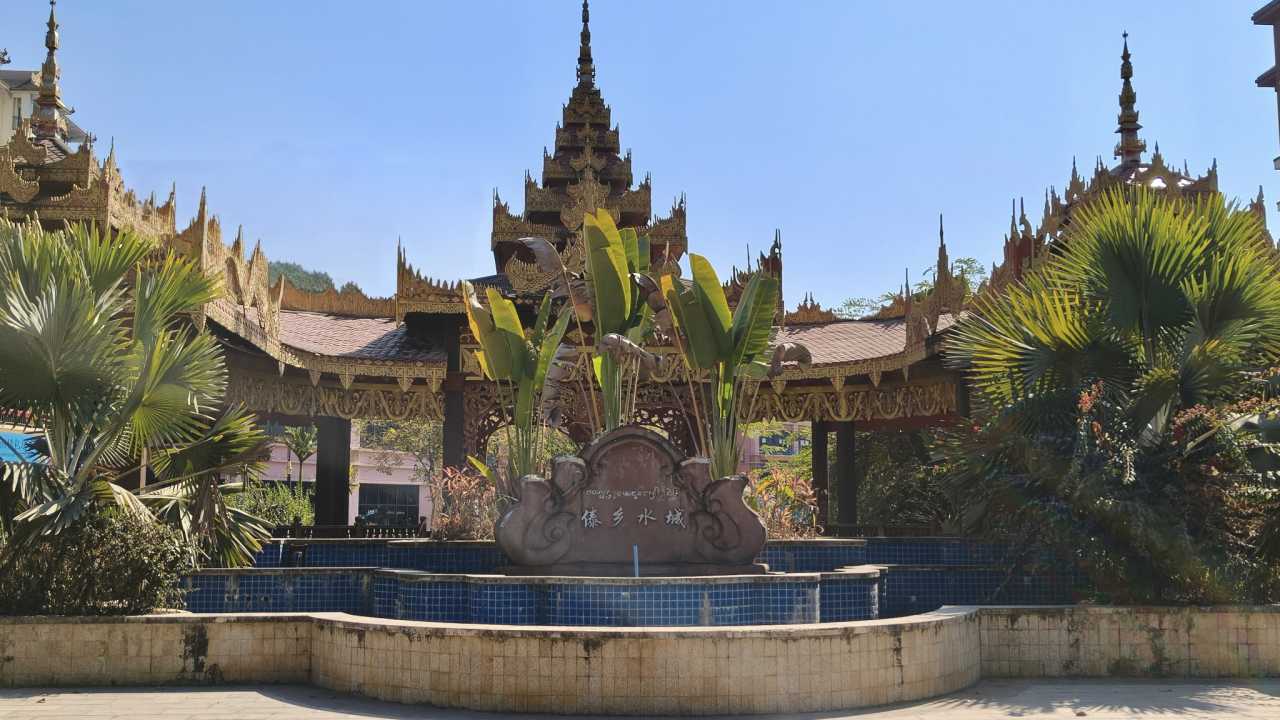
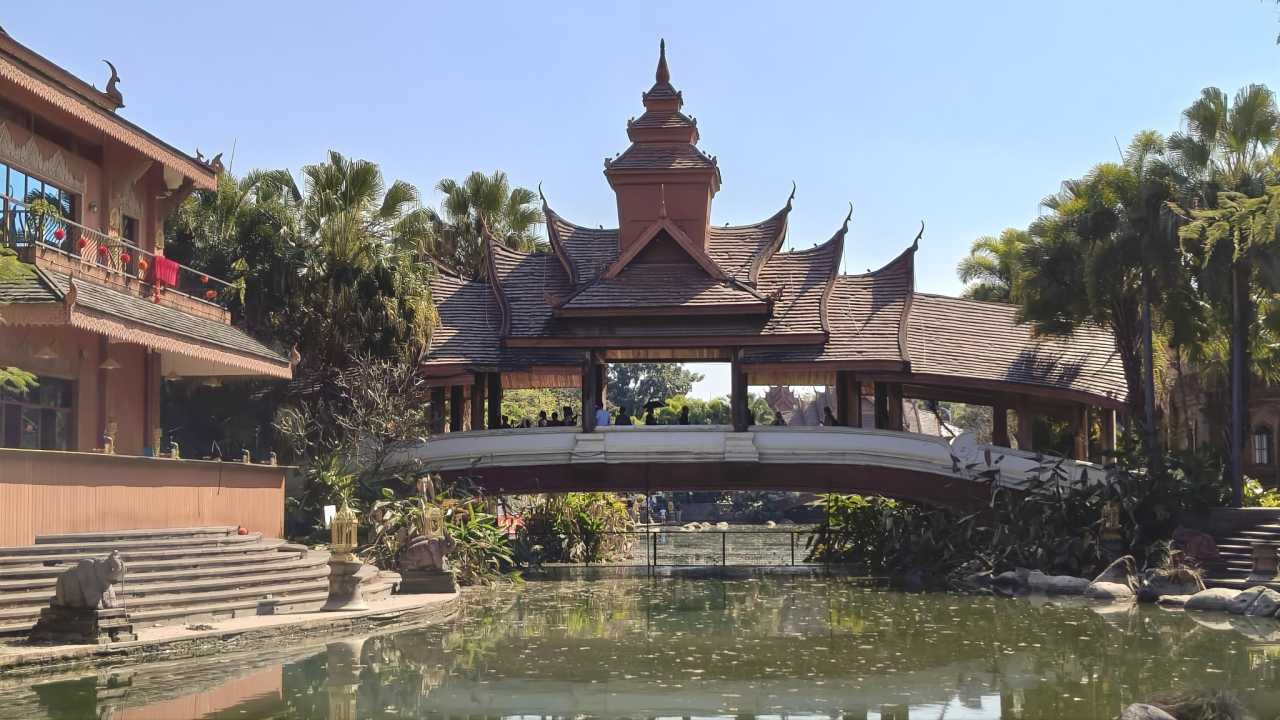
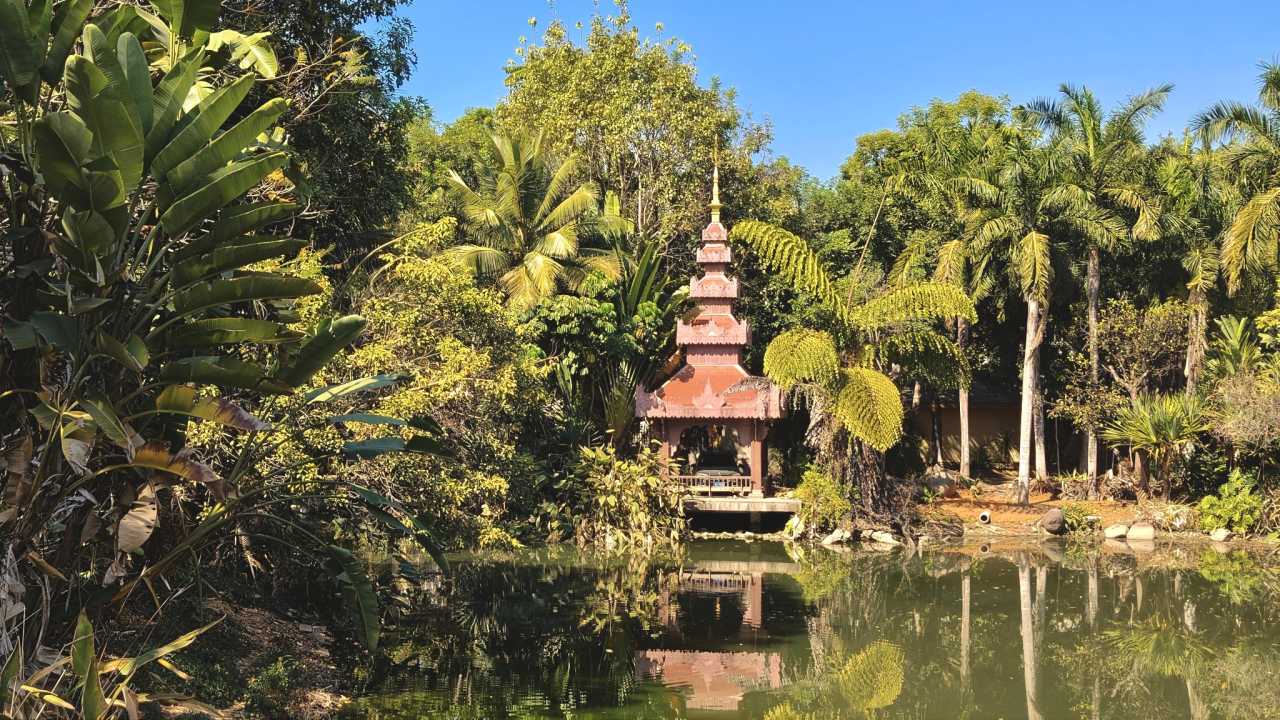
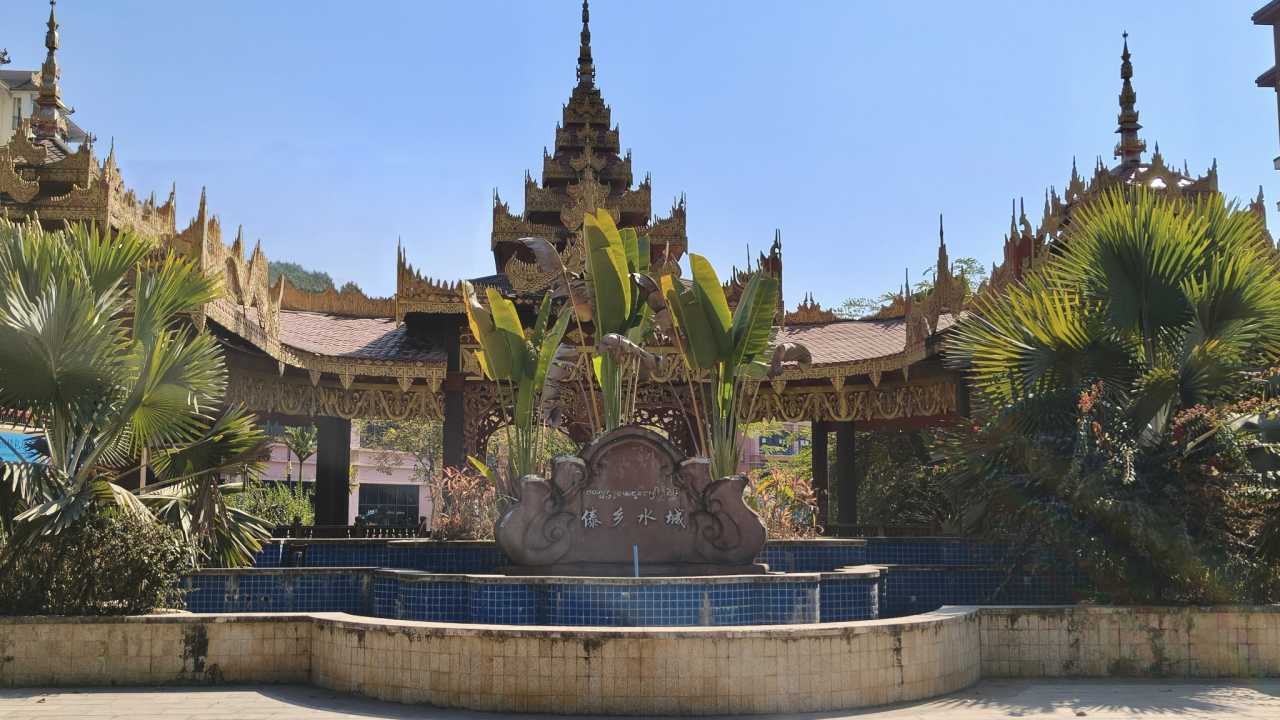
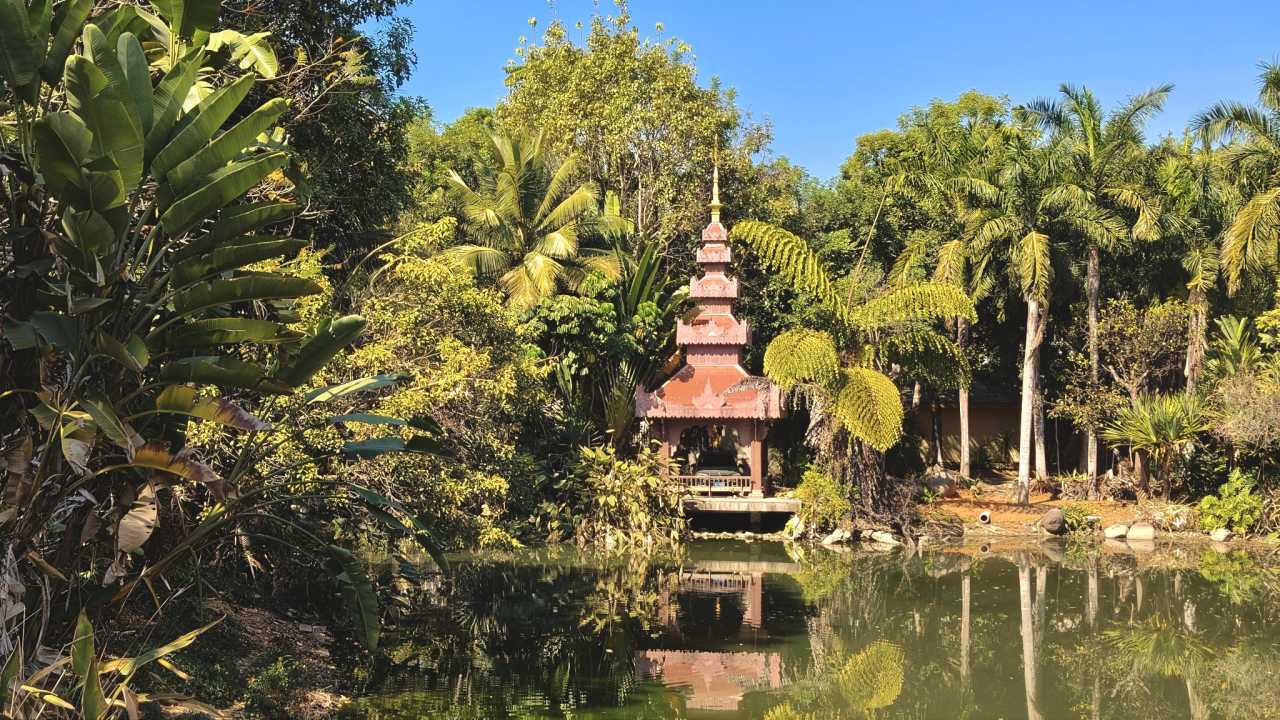
My first stop was Dai Water Town (Dai Xiang Shui Cheng). This spot gained fame as a filming location for the TV drama Border Town Stories and has since become a leisure park for locals and tourists alike. The entrance sits opposite the Xishuangbanna Tropical Flower Garden, built along a river creek. On both banks, red Dai-style architecture—pavilions, towers, covered bridges, and Buddhist pagodas—combined with tropical rainforest and blooming flowers, made me feel like I'd somehow wandered into Southeast Asia.
To be honest, the on-site management could use some improvement, but the scenery is uniquely charming. Strolling along the河道 (river path), every frame looked like a flowing painting of Dai culture. In front of the waterside pavilions, upturned eaves reflected in the water, while lush tropical plants grew wild along the flower-lined banks. Every snapshot felt like a masterpiece.
Five Trees and Six Flowers Town: A Hidden Gem of a Viewpoint
Leaving Dai Water Town, I rented a green Qingju e-bike and navigated to "Five Trees and Six Flowers Tourist Town" (Wu Shu Liu Hua Xiao Zhen). But a heads-up: you'll need to park about a kilometer from your destination, or you'll end up like me—unable to find a parking spot and having to ride back.
This place was originally the site of the Dai King's Palace, now converted into a sales center for a real estate development. Tell the security guard you're "here to see the apartments," register your info, and you can go in. There are very few people here, making it an excellent spot to overlook the Lancang River and Gaozhuang. When taking photos, keep quiet—this isn't a tourist attraction, so don't disturb the staff.
Starlight Night Market: Bustling, but Not for Me
In the evening, I rode across the Lancang River Bridge, watching speedboats zip across the water—looked thrilling. By the time I reached Gaozhuang, night had fallen. The Starlight Night Market was packed with crowds, tourists everywhere getting their photos taken. I'm not a fan of such hustle and bustle, so I grabbed a simple bowl of handmade dumplings and rode back to the hostel.
Back at the hostel, some people were playing cards and chatting in the common room, while others strummed guitars and sang—this was the kind of hostel vibe I loved.
Hiking the Jinuo Mountain Rainforest: An Intimate Encounter with Nature
The next morning, I first took a ride around downtown Xishuangbanna. The streets were wonderfully quiet in the early hours, with a warm breeze that felt incredibly pleasant.
At 8:30, I met up with the booked Jinuo Mountain hiking group. I'd found a local company specializing in Jinuo Mountain treks on Xiaohongshu and signed up for a day trip. The overall experience was good, but since it was winter break, there were lots of families with kids. Popular activities like the rainforest swing required long waits, and the on-site order was a bit chaotic—queue-jumping was frustrating.
Surprises and Disappointments in the Rainforest
The drive from the city to Jinuo Mountain was bumper-to-bumper the whole way. The driver said this was normal—most of Xishuangbanna's attractions are in this direction. When we arrived, our guide Brother Luo was already waiting. He was a man of few words, a local Jinuo native, honest and a bit slow—which showed later when people cut in line for the rainforest swing and tree descent activities.
Our small group had five people: a young couple, two sisters, and me—a middle-aged guy from the Northeast. We changed into rain boots (35 yuan a pair, basically disposable after the hike), and off we went!
Along the way, the guide shook down olives for us to taste—mouth-puckeringly sour and astringent at first, but with a pleasant aftertaste that soon emerged. We also saw rubber trees, litsea cubeba (a spice plant), and the local "bird-catching contraptions." This rainforest was full of macadamia nut trees—the first time I'd seen how they grow.
Rainforest Swing and Strangling Fig Tree Descent
At the rainforest swing spot, there were lots of people, and queue-jumping was rampant. Our group couldn't be bothered to argue, so we waited over an hour for our turn. The rainforest swing and the strangling fig tree descent were genuinely thrilling and fun—worth the wait.
Afterward, we trekked through the pristine forest along a stream, trying out activities like painting our faces with natural stone mud and punting a raft through the rainforest river. The entire hike was a loop, not too strenuous. After about five hours of walking and playing, we returned to the camp for a meal and wrapped up the trip.
Summary: Jinuo Mountain is worth a visit—you'll learn about many tropical plants and experience local customs. But guide quality varies. From the groups we encountered along the way, it seemed the female guides offered more attentive service.
Tropical Flower Garden: A Quick 40-Yuan Tour
I was back at the hostel before 5 PM and decided to visit the nearby Tropical Flower Garden. Admission was 40 yuan, but there was a night tour starting at 7 PM, so I had to be out by then—meaning I could only do a quick walk-through.
The garden had all kinds of bougainvillea. Though not as extensive as the ones at Qingxiu Mountain in Nanning, they looked even more vibrant under the blue sky and sunlight. There were coconut palm terraces, a tropical fruit growing area with coconuts hanging heavy from the trees, and even a few jackfruit trees—as a northerner, this was genuinely eye-opening.
Jingmai Mountain: Slow Time on a World Heritage Site

Jingmai Mountain is located in Lancang County, Pu'er City, near the China-Myanmar border. At an elevation of 1,400–1,600 meters, with an average annual temperature of 18°C, it's perpetually shrouded in mist and clouds. In September 2023, it became the world's first tea-themed UNESCO World Cultural Heritage site, home to the best-preserved and oldest人工栽培型古茶园 (manually cultivated ancient tea gardens) in the world—most trees are over a century old, the oldest exceeding 1,800 years, with over 1.2 million ancient tea plants.
Getting to Jingmai Mountain is best done by self-driving or hiring a car. For public transport, you can book tickets through the "Golden Peacock Travel" mini-program. From Xishuangbanna or Pu'er to Jingmai Mountain, tickets cost 150 yuan, with a travel time of about 4 hours. To save money, you can do what I did: take a bus from Xishuangbanna bus station to Huimin Town (40-something yuan), then transfer to a public bus heading to the various villages on Jingmai Mountain (15 yuan). But the public bus only runs five times a day, every two hours—so timing is crucial.
Huimin Town: Learn Before You Climb
I caught the 8 AM bus from Xishuangbanna bus station and arrived in Huimin Town just after 11 AM. The bus to Jingmai Mountain wasn't leaving until 1 PM, so I used the time to walk to the nearby Jingmai Mountain Intangible Cultural Heritage Exhibition Center to learn about tea culture beforehand—I'd recommend doing the same.
While having lunch in Huimin Town, I ran into a ride-hailing driver who was heading up the mountain to pick up passengers. He offered to take me all the way to the highest village, Manghong, for 50 yuan—deal! The road up was gravel, supposedly to avoid paving with asphalt for environmental reasons. Starting from Huimin Town, we passed through Mengben, Mangeng, Jingmai Dazhai, Nuo Gan, Wengji, Mangjing, and finally reached Manghong.
Manghong Village: The Perfect Sunset Spot
Manghong is the highest of all the villages on Jingmai Mountain. If you want to watch sunrise and sunset, this is the best place to stay. I checked into "199 Guesthouse," which had a four-bed dorm room—great value. The guesthouse's third-floor terrace offered direct sunset views. After arriving in the afternoon, I set up my phone on the terrace for a time-lapse video. The blue skies and white clouds over Jingmai Mountain were breathtakingly beautiful.
Hiking the Aileng Mountain Ancient Tea Forest: A Tea-Fragrant Paradise
From the guesthouse, I first went to the Octagonal Pagoda to scout out the sunrise spot for tomorrow. The viewing point is on a small hill next to the pagoda, facing the distant mountains and villages. In winter, Jingmai Mountain has cloud seas almost every day—I was looking forward to tomorrow.
It was a 1.5-kilometer walk from Manghong to Upper Mangjing Village, about half an hour. The Tea Ancestor Temple was under renovation, so I couldn't go inside. Starting from the temple, I took the Aileng Mountain ancient tea forest hiking trail, passed the Tea Soul Altar, and descended to Lower Mangjing Village. Along this path, ancient tea trees stood alongside towering old trees, with very few visitors. It was so quiet I could hear my own heartbeat.
The air was thick with the fragrance of tea. Every step felt like sipping a cup of tea. At the Tea Soul Altar—a place where the Blang people worship the tea ancestor—I ran into some locals who offered me freshly picked wild fruit to try. On the way down, I passed the famous "Princess Banyan," which legend says was formed from the hair of the seventh princess of Jingmai Mountain's tea ancestor.
Sunset and Sunrise on Jingmai Mountain
I returned to Manghong just in time for sunset. The village was coming alive, with tourists gathering at the best viewing spots. I went back to the guesthouse's third-floor terrace and quietly watched the sun slowly sink. Cooking smoke rose from the village chimneys, creating a moving tableau with the setting sun.
"Wind carries the fragrance of tea, the sun returns to the mountains"—at this moment, time moved slowly.
At 7 AM the next day, I went to the Octagonal Pagoda to watch the sunrise. Winter is the best season for sunrise and cloud seas on Jingmai Mountain, but for the grand cloud seas, December is ideal. Today's cloud sea wasn't large, but it was still incredibly beautiful—like a jade ribbon wrapped around the mountains. As dawn broke and the clouds rolled—this was Jingmai Mountain's unique romance.
Jingmai Dazhai and Nuo Gan Ancient Village: Tea and Everyday Life
After watching the sunrise, I went to Beigui Coffee House—a chain café with a two-story viewing platform, another excellent spot for sunrise and cloud seas. Even at 9 AM, cloud seas still lingered in the distant valley.
From Beigui Coffee House, I walked a kilometer to Jingmai Dazhai, the largest village on Jingmai Mountain, inhabited by Dai people. The Great Golden Pagoda gleamed magnificently. Next to it was a commercial street lined with stalls run by local tea farmers, offering free tea tastings. The vendors were warm and hospitable, happy to chat with tourists whether they bought anything or not.
At the end of the tea street was the remains of the Ancient Tea Horse Road, also the eastern entrance to Dapingzhang Ancient Tea Forest. Entering from here, I stumbled upon a herd of cattle and even found the legendary "Tea King Tree." Turn back the same way? No—I kept going, walking further and further. Eventually, I reached the hilltop and could see the road. I descended one tea mountain, climbed another, checked my navigation, and found I was 3 kilometers from Nuo Gan Ancient Village—so I decided to walk there.
Nuo Gan Ancient Village isn't on the main road. From the turnoff, it's another kilometer in. After entering the village, I turned right and climbed uphill to a viewing platform overlooking the entire ancient village. There was a restaurant nearby, so I had a plate of fried rice to fill my stomach. Climbing a bit further, I found a rest pavilion with an even better view of Nuo Gan. I set up my phone on a small tripod for a time-lapse, then lay down on a bench—watching the blue sky, white clouds, and ancient village, with a gentle breeze blowing—time seemed to stand still.
Nuo Gan Ancient Village had a fair amount of commercial activity, but it was lively without being overwhelming. It felt full of everyday life. I wandered into a random shop, ordered a cup of baked milk tea, paired it with local black-skinned peanuts, and chatted with an elderly woman whose Mandarin wasn't very fluent—this felt wonderful.
Wengji Ancient Village: Fatigue Sets In
After spending over three hours in Nuo Gan, I took a bus to Wengji Ancient Village. Maybe I was tired, or maybe it was travel fatigue—I'd originally planned to watch the sunset in Wengji, but after wandering around for a while, I just wanted to go back to Manghong. Wengji had fewer tourists than Nuo Gan. After an hour of exploring, I took a bus back. I arrived at the Manghong village entrance just in time for sunset, watched the sun go down, then returned to the guesthouse to rest.
The next morning, I still went to the Octagonal Pagoda for sunrise. It was beautiful, but there was no cloud sea this time. After watching, I packed my backpack, walked to the village entrance, and caught the Golden Peacock bus to Pu'er. Goodbye, Jingmai Mountain.
Pu'er: A Small Town That Makes You Want to "Retire"
I arrived in Pu'er from Jingmai Mountain in the afternoon. From the bus station, I took a taxi to the booked youth hostel—the best hostel experience I've ever had. The owner was from Tianjin, a young guy who'd already settled into a "retirement" life running a hostel in Pu'er, accompanied by his dog named "Goubuli" (meaning "Dogs Don't Bother").
Every evening, the owner would drive guests to chase the sunset. Space was limited, with priority given to those who hadn't been before, until full. And of course, no matter how crowded the car got, Goubuli had to come along. When there was nothing to do, everyone liked to hang out in the courtyard, soaking up the sun and petting the dog.
Meizi Lake Park: A Hidden Gem That's Free
Meizi Lake Park, near the hostel, became my favorite place in Pu'er. Few people, beautiful scenery, and free! Navigate to "Meizi Lake Resort Hotel," enter through the main gate, turn right, and you'll reach the lakeside boardwalk. Important note: there are no restrooms along the lake—only one at the main entrance. The boardwalk is 4 kilometers one way, and you have to return the same way to the end, with no supplies or restrooms along the way. If you're up for the 8-kilometer round trip, make sure you've taken care of all your needs beforehand.
On the first day, since I was going sunset-chasing with the owner, I only walked one kilometer before turning back. The next afternoon, I went again, determined to reach the end. By the time I hit the 4-kilometer mark, it was almost dark. Not wanting to backtrack, I took a mountain path out. The path led to a tea plantation, and following the road, I reached a viewing platform, then descended all the way to the city center.
On the morning I left Pu'er, I went to Meizi Lake one more time—to see the winter morning mist, which is said to be its most beautiful moment. And indeed, the mist-shrouded lake looked like a fairyland.
Longlongba Ten-Thousand-Mu Tea Plantation: A Battle Between Sunrise and Power Lines
Longlongba Ten-Thousand-Mu Tea Plantation is about 20 kilometers from the city center. Watching sunrise and cloud seas here in winter is a must-do in Pu'er. I took a taxi there at 7 AM. The car could only go as far as the sightseeing car transfer point—originally, self-drivers could go straight up, but after too many tourists came, the local government set up a checkpoint requiring a transfer to a sightseeing car for 10 yuan.
I didn't take the sightseeing car. Instead, I walked to a spot about 200 meters from the viewing platform, turned right into a tea plantation path, and stopped under a power tower—where I could perfectly avoid the power lines that marred the view from the platform. The sunrise was beautiful, but unfortunately, there was no cloud sea that day. I can only imagine how stunning it would be if sunrise and cloud sea came together!
Yang's Sour Vinegar Rice Noodles: Worth the Queue
In Pu'er, I also enjoyed riding shared bikes. I took a green Qingju e-bike from the hostel to Yang's Sour Vinegar Rice Noodles (Yang Ji Suan Cu Mi Xian). This is one of Pu'er's most popular snacks. When I arrived, it wasn't even mealtime yet, but there was already a long line. After waiting 20 minutes, I finally got my bowl—and it was indeed delicious. The free iced vinegar was especially refreshing; I had several bowls of it.
Nakeli Ancient Town: Slow Life on the Ancient Tea Horse Road
After finishing at Yang's Sour Vinegar Rice Noodles, I walked to the nearby Hongfeng Bus Station and took a bus to Nakeli Ancient Town. The ride was an hour. When I got off, I made sure to get the driver's number—it would come in handy for the return trip.
I'd originally planned to hike the 17-kilometer Ancient Tea Horse Road from Nakeli to Pu'er's Ancient Tea Horse City Ruins Park. But by the time I arrived, it was already noon. Hiking 17 kilometers in the dark didn't sound great, so I gave up on that idea and decided to just relax in Nakeli.
The ancient town sits right next to the highway, so there were lots of self-driving tourists. I watched someone making Pu'er tea cakes on-site and saw the starting point of the Ancient Tea Horse Road—from here, it stretches all the way to Pu'er's Ancient Tea Horse City Ruins Park. There was a café by the ancient road. I ordered a cup of coffee, sat at the highest point overlooking the entire town, and whiled away the afternoon.
Nakeli isn't big. On holidays, it gets crowded and noisy, but on regular days with fewer people, it must be lovely to explore. When I left the town, I called the driver, but he said he'd already returned to Pu'er and told me to wait by the roadside for a bus back. After 20 minutes, a bus came. I scanned the QR code to pay 10 yuan and was back in Pu'er.
May 1st Night Market: A Fruit Paradise
Back at the hostel, I rested for a bit before the owner organized another sunset-chasing trip, followed by a visit to the May 1st Night Market (Wu Yi Ye Shi). Today's sunset spot was another café—no purchase necessary. The weather in Yunnan in winter is just wonderful; you can watch sunrise and sunset almost every day.
The May 1st Night Market was full of festive atmosphere, but the real stars were the fruits—all kinds of tropical fruits that were an eye-opener for a northerner like me. I bought one of each to try. The custard apple (释迦果, sugar apple) was the best—super sweet, and two fully ripe ones cost only five yuan. The local apple jujubes were sweet and crisp, at five yuan per kilogram!
After wandering around, I grabbed a green Qingju e-bike and rode back to the hostel. Tomorrow, I'd be leaving Pu'er for Kunming. This small city of Pu'er left me with just one feeling: comfortable.
Kunming Haihong Wetland Park: A Storm of Seagulls and Farewell
I took the high-speed train from Pu'er to Kunming, arriving just after 1 PM. I stored my backpack at Kunming Station, grabbed a bite to eat, then rented a Meituan e-bike and headed to Haihong Wetland Park. Riding an e-bike in Kunming was also a pleasure—especially once I left the busy city center and headed toward Dianchi Lake, where there were fewer people and cars, and the air was full of freedom.
I arrived about two hours before sunset and strolled along the Dianchi lakeshore, looking for where the seagulls were most numerous. Where there were lots of tourists, there were lots of seagulls—the seagull storm at Haihong Wetland Park was spectacular. One seagull seemed particularly fond of me, circling around me the whole time.
I watched the seagulls by Dianchi Lake until the sun set behind the western hills. Satisfied, I ended my southern Yunnan journey.
Afterword: The Meaning of Travel Is Learning to "Waste Time"
After watching the seagulls at Haihong Wetland Park, I rode the e-bike back to Kunming Station, caught an 8 PM slow train to Luoping—the final days of my trip would be a "yellow-chasing tour" through the rapeseed flower seas of Luoping and Xingyi.
Looking back on this week—from the tropical rainforests of Xishuangbanna to the thousand-year-old tea forests of Jingmai Mountain, from the morning mist of Meizi Lake in Pu'er to the sunset seagulls of Kunming—every moment felt like a slow-motion scene stretched out in time.
The true meaning of travel, perhaps, isn't about how many places you've been, but about learning, in some place, how to "waste time."
Staring blankly at the sunset from the terrace on Jingmai Mountain, lying on a bench in Nuo Gan Ancient Village watching the clouds, walking slowly along the boardwalk at Meizi Lake—these "useless" moments are precisely the most precious memories.
If you're thinking of visiting southern Yunnan, here's my advice:
- Xishuangbanna: Jinuo Mountain hiking is worth it, but avoid winter break; the Starlight Night Market is optional—better to chat with fellow travelers at the hostel.
- Jingmai Mountain: Stay at least two nights. Manghong Village for sunrise and sunset, Nuo Gan Ancient Village for everyday atmosphere, and don't miss the ancient tea forest hike.
- Pu'er: Meizi Lake Park is a hidden gem. Get up early for sunrise at Longlongba. Queue for Yang's Sour Vinegar Rice Noodles—it's worth it.
- Transportation: Jingmai Mountain is best by self-driving or hired car. Budget travelers can take the bus, but plan your timing carefully. In Pu'er city, shared bikes are very convenient.
Finally, remember this: In southern Yunnan, time is meant to be "wasted."
You should also read:
Idle Clouds in Autumn, a Moonlit City: A Slow Travelogue Through Lijiang and Shuhe
Idle Clouds in Autumn, a Moonlit City: A Slow Travelogue Through Lijiang and Shuhe When the autumn wind brushes across the ancient city's eaves, when sunlight spills onto the mottled cobblestone streets, when the melodies of folk songs mingle with the aroma of plum wine…
Continue reading...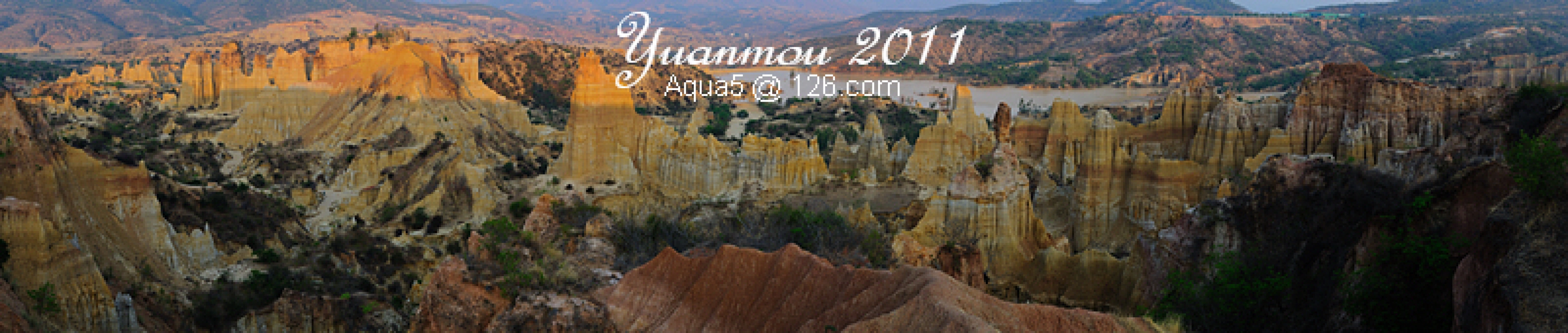
A Journey Through Time: The Earthen Forest of Yuanmou — April 2011 Chuxiong & Yuanmou Self-Drive Guide
A Journey Through Time: The Earthen Forest of Yuanmou — April 2011 Chuxiong & Yuanmou Self-Drive Guide Some journeys are destined to take root in your memory. In April 2011, I set out from Shuhe in Yunnan, heading north toward the Chuxiong Yi Autonomous Prefecture,…
Continue reading...
Solo in Yunnan: A Wanderer’s Guide to the Land of Eternal Spring
Solo in Yunnan: A Wanderer’s Guide to the Land of Eternal Spring There’s something magical about traveling alone. No compromises, no schedules to keep, no one to please but yourself. I’ve been on the road for nearly three months now, and not once have I…
Continue reading...