Self-Drive Quest for Meili Snow Mountain | If the Mountain Won’t Come to Me, I’ll Go to the Mountain
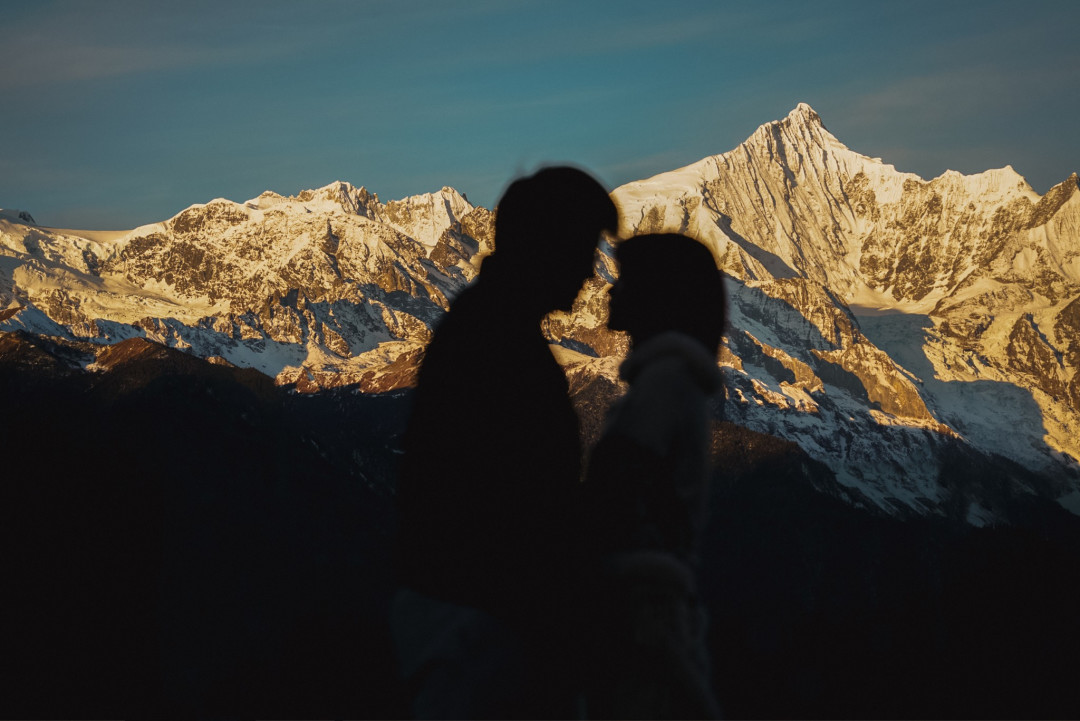
Self-Drive Quest for Meili Snow Mountain | If the Mountain Won’t Come to Me, I’ll Go to the Mountain
Prologue: A Journey Driven by Passion
Some say that in the adult world, romance is a luxury. But my husband Zhao and I, after 18 years of loving each other, have proven that romance can be woven into everyday life.
We’re a married couple of self-drive travel enthusiasts, with over 300,000 kilometers (186,000 miles) on the odometer combined. Zhao handles the photography, and I take care of the post-production. Over the years, we’ve been to countless places, but the one that haunts our dreams is always the high plateau—where the sky is the bluest, the landscapes the most magnificent, the culture the most vibrant, and where we find a purity and intensity that’s hard to come by in our daily lives.
The plateau is a love-hate relationship. Every time we get thoroughly “tortured” by altitude sickness, we swear, “Never again.” But the next time, we’re off again without a second thought. Yes, only passion can weather the long years, and only the sun, moon, and stars can truly move us.
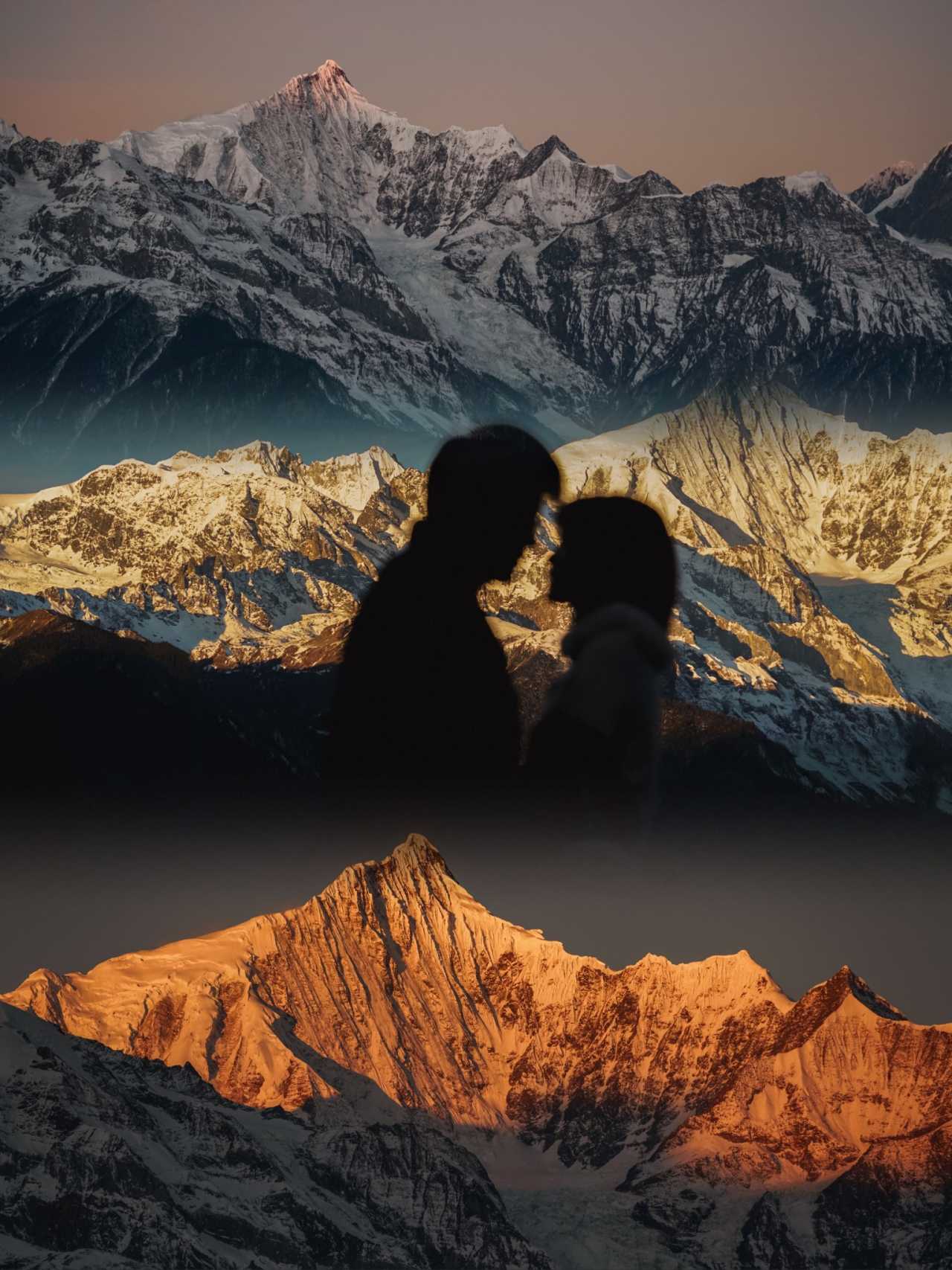
Come winter, we find ourselves yearning for the endless allure of snow-capped peaks and starry skies. And winter happens to be the best season to witness the “Golden Sunlit Peak” (日照金山)—the moment when the first rays of sunlight bathe the mountain tops in gold. So we decided to plan a winter self-drive trip along the Yunnan-Tibet route, heading for the dreamland of our hearts: Meili Snow Mountain.
If the mountain won’t come to me, I’ll go to the mountain.
Chapter 1: Setting Off from Dali, Heading for Mountains and Seas
The Clouds of Dali Never Disappoint
If you ask me to name a place where I’d want to settle down with my loved one, I’d choose Dali without hesitation. It’s not just about the romantic scenery of wind, flowers, snow, and moonlight; it’s also about the warmth of everyday life. Even as tourists flood in, the unique sense of leisure that nature has bestowed upon it remains unchanged. In Dali, it feels like all the noise of the world is swept away by the wind and clouds.
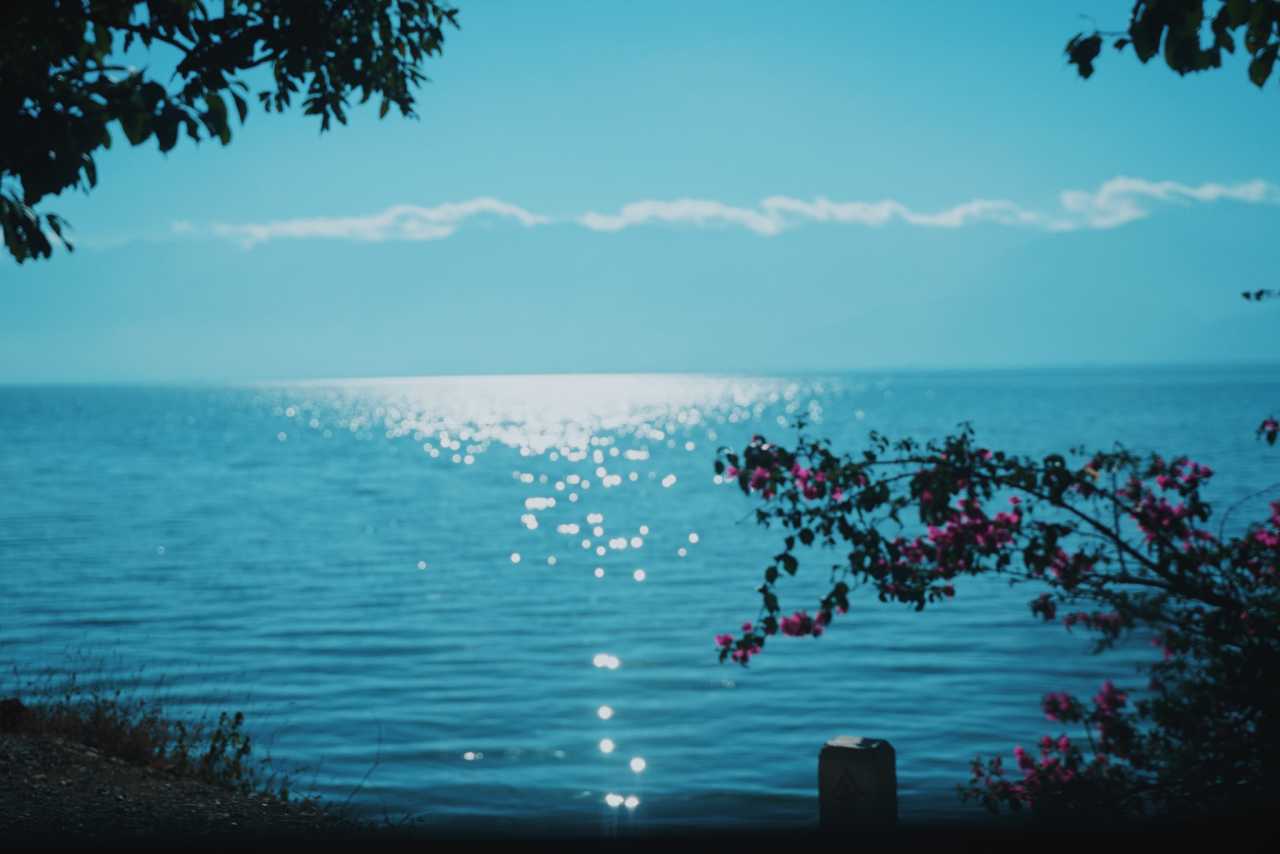
Do you believe that sunlight can turn the surface of a lake into a scattering of shimmering “diamonds”? That’s Erhai Lake.
No matter how many times I’ve been to Dali, I always rent a car to circle Erhai Lake. Sometimes I stop at the popular photo spots; other times, I just drive aimlessly, soaking in the gentle sun and the cool lake breeze. Here’s a tried-and-true route I’ve put together after many trips around the lake—you can complete it in one day without backtracking:
Erhai Lake Loop: Dali Old Town → Xizhou Ancient Town → Tree in the Water → Shuanglang Ancient Town → Luwo Mountain → Xiaoputuo Island → Ideal State (Lixiangbang) → Longkan Wharf → Dali Old Town
- Dali Old Town: I recommend staying here. Nestled at the foot of Cangshan Mountain, it’s full of old-town charm. You’ll find plenty of options for breakfast, lunch, dinner, and nightlife. Head to Renmin Road or Hongsheng Road for local snacks, and when night falls, the bar street is perfect for drinks and conversation.
- Xizhou Ancient Town: In spring, vast fields of rapeseed flowers bloom; in autumn, golden rice and wheat fields take over. With its iconic orange-walled buildings, every snapshot looks like a painting. The local tie-dye (扎染) and Xizhou flatbread (喜洲粑粑) are famous and worth trying.
- Tree in the Water: Navigate to Hongshan Temple. A small path by the roadside leads to the lake shore, and you’ll see it on foot.
- Shuanglang Ancient Town: This place is quite famous—it’s where Yang Liping’s Sun Palace and Moon Palace are located. The town hugs the lake, offering many fantastic photo spots with Erhai Lake as the backdrop.
- Luwo Mountain: It’s a bit tricky to find once you arrive. You’ll need to hike down the mountain to the lakeside to discover the cave ruins that are popular for photos. The results are stunning, but if you’re tired or traveling with kids, I’d skip it.
- Xiaoputuo Island: A small island with a distinctive temple. It’s very photogenic, and in spring, you can see many seagulls.
- Ideal State (Lixiangbang): This area mimics the architecture of Santorini. Wearing a solid-color dress makes for beautiful photos. However, it’s crowded and has little shade, so remember to wear sunscreen.
- Longkan Wharf: Highly recommended! This is the perfect spot to watch the sunset. On clear days, the sunset colors the lake with a rainbow of hues. Ending your Erhai loop here to watch the sunset is the perfect way to finish the day.
Dali Old Town: A Place You Won’t Want to Leave
As a “veteran” who has visited Dali Old Town many times, I’ve put together a foolproof guide. Bookmark it!
Must-Do Experiences: - Wuhua Tower: Free to climb. From the top, you can see Cangshan Mountain in the distance and overlook the entire old town. - Renmin Road: This street is packed with long-standing food joints. The aroma of mushroom hotpot and stone-grilled meat fills the air as you walk. - South Gate / Erhai Gate: These gates make fantastic backdrops for photos. Climb the city wall for a view of Erhai Lake. - Guandi Temple (Lord Guan’s Temple): A cultural heritage site in Dali, full of historical significance. - Bar Street: After dark, the food stalls pack up, and you can follow the sound of music to find the bars. There are also many “street-side bar singers” where you can sit around, listen to songs, and have a drink—a unique experience. - Yangren Street (Foreigner Street): The coffee shops here are very chic and perfect for photos. I recommend THE SWEET TOOTH. - Dali Bed Sheet Factory (Chuangdanchang): Think of it as a 798 art district. If you’re a creative soul who loves handmade crafts, don’t miss this place. You can even try your hand at tie-dye.
Must-Try Local Snacks: - Kaoru Shan (烤乳扇): Grilled milk fan. Fragrant and slightly charred, with a rich, milky flavor. - Kao Er Kuai (烤饵块): Grilled rice cake. Similar to a wrap, made from rice flour and filled with various ingredients. - Juan Fen (卷粉): Rice noodle rolls. Thin, smooth rice sheets wrapped around a savory filling. - Xizhou Baba (喜洲粑粑): Xizhou flatbread. Crispy on the outside, soft on the inside, with a chewy texture. - Liang Ji Mixian (凉鸡米线): Cold chicken rice noodles. Sour and spicy, very appetizing. - Baojiang Doufu (包浆豆腐): Stuffed tofu. Crispy outside, tender inside, with a burst of molten tofu when you bite into it. Dipped in chili powder, it’s amazing. - Liang Xia (凉虾): Cold “shrimp” jelly. Made from rice, served with brown sugar and rose sauce. Refreshing and palate-cleansing.
As winter turns to spring, the cherry blossoms at the foot of Cangshan Mountain have already bloomed in full, vibrant and romantic.
Chapter 2: Lijiang, Where the Human World Meets the Celestial Realm
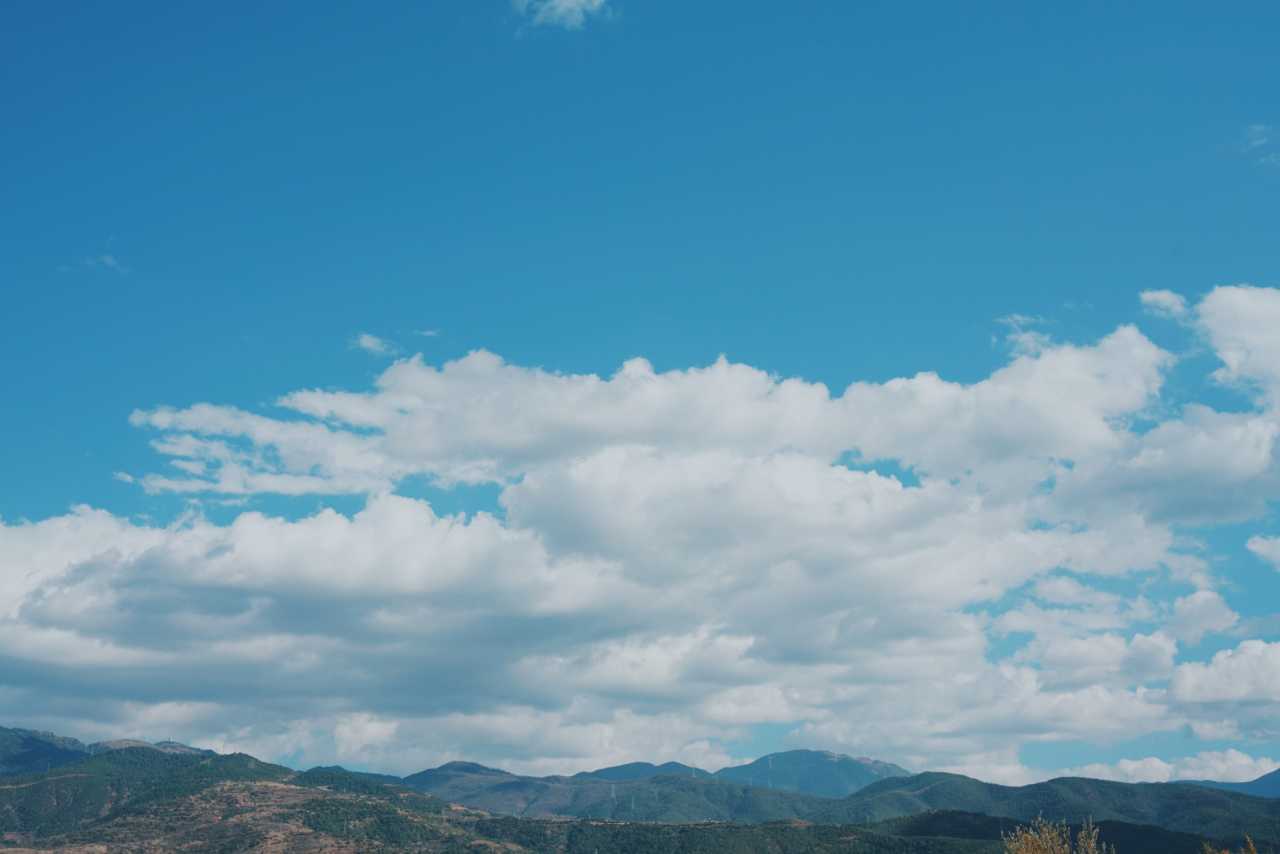
It’s about a 2-hour drive from Dali to Lijiang, and another 2 hours from Lijiang to Shangri-La. We chose to rest and recharge in Lijiang—easy and relaxing.
Baisha Ancient Town: The Forgotten Naxi Heritage
After exploring all the major and minor old towns in Lijiang, we stumbled upon a delightful discovery: Baisha Ancient Town. From here, you can see Jade Dragon Snow Mountain in the distance. It’s rich in Naxi culture, yet not overly commercialized—peaceful in just the right way.
Baisha Ancient Town is located about 10 kilometers (6 miles) north of Lijiang city. It’s bordered by Jade Dragon Snow Mountain to the north, Longquan to the south, and Zhishan Mountain to the west. This is the most authentic Naxi-style ancient town, the most original Naxi village, and the former capital of the Naxi ancient kingdom.
Jade Dragon Snow Mountain and Blue Moon Valley: Nature’s Palette
When you’re in Lijiang, you can’t miss Jade Dragon Snow Mountain. It’s the southernmost snow-capped mountain range in the Northern Hemisphere, and its peaks are perpetually covered in snow year-round. The range consists of 13 peaks arranged from south to north, with the main peak, Shanzidou, standing at 5,596 meters (18,360 feet). In the Naxi language, it’s called “Oulu,” meaning “Heavenly Mountain,” and it’s considered the sacred mountain of the Naxi people.
The most worthwhile attraction at the foot of Jade Dragon Snow Mountain is Blue Moon Valley. It gets its name from the azure blue of its waters and the crescent shape of the valley. Legend has it that this is the prototype of the Blue Moon Valley described in James Hilton’s novel Lost Horizon.
On a clear day, Blue Moon Valley is breathtakingly beautiful. No filter is needed—the water is a vivid, saturated blue, exactly as you see it with your own eyes. The distant snow-capped peaks are clearly visible, and drone footage looks like a scene from a fairyland. So, remember to check the weather forecast and pick a sunny day to visit.
Zhao and I have always loved Lijiang. It has the warmth of everyday life, yet also a cool, ethereal beauty. Every time we come, we stay for a few days—watching the golden sunrise on the snowy peaks in the morning, and waiting for the sunset, moonrise, and stars to emerge in the evening. This time, we stayed at the Shu Jia Yu Lu (墅家玉庐) hotel at the foot of Jade Dragon Snow Mountain. The setting, service, and design were all outstanding—a place we’ll remember fondly.
Chapter 3: Shangri-La, the Moonlit City
The Starry Tent in Ren’an Valley
We arrived in Shangri-La in the evening and had booked a tent-style guesthouse in Ren’an Valley. As we entered the grounds, we saw a few scattered tents glowing with soft, warm light, spaced far enough apart for good privacy. The Tibetan lamb hotpot we had ordered on the road was already prepared for us. One bowl of the peppery, rich broth, and the chill vanished.
After dinner, we returned to our tent, where the underfloor heating and fireplace were ready. We could even soak in a bathtub under the stars. Late at night, we wrapped ourselves in blankets and sat in the yard outside the tent, gazing up at the star-filled sky and discussing our upcoming journey, our hearts full of anticipation.
I asked Zhao, “Do you think we’ll get to see the Golden Sunlit Peak this time?”
Zhao replied with certainty, “We definitely will. Look at this starry sky—the weather is bound to be great!”
Looking at the countless stars, my hopes grew even stronger.
The next morning, we woke up in the misty dawn light. We brewed a pot of strong tea, finalized our itinerary for the next few days, said goodbye to the adorable dogs at the guesthouse, and set off again.
This tent hotel, hidden in the Shangri-La valley, had captured my heart the moment I laid eyes on it. When we woke up, two clingy dogs were already waiting at the door. For Zhao and me, who have a dog at home and genuinely love animals, having dogs at a guesthouse is a dream come true.
Dukezong Ancient Town: Tibetan Culture Under the Moon
In Shangri-La, we also visited the beautiful Dukezong Ancient Town. Compared to Dali Old Town and Lijiang Old Town, Dukezong is relatively lesser-known. But once you’ve been there, its rich cultural colors will captivate you.
Dukezong at night has a completely different kind of earthly charm. The caramel-colored lights bathe the old town in a lazy atmosphere that banishes all fatigue. Walking through the town, you feel the weight of Tibetan history, and you can’t help but fall deeply in love with this place.
This was an important town on the Ancient Tea Horse Road. Dukezong has a mysterious and romantic nickname: “Moonlit City.” In Tibetan, “Dukezong” means “a castle built on stone.” Just hearing the name gives you a strong sense of Tibetan cultural heritage.
Chapter 4: From Shangri-La to Deqin, Traveling with the Snow Mountains
The drive from Shangri-La to Deqin takes about 4 hours. The scenery along the way was endless, and we took turns driving, feeling no fatigue at all.
The further north we went, the lower the temperature dropped, even reaching around 0°C (32°F). Zhao reminded me of several winter driving tips: after starting the car, you need to warm it up. The correct way is to start the engine for about 30 seconds, then drive slowly at low RPMs until the engine temperature gauge changes. Once the gauge reaches around 90°C (194°F), you can drive at full speed. Additionally, in winter, watch out for icy sections of road—don’t drive too fast, especially on curves. Fortunately, there was no snow on this road and very little ice, so we didn’t need snow tires or chains.
Along the way, we passed the morning-lit Shangri-La city, Napahai Lake, and Dongzhulin Monastery. At the Baima Snow Mountain pass section, I strongly recommend taking the old 214 national road. When Baima Snow Mountain gradually comes to ride alongside you, you’ll realize how worthwhile it was to choose this route at the fork.
Baima Snow Mountain is relatively lesser-known. Many people can easily name Jade Dragon Snow Mountain and Meili Snow Mountain, but they don’t know Baima. In fact, it’s quite famous locally in Yunnan, and its protected area is called the “Kingdom of Cold-Temperate High-Altitude Plants and Animals.” Looking at its perpetually snow-capped main peak from a distance, it resembles a galloping white horse, hence the name. Baima’s most striking feature is its vertical climate: one mountain has four seasons, and the weather changes completely within a short distance. This single snow-capped mountain encapsulates the climate types of the entire Northern Hemisphere.
Driving alongside Baima Snow Mountain, our spirits lifted. The scenery, so close you could almost touch it, was precious. It washed away the tarnish of long-term city living. I said to Zhao, “When we’re old and have no more ties, let’s find a place at the foot of a snow mountain to settle down. When we’re busy, we’ll tend the garden; when we’re free, we’ll have a few good friends over for some wine and tea.”
Traveling with my loved one, accompanied by such beautiful scenery, the 4-hour drive didn’t feel long at all.
Chapter 5: Deqin, Meeting Meili Snow Mountain
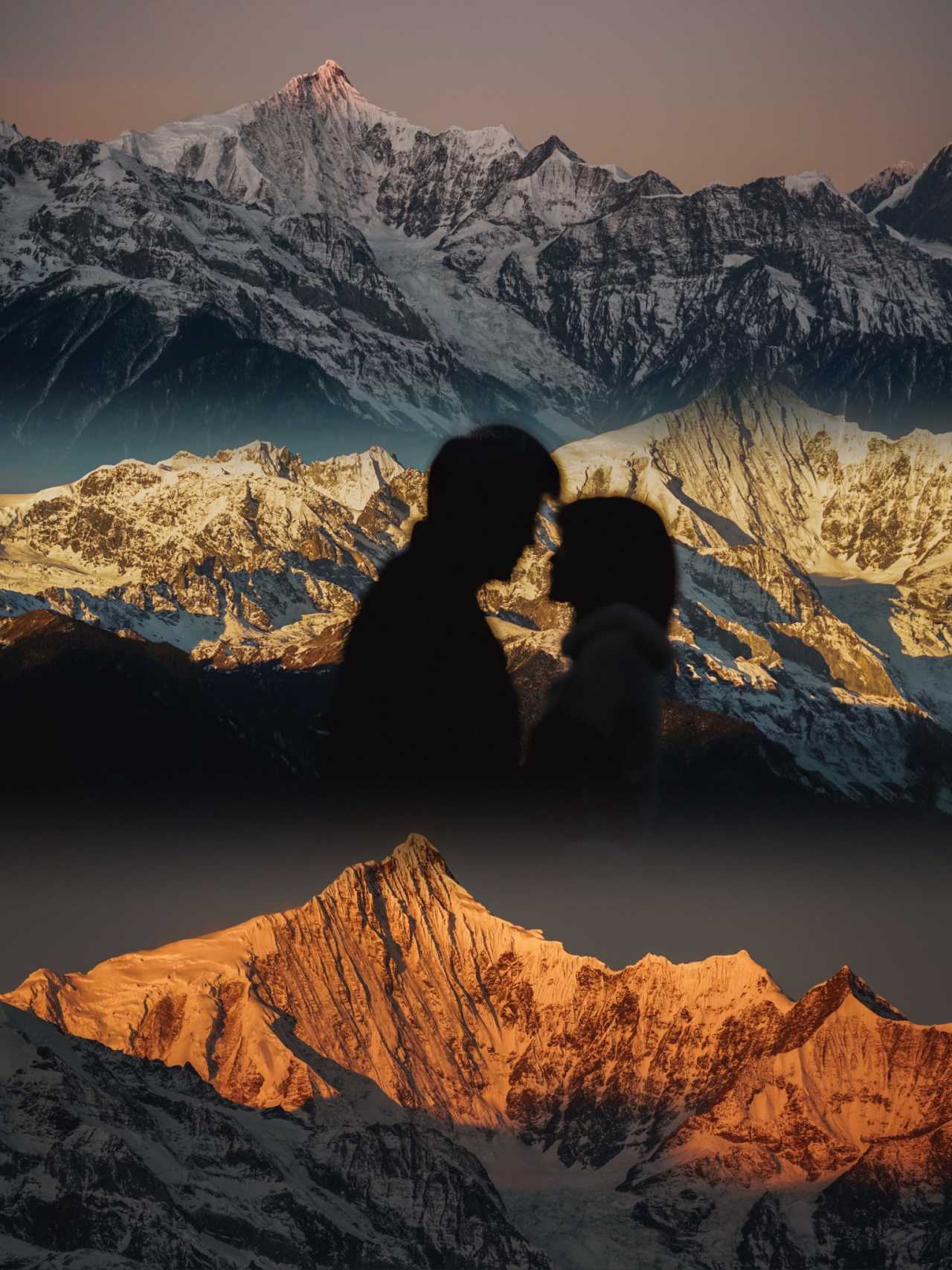
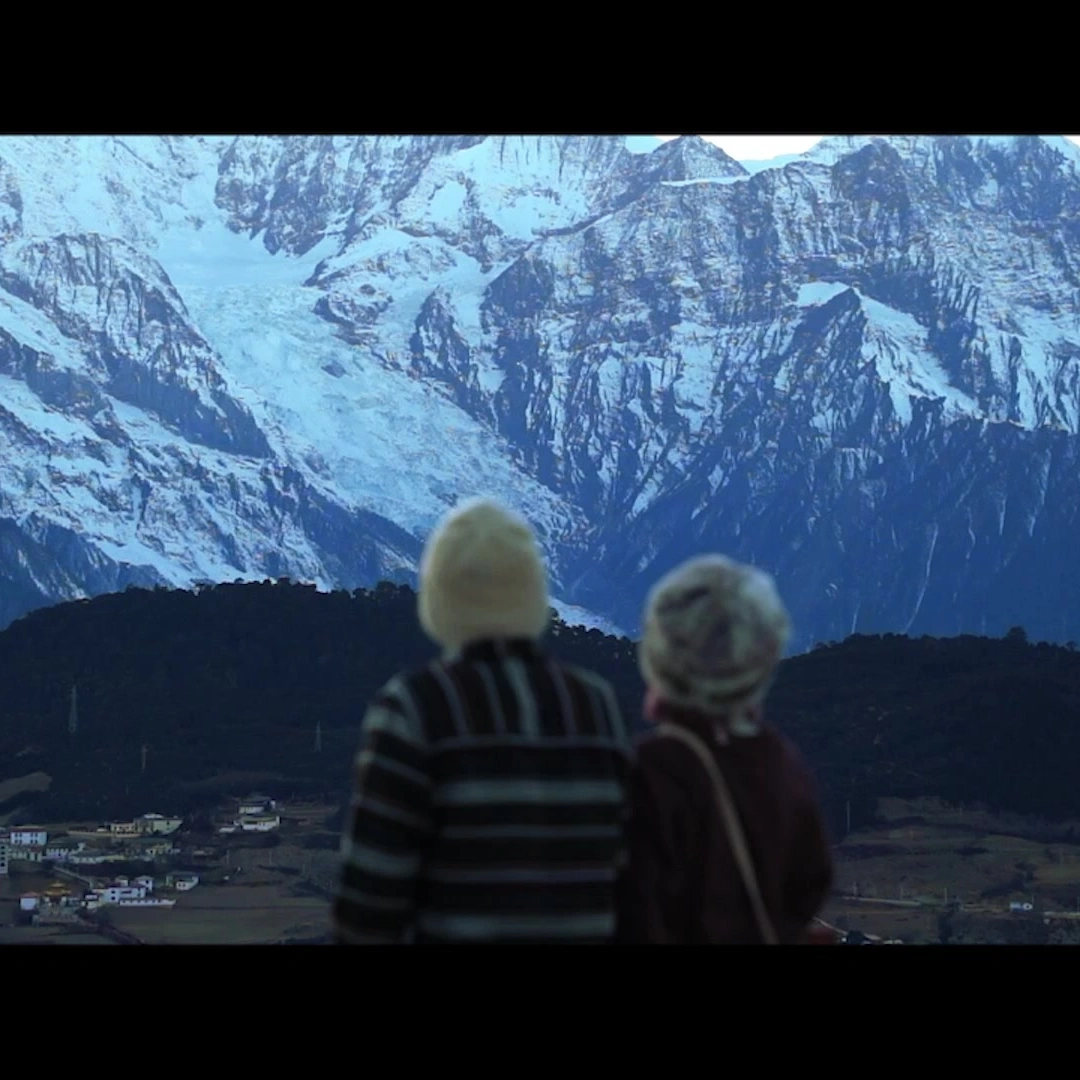
When we reached Deqin County, Meili Snow Mountain was right in front of us.
Near Deqin town, there are two best spots to view the Golden Sunlit Peak of Meili Snow Mountain: Feilai Temple (飞来寺) and Nongwuding (浓雾顶). Feilai Temple is within the town and gets more crowds; Nongwuding is farther away from the town and relatively less crowded. We recommend the latter.
The viewing platform at Nongwuding has rows of white pagodas facing the snow mountain. The scenery is perfectly matched.
Nongwuding: Face-to-Face with the Sacred Mountain
This day’s drive was perfect: we started from Shangri-La in the morning and arrived at Nongwuding before sunset to meet Meili Snow Mountain.
However, here’s a practical tip: Nongwuding is great for watching the sunrise (Golden Sunlit Peak) on Meili, but it’s not particularly suitable for sunset. This is because the sun sets behind the snow mountain, making the light very harsh and backlighting the peaks, obscuring their full view. You can only enjoy a brief moment of dusk scenery after the sun has completely disappeared behind the mountain and the light hasn’t fully faded, but it’s very short-lived.
There’s no doubt that Nongwuding faces directly toward the main peak of Meili Snow Mountain: Kawagebo Peak. Standing here and seeing it up close, the awe and beauty are beyond words. It is said that Meili Snow Mountain was once rated as the most beautiful snow mountain in the world. Setting aside its mystery and religious status, just its shape alone can fulfill all your fantasies about snow-capped mountains.
Chapter 6: Fulfilling the Dream of the Golden Sunlit Peak
We checked into a hotel facing Meili Snow Mountain—Tengyue (腾悦)—with an absolutely stunning view. In fact, almost every hotel or guesthouse in Deqin town has a view of Meili Snow Mountain. The operators know what people come here for, and even if the accommodations aren’t always top-notch, the view must be first-class.
Deqin is most famous for being the perfect location to watch the Golden Sunlit Peak of Meili Snow Mountain. On the morning we rested in Deqin, we finally witnessed this natural spectacle we had been longing for. It was incredibly awe-inspiring.
Many people say that if you haven’t captured the Golden Sunlit Peak in your camera at least once, you can’t call yourself a true photography enthusiast. After staying one night, we got up early the next morning and waited. This moment was a dream come true; our winter self-drive quest for Meili Snow Mountain was now complete, with no regrets.
If you come to Deqin, you’ll notice that the town “wakes up” very early—because with such a magnificent view on offer, no one dares to be late.
Chapter 7: Yubeng, Challenging Nature
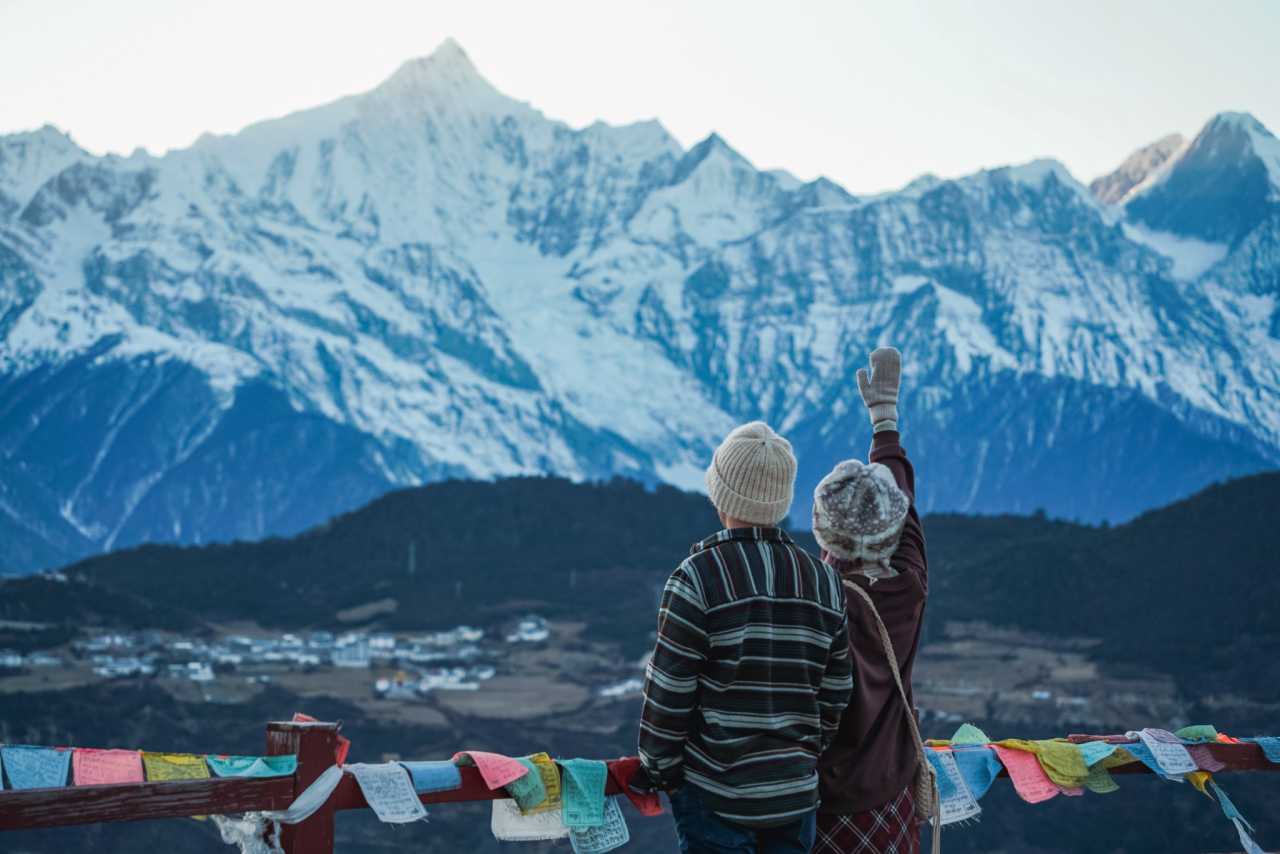
Meili Snow Mountain is a massive north-south trending snow mountain range, located at the border of Zayü County in eastern Tibet and Deqin County in the Diqing Tibetan Autonomous Prefecture of Yunnan. In the Tibetan region, it is called Kawagebo Snow Mountain. The name “Meili” is a Chinese transliteration of the Tibetan word “mainri,” meaning “medicine mountain,” as it was once known for producing valuable medicinal herbs. Along with Mount Kailash in Tibet, Amnye Machen in Qinghai, and Gado Jowo in Qinghai, it is one of the four great sacred mountains of Tibetan Buddhism. Local Tibetans revere it as the “God of Snow Mountains.”
Many people say that seeing the Golden Sunlit Peak of Meili Snow Mountain brings you good luck for the whole year. This gave us the courage to challenge ourselves in Yubeng.
The Mysterious Legends of Meili Snow Mountain
Part of the reason Meili Snow Mountain is so mysterious and alluring lies in the stories behind it. Its highest peak, Kawagebo, stands at 6,740 meters (22,110 feet). While not the world’s highest, it has never been successfully summited. It is said that every climbing attempt has been met with supernatural events. The most famous is the 1991 Meili Snow Mountain incident, in which all 17 members of a climbing team perished.
To date, there have been nine recorded climbing attempts on Meili Snow Mountain: four joint Sino-Japanese expeditions, one Japanese expedition, and four American expeditions—all ending in failure. After 1996, the Chinese government officially banned climbing on Meili Snow Mountain. Today, Kawagebo is the only snow mountain in the world that is respected and protected purely out of religious faith.
While you can’t climb it, you can still hike to the base or the flanks of its various peaks. The hiking route starting from Yubeng Village is the best way to challenge nature.
Yubeng Trekking: Hell on the Body, Heaven on the Eyes
In the past, you could only reach Yubeng on foot. Now, you can take a vehicle, but you can’t drive yourself—you have to park at the entrance and take a shuttle. It’s about 16 kilometers (10 miles) of dirt road. While some people still choose to hike, it’s quite challenging for beginners—the road is rough and dusty. The shuttle is expensive (200+ RMB per person), but I think it’s worth it. Saving your energy for the actual hiking inside Yubeng suits my pace better.
When you see the iconic “heart-shaped” valley, you know you’ve arrived at Yubeng.
Yubeng Village is divided into Upper Yubeng and Lower Yubeng, both with hotels and guesthouses. There are two famous hiking trails within the village: the Sacred Waterfall Trail (神瀑线) and the Ice Lake Trail (冰湖线). Lower Yubeng is closer to the Sacred Waterfall, and Upper Yubeng is closer to the Ice Lake. Which one you choose to stay in depends on which trail you want to hike.
We stayed at a luxury tent guesthouse in Lower Yubeng, which I highly recommend. With a 180-degree view, you can lie in bed and watch the Golden Sunlit Peak and the stars wheel across the sky.
In the past, Yubeng was only associated with “trekking” and “roughing it.” The saying “Hell on the body, heaven on the eyes” perfectly describes Yubeng’s extremes: stunning scenery, but harsh conditions. Yubeng is much better now. Not only are there many comfortable guesthouses in the village, but you can also take a vehicle to get in.
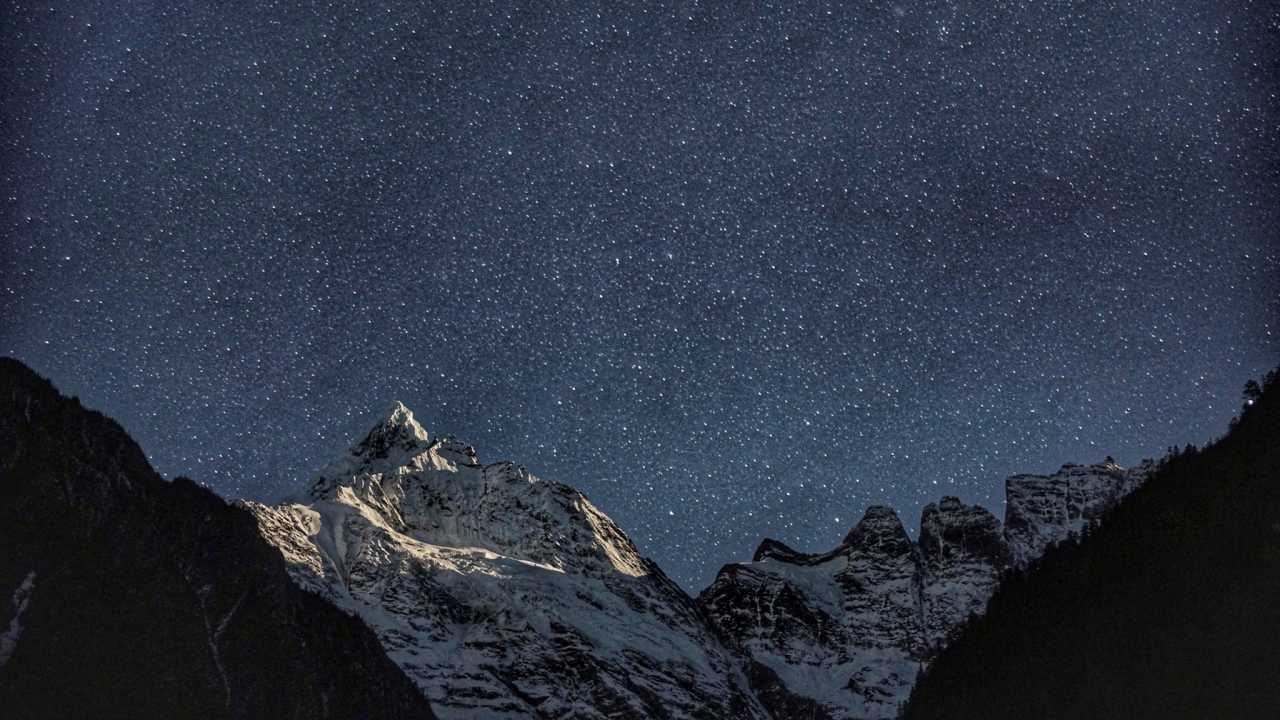
The snow-capped peaks facing the heart-shaped valley are, from left to right, Miancimu Peak and Wufangfo Peak. Spending a night in Yubeng with your loved one, sitting in front of the valley watching the Golden Sunlit Peak of Meili Snow Mountain and the shifting stars, is the ultimate in romance. Everything around you is quiet and beautiful.
Of course, coming here is not the time to just lie around. Setting off on a hike is the real business. The Sacred Waterfall Trail is relatively easy, taking about 4-5 hours in total. The Ice Lake Trail is more advanced, generally taking 8-9 hours, with many icy, sloping sections. You need to start early and have good gear.
Since it was our first time in Yubeng, we chose the Sacred Waterfall Trail. Just walking from our tent guesthouse to the trailhead was exhausting—the entire village is a series of steep, up-and-down slopes. We hadn’t even adjusted our breathing yet, and we had to stop and start several times. High-altitude hiking is twice as hard as usual.
When we reached an open, flat area and saw the unobstructed “heart-shaped” valley and a temple in front of us, it signaled that we had arrived at the true entrance to the Sacred Waterfall hiking trail. The sign said the trail was 5.4 kilometers (3.4 miles) long, but the actual experience was completely different from walking the same distance on flat ground. We couldn’t help but sigh: “This is really tiring!”
After covering about half the distance, we started to get used to it and began to enjoy the hike—soaking in the sun, the streams, and the wind. Hiking is a perfect opportunity for a conversation with your soul. Gradually, we stopped talking and just focused on feeling the gifts that nature was giving us.
Along the way, we saw fearless little squirrels everywhere—absolutely adorable. Zhao walked ahead, and I followed close behind. Step by step, we made our way toward the sanctuary in our hearts.
Epilogue: The Meaning of the Journey
Throughout this trip, we started from Dali, passed through Lijiang and Shangri-La, and finally arrived in Deqin to meet Meili Snow Mountain. The entire journey was accompanied by snow-capped peaks: Jade Dragon Snow Mountain, Haba Snow Mountain, Baima Snow Mountain, and finally, the Meili Snow Mountain that had haunted our dreams.
After driving over 300,000 kilometers (186,000 miles), we still love the feeling of setting off. Every departure is a reunion with ourselves. Now in my thirties, I’ve realized that the “me” I used to be hasn’t disappeared—it’s just been hiding. Every time I set sail on a new adventure, chasing my passions, she comes back.
If you love this world as much as we do, then set off! You don’t need a reason, and you don’t need too much preparation. Don’t fear the unknown, and don’t be afraid of challenges. With every departure, you’ll find the version of yourself that is free from worries.
If the mountain won’t come to me, I’ll go to the mountain. This isn’t just the meaning of travel; it’s an attitude toward life.
Practical Tips Summary
Best Season: Winter (December to February) is the best time to see the Golden Sunlit Peak.
Self-Drive Route: Dali → Lijiang → Shangri-La → Deqin (Feilai Temple / Nongwuding) → Yubeng
Viewing Recommendations: - Best spots for Meili Snow Mountain’s Golden Sunlit Peak: Nongwuding (less crowded, recommended) > Feilai Temple - Nongwuding is great for sunrise, not ideal for sunset
High-Altitude Notes: - Acclimate to the altitude in advance and bring anti-altitude sickness medication - For winter driving, remember to warm up the car and watch for icy sections - For Yubeng hiking, choose a trail that suits your fitness level; beginners can start with the Sacred Waterfall Trail
Must-Eat Recommendations: - Dali: Kaoru Shan (grilled milk fan), Kao Er Kuai (grilled rice cake), Xizhou Baba (Xizhou flatbread), Liang Ji Mixian (cold chicken rice noodles) - Shangri-La: Tibetan lamb hotpot (藏羊火锅)
Accommodation Recommendations: - Near Dali Old Town - The tent estate in Ren’an Valley, Shangri-La - Hotels facing Meili Snow Mountain in Deqin (e.g., Tengyue) - The luxury tent guesthouse in Lower Yubeng
You should also read:
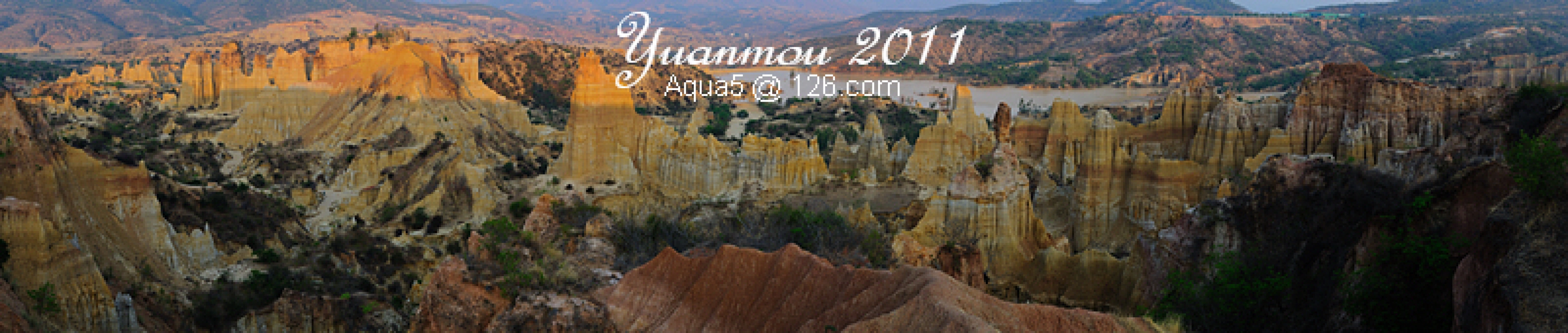
A Journey Through Time: The Earthen Forest of Yuanmou — April 2011 Chuxiong & Yuanmou Self-Drive Guide
A Journey Through Time: The Earthen Forest of Yuanmou — April 2011 Chuxiong & Yuanmou Self-Drive Guide Some journeys are destined to take root in your memory. In April 2011, I set out from Shuhe in Yunnan, heading north toward the Chuxiong Yi Autonomous Prefecture,…
Continue reading...
God’s Abandoned Palette: A Self-Drive Journey Through Yunnan’s Dongchuan Red Land
God’s Abandoned Palette: A Self-Drive Journey Through Yunnan’s Dongchuan Red Land Travel has never been about reaching some distant geographic coordinate. It’s about encountering, along the way, the version of yourself buried beneath the rubble of daily routine. During this May Day holiday, I finally…
Continue reading...
Two Girls' Graduation Trip: Dali and Shuanglang – A Poetic Farewell to Mountains and Sea
Two Girls' Graduation Trip: Dali and Shuanglang – A Poetic Farewell to Mountains and Sea Preface: Catching the Tail of Youth, Heading South During our senior year of college, my roommate and I – two girls studying in Beijing – decided to bid farewell to…
Continue reading...