Self-Driving from Lijiang to Deqin: The Snowy Peaks Will Hear Your Wishes
Self-Driving from Lijiang to Deqin: The Snowy Peaks Will Hear Your Wishes
In my memory, images of the western plateau always linger — snow-capped mountains, glaciers, forests, lakes, and that sunrise over the golden peaks I once missed. That regret, like a tiny thorn lodged deep in my heart, constantly reminds me. Perhaps it was Kawagebo (Khawa Karpo) calling me back.
A cold wave swept through Hebei in December, temperatures plummeting — reportedly the coldest December in a decade. On one of those mornings so chilly it made you shrink into your collar, I made a decision: buy a plane ticket, no set return date, and head south.
Yunnan is no stranger to me. Ten years ago, in 2014, I had already visited mainstream spots like Kunming, Dali, and Lijiang. As a major tourism province, its reputation is mixed. Scandals of price-gouging and labels of over-commercialization cling to it like dust. But dust can't obscure its true colors — that vibrant natural landscape and rich cultural stories still draw me in.
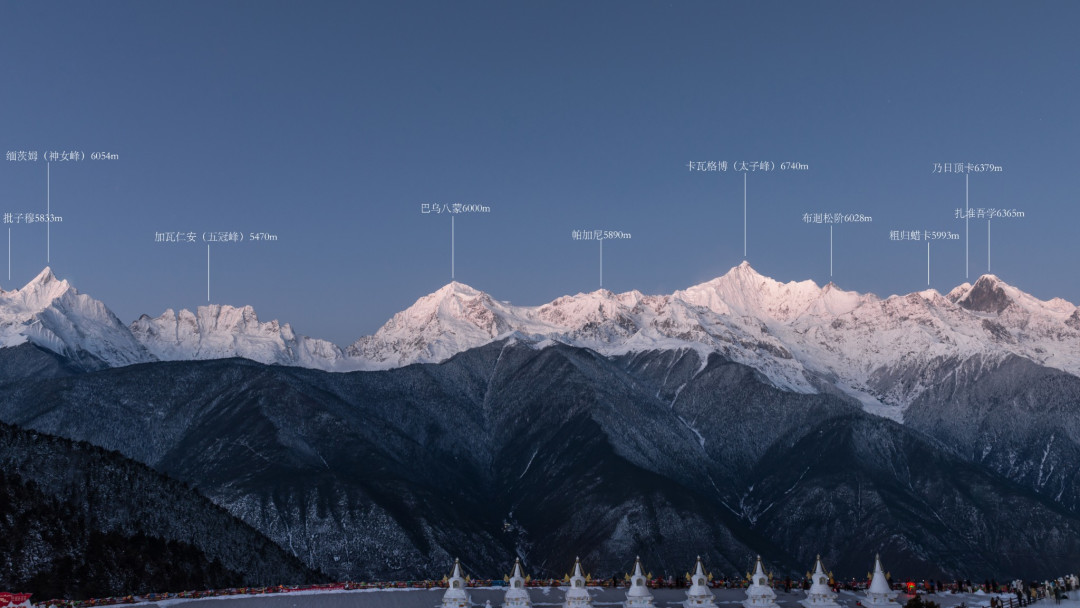
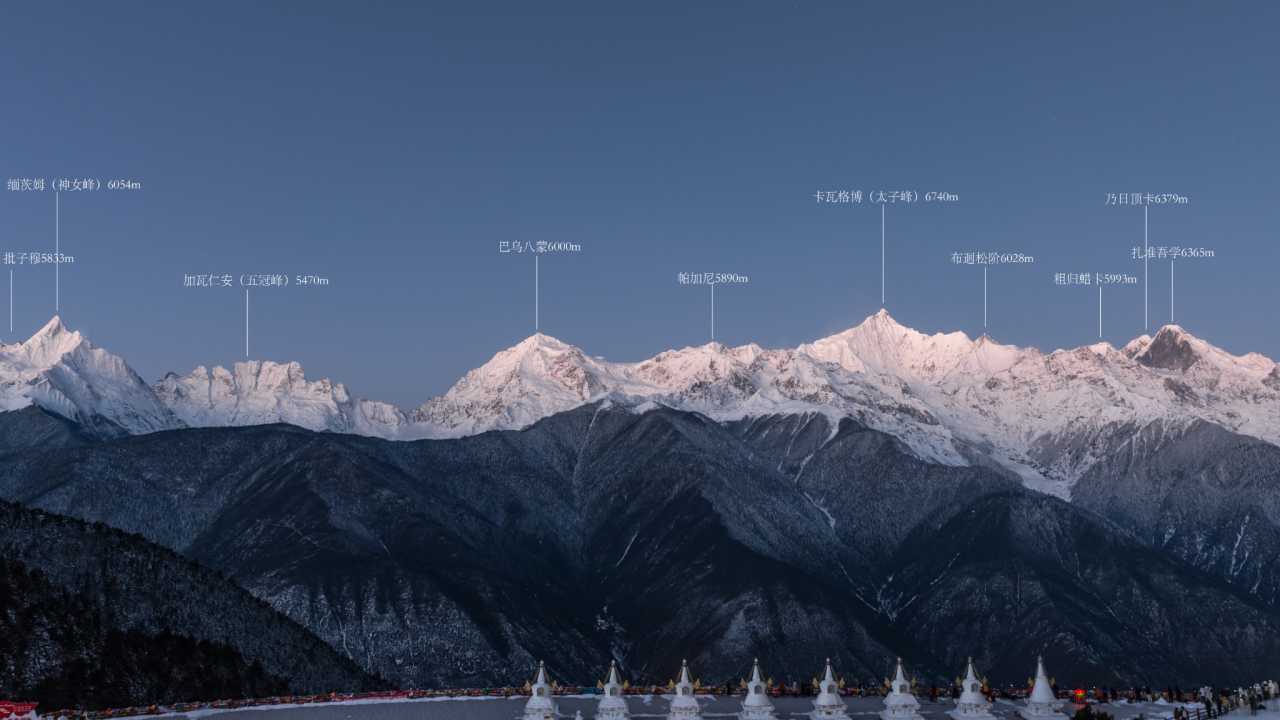
The core of this Yunnan trip was the snowy peaks. Rather than weaving through concrete jungles, I'd rather chase the traces of snow-capped mountains across the plateau. Yulong Snow Mountain in Lijiang, Haba beside Tiger Leaping Gorge, Baima and the Thirteen Peaks of Meili in Deqin — these formed the backbone of my journey.
Lijiang to Deqin: The Right Way to Enter the Plateau
There aren't many scenic stops along the way from Lijiang to Deqin, but I took over three thousand photos. Some moments I can't wait to share — those frozen slices of time are my most treasured gifts.
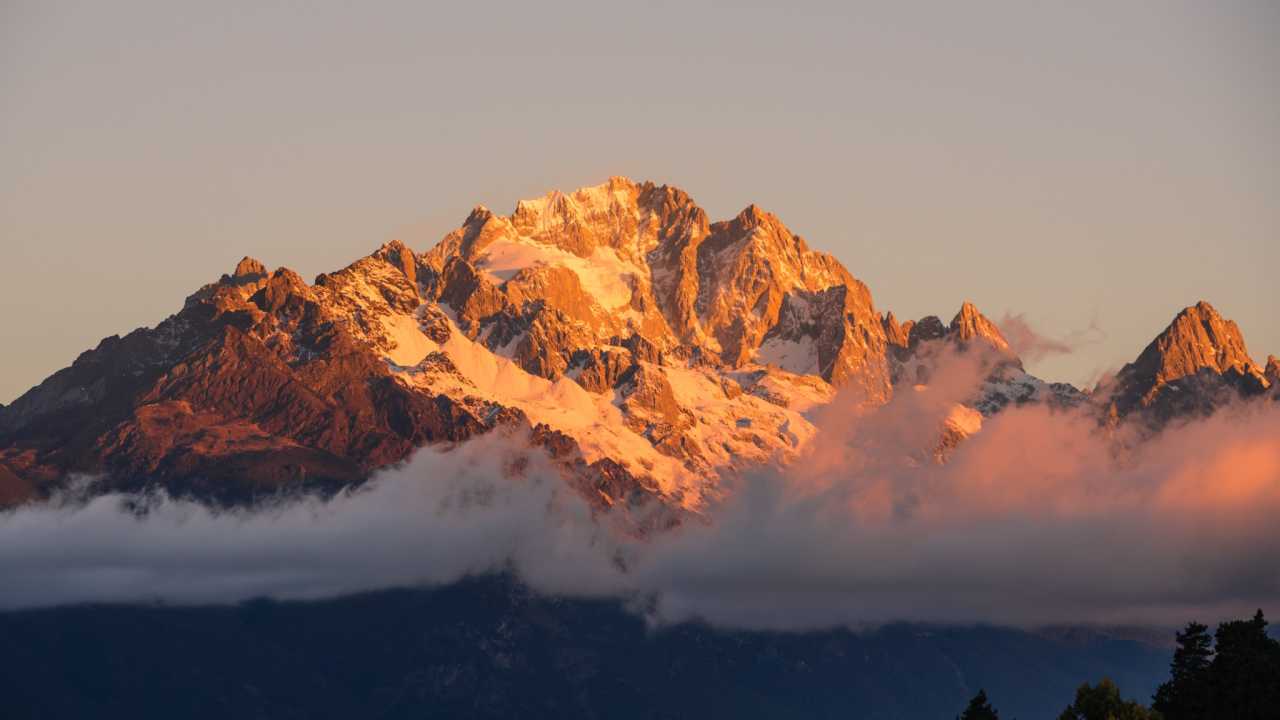
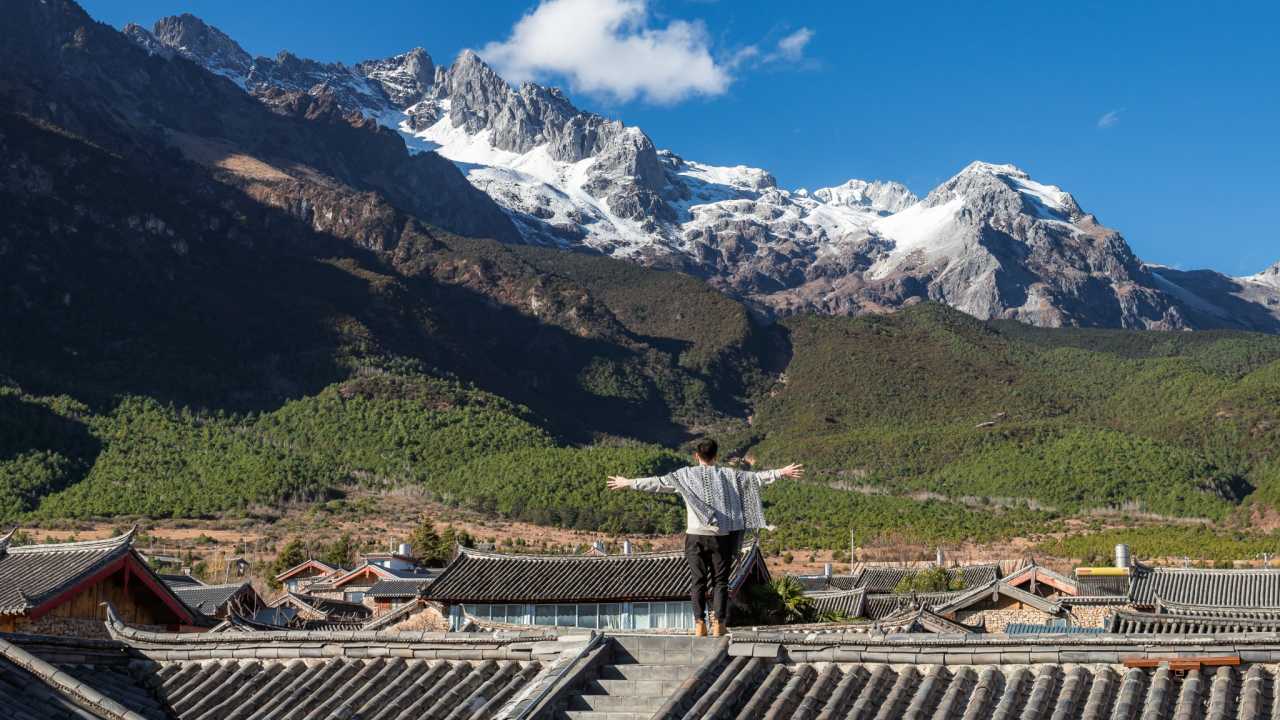
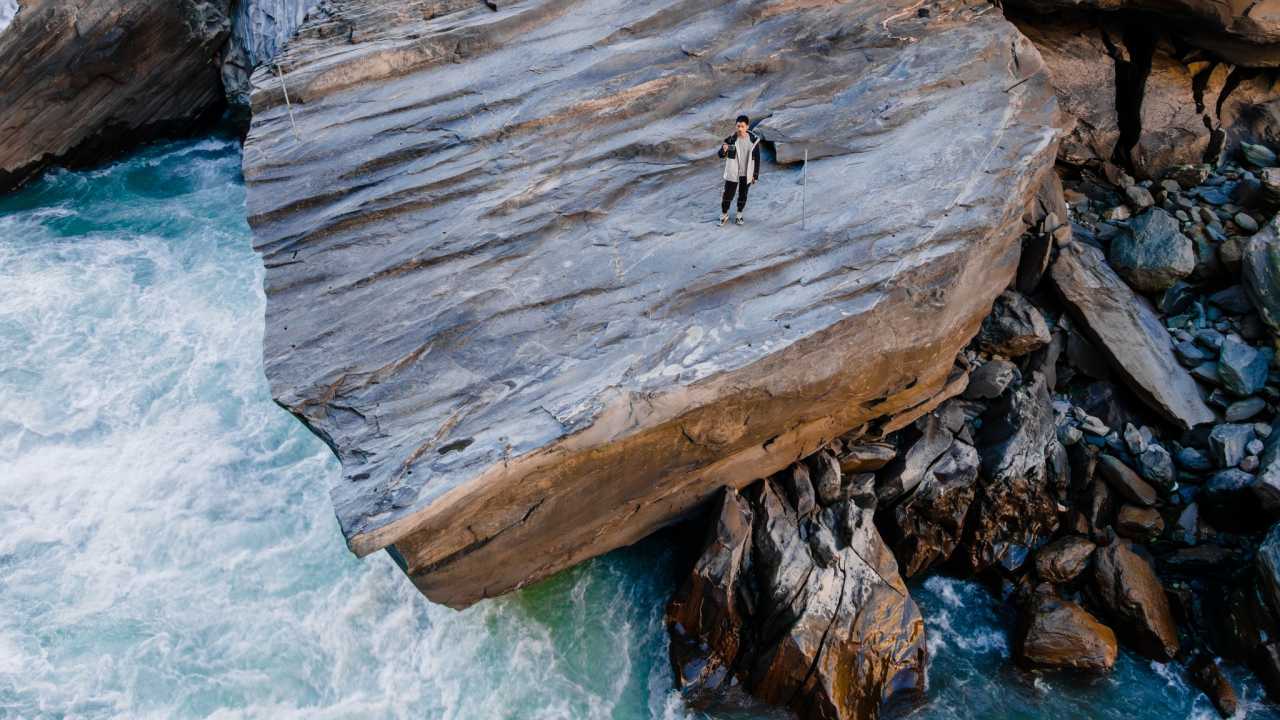
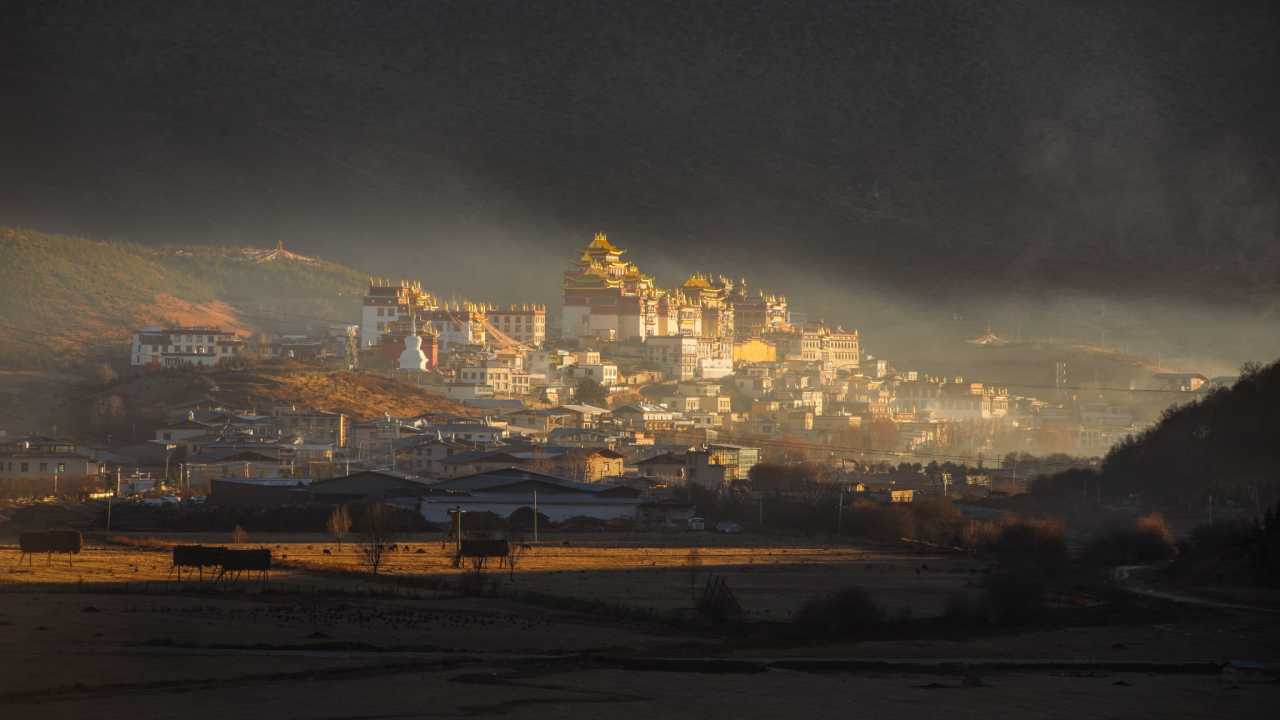
Arriving in Lijiang, the familiar Yulong Snow Mountain greeted me with a golden sunrise — a stroke of luck to start things off. At the lesser-known Yuhu Village, you can climb onto rooftops and embrace the breeze and sunshine beneath the snowy peak. The high-altitude trail at Tiger Leaping Gorge leads all the way down to the middle gorge's riverbed, where the roaring waters crash against giant boulders, deafening in their intensity. In Shangri-La, you must chase the morning mist and first rays of light at Songzanlin Monastery before sunrise. In winter, Napahai Lake, though lacking lush greenery, has its own unique charm. A heavy snowfall turned the "Sunshine City" into a beautiful Shambhala. I climbed Guishan Park and joined others in turning what was once the world's largest prayer wheel. At Feilai Temple, I chased the light — the light belonging to Meili Snow Mountain and Kawagebo. When the golden sunrise hit the peaks, life felt worthwhile. At Wunongding, I found my favorite viewpoint for the snowy mountains. Beneath a solitary tree, I gazed at the Thirteen Peaks of Meili, struck speechless by the awe. To get closer to the mountains, I hiked to Lower Yubeng Village. The golden sunrise on Shennü Peak (Goddess Peak) and Wuguan Peak (Five-Guan Peak) washed away all the fatigue of the journey. On the Shenpu Waterfall trail in Yubeng, I tasted the sacred waterfall's water at the foot of Wuguan Peak. Baisha, beneath the snowy peaks, was the most captivating part of Lijiang's old town for me. In Shuhe, I checked into a hidden gem of a guesthouse. Returning to Lijiang, I revisited Dayan Ancient Town.
If there's a color in this world that makes you linger, it must be the rainbow hues of Yunnan. And Lijiang remains a must-visit in Yunnan. Years later, I chose to land in Lijiang again and headed straight for Dayan Ancient Town.
Dayan Ancient Town: The Illusion of Slow Living
Coming back to Lijiang a second time, I had fewer expectations, yet its charm still drew me in. Dayan has many guesthouses with rooftop terraces. To easily view Yulong Snow Mountain, I picked one at random. The next day, the sun rose as usual, and the opening was lucky — we caught the golden sunrise on Yulong, filling us with happiness.
Winter in Lijiang brings a big temperature difference between day and night. Before sunrise, the air is crisp and cold. But when sunlight falls on Yulong's summit, the chill instantly fades, and Lijiang's new day feels full of spring. The guesthouse terrace wasn't high, but it was enough to see Yulong. Yulong is the southernmost snow mountain in China, and I've always found that fascinating — in the midst of spring-like central Yunnan, you can see a majestic snowy peak without braving the cold.
After sunrise, Dayan Ancient Town was very quiet. The alleys between gray walls and green tiles saw few pedestrians. It gives you the illusion of a slow life, as if you've left behind your routine work environment and entered a relaxed world. At this hour, unlike its lively nights, the ancient town had the peace I love. The distant Yulong and the Dayan beneath your feet are inseparable — this is the right way to experience an ancient town.
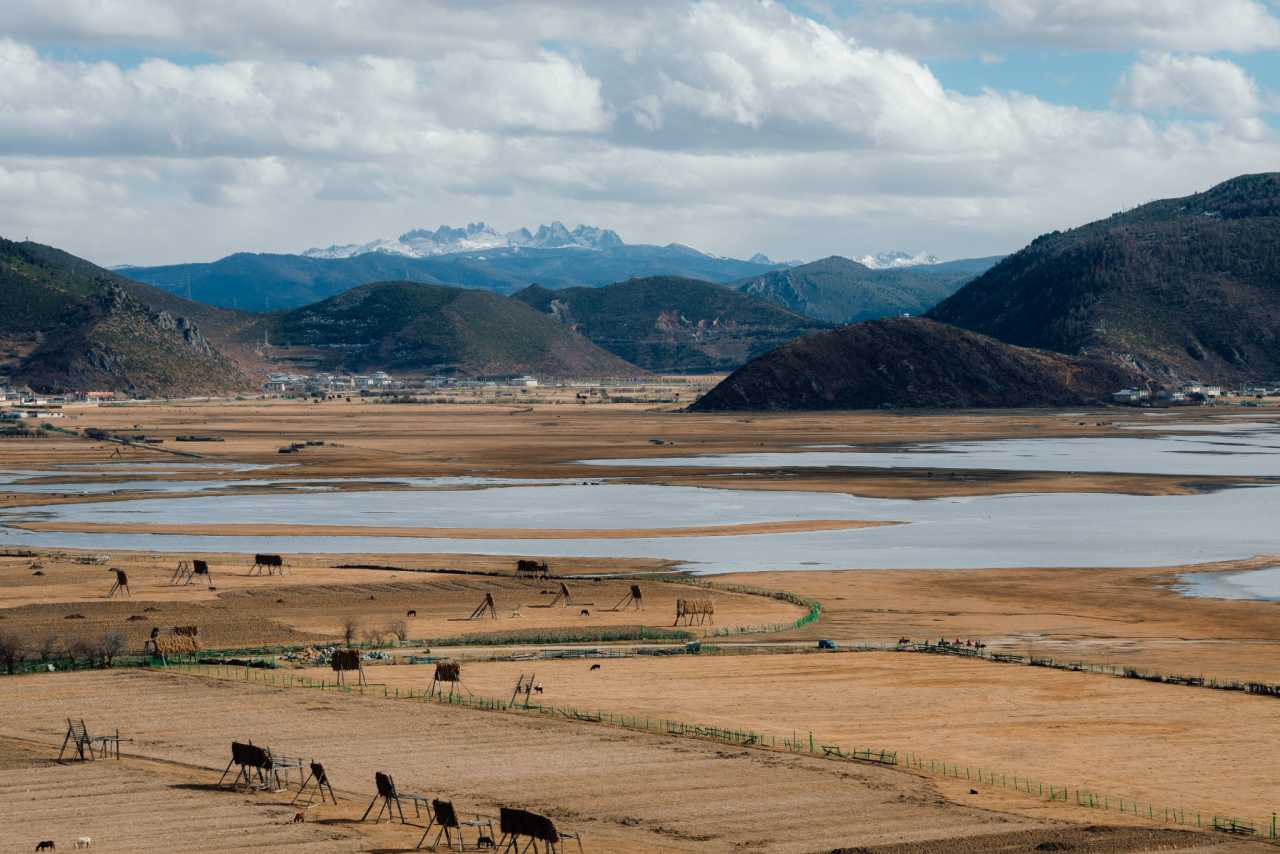
The first time I came to Lijiang, consumer drones didn't exist. To see the old town's panorama, you had to climb Lion Hill. Now, technology brings convenience. From a drone's perspective, Dayan's layout hasn't changed in years — well-preserved and grand in scale. In the opposite direction, Lion Hill and Wangu Tower act as a buffer between the old town and the city center.
I used the morning to catch up on sleep. After waking up, there was no need to go anywhere specific — just wander randomly through the ancient town's alleys. Near the entrance by Dayan Huaxiang Lane, the "Eye of Lijiang" is a great spot to overlook the old town, offering views of Lion Hill, Wangu Tower, and the scattered rooftops.
The biggest change in Dayan over the years might be the more ornate decorations in the alleys. Walking through the old town, you notice many interesting little details — different lanes hung with different ornaments, making the whole town more vibrant. Near Zhenxing Lane, eaves are covered with lanterns, giving a feel reminiscent of the teahouse from Spirited Away. Near Baishifang, you can see spring blossoms all year round, with small bridges and flowing water creating an artistic atmosphere. Near Guangyi Street, Xianwen Lane is draped with oil-paper umbrellas, another great photo spot.
After touring the old town, remember to head toward Lion Hill. Even if you don't climb Wangu Tower, walking to the entrance of the Three Bears Inn offers one of the best views of Yulong Snow Mountain — the snowy peak framed with the ancient town is a hidden gem. From this angle, Lijiang opens up before you, with the entire Dayan Ancient Town spread out.
By this point, you've covered most of the ancient town. Follow the west side of Bar Street toward Wenchang Palace, then head north to the Big Waterwheel, ending your leisurely stroll. Don't forget to take a photo at the Big Waterwheel — maybe in another decade, Dayan will still look the same, the waterwheel still turning tirelessly. If you have time, visit the Mu Residence (Mufu). Originally the office of the Mu family, hereditary chieftains of Lijiang, it sits at the eastern foot of Lion Hill. First built in the Yuan Dynasty and rebuilt in 1998 as the Old Town Museum, it covers 46 mu (about 7.6 acres) with 162 rooms. Its central axis stretches 369 meters, with buildings like Sanqing Hall, Yuyin Tower, and Guangbi Tower arranged from west to east. The eleven plaques bestowed by emperors reflect the rise and fall of the Mu family. The TV series The Wind of Mufu was filmed here.
Yuhu Village: A Stone Village Beneath the Snow Mountain
Chatting with the guesthouse owner, I asked what else Lijiang had to offer. Wenhai Lake and Yuhu Village were two options I hadn't seen before. With limited time, I could only choose one. About ten kilometers north of Lijiang's old town, at the southern foot of Yulong Snow Mountain, lies a village called "Wuluken," meaning "village at the foot of the snow mountain" — this is Yuhu Village. If you're used to the shop-ridden Dayan, then this Naxi village beneath the snow mountain tells the story of Joseph Rock and Yuhu. Here, you can enjoy the afternoon sun and the peace beneath the snowy peaks.
Following the GPS to Yuhu Village, I found it had been fenced off in just the past year, gradually becoming commercialized. The road into the village and to Longnü Lake was blocked; you had to buy an electric cart ticket or walk. This was a bit off-putting — you can't escape the cycle of being subtly charged for access.
The first electric cart ride took us to the stone village beneath the snow mountain. Thankfully, commercialization wasn't heavy yet. Many elderly villagers still lived here, and the stone village retained a relatively primitive state. Tired from walking, I picked a café on the left side of the main road. Inside, I was pleasantly surprised — the second floor had a rooftop you could climb. From there, I saw a different perspective of Yulong. Standing on the roof, the snow mountain was right before me, clouds beside me, and the wind blowing freely in my ears — a feeling of flying freedom. I hope that years from now, this place will stay true to its roots, keeping its current appearance without overdevelopment.
The electric cart's final stop was Longnü Lake. To be honest, it's a lake with obvious artificial touches. Toward the snow mountain, there are natural pastures and forests. In this season, the meadows have faded, leaving only bare yellow earth. Local herders were eager to offer horse rides; if you're not interested, just ignore them. This side of Yulong didn't feel lonely — large stretches of forest made it hard to believe it was winter. The lake shore was a bit more crowded. There was a solitary tree here. I love scenes like this — dead trees don't bloom overnight, but next year they'll be lush again. I walked along the concrete boardwalk by the lake for a while. The sky was exceptionally blue today, and the lake surface was clear under the sunlight. All in all, the scenery was nice, but there wasn't much to see. If you like culture, wander more in the village; if you prefer landscapes, just soak up the sun by the lake.
Tiger Leaping Gorge High Trail: Walking on the Cliff's Edge
After leaving Lijiang, I headed north. The first stop was Tiger Leaping Gorge. Now, the Xiangli Expressway has made travel to Shangri-La more convenient, and the gorge along the way has definitely benefited. Exiting the highway, I headed straight for the first half of the high trail — Tea Horse Guesthouse. Following the winding mountain road along National Highway 214, the first thing that appeared was the Jinsha River Bridge over Tiger Leaping Gorge. In the morning, the back of Yulong Snow Mountain was shrouded in mist, and the Jinsha River Bridge in the valley — with both railway and highway bridges running side by side — was stunning.
Before entering the tunnel, I reached the Tiger Leaping Gorge Scenic Area. The entire area is divided into three sections: Upper, Middle, and Lower Tiger Leaping Gorge, making it one of China's deepest canyons. My plan wasn't to visit the traditional Upper Gorge viewpoint, but to hike the high trail all the way down to the Middle Gorge riverbed. With only one day, I had to start the hike midway at Tea Horse Guesthouse.
Before entering the scenic area, there's no ticket booth if you're driving. Only people stopping cars told us that anyone entering the gorge area needed a ticket. But it felt unofficial. I just said I was going to stay at Tea Horse Guesthouse. After some back-and-forth, I didn't pay and drove straight there. The winding road from the main road to Tea Horse had been widened, but I wouldn't recommend driving up if you have little experience — 40-degree slopes, some sections without guardrails, and meeting oncoming cars can be tricky.
The high trail is known as one of the world's top ten classic hiking routes, famous for its danger. If you have time, a two-day itinerary is recommended: Day one starts at Naxi Inn, passes through 28 Bends and Tea Horse Guesthouse, ending at Halfway Guesthouse. Day two starts at Halfway, passes through Zhang's Inn, descends to Tiger Leaping Rock in the Middle Gorge, then returns. With only one day, I could only start from Tea Horse.

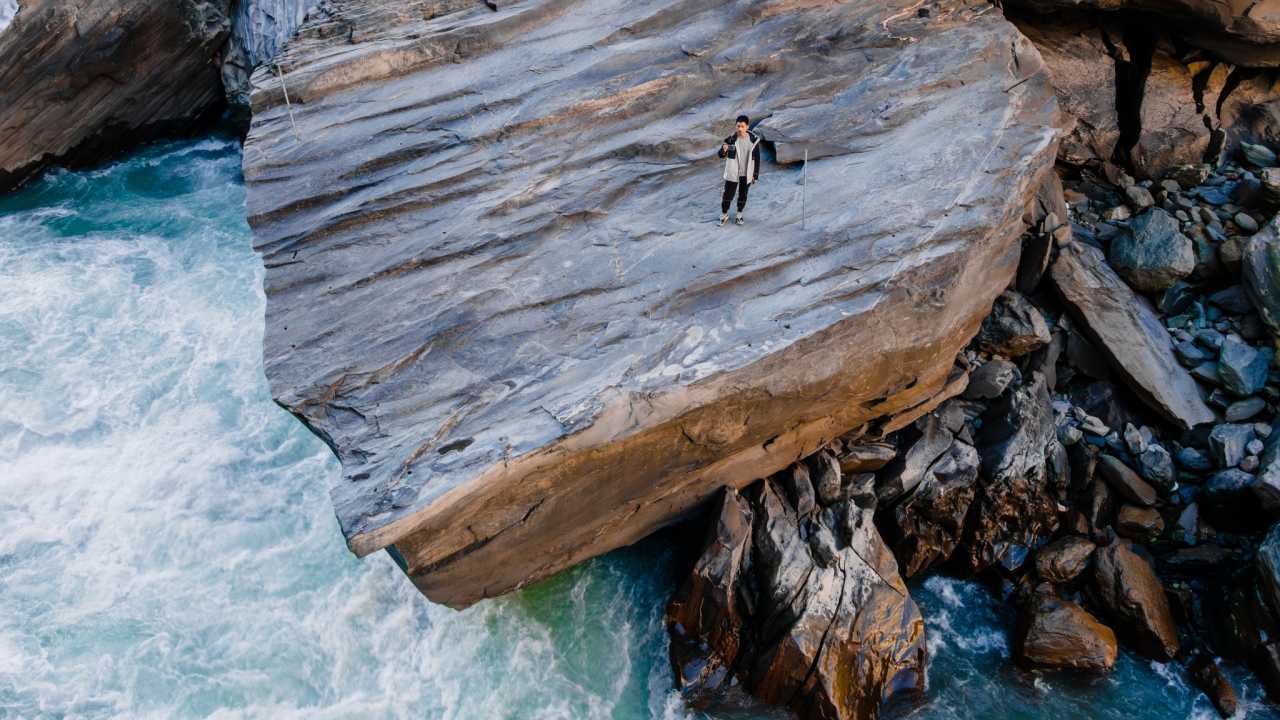
At 10 a.m., the sun was just right. Starting from Tea Horse Guesthouse, red markings on the rocks along the trail showed it was well-established. From a fork, I entered the cliff area. The trail ran with Haba Snow Mountain on one side, Yulong on the right, and the roaring Jinsha River below. One side was a sheer cliff, thrilling and dangerous. Whenever I came across large rocks, I slowed down — these spots were great for photos and for fully experiencing the high trail's peril. Due to the humid climate from the Jinsha River, even in winter, the cliffs on Yulong's side were covered with green vegetation.
We didn't walk fast. From Tea Horse to Halfway Guesthouse, it took nearly three hours. The 5-kilometer distance seemed short but wasn't easy. By noon, we reached the famous "Sunshine Terrace." Many two-day hikers use Halfway as their first-day endpoint. This trendy guesthouse's "World's Best Toilet" and "Sunshine Terrace" are must-visit spots on the high trail. In the afternoon, you can see a spectacular sunset over the golden peaks. Halfway is also a good rest stop and lunch spot, with a large café featuring floor-to-ceiling windows. Most reassuringly, the guesthouse restaurant, though average, hasn't raised prices in years.
After resting at Halfway, I had to push on — after all, we'd only just begun. From Halfway to Middle Gorge's Zhongxia or Zhang's Inn, it's another 6 kilometers. The first half of this section runs entirely along cliff edges, with sheer drops below that make your heart race. This is the highlight of the high trail — not only do you experience the gorge's peril, but you also see waterfalls cascading down the mountain. Before reaching Zhang's Inn, the trail enters a forest. Below, you could already see Zhang's Inn and Zhongxia Inn.
Arriving at Zhang's Inn, I took a short break. It was already late afternoon. The staff didn't recommend going down at this hour — once the sun fully sets, the gorge darkens, and the Middle Gorge becomes unsafe. They advised allowing more time. Even before reaching the riverbed, I could hear the roar of the water below. Looking down, the Jinsha River gradually came into view. To get back to the inn before dark, I descended to the riverbed in just half an hour. In this dry season, the Jinsha's flow was far from its peak, but it was still impressive.
On Tiger Leaping Rock, I captured a life-defining photo. I was the only person at the bottom of the Middle Gorge. Legend says a tiger once leaped from this rock to the other side. Standing at the canyon's heart, I marveled at nature's craftsmanship, filled with awe — humans feel so insignificant here. The fastest way back from the riverbed to Zhang's Inn was the 168-step Hero Ladder. The ladder is divided into three sections, nearly vertical climbs. Since it was already dark, I didn't take photos for safety. At the top, I called Tea Horse Guesthouse, and they sent a car to pick us up for 120 yuan — ending our Tiger Leaping Gorge hike.
Haba Snow Mountain: The Golden Flower
The next day, heading from Tiger Leaping Gorge toward Shangri-La, I passed the Haba Snow Mountain viewpoint and got a chance to see this majestic peak. Haba Snow Mountain lies in southeastern Shangri-La City, facing Yulong across Tiger Leaping Gorge. It was rapidly uplifted by the Himalayan orogeny and subsequent Quaternary tectonic movements. Its highest peak reaches 5,396 meters, while the lowest river surface is just 1,550 meters. The upper part of the mountain is relatively gentle, while the lower part is steep and sheer — both imposing and mysterious. "Haba" means "golden flower" in the Naxi language.
As an entry-level mountaineering peak, Haba, along with Siguniang's Dafeng and Erfeng, has become especially popular in recent years. The best climbing season is from November to February. Due to monsoon influences, January and February see strong winds, often exceeding Force 8. November and December have lighter winds, making them the best climbing months. I'm sure I'll have the chance to challenge Haba's "Despair Slope" someday.
Songzanlin Monastery: A Hall Under the Sun
After the previous days' hiking, the lack of regular exercise caught up with me — my body was exhausted. Arriving in Dukezong, I decided to slow down and rest well that day. The next morning, refreshed, I got up at 7:30 to capture the sunrise and morning mist at Songzanlin Monastery. Leaving Dukezong Ancient Town, I followed National Highway 214 to Dari Viewing Platform. This spot, on a small hill behind the roadside platform, helps avoid the utility poles and messy wires along the road.
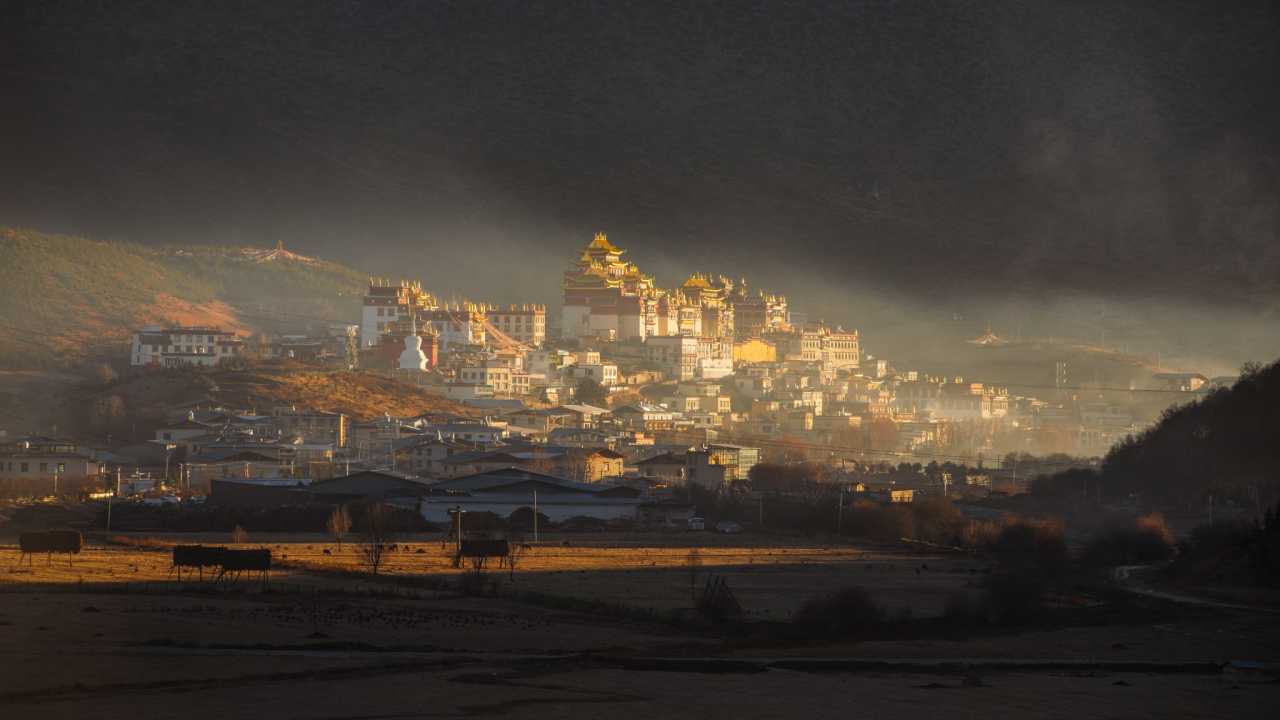
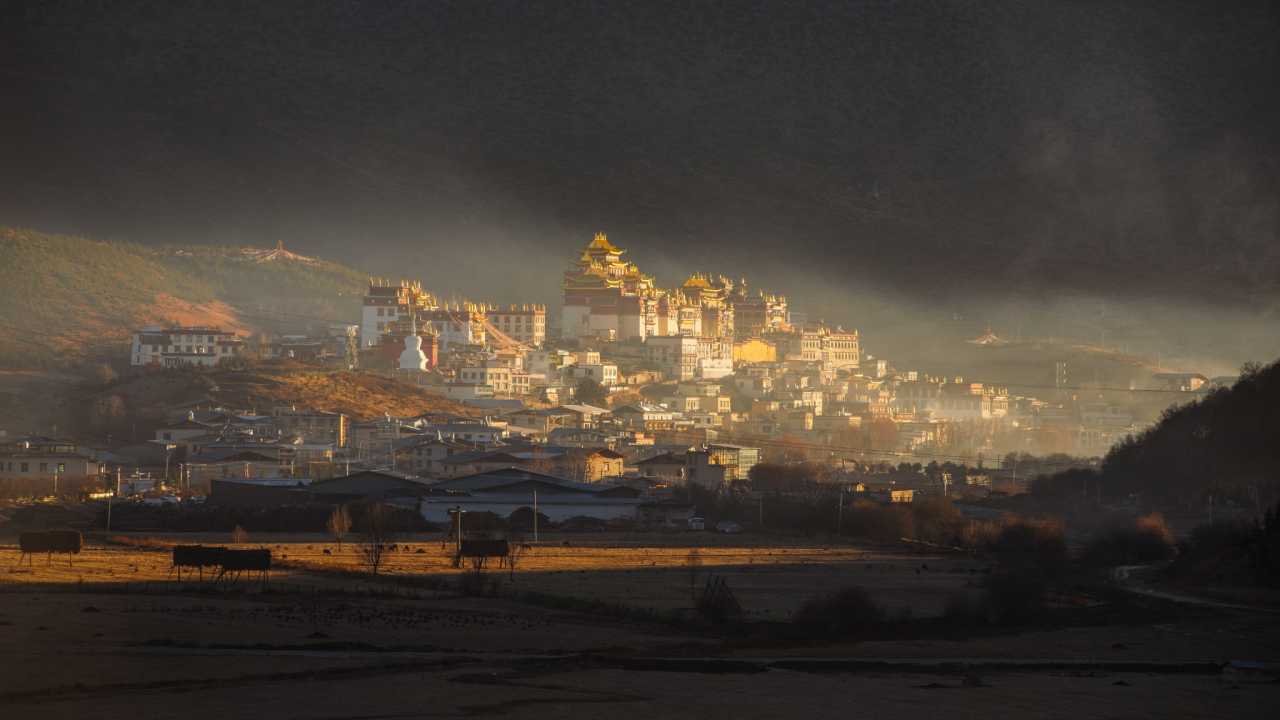
In winter, sunrise in Shangri-La usually comes after 8 a.m. From this angle, Songzanlin Monastery transformed constantly in the half-hour after sunrise. Light filtered through thin mist and cooking smoke, illuminating the golden halls like a dream — mesmerizing. The monastery's incense smoke, village cooking fires, mountain mist, and the first rays of sunlight — this scene was absolutely stunning.
After shooting the sunrise, I went back to sleep as usual. But Songzanlin Monastery was worth visiting inside. Built on a hillside, it looks like a fortress. Ganden Songzanlin Monastery is the largest Tibetan Buddhist monastery in Yunnan Province and one of the major monasteries in the Kham region. It's also a Gelug (Yellow Hat) center for the Sichuan-Yunnan area, holding significant status across all Tibetan regions, earning it the nickname "Little Potala Palace."
Before leaving Dukezong, I rented a set of Tibetan clothing in the old town. Streets on the outer edges of the old town offer better value — less than 100 yuan for the outfit and simple makeup. I wanted to leave with some photos with local character. Taking the shuttle bus to the foot of Songzanlin, the monastery rose before me. Up close, the main halls felt even more sacred and solemn. The main hall has 147 steps. When climbing, respect local customs — ascend on the left, descend on the right, and follow the flow when touring the main hall. Spend some time at the side halls and white walls below the 147 steps — these places are much quieter.
At the foot of the main hall, I found too many people taking photos in rented costumes. Songzanlin Monastery today isn't as simple as it used to be — it's more "made up." The ubiquitous travel photography might have taken away some of the authentic Tibetan monastery atmosphere. Like other Tibetan Buddhist structures, the main halls of Songzanlin — the Zhacang and Jikang — stand tall in the center, surrounded by eight Kangtsang (colleges) and monks' quarters, layered in height and depth, clearly highlighting the grandeur of the main buildings. The main Zhacang hall, meaning "monastery" in Tibetan, is where monks study scriptures and practice teachings. The monastery's architecture embodies the essence of Tibetan religious culture — resplendent with gold-plated copper tiles, ornate eaves with animal motifs and upturned corners. The Zhacang hall is spacious and grand, housing many tall, sacred Buddha statues, with beautifully carved and painted murals on the side walls.
Weather determines crowd size. These days in Shangri-La were mostly sunny, and the monastery had the most tourists I'd encountered on this trip. To take photos, I had to try more upward angles. I love the prayer flags fluttering within the monastery and the eagles soaring above the golden halls. After touring the main hall area, I left Songzanlin. Lhamo Yangtso Lake was still under renovation, so I couldn't visit — a small regret.
Napahai Lake: A Golden Canvas in Winter
"Napahai" means "lake behind the forest" in Tibetan, known as the "tear of Shangri-La." When vegetation is lush, it's also Yila Grassland, one of northwest Yunnan's largest pastures. Napahai has different beauty in every season. In winter, the water surface shrinks, and the grassland sheds its green coat. Now, under sunlight, the grassland turns golden — a few steps and it feels like heaven.
Driving around the lake is the best way to experience Napahai. Starting from Songzanlin Monastery, follow National Highway 214 to the Shangri-La Alpine Botanical Garden, then begin the lake loop from there. If you want to try horseback riding, you can pay at the pastures below the botanical garden. The botanical garden offers a panoramic view of Napahai. Through the "Sky Gate," the view opens up instantly — the lake and pastures connect, with distant Shika Snow Mountain clearly visible.
From the botanical garden, continue along the loop road. In winter, seagulls have flown back from the far north to spend the season here. These migratory spirits add more life to Napahai. Black-headed gulls are always greedy. If you prepare some bread and raise it in your hand, the gulls will readily pose for photos. Napahai is perfect for self-driving — wherever there's no fence, you can stop and take photos. The western side of the loop road is the best viewing area. A gentle breeze stirs the lake surface into ripples, with distant villages reflected on the water — a stunning picture of lake and mountain scenery.
Near the Gaoshan Bie Zhuang White Pagoda, there are more visitors. The shallow waters here let you get closer to Napahai. Tourists wander through this wetland, seemingly forgetting the mud underfoot. After a few turns, the distant villages drew nearer. A full loop took over three hours, covering nearly 40 kilometers, and the road was approaching its end.
Before leaving Napahai, I was drawn to a white horse. My connection with white horses might be more in dreams. I'm someone who rarely dreams, but in the few dreams I've had, I often encounter a white horse. It usually stands at a city intersection late at night, and we just stare at each other. I can't figure out why. I walked over to try for a photo. As I got closer, I could feel its breathing quicken, so I settled for a couple of shots from a few meters away.
In Lost Horizon, the beauty of Shangri-La, like its name — "the sun and moon in the heart" — deeply attracts people from all over. We are all among them. Standing by Napahai's shore, my mind felt empty. I enjoyed everything that was happening and nothing happening at the same time.
A Coffee House on the Grassland: Shangri-La's Romance
On the way back to Dukezong, beside a small wooden cabin at Shili Snow Mountain Manor, there was a modest meadow. This was the Black Bean Coffee House on Napahai's grassland — a unique romance of Shangri-La. I should mention that Black Bean Coffee charges an "entry fee" — each person must order at least one drink, and the prices were probably the highest in all of Yunnan. Don't expect too much from the taste — most people come here for leisure or photos. When picking up coffee, I caught a glimpse of the price list — let's just say the prices were "touching." If you're only here for photos, just order an Americano.
Besides the charming wooden cabin, the coffee house has many animals for photos — alpacas, sheep, and three Bernese Mountain Dogs. One is named Black Bean, another Coffee — matching the café's name. The owner must be a romantic at heart. The animals here are more like pets. Used to human interaction, they're unfazed and "emotionally stable" — the alpaca didn't even spit.
As the sun slowly dipped behind the mountains, Shangri-La's last rays illuminated the meadow, the lake, the grazing cattle and sheep, and the people bathed in light. Everything felt harmonious and heartwarming.
Dukezong Ancient Town: Shambhala After Snowfall
After sunset, I returned from Napahai to Dukezong. Dukezong Ancient Town is the best-preserved and largest Tibetan residential complex in China. I first heard of Dukezong mainly because of the 2014 fire. Thankfully, years of restoration have allowed me to still admire its splendor. On the way back to return my rental clothes, I took two final classic shots of Dukezong.
The next day, I planned to drive straight to Deqin. But waking up and opening the curtains, I found the entire old town covered in snow. A heavy snowfall during the journey was a small surprise. Snow on the Baima Snow Mountain section forced us to slow down again. But Dukezong after the snow was truly beautiful — it turned Shangri-La into a real Shambhala.
At Moonlight Square, you can see three major structures of Guishan Park in one frame. Long ago, the Tubo Kingdom built a fortress on the top of Big Turtle Mountain, naming it "Dukezong" — a Tibetan pronunciation carrying two meanings: "a castle built on stone" and "moonlight city." Climbing the steps up Guishan Park, you get a panoramic view of Dukezong. The snow-covered old town had a unique charm, with distant hillsides also turning white. Seeing Dukezong whole after the fire, though newer and more pristine, brought a hint of melancholy.
At the top of Guishan Park, near the Great Buddha Temple, stands what was once the world's largest prayer wheel. Said to be five stories high, it has a handrail around the bottom, requiring a dozen or more adults to turn it together. Coming here, you must spin it at least once. With everyone's effort, we turned this once-largest prayer wheel. Each clockwise rotation equals chanting 1.24 million mantras. Three full rotations bring blessings and disaster relief — Tashi Delek!
Coming down from Guishan Park, I continued strolling through the old town's streets. At one end, the White Pagoda Square is the liveliest spot. Walking on the uneven stone-paved roads — ancient stones laid according to the natural terrain — I noticed that as of 2021, the stones still bore deep hoof prints. These were tokens left by the ancient horse caravans for us, later generations. Exploring the intersecting streets, I delved into the depth and mystery of ancient Tibetan dwellings. Dukezong after heavy snowfall was both cold and passionate. From Moonlight Square at one end to the Guozhuang dances at Square Street — the devotion here coexists with our freedom. No excessive marketing needed — this final Shangri-La has always been the closest place to heaven.
After the Heavy Snow: Driving to Deqin
By noon, after confirming with Deqin traffic police that the snow on the Baima Snow Mountain section had been cleared and the road was open, I decided to set off immediately. I bought tire chains for two wheels through the guesthouse owner to make the drive safer.
The journey from Shangri-La to Feilai Temple in Deqin is about 180 kilometers. Originally a three-hour drive, I allowed extra time to ensure arrival before dark. Following National Highway 214, I passed the Dari Viewing Platform again. Songzanlin Monastery was still covered in snow.
Conclusion: The Snowy Peaks Will Hear Your Wishes
Looking back on this journey — from Lijiang to Deqin, from Yulong to Meili, from ancient towns to snowy plains — every moment was like a bead strung together, forming my attachment to the plateau. Perhaps the snowy peaks really do hear your wishes. When you stand at their feet, gazing up at the towering summits, all regrets turn into prayer flags in the wind, drifting into the distance.
If you also want to chase the snowy mountains, keep these tips in mind: Winter in Lijiang has big temperature differences between day and night, so bring warm clothes. The Tiger Leaping Gorge high trail hike is best done over two days — one day is too rushed. Sunrise in Shangri-La comes after 8 a.m., so plan accordingly. The Napahai lake loop is about 40 kilometers — self-driving is most convenient. After heavy snow, driving to Deqin requires tire chains.
May every journey you take lead you to your own golden sunrise over the snowy peaks.
You should also read:
The Meaning of Travel – A Tengchong Story: A Journey of the Heart and Personal Growth
The Meaning of Travel – A Tengchong Story: A Journey of the Heart and Personal Growth Setting Out, Only to Return a Better Self Some say travel is nothing more than leaving a place you're tired of, only to go to a place where others…
Continue reading...
A Spiritual Journey to Lugu Lake in Lijiang: Experiencing the Legend of the Kingdom of Women! (Reproduction and Hotlinking Prohibited)
A Spiritual Journey to Lugu Lake in Lijiang: Experiencing the Legend of the Kingdom of Women! (Reproduction and Hotlinking Prohibited) Off-road自驾, food, hotel and民宿 reviews, Featured Traveler, Tank 300 owner, 200,000 km of self-driving experience. WeChat: y01294987 Ninglang Yi Autonomous County 2010.11.08 · 7 days…
Continue reading...
The Slow Life of Lijiang: A Soft Dream on the Yunnan-Guizhou Plateau
The Slow Life of Lijiang: A Soft Dream on the Yunnan-Guizhou Plateau Some places, just by hearing their name, stir a ripple in your heart. Lijiang is one of those names. It's not the kind of destination that demands you tick off a checklist of…
Continue reading...