Seven Days in Kansai: From Osaka to Kyoto, I Unlocked Three Completely Different Versions of Myself

Seven Days in Kansai: From Osaka to Kyoto, I Unlocked Three Completely Different Versions of Myself
Have you ever wondered what it’s like to live three entirely different lives in just seven days?
On the neon-lit streets of Osaka, I was a magazine girl with red glasses, laughing boldly under the flash of the camera. In the drizzling rain of Nara, I slipped into a school uniform and played a fierce game of “cookie tug-of-war” with the deer. And deep in the ancient alleyways of Kyoto, I wrapped myself in a simple kimono, clattered along in wooden sandals, and pretended to be a gentle woman who had just stepped out of the Showa era.
Japan is that kind of magical place—it lets you briefly escape who you are and become someone else entirely.
Why Japan Again?
To be honest, there aren’t many countries I’d want to visit twice. The world is vast, there are so many beautiful places to see, and I always prefer to spend my limited vacation time on brand-new experiences. But Japan is the exception.
Last winter, I visited Tokyo and Hokkaido, and was deeply awestruck by Hokkaido’s snow and sea (that travelogue has a super detailed guide). This year for National Day, I originally planned to go to Europe, but with only seven days off, I had to turn my gaze back to this nearby neighbor. I never expected that early autumn in Kansai would bring me a completely different kind of surprise—if winter Hokkaido is a quiet, pure girl, then early autumn Kansai is a lively, sweet young woman.
What’s more, this trip came with a strange kind of luck. Both times I’ve gone to Japan, I’ve run into terrible weather right before departure. Last year, Hokkaido had a blizzard, and the airport was packed with stranded travelers—but our flight took off without a hitch. This year was even more dramatic: two weeks before we left, the bridge at Osaka Airport was damaged in a collision, and then typhoons came one after another. I had even mentally prepared myself to spend National Day lying around at home. And what happened? The day we left was sunny and bright, and the plane departed right on time.
That sense of fortune after all the ups and downs gave the entire trip an extra layer of magic.
A Paradise for Pet Lovers: Kyoto’s Cat and Shiba Inu Pilgrimage Sites

On this trip to Japan, I unlocked a new identity—professional animal cuddler. I didn’t miss a single opportunity: the deer in Nara, the cats and Shiba Inu in Kyoto. If you’re an animal lover too, be sure to bookmark these places.
Neko Cafe: A Serendipitous Surprise
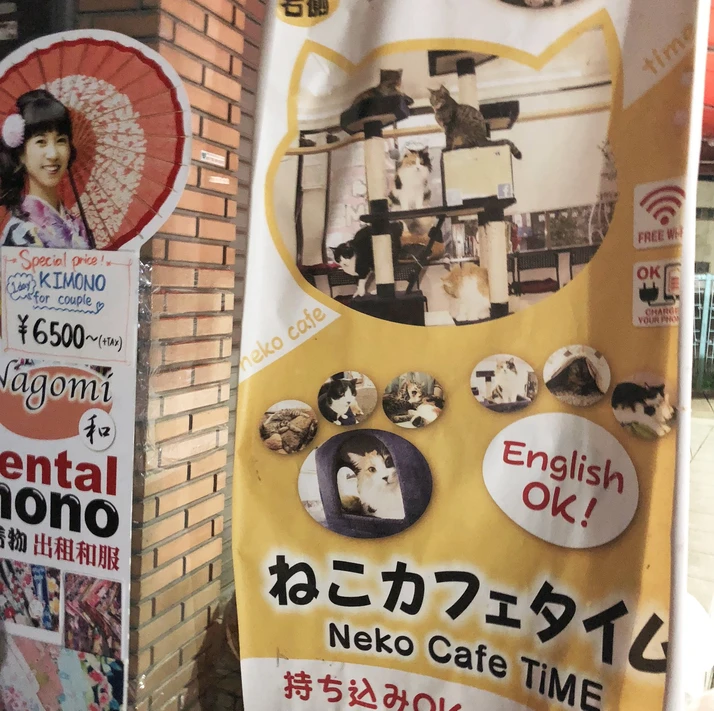
Coming out of Fushimi Inari Shrine, on the way to the subway station, I was drawn to a roadside stall selling roasted sweet potatoes. While buying one, I caught a glimpse of a poster out of the corner of my eye—Neko Cafe.

“So many cats! Want to check it out?”
“Let’s go!”
This place was tucked away on the second floor, a small privately-run shop. 700 yen per person for 20 minutes, with a free drink included. The rule was no picking up the cats, only petting them. Orange tabbies, black cats, British Shorthairs, calicos, Persian cats… plenty of variety, but the space was tiny and there weren’t many customers. The cats completely ignored the humans, sleeping and playing as if we didn’t exist. That lazy, relaxed atmosphere made you slow down without even thinking about it.
Kyoto Mameshiba: The Trendy Spot Worth Waiting For
This one is much more famous—you have to take a number to get in. Two floors, each limited to 10 people. I’d recommend going in the afternoon to grab a ticket—they seem to stop issuing numbers around 6 PM, and they close at 8 PM. When we came out, there was still a crowd of people at the door who thought they could just line up and get in, but you actually have to buy a ticket in advance, and the staff will tell you your session time.

780 yen per person for half an hour, again with a free drink. They have a chain of stores, and right across the street are shops for cats and owls—if you buy a combo ticket, you get a 10% discount.
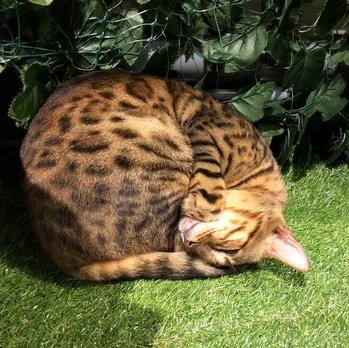
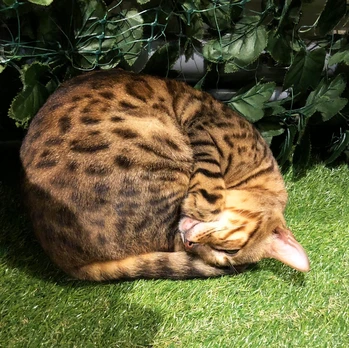
Since we still had nearly an hour to wait for the Shiba Inu, we first went to the Bengal cat shop across the street—no waiting there. The moment I walked in, I was stunned: every single person had a Bengal cat lying on their lap, as if these cats were born to “do business,” quietly settling in and letting themselves be petted. Honestly, seeing this made me feel a bit conflicted—is it humane for cats to be used commercially like this? But there’s no denying that the Bengal’s coat pattern is incredibly cool. In the last five minutes, a cat finally climbed onto my lap, giving me the chance to take a few photos with this “cool dude.”
Finally, it was time for the Shiba Inu session. Because there were so many people, the staff said the dogs were a bit startled and asked us not to get too close. The little yellow Shiba was the cutest; the white one was the prettiest but also the grumpiest, constantly spinning in circles and barking. But it was actually friendly toward me—I even managed to snap a super happy photo. Another one just lay there sleeping the whole time, while another kept gnawing on a fake bone toy—absolutely adorable.
Street Cats: An Unexpected Connection

I always carry cat food with me—back home, I feed stray cats whenever I meet them, as a way of accumulating good karma for my British Shorthair, “Pound.” This time, I actually encountered stray cats in Japan. They were two quite good-looking cats, and they were very clean. The smaller one was especially feisty, always hogging the food. Later, I even spotted a Ragdoll cat, but by then I had already run out of cat food.
The Osaka Magazine Girl: Flashing Lights Under Neon
Before I left, I had already decided I wanted to take a set of nighttime photos with flash. The red glasses were a prop, and leopard print elements and orange lipstick were this year’s trend staples.
Japan’s streets are just too photogenic. The streetlights automatically become a halo of background light, and you can stand anywhere and instantly look like you’re in a neon-lit movie scene. Eating an ice cream turns into a cute photo op, and throwing on a button-down shirt makes you look like a boss. On the last day, I even took a bath shot in the hotel bathtub, like the ones you see in Japanese photo books—I bought bubble bath at the drugstore, and it produced tons of bubbles. Before shooting, I deliberately wiped off a bit of lipstick and added some blush, and the effect turned out surprisingly well.
The Nara Schoolgirl: Rain Has Its Own Romance
On the day we went to Universal Studios, I walked like crazy all day, and I was so exhausted I never fully recovered for the rest of the trip. Maybe it’s because I’m getting older—my recovery speed has noticeably slowed down. In the past, I’d sleep it off and be good as new.
It rained the day we went to Nara, and I was initially disappointed. But then I thought, sunny days have their brightness, and rainy days have their atmosphere—it actually made the photo style more diverse.
As long as you’re holding cookies, the deer will swarm around you. The bucks with long antlers are particularly aggressive—if you don’t give them food, they’ll chase you and bite your butt. Strangely enough, when I watched other people feeding the deer, it all seemed so peaceful, with the deer calmly grazing. But the moment I walked over, every single deer would surround me—I guess the cookie smell on me was just too strong. It was honestly a bit scary.
The transparent umbrella I bought at a Japanese supermarket looked fantastic in the rain photos. When I wasn’t using the umbrella, I just used my clothes to shield myself from the rain.
The Kyoto Kimono Girl: A Day of Playing Pretend
Fushimi Inari Shrine is one of Kyoto’s most popular spots, and the Senbon Torii (thousands of vermilion torii gates) on the back mountain is a must-visit. This is where you’ll see the most people wearing kimono. If you want to stand out, you have to choose a kimono that’s different from the rest—avoid the flashy, floral ones; simplicity is the way to go.
The path through the torii gates is very long, so don’t rush to take photos at the beginning. The pillars at the start are dirtier, and there are more tourists. Walk further in, find a spot with fewer people, and you’ll get much better shots.
I bought my kimono in advance on Taobao and had a friend help me put it on by following a video. The purple one was relatively simple, but the black-and-white graduation-style one was much more complicated. Before leaving, I had my friend practice twice, so by the time we got to Japan, it was a bit easier. Of course, the more convenient option is to rent one locally—the staff will help you dress and do your makeup. But I was worried the rental shops would only have brightly colored clothes, so I felt more comfortable preparing my own.
The only thing that wasn’t perfect was my hair—I couldn’t style it myself, so I just tied it up in a simple bun and added a hair accessory. Wearing a kimono makes it really hard to eat, because it’s tied so tightly that I felt full after just a couple of bites.
The purple kimono made me feel very “pretendy” the whole time—today, I was playing the role of a gentle girl. My friend said the black-and-white one made me look like an onmyoji (a traditional Japanese yin-yang master), which I thought was pretty cool. I bought a fox mask at a roadside shop, and the folding fan came with the kimono. I even took photos in a rice field in Japan, using pampas grass as a prop. Everything was perfect.
Itinerary Highlights: Seven Days of Play
Day 1: Night Shots in Shinsaibashi

After checking into the hotel and changing clothes, we went out to find food. We found a famous restaurant for black wagyu beef barbecue—the beef was incredibly tender, but the portions were small and the prices were high. The two of us spent 14,400 yen (about 900 RMB). After dinner, we took photos on the small streets near Shinsaibashi, where vending machines made for perfect backgrounds.
Day 2: Universal Studios Marathon
We bought the Fast Pass 4, so we didn’t have to wait in line for four attractions. Spider-Man, Jurassic Park, Jaws, Harry Potter… The worst was the Jurassic Park river ride—we waited in line for an hour only to have it break down, but they compensated everyone with a free fast-track ticket. In the evening, near the Minions area, we saw a stunning sunset that turned the sky pink. The zombie parade at night was thrilling—we weren’t brave enough to go into the haunted houses, but watching from a distance was enough.
Day 3: Deer Petting in Nara

We took the Kintetsu train from Osaka to Nara. At the station information desk, an elderly gentleman mapped out a route for us: first take a bus to the farthest point, Kasuga Taisha Shrine, then walk through Todai-ji Temple and Nara Park, and finally walk back to Kintetsu Nara Station. We saw deer everywhere along the way, with some spots having huge numbers. For lunch, we had noodles, and I performed a “high school student eating noodles” act. In the evening, we went back to Osaka for a hot pot restaurant called Onyasai—it was just okay, but the matcha ice cream was delicious.
Day 4: Fushimi Inari Shrine and Kiyomizu-dera Temple
In the morning, I changed into my kimono in the hotel lobby restroom—I have to admire my own nerve for wearing a kimono in a public place. At the Senbon Torii, I recommend walking further in, where the pillars are cleaner and there are fewer people. Walking down from Kiyomizu-dera Temple, we reached Sannenzaka and Ninenzaka streets, where I bought matcha ice cream. In the evening, we didn’t spot any geisha on Hanamikoji Street, which was a bit disappointing. We took the subway too far and ended up back at Fushimi Inari Shrine—I guess it was fate.
Day 5: Shopping and Petting Cats and Dogs

In the morning, we raided the drugstore section at Bic Camera, buying mostly eye drops. In the afternoon, we went to pet the Shiba Inu, and during the waiting time, we explored the famous vintage clothing store Three Star—it was huge, with both men’s and women’s sections, and we almost lost track of time.
Day 6: Arashiyama Scenic Railway
We went to Arashiyama to take the scenic train. The railway crossing, Togetsukyo Bridge, and Sagano Bamboo Forest—everywhere we looked was beautiful. The leaves had already started to turn red, and although we didn’t see the mountains covered in autumn foliage, we were already very satisfied. I took photos with the fox mask, and this kimono outfit got a lot of stares.
Final Thoughts
Seven days, three different looks. From the neon glow of Osaka, to the gentle rain of Nara, to the timeless charm of Kyoto—Kansai is like a multi-faceted girl, each turn bringing a new surprise.
Although I didn’t see Kyoto blanketed in autumn leaves, I took a lot of photos and fulfilled my regret from last time of not wearing a kimono. I had already planned out the photos I wanted to take before I left, and the clothes were prepared in advance—good preparation is the key to taking great photos, and girls must never be lazy.
Japan is that kind of place—it lets you briefly escape yourself, and then helps you find a new version of yourself along the way. If you’re thinking of visiting Kansai, come with an open heart and unlock the version of you that’s waiting to be discovered.
Practical Tips: - Average cost per person: about 10,000 RMB (including flights and accommodation) - Travel time: 7 days, early October - Visa: Very easy to apply for if you graduated within the last three years - Transportation: JR lines and subways cover almost all major attractions - Kimono: You can prepare your own or rent one locally - Cat and dog cafes: Go early in the afternoon to get a ticket
You should also read:
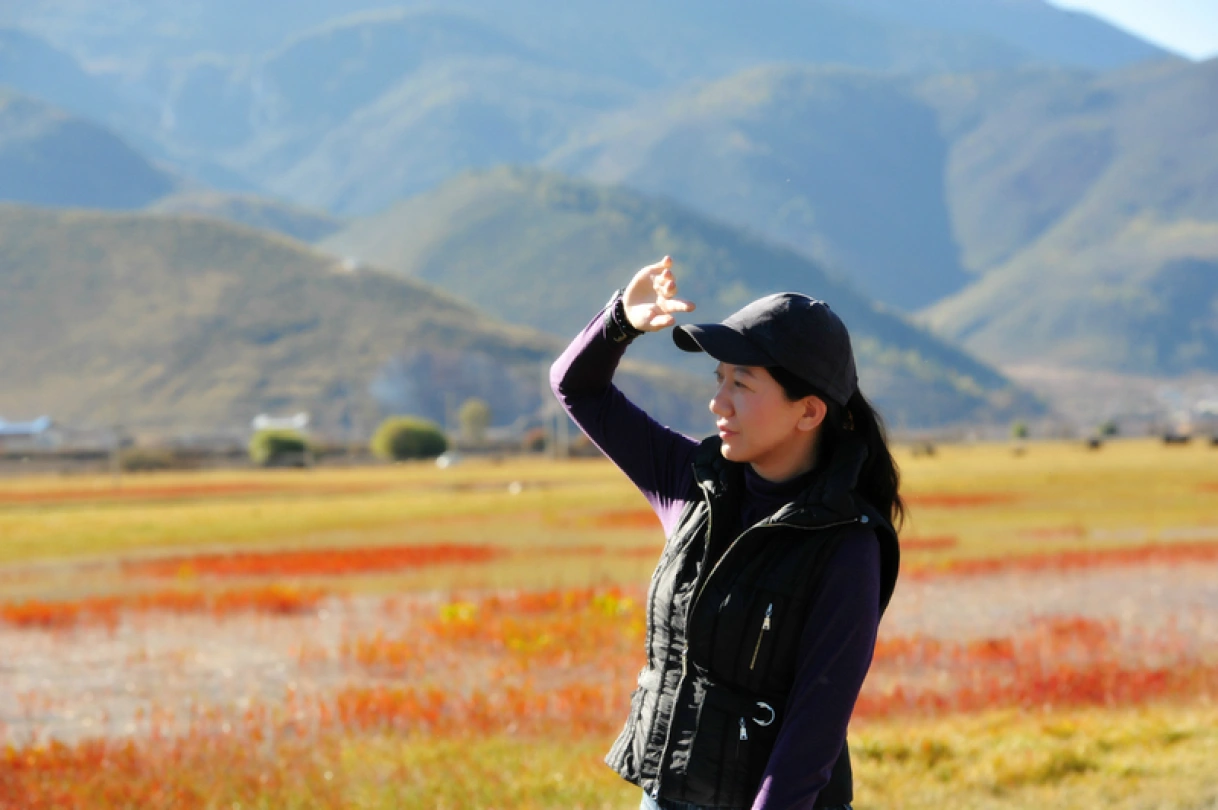
From Hell to Heaven: Our Pilgrimage Trek to Yùbēng
From Hell to Heaven: Our Pilgrimage Trek to Yùbēng “If you can’t go to heaven, go to Yùbēng.” That simple phrase took root in my heart three years ago. This deep autumn, my husband and I finally set foot on the road to that legendary…
Continue reading...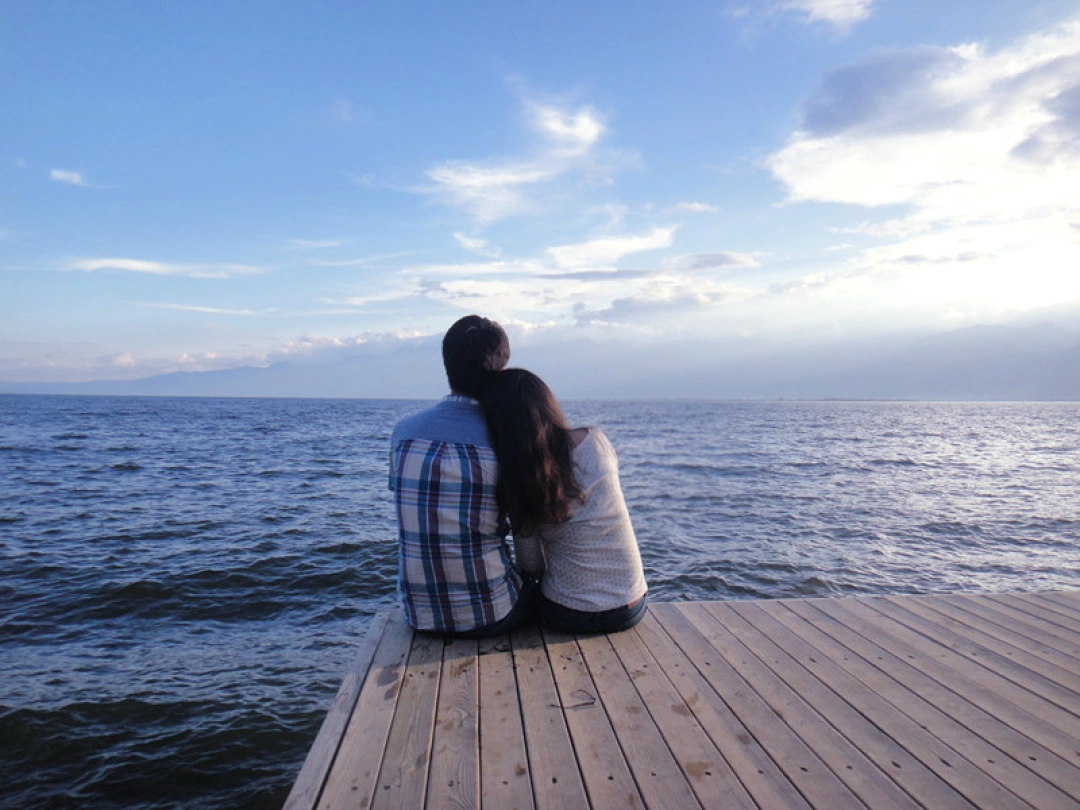
Take Me to the Distance: Ten Days in Yunnan, a Poetic Journey Through Our Youth
Take Me to the Distance: Ten Days in Yunnan, a Poetic Journey Through Our Youth Prologue: Setting Off, Just to Be Together Some trips are planned for ages, yet always lack that final spark of spontaneity. We were students, with a tight budget but limitless…
Continue reading...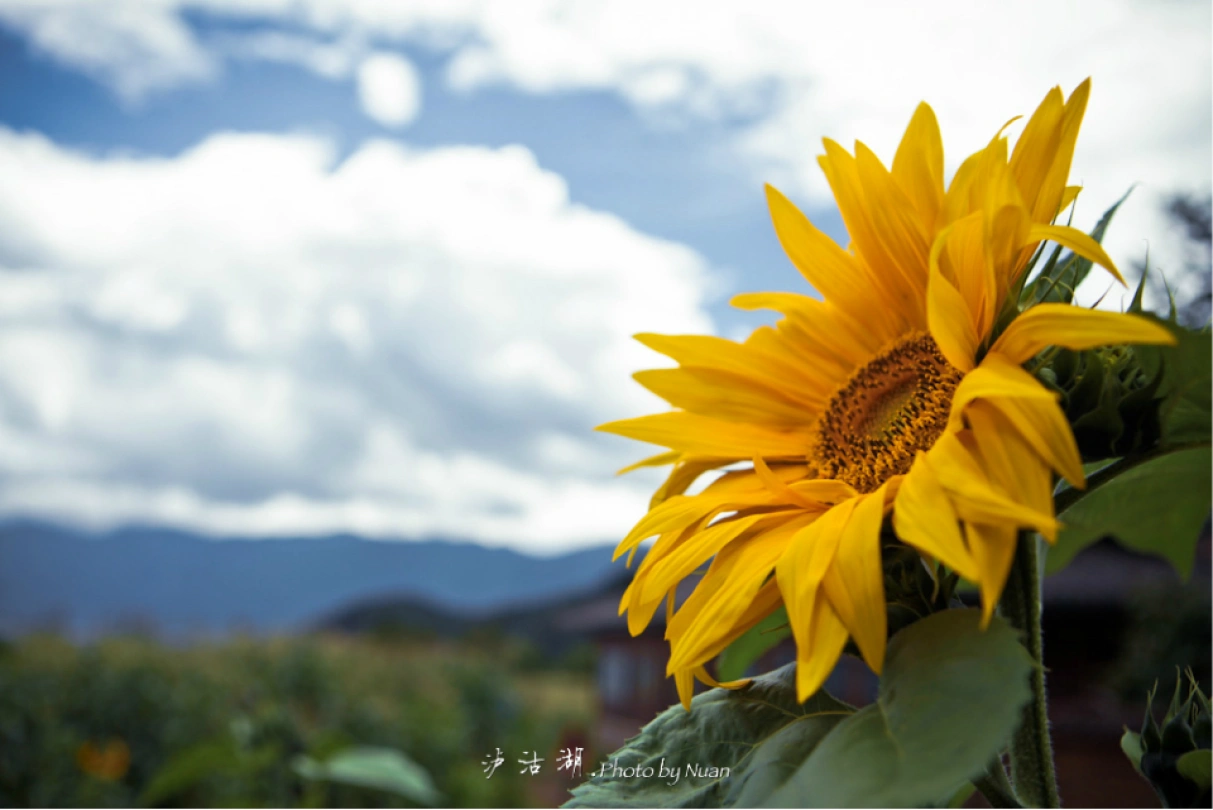
Never Stop Walking: A Solo Journey Through Yunnan – 19 Days of Wandering Through Lugu Lake, Lijiang, Shangri-La, Dali, Shuanglang, and Kunming
Never Stop Walking: A Solo Journey Through Yunnan – 19 Days of Wandering Through Lugu Lake, Lijiang, Shangri-La, Dali, Shuanglang, and Kunming Weibo / WeChat Official Account ID: Fan Nuan Backpacking far and wide, with good wine always by my side The land of colorful…
Continue reading...