Seven Days of Slow Living in Yunnan: Not as a Tourist, but as One Returning Home
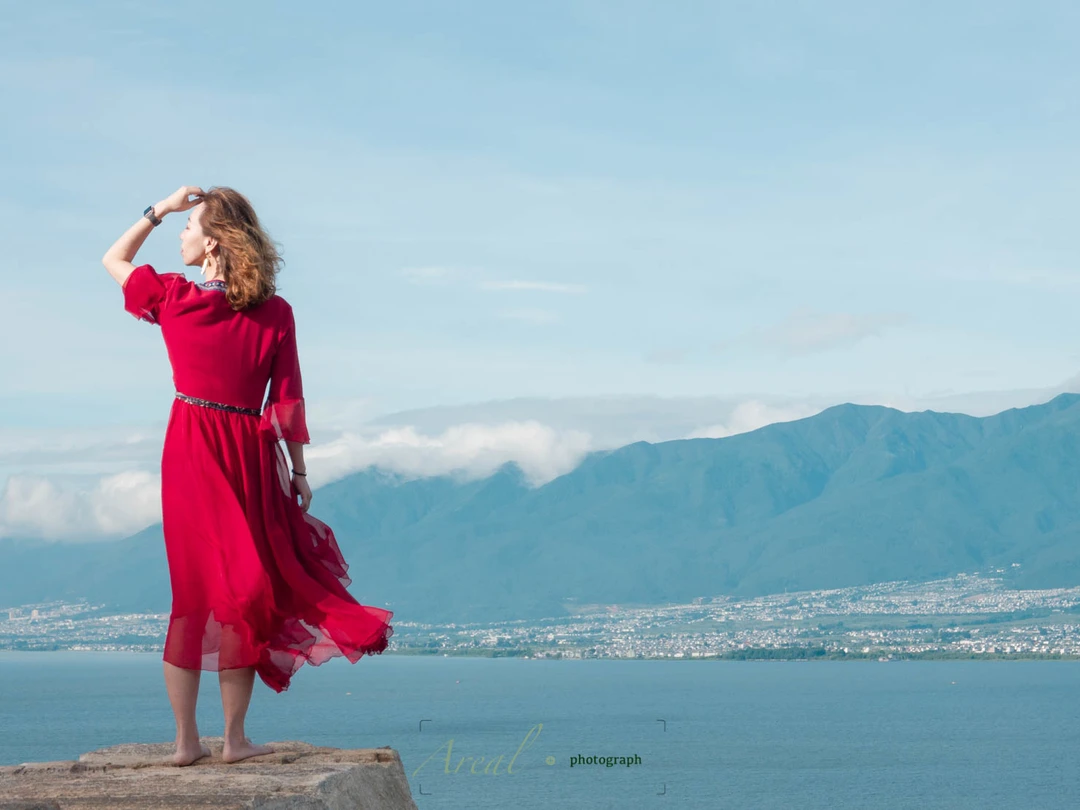
Seven Days of Slow Living in Yunnan: Not as a Tourist, but as One Returning Home
Every June, when the city's heat begins to rise, a voice stirs deep within me, calling me back to Yunnan.
This trip was originally planned with my best friend two years ago—a rendezvous in the South of France—but the pandemic kept postponing it. She got busy having a baby, so I swapped her for my younger sister. I went to Yunnan last year, and here I am again this year. This land is simply magical; no matter how many times you visit, it never feels like enough.
In the past, before any trip, I would hand my sister a meticulously detailed Excel spreadsheet, scheduling every day down to the minute. She absolutely hated it and warned me in advance: "Don't bring your work mindset into this. Can we just not make an itinerary this time?"
So, I truly let go. I abandoned my habit of waking at dawn for photo shoots, allowing my pace to slow down—and my thoughts to slow even further. As the movie Soul puts it, I let myself feel the dappled sunlight filtering through the leaves, watch golden leaves dance in the wind, and gaze at the mist that shifts like flowing sand in the morning light. On the plane, for the first time, I didn't open my laptop to edit photos. I just sat there, staring out the window, watching the city transform from two dimensions into three, until the plane pierced through clouds as soft as cotton candy.
This long-lost focus brought back the freshness I felt on my very first flight—minus the excitement, but with a newfound sense of ease.
Lijiang: A Different Face for Everyone
To be honest, I've always felt a bit resistant to Lijiang. My friends talk about romantic encounters; the writer Da Bing paints it as a bohemian haven. These two extreme impressions left me unsure which to believe. I feared the reality of neon lights and bar noise would shatter the utopia I held in my heart. But when my sister brought it up, I stopped being overly dramatic and just went along.

We stayed two nights in Lijiang, at the Banyan Tree. After dropping our luggage, we headed straight to Shuhe Ancient Town, just an eight-minute walk away.
Shuhe Ancient Town: If You're Tired of Commercialization, Come Here
We arrived at noon, starving. We tried to find a trendy restaurant recommended online, following the navigation for over ten minutes, only to find the place completely empty—except for a big, lazy dog lying on the floor. The shop owner from across the street heard us and came over to explain that the restaurant owner had gone to pick up their child. In the middle of lunch service, the owner just abandoned the shop—Lijiang people are truly laid-back.
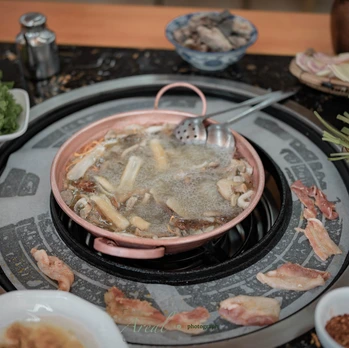
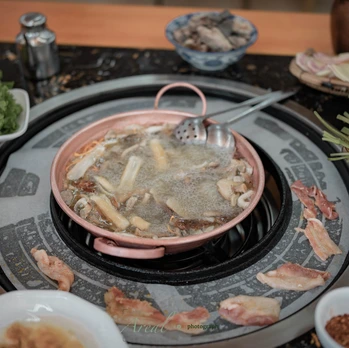
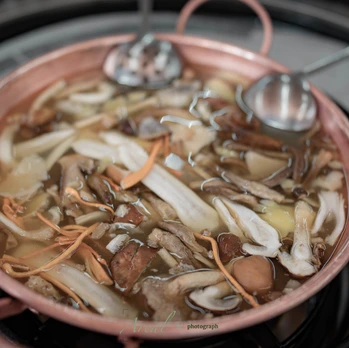
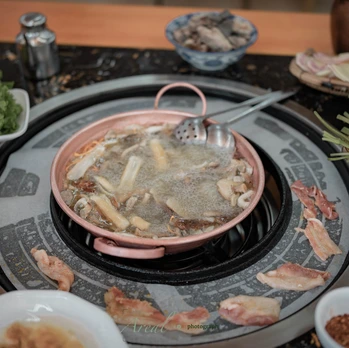
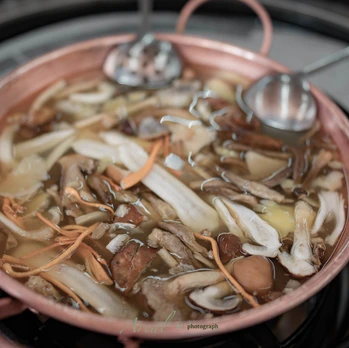
Luckily, Shuhe has plenty of great food. We randomly picked a fire-pit restaurant, and for just a few dozen yuan per person, we enjoyed an authentic cured pork rib hotpot with decent service.
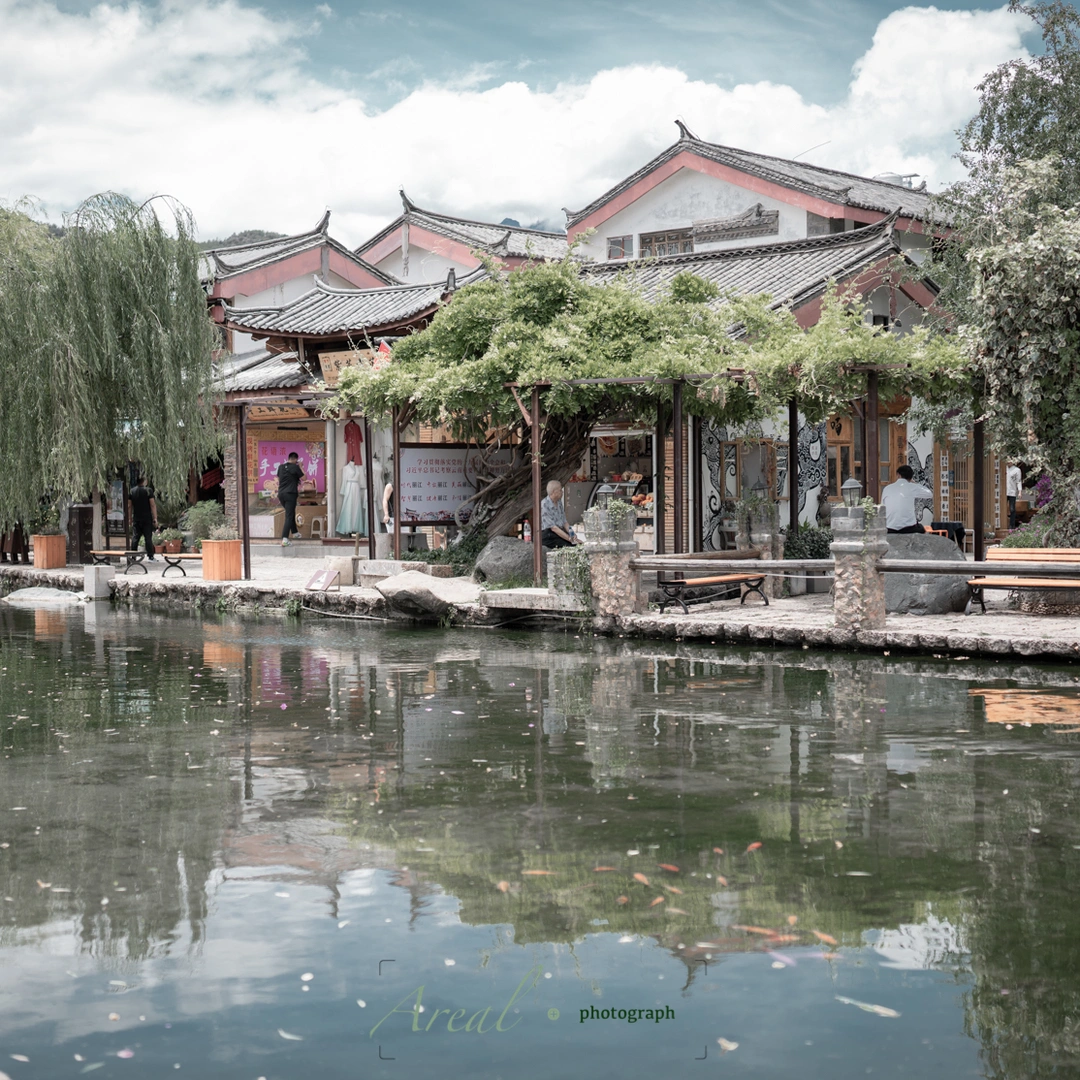
The afternoon sun was blazing, but it didn't stop us from exploring. Shuhe is the best-preserved important town along the Ancient Tea Horse Road—a living specimen of the Naxi people's transition from an agricultural to a commercial civilization. Melted snow from the mountains flows gently through the town's central square, Sifang Street, and Qinglong Bridge, stretching time itself. The green willow trees, reflected in the water alongside the blue sky and white clouds, slow down everyone's pace.
Shuhe is far less noisy than Dayan Old Town, and that's exactly why I love it. Winding alleys are lined with inns, and almost every shop has a lazy dog lying at its entrance, basking in the Shuhe breeze and listening to the slow passage of time. It hasn't fallen into over-commercialization and still retains some of its original charm, making you feel completely at ease.
Practical Tips: - Address: Chama Station C21-1, Shuhe Ancient Town (near Feihua Chushui) - Transportation: Take bus route 5a to the temporary stop - Admission: 30 yuan (free if staying at an inn inside or near the ancient town) - Open: All day, year-round
Baisha Ancient Town: The Lijiang I've Always Imagined
Frankly, I was put off by the overly commercialized vibe of Dayan Old Town. After a quick evening stroll, I hurried away. If Shuhe eased my anxiety, then Baisha Ancient Town was the Lijiang I had always envisioned.
I'd heard it was tiny—could be explored in half an hour—so I only set aside two to three hours. But oh, how wrong I was! I could have spent a whole day there and still not had enough. It deserves a special return trip to Lijiang.
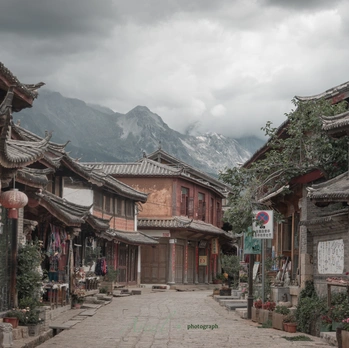
Baisha Ancient Town sits at the foot of Jade Dragon Snow Mountain. From every angle, you get a stunning view of the mountain blending with the ancient town. This is the most authentic, original Naxi village, where locals actually live their daily lives, filling the place with vitality. It doesn't try to pander to modern tourists. Instead, it transforms every visitor into its own reflection—no noise, no clamor, as if every traveler is a native returning home.
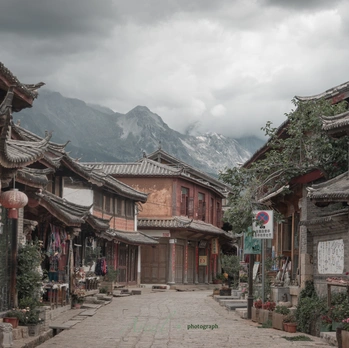
Along the narrow, unpaved stone roads, you'll find leather shops, cafés, restaurants, and jewelry stores—each with its own unique character. There's a café with a view of the snow mountain, and the most romantic steamed bun shop in town. On one side, worldly life; on the other, transcendence. When you clasp your hands together, it all feels perfectly natural.
As we walked deeper into the village along the main road, I noticed something curious: many houses had couplets in different colors—red, yellow, purple. I asked a local and learned that the colors indicate the year of a family member's passing. See, travel teaches you all sorts of things.
Naxi grandmothers sit quietly under their eaves, resting, while clouds over the snow mountain shift with the wind. I felt this scene hadn't changed in a thousand years—until the aroma of coffee broke my time-traveling reverie. There are no flashy bars here, only cafés and tea houses with unique decor, each one inviting you to step inside. The shopkeepers here are clearly dreamers with a passion.
Blue Moon Valley: The "Little Jiuzhaigou" at the Foot of the Snow Mountain
If you're not obsessed with climbing Jade Dragon Snow Mountain this season, it's probably not worth it—global warming has left the peak with just a few gray, barren rocks, no snow, no scenery. But entering the Jade Dragon Snow Mountain scenic area costs a 100-yuan entrance fee. So, if you're not going up, why come?
Well, there are two good reasons.
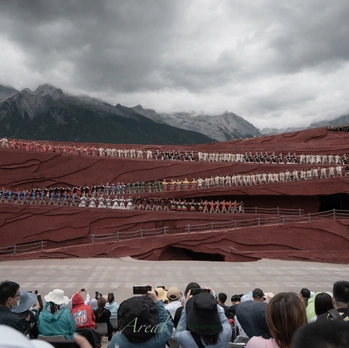
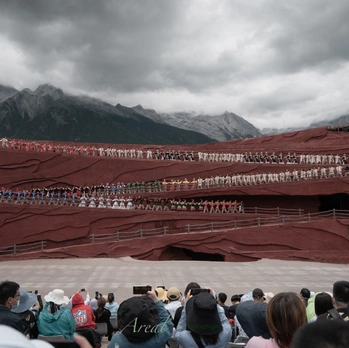
First, the Impression Lijiang show, while its staging and visual effects may feel a bit dated, is still worth seeing if you're interested in ethnic minority culture. Just be prepared for anything—the weather can switch between rain and scorching sun in an instant, and many people can't stick it out until the end.
Second, Blue Moon Valley was my favorite natural scenic spot on this trip.
Blue Moon Valley is a free attraction within the Jade Dragon Snow Mountain area, located in the valley north of Ganhaizi and south of Yunshanping. Its former name was "White Water River." From the old town, take the mountain scenic area bus (15 yuan per person) directly to the parking lot. If there are more than three of you, it's cheaper to take a taxi. Once there, buy a scenic area bus ticket (20 yuan round trip) with your ID. Get off at the Blue Moon Valley parking lot. Note: There's an electric cart transfer point here (50 yuan per person), but it's completely unnecessary! Walk down the road from where the bus came for a few minutes, and you'll find a direct path to Blue Moon Valley. Along the way, there's a viewing platform where you can take in the entire valley, including Baishui Terrace and Yuye Lake.
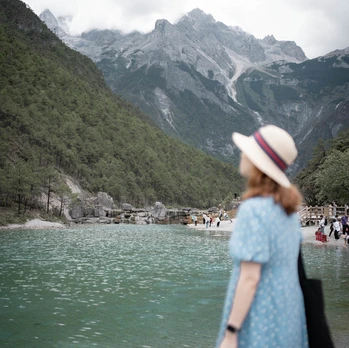
When you reach the lakeside, the distant snow mountain and the turquoise water mirror each other—a perfect blend of grandeur and delicacy. Walk along the lake, passing Baishui Terrace (though man-made, it looks natural), Tingshou Lake, Jingtan Lake, and Yuye Lake. Every step makes you want to stop and take a photo. It's called "Little Jiuzhaigou" for a reason.
Recommended visit time: 2 hours. Walking along the lake will bring you to the downhill bus stop. For the return trip, there are Parking Lots 1 and 2 (for self-driving), while the scenic area bus line stops at Parking Lot 3. Ride-hailing apps work well here.
Scam Alerts: - Ride-hailing apps are your best bet, but even then, you might encounter issues. On our way to the scenic area, the driver kept hinting that it would be hard to get a ride back and offered to wait for us. In reality, plenty of drivers accepted our ride request instantly. - Shared rides often involve long waits. - Anyone who tells you the Ancient Tea Horse Road is amazing is trying to scam you. Don't believe it, and don't go.
As we left Lijiang, a torrential downpour began—the first rain in months, according to locals. We woke up late, had brunch, packed our bags, and headed to the high-speed rail station. Dali was waiting, whether in sunshine or gloom.
Dali: The Romantic Destination of Wind, Flowers, Snow, and Moon
The name "Dali" has always been etched in my mind with a sense of beauty. Whether it's thanks to the legendary Duan family or simply the romantic image of Cangshan Mountain and Erhai Lake, I can't say. But one thing is certain: once you leave Dali, all those poetic notions of wind, flowers, snow, and moon become nothing but clichés.
Shuanglang Ancient Town: No Itinerary Is the Best Itinerary
For an ordinary traveler like me, coming to Shuanglang is all about relaxation and ease. There's no need to hunt down every ancient temple or Instagram-worthy spot. Just wander wherever your feet take you, and if you stumble upon a place you like, stay for half a day—that's the real Dali way.
We woke up naturally, took a taxi straight to Shuanglang Ancient Town. Outside the town, rental shops line the road, mostly offering pale pink convertibles. We saw so many of them along the way—setting aside safety concerns, it felt like the whole point of travel had gone astray.
We arrived just in time for lunch and chose the Corner Time Garden Restaurant. The sour and spicy fish was appetizing, though a bit bony. The cold rice noodles with sauce were the best dish of the meal. The mint and lemongrass fried ribs were disappointing—there was no trace of lemongrass flavor in the meat. With just two of us, we couldn't order everything we wanted, so we'll save some dishes for next time.
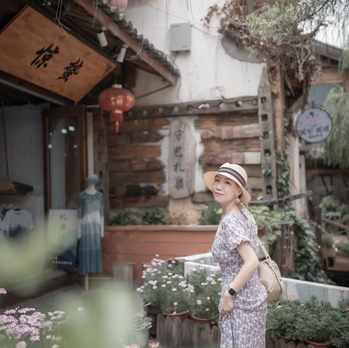
After lunch, we just wanted to find a café and collapse. We ended up at Yang Liping Art Space Café on Haijie No. 1. I didn't have high expectations for this trendy spot, and once again, I was right. A pour-over coffee made with Yunnan beans cost 58 yuan, and an iced Americano was 48 yuan. The barista could only be described as a "server." If you're looking for good coffee that matches the price, don't come here. But if you're willing to pay for the second-floor view—"facing the sea, with spring blossoms"—and the lazy, carefree vibe, you might feel a little better about it.
We lounged until 4:30 p.m. before slowly leaving. Food dictated our next move: across from the "Eleven Supermarket," there was a stall run by an elderly woman selling grilled milk fan (a local cheese snack). It was hugely popular. That day, the old lady had gone to market, so her daughter-in-law was in charge. It was excellent—we bought one, then immediately ordered another. Later, comparing it to others, we realized the grandmother's version had a richer sauce. While others only use rose sugar, she also adds condensed milk and crushed peanuts, giving it a whole different depth of flavor.
As we walked along the road, we naturally came across the ancient fishing village of Shuanglang. The narrow alleys branch off like fish bones, each leading to the shores of Erhai Lake. I unilaterally decided that next time, I'll stay in Shuanglang, right by the quiet, empty seaside.
The locals still live their original lives—there's a market, a supermarket, a school. Near the main gate, there's even a stage where troupes perform during festivals.
I'd heard that Nanzhao Customs Island isn't worth visiting, as the scenery is the same as Shuanglang. I looked across the 50 meters of water and felt no urge to go.
Zhoucheng: A Niche Tie-Dye Experience
Dali has a town famous for tie-dye—Zhoucheng, known as the "Hometown of Bai Ethnic Tie-Dye."
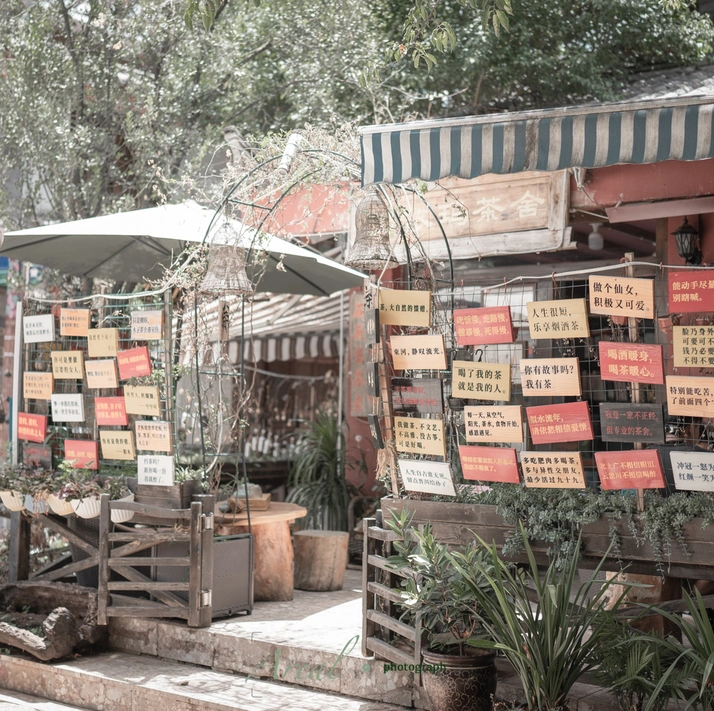
Online recommendations often point to one particular dye workshop. I went there, but it was packed with tour groups, and I felt no connection. Eventually, following our driver's advice, we went to Puzhen Tie-Dye Workshop. It's also a tie-dye museum, so you can wander around even if you don't participate. You can watch Bai grandmothers making tie-dye in real time.
Every tie-dye piece is unique. You choose a pattern, and under the guidance of a Bai grandmother, you follow the steps step by step. There may be a language barrier, but the cloth and thread become your means of communication. How you fold, how you tie, how tightly you bind—every step affects the final result.
Tying, soaking, dyeing, rinsing, untying—the whole process takes only half an hour. The scarf I made was simple, something you could easily buy. But making it yourself allows you to truly appreciate the endless, magical variations of tie-dye.
Xizhou Ancient Town: I Imagine It Was Even More Beautiful Once
From Lijiang to Dali, I visited several ancient towns, and I can't say I either liked or disliked Xizhou. Maybe I didn't understand it well enough, or perhaps I was put off by its eagerness to create Instagram-friendly spots to please the crowds.
Compared to Shuanglang and Dali Old Town, Xizhou isn't large. It centers around Sifang Street. For me, the most unique part wasn't the trendy rice paddies, flower fields, or yellow walls, but the ancient Bai residential buildings. Xizhou is the birthplace of Bai culture and can be called a "museum" of traditional Bai architecture.
The typical layout of a Bai home features "three rooms and one screen wall" or "four courtyards and five patios." The buildings are adorned with carved beams, painted rafters, overlapping brackets, and upturned eaves. The gate towers, screen walls, and gable walls are decorated with vibrant paintings, showcasing the Bai people's architectural talent.
Beyond that, I liked the small shops along the streets—the items finally had some personality. At one shop, I bought a hand-rolled wool hat. Even though it was midsummer, I was already imagining wearing it with a cashmere coat in autumn.
The Corner Tower was the former home of a villager named Yang Ruxuan. It follows Bai traditions but also shows Western architectural influences—a round exterior with a square courtyard, making it a very unique landmark among Xizhou's residences.
Of course, you can't leave Xizhou without trying a xizhou po su ba ba (a crispy flatbread). Made mainly from flour and rose sugar, it's baked over charcoal from above and below. The outside is slightly crispy, the inside soft, with a rich aroma of brown sugar and roses. In recent years, new flavors like salted pepper or scallion with minced meat have emerged.
Yunnan's wealthiest man, Yan Zizhen, also settled here. A visit to the "Yan Family Grand Mansion Museum" costs 18 yuan. It's a sprawling, multi-courtyard estate covering 1,066 square meters—the largest and most complete Bai building in Xizhou. I didn't have time to visit.
Perhaps, years ago, Xizhou really was like what Lao She described—like Cambridge, England, with flowing water everywhere, quiet yet dignified. Now, the narrow streets have to make way for tacky horse-drawn carriages. What I wanted was Xizhou in its unadorned, original state.
Dali Old Town
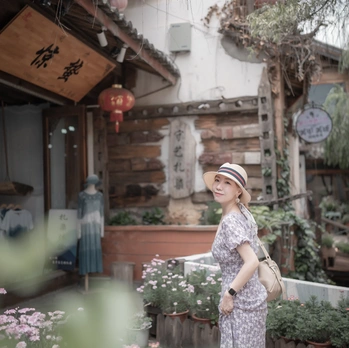
Dali Old Town is the most iconic must-visit spot, but I only came here because I was meeting a friend I hadn't seen in years. After a few token photos, I resolutely spent my limited time catching up with her. I'll have plenty of chances to come back, but who knows when I'll see her again?
Practical Tips: - One day of hiring a driver is enough; costs vary depending on your budget. - I don't recommend renting a convertible—most are cheap, second-hand cars that have been modified and pose safety risks. - I also don't recommend renting an e-bike. Aside from the sunburn, riding on the winding, unfamiliar roads around Erhai Lake is quite dangerous.
Mile: One Attraction That Put a City on the Map
Our final stop: Mile. Our itinerary in this city was incredibly simple—we just switched between the scenic area and our hotel.
Traditional Mile Cuisine
After getting off the high-speed train, our first stop was a local restaurant serving Mile dishes. It was 2 p.m. when we arrived, and the huge courtyard was completely empty, giving us a feeling of having the place to ourselves. The waitstaff, who were resting, came over warmly. With the mindset of "since we're here," we ordered a table full of food—far too much for two people.
The cold rice rolls were sour and spicy, with a hint of mushroom sauce adding extra flavor. The Mile braised chicken (essentially roast chicken) wasn't mind-blowing, but it was worth trying. The red wine roasted pork didn't have a strong wine flavor, but I loved the texture of the pork neck. Eggplant, no matter how it's prepared, is always delicious. And the grilled goat milk slices had a strange taste that grew on you after a few bites.
In any case, when you come to Mile, you must try the local cuisine—you can always trust Yunnan food.
Dongfengyun: A Magical, Futuristic Fairy Tale Castle
I first heard of Mile because of Dongfengyun. Last year, it kept popping up on my feed. When I looked up the location, I was surprised to find a place actually called "Mile" in Yunnan, just over half an hour from Kunming by high-speed rail.
This time, I deliberately set aside two days for Mile on our way from Dali to Kunming. The weather was too hot to do much, so we stayed at the Artyzen Hotel inside the scenic area and only ventured out after 6 p.m.—the ground was still scorching, but at least it was convenient.
Dongfengyun, officially called Dongfengyun Art Town, blends natural scenery, cultural tourism, and grape culture together. Without a doubt, the Kaleidoscope Art Museum is the hottest photo spot right now. Its architectural style is wonderfully strange, combining the wine culture of the region with the fire culture of the Axi people, a branch of the Yi ethnic group. The bottle-shaped, flame-shaped castles are all built from red brick, looking from afar like a pile of wine bottles. This unique design has been called a "magical, futuristic fantasy castle" and "the fairy tale castle closest to your heart."
The designer, Luo Xu, seems to have an obsession with "legs." Many of his works feature leg shapes, and the Kaleidoscope is no exception.
The Lavender Theme Park, also known as the Colorful Flower Field, features over ten types of flowers, including lavender, iris, and bellflowers. A vast sea of lavender surrounds the scenic area, making you feel like you're in a European countryside. It's been called the "Provence of Central Yunnan." The best time to visit is September to October, when the flowers are at their peak.
In the future, there will be more activities like grape picking, so there's plenty to look forward to.
Transportation Tips: - Kunming Station to Mile Station: about 1 hour - Kunming South to Mile Station: about 40 minutes - Dali to Mile Station: about 2 hours - Train station to scenic area: about 15 minutes by taxi - Self-driving: Kunming to Mile about 2 hours
Admission: Free if staying at a hotel inside the scenic area; check platform prices for non-guests. Sightseeing Cart: 15 yuan one way, 20 yuan round trip.
Photo Tips: - Avoid midday (too hot). Shoot after 4 p.m. for softer light, and you might catch the sunset. - What to wear: Comfortable walking shoes. At Dongfengyun, you can go for an ethnic vibe. For the flower fields, lighter colors work better.
Accommodation: The Hotel as a Destination
On this Yunnan trip, accommodation became part of the journey itself. A good lodging experience is one of the key factors I use to judge a destination.
Banyan Tree Lijiang: Travel Without Leaving the Hotel
Ever since I stayed at the Banyan Tree Ringha in Shangri-La, in the same room type featured in the TV drama Si Teng, I fell in love with Banyan Tree's natural, ethereal atmosphere. For this Lijiang trip, I didn't hesitate to book the Banyan Tree again.
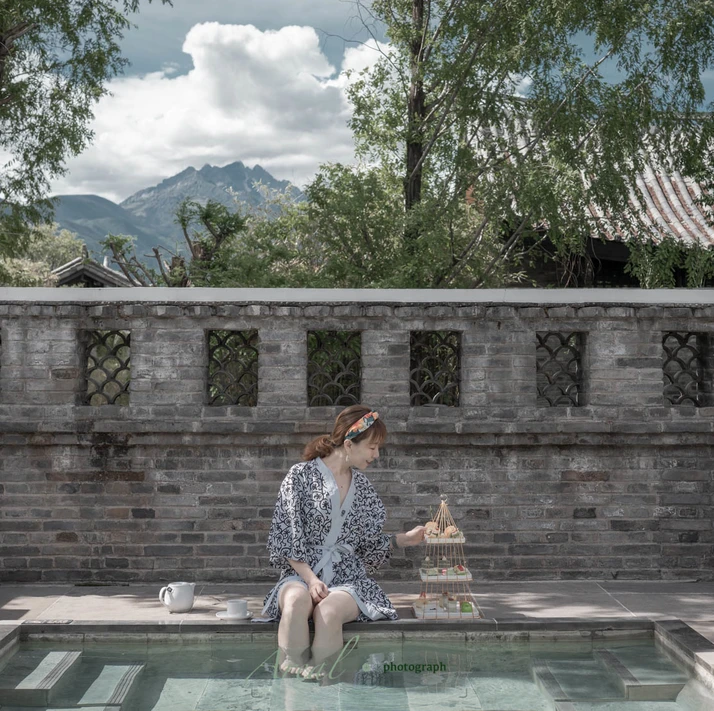
Have you ever considered the many possibilities of travel? You don't have to visit popular attractions, crowded scenic spots, or even leave your hotel—and still have a fulfilling trip. At the Banyan Tree, you can watch the snow mountain from your room, have afternoon tea in the courtyard, or just daydream by the pool. This "hotel as destination" experience brings travel back to its essence: relaxation.
In the End: Be a Returnee, Not a Tourist
This trip to Yunnan helped me rediscover the true meaning of travel.
We always want to see the most sights in the shortest time, go the farthest on the smallest budget, but we forget that travel is supposed to be about relaxing, recharging, and savoring beauty. In Shuhe, I learned to get lost in the ancient town's alleys. In Baisha, I discovered the joy of chatting with strangers. In Shuanglang, I understood that "lounging around" is a valid way to travel. In Mile, I experienced the luxury of treating the hotel as the destination.
Yunnan is a place like no other—it doesn't require an itinerary, it doesn't demand you rush from one attraction to another. All it asks is that you slow down and feel. The sunshine, the breeze, the scent of flowers, the food, the smiles... these simple, ordinary pleasures are the most precious souvenirs of any journey.
So, the next time you go to Yunnan, put down the itinerary, forget the checklist. Come not as a tourist, but as one returning home. Let the Yunnan wind blow away your worries, let the Yunnan sun warm your heart, and let Yunnan's slow pace heal your tired soul.
After all, the best journey isn't about how far you've gone—it's about how much of yourself you've found again along the way.
You should also read:
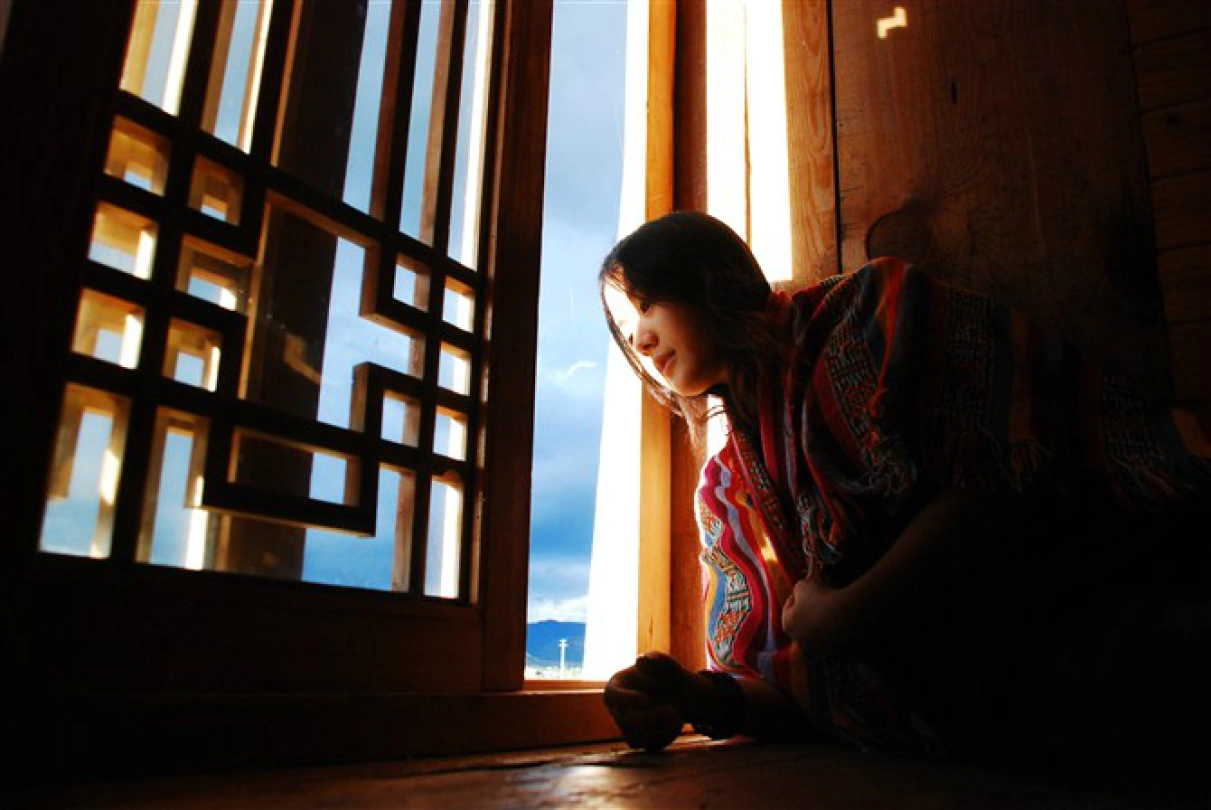
24 Days, 1400 Yuan: A Solo Journey Along the Sichuan-Yunnan Route, Trading Stories for Scenery
24 Days, 1400 Yuan: A Solo Journey Along the Sichuan-Yunnan Route, Trading Stories for Scenery Setting Out, Not to Escape, but to Find Myself The year I graduated from university, I did two "crazy" things: I quit my job, and I set off on a…
Continue reading...
A Solo Journey to Yunnan: Shuanglang Chapter — Meeting Your Truest Self by the Erhai Lake
A Solo Journey to Yunnan: Shuanglang Chapter — Meeting Your Truest Self by the Erhai Lake Introduction: When a Dream Finally Becomes Reality Some say Yunnan is a place meant for solo travelers. It took me three full years to truly understand that. Two years…
Continue reading...
Slow Sounds, Gentle Steps: My Wandering Journey Through Lijiang
Slow Sounds, Gentle Steps: My Wandering Journey Through Lijiang Prologue: A Spontaneous "Red-Eye" Escape Some journeys begin just like Lijiang itself—with a touch of spontaneity and a hint of laziness. Late one Sunday night, I was scrolling through my phone while lying in bed when…
Continue reading...