Slow Down and Seek a Paradise at Lugu Lake
Slow Down and Seek a Paradise at Lugu Lake
It's been exactly a week since I returned from Lugu Lake.
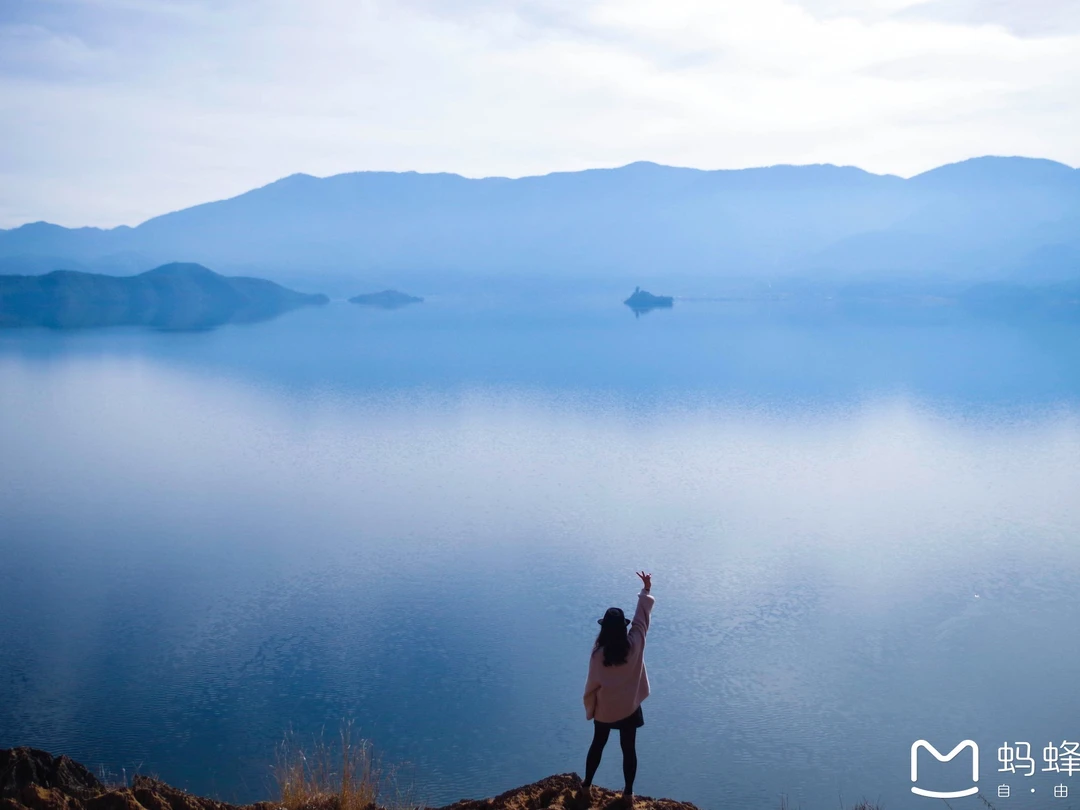
That feeling of slowing down, letting the lake breeze wash over me, and simply staring into the distance in a daze still lingers in my heart, refusing to fade. Even though it was winter — the off-season for tourism at Lugu Lake — the magnificent sight of the sky and water merging into one was still breathtaking.
It's incredibly beautiful. So beautiful that words fail to describe it. Stunningly ethereal, incomparably gorgeous.
I couldn't even find the right words to capture that sense of awe. When I posted on social media, I felt that nine photos simply couldn't do it justice.
"If you ever get the chance, you must visit Lugu Lake at least once!"
That was the central message in the postcards I hand-wrote to my friends.
Why Lugu Lake?
It's probably a persistent longing for a pure land in my dreams.

The first time I wanted to visit Lugu Lake was during last year's National Day holiday. However, the exorbitant flight and accommodation prices immediately killed that idea. Not long after, the TV show Dear Inn aired, and Lugu Lake's popularity skyrocketed. I thought to myself, if I don't go now, I might never find this peace and quiet again.
So I decided to go on a whim.
Before the busy end-of-year season arrived, my best friend and I put our heads together and managed to buy plane tickets, book a guesthouse, and plan the entire itinerary within a week.
Why Only Lugu Lake?
I've always had a special attachment to Yunnan. Ten years ago, my first long-distance trip away from home started in Lijiang and Dali. The blue skies, white clouds, and fresh air from back then are still vivid in my memory.
With limited vacation days and no desire to drag a suitcase from place to place, I figured a place with stunning scenery and enough leisure would be enough — and Lugu Lake fit the bill perfectly.
I took two days of annual leave, combined with the weekend, flew directly to Lugu Lake, and spent three days just doing nothing. That was enough to make me happy.
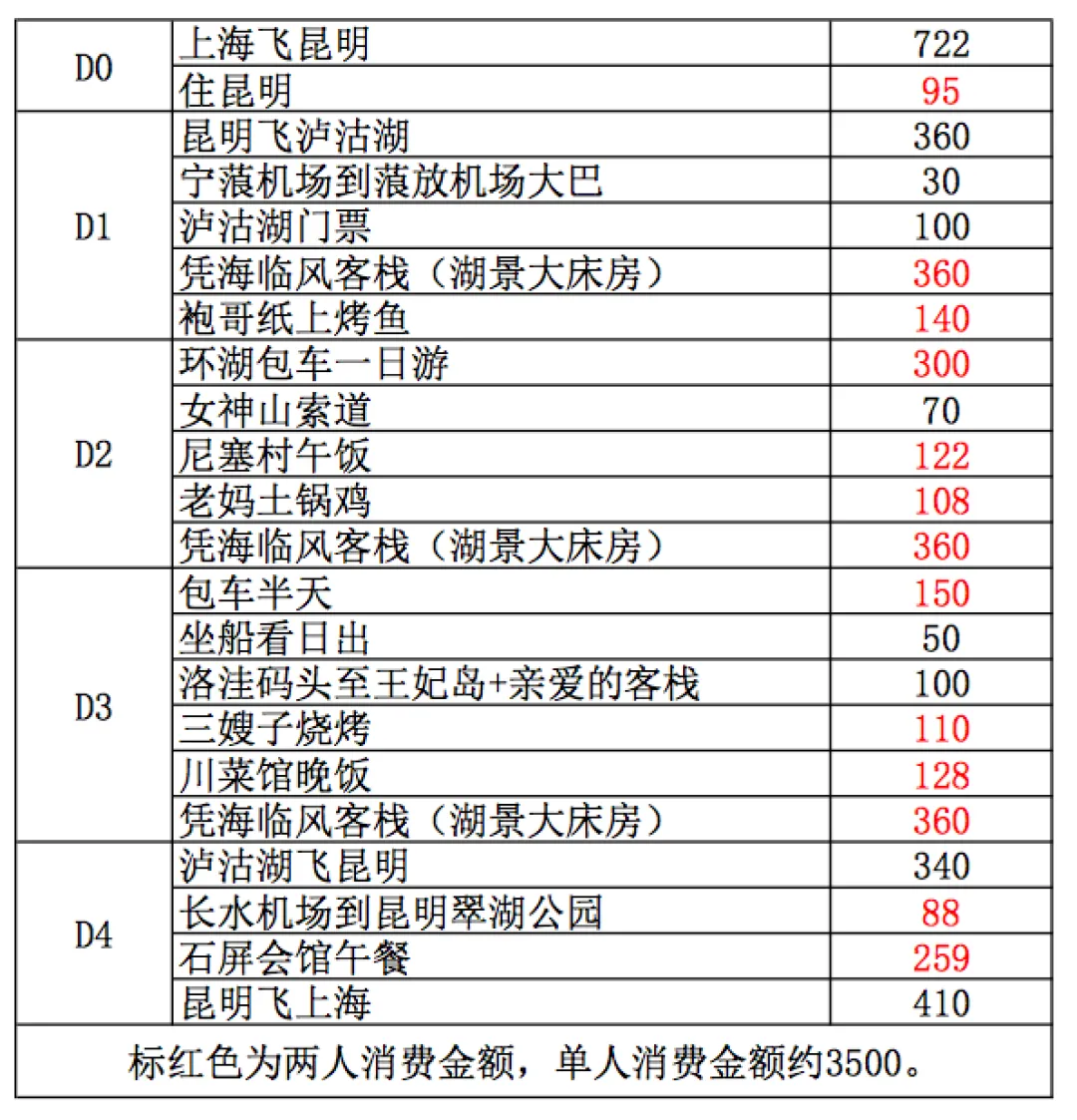
Itinerary and Costs
No Lijiang, no Dali.
To many of my friends, this kind of trip seemed quite "extravagant." Yet, compared to my past budget travels that involved frantic transfers between cities, I felt this spontaneous trip was totally worth it.
The beauty of Lugu Lake deserves this kind of dedicated, special journey.
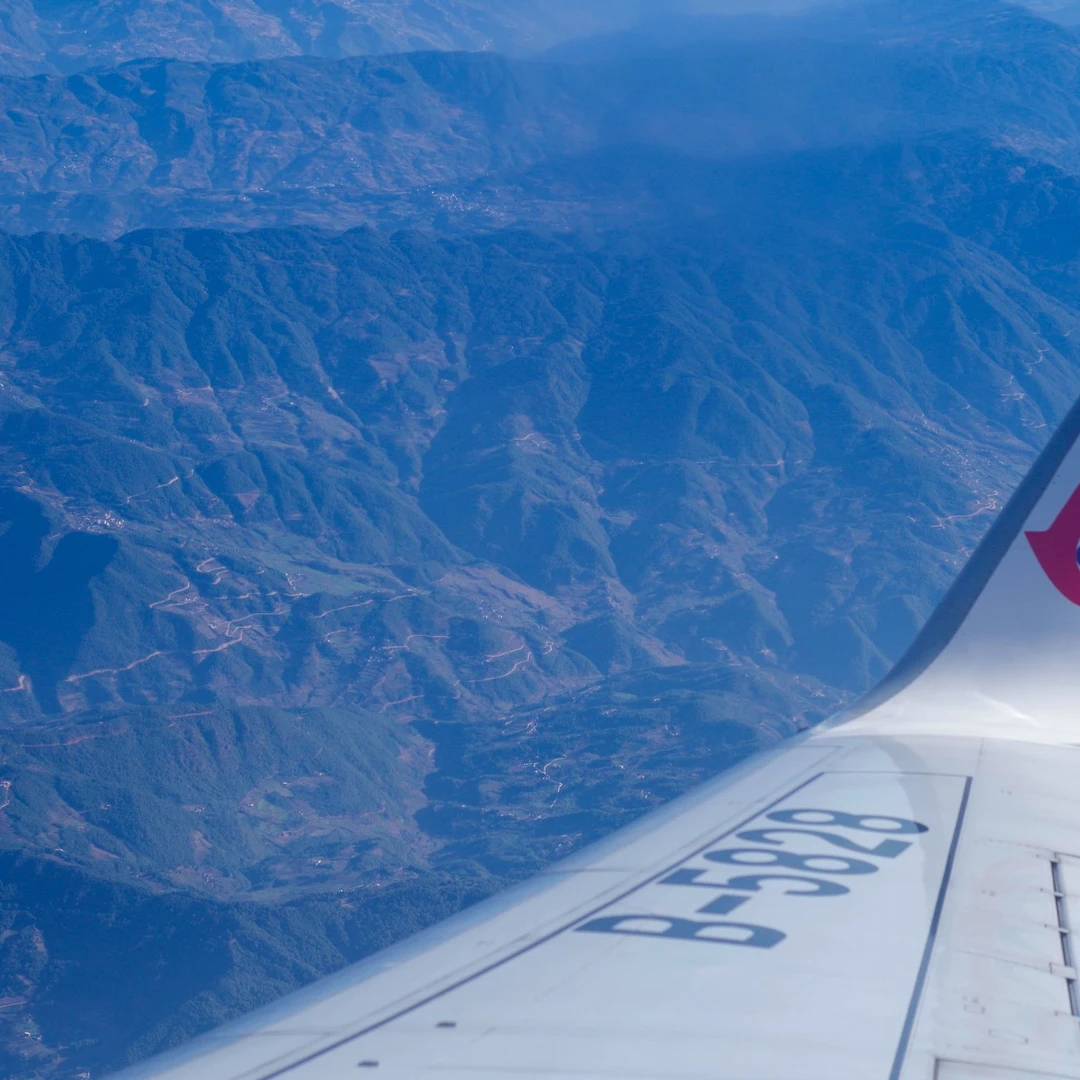
If you're short on time but still want to relax and unwind, I highly recommend a trip to Lugu Lake. It offers the stunning scenery of Yunnan and Sichuan without the hardships of the Western Sichuan or Yunnan-Tibet routes.
Today, Lugu Lake's tourism industry is evolving rapidly, and transportation is becoming increasingly convenient. The most common way is to fly to Lijiang first, then take a bus to Lugu Lake, which also allows you to explore Lijiang along the way. The Lining Highway from Lijiang to Lugu Lake opened in October 2016, significantly shortening the previously bumpy journey. It now takes about 4 hours, but the road is full of winding mountain passes — beautiful scenery, but a somewhat arduous ride.
Another, more effortless option is to fly directly to Lugu Lake. A week before departure, I discovered that Lugu Lake has its own airport. In a state of extreme busyness, I quickly decided on the itinerary: "Shanghai → Kunming → Lugu Lake → Kunming → Shanghai," maximizing time and energy savings.
So, the itinerary was roughly set as follows:
- December 7th: 19:55 Shanghai Hongqiao T2 → 23:45 Kunming Changshui Airport, stay near Kunming Airport
- December 8th: 9:00 Kunming Changshui Airport → 10:05 Ninglang Lugu Lake Airport, stay at Lugu Lake
- December 9th - 10th: Relaxing at Lugu Lake
- December 11th: 10:45 Ninglang Lugu Lake Airport → 11:50 Kunming Changshui Airport, half a day of eating and drinking in Kunming; 19:35 Kunming Changshui Airport → 22:35 Shanghai Pudong T2
Day 0: Departure
The departure day was Thursday evening. Whether it was Mercury retrograde or just destined to be an unlucky day, things started going wrong from the start. The day began with me inexplicably taking a hard fall on my way to work, shattering my phone screen in the process. I had to rush to get it replaced at noon. Then came a series of mishaps in Kunming that evening, which I won't go into detail about.
Special thanks to a certain bank credit card for its airport transfer service and lounge access. The V1 lounge at Hongqiao was conveniently located right above the boarding gate, saving me the trouble of wandering around and also filling my stomach. Good thing I ate there, because the evening flight didn't serve a proper meal — just some light snacks...

The flight took off on time and landed in Kunming more than half an hour ahead of schedule. The actual flight time was about 3.5 hours. It was my first time flying with Juneyao Air; the service was decent, but it turned out to be the most expensive flight of the entire trip.
I remember when I first came to Kunming ten years ago, it was still the Wujiaba Airport, so Changshui was technically my first time. The airport's development has helped boost the local villagers' incomes. Kunming's tourism industry has grown rapidly in recent years, with many new routes to surrounding areas, and many tourists transit through Kunming. We also booked accommodation near the airport through an app, which included airport transfer service. When traveling, for the convenience of a layover, simple and basic is fine. The accommodation was cheap, but the conditions were a bit rough.
I couldn't worry too much, though. My longing for Lugu Lake outweighed everything else. With a "Goodnight, Kunming," I went to sleep.
Day 1: Kunming → Lugu Lake
At 7:30 AM, the innkeeper drove us to Kunming Airport. It was drizzling and chilly in Kunming that day, but the weather forecast gave us confidence about Lugu Lake. Deep down, I was really afraid it would rain at Lugu Lake — all the travel guides emphasized that Lugu Lake is stunningly beautiful on sunny days but becomes quite ordinary when it rains.
The boarding process at Kunming Airport was routine. I used my Priority Pass to grab breakfast at the Lucky Air lounge (it's downstairs to the left after passing through security). One complaint: the incredibly strict security check. I had breezed through all my previous flights, but in Kunming, I was asked to open my suitcase because my tripod was suspected of containing "unidentified metal objects." My luggage had to go through the scanner three times... Another complaint: the boarding gates at Changshui Airport were ridiculously far. For such a relaxing day, I probably walked half my steps just at Changshui.
Let me explain why I chose to transit through Kunming to fly to Lugu Lake. Ninglang Lugu Lake Airport is a high-altitude airport that officially opened in October 2015. Currently, there's only one route — from Kunming to Lugu Lake — but a route from Chengdu is about to launch, and reportedly, a Beijing route will open in the future. For now, there are two flights to Lugu Lake daily: one at 9:00 AM with China Eastern, and another with Lucky Air. The flight takes about an hour, basically taking off and landing almost immediately, which is quite convenient. Besides, flights from Shanghai to Kunming have always been cheaper than those to Lijiang, offering more flexibility in timing.
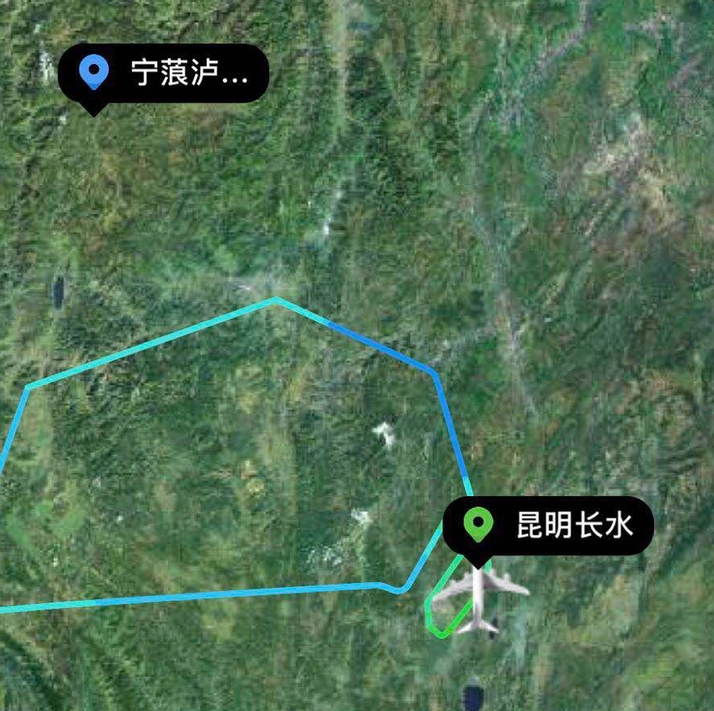
Our flight was originally scheduled to depart at 9:00 AM and arrive at Lugu Lake at 10:00 AM. After boarding, we were already planning where to have lunch and where to go in the afternoon... Then, amidst our daydreaming, we embarked on a brand new life experience! After a half-hour delay, we took off. An hour into the flight, we found it strange — why hadn't we landed yet? Then the cabin announcement came: Due to weather conditions at Lugu Lake Airport making landing impossible, the flight was returning to Kunming Changshui Airport!!!
Returning... lightning... The cabin erupted into chaos. A passenger in the back row who had booked a stay at the Dear Inn was fretting that her 2000 yuan room fee might go down the drain.
Look at the picture below — we drew a beautiful circle over Yunnan...
Aside from the annoyance of having our itinerary disrupted, we weren't too worried because we had allocated three full days for relaxing at Lugu Lake, and we had no specific plans for the first day anyway. Some passengers, uncertain about whether the flight would take off again, even gave up and disembarked in Kunming... They could have waited a bit longer.
Fortunately, after taking off again at 12:30 PM, we finally broke through the clouds and landed smoothly at Lugu Lake at 1:30 PM! My friend joked that our 300-yuan ticket had covered three flights, averaging just over 100 yuan per leg — what a bargain!
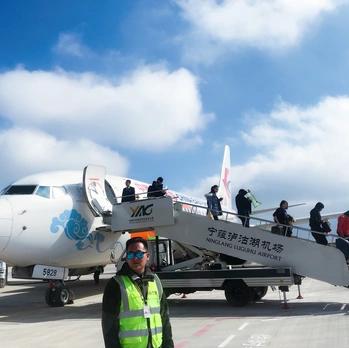
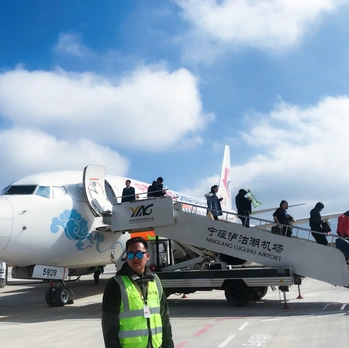
Landing at a high-altitude airport for the first time was a thrilling experience. One moment we were above the clouds, the next we could see mountains and trees incredibly close outside the window, almost brushing against them. Shortly after we got off the plane, we heard a loud rumble as the Lucky Air flight touched down...
Looking up at the sky after disembarking, it was as blue and pure as I had imagined. The clouds hung low, seemingly within arm's reach.
After the storm came the calm! From this moment on, everything turned beautiful and unforgettable!
Lamp's Tips: According to locals, China Eastern Airlines prioritizes safety, so when there's heavy fog or thick clouds, the chance of turning back is relatively high. Lucky Air's pilots are more familiar with these routes and Yunnan's weather conditions; as long as it's controllable, they'll land. Recently, temperatures have dropped, and the fog is heavy in the morning. By midday, when the fog clears a bit, China Eastern dares to fly and land again... Choosing an airline depends on your personal preference. China Eastern's flight is earlier, while Lucky Air is less likely to turn back.
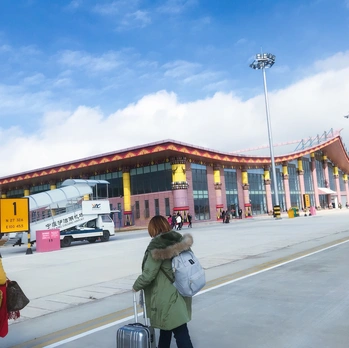
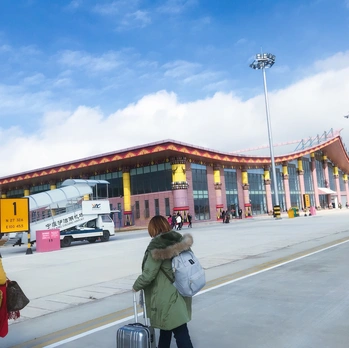
Since Lugu Lake Airport has limited flights, the airport bus doesn't have a fixed schedule. It departs about 30-40 minutes after a flight lands, ensuring it picks up all disembarking passengers. Note that Ninglang Lugu Lake Airport has three bus routes: one to Ninglang County town, one to the Lugu Lake scenic area (Daluoshui), and one to the Lugu Lake scenic area (Langfang). We didn't know about the last route until the guesthouse owner told us. Previously, tourists staying in Langfang had to take the bus to Daluoshui, get off at Sanjiacun, and wait for their host to pick them up. Now, the bus goes directly to Langfang Village (non-stop, with the drop-off point being the "Grandma's Flavor" restaurant on the lakeside road). The fare is 30 yuan per person.
Due to the return and delay, our China Eastern flight and the subsequent Lucky Air flight landed almost simultaneously. After picking up passengers from both flights, the airport bus finally departed. Our booked guesthouse was in the quieter Langfang Village. As soon as the bus came within sight of Lugu Lake, all the passengers were stunned by the view outside the window, letting out exclamations of admiration and starting to take photos. Little did they know, compared to the beauty that lay ahead, Lugu Lake is truly a place to be savored and experienced slowly.
When entering the Lugu Lake scenic area, the bus makes all passengers get off to buy tickets and go through ticket inspection. During the off-season, the stop lasts about 3 minutes, so you need to buy tickets quickly. Although there's a WeChat payment option, there's a roll-up banner next to the ticket window with a QR code to scan and enter a page — it's not a direct payment and isn't as fast as cash. The ticket costs 100 yuan per person, whether you enter from the Sichuan or Yunnan side. Once you buy the ticket, you can stay in the scenic area for several days without needing another check. Given the stunning scenery and the subsequent boat ride prices, the ticket price is quite reasonable.
After an hour's bus ride, we finally arrived at Langfang Village.
Why Stay in Langfang?
Before coming to Lugu Lake, we researched the accommodation options in various travel guides. After comparison, we concluded:
- Daluoshui Village: The earliest developed area, most commercialized, and noisiest. Although transportation is convenient, there are many tour groups, and the guesthouses were built earlier with not-so-great conditions. It didn't meet our requirements for relaxing. Eliminated first.
- Lige Village: Nice environment, famous Lige Peninsula, reportedly beautiful scenery. But the hotels actually on the peninsula are expensive.
- Langfang Village: Only started developing in the last two years. The guesthouses and hotels here are mostly newly built, high-end boutique accommodations. It's quiet and undisturbed, with good lakeside conditions. Perfect for someone like us who just wants to relax in peace.
Later, during our lake circuit, we found that Daluoshui and Lige had indeed become "overrun." Xiaoluoshui Village, on the other hand, was a very quiet place, reportedly still inhabited by Mosuo people, and also worth recommending.
In the end, we booked the "Pinghai Linfeng" guesthouse in Langfang. It turned out to be excellent value for money. (There were several pretty good boutique internet-famous hotels nearby, but we couldn't afford them. Lakeside rooms during the off-season start at 700+ yuan, and during peak season, you can imagine the prices.)
By the time we reached the guesthouse, it was already past 4 PM. The owner upgraded our booked room to the one with the best view on the third floor. While it wasn't a 270-degree lake view, we were content. As my friend put it, "After all, we're not the type to lie in bed and stare at the lake all day."
The room had a tatami mat and was provided with apples and small cookies every day — oh, the 徐福记 (Hsu Fu Chi) cookies were really delicious!
Downstairs, you could walk all the way to the lakeshore. It was quiet and peaceful.
This was our room — perfectly comfortable. Guesthouses at Lugu Lake don't have air conditioning, so underfloor heating is crucial in winter! (Winter temperatures vary greatly: around 0°C in the morning and 18°C at noon...) The guesthouses in Langfang, being relatively new, have better conditions than elsewhere. The style of our room was very comfortable, not too rustic or basic. The underfloor heating was turned on after 6 PM, and the clothes in our suitcase, touching the floor, were toasty warm.
Below is a photo of the 270-degree luxury lake view room we visited while it was still vacant. It had a balcony and a rocking chair — absolutely fantastic.
Below is the guesthouse's rooftop viewing platform, perfect for all kinds of aesthetic photos. At night, you could also see an amazing starry sky.
After checking out the room and unpacking, my friend and I started wandering casually along the lakeshore in Langfang. The flight return had wasted half a day, we had no transportation, and it was getting late, so we couldn't go far. We just started walking along the lake from the guesthouse. That day was probably the worst weather we had at Lugu Lake — thick clouds — but the sky was still incredibly blue, and the lake water was just as blue! Get a feel for our first impression of Lugu Lake —
At Lugu Lake, I especially loved taking photos of the boats. During the off-season, without too many noisy tourists, the sight of a single small boat on the calm lake was fantastic.
Since there weren't many tourists, several 猪槽船 (pig-trough boats, traditional dugout canoes) were docked at the nearby Lujiawan Pier. Every shot was beautiful.
As the sun began to set, sitting by the quiet lake was incredibly pleasant.
Following the small path next to the guesthouse, we could reach the lakeshore. The water was crystal clear and blue. Watching the last rays of the setting sun illuminate the mountains on the opposite shore was especially peaceful and comfortable.
Before coming, various travel guides said Langfang had no places to eat and was inconvenient. That's not true. The famous "Pao Ge Paper-Wrapped Grilled Fish" restaurant is in Langfang Village. From our guesthouse, walking counterclockwise along the lakeside road for 300-500 meters brought us there. We chose this restaurant for dinner, which had high ratings on review sites and was frequented by many travelers. After comparing, we found that for two people, a set meal wasn't necessarily the best option, as it came with three bowls of rice. Ordering what we wanted to eat was more satisfying. (I must have a wrong understanding of a "bowl" of rice. Every subsequent meal, I told the server we only wanted one bowl, but what arrived was either a pot or a bucket — a complete redefinition of the term.) Restaurant prices at Lugu Lake aren't exactly cheap, given it's a scenic area. The side dishes for the grilled fish were basically 10-15 yuan per serving, meat dishes were several tens of yuan, and you couldn't mix and match. For us, with eyes bigger than our stomachs, it was a struggle. The paper-wrapped grilled fish was a gimmick, but it tasted good. Having such a meal at Lugu Lake was already great.
After eating, we walked back to the guesthouse along unlit roads. Although the temperature was a bit low at night, we still went up to the rooftop platform to see the starry sky at Lugu Lake. I remembered seeing stars in my hometown as a child, but being able to see such pure, sparkling stars was truly rare. The guesthouse was a standalone building with not too many lights, making it perfect for stargazing. My friend and I, shivering in the pitch-black rooftop cold, kept rubbing our hands while continuously marveling at the breathtaking, countless stars.
Day 2: Lugu Lake Circuit
This was our first full day at Lugu Lake — no buses to catch, no flights to rush for. Our time was completely our own. Most tourists staying in Langfang seemed to be self-driving, and the guesthouses here could generally arrange parking. Considering the cold weather and high altitude, we chose the most comfortable option: hiring a private car. Currently, the Lugu Lake authorities do not allow electric scooter rentals for the lake circuit. While there are places to rent bicycles, the section from Daluoshui to Lige, for example, is all uphill mountain roads with no particularly scenic views. Cycling would be quite strenuous.
The price for hiring a car for the lake circuit is standardized across the lake: 300 yuan per car (seating about 4 people). You can also find shared rides through your guesthouse owner for 50 yuan per person. We had contacted a local driver before departure, and I have to give a huge shout-out to Driver Ye!! A particularly kind and honest uncle, a man of few words who never rushed us. He took us to every scenic spot we were interested in without a single complaint. He even made a special detour to take us to Goddess Bay and the Worship Platform, which most circuit drivers don't include. From 9 AM to 6:30 PM, he dropped us back at our guesthouse. We had an incredibly enjoyable day... I later learned that during peak season, some drivers might only do a superficial 5-hour circuit.
The Circuit Begins!
To be honest, because this trip was so hastily put together, I didn't know much about Lugu Lake. Besides the specific spots I wanted to visit — Goddess Mountain and Goddess Bay — which I mentioned to the driver, I left the rest of the itinerary up to him.
After breakfast at the guesthouse at 9 AM, the driver was already waiting downstairs. We started the circuit clockwise.
The stretch from Langfang to Sanjiacun and Daluoshui had no special attractions. The morning weather was still a bit overcast with heavy fog.
Once we entered Daluoshui Village, we could feel the increased energy. Many seagulls had gathered on the lake at the pier — a major highlight of winter at Lugu Lake. These birds from Siberia spend the entire winter here.
In the distance, Mount Gemu Goddess was adorned with a belt of clouds, looking exceptionally beautiful.
This was the easiest place to photograph the seagulls, as there were many tourists feeding them. The birds were hungry early in the morning and easiest to feed. They ate steamed buns and bread; a handful of food would attract a large flock. Bread at the pier cost 3 yuan per pack.
Leaving Daluoshui Pier, we passed by a viewing platform with particularly good light.
The next attraction was the Yunnan Lover's Beach. There are two Lover's Beaches around Lugu Lake — one in Yunnan and one in Sichuan. They have quite different styles, each with its own charm. This tree growing by the water was particularly eye-catching.
The iconic yellow boat at Lover's Beach. Taking a photo on it cost 2 yuan. Local children selling local products along the lakeshore kept pestering you to buy things...
Another viewing platform, featuring the legendary Crocodile Island.
We finally arrived at the Lige Viewing Platform, famous for capturing Lugu Lake's iconic scenery. However, the strong backlight in the morning made this photo of Lige a complete failure. Thinking back, the only place we missed was not going to Lige Peninsula itself for a closer look. But I heard that non-guests are now restricted from entering.
Viewing Lige Peninsula from another angle.
Since we wanted to go to Goddess Mountain, we didn't take the lower road. According to Driver Ye, if you have time, walking the lakeside path from Lige to Xiaoluoshui is quite nice. This was also one of the three recommended hiking routes we saw in travel guides.
On the way to Goddess Mountain, there was a spot covered in prayer flags. For a moment, it felt like we were entering Tibet. Against the incredibly blue sky, it felt spiritually cleansing. On a nearby low hilltop, a small white house was the Yang Erche Namu Museum. Although she is a Mosuo from Sichuan, the house occupies a hill in Yunnan. The museum charged an entry fee, and we weren't interested, so we didn't go in.
Arriving at Nisai Village, it was finally time to ascend Goddess Mountain. Mount Gemu Goddess, also known as Lion Mountain, stands at 3770 meters, the highest peak around Lugu Lake. Overlooking Lugu Lake from the mountain offers a uniquely different experience. As our honest driver, Uncle Ye, described, "Goddess Mountain is pretty decent." I had originally booked a ticket for the cable car + slide online for 110 yuan the day before. However, upon arrival, we were told the slide was under renovation, so we immediately cancelled the ticket and bought a round-trip cable car ticket for 70 yuan on-site, which was quite a saving. The slide was just a short section anyway; walking up to the cable car starting point took only about 5 minutes. The cable car ride one way was about 20 minutes. This primitive, basket-like cable car added a bit of thrill, and looking back at Lugu Lake was breathtakingly beautiful.
As the altitude increased, the misty Lugu Lake looked like an ink wash painting, completely different from what we saw at the foot of the mountain. The merging of sky and water was once again confirmed. In the haze, it was almost impossible to distinguish between them.
From the cable car's top station to the Goddess Cave on the mountain, there was a section of wooden stairs to climb. The altitude here was already quite high, but since we had come this far, we bravely pressed on. There were many monkeys along the uphill path. Given my experience with monkeys at Mount Emei, I was a bit worried... But in reality, the monkeys here were a bit gentler, although they were said to have had "close encounters" with other tourists.
The entrance of the Goddess Cave is at an altitude of about 3450 meters, housing a stone statue of the goddess. The dim, damp environment was lit by colorful lights, making for a not-uninteresting adventure. We followed the tourists ahead, climbing up and down, looking at the grotesque and wondrous stalactites.
By the time we came down from Goddess Mountain, it was nearly 1 PM. The visit took about an hour and a half (the 20-minute cable car ride each way took up a lot of time). We found a restaurant in Nisai Village called "Shiguang Baohe" (Time Capsule) for lunch. The dishes we ordered casually turned out to be quite good. The restaurant's design leaned towards an artistic, youth hostel style, more youthful.
We ordered wild mushroom chicken rice noodles, braised pork intestines, Mapo tofu, and cold mixed wood ear mushrooms, plus one bowl (bucket) of rice... The portions were generous. The pork intestines were incredibly delicious, and the rice noodles were very savory. The Mapo tofu was a bit different but very fragrant and went well with rice!
We ended up eating too much, which meant we couldn't fit in the famous "Good Person Good Food" restaurant and the steam stone pot fish we had planned for the latter part of the trip... Regret!
Departing from Nisai Village, the scenery became more and more beautiful, and we were getting closer to Sichuan. Soon, we reached the border between Yunnan and Sichuan. There was a large statue of a young man and woman here, with "Welcome to Sichuan" written on its base.
Driven by curiosity, we asked the driver to stop and took some photos nearby. Noticing a dirt path on the right leading to the lakeshore, we walked down to explore. This area was actually Xiaoluoshui Village, known as the last primitive Mosuo village at Lugu Lake. Compared to the hustle and bustle of Daluoshui and Lige, it was peaceful and serene, indeed suitable for relaxing. However, during the off-season, Xiaoluoshui seemed a bit desolate and inconvenient.
Under the afternoon sun, the pier looked more like a local recreational area. Adults were barbecuing and playing cards, children were playing and chasing each other. The atmosphere of daily life here was definitely stronger.
Entering Sichuan territory, the lakeside road was built right next to the water. This stretch, all the way to Dazu Village, was exceptionally beautiful — few people, few cars, perfect for hiking or cycling. It was late autumn/winter, and the golden trees lining the road against the blue lake water were uplifting.
Rounding this mountain and driving a bit further, we arrived at Luyuan Cliff. Below the cliff was a spring of living water, which is the outlet of Lugu Lake. Mani stone piles and prayer flags dotted the hillside. Standing at the high point, looking at the surrounding mountains and water, it was truly stunning. To the left, you could see Goddess Mountain and the quiet Xiaoluoshui Village by the lake.
I took this atmospheric photo of the sky and water merging at Luyuan Cliff —
Dazu Village is one of the few villages on the Sichuan side with accommodation and bars, very close to the lake. There was a glass ball by the lake here, free for photos.
Not far ahead was the Libai Lover's Beach in Yanyuan, Sichuan. Perhaps due to the winter leaves having fallen and the afternoon backlight, although the lakeshore was empty, it didn't feel particularly breathtaking. For a moment, it felt like being on some familiar lake. Maybe strolling along the shallow beach at sunset would have been more evocative.
The tilted boats on the lakeshore actually gave it a bit of a Jiangnan (south of the Yangtze River) feel.
After a quick stop at Lover's Beach, we set off for the most anticipated destination of the trip: Goddess Bay.
Goddess Bay: Top 1 of This Trip
Goddess Bay, also known as Zhaojiawan, is one of the most beautiful bays of Lugu Lake. Before coming to Lugu Lake, we had a strong obsession with the sunset at Goddess Bay — countless travel guides tell you it's the most beautiful place to watch the sunset. We even considered staying overnight there. In reality, Goddess Bay is in a relatively remote location with limited accommodation options, perhaps only 3 places? The best-located guesthouse was also expensive. The driver said that watching the sunset at Goddess Bay is especially beautiful in summer, but due to the changing position of the sunset in winter, it wasn't the most suitable time. So, we abandoned the idea.
To get to Goddess Bay, you have to take a special branch road off the main circuit and then return the same way. That's why many hired drivers are unwilling to go, and tour groups certainly can't. But I strongly recommend it — you absolutely cannot miss Goddess Bay. It was my personal Top 1 scenic spot at Lugu Lake. On the rural road there, there was a steam stone pot fish restaurant that the driver said the locals found the most delicious. We were too full to go, but later found out that many people recommend it. I deeply regret it now...
The driver drove us up the mountain road and took us to the Worship Platform. It directly faces Mount Gemu Goddess, overlooking Lugu Lake. The lake's reflection of the scenery was breathtakingly beautiful. Apparently, watching the sunset from this viewing platform in summer is fantastic.
Coming down from the Worship Platform, we drove down a few minutes to Goddess Bay. There was a landslide on this section of the road. Many self-driving tourists didn't dare to drive down, but the beautiful scenery was just within reach. The famous internet-famous restaurant "Good Person Good Food," where you can eat your fill for 30 yuan, is located here. I had been thinking about it the whole way, but when we finally arrived at the doorstep, I had no stomach left to try it.
The water here was incredibly calm, like a mirror...
You should also read:
September: Finding Unexpected Warmth in Yunnan (Kunming, Dali, Shuanglang, Lijiang, Lugu Lake)
September: Finding Unexpected Warmth in Yunnan (Kunming, Dali, Shuanglang, Lijiang, Lugu Lake) Foreword: One Person's Journey, A Crowd's Story Before I set off, like every first-time solo traveler, I printed out a thick stack of travel guides and rehearsed countless possible scenarios in my head—getting…
Continue reading...
Yunnan! Paradise on Earth – The Yubeng Chapter: A Soul-Cleansing Journey into Seclusion
Yunnan! Paradise on Earth – The Yubeng Chapter: A Soul-Cleansing Journey into Seclusion Prologue: Why Yubeng? If you ask me which place in Yunnan is most worth hiking to, I would answer without hesitation: Yubeng. This is not an answer I give lightly. As a…
Continue reading...
Xishuangbanna: Encountering an Ideal and Magical Paradise in the Green Wonderland at 21° North Latitude
Xishuangbanna: Encountering an Ideal and Magical Paradise in the Green Wonderland at 21° North Latitude If you ask me which place in China most resembles Southeast Asia, I would answer without hesitation: Xishuangbanna. This is not Thailand, yet it possesses an even richer Buddhist ambiance…
Continue reading...