Slow Time Above the Clouds: An 8-Day Lazy Journey Through Dali, Lijiang, and Lugu Lake
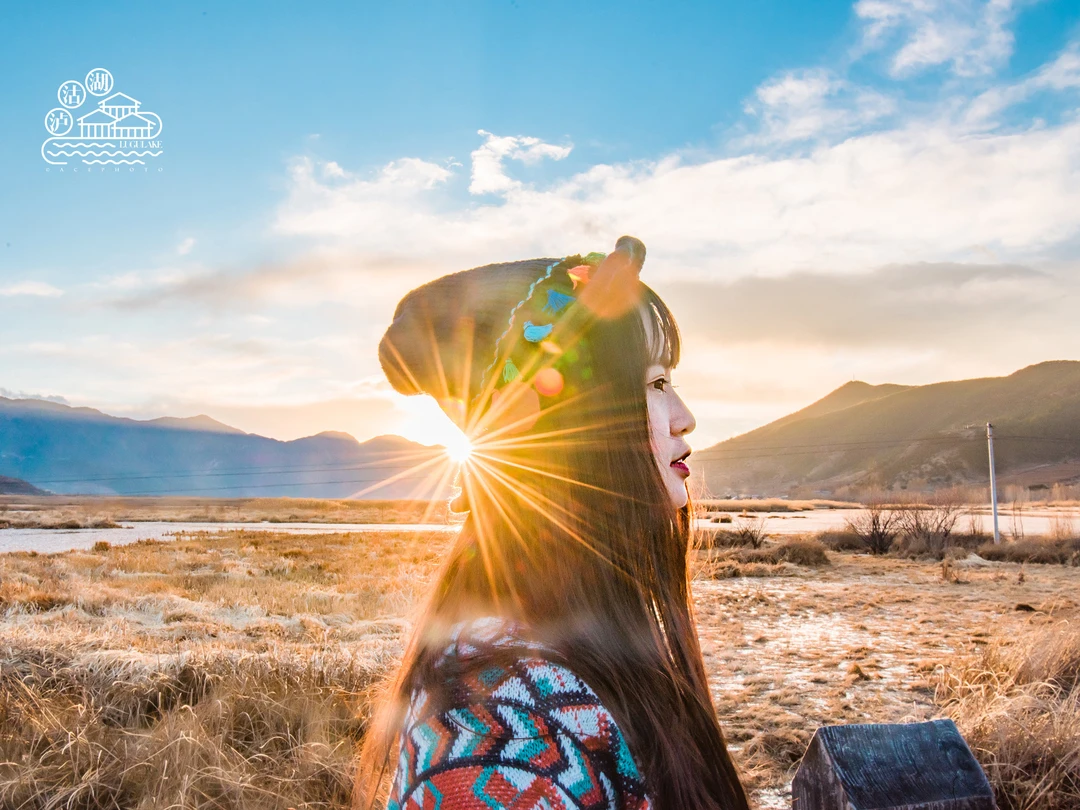
Slow Time Above the Clouds: An 8-Day Lazy Journey Through Dali, Lijiang, and Lugu Lake
When the city's noise and smog become suffocating, a voice deep inside always calls out: go to Yunnan—go to that land blessed by sunshine, blue skies, and white clouds. During the 2017 Spring Festival, my husband and I brought our parents along on this long-awaited family trip. Over eight days, from Dali to Lijiang and then to Lugu Lake, we chased warm sunlight, encountered seagulls from Siberia, and stumbled upon countless heart-stirring moments. This wasn't just a trip; it was a journey of serendipitously meeting beauty at every turn.
Why Yunnan?
Cold winters always make you long for a warm place. After a busy year, the Spring Festival holiday became our perfect breather. Traditionally, Spring Festival is reserved for family. I remember the last time I took my parents on a trip was two years ago—work had been keeping me from spending enough time with them. So this time, my husband and I decided to bring our four elders on a spontaneous Yunnan adventure.

Yunnan has no scorching summers and no bitter winters. Compared to Southeast Asia's tropical islands, it's drier here, but the temperature is much more comfortable. Every day in Shanghai, breathing in the smog, I felt like I was suffocating. I desperately needed a lazy trip filled with sunshine, blue skies, and white clouds to heal myself. Yunnan had been on my mind since college, and my parents had always wanted to see it too. It was a perfect match—a spontaneous decision, and just like that, we happily settled on this Spring Festival trip to Yunnan.
Itinerary Overview: 8 Days, 7 Nights of Slow Time
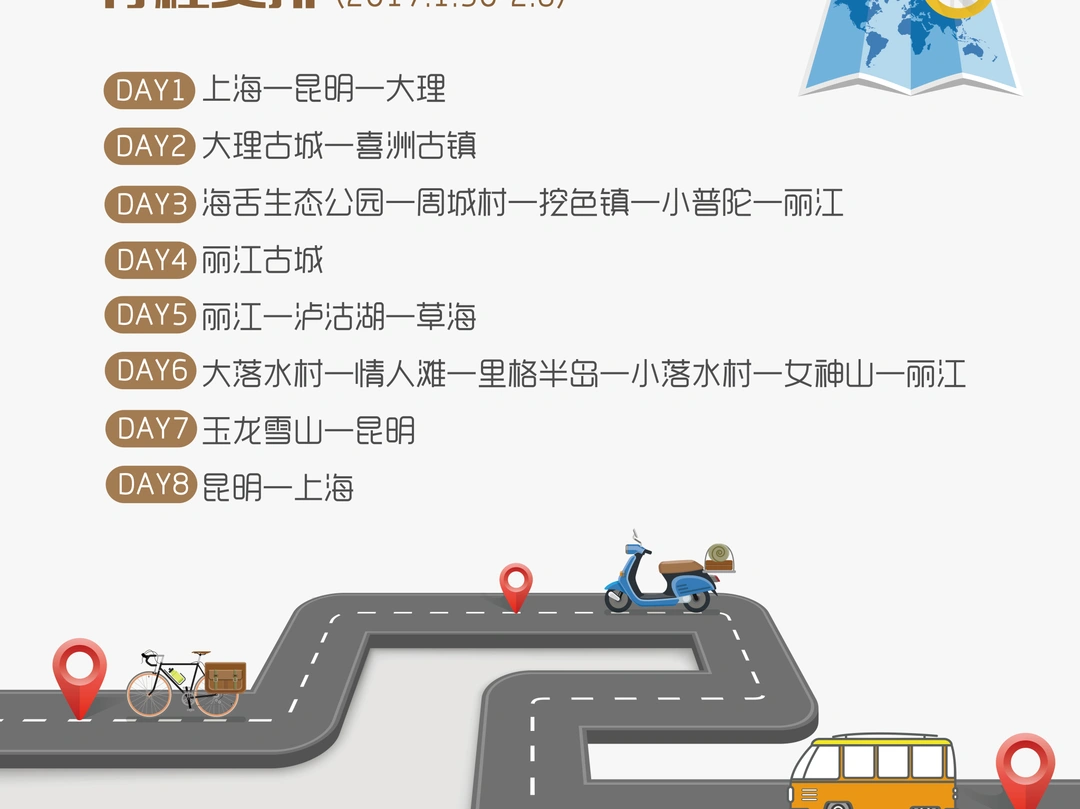
Due to work constraints, we planned an 8-day trip following the most classic and popular route: Dali—Lijiang—Lugu Lake. Excluding the first and last days spent traveling, we spent about two days in each place. During the Spring Festival, crowds and traffic were heavy, so our experience in Dali and Lijiang wasn't perfect. But Lugu Lake turned out to be the biggest surprise of the trip—it was the true definition of "slow time," and all four of us agreed it was the most beautiful and worthwhile destination. If you have enough time, I highly recommend staying a few extra days at Lugu Lake.
Travel Dates: January 30, 2017
Duration: 8 days
Cost per Person: Approximately RMB XXX (varies based on personal spending)
Travel Companions: Family trip (me, my husband, and our parents)
Day One in Yunnan: The Long Journey from Kunming to Dali
Early on the third day of the Lunar New Year, my husband and I caught a direct morning flight from Shanghai to Kunming. After nearly five hours of flying, we finally arrived in the "Spring City"—Kunming. For this trip, Kunming was just a transit point; we didn't linger. I hope next time I'll have a chance to explore this city of eternal spring.
We arrived at Kunming Changshui Airport around noon. After picking up our luggage, we found the airport bus ticket booth just outside. We needed to get to the Western Bus Station for our onward journey to Dali. The ticket cost 25 RMB per person, and the ride took about an hour. Exiting the airport, we walked to the right and spotted the last row of airport buses.
We reached the Western Bus Station at 1 PM and quickly joined the queue to buy tickets. Tickets required real-name registration, so make sure to have your ID ready. They cost 133 RMB per person (including insurance). Although buses from Kunming to Dali run every 15 to 20 minutes on average, the Spring Festival crowds meant the earliest bus we could get was at 3:30 PM. Doing the math—a 4.5-hour drive—we figured we'd arrive in Dali Old Town by evening.
Tip: There's a self-service ticket machine at the bus station that accepts WeChat payments. I recommend following the official "云南票务网" (Yunnan Ticketing Network) WeChat account in advance and buying your tickets online. Then, just pick them up at the station with your ID.
What was supposed to be a 4.5-hour bus ride stretched to 7 hours due to Spring Festival traffic jams. My back and legs were sore, and it was pure torture. On the way from Kunming to Dali, we stopped at the Chuxiong Chengjiaba service area, which has a food street. I suggest getting off to grab some snacks for energy.
After leaving home at 6 AM for the flight and bus, we finally arrived at our guesthouse around 10 PM. It had been an ordeal. After dropping off our luggage, we went out to find food. It was probably too late—many shops were closed. We settled on a small eatery and ordered a steaming pot of Bai-style sour fish hotpot, along with a bottle of the legendary "Wind, Flower, Snow, and Moon" beer to comfort our travel-weary selves. Here's hoping the rest of the trip goes smoothly!
Dali Old Town: First Encounters with Wind, Flower, Snow, and Moon
Morning Sunshine and First Impressions
Early the next morning, I couldn't wait to pull back the curtains. Seeing clear skies, a weight lifted off my shoulders. After a quick wash and storing our luggage, we set off.
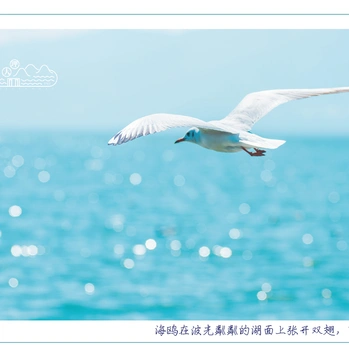
Our morning plan was to explore Dali Old Town, with an afternoon trip to Xizhou and an e-bike ride along Erhai Lake.
Right outside our guesthouse, there were plenty of breakfast stalls. We picked one at random and had simple soy milk and fried dough sticks—instantly recharged.
Tip: When traveling, you're often on the go all day, and meals can be irregular. Always have a good breakfast to keep your energy up for exploring.
From our guesthouse, "Liunian Inn," it was only a 5–6 minute walk to the old town, but we didn't realize that. Instead, we took a detour and rode Bus No. 8, getting off at the "Wind, Flower, Snow, and Moon Hotel" stop before finally seeing Dali Old Town.
Dali Old Town has four gates: the South Gate is the busiest, named "Dali Gate" after the calligraphy by Guo Moruo; the North Gate has no official name; the West Gate faces Cangshan Mountain and is called "Cangshan Gate"; the East Gate faces Erhai Lake and is called "Erhai Gate."
Walking into Dali Old Town, I couldn't help but feel a bit disappointed. Like most so-called "ancient towns" in China, it was heavily commercialized. Vendors hawked their wares on both sides of the street, and traffic flowed endlessly. For a moment, I wondered if I'd come to a "fake Dali." But don't worry—this wasn't the real old town yet. Keep walking along the main road, and you'll truly feel the charm of the ancient city.
You can rent e-bikes and bicycles inside the old town, but I don't recommend it. The streets are narrow and crowded, making for a terrible riding experience. Better to rely on your own two feet and slowly soak in the ancient atmosphere.
Surprises in the Depths of the Old Town
The existing Dali Old Town was rebuilt on the foundation of the Yangjumie City from the early Ming Dynasty. The city is square in shape, with four gates, towers above, and defensive walls below. Three streams run north-south as natural barriers. The outer city walls are brick, while the interior is crisscrossed by five main streets running south-north and eight lanes running east-west, forming a chessboard layout—hence the name "Nine Streets and Eighteen Lanes." The two opposing gate towers have been restored, and the deep lanes and quiet alleys weave together from west to east. The entire city features uniform black-tiled roofs and cobblestone walls, showcasing the old town's simplicity, uniqueness, and elegance.
Drawn by cheerful drumming, we discovered someone playing African hand drums. At first, it seemed unique, but later we realized they were everywhere in both Dali and Lijiang old towns. Paired with their ethnic music, the sound was incredibly infectious.
I highly recommend the traditional black sugar—a great companion for women during their periods. Each piece of black sugar is filled with different ingredients like rose petals, goji berries, chrysanthemums, and verbena—both tasty and nourishing.
Finally, we saw the legendary "roasted milk fan" (a local snack). A Bai grandmother spread an irregular, fan-shaped milk curd on a grill, brushed it with rose sauce, and rolled it up from one end with a bamboo stick, grilling as she went. When she finished, it was a golden, crispy roll. The surface was uneven but tempting. I'd read mixed reviews in travel blogs—some love it, some hate it, like stinky tofu. I decided not to try it myself.
After walking about 7–8 minutes from the gate where we got off, we finally reached the real Dali Old Town. Erhai Gate came into view. I couldn't wait to go inside and see the town's true face.
Life in the Old Town
Dali has a long history and is one of Yunnan's earliest cultural cradles. This history is reflected in the town's unique architecture. The Bai people have a tradition of growing and loving flowers, which influences the decorations on their homes. Under the blue sky and white clouds, clusters of bougainvillea swayed at the eaves. Walking through Erhai Gate, a different vista opened up.
At first, I was relieved that there weren't many tourists. But I was too naive. The further we went, the denser the crowds became. Oh well—since we were here, we had to push through.
In Dali Old Town, the most common sight was "colorful braids." They cost about 10 RMB for 5 or 6 braids. It seemed like 95% of the girls on the street had them, and the remaining 5% probably had super short hair. It was so popular, it could be called "Dali's signature hairstyle." The braiders were incredibly fast—they could finish 5 braids in about two minutes, even with their eyes closed. If you like it, don't miss out; it looks great in photos.
I put on my little hat and took a photo with my new hairstyle. Pretty cool, right?
The old town is full of unique guesthouses, bars, and restaurants. From the outside, this little bar had a great vibe. I imagined it would be lively and bustling at night.
I took this photo just because I found the painting on the door amusing.
My camera captured a cute kid with rosy cheeks—kind of reminds me of Guo Degang (a famous comedian). What do you think?
We stumbled upon a small vegetable market. I've always thought that visiting a market gives you a deeper insight into local life, customs, and the most authentic human atmosphere.
Wow, what a surprise! What's that in the front? Pumpkin? And the green stuff in the back? Pea shoots? There were a few things I couldn't name—I wonder what they taste like.
The Old Town's Hustle and Bustle
After walking around for a while, I noticed a puzzling issue: the streets were already narrow and crowded with tourists, and it was supposed to be a pedestrian zone. So why were tricycles and e-bikes allowed to drive through and weave around? It really ruined the experience. Just as you're walking along, you'd hear honking behind you, forcing you to stay alert instead of relaxing.
The sea of heads stretched endlessly. I had to look upward to avoid the crowds. The rooftops, all similar, still carried a hint of ancient charm.
We saw the famous Jiahua Flower Cake shop, recommended by CCTV. It's probably the most well-known flower cake brand in Yunnan. There were dozens of flower cake shops on the street. We tried a couple, and they tasted almost the same. Jiahua just has stronger marketing and a higher price.
Sure enough, we found a shop selling various African hand drums. I wanted to buy one to bring home, but my husband firmly vetoed it. He knows my habit of getting bored quickly—though I refused to admit it.
If any ladies come to Yunnan without proper photo outfits, don't worry—just shop here. Many stores sell beautiful dresses that will make your head spin. There are also matching scarves and shoes with ethnic flair, perfect for photos. Prices aren't too high, and many shops allow bargaining. They also make great gifts for friends.
The closer we got to the old town center, the more crowded it became. I'd planned to turn back, but I insisted on climbing the Wuhua Tower for a panoramic view. My husband had no choice but to follow me through the crowd.
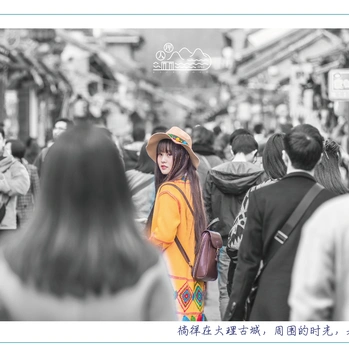
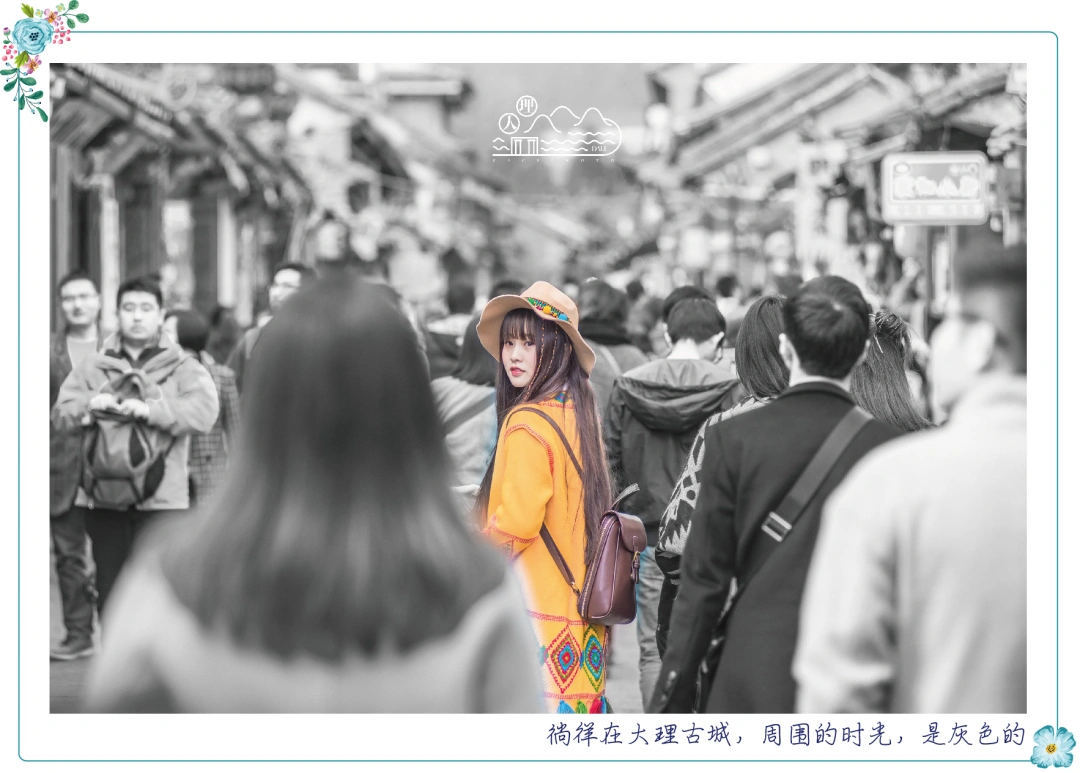
Good thing I wore bright yellow today—it was easy to spot me in the sea of dark clothes. My husband cleverly switched to a telephoto lens to capture me in the crowd. I managed to get a few decent "been here" photos.
Oops, caught me. Yes, I deliberately created a black-and-white photo with me in color in Photoshop. I kind of like it.
I used my new camera—the legendary "street photography神器" (tool), the Fuji X70—to capture Dali Old Town through my eyes.
"Sea of People" on Wuhua Tower
After squeezing through the crowd, we finally reached the legendary Wuhua Tower. We pushed on to climb up and overlook the old town.
Legend says that in ancient times, Wuhua Tower was used for official gatherings and banquets for distinguished guests. It was five stories high and could hold thousands of people. Over its thousand-year history, it was destroyed and rebuilt several times. The current tower was reconstructed in 1998, a four-story building over 20 meters tall. The first floor is a platform, and the upper three floors form the tower. Wuhua Tower is one of Dali Old Town's landmarks.
When I looked out from the tower, I felt my fear of crowds was almost cured. The view was too overwhelming—dense crowds everywhere. So, a word of advice: think twice before visiting popular tourist spots during holidays—you'll only see people. Wiping away my tears, I moved on.
We eventually reached the busiest street in the old town—Foreigner Street (Yangren Street). Originally called "Huguo Road" (Protect the Nation Road), it was named after Yunnan's resistance against Yuan Shikai's monarchy in the early Republic era. The street was lined with snacks and shops, brimming with commercial energy. It was packed, so we decided not to squeeze in further. It was almost noon, so we prepared to head back.
We spotted a cinema with a historical feel—apparently, it still shows old movies sometimes.
By midday, the old town center was even more crowded. Finally, we discovered a quiet alley.
Walking through the alley, we found unexpected sights. We came across a wall decorated with beer bottles. Simple creativity added a touch of charm to the old town. Truly, "creativity is everywhere if you have an eye for beauty."
In Dali, the most common sight is large patches of magenta bougainvillea. I saw orange flowers for the first time—I don't know their name. But since I love orange, I couldn't resist taking photos.
At noon, we returned to the guesthouse to pick up our luggage and had lunch at a nearby specialty restaurant. We ordered a few light home-style dishes—all delicious and very satisfying.
Cycling Around Erhai Lake: Encountering "Dali's Divine Light"
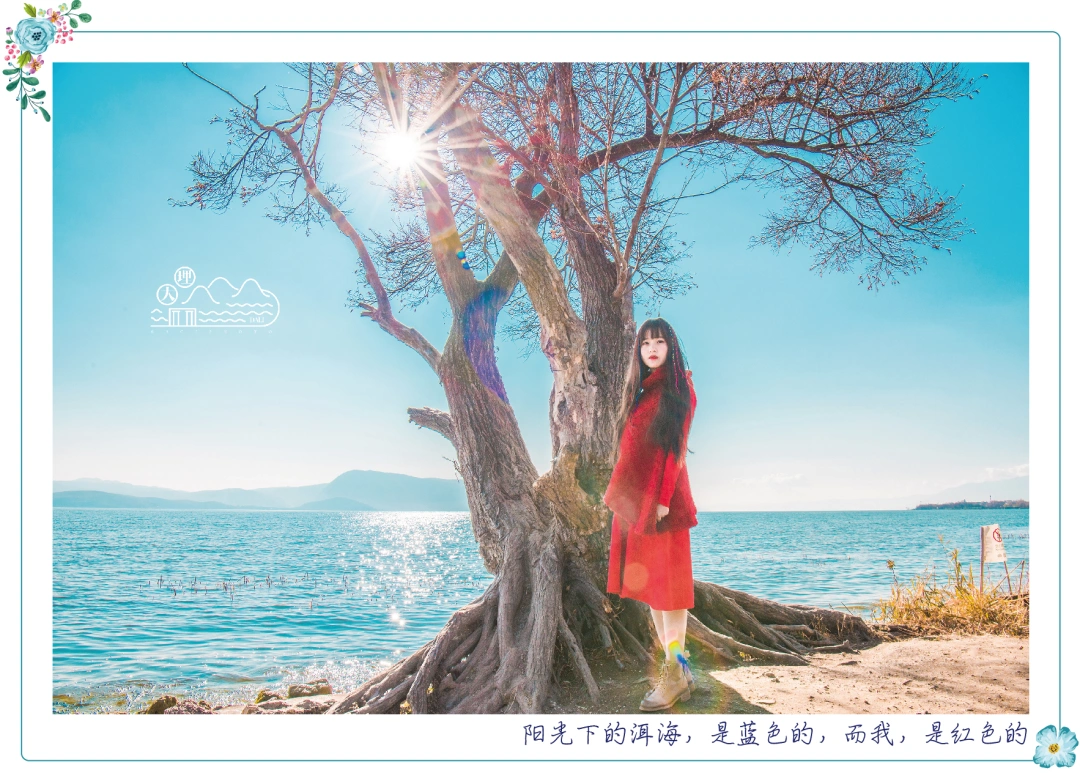
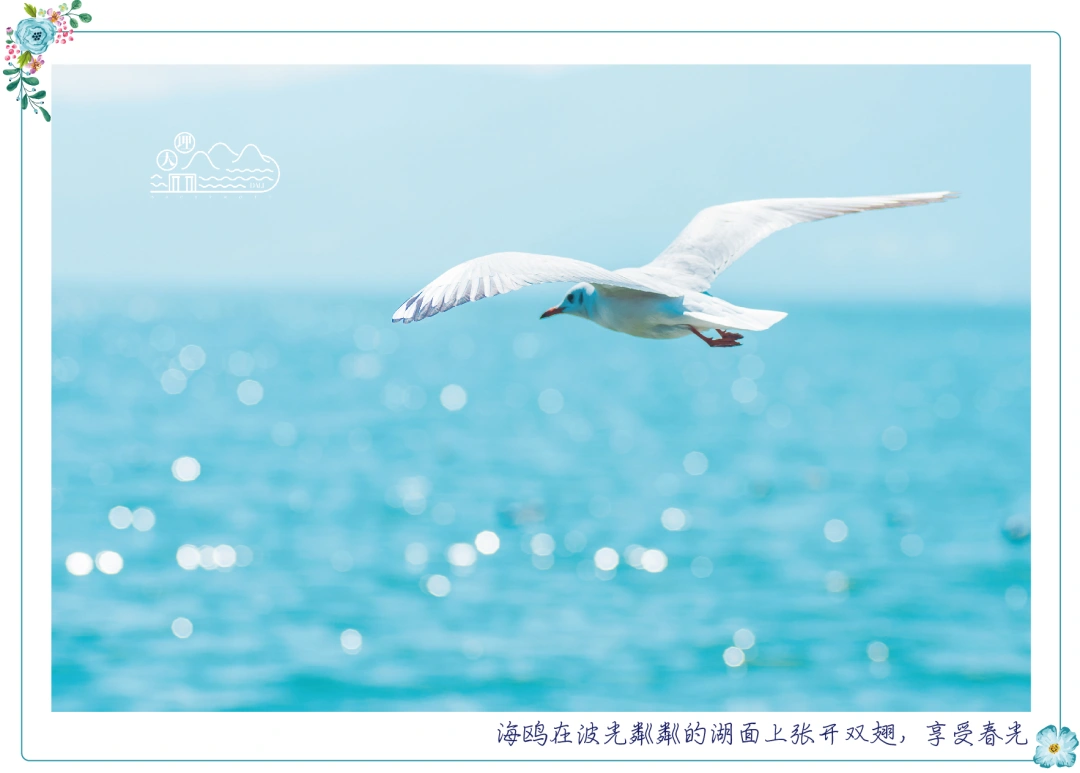
Erhai Lake is actually a lake, but locals call it a "sea" out of love. It's neither fully sea nor fully lake—it has the sea's vastness and the lake's stillness. One scene, two flavors, both memorable. What's most refreshing is the serene, peaceful charm and the escape from worldly noise.
Erhai Lake is shaped like a human ear—long from north to south, narrow from east to west—like a crescent moon lying quietly beside Cangshan Mountain and the Dali Basin. Around the lake are villages like Caicun, Xizhou, Shuanglang, Wase, and Haidong, each with its own character.
After lunch, we found a car in the old town and negotiated a fare of 80 RMB (higher during Spring Festival) to take us directly to our hotel for the night, Dali Die Hai Yue Seaview Resort. Located in Xizhou, it's a first-line sea-view hotel, very quiet. The first-floor public terrace overlooks Erhai Lake. As we sat down to rest, a staff member kindly brought us warm black tea—thoughtful and heartwarming.
After a short break, we decided to rent an e-bike to visit Xizhou Ancient Town and start our afternoon itinerary. Behind Die Hai Yue, there was a rental shop. They offered two types: smaller ones that could run 30–40 km for 80 RMB per day, and larger ones that could run 60–70 km for 120 RMB per day. We rented a larger one and negotiated a half-day price of 80 RMB. Since we were guests, we didn't need to pay upfront or leave a deposit or ID. And so, we happily set off.
I have to say, Dali is perfect for cycling. Far from the city's noise, the slow pace and fresh air cleanse your soul. On this pure land, you can find every bit of beauty and emotion.
On the way to Xizhou, we passed a field of blooming rapeseed flowers. Under the blue sky and white clouds, with black-tiled, white-walled Bai houses in the distance and golden flowers up close, every snapshot looked like a painting.
After admiring the Bai-style architecture, we continued riding, enjoying the scenery. But then, disaster struck. Just as we hit the main road, a long nail punctured our tire. We were stunned. Luckily, we had the shop owner's WeChat. I contacted him immediately, and he was great—he asked for our location and said he'd come as soon as possible.
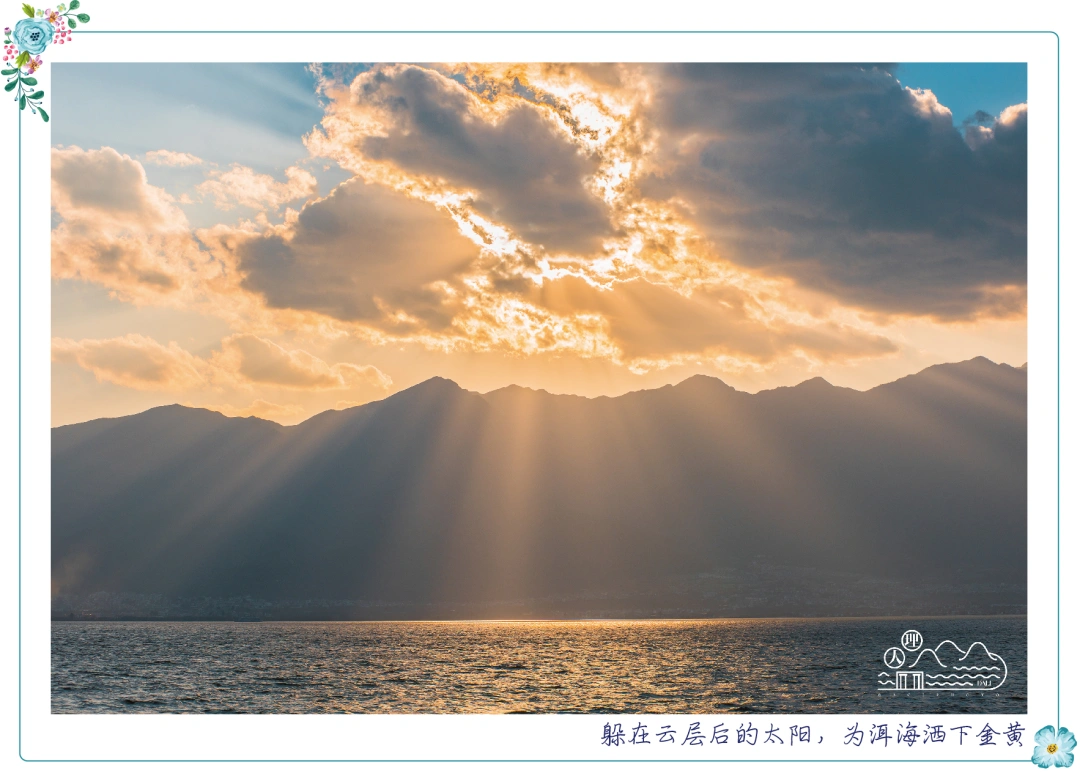
Dali's clouds go through a daily cycle: they form on the mountains with the morning mist, rise slowly, and then in the afternoon, create a "Tyndall effect" with the sunlight above Cangshan. Just then, we saw the legendary "Jesus light," also called "Dali's Divine Light" by netizens.
I rushed into the green farmland and asked my husband to take my photo. The light lasted only about ten minutes before the sky turned overcast. But I didn't miss my chance and got a few good shots.
After waiting about ten minutes, the shop owner arrived and swapped our bike for a new one. Off we went again!
Xizhou Ancient Town: A Living Fossil of Bai Architecture
There are banyan trees, gray-tiled white walls, four-in-one courtyards with five patios, three houses with a screen wall, cobblestone paths winding into the distance, and the aroma of crispy "破酥粑粑" (a local flatbread).
Xizhou—just hearing the name draws you in, making you want to visit and soak up its auspicious vibe.
Dali's weather is truly unpredictable. It was gloomy when we arrived, but by the time we reached Xizhou Ancient Town, the sun was out again. I've always had incredible luck with weather during my travels. Hope it continues!
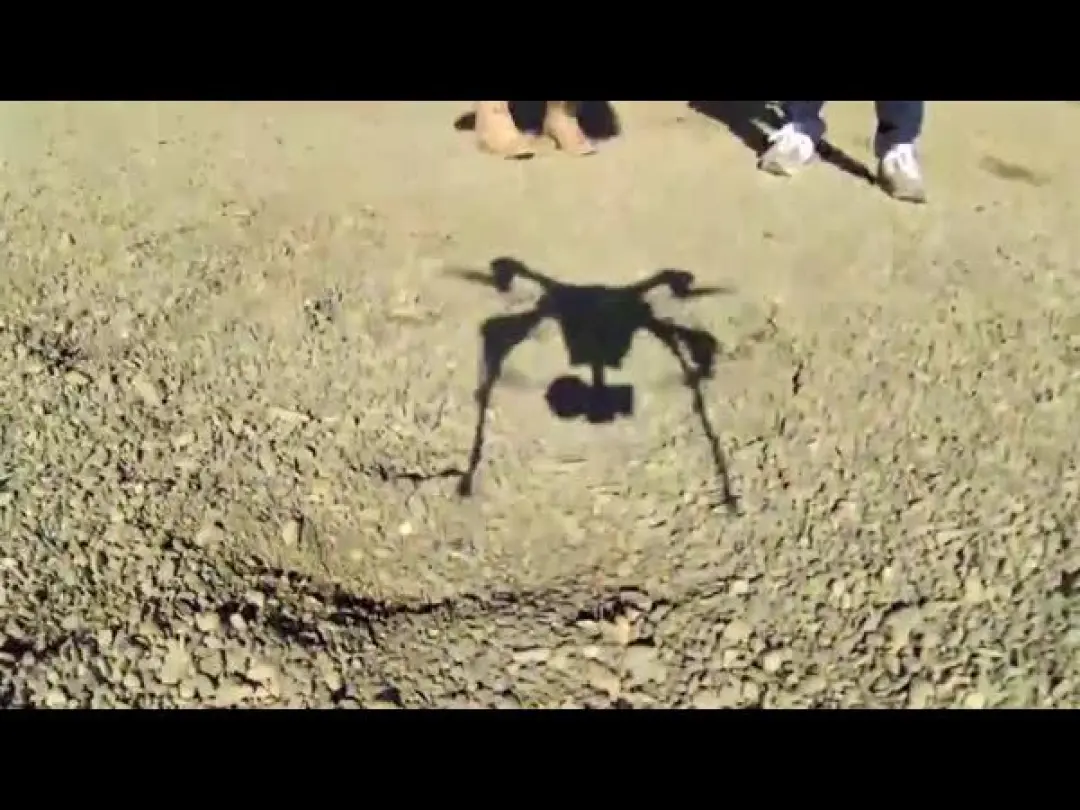
Taking advantage of the good weather, I immediately flew my drone. A crowd gathered around—I think they were intrigued by my VR goggles. Unlike DJI's remote control, the EHang drone uses VR goggles for head-tracking control, which is quite unique. Let's experience this high-tech gadget.
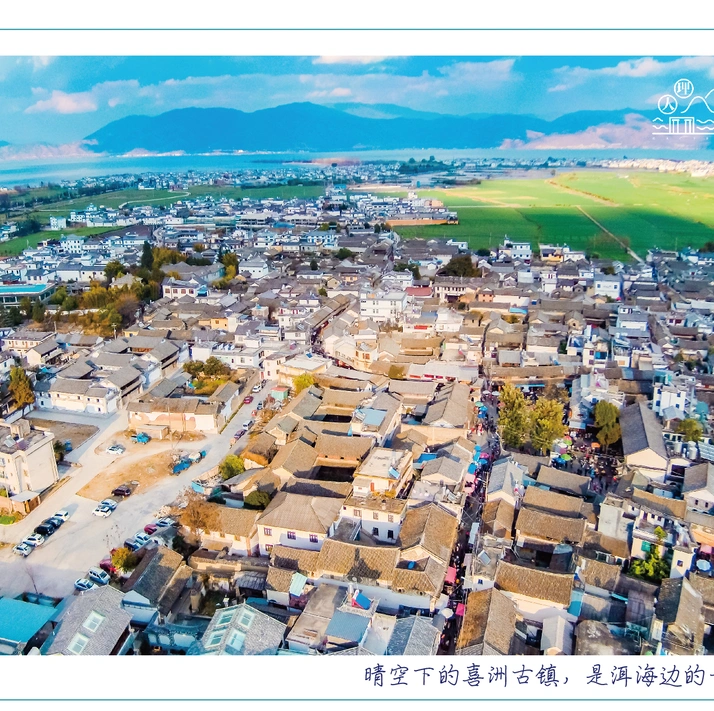
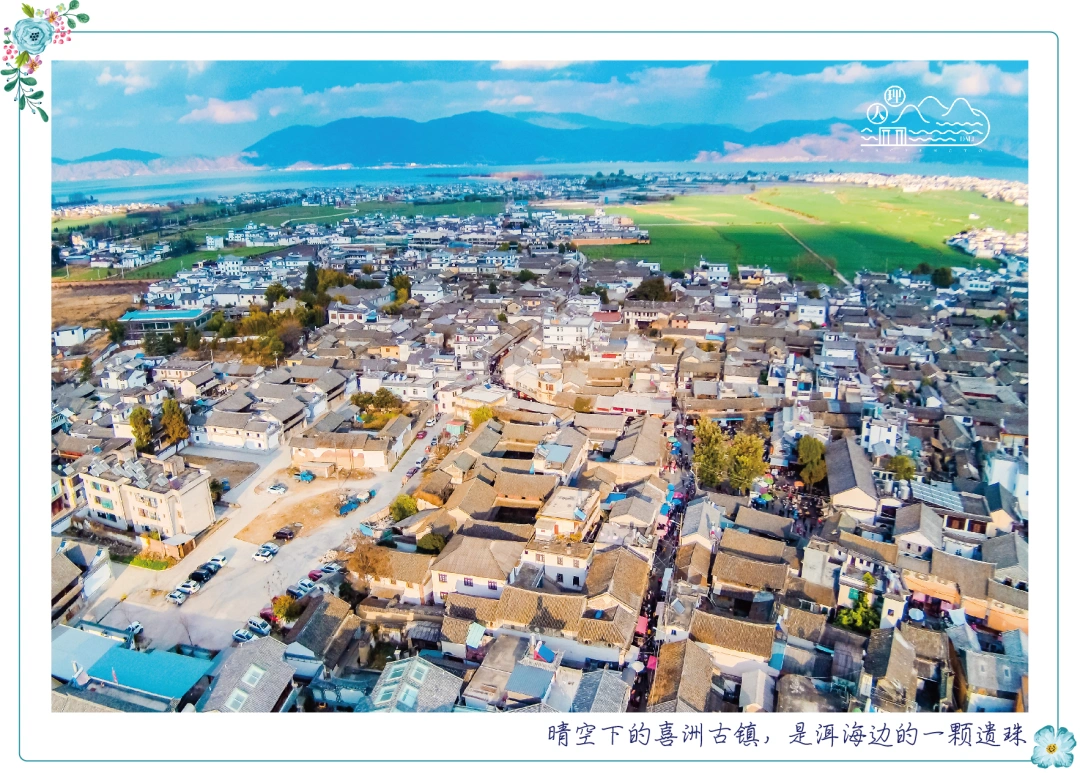
For the first time, I saw Xizhou Ancient Town from a bird's-eye view. Close by, black-tiled white walls; farther away, green farmland; and in the distance, Cangshan Mountain and Erhai Lake—all captured in one frame, absolutely stunning.
As soon as I finished flying, the weather turned gloomy again. We decided to explore Xizhou and find the legendary flatbread.
It seemed similar to Dali Old Town—mostly shops selling clothes, local products, and souvenirs.
Although both Dali Old Town and Xizhou Ancient Town have been renovated, Xizhou, as a historical town and a typical Bai commercial center, has older architecture. It's dominated by black-and-white ink tones, simple and elegant. The worn bricks and tiles show signs of age, adding to the ancient feel. Xizhou is one of Yunnan's famous侨乡 (hometowns of overseas Chinese) and the birthplace of the film "Five Golden Flowers."
Quick Lesson: Bai Residential Architecture
The town boasts hundreds of Bai-style houses from the Ming, Qing, and Republic eras, as well as modern times. Common layouts include "three houses with a screen wall," "four-in-one courtyard with five patios," "one entrance, two courtyards," and "one entrance, four courtyards," with the first two being most prevalent. Notable old mansions include the Yan Family Mansion (Sifang Street), the Yang Family Mansion (Xilin Courtyard in Chengbei Village), and the Dong Family Mansion (Dongyuan Guesthouse). Newer representatives include the Yan Family Residence (Fuchunli) and the Yang Family Yongxiang Residence (Chengbei Village). If you're interested in old courtyards, explore the alleys—you'll find treasures.
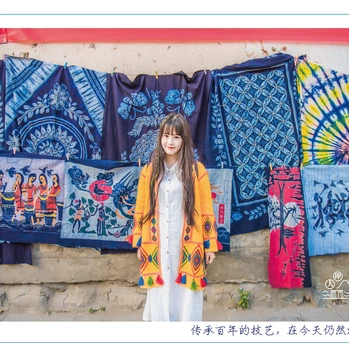
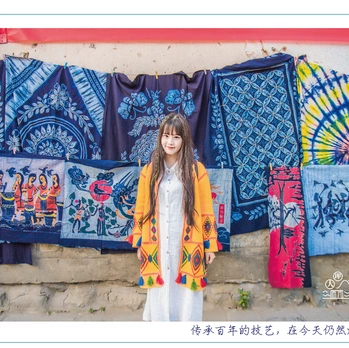
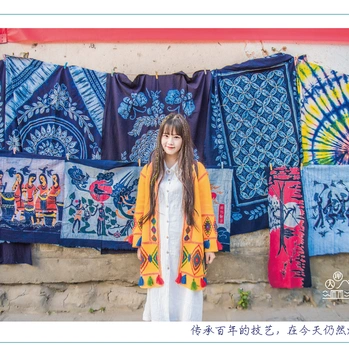
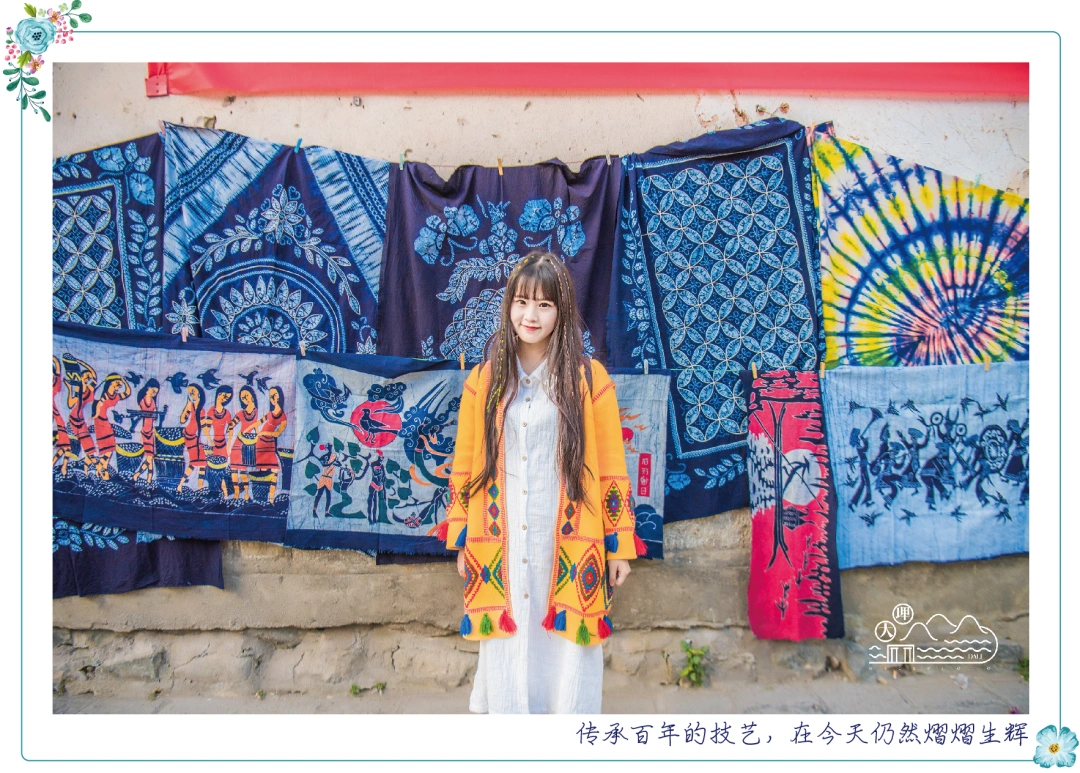
One thing worth mentioning in Xizhou is the unique Bai ethnic craft—tie-dye (扎染).
Tie-dye, known as "jiao xie" in ancient times, is an ancient textile dyeing technique. In Dali, it's called "疙瘩花布" (knotted flower cloth). Since most dyers are Bai people, it's also called Dali tie-dye or Bai tie-dye. Colorful, patterned tie-dye cloths of various sizes hang on white walls for visitors to browse and buy. Strolling through elegant Bai-style houses is a delightful experience.
Everything here transports you back in time, distancing you from the noisy world.
What a nostalgic barbershop!
Finally, we found the legendary flatbread. It cost 10 RMB each, available in sweet and savory versions. Named after Xizhou, the sweet one has sesame and peanuts, while the savory one has minced meat and green onions. Made with a unique fermentation and double-sided oil-grilling, it's crispy on the outside, tender inside, and incredibly fragrant.
Lijiang Old Town: Soft Time on the Ancient Tea Horse Road

We took the train from Dali to Lijiang—about a 2-hour ride with breathtaking scenery along the way.
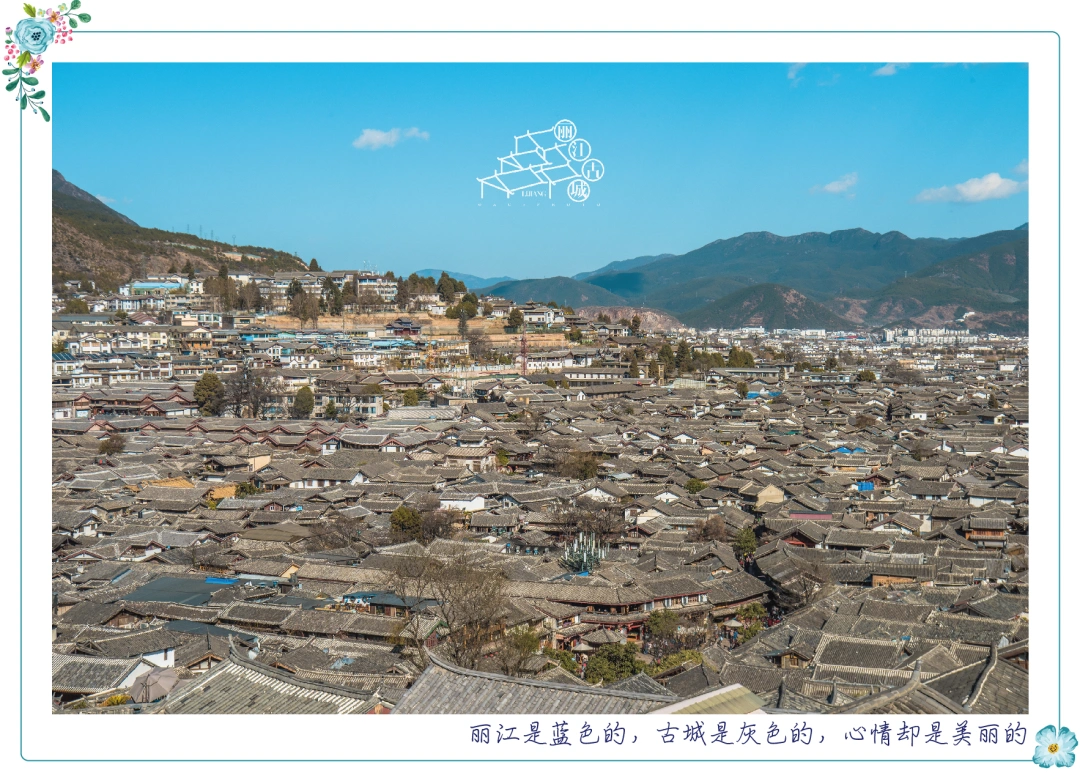
Lijiang Old Town, also known as Dayan Town, is one of the most famous towns on the Ancient Tea Horse Road, with over 800 years of history. The town features wooden buildings, black tiles, ancient stone streets, and small bridges over flowing water. Standing on East Street, you can see Jade Dragon Snow Mountain in the distance. Dayan is a wall-less old town, with smooth cobblestone paths, hand-built wooden and earthen houses, and water channels everywhere. Films like "One Meter Sunshine" and "Mufu: The Storm" were shot here.
Morning and Night in the Old Town
Compared to Dali Old Town, Lijiang is more refined but also more commercialized. However, in the early morning and late at night, when the crowds disperse, the town reveals its true face.
In the morning, sunlight filters through the wooden buildings onto the cobblestones, and the air is filled with the scent of flowers and coffee. At this hour, the old town is so quiet you don't want to disturb it. We wandered slowly through the alleys, occasionally meeting elderly flower sellers or shop owners preparing to open.
At night, Lijiang is a different story. Bar Street is brightly lit, with singing, laughter, and music blending together. But if you prefer quiet, find a peaceful café, sit by the window, and watch the world go by while listening to the wind.
The Mufu Mansion
The Mufu Mansion is the heart of Lijiang Old Town and the filming location for "Mufu: The Storm." This former chieftain's residence is grand in scale and exquisite in design. Walking inside feels like stepping back into a turbulent era. The gardens, halls, and study rooms all carry a sense of historical depth.
Lugu Lake: A Paradise-Like Blue Wonderland
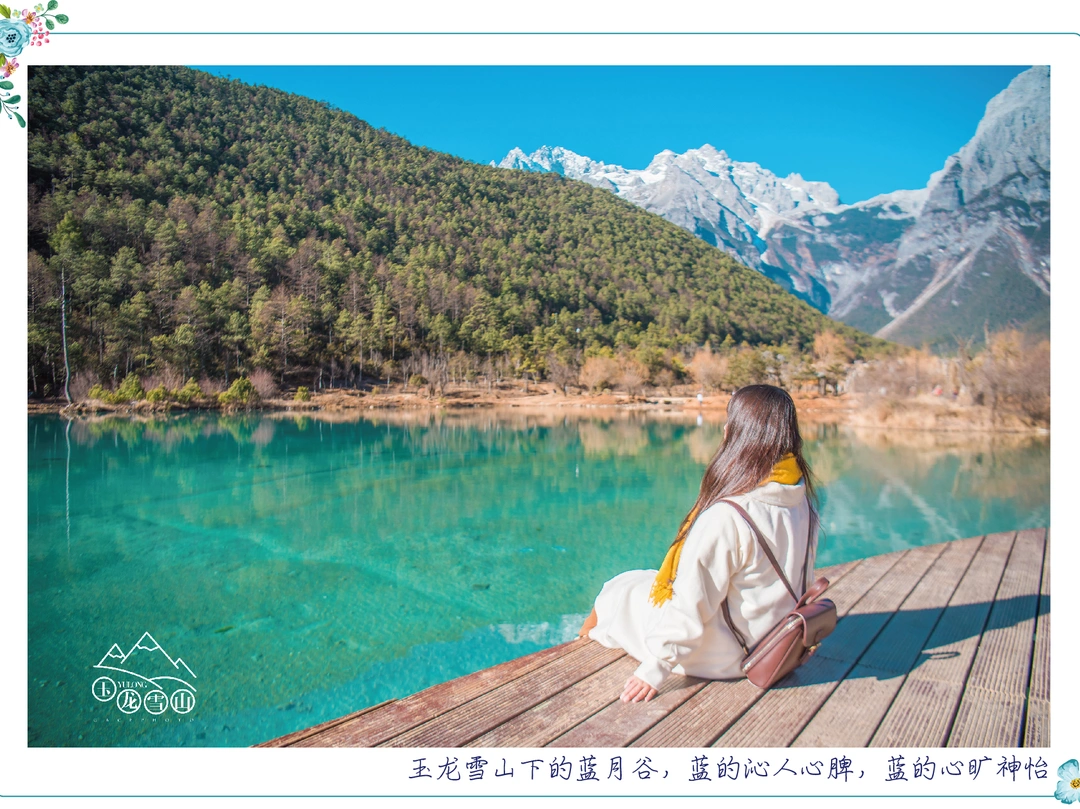
The drive from Lijiang to Lugu Lake takes about 4 hours. The winding mountain roads can make you dizzy, but when Lugu Lake appears before you, all fatigue vanishes.
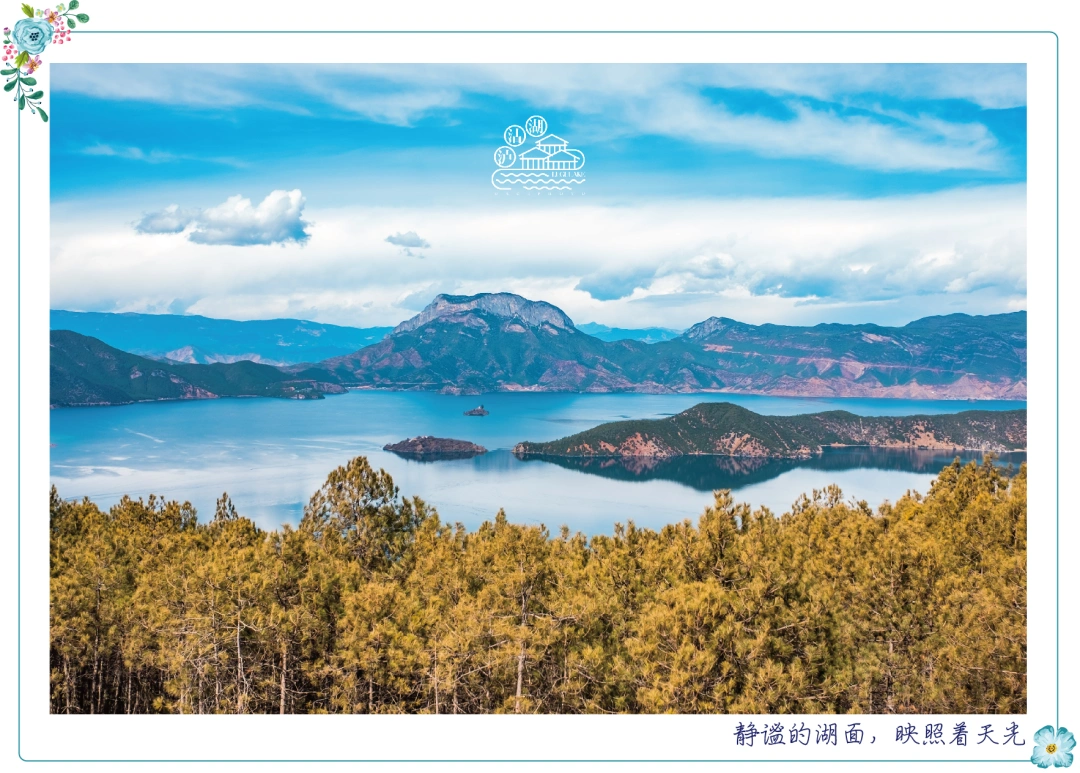
Lugu Lake lies in the mountains at the border of Sichuan and Yunnan. It's a plateau lake formed by fault subsidence, at an altitude of about 2,700 meters. Divided by the lake's center, one-third belongs to Ninglang County in Yunnan, and two-thirds to Yanyuan County in Sichuan. The lake is shaped like a horseshoe or an embryo in a womb. With an average depth of 40 meters and a maximum of 93 meters, Lugu Lake has excellent ecological conditions due to its remote location. Its water is exceptionally pure, and the scenery has a near-primitive, simple beauty.
Stunning Lake and Mountain Views
We arrived at Lugu Lake in the evening. The setting sun cast golden ripples across the surface, as if sprinkling a layer of gold. Distant mountains appeared faintly in the twilight, and the islands in the lake looked like green boats floating on the water.
We stayed at a lakeside guesthouse, where opening the window revealed the lake. In the morning, a thin mist hung over the water, like a fairyland. We rented a pig-trough boat and rowed to the center. The water was so clear you could see the aquatic plants and fish. Our boatman, a local Mosuo person, told us the lake water was drinkable. I cupped some in my hands and took a sip—it was sweet and refreshing.
Mosuo Culture
Lugu Lake is the homeland of the Mosuo people, who maintain a matriarchal society. Their tradition of "walking marriages" adds an air of mystery to the region. We visited a Mosuo village, saw their grandmother's rooms and flower towers, and learned about their lifestyle and cultural traditions.
The evening bonfire party is a highlight of Lugu Lake. Mosuo people dance and sing around the fire, and tourists can join in. The joy and enthusiasm were infectious.
Cycling Around the Lake
The next day, we rented an e-bike and began a circumnavigation of the lake. The loop is about 70 km, with breathtaking scenery all along the way. From Yunnan to Sichuan and back, we saw different lake and mountain views.
What I'll never forget is Lige Peninsula. From the observation deck, the entire Lugu Lake spread out before us. The water displayed various shades of blue in the sunlight—from light to deep—like a giant sapphire. Distant mountains rolled endlessly, and islands dotted the lake. At that moment, I truly felt this was a paradise on earth.
Jade Dragon Snow Mountain: Melancholy Under a Bright Sun
After returning from Lugu Lake to Lijiang, we visited Jade Dragon Snow Mountain. This 5,596-meter peak is a sacred mountain for the Naxi people.
We took a cable car up. As the altitude increased, the temperature dropped. At the 4,506-meter observation deck, the wind was biting cold, but the sun was blazing. That feeling of "melancholy under a bright sun" is unique to Jade Dragon Snow Mountain.
Standing on the snow-covered peak, looking down at the sea of clouds and distant mountains, I felt both awe and insignificance. Nature's power is humbling.
Practical Guide: Loaded with Tips
Transportation
- *
You should also read:

Cloud Travelogue · Dali of Wind, Flowers, Snow, and Moon: A Three-Day, Two-Night Journey of a Free Spirit
Cloud Travelogue · Dali of Wind, Flowers, Snow, and Moon: A Three-Day, Two-Night Journey of a Free Spirit I am a cultured female foodie with a touch of rogue charm. I slung on my backpack, took my lover's hand, and set off on a spontaneous…
Continue reading...
The Meaning of Travel – A Tengchong Story: A Journey of the Heart and Personal Growth
The Meaning of Travel – A Tengchong Story: A Journey of the Heart and Personal Growth Setting Out, Only to Return a Better Self Some say travel is nothing more than leaving a place you're tired of, only to go to a place where others…
Continue reading...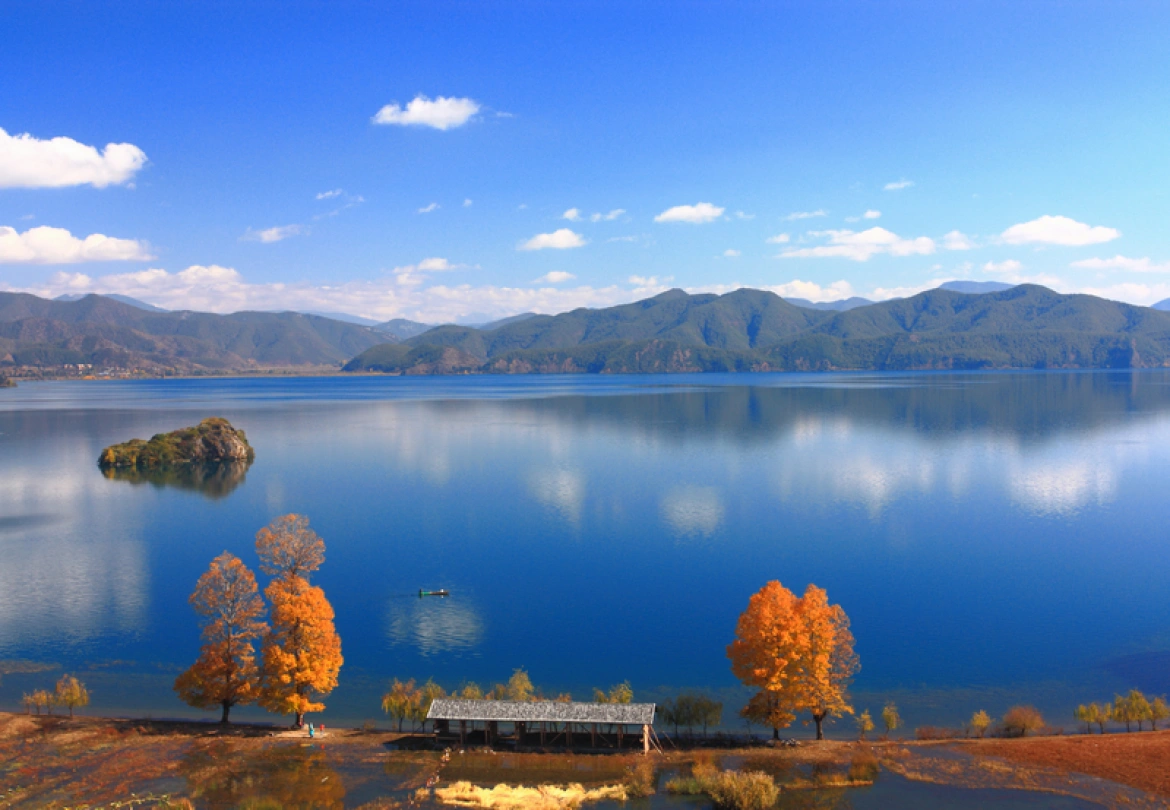
A Spiritual Journey to Lugu Lake in Lijiang: Experiencing the Legend of the Kingdom of Women! (Reproduction and Hotlinking Prohibited)
A Spiritual Journey to Lugu Lake in Lijiang: Experiencing the Legend of the Kingdom of Women! (Reproduction and Hotlinking Prohibited) Off-road自驾, food, hotel and民宿 reviews, Featured Traveler, Tank 300 owner, 200,000 km of self-driving experience. WeChat: y01294987 Ninglang Yi Autonomous County 2010.11.08 · 7 days…
Continue reading...