South of the Clouds, Beauty Like This (Nuo Deng - Dali Xizhou - Lijiang)

South of the Clouds, Beauty Like This (Nuo Deng - Dali Xizhou - Lijiang)
Kunming Green Lake Park
Thank you, Mafengwo, for featuring me on the homepage again! And thanks to all of you for your support! — Sarah
If you'd like to connect, feel free to follow my WeChat public account "Sarah小晨" (search for "sarahxc").
Some photos~
Tongue Peninsula
Xizhou
Answers to frequently asked questions:
- Camera: Nikon D90 kit lens; some photos were taken with a film camera.
- Watermark: Added with Photoshop; color grading was also done there.
- Background music: "Riding a White Horse" by Lala Hsu
I've been hanging around Mafengwo for a while now, and over time I've written 21 travelogues. They're just casual pieces, really, but I'm grateful for your love and support. I've been featured on the homepage and earned the "treasure" badge. Reading the comments under my posts, I realized that my words and photos can actually carry energy. (What surprised me was that some people actually read my Tibet travelogue and were inspired to go there themselves.) That gives me motivation and confidence to keep writing.
But writing travelogues is something I want to stick with regardless of how many people read them. Maybe you could say it's about staying true to my original intention. Since I got my DSLR, I've been able to better express what I see. When my travels took on meaning beyond just having fun, when I felt the urge to put pen to paper, I started spreading out these stories one by one. Organizing photos and writing words—for me, it's a kind of accounting, a task as essential as trip preparation, something I feel in my heart I must complete.
Of course, I don't put pressure on myself. I've always valued freedom and tolerance, so everything comes from the heart, spontaneously. Even if I'm just muttering to myself, singing softly, that's fine too.
Enough rambling. Let's get to the main event.
South of the clouds, beauty like this.
You can't see all of Yunnan's beauty in just one trip. As the official slogan "Colorful Yunnan" suggests, its diverse terrain and vibrant ethnic cultures dress Yunnan like a dazzling beauty, attracting countless people to catch a glimpse. Border regions are full of wonders—China's frontier provinces always hold such allure. In my mind, Tibet and Xinjiang are the top destinations in the country, but perhaps because they're far and feel exotic, they seem distant. Not Yunnan. Its charm and gentleness feel like the young woman who just passed by your door—a sweet smile, captivating eyes, making you want to get closer. Although China's land is vast, there are places like this with beautiful mountains and waters where you don't need too much travel to lean against Cangshan Mountain, face Erhai Lake, enjoy the wind, flowers, snow, and moonlight, and witness the blooming of spring. But Yunnan doesn't reveal all its faces. There are also beauties like those on the other side of the water, hiding some treasures, waiting for those with a discerning heart to discover.
A preview of photos~
Taoyuan Village
Doggy... Weibo: @Sarah小晨 (Feel free to ask questions!)
This Yunnan trip was also recorded as a radio program ["Wind, Flowers, Snow, and Moon in Dali City"] — welcome to listen! (It's on a radio FM station run by my classmate; I'm also one of the hosts. We chat about movies, travel, stories, and gossip. Welcome to follow!)
Other travelogues (direct links):
Taking photos and writing travelogues are my little hobbies. Recording beautiful scenery, touching moments, and interesting stories to share with everyone is also a way to spread beauty and love. This world is too beautiful—please cherish it and love it deeply.
This travelogue has tons of photos, so please be patient and scroll down.
It seems since my freshman year, I've been restless at certain times of the year, always wanting to go out, to run away, to see more scenery. Looking back over the years, I've traveled every year. Whether it's tourism or travel, I've never cared much about labels. I just know I go out to appreciate, to feel, to understand—to set out with inspiration, perhaps return fully satisfied, perhaps with slight regrets, but always gaining something. That's me. In this noisy world, labels fly everywhere—artsy youth, backpackers, hipsters. Some people eagerly want to define themselves, while others avoid it. I can't find the right word, and I don't need to force a label. So I find a quiet corner, lay out my thoughts, and there—I'm in these words.
Yes, I want to see more of this world. I might be impatient, or I might be slow-paced, but I know that travel is already a part of life, a necessity. So there's really no need to keep shouting about the meaning of travel.
The most beautiful scenery is always far away, but where isn't a foreign land? And where isn't home? Knowing how to cherish the scenery around you, while also longing for distant places and embracing a poetic world—that's probably the best mindset. You can go out and come back, advance and retreat, adjust your state, and life continues.
This article is divided into five parts: 1. Pre-trip Tips; 2. Kunming; 3. Nuo Deng; 4. Dali; 5. Lijiang.
Below are practical travel tips that might help with your trip. If you only want to see photos, feel free to skip ahead~
Pre-Trip Preparation
How to design your itinerary is a big question. This time, I originally wanted to go to Lugu Lake, but I learned that the road was under construction, the conditions weren't great, and it would take a long time. Since my family is in Sichuan, I thought I'd go from there next time. Shangri-La was also considered. I actually believe in the existence of a "Greater Shangri-La" that spans Sichuan, Yunnan, and Tibet, with stunning scenery. It's just that the county in Yunnan was lucky enough to claim the name. After researching, I found that the main attractions weren't as beautiful as I imagined. Maybe because I've been to Tibet, I've seen this kind of scenery before—and it didn't cost anything—but Shangri-La's attractions have expensive tickets, so I passed on it directly (of course, if you haven't been, you should go). In the end, I set the tone as a leisure trip, focusing on Dali Prefecture. Since Ivan had never been to Lijiang, we'd spend the last two days there on the way.
I previously referenced a travelogue about an in-depth Yunnan route, which was very helpful. Thanks to the original author!
Time: May 21–30, 2014
Day 1: Guangzhou → Kunming (Qiaoxiangyuan Crossing-the-Bridge Noodles, Army Memorial Hall, Yunnan University, Wenlin Street, Kunming Old Street, Golden Horse & Jade Rooster Square)
Day 2: Dali → Yunlong → Nuo Deng
Day 3: Nuo Deng

Day 4: Nuo Deng → Dali Xiaguan → Caicun → Dali Old Town
Day 5: Caicun → Taoyuan Village
Day 6: Cycling along the West Erhai Road (Taoyuan, Xizhou Ancient Town, Tongue Peninsula)
Day 7: Taoyuan → Xiaguan → Lijiang → Shuhe Ancient Town
Day 8: Dayan, Shuhe
Day 9: Cycling outside Shuhe, Baisha
Day 10: Kunming → Guangzhou
The entire trip wasn't rushed; it was very relaxed. We had plenty of time to do whatever we wanted—stroll around, take photos slowly. If you pack your schedule tighter, you can visit more places. Or if you have less time, you can make it more compact.
Transportation
- Kunming ↔ Guangzhou: By plane. Tickets weren't too expensive. Bought three days in advance, about ¥1,275 round trip including tax. Since the departure time was decided suddenly, it was a bit rushed. If you book half a month in advance, you can get it for around ¥1,000.

Kunming ↔ Dali, Lijiang: By train. Kunming → Dali K9636, ¥155 soft sleeper; Lijiang → Kunming K9616, ¥152 hard sleeper. Since the trip from Kunming to Dali and Lijiang is long, we chose the overnight train. Buying a sleeper means you just sleep through it—a more economical choice.
Dali ↔ Nuo Deng: From the train station, take Bus 1 to Xiaguan Xingsheng Road Bus Station, buy a ticket to Yunlong (every 40 minutes, ¥44, about 4 hours). Arrive at Yunlong Bus Station, then take a motorized tricycle (¥30 per car) into the mountains. The roads are dirt and bumpy, and you'll get off at the Nuo Deng village parking lot.
Local transportation in Dali: Kunming and Lijiang have buses and taxis—nothing special to mention. Dali needs a bit more explanation. To go to the old town, take Bus 8 to the end. To go to Caicun, switch to Bus 2. To go to Xizhou, Taoyuan, or Butterfly Spring, you can charter a car or catch a passing bus. Along Dali Road, you can just flag down passing buses heading from Xiaguan to Eryuan. There are many on the road; I waited less than five minutes to catch one. The fare is much cheaper than chartering a car. If you're going to Shuanglang, you'll need to charter a car—sharing with others is more affordable. I didn't go, so I don't know the price. In Taoyuan Village, bike rental is ¥30/day, electric scooter ¥80/day. I highly recommend cycling along the West Erhai Road.
In Yunnan, we mostly took buses and long-distance coaches, traveling with locals, and the prices were relatively cheap. Taxis in Lijiang are expensive—from Dayan to Shuhe, they charge ¥40.
Accommodation
Yunnan's accommodation is quite distinctive. Most inns and hotels can be booked through Qunar, eLong, Ctrip, etc. Some inns have their own websites or Taobao stores. Ivan and I always pay attention to where we stay. I spent a long time choosing—comparing locations, environments, and prices. Here's what we ended up with:
Nuo Deng Big Green Tree Inn: Can be booked through eLong and Taobao. Recommended by Lonely Planet. After综合考虑, I chose this one and was very comfortable. Family rooms and special rooms are ¥180/night; other rooms are cheaper. The inn is located under the big green tree in Nuo Deng, easy to recognize. It's the ancestral home of the Huang family, several hundred years old, all-wood construction. The owner is a fifth-generation traditional Chinese medicine practitioner; you can get a free pulse diagnosis. The rooms have an antique feel, and the surroundings are great. Right outside is the Five Wells Ti Ju Si衙门. Sitting in the courtyard at night watching the stars is an unforgettable experience. The village inn's conditions certainly aren't like the city, but isn't that why you come here—to seek something ancient?
Dali Lan 257 Seaview Boutique Inn: We went to Caicun specifically for this inn's sea-view star-gazing room. The glass-structured room has an unbeatable view—you can lie in bed watching the stars and sunrise. Very satisfying experience. The interior decor is also stylish. We stayed in the "First Encounter" sea-view star-gazing room, ¥528/night—the most expensive accommodation on this trip. Seaview rooms around Erhai really aren't cheap, especially in Shuanglang, where many cost ¥600–700 per night. The inn owner is from the entertainment industry; the stairwell walls are covered with photos of him and various celebrities. Imported bathroom fixtures, and the room amenities are well-chosen. The inn's butler picks you up in a stylish little car and offers shuttle service to the old town—very convenient. My favorite part was the two golden retrievers; they were adorable.
(I used eLong's photo because my lens wasn't wide enough.)
Lying in bed feels like floating in the sky.
The view from the balcony.
Athena Oriental Boutique Hotel: The name sounds very Western, but the hotel is actually great! Located in Taoyuan Village, we got a group-buy deal at an amazing ¥202/night. Accommodation in Taoyuan Village mostly follows the boutique hotel route. Famous ones include Linghai Yuyue and Taoyuan Renjia, right next door. Taoyuan Village's location is excellent—seaview hotels are right on the shores of Erhai. If you want a sea-view room, it's not cheap—hundreds to thousands. Since the entire hotel is by Erhai and has well-designed public areas with great views, we booked a standard room, and opening the door revealed the sea. This hotel had just opened; its main colors are blue and white, the facilities are new, and the bedding is comfortable.
Shuhe Jiushang Inn: In Lijiang, whether in Dayan or Shuhe, there are too many inns to choose from—most cost just over ¥100/night. As for staying in Dayan or Shuhe, each has its pros and cons: one is lively and convenient, the other is quiet. It depends on your itinerary. I randomly picked this one in Shuhe at ¥190/night. It's backed by a mountain, quiet, and probably similar to most Lijiang inns. What made me happy was that the inn had four Bichon Frises. As a dog lover, I had a great time playing with them for two days.
When finding accommodation, compare prices based on your budget and itinerary. Sometimes different websites have different quotes, or some offer cashback. If you're traveling alone, just go for a hostel dorm. If you have certain requirements, check the reviews. If you have a suitcase, don't choose an inn too deep inside the old town, or you'll struggle with the cobblestone roads and damage your luggage.
Packing
- In May, Yunnan has a temperature difference between morning and evening. Bring a light long-sleeved jacket; the rest can be summer clothes. Women can bring a shawl for sun protection, warmth, and decoration.
Sunscreen and moisturizing masks are essential. The sun in Yunnan is very strong, especially in Dali and Lijiang, and your skin will get dry. Even on the road, don't slack off on skincare. If you're cycling, apply sunscreen even to exposed areas like your hands. I forgot to apply it to my hands and got very tanned.
Ivan and I aren't backpacker types, so this time we were suitcase travelers (actually, we had both backpacks and suitcases). We even squeezed a tripod into the suitcase. Except for Nuo Deng, other places were convenient. But if you can travel light, do so. We always have a lot of clothes and cameras—I even brought three pairs of shoes (silly girl things).
I also brought a Lonely Planet Yunnan guidebook. It's very practical and has a lot of historical and cultural background information, perfect for reading on the road.
We had one large and one small suitcase, plus backpacks for our cameras.
Budget
Flights and trains were booked three days in advance. Only one night of accommodation was expensive; the rest wasn't skimped on but was average. Rough calculations (some details forgotten):
- Round-trip flights: ~¥1,300 per person
- Three train rides: ~¥330 per person
- Seven nights accommodation: ~¥850 per person
- Food, drinks, miscellaneous: ~¥1,000 per person
- Total: ~¥3,700 per person
Equipment
I brought four cameras: one Nikon D90 kit, one Nikon film camera with two lenses, and two different models of Fuji Instax.
Scenic photos were taken by me; film photos and photos of me were taken by Ivan, along with some phone photos. Ivan doesn't like being in photos, so he doesn't appear.
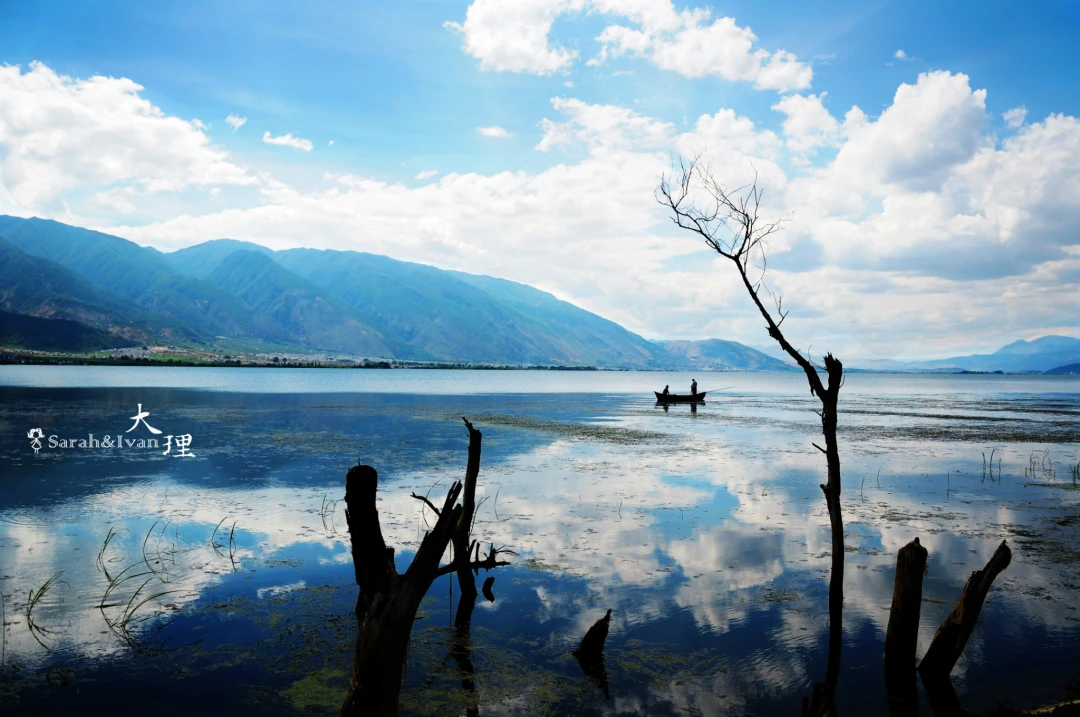
All photos were simply processed in Photoshop; watermarks were added later. I was too lazy to add them at first, but since my previous travelogues had watermarks, I did it this time for consistency.
Important note: Recently, I've found websites and WeChat accounts using my travelogue text and photos without permission, maliciously erasing watermarks. I'm not happy about this. If you need to repost, please respect the creator. It's just a small travelogue—citing the source isn't that much trouble. Feel free to share through Mafengwo.
This travelogue has tons of photos, so please be patient and scroll down.
Main Travelogue Begins
Yunnan was my first out-of-province travel destination. I had just graduated from middle school and been accepted into a key high school. As a reward, I decided to go to Yunnan. Two 15-year-old girls—our parents naturally didn't agree to independent travel, so we joined a tour group. At that time, I didn't have a digital camera; our family had a simple film camera, which I took on the road. One roll had 36 shots; I shot three or four rolls. Looking at those photos now, "grainy" is the only word to describe them. But the feeling at the time was joy. It was my first time going far, seeing different scenery, stepping out of my original life. For a teenage girl, it was exciting and unforgettable.
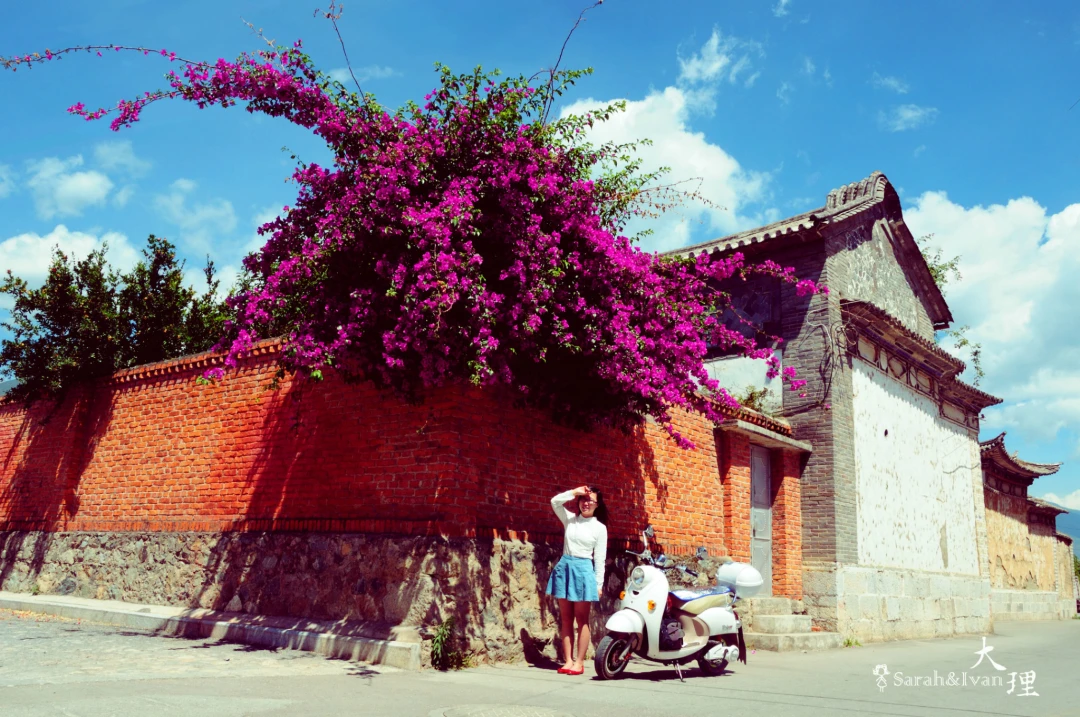
Nine years later, stepping onto this land again felt different. This time with Ivan—for him, it was a graduation trip; for me, it was both revisiting old places and exploring new territory. And Yunnan didn't disappoint. Even though I was going again, there was still novelty.
"The fragrance fades without need for regret; summer trees are shady and pleasant." Going to Yunnan in May is an excellent season. Early summer has passed, the heat hasn't set in, the sky is clear and air is fresh, the rainy season hasn't arrived. At night, there's a gentle breeze and a sea of stars. Best of all, May isn't peak tourist season, so there aren't many visitors, giving a special sense of ease and freshness. Except for Lijiang, where there were slightly more tourists, we truly enjoyed a carefree time elsewhere. (May and June are also flower seasons; rhododendrons bloom in Shangri-La.)
We bought tickets on Saturday and set off on Tuesday morning—just three days. This was a verbal "just go," but it was actually a long-planned, deep-seated scheme. Since Ivan was dealing with his graduation thesis, the departure time kept being uncertain. I didn't have anything particularly busy, so I quietly looked up guides and gathered information. I started preparing a month before, even though I wasn't sure where we'd go or when we'd leave. So I had to look at everything first, just in case. I roughly planned the route and even listed potential accommodations for selection. When Ivan finally submitted his thesis for blind review, we felt the time had come. That was only half a month before his graduation defense. Let's go! Two days before departure, he went home to handle some matters. I was alone in Guangzhou, booking all the flights, trains, and accommodations (of course, discussing with him), waiting for him to come back and pack. At that moment, I thought: whoever travels with me has it easy—I've done all the homework. Three days later, we grabbed our bags and left!
The luggage tag commemorating my homepage feature finally came in handy.
Day 1: Guangzhou → Kunming (Qiaoxiangyuan — Green Lake — Yunnan University — Wenlin Street — Kunming Old Street — Golden Horse & Jade Rooster Square)
On the 21st, we arrived early at Baiyun Airport, but experienced the worst check-in ever. Because it was too early, the flight display didn't show counter information, staff gave unclear directions, and counter staff made mistakes. We only managed to check in and check our luggage at the emergency counter just before boarding. It reminded me of when we departed for Taiwan—the counter lady gave us a bad attitude, while at Taoyuan Airport, the staff were super friendly. What a contrast. I have to say, Baiyun Airport's service really needs improvement. But in the end, we boarded successfully.
I had already browsed through the guidebook before departure. On the bus from Kunming Changshui Airport, I flipped through it again. The LP cover features Shaxi Ancient Town, said to be Lijiang 20 years ago. If we had enough time, I'd like to visit—next time.
Arriving at Kunming Railway Station, we first stored our luggage and picked up the remaining train tickets. Due to the violent incident in March, security at Kunming Station had tightened. Barriers and fences were set up outside the square, and all passengers had to go through screening. Two months later, the station was still bustling with people. It's hard to imagine the panic and fear of that night. Life is so vibrant and relentless—I just wish for peace and no disturbances.
This time in Kunming, we had a host. Ivan's classmate and my senior, Momo, lives in Kunming. After three years, finally a classmate came to visit her in Yunnan. We met at Qiaoxiangyuan near Green Lake Park for crossing-the-bridge noodles. We had a hearty meal—I love rice noodles! My family is in Chengdu, and there are many restaurants serving crossing-the-bridge noodles there. I remember in middle school, the simplest portion cost only three yuan—still a big bowl of soup, a portion of noodles, with side dishes, tofu skin, and quail eggs, just no meat. Thinking about it now, what a steal!
We strolled to Green Lake Park. It wasn't the season for red-billed gulls to migrate south; there were only a few ducks in the lake. Elderly people and children were enjoying the cool shade and playing—a scene of leisure.
Next to Green Lake is the Yunnan Military Academy. A ginger-yellow building with a sense of history and military might, standing by the road.
(There's a bird in the left corner of the photo.)
This photo was taken by Ivan with his film camera—it really has a nostalgic feel. The ironwork on the gate is also beautiful, reminiscent of period dramas I've seen.
Following Momo through streets and alleys, sunlight filtered through the leaves.
Before we knew it, we arrived at Yunnan University. At first glance, behind the steps shaded by lush green trees, there's a red-brick European-style building.
Patches of tree shadows fell on the brick walls, with warm sunlight in the gaps. Campus has this kind of calming power.
Through the iron gate, we saw a deep corridor softly lit by warm yellow hanging lamps. Arched doors, Roman columns, and the curved ironwork in the foreground—it felt like walking into a movie scene.
Nowadays, most ancient buildings in China are from the Ming and Qing dynasties. But many aren't their original selves—they've been renovated or rebuilt, losing their original charm. They look new and monotonous. Instead, some late Qing and early Republic-era buildings preserved in cities have more flavor. They're not too old, yet carry the breath of old times, haven't been completely abandoned by modern society, and haven't been heavily renovated. The mottled brick walls and slightly European lines pull you back into history. Take Guangzhou, where I live: the arcade streets of Xiguan like Enning Road, Wende Road, and Wenming Road; the old buildings on Sun Yat-sen University's campus; and the private financial street along the Pearl River embankment—all genuine Republic-era style. Walking among them, you can imagine time flowing backward, the people and scenes of that era coexisting. And Republic-era architecture is indeed more beautiful than modern buildings. Perhaps most modern buildings are mass-produced copies of the mechanical age, lacking the former "aura." In any case, good architecture can cultivate a sense of beauty and elevate one's sense of the sublime. Having respect for the world you live in leads to a better life.
A photo with Momo. Momo is a multi-talented girl—she can paint, do cosplay, various crafts, cook, keep hamsters, fill her balcony with succulents, and identify many plants and flowers... In short, she has a rich life. When their class graduated, as class monitor, she drew a cute caricature of every classmate, capturing their features perfectly—so sweet. Someone reliable should take this girl away!
The campus environment is really great—green everywhere. We arrived at a building, and suddenly my eyes lit up. Bougainvillea on one side of the red wall was blooming profusely, like a waterfall cascading down, covering the wall.
(Film photo by Ivan)
Perhaps because the sun was so good, bougainvillea—a plant that loves warmth and light—blooms particularly lush in Yunnan. Clusters and clusters, clinging to walls or extending from eaves, stretching toward the sky, displaying their vitality.
Even the fallen flowers don't seem to be withering—still a dazzling red, just lacking moisture. A handful of them, light and airy, can create a rain of petals.
The tree-shaded campus also became a playground for squirrels. They bounced and jumped between branches, quick and light. In the shade of summer trees, sitting under them reading a book—what a joy.
I followed the squirrels with my camera, taking a few shots. Even as people walked by, they continued jumping around, noses twitching as they clung to trees.
While wandering the campus, we saw graduates taking graduation photos. I imagine that after leaving such a campus environment, they'll miss it dearly.
We kept following Momo, listening to her talk about what this street sold when she was a student, what that street sold, and how everything had changed. Having a local guide is the best way to get to know a place. Her memories would color what I saw.
Then she led us to Wenhua Lane, a small street with quite a few cafes, bookstores, and boutique shops. We chose "Manna" restaurant. It had two floors, crowded and lively, serving mainly Yunnan and Sichuan-style home cooking. It was popular—people said you had to wait for a table during meal times. We arrived early and sat down directly, ordering a few small dishes.
I highly recommend this milk custard! Ice-cold, with some almond crumbs on top, rich in milk flavor but not as cloying as double-skin milk—lighter and smoother. Anyway, I loved it!
Yunnan and Sichuan flavors are quite similar, so the food felt familiar to me. But I'd never had mint as an ingredient before. This time, I ordered crispy fried beans with mint and spiced beef—the mint in both was delicious. Especially the crispy fried beans with mint: the beans were soft and sweet, the mint crispy and fragrant. It was the dish I missed most from Kunming.
The room was dark, so the photo came out blurry.
This plate of "Old Lady Potatoes" had been recommended online, and I had high expectations, but in the end...
You should also read:
September: Finding Unexpected Warmth in Yunnan (Kunming, Dali, Shuanglang, Lijiang, Lugu Lake)
September: Finding Unexpected Warmth in Yunnan (Kunming, Dali, Shuanglang, Lijiang, Lugu Lake) Foreword: One Person's Journey, A Crowd's Story Before I set off, like every first-time solo traveler, I printed out a thick stack of travel guides and rehearsed countless possible scenarios in my head—getting…
Continue reading...
A 9-Day Yunnan Journey: From Lijiang to Dali to Tengchong – A Trip Toward Self-Reconciliation
A 9-Day Yunnan Journey: From Lijiang to Dali to Tengchong – A Trip Toward Self-Reconciliation Some say travel is simply going from a place you're tired of to a place other people are tired of. It stings to hear, but it's painfully true. Yet there's…
Continue reading...
Two Girls' Graduation Trip: Dali and Shuanglang – A Poetic Farewell to Mountains and Sea
Two Girls' Graduation Trip: Dali and Shuanglang – A Poetic Farewell to Mountains and Sea Preface: Catching the Tail of Youth, Heading South During our senior year of college, my roommate and I – two girls studying in Beijing – decided to bid farewell to…
Continue reading...