Southeast Yunnan | Miles of Mountains and Wilderness, I'm on the Road – Half Scenery, Half State of Mind
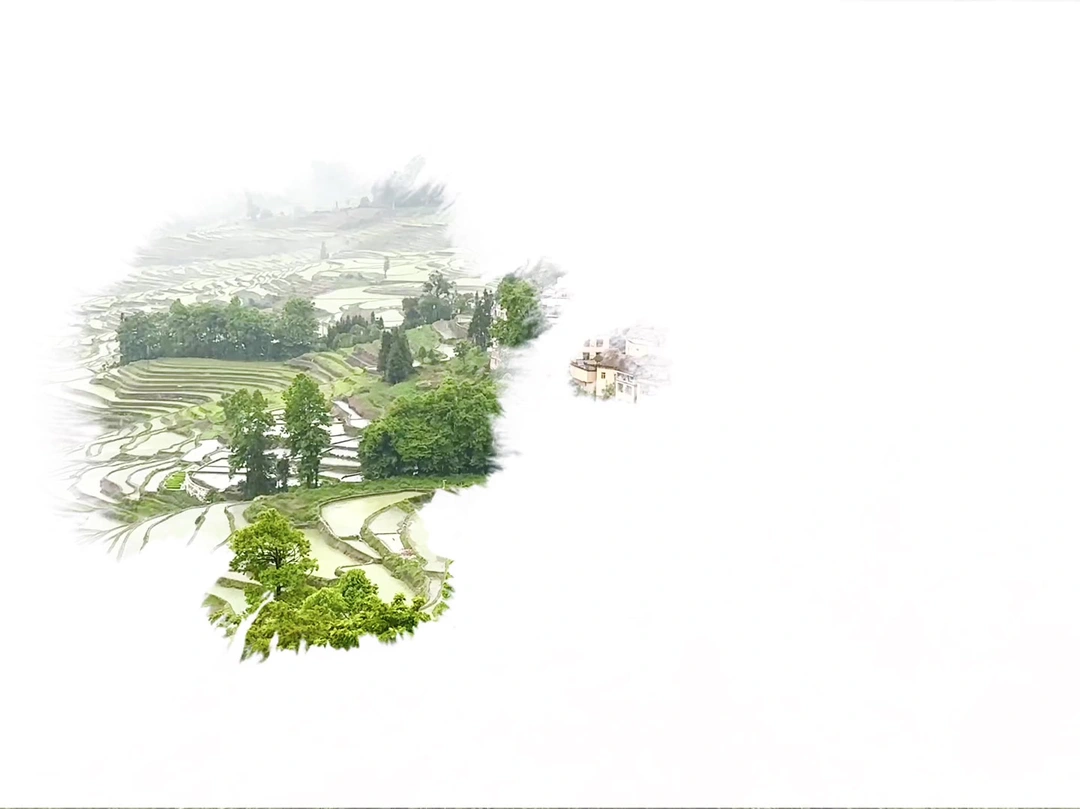
Southeast Yunnan | Miles of Mountains and Wilderness, I'm on the Road – Half Scenery, Half State of Mind
Live with texture, wander freely, go wherever the wind takes you. Seventeen years ago, I set foot on Yunnan's soil as a Shanghai volunteer teacher; seventeen years later, I return to this land of colorful clouds as a retired traveler. Miles of mountains and wilderness – half is scenery, half is state of mind.
Departure: A Plane Ticket, a Reunion Across Seventeen Years
On May 4, 2026, my husband and I flew from Shanghai to Kunming. Originally, he planned to take advantage of the toll-free May Day holiday and drive all the way from Shanghai to Yunnan, but I worried the distance was too great and the cost-effectiveness too low, so I gently declined the plan. Unexpectedly, this year's May Day airfares plummeted – I snagged a ticket from Shanghai to Kunming on China Southern Airlines for just 550 RMB (including taxes). Even more surprising, 10 days of car rental plus full insurance cost only as much as the one-way toll from Shanghai to Kunming. Everything seemed to fall into place by some unseen hand, so off we went.
Seventeen years ago, as a paired-support teacher from Shanghai's Yangpu District, I taught at Ximeng No.1 Middle School in Pu'er, sowing seeds of knowledge under the stars. In July 2009, after a year of teaching, a hundred of us Shanghai-Yunnan volunteer teachers gathered in Kunming and boarded a China Eastern flight back to Shanghai, carrying the mountain breezes of the borderlands and the hopes of the children, heading home thousands of miles away.
In the blink of an eye, time has streaked my temples with gray, and I've transitioned from a teacher at the podium to a retired educator savoring life. The years have carried away youthful naivety but have沉淀 (settled) a lifelong, unforgettable attachment to Yunnan's mountains. Yunnan, this land of drifting clouds, is no longer a distant landscape but a牵挂 (deep concern) and faith etched into my very being – the most burning imprint of my teaching career. Today, spanning seventeen years of mountains and seas, I step once again onto this soul-stirring soil.
Kunming: The Spring City's Surprise – an Unexpected Encounter with Jacaranda
After landing in Kunming on the afternoon of May 5, we booked a hotel near the train station for convenience in picking up the rental car. But the roads to the station were unusually congested – the cold air from the south had just brought several rounds of rain, and the air felt damp and chilly.
Jiaochang Middle Road | Embraced Gently by a Spring of Blue-Purple
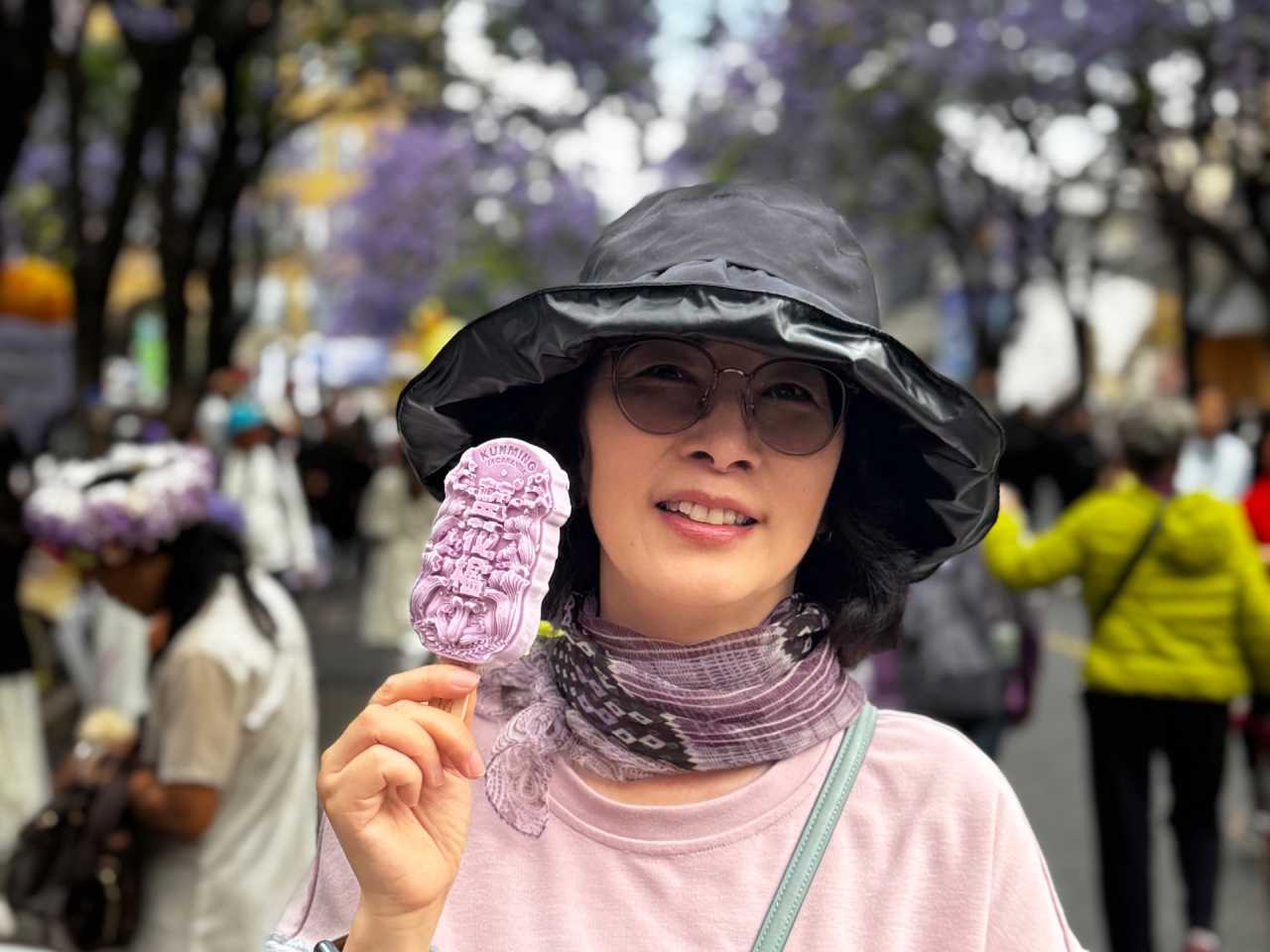
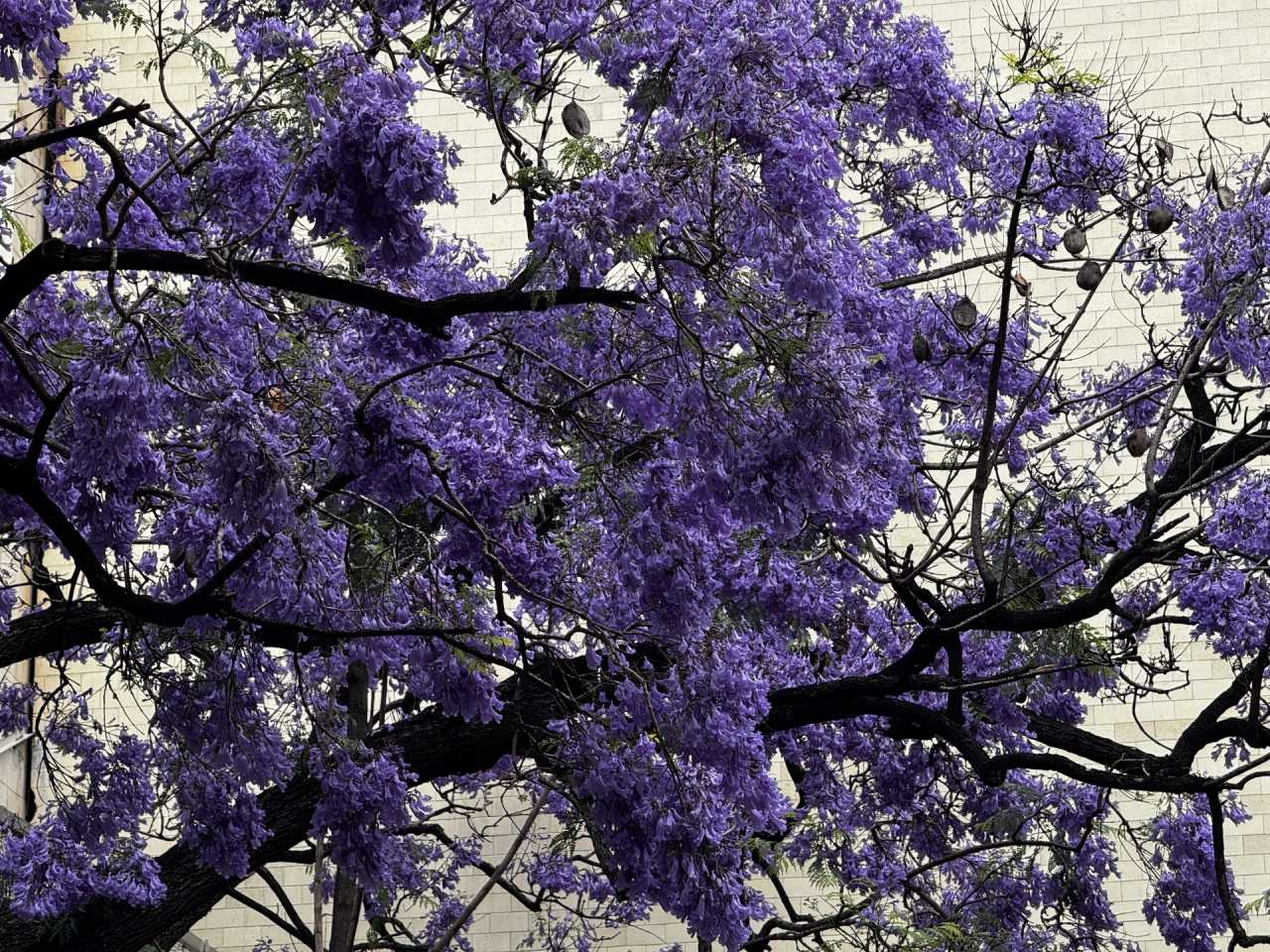
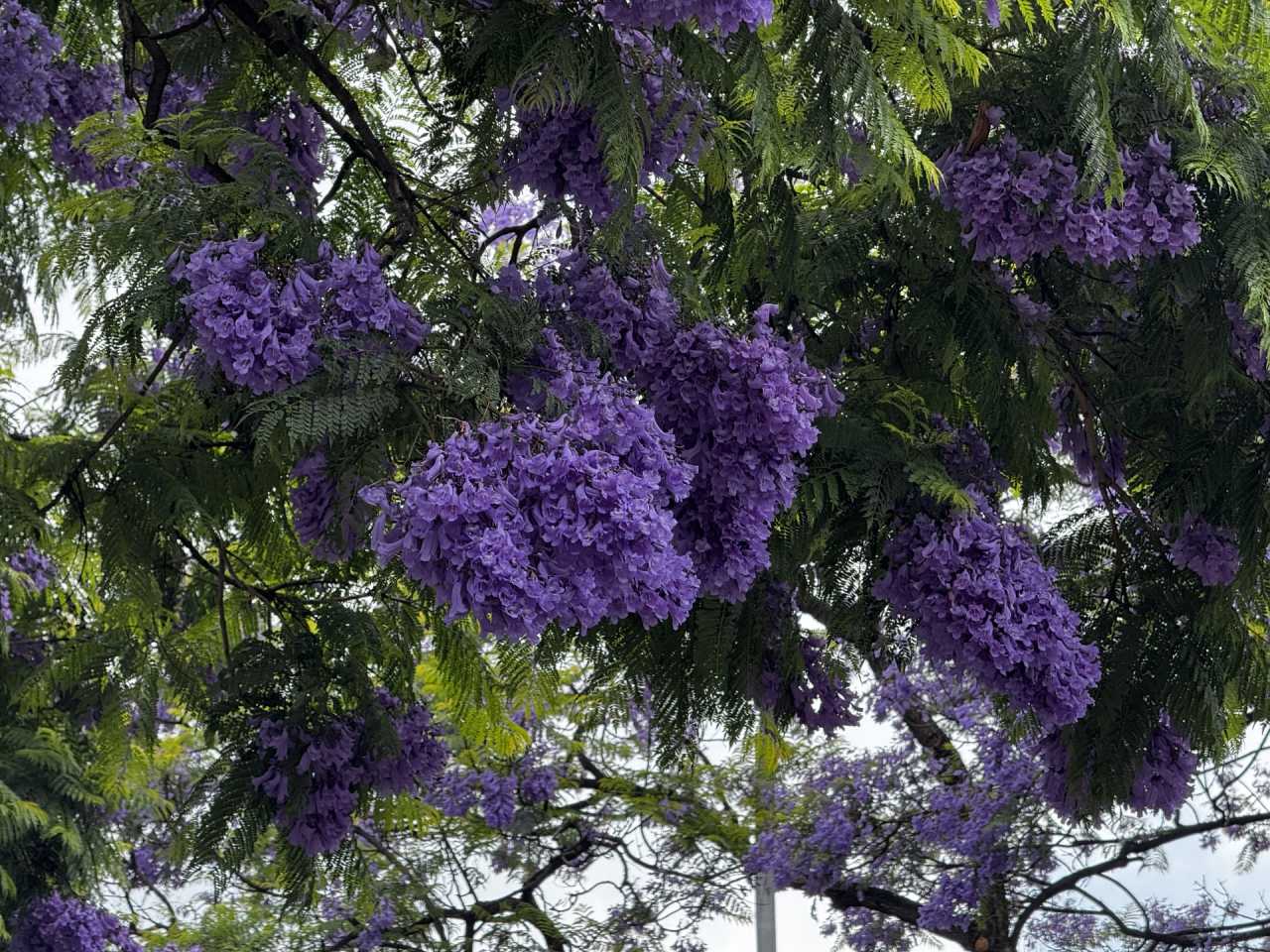
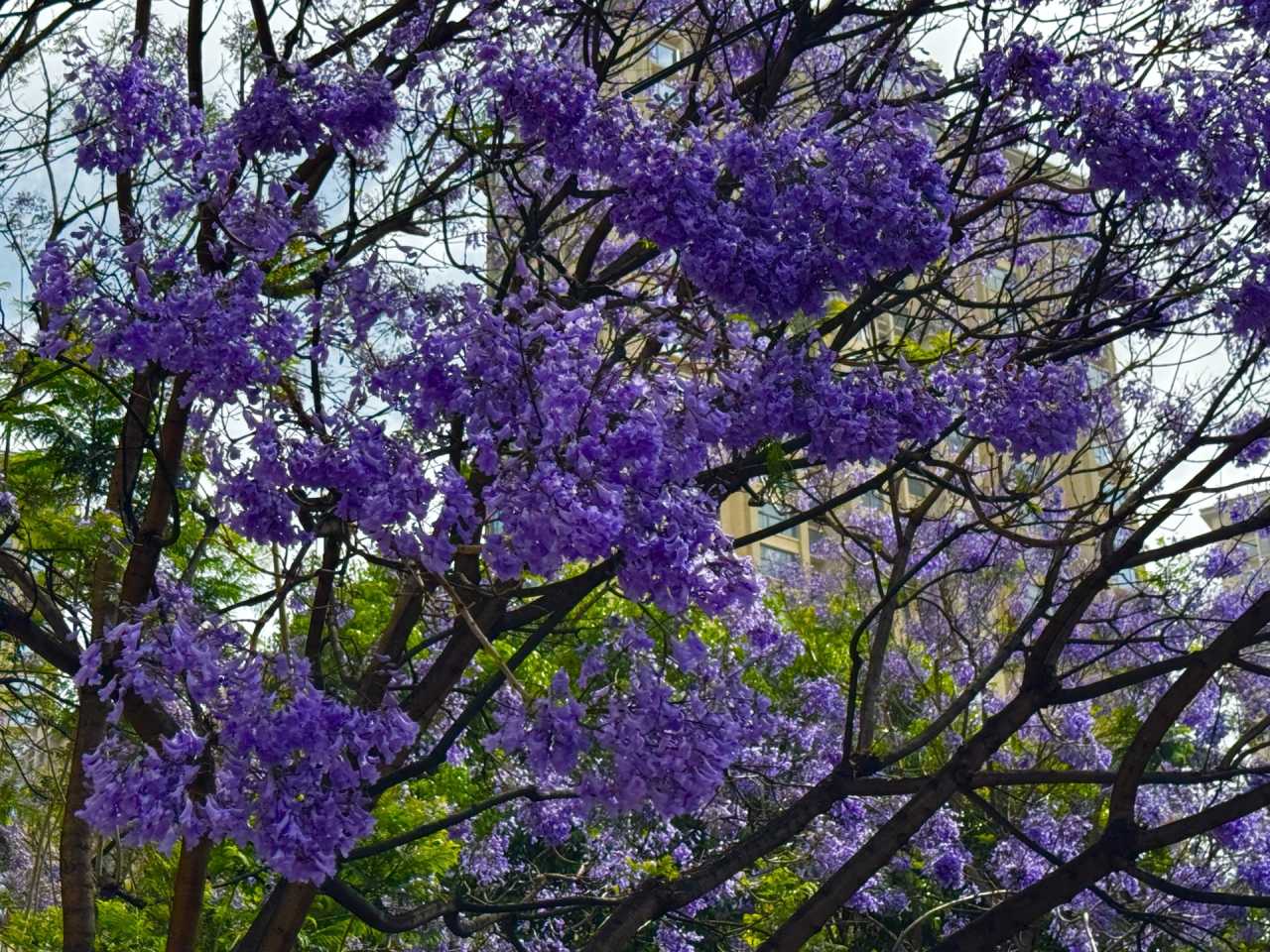
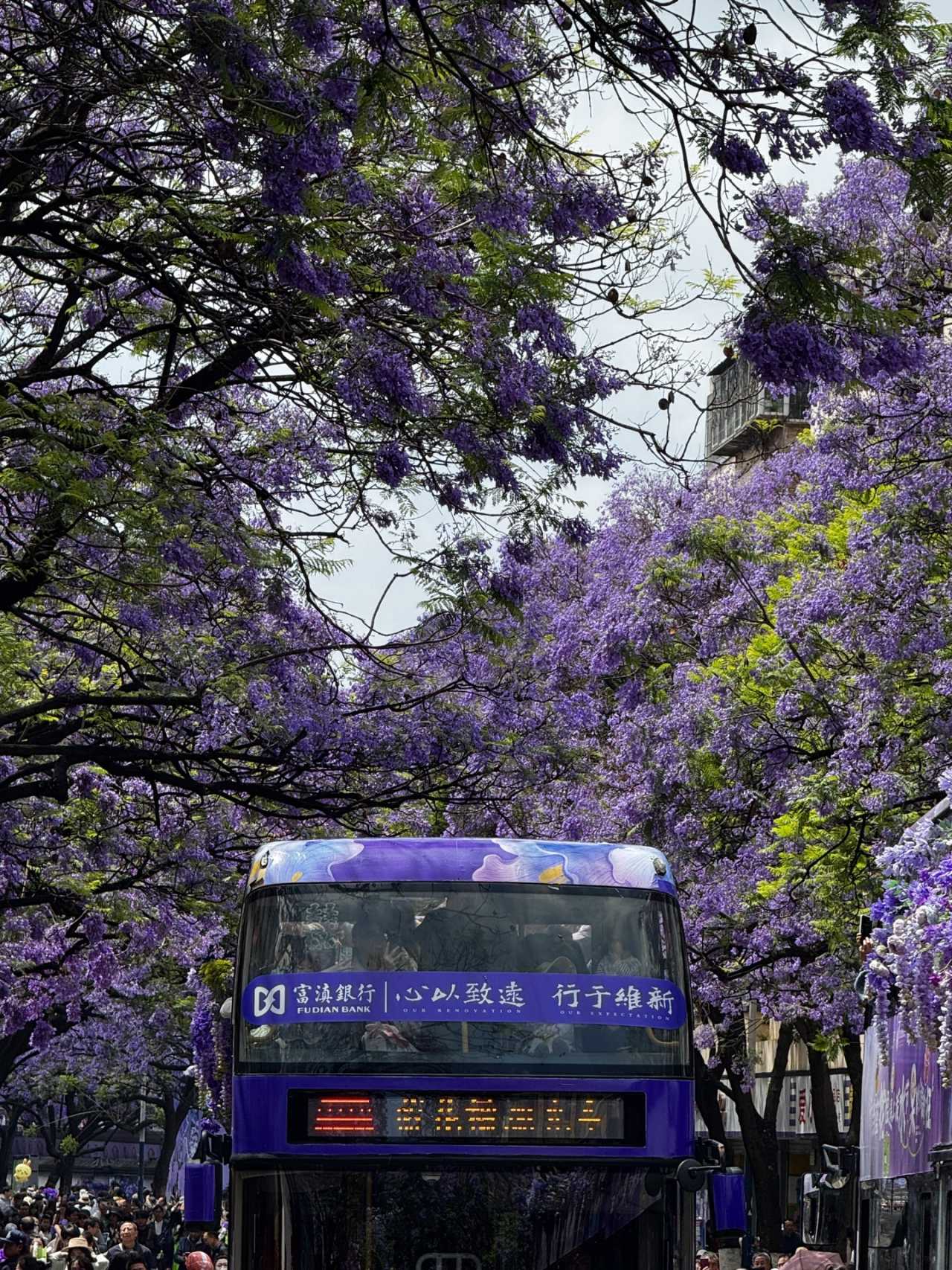
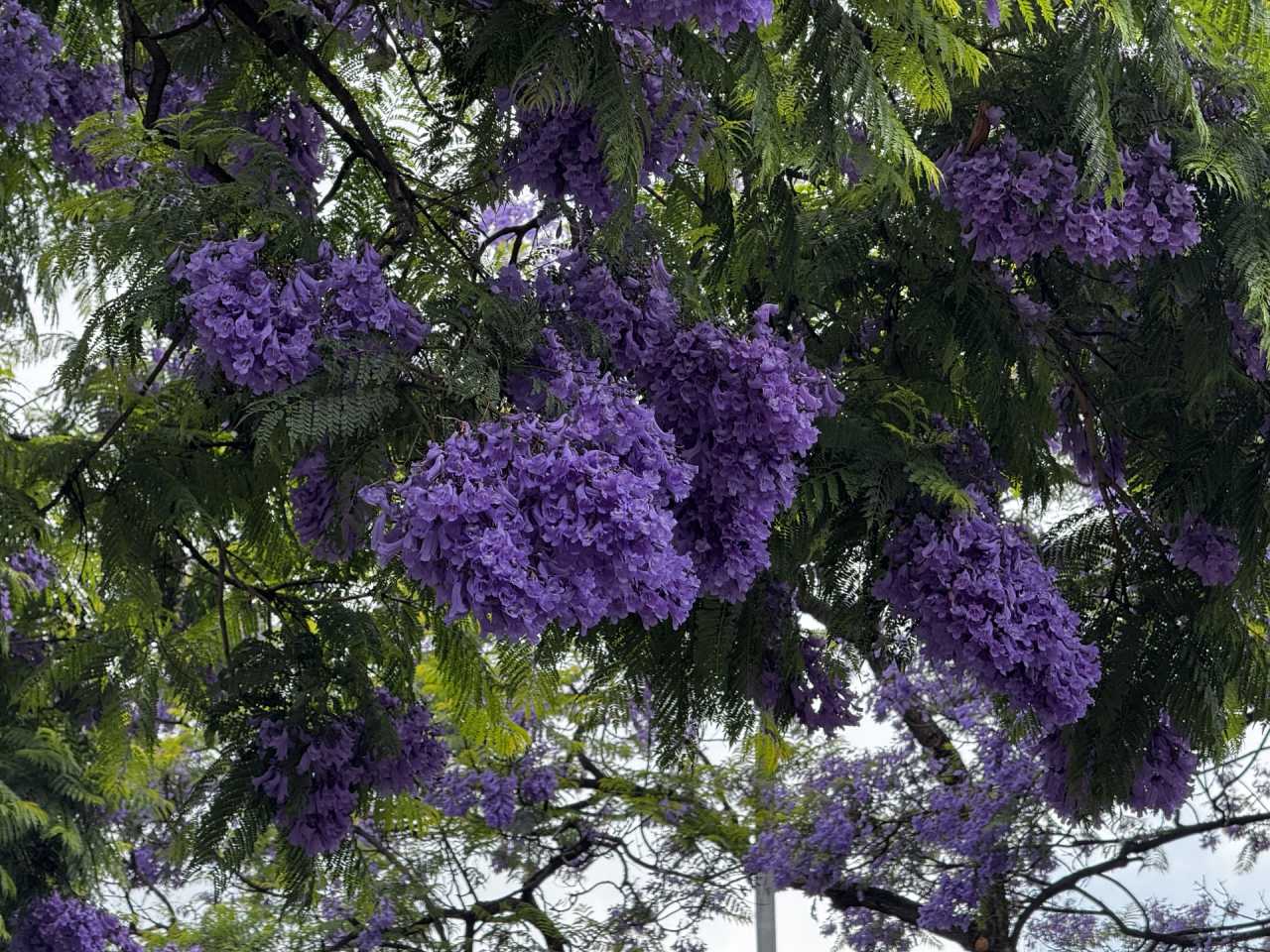
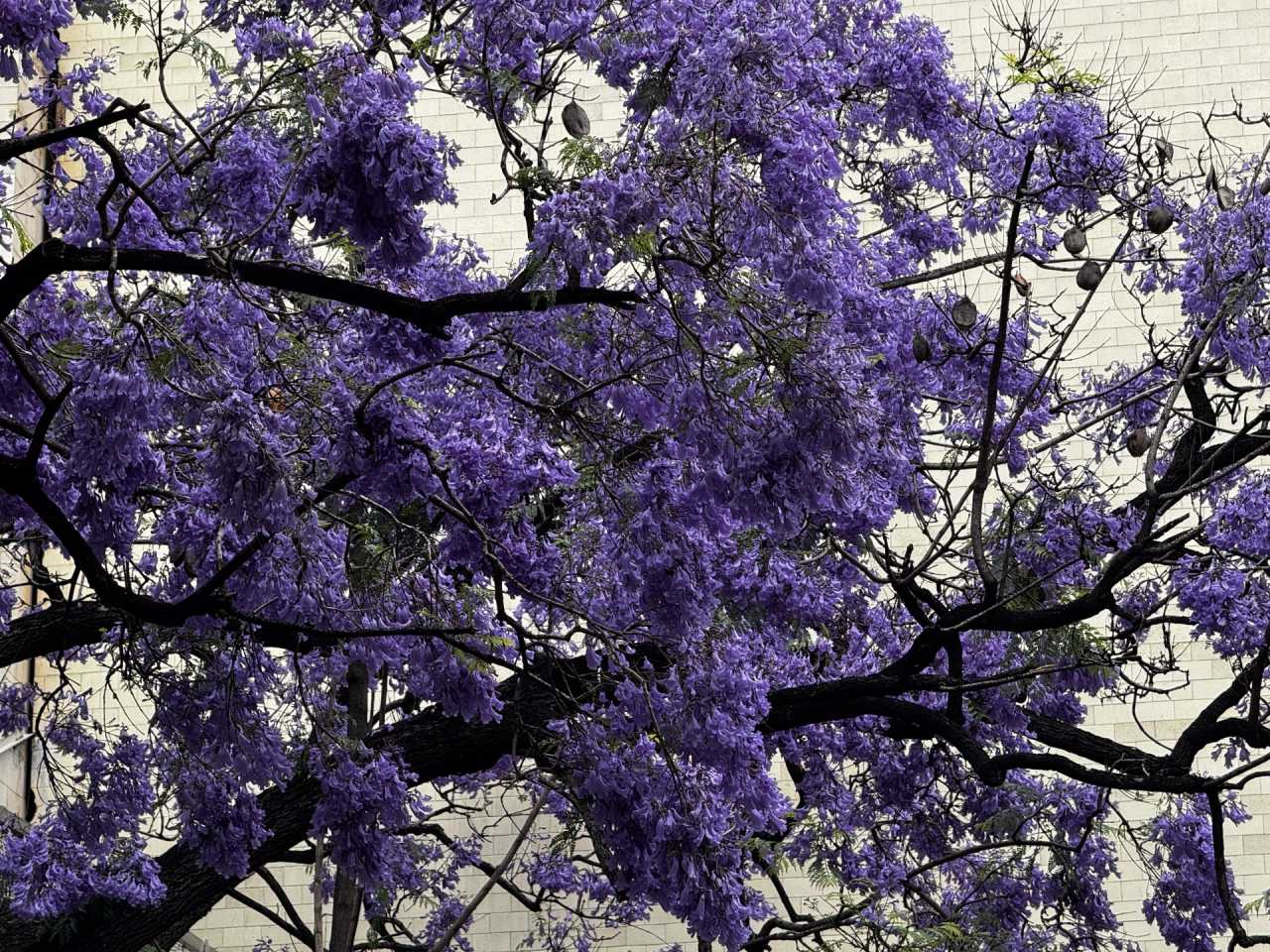
Kunming's first gift was the unexpected encounter with jacaranda. In early May, the city is in full bloom with these梦幻 (dreamlike) blue-purple blossoms. The most iconic spot is the 2-kilometer "purple tunnel" along Jiaochang Middle Road – when the wind sweeps through, delicate petals flutter down like confetti, landing on shoulders, on the road, and into the open-top tour buses crawling slowly beneath. This is Kunming's unique tenderness, the purple romance of May.
Kunming Old Street | 900 Years of Hustle and Bustle, One Alley Hides the Spring City's Old Dreams
The bluestone slabs reflect the sky's light, and the bricks and tiles hold the weight of nine centuries. Kunming Old Street dates back to the Dali Kingdom and flourished during the Ming and Qing dynasties – it's the last intact historical fabric of the Spring City. In the alleys, bougainvillea blooms with extraordinary intensity – the deep purple of Yunnan's bougainvillea is rich and saturated, like purple velvet sun-drenched, spilling down from walls, building facades, and old railway tracks, glowing with a deep,醇厚 (mellow) sheen.
Jianshui: Encountering the Most Beautiful Flame Trees of Early Summer
On May 6, we drove 190 kilometers to Jianshui (known in ancient times as Lin'an). This thousand-year-old city in southern Yunnan is a land of literature, the capital of purple clay pottery, and every corner is steeped in the marks of time.
Jianshui Ancient City | The Thousand-Year Chaoyang Tower, the Century-Old Big Board Well
The city's landmark, Chaoyang Tower, was built during the Hongwu era of the Ming Dynasty, 28 years earlier than Beijing's Tiananmen Gate, earning it the nickname "Little Tiananmen." At nightfall, as lights flicker in the quiet, the thousand-year-old tower stands silently, as if telling the story of six centuries of vicissitudes.
Outside the ancient city's west gate lies the Big Board Well (Daban Well), also known as Pubo Spring, dug during the same Hongwu era. An old local saying goes, "First came the Big Board Well, then came Lin'an City." The well mouth is formed by six interlocking blue stones, nearly three meters in diameter. The water is clear, sweet, and soft, never drying up through the seasons. Locals still come here morning and evening to draw water, and the famous Ximen (West Gate) tofu – bursting with juice on the tongue – owes its unique flavor entirely to brine made from this ancient well water.
In the evening, we strolled leisurely along Guangci Lake. The evening breeze was gentle on our faces, carrying the unique freshness of summer; the sunset's afterglow spilled across the lake, the ripples warm and quiet. Clusters of flame trees (Delonix regia) bloomed with passionate brilliance, red both fiery and tender. Without haste, we walked slowly, watching the lake's gentle flow and the profusion of flowers – no noise, only the lakeside breeze, the brilliant colors, and a sense of carefree ease.
Shiping and Tuanshan: Lakeside Poetry, Ancient Village Charm
On May 7, my phone's video feed kept pushing popular Yunnan spots. The golden chain trees (神黄豆, Cassia javanica subsp. indochinensis) in Shiping hadn't yet faded, so we decided to drive an hour to see them.
Yilong Lake | A Pink Tenderness That Captivates at First Sight
On the shores of Shiping's Yilong Lake, pink petals and golden stamens adorned every branch, like clouds and rosy mist, spreading into a pink floral corridor. When the wind passed, flower petals fell in a shower – a single glance and you're captivated. This is the pink tenderness of early summer.
Tuanshan Residences | A 600-Year-Old Architectural Complex Blending Han and Yi Cultures
Tuanshan is a group of Ming and Qing dynasty residences with 600 years of history, blending Han and Yi ethnic architectural styles. It's hailed as "the finest ancient residential complex in Yunnan" and "a living fossil of southern Yunnan folk housing." Adult tickets cost 35 RMB. The General's Mansion, built during the Guangxu era, was awarded to a general for quelling bandits – its courtyard is spacious and its carvings exquisite. The Zhang Family Garden is the largest building in the village, with 21 courtyards and 119 rooms, integrating living, defense, and ancestral worship. Its wooden "Hundred Flowers Window" is considered a pinnacle of southern Yunnan artistry. However, we visited at noon when the light was too harsh to capture the architecture's character.
Xianghui Bridge and the Meter-Gauge Station | A Corner Where Time Stands Still
Xianghui Bridge, built in the 19th year of the Jiaqing reign (1814), is a three-arch bluestone bridge with a fully enclosed covered corridor – the only intact covered bridge in Jianshui. A hundred meters away stands a Chinese-Western fusion meter-gauge railway station, dominated by a French-style yellow-walled building (commonly called the "watchtower"), with brick-and-stone construction, a triangular hard roof, and vintage green-framed tall windows – bright and intense. Today, the old station has been converted into a retro café and restaurant, preserving the old brick walls and vintage seats, exuding a full Republican-era atmosphere. Sitting on the platform with a coffee, watching the rice paddies and a train slowly pulling in, time seemed to slow down, and my heart found peace.
Shuanglong Bridge | One of Only Two 17-Arch Bridges in China
Shuanglong Bridge, also known as the Seventeen-Arch Bridge, is one of only two such bridges in China – the other is in Beijing's Summer Palace. From a distance, the seventeen stone arches line up like a string of half-moons, reflected in the clear,碧波 (emerald waves), the real and the mirrored embracing like an unfolding ink-wash scroll – ancient and elegant. Built during the Qianlong reign of the Qing Dynasty, this bridge has weathered over two centuries of wind and rain, still standing solid and strong. No wonder bridge expert Mao Yisheng called it "a masterpiece of ancient Chinese bridge architecture."
Yuanyang: Every Second Is Unpredictably Changing
On May 8, the weather forecast predicted a cold snap and heavy rain in Yunnan. We got up early and left before 9 AM. My husband chose the national highway, but an hour into the drive, we found National Road 245 closed until noon due to construction. We stopped to rest and charge the car, enduring heavy rain and thick fog – it felt like traveling through a different dimension.
Arriving two hours later than planned, we had rice noodles (米线) in Yuanyang County, but when we reached the scenic area, the fog was still dense. Fortunately, the ticket cost 70 RMB and allowed unlimited entry within 72 hours. Entering the area and standing at the first viewing platform at Qingkou, we could still see some terraced fields filled with water – it already got us a little excited.
At the Laohuzui (Tiger's Mouth) viewing point, the terraces had already been planted with rice. The terraces here, with a vertical drop of up to 800 meters to the valley floor, are as steep as a tiger's mouth, hence the name. Standing here, you can watch the sunset, said to produce stunning light effects – but we encountered severe weather, leaving us with a big regret.
On the morning of May 9, I opened the curtains and looked into the distance. For a brief moment, a sea of clouds appeared, like a fairyland. After breakfast, we set out at 9 AM. The weather was still foggy and rainy, but I insisted on checking out and chasing the moment when the clouds would part... If not, we'd stay another night in the scenic area.
At the Duoyishu and Bada viewing platforms, thunderclaps served as a prelude, and heavy rain unfolded a grand scene – no other tourists, just the two of us. Every second, heaven and earth were in dramatic flux. We held our ground amidst the chaos and roaring thunder, waiting for that fleeting moment when the clouds would break. Though it wasn't a clear, sunny day, it was still worth the trip. We were awed by the朦胧 (misty) mountains before us, and looking down at the layered terraces, we were stunned by the earth's纹路 (veins and patterns). Nature never disappoints – one glance feels like ten thousand years.
Since the next two or three days were forecast to be rainy and foggy, staying another day made little sense. By noon, we left Yuanyang for our next stop, Mengzi. The mountain roads ahead were frequently shrouded in near-zero visibility, with sharp curves and thick fog – driving required extreme caution.
Mengzi: Stepping into This Century-Old Station Feels Like Entering an Old Film
Mengzi – the hometown of pomegranates, the hometown of cross-bridge rice noodles (过桥米线), and the nation's top exporter of blueberries. We bought mangoes by the roadside for 2 RMB per jin (about 1 USD per kilogram) – sweet with a hint of tartness, plump and juicy.
Bisezhai | A Century of Glory, Youthful Memories Revived
Bisezhai (Green-Blue Village) is free to enter, but you need to take a shuttle bus for 30 RMB round trip. Stepping into this century-old station feels like stepping into an old film – yellow-walled, red-roofed French architecture glows with gentle mottling in the sun, and the meter-gauge and寸轨 (narrow-gauge) tracks stretch quietly, carrying a hundred years of history. The film Youth (芳华) brought this place into the public eye, breathing new life into a village that existed only in railway history books.
There are many "firsts" and "onlys" here. Time slows down in this place. We chased the scenery and encountered history – and I lost my ID card. Because of the rain, for the first time I took the easy way out and didn't carry my small bag, carefully placing my ID in my jacket pocket and even zipping it shut. But somehow, it vanished. I went back to the scenic area and searched everywhere, but found nothing. Exhausted and frustrated, my mood plummeted. I couldn't even enjoy the cross-bridge rice noodles for lunch. Perhaps Mengzi wanted me to remember it forever this way. In the days that followed, I dreamed my ID appeared in a parallel universe.
Mile: Romance in Red Brick, a City of Joy
Dongfengyun | A Dream Weaving Red Brick and Flower Seas
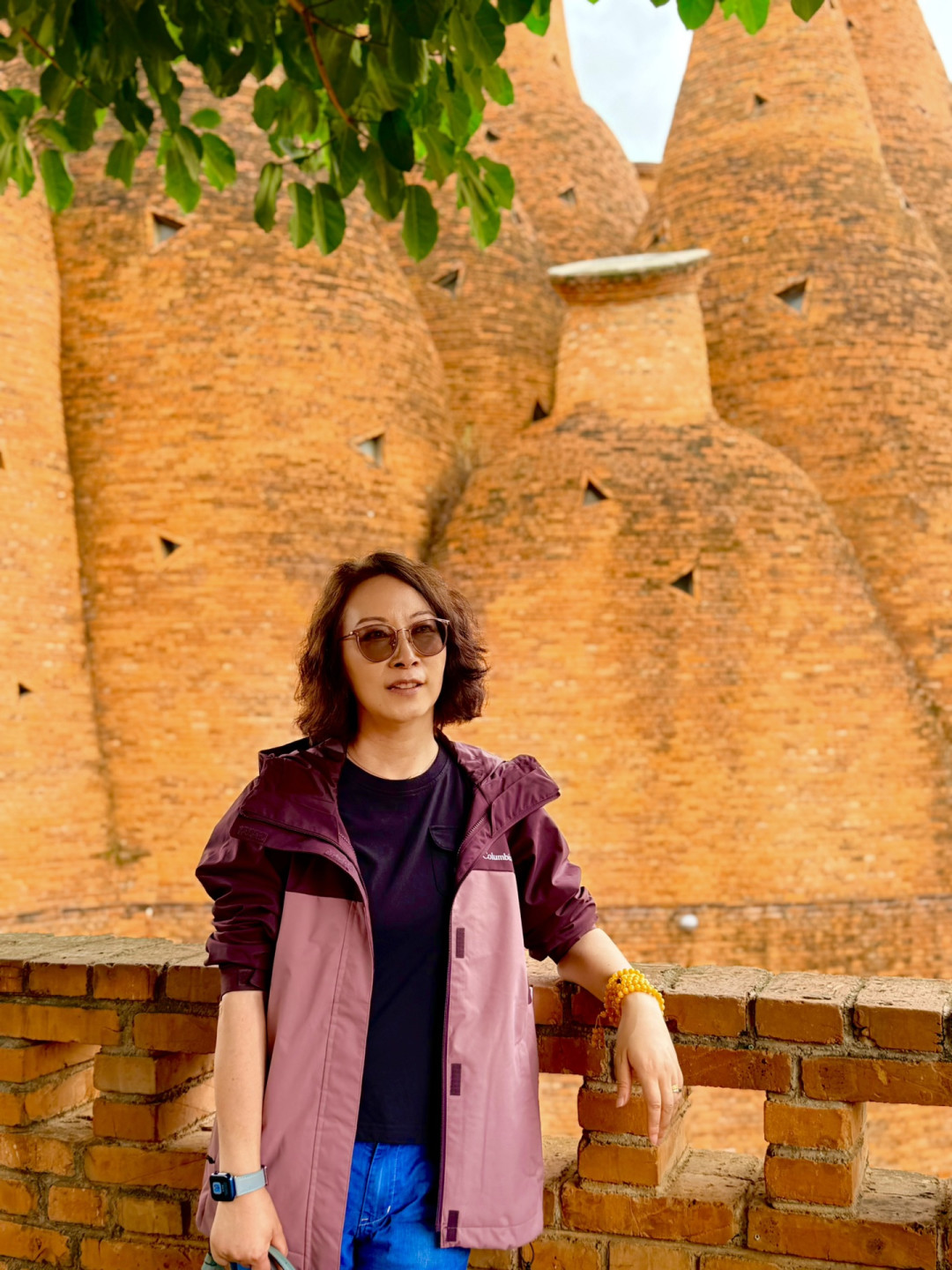
Stepping into Mile's Dongfengyun (East Wind Rhyme), what greets the eye is a romantic dream woven from red brick and flower seas. Under the dark clouds of the plateau, there were very few visitors. We strolled slowly, admiring the complex – these red brick buildings, built without a single nail or piece of rebar, sprawl and stretch in unique shapes like wine bottles, drifting clouds, and flames. It's a raw, artistic poem born from the red earth – rugged yet tender.
Jinping Mountain's Mile Giant Buddha | The World's Largest Laughing Buddha
The world's largest laughing Buddha (the布袋和尚, or Budai monk statue) sits here, reachable by climbing 1,999 steps. Of course, for 20 RMB you can take a shuttle bus directly to the top, arriving at the Buddha's feet. The Buddha has a big belly and a wide, joyful smile, holding prayer beads in his left hand and making the teaching mudra with his right – symbolizing "A great belly holds what is hard to hold in the world; a smile always open laughs at those laughable in the world." Mile, the back garden of central Yunnan, is also a city of joy, perfect for retirement and living.
Puzhehei: A Name Like Poetry, a Landscape Like a Painting
On May 12, we arrived at Puzhehei. "Puzhehei" doesn't mean "black" – in the Yi language, it means "a lake full of fish and shrimp." This is a pure land meticulously sketched by heaven in green and blue – hundreds of karst peaks rise like jade hairpins scattered among连绵 (continuous) lakes and farmlands. The lake water is crystal clear and azure, like a broken mirror of the earth, perfectly reflecting drifting clouds, solitary peaks, and the sky – a walking ink-wash painting.
Three Lives, Three Worlds, Ten Miles of Peach Blossoms | Regret and Anticipation

Our first stop in Puzhehei was the filming location of "Three Lives, Three Worlds, Ten Miles of Peach Blossoms." The weather was bad – cloudy, with very few tourists. Here, karst peaks stand in isolation, clear waters embrace green mountains, the lake is like a mirror, and mist wraps around everything. Unfortunately, the lotus flowers hadn't bloomed, and the peach blossoms were fake.
In the evening, we drove to Xianrendong (Fairy Cave Village) – a traditional Yi (Sani branch) village in the core area of Puzhehei. Surrounded by lake light, with red tiles and bluestone, the village is dotted with lotus ponds and pastoral scenery. We found a lakeside restaurant and had dinner while waiting for the sunset. Dinner included porcini mushrooms (牛肝菌), lotus root hearts, and wild greens – very pleasant, but danger was quietly approaching.
A "Mushroom Incident"
On the way back to our guesthouse, I noticed small red rashes on my arms. I'd had a similar outbreak on my legs in Yuanyang – like chicken skin, neither itchy nor painful. It reminded me that we'd eaten a mushroom hotpot in Kunming – perhaps the mushrooms had triggered an allergy. After a conversation with AI, I confirmed it was an allergic reaction, bought cetirizine from the pharmacy, and slept soundly through the night. By morning, the rashes had started to subside.
But my husband's chin became swollen, numb, and hard, accompanied by nausea. Since he has high blood pressure, diabetes, and high cholesterol (the "three highs"), I worried it might be a stroke risk – or more likely, mushroom poisoning. We didn't hesitate. We got up immediately and went to the nearest clinic. The clinic doctor told us that if it was poisoning, they couldn't perform gastric lavage, and we needed to go to the county people's hospital, 15 kilometers away. At the hospital, we spent 358 RMB on various blood tests, and all results came back normal, ruling out liver and kidney toxicity. The doctor finally prescribed 2 RMB worth of loratadine. We went back to the guesthouse, took the medicine, and slept peacefully. It really proved the saying: many problems come from what you eat.
Qinglong Mountain | All the Tenderness in the World Lies Hidden in These Mountains and Waters
Today, the sky finally cleared. My husband slept in the room while I sat on the balcony, enjoying the view and writing my travel diary – until I accidentally hit "publish" on an unfinished draft.
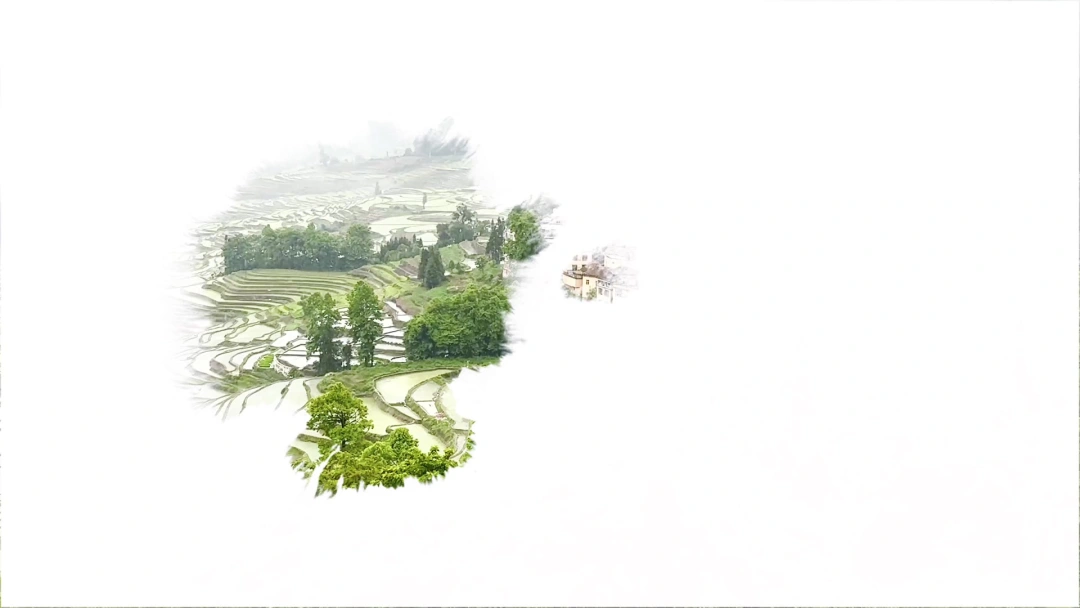
The evening sun was still fierce, so we canceled our boat ride plan. Leaving the guesthouse, we walked along the riverside path toward Qinglong Mountain. The lake shore wound its way, the karst peaks shifted angles with every step, and their reflections gently trembled on the water. The early summer lotus leaves spread a carpet of green, and I imagined that in high summer, when the flowers bloom, the fragrance would fill the shore.
The Lover's Bridge (情人桥) originates from the Yi (Sani) tradition of matchmaking through antiphonal singing – during festivals, young people would sing to each other on the bridge to find love, earning it the name "The World's No.1 Love Magpie Bridge." The bridge is about 100 meters long, with an arched, antique-style deck and pavilions at both ends, hence also called the Four-Pavilion Bridge.
A 10-minute walk from Lover's Bridge brought us to Qinglong Mountain. According to locals, the sunrise at Qinglong Mountain is legendary, and the sunset is breathtaking. We're no longer suited for early mornings, so we decided to wait for the sunset. My husband has coronary heart disease and initially wanted to skip the climb, but I didn't want him to miss out. I accompanied him, stopping every dozen or so steps to rest and catch our breath before continuing. It took us almost twice as long as others, but we finally reached the summit. From the top, we overlooked the entire Puzhehei – peaks scattered in perfect disarray, blue waters winding like silk, farmland like a painting. The wind swept across the mountains, and all the tenderness in the world lay hidden in these mountains and waters. Here, mountains and waters are tender, the breeze and moonlight are gentle – it's a hidden paradise in southeastern Yunnan.
Fuxian Lake: A Lake of Azure Blue, Healing the Dust of Travel
On May 14, my husband's face swelling was gradually subsiding. We set out at 9 AM, and after a 4-hour drive, we arrived at Fuxian Lake. According to the plan, we were to stay here tonight – Fuxian Lake's deep blue soothes the soul, its lake and mountain views healing all the dust and fatigue of travel. But since it was still early, my husband decided to head straight back to Kunming, meaning our trip ended ahead of schedule.
From Jianshui's thousand-year cultural lineage to Shiping's lakeside poetry, from the earth-shattering terraces of Yuanyang to the century-old charm of Bisezhai, from Mile Dongfengyun's artistic romance to Puzhehei's water-town tenderness, and finally to Fuxian Lake's deep azure clarity – the Red River region of southeastern Yunnan holds some of the most moving landscapes and烟火 (everyday life) in all of Yunnan. Each step, each view – all are worthy of this journey.
Leaving southeastern Yunnan, we continued north toward Dali and Lijiang. For the days ahead, our only plan was to soak up the sun, feel the breeze, and let our minds drift into emptiness...
Practical Tips
On Transportation: Driving an electric car in Yunnan is very convenient. Charging stations are everywhere, even deep in the mountains, and electricity is cheap! Our total charging cost for the entire trip was under 200 RMB.
On Accommodation: The Yuanyang scenic area ticket costs 70 RMB and is valid for unlimited entry within 72 hours. It's recommended to stay at least one night to wait for the moment when the clouds part.
On Food: Mushrooms are wonderful, but those with allergies should be cautious. If you develop unexplained rashes or swelling, seek medical attention promptly.
On Documents: Keep important documents on your person at all times, not in jacket pockets, especially on rainy days.
On Itinerary: Southeastern Yunnan is best enjoyed at a slow pace. Allow at least 8-10 days to fully appreciate the landscape and local life of this region.
Afterword: Seventeen years ago, I came to Yunnan as a volunteer teacher, carrying a mission and a sense of responsibility. Seventeen years later, I return to this land as a retired traveler, carrying memories and deep affection. Miles of mountains and wilderness – I'm on the road – half is scenery, half is state of mind. Time has never failed those who live life seriously, and Yunnan will always be worth a journey for you.
You should also read:

Solo in Yunnan: A Wanderer’s Guide to the Land of Eternal Spring
Solo in Yunnan: A Wanderer’s Guide to the Land of Eternal Spring There’s something magical about traveling alone. No compromises, no schedules to keep, no one to please but yourself. I’ve been on the road for nearly three months now, and not once have I…
Continue reading...
God’s Abandoned Palette: A Self-Drive Journey Through Yunnan’s Dongchuan Red Land
God’s Abandoned Palette: A Self-Drive Journey Through Yunnan’s Dongchuan Red Land Travel has never been about reaching some distant geographic coordinate. It’s about encountering, along the way, the version of yourself buried beneath the rubble of daily routine. During this May Day holiday, I finally…
Continue reading...
Two Girls' Graduation Trip: Dali and Shuanglang – A Poetic Farewell to Mountains and Sea
Two Girls' Graduation Trip: Dali and Shuanglang – A Poetic Farewell to Mountains and Sea Preface: Catching the Tail of Youth, Heading South During our senior year of college, my roommate and I – two girls studying in Beijing – decided to bid farewell to…
Continue reading...