Southeast Yunnan: The Hidden Garden of Yunnan's Depths — A Hiking Journey Through Yuanyang Rice Terraces, a Stroll in Jianshui Ancient City, and a Kunming Culinary Adventure
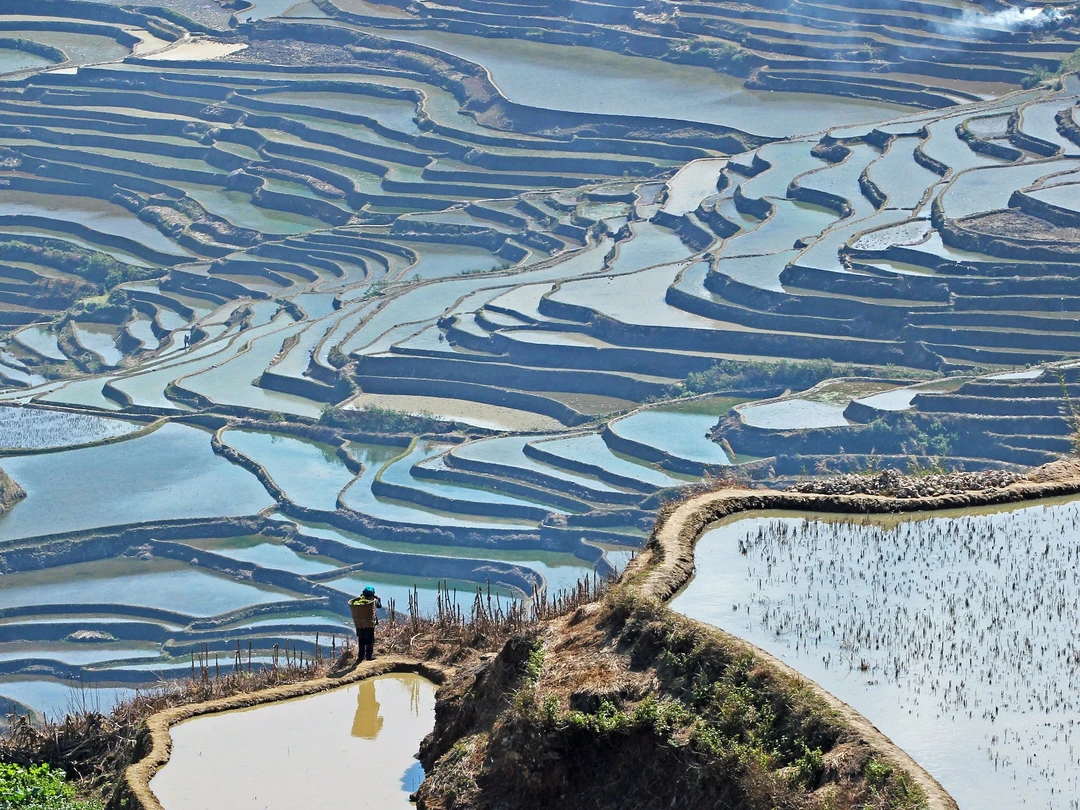
Southeast Yunnan: The Hidden Garden of Yunnan's Depths — A Hiking Journey Through Yuanyang Rice Terraces, a Stroll in Jianshui Ancient City, and a Kunming Culinary Adventure
Prologue: Why Southeast Yunnan?
If your impression of Yunnan is still stuck on Lijiang's bars, Dali's Erhai Lake, or Shangri-La's snow-capped mountains, you've likely missed the most authentic and moving side of this province. Southeast Yunnan — a region affectionately called the "back garden" by Kunming locals — quietly awaits travelers willing to slow down.
I ventured into this area twice. The first time was last September, when I fled Lijiang's suffocating commercial buzz, endured a night on a hard sleeper train plus three hours on a hard seat, and plunged headfirst into Jianshui, where I stayed for several days. The second time was just after New Year's, when I made a dedicated trip to see the Yuanyang rice terraces and took the opportunity to thoroughly explore Kunming and Mengzi again.
What's the biggest draw here? The crowds — or rather, the lack of them. Seriously, it's so quiet that you can claim an entire sunset at a popular spot all to yourself, so quiet that you can hear your own footsteps echoing through ancient alleyways. As long as you step away from the viewing platforms at Yuanyang and hike into the fields, you can savor the tranquility沉淀ed by millennia of rice-farming civilization. Jianshui Ancient City, despite being featured on TV shows, remains vibrantly alive — the residents are still its masters, and daily life is still its main melody.
This travelogue is a compilation of the highlights from both trips, covering Kunming to Yuanyang, Jianshui to Mengzi. I've written down every pitfall I stumbled into, every gem I uncovered, and every dish that made my mouth water. If you're tired of elbow-to-elbow crowds and want to bask in warm winter sunshine, enjoy a gentle breeze, and feed the black-headed gulls, this article is for you.
1. Kunming: More Than Just a Transit Hub — An Underrated Spring City

Many people treat Kunming as a mere transit point on the way to Dali or Lijiang, rushing in and out. But if you're willing to spend two days here, you'll discover that Kunming itself is a treasure worth savoring.
My first visit was in September, during overcast and rainy weather. Dark clouds hung over Green Lake Park (Cuihu), and I couldn't feel the "spring-like year-round" vibe at all. My second visit was this January, right during the Major Cold solar term — when most of China was experiencing its coldest snap, and even Xishuangbanna was drizzly. I took an eight-hour bus back to Kunming from Jinghong. The next morning, I pulled back the curtains, and sunlight poured straight in. At that moment, I truly believed in those four words: "spring-like year-round."
Around Green Lake: A Walking Route That Captures Kunming's Essence
The area around Green Lake (Cuihu) is packed with attractions, best explored on foot. My route went like this: Yuantong Temple → Green Lake Park East Gate → South Gate Tofu Rice Noodles (Douhua Mixian) → Green Lake Park West Gate → Chicken Soup Rice Noodles → Yunnan University → Yunnan Normal University (Site of Southwest Associated University) → Wenlin Street (Wheat Field Bookstore, Guangzong No. 3 Cafe). This loop takes nearly a full day, but it's the most recommended way to experience Kunming for first-timers.
Yuantong Temple — Admission is only 6 yuan, and you get free incense. The temple buildings have been recently renovated, but thankfully the craftsmanship is good, without that garish modern feel. What's most unique is that the mountain gate is higher than the main hall — in temple architecture, this is called an "inverted slope temple." The magnolias in front of the hall were already budding. I sat in the square for a long time, while a foreign guy nearby spent the entire afternoon reading a book. This kind of experience is only possible in the off-season.
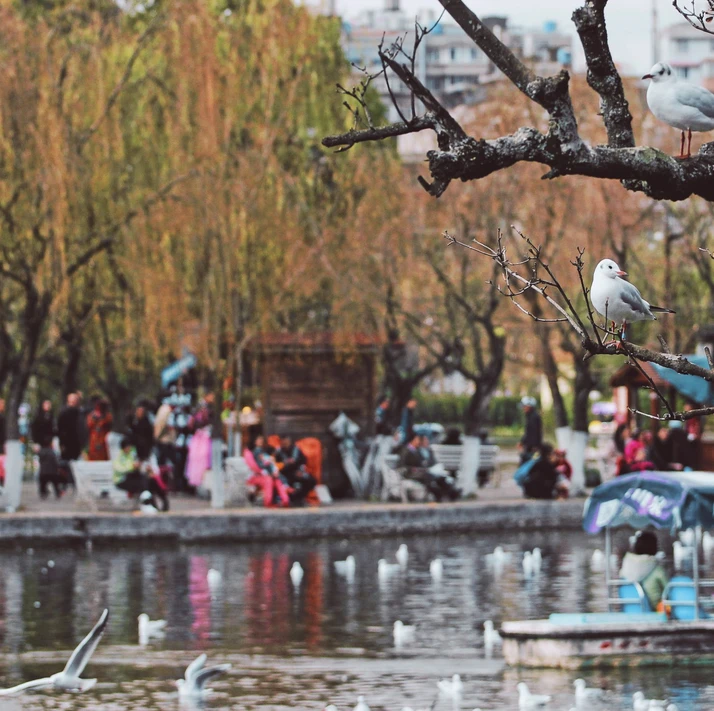
Green Lake Park (Cuihu Park) — In winter, the black-headed gulls are the absolute stars. Dense flocks of these little creatures gather on the water, so numerous they might trigger your trypophobia. In the park, locals dressed in ethnic minority clothing dance in circles; tourists can't help joining in, and the circles grow larger. A few elderly folks huddle together playing traditional instruments, lost in their own musical world. Young couples and elderly partners who've walked through life hand in hand cross the bridges together — this is the most touching aspect of Green Lake. It's not a tourist attraction; it's a microcosm of Kunming life.
Yunnan Military Academy (Lujun Jiangwu Tang) Site — General Zhu De once walked these halls. Today, besides the original exhibits, there are two themed exhibitions: one on Yunnan's modern revolutionary history, and another on the Yunnan Expeditionary Force. The content is solid and suitable for a dose of patriotic education. The academy is small — a detailed look takes just over an hour, while a quick architectural tour takes only 30 minutes. The guards at the gate are real soldiers, with a changing of the guard ceremony at 10:00 AM and 2:00 PM daily.
Yunnan University — On a clear day, sunlight spills across the vast lawns, and the campus is so quiet you can hear the wind. An occasional bicycle passes by, exuding pure youthful energy. Huize Hall is Yunnan University's main building, constructed in 1924 in classic French style. Its 95 steps symbolize "the supreme authority of nine and five." Walking through the campus, you'll stir up memories from deep within.
Wenlin Street — Every university neighborhood has a street like this, hiding the most literary bookstores and cafes. Wheat Field Bookstore (Maitian Shudian) is tucked away in a residential compound. The books here are carefully curated — literature, history, philosophy, and art — so good you'll want to stand and read them on the spot. The owner told me that some titles are no longer available in physical stores and can only be found online. Another spot, Guangzong No. 3 Cafe (Guangzong Sanhao Kafei), is converted from a traditional Kunming "one-seal" courtyard house (yikeyin), with tasteful decor. Order a pour-over made with Yunnan small-bean coffee (Yunnan xiaoli kafei), sit in the courtyard, and you'll feel like you've transformed into a slightly aging literary youth.
Kunming Food Exploration: From Street Snacks to Time-Honored Eateries
Kunming's snacks are concentrated around Green Lake and the city center. I ate my way through two full days and picked out the most recommended spots.
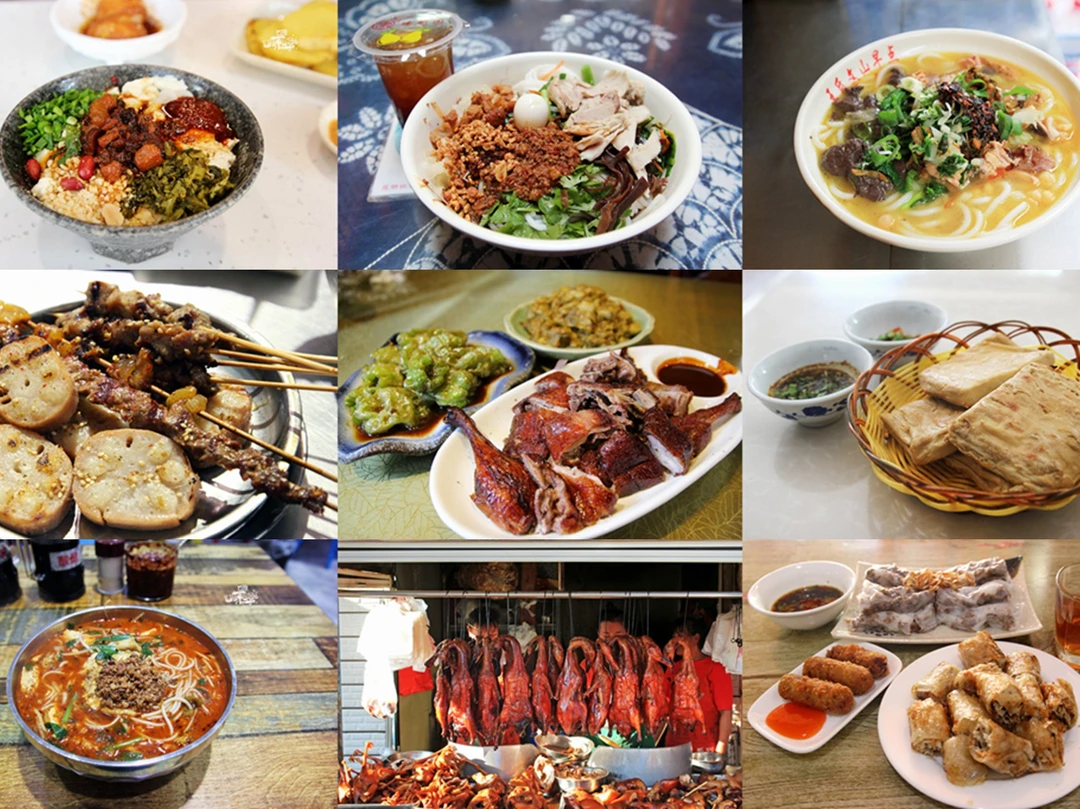
Desheng Bridge Tofu Rice Noodles (Deshengqiao Douhua Mixian) (South Gate of Green Lake) — Kunming's tofu rice noodles are a traditional snack. Originally vegetarian, they later evolved to include toppings. This bowl with meat costs just 7 yuan, two sweet bean-filled glutinous rice balls (doumian tangyuan) are 5 yuan, and grilled tofu and potatoes are 5 yuan each. A full meal that fills you up costs only 20 yuan. The sauce and tofu coat the rice noodles perfectly, making it impossible to stop.
One-Seal Old House Restaurant (Yikeyin Laofangzi Canting) (Jingxing Street Flower and Bird Market) — Housed in a renovated Kunming-style old house, the signature steamed chicken pot (qiguoji) costs 48 yuan for a small pot. The broth is crystal clear yet incredibly flavorful. The stir-fried rice cakes (chao erkui) are called "Dajiujia" (Great Rescue) in Tengchong — legend has it that a Ming Dynasty emperor, fleeing to Tengchong, ate a bowl and praised it, "Very good, very good," hence the name. The accompanying vegetable soup is called "Green Dragon Crossing the Sea Soup" (Qinglong Guohai Tang). Scholars really do have a way with words.
Jianxin Yuan (Jianxinyuan) — Out-of-town tourists flock here for crossing-the-bridge rice noodles (guoqiao mixian), but true connoisseurs order cold rice noodles (liang mixian). I've tried cold rice noodles from four or five places in Yunnan, and Jianxin Yuan's version suits my taste best — a perfect balance of sweet, salty, and spicy. Pair it with a glass of papaya water (mugua shui), and you've got a perfect meal.
Dongchun Small-Pot Rice Noodles (Dongchun Xiaoguo Mixian) (near Jinma Biji Square) — A Kunming time-honored brand specializing in small-pot rice noodles. The unique addition is fermented bean curd (furufu). It smells a bit funky, but the taste has a certain addictive magic — the more you eat, the more you want. Perfect as a breakfast choice.
Qujing Steamed Rice Noodles (Qujing Zheng Ersi) (Walking Street between East and West Pagodas) — Although I personally don't love the texture of these rice noodles (ersi), this shop has good online reviews, saying it tastes similar to the authentic version in Qujing. A backpacker should always have a "never pass up a chance" spirit — you never know, the sauce might be amazing.
Grilled Rice Cakes (Kao Erkui) — Sold on every street and alley in Kunming. In the morning, every small stall is surrounded by customers. A large sheet of rice cake is grilled like a pancake and then wrapped around a fried dough stick (youtiao), much like a northern Chinese jianbing guozi. This is true local street food.
Other Kunming Recommendations
Yunnan Provincial Museum — Located in Guandu District, it takes about an hour by public transport from the city center. But the exhibitions are thoroughly satisfying. I initially thought a provincial museum in Yunnan wouldn't be that impressive, but I was proven completely wrong. The fascinating storage jars (zhubeiqi) are unique bronze artifacts from the Yunnan region and well worth seeing.
Dounan Flower Market — Want to bring something home? The flowers and succulents here are dirt cheap. Picking up a few pots makes for an excellent souvenir.
2. Yuanyang Rice Terraces: A Feast of Light and Shadow, a Hiker's Paradise
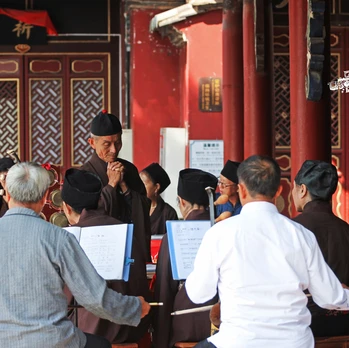
Yuanyang's rice terraces are a real test of photography skills — light, shadow, color, lines, contrast, motion, focal length, focal point... all these elements matter. But there's an even more important prerequisite: you need good luck!
At my hostel in Yuanyang, I met a guy who had already been there for ten days. Every day was cloudy, rainy, or foggy — he couldn't even see what the terraces looked like. Only on the day I arrived did he see his first sunrise.
Sunrise and Sunset: Classic Spots Even Without the Viewing Platforms
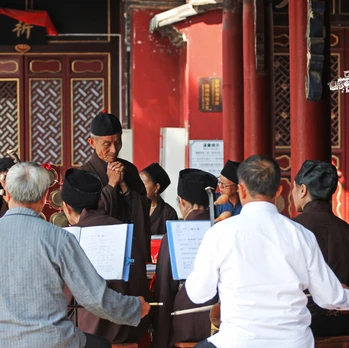
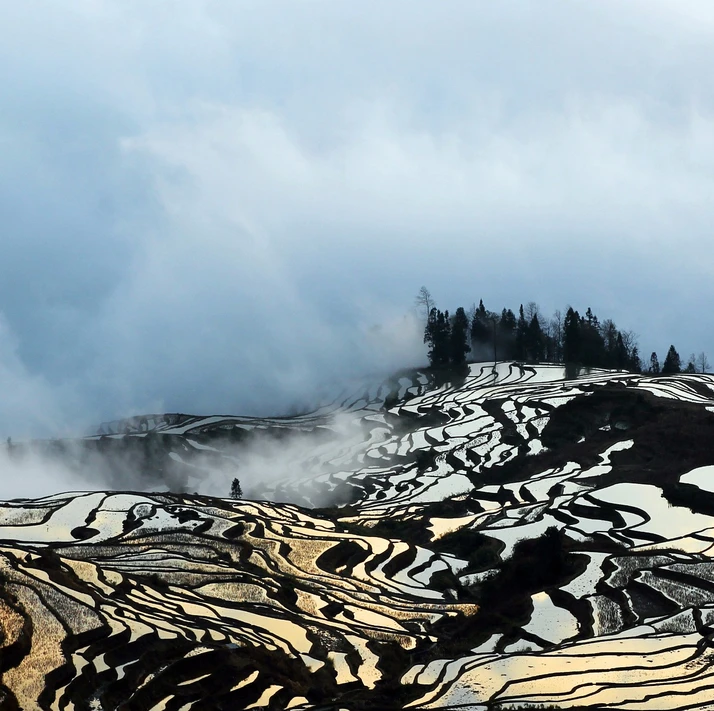
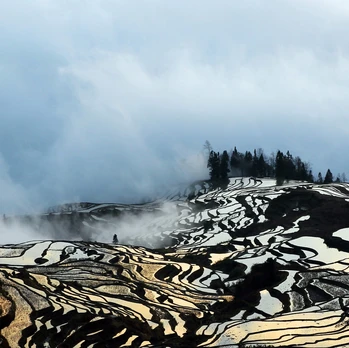
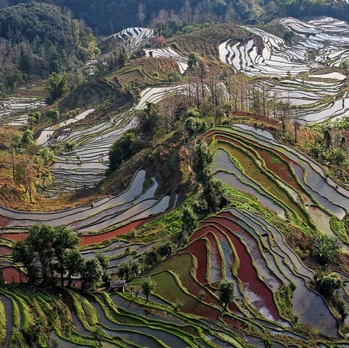
Yuanyang's beauty demands waiting for sunrise and sunset. At Duoyishu at dawn, clouds roll like an ocean, and the terraces gradually light up in the morning glow. At Laohuzui (Tiger's Mouth), the terraces form layered, undulating lines. As the sun sets, the entire valley turns golden.
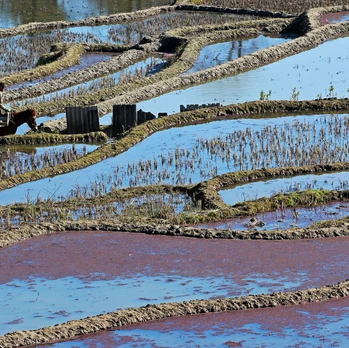
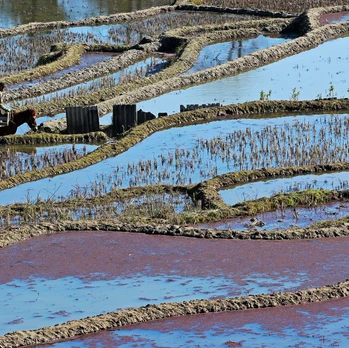
Even if you skip the official viewing platforms, you can find plenty of equally classic spots. Blue terraces, red terraces, and high-altitude cloud seas are scattered throughout the scenic area, waiting for you to discover. After enjoying the natural scenery, head to a local market — the amusing sight of people carrying a chicken in one hand, a duck in the other, and a chubby baby strapped to their backs will make you feel your trip was worthwhile.
Hiking into the Terraces: The Most Authentic Experience
Beyond the standard car tours, Yuanyang offers several excellent short hiking routes. Walk into the terraces, step onto the field paths, and you'll see the most authentic version — farmers grazing water buffalo, chickens and ducks running wild, children playing.
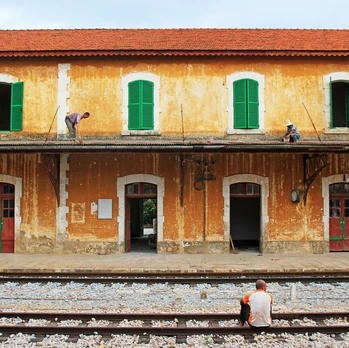
Yes, the terraces are a tourist attraction. But don't forget — they are also a millennium-old agricultural civilization heritage cultivated by the Hani people for generations, a perfect blend of utility and aesthetics. Walking along the narrow ridges between the paddies, you'll feel a profound sense of tranquility, as if in dialogue with nature.
Important reminder: Go sooner rather than later. According to local sources, an airport, highway, and cable car will all be built within a few years. By then, Yuanyang will undoubtedly be much more crowded.
3. Jianshui: A "Living" Ancient City You'll Want to Keep Secret
Jianshui is the kind of destination you want to keep to yourself. Fresh, refined, understated, and leisurely — these words might describe this small town's character. Unlike the commercialized ancient cities in Yunnan and across China, Jianshui is still a "living" ancient city: the residents are still its masters, and daily life is still its function. As for tourists — at least during winter break — you'll barely see any.
Ancient Architecture: Endless Sights
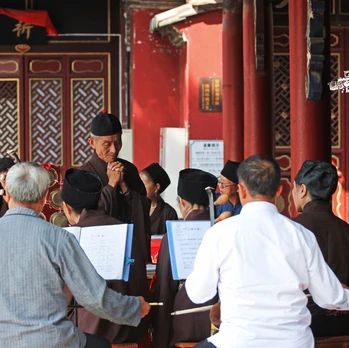
The second-largest Confucius Temple in China, the exquisite private garden of Zhu Family Garden (Zhujia Huayuan) — these are just Jianshui's highlights. But the real experience is cycling or taking the small train to Tuanshan Village to admire a century-old village, then heading to the double-dragon bridge (Shuanglong Qiao) to wait for sunset. As a gentle breeze blows and copper bells chime softly, the last light spills across the ancient bridge. Such a beautiful sunset can usually be yours alone.
Searching for Wells in Deep Alleys: The Best Way to Explore the Old Town
But these are still the standard routes. Venture into the old town's deep alleys and search for its various ancient wells — single-eye wells, double-eye wells, triple-eye wells, quadruple-eye wells, round wells, square wells, and crescent-shaped wells. The path of searching for these wells will lead you through the entire old town. If you stumble upon an ancient music performance around a corner, don't be surprised — this is the rhythm of this small town. Sit back and enjoy it.
Jianshui's Food: The Peak of Rice Noodles and BBQ
Wait — have I mentioned Jianshui's rice noodles yet? How good are they? So good that I, a backpacker who has tried over three hundred snacks across China, rushed from the east gate to the west gate of the old town on my second visit, arriving at noon, terrified of missing the lunch closing time.
Jianshui's BBQ is also exceptional, blending northern and southern Chinese styles. The flavors are perfect, and the prices are refreshingly retro. And then there's Jianshui's purple clay (zitao) craftsmanship. If you love handmade items, how could you resist taking home an elegant purple clay teapot?
Jianshui is the kind of ancient city you never want to leave — and this isn't just my opinion. It's the unanimous verdict of almost every traveler I met in Yuanyang.
4. Mengzi: Bisezhai Station and the Hometown of Crossing-the-Bridge Rice Noodles
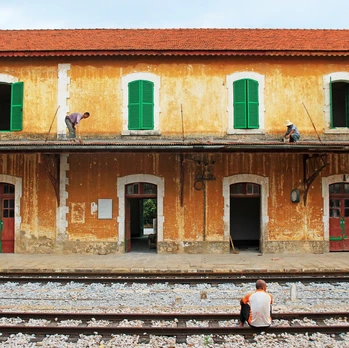
In Mengzi, seeing Bisezhai Station and tasting a bowl of chrysanthemum crossing-the-bridge rice noodles (juhua guoqiao mixian) are both must-dos. Yuanyang's terraces and Jianshui's ancient city are so spectacular that Mengzi feels like a light dessert after the main course.
Bisezhai: A Century-Old Station with Undiminished Charm
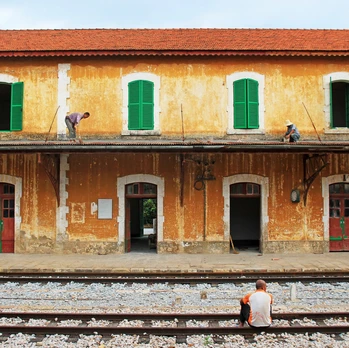
Bisezhai has weathered storms but retains its timeless elegance. Its bright color scheme carries a hint of tropical flair. Following the station map to explore the surrounding historical buildings feels like a treasure hunt. The film "Youth" (Fanghua) was shot here, introducing more people to this corner hidden in time.
Crossing-the-Bridge Rice Noodles: A Bowl or a Basin?
Crossing-the-bridge rice noodles are so famous they've almost become synonymous with Yunnan cuisine. Once you've grown accustomed to the various rice noodles of the Honghe region, you'll never look at Kunming's thick rice noodles the same way again. The legend of crossing-the-bridge rice noodles originates from Nanhu Lake in downtown Mengzi. Go to a local rice noodle shop in Mengzi and watch as an entire bowl — no, an entire basin — of broth is served. You'll wonder: is this a bowl or a basin?
5. Itinerary Planning: A No-Backtracking Route Through Southeast Yunnan
This is the longest travelogue I've ever written. Below is a rough itinerary that you can adjust based on your schedule.
Day 1: Arrive in Kunming. Take a walking tour around Green Lake (see detailed route above) to experience the charm of the Spring City.
Day 2: Travel to Yuanyang. Whether you go direct or transfer through Jianshui, it takes most of the day. Upon arrival, if weather permits, head to Laohuzui (Tiger's Mouth) for sunset.
Day 3: Hire a car to tour the Yuanyang rice terraces, focusing on sunrise at Duoyishu and sunset at Bada.
Day 4: Choose your favorite section of terraces for a half-day hike to get up close, or visit a local market.
Day 5: Return to Jianshui to rest and recharge. Start exploring this wonderful small town — it deserves at least two days.
After that, depending on your schedule, you can head to Mengzi to see Bisezhai or visit Hekou. If time is short, return directly to Kunming to see the Yunnan Provincial Museum, then browse Dounan Flower Market for dirt-cheap flowers or succulents as souvenirs.
Alternative route: Besides the fascinating Honghe Prefecture, some backpackers go directly from here to Jinghong. Jianshui or Mengzi has two daily buses to Jinghong, both departing in the morning. The fare is around 200 yuan, and the trip takes about 8 hours. You can also reverse this route.
Conclusion: Southeast Yunnan Is Worth Slowing Down For
The charm of Southeast Yunnan doesn't lie in trendy photo spots. It's in the fact that it still preserves Yunnan's most authentic face. By the Yuanyang rice terraces, you'll see Hani people working the land as their ancestors did for generations. In Jianshui's deep alleys, you'll hear the laughter of women washing clothes by ancient wells. By Kunming's Green Lake, you'll feel the leisurely pace of Spring City life.
There's no Lijiang's clamor here, no Dali's commercialization. There's only sunshine, gentle breezes, delicious food, and locals willing to share their lives with you. If you're tired of rushed, superficial travel, come to Southeast Yunnan. Slow down and truly experience this forgotten back garden.
Finally, remember this: in Yuanyang, luck matters more than skill; in Jianshui, time matters more than sights; in Kunming, mood matters more than guidebooks. Wishing you a wonderful journey!
You should also read:

Cloud Travelogue · Dali of Wind, Flowers, Snow, and Moon: A Three-Day, Two-Night Journey of a Free Spirit
Cloud Travelogue · Dali of Wind, Flowers, Snow, and Moon: A Three-Day, Two-Night Journey of a Free Spirit I am a cultured female foodie with a touch of rogue charm. I slung on my backpack, took my lover's hand, and set off on a spontaneous…
Continue reading...
The Meaning of Travel – A Tengchong Story: A Journey of the Heart and Personal Growth
The Meaning of Travel – A Tengchong Story: A Journey of the Heart and Personal Growth Setting Out, Only to Return a Better Self Some say travel is nothing more than leaving a place you're tired of, only to go to a place where others…
Continue reading...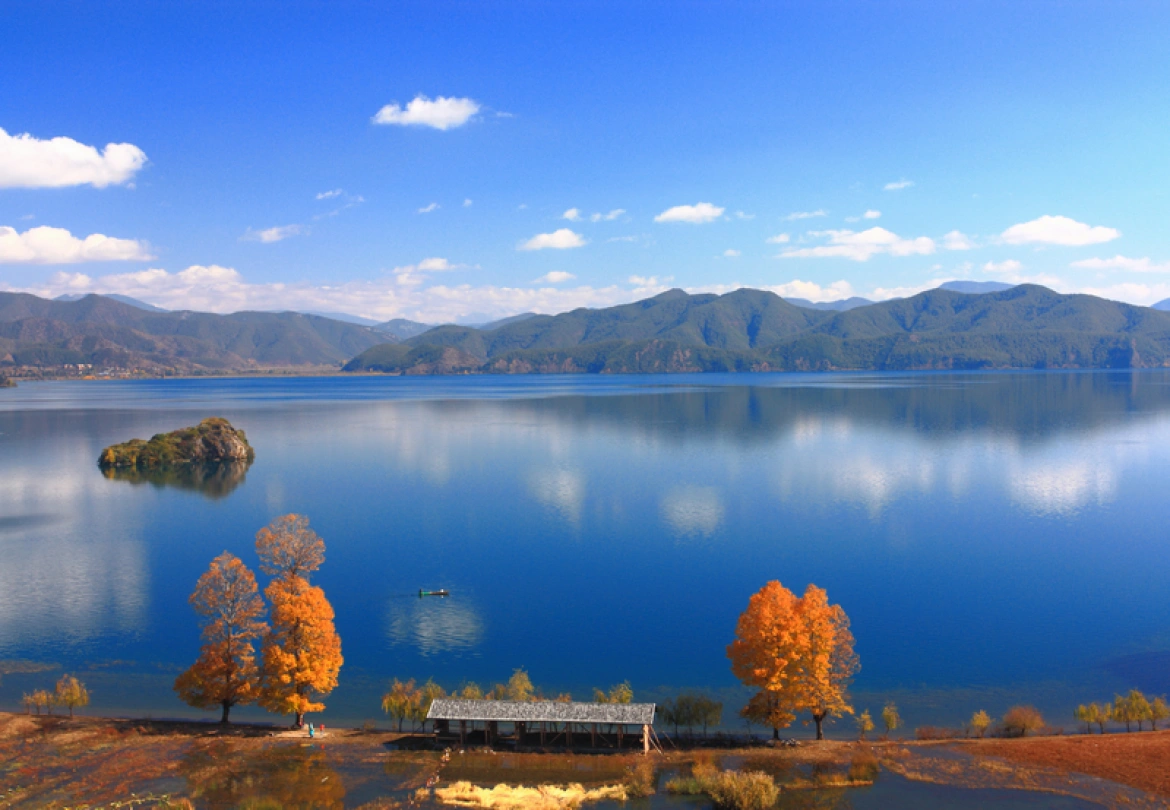
A Spiritual Journey to Lugu Lake in Lijiang: Experiencing the Legend of the Kingdom of Women! (Reproduction and Hotlinking Prohibited)
A Spiritual Journey to Lugu Lake in Lijiang: Experiencing the Legend of the Kingdom of Women! (Reproduction and Hotlinking Prohibited) Off-road自驾, food, hotel and民宿 reviews, Featured Traveler, Tank 300 owner, 200,000 km of self-driving experience. WeChat: y01294987 Ninglang Yi Autonomous County 2010.11.08 · 7 days…
Continue reading...