Southwest Yunnan: Crossing 3,800 Kilometers to Discover a Different Side of Yunnan
Southwest Yunnan: Crossing 3,800 Kilometers to Discover a Different Side of Yunnan
If you ask which province in China is the hardest to define, Yunnan would undoubtedly be on the list. From snow-capped peaks to humid rainforests, from frigid highlands to tropical lowlands, this land seems to have condensed every climate zone on Earth into its borders. It's home to Asia's largest flower trading market, a Noah's Ark for flora and fauna, and the birthplace of coffee and tea—the province produces the lion's share of the nation's coffee, and its tea output consistently ranks first. But what's most captivating are the people: 25 ethnic minorities live interwoven here, each preserving their unique way of life. From mountain livestock to lake fish, from deep-forest mushrooms to roadside flowers, grass, and insects—everything can end up on the dinner table. Even rice noodles alone come in a dozen variations: small-pot, eel, chrysanthemum, cross-bridge, Dai-style, cold chicken, thin bean powder, and more.
Southwest Yunnan is the very essence of this colorful land. Bordering Laos and Myanmar, it's a聚居地 for ethnic groups like the Dai, Blang, Lahu, Wa, and Jino, and a crossroads where Southeast Asian exoticism meets traditional Chinese culture. So three women from the snow-covered far northeast of China flew 3,800 kilometers to embark on a journey to discover a "different Yunnan."
Trip Overview: Heading South, Stopping Along the Way
The journey began in Kunming, heading south through the Ailao Mountains, Xishuangbanna, Jingmai Mountain, Menglian, Ximeng, Cangyuan, Mangshi, and Ruili, finally reaching Tengchong. Following the principle of "sleep wherever we end up," the itinerary was tight, but each stop left unique memories. If time allows, adding an extra day or two would make the experience more relaxed.
Day 1: Dounan Flower Market and Night Rain in the Ailao Mountains
Dounan Flower Market: Asia's Largest Flower Kingdom
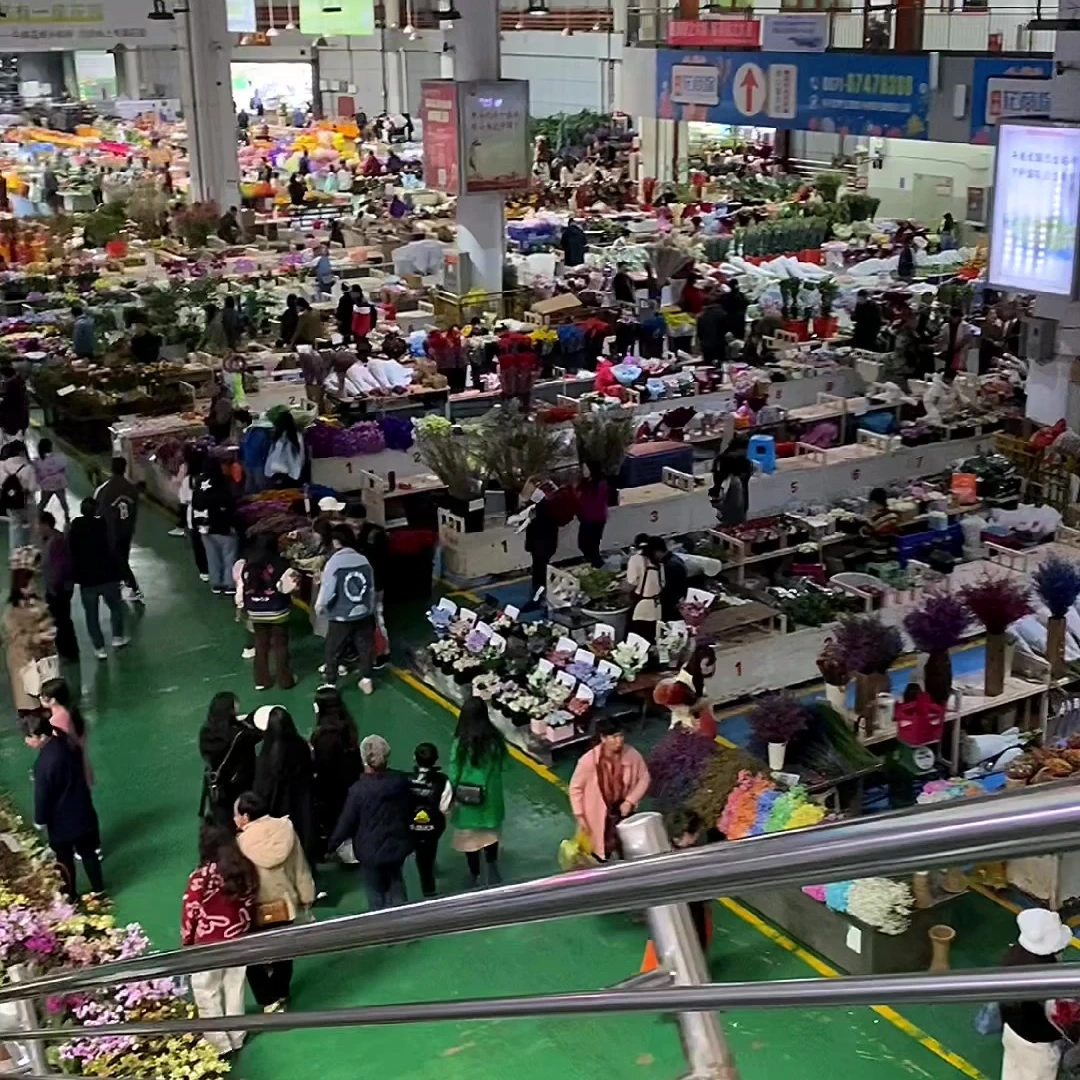
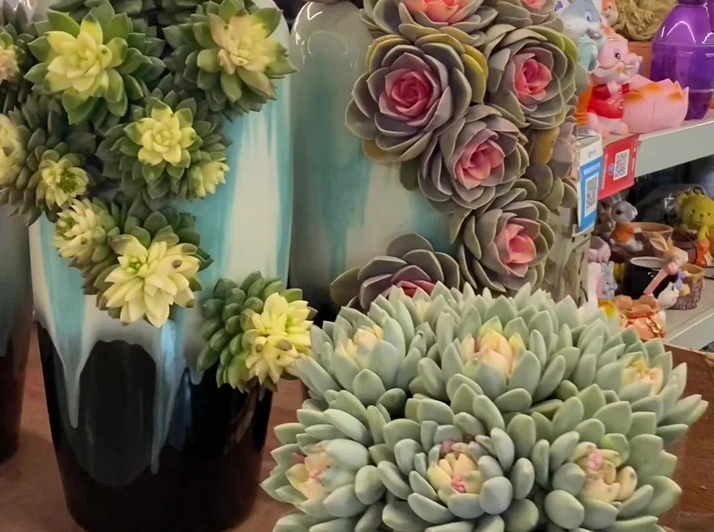
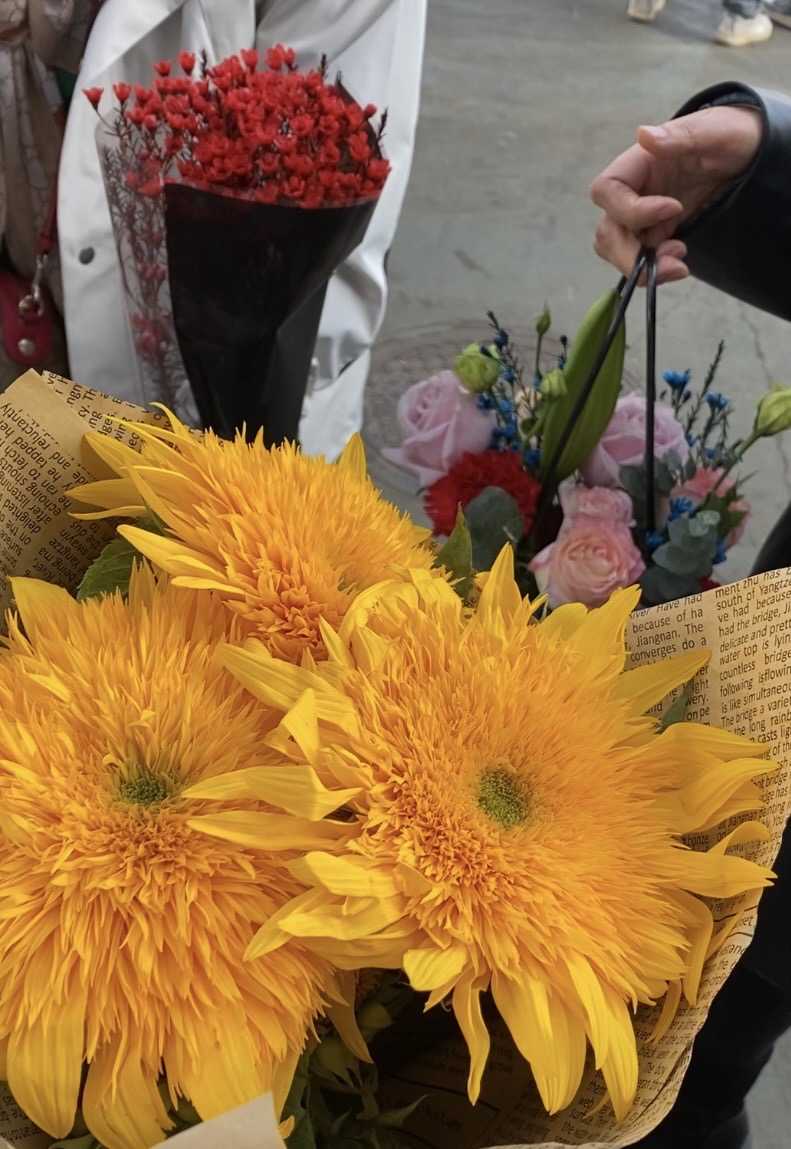
The first stop was the Dounan Flower Market in Chenggong District, Kunming. This is Asia's largest fresh-cut flower trading market. The first floor is a dazzling array of cut flowers and potted plants, while the second floor is a succulent paradise—varied in shape, vibrant in color, so captivating you can't tear yourself away. Apparently, the market is liveliest in the evening; though we missed that time, we were still utterly stunned by what we saw. After much agonizing, we finally chose just three types to stuff into the car, a painful compromise.
By evening, as we arrived at Gasa Town in Xinping County, a light drizzle began. After dinner, confirming there was no fog in the mountains, we drove toward the Ailao Mountains. The mountain roads were winding, requiring extra caution at night. We eventually checked into a guesthouse near the Ailao Mountain sunrise viewing platform. That night, the sounds of wind, rain, and thunder mingled together, becoming the backdrop to my sleepless night.
Day 2: Sea of Clouds and Hidden Wonders in the Ailao Mountains
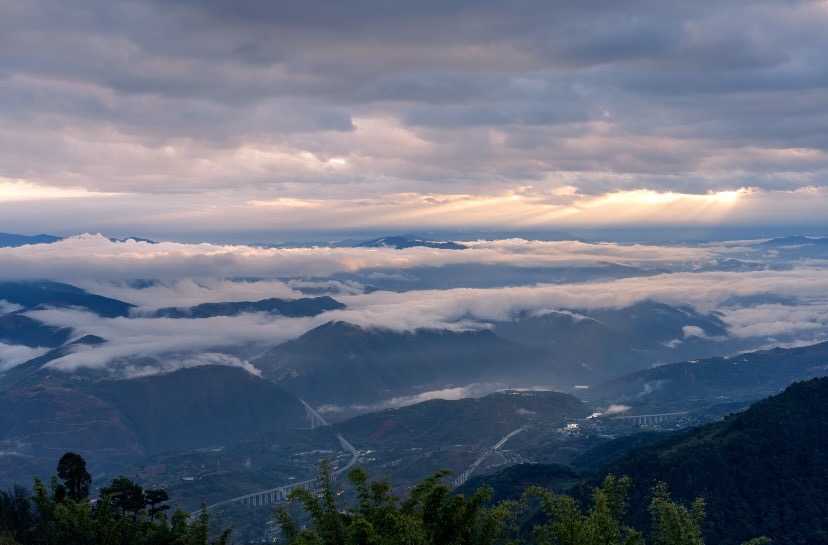
Ailao Mountain Sea of Clouds Sunrise: Light Takes Shape
Location: Yaonan Village, Gasa Town, Xinping Yi and Dai Autonomous County, Yuxi City
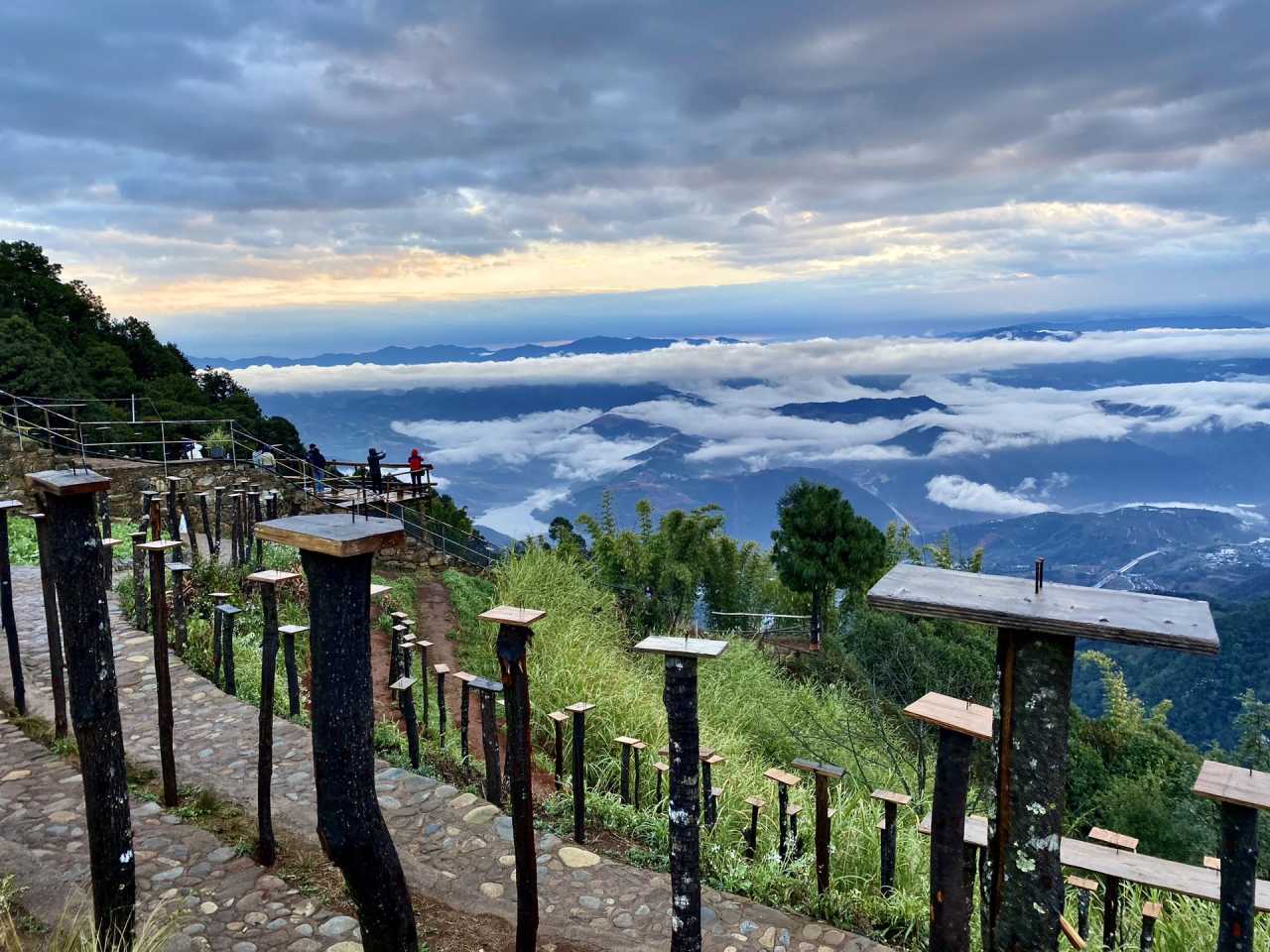
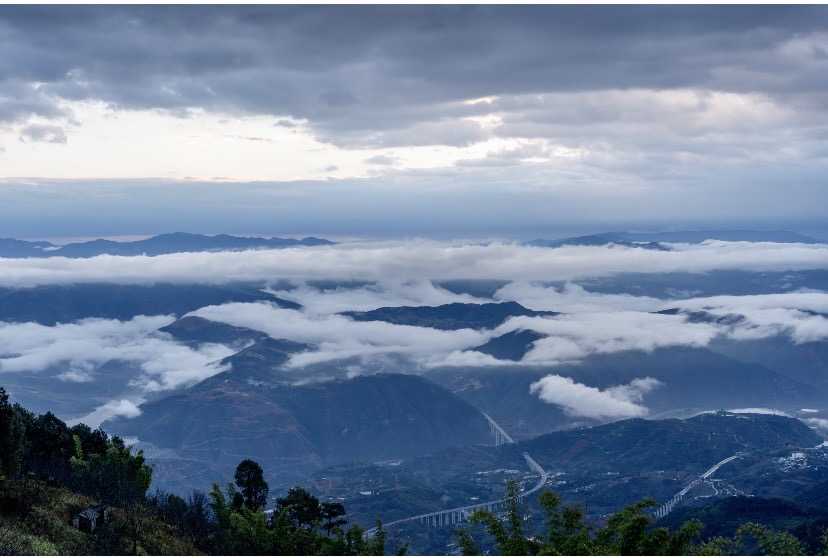
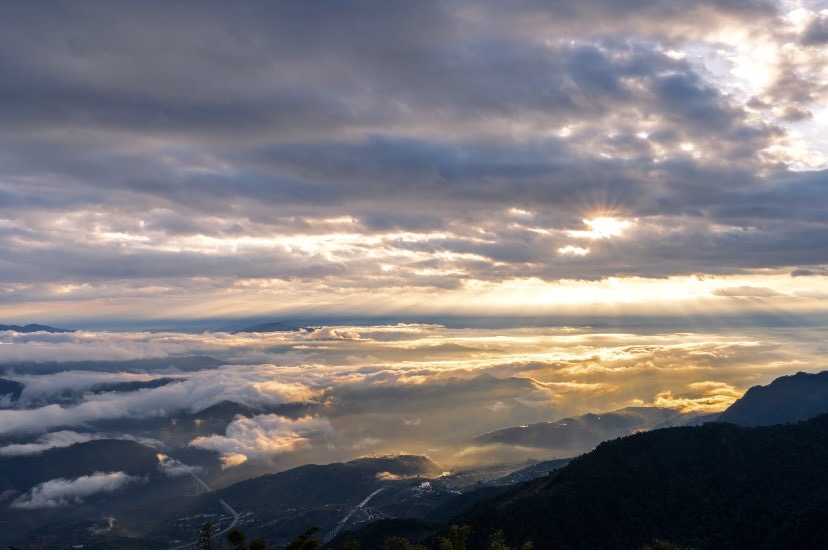
Waking up early, the rain had stopped, and we headed straight for the viewing platform to try our luck. Though we didn't see a full sunrise, when the Tyndall effect appeared, light took shape—those beams piercing through the clouds became a small surprise in our disappointment, a little healing in our regret.
The viewing platform charges a 10 yuan parking fee. Below, there are two areas cordoned off by villagers—10 yuan for the higher spot, 5 yuan for the lower one. Remember, you can haggle.
Nan'en Waterfall: A Silver-White Curtain
Admission: Free
Location: Beside the highway in Gasa Town
"Nan'en" means "silver-white water" in the Dai language. At a bend in the canyon road, a vast curtain of water cascades down from the mountaintop, silver droplets spraying everywhere, shrouded in white mist. You can hear it before you even reach it. Here, you truly feel that "as high as the mountain, so high is the water." However, the day was misty and the water flow wasn't heavy, so we couldn't capture the stunning effect seen online.
Shimen Gorge: The Little Jiuzhaigou of the Ailao Mountains
Admission: 30 yuan
Location: Gasa Town
Shimen Gorge is a clear stream flowing from the heart of the Ailao Mountains, cutting through a nearly 1-kilometer "line of sky" rock canyon. The water is crystal clear, surrounded by dense forests, an endless expanse of green. It's rightly called the "Little Jiuzhaigou of the Ailao Mountains."
The road from Shimen Gorge to Jinshan Primeval Forest is prone to thick fog, with visibility extremely low, forcing us to crawl along.
Jinshan Primeval Forest: A Real-Life Emerald City
Admission: 10 yuan
Location: Gasa Town
This was one of the scenic spots I most looked forward to. Misty forest views, towering ancient trees, lush vines, and thick moss cover every corner of the mountain. The entire scenic area is a circular route, less than 2 kilometers long. Walking and taking photos along the way, the effect is spectacular. This is definitely a natural oxygen bar, a real-life Emerald City.
The Ailao Mountains get their name from the ancient Ailao Kingdom and are part the Yunling range of the Hengduan Mountains. Many people talk about the Ailao Mountains with a sense of dread—the mysterious deaths of four geological surveyors in 2021 only added to their mystique. But as long as you stick to the designated scenic routes, it's absolutely safe—Nan'en Waterfall, Shimen Gorge, and Jinshan Primeval Forest haven't been overdeveloped, preserving their pristine natural beauty.
Day 3: From Mojiang to Xishuangbanna—A Tropical Crossing
Sixiao Expressway: China's Most Beautiful Highway
From Mojiang to Xishuangbanna, we drove onto the Sixiao Expressway, rated as an AA-level scenic area. This is China's first expressway to cut through a tropical rainforest, stretching 97.75 kilometers from Simao District in Pu'er City in the north to Xiaomengyang Town in Jinghong City in the south. Everywhere we looked, tall tropical plants lined the road, lush and green. While the north was cloaked in snow, here it felt like April, with fragrant blossoms still lingering.
Xishuangbanna Tropical Botanical Garden, Chinese Academy of Sciences
Admission: West Garden + sightseeing bus: 130 yuan
Location: Menglun Town, Mengla County
Locals call it the Menglun Botanical Garden, and it's Xishuangbanna's only 5A-rated scenic area. It's the largest botanical garden in China, with the most collected species and the most specialized plant zones. Having been here before, I chose to split off and headed to Baduo Village instead.
Baduo Village: The People Who Came Out of a Giant Drum
Admission: Free
Location: Baduo Village, Xinsitu Administrative Village, Jinuo Mountain Jino Ethnic Township, Jinghong City
The Jino people are China's 56th officially recognized ethnic group, known as "the people who came out of a giant drum," having leaped directly from a primitive society into the modern world. The sun drum is their totem, and the sun is their faith. "Jino" means "descendants of the maternal uncle" or "a people who respect their uncles."
Baduo Village is a traditional Jino settlement; its name means "the village that preserves the pot-brick stones left from Jiezhuo Mountain," symbolizing not forgetting one's roots and passing down the legacy. The entire village is under development and construction, with buildings painted in vibrant colors and flowers adorning every household. In the village history museum, you can see the Jino people's original household items, tools, and clothing. Though I regretted not being able to join a rainforest hike, the warm-hearted grandmothers in the village and the children who played with me deeply warmed my heart.
Starry Night Market: A Sea of Stars on Earth
Admission: Free
Location: Gaozhuang Xishuangjing, Jinghong City
This is Asia's largest night market, specializing in food snacks, unique handicrafts, ethnic clothing, and gemstone jewelry. Standing on the White Bridge overlooking the entire market, its bustling prosperity is breathtaking—like a sea of stars on earth. Everywhere in the market, you see "Hani beauties and Dai princesses" getting their photos taken. We three old aunties went a little wild too, and after our photo session, we didn't return to the hotel until after 1 a.m. If you don't get crazy when you're young at heart, when will you?
Day 4: Temples and Fruit in Jinghong
Mange Fruit Wholesale Market
Location: Jinghong city center
It's said to be Asia's largest fruit wholesale market. The variety of fruits is staggering—so many we'd never seen before and couldn't even name, leaving us dizzy.
Dai Water Town
Admission: Free
Location: Jinghong city center
This is a lesser-known spot—actually the attached park of a real estate development. It's great for photos and won't be as crowded as other places.
Jinghong General Buddhist Temple
Admission: Free
Location: Gaozhuang Xishuangjing
The Xishuangbanna General Buddhist Temple has a long history and serves as the office of the Xishuangbanna Buddhist Association, overseeing all the temples large and small in the prefecture. The architecture is grand and magnificent, resplendent in gold, with intricately carved beams and pillars that gleam in the sunlight. The roof ridges are adorned with flame-like and curling leaf-shaped floral decorations, as well as animal motifs like peacocks, elephants, and phoenixes—a classic example of Theravada Buddhist architecture.
Manting Park
Xishuangbanna's oldest park, the Dai people call it "Chunhuan," meaning "Garden of the Soul." It was once the royal garden of the Dai kings. Legend has it that when the Dai queen visited, she was so captivated by the beauty here that her soul was drawn away, hence the name.
Prajna Temple: My Favorite White Pagoda
Admission: Free
Location: Jinghong suburbs
Prajna Temple is very niche—more like a small village shrine. What's famous here is the white pagoda. The pagoda is exquisitely crafted, shimmering with a pure fluorescence in the sunlight, more sacred and beautiful than ordinary white. I've been to Xishuangbanna twice and seen many golden, red, and white pagodas, but the white pagoda at Prajna Temple is my absolute favorite.
Day 5: Millennia-Old Villages and Winter Cherry Blossoms at Jingmai Mountain
Manlei Pagoda: A Unique Domed Temple
Admission: Free
Location: Mengzhe Town, Menghai County
Manlei Pagoda is quite unusual—the top of the temple somewhat resembles the dome of a mosque, a style rarely seen in Xishuangbanna. The pagoda has three levels; the third requires removing your shoes. On the dome ceiling are densely packed Buddha statues, resplendent and luxurious. The surrounding walls are adorned with vivid murals depicting Buddhist stories.
As a northeasterner, I felt like Granny Liu entering the Grand View Garden—everything was novel. On the way to Jingmai Mountain, we came across vast fields of sugarcane, and we three old aunties were jumping for joy.
Jingmai Mountain: A Treasure of World Tea Culture
Jingmai Mountain belongs to the Hengduan Mountain system, located in Huimin Town, Lancang Lahu Autonomous County, Pu'er City. It borders Menghai County in Xishuangbanna to the east and Myanmar to the west. It's one of China's six major tea mountains, with the largest area of thousand-year-old tea trees. In 2013, the "Pu'er Jingmai Mountain Ancient Tea Forest Cultural Landscape" was successfully inscribed as a UNESCO World Heritage site. As the saying goes, "At first, you don't know Jingmai's fragrance; after one sip, it becomes a world-class tea."
Jingmai Mountain has 14 traditional villages. Nuogang Ancient Village belongs to Jingmai Village, and Wengji Ancient Village belongs to Mangjing Village. Passing through a forest "time tunnel" and driving dozens of kilometers on cobblestone roads, you arrive at these thousand-year-old villages hidden deep in the mountains. Greeting you are winter cherry blossoms covering the hillsides.
Wengji Ancient Village: A Millennia-Old Blang Village
Admission: Free
Location: Mangjing Village, Huimin Town, Lancang County
Wengji Ancient Village is the best-preserved Blang ethnic village to date. The Blang people here have lived off tea cultivation for generations, earning it the name "Millennia-Old Blang Village." The village features ancient buildings, a temple, a village gate, a village heart, and ancient cypress trees.
Wengji Temple is located at the northern end of the old village and is the venue for Buddhist ceremonies and major festivals. The architecture follows a symmetrical axis layout, consisting of a main hall, a scripture repository, and monks' quarters, blending Han Chinese temple style with traditional Blang architecture.
The Village Heart is the starting point and center of ethnic village construction, believed to be where the village spirit resides. The Blang village heart typically consists of several shorter stakes surrounding a taller one. The location of the village heart is also significant—according to records, a white horse was released in the village, and the spot where it lay down determined the placement.
Wengji Ancient Cypress is over 2,500 years old, with a root circumference of 11 meters, a trunk diameter of 3-5 meters, and a height of over 20 meters. Legend has it that a demon dragon was causing trouble in the back mountain, and a monk came to sit in meditation at the village entrance, converting the evil dragon. Over time, the dragon was transformed into a cypress tree, growing alongside the ancient temple. The villagers call this "the ancient cypress listening to scriptures."
In Wengji, sip some Pu'er tea and chat with the villagers—everything makes the trip worthwhile.
Jingmai Mountain Winter Cherry Blossoms: Snow in the North, Flowers Here

While the north is blanketed in heavy snow, the winter cherry blossoms on Jingmai Mountain begin to bloom in succession. Tens of thousands of cherry trees are scattered throughout the ancient tea gardens, in clusters and patches. No admission fee—you can see them in full bloom along the roads to Nuogang and Wengji villages. We laughed, ran, and lingered, reluctant to leave. The tea trees were also blooming, competing with the cherry blossoms.
Nuogan Ancient Village: Where Deer Drink
Admission: Free
Location: Jingmai Village, Huimin Town, Lancang County
Nuogan Ancient Village is a Dai village. "Nuogan" means "the place where deer drink water" in the Dai language, said to be named after a large herd of deer that once came here to drink. The village is still inhabited, with villagers selling tea, roasted potatoes, and grilled tea at their doorsteps. It's an ideal place to experience authentic Dai culture.
We were lucky to encounter a wedding feast at the village heart. According to the villagers, the host family was hosting a banquet for the entire village because their son was going to become a monk at the village temple. During his time as a monk, he would receive a salary; after three years, whether to continue as a monk or not was voluntary, but he wasn't allowed to date during that period. The host family had slaughtered pigs and cows, and all the men were busy bustling about—a lively scene.
At this point, this journey that felt like a time warp was drawing to a close. The impression Jingmai Mountain left on me was profound and unique—not just its intoxicating natural beauty, but also its rich ethnic cultural heritage and vibrant folk customs. Years from now, I believe it will still be a heart-stirring, beautiful memory.
Day 6: Lancang Market and Menglian Coffee
Lancang Street Market: A Giant Curiosity Fair
Location: West bank of the Nanlang River, Lancang Lahu Autonomous County urban area
Time: Saturday evenings and Sundays
Lancang County gets its name from its eastern border along the Lancang River (Mekong River). It's home to multiple ethnic groups including the Dai, Lahu, Wa, and Hani. Every Saturday and Sunday, people flock to Lancang Street for the market (locally called "ganbai"), creating a lively atmosphere.
We arrived in Lancang town from Jingmai Mountain a day early and visited the market in the evening for a preview—already bustling. The next morning, we continued exploring. Fresh fruits and vegetables, local agricultural products, medicinal herbs, cooked food, special cold dishes, barbecue, clothing, daily necessities, hardware, farm tools—everything you could imagine. Steaming sticky rice, fragrant grilled fish, a wide variety of pickles, tangy mango salad, colorful ethnic costumes, hand-woven baskets—it was overwhelming.
The most amusing sight was someone scraping tree bark to sell. It turned out to be olive tree bark, which can be used in cooking, like olive bark salad with pork skin. Language barriers might be an issue, but that's part of the charm of Lancang Street—it's a giant curiosity fair, language included!
After eating and browsing, we also visited the Sanchahe Barbecue Garden in Lancang. Though the hygiene was a bit concerning, diners from all over kept coming and going.
Menglian: The Coffee Aroma of a Border Town
Menglian Dai, Lahu and Wa Autonomous County is located in southwestern Yunnan Province, an important gateway to Southeast Asian countries like Myanmar and Thailand. This border town is striving to become the "Avocado Capital" and the "Top Boutique Coffee County."

We visited Menglian General Buddhist Temple and Zhongcheng Buddhist Temple. The General Temple was originally the Lower City Temple, an important landmark of the Nanyun Ancient Town. It's not only a religious site but also a key place for Dai cultural heritage. Zhongcheng Temple, called "Wagang" in Dai, was the exclusive temple for officials in the middle city during the chieftain era. Here, for the first time, we saw "banners" hanging outside the beams of the hall.
Tianyu Coffee Estate is located in Mangmao Village, Fuyan Township, Menglian County, and is a Yunnan boutique coffee estate. We toured the coffee bean processing facility. Sometimes, the scenery along the way is more beautiful than the destination itself—we saw sugarcane flowers resembling reeds, swaying in the wind across the hills; towering eucalyptus trees standing tall among the mountains; and in the coffee gardens, clusters of coffee cherries hanging from the branches like little gems. Travel shouldn't be about places others talk about; it's about encountering your own scenery.
Day 7: The Mystery and Rebirth of the Wa People
The Wa People: A People Who Came Out of a Stone Cave
The Wa people are one of the ethnic minorities in China and Myanmar, primarily living in Cangyuan, Ximeng, and other areas of southwestern Yunnan. The Wa people widely share the myth of "Sigang Li"—the Cangyuan Wa believe "Sigang" means "gourd" and "Li" means "to come out," meaning people emerged from a gourd; the Ximeng Wa believe "Sigang" means "stone cave," meaning "people came out of a stone cave." Despite the different interpretations, both regard the Awa Mountains as the birthplace of humanity.
The Wa people are considered the last primitive tribe, having transitioned directly from a primitive society into a new social order. They consider black beautiful—in the past, they even dyed their teeth black. They also hang buffalo heads at their doorways for blessings.
Dragon Moye Sacred Site: The Forest of Buffalo Heads
Admission: Free
Location: Mengsuo Longtan Park, Ximeng Wa Autonomous County
"Dragon Moye" is a mysterious sacrificial site deep in the Awa Mountains. In ancient Wa culture, "Dragon Moye" means "the sacred forest where buffalo heads are hung." The buffalo is a symbol of auspiciousness, sanctity, and nobility in the hearts of the Awa people.
Crossing Longtan Lake and walking into the morning mist, the mystery of Dragon Moye slowly unfolds. Passing through the dense primeval forest and entering the sacred site, rows of buffalo head stakes inspire awe. It's said that these were once human head stakes, but the practice of headhunting was abolished after the founding of the People's Republic of China.
Ximeng is made appealing by Dragon Moye, but it's the ethnically distinctive streetscapes that make it lovable.
Wengding Primitive Tribe: A Reborn Ancient Village
Admission: 55 yuan (including sightseeing bus)
Location: Mengjiao Dai, Yi and Lahu Ethnic Township, Cangyuan County, Lincang City
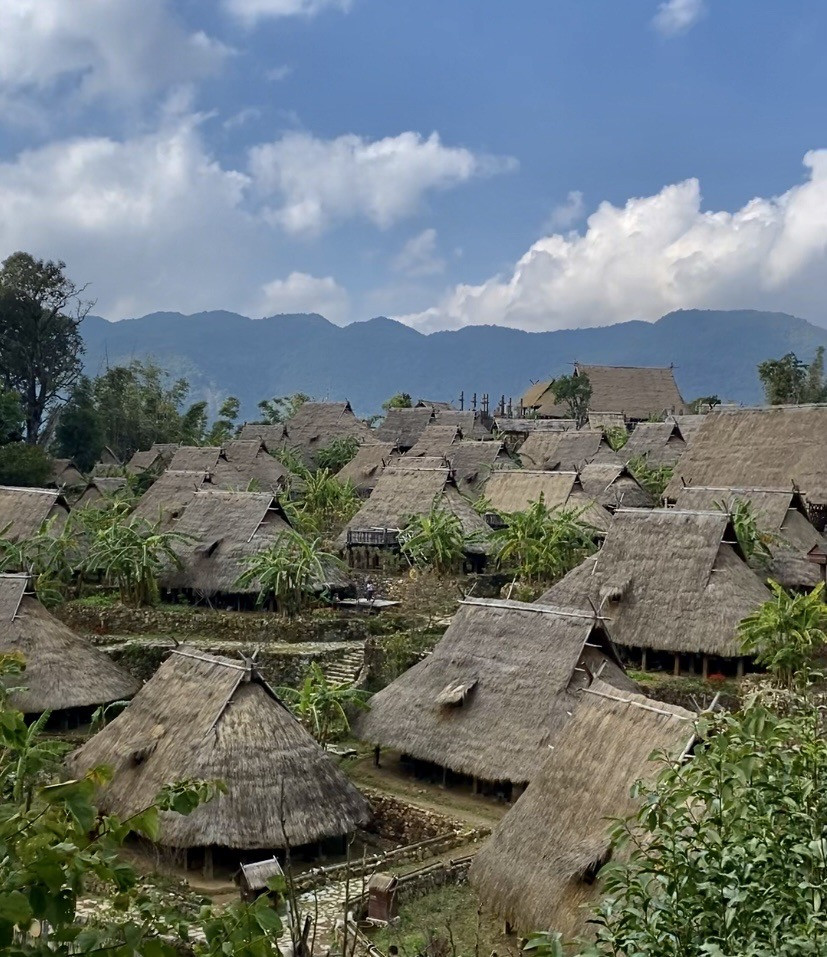
Wengding Village was named by National Geographic as China's last ancient village. Unfortunately, a fire in 2021 destroyed most of the village's buildings, leaving only four thatched houses standing. The current Wengding is a scenic area rebuilt after the fire. The reconstructed village still preserves the original way of life. The architectural style is uniform—all-wood thatched houses, either stilted or ground-level.
The original Wa villagers have all moved to a new village nearby. The Wa people in the scenic area are performers selected from within the village, taking turns performing their traditional way of life in their former homes for a daily fee of 60 yuan. You can rent Wa ethnic costumes for photos, and sometimes there's body painting. The viewing platform offers a panoramic view of the entire village; if the timing is right, you can also see a water-spraying performance. The sacred grove is a must-see—since 1958, human sacrifices have been replaced with buffalo heads, but it's still an awe-inspiring sight.
The village gate features a welcome song and dance and a "Monihei" dotting ceremony, a Wa blessing ritual. What's most unforgettable is interacting with the villagers—we danced and sang together, belting out "The Wa People Sing a New Song" and the infectious "Jialinsai." Their wild, primal voices felt like a celebration of life.
The reborn Wengding may have lost some of its original authenticity, but the experience was surprisingly wonderful. Boarding a plane, crossing thousands of miles, just to see you once. Southwest Yunnan—a dream fulfilled in Wengding!
Day 8: Over the Mountains to Mangshi
This is a day I'd rather not dwell on—endless mountains, endless hours in the car. From Cangyuan to Mangshi, we crossed mountain after mountain, driving for over 8 hours before arriving.
Mangshi, called "Meng Huan" in Dai, is the capital of Dehong Dai and Jingpo Autonomous Prefecture. Located in western Yunnan, it's the only city in China named with a single character.
Meng Huan Golden Pagoda and Silver Pagoda
Meng Huan Golden Pagoda (admission: 40 yuan) is Mangshi's landmark—China's first golden Buddhist pagoda and Asia's first hollow golden pagoda. Having seen so many pagodas on this trip, we didn't buy tickets to enter, but its resplendent, extravagantly luxurious exterior alone was enough to leave us in awe.
Meng Huan Silver Pagoda (admission: 40 yuan) sits directly opposite the Golden Pagoda, just a few hundred meters' walk away. If the Golden Pagoda is Mangshi's sun, the Silver Pagoda is its moon. The two face each other, jointly guarding this small town. Climbing to the top, you can see the Silver Pagoda and Golden Pagoda gazing at each other from afar—a beautiful sight.
That evening, we fulfilled a wish left unfulfilled in Xishuangbanna: the Peacock Feast. It's similar to the northern-style rice-wrapped vegetable bundles, but more elaborately presented.
Day 9: Ruili's Treasures and Border Gateway
Mengbana Xi Rare Garden: Small Place, Big World
Admission: 40 yuan
Location: Mangshi
This is a national AAAA-level scenic area that takes the concept of "rare and unique" to the extreme. The garden features a nationally rare exhibition hall of rosewood logs, numerous world-rare petrified wood and tree fossils, rough jade and gemstone stones, and an abundant collection of tropical and subtropical ancient trees, rare plants. It also houses nationally rare large-scale root carvings and artworks, as well as artifacts from the China-Burma-India Theater of World War II.
The garden contains a memorial pavilion for Premier Zhou Enlai, commemorating the historic event in December 1956 when Premier Zhou and Vice Premier He Long, together with Burmese Prime Minister U Ba Swe, visited Mangshi to host a border people's friendship gathering. Peacocks roam freely in the garden, allowing close interaction. Strolling through the Rare Garden, everything is breathtaking—a small scenic area packed with countless treasures, truly a "small place, big world."
Tree-Wrapped Pagoda: Tree in Pagoda, Pagoda in Tree
Admission: Free
Location: Mangshi
The Iron City Buddhist Pagoda is called "Tree-Wrapped Pagoda" because an ancient tree has grown over and enveloped most of the pagoda structure with its roots and branches. Tree within pagoda, pagoda within tree—they grow together, a true wonder.
Jiegao Port: Separated from Myanmar by a Fence
Location: Ruili City
Jiegao Port is directly adjacent to Muse Town in Myanmar. Through the iron fence, you can see the streetscape of Myanmar. It's an important border crossing between China and Myanmar and a great place to experience border culture.
Conclusion: Southwest Yunnan—Worth Crossing Mountains and Rivers
This journey showed me a completely different side of Yunnan. From the primeval forests of the Ailao Mountains to the millennia-old villages of Jingmai Mountain, from the tropical vibes of Xishuangbanna to the mysterious rituals of the Wa people, from the pagodas of Mangshi to the border port of Ruili—each stop felt like opening a new window.
The charm of Southwest Yunnan lies not only in its natural beauty but also in its cultural depth. Twenty-five ethnic minorities live here in harmony, each preserving their unique culture and way of life. They consider black beautiful, the buffalo sacred, tea their livelihood, and song their joy. On this land, what you feel is a raw, pure vitality.
If you're planning to visit Southwest Yunnan, I recommend setting aside more days, slowing down, diving deep into each village, chatting with the locals, tasting their food, and listening to their stories. Because true travel isn't about going to places others talk about—it's about encountering the scenery that belongs to you.
You should also read:
Yunnan Travel Mastery: From Beginner to Pro-Level Player – A Complete Guide
Yunnan Travel Mastery: From Beginner to Pro-Level Player – A Complete Guide "Either travel or read, but your body and soul must be on the road." This quote has been repeated countless times, but very few people truly manage to be "on the road" and…
Continue reading...
Escaping Nanning, Falling Under Lijiang's Spell: Our Four-Person, Ten-Day Yunnan Dream
Escaping Nanning, Falling Under Lijiang's Spell: Our Four-Person, Ten-Day Yunnan Dream Before We Set Off: No Pain, No Obsession Have you ever had that impulse—suddenly tired of the office fluorescent lights, the crush of the subway, the endless parade of identical takeout boxes, and just…
Continue reading...
Solo in Yunnan: A Wanderer’s Guide to the Land of Eternal Spring
Solo in Yunnan: A Wanderer’s Guide to the Land of Eternal Spring There’s something magical about traveling alone. No compromises, no schedules to keep, no one to please but yourself. I’ve been on the road for nearly three months now, and not once have I…
Continue reading...