Spring's Last Secret: Old Medicine Mountain in Late April, Where Rhododendrons Begin to Bloom and Snow Peaks Beckon
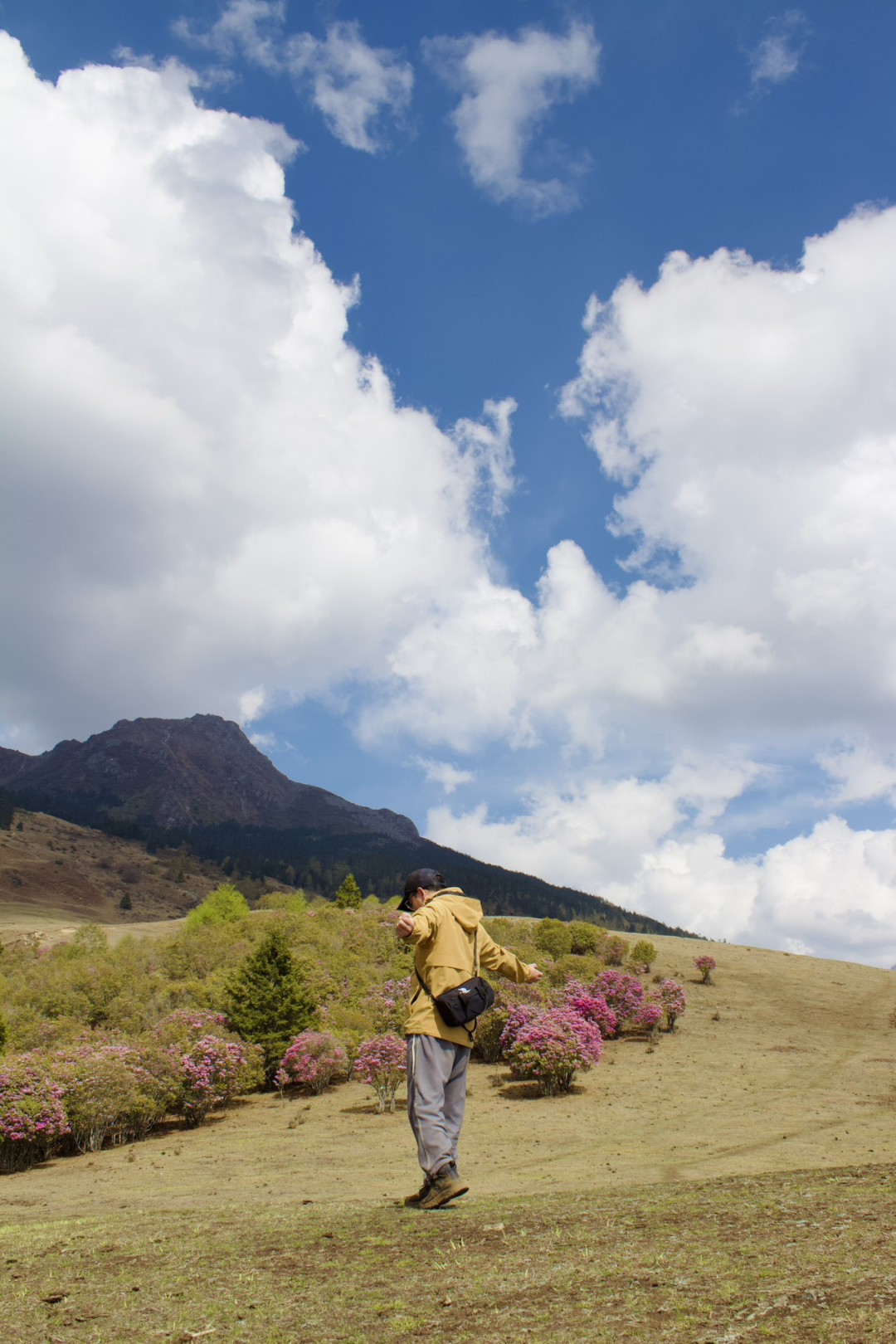
Spring's Last Secret: Old Medicine Mountain in Late April, Where Rhododendrons Begin to Bloom and Snow Peaks Beckon
Prologue: I Changed My Answer About the Best Season to Visit Shangri-La
"When's the best time to go to Shangri-La?"
I've been asked that question at least a hundred times over the past decade. My standard answer has always been autumn—when the poisonous wolfsbane flowers set entire hillsides ablaze in red, when the barley ears hang heavy and golden from the drying racks, when the sky stretches high and the clouds drift thin, and everything feels perfectly in balance.
But after April 27, 2026, my answer changed.
If you come to Old Medicine Mountain in Shangri-La at the end of April—when the meadows have just shaken off winter's slumber and are tentatively showing their first hints of green, when the alpine rhododendrons are still too shy to open more than a few blossoms, when the snow-capped peaks still wear their thick winter coats and refuse to shed them easily—you'll understand something profound: the best scenery is never the moment of peak intensity. It's that early morning when everything is just waking up, when nothing is yet complete.
It's a beauty that exists in a state of "almost but not quite"—like a poem that's only reached its third line, like a painting that's barely had its base colors laid down. You know there are more brilliant chapters to come, but the quietness and anticipation of this moment are already enough to move you deeply.
One: Departure—From Lijiang's Old Town to the Foot of the Snow Peaks
Lijiang at Half Past Seven in the Morning
In late April, the cobblestone streets of Lijiang's Old Town still held traces of last night's rain. My friend and I stuffed our backpacks into the trunk, and as I turned the key in the ignition, the person in the passenger seat suddenly asked, "So, do you really think the meadows will be worth seeing at the end of April?"
I didn't answer. Because honestly, I wasn't sure myself. Every travel guide says the golden season for Old Medicine Mountain runs from mid-May to June. Going at the end of April? Too early.
But sometimes, "too early" is exactly the right time.
The navigation system showed a total distance of about 97 kilometers from Lijiang to Old Medicine Mountain, with an estimated drive time of 2.5 hours. But anyone who's driven on high-altitude mountain roads knows that GPS straight-line estimates can never account for those endless hairpin turns—they coil up the mountainside like a massive serpent, each bend testing both your patience and your driving skills.
From Expressway to National Highway: A Journey Westward
We left Lijiang and got onto the G0613 Xili Expressway, heading toward Shangri-La. This stretch was the most comfortable part of the entire drive—four lanes in each direction, the road surface smooth as a mirror, with the Jinsha River Gorge keeping us company on the left. In late April, the gorge still carried a hint of chill, the river showing a deep, brooding blue-green. On the mountain slopes on both sides, fresh green was already beginning to emerge in scattered patches.
After about an hour, we exited the expressway at Longpan Toll Station and turned onto National Highway G214.
The scenery on G214 began to change. The character of the Yunnan-Tibet Highway started to reveal itself—more trucks appeared on the road, Tibetan-style prayer flags and white stupas began to line the route, and the air itself seemed to carry a sharper, high-altitude clarity. We made a brief stop at a roadside viewpoint. In the distance, the ridgeline of Jade Dragon Snow Mountain had already emerged in the morning light, gleaming with a cold, white brilliance.
The Seventeen-Kilometer "Welcome"
The real challenge began when we turned off G214 onto the岔路 (branch road) leading to Dongpo Village.
You can set your navigation to "Yunji Luxury Hotel" or simply search for "Old Medicine Mountain," but you need to prepare yourself mentally: those final seventeen kilometers of winding concrete mountain road are Old Medicine Mountain's first "test" for every visitor.
At first, I thought it wasn't so bad—concrete surface, not too narrow, the gradient within acceptable limits. But after less than five minutes, the road narrowed dramatically. Passing another car became extremely difficult. I was driving an ordinary sedan, so I had to grit my teeth and crawl along in first gear, the engine's roar staying consistently above 3,000 RPM. The hairpin turns came one after another, each corner steep, each bend a blind spot.
One particular turn was especially nerve-wracking—the slope was so steep I wondered if the car could make it, and the curve was so tight I almost had to crank the steering wheel through two full rotations. I honked my horn well in advance, only to find, as I rounded the bend, a local pickup truck coming from the opposite direction. Our two vehicles passed each other with barely a centimeter between the side mirrors. My heart rate probably hit its highest point of the entire day right then.
The length of this mountain road varies between 12 and 17 kilometers depending on which guide you read, but everyone agrees on one thing: if you're not an experienced driver, don't attempt it yourself. Although the road built by the locals is fully paved with concrete, the gradients are steep, the curves are sharp, and the road is narrow. You can manage it on a clear day, but if you run into rain or fog, beginners really shouldn't try.
But when the car finally crested the highest point and the view suddenly, without warning, opened up before you—that heart-pounding sensation wasn't just nervousness anymore. It was pure awe.
Haba Snow Mountain stood directly ahead, its summit snow refracting the sunlight in an indescribable way, as if a thin, misty glow enveloped the entire mountain. The car fell silent for a moment. No one could speak.
Around ten in the morning, we reached the parking lot at the end of the concrete road. It wasn't large—half a dozen cars were scattered around. I turned off the engine, opened the door, and stepped out. The cold air at over 3,400 meters above sea level hit me like a bucket of ice water. I instinctively pulled my jacket tighter.
Old Medicine Mountain. We had arrived.
Two: The Early Spring Meadow—Grass Seen from Afar, but None Up Close
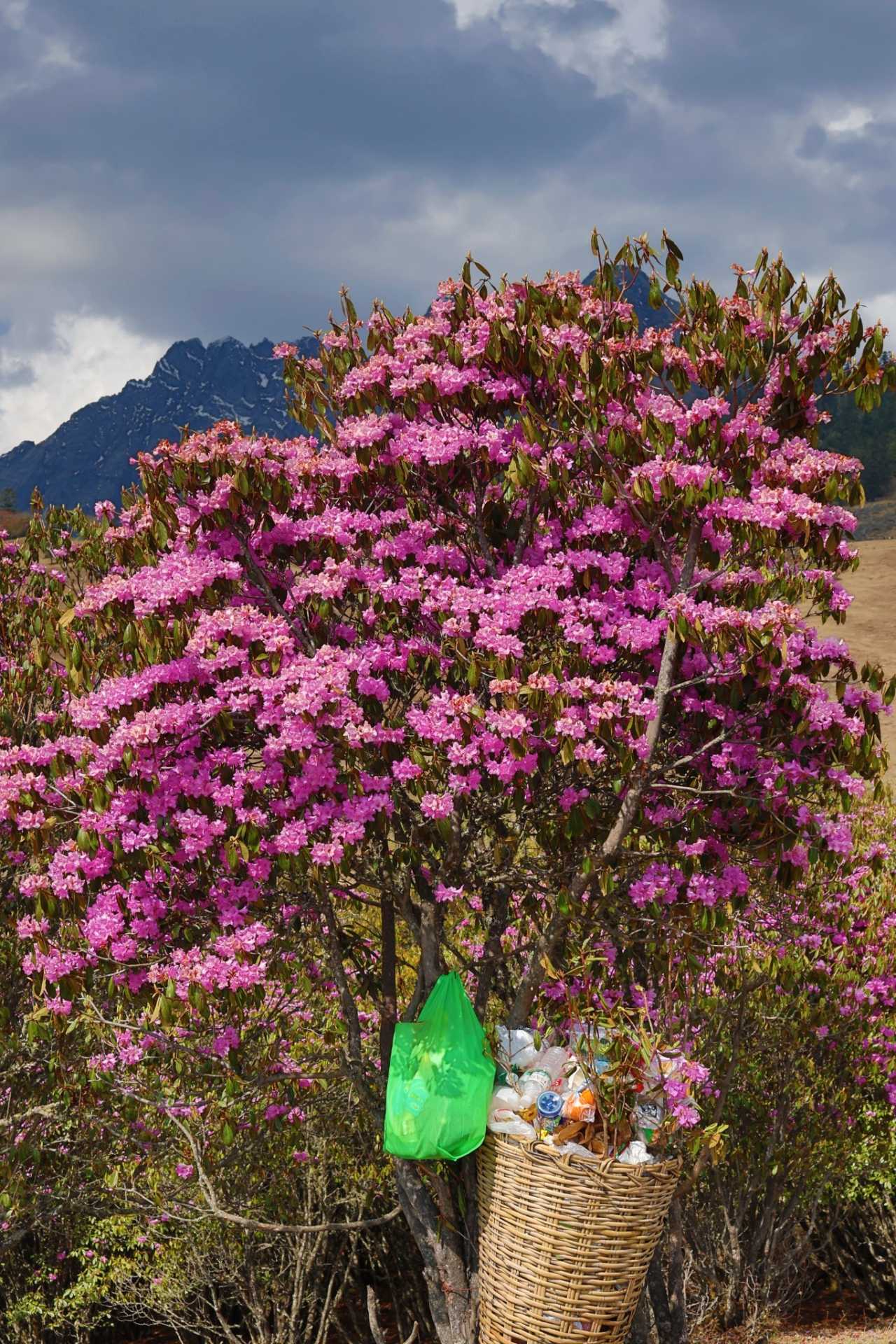
The parking area sits right next to the Yunji Luxury Hotel. At the far end of the open space, there's a small wooden hut where a Tibetan-looking大叔 (middle-aged man) sat—a local villager responsible for collecting the entrance fee. Forty yuan per person, which includes the cleaning and management fee. He handed each of us a paper wristband, gave a few instructions about safety, and emphasized that we must take all our trash back down the mountain.
I asked him how the grass was growing this year. In Mandarin that was halting but clear enough, he replied, "It's only just starting to turn green. You'll have to wait another month for the big patches. You can see it now if you want, but it's still tender."
In late April on Old Medicine Mountain, the meadows at around 3,300 meters are only just emerging from their winter hibernation. Last year's withered grass stubble still covers the slopes, but if you lower your head and look carefully, you'll find tiny specks of fresh green poking through the brownish-yellow—as if someone had taken the finest brush and painted strokes of new color across the desolate landscape.
Along the way, we passed several pastures where herders were moving their yaks and horses from one grazing ground to another. The hooves of the cattle left shallow imprints on the soft new grass, and their bells chimed deeply in the breeze. At this time of year, the livestock still looked like they were in late winter—their coats thick, their movements a bit clumsy. But they walked with such unhurried ease, as if they were the true owners of this land.
I crouched down to photograph a clump of newly sprouted grass. My lens focused for a long time, but I couldn't press the shutter. That shade of green wasn't the deep emerald of summer or the withered yellow of autumn. It was a nearly translucent, slightly yellowish tender green. Quietly, timidly, tentatively, it pushed up through the dead stubble of a long winter, as if the world had only just been created.
My friend stood beside me, gazing at the distant, rolling ridgeline, and said, "This isn't Xinjiang. This isn't Switzerland. This is Old Medicine Mountain."
I nodded. There was no need for comparisons. What we had here was something uniquely its own—an early spring beauty, raw and unpolished, imperfect in the most perfect way.
Three: The Hike—From Pasture 1 to Pasture 4
We chose the small loop route, which is the most suitable for a day trip: starting from the parking lot, passing through Pasture 1, Pasture 2, the famous "Instagram cabin," and reaching Pasture 4 before turning back. The total distance was about 6 to 8 kilometers, and with stops for photos and rests, it took us nearly four hours.
The elevation ranged from 3,300 meters at the parking lot to about 3,650 meters near Pasture 4, with a total ascent of around 350 meters. For hikers with some high-altitude experience, this is manageable.
Section One: Through the Fir Forest (Parking Lot → Pasture 1)
After leaving the parking lot, the trail passes through a small fir forest. This was the coolest section of the entire hike—the late April sun was still gentle, but the ultraviolet rays at this altitude are surprisingly strong, so entering the forest was a welcome relief.
The fir forest in late April has a particular atmosphere. The snowmelt had only just begun, and the ground was still covered with last year's fallen leaves and pine needles, which crunched underfoot. The tree trunks were draped with wisps of松萝 (old man's beard lichen), which locals call "tree beard"—it's said to grow only where the air is exceptionally clean.
The forest wasn't dense. Sunlight streamed through gaps in the canopy, dappling the trail with shifting patterns of light and shadow. Cell phone signal disappeared completely here, replaced by the rustling of wind through pine branches and the occasional bird call.
And then, we encountered our first alpine rhododendron.
It stood alone by the trail—a small shrub, not very tall, with three or five pale purple buds on its branches. Two of them had already begun to unfurl their petals. I crouched in front of it for a long time, feeling an inexplicable wave of emotion. Here, on a high-altitude plateau over 3,000 meters, in the lingering chill of late April, it had bloomed without fanfare. Not for anyone to see. Simply because it was the season to bloom.
From the parking lot to Pasture 1, the hike takes about 30 to 40 minutes. The trail is mostly gravel and dirt, but it's reasonably easy going, with gentle slopes. Even beginners won't find it too challenging. If you don't want to walk, local villagers have horses available for rent at the entrance. A one-way trip to Pasture 1 costs about 75 yuan, with round trips around 150 yuan.
Section Two: First Sight of the Snow Peaks (Pasture 1 → Pasture 2)
After leaving Pasture 1, the terrain gradually rises, and the view suddenly opens up. This section is the highlight of the entire hike. When you reach a slightly elevated ridge platform, two snow-capped mountains appear almost simultaneously in your field of vision.
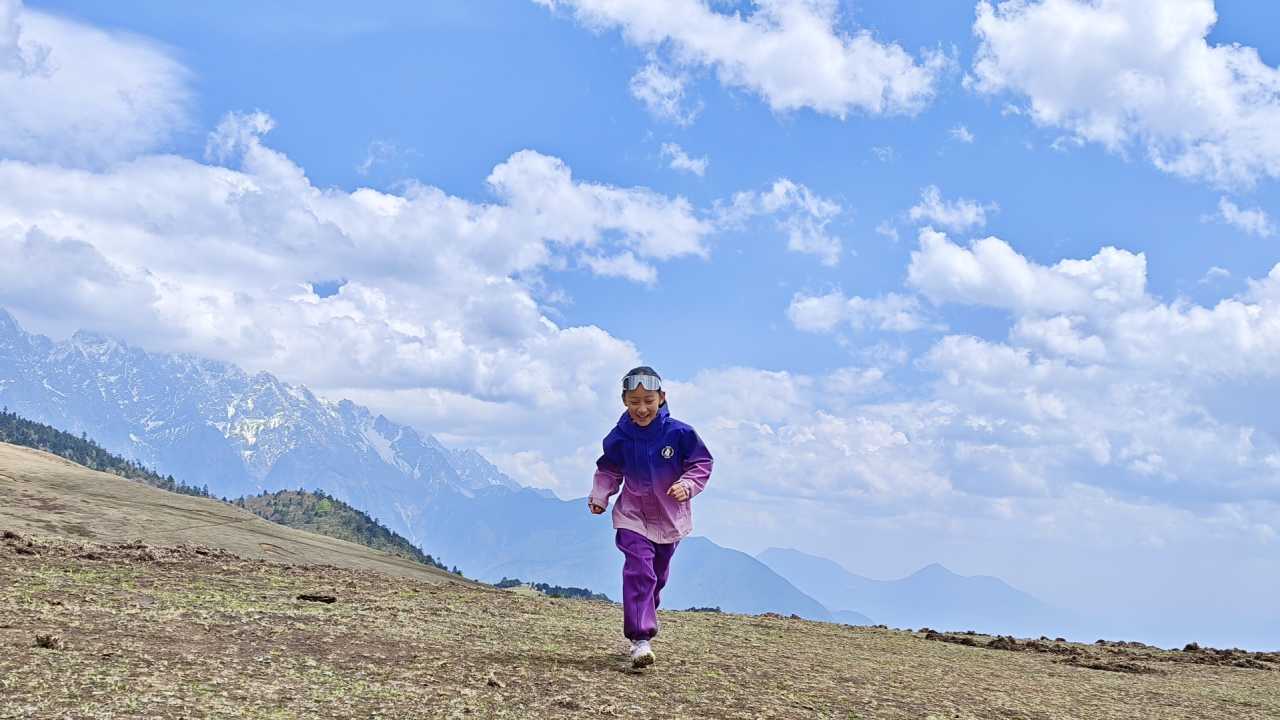
To the left is Haba Snow Mountain—a massive, imposing peak with a main summit at 5,396 meters. Snow covers it from the top all the way down to its mid-section, and the glacial ravines create a sharp contrast of light and shadow under the sun. To the right, across the seemingly bottomless Jinsha River Gorge, stands Jade Dragon Snow Mountain, its ridgeline sharp and elegant, carrying an air of cold, otherworldly grace.
On this ridge, a local herder leading a horse slowly passed by us and shouted something in Tibetan. I couldn't understand the words, but I guessed it was something like "have a good time." The wind at the summit howled fiercely, and the distant sound of cowbells carried through the gusts into our ears.
The transition from spring to summer on the plateau is unmistakable—the sky was an exceptionally clear cobalt blue, dotted with wispy clouds that were noticeable but not heavy.
My friend turned to me and asked, "Don't you think Old Medicine Mountain in this season is completely different from autumn?"
Yes, completely different. In autumn, Old Medicine Mountain is golden—warm, vibrant, full. But now, it was yellow shot through with green, carrying a hint of desolation and a touch of tenderness, as if the exact moment of transition between seasons had been frozen in time. It wasn't the kind of beauty that makes you gasp "wow" at first glance. Instead, it wrapped around you slowly, quietly, without making a fuss.
As we neared Pasture 2, the famous "Instagram cabin" appeared on the right side of the trail. It stood alone on the grassy slope, with a full view of Haba Snow Mountain as its backdrop. The composition was indeed perfect. But entering the cabin for a photo required an extra fee, which we decided wasn't worth it. Instead, we took a wilder route along the ridge, which actually offered a more expansive view than the cabin.
Section Three: Deep into the Pastoral Landscape (Pasture 2 → Pasture 4)
Beyond Pasture 2, the number of tourists dropped significantly. We were almost alone, aside from a few horse handlers. This section had some gentle ups and downs, requiring us to switch between meadows and gravel paths. I wouldn't recommend wearing mesh-topped shoes—I was in low-cut trail runners, and several times I felt like I was about to twist my ankle on the loose stones. I had to walk very carefully. If you're wearing high-cut hiking boots, this section should be much more comfortable.
The trail here was quite primitive. In some places, we had to step over loose rocks and large boulders; in others, the meadow was so soft it felt like it might swallow your feet. My friend walked particularly slowly here, but he said it wasn't because he was tired—it was because he "couldn't bear to walk fast."
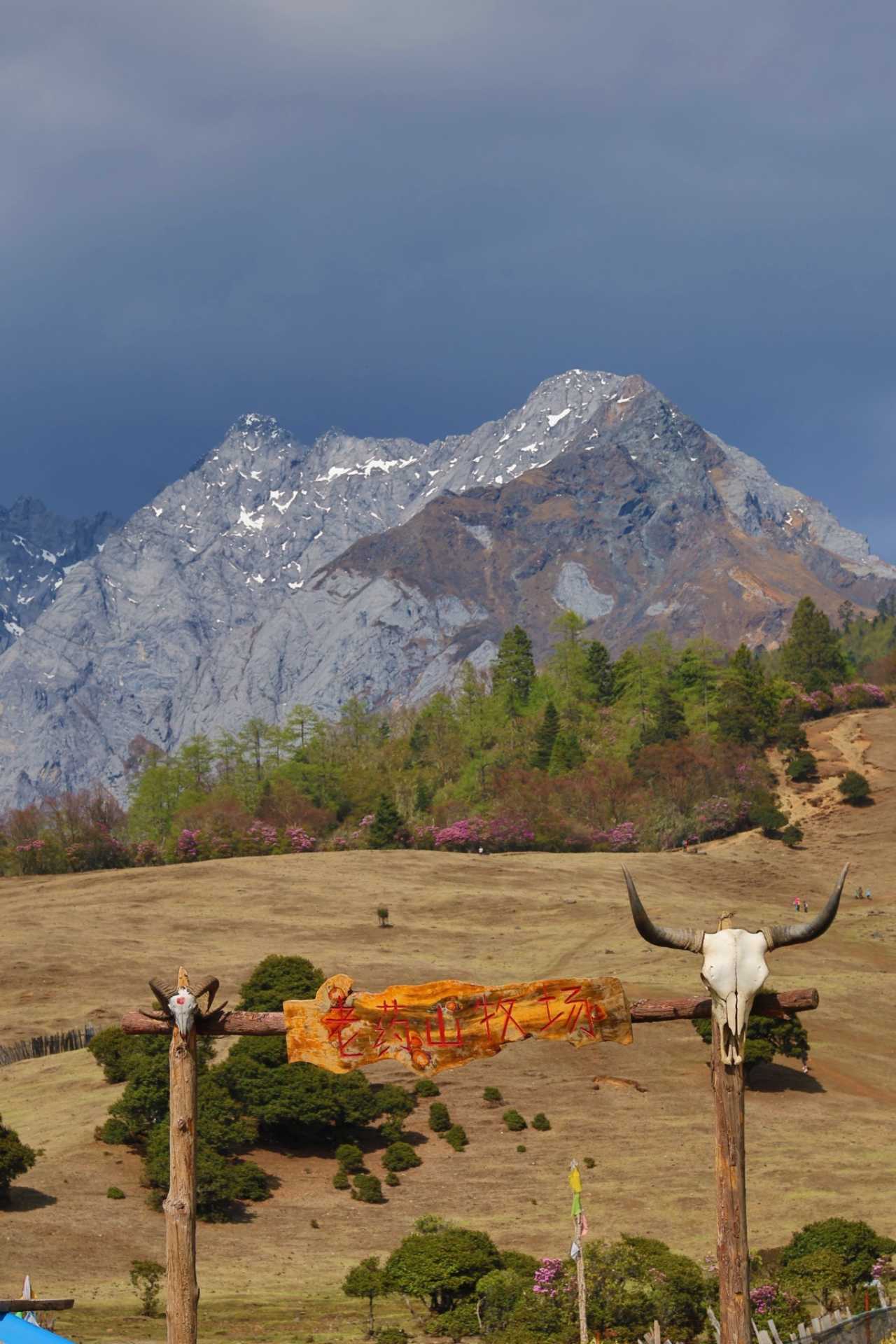
Pasture 4 was our turnaround point. At about 3,650 meters above sea level, the terrain was even more open, with the entire meadow stretching all the way to the distant ridgeline. As I rested at Pasture 4, I looked around: Haba Snow Mountain to the left, the faint outline of Jade Dragon Snow Mountain to the right, the fir forest we'd come through behind us, and in front, a vast, awakening meadow.
If you have enough energy, you can continue upward from Pasture 4 to tackle the classic southern loop trail, which is about 6 kilometers long, bringing the total distance to 8-11 kilometers. Further up, there's also a challenging summit route that reaches 4,200 meters, but that requires at least half a day of extra time and more specialized gear. After assessing the situation, we decided to turn back—the weather on the plateau in early spring can change in an instant, and clouds were already gathering on the other side of the mountain. Better to play it safe and leave something for next time.
We sat down on the grass at Pasture 4 for about ten minutes, eating self-heating rice and chocolate, and refilling our water bottles. The horses in the distance didn't seem bothered by our presence—they just lifted their heads, glanced at us, and went back to grazing on the tender new shoots.
It was at that moment that I truly understood the line from the Tang dynasty poet Han Yu: "Grass seen from afar is green, but up close, there is none." From a distance, this meadow seemed to have turned green. But when you walked up to it and looked carefully, the green was so thin, so evenly spread across the earth, like a transparent, freshly washed watercolor painting.
Four: The Rhododendrons—Only Thirty Percent in Bloom, But Carrying All the Hope
So, were the rhododendrons blooming on Old Medicine Mountain at the end of April?
This was the question we'd been agonizing over since before we left. We'd read countless guides—some said the peak bloom was in mid-May, others said you could see a sea of flowers by late April. It wasn't until we experienced it ourselves that we truly understood the rhododendron situation on Old Medicine Mountain.
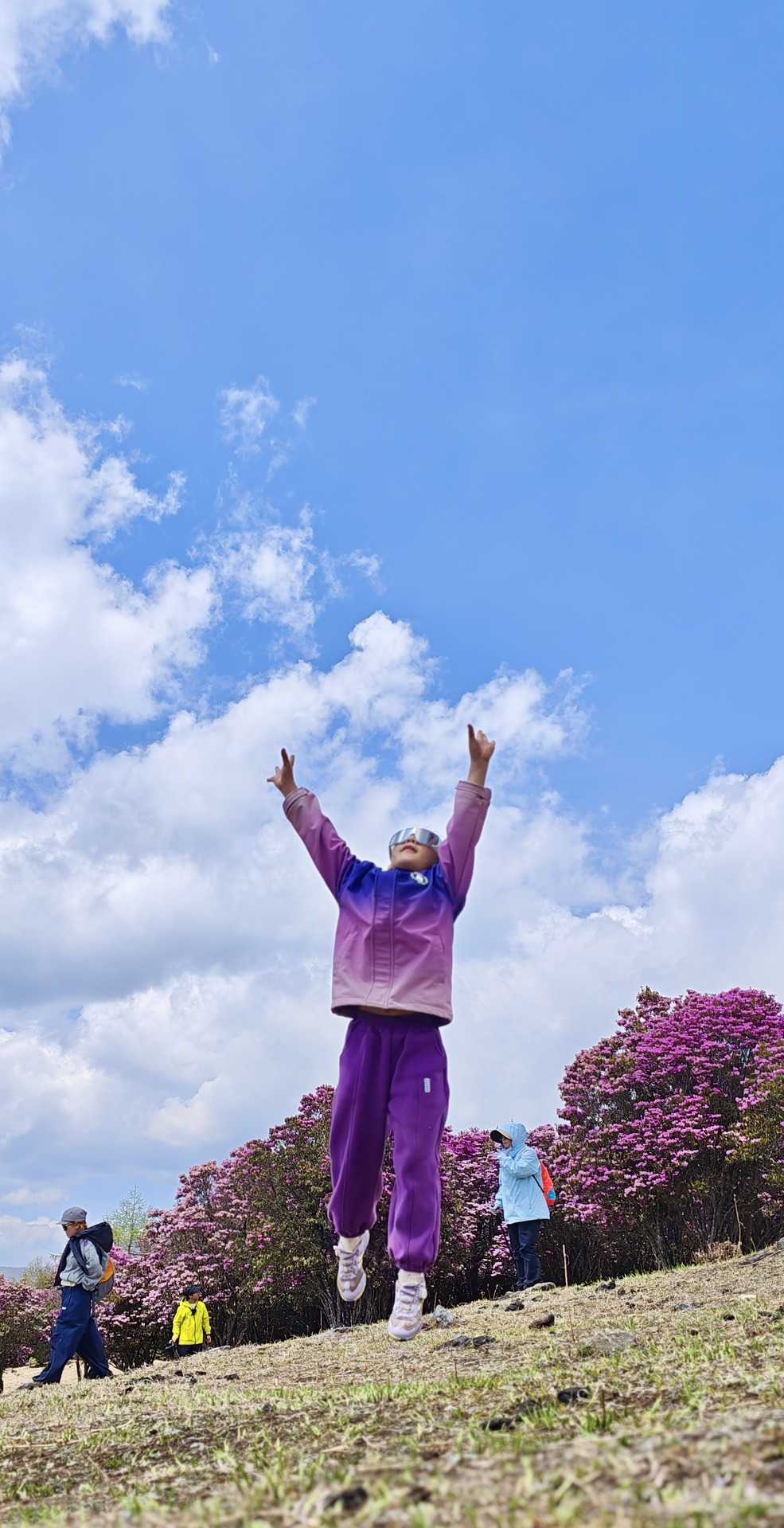
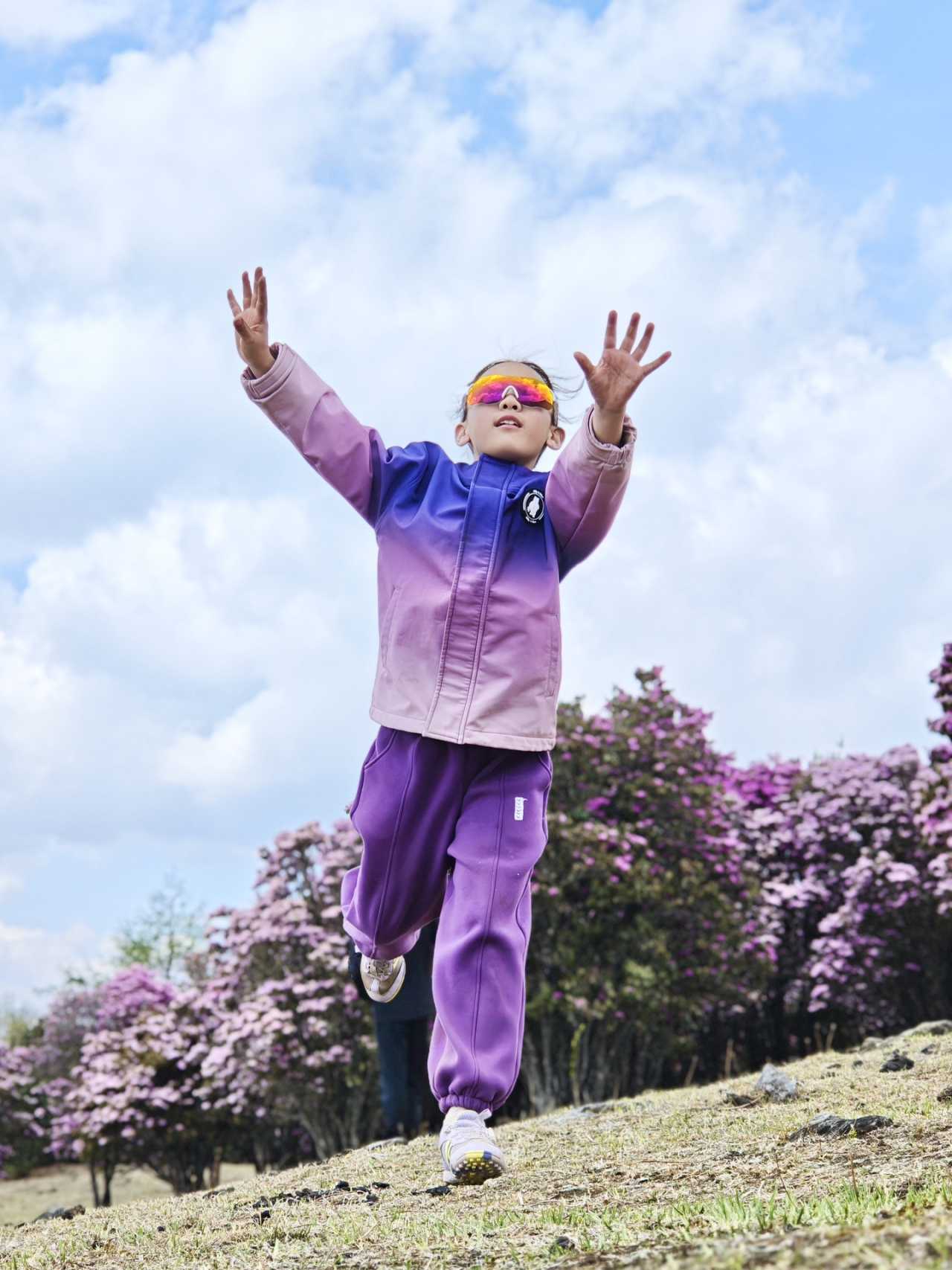
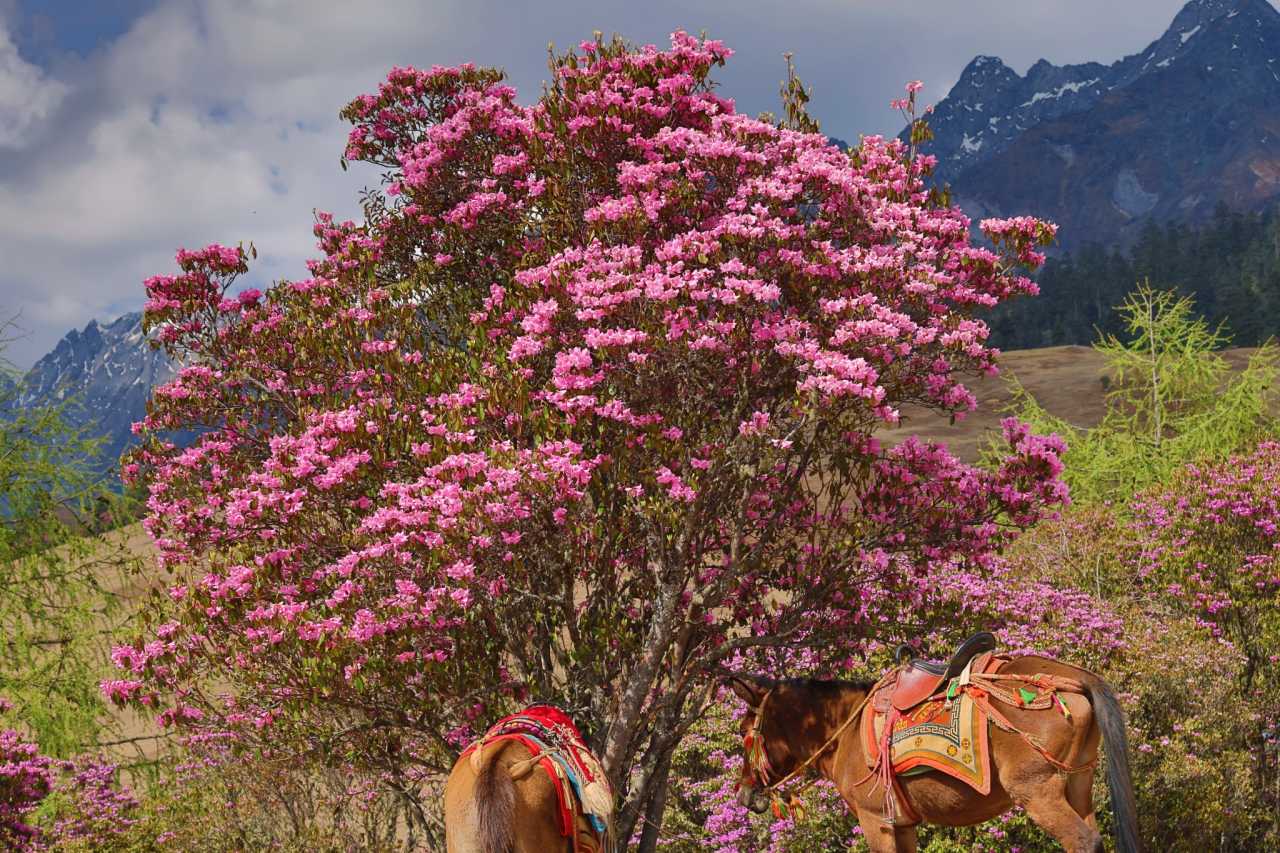
At the end of April, at elevations around 3,300 meters, only about 20 to 30 percent of the rhododendrons had bloomed. Most of the buds were still tightly closed, a pale green, with only a few impatient clusters having unfurled their petals. They were mostly pale purple, low-growing shrub rhododendrons, along with a few slightly darker yellow-cup rhododendrons. Unlike the dense carpets of high summer, they appeared in scattered clumps beneath the fir forest and along the edges of the meadow.

But I want to say this: how many had bloomed didn't matter. What mattered was the sense of anticipation those buds represented. Standing in front of a rhododendron bush, you could almost feel those tight buds making their final preparations, gathering all their strength in secret, waiting for that first warm breeze in early May to burst them all open at once. That waiting itself carried a gentle power, making you feel a strange closeness to this land.
My friend teased me: "Are you trying to find deeper meaning in everything again?"
I didn't deny it. But what I mean is this—if you insist on waiting until the rhododendrons cover every hillside before coming to Old Medicine Mountain, you might never see the kind of beauty that exists during the process of revival, the kind that "isn't easily seen." Sometimes, that unfinished state of "almost but not quite" has more flavor than the moment of peak bloom.
Of course, you should buy your tickets early. According to the locals, in another week or two, around the May Day holiday and mid-May, when the rhododendrons are in full bloom, the crowds will arrive. We chose to visit on April 27 largely to avoid the peak of the May Day holiday. This timing allowed us to see the unique scenery of early spring without having to jostle for photo angles.
Five: The Descent—"Brakes Smoking" Is Not a Joke
Around three in the afternoon, we began retracing our steps back to the parking lot. Going downhill was easier than going up, but since we'd already used up most of our energy in the morning, we ended up walking slowly through that final stretch of gravel path. The ultraviolet rays were stronger than in the morning, and I pulled my hat brim down low, but I could still feel my cheeks burning—a reminder for anyone coming here: make sure to apply high-SPF sunscreen. SPF 50+ is non-negotiable. If you neglect this like I sometimes do, your entire face and arms will be red and painful within an hour.
We returned to the parking lot around 4:30 PM. I started the engine and began the descent, keeping the car in first gear and crawling down slowly. This stretch of road made me truly understand what people online mean when they say "brakes smoking." With the continuous steep slopes and hairpin turns, if you don't use a low gear and rely on engine braking, your brake pads will overheat and fade. I had a close call when a local minivan came up from the opposite direction. I had to pull over to let it pass and nearly scraped against the mountainside guardrail. Cold sweat.
But when the car finally reached the flat asphalt of National Highway G214, I turned around and looked back at that concrete road coiling up the mountain. Instead of relief, I felt a strange sense of satisfaction. That nerve-wracking mountain road had become a kind of "private ritual" between Old Medicine Mountain and me.
The Jinsha River was still flowing through the gorge, just as silent as when we had arrived.
Six: Dusk—Closing with a Glass of the Jinsha River Wind
On the way back, the back seat of the car was scattered with trekking poles and mud-stained jackets. A folk song from some unknown era played on the stereo, and outside the window, the setting sun had painted Jade Dragon Snow Mountain a soft shade of orange.
My friend in the passenger seat suddenly muttered, "So, are we coming back this autumn?"
"Yes," I said without hesitation. "In autumn to see the meadows turn golden. Next May to see the rhododendrons in full bloom. In winter to see the snow. Old Medicine Mountain has something different to offer in every season."
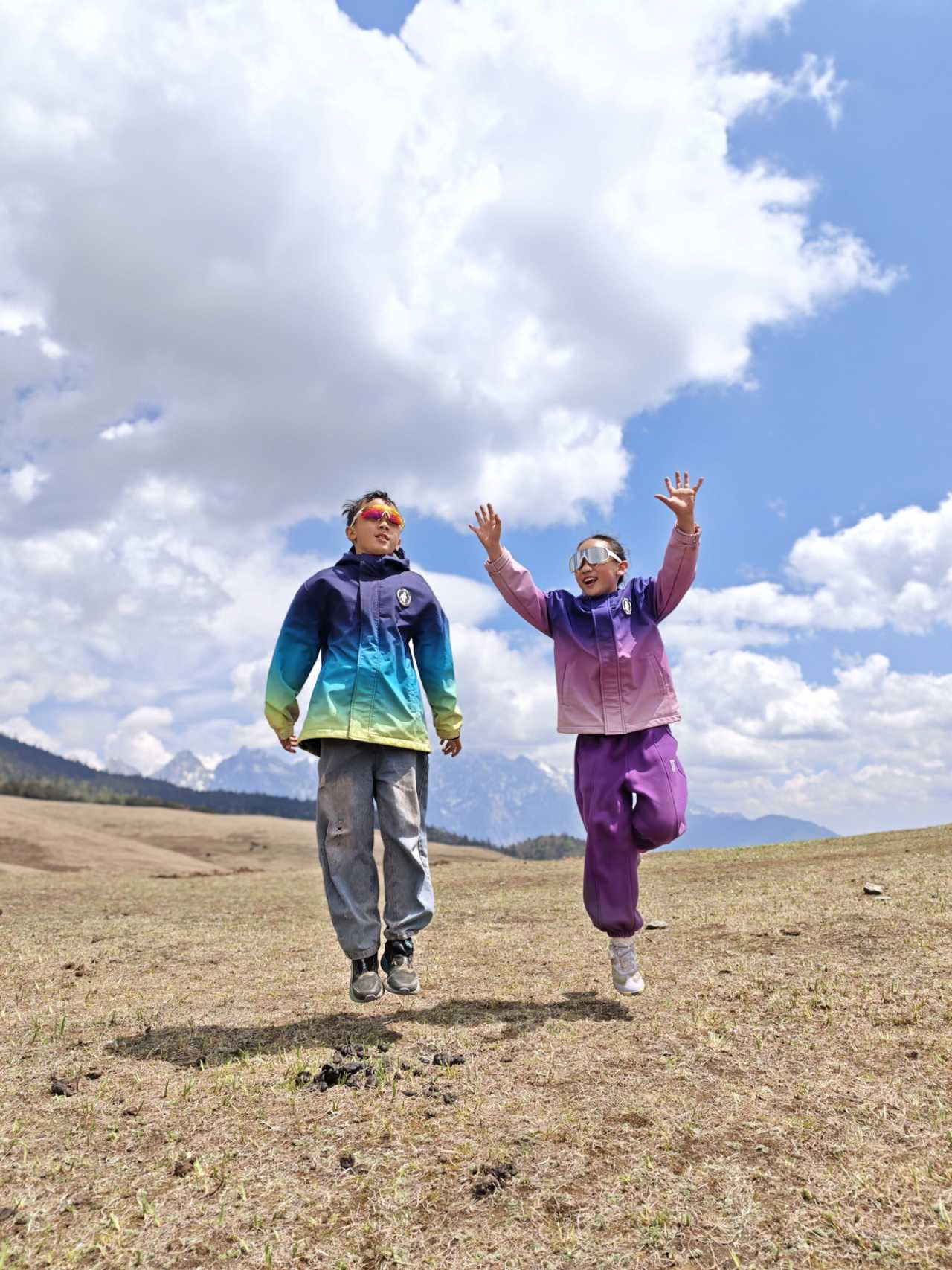
During the May Day holiday, while people on my social media feeds were busy taking selfies in front of crowded tourist attractions, we had walked quietly through Old Medicine Mountain. There were no three-hour queues for the Jade Dragon Snow Mountain cable car. There was no deafening music from the Old Town's bar streets. There was only a faint touch of green on a meadow at 3,300 meters, and an entire expanse of snow-capped peaks and pastures that belonged to us.
I thought back to that moment on the ridge of Old Medicine Mountain when I first saw Haba Snow Mountain. The wind was strong, almost strong enough to knock you off your feet, but my heart was strangely calm. The mountain was there. The snow was there. The wind was there. And I was fortunate enough to be a witness to it all in this season.
Maybe by the time you read this travelogue, the rhododendrons on Old Medicine Mountain will be in full, glorious bloom. Or maybe a fresh snowfall will have just blanketed the peaks in white. But no matter what, I hope you'll visit at the right time, with the right expectations, and see for yourself that piece of land between Haba and Jade Dragon that is slowly waking up.
Let me end with the kind of advice you'd find in a travel guide: make sure to bring your windbreaker and trekking poles. Wear a pair of mid-to-high-cut waterproof hiking boots. Pack your water bottle and trail snacks. And whether it's sunny or rainy, remember to take all your trash back down the mountain.
May the snow peaks and meadows heal every spring you have. 🌿
Practical Information Summary
| Item | Details |
|---|---|
| Location | Dongpo Village, Tiger Leaping Gorge Town, Shangri-La City, Diqing Tibetan Autonomous Prefecture |
| Transportation | Drive with navigation set to "Yunji Luxury Hotel." About 97 km from Lijiang, with approximately 80 km of expressway and 12-17 km of winding concrete mountain road (requires careful driving; not recommended for beginners) |
| Entrance Fee | About 40 yuan per person (collected by villagers, includes cleaning and management fee; may vary by season) |
| Horse Rental | Available at the entrance; one-way about 75 yuan, round trip about 150 yuan |
| Estimated Time | Small loop takes 3-5 hours (including parking and hiking); suitable for a day trip |
| Best Seasons | Late April to early June for early green meadows and early rhododendrons; mid-May to late June for peak alpine rhododendron bloom; late September to mid-October for autumn colors |
| Recommended Clothing | Three-layer system (base layer + fleece + windbreaker); mid-to-high-cut waterproof hiking boots; sun protection kit (SPF 50+ sunscreen + hat + sunglasses) |
| Gear | Two trekking poles to reduce knee strain; insulated water bottle for hot drinks; high-energy trail snacks; gaiters for leech protection during the rainy season (if applicable) |
| Altitude Sickness Prevention | Elevation ranges from 3,300 to 3,700 meters. A small number of people may experience mild shortness of breath depending on individual constitution. Glucose powder and warm water can help alleviate discomfort. Avoid running or jumping. |
| Special Notes | No cell phone signal; download offline maps in advance. Take all trash with you to protect the water sources and pastures. Mountain road passing is extremely difficult; slow down and use your horn frequently. |
You should also read:
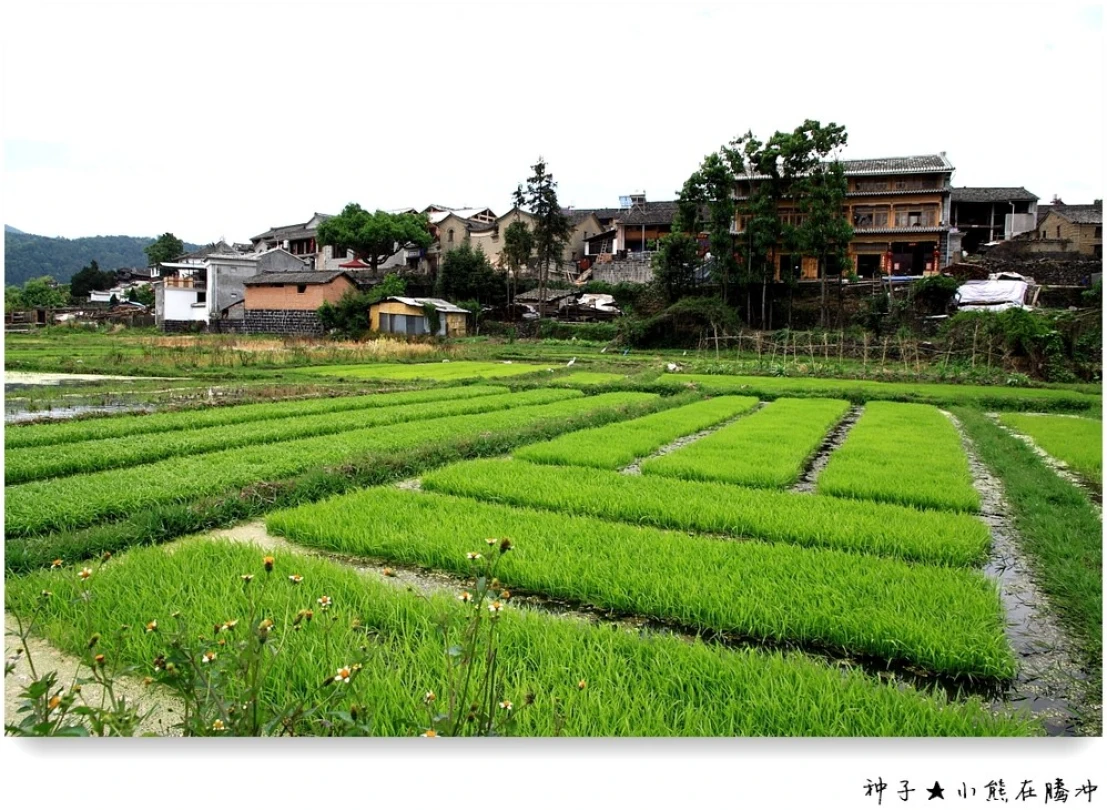
Tengchong·Heshun: Finding Life as It Should Be in a Border Town Where Time Stands Still
Tengchong·Heshun: Finding Life as It Should Be in a Border Town Where Time Stands Still The long journey of over twenty days was over. On my first day back at the office, I was still in a daze. My fingers couldn't find the keys on…
Continue reading...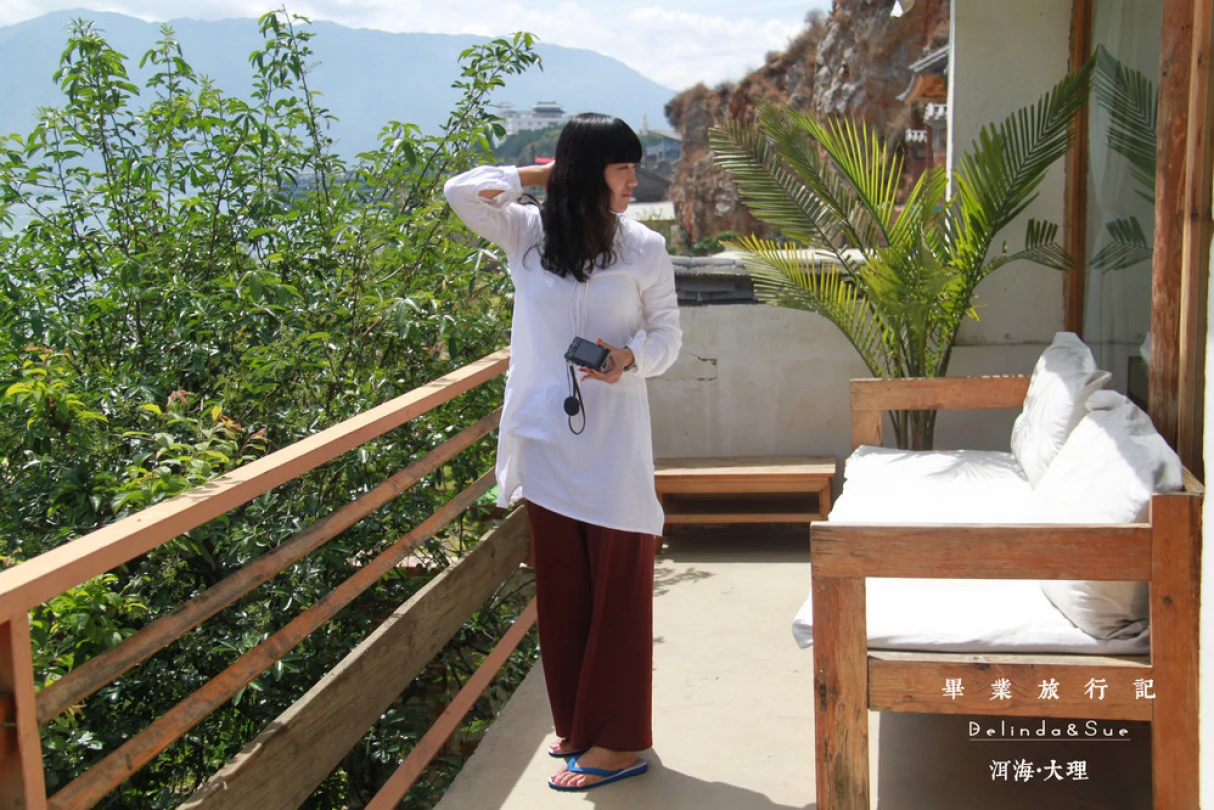
Two Girls' Graduation Trip: Dali and Shuanglang – A Poetic Farewell to Mountains and Sea
Two Girls' Graduation Trip: Dali and Shuanglang – A Poetic Farewell to Mountains and Sea Preface: Catching the Tail of Youth, Heading South During our senior year of college, my roommate and I – two girls studying in Beijing – decided to bid farewell to…
Continue reading...
Cloud Travelogue · Dali of Wind, Flowers, Snow, and Moon: A Three-Day, Two-Night Journey of a Free Spirit
Cloud Travelogue · Dali of Wind, Flowers, Snow, and Moon: A Three-Day, Two-Night Journey of a Free Spirit I am a cultured female foodie with a touch of rogue charm. I slung on my backpack, took my lover's hand, and set off on a spontaneous…
Continue reading...