【Star-Chasing Journey】A Complete Record of the Spring Festival Self-Drive Trip to Lugu Lake: Encountering a Galactic Feast Under the Highland Starry Sky
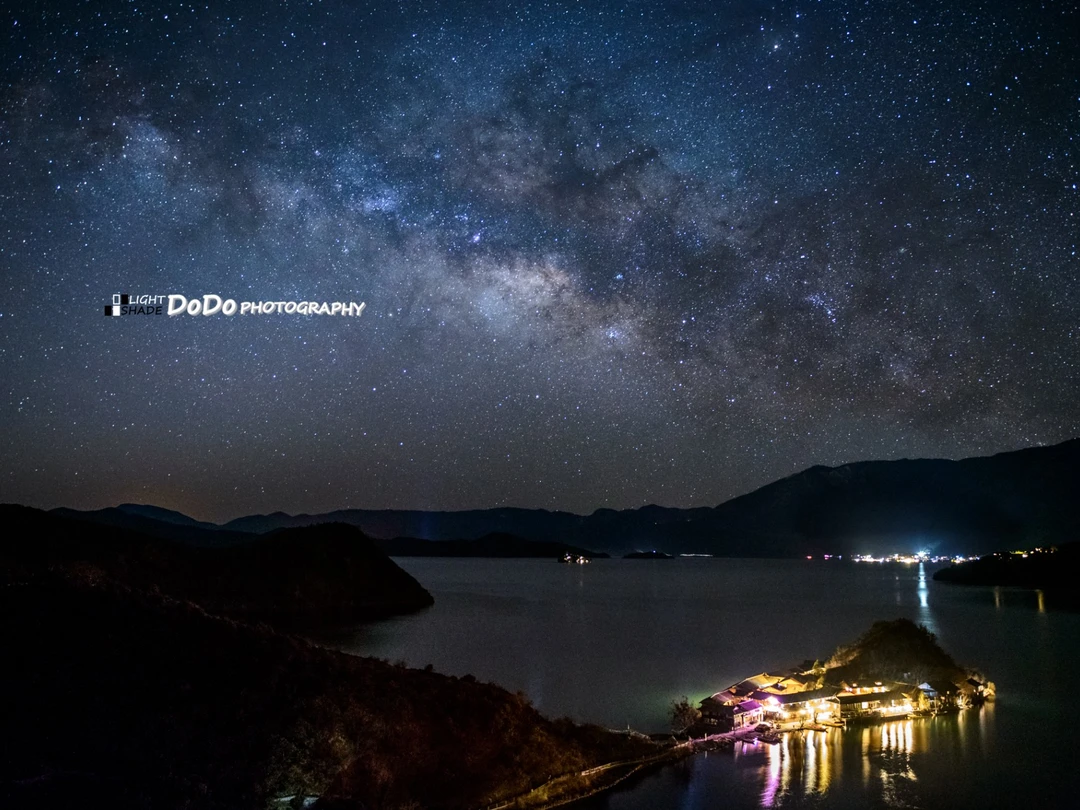
【Star-Chasing Journey】A Complete Record of the Spring Festival Self-Drive Trip to Lugu Lake: Encountering a Galactic Feast Under the Highland Starry Sky
Prologue: A Heart That Chases Stars
Some trips are for relaxation, some for adventure. My journey to Lugu Lake was purely for chasing stars—not celebrities in the entertainment world, but the brilliant Milky Way in the night sky.
As a photography enthusiast, my passion for astrophotography began last September during an accidental attempt in Shuanglang (a scenic spot near Erhai Lake in Yunnan). It was the first time I had seen such a dense starry sky, the first time I successfully captured the outline of the Milky Way. Although I later realized I had missed the most dazzling part of Scorpius, the shock and awe remain unforgettable. From that moment on, I made a silent vow: I must capture a complete summer Milky Way.
Lugu Lake, a highland lake at nearly 2,700 meters above sea level, became my ideal stargazing destination due to its extremely low light pollution and variable highland climate. So, during the 2015 Spring Festival, I brought my family, drove from Chengdu, and embarked on a three-day star-chasing journey.
I. Tips Before Departure: Things You Must Know
Time and Route

- Departure Time: 3:00 AM on February 19, 2015 (leaving early to avoid the Spring Festival peak)
- Return Time: Arrived home at 11:00 PM on February 21
- Vehicle: Ordinary sedan
- Total Mileage: 1,500 kilometers (including the lake-loop road within the scenic area)
Road Conditions (Must-Read for Self-Drive Travelers)
Chengdu → Xichang (All Expressway) About a 5-hour drive. Road conditions are good, but during winter, when passing through Niba Mountain and Tuowu Mountain, be especially cautious of black ice and patchy fog.
Xichang → Yanyuan → Lugu Lake (All Mountain Roads) About a 6-hour drive. This section has numerous sharp turns and narrow roads. Some cement sections are extremely slippery, and braking sharply on a downhill slope can easily cause skidding. I personally witnessed a motorcycle skid and flip 20 meters in front of me—the rider was badly injured. The roadbed is generally solid, with only about 1 kilometer of broken cement on the way to Yanyuan, which a regular sedan can handle easily. During winter mornings and evenings, black ice frequently appears on shaded curves—drive with extreme caution.
Weather and Gear
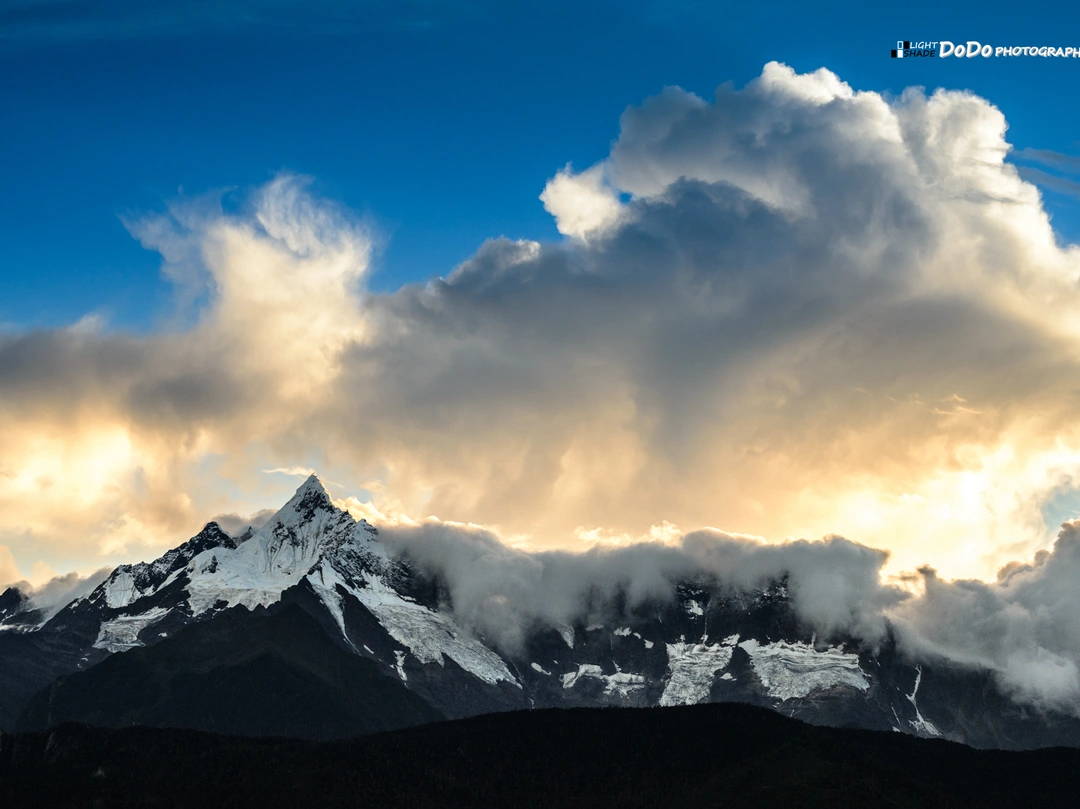
Lugu Lake has a typical highland climate with huge temperature differences between day and night. During the Spring Festival, early morning temperatures can drop to several degrees below zero. The good news is that even in the rainy season, it's mostly showers. In winter, as long as it doesn't rain or snow, the days are mostly sunny, with clouds in the afternoon and clear skies again by early morning—a blessing for star photography.
Essential Gear Checklist: - Camera, tripod, shutter release cable - Warm clothing (down jacket, fleece, thermal underwear) - Sunscreen (highland sun is strong) - Star map app on phone (recommended: Star Walk) - Flashlight or headlamp
II. Day 1 (February 19): First Arrival at Lugu Lake, First Encounter with the Stars
2:00 PM: Arrival and Settling In
At two in the afternoon, we finally arrived at Lugu Lake. After checking in at the Anzhi Tinglan Inn, we unloaded our luggage and officially began our lake-loop tour. This inn is located at Waqia Pier, with an excellent position for both sunrise and sunset views. The only downside is the limited dining options nearby.
My wife touched up her makeup in the room, ready to go out for photos. But then, dark clouds suddenly gathered, the wind picked up, and waves began to roll across the lake. Our planned ride on a pig-trough boat (a traditional wooden boat shaped like a pig trough) had to be canceled—I get seasick easily, and my wife was also afraid of the wind and waves.
Grass Sea and the Walking-Over-the-Bridge (Zouhun Bridge): An Unexpected "iPad Drop Incident"
The biggest advantage of self-driving is that you can go wherever you want. We decided to check out the nearby Grass Sea and the Walking-Over-the-Bridge first.
Friendly Reminder: The roads in the Lugu Lake scenic area are narrow. Please do not park randomly by the roadside. There are free parking areas near every attraction. If you encounter large vehicles, plus those who cut in line, traffic jams can happen in no time. Drive responsibly—it starts with you and me.
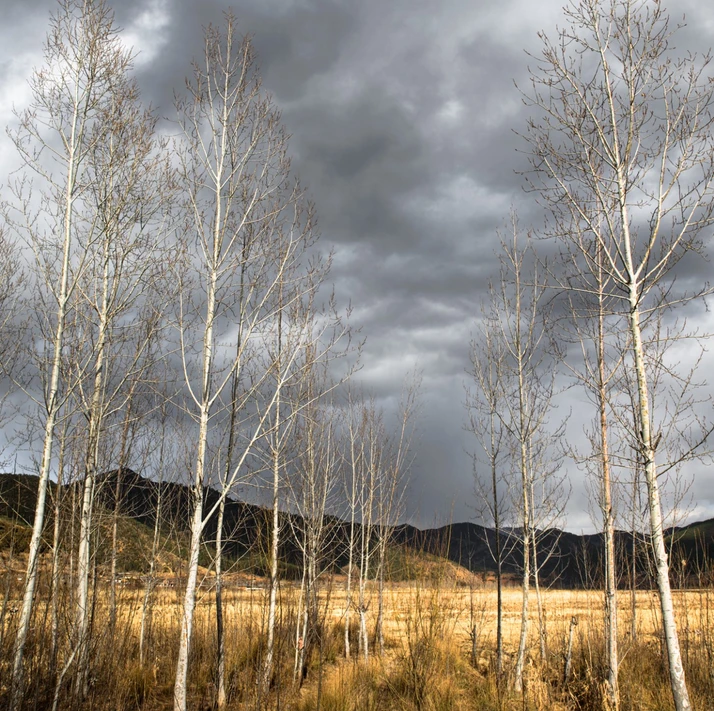
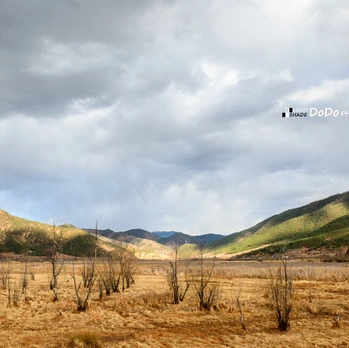
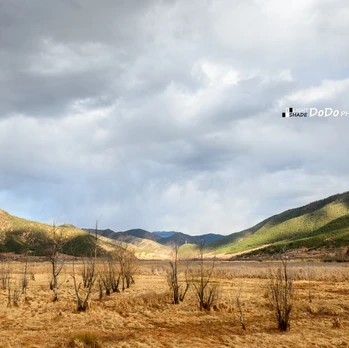
In winter, the Grass Sea is all withered and yellow, looking rather bleak under cloudy skies. On the Walking-Over-the-Bridge, I made a stupid mistake—I placed my wife's iPad on the railing to take a photo. A gust of wind blew, and the iPad fell straight down!
Thankfully, what was under the bridge was not water but marshland. The iPad lay there on the mud. We tried every method to retrieve it but failed. Finally, a local man climbed down into the marsh and brought it back for us. A thousand thanks to him!
Sunset at Lover's Beach: The Gentleness and Chill of the Highlands
Leaving the Walking-Over-the-Bridge, we headed to Lover's Beach near Waqia Pier. The view here is wide open, with Goddess Mountain (Goddess Mountain, a sacred peak in the area) standing quietly in the distance. The sun slowly set behind the clouds. There was no spectacular fire-red sky, but for us who come from the basin (the Sichuan Basin), it was already breathtaking enough.
Sunset Photography Reminder: Due to the large temperature difference in winter, the wind picks up sharply at sunset, and the sunlight fades quickly. Be sure to wear extra layers. After the sun went down, my wife immediately got cold and ran away.
Dinner and the First Night: The Stars Begin to Appear
After watching the sunset, we were cold and hungry. We drove to Lugu Lake Town and found the busiest Sichuan restaurant. As a foodie, I had studied Dianping (a Chinese review app), but I found the reviews here all sounded similar. My personal experience: the most reliable method is to go and see for yourself—choose the place with the most people and the best-looking food.
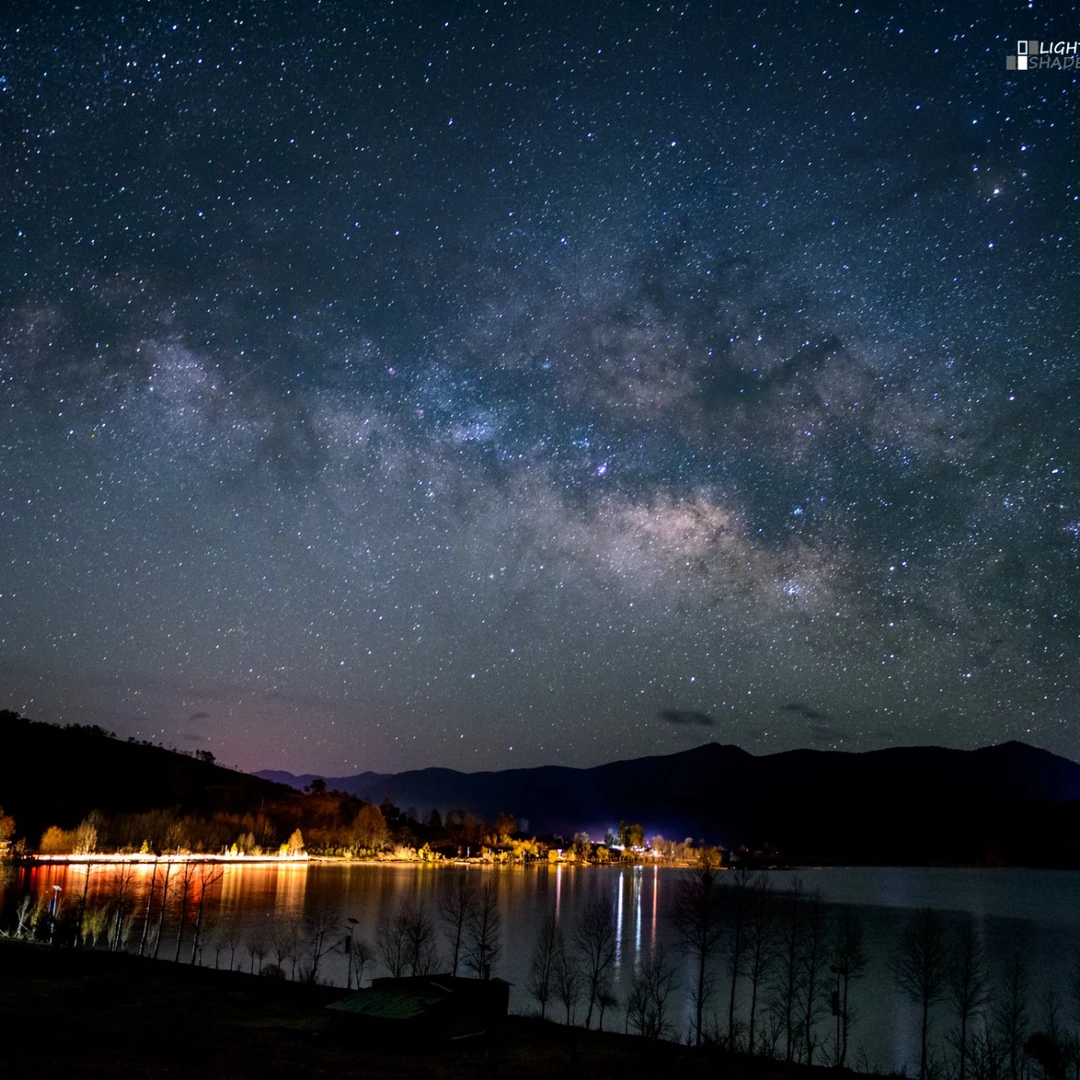
After a hearty meal, we returned to the inn at 8:00 PM. I looked up—the sky was filled with stars! Lugu Lake's biggest advantage as a stargazing destination is that there are no big cities within tens of kilometers, resulting in extremely low light pollution.
I used Star Walk to locate the Milky Way. At just past 8 PM, the winter Milky Way was hanging right in front of me. I set up my camera, tripod, and shutter release cable, preparing for the 4:00 AM summer Milky Way shoot. I took a test shot—the result was far better than my last attempt in Shuanglang. The sky was clear, light pollution nearly zero. The faint winter Milky Way, paired with the soft lights of the village, and a shooting star streaking across—the scene was so still it made my heart ache.
III. Day 2 (February 20): The Dream Comes True—The Milky Way Moment
4:30 AM: A Battle with the Clouds
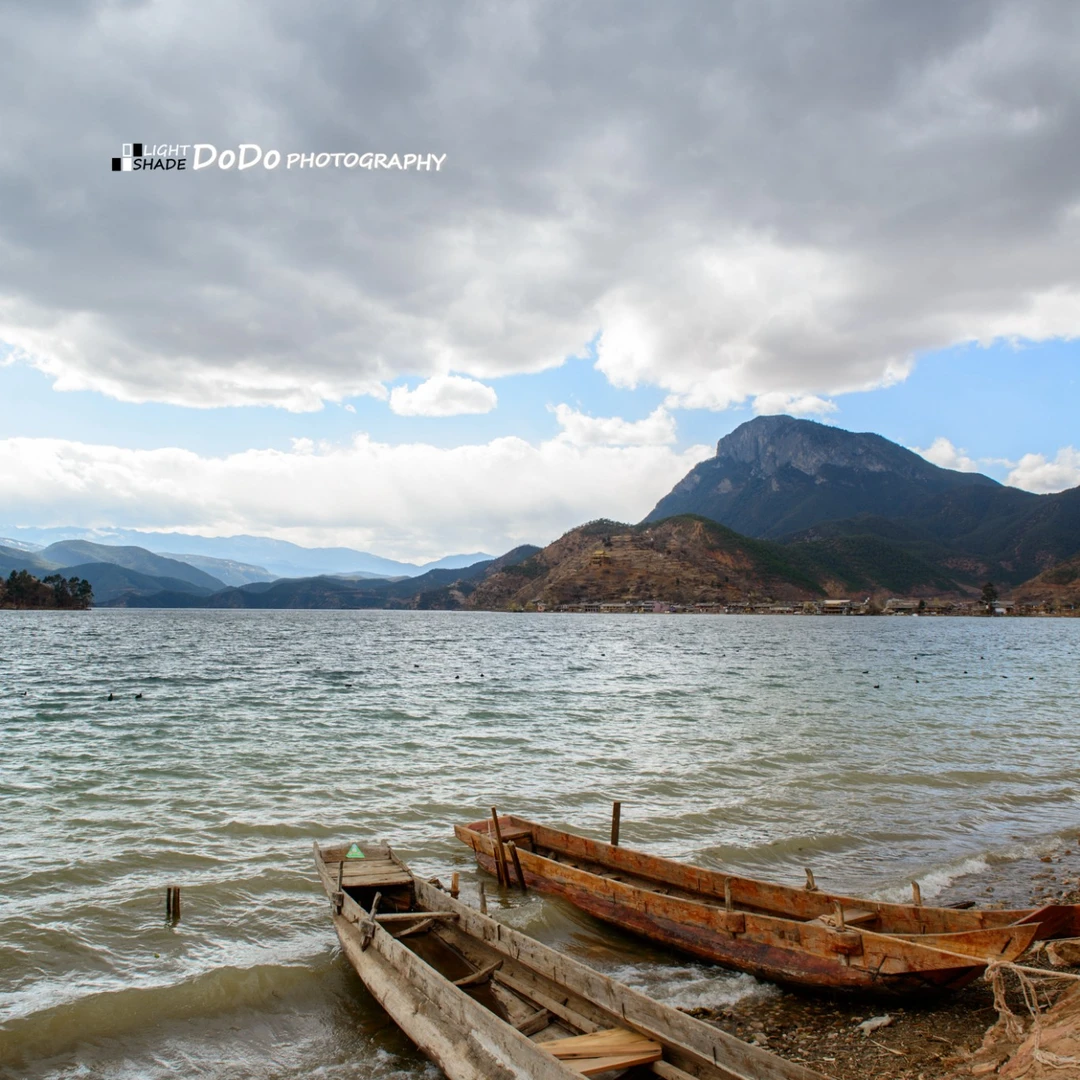
The alarm went off at 4:30 AM. I rushed to the balcony—my heart sank. Thick clouds covered the sky, with no sign of clearing. I tried taking a photo, but the clouds didn't budge. I had to go back inside and wait.
5:30 AM: The Milky Way Arrives as Promised
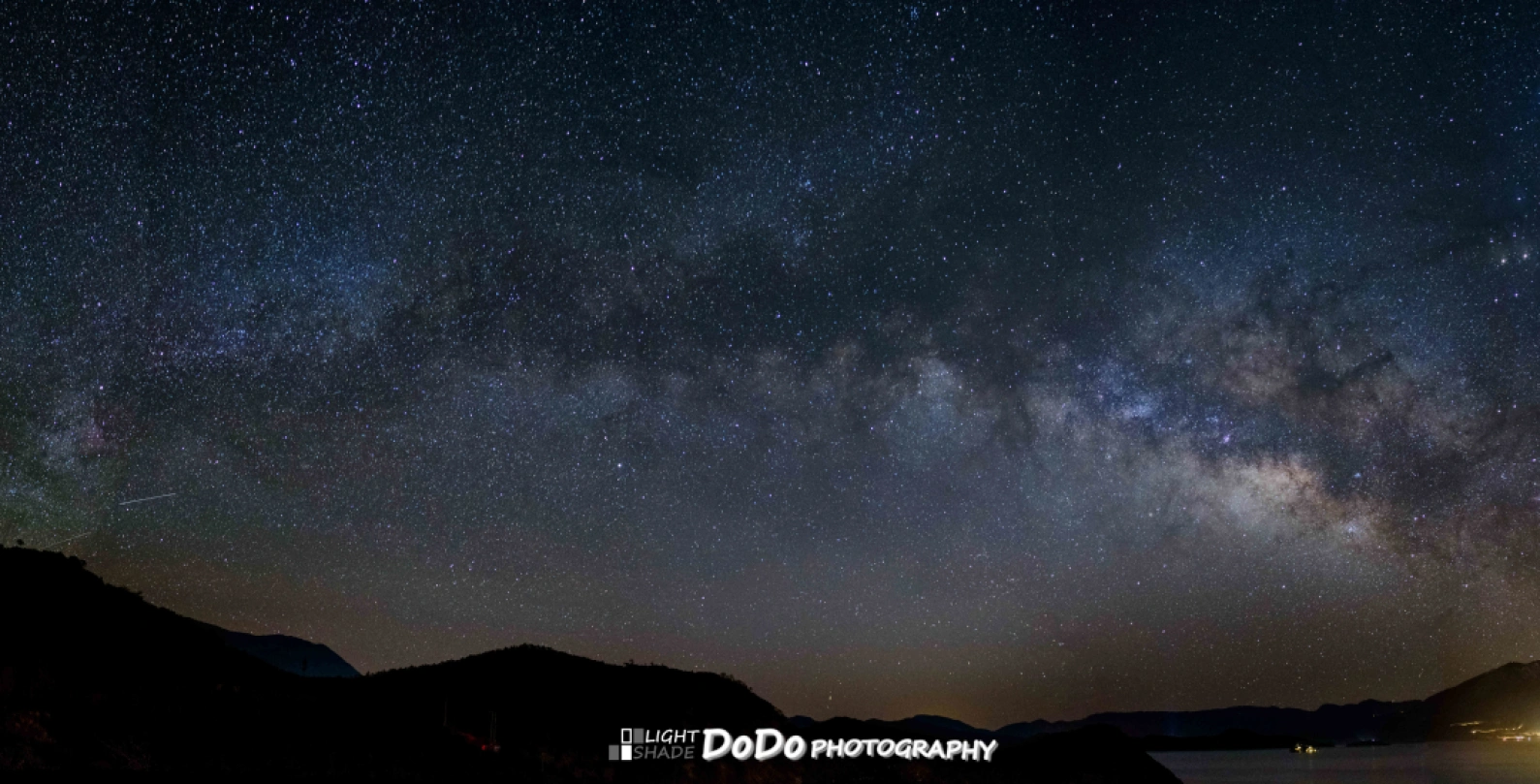
When the second alarm went off, I slowly walked to the balcony. In an instant, all drowsiness vanished—the sky was filled with stars, so clear they seemed within reach!
In the southeast, a band of cloud-like streaks crossed the sky. That wasn't cloud—it was the Milky Way's light band! Visible to the naked eye. In just one hour, the thick clouds had completely dissipated. This was the first time I had seen such a clear and bright summer Milky Way.
I set up my camera and waited for the perfect moment. A car drove by the lakeshore, its headlights illuminating the small tree and road in front of me. At that very moment, a shooting star streaked across—I was lucky enough to capture it.
Key Points for Photographing the Summer Milky Way in Winter: - The winter "summer Milky Way" usually appears in the early morning hours and lasts only a short time - Use an app to check the position and timing of the Milky Way - Avoid moonlight and extremely bright planets like Venus - The Milky Way fades before sunrise, so shooting time is very tight - Set up your tripod, focus, and shutter release cable in advance - Stay warm! Stay warm! Stay warm! I can't say this enough
Sunrise and Zhaojia Bay (Zhao Family Bay): The Pure Beauty of the Highlands
Just before 7:00 AM, the sky began to lighten, and the Milky Way gradually faded. I was too excited to sleep. I wanted to watch the sunrise, but my wife was too cold and refused to get out of bed. So I ate some dry snacks, climbed over the wall (the innkeeper locked the main gate at 7:00 AM on the second day of the Lunar New Year), and went out to shoot the sunrise.
Thanks to the Milky Way, today's weather was ridiculously good—not a single cloud in the sky, the water and sky a deep, pure blue. At Waqia Pier, Goddess Mountain was already glowing red in the morning light.
Sunrise Photography Reminder: Lugu Lake is surrounded by mountains. When the sun rises, it clears the peaks and immediately becomes harsh and glaring, with no soft red transition. Remember to apply sunscreen—the highland sun is really intense.
After finishing the sunrise shots, it was 8:00 AM. I went back to the inn and woke up my wife. We washed up, had breakfast, and brewed some Pu'er tea with the family, sitting on the balcony and soaking in the sun—this is what a vacation should feel like.
Zhaojia Bay (Goddess Bay): A Hidden Paradise
We decided to visit Zhaojia Bay. Following a small path, we arrived at the Sacrificial Platform Pass, a perfect viewing platform with a panoramic view of Goddess Mountain. After a 30-minute walk along a winding trail, we reached Zhaojia Bay.
This is a quiet little fishing village. The lake is calm and clear, with underwater plants visible. My wife stood on a shaky wooden viewing pier and experienced something like a "5.12 earthquake" (referring to the 2008 Sichuan earthquake, meaning the pier wobbled violently). The lake surface was dotted with orange-red leaves. Under the sunlight, green water plants swayed in the deep blue lake water—it felt like being in Jiuzhaigou (a famous scenic area in Sichuan known for its turquoise lakes).
We had lunch at Zhaojia Bay. We chose a restaurant that also had guest rooms. It was 30 yuan per person, all-you-can-eat. The dishes included: braised chicken with potatoes, plain stewed fish, fish in red broth, sliced tomatoes with sugar, stir-fried shredded potatoes, and stir-fried wild greens. After climbing the mountain, I was hungry and ate a lot.
Afternoon: Lake Loop and Regrets
Returning from Zhaojia Bay, we drove toward Nisai Village, Lige, and Daluoshui. Passing through Nisai Village, we saw the famous Lover Trees from the pass. The viewing platform at Lige Peninsula offers a wide view, but the angle has been photographed to death. I wanted to go into Lige Peninsula itself, but the narrow road was completely jammed—that's the rhythm of holiday travel.
Near Xiaoyu Dam, we found a secluded lakeshore with few people. The pebbles were fine, and the sunlight was warm. My wife and I dipped our feet in the water—it was freezing! But it had a unique feeling.
Environmental Reminder: Later, I saw news reports of tourists driving their cars onto the lakeshore to wash them or go off-roading. This kind of behavior is unacceptable. Beautiful environments need everyone's protection.
Evening: A Barbecue Lesson at Daluoshui
At 5:00 PM, we arrived at Daluoshui and checked into the Naluwan Inn. After settling in, we walked to Luoshui Village to find food. Since we were still full from lunch, we decided to try the barbecue by the village. The result—overpriced and not tasty, the flavor was truly mediocre. Compared to Xichang barbecue, this was too watered down. After eating it, my throat was sore until the seventh day of the New Year and still hadn't recovered. My advice: in a dry environment like this, it's better to stick with Chinese food or rice noodles.
IV. Day 3 (February 21): The Final Milky Way, a Perfect Conclusion
4:30 AM: Setting Out Again
I was still too excited to sleep. I went to the bathroom twice, and each time I passed the window, I checked the starry sky—fearing clouds would appear. I barely made it to 4:30 AM. When the alarm went off, the starry sky outside the window was there as promised. Tonight's sky was even better than last night's—not a single cloud.
The location at Daluoshui was a bit awkward—the Milky Way appeared in the southeast, but the southeast was exactly where the mountains were. After a moment's hesitation, I decided to drive to higher ground, toward Xiaoyu Dam.
Driving at 5:00 AM is indeed dangerous. The darkness is one thing, but the biggest fear is black ice causing skids. But thinking about how rare it is to encounter such a clean Milky Way, if I missed it because of fear, I would regret it forever. So I went! I drove carefully the whole way. On a curve, several horses suddenly appeared on the road. Luckily, I was going slowly and managed to avoid them.
Xiaoyu Dam, Hongyazi, Lige: The Ultimate Feast of the Milky Way
What luck! At the viewing platforms of Xiaoyu Dam, Hongyazi, and Lige, I recorded the beautiful Milky Way before my eyes. After all the preparation I had done, to encounter such a magnificent Milky Way felt like a blessing from heaven.
Emphasizing Again: When stargazing and photographing in winter, be sure to stay warm. I brought everything I could wear and bundled up like a ball.
After finishing shooting the summer Milky Way at the Lige Peninsula viewing platform, it was 6:30 AM. Dawn was approaching. I returned with no regrets. Passing by the Daluoshui Pier, I saw the white pagoda (a Buddhist stupa) and the Milky Way shining together. I captured that scene just before sunrise.
The Final Morning: Saying Goodbye to Lugu Lake
After photographing the pagoda, the sky was fully light. Two consecutive mornings of Milky Way photography left me deeply moved and unable to calm down for a long time. After breakfast at the inn, while my wife was still in a deep sleep, I took a walk alone by the lakeshore, watched the sunrise, and soaked in the sun.
Recommended Walking Route: Walk along the shore from Daluoshui to Sanjia Village. The path is in good condition, separated from the road with no car interference. At sunrise, the lake and mountains are serene and peaceful, and the tall trees by the lake look especially beautiful in the sunlight.
V. Accommodation Recommendations: Choices Made for Star Chasers
Anzhi Tinglan Inn (Waqia Pier)
- Room Types: Rooms 201 and 203, 480 yuan for a king bed / 380 yuan for twin beds (during Spring Festival)
- Advantages: Wide view, can see both sunrise and sunset, elevated and quiet, stylish interior design, spacious rooms, large balcony
- Disadvantages: Not much to eat nearby
Naluwan Inn (Daluoshui Branch)
- Room Types: Ground floor king bed, 480 yuan, fully equipped with air conditioning
- Advantages: Nice environment, close to the lake (2-minute walk), quiet
- Disadvantages: Far from Luoshui Village (20-minute walk), dining is inconvenient
VI. Final Thoughts: Reflections on a Star-Chasing Journey
The three-day trip to Lugu Lake has come to a perfect end. Looking back, I want to share a few insights:
Lugu Lake's starry sky is worth going crazy for. The light pollution here is nearly zero, and the weather, though changeable, always surprises you. If you also love the stars, this is definitely one of the best stargazing spots in China.
Self-driving safety always comes first. There are many curves on mountain roads. Don't overtake blindly, and watch out for black ice. Don't use emergency lanes, park in designated spots, and line up patiently in traffic jams. The lake-loop road is narrow—pay attention to pedestrians and cyclists.
The temperature difference in the highlands is huge—don't take off your clothes carelessly. Catching a cold is not only uncomfortable but can also worsen altitude sickness.
The most beautiful scenery is often found in the early morning hours. For the Milky Way, I got up in the wee hours for two consecutive nights. The cold and drowsiness all turned into "worth it" the moment I saw the galaxy.
Finally, I wish everyone who loves Lugu Lake or plans to go there can find their own beautiful scenery—whether it's the blue sky, the clear water, or the galactic feast under the starry sky.
The star-chasing journey was a complete success.
All images in this article can be viewed in full size. For more exciting content, feel free to follow my other travelogues.
You should also read:

God’s Abandoned Palette: A Self-Drive Journey Through Yunnan’s Dongchuan Red Land
God’s Abandoned Palette: A Self-Drive Journey Through Yunnan’s Dongchuan Red Land Travel has never been about reaching some distant geographic coordinate. It’s about encountering, along the way, the version of yourself buried beneath the rubble of daily routine. During this May Day holiday, I finally…
Continue reading...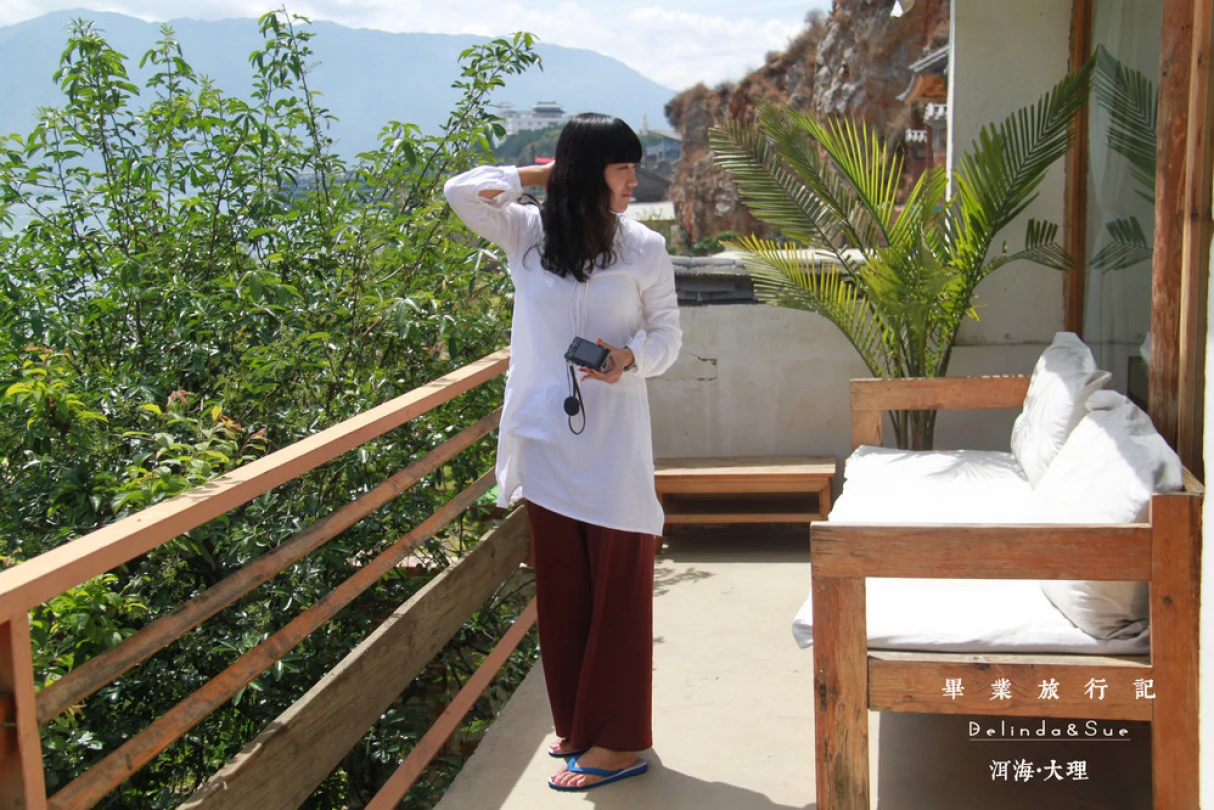
Two Girls' Graduation Trip: Dali and Shuanglang – A Poetic Farewell to Mountains and Sea
Two Girls' Graduation Trip: Dali and Shuanglang – A Poetic Farewell to Mountains and Sea Preface: Catching the Tail of Youth, Heading South During our senior year of college, my roommate and I – two girls studying in Beijing – decided to bid farewell to…
Continue reading...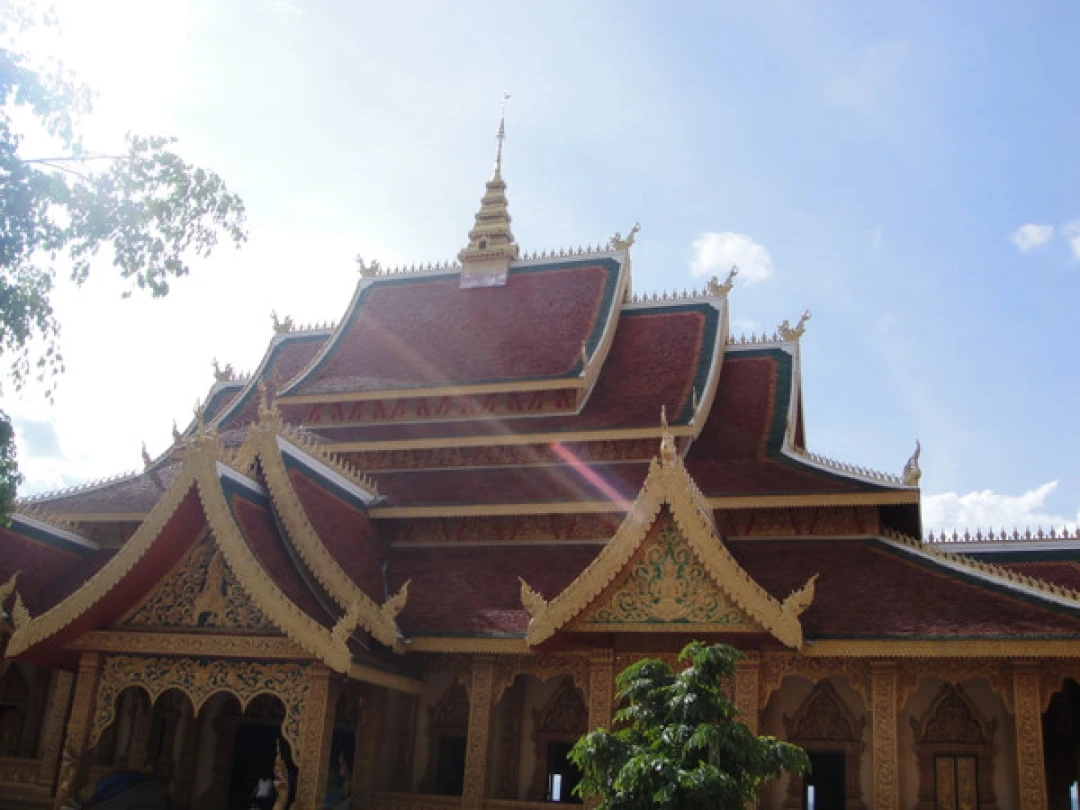
Xishuangbanna: Encountering an Ideal and Magical Paradise in the Green Wonderland at 21° North Latitude
Xishuangbanna: Encountering an Ideal and Magical Paradise in the Green Wonderland at 21° North Latitude If you ask me which place in China most resembles Southeast Asia, I would answer without hesitation: Xishuangbanna. This is not Thailand, yet it possesses an even richer Buddhist ambiance…
Continue reading...