Sweet Soups, Autumn Rain, and Jinling: A Sweet Encounter with the Ancient Capital of Six Dynasties
Sweet Soups, Autumn Rain, and Jinling: A Sweet Encounter with the Ancient Capital of Six Dynasties
Prologue: An Unexpected Date with Jiangnan
In the tail end of October, Nanjing was steeped in autumn's essence. Seizing the "heaven-sent opportunity" of a week off because my teacher was on a business trip, I took my mother's hand and once again set foot on this land steeped in history. Over four days, two were spent soaked in the endless autumn drizzle. The raindrops fell fine and dense, much like the city's temperament—neither hurried nor impatient, yet silently seeping into your heart.
Some say Nanjing is weighty, bearing the faded splendor of the Six Dynasties and the vicissitudes of ten ancient capitals. But to me, this city is more like a bowl of warm, sweet soup—sweet in just the right measure, warm without fanfare. Last time I came, I was merely a passing tourist; this time, I wanted to burrow into its alleys and lanes, to taste its true flavor.
Searching for Flavor in Jinling: Sweetness and Tenderness on the Tongue
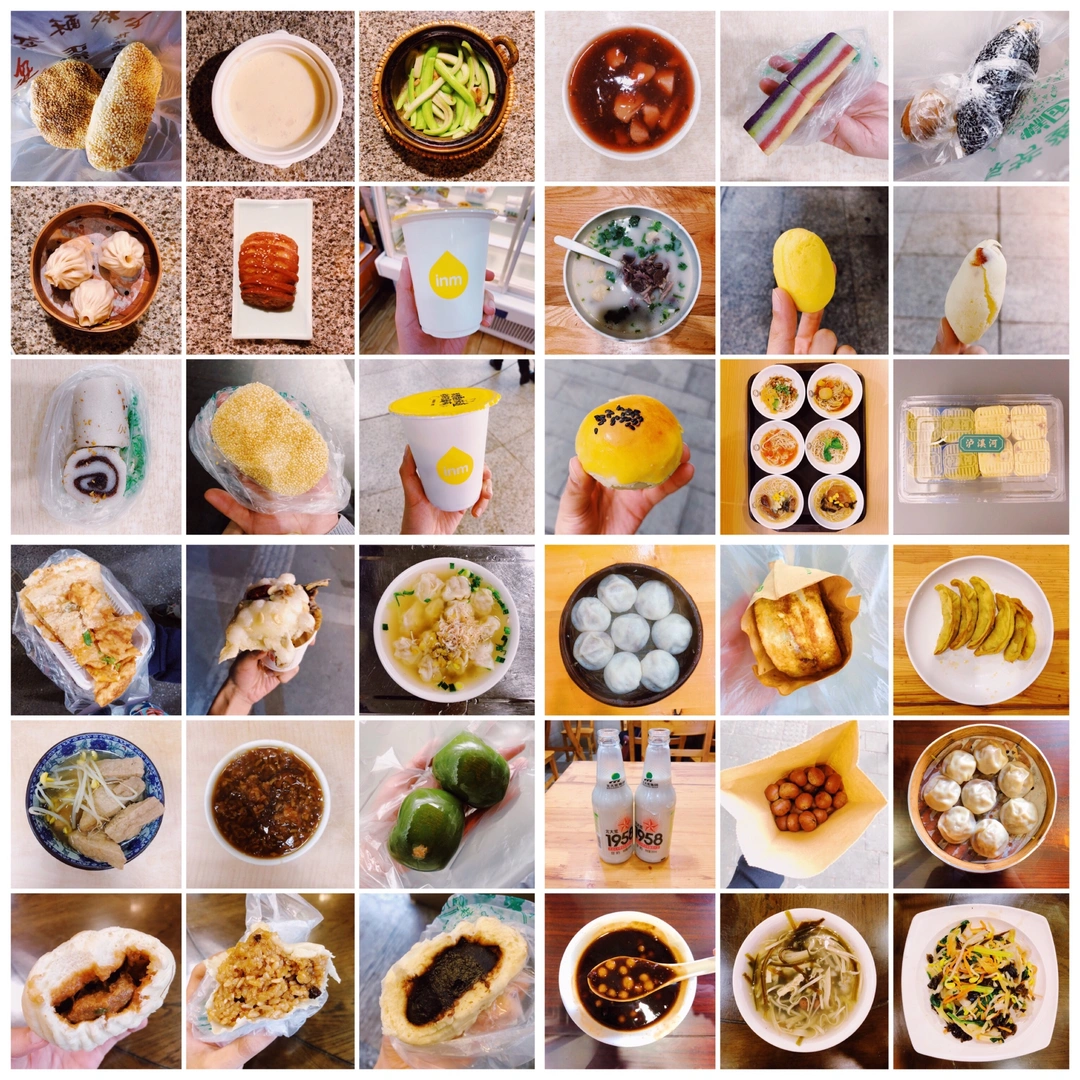
The people of Nanjing seem to have a sweet tooth. But this sweetness isn't the bluntness of refined sugar—it's the subtle aftertaste hidden in soup dumpling broth, the velvety texture melted into taro paste desserts, the delicate refinement dissolved in congee. Every bite feels like the city whispering gently: slow down, just a little more.
The Soup Dumpling Arena: Xu Jianping vs. Jiming's Ultimate Showdown

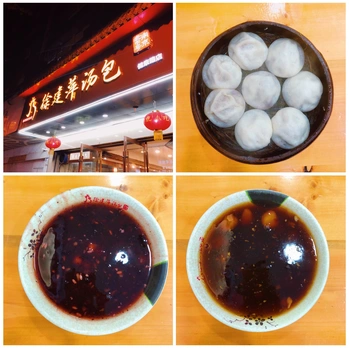
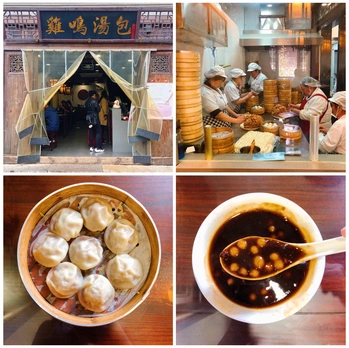
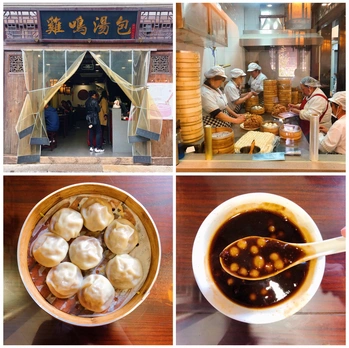
Coming to Nanjing without eating soup dumplings (小笼包) is like going to Beijing without climbing the Great Wall. Xu Jianping Soup Dumplings (徐建萍汤包) and Jiming Soup Dumplings (鸡鸣汤包) are both renowned "sweet-style masters" in the culinary world. Xu Jianping's dumplings are sweeter—bite through the paper-thin wrapper, and the scalding broth explodes in your mouth, sweetness striking first, followed by the lingering savor of pork. Jiming Soup Dumplings, famous far and wide, are equally stunning in texture but more restrained in sweetness, making them ideal for first-timers.
Pro tip: The perfect companions for soup dumplings are red bean small tangyuan (赤豆小元宵) and taro paste dessert (糖芋苗). Almost every old shop offers these two items. They may seem simple, but the skill of century-old establishments lies in the details—the soft chewiness of the small tangyuan, the silky smoothness of the taro paste—all flavors simmered out by time.
A Morning in Mingwalang: The Unexpected Delight of an Egg Burger
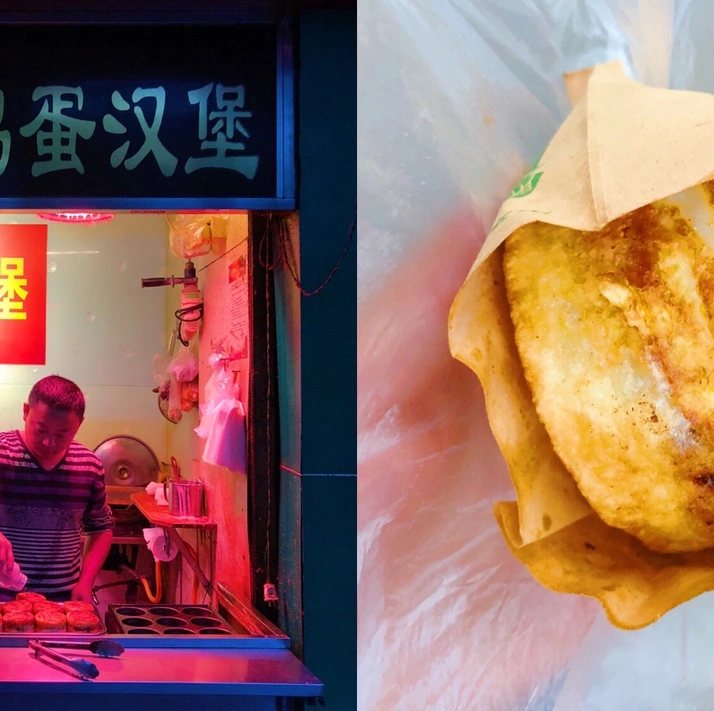
On the way to Li Ji Qingzhen Restaurant (李记清真馆), Mingwalang (明瓦廊) was still rubbing the sleep from its eyes. Most shops hadn't opened yet, but the aroma was already wafting from an unassuming stall. Crispy egg burger (香酥鸡蛋堡)—a trendy street snack, encountered by chance. A layer of fried egg, a layer of meat patty, a moist cake base, sprinkled with cumin before coming off the griddle. Bite into it, and crispness and softness intertwine in your mouth. Simple, yet utterly satisfying.
Li Ji Qingzhen Restaurant: The "Juice Explosion" Philosophy of Potstickers
Li Ji's beef potstickers (牛肉锅贴) come in portions of five, each one generously large. By eight in the morning, the line had already stretched out the door. A single batch holds at least several dozen, but one elderly auntie can handle them all by herself. The potsticker wrappers are fried to a golden crisp. The moment you bite in, the beef filling's broth gushes out, its richness rivaling that of soup dumplings. While waiting in line, I overheard a local chatting: "My grandson can eat eight of these in one go."
Jinwei Chestnuts: Two Hours in Line, Fifty Yuan Limit
Coming out of Li Ji, I spotted a long S-shaped queue from afar—no mistake, it was Jinwei Chestnuts (金味栗子). Each person is limited to 50 yuan worth, but many local foodies would queue once, then again, to bring home a full 100 yuan's worth. The chestnuts are easy to peel, sweet, soft, and fragrant—the kind of flavor you'd buy "every time you pass by." While waiting, the elderly man ahead of me said, "I've been eating chestnuts from this shop for ten years."
Nanjing Impressions: From Street Food to Nationwide Fame
Nanjing Impressions (南京大牌档) has expanded to many provinces across China, but when locals recommend Nanjing cuisine, they still put it first. Roast duck buns (烤鸭包), Meiling congee (美龄粥), osmanthus cake (桂花糕), stuffed lotus root with glutinous rice (糯米藕), and clear-simmered lion's head meatballs (清炖狮子头)—every dish is a classic. The roast duck buns lean sweet, with firm, dense meat that delivers a satisfying bite. Meiling congee is said to have been created when Soong Mei-ling had no appetite; the family chef simmered soy milk, glutinous rice, japonica rice, yam, lily bulb, goji berries, and rock sugar into a delicate, refined porridge—one spoonful is breathtaking. The stuffed lotus root is meticulously crafted, though the jade-belt loofah (玉带丝瓜), served as a vegetable dish, was a bit too oily.
Xiao Zheng's Crispy Sesame Cakes: The Audacity of 50 Scallion, 50 Black Sesame
Near Confucius Temple (夫子庙), the line at Xiao Zheng's Crispy Sesame Cakes (小郑酥烧饼) was long enough to make you despair. While queuing, you'd often hear orders like "50 scallion, 50 black sesame." Only tourists would buy just one or two to sample. An auntie in line shared her tip: "Pop them in the microwave every morning, and they're just like fresh out of the oven!"
Lianhu Cake Shop: A Time-Honored Name in Confucius Temple
The five-colored cake (五色糕) and osmanthus cake were too dense for two people to finish. But the taro paste dessert here was indeed different from other shops—less sweet, with large chunks of taro that were very appealing.
Qifang Pavilion: The Stunning Duck-Oil Sesame Cake
Qifang Pavilion (奇芳阁) offers snacks, vacuum-packed salted duck for takeaway, and full meals on the second floor. I had already eaten dinner before heading to Confucius Temple, so I only tried the duck-oil sesame cake (鸭油烧饼). Crispy, richly fragrant—the kind of taste that makes you think, "I should have bought more."
Yiming Fresh Milk Bar: A Breath of Freshness in the Streets
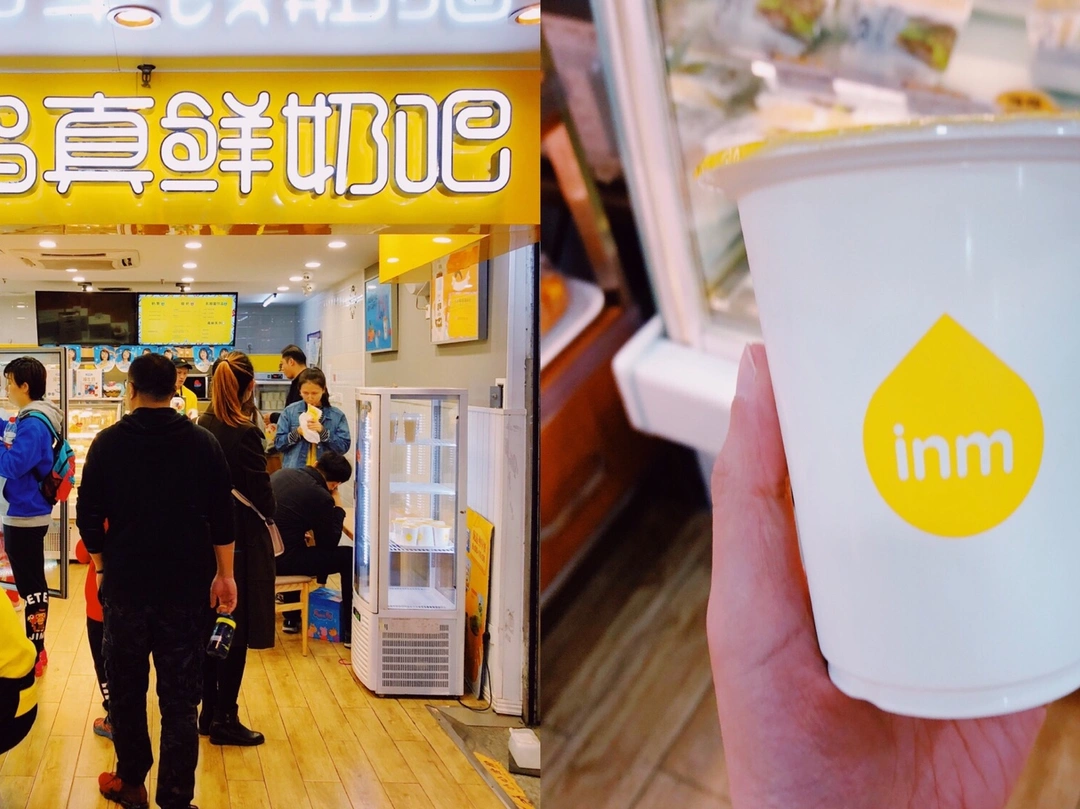
Yiming Fresh Milk Bar (一鸣真鲜奶吧), specializing in dairy products, is ubiquitous. The sugar-free plain yogurt and strawberry yogurt are both good—fresh-tasting and wholesome. A must-buy whenever I passed by, offering a refreshing break from the sweet indulgence.
Fangpo Cake Shop: A Pilgrimage for Black Rice Balls
Arriving at Fangpo Cake Shop (芳婆糕团店) early in the morning, I started queuing again. People often order forty black rice balls (乌饭团) to take away at once, making the line feel hopeless. Fortunately, the aunties work quickly. The black rice ball, filled with pork floss and tender fried dough stick, plus a side of soy-braised egg (老卤蛋)—simple, yet deeply satisfying.
Yadebo Vermicelli Soup: The Richness of a White Broth
Yadebo (鸭得堡) and Huiwei (回味) are the two most famous duck blood vermicelli soup (鸭血粉丝汤) shops in Nanjing. A large serving arrives at your table, generous in portion. The white broth is rich and smooth—one sip warms your entire stomach.
Luxihe: The "God-Tier" Egg Yolk Pastry
Luxihe (泸溪河) didn't originate in Nanjing, but it has achieved near-monopoly status here. Branches bloom everywhere, each with a long line. Passing by the Xinjiekou branch in the morning before it opened, I coincidentally encountered the Nanjing Marathon. Several main roads were closed, and the crowd gathered at Xinjiekou was cheering on the runners. Among them was someone in full Peking opera costume. Seeing me with my camera, a female runner flashed a big smile for the lens.
Luxihe's red bean Q-berry (红豆Q果) has an astonishingly generous red bean filling. The Taiwan-style mochi (台湾麻薯) is wonderfully chewy. Of the two-tone mung bean cakes (双色绿豆糕), I preferred the cranberry version. Save the best for last: the egg yolk pastry (蛋黄酥) is absolutely divine! The red bean paste has a faint rose fragrance, and the egg yolk blends seamlessly into it—so exquisite you almost hate to finish it.
Hongze Lake Fish Potstickers: No Fish, No Potstickers
A savory pancake with a crispy texture—that's Hongze Lake Fish Potstickers (洪泽湖小鱼锅贴) for you. The name may be misleading, but the flavor isn't.
Zuo Master's Plum Blossom Cake: Tiny Shop, Massive Hype
The signature red bean filling (招牌红豆馅) stays delicious all the way to the last bite. The owner even reminds you: "Fresh out of the oven, careful, it's hot."
Ekou One-Bite Noodles: Style Over Substance
Six flavors in one serving sounds fun, but the presentation and gimmick far outweigh the actual noodle quality. This was the only disappointment of my entire Nanjing trip.
Wang Jia Wontons: Waiting for That "Want Some Chili Oil?"
The owner's signature unconventional hairstyle is unforgettable. The small wontons (小馄饨) are very light, with just the right amount of saltiness. A bowl for breakfast keeps you energized all day. I kept hoping to hear that classic line: "阿要辣油啊?" (Want some chili oil?)
Xu Ayi Cake Shop: The Double Champion of Green Rice Balls
The egg yolk with pork floss (蛋黄肉松) and red bean (红豆) green rice balls (青团) are tied for first place. A treasure worth venturing deep into the小巷 (alleyways) to find.
Lan Laotang's Sweet Lotus Root Congee: The Embrace of Brown Sugar, Glutinous Rice, and Lotus Root
Sweet lotus root congee (糖藕粥) is a slow-cooked blend of brown sugar, glutinous rice, and lotus root chunks. With enough time over the fire, the glutinous rice and lotus root become wonderfully soft and sticky. Switching to the savory如意回卤干 (fried tofu with broth) for a change of palate left me perfectly content.
Anleyuan Qingzhen Restaurant: The Nanjing Obsession with Food
Anleyuan (安乐园清真馆) was my last stop. Mixed vegetable platter (素什锦), hot and sour soup (胡辣汤), beef buns (牛肉包), red bean paste buns (豆沙包), duck gizzard shaomai (鸭肫烧卖). By now, seeing customers buying several steamer baskets at a time no longer surprised me—Nanjing people's dedication and persistence when it comes to food is an admirable trait. The takeaway counter's beef buns, red bean paste buns, and shaomai are must-tries. No matter how many praises you've heard, you cannot imagine this flavor until you taste it yourself.
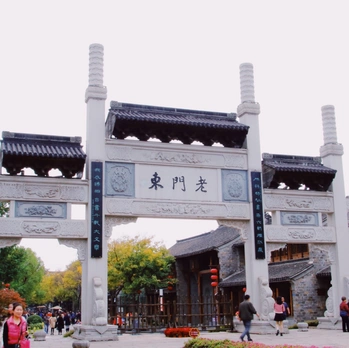
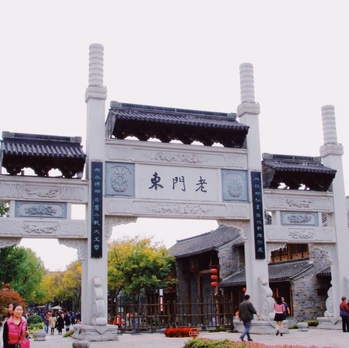
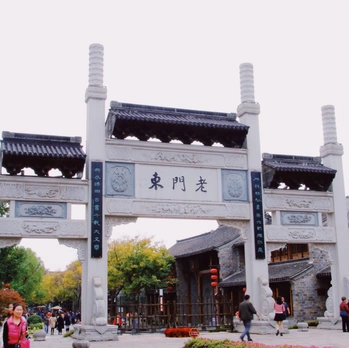
Key food areas: Mingwalang (明瓦廊), Confucius Temple (夫子庙), Shiziqiao (狮子桥), Kexiang (科巷), Laomendong (老门东), Xinjiekou (新街口). These areas gather almost every dish you'd want to try—Chinese, Western, Japanese, or traditional Jinling cuisine.
Strolling Through Jinling: History Whispers in the Rain
Dayang Department Store: An Unexpected Discount
My days in Nanjing coincided with Dayang's store anniversary, with discounts across the board. The salesgirl's Nanjing-accented persuasion was hard to resist, but that's no excuse for reckless spending. Nanjing's subway connects the entire Xinjiekou commercial district, making it a shopper's paradise.
The Presidential Palace: Umbrellas in the Rain, Memories of the Republic
The line started forming even before the gates opened. Touring the Presidential Palace (总统府) under a drizzling umbrella, our guide's commentary was detailed and well-structured, but the recitation felt too rehearsed, somewhat spoiling the romanticized atmosphere of the Republic of China era. I had to interrupt with several questions to break the rhythm, making the experience feel a bit more personal.
Jiangnan Silk Weaving Bureau: Cao Xueqin's Home
The home of Cao Xueqin, the birthplace of Dream of the Red Chamber. It's right next to the Presidential Palace. What captivated me most was the Dream of the Red Chamber exhibition hall on the basement level. Scanning a WeChat QR code let me listen to an audio guide on my phone. Perhaps due to the rain, there weren't many visitors, allowing for a leisurely stroll—a stark contrast to the bustling, market-like atmosphere of the Nanjing Museum on weekends.
Confucius Temple: The Reluctance of Commercialization
My second visit to Confucius Temple left the same impression. The commercialism is overwhelming. Standing at the entrance of Wuyi Lane (乌衣巷), I had no leisure to appreciate the setting sun slanting in; I just wanted to push through the crowds and breathe some fresh air.
Nanjing Sport Institute: Autumn in Jinling
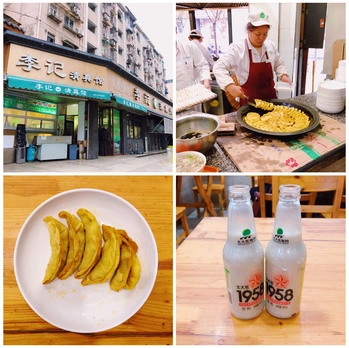
Amid the autumn colors of Nanjing Sport Institute (南京体育学院), I felt the season's essence in Jinling. There was no sunlight, but no shortage of warmth. My camera captured me in that moment—whether youthful or hesitant, confident or not, it's my memory. "Hey, trying to hide from the lens? I can still see you."
The Memorial Hall of the Victims in the Nanjing Massacre: The Murmurs of Countless Souls
"The low whispers of countless wronged souls." As I stepped into the memorial hall and saw the first, overwhelmingly powerful statue, that phrase echoed in my mind.
Nanjing Museum: Two Half-Day Explorations
The museum closes at noon every Monday, so I visited the Nanjing Museum (南京博物院) over two half-days. The art gallery was under renovation. My recommended route: History Hall, Special Exhibitions Hall, Digital Hall, Republic of China Hall. You can rent an audio guide at the service desk; it automatically plays explanations as you approach key artifacts. One guide can connect to two earphones, but I recommend renting one per person—otherwise, the Siamese-twin setup is quite awkward. A hard-learned lesson: never visit the museum on weekends. The noisy, market-like atmosphere kills any mood for appreciating artifacts. Unfortunately, the art gallery was closed for renovations, so I missed the Renaissance exhibition, but the gold bell in the Special Exhibitions Hall made up for it.
Outside the museum's gate lies the Ming City Wall (明城墙). Climbing is prohibited, but I occasionally spotted visitors on top. After the rain cleared, the gray wall stood against a powder-blue sky, history witnessing a touch of youthful energy.
Librairie Avant-Garde: The Paradox of Artiness
I arrived at Librairie Avant-Garde (先锋书店) with high expectations. The bookstore's layout is indeed clever, and the selection of books is vast. But I couldn't shake the feeling that it was trying a bit too hard to be artsy—I wonder if this itself embodies the avant-garde spirit of "l'art pour l'art"? There were many niche titles, but I couldn't find two classic works, which was a pity. The first thing I did was buy A Book of Nanjing (《一本南京》). Flipping through its kraft-paper pages, counting Nanjing's scenic spots and delicacies, was a unique experience in itself.
Epilogue: Looking Forward to Our Next Meeting
Both my trips to Nanjing have been with my mother. In March, I bathed in the apricot-blossom spring rain; in November, I witnessed the red maples and autumn showers. This ancient capital of six dynasties, perched like a coiling dragon and a crouching tiger, birthplace of countless poets and writers—the setting for Dream of the Red Chamber and Zhuque (The Vermilion Bird)—unfolds its history with a delicate, lingering touch.
Hello, Nanjing. I look forward to our next meeting.
Practical Tips: - Best seasons: Spring and autumn—apricot blossoms and spring rain in March, red maples and autumn showers in November - Food map: Mingwalang, Confucius Temple, Shiziqiao, Kexiang, Laomendong, Xinjiekou - Transportation: The subway connects the Xinjiekou commercial district, making travel convenient - Pitfall warnings: Avoid the Nanjing Museum on weekends; Confucius Temple is heavily commercialized; think twice before trying Ekou One-Bite Noodles
You should also read:
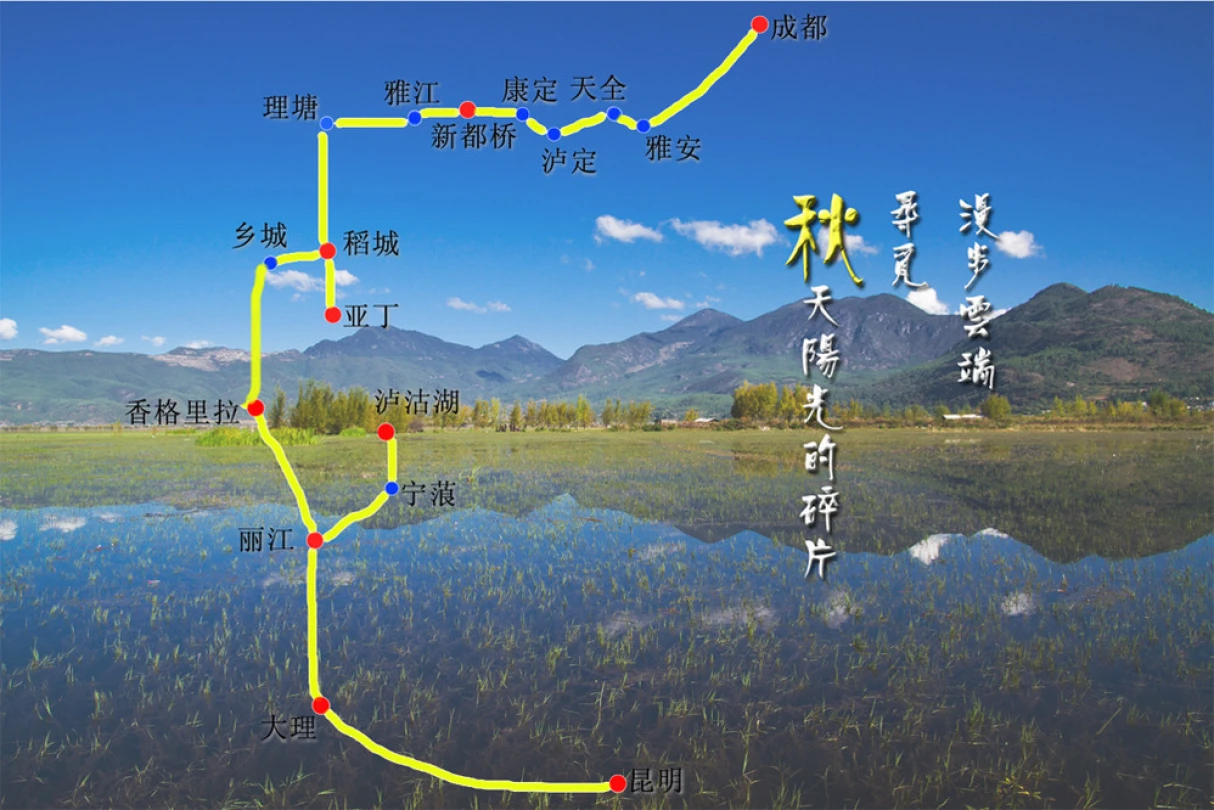
Strolling Among the Clouds: Gathering Autumn's Light on the Western Sichuan Plateau
Strolling Among the Clouds: Gathering Autumn's Light on the Western Sichuan Plateau Prologue: A Sun Chaser's Journey Autumn sunlight is like a gentle painter, using golden brushstrokes to smear the last traces of warmth across the earth. It slips through the gaps between your fingers,…
Continue reading...
Meili Snow Mountain: A Soulful Journey of Dialogue with the Sacred Mountain
Meili Snow Mountain: A Soulful Journey of Dialogue with the Sacred Mountain Prologue: When Travel Becomes Faith Some journeys are forgotten as soon as they end. Others carve themselves into your bones. The trip to Meili Snow Mountain belongs to the latter. Waking up in…
Continue reading...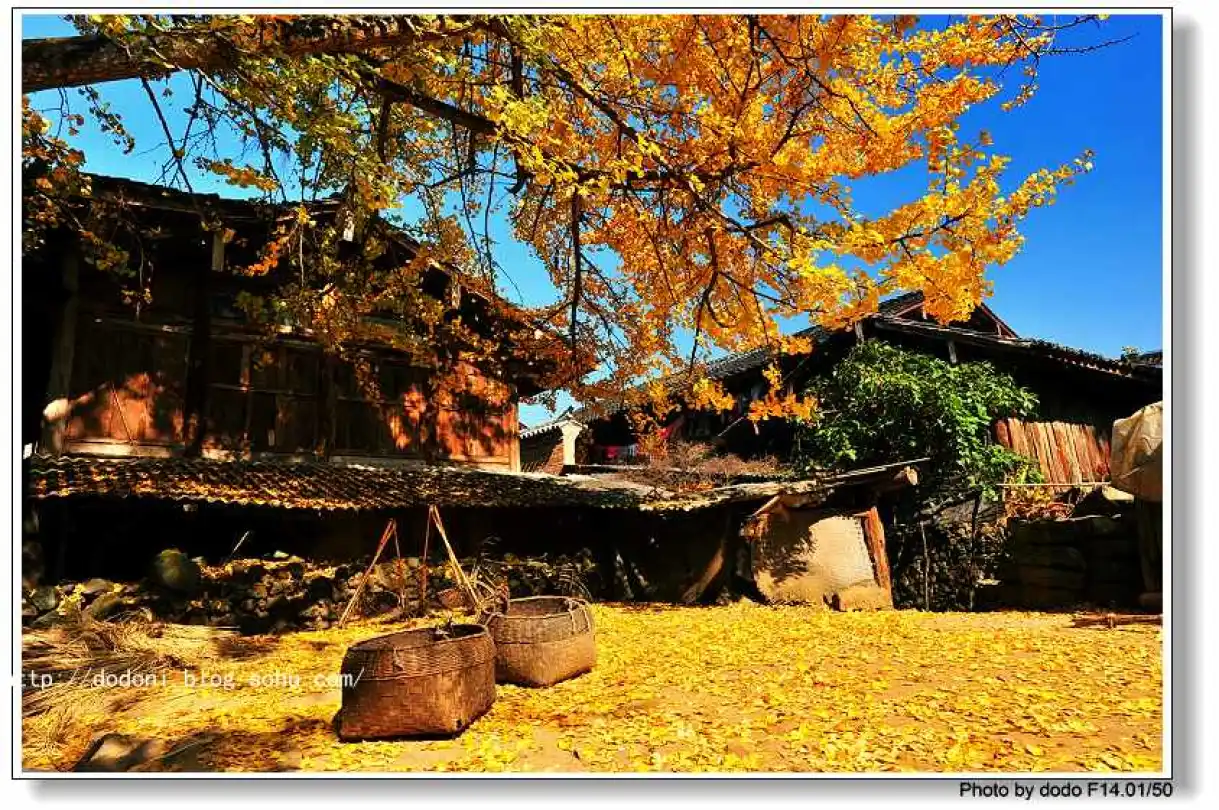
Golden Autumn: A Poetic Tapestry of Light and Shadow in Tengchong's Ginkgo Village
Golden Autumn: A Poetic Tapestry of Light and Shadow in Tengchong's Ginkgo Village A Belated Autumn Rendezvous Everyone harbors a dream about autumn somewhere in their heart. For me, that dream once belonged to Jiuzhaigou—that palette of colors hailed by the world as a "fairy-tale…
Continue reading...