Ten Days in Yunnan | A Gentle Blue Dream for You
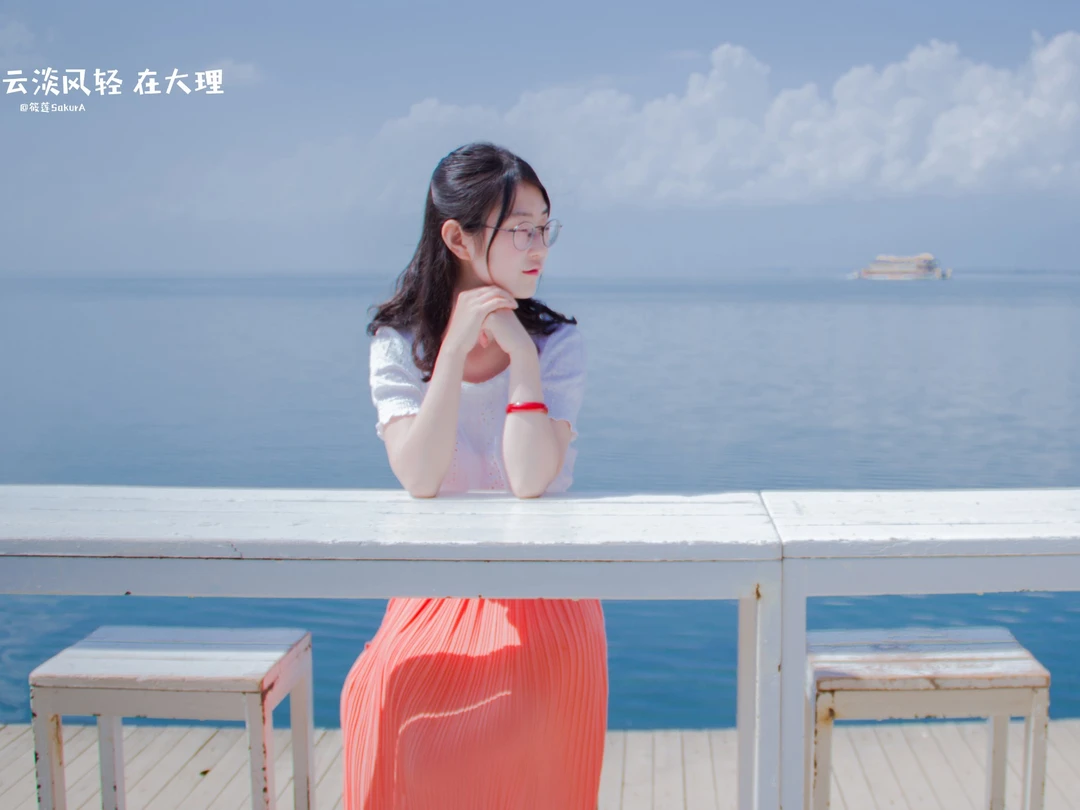
Ten Days in Yunnan | A Gentle Blue Dream for You
Some places, just by saying their name, are already a journey.
Yunnan is that name in my heart that comes with its own filter. Close my eyes, and I see an overwhelming blue, clouds within arm's reach, girls in colorful dresses on cobblestone streets, the gurgle of water flowing through small towns — and countless days so light they feel like floating in the air.
I used to think going to Yunnan was something distant. When I wrote about my trip to Guizhou, I said, "The places I want to go are always hard to reach." But looking back now, those faraway places that once seemed out of reach will, in some unguarded moment, quietly come to you.
Time flies, and after all the twists and turns, I finally met Yunnan at the best age.
A Spontaneous Trip
In August, Chengdu was so hot that all I wanted was to hide in an air-conditioned room. My phone screen lit up with a message from Heihei: "Want to go to Yunnan together?"
I'm probably the kind of person who gets excited the moment I hear the words "let's go out and play." I said, "Let me think about it," but in my heart, I was already silently calculating the budget and route.
Just like that, on an otherwise ordinary day, the Yunnan trip was lightly penciled into our plans.
Strangely enough, I had made countless plans with friends before, gone over itineraries again and again, but something always got in the way. This time, it was a spur-of-the-moment decision, and we just went. Looking back now, those "reasons" that once held us back have long since faded. Maybe it was just fate.
Itinerary at a Glance

- Day 1 Kunming: Cuihu Park → Yunnan University → Jinma Biji Archways
- Day 2 Dali Shuanglang: Cycling to Wase
- Day 3 Shuanglang → Dali Old Town: Cycling around Erhai Lake
- Day 4 Dali → Lijiang: Shuhe Ancient Town
- Day 5 Lijiang → Shangri-La: Napahai Yila Grassland
- Day 6 Shangri-La: Pudacuo National Park → Baiji Temple
- Day 7 Shangri-La → Lijiang: Shuhe Ancient Town
- Day 8 Lijiang → Lugu Lake
- Day 9 Lugu Lake: Cycling around the lake
- Day 10 Lugu Lake: Lige → Daluoshui
- Day 11 Lugu Lake → Lijiang → Kunming
- Day 12 Kunming: Dianchi Lake → Haigeng Park → Return to Chengdu
First Sight of Kunming: A Gentle City
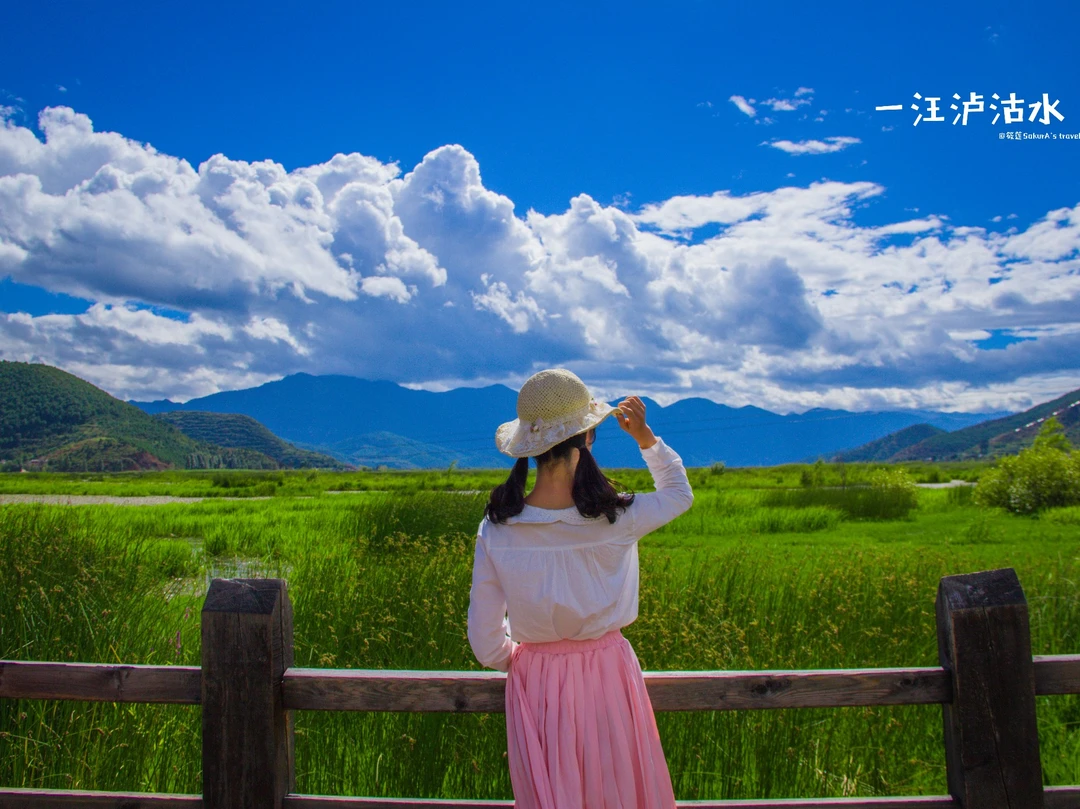
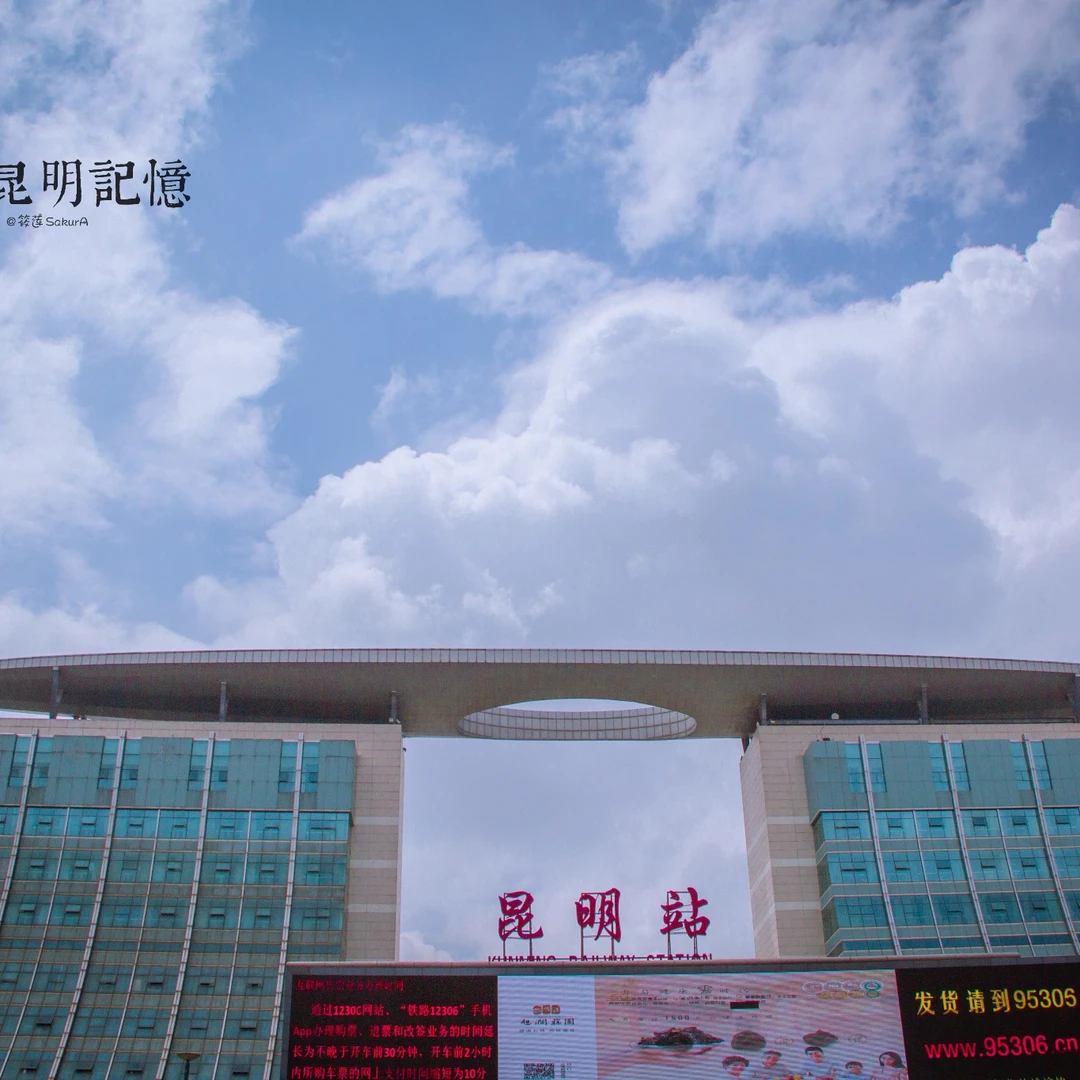
Jumping on a train from Chengdu, where the humidity made it hard to breathe, I arrived in Kunming after one night.
At ten in the morning, I walked out of the train station, and a breeze with a hint of coolness greeted me. Looking up, a light blue sky spread out, with big, lazy clouds drifting by — at that moment, all the fatigue was healed.
Since we had to catch a train to Dali that evening, we stored our luggage at the station (10 yuan per piece per day), traveled light, and headed straight for Cuihu Park.
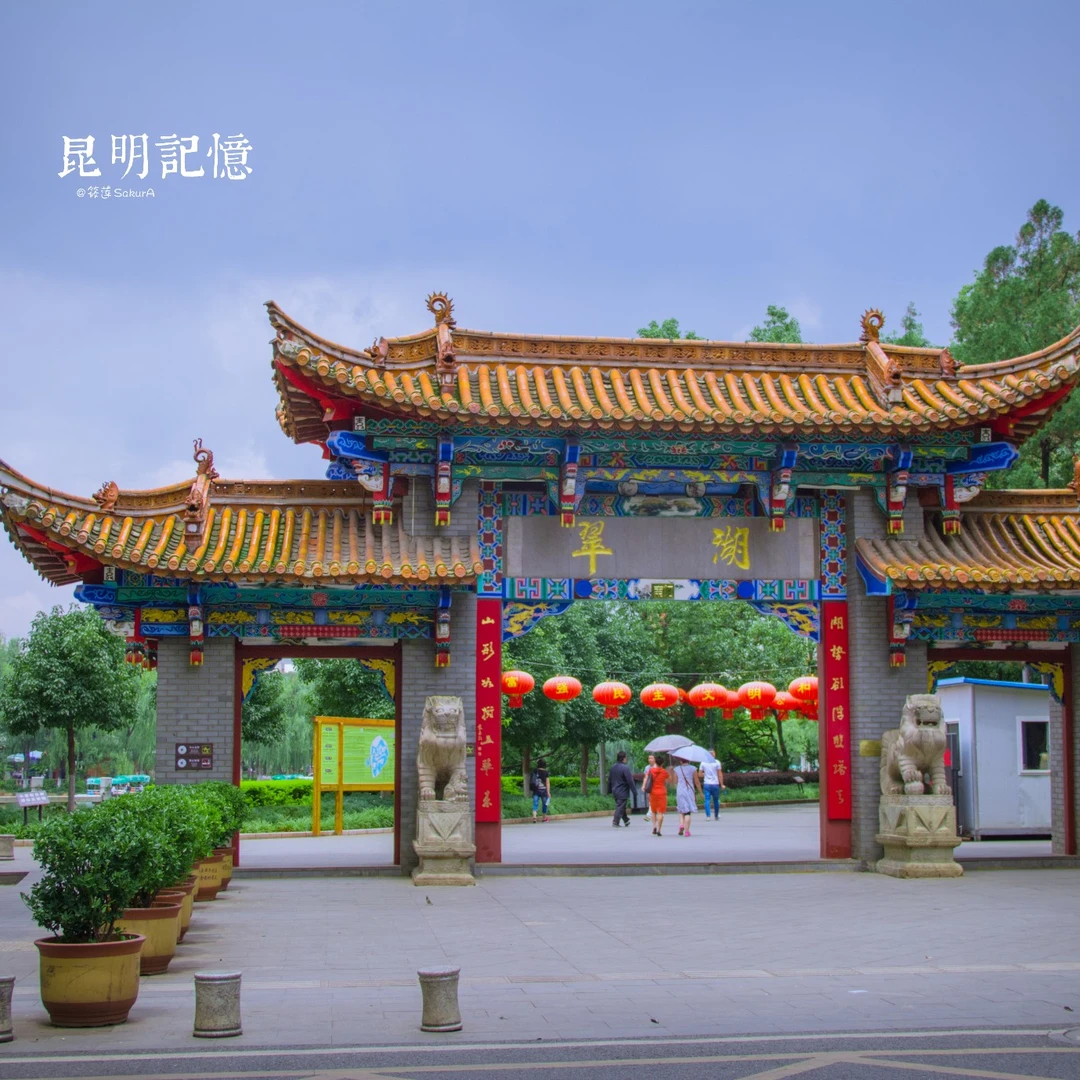
Cuihu Park: A Clear Lake in the Bustling City
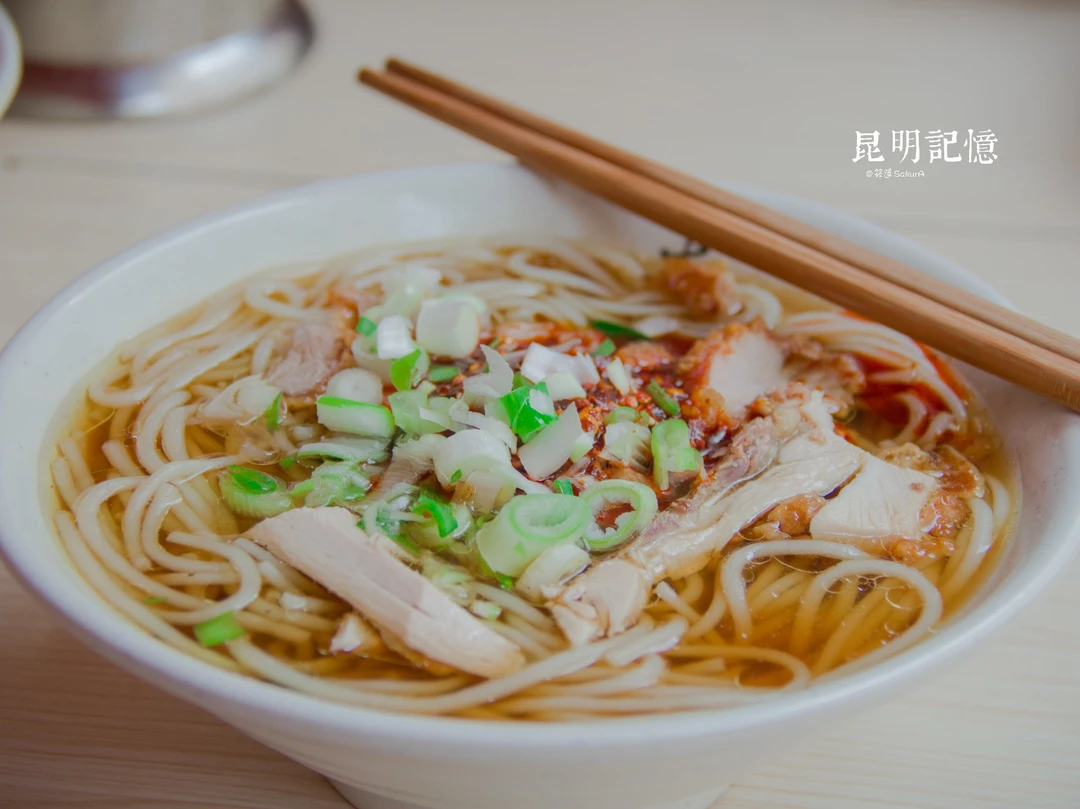
We had a bowl of chicken shred rice noodles (鸡丝米线) at a small roadside shop — the first meal in Yunnan had to be rice noodles! Those little shops tucked away in the alleys never disappoint.
Cuihu Park was once a bay of Dianchi Lake, but as the water level dropped, it became a clear lake. Every winter, flocks of red-beaked gulls fly here to spend the season. Although we arrived in early autumn and couldn't see those cute little creatures, there was nothing to regret — isn't the meaning of travel to enjoy the present?
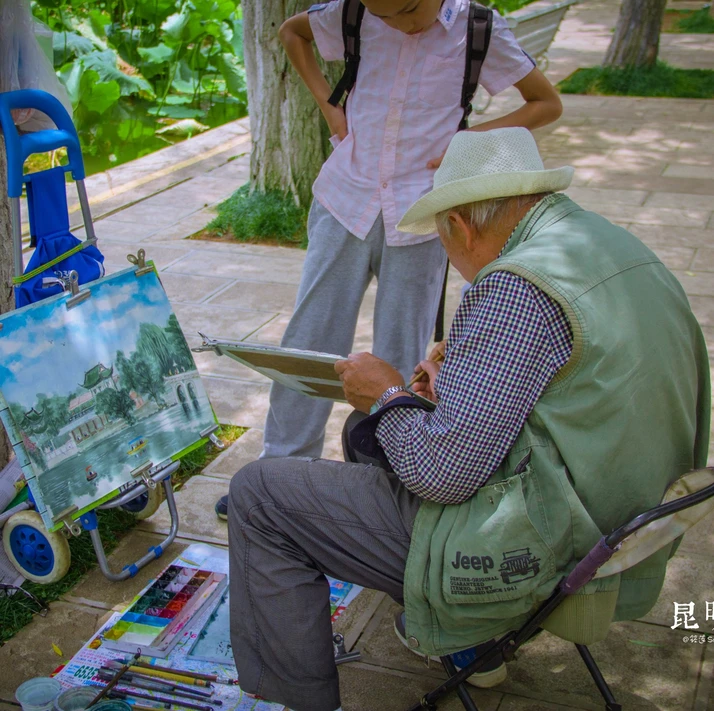
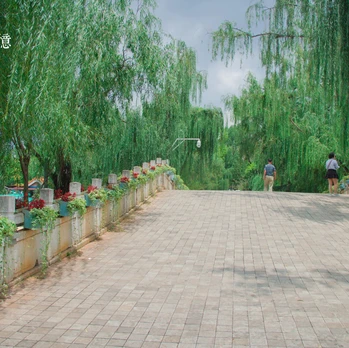
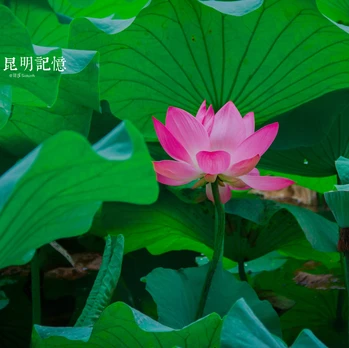
By the lake, an elderly man was teaching his students to sketch. I've always envied people who can draw — how romantic it is to capture the beauty before you, stroke by stroke. Green willows swayed gently, lotus flowers were in full bloom, and among the遮天蔽日的 lotus leaves, pure and brilliant blossoms dotted the scene.
Because my surname is "Lian" (lotus), when I saw the words "Cai Lian Bridge" (Lotus-Picking Bridge), I immediately dragged Heihei over to take a photo.
Yunnan University: Beauty Tempered by Time
A few minutes' walk from Cuihu Park brought us to Yunnan University. The gate was nestled in lush greenery, and the red-and-white old buildings were covered with the marks of time. There was no lavish decoration, but a quiet and proud aura.
Walking through the campus, sunlight filtered through the leaves, casting dappled shadows. Occasionally, students in graduation gowns were taking photos. I thought to myself, how wonderful it would be to spend four years at a school like this.
Heihei and I strolled around the campus, stopping to take photos. For a moment, it felt like we were back in college — those lazy afternoons walking around campus always felt a little unreal in their beauty.
Jinma Biji Archways: The Symbol of Kunming
As evening fell, we went to the Jinma Biji Archways. These are the symbol of Kunming — the east arch faces Jinma Mountain, and the west arch faces Biji Mountain. The archways glittered gold in the sunset, a magnificent sight.
At Qiaoxiangyuan, we ordered crossing-the-bridge rice noodles (过桥米线). The noodles came in several grades — Scholar, Successful Candidate, Advanced Scholar, and Top Scholar — with different prices and side dishes. We chose the "Advanced Scholar" set, 35 yuan each, which came with a bowl of steam-pot chicken (汽锅鸡). The chicken soup was incredibly flavorful, but honestly, the authentic crossing-the-bridge rice noodles left me a bit perplexed — as someone who can't live without spice, I just couldn't get excited about a clear broth. That taught me a lesson: the most authentic isn't always the most suitable. I still love my spicy Sichuan-style rice noodles.
As night fell, after taking photos of the illuminated archways, we boarded the train to Dali. Train K9626, departing at 11:30 PM and arriving in Dali at 6:40 AM the next morning. A sleeper ticket cost 105.5 yuan.
Goodbye, Kunming.
The Gentle Breeze of Dali
The train arrived in Dali on time. The sky was tinged with red dawn light — a good omen.
After leaving the station, we had a bowl of rice shreds (饵丝) at a small stall in front of the station. Ten yuan for a bowl, just enough for two to share. Rice shreds are made from rice, softer and more fragrant than rice noodles — later we agreed that this was the best meal of the entire Yunnan trip!
Instead of heading straight to Dali Old Town, we went directly to Shuanglang. We took a bus from the train station to Xiaguan Bus Station, then transferred to a shuttle to Shuanglang (13 yuan), which took about an hour.
Shuanglang: The Tenderness Where Water Meets Sky
After getting off, we dragged our suitcases along dusty streets looking for our guesthouse — Shuanglang was indeed full of construction sites, just like the travel guides said. But I'm used to this process of "searching," because I know that no matter how many detours I take, I'll eventually arrive.
When I opened the balcony door of our guesthouse, I froze.
Water and sky mirrored each other — the gentle blue sky reflected in the calm lake, white clouds drifting lazily, small houses by the water standing quietly. At that moment, time seemed to stand still. Wasn't this the Dali of my dreams?
After dropping off our luggage, we rented a little electric scooter with a cow-print pattern (40-50 yuan per day, ID card as deposit) and cycled along Erhai Lake to Wase.
The sun was perfect, the sky was azure, and big white clouds floated overhead. We'd ride for a while, stop to take photos, then ride some more. Along the shore of Erhai, shallow waters were covered with lotus leaves, and flowers were in bloom. In the distance, mountains were hazy and misty. Everything was so peaceful and beautiful.
I've always loved that line by the poet Haizi: "The sky has nothing, yet it comforts me." Standing by Erhai Lake, looking at this expanse of blue — it felt like there was nothing, yet everything.
We rode to Wase, wandered around for a bit, then turned back the same way. Everyone we met on the road was smiling, nodding to each other. In a place like this, even strangers become friendly.
In the evening, we strolled through the small town of Shuanglang. Even though construction sites were everywhere and dust filled the air, that sky and that water were right in front of us — nothing else seemed to matter.
For dinner, we had rice shreds and rice noodles again. At sunset, sunlight broke through the clouds, creating beautiful Tyndall effect rays. The water's surface reflected the sky, making it impossible to tell where the sky ended and the water began.
Back at the guesthouse, we sat on the balcony, watching the clouds in the sky turn pink, then slowly darken until they were completely black. The breeze was cool, and stars were twinkling.
That was how the first day in Dali ended.
Morning in Shuanglang: Facing Erhai Lake, with Spring in Bloom
The next day brought another blue sky with white clouds. Our plan was simple — visit the various guesthouses in Shuanglang, take photos, and check in at popular spots.
The guesthouses in Shuanglang are all unique — white tables and chairs, beautiful flowers and plants, balconies facing Erhai Lake. Just sitting there, soaking up the sun, looking at the distant meeting of water and sky, doing nothing at all — that was already enough.
We took the classic photo with the white chairs at Haidi Life — even though there was a long line, standing there at that moment made it all worth it. Behind us was the endless water and sky, with white clouds floating between them. That wonderful feeling can only be understood by being there.
After taking photos, we took a bus back to Dali Old Town (13 yuan).
Dali Old Town: Simple and Warm
We found a youth hostel near the old town and checked in. Our roommate was a girl from Guangdong who planned to stay in the old town for over 20 days. I was a little envious of her — most of the time, we stay in a place for three or four days before rushing to the next destination, rarely having the chance to truly settle in and feel a place.
After dropping off our things, we went to the old town to find food. We ordered chicken shred rice noodles and stir-fried rice shreds (炒饵丝) — the stir-fried rice shreds were absolutely delicious, soft and chewy, mixed with various vegetables, utterly addictive. The prices were also very reasonable, 10 to 15 yuan per serving.
Dali Old Town was simpler than I had imagined. Not many ornate buildings, the streets were square and orderly, and there was a strong sense of everyday life. Look up, and the blue sky was right there. Just walking around felt comfortable.
In the afternoon, we rented an electric scooter (30-40 yuan per day, the cheapest of the whole trip) and rode to the shores of Erhai Lake to find the Wutong Inn from the movie Heart Blossoms (心花怒放). Although we couldn't get in, the Zizai Hotel next to it also had a lot of character — sitting by Erhai Lake, feeling the breeze, looking at the hazy sky in the distance — everything felt just right.
On the way back, I suddenly realized that the feeling of going and the feeling of returning are completely different. On the way there, my heart was full of anticipation and excitement; on the way back, it was a kind of known satisfaction. I liked both feelings — having something to look forward to is always a happiness.
In the evening, Heihei wasn't feeling well, so we went back to the hostel early. I ran up to the rooftop and saw the sky full of stars. The breeze was cool, and everything was gentle.
Dali — the phrase "light breeze and gentle clouds" (云淡风轻) fits it perfectly. No intense colors, nothing that makes you gasp in amazement, but never boring either. Like the spring wind, gently brushing past, leaving behind a reassuring scent.
Lijiang: A Different Rhythm
From Dali to Lijiang, the train takes about 3 hours. Train K9629, departing at 9:15 AM and arriving at 12:18 PM.
Lijiang — this name has almost become synonymous with Yunnan. Located at the junction of the Yunnan Plateau and the Qinghai-Tibet Plateau, it was once a transit point on the Silk Road and the Ancient Tea Horse Road. Whether geographically or historically, it has a unique charm.
We stayed at the Time Chronicle Youth Hostel near Lijiang Old Town. The hostel had a great atmosphere, with a common area for board games and quiet corners for daydreaming and reading. The courtyard had flowers in unusual shapes, and next to it was a small bar with live music in the evenings.
After dropping off our luggage, we headed straight for Shuhe Ancient Town.
Shuhe Ancient Town: Quiet Beauty
Compared to the crowded Lijiang Old Town (Dayan Old Town), Shuhe Ancient Town is much quieter. It's less commercialized, perfect for a leisurely walk on the cobblestones in the afternoon sun.
The entrance fee for Shuhe Ancient Town is 40 yuan, but whether you actually have to pay is a matter of luck — this is one thing about Lijiang that's a bit awkward. We were lucky; we followed a group of other travelers we met on the road and just walked right in.
We found a small shop, and the owner enthusiastically recommended their local specialties. Cold jelly noodles (凉粉) and a kind of flatbread whose name I've forgotten — both were good, and the total came to just over 30 yuan. Prices in Shuhe are generally lower than in Dayan.
After eating our fill, we wandered aimlessly through the ancient town. Sunlight filtered through the trees, casting dappled shadows. Shop owners sat leisurely by their doors, and soft music drifted from the bars. In a place like this, you don't need to search for anything, you don't need to achieve anything — traveling thousands of miles to arrive here, all for the sake of an afternoon like this, bathed in perfect sunlight.
Final Thoughts
A ten-day trip to Yunnan — not long, not short. From Cuihu Lake in Kunming to the wind by Erhai Lake, from the sunset in Shuanglang to the starry sky in Dali, from the cobblestones of Shuhe to the grasslands of Shangri-La — each stop left its own unique memory.
Some people say that travel is just going from a place you're tired of to a place someone else is tired of. But I think travel is more like a process of making peace with yourself. In a strange place, seeing strange sights, meeting strange people, and then realizing — life can be lived this way too.
What Yunnan taught me wasn't how to take the perfect photo or check off tourist spots, but how to slow down. Slow enough to watch the shape of a cloud, slow enough to listen to the sound of the wind, slow enough to feel the warmth of the sun on your skin.
If you want to go to Yunnan too, my advice is: don't rush your itinerary, don't do a checklist-style trip. Find a place you like, stay for a few days, live like a local. Go to the market, eat a bowl of rice noodles at a street stall, sit by Erhai Lake and daydream — these seemingly "wasteful" things are often the most precious parts of travel.
Finally, let me share a lesson I learned: the most authentic isn't always the most suitable for you. Just like that bowl of crossing-the-bridge rice noodles — famous as it is, I still prefer my spicy Sichuan-style rice noodles. Travel is like that, and so is life.
May you also find your own Yunnan, your own gentle blue dream.
You should also read:
A 9-Day Yunnan Journey: From Lijiang to Dali to Tengchong – A Trip Toward Self-Reconciliation
A 9-Day Yunnan Journey: From Lijiang to Dali to Tengchong – A Trip Toward Self-Reconciliation Some say travel is simply going from a place you're tired of to a place other people are tired of. It stings to hear, but it's painfully true. Yet there's…
Continue reading...
Escaping Nanning, Falling Under Lijiang's Spell: Our Four-Person, Ten-Day Yunnan Dream
Escaping Nanning, Falling Under Lijiang's Spell: Our Four-Person, Ten-Day Yunnan Dream Before We Set Off: No Pain, No Obsession Have you ever had that impulse—suddenly tired of the office fluorescent lights, the crush of the subway, the endless parade of identical takeout boxes, and just…
Continue reading...
Solo in Yunnan: A Wanderer’s Guide to the Land of Eternal Spring
Solo in Yunnan: A Wanderer’s Guide to the Land of Eternal Spring There’s something magical about traveling alone. No compromises, no schedules to keep, no one to please but yourself. I’ve been on the road for nearly three months now, and not once have I…
Continue reading...