Tengchong: A Dream You Never Want to Wake From in an Autumn Border Town
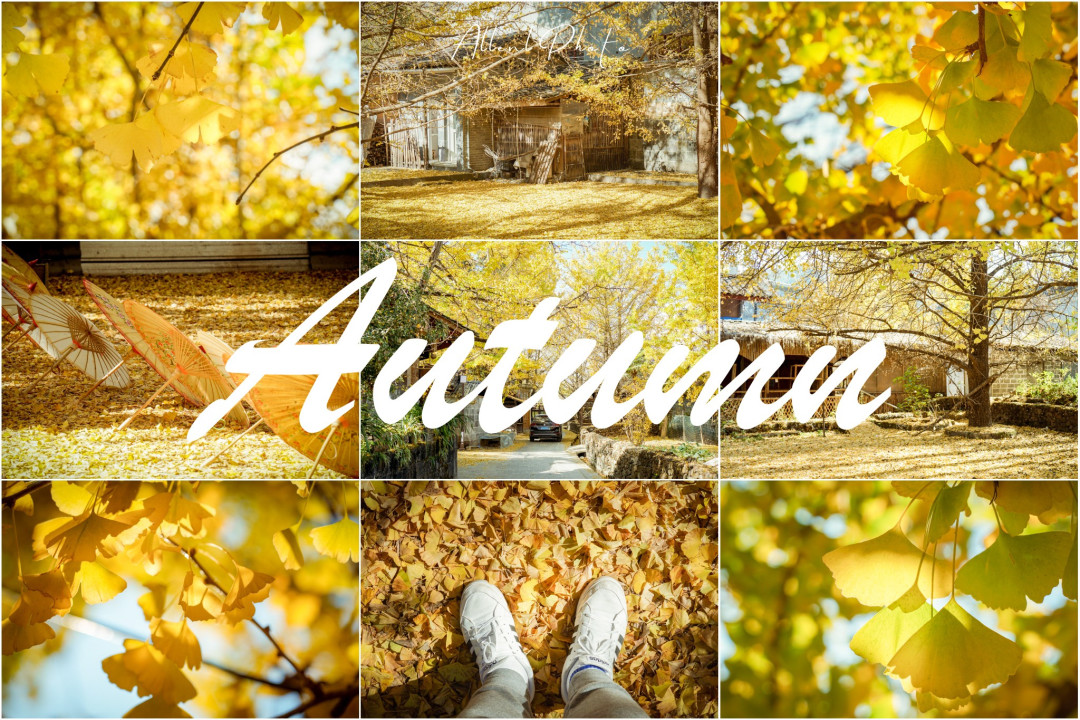
Tengchong: A Dream You Never Want to Wake From in an Autumn Border Town
Prologue: A Long-Overdue Promise Fulfilled
I first heard of Tengchong seven or eight years ago. Back then, I learned that on the western border of Yunnan, tucked away in obscurity, lay an unassuming little town. Every year as autumn gave way to winter, it would dress itself in gold, like something out of a fairy tale. From that moment, the thought took root in my heart—I had to see it for myself.
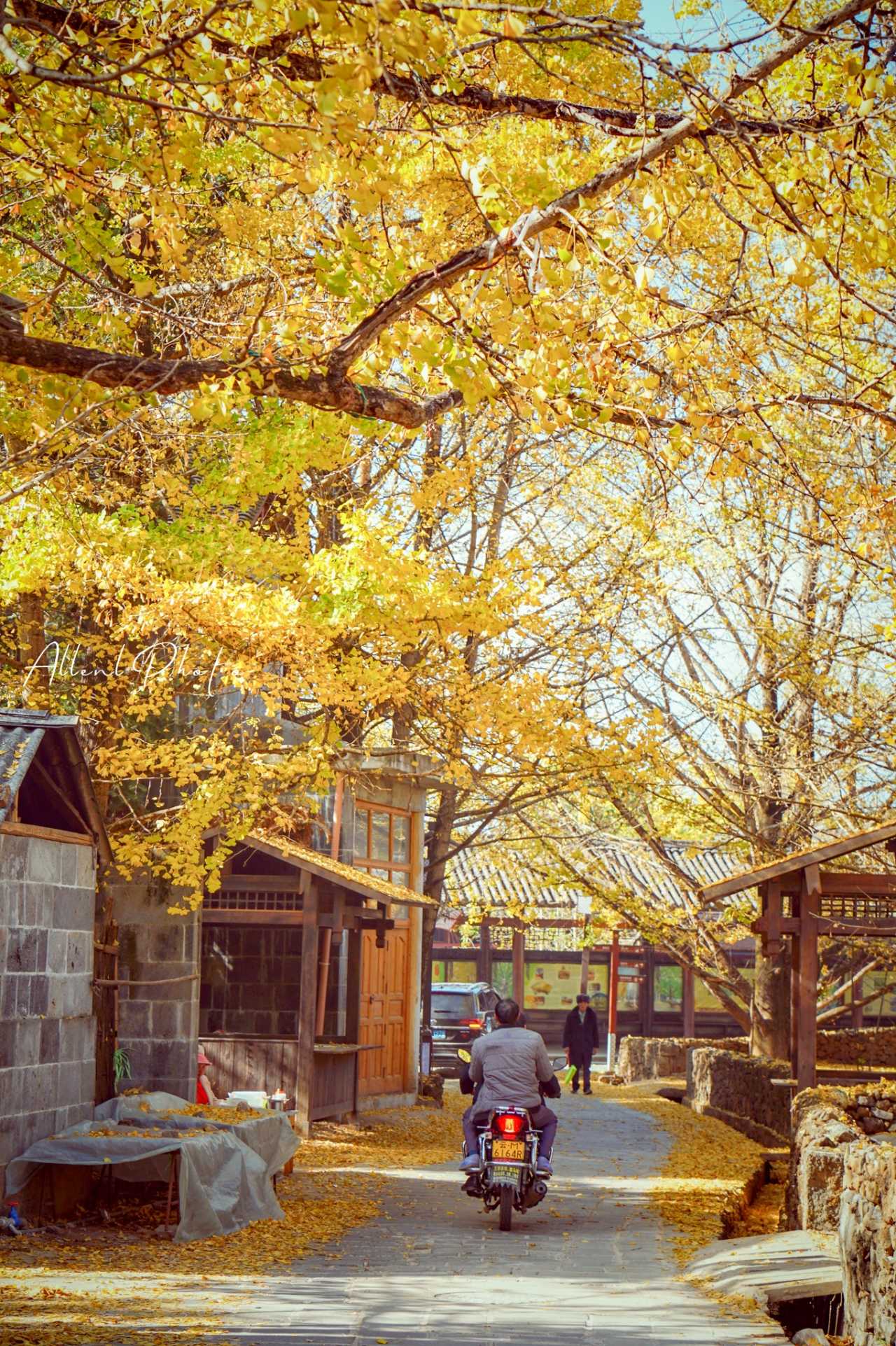
In late autumn of 2021, I finally embarked on this long-delayed journey. By then, most of the country had already entered winter, with snow falling in some places, yet Tengchong remained a golden-leafed fairy-tale world. Under the warm sun, golden leaves fluttered and danced in the breeze. Every fantasy and expectation I had ever held for autumn came true in that instant.
This trip wasn't easy to make. The pandemic kept shifting, flights changed twice, and entry requirements for Tengchong were strict. But the moment we landed, every obstacle became worth it—this long-cherished border town was quietly waiting, as if it had never been disturbed by the noise of the world.
Ginkgo Village: A Golden Paradise on Earth
First Glimpse: The Fairy Tale Begins at the Village Gate
From downtown Tengchong, a 40-kilometer drive brought us to Jiangdong Community in Gudong Town—the famed Ginkgo Village. The young innkeeper who picked us up chatted about Tengchong's quirks along the way. What stuck with me most was his remark that locals used to "go abroad" to Myanmar as casually as visiting a neighbor.
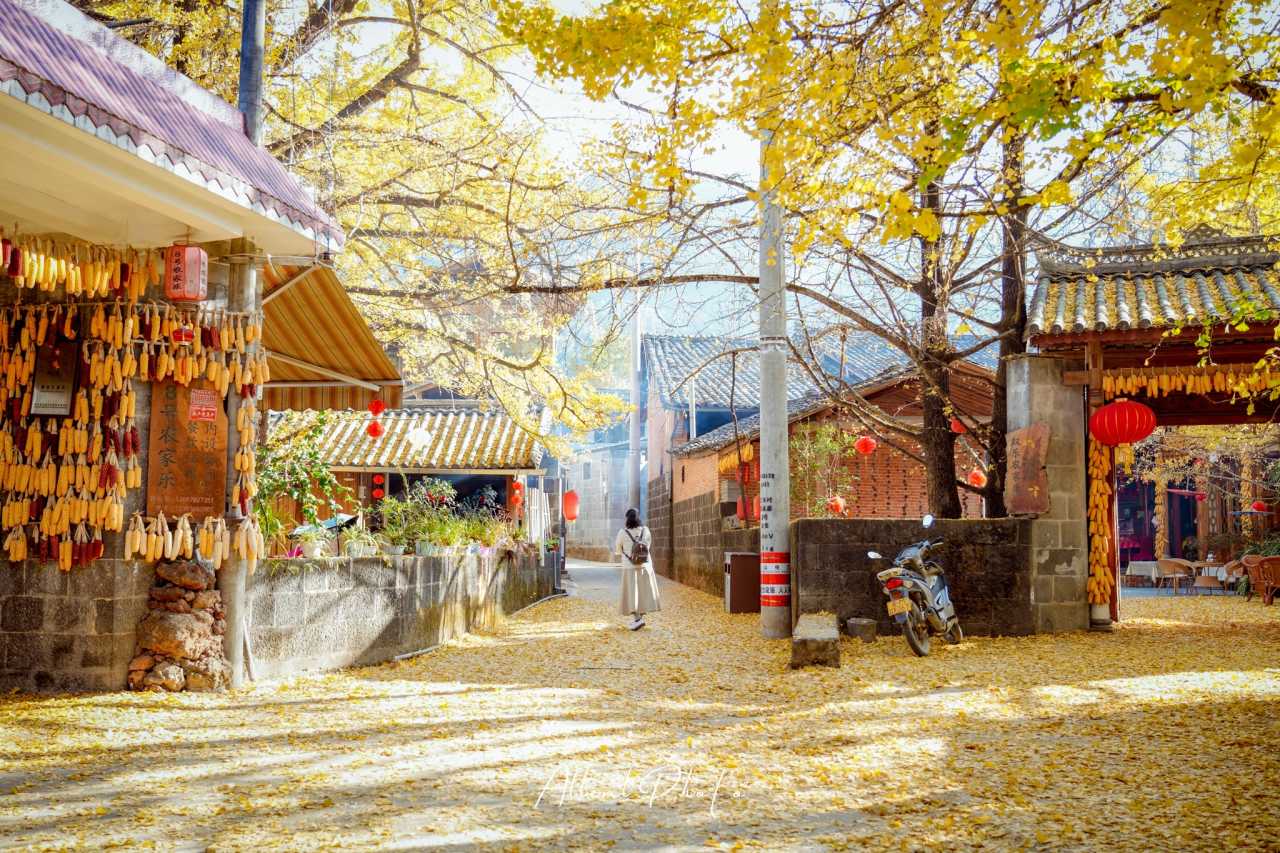
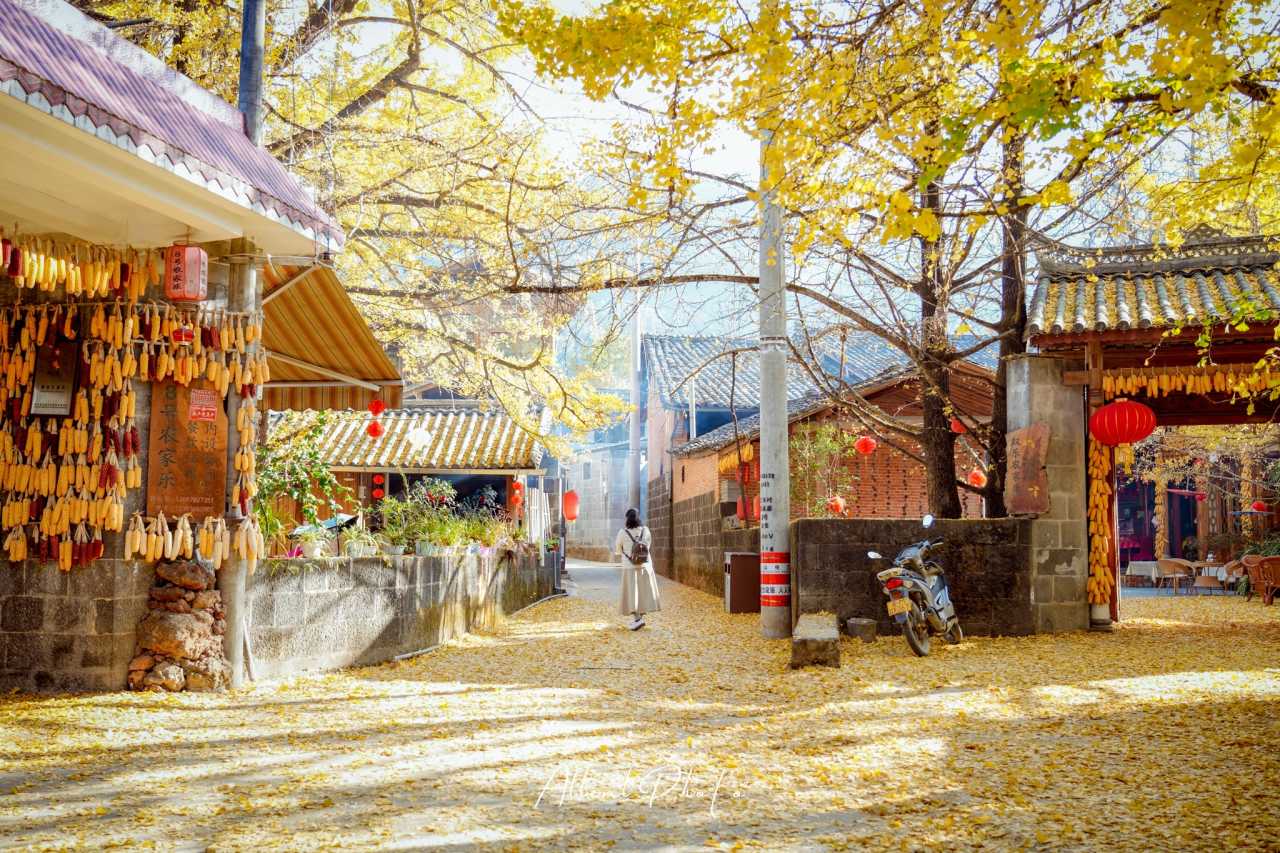
At the village parking lot, elderly women selling flower garlands lined up in an orderly fashion, taking turns to attract customers. The scene was so harmonious it made you smile. As we entered the village, those brilliant washes of gold hit us full force, pulling us into an autumn-soaked wonderland.
The best time to visit Ginkgo Village is usually from mid-November to early December. We had arrived just at the tail end of the peak season. The yellow leaves were beginning to fall in earnest, the beauty nearing its close—and we were there to bid farewell to autumn.
A Village in the Forest, a Forest in the Village
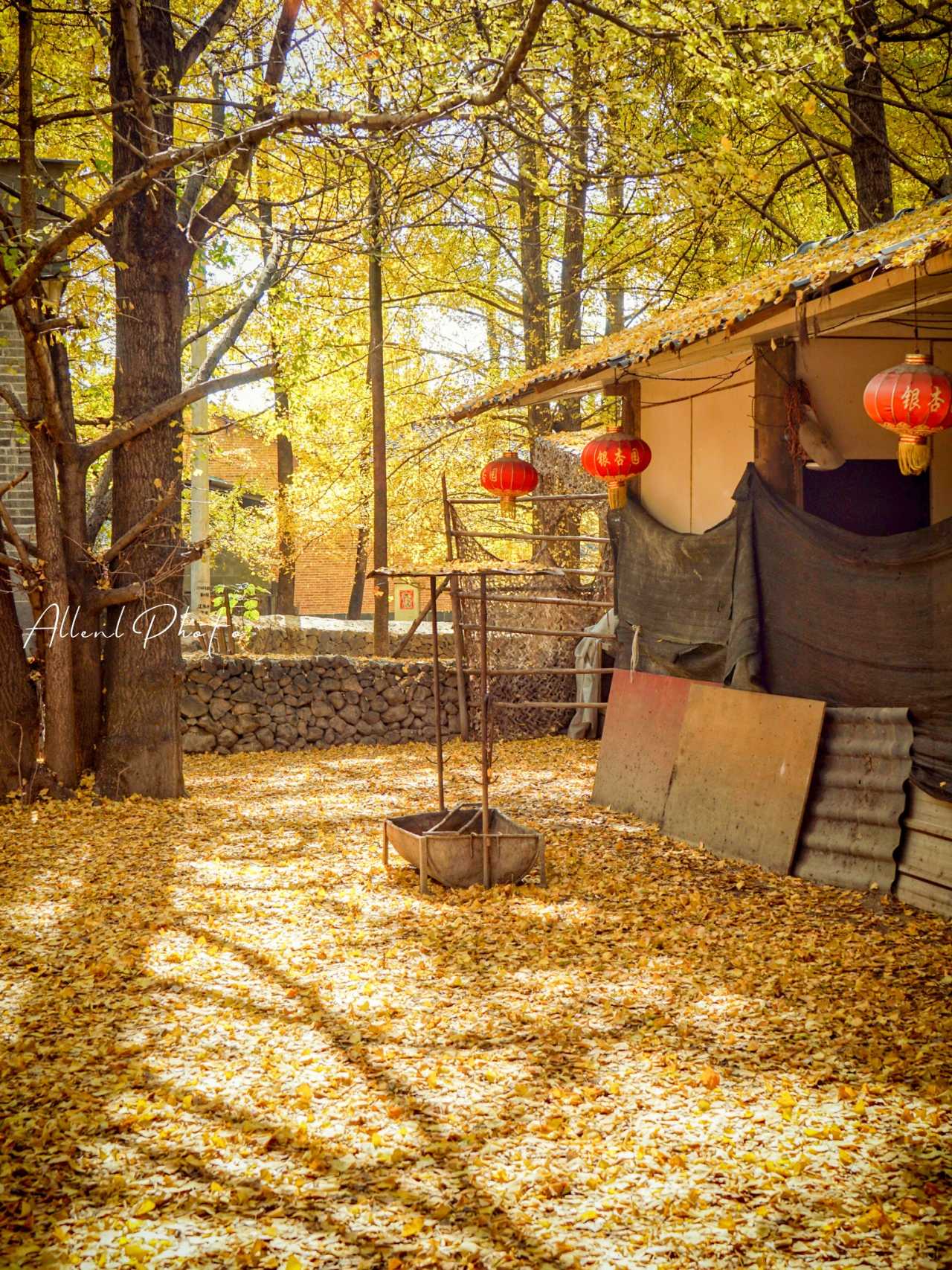
Ginkgo Village consists of four natural hamlets—Chenjiazhai, Baxin, Jiangyun, and Sihe—and is home to over 3,000 ancient ginkgo trees. The oldest, known as the "Ginkgo King," is said to be more than 1,300 years old. Local families have lived alongside these ginkgo groves for generations. The dreamlike scene of "a village in the forest, a forest in the village" has made this place a "Shangri-La" in countless hearts.
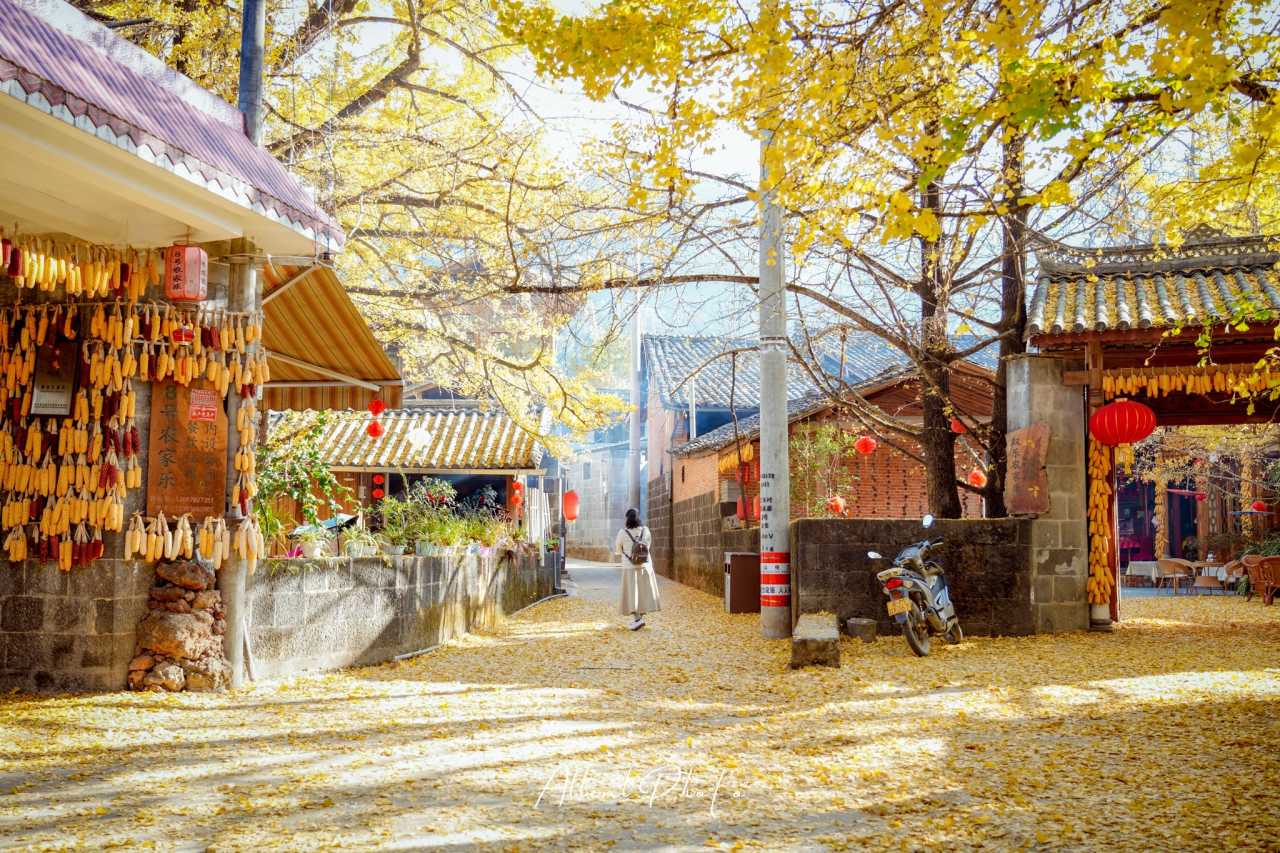
- Admission: 30 RMB/person (for reference; check official prices for updates)
- Location: Jiangdong Community, Gudong Town, Tengchong City
- Transport: Self-driving or taxi recommended
The inn we stayed at was a typical farmhouse-style guesthouse—nothing luxurious, but it had everything we needed. More valuable was the warmth of the people. The innkeeper's family was incredibly genuine. When they heard we hadn't eaten breakfast, they warmly invited us to join them. It was hard to refuse. That meal of cured pork and wild greens still tastes unforgettable when I think back.
Wandering Freely Is the Best Way to Explore
As for exploring Ginkgo Village, I'd say the official map is of limited use. The real beauty is always hidden in the alleys and courtyards. Starting from the ancient ginkgo scenic square at the entrance, head north, northwest, and northeast—free wandering is the best approach.

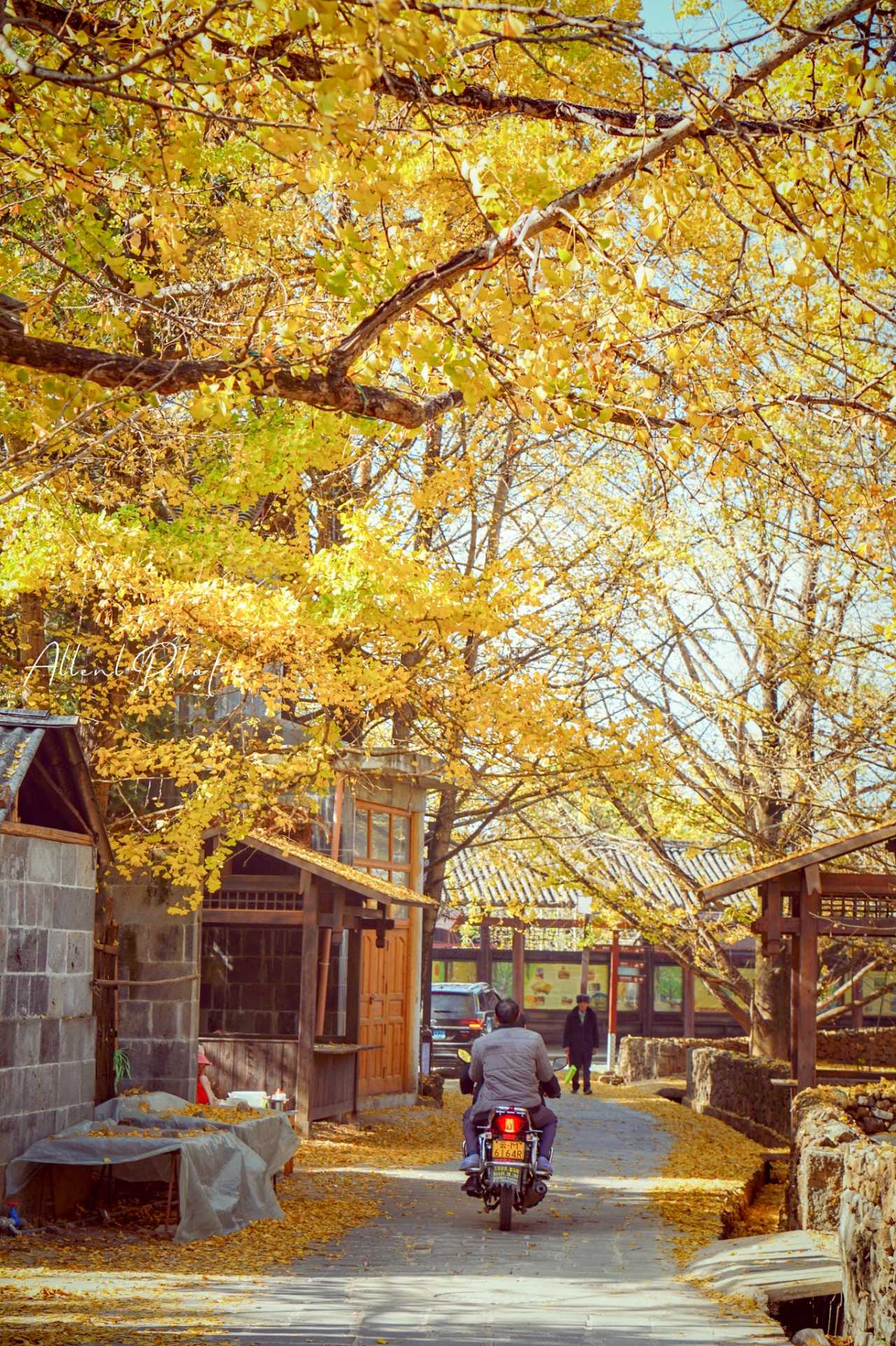
We set off near the Frontier Teacher's Home and arrived at the three-way intersection of the Chen Family Courtyard. This area has the densest concentration of ginkgo trees. The fairy-tale scenery blends seamlessly into daily life—roads, rooftops, stone walls are all covered in yellow leaves, while the locals pass by as if it's nothing out of the ordinary. Walking on the thick carpet of ginkgo leaves, hearing the rustle beneath our feet, I suddenly understood what it means to say "one leaf, one world."
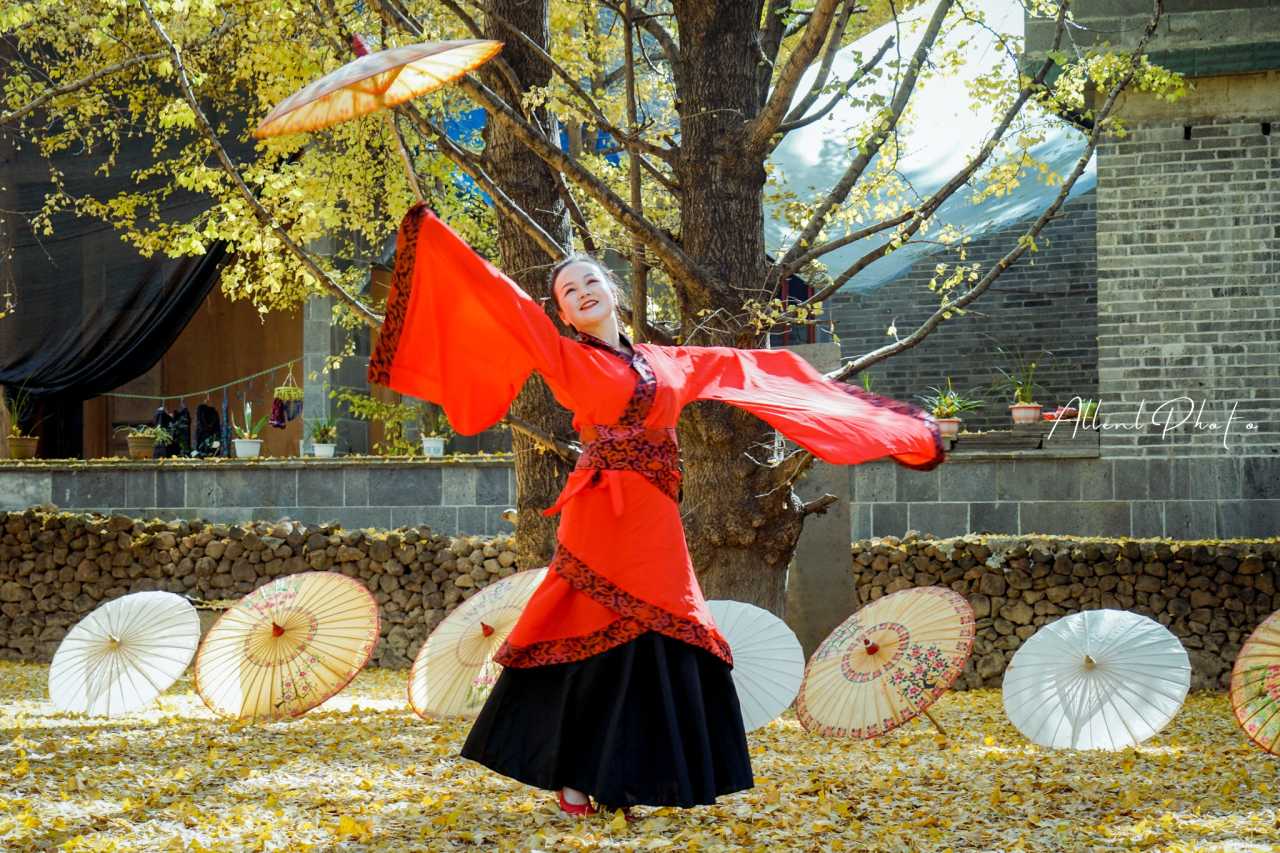
Continuing north, we came to another lovely little square. The surrounding courtyards boasted magnificent ginkgo trees, their fallen leaves forming a golden carpet. We happened upon a traditional Chinese dance troupe filming here. Dressed in flowing red, they danced gracefully against the golden backdrop—a sight so beautiful it was hard to look away.
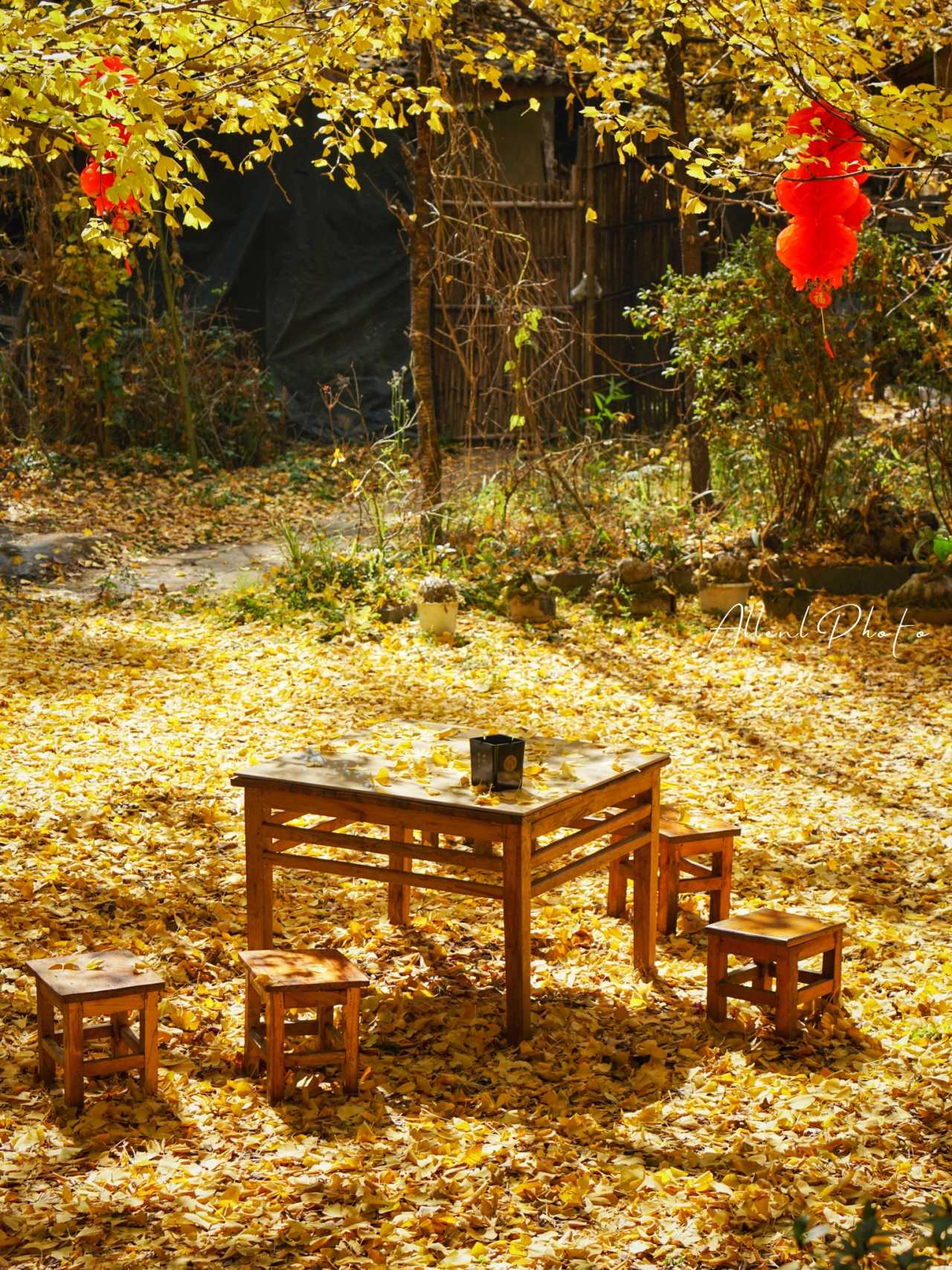
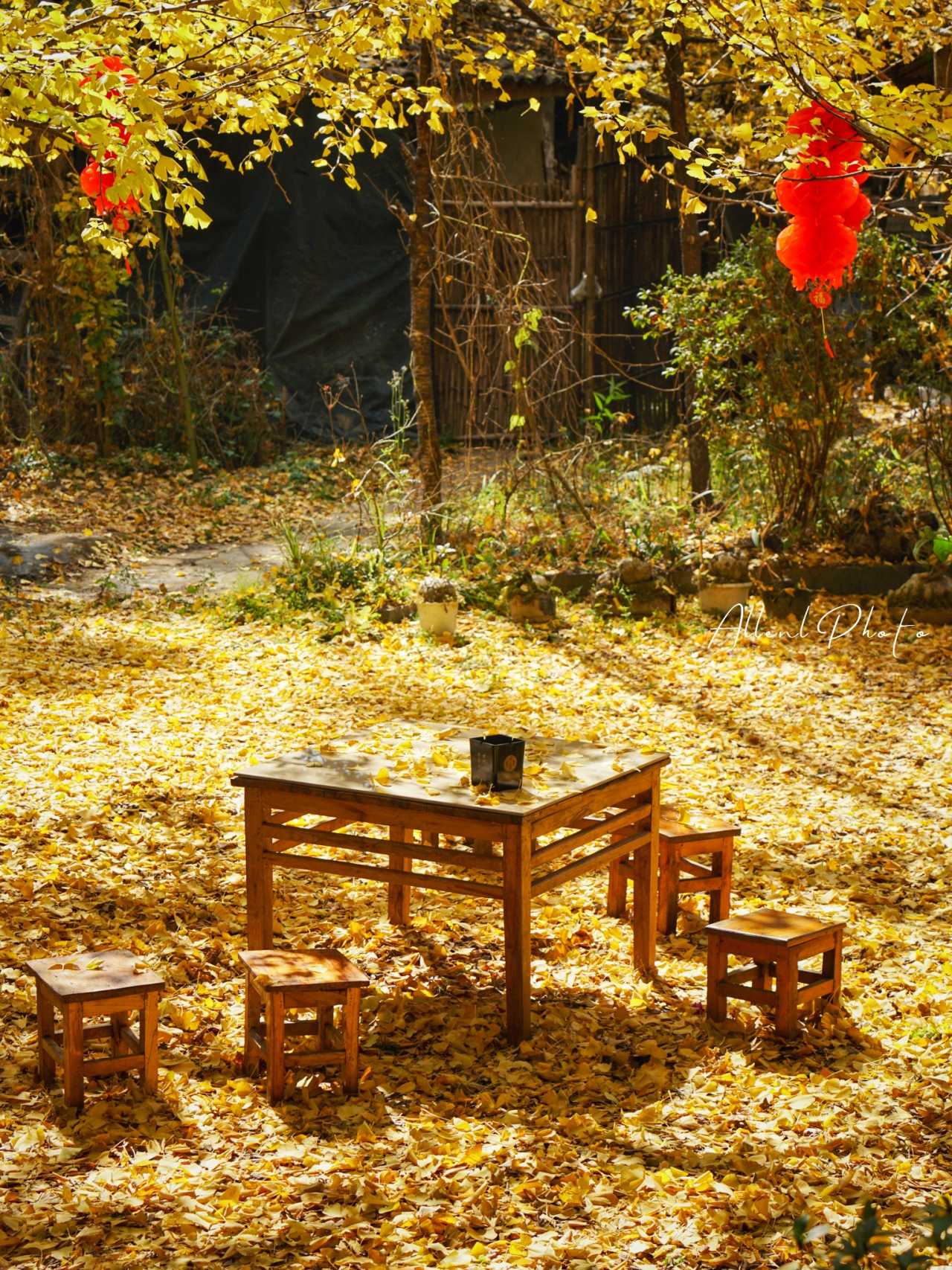
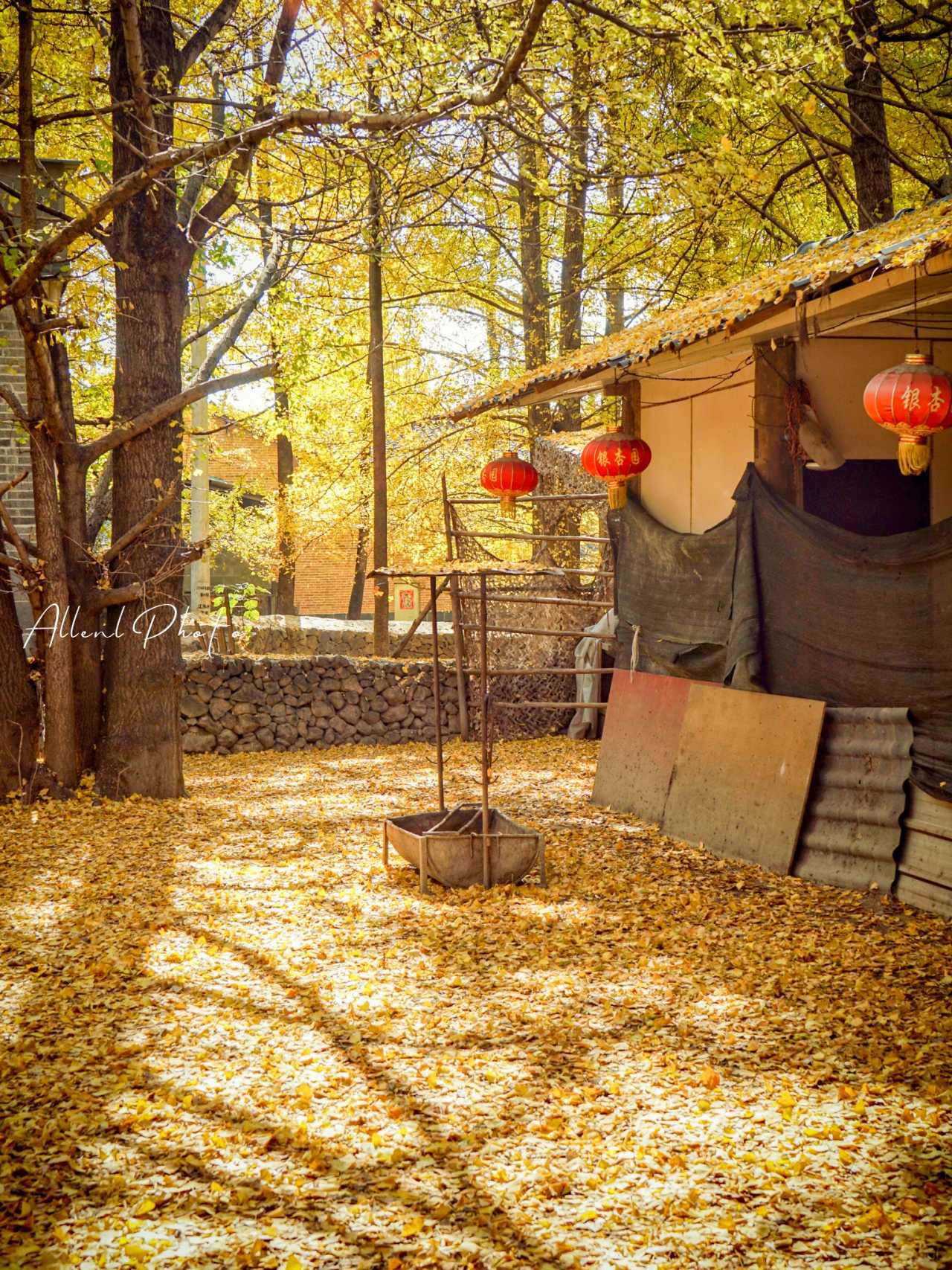
Deeper in, near Chenjiazhai, even more breathtaking beauty awaited. One rustic courtyard after another—low walls, tables and chairs, lanterns, chickens and ducks—every element perfectly in place. Time seemed to slow down as we explored, as if the people here lived inside a pastoral oil painting. I met an elderly woman collecting ginkgo leaves. She bent down to pick up each golden leaf, her movements unhurried and focused, as if she were gathering the entire autumn season.
Sunset and Dawn, Each with Its Own Charm
After lunch, we returned to the inn for a rest before hitting the trails again in the afternoon. On the western side of the village, a serene lake—far prettier than the "Inner Sea" marked on the map—caught our attention. At sunset, the light at the three-way intersection was almost unreal. Dappled rays filtered through the branches, casting a dreamlike glow over the golden world.
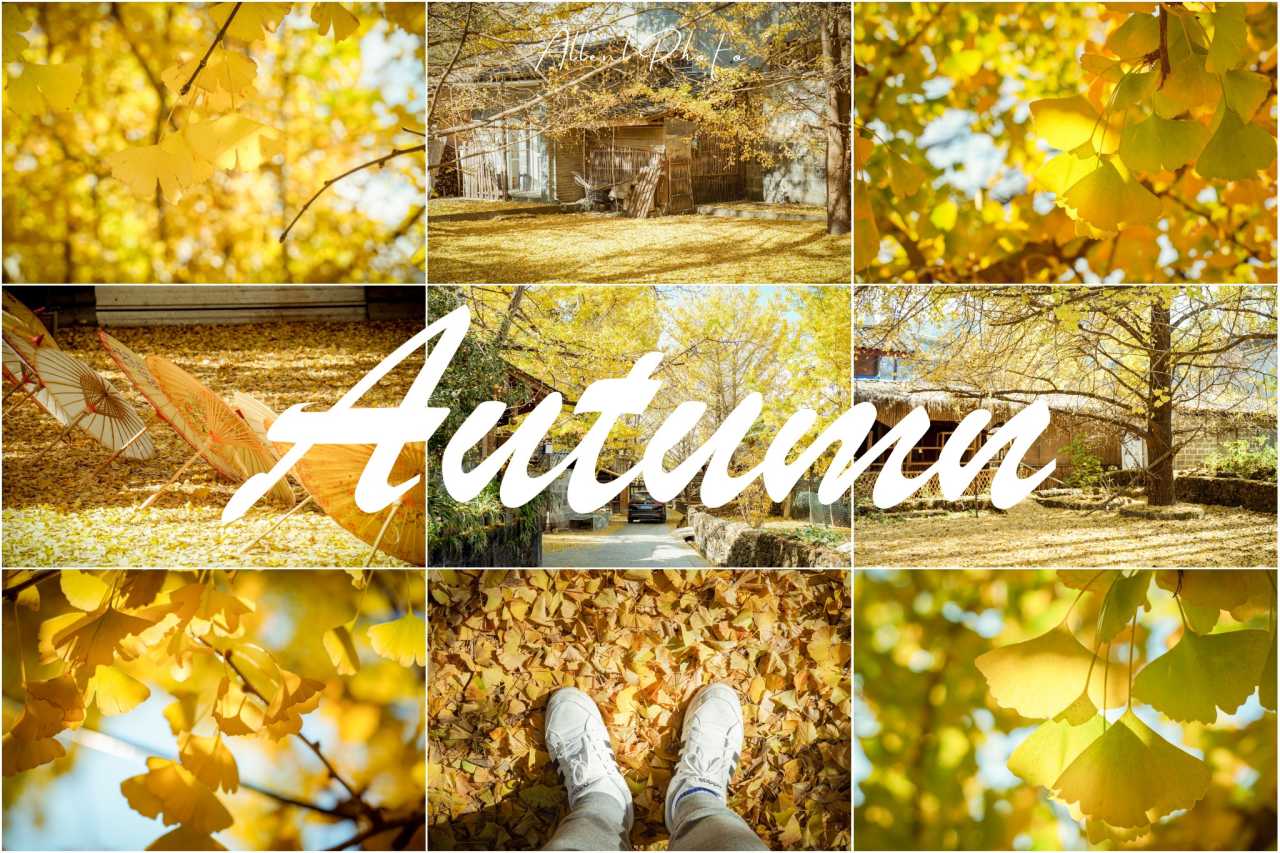
Dinner was at a farmhouse called "Autumn View Garden." The cured pork grew more flavorful with every bite, the stir-fried squash and shredded pork were refreshing, and the ginkgo-leaf omelet soaked in oil was so delicious it made me finish my rice in no time. The meal came to exactly 100 RMB. As we left, the owner enthusiastically recommended her signature dish—ginkgo chicken stew, a local specialty.
The next morning, soft sunlight gently poured down as the village woke to the sound of roosters. Yellow leaves, wisps of cooking smoke, peaceful little courtyards—this image is forever etched in my memory. I don't think anyone could resist such a Shangri-La.
Before leaving, we stopped at the food stall south of the scenic square for breakfast. I ordered a "Dajiujia" (literally "the great rescue")—Tengchong's most famous traditional snack. It's essentially stir-fried rice cake with ham, eggs, greens, and carrots—colorful, aromatic, and flavorful. Legend has it that this dish earned praise from the Ming Dynasty's Yongli Emperor, hence its name. At 15 RMB a serving, it was satisfying and comforting.
Volcano Park: Where Ruggedness Meets Romance
If Ginkgo Village represents Tengchong's gentleness and fantasy, then the volcanoes are its ruggedness and grandeur. Tengchong sits at the collision point of the Eurasian and Indian plates, making it a rare coexistence zone of typical volcanoes and geothermal activity. There are 99 dormant volcanoes and 88 hot springs here.
The full name of the park is the "Tengchong Volcano and Geothermal National Geopark." Its main attractions include the Big Sky Mountain (Dakongshan), Little Sky Mountain (Xiaokongshan), Black Sky Mountain (Heikongshan), and Black Fish River (Heiyuhe). Admission is 35 RMB/person (for reference). Beyond admiring the volcanic landscape, the most unique experience is a hot-air balloon ride for an aerial view.
Before setting out, I asked our driver whether it was worth climbing the volcanoes. He chuckled and said, "Many guests told me they'd heard you can see a crater up there, but they didn't expect it to actually be just a hole." That explanation made me laugh, and I got the point.
My main goal was actually to capture a photo of the hot-air balloon with the volcano in the background. As soon as we entered the park, I looked up and spotted the bright balloon. A wave of relief washed over me. There were so few tourists—maybe a dozen in total—that the entire park felt eerily empty.
Big Sky Mountain and Little Sky Mountain are the park's two main attractions. Big Sky Mountain is known for its height, and the stone steps that seem to "pierce the sky" were enough to make me think twice. I decisively chose the gentler Little Sky Mountain instead. At 1,957 meters above sea level, it takes just a few minutes from the base to reach the crater rim. The crater, 250 meters in diameter, is surrounded by a well-built wooden boardwalk perfect for a leisurely stroll. Just as the hot-air balloon drifted by, I pressed the shutter—and felt completely satisfied.
Black Fish River: An Unexpected Encounter with Wild Monkeys
After leaving Volcano Park, I made a detour to Black Fish River. This small river is formed by two underground streams converging and is famous for its "columnar jointing" rock formations. The water is also home to a mysterious species of small black fish whose origins remain unknown.
But I was more interested in the other little creatures along the riverbank. Sure enough, I found the troop of monkeys that locals had mentioned. They're believed to be wild monkeys that came down from the Gaoligong Mountains and decided to stay after being fed by locals. These monkeys were far more polite than I'd expected—they didn't harass anyone or snatch things, just politely accepted bananas and peanuts offered by visitors. In contrast, some of the local villagers seemed a bit pushy, constantly asking if we wanted to buy things to feed the monkeys.
The monkeys brought an incredible vitality to the area. After leaving, I kept wondering: is this a form of positive human-nature interaction?
Beihai Wetland: A Hidden Paradise of Water and Mountains
Beihai Wetland was definitely one of the biggest surprises of my Tengchong trip. I thought there wouldn't be much to see in autumn and winter, but the scenery was still stunning. The fresh air was invigorating, and we spotted many water birds wintering here. The weather was a bit overcast that day, but the unique atmosphere was equally captivating.
- Admission: 55 RMB/person (discounts available for online purchases)
- Tip: Walk deep into the wetland and take a boat back
Beihai Wetland is a plateau volcanic barrier lake ecosystem, described as the "world's only floating-mat-type peat marsh wetland in a plateau volcanic crater lake." Surrounded by mountains and connected by water, the main scenic area reveals a view that looks like an ink-wash painting. The winter palette is slightly more subdued, carrying a kind of cold, lonely beauty.
The wetland consists of two natural lakes—Qinghai and Beihai—covered in vast floating mats of peat. These seemingly solid meadows are actually "floating mats" formed over time by volcanic ash and organic matter. It's said that walking on them gives a slight wobble, like "space walking." The most fun part used to be cutting a piece of the floating mat and paddling it like a boat across the water, but the scenic area has since stopped this activity for environmental reasons.
Beihai Wetland has its charms in every season. The most beautiful time is April to May, when the region's unique orchids bloom, turning the floating mats into a colorful flower carpet. In autumn and winter, large numbers of migratory birds return, and a casual stroll reveals these little wintering creatures—egrets, ruddy shelducks, purple swamphens, mallards... If you're a bird lover, don't miss this place in winter.
My route was: People's Square → Pier 1 → Pier 3 → Water Boardwalk → Pier 2 → Return to Pier 1 by boat (40 RMB). The water boardwalk is the most beautiful part of the wetland, with oil-painting-like scenery unfolding on both sides. Drifting along in a boat, you occasionally feel as if you're traveling through a grassland, with opportunities to get close-up views of the carefree birds.
Heshun Ancient Town: Tengchong's Gentlest Memory
If you ask me which part of Tengchong I loved most, the answer might surprise you—not Ginkgo Village, but Heshun Ancient Town.
As a necessary stop on the historic "Southern Silk Road," a key caravan town, and a famous hometown of overseas Chinese, Tengchong has long been a melting pot of diverse cultures. Heshun Ancient Town is understated to the point of being inconspicuous, but once you step inside, you're enveloped by its quiet, peaceful atmosphere. After lifting the veil, you fall completely in love with its simple, honest folkways.
The ancient town is built along the mountainside, with民居 (residential houses) rising and falling with the terrain, preserving architectural styles from the Ming and Qing dynasties. The rustic alleys, ancestral halls, and memorial archways have weathered the ages, gaining a depth of character that only time can bestow. My favorite activity was wandering aimlessly along the winding stone paths, soaking in Heshun's slow pace of life, and discovering the daily routines of local families. These meandering alleyways hide not only the worldly烟火气 (the warmth of everyday life) but also Tengchong's history and memories.
We stayed at an inn called "Shu Xi" (Sichuan Happiness). The owner's family had moved here from Sichuan to settle down. The room design leaned toward minimalist wood, with high-quality furnishings and amenities. It was the off-season, and we were the only guests—the owner said there were no bookings on the horizon. In that moment, I truly felt the slump in Yunnan's tourism industry that winter.
Heshun was originally called "Yangwendun" (Warm Gentle Mound). Because a small river wound around the village, it was renamed "Heshun" (River Harmony). Later, local scholars imbued the name with the wish for "harmonious scholars and peaceful people," and "Heshun" eventually became the name we know today. Admission is 55 RMB (check official sources for the latest price), valid for three days. With the ticket, you can visit seven sites: Heshun Library, Yuanlong Pavilion, Ai Siqi's Former Residence, Wenchang Palace, Wanlouzi Folk House Museum, Heshun Alleys, and the Yunnan-Burma Anti-Japanese War Museum. The rest of the area is free to explore.
The Twin Rainbow Bridge is stunning and serves as a main thoroughfare. The river murmurs as it flows by, and locals frequently wash clothes or play nearby. The Cun Family Ancestral Hall has a touch of Southeast Asian style, and its plaque reading "White Hair Morning Court" carries considerable prestige. Heshun Library, hailed as the largest rural library in China, now holds over 110,000 books and is a must-visit for many travelers.
Epilogue: Tengchong, a Town Forgotten by Time
A golden-shrouded Shangri-La, misty mountain hot springs, a peaceful and serene ancient town, birds dancing freely among the clouds, volcanic landscapes and waterfalls, and countless unique local flavors... Tengchong offers not only picturesque scenery but also the warmth of everyday life.
A town that seems forgotten by time, where all the right kinds of beauty are frozen in place.
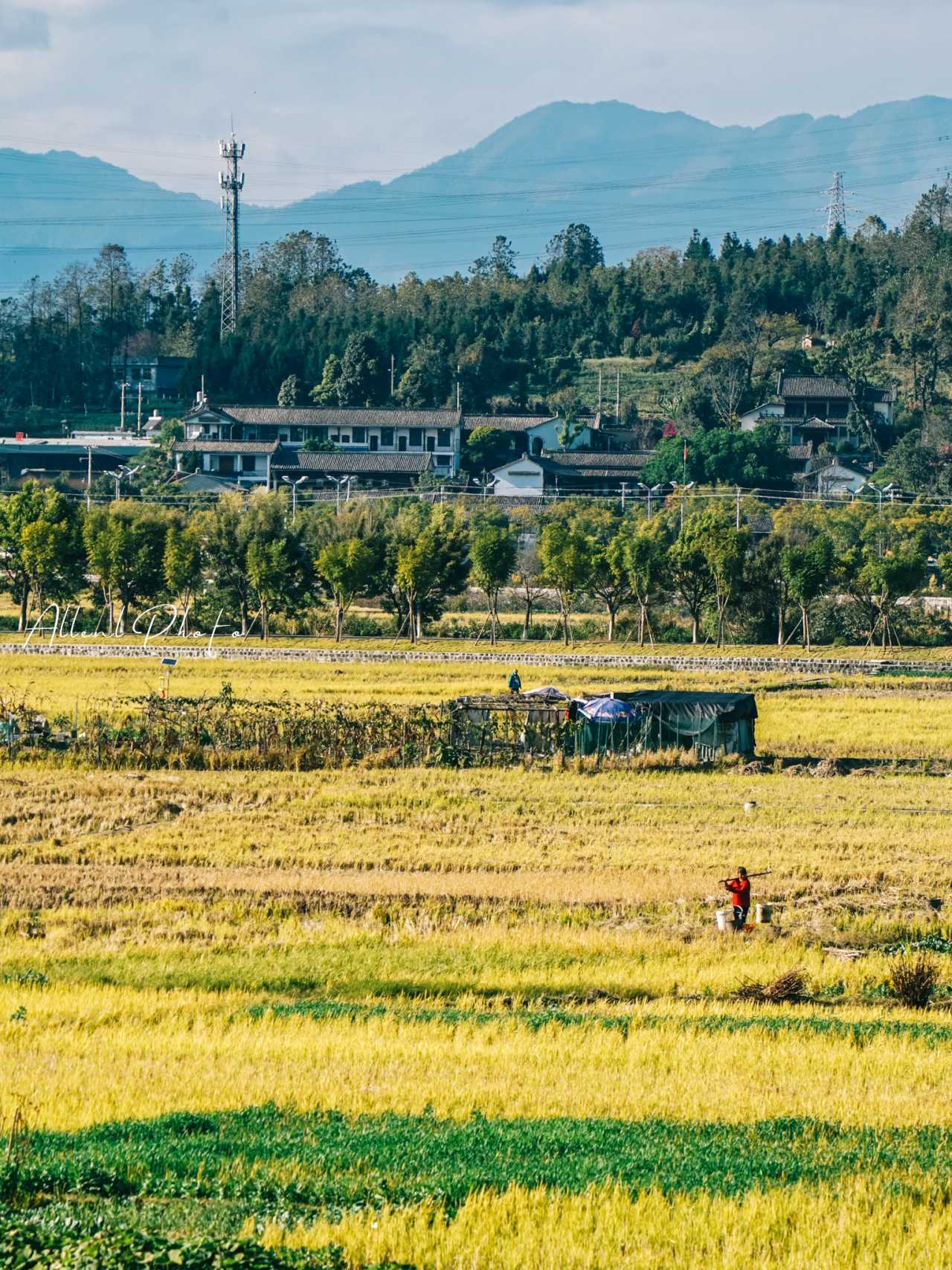
As for me, I envy neither the mandarin ducks nor the immortals—I only wish to stay, forever, in Tengchong's gentle, radiant autumn, and never wake up.
Quick Reference:
- Best Season: Mid-November to early December (ginkgo viewing season)
- Recommended Duration: 4–5 days
- Must-Visit Attractions: Ginkgo Village, Heshun Ancient Town, Beihai Wetland, Volcano Park, Rehai (Hot Sea)
- Local Specialties: Dajiujia (stir-fried rice cake), ginkgo omelet, ginkgo chicken stew, roasted pork rice noodles
- Transport Tips: Tengchong has an airport with direct flights or connections via Kunming; private car or self-driving recommended between attractions
- Friendly Reminder: Temperatures vary greatly between autumn mornings and evenings; bring a jacket and don't forget sunscreen
You should also read:
Dreaming of Lijiang, Dreaming of Shangri-La: A Journey That Lets Your Soul Breathe Deeply
Dreaming of Lijiang, Dreaming of Shangri-La: A Journey That Lets Your Soul Breathe Deeply Life is like a long trek. We're always rushing through the concrete jungle, searching for a glimmer of light in the monotony of our days. Then one autumn, I heard the…
Continue reading...
A 9-Day Yunnan Journey: From Lijiang to Dali to Tengchong – A Trip Toward Self-Reconciliation
A 9-Day Yunnan Journey: From Lijiang to Dali to Tengchong – A Trip Toward Self-Reconciliation Some say travel is simply going from a place you're tired of to a place other people are tired of. It stings to hear, but it's painfully true. Yet there's…
Continue reading...
Escaping Nanning, Falling Under Lijiang's Spell: Our Four-Person, Ten-Day Yunnan Dream
Escaping Nanning, Falling Under Lijiang's Spell: Our Four-Person, Ten-Day Yunnan Dream Before We Set Off: No Pain, No Obsession Have you ever had that impulse—suddenly tired of the office fluorescent lights, the crush of the subway, the endless parade of identical takeout boxes, and just…
Continue reading...