Tengchong: In Idle Hours, Finding the Self That Doesn't Expect Results
Tengchong: In Idle Hours, Finding the Self That Doesn't Expect Results
We're always in a hurry. Hurrying to work, hurrying to hit KPIs, hurrying to curate a perfect life on social media. Until one day, you realize you haven't simply watched a cloud drift by in ages, haven't felt pure joy from a piece of candy in years, haven't—allowed yourself to waste time.
Ma De once wrote: "As children, we didn't expect results. Our laughter and tears were genuine, with no discounts." That sentence hit me like a gentle thorn, piercing my weary heart. So when my girlfriends mysteriously invited me to a "place I couldn't know about," I agreed without hesitation. Perhaps what I needed wasn't another destination, but a temporary escape from my "results-oriented" life.
I didn't receive my flight details until 12 hours before departure: Guangzhou → Chongqing → Tengchong. A border town, a hub for overseas Chinese, a jade trading center, a major battlefield of the Yunnan-Burma campaign—these labels hinted that this trip might be like an uncut piece of jade, hiding unexpected patterns within.
First Glimpse of Haiyan: Becoming Part of the Painting in a Wetland
The car wound through the cobblestone streets of Heshun Ancient Town and stopped before an unassuming little gate. Grey walls, a small doorway, two stone lions guarding the entrance—this was our home for four days and three nights: Haiyan Cultural Tourism Inn. They called it "cultural tourism" rather than just a guesthouse, and the name itself carried a hint of mystery.
The moment I pushed open the door, I froze.
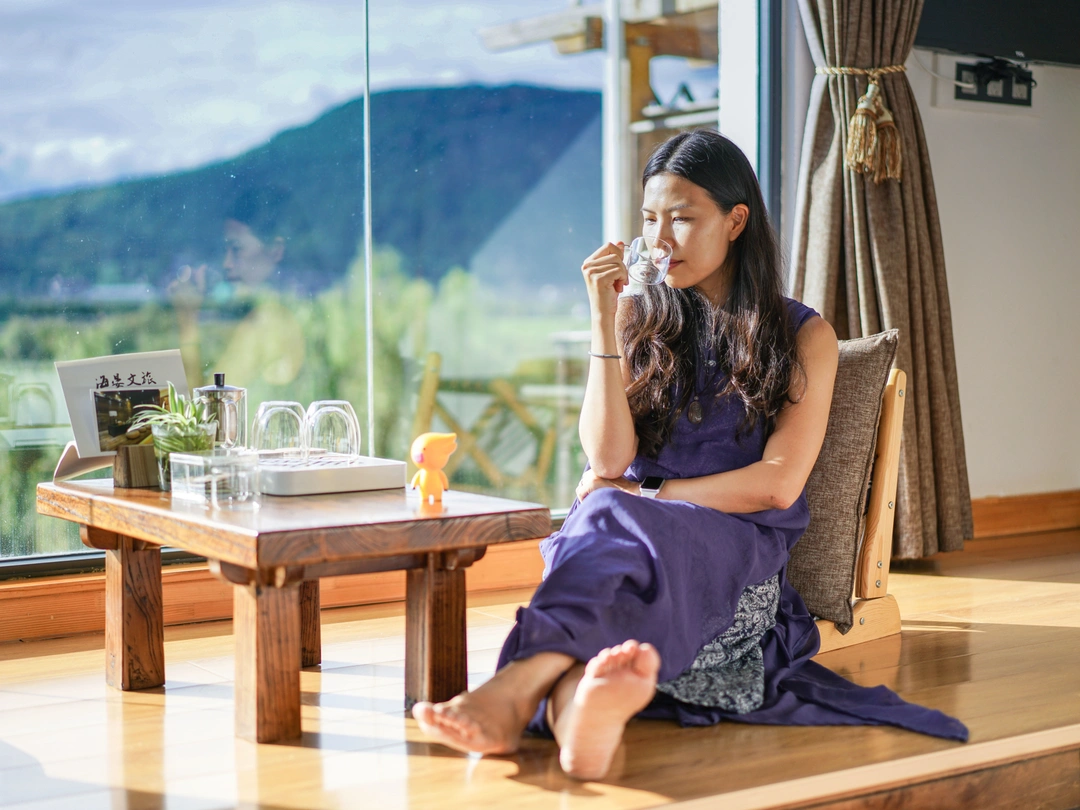
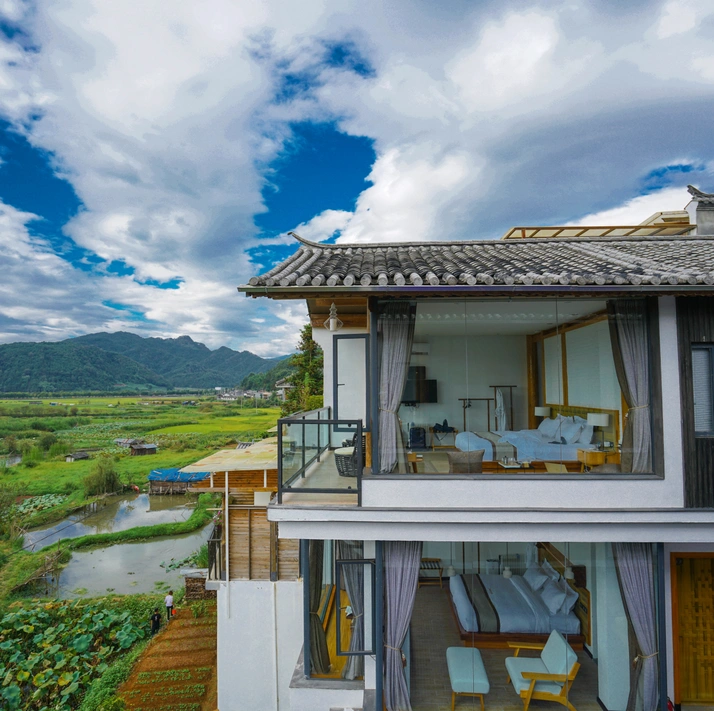
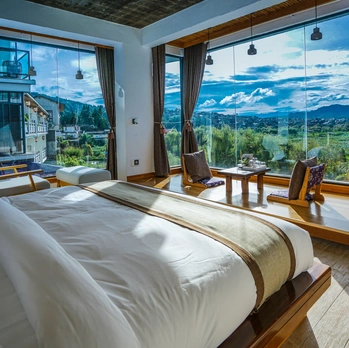
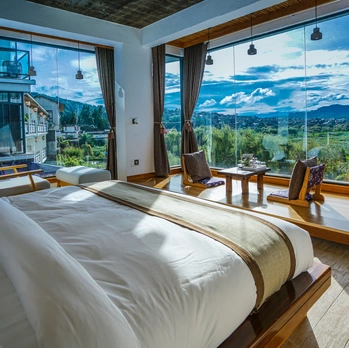
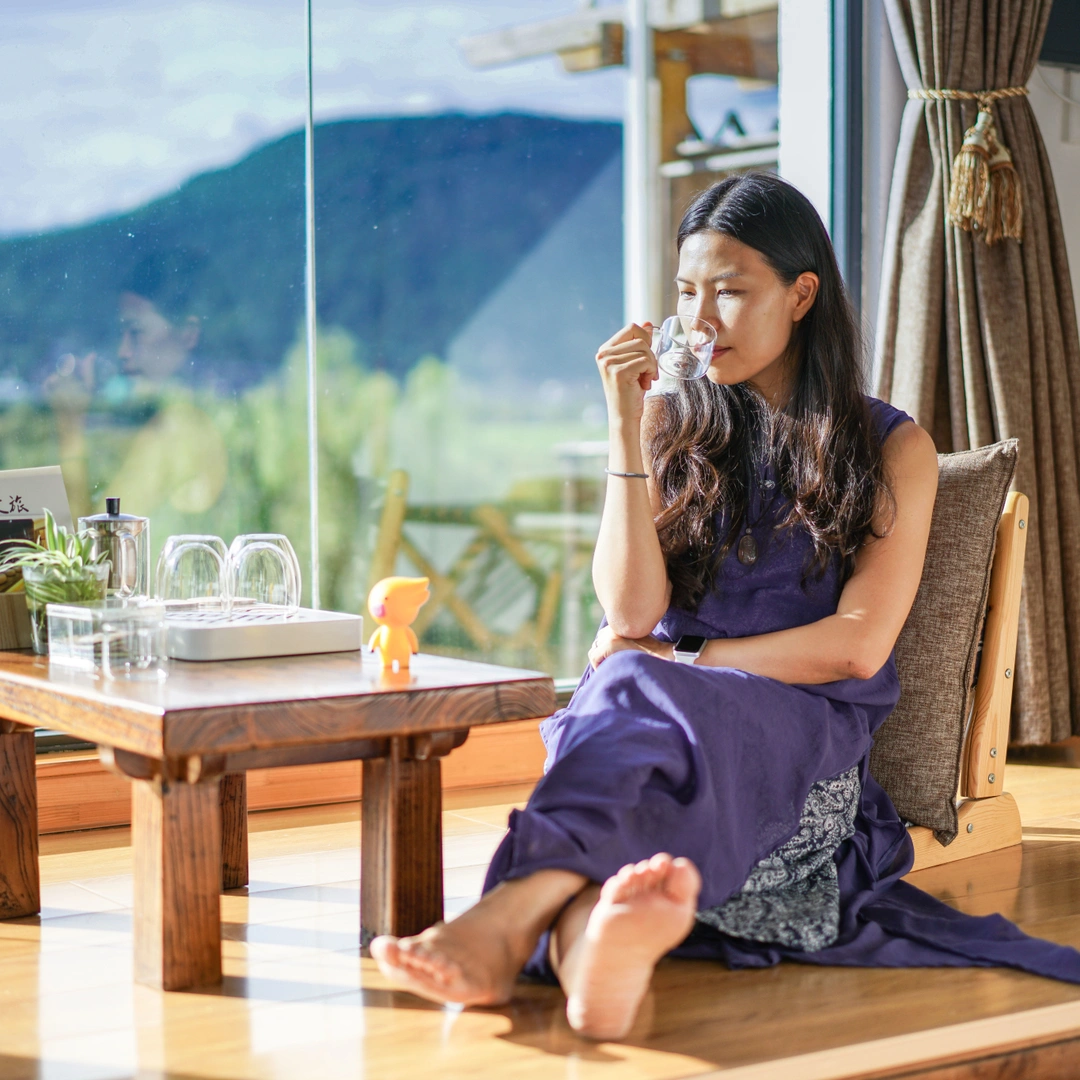
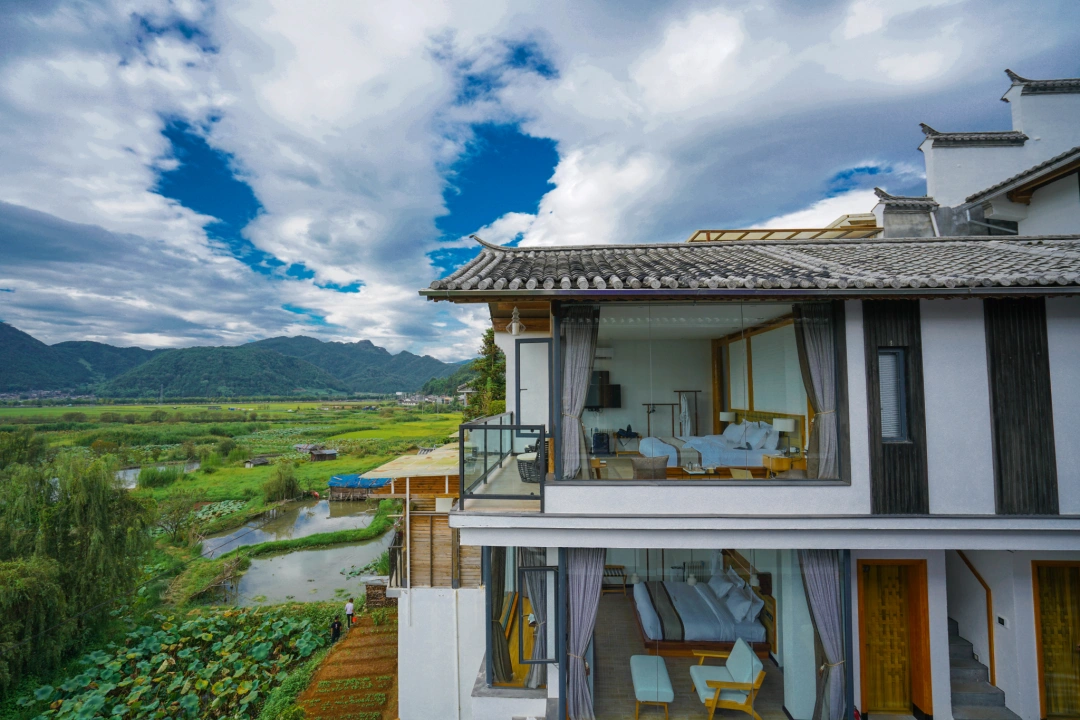
The lobby was astonishingly spacious, with a floor-to-ceiling window overlooking a vast green wetland. Wild Duck Lake shimmered under the afternoon sun, reeds swayed in the breeze, and distant mountains faded into shades of ink. The owner, Minmin, smiled and said, "This is the most pristine wetland in Tengchong. When Hunan TV filmed 'Idols Are Coming,' they stayed right here." On the wall hung photos with Zhao Yazhi, Carina Lau, and Wang Han—this was indeed the legendary "Idols' Home."

I settled into a rattan chair on the terrace, a cup of honey-scented black tea and a few homemade cookies by my side. Sunlight streamed through the glass onto the pages of my book, and the wind carried the scent of grass and earth from the fields. In that moment, I finally understood what it meant to have "the painting before my eyes, and myself within it."
City life moves too fast. We've grown accustomed to measuring everything by efficiency: reading must make us wiser, eating must make us thinner, posting on social media must earn us likes. But here, time seemed to steep like tea leaves, slowly unfurling. Chatting with the hostess, watching her bustle in the kitchen, occasionally helping with pastries—these utterly "unproductive" activities gave me a sense of grounding I hadn't felt in years.
Heshun Ancient Town: Slow Time on Cobblestones
Early morning. The clouds hung thick, hiding the sunrise completely. But that was fine—a steaming bowl of ersi (rice noodles) warmed both stomach and heart. We stepped onto the cobblestones and walked into Heshun Ancient Town.
Heshun, originally called "Heshun" (meaning "river smooth") because a small river winds around the village, later changed its name to the current characters, which mean "harmony among scholars and peace among the people." Compared to the bustle of Lijiang or the commercialization of Dali, Heshun felt like a silent guardian, preserving stories polished by time.
The Liu Ancestral Hall
Pushing open the wooden door revealed a deep courtyard. Carved window lattices and weathered beams whispered tales of family rise and fall. No tour guide's loudspeaker here—only the rustle of wind through leaves. Standing in the courtyard, you could imagine the men of a century ago bidding farewell to their wives and children, embarking on the perilous "journey to the barbarian lands."
Heshun Library
A library built within an ancient town, its walls made of bluestone, shaded by green trees. It's said to be the largest rural library in China, housing tens of thousands of volumes. I pulled out a yellowed thread-bound book, my fingertips touching the rough paper, as if I could hear history breathing.
The Washing Pavilion
This was the most touching spot in Heshun. Men who left home to earn a living built these washing pavilions for their留守 wives—just a few pillars supporting a tiled roof, but enough to provide shade from the sun and shelter from the rain. No grand vows, only the simplest form of care. Standing under the pavilion, watching wild ducks swim in the lotus pond, I suddenly felt that all those "I'll be with you when I have money" promises couldn't compare to the solidity of a single tile.
The Waterwheel and Memorial Archway
The waterwheel turned slowly, droplets sparkling in the sunlight. Not far away, a stone archway bore the inscription "Pure as Ice, Clean as Jade"—a chastity arch erected by a traveling man for his wife. With no return date in sight, all he could offer was this cold stone monument to his hopes for his family.
Walking through Heshun's alleys, every step felt like treading on time itself. There were no must-see attractions, no must-buy souvenirs. You could wander into any side street, watch elderly villagers basking in the sun, see children playing hopscotch on stone steps. With every turn of the corner came a moment of unexpected discovery.
Rural Pleasures: Making Osmanthus Cake and Catching Fish in the Paddy
The hostess mentioned that osmanthus flowers were in full bloom, and there was a century-old shop in the village where you could make osmanthus cake by hand. We excitedly rushed to "Uncle Yang's Place," where the owner, a kind middle-aged man, immediately brought out the tools upon hearing our request.
The process wasn't complicated: first, a layer of red bean paste, then a pour of osmanthus syrup mixed with glutinous rice flour and sugar, and finally a sprinkle of sesame seeds. Even someone as clumsy as me could manage it with guidance. Watching my own creation go into the steamer, as smoke rose and the sweet aroma of glutinous rice and osmanthus filled the air, the satisfaction was more real than any gift.
When we finally opened the steamer, I couldn't wait to take a bite—soft, chewy, sweet without being cloying, the fragrance of osmanthus melting on my tongue. Happiness, it turned out, could be this simple.
After eating, the owner asked if we wanted to catch fish in the paddy fields. Without a second thought, several of us girls put on waterproof overalls and charged into the rice paddies. The result? We were more enthusiastic about posing for photos than catching fish—they all got away. Meanwhile, a nearby child had caught several in no time and even gave us one to pose with. We couldn't even hold it properly; the fish slipped right back into the water, sending everyone into fits of laughter.
To make things funnier, Wendy put her phone in a fish basket, and it ended up having a close encounter with a fish. Luckily, it was waterproof—she just fished it out and rinsed it in the water. Our "fish-catching battle" ended happily, complete with all kinds of drama and not a single fish caught.
The Most Beautiful Sunset: Becoming a Poet in the Light
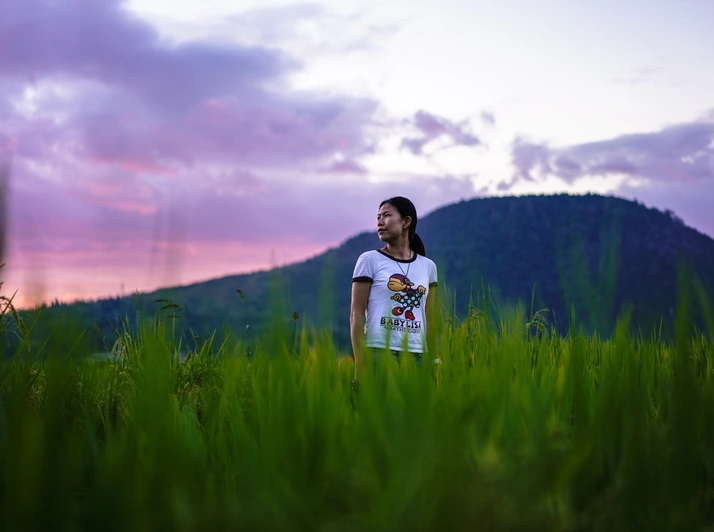
That evening, we sat on the inn's terrace drinking tea. Suddenly, a flood of gold poured in—the sun peeked through the deep clouds like divine light, bathing the entire wetland and ancient town in an orange glow.

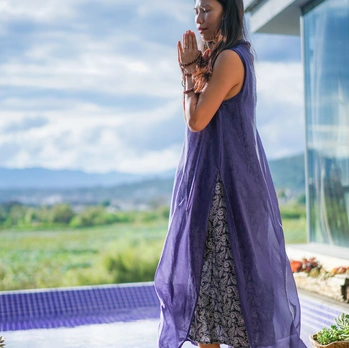
I was stunned, almost forgetting to take photos. A gentle breeze brushed my skirt, and mist began to rise over the distant fields. In such a scene, talking about work or life felt utterly inappropriate. Everyone should become a leisurely poet—photographing, reciting verses, painting, sipping tea, meditating... "In conversation, there are only scholars; in comings and goings, no commoners"—this must have been the feeling.
I thought about how those seemingly wasted moments actually leave their marks on us. A beam of light, a gust of wind, a drifting cloud—all can trace the softest contours of our hearts.
A Bird's-Eye View: Riding a Hot Air Balloon Over a Volcanic Crater
When I heard that Tengchong also offered hot air balloon rides, I was taken aback—without leaving the country, I could hover over a ten-thousand-year-old volcanic crater? That was too cool!
As we drove to the Geothermal Park, it was still drizzling. I was worried the balloon wouldn't fly, but in the distance, I spotted colorful shapes floating in the air—like a splash of brilliance breaking through the gloom. The moment we stepped out of the car, the rain miraculously stopped.
This was already my third hot air balloon ride this year, but every time I stand before this massive creature, I can't contain my excitement. As the flames leaped, the balloon slowly rose, revealing green farmlands, vast lakes, and empty ridgelines stretching before us. From this god's-eye view, the craters of Little Empty Mountain and Big Empty Mountain looked no more than dents in a pan, yet they bore witness to tens of thousands of years of geological change.
After descending, we climbed Little Empty Mountain, which stood less than 100 meters high. Locals said that walking around the crater rim could change your luck—clockwise for wealth, counterclockwise for romance. I decisively chose clockwise. After all, wealth is far more practical than romance.
Private Hot Springs: Soaking Away All Fatigue in Natural Geothermal Waters
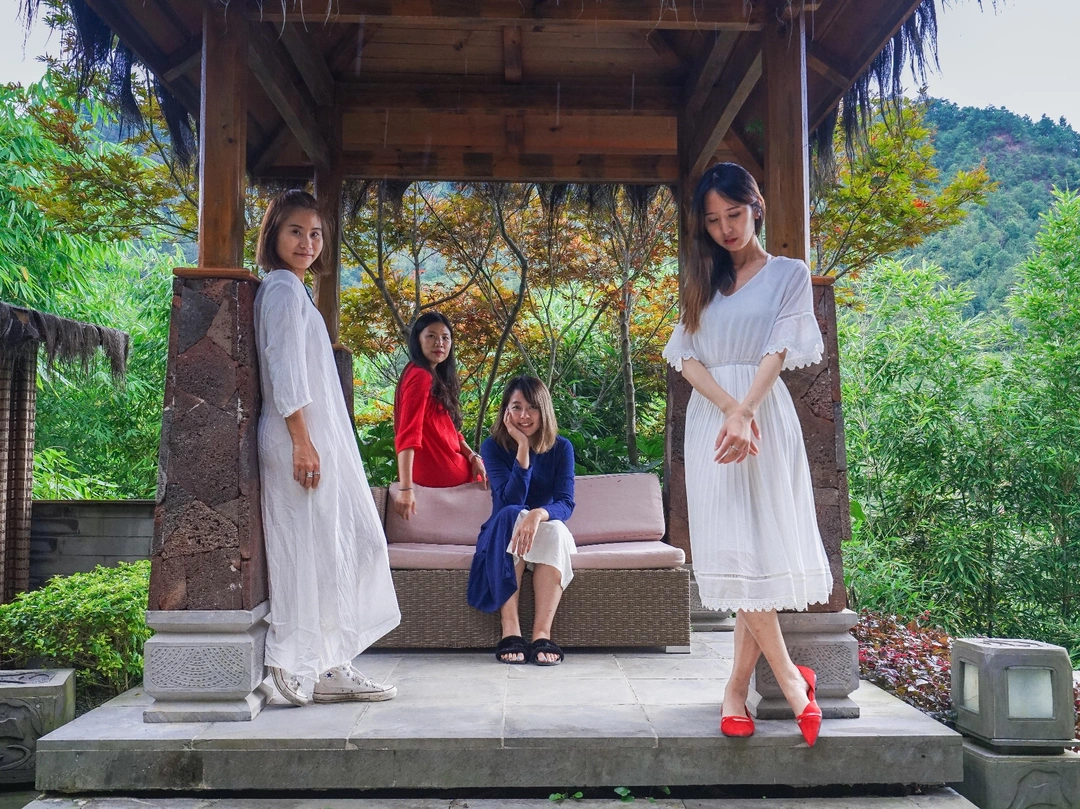
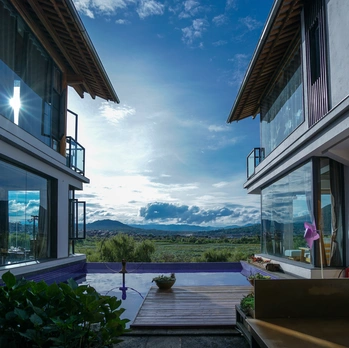
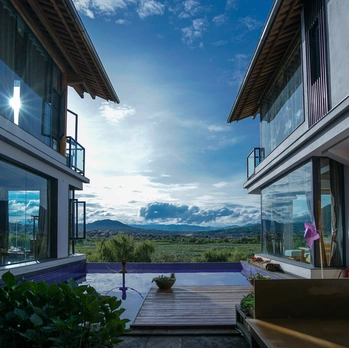
Rehai (Hot Sea) Park is a must-visit in Tengchong, but I've always been wary of crowded places. Fortunately, the real gem lies in a secluded villa complex at the park's entrance—Jade Hot Spring Villas. A two-story villa with its own open-air courtyard, a pool of natural geothermal hot spring water, scattered rose petals floating on the steaming surface.
A light rain was falling as I submerged myself in the pool. The faint sulfur smell, the fragrance of petals, the rising steam—all gradually dissolved the fatigue of the journey. Closing my eyes, I thought of nothing, only listening to the gentle lapping of water against my skin. In that moment, I felt like a child again—not expecting results, not calculating gains and losses, simply enjoying the present.
Epilogue: Some Time Is Meant to Be Wasted
My four-day Tengchong journey came to an end in the hot springs. As I left, my heart was filled with reluctance—reluctant to leave the floor-to-ceiling windows of Haiyan Inn, the cobblestones of Heshun, the fish in the paddies, the sweetness of osmanthus cake, and most of all, the version of myself I had rediscovered in those idle hours.
On the flight back, I revisited Ma De's words: "I slowly understood why I'm not happy—because I always expect a result." Indeed, we're always rushing, forgetting why we started in the first place. What Tengchong taught me was precisely this: some time is meant to be wasted; some scenery is meant for daydreaming; some joy is meant to be stumbled upon.
If you're tired too, come to Tengchong. You don't need an itinerary, you don't need a plan—just a heart willing to waste a little time.
Practical Tips
Transportation: Tengchong has an airport with limited flights. Driving from Kunming takes 8 hours of mountain roads; direct flights are recommended.
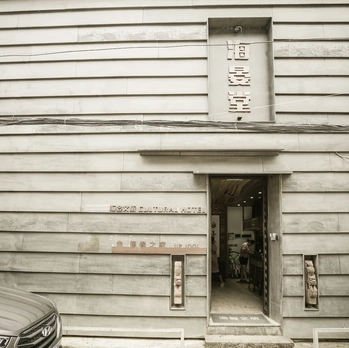
Accommodation: Highly recommend "Haiyan Cultural Tourism Inn," filming location for Hunan TV's "We Are Here." Located in the core wetland area of Heshun Ancient Town, offering front-row views of pastoral scenery.
Dining: - "Uncle Yang's Place": Affordable and offers hands-on experiences like making osmanthus cake and catching fish in paddies - Copper Pot Beef Hotpot: A Tengchong specialty, with flavorful broth and tender, chewy meat
Drones: Banned throughout the city—don't bother bringing one.
Packing Guide: September has large temperature differences between day and night. Bring short sleeves/dresses plus light knitwear. Recommended: Chinese-style vintage dresses from the "Blooming" brand—they photograph beautifully.
Shopping: - Burmese jade: For those with deep pockets, but don't gamble on rough stones - Tea: Both black tea and Pu'er are excellent choices - Local specialties: Osmanthus cake, sticky corn, fresh walnuts
Must-Have Gadget: Riwa Reva curling iron, folds up to the size of an umbrella—essential for styling on the go.
This travelogue is copyrighted by Sophie. Please contact the author for any form of reproduction.
You should also read:
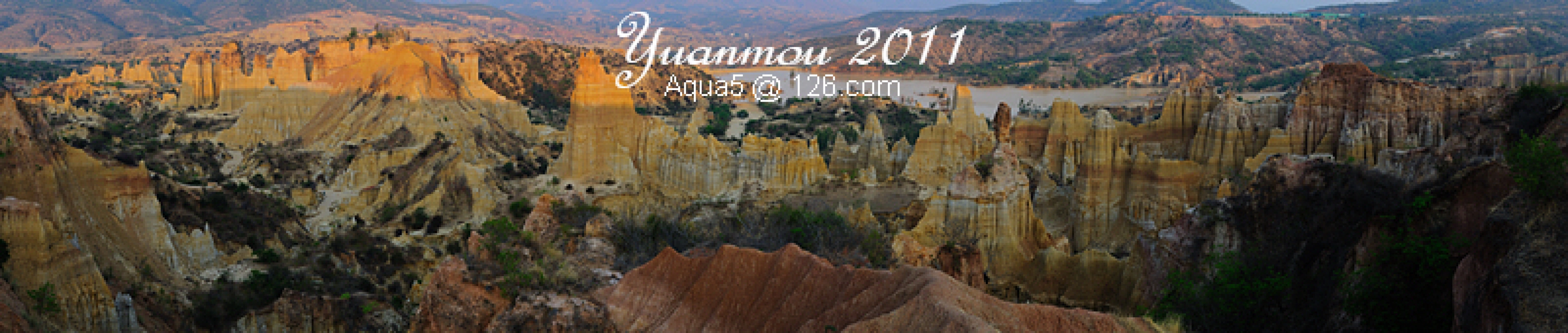
A Journey Through Time: The Earthen Forest of Yuanmou — April 2011 Chuxiong & Yuanmou Self-Drive Guide
A Journey Through Time: The Earthen Forest of Yuanmou — April 2011 Chuxiong & Yuanmou Self-Drive Guide Some journeys are destined to take root in your memory. In April 2011, I set out from Shuhe in Yunnan, heading north toward the Chuxiong Yi Autonomous Prefecture,…
Continue reading...
September: Finding Unexpected Warmth in Yunnan (Kunming, Dali, Shuanglang, Lijiang, Lugu Lake)
September: Finding Unexpected Warmth in Yunnan (Kunming, Dali, Shuanglang, Lijiang, Lugu Lake) Foreword: One Person's Journey, A Crowd's Story Before I set off, like every first-time solo traveler, I printed out a thick stack of travel guides and rehearsed countless possible scenarios in my head—getting…
Continue reading...
Dreaming of Lijiang, Dreaming of Shangri-La: A Journey That Lets Your Soul Breathe Deeply
Dreaming of Lijiang, Dreaming of Shangri-La: A Journey That Lets Your Soul Breathe Deeply Life is like a long trek. We're always rushing through the concrete jungle, searching for a glimmer of light in the monotony of our days. Then one autumn, I heard the…
Continue reading...