Tengchong: Savoring Gentle Moments with You in the Borderland City
Tengchong: Savoring Gentle Moments with You in the Borderland City
While northern China was still wrapped in the lingering chill of early spring, Tengchong in Yunnan had already embraced February's sunlight with a grand floral display. On the eve of the 2018 Spring Festival, our family of three set foot on this land of colorful clouds. Over a ten-day road trip, between volcanoes and hot springs, among ancient towns and flower fields, we slowly "wasted" a stretch of time worth treasuring.
First Encounter with Tengchong: Slow Living in a Garden Hotel
As our plane touched down at Tengchong Tuofeng Airport, the warmth that greeted us instantly shed the heaviness of winter. This small city, known as the "Borderland City," gave us a warm embrace with its lush greenery and blooming flowers.

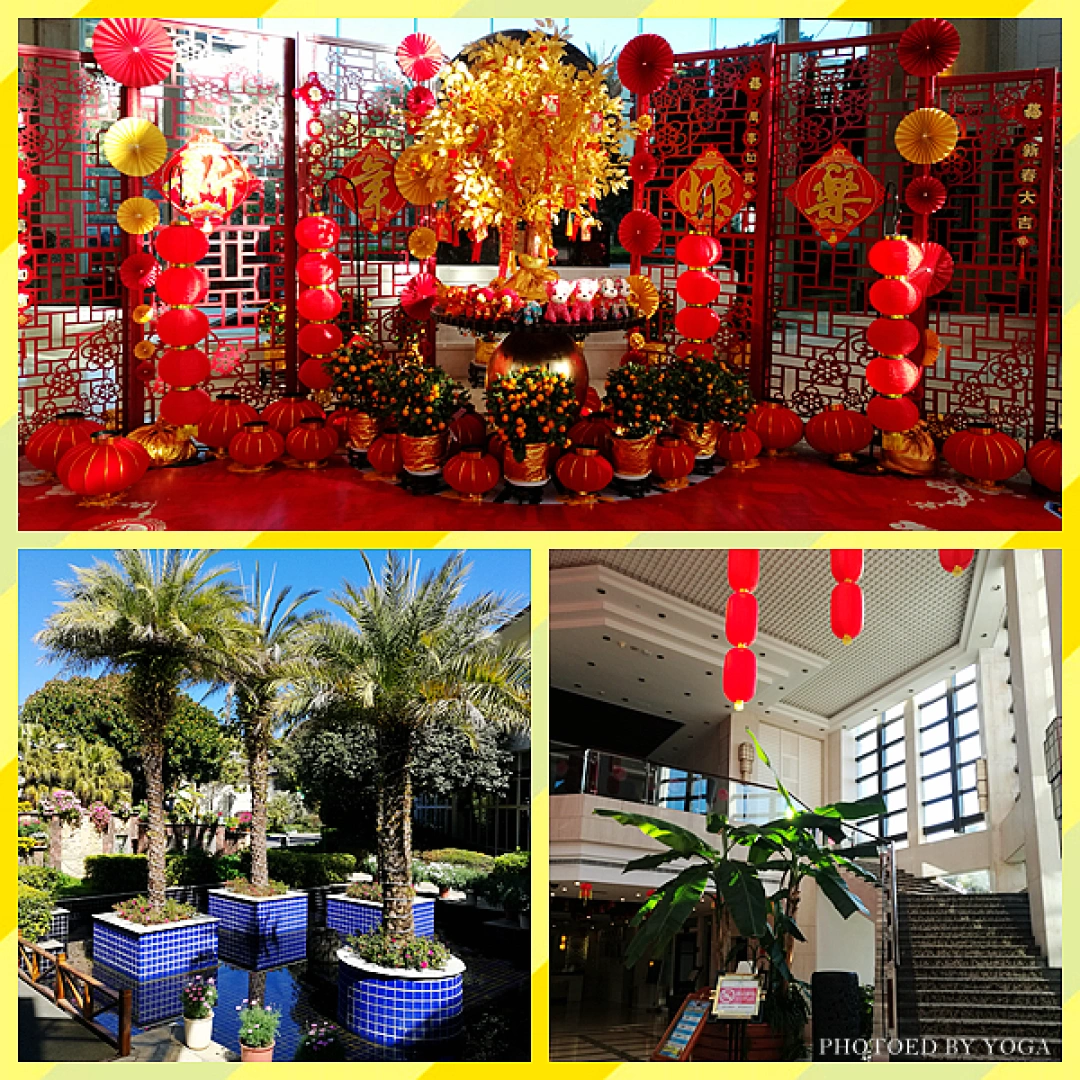
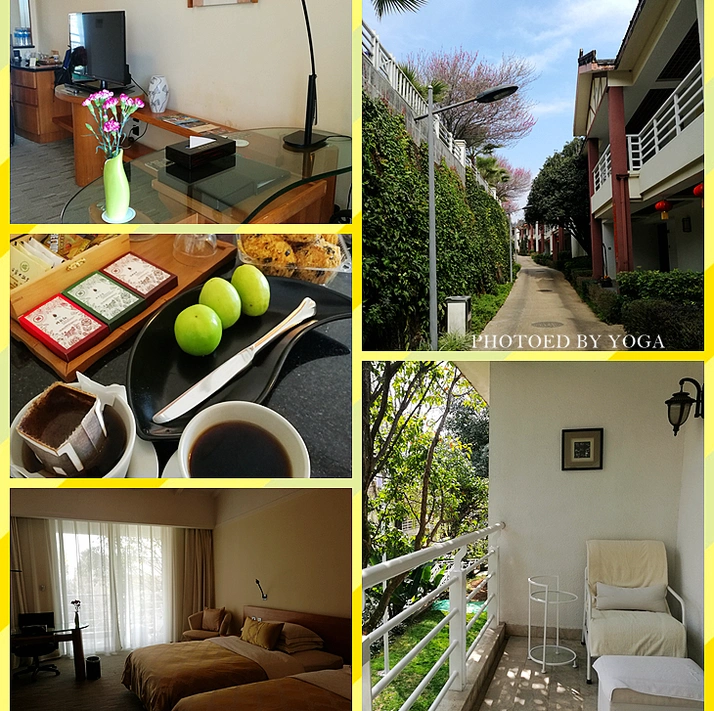
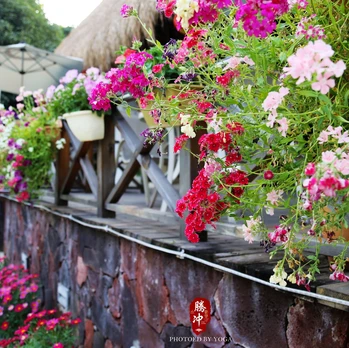
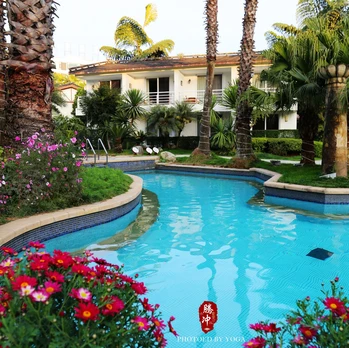
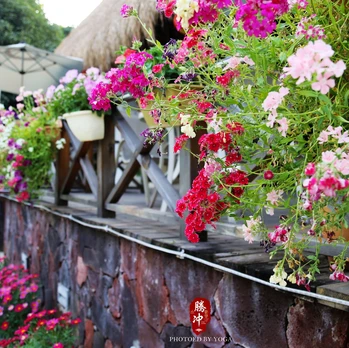
We chose the Guanfang Grand Hotel as our base for this trip. It's a garden-style hotel—no towering high-rises, but instead a collection of villa-style buildings nestled among trees and flowers. The rooms were spacious and comfortable, with balconies equipped with drying racks, perfect for sitting and daydreaming while taking in the views. Complimentary fruit, coffee, and bottled water were provided daily—thoughtful little touches.
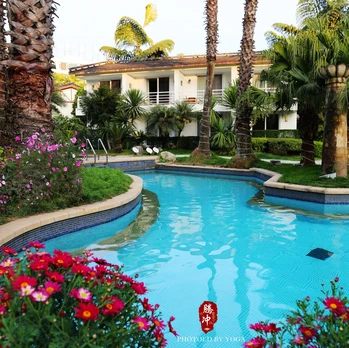
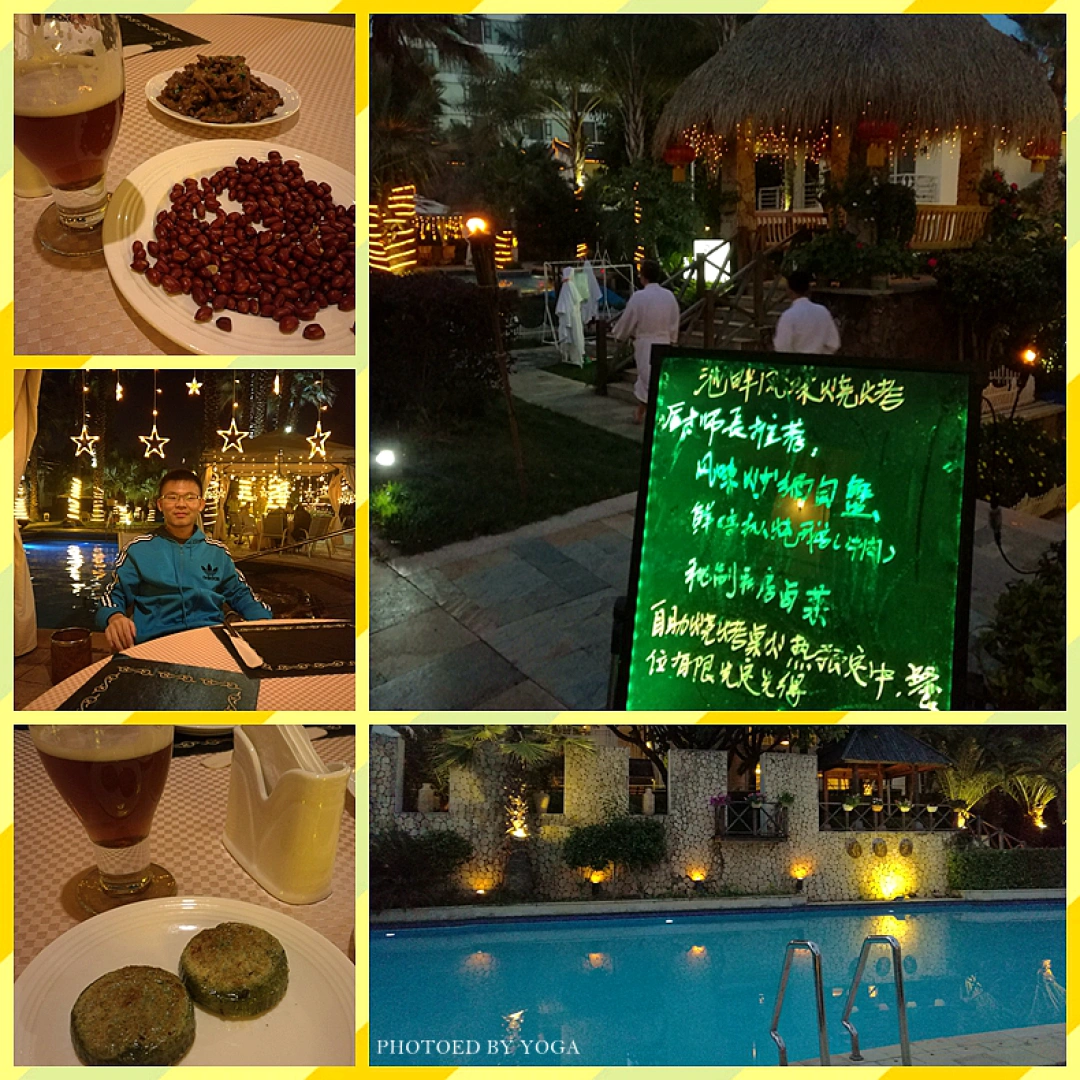
The hotel's hot springs and pool were the real highlights. From 4 p.m. to 10 p.m. daily, the hot spring pools were open to guests. After a day of sightseeing, soaking in the steaming water made all fatigue dissolve into the mist. By the poolside, there was a barbecue bar where we ordered skewers of grilled beef and glutinous rice cakes (cí bā), paired with a glass of German dark beer. Simple, yet satisfying.
The location was convenient too, right across from Tengyue Square, with a bus stop at the doorstep for easy access to attractions. If we didn't feel like driving, it was only a twenty-minute walk to the National Memorial Cemetery of the Burma Road.
The National Memorial Cemetery: Heroes Rest in Green Hills
There's one place in Tengchong you simply cannot miss—the Yunnan-Burma War Memorial Hall and the National Memorial Cemetery of the Burma Road. This is the final resting place of the fallen soldiers from the Chinese Expeditionary Force's 20th Army Group, who died in the Battle of Tengchong. It stands as a testament to a bloody and fiery chapter of history.
The memorial hall is free to enter (closed on Mondays). Inside the main hall, statues of the Expeditionary Force, Allied forces, and Yunnan locals stand solemnly at the center. On three walls, thousands of steel helmets are neatly displayed—each once protected a young life. The museum houses nearly 100,000 artifacts, primarily physical objects supplemented by photos, videos, and sculptures, divided into six sections: the Home Front, the Battle Lines, the Salween River Standoff, the Counteroffensive, Driving Out the Invaders, and Praying for Peace.
To the west of the hall lies the 133-meter-long Chinese Expeditionary Force Name Wall, densely engraved with the names of 103,141 soldiers, Allied troops, guerrillas, and civilians who participated in the Yunnan-Burma campaign. Fresh flowers lay at its base—a silent tribute from later generations.
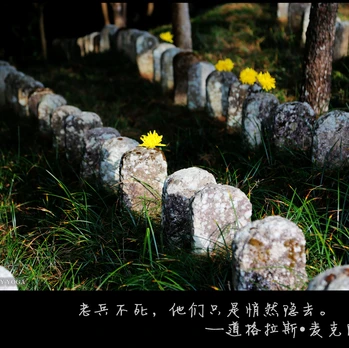
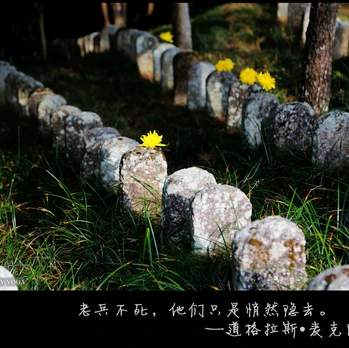
Following the path, we reached the Shrine of the Fallen, inscribed with the words "碧血千秋" (Eternal Blood and Autumn). Several tall camellia trees in front of the shrine added a touch of life to the solemn atmosphere. Further up, we found the Xiaotuanshan Martyr Tombs, where over 3,000 soldiers rest. Each tombstone bears the name, hometown, rank, and position of the fallen. Standing before the memorial tower at the summit, overlooking the entire cemetery among the pines and cypresses, it felt as though those once-vibrant lives had become silent guardians.
Leaving the cemetery, we had authentic Yunnan cuisine at a small courtyard restaurant nearby. We ordered spicy fish, watercress, lily meatballs, tofu soup, and a local specialty—stir-fried palm flower buds with meat (zōng bāo chǎo ròu). Palm flower buds are a winter delicacy in Tengchong; they need to be soaked in water to remove bitterness, then stir-fried with lean meat and pickled vegetables. Crisp, refreshing, and endlessly satisfying. The four of us ate heartily for just 200 yuan.
Volcanoes and Hot Springs: The Breath and Warmth of the Earth
Volcano Park: A Bird's-Eye View from a Hot Air Balloon
Early the next morning, we drove to the Tengchong Volcano and Geothermal National Geological Park, about 15 kilometers from the county town. The park includes the Dayongshan and Xiaokongshan volcanoes, columnar jointing formations, and the Heiyu River. The ticket is valid for two days, so hold onto it.
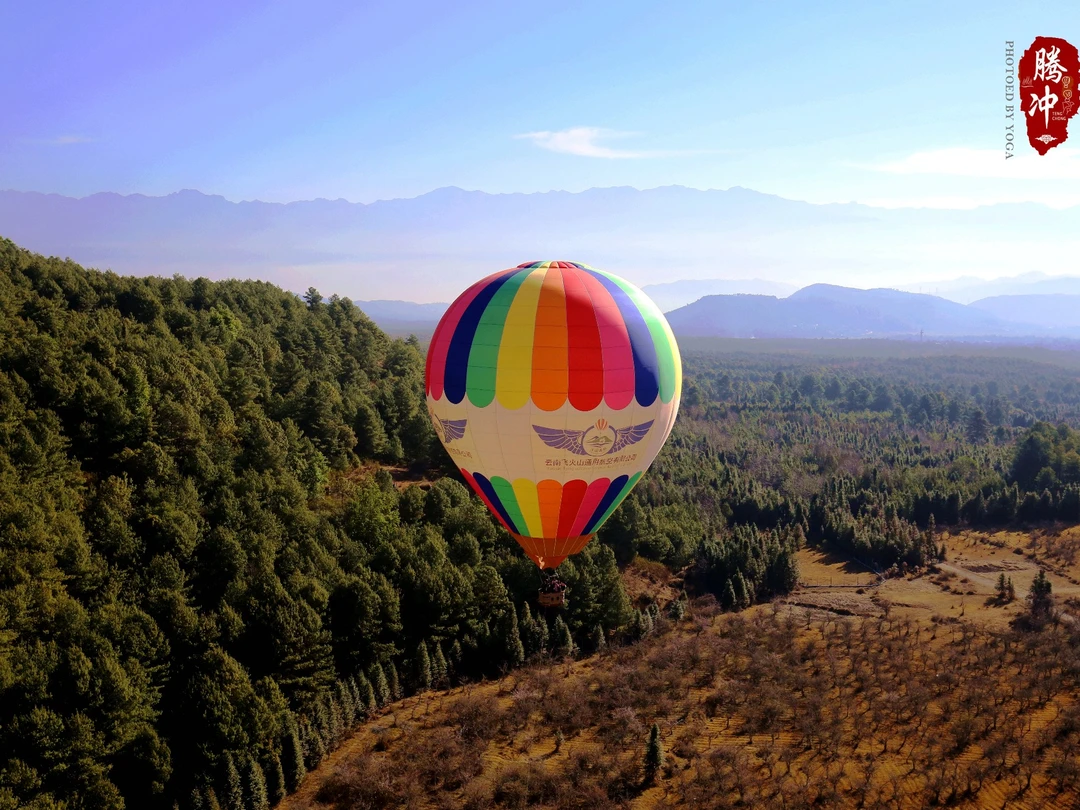
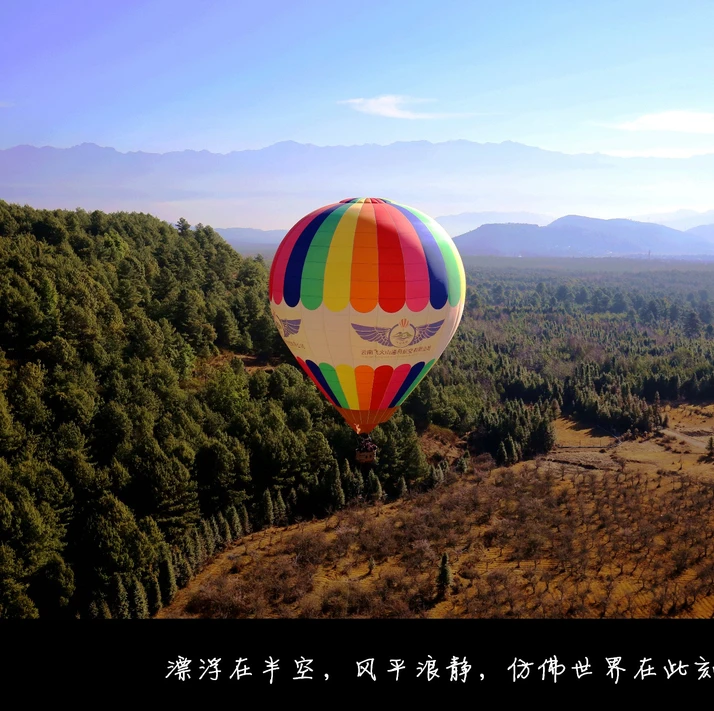
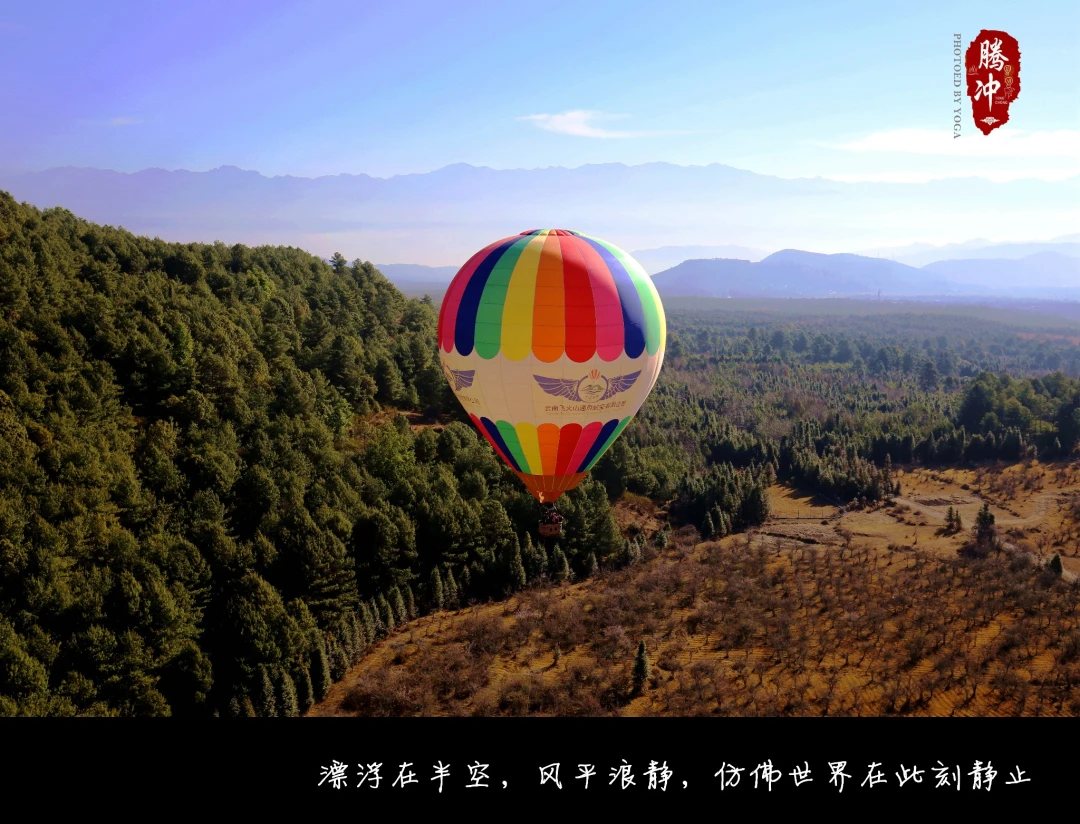
We'd booked hot air balloon tickets on Ctrip for 268 yuan per person (288 yuan at the gate). Balloon rides have time limits—usually wrapping up by noon—so you have to get there early. When we arrived, the open fields were still cool, with the scent of the countryside in the air.
As the balloon slowly ascended, the view opened up. The brown volcanic rock left by lava flows revealed rich layers under the sunlight, with winding paths stretching like ribbons. Xiaokongshan's iconic circular crater appeared perfectly below—a sight no ground-level view could match. The balloon rotated, and Dayongshan's graceful silhouette stood lush green against the blue sky, while distant mountains were veiled in morning mist, appearing and disappearing.
The ten-minute flight was brief, but long enough to remember the feeling of drifting with the wind, embracing the blue sky and white clouds. After descending, we climbed over 600 steps to the summit of Dayongshan, where the cone-shaped crater lay fully exposed. It's said this volcano last erupted 200,000 to 300,000 years ago. Standing there, you could almost hear the ancient breath from deep within the earth.
Rehai (Hot Sea): The Steam and Hustle of the Earth
In the afternoon, we drove to the Rehai Scenic Area, about 20 kilometers southwest of Tengchong county town. It features over 80 steaming vents and hot spring groups, with ten springs reaching temperatures above 90°C.
Entering the area, we followed the trail and first saw the "Toad's Mouth" and "Lion's Head"—one side with gently flowing water, the other with vigorously spurting hot springs. The afternoon sun refracted on the black rocks, creating beautiful rainbows. Continuing upward, we passed Pearl Spring (zhēn zhū quán), where bubbles rose like translucent pearls from water at 96°C. The steam was so thick we couldn't linger.
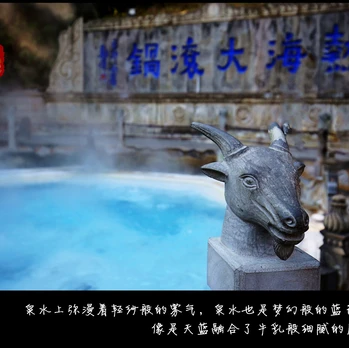
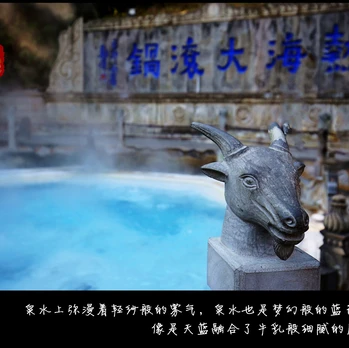
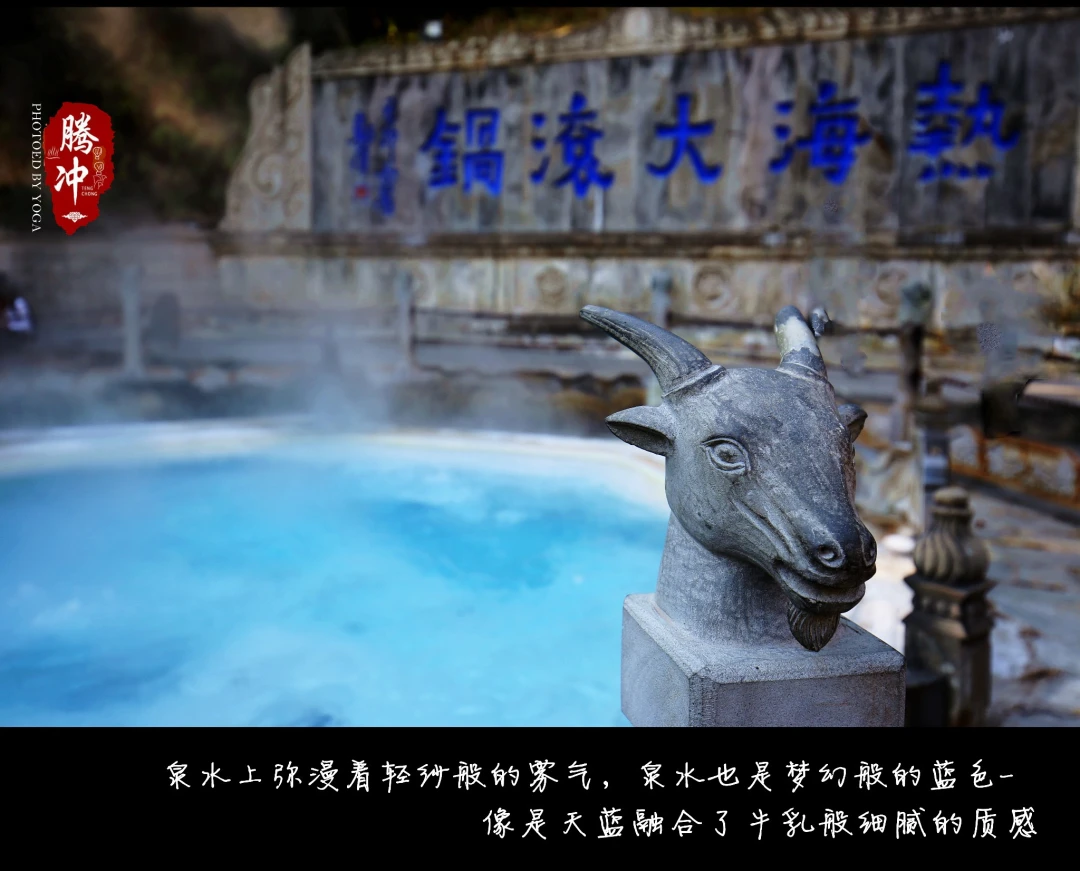
The most stunning sight was the "Big Boiling Pot" (rè hǎi dà gǔn guō) at the summit. This cauldron-shaped pool, about 10 square meters in area and 1.5 meters deep, reaches temperatures up to 97°C. The water constantly boils, occasionally leaping up in spurts. It had a dreamy blue hue, like sky blue blended with the smooth texture of milk. Next to it were steamers for cooking eggs. We bought a string of eggs (5 yuan) and placed them in the right steamer; they were done in about 20 minutes.
Tired from walking, we soaked our feet in a pavilion (40 yuan per person). Staff ladled water straight from the Big Boiling Pot—absolutely authentic. For the descent, we took the park's electric cart (10 yuan per person), saving a lot of effort.
That evening, we had Crossing-the-Bridge Noodles (guò qiáo mǐ xiàn) at a restaurant near the hotel called Yungu Shifeng. The soup bowls were as big as washbasins. Each of us ordered a different type of noodle, and the flavors were so delicious we ended up stuffed again.
Jietou Flower Sea: A Golden Dream at the Foot of Gaoligong Mountain
On the third day, we drove to Jietou Town to see the Gaoligong Flower Sea. From Tengchong city center to Jietou, there's only one road—Provincial Highway 238, about 58 kilometers. But Yunnan's mountain roads are winding, so it took us over an hour.
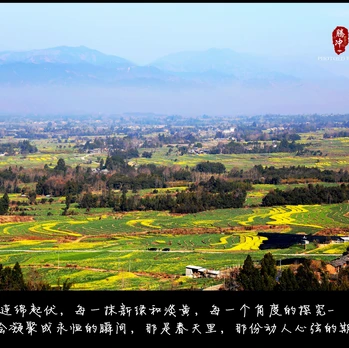
Jietou Town sits on Tengchong's northern border, a "garden basin" cradled by the Gaoligong Mountains. Every February and March, 150,000 mu (about 10,000 hectares) of rapeseed flowers bloom, turning the area into a sea of gold. Jietou was voted "Yunnan's Most Beautiful Place" by Chinese National Geography and national media.
We drove along a bumpy volcanic stone path into the mountains. The air grew fresher. Rolling down the windows, we drank in the scents of flowers, wheat straw, and earth. Passing the Mire Temple, we continued to the Tiantai Mountain Observation Deck—the perfect spot for a panoramic view of Jietou.
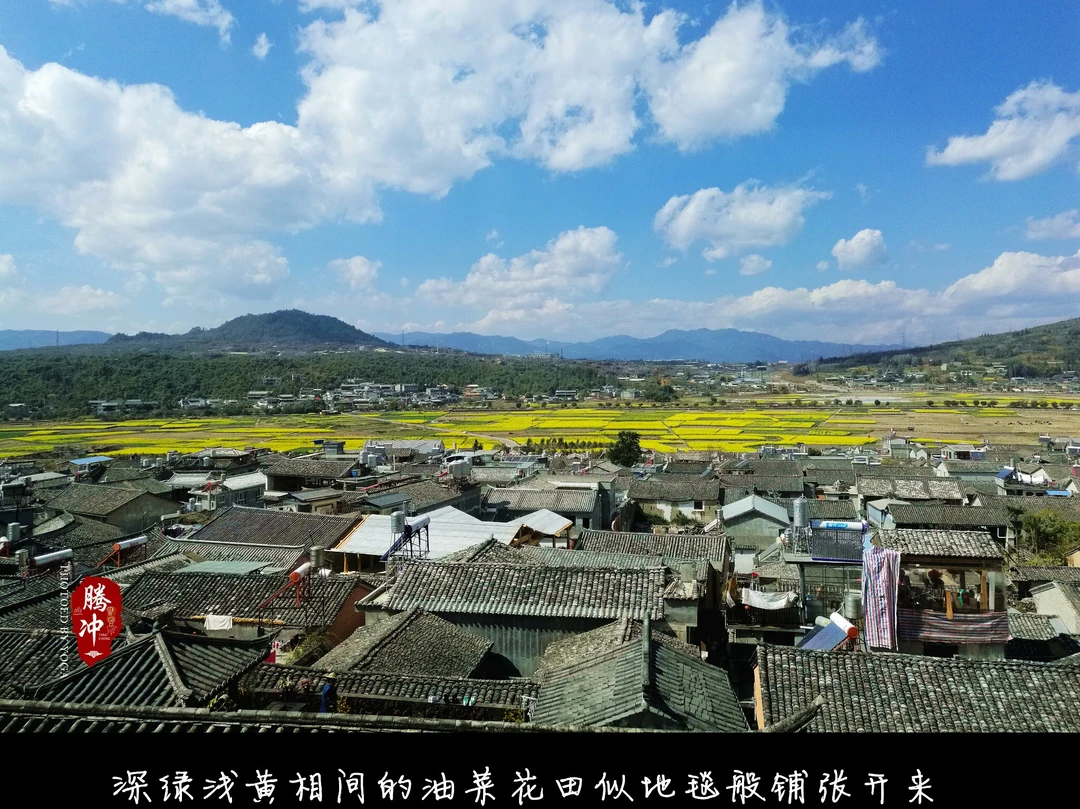
The view opened up: distant mountains and fields spread before us. Ranges of hills undulated in shades of army green, yellow-green, and lemon yellow, with fields of various colors extending in orderly patterns. Small hills emerged from the flower sea like scattered islands; natural villages dotted the landscape peacefully; winding country paths led to unknown destinations. Though a light mist hung over the distant mountains, blurring the view, the haziness added a touch of poetry.
Descending the mountain, we walked deep into the flower fields. This year's Gaoligong Flower Sea Festival was scheduled for the 17th, and we were a few days early, so many rapeseed flowers were still in bud. But even so, strolling through this world of flowers made time seem to stand still. Long country paths wound through the golden sea, carrying fragrance all around.
We made a special trip to Baiguo Village to pay homage to the thousand-year-old ginkgo kings. Two ginkgo trees, over 1,600 years old, stood with gnarled branches, ancient and weathered. Every Qingming Festival, people gather beneath them to pay respects. The small village beside the ginkgo trees, with its green fields, clear waters reflecting the scenery, felt tranquil and serene.
Yezhuqing Bridge: A Century-Old Covered Bridge Standing Watch
On our way back from Jietou, we made a detour to the Yezhuqing Bridge over the Longchuan River. This is a cantilevered wooden covered bridge, spanning about 30 meters across the river and standing 30 meters above the water. According to historical records, the original bridge was a vine bridge, later replaced by a chain bridge, and finally rebuilt in the early Qing Dynasty as a cantilevered wooden arch bridge. Its main material was catalpa wood, known as "plant gold," with logs stacked and secured, stepped supports, and iron chains for tension—a clever design with strong flood resistance. It's the most representative ancient covered bridge in the Tengchong area.
The navigation led us along a bumpy, winding rural gravel road to the north bank. From a distance, the elegant Yezhuqing Bridge spanned the Longchuan River, having weathered a hundred years of wind and rain, still quietly standing guard.
On the north bank, the riverbank opened wide with green hills and clear water. On the south bank, a deep canyon with rushing water and jagged rocks awaited. A single bridge separated two entirely different landscapes. Walking on the ancient bridge, the afternoon sunlight filtered through gaps in the wooden planks, casting alternating beams of light and shadow, adding a gentle warmth to the dark, cool structure. Touching the aged pillars and supports, you could almost feel the sediment of history.
Heiyu River and Columnar Jointing: Nature's Masterpiece
Another wonder of the Tengchong Volcano Park is the columnar jointing formations scattered throughout the Heiyu River canyon. The Heiyu River is a giant spring formed when lava flows blocked underground water channels, forcing the water to emerge at the surface. The water was crystal clear, and the air was moist and fresh.
Following the path deeper into the scenic area, we passed stalls set up by local farmers selling fruit, herbs, and grilled snacks. We had some roasted potatoes—Yunnan potatoes are delicious no matter how you cook them. At the end of the trail, we reached two outlets of the Heiyu River's underground stream, just a few dozen meters apart. The two streams flowed separately for less than a hundred meters before merging and pouring into the Longchuan River. The gentle water suddenly surged and churned, intertwining, playing, and chasing each other as they rushed into the river.
In the quiet forest, with the babbling brook, clear water reflected the surroundings. Uneven water plants swayed with the current like long, lingering thoughts. Looking closely, the reflections and the real scenery intertwined, making it hard to tell which was reality and which was illusion.
Epilogue: Tengchong—Time Well Wasted
Our ten-day journey through Tengchong, between volcanoes and hot springs, among flower seas and ancient bridges, amidst history and nature, allowed us to slowly "waste" a beautiful stretch of time.
There's no hustle and bustle of big cities here, no crowds of popular tourist spots. Just sunlight, flowers, hot springs, and a leisurely pace of life. You can sit on your hotel balcony and daydream, soak in a hot spring and gaze at the stars, wander through flower fields all day, or feel the weight of history on an ancient bridge.
Tengchong's beauty is unpolished—a masterpiece of nature and a gift of history. If you're looking for a place to set aside your hurry and "waste" time with someone you love, Tengchong might just be the place.
Practical Tips: - Best Season: February to March, when rapeseed flowers are in bloom and the weather is pleasant - Transportation: Renting a car is recommended, as attractions are scattered and driving is most convenient - Accommodation: Guanfang Grand Hotel offers great value; you could also consider guesthouses in Heshun Ancient Town - Local Cuisine: Copper-pot beef (tóng piáo niú ròu), stir-fried palm flower buds with meat (zōng bāo chǎo ròu), Crossing-the-Bridge Noodles (guò qiáo mǐ xiàn), roasted potatoes - Notes: Temperature differences between morning and evening can be significant, so dress in layers; get to the hot air balloon early; the volcano park ticket is valid for two days—keep it safe
You should also read:
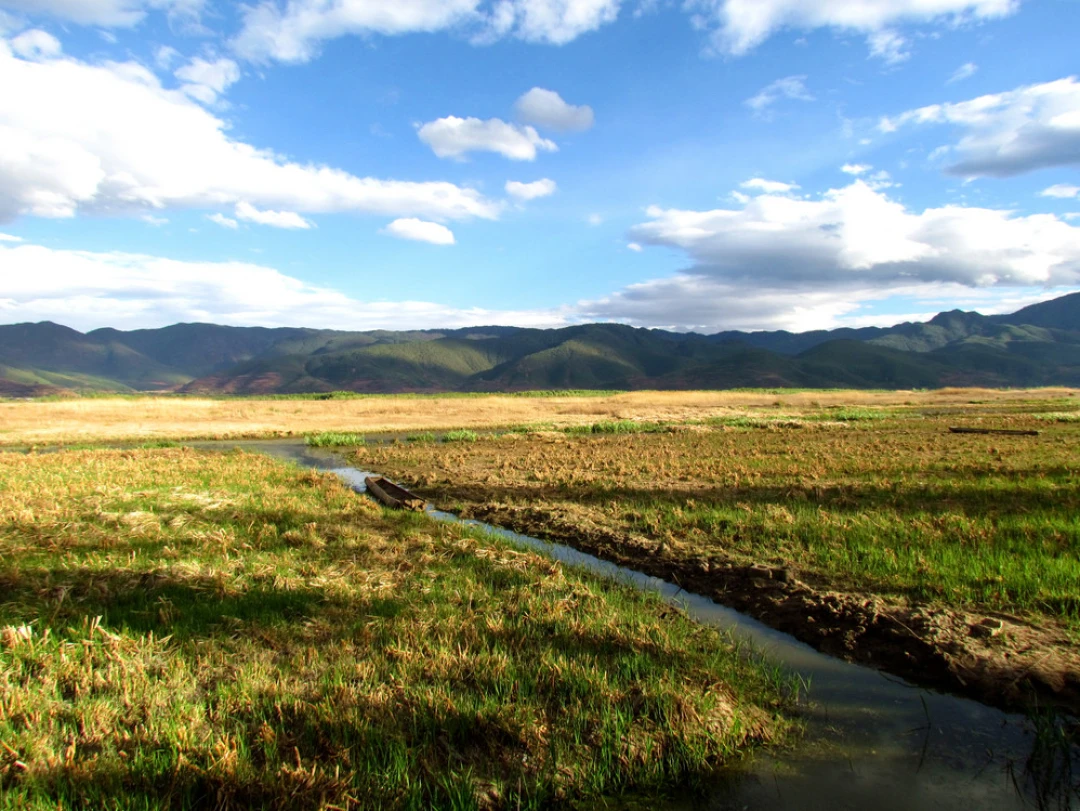
2012, Conquering Lugu Lake and Lijiang: A World of Azure and a City of Splendor
2012, Conquering Lugu Lake and Lijiang: A World of Azure and a City of Splendor Prologue: Three Guys on a Youthful Expedition Just after the May Day holiday in 2012, my buddies Hui Ge, Xiao Chen, and I—three strapping young men—shouldered our backpacks and set…
Continue reading...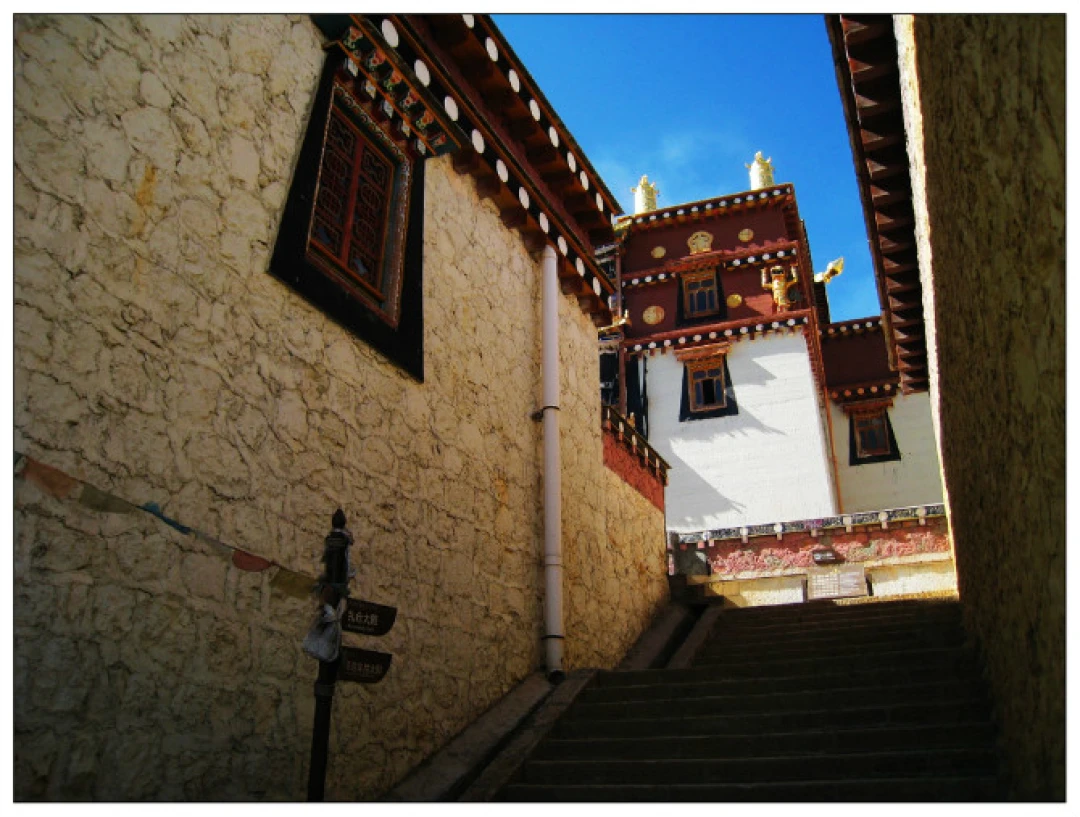
Yunnan's Colorful Clouds: Touching Shangri-La — A Dialogue with the Sky
Yunnan's Colorful Clouds: Touching Shangri-La — A Dialogue with the Sky If you ask me where in China is closest to heaven, I would tell you without hesitation: Shangri-La. The name itself carries a mysterious magic, as if every syllable whispers tales of distant lands.
Continue reading...
Slow Sounds, Gentle Steps: My Wandering Journey Through Lijiang
Slow Sounds, Gentle Steps: My Wandering Journey Through Lijiang Prologue: A Spontaneous "Red-Eye" Escape Some journeys begin just like Lijiang itself—with a touch of spontaneity and a hint of laziness. Late one Sunday night, I was scrolling through my phone while lying in bed when…
Continue reading...