That Day in the Unmanned Valley, It Felt Like Hearing "I Love You" — A Self-Drive Journey Through Shangri-La, Meili Snow Mountain, and Xueda Lake
That Day in the Unmanned Valley, It Felt Like Hearing "I Love You" — A Self-Drive Journey Through Shangri-La, Meili Snow Mountain, and Xueda Lake
Prologue: The Growth of a Seed
Some journeys begin with a casual thought, quietly taking root in your heart, eventually growing into an obsession that you simply must fulfill.
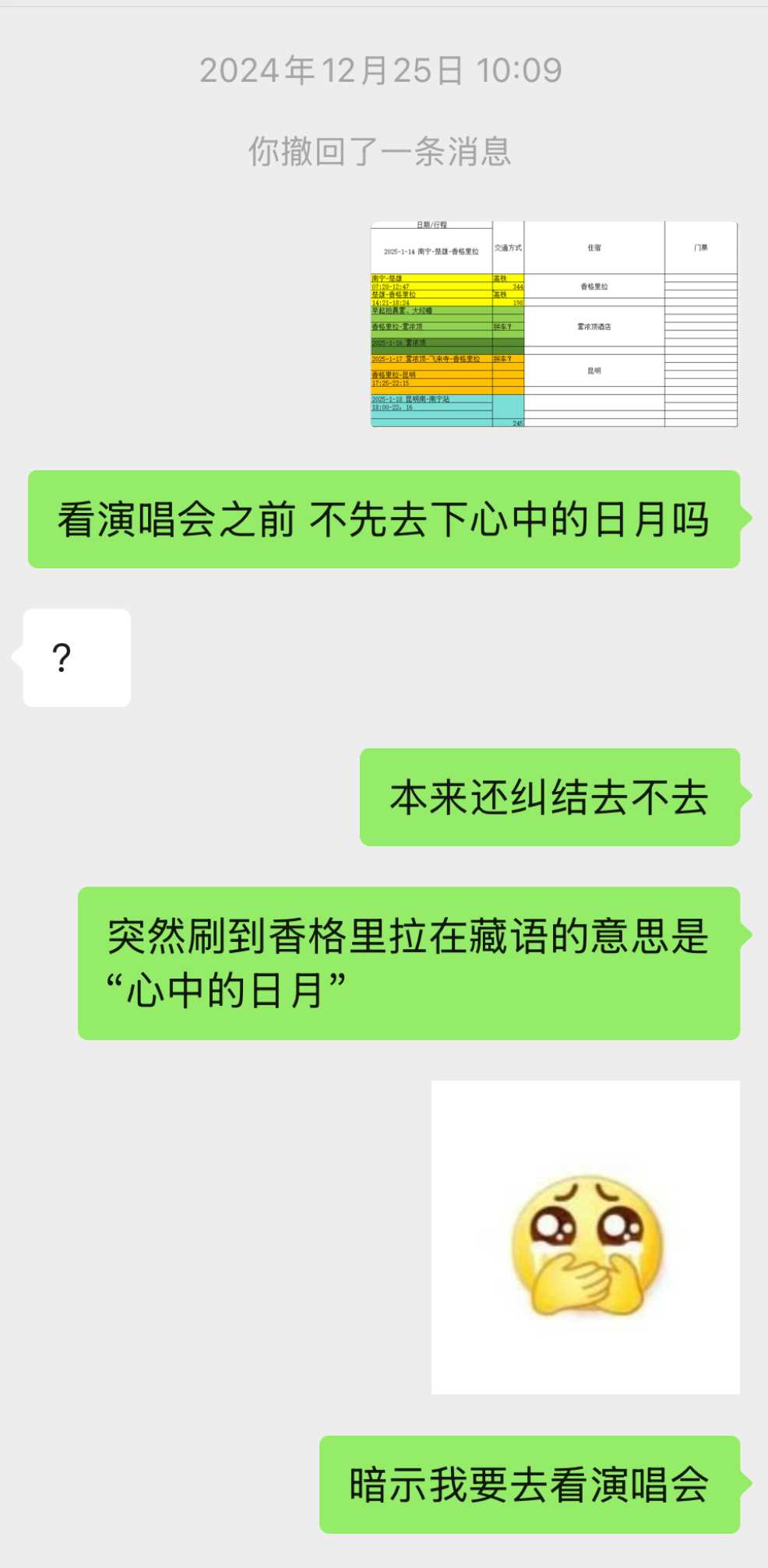
Last year, while traveling in western Sichuan, a friend casually asked, "You've never been to Meili Snow Mountain?" That seed was planted. Later, when Leehom Wang announced his tour, I dug out his album Chosen One and put it on repeat. The lyric "That day in the unmanned valley, it felt like hearing 'I love you'" wrapped around my mind like a spell. Images of the golden-lit snow peaks began to grow wildly in my imagination — and so, Shangri-La, here I came.
This trip spanned six days, starting from Nanning, passing through Kunming and Shangri-La, finally reaching Wunongding and Xueda Lake in Deqin County. Alone, with a car, spending time in solitude with the snow mountains.
Pre-Trip Preparations: Leaving It All to Fate
Itinerary Planning

The core goal of this trip was simple: see the snow mountains, and zone out. I chose two spots — Wunongding, the classic viewpoint for the mountains, and Xueda Lake, where you can capture their reflection in the water.
But there was one problem: the weather. The "Golden Sunrise" over the snow peaks isn't something you see every day. I scrolled through Xiaohongshu daily, checking road conditions and weather forecasts, and my heart sank with each update — snow, icy roads, closures… a flood of bad news. I procrastinated until a week before departure, when hotels were nearly sold out, before gritting my teeth and booking everything. The rest, I left to fate.
Recommended Tools
I have to plug a website here: Mountain Forecast. Search for "Kawagebo," check the weather for your target dates — if it shows "clear," your chances of seeing the golden sunrise are high. But don't just check the summit; also look at the weather at 3,000 and 4,000 meters — a clear peak with clouds below is still useless.
Day 1: Nanning → Shangri-La, Crossing Four Seasons in a Day
Scenery on the High-Speed Rail
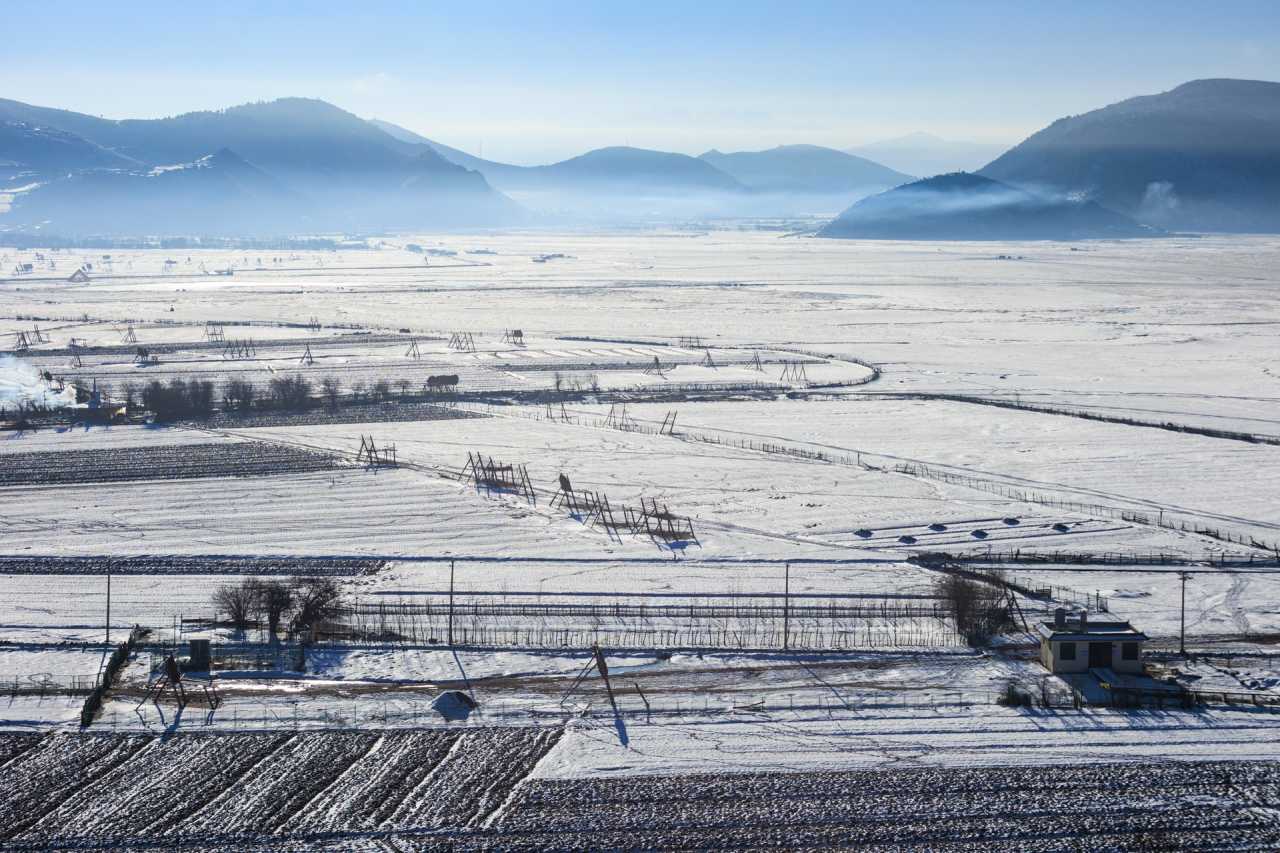
I set off early from Nanning Station. I thought the train would be empty on the first day of the Spring Festival travel rush, but it was packed — a rude awakening. Still, China's infrastructure is incredible. In the past, getting to Shangri-La meant an overnight stay in Lijiang; now, the bullet train gets you there in a day, with a transfer in Kunming for lunch. Comfortable.
After leaving Kunming, the train passed through Dali and Lijiang, and the scenery outside the window improved dramatically. At Lijiang Station, I could even spot Jade Dragon Snow Mountain in the distance. Interestingly, the train was packed from Kunming, but after Lijiang, most passengers got off, leaving only a handful heading to Shangri-La.
Arriving on the Plateau
I arrived in Shangri-La around 6 PM. That morning, I was basking in Nanning's warmth; by evening, I stood on a plateau over 3,000 meters high — it felt surreal.
My guesthouse was near Moonlight Square in Dukezong Ancient Town, in a prime location with new facilities and an oxygen concentrator. The owner picked me up from the train station himself, and the room cost just over 200 yuan a night — at that value, who needs anything else? Shangri-La had just seen heavy snow the day before, and the courtyard was still covered, crunching underfoot.
Dinner and a Night Walk
After dropping my bags, I headed out for food. Moonlight Square was just a few steps away, with the giant prayer wheel faintly visible in the night. Considering the uphill climb ahead, I decided to fill my stomach first.
I found a restaurant called "Guo Se Tian Xiang" on Dianping. It was a bit far from the ancient town, but a taxi ride cost only 8 or 9 yuan. When I got in, the driver asked, "Traveling alone?" My middle-aged wariness kicked in, and I started deflecting.
At the restaurant, I had to wait for a table — were all these people lured here by Xiaohongshu? But when the food arrived, I had to eat my words. I ordered a dry-pot yak meat dish, but the potatoes stole the show: crispy on the outside, with a slight chewiness inside — incredible texture. The yak meat, by comparison, faded into the background.
Last-Minute Car Rental
I'd originally worried about road conditions and booked a bus ticket from Shangri-La to Feilai Temple. But the stretch from Wunongding to Xueda Lake required a private car, and the guesthouse owner quoted 800 yuan. I'd been trying to find someone to share the ride on Xiaohongshu for days with no luck. Just as I was agonizing, a fellow traveler who'd left that day posted that the roads were fine, no ice. I immediately canceled the bus ticket and rented a car instead.
I booked the car at 8 PM, picked it up at 8:30, and the rental place closed at 9 — a flawless, last-minute operation. The guesthouse owner let me park for free, which was a godsend in the ancient town where parking spots are hotly contested.
After parking, I climbed up to Guishan Park to see the former world's largest prayer wheel. It's no longer the biggest, but it's still impressive. It takes many people working together to turn it.
Day 2: Shangri-La → Wunongding, Meeting Morning Mist and Snow Mountains
Morning Mist at Songzanlin Monastery
I slept poorly last night — a dull headache and some bloating. Altitude sickness had arrived.
I set out at dawn to photograph the morning mist. I navigated to Dari Viewing Platform and followed the crowd up a small hill behind the parking lot, where the view wasn't blocked by utility poles. The low today was -10°C, breaking my personal record for cold. As a southerner, wearing two pairs of long underwear was my limit, but it was no match for this temperature. The cold seeped up from my feet. After setting up my camera for a time-lapse, I could only keep moving to stay warm.
The morning mist was actually a mix of smoke from the monastery's incense-burning rituals and the mountain's thin fog. At sunrise, golden light pierced through the mist — it was stunning to witness in person. In mid-January, sunrise is around 8:30 AM, so a time-lapse from 8 to 9 AM is sufficient. If you're just taking photos, arriving at sunrise is enough.
Alpine Botanical Garden and a Stroll Through the Ancient Town
After photographing the mist, I noticed the Alpine Botanical Garden was nearby, so I decided to check it out. The beauty of self-driving is that you can go wherever you want — public transport would never allow this flexibility.
The garden offers a panoramic view of Napahai Lake. This season, the grass has turned yellow, but after the snow, it looked like a northern winter landscape. Afterward, I wandered back through the ancient town. The weather was gorgeous. Moonlight Square was full of pigeons — professional-level performers, really good at flying.
I found a Tibetan restaurant for lunch. The locals here are warm and attentive. The yak meat pizza was a winner, reminiscent of the beef pies from the old Coffee Bene chain. I also ordered a pot of sweet butter tea — it tasted like cheese milk tea, delicious. Later, I visited the popular "Ama's Butter Tea" spot. The butter cheese was like yogurt with crunchy nuts, and the highland barley milk tea was average — everything here is served hot, which was tough for an ice-cube addict like me.
Heading Out: Shangri-La → Wunongding
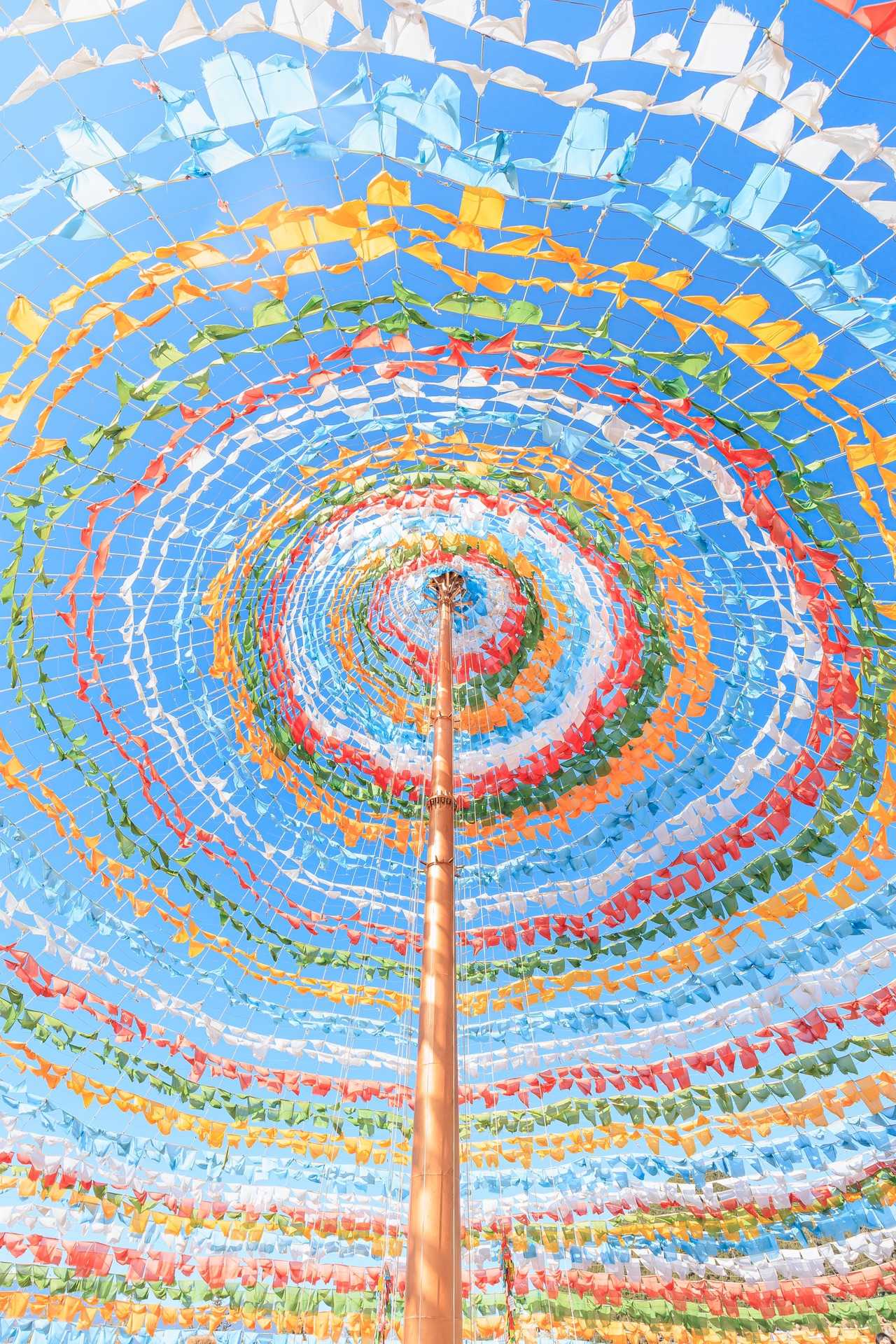
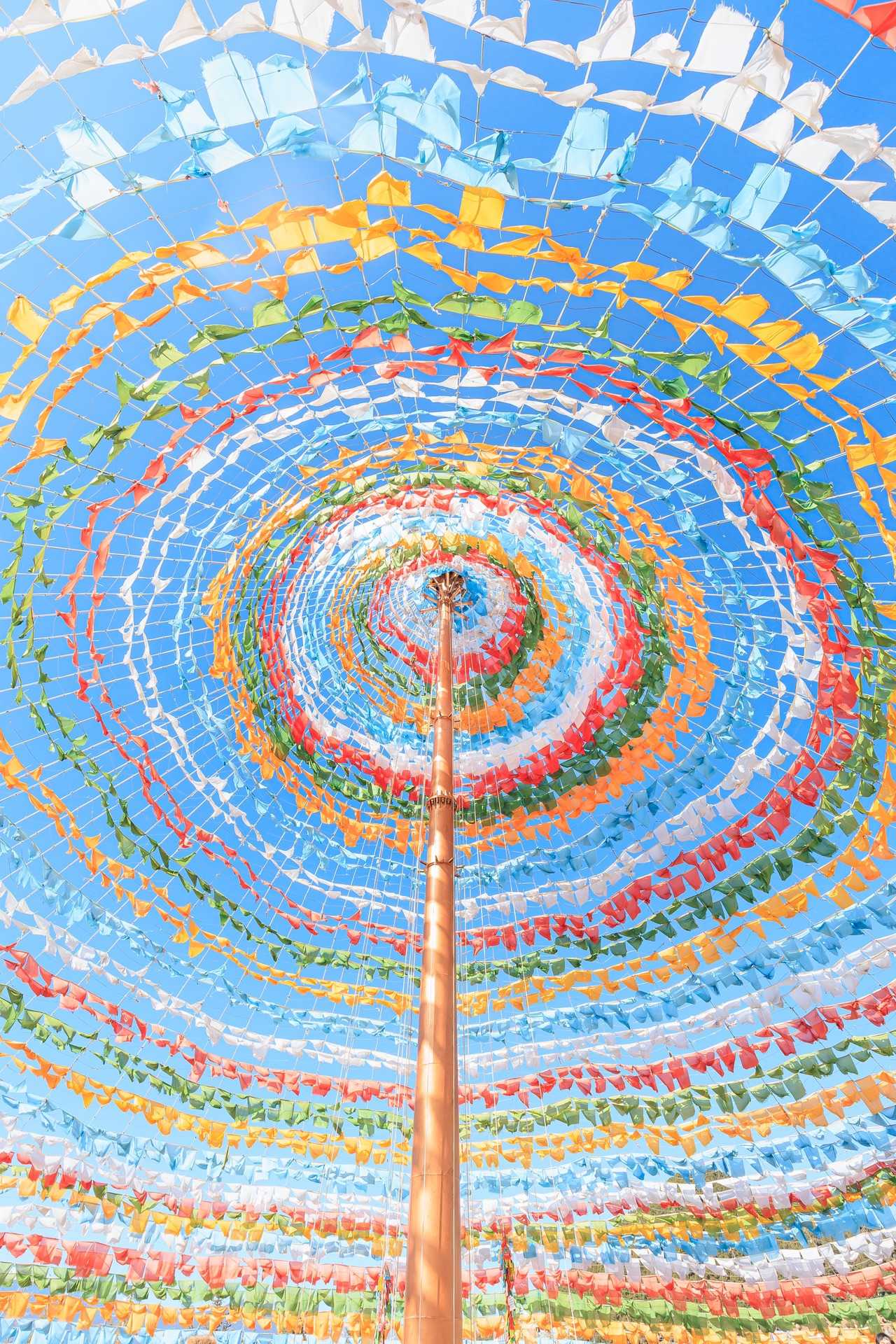
Full and satisfied, I set off for Meili Snow Mountain. First stop: the Great Prayer Flag site, entry fee 9 yuan. It was packed with tourists in Tibetan costumes, taking photos — like a giant photography studio. The good weather made for great shots, and the view from the white pagoda opposite was also excellent.
Once on the road, I got stuck in a traffic jam just minutes later at the Alpine Botanical Garden bridge. It took half an hour to clear — the road was icy, and traffic police were spreading salt. When I passed, I saw the opposite lane was even worse, with a queue stretching for kilometers.
After that stretch, it was smooth sailing. An hour and a half later, I reached the Jinsha River Big Bend viewing platform. The river was in shadow by afternoon; morning light would make the colors pop. Drones are banned throughout Shangri-La city, but this is a scenic demonstration area, so flying is allowed.
Another hour and a half brought me to Wunongding. The roads were good, with just a few patches of black ice on the edges. In the second half of the drive, the snow mountains suddenly appeared before me — I wanted to stop and scream.
Checking into Wunongding
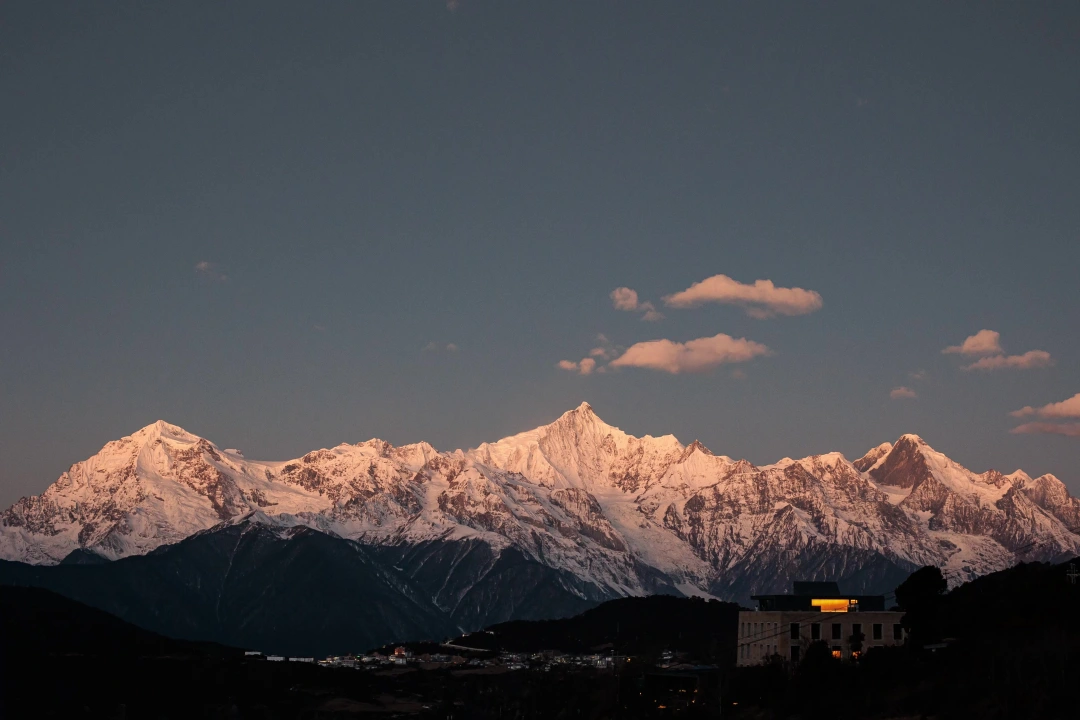
I arrived at sunset and laid eyes on Meili Snow Mountain for the first time.
I stayed at the Fanxu Hotel in Wunongding. The view of the mountains here is slightly off-center compared to the main viewing platform, but I'd come for their 270-degree panoramic room. I booked a cheaper room for the first night and planned to upgrade tomorrow. Even the "cheap" room cost over 1,100 yuan. Hotels in Wunongding are generally pricey — even basic ones run 700-800 yuan.
My first meal was at the hotel, but the food was mediocre and expensive — two dishes and a pot of butter tea cost over 250 yuan. The only comfort was that Leehom Wang was playing on shuffle during dinner.
I went to bed early, hoping to see the golden sunrise tomorrow. But the electric blanket was too hot, waking me up several times, drenched in sweat.
Day 3: Wunongding, A Snow Mountain Feast Without Leaving the Room
The Breathtaking Golden Sunrise
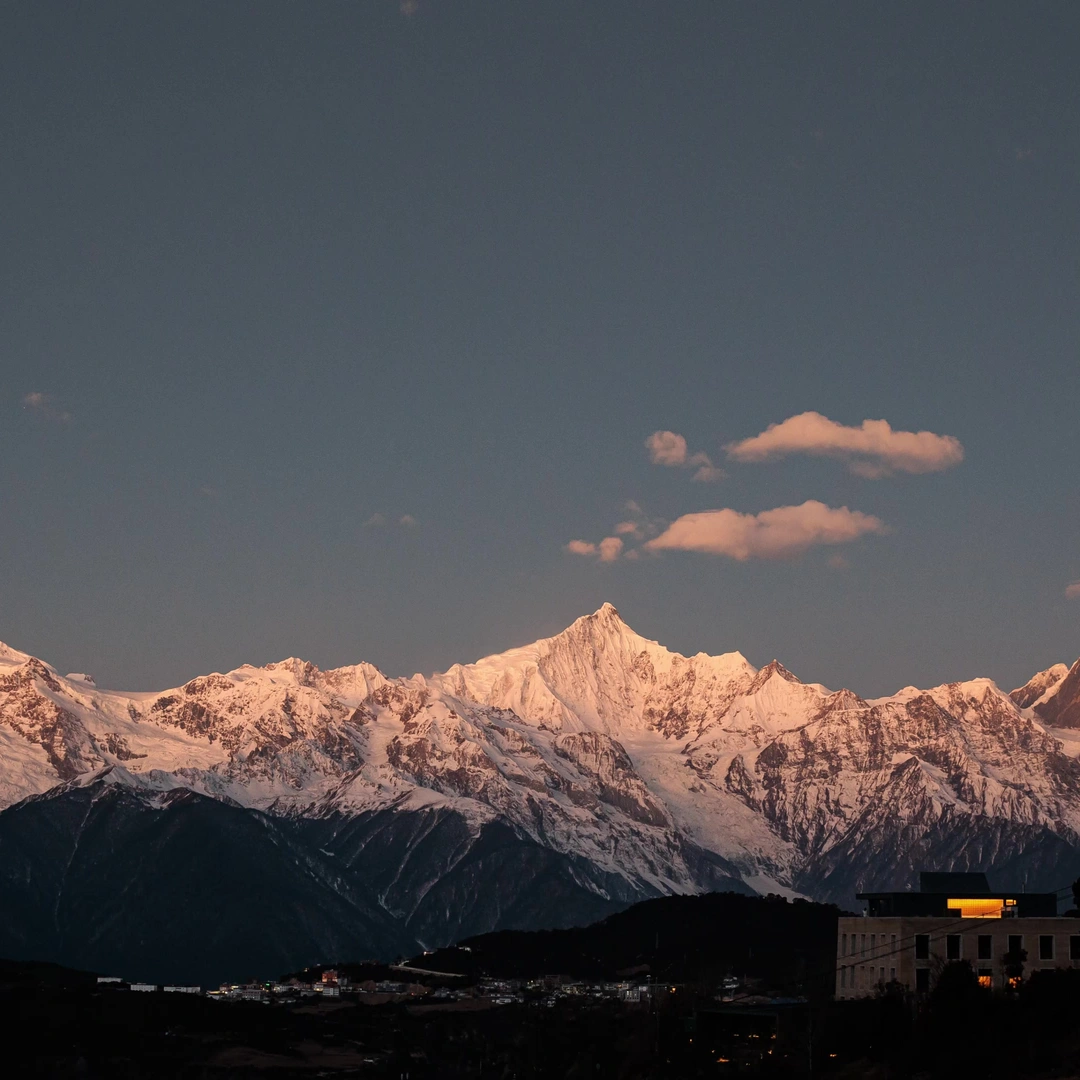
Sunrise was at 8 AM, so I got up at 7:30. The moon was still high, and the snow mountains were bathed in a pink glow — in my naivety, I almost thought the golden light had started, but it was probably reflected twilight.
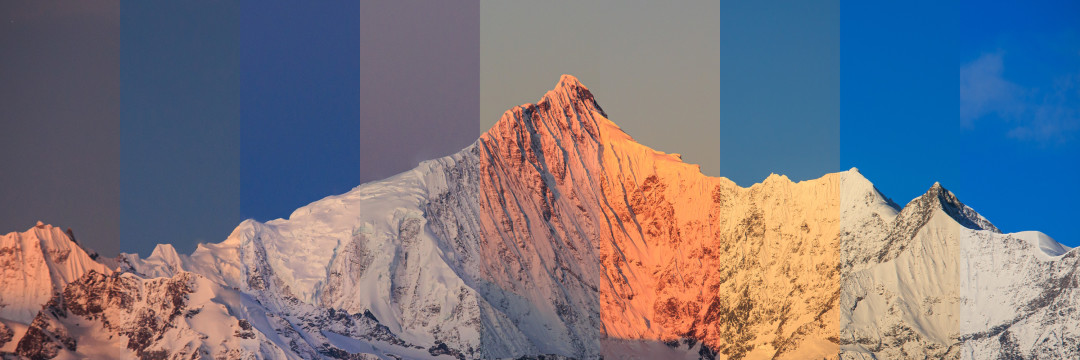
Under the pre-dawn light, Kawagebo was illuminated. The glow gradually faded, and in the last moment before sunrise, the mountains went completely dark. Then, sunlight struck the snow-capped peaks.
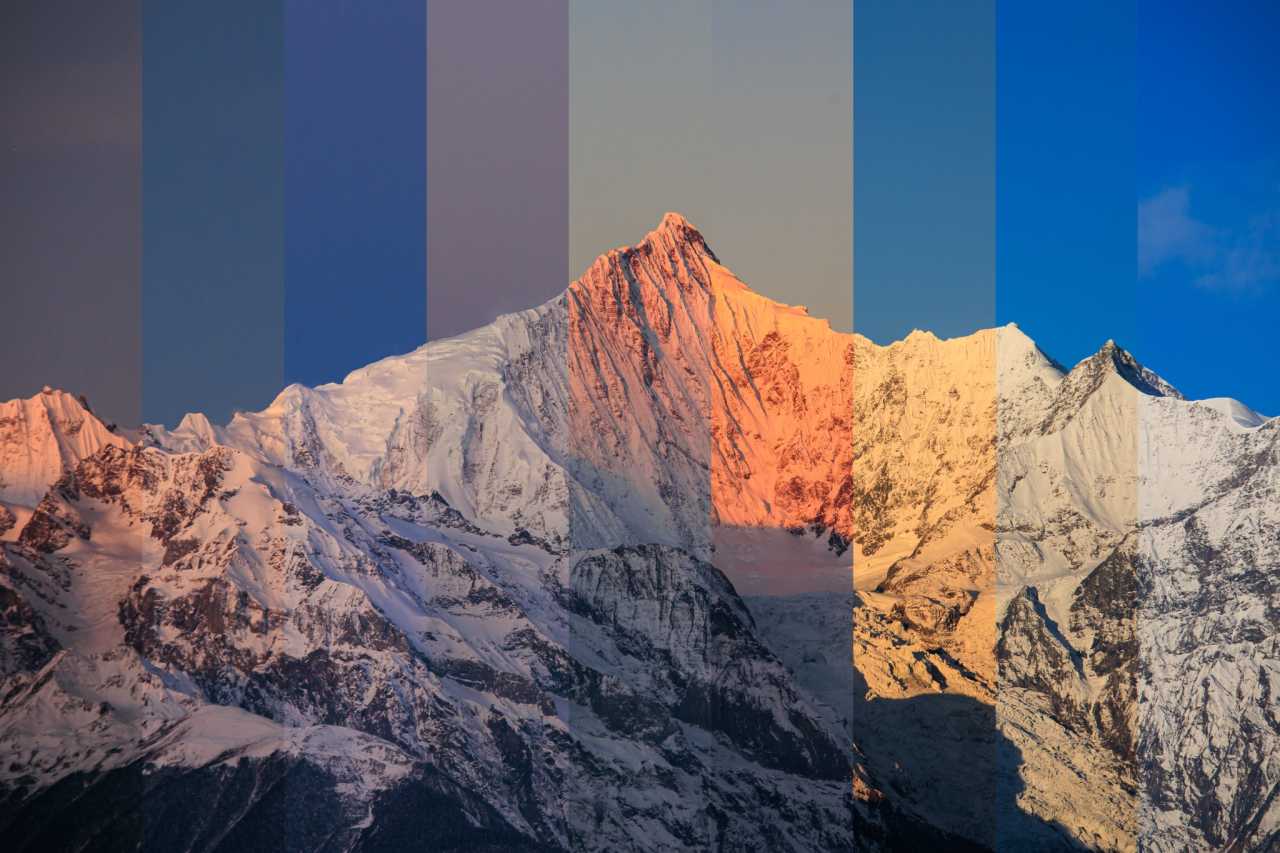
A stunning golden sunrise appeared before me.
I saw it on my first try. Standing beneath the golden Kawagebo, all my hesitation and anxiety from before the trip melted away. I was grateful for the courage to just go and the resolve to accept whatever outcome — and it rewarded me with this.
The golden light lasted about half an hour, then the mountains turned pure white. After that, I just sat and stared at the snow peaks. Mount Miancimu and Mount Jiawaren'an glittered in the sunlight. The sun was high, and the moon hadn't set yet — a rare moment of sun and moon sharing the sky.
I flew my drone to take a look. The telephoto lens made the mountains seem close, but once the drone was airborne, I realized they were impossibly far. Between us lay a river valley — was it the Nujiang River? The Jinsha? Or the Lancang? The full panorama of the Meili Thirteen Peaks spread out before me. On the cliffs, countless winding roads traced delicate lines. How small we are; how great we are.
The Main Event: The 270-Degree View Room
After taking enough photos, I went downstairs for breakfast and was again stunned by the restaurant's view — last night in the dark, I hadn't noticed it was a perfect framed scene.
After breakfast, a staff member said my room was ready. This was the highlight of the trip — the room I'd seen countless times on Xiaohongshu. I booked directly with the hotel for over 2,500 yuan, a bit cheaper than on the booking platforms. For Wunongding, this was mid-range pricing. The view was unbeatable, but the amenities and service were lacking.
Today's plan: stay in the room until I got my money's worth, never stepping outside.
At 4:20 PM, a staff member said afternoon tea was served until 4:30. I dashed down from the fourth floor to grab some. It was just simple snacks and tea, but with the snow mountains as a backdrop, everything tasted amazing.
By afternoon, the mountains were backlit and not great for photos. Honestly, staying one night at Meili is enough — watch the sunrise, check out, and leave. There's not much to shoot in the afternoon.
Bored out of my mind, I thought about pulling out my laptop to work. It occurred to me that these resort hotels probably never imagined anyone would work in a place like this — neither room had a high table suitable for a desk. The outdoor temperature was only 6°C, but the direct sunlight made it feel like 20°C indoors, so bright I could barely open my eyes. I just took a photo with my laptop to prove I'd considered working.
And so, in a cycle of getting too hot and stepping onto the balcony to cool off, then getting too cold and retreating inside, I waited for dusk.
Moonlit Silver Mountains
The area around Wunongding and Feilai Temple isn't good for sunset views of the mountains — they're backlit, only good in the morning. Still, the twilight colors were beautiful. Scarred by yesterday's hotel meal, I devoured three cups of instant noodles I'd brought from Shangri-La — I really did stay in my room all day.
I'd captured the golden sunrise in the morning; now I wondered if I could see the "moonlit silver mountains." I'd thought the term was just a forced rhyme with "golden sunrise," but sure enough, before the moon rose, the mountains were pitch black, and my camera couldn't focus at all. After the moon came up around 8 PM, I could clearly photograph the mountains even with my phone.
There were so many stars visible to the naked eye, but it wasn't the Milky Way season. This was my first time shooting star trails, and I hadn't expected so many drones to still be flying at midnight, ruining the shot. I could only manage one usable angle.
Day 4: Wunongding → Xueda Lake, Goodbyes and New Journeys
A Second Golden Sunrise
I got up at 7:30. The moon was still overhead. Soon, the mountains turned pink again. Today, there were a few clouds, giving the scene a different feel from yesterday.
Golden sunrise, again. No regrets.
I edited the two mornings' footage together — the best gift I'd received at the start of this year.
Saying Goodbye to Wunongding
After watching the sunrise, I returned to my room to find everything shrouded in white, invisible. I'd anticipated this when booking, which is why I'd looked for rooms with balconies. Many hotels' viewing rooms have floor-to-ceiling windows, but if the morning mist doesn't clear, you still have to go to a public platform to see anything.
It seemed to be clearing a bit — I grabbed a towel and wiped the window bit by bit, like a cleaner. By noon, just before checkout, with diligent wiping, I could finally see clearly. I gave up and just stepped onto the balcony.
After checking out, I visited "Ye Xu," a café across the street. I thought it was just another trendy spot, but I was blown away — it had the best view in all of Wunongding, with coffee on the first floor and dining on the second. Every seat had a perfect framed view, and I couldn't stop taking photos through every window.
I ordered food and wandered downstairs. Sitting in front of Meili Snow Mountain, drinking coffee, soaking up the sun — what worries could anyone have? After a while, I went back upstairs and waited ages for my food. The service was slow, and the prices were steep — two dishes and a coffee cost about the same as my meal at Fanxu two days ago, but the taste was far better. With the incredible view, it was acceptable.
When I finished, I really didn't want to leave. I went back downstairs for another coffee and sat there. The sunlight that day was just right, and the cool breeze left a sensation on my skin — in that moment, I felt the true Shambhala.
A Quick Glimpse of Feilai Temple
On the way from Wunongding to Xueda Lake, I passed Feilai Temple. Since I was there, I decided to take a look. The main area of Feilai Temple is just a narrow sloping street, lined with hotels on one side and the Feilai Temple viewing platform on the other. It felt cramped, and the entrance to the platform was so small I missed it on my first pass and had to turn back.
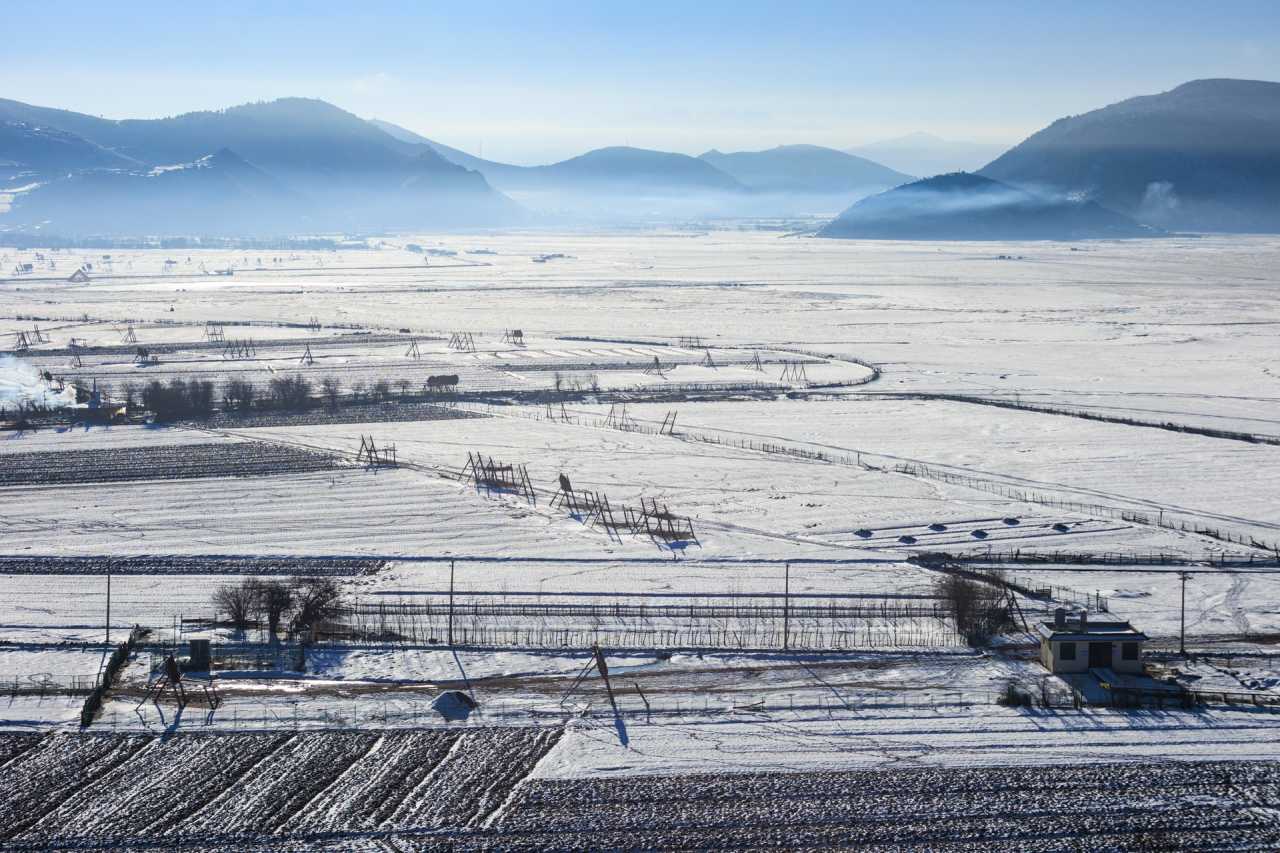
I headed to Viewing Platform No. 3. Halfway there, exhausted, I saw someone driving in — I hadn't read anywhere that you could drive, which was annoying. But further ahead, the road was completely covered in snow, so I didn't bother. I'm getting good at adjusting my expectations.
In the afternoon backlight, it wasn't worth it. The round trip took half an hour; coming in the morning after the sunrise would have been much better for light. On the way back, I noticed that a spot just outside the viewing platform offered a better view of Kawagebo — in the afternoon, you don't need to go all the way to Platform No. 3.
The Feilai Temple viewing platform is closer to the mountains, and it was nearly empty in the afternoon. Kawagebo's shoulder often had flying snow mist — I don't know the proper name for it.
Night at Xueda Lake
From Feilai Temple, I drove toward Xueda Lake, and drove, and drove, until I was bored of it. The roads were actually fine — the final uphill stretch was a single lane, but there was almost no traffic. Coming from a poor mountainous area in Guangxi, this was nothing.
I arrived at Xueda Lake at sunset. I went straight to the lakeshore to scout the area and met a guy who said this was also a spot for sunrise; the evening had nothing to offer. Since I was there, I thought I'd shoot a time-lapse anyway.
Then I witnessed a spectacular fire-red sunset — too bad the angle was a bit off. Later, I saw photos on Xiaohongshu from Wunongding's perspective that were truly beautiful.
Xueda Village has eleven households. The houses have been renovated into guesthouses with a uniform price of 680/780 yuan per room, which can usually sleep three or four people — reasonable when split. I added 80 yuan for meals, covering dinner and breakfast. I'd contacted Dunzhu's family through Xiaohongshu, but he was away on business, so I only met his parents. They were warm and simple people. Dunzhu's father pronounced "uncle" in a way that sounded like an old Taiwanese variety show host — endearing.
My room had a stove, and I asked the uncle to light it for warmth. He said he'd come back later to add more wood. Before he lit it, I asked: "The climate here is dry, so dry wood shouldn't produce much smoke, right?" He said yes. But that night, a strong wind blew, and smoke poured back into the room — the uncle and I were both coughing like crazy, staring at each other.
After the wind died down, it was fine. The crackling sound reminded me of childhood, steaming buns with my grandmother on the rooftop — vague, distant memories.
Drawing from my experience at Wunongding, I wanted to wait for the moon to rise and then head to the lake to see if I could capture anything. But it was pitch black and terrifying. I took a test shot in the courtyard first. Seeing the star-filled sky, I decided to go for it.
At Xueda Lake, a handsome guy was camping by the entrance, sleeping in his pickup truck. Seeing me, he came down to the lake with me. He'd set a trap for rabbits but had no luck. Then we saw a civet cat up in a tree.
After he went back to his truck, I was alone by the lake. The moon had risen but was blocked by the mountains, so the snow peaks remained in darkness. I couldn't focus at all. It was so dark, I was scared. I wore headphones but only on one ear, in case I needed to run.
Then a young couple arrived — the girlfriend had been asleep, dragged out by her boyfriend to take photos. With company, my fear subsided, and I started shooting like crazy. The moon emerged from behind the mountain incredibly fast, like a person sneakily peeking out — every time I turned back, it had risen a bit more, like something out of a ghost story. No wonder the moon is often associated with eerie, sinister imagery.
When the moonlight finally illuminated the snow mountains, the scene became peaceful and serene. There were clouds, so star trails were out of the question tonight. The couple crossed to the opposite shore to take photos, and I followed, using them as impromptu models.
Day 5: Xueda Lake → Shangri-La → Kunming, The Final Farewell

The Golden Sunrise Reflected in the Lake
On my last day in Shangri-La, I saw the golden sunrise reflected in the lake. What more could I wish for?
I couldn't wait for the sunlight to fully illuminate the opposite shore — I had to pack and leave. Meili Snow Mountain from Xueda Lake seemed to have a hazy filter, the peaks' edges softened, like a manga drawing.
Breakfast was freshly milked yak milk and highland barley flatbread mixed with fried green peppers. The yak milk was delicious.
As I packed, I kept looking at my view room — I hadn't fully appreciated it last night. Outside, sheep and horses were grazing, bells around their necks chiming with a hollow, ethereal sound. A yak was eating grass beneath the platform, and bits of grass flew up into my face.
Sitting in the courtyard, facing the mountains, my mind was completely empty.
Departure, Looking Back
No matter how reluctant, it was time to go. The final scene reminded me of the lyric "That day in the unmanned valley, it felt like hearing 'I love you'" — the perfect footnote to this journey.
I had a five-hour drive back to Shangri-La ahead of me. Descending from Xueda Lake, there were many spots suitable for flying the drone, but I was worried about missing the train. I finally stopped at the foot of the mountain to take one last shot.
On the way back, I passed the place with the "Missing You" sign from yesterday. In the sunlight, it looked several notches more beautiful. This angle of Mount Miancimu was also stunning. I rushed to the Deqin Tunnel entrance — truly the last glimpse. Until next time!
I left Xueda Lake at 10:30 AM and returned to the east gate of Dukezong Ancient Town around 4 PM. As soon as I returned the rental car, I called a ride to the train station — seamless. I arrived in Kunming around 10 PM and immediately ordered takeout. I forgot to specify the spice level and ended up with food so spicy it was explosive — Yunnan's heat can be terrifying. I chased it with something cold and turned into a human sprinkler.
The first night away from Shangri-La, I missed it already.
Day 6: Kunming → Nanning, Returning to Daily Life
My train wasn't until afternoon, so I had time to wander around Kunming. In the morning, I went to Haigang Dam to see the seagulls. The weather wasn't great, and there weren't many birds. While taking photos, my left earbud slipped into Dianchi Lake — that's my most vivid memory of this place.
For lunch, I went to a place called Xiaojipo No. 8, recommended by a friend. They'd suggested two dishes, and I ordered others, only to realize I'd chosen exactly what they'd ordered on their previous visit — there's a reason we get along. The "Water Calla Lily Meets Fragrance" looked unremarkable, but the taro inside was incredibly soft and sticky, and the water calla lily was sweet — a perfect combination. The Pu'er beef stew was also good, with a very Southeast Asian dipping sauce.
After eating, I walked around Cuihu Park to digest. The sun came out, and Kunming was once again the Spring City. Wang Zengqi once said no one would commit suicide in Cuihu — after walking around, I felt the energy was strong; I wouldn't want to die here either.
Finally, I grabbed a drink from "Shan Shang He Cha" before leaving. It wasn't as good as the "Shan Shan Cha Cha" I'd ordered randomly last night — a bit bland.
The moment I arrived back at Nanning Station, the exit felt like a country kid from the foot of the snow mountains coming to the big city to make it, facing an uncertain future — fitting for the mood of having to go to work tomorrow.
The Shangri-La journey was over.
Epilogue: My Wilderness, Overgrown with Love
This trip didn't seem to yield many profound insights. Most of the time, I was just observing the world as it naturally operates — watching how sunlight slowly colors the snow peaks red, listening to the chime of sheep bells, feeling the cold sting of wind on my skin.
After returning, I realized that this trip was full of moments where I met my past self. What you hold in your heart will echo back — even if we don't always remember.
Writing this travelogue, I remembered how ten years ago, I used to love reading Shangri-La travelogues on Mafengwo. Names like Feilai Temple and Wunongding appeared over and over, and now I'd finally arrived. There was a sense of epiphany, of a concept finally becoming tangible.
I am a traveler, walking and picking up pieces of my past self along the way.
Practical Tips Summary
- Weather Check: Use the Mountain Forecast website, search for "Kawagebo," and pay attention to weather at the summit and at 3,000-4,000 meters
- Transportation: Nanning to Shangri-La is accessible by bullet train (transfer in Kunming); self-driving is the best way to explore the surrounding areas
- Accommodation: Hotels in Wunongding are expensive (generally 700-800 yuan and up); staying one night to see the golden sunrise is enough. Guesthouses in Xueda Village have uniform pricing and offer great value
- Drones: Banned throughout Shangri-La city, but allowed at the Jinsha River Big Bend viewing platform
- Altitude Sickness: Rest well upon arrival at high altitude, and have an oxygen concentrator on hand
- Best Shooting Times: Morning light is best for photographing the snow mountains; sunset golden light is not visible from Wunongding/Feilai Temple area
This travelogue is copyrighted by @BlueGunGun. Any form of reproduction requires the author's permission.
You should also read:

Cloud Travelogue · Dali of Wind, Flowers, Snow, and Moon: A Three-Day, Two-Night Journey of a Free Spirit
Cloud Travelogue · Dali of Wind, Flowers, Snow, and Moon: A Three-Day, Two-Night Journey of a Free Spirit I am a cultured female foodie with a touch of rogue charm. I slung on my backpack, took my lover's hand, and set off on a spontaneous…
Continue reading...
The Meaning of Travel – A Tengchong Story: A Journey of the Heart and Personal Growth
The Meaning of Travel – A Tengchong Story: A Journey of the Heart and Personal Growth Setting Out, Only to Return a Better Self Some say travel is nothing more than leaving a place you're tired of, only to go to a place where others…
Continue reading...
A Spiritual Journey to Lugu Lake in Lijiang: Experiencing the Legend of the Kingdom of Women! (Reproduction and Hotlinking Prohibited)
A Spiritual Journey to Lugu Lake in Lijiang: Experiencing the Legend of the Kingdom of Women! (Reproduction and Hotlinking Prohibited) Off-road自驾, food, hotel and民宿 reviews, Featured Traveler, Tank 300 owner, 200,000 km of self-driving experience. WeChat: y01294987 Ninglang Yi Autonomous County 2010.11.08 · 7 days…
Continue reading...